Tag: Bharti Airtel

  • Stock markets snap seven-day winning run; Sensex falls 132 points

    Stock markets snap seven-day winning run; Sensex falls 132 points

    Mumbai (TIP)- Benchmark equity indices Sensex and Nifty snapped their seven-day winning streak on Thursday, December 7, due to profit taking by investors after recent sharp gains triggered by negative cues from Asian markets. The 30-share BSE Sensex fell 132.04 points, or 0.19 per cent, to close at 69,521.69. The gauge hit the lowest intra-day level of 69,320.53. Broader index Nifty also declined 36.55 points, or 0.17 per cent, to settle at 20,901.15. Analysts said crude oil prices in international markets failed to boost sentiment amid selling pressure from foreign institutional investors even as traders stayed on the sidelines ahead of RBI‘s monetary policy decision. The Reserve Bank of India is expected to maintain the status quo on the interest rate in its bi-monthly monetary policy decision to be announced on Friday. Major laggards among Sensex constituents included Bharti Airtel, Hindustan Unilever, Tata Steel and ITC. Power Grid, UltraTech Cement, NTPC and Titan emerged as winners.
    As many as 17 shares of the 30-share Sensex ended the session in red, while 23 Nifty firms closed lower. According to Vinod Nair, Head of Research at Geojit Financial Services, the market took a breather as investors are in a wait-and-watch mode ahead of the monetary policy announcement.
    “A better-than-estimated Q2 GDP growth, ease in global oil prices and drop in global bond yield will be the silver lining for the MPC. However, the expectation of a rise in domestic November inflation, drop in Rabi cultivation and increase in foodgrain prices will influence RBI to adopt a cautious approach in the short-term,” he said.
    About the movement in Nifty, Rupak De, Senior Technical analyst at LKP Securities, said the index hovered within the bands of 20850-20950 as “sentiment remains somewhat cautious ahead of the RBI policy meet”.
    “The near-term trend remains sideways to weak as long as it stays below 21000, a psychologically crucial level. A decisive breakout above 21000 might induce a resumption of the uptrend. Until then, we anticipate weakness over the near term,” De said.
    Source: PTI

  • Hughes, Airtel form JV for sat broadband

    New delhi (TIP)- Hughes Communications India Private Ltd and Bharti Airtel have formed a joint venture to provide satellite broadband services in India, the companies said on Wednesday. The combined India VSAT operations of both companies will offer a range of satellite and hybrid network solutions to business and government customers.

    The JV combines the Very Small Aperture Terminal (VSAT) businesses of both companies to offer flexible and scalable enterprise networking solutions using satellite connectivity for primary transport, back-up and hybrid implementation.

    The agreement, announced in May 2019, has received all statutory approvals, including those from the National Company Law Tribunal (NCLT) and Department of Telecom (Government of India) and the joint venture has been formed.

    “We are pleased to commence this joint venture, further delivering on our commitment to serve the growing demand for always on, always available network connectivity for enterprise and government customers,” said Partho Banerjee, president and managing director, HCIPL. The partnership will bring synergies to the forefront, including multi-orbit solutions, for the benefit of customers across the length and breadth of India, he added.

    Ajay Chitkara, director and chief executive officer, Airtel Business, said: “With the combined capabilities of Airtel and Hughes, customers will get access to next generation satellite connectivity backed by proven enterprise grade security and service support.” HCIPL has a combined base of over 200,000 VSATs including Airtel VSAT customers, the company is the largest satellite service operator in India, well positioned amid the changing regulatory environment to serve the emerging connectivity requirements of business and government customers with an enhanced product portfolio and operational efficiencies.

  • Airtel-Telenor merger gets SEBI nod

    Airtel-Telenor merger gets SEBI nod

    NEW DELHI (TIP): Telecom operator Bharti Airtel today said it has received the approval of the SEBI, BSE and NSE for the proposed scheme of merger between Airtel and Telenor (India) Communications Private Limited.

    The Sunil Bharti Mittal-owned company in February had announced to acquire the business of Telenor India for an undisclosed sum in all seven circles where the latter holds spectrum.

    As part of the deal, Airtel would take over Telenor India’s spectrum, licences and operations, including its employees and customer base of 44 million. Airtel further said it will acquire Telenor India’s running operations in seven circles — Andhra Pradesh, Bihar, Maharashtra, Gujarat, UP (East), UP (West) and Assam.

    The company further said Telenor India and Airtel have today filed the joint company application before the New Delhi Bench of the National Company Law Tribunal for approval of the proposed scheme of merger. The merger is inter alia subject to other statutory approvals, including from the Competition Commission of India.

  • TRAI FORCES RELIANCE JIO TO WITHDRAW SUMMER SURPRISE OFFER

    TRAI FORCES RELIANCE JIO TO WITHDRAW SUMMER SURPRISE OFFER

    NEW DELHI (TIP): Reliance Jio on April 6 decided to withdraw its ‘Jio Summer Surprise’ offer after the Telecom Regulatory Authority of India (TRAI) advised the Mukesh Ambani-led firm to withdraw the three-month ‘complimentary’ offer.

    On March 31, Reliance Jio, which was expected to charge for its services from April 1, 2017, extended the deadline for buying Jio’s Rs. 303 plan until April 15, 2017. Subscribers who bought the Rs. 99 Prime membership till April 15, 2017, with a plan of Rs. 303 or higher, were eligible for the ‘Jio Summer Surprise’ offer and its subscribers were entitled to get free services for three months, starting April 15.

    “Jio is in the process of fully complying with the regulator’s advice, and will be withdrawing the three months’ complimentary benefits of Jio Summer Surprise as soon as operationally feasible, over the next few days,” according to a company statement. Customers who have subscribed to the offer prior to its discontinuation will remain eligible for the offer.

    Jaideep Ghosh, partner telecom at KPMG said: “While the regulators’ rationale to urge Jio is understandable, I believe that the telecom tariff must be left to market forces.”

    Jio, through its free offers since September 5, 2016, has notched up more than 100 million subscribers, of which 72 million were willing to pay for Jio services as of March 31, as they become ‘Prime’ customers.

    After the extension, existing players such as Bharti Airtel and Idea Cellular moved the telecom tribunal against TRAI for letting Jio continue the free promotional offer beyond the stipulated 90 days.

    The operators criticised the regulator for being a “mute spectator” to the alleged violations. On January 31, TRAI had held that Jio’s free voice calling and data plan were not in violation of the regulatory guidelines.

    The arrival of Reliance Jio was followed by a consolidation in the industry, even as it spurred a fall in profits for incumbent operators. In March, Idea Cellular merged with the Indian unit of Vodafone Plc, making the entity India’s largest mobile telephony and data service provider.

    Earlier, in February, Bharti Airtel bought the assets of Telenor ASA’s India unit while in September last year Anil Ambani-led Reliance Communications decided to merge with Aircel.

  • Jio crosses 50 million subscriber mark in 83 days

    Jio crosses 50 million subscriber mark in 83 days

    New Delhi, Nov 28 (TIP) Mukesh Ambani-promoted Reliance Jio has crossed the 50 million subscriber mark in less than three months after its full-fledged 4G services launch to emerge as the largest broadband operator in the country.

    According to sources, Jio — setting a new record — has acquired 1,000 customers per minute (since September 05) and 6 lakh per day.

    “Jio continues to be the fastest growing company in the world and has crossed 50 million subscribers in record 83 days,” sources pointed out.

    Airtel reached the same milestone of notching 50 million subscribers in 12 years, Vodafone and Idea took 13 years each.

    Reliance Jio Infocomm — the new entrant in the 4G market which is competing with the likes of Airtel, Vodafone and Idea Cellular — had launched its commercial services on September 5, and as per the last update had notched up 16 million users in the first month of its operation.

    The subscriber base of Jio has already reached one fifth that of Bharti Airtel, which had 262.67 million mobile subscribers in October. According to the latest data by cellular association COAI, Vodafone had 201.90 million subscribers and Idea Cellular 180.25 million users.

    “Beating industry estimates, the company has signed up an average of 6 lakh subscribers a day, which is a globally unprecedented feat for any customer-facing company including the likes of Whatsapp, Facebook and Skype,” the source pointed out.

    Sources claimed that Jio has become Indias largest digital services operator with highest number of mobile broadband users surpassing telecom major Airtels 41 million 3G and 4G customers combined acquired over last six years.

    Only on 4G to 4G comparison, Jios customer base is now five times that of Airtel (around 10 million subscribers); 17 times of Idea (3 million subscribers).

    At RILs 42nd annual general meeting, Ambani had said his new telecom venture would aim to acquire 100 million customers “in the shortest possible time and create a new world record”. This would translate into a data usage of 250 crore gigabyte per month, he had then said.

    Jio, whose controversial entry into the worlds second-largest telephony market sparked off a tariff war, had onboarded 1.5 million users on its 4G network during the testing phase.

    It is aggressively competing with players such as Bharti Airtel and Vodafone and is offering users data services free till December 31, 2016, if they buy Jio connection by December 03, 2016.

    From January 01, 2017 the data services will become chargeable with rates starting at Rs 19 a day for occasional data users, Rs 149 a month for low data users and Rs 4,999 a month for heavy data subscribers. Jio has promised to keep voice and roaming services, free for life.

    • PTI
  • 60% spectrum unsold, govt mops up 66k cr in auction

    60% spectrum unsold, govt mops up 66k cr in auction

    NEW DELHI (TIP): The government’s ambitious spectrum auctions fell short of expectations, fetching the exchequer Rs 65,789 crore as it could sell only around 40% of the record 2,353MHz airwaves that had been put up for sale.

    The government would have garnered Rs 5.6 lakh crore if all the spectrum on offer was sold at the reserve price.

    While the cash-strapped telecom operators made bids for spectrum in the 1,800MHz, 2,300MHz and 2,500MHz bands — used for providing high-speed 4G internet services — there were no takers for the 700MHz band, which was put up for sale for the first time but was rejected by the operators for its seemingly “high pricing”.

    Sources said the government, and regulator Trai, will now “have a re-look” at pricing of the 700 MHz band and what led to a zero response in the sale.

    Vodafone, which does not have pan-India 4G presence, spent the maximum, shelling out over Rs 20,000 crore for buying the coveted airwaves. On the other hand, Bharti Airtel spent Rs 14,244 crore while Reliance Jio — which has unleashed fierce competition in the segment — will be paying Rs 13,672 crore. The Birlas-owned Idea Cellular, which is also desperate to expand 4G footprint, spent Rs 12,798 crore.

    Telecom Minister Manoj Sinha said the government was not disappointed with the results, but blamed the “lack of eco-system” behind no bids in the 700MHz band. Telecom secretary JS Deepak, however, termed the auctions as a “substantive achievement”, pointing out that the government has been assured of Rs 32,000 crore as upfront payment from the sale, which is the

    “highest in the last five years”. The rest of the payment will be over a 10-year period after a two-year moratorium.

    With the auctions now ending after 31 rounds and 5 days, the all-time record for the highest collection from spectrum sale remains at Rs 1.1 lakh crore, which was achieved last year.

    There were no takers also in 900MHz band, though this could be due to the very low quantity of spectrum (9.40MHz) that the government had put up for sale. The telcos also bought spectrum in the 2,500MHz band, which they also intend to use for carrying high-speed 4G data.

    Industry analysts said that the tepid response in this round of spectrum auctions was also due to the fact that the telecom operators in India carry a high debt — nearly Rs 3.8 lakh crore before the start of the sale.


  • Airtel, Vodafone, Idea not  allowing portability: Reliance  Jio to TRAI

    Airtel, Vodafone, Idea not allowing portability: Reliance Jio to TRAI

    NEW DELHI (TIP): Reliance Jio has sought the industry watchdog’s intervention over the three main telecom operators — Airtel, Vodafone and Idea — refusing to allow porting of their subscribers to its own network, in an alleged disregard to licensing norms.

    “Reliance Jio Infocomm, vide letters dated September 2, 2016, sent individually to Bharti Airtel, Idea and Vodafone, who are the incumbent dominant operators, informing them that Reliance Jio would be commencing its services from September 5,” the company said in its letter.

    “In spite of being under legal and contractual obligation to port the numbers after a valid request is made, the incumbent dominant operators have rejected all the requests made for porting between Sep 5 to Sep 12,” said the letter to the Telecom Regulatory Authority of India (TRAI).

    The letter said against 201 total requests made to the three operators — to Airtel the most, followed by Idea and then Vodafone — 161 of them have violated the contractual obligations and eight were subject to wrong coding, among other issues. None were successfully completed, it said, elaborating portability regulations.

    “Please note that these rejections are in addition to the rejection of mobile number portability request of 4,919 corporate mobile numbers issued to employees and members of Reliance Industries Group by Bharti Airtel in August 2016,” it said.“Reliance Jio sincerely requests that the TRAI take serious cognizance of this complaint and intervenes by taking strict action against incumbent dominant operators under the relevant provisions of the mobile number portability regulations and the unified licence,” it said.

  • SINGTEL CONSOLIDATES HOLDING IN BHARTI  AIRTEL AHEAD OF  SPECTRUM AUCTIONS

    SINGTEL CONSOLIDATES HOLDING IN BHARTI AIRTEL AHEAD OF SPECTRUM AUCTIONS

    NEW DELHI (TIP): Singapore Telecommunications (Singtel), the largest shareholder in Bharti Airtel, is consolidating its equity in the country’s top mobile operator by buying out Singapore’s sovereign wealth fund Temasek’s holding for $659.5 million (over Rs 4,400 crore).

    The acquisition will see Singtel acquire Temasek’s 7.39%holding in Bharti Telecom, the holding company for the Sunil Mittal-led mobile company. The Mittal family has 51%stake in Bharti Telecom while Singtel holds 39%. Temasek is now transferring its holding to Singtel as part of a strategy to bring all telecom assets worldwide under the Singapore government entity.

    Bharti Telecom commands a 45.09% share in Bharti Airtel.

    Post the acquisition, Singtel’s direct and indirect (through Bharti Telecom) holding in Bharti Airtel will go up by 3.3% to 36.2% from the existing 32.9%.

    The investments in Bharti Airtel comes as part of Singtel’s $1.8 billion push for consolidating its holding in the Indian telecom company as well as Thailand’s Intouch Holdings Pcl, which is the biggest shareholder in the country’s largest mobile operator Advanced Info Services (AIS).

    “Singtel has been a strategic partner to both AIS and Airtel for more than 15 years. We have built deep and trusted relationships, worked well together through the years, sharing knowledge and expertise and we have grown together, from strength to strength,” Chua Sock Koong, Singtel Group CEO, said.

    “Today, they have a combined mobile customer base of more than 380 million across Asia and Africa. This is a unique opportunity for us to deepen our relationships with two great market leaders,” she said.

    Singtel said that India and Thailand are “fundamentally attractive markets” which are reaping the benefits of rapidly increasing smartphone penetration and mobile data adoption by a growing middle class.

    It said that both the companies are well-positioned to benefit from the trends. “The recent mobile spectrum auctions in Thailand and ongoing industry consolidation in India have strengthened their competitive positions. They have also built for the future, securing significant spectrum for the long term and investing extensively in 3G and 4G networks and services.”

    Chua said that Thailand, India and Africa continue to be attractive, high-growth markets for the company. “As a Group, we enjoy great synergies, economies of scale, and collaborative innovation.”

  • KOTAK MAHINDRA BANK BUYS 19.9% STAKE IN AIRTEL M COMMERCE SERVICES

    KOTAK MAHINDRA BANK BUYS 19.9% STAKE IN AIRTEL M COMMERCE SERVICES

    NEW DELHI (TIP): Kotak Mahindra Bank on Tuesday said that it has bought 19.90% stake in Airtel M Commerce Services Ltd (AMSL) for Rs.98.38 crore to set up a payments bank.

    AMSL was one of the 11 entities that were given an ‘in-principle’ approval in August 2015 by the Reserve Bank of India for a payments bank. Kotak Mahindra Bank had announced in January 2015 its intention to buy a stake in the Bharti group’s company.

    AMSL was incorporated in April 2010 as a 100%subsidiary of Bharti Airtel Ltd. It is in the business of providing the service of semi-closed prepaid instrument and offers services under the ‘Airtel Money’ brand name.

    Total revenue of AMSL in 2014-15 was Rs.121.4 crore, up from Rs.42.6 crore in the previous financial year, according to Kotak Mahindra Bank’s filing to the BSE.

    Other entities that got in-principle approval to open payments banks included Aditya Birla Nuvo Ltd, the Department of Posts, Reliance Industries and Dilip Shanghvi Family and Associates.

    Reliance Industries Ltd has entered into a partnership with the State Bank of India while Dilip Shanghvi Family and Associates, the personal investment firm of Sun Pharmaceutical Industries Ltd founder Dilip Shanghvi, has tied up with Norwegian telecom entity Telenor and IDFC Ltd to start a payments bank.

  • INDIA STILL A PREFERRED DESTINATION FOR FOREIGN INVESTORS

    INDIA STILL A PREFERRED DESTINATION FOR FOREIGN INVESTORS

    MUMBAI (TIP): In spite of a lacklustre year for emerging markets so far in 2015, India continues to be a preferred investment destination for foreign investors, buoyed by its growth prospects. The MSCI emerging markets index, which was down 0.3% on Wednesday, has fallen 14% so far in 2015.

    Over the past week, foreign firms CLSA India and UBS India held their annual India forums to spell out their investment stances on Indian equities, which has seen some negatives in the form of an election loss in Bihar for the ruling NDA and a rebound in oil prices. India imports 70% of its crude requirements.

    In its November survey of fund managers, Bank of America Merrill Lynch found that India had fallen out of favour from being the most overweight to neutral for the first time since October 2014. The survey revealed that China had moved up to the most overweight position as fund managers believed the Chinese economy would see improvements in the next 12 months, and were also less bearish on China’s growth prospects.

    According to Anand Kumar, research analyst with Bank of America Merrill Lynch, the second-quarter corporate earnings have been weak with several one-off gains such as pension-related ones in Tata Steel and a telecoms tower sale by Bharti Airtel, masking poor results.

    However, UBS head of global emerging markets Geoff Dennis thinks otherwise. “UBS is overweight on India within GEM (global emerging market) equities…we expect the market to outperform compared to GEMs based on strong GDP growth, reforms, relatively strong corporate sector performance and the scope for lower interest rates,” he said.

    Even CLSA MD and equity strategist Christopher Woods maintained that he is bullish on India, though there are concerns that a lack of urgency in addressing bad-loan issues in state-run banks could delay the investment cycle. “It (India) remains a good story because its macro position is much better than most other emerging markets,” Woods said at a conference in Delhi on Monday.

    While foreign portfolio investors have started selling Indian equities — they sold$517 million so far in November — the trend is more due to expectations of an US interest rate hike in December, which would give them attractive returns compared to India.

  • Idea eyes $1.2bn deal to sell towers

    MUMBAI (TIP): Idea Cellular, part of the Aditya Birla Group, is working on a Rs 7,580-crore ($1.2 billion) deal to sell its independent towers, drawing the interests of Malaysia’s Axiata, Bharti Infratel and American Tower Corporation (ATC), sources directly briefed on the matter said.

    India‘s third largest mobile service provider owns and operates about 11,000 towers in the country.

    Debt-laden after the expensive spectrum auctions, top domestic telcos have been seeking fresh capital-raising plans and value-unlocking moves.

    Idea Cellular, which raised Rs 3,000 crore through a qualified institutional placement process last year, carries a consolidated debt of Rs 14,000 crore in FY15. The country’s largest wireless service provider Bharti Airtel too had divested its African towers assets as part of an ongoing de-leveraging exercise.

    A recent Motilal Oswal Securities report said Idea’s net debt to gross operating profit is expected to touch 2.9 in the current fiscal, up from 1.3 in the previous year. Debt worries have weighed down the telecom stock despite the robust business performance. Axiata, which owns a strategic minority stake in Idea Cellular, has eyed the Indian partner’s independent tower arm for some years.

    Bharti Infratel, the listed telecom infrastructure unit of Bharti Airtel that manages over 35,000 towers, is sitting on a cash surplus of more than Rs 7,500 crore and is chasing acquisitions in India and neighbouring markets. Similarly, ATC, which has a smaller footprint in the country with 13,000 odd towers, too is looking at inorganic growth opportunities.

  • SC REJECTS TELCOS’ PLEA FOR EXTENSION OF 2G LICENCES

    NEW DELHI (TIP): The Supreme Court on May 14 turned down pleas by various telecom companies, including Bharti Airtel, Vodafone, Idea Cellular and Reliance Telecom, for extension of their 2G spectrum licences, which expired in November last year.

    A bench of Justices J Chelameswar and R K Agrawal upheld the Centre’s decision, saying the court should respect the mandate and wisdom of the executive in the matter of choosing the most suitable method of distribution of natural resources.

    “The impugned decision of the government, which in fact resulted in huge inflow of revenue in the auctions conducted during the pendency of this litigation, cannot be said to be a totally irrational or irrelevant consideration in the context of the spectrum management, more particularly, in the light of decision of this court in 2G case,” the court said.

    The telecom companies had contended that they secured the licences in 1994-95 through a transparent process of bidding and under the terms of the contract, they had a right to have their claim for extension.

  • A mixed Blessing for India

    A mixed Blessing for India

    Lower petroleum prices hold obvious advantages for Indian consumers, but a bearish global oil market could also hurt several segments of the country’s economy

    The Oil Ministers of 12 member states of Organization of the Petroleum Exporting Countries (OPEC) concluded their meeting in Vienna on November 27 by deciding to continue with their three-year-old production quota of 30 million barrels per day (mbpd). Thus, they calculatingly ignored nearly one mbpd oversupply in the global oil market which has pushed the crude prices down by over 30 per cent since June 2014.

    The global oil glut, in turn, has been caused by a number of factors which include OPEC’s own overproduction, rising non-OPEC production (particularly by the U.S.- based “Shale Revolutionaries”) and lower demand from China and Europe. By declining to cut their output to shore up the prices, OPEC in general, and Saudi Arabia in particular, have refused to play the role of global “swing producer.” As most factors responsible for the current global demand-supply disequilibrium are systemic in nature, the world faces prospects for relatively bearish oil prices over the foreseeable future.

    Indeed, the prices have continued to fall with the Indian basket touching $72.51/barrel on November 27 – a decline of nearly $9 from the average during the first fortnight of the month. As the world’s fourth largest importer of crude, India can afford to exult at this precipitous crude price decline. Still, given the strategic importance of this development, a more comprehensive analysis is desirable.

    A virtuous cycle in the economy From the limited perspective of India’s consumer economy, lower global oil prices undoubtedly augur well. Lower pump prices reduce pressure on the consumer who can spend the savings elsewhere, spurring the demand side of the economy. As petroleum products form a large part of the consumer price indices, lower crude prices result in reduced inflation, which in turn paves the way for lower interest rates and greater buoyancy in investments.

    Thus, lower oil prices can trigger a virtuous cycle in the Indian economy. After all, with India’s imports running at an estimated 3.7 mbpd in 2013, a $30/barrel decline in oil prices amounts to a $40 billion savings bonanza on annual imports. The impact would be best felt on the petroleum sector where marketers have been groaning under subsidy burden. The transport sector would also be a direct beneficiary. If we widen the impact analysis to consider the totality of the Indian economy, some challenges also appear.

    First, as oil producers are India’s major markets and investment destinations, their economic decline may affect the country. Recent decline in the share prices of Bharti Airtel and Bajaj Auto due to the devaluation of the Nigerian Naira illustrates this more complex trend. Second, apart from being the fourth largest oil importer, India is also the world’s sixth largest petroleum product exporter earning over $60 billion annually – nearly a fifth of global exports.

    A bearish oil market would hurt this segment with reduced demand, lower unit prices and lower margins. Third, the oil price decline coincides with resumed foreign interest in investing in India. It is difficult to assess their mutual correlation, but lower oil revenues may attenuate arrival of petrodollars into India. Fourth, whenever oil revenues decline, countries that export Gulf oil try to tighten their belts by emphasizing local production and downsizing their foreign labor force in which Indians dominate. Thanks largely to over five million Indian expatiates there, India was the world’s largest recipient of remittances which topped $70 billion in 2013. The possibility of these remittances being reduced cannot be ruled out. This would have a serious impact on remittance-dependent States such as Kerala and Goa.

    Fifth, lower crude prices may cast a shadow over the sputtering controversy over natural gas pricing norms in India as the latter generally follow the oil prices. Future investment decisions in oil-related sectors may get delayed. Sixth, lower pump prices may cause higher fuel consumption as sales of automotive products soar. This would worsen commuter woes as well as cause increased urban pollution. Finally, a decline in oil prices generally accompanies a global decline in commodity prices, particularly those of minerals and agricultural products. India remains a major exporter of these and would see lower realization, particularly of Guar Gum, a critical input for the shale industry.

    The long-term impact of lower oil prices is likely to be felt beyond the economic domain. Geopolitically, persistent lower oil revenue could propel a number of emerging exporters towards domestic political instability as the ruling elites lose their capacity to provide “stomach infrastructure” to the common man. Countries with lower per capita oil revenue such as Nigeria, Iran, Algeria and Venezuela may be more at risk. In general, however, lower oil revenues may have a dampening effect on regional or domestic disputes. Measures to leverage oil prices India can leverage the current low oil prices for long-term gains. To this end, the following measures can be considered.

    One, it can foster long-term crude supply relationships with exporters in return for stable prices, upstream engagements, inbound investments, etc.

    Two, it can enter into oil-for-infrastructure barter deals to boost project exports.

    Three, it can restructure public sector oil companies to make them more productive and globally proactive for leaner times ahead.

    Four, it can channel some of the oil bonanza to mitigate the increased cost disadvantage of renewable and alternative energy sources.

    Five, it can build its own strategic oil reserves. The current downturn in oil prices underlines the cyclic nature of commodity trade and illustrates OPEC’s reduced regulatory capacity consequent to it supplying only a third of global demand.

    While Shale Revolution may be a new and price-sensitive factor, it is unlikely to vanish with time or with lower prices. During past oil bear-hugs in 1986, 1993-99 and 2008, the lower prices invariably spurred consumption and the oil bounced back.

    There is no reason to believe that the oil prices shall not rise again. India would do well to recall an old oil adage, “The cure for high oil price is high oil price itself” – and use this rare, cyclic opportunity for long-term gains.

    (The author has served as Indian ambassador to Algeria, Norway and Nigeria – all major oil exporting countries.)

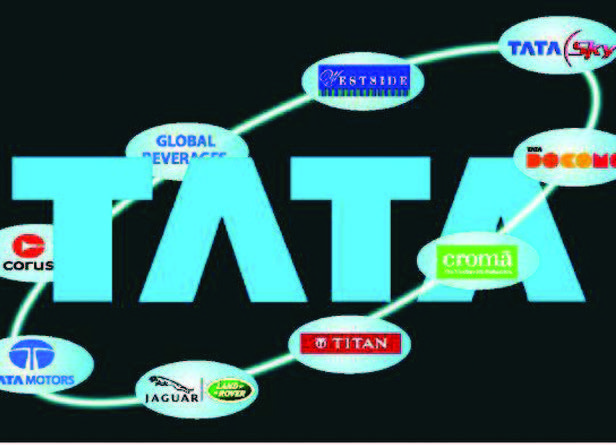
  • TATA GROUP IS INDIA’S MOST VALUABLE BRAND: STUDY

    TATA GROUP IS INDIA’S MOST VALUABLE BRAND: STUDY

    NEW DELHI (TIP): The Tata group has retained its place as the country’s most valuable brand at $21 billion, while the total worth of top-100 Indian brands now stands at $92.6 billion, says a new study. State-run insurance behemoth LIC is ranked second with a brand value of$4.1 billion, followed by public sector bank SBI ($4 billion), Bharti Airtel ($3.8 billion) and Reliance ($3.5 billion).

    The brand value of Tata group has risen by $3 billion in the past one year, primarily led by its international diversification strategy and the flagship firm TCS, as per consulting firm Brand Finance India‘s annual study. “Despite the fact that some divisions within the group have been underperforming, the brand should benefit from the recently outlined plans to invest$35 billion over the next three years and should go some way towards meeting the goal of the Tata chairman, Cyrus Mistry to be amongst the 25 most admired brands globally,” it said.

    Brand value has increased among the top 50 by 10 per cent compared to 2013 with brands such as Tata, Godrej, HCL, and L&T leading the way, said the Brand Finance India 100 list that was released on August 7. Banking firms fared the worst collectively with majority of brands losing value or remaining stagnant due to generally poor governance and weak credit controls especially at the government-owned institutions, Brand Finance said.

    State Bank of India has seen its value drop by ($1.9 billion) as poorer revenue forecasts and bad-loans dampened earnings, it said. HCL Technologies has seen an increase in brand value of 51 per cent by$649 million as its successful strategy has seen the brand win 50 transformational engagements with contract values of$5 billion in the past year distributed across all service lines and geographies.

    “Indian brands have benefited from the rapid economic growth seen over the past ten years,” said Brand Finance’s Savio D’Souza. “Indian brands must take advantage of the improving business sentiment and invest in brand related activities like customer engagement, sponsorships, employee satisfaction and brand tracking to drive the next phase of growth in order for more Indian companies to join the global club of internationally recognised brands,” he added. The average brand value to enterprise value (BV/EV) for India’s top 100 brands is 12 per cent. However, some of the largest PSUs have an average ratio of 3 per cent. The BV/EV ratio shows the proportion of a company’s value accounted for by the brand.

  • Bharti Airtel slumps on Credit Suisse downgrade

    Bharti Airtel slumps on Credit Suisse downgrade

    NEW DELHI (TIP): Shares of Bharti Airtel slump 3.5% after Credit Suisse downgrades the stock to “underperform” from “neutral” and reduces the target price to Rs 265 from Rs 275, citing competition from rival Rel Jio‘s, a unit of Reliance Industries.

    “Given its large spectrum holding and ongoing large-scale investments, we believe RJio’s network at launch can add significant capacity to the sector – 60-80% of Bharti’s current installed capacity,” Credit Suisse said in a report on Thursday. The stock has 32 “buys”, 9 “holds” and 2 “sell” ratings, Thomson Reuters data shows.

  • IPL 7 SUSPENSION COULD LEAD TO RS 20K CRORE LOSS

    IPL 7 SUSPENSION COULD LEAD TO RS 20K CRORE LOSS

    NEW DELHI (TIP): With the Supreme Court proposing the suspension of Chennai Super Kings and Rajasthan Royals from IPL 7 over the spot-fixing and betting scandal, India‘s biggest and hottest sports property and BCCI‘s most sumptuous cricket tournament faces a potentially unprecedented crisis.

    If the IPL 7 is fully scrapped, the total loss of business could amount to Rs 20,000 crore, according to consultancy firm KPMG in India, which has estimated that a season of IPL generates combined revenues of around $3.2 billion for various sectors. However, if only CSK and RR are made to stay away from this year’s edition, the loss would be around Rs 9,000 crore.

    If CSK and RR are forced to quit this edition, reducing to a six-team, home-andaway league, the number of games will drop from 60 to 34; almost 45% fewer games. “It would negatively impact viewership, ad inventory, jersey sponsorships, licensing and merchandising deals and channel partnerships. This would also have a cascading impact on hospitality, travel, security and associated sectors. Considering IPL teams generate Rs 1.5-Rs 3 crore per match, the total value lost just on account of gate revenues alone would be around Rs 40-78 crore,” says Jaideep Ghosh, head, sports advisory services at KPMG in India.

    There could be other issues emerging as well. For instance, players’ payments for the year are scheduled to begin shortly. “Not paying them could create legal complications,” an IPL business insider said. Most teams have already invested in promotional material worth crore of rupees, he added. Industry insiders also mention that PepsiCo, IPL’s title sponsor, might try to renegotiate its deal with the BCCI depending on the final judgment. In 2012, PepsiCo had beaten telecom major Bharti Airtel to become the league’s title sponsor, with a bid of Rs 396.8 crore for five seasons starting 2013.

    Interestingly, CSK’s skipper MS Dhoni is also a brand ambassador for the New York-based food and beverage giant. PepsiCo, however, refused to speculate on what could be at this stage. “The matter is sub-judice. We would not like to offer any comment,” said a PepsiCo India spokesperson. Another major sponsor, Vodafone, also declined to comment. Moving the first half of IPL 7 to UAE has also galled companies. “Sponsors are noticeably worried about their investments in the IPL this time. Stadiums in UAE are smaller than the ones here. For starters, instadia sales will be lower,” says Ghosh.

    Advertising revenues will also be hit significantly if the IPL gets stalled. According to Navin Khemka, managing partner of ZenithOptimedia, a media-buying firm that represents consumer goods major Reckitt Benckiser among others, Rs 700 crore to Rs 1,000 crore of advertising revenues will be affected. “A 10-second spot is being sold for Rs 4.5-5 lakh. If the two teams don’t play, with a lesser number of matches, broadcasters will be forced to bring the ad rates down and we could see smaller advertisers coming in,” he says.

    Prasana Krishnan, business head of Multi Screen Media’s (MSM) sports entertainment channel Sony Six, which has the television broadcasting rights of the IPL, sounds wary as he says, “Give us a few more days. We are also watching the space.” IPL teams such as, Delhi Daredevils, Kolkata Knight Riders (KKR) and Rajasthan Royals shied away from sharing their views on the impending scenario. While CEO and MD of KKR Venky Mysore and CEO of Delhi Daredevils Hemant Dua were not available for comment, a spokesperson for Rajasthan Royals preferred not to comment when contacted by TOI. “We would prefer to wait and watch before airing our views.”

  • SAFARICOM, AIRTEL BID FOR ESSAR’S YU

    SAFARICOM, AIRTEL BID FOR ESSAR’S YU

    NAIROBI (TIP): Kenya‘s two biggest telecoms operators, Safaricom and the local unit of Bharti Airtel, have made a joint bid for the smallest operator, Indian group Essar Communications’ Yu, the industry regulator said. The Communications Commission of Kenya (CCK) said it had received applications from the firms to allow the transaction that will see Safaricom and Airtel spend a combined $100 million.

    Local newspaper reports said Safaricom, which is 40% owned by Vodafone, will get Yu’s infrastructure such as base stations in a bid to improve the quality of its network. Meanwhile Airtel is expected to acquire the subscriber base that Yu has built up since entering the Kenyan market in 2008, said The Sunday Nation newspaper. Bob Collymore, CEO of Safaricom, said they would make a formal announcement when the deal is finalised.

  • SPECTRUM SALE EXCEEDS EXPECTATIONS

    SPECTRUM SALE EXCEEDS EXPECTATIONS

    NEW DELHI (TIP):
    After 10 days of intense bidding, eight telecom companies, including Bharti Airtel and Vodafone India, on Thursday, bought spectrum worth a total of Rs.61,162.22 crore against the government’s estimate of Rs.47,933 crore. The Finance Ministry will now get revenues to the tune of Rs.18,296 crore this fiscal from the auction against the initial projection of Rs.11,340 crore. The value of the premium 900 MHz band spectrum, available only in three metro circles of Delhi, Mumbai and Kolkata, stood at Rs.23,589.62 crore (85 per cent higher than the value of the reserve price). Here, Bharti Airtel and Vodafone India, whose licences are expiring this year, managed to get the desired quantity of radio waves to ensure uninterrupted services to their customers. In the 1800 MHz band, radio waves available in all 22 telecom circles, the net value was put at Rs.37,572.60 crore .

    All of 46 MHz spectrum in the 900 MHz band was sold, but 78 blocks of the 390 MHz spectrum in the 1800 MHz band remained unsold. Here, the top three circles in terms of net value are: Delhi (Rs.7,644 crore), Mumbai (Rs.6,364 crore) and Maharashtra (Rs.4,064 crore). While Assam surprised all by clocking the highest value for spectrum in percentage terms — Rs.411.54 crore, which is 515 per cent over its reserve price of Rs.79.80 crore. Terming the auction as ‘extremely successful’, Communications and IT Minister Kapil Sibal told journalists: “The total revenue that will come to the government is Rs.61,162.22 crore…To that extent, particular auction has been extremely successful.”

    When asked whether high valuation of spectrum would lead to hike in mobile tariffs, he said: “Auction will really be successful if we are able to provide efficient service to consumers…The ultimate objective if any auction which has to provide service is that the service must be provided efficiently and at a relatively affordable price. We hope the tariffs will remain reasonable in the years to come.” Stating that he did not foresee any impact on tariffs, Telecom Secretary M. F. Farooqui said companies would have factored in all aspects before bidding for spectrum.

    “Market sentiment, economic situation and clarity in regulatory framework impact (spectrum) prices…We only provided transparent environment. Companies know their business better…If they have bid, they must have calculated the value of spectrum,” he said, and added that the telecom sector was poised for another round of growth where data usage would see a spurt.

    Cos seek cut in levies
    Though successful companies did not talk about any immediate increase in tariffs, they rued about ‘unreasonable’ reserve prices and demanded cut in levies imposed on telecom service providers. Stating that higher spectrum prices could impact the objectives of the telecom policy related to rural penetration, broadband for all, internet access, Rajan S. Mathews, Director-General, Cellular Operators Association of India (COAI), which represents GSM operators, said: “It remains to be seen if the operators will have the financial resources to invest in networks and marketing after bearing the high spectrum costs…To help the industry overcome this huge financial burden, the government should address the high tax/levy structure on the industry.”

  • AIRTEL 3G SUBSCRIBER BASE UP 18%

    AIRTEL 3G SUBSCRIBER BASE UP 18%

    NEW DELHI (TIP): India‘s leading GSM service provider Bharti Airtel has posted an increase in its data ARPU (Average Revenue per Unit) at Rs 75 in the third quarter of 2014, against Rs 70 in the previous quarter.

    Bharti Airtel’s blended ARPU has also reached Rs 195 during the quarter, up from Rs 192 in the previous quarter. Interestingly, the company’s voice ARPU grew just 1 percent to Rs 161 in the quarter. The telco’s non-voice mobile revenues have been growing at a steady pace.

    Airtel’s non-voice mobile revenues now contribute 17.2% to the total revenues, wherein data service’s share stands at 10.3%. The contribution of messaging and VAS segments to the total mobile revenues plunged at 6.1%, as compared to 6.7% in the second quarter of 2014. The telco has posted a strong growth in its data subscribe base. Bharti Airtel witnessed addition of 3.8 million data subscribers, leading to overall data customer base to 54.4 million.

    During the third quarter, Bharti Airtel’s 3G customer base increased by 18% sequentially to 9.5 million with data usage per customer increasing by 8% q-o-q. The company had 8 million 3G subscribers in the second quarter of 2014. Data usage per user also increased to 249 MB in the third quarter, against 231 MB in the previous quarter. Due to reduction in data tariffs, Data realization rate per MB declined marginally to 30.1 paise.

    Airtel also increased the number of 3G sites in the country during the quarter. It now operates 28,179 3G sites in the country, up from 26,616 3G sites in the previous quarter. Idea Cellular, which recently posted its quarterly results, also showed a strong growth in the data segment with 2.5 million new 3G subscribers. The company’s total 3G subscriber base stood at 8.7 million in the third quarter. Idea Cellular’s blended ARPU also reached Rs 169, while blended data ARPU (2G+3G) jumped significantly during the quarter to reach Rs 91, up from Rs 55 in the previous quarter

  • BHARTI AIRTEL Q2 NET PROFIT DROPS 29% TO RS. 512 CRORE

    BHARTI AIRTEL Q2 NET PROFIT DROPS 29% TO RS. 512 CRORE

    NEW DELHI (TIP): Telecom major Bharti Airtel on October 30 reported a 29 per cent decline in consolidated net profit at Rs. 512 crore for the quarter ended September 30, 2013, mainly on account of increase in finance cost and Forex losses due to rupee depreciation. The company had posted a net profit of Rs. 721.2 crore for the same period in last financial year. “The continued depreciation of the Indian rupee has resulted in Forex restatement and derivative losses of Rs. 342 crore versus Rs. 25 crore loss for Q2, FY’13. Consequently, the consolidated net income came at Rs. 512 crore, as against Rs. 721 crore in the corresponding quarter last year,” Bharti Airtel said in a statement. The company’s consolidated net debt has reduced to $9,697 million resulting in the net debt to EBITDA ratio (in U.S. dollar terms) at 2.18 times as compared to 2.59 times at the end of the same quarter last year, it added. The consolidated revenues of the company, however, grew by 10 per cent to Rs. 21,342.8 crore from Rs. 19,408.5 crore in the corresponding quarter last year.

    Bharti Airtel saw 100 per cent increase in its revenue from the mobile Internet segment at Rs. 1,503 crore, accounting for 39.1 per cent of the overall incremental revenue. “Mobile Internet is now a major engine of growth for Airtel across all geographies,” Bharti Airtel Chairman Sunil Bharti Mittal said in the statement. The company had last month increased rates of mobile internet by about 25 per cent and reduced benefits under certain schemes by about 50 per cent. Airtel saw 28.8 per cent increase in revenue of Digital TV and 20.8 per cent in airtel business (B2B) division. International revenues of the company grew by 17.9 per cent on yearly basis in rupee terms with Africa growing by 16.1 per cent Y-o-Y and South Asia by 54.4 per cent. The voice usage per customer increased by 20 minutes per month to 437 minutes in the reported quarter from 417 minutes in the second quarter of FY’2013, the company said. Airtel saw increase in data usage per customer by 98 megabytes to 231 MBs in Q2 FY’14, from 133 MBs in Q2 FY’13. The average revenue of the company per customer moved up by Rs. 15 to Rs. 192 during the reported quarter, it said. Shares of Bharti Airtel were trading at Rs. 355.40, up by 4.22 per cent, on BSE after announcement of results in morning hours.

  • Telcos’ future positive, but near-term pressure on margin to stay

    Telcos’ future positive, but near-term pressure on margin to stay

    NEW DELHI (TIP): The latest quarterly performance of the three publicly-listed telecom companies — Bharti Airtel, Idea Cellular and Reliance Communications (RCOM) — shows early signs of a pick up in data-driven revenue, helped by higher number of subscribers using data. Besides, operators are in the process of consolidating voice-based business by reducing the number of accounts that do not meet regulatory requirements.

    This has resulted in improved per user parameters. This, coupled with tariff hikes by telcos a few weeks ago, highlights a positive undertone about future revenue and profit growth. However, the nearterm pressure on margins is expected to continue as companies would strive to cut debt burdens, reduce interest outgo, and rationalise network operating costs.

    The pressure on profitability was visible from the performance of operators in the December 2012 quarter. The three operators reported a drop of 30-70 basis points (bps) in margin at earnings before interest, tax, depreciation, and amortisation (EBITDA) margin level. This is despite a moderate revenue growth. For Bharti, though revenue remained flat sequentially, it rose by over 3% after adjusting for one-time gain recorded in the previous quarter.

  • International calls set to become cheaper on new TRAI rule

    International calls set to become cheaper on new TRAI rule

    New Delhi (TIP): International long distance call charges are set to come down with the telecom regulator introducing a new measure that will intensify competition in this segment. TRAI has allowed telephone users of one operator to use calling cards issued by another operator.

    For example, a Vodafone user will now be able to make calls to the US or UK using Reliance’s global calling card. Until now, a Vodafone subscriber was forced to make ISD calls using only Airtel’s network.

    The new system also opens up the game for foreign giants such as BT, AT&T and Orange which can now sell their voice calling cards to retail and enterprise users in India. These multinational firms, at present are offering only data services to large corporates.

    TRAI has directed all operators to open up their access networks to enable customers to make the choice and use calling cards of other players.

    According to industry watchers, this could trigger a price war in a segment, where tariffs have remained flat over the past few years. In addition, consumers could also get dynamic pricing on various international routes. An operator with more traffic to the Gulf region could offer cheaper calls than another player which has heavy traffic on the US route. Although there are 27 companies in the country with a licence to offer international long distance services, most of them are not offering voice calling facility to retail users. That’s because the telecom company which owns the subscriber does not allow another operator to give access to their services. As a result, ISD tariffs in the country have not declined for many years. A call to the US, for instance, is priced at around Rs 7, which has been at the same level since 2008.

    The TRAI is examining a number of other aspects in the long distance telephony segment, including ways to bring competition in the cable landing station segment. There are 12 undersea cables landing on Indian shores but most of the landing stations are controlled by just two players — Bharti Airtel and Tata Communications. According to other ILD players, this has kept the landing charges artificially high which in turn is adding to the bandwidth cost.

  • Tech Mahindra sets up three 4G labs

    Tech Mahindra sets up three 4G labs

    MUMBAI (TIP): Tech Mahindra has set up three laboratories for Long Term Evolution technology, one in Delhi and one each in Pune and Bangalore. The software services provider, in which vehicle manufacturer Mahindra & Mahindra holds about 48 per cent stake, intends to work along with companies readying to launch the services in the country.

    Long Term Evolution (LTE), commonly called 4G, is a standard for high-speed data communication for mobile phones and data networks. In India, 4G (which is 4-10 times faster than 3G) licences were issued to six operators, with four of them actively looking to deploy the services.

    Will Support Operators

    “We will support the operators to deploy the services. We have been working with telecom operators in many countries, including the major ones, and we intend to provide this expertise here in India,” Tech Mahindra Head of Mobility Business Jagdish Mitra said.

    However, Mitra declined to names the companies, citing confidential clauses. He also did not disclose the investments Tech Mahindra has committed for the technology, nor the expected returns. Tech Mahindra has set up a device lab in Delhi. It has also set up an application and network integration lab each in Pune and Bangalore. Tech Mahindra would provide system and network integration services, security services and configuring of new and emerging devices for 4G services.

    Other Players

    Bharti Airtel, the country’s largest telecom operator, has already launched 4G services in two circles, Kolkata and Bangalore. Other three major players — Reliance Industries, Tikona Digital Networks and Aircel — are expected to launch the services by this yearend, or in early 2013.