Tag: Bhutan

  • Bhutan: Land of the Thunder Dragon

    Bhutan: Land of the Thunder Dragon

    The ‘Land of the Thunder Dragon’ – Bhutan nestles in the mountainous regions of the Eastern Himalayas and is one of the cleanest countries in the South Asian region. A remote kingdom that still clings to its Buddhist culture but embraces modernization, Bhutan is a land of beautiful valleys, snow-clad mountain views, and lush greenery. Bhutan’s rich cultural heritage is reflected in its ancient monasteries, intricate temples, and colorful festivals.
    Bhutan’s main tourist hubs include the capital town of Thimphu and the beautiful city of Paro. Apart from these, Bhutan is known for its iconic Tiger’s Nest Monastery, perched dramatically on a cliffside, and the Punakha Dzong, a majestic fortress with stunning architecture and many trekking routes.
    Bhutan is a unique country as it’s the only country in the world that measures success in terms of Gross National Happiness, prioritizing the well-being of its citizens over material wealth. Because of this, Bhutan has attracted tourists from around the globe due to its warm hospitality and ever-smiling approach to guests. The colorful clothing, festivals, and hearty food is a testament to their way of life in these misty mountains where resources are scarce, but enthusiasm is not.
    You can explore the magnificent dzongs (fortresses) that serve as religious and administrative centers throughout the country. The country also offers adventure activities such as trekking, hiking, rafting, and even archery competitions for those who enjoy them. The treks in Bhutan are of varying difficulty, but they all offer a fantastic experience coupled with their untouched vegetation and age-old attractions.
    Top Places to Visit in Bhutan
    1. Paro
    Paro is home to Bhutan’s only international airport and is surrounded by scenic valleys and historical sites.
    – Tiger’s Nest Monastery (Paro Taktsang): One of Bhutan’s most iconic landmarks, this monastery is perched on a cliffside and requires a rewarding hike to reach.
    – Rinpung Dzong: A beautiful fortress that houses a monastery and provides stunning views of Paro Valley.
    – National Museum of Bhutan: Offers insights into Bhutanese culture, history, and art.
    2. Thimphu
    The capital city of Bhutan, Thimphu, seamlessly blends tradition with modernity.
    – Buddha Dordenma Statue: A massive golden statue overlooking Thimphu Valley.
    – Tashichho Dzong: The seat of Bhutan’s government and a stunning example of traditional Bhutanese architecture.
    – National Memorial Chorten: A revered stupa built in honor of the third King of Bhutan.
    – Motithang Takin Preserve: A sanctuary for Bhutan’s national animal, the takin.
    3. Punakha
    Known for its pleasant climate and historical significance, Punakha is a must-visit.
    – Punakha Dzong: One of the most beautiful dzongs in Bhutan, located at the confluence of the Pho Chhu and Mo Chhu rivers.
    – Suspension Bridge: The longest suspension bridge in Bhutan, offering panoramic views.
    – Chimi Lhakhang: Also known as the Temple of Fertility, this monastery is dedicated to the Divine Madman, Lama Drukpa Kunley.
    4. Bumthang
    Regarded as Bhutan’s spiritual heartland, Bumthang is dotted with ancient temples and monasteries.
    – Jakar Dzong: A fortress offering spectacular valley views.
    – Kurjey Lhakhang: A sacred temple where Guru Rinpoche meditated.
    – Tamshing Lhakhang: Known for its ancient religious murals.
    5. Haa Valley
    A hidden gem, Haa Valley is perfect for those looking to escape the usual tourist trail.
    – Lhakhang Karpo and Lhakhang Nagpo: Sacred temples with deep spiritual significance.
    – Chele La Pass: One of the highest motorable passes in Bhutan, offering breathtaking views of the Himalayas.
    6. Phobjikha Valley
    A glacial valley famous for its picturesque landscapes and black-necked cranes.
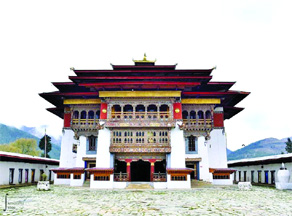
    – Gangtey Monastery: A stunning monastery with an active monastic community.
    – Black-Necked Crane Center: A conservation center dedicated to protecting the endangered cranes.

    Unique Experiences in Bhutan
    Attend a Tshechu Festival: Bhutanese festivals are vibrant and filled with masked dances, music, and cultural performances.
    Trekking in the Himalayas: Trails such as the Snowman Trek and Druk Path Trek offer breathtaking scenery.
    Hot Stone Bath: A traditional Bhutanese healing experience using heated river stones.
    Explore Traditional Bhutanese Cuisine: Try Ema Datshi (chili cheese), Phaksha Paa (pork with red chilies), and Ara (local liquor).
    Travel Tips for Bhutan
    Visa Requirements: Tourists (except those from India, Bangladesh, and the Maldives) require a visa and must book their trip through a registered Bhutanese tour operator.
    Sustainable Development Fee (SDF): Bhutan charges an SDF to promote sustainable tourism.
    Respect Local Customs: Bhutanese culture values respect for traditions, so dress modestly when visiting religious sites.
    Currency: Bhutanese Ngultrum (BTN) is the official currency, but Indian Rupees are also widely accepted.

  • Top leaders of Bangladesh, Sri Lanka, Maldives, 4 other nations likely to attend Modi’s oath ceremony

    New Delhi (TIP): Top leaders of Bangladesh, Sri Lanka, the Maldives, Bhutan, Nepal, Mauritius and Seychelles are likely to attend the swearing-in ceremony of Prime Minister Narendra Modi over the weekend, authoritative sources said on June 6.
    It is learnt that India has already sent invites to Bangladesh Prime Minister Sheikh Hasina, Sri Lankan President Ranil Wickremesinghe and some other leaders of the countries chosen to grace the ceremony.
    Nepalese Prime Minister Pushpa Kamal Dahal ‘Prachanda’, Maldivian President Mohamed Muizzu, Bhutanese Prime Minister Tshering Tobgay, Prime Minister of Mauritius Pravind Jugnauth and President of Seychelles Wavel Ramkalawan are among the leaders being invited to Modi’s swearing-in ceremony.
    Modi is all set to take charge as the prime minister for a historic third consecutive term with the Bharatiya Janata Party-led National Democratic Alliance (NDA) winning 293 seats in the Lok Sabha polls.
    The guest list of foreign leaders for Modi’s swearing-in ceremony was primarily guided by New Delhi’s “Neighbourhood First Policy” and its strategic focus on island nations considered important in the Indian Ocean region, it is learnt.
    Modi is likely to take oath on June 9.
    The invitation to Muizzu assumes significance as it came amid frosty ties between the two countries.
    The ties between India and the Maldives came under severe strain since November last year when Muizzu, known for his pro-China leanings, took charge as Maldivian president.
    Within hours of his oath, he had demanded the withdrawal of Indian military personnel from his country. The Indian military personnel were replaced by civilians earlier this month.
    The media division of President Wickremesinghe’s office on Wednesday said Modi invited him to the swearing-in ceremony during a phone conversation. It said Wickremesinghe accepted the invite.
    “During the conversation, Prime Minister @narendramodi invited President Wickremesinghe to his swearing-in ceremony, which President @RW_UNP accepted,” it said on X.
    Modi also had a phone conversation with Hasina on Wednesday. In the phone conversation, Modi invited Hasina to attend his swearing-in ceremony and she accepted it, diplomatic sources said.
    Modi held separate phone conversations with Prachanda as well as Jugnauth.
    On Thursday, Bhutanese PM Tobgay called up Modi and congratulated him on the victory of the NDA.
    “Prime Minister Tobgay appreciated Prime Minister Modi’s visionary leadership in the last decade, and conveyed his warm wishes for his successful third term,” an Indian readout said.
    “The prime minister thanked prime minister Tobgay for the warm felicitations. The prime minister conveyed that India accords the highest priority to its exemplary partnership with Bhutan,” it said.
    It said India-Bhutan partnership is characterized by utmost trust, goodwill, and mutual understanding at all levels and is reinforced by robust people to people linkages and close economic and development partnership. (PTI)

  • Former Secretary General Ban Ki-moon, three veteran diplomats honored with 2023 Diwali ‘Power of One’ Awards at UN

    Former Secretary General Ban Ki-moon, three veteran diplomats honored with 2023 Diwali ‘Power of One’ Awards at UN

    “The ideals of Diwali are the ideals of UN Charter” : Chair of Diwali Foundation USA Ranju Batra

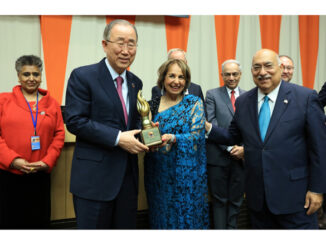
    UNITED NATIONS (TIP): Former UN Secretary General Ban Ki-moon and three veteran diplomats were honored with the annual ‘Diwali Power of One Awards’, hailed as the ‘Oscars of diplomacy’, for their selfless efforts to “help form a more perfect, peaceful, and secure world for all”. The former UN chief was honored with the Lifetime Achievement Award at the 2023 Diwali Stamp — The Power of One Award ceremony organized by the Diwali Foundation USA. The other awardees for the year 2023 are former permanent representative of Bosnia and Herzegovina to the UN Ambassador Mirsada Colakovic, former permanent representative of South Korea to the UN Ambassador Kim Sook and 72nd UN General Assembly president and EU Special Representative for the Belgrade-Pristina Dialogue Miroslav Lajcak. They were honored at a special ceremony held in the UN Headquarters on Monday, December 11.

    Former Secretary General Ban Ki-moon addressing the gathering after receiving the award. Seen, among others, are India’s Permanent Representative to the United Nations, Ambassador Ruchira Kamboj ( extreme left) , Ranju Batra (4th from left), and Ravi Batra (behind Mr. Ban Ki-moon) (Photo : Mohammed Jaffer / SnapsIndia)

    Ban commended the work and “forward-thinking vision” of the Diwali Foundation USA “for advancing vital light in a world of increasing darkness”.

    Ban said the world of today “seems fractured like never before” as he cited the COVID-19 pandemic, climate crisis and regional conflicts, particularly “regional crisis as we see today in the Middle East and Ukraine”.

    “But it is exactly at times such as these that the work of the United Nations is indispensable. The United Nations and its pursuit of peace, human rights and sustainable development exemplifies the values and principles that we should all espouse to replicate,” he said. Ban was the eighth Secretary-General of the United Nations, serving two terms as the world’s top diplomat from January 2007 to December 2016.

    He said that as the world moves into 2024 and beyond, “we share a common destiny illuminated by peace, sustainability and prosperity. Let us work together and expand our unified efforts to realize this shared destiny for all. This is your political responsibility and for me, my moral responsibility as a former Secretary General” and as an awardee of the Power of One honor.

    India’s Permanent Representative to the UN Ambassador Ruchira Kamboj, in her address to the event attended by UN diplomats, envoys, civil society members and policy experts, said that Diwali is a celebration that holds a very special place in the hearts of over a billion Indians across the globe.

    Diwali “is more than just a festival. It is a sentiment that embodies the triumph of light over darkness, knowledge over ignorance and hope over despair”, she said.

    Kamboj said, “as we light the lamps of Diwali, let us remember that every small light, no matter how small, can make a significant difference in dispelling the shadows”.

    Sri Lanka’s Permanent Representative to the UN Ambassador Mohan Pieris said “Deepawali has become truly a secular festival in the world, since its message is not exclusively restricted to any religious creed.

    “This festival has united the global community with the central message that we need more than ever the humanistic ideals to engage the inglorious wars, which are bleeding the innocence of humanity,” he said.

    Pieris underscored that for the world to have peace, it is important that the whole world must be united to save the higher ideals of humanity, which have evolved since the millennium in various religious traditions.

    Chair of Diwali Foundation USA Ranju Batra, who had spearheaded efforts for over seven years to get a commemorative ‘Forever Diwali’ stamp issued by the US Postal Service in 2016, said: “Diwali is a message of peace.” She said her journey for the Diwali stamp is seen as a “metaphor of peace and harnessing its power to promote excellence in diplomacy. The ideals of Diwali are the ideals of UN Charter”.

    She noted that the 2023 Power of One awardees have clearly demonstrated that “one person can make a difference”. The Diwali stamp celebration is not of a religion or nation but of the spirit of harmonious inclusiveness and cross-cultural understanding that all religions deserve, she said.

    Eminent Indian-American attorney and Chair of National Advisory Council South Asian Affairs and moderator of the award ceremony Ravi Batra said the UN transcends borders and boundaries.

    “The need to acknowledge excellence is critical, generally, but in diplomacy, which is on life support in today’s world, it is essential and that’s how these awards are – the Power of One,” he said, adding that they honor “world class diplomats who have changed the world by what they did”.

    Awardees and organizers of Power of One Awards (Photo : Mohammed Jaffer / SnapsIndia)

    Hailed as the ‘Oscars of Diplomacy’, the awards are presented to former Permanent Representatives or former high-level members of the UN Secretariat or member state, or soon to be “former”, who have “toiled selflessly to help form a more perfect, peaceful and secure world for all”.

    The 2023 Award ceremony was co-organized by the Diwali Foundation USA and Delegation of the European Union to the United Nations, and the Permanent Missions of Chile, Eritrea, Georgia, India, Kazakhstan, Kiribati, Morocco, Oman and Sri Lanka to the United Nations. The co-sponsors included the Permanent Mission to the United Nations of Albania, Armenia, Austria, Azerbaijan, Belarus, Bhutan, Cyprus, France, Germany, Ghana, Hungary, Iraq, Israel, Kuwait, Kyrgyzstan, Malaysia, Mexico, Nepal, Philippines, South Korea, South Africa, Spain, Tajikistan, Thailand, Turkiye, Turkmenistan, Ukraine, United Kingdom, United States, Uzbekistan, Vietnam and Palestine, and International Atomic Energy Agency (IAEA-NY) among others.

    Diwali Foundation USA was established in 2017 to promote a peaceful and consensus-based process to achieve societal “good, as befits the high hopes and ideals of humanity enshrined in the United Nations Charter”.

    The Foundation established ‘The Power of One’ awards to celebrate and highlight the important work done in a peaceful manner, especially at the United Nations.

    Previous honorees include former UN assistant secretary general and deputy executive director of UN Women, Lakshmi Puri, former UK Ambassador to the UN, Matthew Rycroft, former permanent representative of Georgia to the UN, Kaha Imnadze, and former permanent representative of Grenada to the UN Keisha McGuire.
    (Source: PTI)

    The traditional lamp lighting . Mr. & Mrs. Ban Ki-moon with organizers of Power of One Award lighted the lamp. (Photo : Mohammed Jaffer / SnapsIndia)
  • Buddha Purnima

    Buddha Purnima

    Also known as Buddha Jayanti or Vaisakhi Buddha Purnima or Vesak, the festival of Buddha Purnima is based on the Asian lunisolar calendar and marks the birth of Gautama Buddha. It is celebrated with great fervour in India, Sri Lanka, Nepal, Bhutan, Tibet and numerous other South East Asian countries including Thailand, Tibet, China, Korea, Laos, Vietnam, Mongolia, Cambodia and Indonesia.
    he birthday of Gautam Buddha, the founder of Buddhism, is celebrated as Buddha Purnima across the world since he was born as Prince Siddhartha Gautama on the Purnima Tithi (full moon day) in 563 BC in Lumbini (modern day Nepal). In Hinduism, Buddha is considered as the ninth avatar of Lord Vishnu hence, this day is commemorated by Buddhists and Hindus all over the world.
    In Theravada Buddhism, it is also observed as the day when Buddha, born as Prince Siddhartha Gautama (c. 563-483 BCE) attained Nirvana (salvation) under the Mahabodhi tree at Bodh Gaya, Bihar, as well as his death anniversary. Gautama Buddha preached Dharma (duty), non violence, harmony and kindness. He left his worldly possessions and princedom at the age of 30 to lead a life searching for the truth, seeking penance in the hopes of liberating himself from suffering (duhkha).
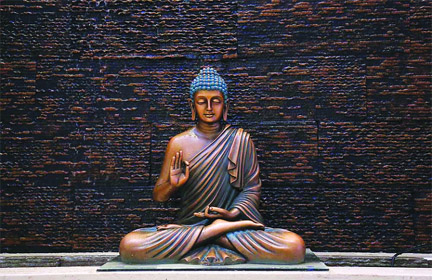
    Devotees of Buddha visit temples, light candles and incense sticks, pray and offer sweets and fruits before the statue of Lord Buddha. Sermons on the life and teachings of Buddha are held and attended by followers all over. People usually dress in white, do not consume non-vegetarian food and distribute kheer, as according to Buddhist lore, on this day a woman named Sujata had offered Buddha a bowl of milk porridge.
    Many followers also free caged birds on this day as a symbol of empathy and compassion for all living beings, one of the most important teachings of Lord Buddha. In India, a large fair takes place in Sarnath, Uttar Pradesh, a major Buddhist pilgrimage site where Buddha is said to have delivered his first sermon after attaining enlightenment.
    Celebrations around the world
    Japan
    The festival in Japan is based on a different legend that says, a dragon appeared in the sky on Buddha’s birthday and poured soma over him, which is a Vedic ritual drink. In the modern arena, Japan celebrates Vesak by pouring amacha, a sweet tea on statues.
    Nepal
    Nepal is home to Lumbini-birthplace of Buddha, and Swayambhu-the holy temple for Buddhists also known as the Monkey Temple. The main door of Swayambhu is opened only on this day; hence, people from all over Kathmandu valley are stimulated by the event. Pilgrims across the world gather in thousands to celebrate Buddha’s birthday at his birthplace.
    Sri Lanka
    Sri Lanka celebrates Vesak for about one week! During this time, the selling of alcohol and fresh meat is prohibited with abattoirs also being closed. The celebrations here include giving of alms and erection of pandals wherein each pandal illustrates a story from the Jataka Tales. Food stalls are set up by Buddhist devotees that provide eatables and drinks to passersby. Also birds, insects and animals are released by the thousands in what is known as a ‘symbolic act of liberation’; of giving freedom to those who are in captivity, imprisoned, or tortured against their will.
    Apart from these, other Asian countries like Korea, Vietnam, Malaysia, Indonesia, and Singapore also participate in processions and prayers by monks and make this day a true symbol of spirituality.
    What Do People Do?
    Many Buddhists visit temples on Vesak to listen to monks give talks and recite ancient verses. Devout Buddhists may spend all day in one or more temples. Some temples display a small statue of Buddha as a baby. The statue is placed in a basin filled with water and decorated with flowers. Visitors to the temple pour water over the statue. This symbolizes a pure and new beginning.
    Many Buddhists pay special attention to Buddha’s teachings during Vesak. They may wear white robes and only eat vegetarian food on and around Vesak. Many people also give money, food or goods to organizations that help the poor, the elderly and those who are sick. Caged animals are bought and set free to display care for all living creatures, as preached by Buddha.
    Government offices, post offices and banks are closed in India on Vesak. Stores and other businesses and organizations may be closed or have reduced opening hours. Transport is usually unaffected as many locals travel for religious celebrations.
    Background
    Gautama Buddha was a spiritual teacher in India. Many scholars are uncertain when he lived. It is believed that Buddha was born at some time between sixth and fourth centuries BCE. Opinions among scholars are generally divided between those who place Buddha’s death about 480 BCE and those who place it as much as a century later.
    Buddha was an influential spiritual teacher during and after his lifetime. Many Buddhists see him as the Supreme Buddha. Festivals to honor Buddha were held for many centuries. The decision to celebrate Vesak as the Buddha’s birthday was formalized at the first conference of the World Fellowship of Buddhists. This conference was held in Colombo, Sri Lanka, in May, 1950. The date was fixed as the day of the full moon in May. Different Buddhist communities may celebrate Vesak on different dates in years when there are two full moons in May. This is because the Buddhist lunar calendar can be interpreted in different ways.
    Symbols
    The dharmacakra or dharma wheel is a symbol often seen during Vesak. It is a wooden wheel with eight spokes. The wheel represents Buddha’s teaching on the path to enlightenment. The eight spokes symbolize the noble eightfold path of Buddhism.