Tag: BJP

  • The MAGA turn: Global fallout and India’s dilemma

    The MAGA turn: Global fallout and India’s dilemma

    India cannot blame Western xenophobia while succumbing to it at home

    “Normally, domestic and foreign policies of countries are inter-related. The Trump administration demonstrates that by aligning its foreign policy with its MAGA supremacism. The BJP managed to largely insulate domestic politics from foreign policy, except in South Asia. While adopting nationalist-majoritarian politics at home, with boundaries between religion and politics removed, its foreign policy continued the old secular line, at least superficially. The US State Department’s reports on human rights practices in India berated the constriction of religious, individual and press freedoms. The 2024 report listed the Citizenship Amendment Act and anti-conversion laws as raising concerns. It, however, ignored the BJP’s non-liberal political trajectory weakening democracy. India-US relations were considered more crucial to the global American strategy.”

    By KC Singh

    US President Donald Trump completes one year in office on January 20. The Economist magazine says he has “turned domestic and international politics on its head”. During the campaign, he looked past Project 2025, produced by the conservative Heritage Foundation. However, in office his barrage of executive orders began implementing Project 2025. This included mass, forceful deportation of suspected aliens without hearing, domestic military involvement (now halted by the Supreme Court), dismantling of the bureaucracy, outsourced to Elon Musk, whose Department of Government Efficiency failed drastically.

    The external policy changes began with the April “Liberation Day” arbitrary tariffs on imports. Then emerged a closer alignment with Israel, a pro-Russia tilt in handling the Ukraine war, an escalated trade standoff with China and a transitory compromise. European NATO allies played along, preferring non-confrontation while examining self-reliance, to manage the US pullback from defense commitments. The National Security Strategy (NSS) of December 4-5 confirmed major US policy mutations.

    The new foreign policy priorities list the “Western Hemisphere” on the top. It refers to the Americas — North and South — resurrecting the 19th century’s Monroe Doctrine, which barred European rivals from interfering in Latin-American affairs. Next comes Asia, with focus on the Indo-Pacific. Unlike the past NSS documents, China is not named as a threat, though it colors the Asian strategy. On December 8, the US allowed the sale to China of Nvidia’s advanced H200 chips.

    India figures as a subtext, expected to help ensure Indo-Pacific security. Then follows Europe. Under the subtitle “Promoting European Greatness”, the NSS document argues that the European challenge exceeds economic stagnation and low military spending. The “real and more stark” prospect is of “civilizational erasure” due to migration policies. Europe’s loss of self-confidence is attributed to the regulatory check on the “growing influence of patriotic parties”. This refers to the far-right’s ascendancy in major European nations. This theory is MAGA-inspired, with the US administration desiring a “new Western order”, dominated by governments led by white Christian nationalist-populists.

    In the UK, the Nigel Farage-led Reform UK is polling 30 per cent support; while in France, Marine Le Pen’s National Rally is at 33.4 per cent and Germany’s AfD is scaling 26 per cent. Europeans saw this support-signaling as regrettable interference in their internal affairs. German Foreign Minister Johann Wadephul retorted that they did not “need to get advice from any other country or party”. German intelligence sees AfD as an extremist group.

    In this disrupted post-1945 global order, where does India fit? Normally, domestic and foreign policies of countries are inter-related. The Trump administration demonstrates that by aligning its foreign policy with its MAGA supremacism. The BJP managed to largely insulate domestic politics from foreign policy, except in South Asia. While adopting nationalist-majoritarian politics at home, with boundaries between religion and politics removed, its foreign policy continued the old secular line, at least superficially. The US State Department’s reports on human rights practices in India berated the constriction of religious, individual and press freedoms. The 2024 report listed the Citizenship Amendment Act and anti-conversion laws as raising concerns. It, however, ignored the BJP’s non-liberal political trajectory weakening democracy. India-US relations were considered more crucial to the global American strategy.

    The BJP would welcome the NSS document now, recommending non-interference in the internal affairs of other nations. The US bureaucracy handling those issues stands disbanded. But domestically, the rising xenophobia in the US is impacting the Indian diaspora, especially their religious practices. The New York Times wrote about the troubles of Sikh truck drivers in the US after two August accidents. Sikhs in the trucking business, many on asylum-related visas, number 1,50,000, probably a quarter of the Sikh diaspora. Federal authorities have asked states like California to review their driving license policy. Canada and Australia have capped student visas, raised fees, heightened scrutiny of forms, etc. The transition to work visas may also be tightened. In New Zealand, a Sikh religious procession was last month disrupted by a far-right Christian group.

    The rising xenophobia in Christian Anglophone and western nations raises concerns. The BJP surely realizes that Hindu groups in India targeting Christians, particularly this year, can provoke retaliation against the Hindu diaspora. Occasional lynchings of Muslims did not impact India’s relations with the Islamic world because the Modi government had successfully engaged the principal Gulf-ruling families. Pakistan only had Turkey and an isolated Iran to join the condemnation. A divided Organisation of Islamic Conference (OIC) lacked the thrust to target India. But Pakistan stands diplomatically revived after wooing Trump and engaging Saudi Arabia and the UAE. It is now better positioned for India-baiting.

    Plus, Bangladesh may elect next month a right-wing government, probably under Islamist Jamaat-e-Islami’s influence. Pakistan and its ISI would celebrate that. Simultaneously, Assam and West Bengal face elections. Communal polarization helps the BJP electorally, especially by brandishing Bangladeshi illegal migration. Can India blame the western xenophobia while succumbing to it internally?

    Punjab may suffer if deportations from the US mount. Narrowing opportunities abroad will block the Punjabi youth’s escape route. Thus, Punjab must develop economic opportunities. Green Revolution 2.0 is overdue. The agricultural and dairy sectors need production and supply chain modernization. If over two lakh Sikhs could salvage the Italian dairy industry and parmesan cheese production, why not the same in Punjab? Similarly pioneering work exists in turning rice stubble into biofuel and organic fertilizer. The chemical fertilizer lobby suppresses such new approaches.

    Punjab needs pro-innovation leadership. Delhi requires non-partisan statesmanship.

     (K.C. Singh is a retired diplomat)


  • Bihar Elections: India’s Drift Toward One-Party Hegemony

    Bihar Elections: India’s Drift Toward One-Party Hegemony

    “It is a profound irony that a party’s rise to power through a fair, transparent, and democratic process can ultimately weaken the very system that enabled its ascent. It raises questions about India’s political trajectory rather than the outcome of a single election. When one party amasses overwhelming political, financial, and institutional power, it becomes a grave threat to a vibrant democracy. The weakening of institutional autonomy, the erosion of electoral transparency, and the shrinking space for dissent all point toward a structural imbalance that no democracy can afford for long. A diverse nation like India can sustain this democratic experience only if there is contestation of ideas, challenging authority, and keeping those in power truly accountable.”

    By George Abraham

    Oh yes, the BJP won again! And if not for the sheer scale of its victory, there would have been nothing novel or particularly intriguing about these election results. So, what now? Are we heading toward a one-party domination of Indian politics, a situation where a single party holds significant power and influence over the political landscape? Are Modi and his colleagues executing a long-term script envisioned by the RSS from behind the scenes? And has the Congress been reduced to a political non-entity, especially in northern India? These questions are not frivolous, and they demand the nation’s serious attention.

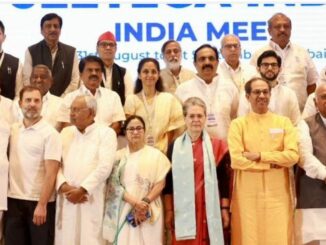
    Undoubtedly, the BJP’s sweeping victory in Bihar will be viewed as a watershed moment for the INDIA coalition, a diverse mix of the Congress and regional parties formed precisely to counter the BJP hegemony. The coalition, which was a significant attempt to unite various political forces against the BJP, had potential, but it struggled to realize it, plagued by internal rivalries and constant jockeying for leadership. The idea of the coalition was based on a sound argument: that the BJP often wins elections with only a plurality of votes. Yet the alliance failed to project a united front or a clear alternative.

    Since the 2024 Lok Sabha elections, the opposition has found itself confronted by a mammoth machinery, one that includes the full strength of the bureaucracy, an increasingly compliant Election Commission, supportive media ecosystems, and virtually unlimited resources from business magnates, electoral bonds, and vested interests. Combined with alleged voter-roll manipulation, which refers to the suspected tampering or removal of voter names from electoral rolls, accusations of EVM vulnerabilities, and selective enforcement of election rules, these forces appear to have contributed to sweeping victories in Haryana, Maharashtra, and now Bihar.

    One wonders whether Nehru and Ambedkar, architects of India’s democratic institutions, could have imagined how far the Election Commission would drift under the current regime. Rahul Gandhi’s explosive revelations on electoral-roll irregularities were met not with alarm but with silence. Even though the data Gandhi cited came directly from the Commission itself, the EC chose not to meaningfully address the complaints or the threat they pose to electoral integrity. Such dismissiveness undermines the very fabric of India’s democratic system.

    According to The Economic Times, the Bihar government under Nitish Kumar credited ₹10,000 each to around 14 million women belonging to self-help groups under the Mukhyamantri Mahila Rojgar Yojana (MMRY). These payments reportedly came just before, or even after, the Model Code of Conduct came into effect. Many analysts and opposition leaders believe this direct cash transfer functioned as a voter-influencing tool targeting a crucial demographic. Sharad Pawar of the NCP even called the payout a “threat to democracy,” arguing it unfairly tilted the electoral playing field toward the ruling coalition.

    This raises another critical question: where did such a massive sum of money suddenly come from? Jan Suraaj leaders allege that World Bank–financed project funds were diverted for this purpose, an accusation, if true, carrying serious governance, legal, and international implications. Even setting that aside, the BJP’s vast reservoir of financial resources or its access to billionaire networks, makes such electoral mobilizations easy to engineer. The result was a record-breaking turnout among women voters in Bihar. If misappropriation of multilateral funds is ultimately proven, it would demand a rigorous investigation.

    Another deeply troubling issue concerns the large-scale removal of voters from the electoral rolls. Reliable reports indicate that around 65 lakh names were deleted prior to the election, potentially disenfranchising marginalized communities and altering outcomes in closely contested constituencies. While the ruling party defends this as a necessary “cleanup,” the unprecedented scale raises serious questions about voter suppression and public trust in the electoral system’s integrity.

    Rahul Gandhi has further demonstrated, using official data, how “ghost voters” proliferate across rolls—names with invalid or nonexistent addresses, large clusters registered at single locations, and even foreign nationals inexplicably listed as Indian voters. These anomalies suggest either a breach of the central voter database or the misuse of authorized access. The existence of such ghost entries conveniently paves the way for manipulating outcomes, especially if combined with EVM systems that the Election Commission refuses to make fully transparent. The software on these machines is not open source, and multi-phase elections often involve long periods during which EVMs are stored without clear public access to CCTV footage that is sometimes destroyed prematurely. These conditions naturally erode public confidence.

    The opposition, for its part, has not helped its own cause. Beyond opposing the BJP, it rarely projected a cohesive ideological narrative. It lacked a compelling alternative vision for development, economic growth, or social welfare. Internal factionalism, weak grassroots organization, and inconsistent messaging have all contributed to its decline. Meanwhile, the NDA’s disciplined focus on religious nationalism and welfare delivery has resonated more effectively with voters.

    In northern India, the Congress has indeed been performing poorly in election after election. Its repeated “introspection” exercises have yielded little. Rahul Gandhi often appears as a lone voice, while many in his party remain disconnected from grassroots realities. It is past time for Congress to adopt serious organizational reforms, demand stronger electoral safeguards, such as paper ballots, and articulate an agenda and engage in a more sustained on the ground campaigning. At the very least, candidate selection must be merit-based, with tickets finalized at least six months in advance to give them any realistic chance of success.

    Meanwhile, the long-term ideological agenda of the RSS is coming increasingly into focus. It appears less interested in preserving the diversity of India’s political ecosystem and more committed to reshaping the nation along lines of cultural and religious conformity. Weakening the independence of institutions such as the Election Commission, judiciary, and media seems central to that strategy, consolidating lasting political dominance.

    It is a profound irony that a party’s rise to power through a fair, transparent, and democratic process can ultimately weaken the very system that enabled its ascent. It raises questions about India’s political trajectory rather than the outcome of a single election. When one party amasses overwhelming political, financial, and institutional power, it becomes a grave threat to a vibrant democracy. The weakening of institutional autonomy, the erosion of electoral transparency, and the shrinking space for dissent all point toward a structural imbalance that no democracy can afford for long. A diverse nation like India can sustain this democratic experience only if there is contestation of ideas, challenging authority, and keeping those in power truly accountable.

    The nation will also need opposition parties not to be fragmented or intimidated, and institutions that safeguard fairness not to be compromised. Elections may continue to be held like in many authoritarian nations, but the spirit of democracy will slowly fade and die. A true democracy requires competition, scrutiny, debate, and accountability, without which the country will move toward conformity and centralized dominance. India now stands at a crossroads, where citizens and institutions must rethink and evaluate the political trajectory we are on, and take a vow to uphold constitutional values. Protecting democracy and the hard-fought freedom won by our great leaders like Mahatma Gandhi and Jawaharlal Nehru do not simply rest in the hands of the opposition, and the nation’s future is shaped not by the will of one single entity, but by the voices and aspirations of all its people.


    (George Abraham is a former Chief Technology Officer of the United Nations. He is vice chair of IOC USA. He can be reached at gta777@gmail.com)

  • India’s Election System in Shambles: Restore Democracy with paper ballots and audited voter rolls

    India’s Election System in Shambles: Restore Democracy with paper ballots and audited voter rolls

    By George Abraham

    The recent revelations by Rahul Gandhi, the opposition leader in India, pointing to the election irregularities in Karnataka and Maharashtra, are shocking and yet sad. Undoubtedly, the solid evidence provided to show the massive fraud orchestrated to defy voters’ will is a clear indication of the demise of a venerable institution like the Election Commission, which may prove to be a death knell for Democracy itself.

    The Election Commission has become a vassal in the hands of the BJP, infringing its independence and transforming it into a subsidiary of the government machinery, contrary to what the framers of the Constitution intended. The removal of the Chief Justice from the EC selection process, while supplanting him with the Home Minister and appointing Government bureaucrats amenable to the whims of the ruling disposition, was the beginning of the end of this great institution that was known for its independence and integrity. These explosive revelations throw into doubt not only the integrity of past elections but also their usability and value, as they have become a mockery of deceit and thievery.

    The crux of the matter here is the overreach of the Executive branch, exercising its power in any way possible to maintain control, whether the people desired it or not. Transparency and fairness in an election are no longer their concern as they are obsessed with power grab to perpetuate an ideology that has little or no sway over the average voter, who is struggling to survive in Modi’s economy.

    At a press conference on August 7, 2025, Rahul Gandhi leveled serious allegations of electoral fraud in the Mahadevapura Assembly segment (part of Bangalore Central), accusing the Election Commission (EC) of colluding with the BJP to engineer what he termed “vote chori” (vote theft). Mr. Gandhi alleges manipulation via duplicate registrations, fake addresses, misused Form 6 entries, and more and as a result 100,000 votes were stolen in Mahadevapura constituency in Bangalore via five manipulating tactics: 11,965 duplicate voter entries, 40,009 fake or invalid addresses, 10.452 bulk entries from a single or invalid address, 4132 entries with invalid photos and 33,692 misuses of form, 6 (new voter additions). Mahadevapura (SC) stands out: it recorded approximately 115,046 vote margin—the largest among all assembly segments.

    The question everyone is now asking is whether the EC is directly involved in orchestrating voter duplication to skew results and aid the BJP government. In West Bengal, Trinamool Congress identified duplicate EPIC (Electors Photo Identity Card) numbers assigned to persons across constituencies. Similar accusations have surfaced in Maharashtra and Delhi, raising concerns about “fake voters” being inserted into the rolls.

    Congress also alleges large-scale voter fraud in the recently concluded Maharashtra elections. Between the 2024 Lok Sabha and Maharashtra Assembly elections (in 5 months), approximately 40.8 lakh new voters were added to the voter rolls. Of these newly added voters, over 18 lakhs were concentrated across 78 constituencies in just 13 Lok Sabha segments. BJP and its allies won 68 of them. Congress alerted the authorities also about the arbitrary deletion of voters, about 10,000 per constituency, followed by large-scale additions, potentially disenfranchising voters who may be loyal to the opposition.

    Historical research has always shown critical vulnerabilities in EVM (Electronic Voting Machines)  hardware and software. Although VVPATS were added to allay those concerns, only a tiny fraction (0.3%) of machines get their VVPATS counted. The Election Commission has always rejected the close monitoring of EVMs and asserted that they are tamper-proof. We are living in an age where even sophisticated systems with high levels of security are under attack from cybercriminals. The Defense Department in the U.S. believes that 15% of the “specially built for Pentagon” chips that go into aircraft and missiles are counterfeit, and they have no way of finding out.  However, EC aims to convince the country that the commodity microcontroller and other electric components in an EVM pose no greater threat than the Systems in a technologically advanced country like the U.S. There may not be a machine in the world that is truly impenetrable!

    Therefore, the critical question is whether these two threads are linked – the voter roll fraud and EVM manipulation. There is a growing body of critics who also believe that voter list fraud and EVM manipulations are intrinsically linked. What is the point of adding fake or ghost voters if they are unable to vote, as they are simply non-existent? If ghost voters “vote” (or their votes are effectively pre-programmed), the EVM may record ballots favoring a particular party. Thus, even if turnout looks ‘normal’, the final vote share distribution can be tilted systematically.

    There have been sporadic and unverified reports of discrepancies between the number of votes polled and those counted by some of the defeated candidates, alleging thousands of extra votes in certain constituencies. In another instance, errors during mock polling (in Kasaragod, Kerala) saw EVMs registering extra votes for a particular party, allegedly due to VVPAT malfunction.  The design of India’s EVMs relies entirely on the physical security of the machines and the integrity of election insiders. There was a story from Madhya Pradesh about CCTV cameras being installed at a storage area after electricity was cut off, raising suspicions and creating further innuendos. All these reports fuel further speculations in this whole election process, questioning the accuracy and integrity of EVM counting.

    In the aftermath of Congress’s defeat in Madhya Pradesh, Rajasthan, and Chhattisgarh in 2023, Mr. Digvijay Singh, a senior leader of the Congress Party and former Chief Minister of Madhya Pradesh, publicly questioned the reliability of EVMs: On X (formerly Twitter), he stated, “Any machine with a chip can be hacked. I have opposed voting by EVM since 2003.” He warned: “Can we allow our Indian Democracy to be controlled by professional hackers! On ECI and Hon Supreme Court, would you please defend our Indian Democracy? “

    Even countries with advanced technology, like Germany, the Netherlands, and parts of the U.S., returned to paper ballots because trust and auditability are more critical than speed or convenience in elections. Germany introduced electronic voting in 1998 and abolished it nationwide in 2009. The Federal Constitutional Court in Germany ruled that “EVMs violated the requirements – citizens could not independently verify that voters were recorded and counted correctly. There were obvious concerns in the country over software manipulation and a lack of auditability.

    In the United States, Direct Recording Electronic (DRE) machines were introduced in early 2000. However, security researchers and election officials reported software bugs and hacking vulnerabilities. As a result, VVPAT systems were introduced to ensure audits. But today, most States require paper trails, with some phasing out pure DRE machines entirely.

    Tulsi Gabbard, the Director of National Intelligence (DNI) in the United States, has raised significant concerns regarding the security of electronic voting systems. In April 2025, she revealed that her office had uncovered evidence of vulnerabilities in these systems, which could allow hackers to manipulate election outcomes. During a Cabinet meeting, Gabbard presented this information to President Donald Trump and advocated for a nationwide transition back to paper ballots to ensure election integrity.

    Gabbard’s call for paper ballots is rooted in the belief that they provide a more secure and verifiable method of voting. She has been a vocal advocate for this cause, introducing legislation such as the Securing America’s Elections Act of 2018, which aimed to require voter-verified paper ballots in federal elections. This legislation sought to ensure that paper ballots serve as the definitive record of votes cast, especially in cases of audit or recount, and to allow voters to verify and correct any errors before their permanent paper ballot is preserved for official government record.

    The allegations raised by Rahul Gandhi, supported by detailed evidence of voter roll irregularities in Karnataka and Maharashtra, coupled with historical concerns over EVM vulnerabilities, highlight a deepening crisis of trust in India’s electoral process. When independent institutions like the Election Commission are perceived as compromised or overly influenced by the ruling party, the very foundation of democracy, free, fair, and transparent elections, is at risk.

    In an era of sophisticated cyber threats and political overreach, the push toward paper ballots or verifiable hybrid systems is not merely a technological preference; it is a defense of democratic integrity itself. Ensuring that every vote counts, every voter is represented, and every result can be audited is essential for restoring public trust and safeguarding the future of Indian Democracy.

    (George Abraham is a former UN Chief Technology Officer. He is the Vice Chair of IOC USA. He can be reached at gta777@gmail.com)

  • BJP may get first woman president; who are top contenders

    BJP may get first woman president; who are top contenders

    New Delhi (TIP)- The Bharatiya Janata Party (BJP) is reportedly considering appointing a woman as its next national president. This decision comes as the party looks to fill the leadership vacuum after JP Nadda’s term ended in January 2023. Nadda was given an extension until June 2024 to guide the party through the then Lok Sabha elections.

    Among the leading contenders for the post are Union Finance Minister Nirmala Sitharaman, former Andhra Pradesh state president D Purandeswari, and Tamil Nadu MLA Vanathi Srinivasan. Per India Today, Sitharaman recently held a meeting with Nadda and General Secretary BL Santhosh at the party headquarters in New Delhi. Her extensive experience and leadership potential make her a strong contender for the position. If appointed, Sitharaman, who was born in the temple town of Madurai, Tamil Nadu, could help the party strengthen its presence in southern India. Her leadership would also represent the party’s support for the proposed 33% reservation for women in the Lok Sabha.

    Sitharaman joined the BJP in 2008 and has previously served as defense minister. As the finance minister, she has presented seven straight budgets, including an interim one in February 2024.

    Purandeswari, a multilingual leader with cross-party political experience, is another key name in the mix.

    She was part of “Operation Sindoor,” a multi-party international delegation. Srinivasan, a lawyer-turned-politician from Tamil Nadu who currently serves as MLA from Coimbatore South, is also being considered for the post. She has held several key roles, including state secretary, general secretary, and vice president of Tamil Nadu, since joining the party in 1993.

    The BJP’s ideological parent, the Rashtriya Swayamsevak Sangh (RSS), has backed the idea of appointing a woman to the party’s top post, sources told India Today. This is seen as both a symbolic and strategic move considering women voters have been instrumental in BJP’s victories in recent elections across states like Maharashtra, Haryana, and Delhi.

    If the BJP goes ahead with this decision, it will be a historic first for the party.

  • Crippling debt trap: Punjab, HP can take a cue from Haryana

    The AAP government in Punjab has been waging a war on drugs as well as corruption, but it hasn’t put up a strong fight against fiscal indiscipline. Successive governments in the state have been living beyond their means, and the current dispensation is continuing in the same vein as if there is no tomorrow. Punjab is the second-most indebted state (after Arunachal Pradesh) in the country in terms of the debt-to-GSDP (gross state domestic product) ratio. There is nothing surprising or shocking about this dubious distinction. The state finished last among 18 major states on the NITI Aayog’s Fiscal Health Index just two months ago. A similarly grim picture was painted by the Comptroller and Auditor General’s audit report in September last year — the state’s expenditure has been consistently outpacing its revenue receipts.

    Things have come to such a pass that fresh loans are being taken not only to repay previous ones but also to meet routine expenses. AAP never tires of blaming the Akali-BJP and Congress governments for the crippling debt burden, but it has added to the mess by offering subsidies and freebies without bothering about the state exchequer’s precarious position. It’s obvious that tough, unpopular decisions have to be taken. Having antagonized the farming community by evicting protesters from Shambhu and Khanauri borders, will AAP go on to withdraw or rationalize free electricity for farmers? And will it also discontinue the freebie being given to domestic power consumers? However, electoral compulsions may prevent the ruling party from taking such drastic steps, even though they may be beneficial for Punjab in the long run.

    Neighboring Himachal Pradesh is also facing a financial crisis, despite conscious efforts by the Congress government to tighten its belt. Revenue from the tourism, hydropower and agriculture sectors has been dwarfed by mega borrowings to fund infrastructure projects. Arresting the alarming slide should be a top priority for both Punjab and HP, which can take a cue from Haryana’s reasonably good model to manage debt and generate revenue.

    (Tribune, India)

  • The Recent Delhi Assembly Elections: A Shift in Power Dynamics

    By Indrajit S. Saluja

    In any democratic election, one of the most consistent patterns observed globally is the desire for change. Voters often seek a fresh government, hoping for a better deal, more responsible leadership, and greater responsiveness to their needs. This trend is universal, whether in the US, UK, Canada, India, or any other democracy. As a result, the incumbency factor — the tendency of voters to vote against the party in power — plays a significant role in shaping electoral outcomes. The longer a government remains in power, the greater the chances it will face defeat unless it has consistently delivered exceptional governance.

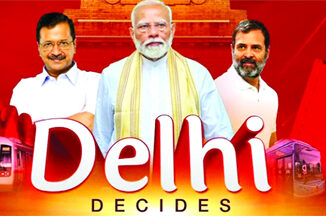
    This pattern was evident in the recent Delhi Assembly elections, which saw a significant shift in the political landscape of the capital. For years, the Aam Aadmi Party (AAP) has been in power in Delhi, having won a historic majority in 2015 and retaining power in 2020. However, in the latest election, the Bharatiya Janata Party (BJP), which had been out of power in Delhi for over 30 years, managed to achieve a sweeping victory, ending AAP’s reign.

    AAP’s victory in the 2015 election was nothing short of an upset. The party defeated the Congress, a long-standing political powerhouse, and emerged as a major force in Delhi politics. AAP’s success was fueled by a combination of factors: a public sentiment against the Congress, the party’s promise of corruption-free governance, and its focus on improving basic services like education and healthcare. AAP’s leader, Arvind Kejriwal, became a prominent figure and Delhi’s Chief Minister, with the party securing a resounding 67 out of 70 seats in the Delhi Assembly.

    However, by the time of the most recent elections, the political climate had shifted. AAP’s time in power had led to some degree of complacency, and many voters began to feel that the promises made by the party were no longer being fulfilled. The incumbency factor began to work against them. Despite having delivered several significant reforms, such as improvements in education and healthcare, AAP faced growing criticism over issues such as the cost of living, unfulfilled promises, and its inability to deal with the rising challenges in governance.

    On the other hand, the BJP, under the leadership of Prime Minister Narendra Modi, had been steadily building its influence in Delhi. The party’s rise to power was not just about local issues but also about its increasing prominence at the national level. The BJP’s success was bolstered by its image as a party that promotes Hindutva and its commitment to creating a Hindu nation, which resonated with a significant portion of the electorate. The consolidation of Hindu votes worked strongly in the BJP’s favor, helping it win over a large section of the population that felt disconnected from AAP’s secular rhetoric.

    One of the significant factors behind BJP’s victory was the party’s ability to promise financial allurements and freebies. While AAP had initially made its mark in the 2020 elections with promises of free electricity and water, the BJP capitalized on this by offering even more attractive schemes. Voters, often swayed by such promises, found these assurances hard to resist, despite the fact that the BJP had not always delivered on its past promises, such as the return of black money from abroad or providing a “pucca house” for every family by 2022. Nonetheless, the allure of “Acche Din” (Good Days) continued to hold strong among many voters, echoing Modi’s 2014 slogan that resonated with the hopes of millions.

    The BJP’s victory in Delhi can also be attributed to the diminishing influence of the Congress party, which has been in disarray in recent years. Once a dominant force in Indian politics, the Congress has now been relegated to irrelevance in Delhi. With the Congress struggling to find its footing, voters turned to the BJP as the only viable alternative to AAP, despite any reservations they might have had about the BJP’s past record.

    The electoral outcome in Delhi serves as a reminder of the fickle nature of politics and the complex dynamics at play. While AAP’s defeat signals the end of an era of governance in Delhi, it also presents a challenging future for the party. With leaders like Arvind Kejriwal and Manish Sisodia facing legal battles, the AAP may struggle to regain its footing in the short term.

    For the Congress, this defeat of AAP could serve as an opportunity to rebuild itself. The party once ruled Delhi for many years and has a deep-rooted connection with the electorate. While it may currently be on the backfoot, it still holds the potential to regroup and emerge as a force in the future.

    However, how the BJP governs Delhi will play a crucial role in determining the next chapter in Delhi’s politics.

  • AAP, BJP promise the moon: Delhi assembly elections prove freebies now a staple of electoral campaigns

    AAP, BJP promise the moon: Delhi assembly elections prove freebies now a staple of electoral campaigns

    New Felhi (TIP)- In 1985, when the Tamil Nadu chief minister MG Ramachandran met the then deputy chairman of the Planning Commission, Manmohan Singh, to discuss expenditure for a three-year-old mid-day meal scheme for children in his state, it would have been difficult to foretell that four decades hence, such plans would become the mantra to win elections.
    In 2025, political sops – disparagingly referred to as freebies – have morphed into the biggest tool for wooing the electorate. The high-stakes Lok Sabha and assembly elections in the country have seen the mainstreaming of freebies as political parties compete in making promises in their manifestos—from mass employment to free electricity and free bus travel for women to cash benefits and subsidised gas cylinders – you name it.
    Women-centric schemes seem the favourite of politicians: assembly poll results in Chhattisgarh, MP, Haryana and in Odisha, prompted the BJP-led Mahayuti government in Maharashtra to do the same, gaining convincingly.
    The ruling BJP, once opposed to distributing election freebies, has now outdone the others. After a 63-seat loss in the Lok Sabha in June last year, the party has had a change of heart.
    With the 70-strong Delhi assembly elections due early February, it’s raining sops in the national capital. A bird eye’s view of India’s welfarist state.
    In Delhi, the AAP has a virtually unbeatable record. Now, in its quest for a third term, the party’s list of welfarism includes raising Mahila Samman Yojana from Rs 1,000 to Rs 2,100 per month and a Sanjeevani scheme to provide free health care to those above 60. The party said 1.3 million people had registered for the first and 15,000 for the second.
    For autorickshaw drivers, AAP has promised life and accident insurance for Rs 15 lakh, annual uniform allowance of Rs 2,500 and Rs 1 lakh for their daughters’ weddings.
    Other promises include a monthly allowance of Rs 18,000 for pujaris and granthis. For Delhi’s residents’ welfare associations, the AAP has promised an unspecified amount as security financing. Waving off ‘inflated’ water bills is another pledge.
    The Congress has its own assurances: Rs 8,500 for skill training of the unemployed, Rs 2,500 as pyaari didi yojana and Rs 25 lakh insurance under Jeevan Raksha Yojana for Delhi.
    If official announcements were not enough, charges are flying fast and thick: AAP leaders allege that the BJP is `buying’ votes in Delhi. Allegations of cash-for-votes have already begun.
    In the Haryana assembly elections, the BJP announced Rs 2,100 monthly allowance for women, scooters for girl students, free dialysis for patients and two lakh government jobs. For the Maharashtra assembly polls, as many as 146 freebies were given out by the BJP-led NDA. These included a monthly payment of Rs 2,100 to a woman per month costing Rs 46,000 crore to the exchequer, a monthly stipend for students, increased benefit for farmers and a new Akshay Anna Yojana for providing kitchen essentials every month to families.
    In Jharkhand, the ruling JMM’s attempt to target 12.8 million women voters in the 2024 November’s assembly elections worked. Source: Livemint

  • How the Right overtook the Left in India

    How the Right overtook the Left in India

    • The Left is still fixated on the revolution and is reluctant to embrace the multilayered demands of electoral politics

    “The national question is crucial for both the Left and the Right, though their approaches differ. For the Left, it involves uniting all democratic sections of society against external enemies, particularly imperialism. This was evident during the colonial period. However, in independent India, the narrative of a foreign enemy could not be sustained as strongly due to obvious reasons.

    In contrast, for the Right, the national question is less about unity among the people and more about promoting the narrative of ‘Hindu nationalism’ against perceived ‘others’. During the independence movement, this narrative did not gain much traction, as Indian nationalism against British rule was able to mobilize larger sections of society. Over the last few decades, however, this second form of ‘nationalism’ has increasingly dominated the narrative and has become more and more pronounced with time.”

    By Tikender Singh Panwar

    There is a famous dialogue from the Hindi film 3 Idiots: “Dekho hum kahan nikal aaye aur tum kahan reh gaye” (See where we have reached and where you are left).” The Rashtriya Swayamsevak Sangh (RSS)-Bharatiya Janata Party (BJP) cohorts could be saying this to the Communists in India.

    The RSS will complete 100 years in 2025. The Communist movement in India is also a century old. The Left produced some of the most valiant fighters during the independence movement even as the Right was cozying up to the British empire. It is no secret that a large share of prisoners in Cellular Jail in the Andaman and Nicobar Islands were Communists. Despite such a glorious past, the reality is that the Indian Left is now in a labyrinth.

    Today, the Right clearly dominates Parliament: the BJP alone occupies 240 Lok Sabha seats. The Left parties combined occupy just eight seats. Compare this to the first general elections in independent India in 1951-1952 when the Congress was in power and the Communist Party of India (CPI) was the principal opposition party.

    At present, the Right is also far ahead in terms of organizational strength and structure. The total membership of the Left parties (those who contest elections) is not more than 2 million and the mass organizations that they represent number around 30 million. The RSS alone has a membership of over 7 million, and the BJP has a membership of more than 100 million.

    The trajectory of the Left and Right
    The rise and fall of these political entities depends on various historical episodes, the foremost being changes in the social production system. The initial years of development after the 1950s saw the establishment of industrial towns and the emergence of a strong Left-leaning working class. Major cities such as Delhi, Mumbai, Ahmedabad, and Kolkata witnessed a robust presence of the Left, which was reflected in their political strength. However, the capitalist production system underwent significant changes after the mid-1980s. The rise of fragmented production, a diminishing organized working class, and the corresponding growth of informal sector workers pushed the Left out of the political scene.

    Meanwhile, the Right maintained its presence through cultural interventions — a space largely neglected by the Left. Informal sector workers became fertile ground for identity politics based on caste and religion. Consequently, there has been a parallel rise of the Right and the decline of the Left in Indian cities.

    Another critical factor was the strong presence of the Left in rural India, driven by the ‘land reforms’ slogan and related movements. These were influential across the country for a long time. However, over the past few decades, newer classes within the peasantry have emerged and many of them have shifted towards the Right.

    Beyond land reforms, the Left struggled to build sustainable layers of governance, except in West Bengal, Tripura, and Kerala. It remained overly preoccupied with the imminence of a revolution and the idea of capturing state power. It sidelined all other essential matters. And the revolution never materialized.

    The national question is crucial for both the Left and the Right, though their approaches differ. For the Left, it involves uniting all democratic sections of society against external enemies, particularly imperialism. This was evident during the colonial period. However, in independent India, the narrative of a foreign enemy could not be sustained as strongly due to obvious reasons.

    In contrast, for the Right, the national question is less about unity among the people and more about promoting the narrative of ‘Hindu nationalism’ against perceived ‘others’. During the independence movement, this narrative did not gain much traction, as Indian nationalism against British rule was able to mobilize larger sections of society. Over the last few decades, however, this second form of ‘nationalism’ has increasingly dominated the narrative and has become more and more pronounced with time.

    Another major element relates to the idea of modernism and the role of the Constitution. Undoubtedly, the Constitution is rooted in the finest modernist values of equity, secularism, socialism, and more. However, the nation-state remained influenced by feudal and semi-feudal values, which continue to shape its character.

    Unlike in the West where modernism evolved out of the defeat or destruction of class feudalism, which was preceded by the Renaissance, religious reformation and enlightenment, in India no worthwhile renaissance could take place. The religious reformation that took place in some parts of the country could not disintegrate the caste system which affected all Indian religions, and the Brahmanical enlightenment could not produce a new anti-caste equalitarian philosophy. India has a peculiar situation now, where the Constitution is far ahead of the polity and human values, which are still evolving. This gives fertile ground for the Right to make advances on both post-truth narratives and campaigns on religious and identity issues.

    Leadership and organizational strategies
    Jyoti Basu, former Chief Minister of West Bengal, once spoke of the Communist Party of India (Marxist)’s “historic blunder”. He was referring to the party’s decision not to allow him to be the Prime Minister after the 1996 Lok Sabha polls threw up a hung Parliament. His remark warrants deeper reflection. The Left is still fixated on the revolution and is reluctant to embrace the multi-layered demands of electoral politics. If the Left is unwilling to take full responsibility, why should people trust them with their votes? This disconnect is evident in Kerala, where voters support the Left in Assembly elections but turn to other parties in general elections. On the other hand, the Right maximizes every electoral success to further its agenda. In every national and Assembly election over the last 10 years, it has been clear that the Right tries to ensure that no opportunity is left unutilized.

    This divergence also highlights the contrasting leadership styles of the Left and Right. The generation of Left leaders who built mass movements and endured state repression is nearly gone. Leaders such as H.K.S. Surjeet, who spent over a decade in jail, represent a fading legacy. Today’s Left leadership often emerges from educational institutions — a natural progression — but lacks the experience of building movements on the ground. In China, the Communist Party believes in building cultural consciousness. Even Xi Jinping was sent to work on the farmland for years away from his university. But this is not the case in India. On the other hand, leaders of the Right spend time with their cadre and help build leadership. Before he became Prime Minister, when Narendra Modi was in charge of States, he would constantly spend time with the cadre and even stay in their homes.

    Globally, the pendulum of social and political ideologies has swung to the extreme Right and India is no exception. The question is: when will it swing back, and what will catalyze that shift?

    (Tikender Singh Panwar, Former Deputy Mayor, Shimla, and Member, Kerala Urban Commission. He is a Visiting Senior Fellow, Impact and Policy Research Institute . He served as political secretary of Sitaram Yechury)

  • Amid din, Lok Sabha sends ‘one nation, one election’ Bills to joint committee of Houses

    Amid din, Lok Sabha sends ‘one nation, one election’ Bills to joint committee of Houses

    New Delhi (TIP)- Amid uproar over Home Minister Amit Shah’s remarks related to B R Ambedkar, the Lok Sabha on Friday, December 20, referred the two bills on simultaneous polls to a joint committee of Parliament.
    Opposition members were raising slogan haling Ambedkar and slamming Shah when the House met for the day.
    Instead of taking up the Question Hour, Speaker Om Birla asked Law Minister Arjun Ram Meghwal to move the resolution to refer the Constitution (129th Amendment) Bill, 2024 and the Union Territories Laws (Amendment) Bill, 2024 referred to Joint Committee of Parliament comprising 27 members from the Lok Sabha and 12 from the Rajya Sabha. The resolution was adopted by a voice vote amid noisy scenes. The Lok Sabha was then adjourned sine die (indefinitely), bringing to an end the Winter session which began on November 25.
    The two ‘one nation, one election’ (ONOE) bills, including one requiring an amendment in the Constitution, lay down the mechanism to hold simultaneous elections and were introduced in the Lok Sabha on Tuesday after a fiery debate.
    BJP MP Bhartruhari Mahtab is being considered to head the joint committee of Parliament that will scrutinise the two bills proposing simultaneous elections, sources said.
    With the BJP set to get the position of the chair for the crucial panel, official sources said Mahtab’s parliamentary experience may weigh in his favour. The strength of the committee was increased from 31 MPs to 39, giving representation to more parties. While the panel already includes BJP’s P P Chaudhury and Anurag Thakur, Priyanka Gandhi Vadra of the Congress is another prominent member on the committee. Among the Lok Sabha members, 17 are from the BJP-led National Democratic Alliance, including 12 from the BJP.
    Lok Sabha adjourns sine die amid protest by Congress
    The Lok Sabha was adjourned sine die on Friday, December 20, after four weeks of high drama and protests, which crippled the Parliament.
    As soon as the Lok Sabha convened for the day, the Speaker called Law Minister Arjun Ram Meghwal to present a resolution for setting up a joint committee of Parliament to examine the bills related to ‘one nation, one election’. Slogans of ‘Jai Bhim’ reverberated in the House as the Speaker read out directions barring demonstrations and protests at the gates of Parliament.
    As the protests continued, the Speaker adjourned the House sine die.
    Even before the House proceedings began, Congress members started raising slogans “Jai Bheem, Jai Jai Bheem”.
    Amid the slogans by the opposition, Prime Minister Narendra Modi entered the Lok Sabha chamber.
    The Winter Session saw a standoff between the Congress and BJP with charges of ‘attempt to murder’ against the Opposition and they demand resignation of the Home Minister over remark on BR Ambedkar.
    The Opposition MPs staged a protest at Vijay Chowk here on Friday again demanding Home Minister Amit Shah’s apology and resignation for allegedly “insulting” BR Ambedkar.
    They also carried out a protest march from Vijay Chowk to Parliament. Congress general secretary Priyanka Gandhi Vadra also slammed the BJP over the FIR filed against the Leader of Opposition in the Lok Sabha Rahul Gandhi, saying it “shows their desperation level”.

  • Turmoil in Bangladesh: Implications for Regional Stability and Communal Harmony

    Turmoil in Bangladesh: Implications for Regional Stability and Communal Harmony

    It is imperative that both Bangladesh and India, along with the international community, work together to defuse tensions, protect minority rights, and uphold the values of democracy and human dignity. Only through collective efforts can the region hope to achieve lasting peace and stability.

    “Indian electronic media, always hungry for sensational stories, has devoted hours to covering the atrocities against Hindus in Bangladesh. Graphic visuals, emotional narratives, and provocative debates dominate prime-time slots, often amplifying the crisis and shaping public perception.

    This relentless media focus has created a charged atmosphere in India, where communal sensitivities are already high. The portrayal of Hindus as victims of Islamist aggression resonates deeply in a country where religious identity often intersects with political agendas. The ruling Bharatiya Janata Party (BJP), led by Prime Minister Narendra Modi, has been accused by critics of leveraging such narratives to consolidate its Hindu nationalist base.”

    By Prof. Indrajit S Saluja
    Prof. Indrajit S Saluja

    Bangladesh, historically a beacon of resilience and progress in South Asia, is currently grappling with political and social turmoil of a magnitude that has sent ripples across the region. The ouster of Sheikh Hasina, the country’s longest-serving prime minister and leader of the Awami League, has left a void in the political landscape and unleashed a wave of uncertainty. The situation has been further exacerbated by the former leader seeking asylum in India, a move that has added fuel to the already simmering tensions between the two nations.

    The Political Vacuum in Bangladesh

    Sheikh Hasina’s leadership, marked by economic progress and relative political stability, came to an abrupt end amidst allegations of authoritarianism and electoral manipulation. Her ouster has plunged Bangladesh into a state of political uncertainty, with power struggles between rival factions, including the opposition Bangladesh Nationalist Party (BNP) and Islamist groups, intensifying. The absence of a strong central authority has emboldened extremist elements, leading to a spike in communal violence and targeted attacks.

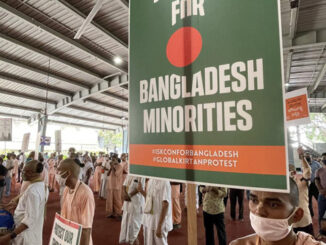
    The Hindu minority in Bangladesh, which constitutes approximately 8% of the population, has found itself at the center of this unrest. Reports of attacks on Hindu men and women, desecration of temples, and threats of mass killings by radical Islamist groups have surfaced, painting a grim picture of the ground reality.

    Atrocities Against Hindus: A Frightening Trend

    While communal violence in Bangladesh is not a new phenomenon, the scale and intensity of the recent attacks have raised alarm. In the past few months, several incidents have been reported.

    Desecration of Temples: At least 15 Hindu temples have been vandalized or destroyed since the political upheaval began, according to local sources. Religious idols and sacred texts have been desecrated, fueling fears among the Hindu community.

    Attacks on Individuals: Human rights organizations have documented over 200 cases of violence against Hindus, including physical assaults, abductions, and sexual violence against women.

    Mass Exodus: Fear of persecution has reportedly driven thousands of Hindus to flee their homes, with many seeking refuge in neighboring India. Border towns in West Bengal and Assam have reported a sharp increase in the arrival of Bangladeshi Hindu refugees.

    The situation has drawn widespread condemnation from international human rights groups, but the lack of decisive action from the interim government in Bangladesh has only emboldened extremist factions.

    India’s Media Frenzy and Political Implications

    Indian electronic media, always hungry for sensational stories, has devoted hours to covering the atrocities against Hindus in Bangladesh. Graphic visuals, emotional narratives, and provocative debates dominate prime-time slots, often amplifying the crisis and shaping public perception.

    This relentless media focus has created a charged atmosphere in India, where communal sensitivities are already high. The portrayal of Hindus as victims of Islamist aggression resonates deeply in a country where religious identity often intersects with political agendas. The ruling Bharatiya Janata Party (BJP), led by Prime Minister Narendra Modi, has been accused by critics of leveraging such narratives to consolidate its Hindu nationalist base.

    In recent years, the Modi government has faced allegations of using Hindu sentiment as a political tool, particularly during elections. The crisis in Bangladesh provides fertile ground for the BJP to further this narrative, potentially leading to a rise in anti-Muslim rhetoric and actions within India.

    The Danger of Escalation

    The repercussions of the Bangladesh crisis are not confined to its borders. In India, a country with a significant Muslim population, the politicization of the issue risks triggering communal clashes. Historically, incidents of violence against Hindus in neighboring countries have often been followed by retaliatory attacks on Muslims in India.

    There are already signs of tension:

    Communal Rhetoric: Religious leaders and political figures in India have begun invoking the atrocities in Bangladesh to rally support, often using inflammatory language.

    Protests and Violence: Demonstrations condemning the attacks in Bangladesh have been organized in several Indian cities, with some turning violent. Mosques and Muslim-owned businesses have been targeted in isolated incidents.

    Border Tensions: The influx of refugees from Bangladesh has strained resources and heightened security concerns in border states like West Bengal and Assam, where communal relations are precarious.

    If not managed responsibly, these developments could spiral into sustained clashes, not just in India but across the region, destabilizing South Asia as a whole.

    The Need for Responsible Leadership

    Amidst this volatile situation, the onus lies on the leadership in both Bangladesh and India to act responsibly. The political vacuum in Bangladesh must be addressed through dialogue and democratic processes to restore stability. International pressure and mediation may be necessary to ensure that minority rights are protected and extremist elements are curtailed.

    In India, the government must resist the temptation to exploit the crisis for political gains. Instead, it should focus on:

    Diplomatic Engagement: Collaborating with the interim government in Bangladesh to address the violence and ensure the safety of Hindus.

    Media Regulation: Encouraging responsible reporting that informs rather than inflames public sentiment.

    Community Outreach: Promoting interfaith dialogue and understanding to counter communal tensions within India.

    Refugee Management: Developing a humane and effective strategy for managing the influx of Bangladeshi refugees, while addressing the security concerns of border states.

    The Broader Implications for Regional and Global Peace

    The crisis in Bangladesh and its potential spillover into India underscore the interconnectedness of South Asia’s socio-political dynamics. The region, home to over a billion people, cannot afford to be mired in communal conflicts that hinder development and progress.

    Moreover, the international community must recognize the global implications of the crisis. Communal violence and political instability in South Asia have the potential to fuel extremism, disrupt trade routes, and impact global security.

    It is imperative that both Bangladesh and India, along with the international community, work together to defuse tensions, protect minority rights, and uphold the values of democracy and human dignity. Only through collective efforts can the region hope to achieve lasting peace and stability.

  • Reimagining Indian federalism

    Reimagining Indian federalism

    The return of coalition governance to New Delhi offers hope

    Seeking a larger slice of the pie for their own States is self-interest, not federalism.

    By Shashi Tharoor

    On June 4, 2024, the Bharatiya Janata Party (BJP) tripped up short of the majority mark in the Lok Sabha, compelling it to hobble towards power by leaning heavily on its partners in the National Democratic Alliance, all of which are regional parties. Aside from placing fetters on the BJP’s overweening arrogance and decelerating our descent into majoritarian autocracy, the return to New Delhi of coalition governance offers another hope: that of revitalizing India’s beleaguered federal structure, which has sustained countless death blows over the past decade.

    A brand of federalism
    As I argued in the Lok Sabha last year — while opposing the Government of National Capital Territory of Delhi (Amendment) Act, 2023 — what we have repeatedly seen since 2014 is an insidious, inexorable effort to curtail the autonomy of our States. Despite Prime Minister Narendra Modi’s rhetoric of cooperative federalism, all we have seen is the rise of a coercive and combative brand of federalism that seeks to centralize power at the expense of the States.

    This Modi-fied brand of federalism has been manifest in seeking to foist Hindi upon our southern States; deploying independent regulatory and investigative agencies (such as the Enforcement Directorate, the Central Bureau of Investigation and Income-Tax agencies) to clamp down on political opponents from regional parties; using an obscure provision of the Disaster Management Act to impose a nationwide lockdown without consulting the Chief Ministers who had to implement it; creating and misusing the Prime Minister’s Citizen Assistance and Relief in Emergency Situations (PM CARES) Fund, which limited the flow of cash to State-run Chief Minister’s Distress Relief Funds; and robbing Jammu and Kashmir of Statehood and abrogating Article 370 in a manner that sets an ominous precedent for all other States. One must add to this litany the tendency to undermine the careful balance in our fiscal federalism that previous governments had maintained, distributing revenues in a way that left it to our States to pursue their own priorities. This balance has been disturbed using a number of cynical tools, such as levying cess on a large number of items. Unlike tax, cess does not go into the divisible revenue pool and does not need to be shared with States.

    Another shadow hangs over the federal system with the impending lapse of the 91st Amendment in 2026. This guarantees that the share of parliamentary constituencies across States would be based on the 1971 Census, in order not to punish those States that had empowered their women, improved human development indicators and curbed their population. The ruling party has made it clear that they have no intention of renewing this provision and are looking forward with glee to a fresh Census and a new delimitation exercise. The major concern of many federalists is that this could lead — given both demographic realities and the BJP’s own inclinations — to the Hindi-speaking States of the “cow belt” acquiring a two-thirds majority by themselves, in effect disenfranchising the southern States. This would give the BJP a permanent stranglehold on our Parliament and would lead to a severe crisis of our democracy as well as our federalism.

    The BJP’s hyper-nationalist desire for uniformity was already evident in its decision in 2017 to change the terms of reference of the Fifteenth Finance Commission to base allocations on the 2011 Census, instead of 1971’s (following the same rationale) This proved pernicious, sending even more tax money from the south to the north than previously. Commentators spoke of the government rewarding “brute demographic advantage … over a state’s performance,” adding that the Fifteenth Finance Commission decisions were “a stunning rebuke of success”.

    The concerns of the southern States
    Most people in the south are staunch Indian nationalists who recognize full well the need to correct regional imbalances, and for richer States to subsidize poorer ones. But we must ensure that this balancing act does not become financial persecution of our southern States. For, unlike most federal systems, India’s revenues are going disproportionately to its worst-performing States, those with rampant illiteracy, high rates of fertility and population growth, while the high-performing southern States get short shrift. On June 10, 2024, Uttar Pradesh received a whopping ₹25,069 crore of tax devolution, a figure greater than all our five southern States collectively received. Bihar and Madhya Pradesh got the next largest allocations.

    The concerns of our southern States about delimitation are not unfounded: Uttar Pradesh and Bihar are likely to together outweigh them all combined. May we dare hope that one of the BJP’s two crutches, with 16 seats in the Lok Sabha, the Chief Minister of Andhra Pradesh, N. Chandrababu Naidu, will refuse to make the mistake of allowing such a fate to befall South India? Whether he does or does not, the other southern Chief Ministers are bound to be speaking to each other, to ward off the threat of political disenfranchisement. The interests of millions are entwined with the success of this exercise, in which the principles of equitable redistribution and representation should weigh heavily. All States, ultimately, must work together to devise a solution.

    There are no early signs that the large number of regional parties in the NDA might bolster India’s federal structure. Most regional members — chief among them the Telugu Desam Party, Janata Dal (United) and Lok Janshakti Party (Ram Vilas) — have for now contented themselves with securing cabinet births (not even major or pivotal ministries) and greater perquisites for their own States (such as demanding special status for Andhra Pradesh and Bihar). While they may keep the BJP on a relatively short leash, stanching the tide of the Hindutva project and demanding that contentious schemes (such as Agniveer) be reconsidered, they are not necessarily likely to rally around the cause of strengthening cooperative federalism. Seeking a larger slice of the pie for their own States is self-interest, not federalism.

    When he was the Chief Minister of Gujarat, Narendra Modi was an unwavering federalist who championed decentralized policy-making. In his view, in a country as diverse as India, there could never be a universal, Union Government-devised panacea for the ills of all States, so, each should be able to innovate and tailor solutions to their peculiar problems. Each State in India, argued then Chief Minister Modi, ought to forge its own development path, engaging with other States in a spirit of “competitive” federalism, which meant attracting investment and improving governance, and stoutly resisting the encroachment of the central government on States’ rights. And, in many ways, Mr. Modi exemplified these tenets — until he became Prime Minister, that is.

    Revive the Inter-State Council
    Can Opposition-ruled States, especially in the south, leverage the BJP’s reduced majority to the benefit of cooperative federalism? The abolition of the Planning Commission has deprived them of a vital forum. If that cannot be undone, a good starting point would be extracting the Inter-State Council from the throes of desuetude. Though its rationale had long been outlined in Article 263 of the Constitution, it was convened only in the 1990s on the recommendation of the Sarkaria Commission. But, despite having the potential to become a formidable forum of deliberation, the Council has degenerated into a mere appendage of the Ministry of Home Affairs, in whose shadow it scarcely has any authority. So, the Inter-State Council must be overhauled and revived to serve as an independent arena for consultation, decision-making, dispute resolution, and coordination between States and various governmental departments and levels of government on issues that affect the States.

    In a country such as India, whose diversity is held together by a sense of common belonging but whose civic nationalism must accommodate a range of States with divergent levels of development, it is essential that all feel that their common nationhood is a winning proposition for them. In a country where regional, religious, and linguistic tensions are never far from the surface, an answer such as, “We have more people, so we will have more money and power”, risks rupturing the fragile bonds that hold us all together.

    (Shashi Tharoor is the fourth-term Lok Sabha Member of Parliament (Congress) for Thiruvananthapuram, and the Sahitya Akademi award winning author of 25 books, including Ambedkar: A Life)

  • India’s Elections 2024: A slight sigh of Relief; Will it last?

    India’s Elections 2024: A slight sigh of Relief; Will it last?

    “The people of India have unequivocally rejected the BJP’s agenda, which sought to undermine the constitution and transform the country. This election outcome is a resounding endorsement of the current constitutional framework envisioned and implemented by Jawaharlal Nehru and B.R. Ambedkar. The voters appeared to have arrested the development of the nation’s slide towards dictatorship and fascism for now. It is also important to note that the BJP has not gotten a majority of its own. Narendra Modi himself has lost substantial vote share in his quest for reelection. Even the BJP candidate in Ayodhya, where the temple has been consecrated, had to concede defeat.”

    By George Abraham

    After the announcement of the election results, I heard nothing but a sigh of relief all around, especially from members of the Diaspora. It is almost as if they have been delivered from some precarious situation or a trap that had a debilitating impact on their thinking and actions. People were virtually living in fear of expressing their opinions and even stating the slightest criticism of the Modi government’s policies. Indeed, at least for now, they appear to feel liberated.

    If that is true, what would it have been if the Modi government had come down? Of course, the country would have truly restored its soul while recapturing the dynamism and freedom that was a hallmark of Indian democracy. The public has been struggling for a breath of air for freedom and liberty in the last decade, which was taken for granted mainly under the Congress party rule for six decades.

    Even the Diaspora was under the guns where there were allegations of conspiracies of assassinations of overseas Indian citizens who had disagreed with the Modi administration. The recent filing by the United States Justice Department accusing an ‘Indian government agent’ plotting to kill an American citizen of Indian origin and a Khalistani activist, regardless of our disapproval of issues he has been advocating, sent chills across the overseas community everywhere.

    Many members of the Diaspora were afraid to speak out because of the fear that any dissenting voice may result in the cancellation of the OCI cards. It happened to Aatish Taseer, who wrote a critical piece on Modi in Time magazine and was punished by denying his wish to visit his aging grandmother. Nitasha Kaul, a professor from Westminster University, was deported directly from the Bengaluru airport back to the U.K. because of her past statements critical of the Modi government on constitutional matters. It should be noted that the Modi government changed the rules to make these arbitrary decisions unchallengeable in the judicial system. The Modi regime has deported many more Christian leaders from the West directly from the airport just because they happened to be Christians.

    Modi Administration’s attacks on civil society have been ferocious, where many of the NGOs were forced to shutter their doors, and the foreign-related ones were either expelled or their FCRAs canceled. Minority-related institutions suffered the most at the hands of this regime, where 20000 or more FCRAs belonging to Christian Educational and Charitable organizations were suspended or frozen, thereby effectively putting them out of business. In contrast, Sangh Parivar organizations were allowed to receive money from abroad without any hindrance.

    In the United States, where people are supposed to have freedom of expression, the Godi media, controlled mainly by Gujaratis, may have stifled voices of dissent by striking any criticism of Modi from either printed pages or visual media. Moderators who tried to play even-handedly on some of those networks started distancing themselves from genuine debates or being banished from the scene altogether. Even the Asianet outfit in the U.S., a popular channel in Kerala, allegedly has been under the influence of Sangh Parivar, their principal correspondent in the USA, who was a no-show at the Javits Center, where Rahul Gandhi addressed a large crowd.

    Considering the above, it is understandable why the Diaspora is somewhat relieved by the changing dynamics with a new coalition government under Modi. However, there is a genuine fear that, given the opportunity, the BJP may poach M.P.s from other parties and craft a new majority of their own as they have plenty of resources to accomplish their set goals. Chandrababu Naidu and Nitish Kumar are crafty politicians who have been victims of Modi’s odious agenda, and the world will be restlessly watching how they navigate through opportunities that come their way.

    Nevertheless, the people of India have unequivocally rejected the BJP’s agenda, which sought to undermine the constitution and transform the country. This election outcome is a resounding endorsement of the current constitutional framework envisioned and implemented by Jawaharlal Nehru and B.R. Ambedkar. The voters appeared to have arrested the development of the nation’s slide towards dictatorship and fascism for now. It is also important to note that the BJP has not gotten a majority of its own. Narendra Modi himself has lost substantial vote share in his quest for reelection. Even the BJP candidate in Ayodhya, where the temple has been consecrated, had to concede defeat.

    If Narendra Modi and Amit Shah persist in governing India through their makeshift coalition, it is imperative for them to uphold the constitution. They must cease divisive and unscrupulous politics, halt the weaponization of investigating agencies, stop the destruction of worship places belonging to minority citizens, and govern the country by the law and its constitution. It is also high time for people to exercise their inherent right to express their opinions without fear of arrest or the cancellation of their OCI cards. The Fourth Estate should be allowed to function freely, promoting objective journalism that reaches people without bias or prejudice. We are again reminded that democracy is not a majoritarian rule but respects diversity and facilitates equal justice regardless of caste, creed, language, religion, or region.

    We at the Overseas Congress salute the INDIA coalition and its leaders, especially AICC President Kharge Ji Rahul Ji and Pitroda ji, for their tireless efforts in getting the message to the people, which elicited the current response through the ballot boxes. We express our special gratitude to all those IOC volunteers from across the globe who participated in the electoral process to save democracy in their motherland.

    (The author is a former Chief Technology Officer of the United Nations. He is Vice Chair of IOC USA. He can be reached at GTA777@gmail.com)

  • India’s middle class and the ‘Modi factor’

    India’s middle class and the ‘Modi factor’

    As Prime Minister Narendra Modi looked set to win a second term in 2019, Gabriele Parussini delved into the psychology of the country’s middle class voters who were the main engine behind his previous victory. His analysis is worth revisiting today.

    By Gabrielle Parussini

    Narendra Modi’s appeal to the middle class is a case study in political communication, as his style of populism does not neatly fit any typical framework long studied by academics.

    In liberal democracies the world over, the middle class is known to be an anchor of stability and a defender of the status quo. Like elsewhere, members of India’s middle class are no revolutionaries. They support communal peace and social stability, they seek improvement through incremental change, not uprisings, and, above all, are keen to eschew politics altogether.

    In a study of Indian middle-class voters during the 2019 election campaign, I found that most of them supported the status quo — a secular, multicultural India that emerged after Independence. These voters acknowledged the centripetal potential of religion in the Indian polity and assessed it negatively. This was true even among many supporters of Mr. Modi’s Bharatiya Janata Party (BJP).

    Why then does this stability-loving middle class vote for a party whose policies are aimed at changing the secular status quo? Does its shift towards a national-populist party such as the BJP represent a rebellion, a rejection of the present order, or is it the result of other dynamics, including the perception that the party is not extremist anymore?

    The answer, my research found, lies partly in a double messaging by Mr. Modi and the BJP.

    Of the voters I interviewed, only a tiny minority — less than a tenth of the sample — supported unconditionally the BJP’s agenda items in their original, extreme, uncompromising form. A large majority of the participants, including BJP supporters, for instance, did not support the construction of the Ram temple in Ayodhya, because they were afraid it would spark violence. They supported a compromise, and did not fully believe that the party would go ahead with the creation of the temple. In short, the BJP’s promise of building the temple had low credibility.

    Low credibility is usually a downside for a party because it undermines voter trust in its commitment. However, low credibility helped the BJP develop a double level of communication with its audience. The assumption that the party would not act on its most extreme, Hindutva- connotated proposals made it sound more innocuous to moderate middle-class voters.

    This does not necessarily mean that there was discrepancy between the BJP’s message and the middle class’s understanding of it. Rather, the audience decoded the message in accordance with its own social and cultural context, even though it did not necessarily accept the underlying ideology. In other words, India’s middle class did not engage with the BJP’s entire message, ignoring the parts it found unacceptable.

    The encoder of the political message — in this case Mr. Modi and the BJP — took advantage of the middle class’s willingness to ignore the obvious consequences of its choices by offering a pretense of moderation, which I call ‘implicit moderation’. Ultimately, however, this ‘implicit moderation’ only held true during the election campaign, fostering an impression that let voters believe that they were not choosing something revolutionary. Once it came to power, the BJP swayed to its more extreme instincts, taking peace-threatening measures such as construction of the Ram temple.

    Another question this study set out to answer is to what extent the middle class is aware of the BJP’s attempts to create alternative narratives aimed at changing the public perception of the record.

    I found that participants could separate the effective change that has been delivered and the impression of change that the BJP was eager to convey.

    For instance, many of the participants noted that the BJP had tinkered with the names of welfare schemes since it got into power, such as by adding ‘PM’ to the names. One participant said that attention to public perception and promotion of government action were the main differences between the BJP government and its predecessor. “Maybe [the same] was happening with Congress. But [now] the media is promoting so much, [that] we know this is happening,” he said.

    Despite understanding that the BJP constructs alternative narratives when it suits, middle-class voters support it again partly because of Mr. Modi’s communication.

    When asked what the main measures adopted by the BJP-led government until 2019 are, two-thirds of the respondents mentioned either demonetization or the introduction of the goods and services tax, or GST.

    The overwhelming majority of participants thought both of these measures caused large disruption, or their implementation was botched up. Still, many of them held a positive image of the party’s record in power, thanks to the government’s messaging.

    In demonetization, for instance, the BJP built an alternative narrative, one in which Mr. Modi’s populist tactics are on full display.

    The process set up was highly dramatic. Mr. Modi described himself as the hero who was leading a fight against an evil conspiracy. Demonetization became a moral tale where regular people are associated to the hero in a fight against the money hoarder, and, essentially, the rich. The revenge narrative had a wide appeal, irrespective of participants’ political allegiance. “The big people, the businessmen had the most problems…which was a good thing. Poor people did not have any problem,” said one participant.

    Rather than focusing on the negative consequences of these measures, participants were swayed by Mr. Modi’s decisiveness. One BJP opponent said that “demonetization was very drastic”, but called it “a very good step” because Mr. Modi “didn’t think twice” about it. Mr. Modi’s decisiveness showed that he takes responsibility for his own actions, radical as they may be.

    This research found that the middle class wants to see an affirmative, purposeful government that does not refrain from action, even if the rights and the freedom of some sections of society are curtailed.

    In the last 10 years of his leadership, it is debatable whether Mr. Modi has been the ‘Vikas Purush’ or development man that he promised to be in 2014. But there is no debate that his development credentials with the middle class have been barely dented. That is thanks to his effective advertisement and the adoption of populist tactics to communicate with the audience. Populism thrives around a communication process that creates a direct connection between the leader and his audience, and Mr. Modi has created an original style of populism that academics are still studying.

    The middle class can see through the BJP’s promotional effort, but tolerates the party’s aggressive communication style because it considers it to be fair game in politics. How this electorate votes in the ongoing elections will warrant further study not only to better understand the communication tools that work for populist leaders but also to get clues on the future of the world’s largest democracy.

    (Gabriele Parussini, who was the India correspondent for The Wall Street Journal, decided in the late 2010s to pursue a PhD under the supervision of Christophe Jaffrelot and Rafal Zaborowski at King’s College, but died of blood cancer soon after submitting his thesis. He has just been awarded the title of doctor, posthumously.)

  • Despite BJP’s Ram Temple pitch, voter turnout falls 4% in Ayodhya

    Despite the BJP pitching construction of Ram temple as one of its major highlights of Lok Sabha poll campaign, Ayodhya witnessed a 4 per cent fall in voter turnout on May 20, which stood at 56.51 per cent, down from 60.27 per cent in 2019 Lok Sabha polls. Ayodhya is one of the five Assembly segments under Faizabad Lok Sabha seats, which had seen voting on May 20 during the fifth phase of polling.
    Overall the voter turnout in Faizabad Parliamentary constituency remained more or less static at 59.14 per cent compared to 59.59 per cent recorded in 2019 General Election. There was a miniscule fall of 0.4 per cent in voter turnout from 2019.
    Going by the fall in turnout figures in Ayodhya Assembly segment of the Faizabad Lok Sabha seat, it clearly shows that Ram temple construction and its subsequent consecration ceremony, which had been turned into a national event by the Narendra Modi-led government, has not resonated much with the voters, just four months down the line.
    However, the larger picture shows that the construction of the temple in the region and heavy attendance of pilgrims after an international airport also came up in Ayodhya to facilitate movement of people from across the country and abroad, has not reflected in voter turnout figures.
    Rather Ayodhya itself, as an assembly segment under the Faizabad seat, has seen a fall in turnout. Both Prime Minister Narendra Modi and Home Minister Amit Shah have been aggressively underlining the Ram temple’s construction and the subsequent consecration ceremony as one of BJP-led NDA government’’s significant achievements in the second term. Modi and Shah especially pull up the Congress-led INDIA alliance leaders for not attending the consecration ceremony. Source: TNS

  • ‘Targeting Muslim women’: Owaisi on BJP’s demand for verification of burqa-clad voters

    ‘Targeting Muslim women’: Owaisi on BJP’s demand for verification of burqa-clad voters

    New Delhi (TIP)- All India Majlis-e-Ittehadul Muslimeen (AIMIM) president Asaduddin Owaisi on Wednesday, May 22, accused Bharatiya Janata Party (BJP) of targeting Muslim women and creating hurdles for them during the voting process. The Delhi unit of the BJP has called for “proper verification” of women voters wearing burqas.
    “The Delhi unit of the BJP has told the Election Commission that there should be a special checking of women in burqas. During the recent Lok Sabha elections in Telangana, their candidate publicly insulted and harassed Muslim women. In every election, the BJP finds some excuse or the other to harass and target Muslim women,” Asaduddin Owaisi said in an X post.
    Earlier, the Delhi BJP delegation met with the Chief Electoral Officer (CEO) on Wednesday, urging for thorough verification of women voters wearing ‘burqa’ or face masks during the polling on May 25, with a specific request for female officials to conduct the verification process.
    The delegation, consisting of BJP MLAs Ajay Mahawar and Mohan Singh Bisht, State secretary Kishan Sharma, and lawyer Neeraj Gupta, asked the CEO to verify and cross-check the identities of burqa-clad voters in view of “larger public interest”, especially in those constituencies “where the number of burqa-wearing women voters is high”.
    “A large number of burqa-clad women visit polling booths for voting. Hence, their identity needs to be verified through appropriate government-mandated identity cards allowed for casting votes to prevent bogus voting,” the memorandum read.
    The Election Commission of India’s handbook for presiding officers of the election also details steps to be followed by them to verify an elector’s identity, it added.
    The party’s demand comes amid a recent controversy over BJP candidate for Hyderabad Lok Sabha seat Madhavi Latha being booked by election authorities for allegedly making burqa-clad voters show their faces for verification.
    Owaisi said that the poll body has clear rules to not allow anyone vote without verification. He accused the BJP of harassing Muslim women with the “special demand”.
    “The Election Commission has clear rules and regulations for women who do not observe purdah, whether they are in burqa or veil or mask, no one is allowed to vote without verification, so why did the BJP have to make such a special demand? Just target Muslim women, harass them and create obstacles in voting,” he said.
    In a separate incident, a case has been filed against Madhavi Latha, the BJP candidate for the Hyderabad Lok Sabha seat after a purported video surfaced showing her inspecting the voter ID cards of Muslim women at a polling booth. The case includes charges under various sections of the Indian Penal Code and the Representation of the People Act.
    All seven Lok Sabha seats in Delhi will go to polls on May 25. The election results will be announced on June 4.

  • Anti-BJP protests : Candidates facing farmers’ ire in Punjab

    The crackdown on protesting farmers at the Shambhu border in February is casting a shadow on the BJP’s poll campaign in Punjab. Party leaders and candidates are being shown black flags and stopped from entering villages, particularly in Malwa and Majha. These disruptions prompted state BJP chief Sunil Jakhar to lodge a complaint with the state’s Chief Electoral Officer last week, alleging that the AAP government had failed to ensure a level playing field for all candidates. The Punjab Police have claimed that they are taking steps to ensure the safety of the contestants, including those belonging to the BJP, but the latter is not convinced.

    Farmers from the state had launched the Dilli Chalo agitation earlier this year, seeking a legal guarantee for the minimum support price (MSP). However, they were prevented from reaching the Capital by the authorities in BJP-ruled Haryana, which resorted to a heavy-handed approach. The MSP issue has remained unresolved despite a series of talks between the Centre and some farm unions.

    The BJP has its task cut out in the state, where it is going solo after its efforts to mend fences with its old ally, the Shiromani Akali Dal (SAD), proved futile. The SAD had parted ways with the NDA in 2021 amid the farmers’ agitation over the contentious farm laws enacted by the Centre. Even the repeal of the laws did not help the BJP win over the state’s farming community, as seen in January 2022, when protesters forced PM Modi to go back without addressing a poll rally in Ferozepur. With its nominees also facing the heat in parts of rural Haryana, the saffron party can’t afford to ignore the anger and anguish of the region’s farmers. At the same time, the alleged infringement of the candidates’ right to campaign needs to be probed and accountability fixed for the lapses.

    (Tribune, India)


  • Haryana crisis: Oppn pushes for floor test, BJP says it’s ready

    Haryana crisis: Oppn pushes for floor test, BJP says it’s ready

    Chandigarh (TIP)- The Congress and the Jannayak Janata Party (JJP) on Thursday stepped up efforts to topple the Bharatiya Janata Party (BJP) government in Haryana and wrote to governor Bandaru Dattatreya even as chief minister Nayab Singh Saini exuded confidence about his administration being safe despite losing the backing of three independent lawmakers this week.
    Leader of Opposition and former chief minister Bhupinder Singh Hooda said the Congress sought an appointment with the governor to apprise him about the current political situation and alleged that the BJP government was trying to indulge in horse-trading after being reduced to a minority.
    “On moral grounds, it (BJP) should resign. President’s Rule should be imposed…we are demanding fresh elections in the state,” he said.
    Former deputy chief minister Dushyant Chautala wrote that it was evident that the incumbent government no longer commanded a majority in the legislative assembly.
    “The JJP is not extending support to the present government and is open to supporting any other political party for government formation,’’ said the letter, dated May 8. But he might face a rebellion in his own party as at least three lawmakers are in touch with the BJP, according to people familiar with the matter.
    The BJP said it was safe with former chief minister Manohar Lal Khattar saying the Opposition won’t be able to muster even its own numbers in the event of a floor test.
    “The opposition is doing vague calculations. During the floor test, if they can retain even 23 of their MLAs, it will be a big deal… I don’t see any no-confidence motion being moved anytime soon, but if any such situation arises, we will have a floor test… Many JJP MLAs have given support to BJP. This is what I’m saying, they need to think beyond what meets the eye,” said Khattar.
    Haryana chief minister Nayab Singh Saini on Thursday that there is no danger to the government. He said that he has the numbers and is ready for a floor test, if required.
    “Does Dushyant have the numbers? We have the numbers. I won the floor test in March and, if required, I will do it again. There is no threat to the government,” Nayab Saini said.
    The latest chapter of the crisis that sparked off in March began on Tuesday after three independent lawmakers — Randhir Golan from Pundri, Dharmpal Gonder from Nilokheri and Sombir Singh Sangwan from Dadri — said they had decided to back Hooda of the Congress and written to Dattatreya pulling their support from the Saini government.
    Assembly elections are scheduled in the state in October-November this year. All 10 Lok Sabha seats in the state go to the polls on May 25. In the 90-member assembly, two seats are vacant, of which Karnal is going for by-elections on May 25.
    The BJP has 40 members, and has the support of two independents — Nayan Pal Rawat from Prithla and Rakesh Daulatabad from Badshahpur — and Gopal Kanda of the Haryana Lokhit Party. That takes it to 43, two short of the majority mark of 45 in the assembly that currently has a strength of 88.
    The Congress has 30 lawmakers, the Jannayak Janata Party (JJP) has 10, and the Indian National Lok Dal (INLD) has one. In addition, one independent legislator — Balraj Kundu from Meham — has not made his position clear.
    If they all oppose the government, there will be 45 votes against the state government.
    INLD also wrote to the governor demanding a floor test or imposition of President’s rule in the state
    Question marks hang over the JJP and its ability to command the support of all 10 of its legislators.
    At least three MLAs – Barwala MLA Jogi Ram Sihag, Narnaund MLA Ram Kumar Gautam and Tohana MLA Devender Babli – are exploring ticket opportunities for the assembly elections and are in touch with the BJP leadership, said people familiar with the matter. Source: HT

  • Tharoor warns of ‘an India where people are scared to speak on phone’

    Congress leader Shashi Tharoor on Thursday, May 2, said in Goa that the BJP government at the Centre posed a fundamental danger to the “idea of India” enshrined in the Constitution.
    At a corner meeting in South Goa’s Verna, Tharoor said, “Our democracy is definitely under threat. When you vote on May 7, one of the great questions you have to ask yourself is…What kind of India do you want to live in? What kind of India do you want your children to grow up in? Do you want an India that is fearful? Where people are scared to say things on the phone because they don’t know who in the government is listening, where people are afraid to express their views openly because of consequences?”
    “…Or do you want, instead, an India where people are free to express their views, free to eat what they want, to dress as they wish, to love whom they like, or are you prepared to accept a government that feels it has a place in your bedroom, in your kitchen, in your safe, in your dining room? Because that’s the kind of government we have in India today,” he said.

  • Why phase 3 polls in Gujarat, Karnataka, Goa are crucial for BJP

    Why phase 3 polls in Gujarat, Karnataka, Goa are crucial for BJP

    Ten states and two Union territories, with 94 constituencies, are voting in the phase three of the Lok Sabha elections 2024 on May 7. The states in the fray are Goa, Gujarat, Assam, Bihar, Madhya Pradesh, Karnataka, Chhattisgarh, Maharashtra, and Uttar Pradesh.
    Gujarat, Karnataka and Goa will be under the spotlight as all Lok Sabha seats here go to polls on May 7.
    Two Goa seats
    Goa’s two Lok Sabha seats—North Goa and South Goa—will see a two-way contest between the Congress and the Bharatiya Janata Party (BJP). Congress candidate Ramakant Khalap will fight against BJP’s Shripad Yesso Naik from North Goa, while INC’s Viriato Fernandes has been fielded against NDA-led BJP’s Pallavi Dempo in South Goa. Dempo, is the richest candidate in the fray in the third phase of polling on May 7. In 2019, the BJP had won the North Goa seat while the Congress bagged the South Goa seat.
    Gujarat, PM Modi’s home turf
    Voting will also take place on 25 out of 26 seats in Gujarat. The only exception is Surat, where BJP candidate Mukesh Dalal secured an uncontested victory after the nomination of Congress’ Nilesh Kumbhani was rejected, and several other contenders stepped back from the race last week.
    The Election Commission of India (ECI) earlier informed that Gujarat and Maharashtra had the most nominations out of the 12 states and Union Territories voting in this phase. “In phase 3, Gujarat had a maximum of 658 nominations from 26 Parliamentary constituencies, followed by Maharashtra with 519 nominations from 11,” the EC said.
    In this phase, 2,963 nominations were filed for 95 Parliamentary constituencies across 12 states and UTs going to the polls for the Lok Sabha Elections 2024.
    For the BJP, Gujarat remains crucial for being the home state of Prime Minister Narendra Modi and Union Home Minister Amit Shah. The saffron party has been in power in the Gujarat Legislative Assembly with an absolute majority for about three decades since 1995.
    Gujarat is also key because the BJP is facing protests from the crucial Kshatriya community against Union Minister and BJP’s Rajkot Lok Sabha candidate Parshottam Rupala, over remarks made by him against the community. The Prime Minister is campaigning in Gujarat since May 1.
    The voting in the third phase will begin at 7 am on May 7 and conclude at 6 pm, providing ample opportunity for citizens to exercise their franchise. Voting for the seven-phase polls to elect the 18th Lok Sabha started on April 19 and will conclude on June 1. The counting of votes will take place on June 4.
    Prajwal Revanna jolt in Karnataka
    Fourteen parliamentary seats of Karnataka will also vote in the third phase on May 7. Karnataka sends 28 members to the Lok Sabha. Fourteen seats of the state voted in the second phase on April 26.
    Karnataka matters for the BJP for it is the only state in the South where it has gained a dominant presence after winning 25 of the 28 seats in 2019 Lok Sabha elections. It is also key for the BJP’s ‘Mission South’, as the party has failed to make inroads in southern states other than Karnataka and Telangana.
    Days ahead of phase 3 polling, the BJP and the JD(S), the alliance partners, have found themselves in a spot after the sexual abuse episode involving Prajwal Revanna, who is also the grandson of former Prime Minister HD Deve Gowda.
    Source: Livemint

  • Looking beyond empty promises and guarantees

    India, a diverse and culturally rich nation, is currently in the midst of general elections spanning seven phases. With two phases already completed and five remaining, the eyes of the world are turned toward this major democratic event, watching closely the political circus that unfolds. Political parties are competing for power, making lofty promises and giving guarantees of a paradise they would deliver, often focusing on providing freebies and doles to attract voters.

    Political parties have been known to make grand promises during elections. They offer guarantees for free housing, free education, free healthcare, and other social welfare measures, seeking to win the hearts and minds of voters. While these promises sound appealing on the surface, their feasibility and long-term impact on the economy and society remain questionable.

    One of the significant concerns during these elections is the use of communal politics and divisive rhetoric by some parties, particularly the ruling Bharatiya Janata Party (BJP). The BJP, led by Prime Minister Narendra Modi, has been accused of promoting a Hindutva agenda, which emphasizes the notion of India as a nation for Hindus. This stance has led to increased polarization and division among different religious and cultural communities in the country.

    Prime Minister Narendra Modi’s leadership has been characterized by his strong oratory skills and persuasive communication. His ability to connect with the masses through speeches and media campaigns has played a key role in his political success. However, critics argue that his promises often lack substance and are primarily aimed at gaining electoral support.

    Prime Minister Modi made several major promises during his previous tenures, some of which have not been fully realized. For instance, he pledged to bring back black money stashed abroad and distribute ₹1.5 million to each person in the country. This promise has not materialized, leaving many people feeling cheated.

    Another significant promise was to provide every family with a pucca house (a permanent, well-constructed home) with all facilities by 2022. However, progress on this front has been slow, and many families continue to live in substandard housing conditions, and many have no shelter.

    The Modi government has often boasted about India’s growing economic strength, claiming that the country will be the third-largest economy in the world by 2050. Despite these grand claims, the reality on the ground presents a different picture. India still faces significant economic disparities, with poverty affecting a large portion of the population.

    The government provides 5 kg of food grains per month to 850 million people out of a total population of 1.3 billion to ensure basic survival. This indicates the depth of poverty and the need for more comprehensive economic reforms and social welfare programs.

    While the BJP has been criticized for its communal approach, it is essential to note that other political parties are not entirely free from communalism either. Many parties have engaged in similar divisive tactics to appeal to specific vote banks, further exacerbating societal divisions.

    The future of India hinges on its ability to address these challenges and move towards a more inclusive, equitable, and harmonious society. The country must focus on uniting its diverse population rather than promoting narrow, divisive agendas. Political parties should prioritize meaningful policies that genuinely uplift the lives of the people and foster national unity.

    The general elections in India are a critical moment for the country’s democracy. While political parties compete fiercely for power, they must remember their responsibility to uphold the principles of democracy, fairness, and unity. The electorate, too, should remain vigilant and discerning, looking beyond empty promises and guarantees to support leaders who will genuinely work towards a better future for all.

  • Heady cocktail of religion & politics

    Heady cocktail of religion & politics

    All sorts of Machiavellian tactics are being used to ensure victory in the polls

    “Our Prime Minister makes statements against his opponents every day, sometimes more than once or even twice a day. Usually, he accuses them and their parties of corruption. They, in turn, accuse the BJP of the same evil. Here, the party in power is in the driver’s seat. It can make it extremely difficult for Opposition parties to collect funds for fighting elections. The BJP is using its pole position quite liberally in its quest for a third term.

    But the PM has now stepped beyond corruption to territory on which, by law, he is not allowed to enter. Any reference to religion is out of bounds during electioneering. Oblique references are deftly made by politicians like Modi. He castigated the Congress for its absence from the inauguration of the Ram Mandir in Ayodhya.”

    By Julio Ribeiro

    Radharao Gracias is a firebrand lawyer in Goa. He speaks his mind whenever the occasion merits this course. Last week, I received via email a sample of his activism. Radharao, a former MLA, had lambasted local BJP supporters on X (formerly Twitter) for offering people free tickets on a train from Goa to Vailankanni (Tamil Nadu), the passage paid for by ‘vested interests’.

    Any reference to religion is out of bounds during electioneering. Oblique references are deftly made by politicians like Modi.

    The pilgrimage to Vailankanni is much sought after by Catholics as some miracle was reported to have occurred in that coastal town in Tamil Nadu in the past. Since I do not believe in miracles, I had not taken the trouble to ascertain what exactly drives the believers to frenzy. But the bulk of our believers do believe in the supernatural. That is the reality.

    Radharao’s lament is that BJP supporters conceived of a Machiavellian plan to dispatch a substantial number of Catholic voters to a destination where they would love to go. The train to Vailankanni from Goa departs every week on Mondays. All the tickets for May 6 were bought, probably by ‘vested interests’, soon after election dates were announced. Radharao alleged that they were being offered free of charge to Catholic voters to ensure their absence on May 7, the day of polling in the small state that sends only two MPs to the Lok Sabha.

    This, then, is a new tactic to ensure poll victory. The Roman Catholic Archbishop of Goa, Cardinal Filipe Neri Ferrao, alerted his flock not to travel on May 6 since it was their duty to vote the next day.

    Whether diabolical or just plain funny, stories like the one circulated by Radharao are doing the rounds elsewhere in India too. A parrot picked the name of one Thangar Bachan, a PMK candidate, as the winner from the Cuddalore Lok Sabha seat in Tamil Nadu. The DMK government led by CM MK Stalin promptly arrested the owner of the parrot for spreading fake news.

    Tribal women in Palghar (Maharashtra) returned to the BJP pracharaks in their area the saris and the shopping bags with Modi’s picture that were obviously given to them as inducements, proclaiming that they wanted employment and not these items.

    The Catholic Archbishop of Idukki in Kerala favored a public screening of The Kerala Story, which depicts the story of girls from his state who were subjected to ‘love jihad’. They were not only converted to Islam but also joined the ISIS in Syria, where their husbands were fighting the ‘kafirs’.

    In a multi-religious country like India, instances of romance between Muslim, Hindu and Christian boys and girls are inevitable. The Sangh Parivar has raised its hackles over such marriages, terming them cases of ‘love jihad’. I know of many Muslim women married to Hindu or Christian men. No objections were raised, except perhaps by the parents of the girls. Protests are heard mainly when Hindu girls marry Muslim boys!

    The induction of the Kerala girls and their Muslim bridegrooms into the outlawed ISIS is, of course, another matter. That is truly sinful. If that wicked angle is not present, love between man and woman should not be interfered with only on the ground that they belong to different religions.

    Talking of Kerala, AK Antony, a former Congress Chief Minister who later became the Defense Minister, has a son who joined the BJP and is fighting the Lok Sabha elections on the saffron party’s ticket. Antony was known for his uprightness and integrity. He publicly announced that he wished for his son’s defeat. In a country where politics has become a family profession and where tickets are sought by politicians for their sons or daughters, a father disowning his son is a rare occurrence. But Antony is made of a different timber.

    Our Prime Minister makes statements against his opponents every day, sometimes more than once or even twice a day. Usually, he accuses them and their parties of corruption. They, in turn, accuse the BJP of the same evil. Here, the party in power is in the driver’s seat. It can make it extremely difficult for Opposition parties to collect funds for fighting elections. The BJP is using its pole position quite liberally in its quest for a third term.

    But the PM has now stepped beyond corruption to territory on which, by law, he is not allowed to enter. Any reference to religion is out of bounds during electioneering. Oblique references are deftly made by politicians like Modi. He castigated the Congress for its absence from the inauguration of the Ram Mandir in Ayodhya.

    That was clever of him. He knew in his heart of hearts that by inaugurating the temple himself and not getting it done by the Shankaracharyas, he would effectively ensure that the Congress and some other opponents would stay away. And ‘stay away’ is what they did. That gave Modi the opportunity to castigate them on a matter that would resonate with the Hindu masses.

    Last week, Modi thought of another stick to beat his opponents with. He pounced on a video foolishly put out by Lalu Yadav’s son Tejaswi, showing him and his father cooking meat in the family kitchen in Patna. Watching the culinary skills of the father-son duo was none other than Modi’s ‘bete noire’, Rahul Gandhi! That was enough to get the mind tick faster.

    Modi lambasted the trio for eating ‘non-vegetarian’ food during the holy month of Sawan, when pious Hindus abjure meat, fish and eggs. He obviously calculated that the pious Hindu voter would veer to his camp, forgetting that that vote was already his for the picking. Modi’s disgust with meat-eaters will reverberate with the people of Gujarat. There is a preponderance of vegetarians in Modi’s home state, where the majority of the people do not eat meat or fish. In my ancestral state of Goa, the local Saraswat Brahmins are avid fish-eaters like the Brahmins of Bengal.

    Modi should stick to the charge of corruption, which is his constant refrain against his opponents. The people believe that charge to be true. Similarly, when the Opposition hurls that same charge at the BJP, the common man believes that, too, to be true since there has been no respite in the last decade from the daily demands made by government and municipal employees for ‘speed money’.
    (The author is a former governor and a highly decorated retired Indian Police Service (IPS) officer)

  • Elections 2024: Tight race in Thiruvananthapuram: Tharoor is expected to prevail

    Elections 2024: Tight race in Thiruvananthapuram: Tharoor is expected to prevail

    Keralites are a competent electorate who can distinguish the wolves in Sheep’s clothing. Ultimately, common sense will reign, and Tharoor is expected to prevail.

    By George Abraham

    Following Tharoor behind his constituency ‘Paryadanam’ motorcade this time around evoked some earlier memories in me when he first ran for Parliament in 2009. At that point in time, there was novelty and simple curiosity about his candidature, always with a throng of people eagerly waiting to see him at every junction. Mothers with a child on their shoulders used to run up to the side of the road from their nearby houses to have a glimpse of him. Hence, times have changed, and Tharoor is now a familiar face and known quantity in the Thiruvananthapuram Lok Sabha constituency. Therefore, it has its pluses and minuses.
    On the plus side, he can boast about his accomplishments on behalf of the constituents and his staunch defense of the Constitution and pluralistic principles; however, on the negative side, he is put on the radar for how his efforts have borne fruition for the people who have voted for him. That has always been a haunting dilemma for any incumbent. Tharoor has exemplified himself in Parliament and championed himself as a great critic of Modi’s policies and a powerful advocate for democracy and inclusiveness.
    However, when I survey the ground realities at play, one thing becomes quite clear: the Kerala electorate is no longer satisfied with simple explanations from the politicians but rather ready to take on politicians on complex issues for honest answers. A good example is the Vizhinjam port development and related issues. When Tharoor campaigned for the first time, one of the popular demands from influential circles was to get involved and make that a reality. He has succeeded in just doing that. He also publicly stated that when there was no bidder for the port development, he appealed personally to Adani to submit his bid. However, what that development entailed, or its aftermath and consequences, still needed to be fully grasped. Today, the coastal community is up in arms not only on the coastal erosions due to the development but also on the failures to rehabilitate those who were displaced because of it. Therefore, Vizhinjam is a two-edged sword that could come back and haunt Tharoor as he seeks another mandate.
    The ongoing war between Israelis and Palestinians evokes strong reactions from the Muslim community in Kerala. In Kerala’s political landscape today, the party in power and the Muslim community in particular are more vocal about what happened in Gaza, though justified, than what happened in Manipur, India. Many would dismiss Manipur as a fight between two tribes. Is it so? If that argument holds true, why, then, in a battle between Meiteis (mostly Hindus) and Kukis (mostly Christians), 249 Churches belonging to Meiteis Christians were destroyed in the first few days of fighting? In an era of sound bites, nobody seems to pay that much attention to those details!

    However, the world knows about Tharoor’s work with the Palestinians and where he stands firm behind the cause of a two-state solution. Yet, his statement critical of terrorist acts by Hamas that initiated the current fight is viewed unfavorably by a segment of the Muslim community. The CPM in Kerala, which is busy courting even the extreme elements to stay in power, suddenly found a weapon against Tharoor and that he is against the Palestinian cause. One has to wait and see whether that strategy will peel away some votes in that community. There is little doubt that a more significant vote share for CPI will only benefit the BJP candidate.

    Author ( extreme left) with Shashi Tharoor and others on campaign trail

    The third most common complaint I have heard from the party workers is accessibility. Undoubtedly, his staff could have done a better job as Tharoor is one of the busiest souls in the country, and there is great demand for his appearances and speeches in addition to his practical work in Parliament. One of the coastal area’s social activists told me that Mr. Tharoor failed to talk about rehabilitating the displaced people from the Oki Disaster. Upon my query to verify the complaint, the Tharoor office has sent me several documents with his statements raising his concerns, especially in Parliament. The media did not properly carry his statements in Lok Sabha. His office should have correctly translated or propagated many of these exchanges in English.
    However, more than anything else, the elephant in the room is the CPM and their role in this fight. To those astute observers of Kerala politics, the reason for BJP’s perennial failure to get a foothold in Kerala is apparent. In any election cycle, when a BJP candidate closes in on either UDF or LDF ones, many voters will switch their votes to deny the BJP the victory. The question is, will it happen this time around? Although UDF and LDF may want to state that the fight is between them, the reality in Thiruvananthapuram is quite different. Armed with tons of money, Rajiv Chandrasekhar, the BJP candidate, is said to be ready to buy anything and everything. There are even allegations that some of the resources might have been diverted to activists from various parties and even minority religious leaders. However, the real worry for the Tharoor campaign must be whether there is any behind-the-scenes understanding between BJP and CPM.
    The world knows about all the allegations of corruption by Pinarayi Vijayan and his family members. While Modi’s ED is busy arresting and jailing opposition leaders and other opponents of the current regime across the country, how does the Chief Minister of Kerala go scot-free? Even the Delhi CM Kejriwal is in prison without any substantial evidence of wrongdoing, yet, there is hardly any investigation into the gold smuggling, Life mission, Cochin Minerals payments, and so forth by the famed Agencies, let alone the Lavalin case being postponed multiple times upon the request from the prosecution’s side. The BJP government keeps contending that specialized agencies are only doing their jobs. If so, how would they justify their inactions in this regard?
    In the same way, Vigilance in the state is not doing any better either, having failed to find the source of the three crores of rupees of black money recovered during the last election cycle allegedly from people with links to the BJP. All of these spark suspicion that there is an underlying agreement between BJP and CPM. The question then is, what is the deal here? Is there a quid-pro-quo in the works for the CPM finally to enable the BJP to open an account for the Lok Sabha from Kerala? Only time will tell.
    Despite all the advantages of money and power, Rajeev Chandrasekhar is proving himself a dud. He is unwilling to debate Tharoor, although he is touted here as yet another ‘global citizen’ with a great background. When a reporter asked Chandrasekhar what he has done for Karnataka as their Rajya Sabha MP, in addition to showing his ignorance of an ongoing project, he not only fumbled but dismissed it as an out-of-state question while repeatedly accusing Tharoor of not doing enough in TVM. Chandrashekar made his early riches primarily through his in-law’s company, BPL. A report available in the public domain states, “Before Chandrasekhar sold his BPL stake, his father-in-law took him to court for mismanagement of the company and discrepancies in the shareholding pattern in 2004 and filed petition to restrain Chandrasekhar from selling or transferring BPL Mobiles without his consent.”
    Now, we know that on his nomination form, he listed his total assets as around 28 crore rupees and a taxable income of Rs. 680. Video circulating on social media details his holdings in various entities, including shell companies abroad. In those reports, it is estimated that he is said to be worth around 7500 Crores. He could legally justify it all through ‘smart’ accounting for tax purposes. However, the very fact the Modi administration, which once proclaimed to bring all black money back to India, has just crowned someone as a candidate who possesses excellent expertise as to how to hide his assets. They are some of the champions of nationalism who constantly lecture ordinary people like us about patriotism, duty, and honor to the country. If these allegations are proven correct, it is fraudulent misrepresentation while deceiving the voters in Thiruvananthapuram by not telling the truth. Moreover, It is indeed an integrity issue, and whether the voters want to be represented by such a character come April 26.
    Another challenging issue for the Tharoor campaign is how to counter a BJP narrative that is undoubtedly taking a perch in the minds of this constituency’s elites and the upper middle class. According to several people I talked to, the conversation goes like this: ‘Modi is going to win anyway, Congress has no future, if Chandrasekhar wins, he might do something for Thiruvananthapuram’! There is very little doubt that people are being brainwashed about the inevitable victory of Modi through their effective propaganda network. The upper echelons of society all over India do not care, as they have no stakes in this election. Nevertheless, the Tharoor campaign needs to respond to this very quickly before it gains any more momentum.

    Author joins in door-to-door campaigning

    There is little doubt that some disgruntled Congressmen and jealous leaders are in the Tharoor camp. To them, a Tharoor defeat or his banishment from the political arena is welcome, and many empires/endeavors have failed not due to external threats but because of the conflicts within. Those elements could come through the front door, and not only would they end up wreaking havoc, but they would also be capable of giving a devastating blow to the leadership. That may explain why a couple of Tharoor’s ‘Paryadanams’ were marred by some dissenting voices and shouting slogans in trying to create a stir. Many of them, like in the media, may allegedly be bought off and become tools in the hands of the BJP.
    Despite all the hurdles, the people of Thiruvananthapuram will choose to preserve the Constitution and our way of life. Keralites are a competent electorate who can distinguish the wolves in Sheep’s clothing. Ultimately, common sense will reign, and Tharoor is expected to prevail.

  • BJP’s Strategic Blueprint: Disabling the Opposition for Political Dominance

    Since its rise to power, the Bharatiya Janata Party (BJP) in India has pursued a systematic and calculated strategy to dismantle opposition forces, particularly targeting the Congress party, its principal adversary. Through a combination of divisive tactics, engineered defections, and financial strangulation, the BJP has sought to weaken and incapacitate the Congress party, thereby consolidating its own political dominance.

    From the outset, the BJP recognized the Congress party as its primary obstacle to hegemonic control. To undermine its adversary, the BJP employed a multi-pronged approach aimed at discrediting and dismembering the Congress party. One of the key strategies was to sow seeds of division within the Congress ranks, exploiting existing fault lines and internal dissent to weaken the party from within. By exacerbating intra-party conflicts and encouraging factionalism, the BJP created an environment of mistrust and discord, thereby undermining the cohesion and effectiveness of the Congress leadership.

    Simultaneously, the BJP engaged in a concerted effort to engineer defections within the Congress party, particularly in states where it held power. Leveraging its political clout and resources, the BJP enticed disgruntled Congress members to defect, offering inducements and promises of power and patronage in exchange for their allegiance. Through these orchestrated defections, the BJP not only depleted the Congress party’s ranks but also destabilized its governments in various states, strategically weakening its foothold at the regional level.

    When conventional tactics failed to completely incapacitate the Congress party, the BJP resorted to more extreme measures, including financial strangulation. Recognizing the pivotal role of financial resources in sustaining political campaigns and organizational infrastructure, the BJP orchestrated a campaign to starve the Congress party of funds. Under the guise of legal compliance, the Modi government misused government agencies to target the Congress party’s financial assets, effectively sealing its bank accounts and crippling its financial operations.

    The repercussions of this financial crackdown have been severe, particularly in the run-up to general elections. With its coffers emptied and its access to funds severely restricted, the Congress party finds itself severely handicapped in mounting an effective electoral campaign. Unable to finance rallies, advertisements, and other campaign activities, the Congress party faces an uphill battle in competing against the well-funded machinery of the BJP and its allies.

    The consequences of the BJP’s systematic assault on the opposition extend beyond the immediate electoral arena. By neutralizing the Congress party and other opposition forces, the BJP undermines the very essence of democracy, stifling dissent and monopolizing political power. Without a viable opposition to hold the ruling party accountable, democratic norms and institutions are weakened, paving the way for unchecked authoritarianism and executive overreach.

    The BJP’s strategy of disabling the opposition not only undermines the democratic fabric of Indian society but also erodes public trust in the political process. When opposition parties are systematically targeted and marginalized, citizens lose faith in the fairness and integrity of the electoral system, leading to disenchantment and apathy. This erosion of trust poses a grave threat to the legitimacy of democratic governance and the stability of the political order.

    The BJP’s game plan to demolish the opposition represents a calculated assault on the foundations of democracy in India. Through a combination of divisive tactics, engineered defections, and financial strangulation, the BJP seeks to consolidate its political dominance by neutralizing its adversaries. However, the consequences of such a strategy extend far beyond partisan politics, posing a grave threat to democratic values and principles. As guardians of democracy, it is incumbent upon citizens and civil society to resist and challenge attempts to undermine the democratic process and ensure the preservation of pluralism, dissent, and political accountability.

  • Party flags conspicuously absent at Rahul’s roadshow in Wayanad

    Party flags conspicuously absent at Rahul’s roadshow in Wayanad

    Rahul Gandhi’s roadshow here on Wednesday, April 3, was visibly different from that of 2019 in the constituency when the green flags of ally IUML outnumbered the Congress’s in the crowd. This time, the flags were conspicuous by their absence — even those of the sitting MP’s party. The roadshow held in Kalpetta in Wayanad was attended by all major UDF partners, including key ally Indian Union Muslim League. UDF workers mostly displayed placards of Gandhi’s image and his election symbol — the hand — to add colour to the campaign.
    Party workers also carried balloons in various colours instead of flags.
    At the height of the election campaign in 2019, senior BJP leader Amit Shah had criticised Gandhi for contesting from the constituency in Kerala, and remarked that during a procession in the area, it was difficult to discern whether it was India or Pakistan, alluding to the presence of IUML’s green flags during the Congress leader’s roadshow, a Congress source said.
    The source said that the Congress might have chosen not to display flags during the event this time, out of concern for such potential negative reactions from the BJP.

  • Nation paid price for BJP’s compulsion to get donations at all costs: Jairam Ramesh

    Nation paid price for BJP’s compulsion to get donations at all costs: Jairam Ramesh

    NEW DELHI (TIP): The Congress on April 4 alleged that the nation has had to pay a price as the BJP’s “compulsion” to get donations at all costs prompted the government to come up with the electoral bond scheme despite the Reserve Bank of India’s advice against it.

    Congress General Secretary (Communication) Jairam Ramesh made these remarks on The Hindu news report on Thursday, April 4, that pointed out how 33 loss-making firms donated electoral bonds worth ₹576.2 crore, out of which 75% was enchased by the BJP.
    “There are four primary channels of corruption in the Electoral Bond Scam, and with each passing day, more examples emerge to confirm the shocking reality of the corruption which has engulfed this country through Narendra Modi’s encouragement. An update on the latest revelations on the ‘Farzi Companies’ who have been donating chanda to the BJP Chanda Do, Dhandha Lo; Theka Lo, Rishvat Do; Hafta Vasuli; Farzi [shell] Companies,” Mr. Ramesh said in a post on X (formerly Twitter), tagging the news report.

    The Congress leader alleged that the shell companies were merely acting as fronts for other companies.

    “When the Electoral Bonds Scheme was first floated by the Modi Sarkar, the RBI raised concerns regarding the high possibility of it being used for money laundering. The BJP’s compulsion to get chanda at all costs saw it go ahead with this scheme without heeding this astute advice. The nation has paid the price!” Mr. Ramesh said in his post.