Tag: BJP

  • How the lotus bloomed on this Congress turf

    How the lotus bloomed on this Congress turf

    AHMEDABAD (TIP): Ahmed Patel, Sonia Gandhi’s political secretary, enjoys tremendous goodwill in Bharuch which sent him to the Lok Sabha in 1977, 1980 and 1984. That he last won 30 years ago hasn’t stopped people from talking about his good deeds.

    The most interesting one relates to his helping trace the young son of a local businessman, Narendra Modi, who had been missing for three months. Known as ‘Babubhai’ locally, Patel, 65, was close to the late Sanjay Gandhi and has remained fiercely loyal to the family. He lost the elections in 1989 and 1991 and never contested after that, taking the Rajya Sabha route to the Parliament and becoming a powerful Congress leader from Gujarat.

    He was the last Muslim leader to be elected to the Lok Sabha from Gujarat which turned into a laboratory for Hindutva and paid rich dividends for the BJP. For the past year or so, after being sidelined by Rahul Gandhi in party affairs, Patel has been talking of retirement and spending more time in Piraman, his village. Notwithstanding Patel’s popularity, the Congress stands little chance of winning Bharuch.

    In 2012, Congress lost in all the seven assembly segments and has no control over any of the 11 taluk panchayats. The biggest electoral spoiler for Congress is the communal divide in a constituency which has 22% Muslims, next only to Ahmedabad (West) which has 23%. The key swing away from the Congress to the BJP has been that of tribals who match the Muslim population in Bharuch. The BJP’s candidate Mansukh Vasava is a tribal and seeking his fifth term in Parliament. It’s the only instance of any party giving the ticket to a tribal from a general seat in Gujarat. The tribal plus Hindu votes ensure his victory.

    The Congress, which has fi elded a Patel candidate, is happy with the absence of Janata Dal (U) leader Chhotu Vasava from the electoral arena. Dubbed as a tribal Robin Hood, Vasava has a lot of muscle and holds sway over tribals in the Valia-Jhagadia region. Cricketer Munaf Patel, called the Ikhar Express, is a prominent face of Bharuch and has inspired many young cricketers from the district. Interestingly, Muslims have become prosperous over the years.

    Like Mohammedbhai Gheewala, 69, whose packaged Sofey Tea is a huge hit in south Gujarat since 1996. A former Patel loyalist and now Modi admirer, Asifa Khan is confident that Muslims will vote for Modi in large numbers. “There is a positive socioeconomic change in the status of Muslims here,” she says. There’s been a spurt in investment and employment opportunities in the region.

  • EC ACTING LIKE GOD, SAYS AZAM

    EC ACTING LIKE GOD, SAYS AZAM

    LUCKNOW (TIP): Samajwadi Party leader Azam Khan, who has been banned by the Election Commission from campaigning in Uttar Pradesh for his allegedly controversial speeches made at the start of the elections, on Thursday said the poll panel could not behave like God and dared it to cancel his membership of the state assembly.

    Taking to reporters in Rampur, he said instead of behaving like God, the EC should adopt a line of action best suited for democracy and in the spirit of the Constitution. Khan said if he was wrong, then the poll body should exhibit courage and cancel his membership of the UP assembly. On April 23 the EC had issued a show-cause notice to Khan for reportedly making objectionable remarks against it and circumventing a ban imposed on him from campaigning in UP.

    The notice was issued days after the EC banned him from campaigning following his controversial remarks on the Kargil war. Alleging the EC behaved in a partial manner with him because he was a Muslim, Khan said: “I don’t need any person’s kindness or leniency since I’ve been acknowledged as a man of principles and high ideals from the beginning of my political career.”

    Without naming BJP general secretary and UP in-charge Amit Shah, Khan said: “A person who has widely been termed a hooligan or assassin of humanity by different political bodies as well as prominent social and religious outfits was allowed to campaign for BJP’s candidates, but the EC has taken action against me because I’m a Muslim.” Khan threatened to go on a fast if the EC ban on him was not lifted.

  • 25 candidates contesting from Seemandhra are millionaires

    25 candidates contesting from Seemandhra are millionaires

    HYDERABAD (TIP): Clearly our politicians representing poor citizens are not into social service anymore and are instead amassing huge wealth for themselves. And when it comes to candidates from the YSRCP, no one comes close to these millionaires.

    Yes, all 25 candidates contesting polls from various seats of Seemandhra are millionaires or crorepatis -at least that’s what examination of their declared assets show. Leading the pack of millionaires from YSRCP is Ayodhya Rami Reddy Alla, who is contesting from Narasaraopet with declared assets worth a whooping Rs 654 crore. There is also Kurnool candidate Butta Renuka (Rs 242 crore) and Rajendra Prasad (Rs 137 crore) from Vijaywada.

    In fact, its not just YSRCP leaders doubling or trebling their money since 2009, all the parties put together in Seemandhra have more millionaire candidates than their Telangana counterparts. The region has nine contestants having declared assets of more than Rs 100 crore as against just six from Telangana. Heading the millionaire club are three industrialists, including Jayadev Galla, the TDP candidate for Guntur with property worth an astounding Rs 683 crore, closely followed by YSRCP’s Rami Reddy in second place and Gokaraju Ganga Raju, who is contesting from Narsapuram on a BJP ticket with assets worth Rs 288 crore in third position.

    The richest candidate in Telangana is Konda Vishweshwar Reddy, TRS candidate from Chevella Lok Sabha constituency, with declared assets worth Rs 528 crore, much less than what Galla has declared. If all YSRCP candidates are millionaires, candidates fielded by others parties are also not far behind as 95% TDP candidates, 84% Congress candidates and 75 % BJP candidates happen to be millionaires. If the average assets per candidate contesting from Telangana is Rs 8.49 crore, that of Seemandhra is predictably on the higher side at Rs 11.61 crore.

    Activists from Association for Democratic Reforms (ADR) who analysed the 328 candidates for the LS elections said, as many as 112 (34%) of the contesting candidates from Seemandhra are crorepatis. “In the 2009 elections, 25% candidates from this region were crorepatis, but this time the percentage has sharply increased to 35%,” said D Rakesh Reddy, state coordinator, ADR. Worse, as many as 176 (54%) candidates out of 328 analysed have not declared I-T details and 79 (24%) their PAN details.

  • BIKRAM SINGH MAJITHIA PUNISHED FOR ‘SHABAD’ DISTORTION

    BIKRAM SINGH MAJITHIA PUNISHED FOR ‘SHABAD’ DISTORTION

    AMRITSAR (TIP): Handing out tankhah (penance) to Punjab cabinet minister Bikram Singh Majithia for distorting the ‘shabad’ (hymn), “Deh Shiva Bar Mohe Eha”, written by the 10th master of Sikhs, Guru Gobind Singh, while campaigning during Lok Sabha polls, the Akal Takht, on May 1, directed him to perform penance – physical and financial ‘sewa’ as atonement for his blasphemous act.

    The five Sikh high priests held a meeting at the Akal Takht secretariat to discuss the issue where they had summoned Majithia. Later, Akal Takht Jathedar Giani Gurbachan Singh pronounced atonement on Majithia from the rostrum. The Sikh clerics directed Majithia to perform physical and financial ‘sewa’ at Takht Patna Sahib, Takht Anandpur Sahib, Takht Hazur Sahib, Takht Damdama Sahib and then begin Akhand Path at Akal Takht, clean utensils for three days at ‘langar’, listen to ‘gurbani’ (hymns) and also make donation as per his capacity.

    The Sikh high priests also directed Majithia to offer Rs 501 in the Guru’s ‘golak’ (coffer) and perform ‘ardas’ (prayer) seeking apology for his act and offer ‘karah parshad deg’ of Rs 101. Giani Gurbachan Singh said Sikh high priests had not made the atonement time-bound due to unforeseen reasons like delay or cancellation of flights due to which Majithia might not be able to visit the Takhts on a given day. Majithia, who had arrived at Akal Takht around 10am, performed ‘sewa’ at ‘langar’ and listened to ‘gurbani’.

    After pronouncement of atonement, Majithia said he would go to all the Takhts in the near future. Accepting the religious punishment, he said, “It’s for my good and will make me a better human being.” On April 24, Majithia, during an election rally, had distorted a shabad by incorporating SAD-BJP nominee Arun Jaitley’s name in it. Instead of saying “Nischay karr apni jeet karu” at the end of the ‘shabad’, Bikram had said “Nischay kar Arun Jailtey ki jeet karu”.

    A video clip of Majithia altering the ‘shabad’ was released on social media, which went viral within a few minutes and triggered outrage among Sikhs against him, besides giving his political opponents an issue. Majithia rushed to the Akal Takht on April 25 with a written apology. However, before that Takht Hazur Sahib at Nanded had taken note of Majithia distorting the Guru’s hymn for political gains and convened a meeting of five Sikh priests. During the meeting, under the aegis of Jathedar of Takht Hazur Sahib Giani Kulwant Singh, the Sikh priests issued an edict declaring Majithia as ‘tankhayia’ (guilty of religious misconduct) on April 27.

    Following that the minister sent a letter to Takht Hazur Sahib stating that he would appear before them after the Lok Sabha elections in Punjab on April 30. On April 28, the Sikh high priests at Takht Hazur Sahib met once again and the Jathedar issued another edict to pardon Majithia if he carried out ‘sewa’, which would be pronounced on him when he personally appeared before them.

    Giani Gurbachan Singh clarified that Majithia had been directed to perform ‘sewa’ at four Takhts for one hour for a day and at the Akal Takht for one hour a day for three days. He also informed that the Akal Takht secretariat had received numerous complaints against Majithia. He said Majithia had appeared before them with a written apology.

  • (IIFA Awards) at Tampa Bay, Florida, USA

    (IIFA Awards) at Tampa Bay, Florida, USA


    1
    Bollywood Actress Priyanka Chopra greet Stephen Andrew Baldwin is an American actor, director, producer and author during IIFA Press Conference on 24th April in Tampa,Pakastani Sufi SInger Ustad Rahat Fateh Ali Khan’s and Sonakshi can be seen in pic


    2
    Indian film actor, known for his works in Bollywood and former politician, Govinda with his wife Sunita, Shabana Azmi and Javed Akhtar at the Green Carpet of IIFA Rocks at Tampa Bay Convention Center on 24th April 2014


    3
    Bollywood Actreess Sonakshi Speaking the IIFA Crowd


    4
    Actress Aditi Rao Hydari at the Green Carpet of IIFA Rocks at Tampa Bay Convention Center on 24th April 2014


    5
    Legendary actor Randhir Kapoor at the Green Carpet


    6
    Ramesh Sippy, an Indian film director, best known for directing the popular and critically acclaimed film Sholay, at the Green Carpet


    7
    Tusshar Kapoor Actor at the Green Carpet of IIFA Rocks


    8
    Actor GulshanGrover at the Green Carpet of IIFA Rocks at Tampa Bay Convention Center on 24th April


    9
    Actor and BJP MP Shatrughan Sinha at the Green Carpet of IIFA Rocks at Tampa Bay Convention Center on 24th April 2014


    10
    Bollywood Actress Priyanka Chopra and Actress Sonakshi Sinha and Anil Kapoor entertaining the IIFA Crowd


    13
    Nobel Laureate Rajendra Kumar Pachauri has been serving as the chairperson of the Intergovernmental Panel on Climate

  • MANY STALWARTS MAY FAIL TO CAST VOTE

    MANY STALWARTS MAY FAIL TO CAST VOTE

    ALLAHABAD (TIP): The dilemma of not being able to vote is being faced by many stalwarts in 2014 general elections. Prominent leaders like Narendra Modi, Rahul Gandhi, Arvind Kejriwal, Mulayam Singh Yadav, Murli Manohar Joshi and many others will not be able to vote for themselves.

    Foremost among them will be the BJP’s Prime Ministerial candidate Narendra Modi, who is contesting from Varanasi but enrolled as voter in Ahmedabad. Thus, he will not be able to cast his vote for himself from either of the two seats he is contesting.

    Likewise, AICC vice-president and undeclared PM nominee of Congress, Rahul Gandhi and his mother Sonia Gandhi cannot cast their votes as both of them are enrolled as voters in Delhi but contesting from Amethi and Rae Bareli respectively.


    17
    Rahul Gandhi

    Arvind Kejriwal and Kumar Vishwas of AAP, Mulayam Singh Yadav and his daughter-in-law Dimple Yadav of SP, BJP candidates Smriti Irani and Hema Malini and Congress candidate Nagma are all in the same category.Smriti Irani is a voter in Mumbai, whereas she is contesting from Amethi. Her rival Kumar Vishwas is enrolled as a voter in Ghaziabad.

    AAP leader Arvind Kejriwal is contesting from Varanasi but has his name is in voter list in Delhi. A piquant situation is being faced by SP chief Mulayam Singh Yadav, contesting from Mainpuri and Azamgarh seats, but is enrolled as a voter in Etawah. CM Akhilesh Yadav’s wife Dimple Yadav is contesting from the Kannauj seat whereas she is registered as a voter in Etawah. Cine star Hema Malini is the BJP candidate from Mathura but she is registered as a voter in Goregaon in Mumbai.


    18
    Arvind Kejriwal

    Congress candidate from Meerut, Naghma has her vote in Bandra in Mumbai. BJP MP Varun Gandhi, contesting from Sultanpur seat is a voter in Delhi. RLD leader Amar Singh from Fatehpur Sikri seat has his vote in Delhi and Jayaprada who has shifted her constituency to Bijnore has her vote in Rampur.

  • Manmohan govt made Army weak: VK Singh

    Manmohan govt made Army weak: VK Singh

    AMETHI (TIP): Former Army chief and BJP’s candidate from the Ghaziabad seat, V K Singh, on Friday accused the Manmohan Singh government of weakening the Indian Army. Singh, who was here to campaign for party candidate Smriti Irani, who is contesting against Congress vice-president Rahul Gandhi, said that there were several shortcomings in the Army but being a former Army chief, he was not in a position to speak more about it.

    “But I want to say that during the 10-year regime of the Manmohan government, attention was not given to the betterment of the Army and it has become weak,” Singh said. At a public meeting organized in Gauriganj, Singh said that the goal of BJP was to win the hearts of the people. The former Army boss said that there was a Modi wave being witnessed in the country, which was blowing like a “wind of change” that the people have clearly started to feel.

  • Muslims feel Lalu Prasad, not Nitish Kumar, can stop Modi

    Muslims feel Lalu Prasad, not Nitish Kumar, can stop Modi

    PATNA (TIP): It was an alliance that nearly didn’t take place and now it’s the one to watch out for in Bihar. RJD and Congress have come together after they split in 2009, having realized how they faltered fighting separately — and against each other — getting six out of Bihar’s 40 seats.

    In comparison, BJP-JD(U) had swept Bihar with 34 seats. Today, Nitish Kumar’s JD(U) is plowing a lonely furrow, and is up against a resurgent Congress-RJD-NCP alliance that has emerged as a potent force, becoming the first choice of 26% Muslims and Yadavs in Bihar. Nitish Kumar’s messy parting with BJP in 2013 appears not to have impressed Muslim voters, who are rooting for Lalu. After three phases of polling that covered 50% of Bihar’s seats, there is a spring in the steps of RJD and Congress busybodies who now look sure of reviving their electoral fortune.

    Enthused by the overwhelming response, especially in Muslim pockets, Lalu is claiming he will improve even on his 2004 Lok Sabha performance when the Congress-RJD alliance, along with then ally LJP, had walked away with 29 of the 40 seats. It would be a tall order to repeat that: RJD had then won in 22 constituencies, LJP in four and Congress in three seats. RJD in 2009 was the largest constituent of UPA-I after Congress.

    An analysis of the voting pattern of different communities in 20 seats in the last three phases and interviews with a cross-section of voters reveals Congress-RJD candidates are in a good position on 10 seats, with the BJP-LJP alliance looking good in the other 10. “It’s an even battle so far, with a slight advantage to the BJP-led alliance,” said a political analyst in Patna. BJP, which had won 12 seats in 2012, is likely to improve its tally riding the Modi wave, and both the saffron party and RJD are gaining at the cost of JD(U), the political analyst added.

    “The Congress, which had won just two seats in 2009, is this year going to win at least six seats this year out of 12 it’s contesting because of polarization of Muslim and backward votes towards the RJD-Congress-NCP alliance,” Congress’s Bihar general secretary Vinod Sharma claimed. But aAll may not be lost for Nitish. A cross-section of Muslim leaders said they might vote for JD(U) again in the assembly polls, but this time their priority is to stop Modi from becoming PM. In Bihar, only a Lalu-led alliance is capable of doing that, they said.

  • GOVERNMENT INTENDED TO PUNISH SIKHS: COBRAPOST

    GOVERNMENT INTENDED TO PUNISH SIKHS: COBRAPOST

    NEW DELHI (TIP): The Delhi Police succumbed to anti-Sikh sentiments in 1984, thus abetting rioting and arson, a sting operation by news portal Cobrapost revealed Tuesday, April 22. The expose triggered a political row. The Congress, which was also in power then, sought a probe into the sting operation, while the BJP said it proves that the riots were sponsored by the then ruling party and its coalition ally, the Shiromani Akali Dal reiterated its manifesto resolve to set up fast track courts to nail the guilty and ensure justice for the victims.

    The sting operation titled “Chapter 84” claimed that the government did not allow the police to act while creating an impression that police were not performing their duty. “The government’s intention appeared to be that the Sikhs should get some punishment,” said Shoorveer Singh Tyagi, then police station house officer (SHO) at Kalyanpuri area of east Delhi, whom Cobrapost interviewed.

    “Messages were broadcast directing police to not take action against rioters who were shouting slogans of ‘Indira Gandhi zindabad’,” Rohtas Singh, SHO at Delhi Cantonment, told Cobrapost. Throwing light on the complicity of the state in the 1984 anti-Sikh riots, the report added that police logbooks were conveniently changed to eliminate evidence of inaction by senior police officials.

    Police did not allow the victims of rioting to file first information reports (FIRs or police complaints) or when they filed FIRs, they clubbed many cases of murder and arson that took place in different places under one FIR, according to Cobrapost. Police officers were also guilty of dumping bodies of victims elsewhere to minimize riot-related crimes near their police stations, Cobrapost claimed.

    BJP spokesperson Mukhtar Abbas Naqvi said the 1984 riots were a Congress-sponsored pogrom in which not only “human beings but also humanity died”. “The way Congress has tried to justify this saying when a big tree falls, the earth shakes. Today, children who saw their families being burnt are coming forward. There is no question of forgiving the Congress for this,” he said.

    Congress’s Rashid Alvi said the claims made by the sting operation should be investigated properly. “It should be inquired into and action should be taken against all those officers who are involved.” “Whoever is responsible whether it is politicians or police officers they should be punished,” he added. Congress spokesperson Randeep Sutjewala alleged that the issue was getting politicized in the atmospherics of election. “SAD and BJP are trying to regain their lost ground.

    They seem to be rattled and trying to clutch even a straw to avoid defeat as both the parties are going to lose badly in Punjab,” he said. Akali Dal leader Naresh Gujral said: “When we (NDA) form the government next month, we will nail the culprit and set up fast track courts.” Releasing the party’s manifesto in Punjab’s Bathinda Monday, April 21, Akali Dal president Sukhbir Singh Badal said a commission of inquiry will be set up under a Supreme Court judge to “inquire into the entire political conspiracy behind the massacre and expose and punish the real conspirators”, while fast track courts will come up to try its cases.

    Cobrapost interviewed many police officers including S.C. Tandon, who then headed Delhi Police, and Gautam Kaul, the then additional commissioner of Delhi Police.

  • US calls for more investment-friendly Indian government

    US calls for more investment-friendly Indian government

    WASHINGTON (TIP): The United States has urged the Indian government that emerges from ongoing elections to follow economic policies that encourage investment, saying Washington would like to see bilateral trade grow to $500 billion a year. Nisha Biswal, US assistant secretary of state for South and Central Asia, said future economic growth in South Asia hinged on India as the region’s growth engine.

    However, Biswal said that while Indian leaders had targeted $1 trillion in infrastructure investment over five years to close gaps preventing growth in manufacturing, policies still inhibited foreign investment. She said India ranked a poor 134 out of 189 countries as a place to invest and start a business. “India, the world’s largest democracy, must decide its own path to the future,” Biswal said in a speech at Harvard University’s Kennedy School of Government. “Will it make the reforms necessary to attract investment? Will it capitalize on the opportunities that lie in front of it? “Those are the questions that India’s voters are asking as they cast their ballots and those are the questions that we want to see answered,” she said.

    Growth in Asia’s third-largest economy, has almost halved to below 5 per cent in the past two years on weak investment and consumer demand, the worst slowdown since the 1980s. Polls show the nationalist Bharatiya Janata Party (BJP), the main opposition party, is on course to win most seats in the election that began on April 7. In its election manifesto, the BJP said it would welcome foreign direct investment in all sectors that create local jobs, — except for supermarkets, a setback to global chains such as Wal- Mart Stores Inc and Carrefour It remains unclear though whether the BJP will follow through on the supermarket ban or whether its announcement was just pre-election rhetoric.

    BJP policy caution BJP insiders remain cautious about laying out specific plans because the party may need to adjust its policies after the election to win over allies and form a coalition government if it falls short of the parliamentary majority required to rule. Biswal said India had the potential to exceed all expectations economically, but needed to adopt investment and tax policies designed to lure, not deter, capital flows and a system of timely regulatory approvals and contract enforcement.

    It also needed to protect intellectual property rights, she said. “The more integrated India is into global markets and into the economic architecture of Asia, the more India’s economy will grow and benefit the entire global economic system,” she said. Biswal said the United States wanted to see bilateral trade grow to $500 billion a year. It is about $100 billion currently.

    Arun Jaitley, the senior BJP leader tipped to be finance minister in the new government, said in an interview this weekend that the party should give direction in five broad areas: infrastructure, building suburban and new urban townships, massive skill development programmes, tourism, and lowering costs for business. Capital investment contributes nearly 35 per cent to India’s $1.8 trillion economy, but it barely grew in the fiscal year that ended in March as delays in clearances from various ministries and funding issues grounded many major projects.

    In its manifesto, the BJP said it would seek friendly relations with neighbours, but in an apparent reference to the historical troubles India has experienced with its rival Pakistan, vowed to “deal with crossborder terrorism with a firm hand” and take a “strong stand and steps” when required. Biswal said an improved climate between Indian and Pakistan could “pay enormous economic dividends.” “India-Pakistan trade in 2013 was still a paltry $2.5 billion,” she said. “There’s no reason that number can’t quadruple in a few years’ time to $10 billion.” “We have heard some positive murmurings in Islamabad and Delhi that both governments are moving in this direction and we are hopeful that they will make progress after the Indian election.”

  • Phase 5: Voter turnouts higher than 2009 poll figures

    Phase 5: Voter turnouts higher than 2009 poll figures

    NEW DELHI (TIP): Voter turnouts higher than the 2009 poll figures marked the fifth and biggest round of Lok Sabha elections covering 121 seats across 12 states amidst largely peaceful balloting on April 17. A good turnout is considered a strong sign of antiincumbency, a cause of worry for the Congress. While the Election Commission was yet to announce the final voting figures late on Thursday, nearly 65% of the eligible electors cast their ballot across the 12 states.

    The highest turnout of 81.57% was recorded in four constituencies in West Bengal, which has a total of 39 seats, while the lowest was recorded in Madhya Pradesh at 54%. While 80.6% had voted in the four seats in West Bengal in the 2009 general elections, the Madhya Pradesh figure stood at 46%. “After this phase, a large section of India has already voted,” said BJP’s prime ministerial candidate Narendra Modi. “People have voted in the heat and have voted for a strong government.”

    He added that the long queues of first-time and women voters “are positive steps”. In the key battleground state of Karnataka, where polling was held in the all the 28 seats, the voting percentage was 66% and in the 11 seats of Uttar Pradesh, electorally the most important state with 80 seats in the Lower House, the turnout was 62.52%, up from 2009’s 54.2%. A good show for Congress in Karnataka could help it check the BJP’s perceived surge nationally. In the previous Lok Sabha poll in the state, the BJP had won 18 seats in the state but is struggling this time. Maoists struck in Jharkhand, exploding a land mine at Bokaro in Giridih constituency and injuring four paramilitary troopers.

    They also blew up a school building and a rail track. Allegations of voter intimidation came from parts of Bihar and West Bengal. The Election Commission ordered repolling in nine polling stations in Bihar. Thursday’s election covered a vast part of the Indian landscape — from Jammu and Kashmir in the north to Karnataka in the south, from Maharashtra along the west coast to West Bengal in the east. Polling took place in all 28 Lok Sabha seats in Karnataka, 20 of the 25 in Rajasthan, 19 of the 48 in Maharashtra, 11 seats each in Odisha and Uttar Pradesh, 10 in Madhya Pradesh, seven in Bihar, six in Jharkhand, four in West Bengal, three in Chhattisgarh and one seat each in Manipur and Jammu and Kashmir.

    Simultaneous balloting was held for 77 of the 147 assembly seats in Odisha and two assembly bypolls in West Bengal. The BJP claimed it was confident of winning most seats contested on April 17. “We are sure of winning all 25 seats (in Rajasthan),” chief minister Vasundhara Raje said in Jaipur. Former central minister Ananth Kumar voiced confidence about the BJP’s ability to do well in Karnataka, where it is the main opposition party to the ruling Congress. Central ministers Sushilkumar Shinde and Jyotiraditya Scindia brushed aside the BJP’s claims. “There is no Modi wave,” Scindia said after voting in Guna in Madhya Pradesh. Shinde said in Sholapur: “There is no Modi wave here, only Shinde wave.”

    With Thursday’s round, polling has been completed in 232 of the 543 seats in the Lok Sabha. Thursday was important both for the BJP and the Congress, which held 40 and 36 of the Lok Sabha seats that went to the polls, as well as the Janata Dal-United, Jharkhand Mukti Morcha, Janata Dal-Secular, Shiv Sena, Maharashtra Navnirman Sena, Aam Aadmi Party, Biju Janata Dal, Samajwadi Party, Bahujan Samaj Party and Trinamool Congress. Around 70% votes — up from the 2009 figure of 44.9% — were polled in Jammu and Kashmir’s Udhampur seat where elections passed off peacefully. In Bihar, where polls were held in seven Lok Sabha constituencies, 56% voting was recorded as compared to 39.3% during 2009 Lok Sabha elections.

    Polling in Odisha saw 70% people vote as compared to 66.28% in 2009. In Chhattisgarh, 63.44% polling was reported. Polling in another important state, Maharashtra, which has a total of 48 seats, 19 constituencies which went to poll on Thursday saw a turnout of 61.7%. Prominent candidates in the fray included Ananth Kumar and Nandan Nilekani (Bangalore South), Jaswant Singh (Barmer), Sachin Pilot (Ajmer), Ashok Chavan (Nanded), Misha Bharti (Pataliputra), Supriya Sule (Baramati), BS Yeddyurappa (Shimoga), Ghulam Nabi Azad (Udhampur), Maneka Gandhi (Pilibhit), Shatrughan Sinha (Patna Sahib), M Veerappa Moily (Chikkaballapur), Sushilkumar Shinde (Solapur), V Balakrishnan (Banglaore Central), and SS Ahluwalia and Bhaichung Bhutia (Darjeeling).

    About 1.37 million staff oversaw the polling, watched over by hundreds of thousands of police and paramilitary personnel. April 17 saw the largest number of Lok Sabha seats in contention on any one day since the staggered balloting started April 7. Four more rounds of voting are due until May 12. The result will be declared May 16.

  • Sonia can get gold medal for graft: Nitin Gadkari

    Sonia can get gold medal for graft: Nitin Gadkari

    BOKARO/ DUMKA (TIP): Former president of Bharatiya Janata Party (BJP) Nitin Gadkari on April 18 lashed out at Congress and said if there was an Olympic Games to felicitate the most corrupt person in the world, Sonia Gandhi would surely get a gold medal. He said Congress has been involved in frauds in the sky – the 2G spectrum scam – and on earth -the Commonwealth Games scam.

    He added that as if this was not enough, Congress was also found guilty in the Coalgate scam. Congress has been involved in scams of more than Rs 4 lakh crore, Gadkari said at rallies at Vaishali More in Sector IX, Bokaro and at Mohanpur in Deoghar on Friday. Gadkari promised the people of Bokaro to bring down inflation by 25% within six months if BJP formed a government at the Centre. “If you want to bring down inflation and curb corruption, remember this slogan ‘Congress bhagao, desh bachao’,” he said.

    He also scoffed at the Congress punch line, ‘Congress ka haath garibo ke saath’, saying that the Congress hands will pick pockets of the poor. In Dumka, too, Gadkari lambasted Congress and its allies while appealing to the crowd to cast their votes in favour of Nishikant Dubey – the party candidate from Godda. Targeting Congress president Sonia Gandhi, Gadkari said her ultimate aim was to make her son Rahul Gandhi the prime minister of the country instead of bringing down inflation and addressing other issues affecting the people.

    He said Congress and the other so-called secular parties were terrorizing the minority communities and speaking ill of BJP and Narendra Modi. He added that this shows that these parties practice communalism and are attempting to divide the society based on caste and creed. About Jharkhand Mukti Morcha and Jharkhand Vikas Morcha (Prajatantrik) he said these parties will not form the government at the Centre on their own but will play second fiddle to Congress. Gadkari also appreciated Dubey for his work as an MP and said his win will not only facilitate Narendra Modi to become the prime minister of the country but also prove to be an additional force for the development of Godda.

  • BJP WANTS GEELANI TO APOLOGIZE FOR CLAIMING MODI SENT EMISSARIES TO MEET HIM

    BJP WANTS GEELANI TO APOLOGIZE FOR CLAIMING MODI SENT EMISSARIES TO MEET HIM

    NEW DELHI (TIP): BJP on aPRIL 18 night denied that its prime ministerial candidate Narendera Modi had sent emissaries to meet Kashmir’s separatist leader Syed Ali Shah Geelani to create a “soft corner” by making a commitment to seek a solution to the Kashmir issue.

    Rejecting such claims by Geelani as “mischievous” and without any basis, the party said in a statement that no emissary has either try to meet or had met Geelani to discuss the Kashmir issue, PTI reported. The statement said, the BJP’s stand that Jammu and Kashmir was an integral part of India was very clear and there was no room for deliberations on this.

    The party had time and again condemned the negative role played by leaders such as Geelani “whose politics is a threat to the aspirations of the people of Jammu and Kashmir”, the statement said. Senior BJP leader Ravi Shankar Prasad said, “SAS Geelani’s statements are false, we assure that no representatives of BJP met with him,” ANI tweeted. “We demand an apology from Geelani for his false statements, we condemn this act of misleading people of Kashmir,” the BJP leader said.

  • Congress demands ban on Gujarati flick ‘Namo Saune Gamo’

    Congress demands ban on Gujarati flick ‘Namo Saune Gamo’

    VADODARA (TIP): The fate of Gujarati flick ‘Namo Saune Gamo’ will be decided by a team of election officials in Vadodara on April 18. The election officials will watch the film that has been released at a multiplex in the city on April 18 and prepare a report.

    The Congress on Friday urged district election officer (DEO) Vinod Rao to ban the movie that they allege has been made on BJP’s prime ministerial candidate Narendra Modi. Congress leader Shailesh Amin, who registered complaint with the election officials, said the film poster displays a bearded man who has striking resemblance to Modi.

    “Also, the movie has Namo in its title and it’s a known fact that Narendra Modi is nicknamed NaMo. It’s clear violation of model code of conduct. This movie should be banned till elections are over,” Amin said. “We have also learnt that BJP leaders will sponsor tickets and ask people to watch the movie and those going for the movie would be given gifts. The movie poster also says that it’s an exact portrayal which shows that it is promoting Modi,” Amin added.

    The Congress party has demanded to include the movie’s entire expenditure in Modi’s campaigning expenses. “The movie has been released across the state. It’s crystal clear that it’s direct promotion of Modi. The election officials must act on it,” Amin said. DEO Vinod Rao said, “A team of election officials will watch the movie on Saturday and prepare a report. They will assess whether the movie is doing promotion of any candidate. I will take final decision on the basis of the report.”

  • The simmering Siachen and Indo-Pak ties

    The simmering Siachen and Indo-Pak ties

    In May 2005, as Indian and Pakistani Track I negotiators were reaching a ‘settlement deal’ on the forbidden Siachen Glacier, the then Chief of the Army Staff Joginder Jaswant Singh made an unexpected public statement. A deal would only work, he said, when Pakistan agreed to authenticate the 110-km Actual Ground Position Line dividing the two armies.

    The deal was about the ‘demilitarization’ of the glacier, a euphemism for India vacating this strategic battle-ground to appease Pakistan and some common alien masters. Obviously it fell through. In his Book ‘The Accidental Prime Minister’ Sanjaya Baru accuses General JJ Singh of playing double game: “In closeddoor briefings, the General would say that a deal with Pakistan was doable, but in public he would back (AK) Antony when the Defense Minister chose not to back the PM.”

    JJ Singh, vehemently denies this, but considering the past manipulations of this General including the obnoxious doctrine of ‘Line of Succession’ a jury need to be put out! While so, on this simple revelation, Delhi is simmering even as temperature in Siachen glacier is hovering around -15 degree Celsius! Heat is such that BJP’s highly-visible prime ministerial candidate, Narendra Modi, has taken up this as a grave national security issue and has asked the non-visible Prime Minister to come clean, saying that this matter is going viral on social media.

    What is going around in the social media is a brief on the subsequent developments on Siachen under UPA II, when Baru was not there. In September 2012, the Ottawa based Atlantic Council, alleged to have links with Pakistan’s ISI, announced the signing of an agreement to demilitarize Siachen as part of Confidence Building Measure between India and Pakistan. This agreement was negotiated by a 22-member India-Pakistan Track II team, headed on the Indian side by former Air Chief Marshall SP Tyagi. The Pakistani side was led by General Jehangir Karamat, a former Pakistan Army Chief. Meetings were held at Bangkok, Dubai, USA and finally at Lahore. This was despite the clear stand adopted by the Army, Defense Ministry and Ministry of External Affairs against ‘demilitarization’ of the glacier that has huge strategic value for India.

    There was something sinister in the whole thing because Prime Minister Manmohan Singh has been under pressure from the US to pull back from Siachen as a sop to the Pakistan Army who has been threatening to lease out Baltistan/Gilgit to China. It was also known that despite having no actual presence on Siachen, Pakistan continues to claim the territory. As soon as details of the ‘Agreement’ were put up on the internet all hell broke loose. It went ballistic on the military (serving and veteran) email circuit in which I was also a part. Lt. General PC Katoch, a former commander of the Siachen Brigade fired the first salvo: “For decades, India has always distrusted the Atlantic Council, which is perceived to be in bed with the Pakistani military. In this arrangement Pakistan has grabbed the strategic opportunity to attain all its key goals.

    It is surmised that the PM is aiming for a Nobel Peace Prize to recover the legitimacy his Government has lost after a succession of scandals.” This was followed up by an article by me and Kunal Verma (Author, ‘The Long Road to Siachen: The Question Why) in Gfiles in August 2012. Otherwise there was no whimper. The just retired General VK Singh’s take on the issue was nuanced and candid: “Let us first be very clear as to who is asking for this so-called demilitarization. The Pakistanis are not on the Siachen Glacier, but are west of the Saltoro Range. Contrary to what they want their own people to believe, they have a zero presence in Siachen. I wonder if demilitarization will also result in Pakistan withdrawing from Baltistan, pulling back to the west towards the Karakoram Highway.

    It is ludicrous that in such circumstances we are talking of demilitarization and withdrawal. Our troops are well established and administratively well off so what is the rationale to pull them out of the area?” A set of twelve questions were posed by me to the Track II team: (i) Who appointed the Team and what are their credentials and service record in the Siachen area? (ii) Who all in the Government briefed the Team? (iii) Did the Team visit Siachen before inking the agreement? (iv) Was the decision of the Team unanimous? (v) Decision to demilitarize Siachen has grave military consequences. Were the three Service Chiefs consulted on this? (vi)

    This issue has serious strategic, deployment, logistics, demographic, displacement, cost and time implications for the Army. Was the matter discussed with the Northern Army Commander? (vii) After ‘demilitarization’ what additional measures will be required to check terrorist infiltration in Kashmir Valley? (viii) Is it merely a Track II initiative? If so why were the members briefed by Government officials before the Lahore meet? Were they not told that this team is “as good as Track I”? Does it not make it official? (ix) NSA is stated to have briefed the leader of the Team and one/two members separately? If so why? To firm up a secret deal? (x) The whole process, particularly signing of the Agreement was kept under wraps.

    Why this secrecy? (xi) On whose orders did some select members of the Team justify the agreement? (xii) Why was such a major decision not discussed in Parliament and President kept informed? None of the Track-II participants answered even a single question, perhaps secure in the knowledge that their actions will be protected by those on behest of whom they had been acting. But faced with intense heat from several quarters, including charges of treachery, the Indian co-chair of Track II, a former Air Chief Marshall confessed that they only acted on orders and there were bigger players including the PMO behind this. However three of the key players of Track II participated in the email exchanges.

    It included retired Brigadier Gurmeet Kanwal who authored the original demilitarization plan in 2005 along with a Pakistani Army officer under the aegis of a US think-tank. This is what he said: “We have different views on the issue of the demilitarization of the Siachen Conflict zone…. My views are consistent since the summer of 2005 when I did some research into the subject in a US think tank along with a Pakistani colleague and realized how both the nations were wrong in continuing to occupy their positions…..” This was followed-up by the co-chair ACM Tyagi who clarified: “Brig Gurmeet Kanwal has already sent an email…The press release by the Atlantic Council was approved by me and General J Karamat…. Before its release we in India informed the Service Chiefs and many Very Senior Officers in the establishment dealing with Indo Pak issues… There was “No Conspiracy”….We were not appointed by any Government Agency nor do we have anything do with the Govt of India.

    While it is true that we did meet several Government functionaries to keep us up to date, we take full responsibility for what we say and do…We hold no official post, have no authority and we voice our individual opinions.We did not suggest that we should give up Siachen now. All that we agreed upon was that should the two sides ever agree to demilitarize then this could possibly be a way.” Col. (Retd) Ajay Shukla who was PMO’s key facilitator in Track II was pontificating: “The crucial thing to understand about the Siachen Proposal is: it spells out the modalities for the demilitarization of Siachen, but does not say anything about when this demilitarization should be done. That vital question-i.e. whether to demilitarize Siachen at all-is a political issue that the two governments continue to discuss in the Track I Siachen dialogue.

    The modalities of demilitarization, naturally have relevance only after a full-fledged Siachen Accord between the two governments…. It is important to note that the much-vilified Track II dialogue is entirely in line with the Track I official dialogue with Pakistan. In that, India insists upon the authentication of ground positions as a pre-requisite for demilitarization. The Track II Siachen Proposal explicitly specifies that “The present ground positions would be jointly recorded and the records exchanged.” The no-nonsense General VK Singh could not take this crap and retorted: “Shuklaji, what are you defending? A jaunt given by the government to work out an informal agreement that can then be sold to the Public? Your defense is in itself an indictment of the stupidity of the group which attempted this.” Forced to the corner Col Shukla turned abusive.

    He called us all ‘communal scums’ and pointing to me wrote: “Amongst those with the most dubious credentials in this group is you. An IAS officer turned moralizer! What a combination, Sir-ji.” This impotent outburst did not work and for the second time PMO beat a hasty retreat and Siachen lived for another day. But the questions still remain unanswered! Finding the answers is the task cut out for the new Government. The Siachen issue has multiple ramifications and in light of Sanjaya Baru’s revelations, it is perhaps vital that a detailed investigation is done. While it is possible that most of the Track II members were acting in good faith, the role of the three key members-Tyagi, Kanwal and Shukla-looks suspect.

    It is also imperative that General JJ Singh’s role is also looked at, because it involves the Institutional Integrity of the Armed Forces that has been sliding down hill. Senior commanders are in the habit of compromising national interest and tell the political bosses what they want to hear. This is not acceptable. Given the magnitude of what the Army has achieved over the last thirty years in securing not just the Glacier but also the Saltoro, we need to bury the issue once and for all. If for nothing else, we owe it to the blood, shed by our valiant soldiers to accomplish this. Let them at least be secure in the faith that while they guard the ‘final’ frontier, the gates to the country shall not be opened from within!

  • Mounting pressure on USA

    Mounting pressure on USA

    “With BJP declaring Modi as its prime ministerial candidate and the nation turning in his favor; US is trying to find an escape route”, says the author.

    There has been a buzz in the diplomatic circles, after sudden resignation of US Ambassador to India, Nancy Powell. It is not the first time that US Ambassador to India, has been removed. However, present incidence of the resignation of the US ambassador, cannot be considered a normal occurrence. In diplomatic circles, this resignation is being linked with the emerging situation in wake of general elections in India and the possibility of Narendra Modi taking over the charge as Prime Minister of India.

    BJP’s Prime Ministerial candidate Modi had been denied US Visa a number of times and India and the US have been at loggerheads over this issue in the past. Denial of US visa to Gujarat chief minister Narendra Modi, being in the constitutional position, was considered inappropriate in diplomatic terms. However, many people believe that, now in the event of Narendra Modi becoming the Prime Minister of India, it will not be good for US to continue with this stand.

    It is notable that despite denial of visa by US administration, nothing could bar Modi to address the American gatherings, he was supposed to attend; by way of video conferencing. In recent months, with the BJP announcing Modi as its candidate for prime minister, heat on this issue has multiplied. Reportedly some parliamentarians from India had written to the US President to continue with the policy of denial of US visa to Modi; however, after facing criticism for this act of taking up the matter internationally, against a person holding constitutional post of Chief Minister; they had to eat their words and some of them even denied to have signed this controversial letter to US President.

    Even Congress Party led UPA government also had to contest this policy of the United States. Nancy Powell, US ambassador in India for 5 years, was regarded to be close to the current government and the Congress party. She was obviously considered linked with this episode for denial of visa to Narendra Modi. However, relations between the United States of America and the Government of India have apparently been strained for several other reasons, including diplomatic row over Devyani Khobragade issue. Clearly India’s silent support to recent takeover of Crimea by Russia would not have been liked by USA. Thus Indo-US relations have been stressful in the recent past; and USA would not like to have an adversary in the PM position.

    Now, when mood of the Indian people is very much clear, USA would obviously like to buy peace with Modi. By not assigning any reason for Nancy Powell’s resignation, USA itself has given air to such speculation. It is well known that the US government has always strived to protect the business interests of companies. In this context, the recent visit of a delegation consisting of USA’s lawmakers to Gujarat was an attempt to improve relations with Modi. It is notable that America denied visa to Modi on the pretext that a section of the Immigration and Nationality Act makes any foreign government official who was responsible or “directly carried out, at any time, particularly severe violations of religious freedom” ineligible for the visa. USA did not do it alone; England had also supported her by refusing visa to Modi.

    England’s resolve
    However, England ended this controversy in October, 2012 and granted visa to Modi and instructed English High Commissioner to India to meet him. UK government issued a press statement and said that England has strong economic interests linked to Gujarat. Modi in return tweeted to welcome UK government’s decision. After England’s resolve to grant visa to Modi, pressure has been mounting on USA to end its Modi boycott policy; and now, BJP declaring him as its prime ministerial candidate and the mood of the nation in his favor; USA is trying to find an escape route to come out of this controversy. In February 2014, USA’s ambassador Nancy Powell visited Gujarat to meet Modi. People who used to consider Modi as a controversial personality are now praising him. With chances of new government under Modi’s leadership getting brighter, attitude of people around the world is changing fast. Those who were referring to Gujarat riots are now referring to Gujarat development model.

    They are also talking about Modi’s initiative to boost industry, be it land allotment for Tata’s Nano or facilitating Maruti Suzuki. American agencies are also contemplating that once Modi becomes Prime Minister, US policy of denying American visa to Modi would be unsustainable, as he would enjoy all diplomatic rights. Though, not much is known about Modi’s foreign policy; looking at the public utterances of Modi, there would not be any acceptance or lackluster approach against expansionary policy of China. China will have to keep its aggression at back burner, in order to protect its economic interests in India.

    If Pak TV channels or media is any guide, it is clear that Pakistan is extremely afraid of the emergence of a strong national leadership under Modi. Pak intelligence agencies are equally under stress. Modi has publicly expressed his unhappiness over the ill treatment of Hindus in Pakistan and Bangladesh. He has publicly said that if voted to power, his government would help Hindu migrants from Pakistan and Bangladesh settle in India. International and domestic agencies and defense experts have been critical of Prime Minister Manmohan Singh’s lame approach.

    After Modi taking over the reign of power, it is expected that terrorist activities from across the border or from within would be dealt with sternly. On the one hand USA, European Countries and Japan are trying to improve ties with Modi, enemy nations are keeping a close eye on the developments in India. Although change in attitude of USA, should not surprise us, looking at its commercial interests; however US dilemma in this regard, also cannot be overlooked.

  • No vote, no water: Ajit Pawar’s threat to farmers

    No vote, no water: Ajit Pawar’s threat to farmers

    Amethi (TIP): The Bharatiya Janata Party (BJP) on April 18 criticized Maharashtra Deputy Chief Minister Ajit Pawar for threatening farmers of a village in Baramati. Pawar is reported to have said that he would stop water supply to the farmers if they did not vote for the Nationalist Congress Party (NCP).

    “The Congress and its allies can very much see that they are going to lose in these elections. So, they have resorted to making such statements through which they can maintain their vote base,” said BJP leader Smriti Irani. “But, it has been decided that the Bharatiya Janata Party (BJP) will form its government in Delhi.

    Narendra Modi will definitely become the Prime Minister of the country. People want him to be the prime minister because they are confident that all development work will only happen in his reign,” she added.

  • Director-lyricist Gulzar to get Dadasaheb Phalke award

    Director-lyricist Gulzar to get Dadasaheb Phalke award

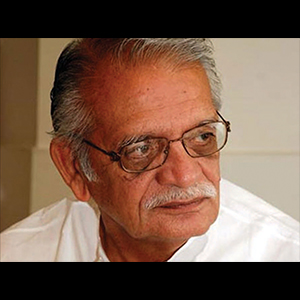
    NEW DELHI (TIP): His lyrics speak of winter afternoons spent soaking the sun in the courtyard, stars walking the streets after rain, the moon being an insomniac and the heart a neighbour. Gulzar, whose song writing brought a range of fresh metaphors to Hindi cinema and whose movies feel like visual literature, will receive the Dadasaheb Phalke award for 2013. “It is national honour.

    It is a feeling of fulfillment of not one song, screenplay, but the total work one does. I feel blessed,” the 79-year-old filmmaker told a TV channel. A seven-member jury has unanimously recommended his name. During Emergency, Gulzar’s film “Aandhi” was banned by the Congress government as the protagonist played by Suchitra Sen was deemed to be modelled on then Prime Minister Indira Gandhi. It is both ironical and heart-warming that Indian filmdom’s biggest official honour comes to the Punjab-born director during the Congress-led UPA rule.

    On Saturday, Twitter was abuzz with congratulatory posts. One of them said, Ab ki baar, Gulzar, a naughty twist to the BJP’s campaign slogan for the ongoing Lok Sabha polls. Gulzar’s finest work, both as a director and a lyricist, are sensitive manuscripts of the human heart. Movies such as “Koshish”, “Achanak”, “Mausam”, “Namkeen”, “Ijaazat” leave you with a sense of loss and ache. But he has also made films of joy and laughter: “Parichay” and “Angoor”, to name a couple.

    Quite a few have also been political in content: “Mere Apne” (youth unrest), “Maachis” (Punjab terrorism), “Aandhi” and “Hu Tu Tu”. And his television series, “Mirza Ghalib”, is regarded as an all-time classic. In his early years, Gulzar assisted the very special Bimal Roy and wrote his first song for the latter’s 1963 classic, “Bandini”, “Mora gora ang le le” (music director: SD Burman). Over the years he also teamed up with classy composers such as Hemant Kumar, Madan Mohan, Kanu Roy, Salil Chowdhury, AR Rahman and Vishal Bharadwaj. With Rahman, he won both the Oscar and the Grammy for the “Slumdog Millionaire” track, “Jai Ho”. But his best work happened with RD Burman.

    Over the years, the lyricist has spoken fondly of the late composer whom he always referred to as Pancham, his pet name. The two were at their collaborative best in films such as “Aandhi”, “Khushboo”, “Masoom”, “Ijaazat”, “Ghar” and “Khoobsurat”. As a lyricist, Gulzar has evolved with the changing times. Without compromising on his craft, he has found the right words to reach out and engage with a new generation. If “Kajra re” (film: “Bunty aur Babli”) is fun and young, “Bidi jalai le” (film: “Omkara”) reeks with erotic passion.

    In “Kaminey”, he uses the expression, “Ek hi lat suljhane mein saari raat bitayee hai” (I have spent an entire night sorting out one knot in your hair) in one track to reaffirm that his delicacy of expression is intact. Like fine wine, Gulzar has improved over the years. The filmmaker has also groomed a lot of talented actors and technicians notably Vishal Bharadwaj, Jimmy Shergil and Tabu. “Mere Apne”, his first film as a director, also had a bunch of newcomers including Danny, Asrani and Dinesh Thakur.

    A popular poet and writer, Gulzar is a crowdpuller at litfests and mushairas alike. Generally dressed in starched white kurta-pyjamas and shawls in the winter, he has come to symbolize the erudite litterateur. He is also a spokesperson for humanism, communal amity and a votary for peace, especially with sparring neighbours. The Dadasaheb Phalke award is a crown jewel in a glittering career.

  • PM MAY HAVE DELIVERED 1200 SPEECHES, BUT WAS HE IMPACTFUL, ASKS JAITLEY

    PM MAY HAVE DELIVERED 1200 SPEECHES, BUT WAS HE IMPACTFUL, ASKS JAITLEY

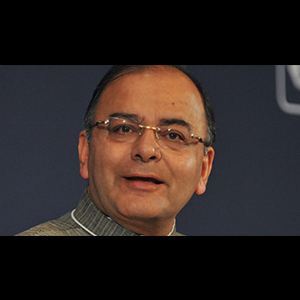
    AMRITSAR (TIP): Commenting on the statement released by the Prime Minister’s Office (PMO), which maintained that Prime Minister Manmohan Singh has so far delivered around 1200 speeches and has been very communicative, Bharatiya Janata Party (BJP) leader and the party’s Lok Sabha candidate for Amritsar, Arun Jaitley, said on Saturday that delivering innumerable speeches does not make a prime minister communicative.

    “I read a statement of PMO that PM spoke 1200 times in 10 years and that’s what makes him a communicative PM. I don’t think he became a communicative PM by just reading out speeches and templates,” said Jaitley. “What you say must carry weight and should be inspirational, and people should at least listen to it, but I doubt that those speeches would be remembered, as great speeches or anything of significance except for the routine sentences.

    It’s almost like the PM, having walked on snow, has not left any footprints behind,” he said. Yesterday, the PMO cited economic data to claim “unprecedented development” in the past decade and Prime Minister Manmohan Singh’s current media adviser Pankaj Pachauri said this would not have been possible if the PM was weak, as mentioned in former media advisor of the PM, Sanjay Baru’s book ‘The Accidental Prime Minister.’

    He also refuted Baru’s claim that Singh had been a silent Prime Minister. He said that even though the PM had delivered 1,198 speeches and his office had issued many press releases, they were never highlighted sufficiently in the media, as they were more interested in other fields rather than in issues like the economy, development, agriculture, science and education.

  • BJP cautions government against appointing Army Chief before May 16

    BJP cautions government against appointing Army Chief before May 16

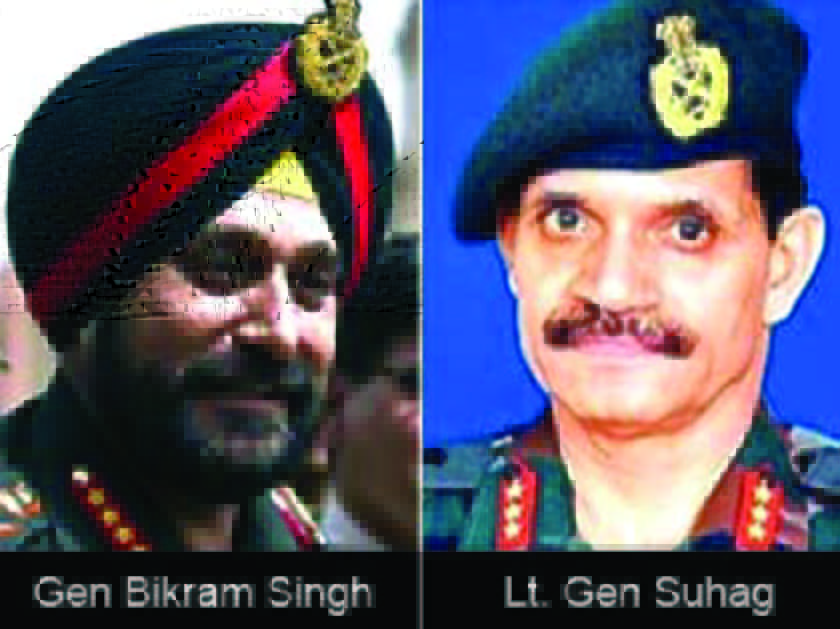
    NEW DELHI (TIP): Amid reports that the Defence Ministry has initiated the process of appointing Vice Army Chief Lt Gen Dalbir Singh Suhag as next Army Chief, BJP on April 19 sounded a word of caution to the government on the “hurry” and asked it to avoid taking decisions till elections are over.

    The present army chief Gen Bikram Singh retires on July 31. “I am not going into the specifics of any particular name but surely on the larger issue of naming the next General and reports about Lokpal appointment, we expect that when we are in the midst of elections, when the Model Code of Conduct is in force, at least till 16th of May all these things must be avoided,” BJP leader Ravi Shankar Prasad said.

    Former Army Chief Gen V K Singh, when asked, said government should not “hurry” on making such appointments. “There is still time for retirement of the present Army Chief and the UPA government should not hurry in making any appointment at this point of time,” Gen Singh said. He, however, refused to comment on any particular individual when asked if he was against the appointment of Lt Gen Suhag as the next Army Chief.

    The former Army chief, who has joined BJP and is contesting as its candidate from Ghaziabad, had days before his retirement initiated action against Lt Gen Suhag and imposed a disciplinary and vigilance ban, which was later lifted by the present Army Chief.

  • JD-U will do whatever needed to stop former ally BJP in Bihar

    JD-U will do whatever needed to stop former ally BJP in Bihar

    ARARIA, BIHAR (TIP): JD(U) leader Nitish Kumar vowed to do “whatever is required” to stop the BJP in Bihar, so as to prevent it from forming a government at the Centre. The Bihar Chief Minister said that with that objective in view, the JD(U) was working in tandem with like-minded political parties. He was referring to his party’s alliance with the Left parties.

    “We will do whatever is required to stop the BJP in Bihar during the general election so as to prevent it from forming government at the Centre,” he told an election meeting in Araria district in support of JD(U) candidate Vijay Mandal. Observing that the erstwhile ally had set out on a divisive agenda to polarize voters on communal lines to win the Lok Sabha election, the JD(U) stalwart said its raking up of contentious issues like the Ram Temple, Uniform Civil Code and scrapping of the Article 370 of the Constitution was plain opportunism. The Congress also came in the line of his fire for its role in unbridled price rise, corruption and scams during the UPA government’s decade-long rule.

  • ‘IT’S ROCKING,’ SAYS BJP ABOUT ALLIANCE WITH CHANDRABABU NAIDU

    ‘IT’S ROCKING,’ SAYS BJP ABOUT ALLIANCE WITH CHANDRABABU NAIDU

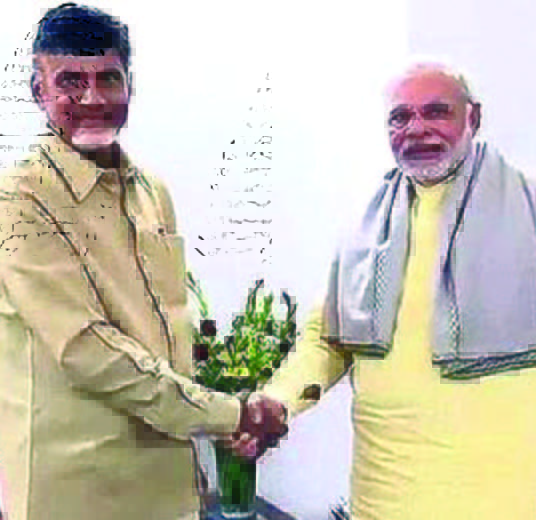
    HYDERABAD (TIP): The BJP announced cheerily on April 18 evening that its alliance with Chandrababu Naidu in Andhra Pradesh is “rocking” – the reassurance was offered by Prakash Javadekar this evening who said, “It’s not rocky, it’s rocking”. Naidu had suggested the opposite at a rally last evening, declaring that the partnership was placed near break point.

    He has partnered with the BJP for the state and national election,which is being held simultaneously in Andhra Pradesh. To keep Naidu among its club of 25 pre-poll allies, the BJP has reportedly agreed to cede a part of its quota of assembly seats to Naidu’s Telugu Desam Party or TDP. Naidu had publicly faulted the BJP for selecting weak candidates for the state election – by association, he said, voters would reject his party’s candidates for Parliament.

    The other sticking point – unacknowledged publicly – is that the BJP has given a ticket to his sister-in-law, Purandeswari, for the national election. She quit the Congress recently for the BJP, and her relationship with Naidu,who is married to her sister, has been fractious. Analysts had stressed that for all his tough talk, Naiduis unlikely to punt the potential benefits of partnering with the BJP, given that it’s predicted to win the maximum seats in the national election.

    For the BJP, Naidu offers a valuable ally in the South where it has traditionally been on weak ground. In the regions of Seemandhra,which will form the new Andhra Pradesh after Telangana is carved out on June 2, Naidu is expected to poll strong results because unlike several other parties, he avoided openly endorsing the bifurcation of the state. Tomorrow is the last day for candidates to file their nomination papers in Andhra Pradesh. Just in case a happy ending is not configured, both parties are drawing up a list of candidates for all constituencies – so they have the option to fight each other as Plan B.

  • Congress puts Vajpayee’s photo on website, stirs controversy

    Congress puts Vajpayee’s photo on website, stirs controversy

    NEW DELHI (TIP): The Congress party stirred a controversy by putting Bharatiya Janata Party leader and former prime minister Atal Bihari Vajpayee’s photo on its official website. The photo was published with a caption that read: “Atal had said Modi did not follow Raj Dharma.

    How can a person whom Atal Bihari Vajpayee had thought unfit to be even a chief minister expected to be given the reigns of the country (PM).” The Congress defended using Vajayee’s photo even in its official briefings. But the BJP asked the Congress to remove Vajpayee’s picture from its website. No leader in the BJP can match the stature of former Prime Minister Shri Atal Bihari Vajpayee. The founding president of the party, Shri Vajpayee was the Prime Minister of India from 1998 until the NDA was defeated by the Congress-led United Progressive Alliance in 2004.

    Shri Vajpayee was clear what was the reason for the defeat: Gujarat Chief Minister Shri Narendra Modi’s failure to control the communal pogrom in his state in 2002. He believed that the party will lose its credibility unless it took action against Shri Modi. “Some people wanted to remove him. I was of the same opinion,” said Shri Vajpayee in Manali. This is confirmed by Shri Jaswant Singh, who held key portfolios in the NDA government. He states that in 2002 Shri Vajpayee had even threatened to resign unless the BJP took action against Shri Modi.

    The fundamental cause of Shri Vajpayee’s pain was that Shri Modi didn’t perform his Rajdharma. He did not fulfil his fundamental duty as the chief minister: protecting the lives of the people of Gujarat. Towards the last ebb of the Gujarat riots, Shri Vajpayee urged Shri Modi to “observe Rajdharma and not discriminate on the basis of caste, creed or religion”. It is evident that Shri Vajpayee believed that the Gujarat CM had been not only inept but downright partisan in his handling of the riots. He wrote a series of letters to Shri Modi instructing him to do all that is necessary for the riot victims, but to no avail.

    This raises the question that how can a person whom the tallest leader of the BJP wanted removed as chief minister, be the party’s Prime Ministerial candidate? Will a chief minister who failed to protect his citizens, who discriminated between people on the basis of religion, who made a mockery of people’s suffering, ever make a good Prime Minister? How can a person who failed in his Rajdharma as chief minister ever ensure a peaceful and prosperous future for the people of India? Having found a new icon in Shri Modi, the BJP is working hard to distance itself from the Vajpayee legacy.

    Consider this. Shri Vajpayee’s niece, Smt Karuna Shukla was forced to leave the party. She is presently with the Congress. Shri Jaswant Singh, a close confidante of Shri Vajpayee, has been expelled from the party. And Dr Subramainan Swamy, a known adversary of Shri Vajpayee who is even reported to have masterminded the downfall of the Vajpayee government in 1998, has been given a prominent place in the BJP! The BJP might forget Shri Atal Bihari Vajpayee. But every Indian must ponder over the questions he raised on the man who is now the BJP’s Prime Ministerial candidate.Not just the handling of the riots, Shri Vajpayee believed that the Modi government wasn’t doing enough to provide relief and rehabilitation to those who had been displaced during the riots.

  • SP backs Mulayam’s rapist remarks, faces criticism from Congress, BJP

    SP backs Mulayam’s rapist remarks, faces criticism from Congress, BJP

    NEW DELHI (TIP): Samajwadi Party supremo Mulayam Singh Yadav got himself embroiled in yet another controversy as he defended rapists saying sometimes boys make mistakes but don’t deserve the death penalty which was strongly criticised by his rivals. While addressing a rally in Moradabad, he even went to the extent of saying if voted to power his party will scrap death penalty for repeat rape offenders.

    He said, “Rapists should not be given the death sentence. Sometimes boys make mistakes. My government will try to change the law.” He was referring to the Shakti mills gangrape case in Mumbai where repeat offenders have been sentenced to death under the strict anti-rape laws enacted after the December 16, 2012 Delhi gangrape incident. This is not the first time that Mulayam has courted controversy on gender issues. The SP has consistently opposed even the Women Reservation Bill in Parliament.

    SP leader Naresh Agarwal backed the party chief saying, “Such strong rape laws are being misused by many and it’s acting against the innocent. If Mulayam said so, then he is right.” Mulayam’s son and Uttar Pradesh Chief Minister Akhilesh Yadav refused to comment saying he does not know in which context remarks were made. Mulayam’s statement, however, drew sharp reactions from political adversaries.

    BJP leader Subramanian Swamy hit out at the SP chief saying, “Mulayam Singh Yadav should think before he speaks. He wants to play minority politics over rape case.” Another BJP leader Mukhtar Abbas Naqvi said, “Mulayam’s government will never come to power. But if by some chance it does, then all the goons would be out of jail, roaming free and harming the country with their deeds.” Congress leader Shobha Oza also condemned Mulayam’s statement saying, “This is unfortunate.

    No leader should say anything that would encourage rape.” Aam Aadmi Party leader Medha Patkar said death penalty should not be awarded. She said, “Rape is a very serious offence and it should not be pardoned. But personally speaking, I am against the death penalty. A life sentence is fine, but I don’t think a death sentence is the right step.” With the SP government already facing flak over the law and order situation in Uttar Pradesh, the statement does little to redeem SP’s record on this front.

  • High voter turnout in 91 seats in LS polls, crosses the 2009 mark

    High voter turnout in 91 seats in LS polls, crosses the 2009 mark

    NEW DELHI (TIP): Marking a considerably high voter turnout as compared to the 2009 Lok Sabha elections, India voted for 91 constituencies in 14 states and Union Territories which went to polls in the third and substantial phase on April 10, with Chandigarh witnessing the highest percentage of 74.

    The national capital of Delhi, too, recorded a 64 per cent voter turnout in the mega-battle for seven Lok Sabha seats where a faction-ridden BJP tried to sail on ‘Modi wave’ while AAP and Congress attempted to regain the lost ground. A substantial increase of 12 per cent was seen in the voter turn in Delhi as compared to the 2009 polls. Muzaffarnagar and Shamli in Uttar Pradesh, which witnessed communal riots in August 2013, recorded “above average” voter turnout of 67.78 per cent and 70.85 per cent, respectively.

    The 10 seats of Uttar Pradesh, which went to polls on Thursday, reported a record turnout of 65 per cent as compared to 51.30 per cent recorded in the last LS polls. The turnout in Delhi was 64 per cent, up by 12 per cent as against 2009 elections. Chandigarh constituency recorded the highest turnout of 74 per cent, against 64 per cent in 2009 polls. Kerala, which went to polls in single phase, recorded 73.4 per cent voter turnout, up from 73.2 per cent last time. Chhattisgarh’s Bastar seat witnessed the lowest voter turnout among the 91 seats of 51.4 per cent.

    But it was higher as compared to 47.33 per cent recorded in the last LS polls. There was a voter turnout between 67 and 55.9 per cent for the 21 Lok Sabha seats in three states and a union territory, besides 70 Assembly constituencies in Odisha in eastern India. An estimated 50 per cent of the 191 million electorate had voted in eight hours of brisk polling, with men and women of all age groups queuing up at the 140,850 voting centres from the time they opened at 7 am. EC maintained that the turnout could be “much higher” in all the seats as final reports were yet to come in with voting still on after the stipulated hours in various areas.

    Although the polls were mostly peaceful, there were some incidents of violence reported from Chhattisgarh, Odisha and Bihar in Naxal related violence. In Bihar, two Central Reserve Police Force (CRPF) personnel were killed when Maoists exploded a concealed land mine in Munger district when they were on their way to neighbouring Jamui where polling was on. Maoists also blasted a school in Bihar’s Lakhisarai district. In Odisha, Maoists snatched EVMs and took away the battery of one voting machine. Though the staggered nine-phase balloting began April 7, the first two rounds involved only 13 constituencies from the country’s northeast where the BJP is not a major player. While the people of India have made their choice, the results will be known when the votes are counted on May 16.

    CONSTITUENCY-WISE VOTER TURNOUT FOR LS SEATS IN 2014

    BIHAR
    1. Sasaram – 54 per cent
    2. Karakat – 51 per cent
    3. Aurangabad – 47.5 per cent
    4. Gaya – 51.64 per cent
    5. Nawada – 49 per cent
    MAHARASHTRA
    1. Buldhana -44 per cent
    2. Akola -39 per cent
    3. Amravati – 46 per cent
    4. Wardha – 42 per cent
    5. Ramtek -40.3 per cent
    6. Nagpur – 48 per cent
    7. Bhandara-Gondiya – 53 per cent
    8. Gadchiroli-Chimur – 59 per cent
    9. Chandrapur -43.49 per cent
    10. Yavatmal-Washim -40 per cent
    JAMMU & KASHMIR
    1. Jammu – 68 per cent
    CHHATTISGARH
    1. Bastar – 47 per cent
    UTTAR PRADESH
    1. Saharanpur – 68.40 per cent
    2. Kairana – 64.90 per cent
    3. Muzaffarnagar – 63.53 per cent
    4. Bijnor – 62.96 per cent
    5. Meerut – 60.50 per cent
    6. Baghpat – 61.52 per cent
    7. Ghaziabad – 60.20 per cent
    8. Gautam buddha nagar – 47.20 per cent
    9. Bulandshahar – 61.60 per cent
    10. Aligarh – 55.60 per cent
    DELHI
    1. Chandni chowk – 66.8 per cent
    2. West Delhi – 65.64 per cent
    3. East Delhi – 65.59 per cent
    4. South Delhi – 62.67 per cent
    5. Northwest Delhi – 61.38 per cent
    6. North-East Delhi – 67.08 per cent
    HARYANA
    1. Ambala – 70.7 per cent
    2. Kurukshetra – 75.8 per cent
    3. Sirsa – 76 per cent
    4. Gurgaon – 70.02 per cent
    5. Faridabad – 60.08 per cent
    JHARKHAND
    1. Chatra – 53.88 per cent
    2. Kodarma – 60.97 per cent
    3. Lohardaga – 59 per cent
    4. Palamau – 59.30 per cent
    LAKSHADWEEP
    1. Lakshadweep – 71.36 per cent
    ANDAMAN & NICOBAR ISLANDS
    1. Andaman & Nicobar Island – 70 per cent
    MADHYA PRADESH
    1. Satna -53.77 per cent
    2. Rewa -53.99 per cent
    3. Sidh -56.45 per cent
    4. Shahdol -60.79 per cent
    5. Jabalpur -48.14 per cent
    6. Mandla -65.53 per cent
    7. Balaghat -62.52 per cent
    8 Chhindwara -70.93 per cent
    9. Hoshangabad -65.01 per cent