Tag: BJP

  • NDA vs INDIA: Challenge for Opposition to remain united

    The battlelines for the 2024 General Election are now clearly drawn, with 26 Opposition parties forming an anti-BJP front named INDIA, an acronym for the Indian National Developmental Inclusive Alliance. The Opposition now has a name, though it still doesn’t have a face. Congress leader Rahul Gandhi, who faces the prospect of being debarred from contesting next year’s Lok Sabha poll if the Supreme Court upholds his conviction and sentence in a defamation case, has declared that INDIA will unitedly fight Prime Minister Narendra Modi for the ‘idea of India’. PM Modi, in turn, said during a meeting of the National Democratic Alliance (NDA) that India had a long tradition of coalitions, but those formed on the basis of negativity had never succeeded. Notably, 38 parties attended the meeting of the BJP-led NDA, including the Shiv Sena and NCP factions led by Eknath Shinde and Ajit Pawar; respectively.

    The NDA’s parallel show of strength made it obvious that the BJP is not taking the Opposition lightly; the latter has already held two major meetings (in Patna and Bengaluru) in less than a month, with a coordination committee set to be formed at the next meeting in Mumbai.

    The all-important question is: do these parties have the firepower and cohesion to stop the BJP’s juggernaut in 2024? The 26 parties account for around 150 seats in the Lok Sabha, less than half the NDA’s current strength. The Congress, which is in power in Karnataka, Chhattisgarh, Rajasthan and Himachal Pradesh (besides being a junior member of the ruling alliance in Jharkhand), continues to be the premier Opposition party. Much will depend on whether the Congress and its INDIA partners such as AAP and the Trinamool Congress are able to rise above their differences. Going by the split in the Shiv Sena and the NCP, the BJP will stop at nothing to cripple the Opposition camp.
    (Tribune, India)

  • BJP appoints in-charges for 4 poll-bound states

    As assembly polls are awaited in the four key states of Madhya Pradesh, Rajasthan, Chhattisgarh, and Telangana this year, Union ministers and senior party leaders have been appointed as in-charges for each of the states on Friday by the Bharatiya Janata Party (BJP). As er media reports, the appointed in-charges are expected to play a pivotal role in picking candidates as well as in the campaign strategy preparation and implementation.
    Union minister Prahlad Joshi has been appointed as the party’s in-charge for Rajasthan, where elections are due this November.
    Besides Joshi, Gujarat deputy chief minister Nitin Patel and former Haryana Congress leader Kuldeep Bishnoi have been appointed co-in charges.
    Both of them joined the BJP in August last year. It has been reported that Under Joshi, the in-charges will be involved in strategising election campaigning for the state as well as play a vital role in ticket distribution.
    Senior party leader Om Prakash Mathur has been bestowed with the responsibility to supervise the Chhatisgarh election campaign.
    He will lead the party as the state in-charge and will be aided by Union health minister Mansukh Mandaviya.
    In Madhya Pradesh, Union ministers and senior party leaders, Bhupendar Yadav and Ashwini Vaishnaw, will oversee the party’s poll preparedness. The BJP is in a straight fight with the Congress in Madhya Pradesh.
    For the Telangana election campaign, senior leader Prakash Javdekar has been selected.
    He will be supported by his colleague and party general secretary Sunil Bansal. The BJP has been making all-out efforts in the state to unseat the ruling Bharat Rashtra Samithi (BRS).

  • The depths to which politicians sink

    The depths to which politicians sink

    Ajit Pawar’s revolt has put the NCP and the Maha Vikas Aghadi on a sticky wicket

    “Interesting also will be how the two new components of the functioning government will adjust to the new dispensation. The BJP has long since given up its self-description as ‘a party with a difference’. It will now have to adjust to the proclivities of its newfound friends. Their itching fingers will soon be on display. That should prompt our Prime Minister to amend his boastful proclamation, ‘Na khaunga na khane doonga’. The second half of the slogan may have to go. Unless, of course, he does not care and repeats things to himself for his own satisfaction to make himself believe what he speaks.”

    Our Prime Minister dubbed India as the ‘mother of democracy’. He should take the lead to ensure that this ‘mother’ is given due respect. He can request the Election Commission to disqualify from holding office for five years all members of political parties who defect en masse mid-term. Only then will the ‘mother of democracy’ survive.

    By Julio Ribeiro

    In his Rubaiyat, Persian poet Omar Khayyam wrote: “And pity Sultan Mahmud on his throne.” That was centuries ago. I pity the young Maharashtra Chief Minister, Eknath Shinde, who now sits uneasily on his chair in Mumbai’s Mantralaya. He had one powerful deputy to consult and worry about. He now has two!

    If the NCP is not able to stand on its legs, it will topple, unless Pawar defies his age and offers resistance, which he is trying to do.

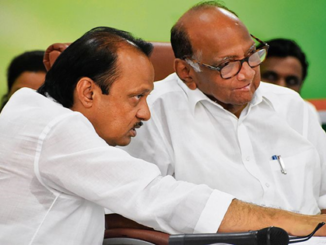
    Ajit Pawar, nephew of old warhorse and Nationalist Congress Party (NCP) chief Sharad Pawar, joined hands with the BJP on Sunday along with a bunch of fellow NCP MLAs. While Ajit was sworn in as Deputy CM at the Raj Bhavan, eight of his associates were made ministers in the ‘BJP-oriented’ Cabinet. Pawar’s confidant Praful Patel had got himself photographed next to the Governor at the swearing-in. Another Pawar protégé, Dilip Walse-Patil, and a third one, Hasan Mushrif, surprised everyone by defecting. Chhagan Bhujbal, who spent two years as an undertrial in jail before being released on bail, was among the turncoats. He is accused of siphoning off funds earmarked for the construction of Maharashtra Bhavan in New Delhi. When he was Home Minister in the then Congress-NCP government, there were numerous complaints against him of ordering transfers of police officers for cash. I had accused him in this regard in an article and taken up the issue with Pawar, his party boss at that time.

    When Devendra Fadnavis was the Chief Minister, he had kept a sword hanging over Ajit’s head in the irrigation scam case involving Rs 35,000 crore. Param Bir Singh was the Director of the Anti-Corruption Bureau when the case against Ajit was finally closed. The Governor was woken up at the crack of dawn in order to checkmate Uddhav Thackeray’s attempt to become the Chief Minister in November 2019. Fadnavis and Ajit were sworn in as CM and Deputy CM, respectively, and they were in office for just three days before Pawar announced that the prodigal nephew had returned to the fold. Within those three days, the corruption case was closed! Many still doubt the tale spun around that defection and the subsequent ‘mea culpa’. Was it Pawar’s sleight of hand, as the old man now wants us all to believe, or was Ajit really carried away by the lure of office?

    This time, though, it appears to be for real, though many old Pawar admirers think that the ‘wily Maratha’ will have the last laugh! My view is that this time there is no such chance. The array of NCP bigwigs, many of them with skeletons in the cupboard, who accompanied Ajit to the Raj Bhavan and the obvious fact that the nephew was smarting from the slight of having being downgraded in the NCP hierarchy by his uncle — all this smacks of revenge.

    How will these developments play out finally? Shinde will find himself weakened. He will have two deputies breathing down his neck. Both exude more power and heft than he does. Fadnavis is certainly more cerebral. Ajit hails from a more recognized Maratha family compared to Shinde. In the majority Maratha community Ajit is likely to be a bigger draw. This leaves Shinde nowhere to go.

    I do not know the reasoning behind this step the BJP has taken to further strengthen its party and weaken the Opposition. It would have been child’s play for the BJP to deal with Shinde, but Ajit will be a different kettle of fish. Of course, if the BJP is thinking of the Lok Sabha elections of 2024, it will be easier for the party to take on the Congress, the NCP (Sharad Pawar) and the Shiv Sena (Uddhav), with the NCP (Ajit) and the Shiv Sena (Shinde) being on its side. This contest is now wide open.

    Pawar was one of the anchors of the Opposition parties uniting to fight the next Lok Sabha elections on a common platform. Arvind Kejriwal’s AAP and Telangana’s K Chandrashekar Rao are pulling in different directions compared to the Congress and the others. The promised unity is unraveling. And now, with Ajit’s revolt, the NCP will be considerably weakened. If it is not able to stand on its legs, it will topple, unless Pawar defies his age and offers resistance, which he is trying to do.

    If this calculation of fortunes in the Lok Sabha elections is what motivated the BJP to shore up its strength with rebellious NCP legislators, the long-term scenario may not be to its liking. The ‘inter se’ relations between the two Deputy CMs and between the Chief Minister and his new deputy are very likely to sour sooner than later. How this will play out would be interesting.

    Interesting also will be how the two new components of the functioning government will adjust to the new dispensation. The BJP has long since given up its self-description as ‘a party with a difference’. It will now have to adjust to the proclivities of its newfound friends. Their itching fingers will soon be on display. That should prompt our Prime Minister to amend his boastful proclamation, ‘Na khaunga na khane doonga’. The second half of the slogan may have to go. Unless, of course, he does not care and repeats things to himself for his own satisfaction to make himself believe what he speaks.

    The NCP MLAs who have joined forces with the BJP could constitute the insurance cover for possible second thoughts in the Shinde faction. The reduction in numbers in the MVA tally will certainly make that political combination look like a scarecrow instead of a mighty Opposition force which it was. Analysts and pollsters had given the Maha Vikas Aghadi an edge over the BJP-Shiv Sena (Shinde) combine in the Lok Sabha elections. With Ajit’s defection, the equations will surely change. But taking into account the mercurial politics of Maharashtra, more developments are not only possible but probable. Our Prime Minister dubbed India as the ‘mother of democracy’. He should take the lead to ensure that this ‘mother’ is given due respect. He can request the Election Commission to disqualify from holding office for five years all members of political parties who defect en masse mid-term. Only then will the ‘mother of democracy’ survive.

    (The author is a former governor and a highly decorated retired Indian Police Service (IPS) officer)

  • PM’s push for UCC: Code should be reformatory, not a Hindutva plank

    With less than a year to go for the Lok Sabha elections, Prime Minister Narendra Modi has made a strong pitch for the implementation of the Uniform Civil Code (UCC), even as he has accused Opposition parties of inciting minority communities against it. Hitting back at the PM, the Congress has said that a ‘divisive’ code cannot be forced on people by an ‘agenda-driven majoritarian government’. The UCC continues to be a key poll plank of the ruling BJP, which kept its core-agenda promises of abrogating Article 370 months after it won the 2019 General Election and is on course to get the Ram Mandir ready by early next year.

    The UCC envisages a common set of personal laws dealing with matters such as marriage, divorce, inheritance and adoption, applicable to all citizens of India irrespective of their religion. The Law Commission had on June 14 initiated the process of inviting views from stakeholders, including the public and recognized religious organizations, on the contentious issue. The BJP-ruled Uttarakhand is spearheading the UCC campaign, even as the Supreme Court had observed in January this year that state governments had the power to examine the feasibility of implementing the common code. The Constitution’s Article 44, which is one of the directive principles of state policy, says that ‘the State shall endeavor to secure for the citizens a uniform civil code throughout the territory of India’.

    The Union government faces the onerous task of building consensus on the UCC, even as AAP has extended ‘in principle’ support to the code. The perception that it would be Hindu-centric has triggered doubts and apprehensions among the minorities. The UCC can gain credibility and acceptability only if it encapsulates the spirit of Article 25, which guarantees freedom of religion, and is aimed at doing away with regressive practices in various religions. An ideal code ought to be reformatory. It’s hoped that the Centre will take into consideration the views of all stakeholders while drafting the UCC.
    (The Hindu)

  • There can be ‘no ifs or buts’ in dealing with terrorism: PM Modi

    There can be ‘no ifs or buts’ in dealing with terrorism: PM Modi

    Clouds of coercion on Indo-Pacific, says Modi in his second address to US Congress

    I.S. Saluja

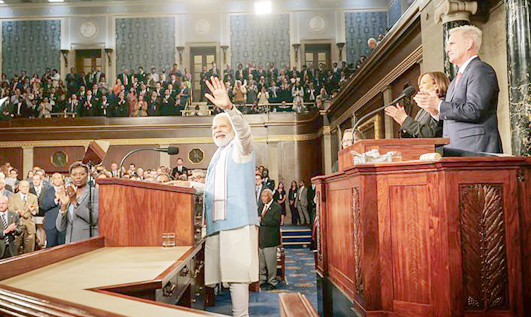
    WASHINGTON, D.C. (TIP): Terrorism is an enemy of humanity and there can be “no ifs or buts” in dealing with the scourge, Prime Minister Narendra Modi said as he sought action against its state sponsors, in an oblique attack on Pakistan.

    In his address to the joint meeting of the US Congress on Thursday, June 22, Prime Minister Modi said that more than two decades after 9/11 and over a decade after the 26/11 attacks in Mumbai, radicalism and terrorism still remain a pressing danger for the whole world.

    “These ideologies keep taking new identities and forms, but their intentions are the same. Terrorism is an enemy of humanity and there can be no ifs or buts in dealing with it. We must overcome all such forces sponsoring and exporting terror,” Modi said in his 60-minute address in English.

    The Prime Minister also talked about the virtues of democracy, the ties that bind India and the United States, and India’s economic and development trajectory. He also touched on issues of global concern, such as the war in Ukraine and the situation in the Indo-Pacific.

    Mr. Modi’s speech was heard by a packed chamber and he received several standing ovations, but over 70 members of Congress had raised concerns about democratic backsliding in India ahead of his address. A handful of them boycotted the event. “Democracy is one of our sacred and shared values,” the Prime Minister said as he referred to India as the “mother of democracy”.

    “I am here to speak about our calling for this century,” he said, characterizing as an “exceptional privilege” the opportunity to address Congress twice (his first address was in June 2016).

    He talked about the digitization of the Indian economy and said that India would soon be the third-largest economy in the world. “When India grows, the world grows,” Mr. Modi said.

    He depicted India’s development as being led by women and a blend of ancient values and modern capabilities, such as in technology.

    “Be it creative reels on Insta or real-time payments, coding or quantum computing… the youth of India are a great example of how a society can embrace latest technology,” the Prime Minister said.

    “We celebrated a remarkable journey of over 75 years of freedom, after a thousand years of foreign rule in one form or another,” Mr. Modi said. (This is apparently a reference to both British rule and Mughal rule. The BJP has previously alluded to the Mughals as being essentially foreign).

    He also spoke about India’s environmental commitments, linking them to India’s culture.

    On the Russian invasion of Ukraine, Mr. Modi said the world order was based on respect for the United Nations Charter, sovereignty and territorial integrity and the peaceful resolution of disputes.

    “War has returned to Europe. It is causing great pain in the region,” he said, adding that the countries of the so-called Global South were particularly impacted.

    “As I have said directly and publicly, this is not an era of war. But, it is one of dialogue and diplomacy,” Mr. Modi said.

    Modi also made a veiled reference to China, saying the global order is based on respect for the principles of the UN Charter, peaceful resolution of disputes, and respect for sovereignty and territorial integrity. Representing 1.4 billion Indians, Modi said it is always a great honor to address the US Congress and an exceptional privilege to do so twice.

    Modi became the first Indian leader to address the joint session of the US Congress twice on Thursday. He first addressed a joint meeting of the US Congress in 2016.

    Modi said as there have been many advances in AI- Artificial Intelligence – in the past few years, at the same time, there have been even more momentous developments in other AI- America and India.

    “We were strangers in the defense cooperation at the turn of the century. Now, the US has become one of our most important defense partners,” said Modi, who is currently on his maiden state visit.

    His words received a standing ovation from US lawmakers.

    Modi said democracy is one of their sacred and shared values.
    “It has evolved over a long time and taken various forms and systems. Throughout history, however, one thing has been clear. Democracy is the spirit that supports equality and dignity. Democracy is the idea that welcomes debate and discourse,” he said.

    Democracy is the culture that gives wings to thought and expression, he said, adding that India is blessed to have had such values from times immemorial.

    In the evolution of the democratic spirit, India is the “Mother of Democracy” he added.
    (With inputs from PTI)

  • 17 Non-BJP Opposition parties pledge to stand together to unitedly contest BJP in 2024 Lok Sabha elections

    17 Non-BJP Opposition parties pledge to stand together to unitedly contest BJP in 2024 Lok Sabha elections

    Amidst anti-BJP rhetoric and promises to contest together, the Opposition concludes its first strategy meet on 2024 Lok Sabha election, without any common statement or declaration of seat sharing formula

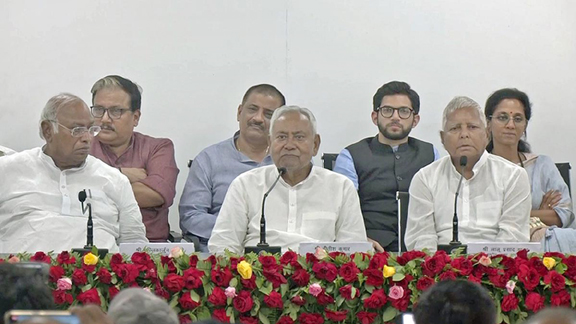
    PATNA (TIP): Framing the next general election as a fight between “democracy and dictatorship”, 17 Opposition parties came together, projecting a united front in Patna on June 23. At the end of the four-hour long meeting, no joint statement was issued, nor a seat-sharing formula declared. It concluded on the promise of fighting the BJP together and leaving behind the burden of past prejudices. The meeting was the first of the many that the Opposition has planned. The next meeting will be hosted by the Congress in Shimla around mid-July. Barring a few tense moments, with bitter exchanges between the Congress and Aam Aadmi Party (AAP), the atmosphere was convivial. Many Opposition leaders urged the Congress to be “generous.” It too played its part by listening more and speaking less. The meeting began with an opening address from Bihar Chief Minister and Janata Dal (United) leader Nitish Kumar and his colleague from Rashtriya Janata Dal (RJD) Lalu Prasad. Mr. Kumar, according to sources, said that as “we edge closer to May 2024 many more political parties will join this block”.

    Mr. Prasad, who appeared for the first time in a political meeting after his recent kidney transplant, urged the Congress to be “large-hearted” and said that the larger force in each State should be given primacy – a view that was echoed by Samajwadi Party (SP) leader Akhilesh Yadav later during the meeting.

    Congress president Mallikarjun Kharge was urged to speak, as the leader of the largest party present, but Mr. Kharge chose to listen instead and decided to speak at the very end.

    NCP patriarch Sharad Pawar wanted a joint statement issued, though the other parties disagreed, saying it is too early to frame one. Mr. Kejriwal advocated for embracing the “nation first, party second” motto, appealing for each party to be flexible.

    The discussion then veered towards the widely anticipated electoral arrangement. Tamil Nadu Chief Minister and Dravida Munnetra Kazhagam (DMK) president M.K. Stalin elucidated that there can be no “single formula for seat sharing across the country”. It will vary from State to State according to the political equation there. It was also endorsed by National Conference leader Omar Abdullah, who called the formula of one common candidate against BJP in 543 seats “impractical”. West Bengal Chief Minister and Trinamool leader Mamata Banerjee demanded that the Opposition work with the goal of “no vote to BJP” but at the same time be conscious that this fight does not devolve into “BJP versus All”. Instead, it is about “BJP vs People of India”, she said.

    Former Congress president Rahul Gandhi who spoke towards the end underlined three things. He referred to comments by Mr. Pawar who cited the Maha Vikas Aghadi alliance of NCP, Congress and Shiv Sena (UBT) in Maharashtra as an example of how the Opposition can overcome past differences and ideological issues. “I have come here without any past memory. Congress party will not hold on to its past likes and dislikes,” Mr. Gandhi said according to sources. Opposition unity, he said, begins with a clean slate. He said the BJP currently enjoys a monopoly over finances, institutions and modes of communication. To counter this, the Opposition has to build a common narrative. CPI(M) general secretary Sitaram Yechury said the Opposition must focus on the issue of economic distress.

    Addressing a joint press conference at the end of the meeting, Mr. Kumar slammed BJP saying that the party in power at the Centre these days “is not working in national interest”.

    Ms. Banerjee said the Opposition will work to stall the BJP “even if blood flows”. “We resolved three things. One we are united, second we will contest the election together against BJP and third, the next meeting will be held in Shimla,” she said before adding, “History has started from here”.

    Mr. Kharge said in the next meeting further discussions will take place on region-specific political situations.

    Former Chief Ministers of Jammu and Kashmir Mehbooba Mufti and Mr. Abdullah said that the very “idea of India is being threatened today”. “Today democracy and other institutions of our country are being attacked and what started in Kashmir is now gripping the whole country. Gandhi’s country will not become Godse’s country… there will be our government,” said Ms. Mufti. Mr. Abdullah hoped that free and fair elections are held in Jammu and Kashmir.

    Left leaders D. Raja, Mr. Yechury and Dipankar Bhattacharya echoed, “We’ll move together and fight together to reclaim our Republic before it is lost”. Similarly, Mr. Pawar and Sena (UBT) leader Uddhav Thackeray said the first step towards a joint effort against BJP “has started from Patna today”. “Several movements have started from Patna and now this too has begun. We’ve decided from here to contest elections unitedly and I’m quite confident that we’ll achieve our goal”, said Mr. Pawar. “Well begun is half done” quipped Mr. Thackeray.

    Jharkhand Chief Minister Hemant Soren, Mr. Akhilesh Yadav and Mr. Prasad too addressed mediapersons and said the “meeting was the first step towards their common goal”.

    Meanwhile, Union Home Minister Amit Shah termed Patna Opposition meeting ‘a photo session’ and added “These parties can never come together on a common platform”.

    Union Home Minister Amit Shah on June 23 said the joint Opposition meet in Patna was merely a “photo session” and that the parties could never come together on a common platform.

    Speaking at a government function to inaugurate a forensic laboratory and other development projects in Jammu, Mr. Shah said people had already decided that the Narendra Modi government would return to power in 2024 with more than 300 seats.

    BJP President JP Nadda termed it an opportunistic association. He said the Opposition huddle was opportunistic and riddled with contradictions. “I was surprised as all Opposition party leaders are embracing each other and meeting in Patna on June 23. It reminded me of my childhood days as I had my birth and schooling in Patna. It is the same Lalu Prasad Yadav who was sent to jail for 22 months by Indira Gandhi, grandmother of Rahul Gandhi, and it is Bihar Chief Minister Nitish Kumar, who was sent to jail for 20 months by Mrs Gandhi,” Mr. Nadda said, addressing a public meeting at Kalahandi in Odisha.

    “When I see the images of Rahul Gandhi being welcomed in Patna, I wonder how politics has changed…where they started and where have they landed now,” he said“Now, Uddhav Thackeray is in Patna. His father Hindu Samrat Balasahab Thackeray used to say he would never let Shiv Sena become Congress and he would rather close his shop if he had to align with Congress. Now, his son is closing down his shop. It is a strange politics,” Mr. Nadda said.


  • An Open Letter to United States Congress

    Ref.: Unknown US companies and individuals providing services or products including raising capital in violation of The U.S. Financial Crimes Enforcement Network (FinCEN) standards and dealing with a Ghost company working for Russia in violation of US sanctions against Russia.

    Hon. Chairman McHenry, Hon. Chairman Wyden & Committee Members: Greetings. 

    The undersigned wants to draw the attention of the Honorable Committee that unknown US companies and individuals are providing services or products including raising capital to two Indian business entities that has become a threat to US Financial System and Security of our country. It is my humble request to the Honorable members of the committees to investigate these unknown US companies and individuals that have provided or are providing services or products or capital to the two Indian corporations in gross violation of various US Laws.

    • Adani Group is raising money in USA for the last 4 years in violation of US Laws:

    Adani Group of companies is owned by Gautam Adani with personal relations with India’s PM Modi dating back to the late 1990’s. It won’t be an exaggeration if Gautam Adani is called “The Poster Boy of Gangster Capitalism of India.” Adani’s status as a recipient of favors from Narendra Modi of BJP has been the subject of continuous criticism in India since Modi was Chief Minister of the State of Gujarat for 13 years from 2001 to 2014. The favors gathered speed after Modi took over as PM of India in 2014. Prior to Modi entering Gujarat politics in 1998, Adani was a key ally of Gujarat BJP leaders for years. BJP has been ruling Gujarat since 1995 to the present and it is a well-known fact that Adani helped Modi to become CM of Gujarat in 2001 and later PM of India in 2014. Harvard’s ranking of states and districts in Human Development Index; Gujarat has the lowest rank at 28 out of 28.  India’s ranking under PM Modi in the United Nations HDI has fallen to 132 of 191 countries in 2022. 

    Forbes, Jul 17, 2014: Adani has, over the years, leased 7,350 hectares–much of which he got from 2005 onward–from the (Modi) government in Mundra. He got the 30-year, renewable leases for as little as one U.S. cent a square meter (the rate maxed out at 45 cents a square meter). He in turn has sublet this land to other companies, including state-owned Indian Oil Co., for as much as $11 per square meter. Between 2005 and 2007 at least 1,200 hectares of grazing land was taken away from villagers. See Link # 12 & 8 Adani News

    (https://www.forbes.com/sites/meghabahree/2014/07/17/adani-finds-a-savior-in-the-modi-govt/?sh=1a141d54639f)

    Newsclick EXCLUSIVE: How Gujarat Government Helped Adani’s Port Company

    (https://www.newsclick.in/eXCLUSIVE-how-gujarat-government-helped-adani-port-company#:~:text=The%202012%2D13%20report%20of,the%20country%20in%20Mundra%2C%20Gujarat.)

    The Adani Group was established in 1988 and became publicly traded in 1994. But its real rise happened under Modi’s reign in Gujarat. From 2002 to March 2013 the group’s revenue rose from $765 million to $8.8 billion while net profits climbed even faster. Gautam Adani’s meteoric success started under CM Modi of Gujarat in 2001 and became an exceptional international story after Modi became PM of India in 2014. From an importer of primary polymers for small-scale industries, Adani grew to become the  biggest private operator of ports, Airports, and largest producer of electricity, under the preferential patronage of PM Modi. In addition, the Adani group has substantial interests in a variety of sectors: defense, coal mining, oil and gas exploration, gas distribution, transmission and distribution of electricity, civil construction and infrastructure, multi-modal logistics, international trade, education, real estate, edible oils, and food storage. His companies currently trade in over 30 commodities with at least 28 countries. At the same time, Adani ports are notorious for drug hauls for billions of dollars in India. See Link # 13 & 14 Adani.

    (https://www.bbc.com/news/world-asia-india-58634575)

    (https://thewire.in/government/heroin-seuzure-adani-mundra-worry-indian-authorities)

    The fact that Adani Group is tightly controlled by family members with very dubious records is well known in India and in countries where they are operating. The corporate structure is totally opaque with dozens of shell companies in various tax havens since the inception of Adani Group. The money is hard to track. Most have flowed into trusts, which don’t report financial results, making it impossible to tell where it ended up. In other instances, recipients simply report in filings that the funds came from a “related party,” offering no other details. And public disclosure in Mauritius, the Cayman Islands and UAE is scant. Moreover in 2018, the provision of dealing with an ‘opaque structure’ and requiring a Foreign Portfolio Investment (FPI) to disclose every ultimate natural person at the end of the chain of every owner of economic interest with the FPI was done away with by Modi government to benefit Adani.” This rickety structure has become a debt-ridden house of cards with rapid diversification after 2014 when Modi become PM of India.

    Louis Vuitton. Tesla. Amazon, Apple, Microsoft; the businesses behind the richest people in the world need no introduction. But last year, Gautam Adani, a state -created Billionaire, a name that does not command the same global recognition joined this rarefied list by becoming the 2nd richest person in the world in Sep 2022, with a net worth of $154 billion, up from $70 Million in 1998. The overall market capitalization of the 10 Adani Group stocks stood at its peak of $232 billion on Jan. 24, 2023, the day New York based Hindenburg Research released its report.

    Hindenburg accused that Adani group has “engaged in a brazen stock price manipulation, stock parking, accounting fraud, round tripping of cash, Import-Export scams, money laundering through 38 offshore shell companies etc. over the course of decades.” The report describes a galaxy of shell entities based in the Caribbean, Mauritius and the United Arab Emirates controlled by the Adani family. Further it accused that Gautam Adani’s elder brother Vinod Adani has played a pivotal part in perpetuating what it alleged is “the largest con in corporate history.” See Link # 1 Adani News

    (https://hindenburgresearch.com/adani/?fbclid=IwAR1o0U99rToDlgcI8s38bG2uJ3tUzQd1ijT3R2Hi7KJkeIe42u3aNkamshk)

    Then on Jan 29th, 2023, Adani group in its 413-page written rebuttal, denounced Hindenburg’s report as “baseless” and “malicious,” and accused the firm of having an “ulterior motive” for publishing the “missive.” It said Hindenburg’s actions represent a “calculated attack on India, the independence, integrity, and quality of Indian institutions, and the growth story and ambition of India.” See Link # 2 Adani News

     (https://www.adani.com/-/media/Project/Adani/Invetsors/Adani-Response-to-Hindenburg-January-29-2023.pdf)

    Same day on Jan 29, 2023, Hindenburg Research replied, “Fraud Cannot Be Obfuscated By Nationalism Or A Bloated Response That Ignores Every Key Allegation We Raised.       See Link # 3 Adani News

    (https://hindenburgresearch.com/adani-response/)

    What Hindenburg exposed was well known to Indian journalists for a long time, but they were forced to keep quiet about Adani’s meteoric rise because of fear of reprisal and heavy legal cost for defending themselves in million dollars lawsuits filed by Adani. On top of that, the world’s top reputed Mutual Fund Managers including a few Indian Managers also knew about Adani and for that reason they never invested in the Adani Group of companies. According to Fisdom Research, as of December 2022, mutual fund industry has a negligible exposure of 0.64 per cent to Adani group companies. Of which 0.18 per cent was through the passive route, where the fund manager had no option but to invest in stocks. See Link # 7 Adani News

    (https://themorningcontext.com/business/why-do-these-foreign-funds-love-adani-group-companies)

    Tim Buckley, an analyst in Sydney, Australia, who has followed Adani’s business for more than a decade said“The big issue is that Adani has spent the last four years in raising debt on Wall Street. If you raise money in America, you have to play by America’s rules.”

    Surprisingly even after Hindenburg Report, Rajiv Jain came up with a rosy presentation to the investors in his Fund GQG Partners, based in Florida by investing $1.9 Billion by calling Adani stocks “could be multibaggers” over five years. Can Rajiv Jain deny the existence of Shell Companies of Adani Bros that invested in Adani Group? Can Rajiv Jain deny the fact that money used by these Shell Companies (1) Could be money stolen from Indian public with the help of politicians OR (2) Could be Drug Money OR (3) illegal Arms Sale Money to Rouge Regimes or terrorist groups OR (4) Chinese Mafia Money OR (5) Russian Mafia Money OR (6) Middle East Royal Family member’s money siphoned off from their own Kingdoms. OR (7) Give detailed response/answers to 88 questions raised by Hindenburg Research.

    On top of that Rajiv Jain is peddling lies in the USA based on Modi aka Indian Media reports that Indian Supreme Court has given a clean chit to Adani. Bloomberg columnist Andy Mukherjee wrote that SC panel’s job was not to return a finding on allegations against Adani by Hindenburg.

    Saaransh Maurya, a 22-year-old assistant manager, has filed an affidavit in Supreme Court on behalf of SEBI (Securities and Exchange Board of India). Reacting to it, Shiv Senna (UBT) MP Priyanka Chaturvedi wrote, “Must be either super experienced…or naive enough.” Meanwhile, columnist Andy Mukherjee said, “Young enough to be hero of a John Grisham…novel.” See Link # 10 Adani News

    (https://economictimes.indiatimes.com/news/company/corporate-trends/view-adani-probe-will-only-produce-heat-not- light/articleshow/100389548.cms?utm_source=contentofinterest&utm_medium=text&utm_campaign=cppst)

    According to “The Morning Context, “if you remove these [offshore] funds, the effective [public] shareholding in Adani Enterprises comes down to only 10%.” In Adani Transmission, the “effective public float is about 7-8%.” This is in violation of SEBI’s own rules that listed companies are required to maintain a minimum public holding (or free float) of 25%. This allows a company to raise money from the market. [Note that stock exchanges froze the promoter shareholding of Patanjali Foods after the company failed to meet the 25% public shareholding.] But the Supreme Court’s expert committee report says that these provisions requiring FPI to disclose “ultimate natural person” were done away with in 2018.

    Adani, Jeffrey Skilling, Bernie Madoff, Ken Lay, Bernie Ebbers, Scott Sullivan, Robert Maxwell…. There’s an endless parade of swindlers who can pry apart accounting standards and financial regulations wide enough to drive a gigantic con through. They appear every 3 to 5 years. All of them have been prosecuted and locked up in Jails except Biggest Conman in Corporate history Gautam Adani. He is being defended by PM Modi’s Cabinet Ministers, BJP MP’s, Party officials, RSS & entire Media owned by friends of Modi as well as Adani; for being the biggest financial criminal in the corporate history of India; surpassing the other state created thug billionaires of India since 1947.

    What the Committee needs to understand is that Adani Group has not invented anything, nor built anything, nor come up with an original business idea like Amazon. It is built on only fraudulent agenda of massively looting public wealth of India with the help of politicians. This wealth was result of the sacrifices made by millions of poor Indians who donated their hard-earned assets to build a better nation. Adani is a threat to the financial system and security of America and must be stopped from operating in America. The US companies or individuals that have helped Adani or are helping him to raise funds and investments in America must be prosecuted. These financially well qualified entities or individuals don’t have a benefit of doubt that they were not aware of Adani’s background and history. People like Rajiv Jain that are promoting Adani in America are a danger to the moral and ethical fiber of our society. Rajiv Jain has no moral & ethical values the proof is his investment in Fraudster Adani Group that may have been created by looting Indian public wealth with the help of criminal politicians installed with the looted money. Since Rajiv Jain is more concerned about “Returns on his Fund’s Investments” than Ethics & Morality, tomorrow he can promote investments in Gambling or Prostitution or Drug or Arms Cartels that can give him better returns than Adani.

    2.Gatik Ship Management: A Ghost company backed by Russian’s received services from Unknown US companies or individuals in Violation of US Sanctions against Russia:

    Gatik’s Main Business: Crude Oil Shipments on the Russia-India Route. Gatik purchased services related to their shipping business from American Companies despite US sanctions against Russia. These US companies must be investigated and prosecuted for working against America. See Link # 1 Gatik News

    (https://www.wsj.com/articles/upstart-indian-shipper-helps-get-russian-oil-to-market-11674985846)

    As India does not recognize US sanctions imposed on Russia, it became the biggest buyer of Russian crude oil. Before the Ukraine war, Russia supplied less than 1 per cent of India’s crude. It now accounts for about 30 per cent, according to official trade statistics. India benefited from millions of barrels of Russian oil, sold at a heavy discount than to other buyers. During the first quarter of 2023, the oil bought by India cost $48.03 per barrel — $10 less than the average paid by other countries, according to Kyiv School of Economics research based on Russian oil sale records. India is leading the group of ‘laundromat countries’ that buy heavily discounted Russian crude oil, refine it, and sell the processed products to European countries, thus sidestepping European & US sanctions against Russia.

    Gatik which means “speed” in Sanskrit, was born out of nowhere to become the biggest transporter of Russian oil. Gatik has the postal address of a rundown Neptune Magnet Mall in Mumbai and has become one of the biggest international oil shipping giants in over the past 18 months. It owned only 2 chemical tankers in 2021 and by April 2023 it had a fleet of 58 vessels with over 50 crude oil tankers with an estimated value of over $1.6 billion. Great Eastern Shipping founded in 1948, India’s biggest private ship-owner by fleet size, has 67 ships comprising just 8 crude tankers.

    Gatik also shares their Mall office/address with little known Mumbai-registered company Buena Vista Shipping that has an office in Dubai also. Nautical Job boards show the company is recruiting heavily for a variety of roles on the ships in the past year, including chief cooks and oilers. There is no information available about Gatik’s relationship with Buena Vista Shipping and who funded the rapid expansion of Gatik’s fleet is a great mystery for the international oil market.

    According to the Indian Register of Shipping data most of Gatik’s ships are managed by Indian firms including Gaurik Ship Management, Geras Ship Management, Caishan Ship Management, Galena Ship Management, Zidan Ship Management and Plutos Ship Management. As per shipping database Equasis, these companies handle safety and environmental-related issues of the vessels while commercial operations are managed by Gatik.

    The origins and ownership all the business associated with Gatik are a mystery and no details about the companies could be found on the Indian corporate affairs ministry’s website. But shipbrokers, analysts and commodity traders suspect a link with its biggest client: Rosneft, the Kremlin-controlled and Russia’s biggest crude oil producer.  Because Rosneft is selling the cargos on a “Cost Insurance and Freight” basis meaning it is responsible for the delivery of the crude to the destination port in India-rather than the “Free on Board” basis before the Ukraine war, where the buyer was organizing the shipping. See Link # 3 Gatik News

    (https://www.ft.com/content/6f81585c-321a-41fb-bcdb-579e93381671)

    According to Vessels Value’s Rebecca Galanopoulos out of almost 14,000 live tankers owned by 1,361 companies, 1341 own fewer than 10 live tankers; only 20 companies, including Gatik, own 50 or more. All but two of Gatik’s vessels are registered to single-vessel companies registered in the Marshall Islands and the ownership of those companies is not public. Gatik’s ultimate beneficial owner/owners are unknown. It does not even have a functioning website. It is almost exclusively servicing Russian oil and thus could be an ultimate example of Russian oil companies who would want to get into shipping to evade western sanctions since the Ukraine war.

    Gatik had majority of the Ships flagged to St. Kitts & Navis till April 2023. Now it is flagged to Gabon and Mongolia. Most Gatik’s ships do not hold insurance from any of the recognized large mutual providers from European countries. Gatik’s 34 vessels have used the protection and indemnity insurance from the American Club, which belongs to the International Group of PHYPERLINK “https://www.igpandi.org/about/”&HYPERLINK “https://www.igpandi.org/about/”I Clubs that insures most of the global tanker fleet. Lloyd’s Register and the American Bureau of Shipping (ABS) had provided safety certification that they have withdrawn recently and now an Indian agency is providing safety certification for most of Gatik’s vessels. See Link # 1 Gatik News

    (https://www.tradewindsnews.com/tankers/shadow-fleet-linked-gatik-reshuffles-ships-as-indian-owner-is-dumped-by-lloyd-s-register/2-1-1456834) 

    The Honorable Committee must investigate US insurers that were providing insurance to Gatik’s vessels despite sanctions against Russia. The US companies that were providing Safety Certification along with other US companies that was providing any services or goods or technology to Gatik must also be investigated for violating US sanctions against Russia.

    Respectfully Submitted

    Devendra Makkar 

    Encls.: Links to News Articles on Adani & Gatik 

    References to the News Articles about Adani Group of Companies:

    1. Adani Group: How The World’s 3rd Richest Man Is Pulling The Largest Con In Corporate History

    Published on January 24, 2023

    https://hindenburgresearch.com/adani/

    1. ADANI RESPONSE TO HINDENBURG RESEARCH: (413 PAGES)

    JAN. 29, 2023

    Hindenburg’s actions represent a “calculated attack on India, the independence, integrity, and quality of Indian institutions, and the growth story and ambition of India.”

    https://www.adani.com/-/media/Project/Adani/Invetsors/Adani-Response-to-Hindenburg-January-29-2023.pdf

    1. Hindenburg Research replied, “Fraud Cannot Be Obfuscated By Nationalism Or A Bloated Response That Ignores Every Key Allegation We Raised.

    JAN. 29, 2023

    In terms of substance, Adani’s ‘413 page’ response only included about 30 pages focused on issues related to our report. The remainder of the response consisted of 330 pages of court records, along with 53 pages of high-level financials, general information, and details on irrelevant corporate initiatives, such as how it encourages female entrepreneurship and the production of safe vegetables.

    Adani Failed To Specifically Answer 62 of Our 88 Questions.

    Of The Questions It Did Answer, The Group Largely Confirmed Or Attempted to Sidestep Our Findings

    https://hindenburgresearch.com/adani-response/

    1. The Adani short sale puts investor trust in India in doubt

    A rise in jingoistic nationalism has added a new element of impunity to the behavior of some corporate chiefs

    26 January 2023, by Andy Mukherjee

    https://www.tbsnews.net/bloomberg-special/adani-short-sale-puts-investor-trust-india-doubt-574566

    1. Hindenburg Gives a Master Class. Adani Flunks

    The Indian tycoon’s pulled share sale shows financial globalization can mint centi-billionaires — and cancel them.

    Feb. 1, 2023, By Andy Mukherjee

    https://www.bloomberg.com/opinion/articles/2023-02-02/adani-hindenburg-short-seller-s-masterclass-in-financial-globalization#xj4y7vzkg

    6. Adani Rout Puts Spotlight on Billions Flowing Through Mauritius

    March 8, 2023, by Chris Kay

    https://www.bloomberg.com/news/articles/2023-03-09/adani-short-seller-report-puts-focus-on-billions-flowing-through-mauritius#xj4y7vzkg

    1. Why do these foreign funds love Adani Group companies?

    Several Mauritius-based investment funds have Gautam Adani-led companies as over 90% of their portfolios. Why?

    April 26, 2021, by Jayshree P. Upadhyay

    https://themorningcontext.com/business/why-do-these-foreign-funds-love-adani-group-companies

    1. EXCLUSIVE: How Gujarat Government Helped Adani’s Port Company

    Feb. 7, 2020        Dilip Patel , Paranjoy Guha Thakurta

    https://www.newsclick.in/eXCLUSIVE-how-gujarat-government-helped-adani-port-company#:~:text=The%202012%2D13%20report%20of,the%20country%20in%20Mundra%2C%20Gujarat

    1. Probe sought into Adani company’s profits from overpriced, dirty coal.

    Feb 10, 2023     Nityanand Jayaraman

    https://www.adaniwatch.org/probe_sought_into_adani_s_profits_from_overpriced_dirty_coal?fbclid=IwAR2JdrZl7uOX504-zIBDjeizGWZ3Feu6icsFxtmZAbmcbnc1YHz4csX-5tA

    1. View: Adani (SC) probe will only produce heat, not light

    A toothless expert panel looking over the shoulder of a regulator that has its suspicions but no evidence, and no hope of generating any without the help of other sleuthing agencies, means only one thing: No matter how long it goes on, the Adani probe will only produce heat, not light.

    May 21, 2023, by Andy Mukherjee

    https://economictimes.indiatimes.com/news/company/corporate-trends/view-adani-probe-will-only-produce-heat-not-light/articleshow/100389548.cms?utm_source=contentofinterest&utm_medium=text&utm_campaign=cppst

    1. Deloitte Flags Adani Ports Deals, Cites Need for Review

    Auditor spotlights transactions with Hindenburg named firms.

    Can’t comment without an external independent review: Deloitte.

    May 31, 2023, By Advait Palepu and Chris Kay

    https://www.bloomberg.com/news/articles/2023-05-31/deloitte-flags-adani-port-transactions-citing-lack-of-review#xj4y7vzkg

    1. Indian Billionaire Gautam Adani Finds A Savior In The Modi Govt

    Adani has, over the years, leased 7,350 hectares–much of which he got from 2005 onward–from the government in Mundra. He got the 30-year, renewable leases for as little as one U.S. cent a square meter (the rate maxed out at 45 cents a square meter). He in turn has sublet this land to other companies, including state-owned Indian Oil Co., for as much as $11 a square meter. Between 2005 and 2007 at least 1,200 hectares of grazing land was taken away from villagers.

    Jul 17, 2014, by Meghna Bahree

    https://www.forbes.com/sites/meghabahree/2014/07/17/adani-finds-a-savior-in-the-modi-govt/?sh=1a141d54639f

    1. Mundra Port: Nearly three tons of heroin seized at Gujarat port

    21 September 2021

    Indian anti-smuggling intelligence officials have seized nearly three tons of heroin – reportedly worth around $2.7bn (£1.9bn) – in a major operation at a port in Gujarat state.

    https://www.bbc.com/news/world-asia-india-58634575

    1. Heroin Seizures at Adani’s Mundra Remain a Source of Worry for Indian Authorities

    Aug. 3, 2022

    https://thewire.in/government/heroin-seuzure-adani-mundra-worry-indian-authorities

    1. The Adani Files (Australia)

    A short history of corruption, destruction, and criminal activity.

    https://adanifiles.com.au/#crime-corrupt

    References to the News Articles about Gatik Ship Management

    1. Upstart Indian Shipper Helps Get Russian Oil to Market

    Russia has successfully managed to keep the country’s oil moving to markets of the world, defying the fears that sanctions levied last month would result in a plunge in the country’s exports. Gatik Ship Management, which took control of 25 tankers after the invasion of Ukraine, now shuttles Russian crude along new trade routes.

    By Joe Wallace, Costas Paris  and Anna Hirtenstein

    Jan. 29, 2023

    https://www.wsj.com/articles/upstart-indian-shipper-helps-get-russian-oil-to-market-11674985846

    1. Indian Shipper Gatik Loses US P&I Insurance

    Fri, Apr 14, 2023

    By: Simon Martelli, London & Emily Meredith, Washington

    https://www.energyintel.com/00000187-81c9-dc4f-a7e7-9bfd941d0003

    1. The unknown Indian company shipping millions of barrels of Russian oil

    Gatik became one of the world’s largest vessel owners in little over a year, transporting crude to India for Rosneft

    Tom Wilson and Chris Cook in London,

    Chloe Cornish in Mumbai and Anastasia Stognei in Riga

    MAY 4, 2023

    https://www.ft.com/content/6f81585c-321a-41fb-bcdb-579e93381671

    1. Exclusive: Lloyd’s Register drops ships of top Indian carrier of Russian oil

    By Jonathan Saul and Nidhi Verma

    May 25, 2023

    https://www.reuters.com/markets/commodities/lloyds-register-drops-ships-top-indian-carrier-russian-oil-2023-05-25/

    1. Shadow fleet-linked Gatik reshuffles ships as Indian owner is dumped by Lloyd’s Register

    A string of new management companies emerge after operator suffers flag and insurance woes.

    26 May 2023

    By Paul Peachey in London

    https://www.tradewindsnews.com/tankers/shadow-fleet-linked-gatik-reshuffles-ships-as-indian-owner-is-dumped-by-lloyd-s-register/2-1-1456834

    1. Top shipper of Russian oil secures Indian cover as Western certifiers exit

    By Nidhi Verma and Jonathan Saul

    May 31, 2023

    https://www.reuters.com/business/top-shipper-russian-oil-secures-indian-cover-western-certifiers-exit-2023-05-30/

    1. India’s Gatik finds alternative to Lloyd’s for vessel registration – report.

    May 31, 2023

    India’s Gatik Ship Management has found an alternative vessel registrar to the maritime classification society Lloyd’s Register

    https://www.qcintel.com/article/india-s-gatik-finds-alternative-to-lloyd-s-for-vessel-registration-report-14264.html

    1. Lloyd’s Register in turn excludes the Indian tanker owner Gatik Ship Management

    June 2, 2023, By: Adeline Descamps

    After the ABS classification society, the P&I American Club and the Saint-Kitts-et-Nevis register, the Lloyd’s Register in turn withdraws its services from Gatik Ship Management.

    The Indian shipowner has become one of the most active transporters of Russian crude to India by means of a clandestine fleet.

    https://euro.dayfr.com/business/324086.html

    Compiled by:

    Devendra Makkar

    568 Ashwood Rd.

    Springfield, NJ 07081

    davemakkar@yahoo.com

    973 760 6006 

    CC:

    Honorable Maxine Waters                        Honorable Mike Crapo

    Ranking Member                                                 Ranking Member

    Financial Services Committee                           Committee on Finance (US Senate)
    2221 Rayburn House Office Building              219 Dirksen Senate Office Building
    Washington, DC 20515                                      Washington, D.C. 20510

    Fax: 202 225 7854                                               Fax: 202 228 0554

  • Society has ‘polarized’ during last nine years: Congress leader Sam Pitroda

    Society has ‘polarized’ during last nine years: Congress leader Sam Pitroda

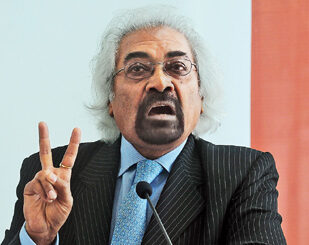
    WASHINGTON, D.C. (TIP): In the last nine years, the country has “polarized” and a very small percentage of people have really concentrated power and wealth, senior Congress leader Sam Pitroda has alleged. Pitroda is the chairperson of the Indian Overseas Congress and he is accompanying Congress leader Rahul Gandhi on his six-day US tour. “I think in the last nine years over a period of time, our society has been polarized. Polarized by focusing on religion. On the one hand, there is Hindu, on the other hand, there is everything else,” Pitroda told PTI. Senior BJP leaders, including Union ministers and chief ministers, highlighted the achievements of Prime Minister Narendra Modi-led government in a nationwide outreach on Monday to mark its nine years in office. The BJP said in a statement that India has witnessed “unprecedented” development in every sector with the mantra of “nation first” guiding Modi’s policies.

    However, Pitroda said the growth has been twisted. “It is uneven. And that’s a great cause of concern. When you don’t have democratic institutions functioning normally, you don’t feel secure. So, there’s a fear in the mind of the people that somebody will come and attack me. So, they don’t speak,” Pitroda, who is based in the US, said.

    “We all know that 85 per cent of India’s population is Hindu or whatever the number is, maybe 82. But within the Hindu community, a very small per cent of high-level people have really concentrated power and wealth. And in the process, a large number of scheduled castes, scheduled tribes, artisans, carpenters, blacksmiths, plumbers, Dalits, have not really progressed as well as they should have,” he said.

    “So, the fight is not about Hindu and non-Hindu. The fight is about the underprivileged and privileged. In the nine years, I think wealth is concentrated. We brag about so many billionaires, which is fine, I’m happy with it. But we have not lifted a large number of people out of poverty,” he said.

    “The trolls on social media just harass people. They harass women. They harass reporters, they harass media people, whether it is typically Ravish Kumar of the world or anybody else, they attack your family, they attack your mother… this is out of control. And it cannot be tolerated. The trolls cannot be tolerated,” he said.

    “Somebody in the government has to stand up and say, look, anybody who trolls and attacks somebody unnecessarily will be punished as opposed to we are encouraging parole. That is a worry for a lot of us. Look at the violence. Violence has increased. Look at violence against women. It has increased,” Pitroda said.

    People who are worshipped today are corrupt, dictatorial, and abusive, he alleged.

    “(They) use all kinds of language against everybody. Promote hate. And I’m saying, where did we go wrong? What’s going on? And it bothers me not that you’re gonna change it overnight, but at least you can raise your voice and have an honest conversation about how I feel. You don’t have to agree with me. But can I get a chance to talk and we don’t have that space,” Pitroda said.
    (Source: PTI)

  • BJP can be defeated if Opposition is ‘aligned properly’: Rahul Gandhi

    BJP can be defeated if Opposition is ‘aligned properly’: Rahul Gandhi

    • Rahul Gandhi in US

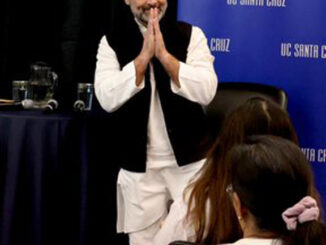
    SANTA CLARA, CA (TIP): The ruling BJP can be defeated if the Opposition is “aligned properly” and the Congress party is working towards it and it is “coming along very nicely”, Rahul Gandhi has told Indian Americans here, citing his party’s emphatic victory in the recent assembly elections in Karnataka.

    Responding to questions from the moderator and the audiences at an event at the Silicon Valley Campus of the University of California in Santa Cruz on Tuesday, Gandhi said he can clearly see “vulnerabilities” in the BJP.

    “As a political entrepreneur, I can clearly see vulnerabilities in the BJP… The BJP can be defeated if the Opposition is aligned properly,” he said.

    “If you look at the Karnataka elections, the general sense is that the Congress Party fought the BJP and defeated the BJP. But what is not well understood is the mechanics that we used,” he said.

    The Congress party used a completely different approach to fighting an election and building a narrative, Gandhi said, adding that elements of what happened in Karnataka came out of the ‘Bharat Jodo Yatra’.

    In the May 10 elections to the 224-member Karnataka Assembly, the Congress won 135 seats, while incumbent BJP and the former prime minister H D Deve Gowda-led Janata Dal (Secular) got 66 and 19, respectively.

    Gandhi said in the Karnataka elections, the BJP spent 10 times more money than the Congress party.

    He said the country needed an alternative vision to defeat the ruling Bharatiya Janata Party (BJP), in addition to having a united Opposition in the 2024 general elections.

    “On the matter of opposition unity, we are working towards it and it is coming along very nicely. But I think in order to defeat the BJP, you need more than just opposition unity. Just opposition unity, in my opinion, is not going to be enough to do the job. I think you need an alternative vision to the BJP,” he said.

    “Part of Bharat Jodo Yatra was the first step in proposing such a vision. It’s the vision that all opposition parties are aligned with. No opposition party would disagree with the idea of the Bharat Jodo Yatra,” he said.

    Bharat Jodo Yatra (Unite India March) was a Gandhi-led mass movement aimed at uniting India. The yatra began on September 7 from Kanyakumari, passed through 12 states and culminated in Jammu and Kashmir on January 31. During the course of the yatra, Gandhi, 52, addressed 12 public meetings, over 100 corner meetings and 13 press conferences. He had over 275 planned walking interactions and more than 100 sitting interactions.

    “So, I think bringing the opposition together is important, but also aligning the opposition and making the people of India understand that there is not just a group of opposition parties that have combined but a proposed way forward for the country. And we’re working on those things,” Gandhi said.

    The ex-Wayanad MP said it is the president of the Congress party who will decide the prime ministerial candidate.

    “We believe that everybody in India, regardless of who they are, whichever part of the society they come from, they should have a voice that voice should be respected, to be listened to be appreciated. And I think that voice is an asset,” he said.

    In his address, Gandhi also took a dig at the ruling BJP government, saying it is “threatening” the people and “misusing” the country’s agencies.

    “The BJP is threatening people and misusing government agencies. The Bharat Jodo Yatra started because all the instruments that we needed to connect with the people were controlled by the BJP-RSS,” he said.

    “We were also finding that in some way, it had become quite difficult to act politically. And that’s why we decided to walk from the southernmost tip of India to Srinagar,” he said.

    Gandhi said the yatra carried the spirit of affection, respect and humility.

    “If one studies history, it can be seen that all spiritual leaders — including Guru Nanak Dev ji, Guru Basavanna ji, Narayana Guru ji — united the nation in a similar way,” he said.

    Gandhi said India is not what is being shown in the media which likes to promote a political narrative that is far from reality, asserting that there is a “huge distortion”.

    “It was very clear to me in the Yatra that it’s in the media’s interest to project these things, it helps the BJP. So, don’t think that everything you see in the media is the truth,” he said.

    “India is not what the media shows. The media likes to show a particular narrative. It likes to promote a political narrative that is actually not what is going on in India,” he said.

    The Congress leader arrived here on Tuesday, May 30 on a three-city US tour during which he will interact with the Indian diaspora and meet American lawmakers.

    He had a first-hand experience of the American immigration system as he had to wait for about two hours along with his other co-passengers on the Air India flight because of the common shortage of staff at the US airports.

    People were seen taking selfies with him and asking him questions. He was seen interacting and mingling with other traveler’s at the San Francisco airport.
    (Source: PTI)


  • Double-engine anti-incumbency

    Double-engine anti-incumbency

    Loss of legitimacy due to corruption taint proved to be the BJP’s undoing in Karnataka

    Modi had won in 2019 on a pro-incumbency platform, which is getting frayed at the edges. Pomp and pageantry cannot replace political credibility. He has about 10 months to reclaim his legitimacy.

    “But the Karnataka election proved that India is a functioning democracy that does not brook depravity in public life. PM Modi or the BJP cannot make Hindus vote in a particular manner when the ground situation does not merit so. Communal polarization or the politics of hatred for the “other” cannot override the people’s contempt for a candidate. And this local sentiment got reinforced with anti-incumbency against the Centre, which faces allegations of crony capitalism over Adani’s relationship with the Modi government following the release of US short-seller Hindenburg’s report. Probably more damaging than the Adani allegation are the tearful complaints made by India’s star athletes against one of the worst examples of goons in politics.”

    By Rajesh Ramachandran

    Anti- Incumbency is a loss of legitimacy — the cornerstone of all democratic enterprises. No amount of electoral engineering, caste and communal polarization, or media manipulation can reverse the process of loss of legitimacy. That remains the strength of a truly democratic exercise, which manifests the people’s will; and that was on grand display in Karnataka late last week. The people perceived the Karnataka government as corrupt; a government that demands an inconceivable amount of bribe — a cut of 40 per cent from all government contracts. This perception was not created by Opposition propaganda but was conveyed to the people by the Karnataka State Contractors’ Association in a letter to the Prime Minister. Modi had won the 2019 Lok Sabha polls on a pro-incumbency platform, which is getting frayed at the edges.

    This is not to wish away caste and communal considerations, but to underscore the utter disgust the voters have for a rapacious government. When two parties put up candidates from the same community or caste, the choice is easier: why vote for a tainted person who represents a corrupt entity? It is a matter of immense reassurance that the small man/woman prevailed over crooked godmen and families that claim to represent a whole community. Any objective observer of politics ought to exult in the result as the Karnataka poll was a fine contest of people’s patience against political greed.

    Then, this was not just the reflection of state-level anti-incumbency against the Basavaraj Bommai government, but also a vote against the Central government led by PM Narendra Modi. For, he had promised, “na khaoonga, na khane doonga (neither will I make money nor will I let others do it)” and the Karnataka situation was a breach of this promise. The entire BJP party edifice in Karnataka was complicit and the central leadership either winked at it or remained captive to the caste calculus. There are those who believed that even Bommai could have fared better had he got a freer hand. However, the BJP’s central leadership seems to have a strange belief in the supernatural powers of polarization. In fact, it tends to have bought into its Western detractors’ accusations of India being an elected autocracy or an ethnic democracy.

    But the Karnataka election proved that India is a functioning democracy that does not brook depravity in public life. PM Modi or the BJP cannot make Hindus vote in a particular manner when the ground situation does not merit so. Communal polarization or the politics of hatred for the “other” cannot override the people’s contempt for a candidate. And this local sentiment got reinforced with anti-incumbency against the Centre, which faces allegations of crony capitalism over Adani’s relationship with the Modi government following the release of US short-seller Hindenburg’s report. Probably more damaging than the Adani allegation are the tearful complaints made by India’s star athletes against one of the worst examples of goons in politics.

    Brij Bhushan Sharan Singh had spent time in jail in a case under TADA — Terrorist and Disruptive Activities (Prevention) Act — over charges of aiding India’s most-wanted criminal Dawood Ibrahim. What is this sort of a man doing in Parliament as a BJP member? Why is he heading the Wrestling Federation of India? Why are the police not arresting him and taking him into custody despite victims narrating instances of sexual harassment? If the BJP thinks that these questions did not exercise the minds of Karnataka voters, the party is living in a fool’s paradise. It is indeed a national issue and will continue to haunt the national conscience in every nook and corner of the country and not just the Jat land of Haryana or western UP. The question of Indian heroes’ izzat or honor cannot be reduced to the caste or political ambitions of the accusing wrestlers.

    Then, the proposed ban on Bajrang Dal, promised by the Congress to consolidate Muslim votes, worked well for itself, with the BJP failing to link up Bajrang Dal with Bajrang Bali or Hanuman, one of the most important deities in the Hindu pantheon. The reason, in hindsight, is simple: goons calling themselves Bajrang Dal activists or by other similar-sounding names have been attacking farmers who want to sell cattle to make dairy farming economical. Cow vigilantes have been wreaking havoc on the rural economy, blackmailing and extorting money from those who can’t afford to worship their cattle, all in the name of cow protection. The anger against cow vigilantes is spilling on to the streets of Haryana, where most people abhor non-vegetarian food.

    Along with the Karnataka polls, the Jalandhar by poll result too is heartening primarily because it proved there is no constituency for religious secessionism in Punjab and that the arrest of Khalistan activist (apparently someone’s stooge) Amritpal did not make any difference to the wise people of this state. And also, that last year’s Sangrur by poll result was just a flash of anger in the Malwa pan. People seem to have forgiven the AAP government for nominating Delhiites to the Rajya Sabha as its first big political decision and for foisting some of them on the state. A pro-incumbency mood seems to have set in with the slashing of the power bills. But it does not take too long for the tide of public opinion to turn, particularly when politicos get caught with their hands in the till. The BJP had lost the Assembly elections in Madhya Pradesh, Rajasthan and Chhattisgarh in 2018 before it went on to win the 2019 Lok Sabha polls by a bigger margin. So, the Karnataka result should not be given more importance than what it deserves while analyzing the national poll situation. But the question that remains is: will Adani, Brij Bhushan Sharan, cow vigilantes and other factors derail a repeat of 2019 or not? Modi had won in 2019 on a pro-incumbency platform, which is getting frayed at the edges. Pomp and pageantry cannot replace political credibility. He has about 10 months to reclaim his legitimacy.
    (The author is editor-in-chief of the Tribune group of newspapers)

  • Karnataka witnesses ‘record’ 73.19 per cent voter turnout in Assembly elections

    Karnataka witnesses ‘record’ 73.19 per cent voter turnout in Assembly elections

    • Largely peaceful voting in all 224 Assembly constituencies, no repoll indicated in any of the 58,545 polling stations
    • All Exit Polls place Congress in the lead, followed by BJP and JDS

    BENGALURU (TIP): Karnataka registered a voter turnout of 73.19 per cent in the Assembly polls which election officials on Thursday, May 11 termed a record, while sharing the final figures. Voting took place on Wednesday, May 10 to elect representatives to the 224-member House. Counting of votes will take place on May 13.
    “Karnataka has created a new record for itself. Final voter turnout for Karnataka Election 2023 stands at 73.19 per cent,” said the Chief Electoral Office, Karnataka.
    While Chikkaballapura district recorded the highest voter turnout of 85.56 per cent, followed by Bengaluru Rural at 85.08 per cent; the lowest was in Bruhat Bengaluru Mahanagara Palike (BBMP) South limits (parts of Bengaluru city) at 52.33 per cent, the official data showed.
    “Largely peaceful voting in all 224 Assembly constituencies in Karnataka, and no repoll indicated in any of the 58,545 polling stations,” the Election Commission (EC) said on Wednesday night.
    Karnataka recorded 72.44 per cent voter turnout in the 2018 Assembly polls which had thrown up a hung assembly with the BJP emerging as the single largest party tallying 104 seats, falling short of getting a majority. The turnout in 2013 polls was 71.83 per cent.
    Counting of votes will take place on May 13. Several pollsters have predicted that the Congress may have an edge in Karnataka, which is BJP’s southern citadel, in a hung assembly with a couple of them even projecting that the grand old party may get a majority on its own.
    While the BJP, riding on the Narendra Modi juggernaut, is looking to break a 38-year-old poll jinx where the state has never voted the incumbent party to power since 1985, the Congress is hoping for a morale booster victory to give it much-needed momentum to position itself as the main opposition player in the 2024 Lok Sabha elections.
    It also remains to be seen whether former Prime Minister H D Deve Gowda-led Janata Dal (Secular) will emerge as a “kingmaker” or a “king” by holding the key to government formation, in the event of a fractured mandate, as it has done in the past.

  • Supreme Court disapproves of Amit Shah’s statement on scrapping of 4pc Muslim quota in Karnataka

    Supreme Court disapproves of Amit Shah’s statement on scrapping of 4pc Muslim quota in Karnataka

    NEW DELHI (TIP): The Supreme Court on Tuesday disapproved of senior BJP leader and Union Home Minister Amit Shah’s statement on scrapping the four per cent quota for Muslims in government jobs and educational institutions in poll-bound Karnataka, saying a sub-judice issue should not be politicized.

    A Bench of Justice KM Joseph, Justice BV Nagarathna and Justice A Amanullah said public functionaries should exercise caution in their statements about issues pending before courts.

    “When the matter is pending before the court and there is a court order on Karnataka Muslim quota, then there should not be any political statements on the issue. It’s not appropriate. Some sanctity needs to be maintained,” it noted. The top court was hearing petitions challenging the Karnataka government’s decision to scrap four per cent reservation for Muslims under OBC category in government jobs and educational institutions and distribute it equally to Vokkaligas and Lingayats in the state.

    The comments from the Bench came after senior counsel Dushyant Dave, representing the petitioners, raised the issue and said every day the Union Home Minister was making statements on the issue which amounted to contempt of court. “They (BJP leaders) are proudly saying they have withdrawn (quota for Muslims),” Dave told the Bench. “If what you are saying is true, then we wonder why when the matter is sub-judice before the Supreme Court, there should be statements made by anybody as such?” Justice Nagarathna commented.

    Solicitor General Tushar Mehta, representing the Karnataka Government, objected to Dave’s submission, saying the Bench had not been told about the “content and context” of Shah’s statement.

    “I don’t wish to do politics here. He (Dave) may move an application. We don’t know what statement is being attributed to (Shah),” Mehta said, asserting any religion-based reservation was unconstitutional even as he maintained “We understand and respect the sentiment of the court.”

    “Solicitor General making a statement in the court is not a problem but someone saying anything on a sub-judice matter outside the court is not appropriate…In 1971, the West Bengal CM was held for contempt for holding a press conference defending a rationing order that was the subject matter of a challenge before the court…”We may have reservations about reservations but we can’t let it be politicized in this manner…,” said Justice Joseph.

    “I can’t respond to political [allegations] … I can’t shout like my learned friend (Dave)…,” Mehta said, adding the matter was being politicized before the court.

    As Dave interjected to say, “This was not religion based,” Mehta said, “Lordships will have to control (Dave). Can’t let this become a fish market… So far no judge has controlled him…That’s the problem…Some judge will have to.

    “Some sanity must prevail… There is no such statement (by Shah) to my knowledge. But in the (election) manifesto one is entitled… Even I can’t be instructed as to how to argue in a vitiated atmosphere,” Mehta went on.

    At one point, Justice Joseph asked Dave not to shout and make political statements in the court.

    The Bench deferred the hearing to July 25 after the Solicitor General said he was busy with the Constitution Bench hearing on the same sex marriage issue. However, he assured the top court that the earlier reservation regime would continue till the next date of hearing. Dave said he will file an application and bring it on record the statements being made on the matter. As Central Muslim Association’s counsel wanted the top court to restrain the press from publishing such speeches, Mehta asserted that media can’t be censored like this. After the Karnataka Government’s March 27 decision – that came weeks before the May 10 assembly elections, Muslims will be eligible to vie for 10 per cent reservation under the Economically Weaker Sections (EWS) category while the four per cent quota enjoyed by them for three decades stood distributed equally between Veerashaiva-Lingayats and Vokkaligas – considered to be numerically dominant and politically influential communities in the state. The Supreme Court had on April 13 questioned the Karnataka government’s decision to scrap the four per cent reservation for Muslims under OBC category in government jobs and educational institutions, saying prima facie it appeared to be based on “fallacious assumptions”.

  • Key issues in Karnataka Assembly elections

    Key issues in Karnataka Assembly elections

    As political parties, including key players BJP, Congress and Janata Dal (Secular) gear up for the May 10 Assembly elections in Karnataka, the following issues are expected to be among the top campaign material.
    Corruption
    The recent arrest of BJP MLA Madal Virupakshappa and his son in a bribery case has put the ruling BJP on a backfoot. The Congress has made corruption a central theme of its campaign, pointing to various “scams” and 40 per cent commission charge by a contractors’ body. The BJP has sought to counter the narrative by highlighting alleged graft during previous Congress regimes both at the Centre and the State, especially alleged denotification scam by Siddaramaiah govt.
    Reservation
    The government’s decision on scrap the 4 per cent reservation for Muslims under the Other Backward Classes (OBC) quota, and distributing it equally among the dominant Vokkaliga and Lingayat communities, while placing Muslims under the Economically Weaker Section (EWS) category, and introduction of internal reservation for different Dalit communities under Scheduled Caste (SC) category are bound to raise tempers on the poll scene.
    Development
    The BJP will seek to focus on various development projects and social welfare initiatives taken up by the Modi government, while the Congress and JD(S) will showcase their track record when they were in power.
    Price rise
    The Congress and the JD(S) will make it a key issue, particularly the “high” cooking gas and fuel prices. The BJP will bank on the government’s management of the Covid pandemic, economic strides under the Modi government and how a rising India has become the world’s fifth largest economy.
    Election Promises
    The pros and cons of election promises made by the ruling BJP, the Congress and JD (S) will come under close scrutiny. The BJP has already alleged that the Congress does not honour its poll promises, while the latter is likely to attack the ruling party alleging lack of sufficient job creation in the country.
    Clear mandate
    All three key political parties — BJP, Congress and JD(S) — will harp on the need to have a clear mandate, and put a stop to a trend of “fractured verdict” in the last couple of elections.
    Caste politics
    Parties will go out of their way to win over various castes, and consolidating their votebase will be among the key agendas of the contending parties. While BJP is focusing on getting Vokkaliga support in the old Mysuru region, Congress wants to better its tally in Lingayat dominated constituencies.
    Communalism and minority appeasement politics
    The Congress has accused the BJP of raking up divisive issues with an eye on the elections like Hijab, Halal, Azan and Tipu Sultan, while the BJP has charged the Congress with indulging in minority appeasement politics. The slugfest between the two parties is likely to intensify during campaigning.
    Narendra Modi and Rahul Gandhi factors
    The Congress will target the Prime Minister on various issues like Adani row, democracy, free speech, and authoritarianism. The BJP for its part will attack Rahul Gandhi for his alleged anti India remarks on the foreign soil, his comments against Hindutva icon VD Savarkar while targeting the ruling party, among others.
    Dynasty politics
    The BJP is expected to target the Congress and the JD(S) on dynasty politics. Source: PTI

  • Pre-poll surveys herald hung verdict; will JDS emerge as kingmaker?

    Pre-poll surveys herald hung verdict; will JDS emerge as kingmaker?

    The incumbent Bhartiya Janata Party may have made tall claims regarding its performance in the upcoming assembly elections in Karnataka, but several pre-poll surveys and opinion polls have indicated the possibility of a hung assembly. Meanwhile, two networks have given BJP an edge over Congress, while two other networks have predicted a win for Congress.
    Pre-poll survey results
    The pre-election survey by TV9 and C-Voter predicts that the Congress will win 106–116 seats and the BJP between 79 and 89. The JD(S) is expected to emerge victorious in 24-34 constituencies. ‘Mood of Karnataka’ by Public TV also gave Congress the edge on 98-108 seats, which is below the majority mark of 113. As per the poll, BJP will win 85-95 seats in the state while JD(S) will win 28–33 seats.
    The Asianet Survarna News Jan Ki Baat poll gives the BJP an edge over Congress, with the saffron party taking 98-109 seats against the Congress’s 89-97 seats.
    The NewsFirst-Matrize poll predicted that the BJP would win 96–106 seats, while the Congress was predicted to win 84–94 and JD(S) to win 29–34.
    A hung mandate is shown by Vistara News as it gave 88-93 seats to BJP, 84-90 to Congress, and 23-26 to JD(S). According to the survey, there are 27–30 seats where the outcome is uncertain. The pre-election survey by South First-People’s Pulse gave Congress 98 seats, with a range of 95 to 105 seats. The BJP is predicted to win 92 seats (90-100 seat range) and the JD(S) 27 seats (25-30 seat range).
    Will JD(S) emerge as the Kingmaker?
    If speculations about the hung verdict in Karnataka polls turn out to be true, JD(S) will have the chance to reemerge as the Kingmaker to form the government as it did in 2018. Currently, JD (S) is trying hard to get rid of the “family party” reputation under its leader HD Kumaraswamy.
    However, there are some political analysts and members of the party who doubt JD(S) will achieve this goal. The party’s highest performance to date came in the 2004 assembly elections when it got 58 seats. The party put up its second-best performance in 2013 by registering victory on 40 seats.
    Siddaramaiah Most Popular Choice For Karnataka Chief Minister: NDTV Survey
    Congress leader Siddaramaiah is the most popular choice for the next Karnataka Chief Minister, and incumbent Basavaraj Bommai of the BJP ranks second, reveals “Public Opinion”, a special NDTV survey in partnership with Lokniti-Centre for the Study of Developing Societies (CSDS).
    The survey seeks to gauge the public mood in Karnataka on a wide range of issues ahead of the May 10 state election and its verdict three days later.
    Siddaramaiah, a former chief minister, is slightly more popular among older voters, while Mr Bommai, who is younger, is preferred by younger voters, the poll reveals.
    Janata Dal Secular (JDS) leader HD Kumaraswamy is the third most popular chief minister candidate, followed by Congress’s DK Shivakumar.
    The BJP’s BS Yediyurappa, a four-time chief minister who has never completed a term, ranks surprisingly low at number 5.
    Yediyurappa, who was Chief Minister until the BJP replaced him with Mr Bommai in 2021 amid corruption allegations, is not contesting the election and has also denied that he is in the running for the top job.
    But how important is the chief minister candidate when people vote? Not as much as party or candidate, the NDTV-CSDS survey reveals.
    A majority of respondents said they gave more importance to the party (56%) and 38% said they vote for the candidate. Only 4% said they vote according to the chief minister face.
    It is voters who support the Congress or JDS who mostly consider party as the biggest factor. BJP voters, however, are divided.
    The Congress fares better than the BJP when it comes to voters’ perception on key metrics, the survey reveals.
    More respondents (59%) saw the BJP as more corrupt than the Congress (35%) and JDS (3%).
    Unexpectedly for a party that has campaigned nationwide against dynasty politics, the BJP is rated “more nepotistic” (59%) than the Congress (30%) and JDS (8%).
    The ruling party is also seen to be blighted more by factionalism (55%) than the Congress (30%) and JDS (12%).
    In a positive for the Congress, more respondents have ranked it the best for Karnataka’s development (47% vs BJP’s 37% and JDS’ 14%) and for maintaining communal harmony (49% vs BJP’s 34% and JDS’ 14%).
    On handling the Karnataka-Maharashtra border row, the BJP and Congress share equal rating (40%) with the JDS placing third (14%).
    The NDTV survey also tried to gauge how different castes and communities are likely to vote.
    The Vokkaligas are split between the Congress (34%) and JDS (36%) while the Lingayats remain firmly with the BJP (67%). Muslims (59%) are more inclined to vote for the Congress.
    In March, the Karnataka government scrapped the 4% backward class quota for Muslims and diverted it to Lingayats — traditional supporters of the BJP – and Vokkaliggas. Their quotas have been raised to 7% and 6%.
    The survey also assesses the anti-incumbency factor. Disapproval of the BJP government is more among the poor, the lower middle class and rural voters, the data shows.
    The NDTV-CSDS survey reveals that the Congress is more popular (50%) with poor voters than the BJP (23%). Among affluent voters, however, the BJP (46%) remains more popular than the Congress (31%). Voters were also asked to rate the public outreach of various parties. The BJP scores slightly more than the Congress and JDS in reaching out to voters, the survey found. Rahul Gandhi’s Bharat Jodo Yatra drew slightly more attention than the BJP’s Vikas Sankalp Yatra and the JDS’ Pancharatna Ratha Yatra, according to the ‘Public Opinion’ survey. However, the BJP and JDS registered more participation in their yatras.
    Source: NDTV

  • The Karnataka election, the ideological contestations

    The Karnataka election, the ideological contestations

    There is a redrawing of the political contours of the political parties in Karnataka — a shift that will have bearing on the future of electoral democracy in India

    By Valerian Rodrigues

    The electoral arena in Karnataka in the run-up to the State Assembly elections 2023, on May 10, has turned out to be a battleground that is outpacing any other in living memory. There are many reasons being advanced for this: Karnataka has been the steppingstone of the Bharatiya Janata Party (BJP) to South India and needs to be retained at all costs; the State is an economic powerhouse, particularly in new technologies; there are elections to important States as well as to Parliament in the offing.

    The Congress Party has a well-tested and rooted leadership in the State apart from the fact that Mallikarjun Kharge, the recently elected all-India Congress President, hails from the State. The Congress’s electoral prospects, elsewhere and hereafter, may be crucially dependent on this election. The Gandhi family in general, and Rahul Gandhi in particular, enjoy great moral standing in the State, with Mr. Gandhi’s Bharat Jodo Yatra adding to this.

    The Janata Dal (Secular) led by H.D. Deve Gowda, the former Prime Minister of India, is a local brew of a farming community, a dominant caste and with embedded memories of pluralism cohabiting a region. There is some truth in all these narratives. But there are also ideological contestations behind the escalating rhetorical flourish, biting satire, lampooning of opponents, and promises of freebies. These contestations are redrawing the political contours of the political parties in the fray, particularly the BJP and Congress, and this shift would have an important bearing on the future of electoral democracy in India, including the idea of progress.

    Ideological overdrive
    While the BJP has scored much success in Karnataka’s electoral politics in the last two decades, its Hindutva project has not advanced at the same pace. This is in spite of the sporadic spectacles on love-jihad, Tipu Sultan, the hijab issue, cow slaughter, and religious conversions.

    As a strong avowal of common descent and cultural belonging (in Savarkar’s words, pitrabhu and punyabhu), Hindutva elicited some support in certain pockets of present-day Karnataka from early on. While a few in the Bombay-Karnataka region (now called Kittur Karnataka) too were attracted by it, most of the educated Lingayats of the region came to define themselves vis-à-vis Brahmins. A significant section of them were influenced by Jotirao Phule’s Satyasodak Sangh. With the collection and classification of the scattered Vachana literature in the 1920s and the 1930s and the maths as their institutional support base, the Lingayats had already begun to mount the demand of being a separate religious community in the 1940s.

    However, with the founding of Karnataka as a separate State in 1956, they came to regard themselves as being foundational to it. There were deep internal cleavages of belief and social gradation within the community and being Lingayat meant different things to different groups within it. The relative political marginalization of this numerous community from the 1970s, and particularly from the late 1980s, the rise of new political players, contention with the Vokkaligas (a large farming community that rallied together under the leadership of H.D. Deve Gowda), the inept handling of the local leadership by the all India Congress leadership, persuaded its significant sections to shift their allegiance to the BJP in the 1990s. B.S. Yediyurappa and some other leaders such as Jagdish Shettar (who is now with the Congress) who were associated with the Rashtriya Swayamsevak Sangh played the mediating role.

    This cooption of Lingayats into the Hindutva fold was not driven through an ideological grooming from below, and invariably involved drawing the Veerashaiva and Lingayat seers as community representatives into the political arena. Paradoxically, the Hindutva project in the State encountered a major roadblock in this community, internal to the project but also proud of its autonomy. Given this impasse, the Hindutva leadership chose to push to the margins those leaders who wielded clout and prestige within the community and brought to the fore others docile to it.

    A recrafting
    In southern Karnataka, where the Vokkaligas have a dominant political presence, Hindutva embraced a different strategy. In the last few decades, this region has witnessed a hastened pace of recrafting ‘Hinduism,’ shifting the emphasis from village and local deities to those with wider appeal, renaming and reconstructing temples and ritual sites, reordering sacral practices, and splitting apart syncretic spaces. At the same time, the prestige of the Adichunchanagiri Math, and its presiding deity Kalabhairav, as the premier seat of the religiosity of this community has also grown enormously. Proponents of Hindutva have attempted to shift this efflorescence to reinforce their ideology. They have argued that Hindutva and Hinduism are one and the same. There has been a vilification of Tipu Sultan while new Vokkaliga heroes such as Nanje Gowda and Uri Gowda are brought to the fore. The Adichunchanagiri Math, however, has been indisposed to such reconstruction without adequate evidence. The JD(S) has stood its ground against the polarization of the Vokkaliga habitat, and Hindutva usurping its cultural resources. It has also rallied in favor of a strong regional identity.

    Moving in another direction
    The Congress Party seems to be shifting gears in a different ideological direction: There is little stress in its rhetoric on secularism, socialism, and nationalism that dominated much of its discourse for decades. These lofty goals are now presumed as a given in the constitutional frame of India. All the early assurances of the party, before the loud rhetoric of election frenzy set in, such as an unemployment dole to the educated unemployed, a quantity of food-grains to poor households, certain units of free electricity to every household in the State, and free travel for women in public transport, had no caste and region-tag built into them. The emphasis has been on inclusiveness and equality. In fact, Mallikarjun Kharge said in an interview to a media channel (India Today) that the ideological plank of his party is woven around democracy, constitutionalism, and rights. It is important to reiterate that Rahul Gandhi has often held fort highlighting these three issues, particularly vis-à-vis the Hindutva project. The Left, still left over in Karnataka, seems to endorse this turn.

    The BJP is aware that the ideological plank through which it proposes to recraft public life in Karnataka has led to much heartburn and has thrown up new fears and apprehensions. But it thinks that the charisma of Prime Minister Narendra Modi, the party’s organizational might and reach, and a rejuggling of the reservation code will enable it to wade through such opposition and covert resistance. It probably believes that this is the only course open to it to commandeer the other States of South India. The Congress has desisted from embracing the path of social polarization to counter Hindutva, although its local leadership has deep social moorings to pursue such an endeavor. The Congress could very well say that its ideological plank encompasses that of JD(S) as well. But it is not so much ideology, but a set of interests, that holds the latter together.

    (Valerian Rodrigues was professor at Mangalore University and Jawaharlal Nehru University, New Delhi)

  • Karnataka poll narrative : It is back to the familiar game of caste identity politics

    Karnataka poll narrative : It is back to the familiar game of caste identity politics

    “Since the BJP came to power in July 2019 (after the fragile Janata Dal Secular-Congress coalition sunk), the topmost question is, how much of Hindutva will actually shape the results of this poll? Truth be said, in the case of Karnataka, Hindutva has made more noise than actually polarize voters. The noise always emanates from the coastal districts of the state. However, the genie and genius from that laboratory have not spread so much to the plains or the mountains in the state. At best, they have offered an air cover in these regions but have not mingled too much in the soil. This has been true with the previous elections and is likely to be the case this time, too.”

    By Sugata Srinivasaraju

    What will the numbers be? That is the question thrown at you in an election season, and that is precisely what is being asked about the Karnataka Assembly polls slated to take place on May 10. The numbers will be clear on May 13. Anything said before that can either be a reasoned conjecture, an intelligent guess or an astrological prediction. But before the numbers come, there are narratives that will somewhat decide the numbers. Therefore, it may serve us well to look at the narratives that are shaping the Karnataka elections.

    Hindutva has made more noise than actually polarize voters. This has been true with the previous elections and is likely to be the case this election, too.

    Since the BJP came to power in July 2019 (after the fragile Janata Dal Secular-Congress coalition sunk), the topmost question is, how much of Hindutva will actually shape the results of this poll? Truth be said, in the case of Karnataka, Hindutva has made more noise than actually polarize voters. The noise always emanates from the coastal districts of the state. However, the genie and genius from that laboratory have not spread so much to the plains or the mountains in the state. At best, they have offered an air cover in these regions but have not mingled too much in the soil. This has been true with the previous elections and is likely to be the case this time, too.

    A big reason for this seeming equilibrium is BS Yediyurappa, who has been largely responsible for the BJP’s success in the state. He has been more a Mandal politician than a Hindutva champion. This is probably because he picked up his political game in the midst of socialists and Lohiaites in Shimoga and Mysore districts. He came of age, electorally speaking, when the undivided Janata Dal was the real alternative to the smug Congress.

    Even a fortnight ago, in an interview to a Delhi newspaper, Yediyurappa said: ‘Hijab, halal issues are not necessary. I will not support such things. Hindus and Muslims should live like brothers and sisters. From the beginning, I have taken this stand.’ Yediyurappa has been instinctually attuned to caste identity issues. He has skillfully and cunningly arranged the mix-and-match of castes to generate votes for the BJP over the decades.

    But the BJP got rid of him in the middle of 2021. His age, other vulnerabilities and his family’s alleged corruption aside, the BJP wanted to change the narrative for the state. The caste game was getting too balkanized, and it, after all, did not yield a clear majority to the party in both 2008 and 2018. The majority to form a government, both times, was arranged later through defections that assumed a wry botanical imagery — Operation Lotus. Post-Yediyurappa, the BJP was in search of a more universal (read Hindu) electorate in the state instead of the one aggressively fenced by caste.

    Basavaraj Bommai became Yediyurappa’s replacement. The BJP’s game plan, it appeared, was to get someone from a dominant Lingayat community (which has remained loyal to the BJP ever since Ramakrishna Hegde and JH Patel moved them to the ideological Right in 1999) to introduce aggressive Hindutva. That is when issues related to halal, hijab, Tipu Sultan’s barbarity, love jihad, Hanuman janmabhoomi, carbonization of history textbooks, etc., started making headlines every day in the state. The BJP wanted the coastal waves to inundate the rest of the land. But nine months before the polls, the BJP seemed to realize that none of this was getting enough traction. The big shifts were not happening. The status quo of vote shares that Karnataka had seen since the 1980s was not getting upset or upturned. On the other hand, Hindutva was impacting the revenue pocket of the state — the Bengaluru capital region, which contributes over 60 per cent of the state’s revenue. Development branding, something the BJP has always tried to juxtapose with its communal agenda, was getting dented. It tactfully withdrew and went back to the familiar game of caste identity politics.

    That is when Yediyurappa was brought back to the center stage, not to lead the campaign from the front but as a patriarchal figure to manage caste complications. The Bommai government even urgently rejigged the caste quotas to cultivate a certain numerically dominant sub-sect among Lingayats, Dalits and the backward classes. The only communal signal it sent out there was to strip the Muslims of their 4 per cent backward class quota that HD Deve Gowda as chief minister had given them in 1995. This return to caste was a default safety measure for the BJP. When it comes to the Congress, its narrative is rather uncomplicated. It believes that the palpable anti-incumbency against the BJP will automatically put it in the driver’s seat. It has been advertising the BJP’s scams. It is also trying to snatch unhappy elements among Lingayats (Jagadish Shettar and Laxman Savadi) from the BJP and present a narrative that the Lingayats are moving out of the BJP. It has no clear outreach for minorities (read Muslims) or the more oppressed Dalits (Madigas who have voted for BJP) or the tribes (especially Valmikis). Its backward class messaging is largely confined to Kurubas and Idigas — two of the 100-odd communities on the list.

    When it comes to Janata Dal Secular and the Vokkaligas who dominate southern Karnataka, HD Deve Gowda, the patriarch of the Cauvery basin, is guarding his terrain by campaigning at the age of 89. He may retain his 20 per cent vote share. His party has gone to the people with a well-structured development programme. He also sorted out family complications in time. His son HD Kumaraswamy has gone round the state more than any other leader this season. If saffron voters want to teach a lesson to the BJP, but their conscience wouldn’t permit them to go with the Congress, the surprise beneficiary may be Kumaraswamy.
    ( Sugata Srinivasaraju is a senior journalist and author)

  • Congress veteran AK Antony’s son joins BJP

    In an embarrassment for the Congress, party veteran and steering committee member AK Antony’s son Anil Antony on Thursday, April 6,  joined the BJP, saying while those in the Congress considered “serving a family” their religion, he considered “serving the nation” his duty.

    Anil Antony had quit the Congress on January 25, protesting the party’s stand on the BBC documentary on Gujarat riots.” Nowadays, some Congress leaders believe it is their dharma to serve the interests of a single family. But I believe it is my duty to serve the nation,” Anil Antony said, joining the BJP in the presence of Union Commerce Minister Piyush Goyal, MoS External Affairs V Muraleedharan and Kerala BJP chief K Surendran. Back in Kerala, former Defence Minister AK Antony termed the development “very painful.”

    Currently, chairman of AICC’s disciplinary committee and a confidant of former Congress chief Sonia Gandhi, AK Antony said, “My son’s action is wrong and very painful.” AK Antony had authored the 2014 Lok Sabha election debacle report identifying Muslim appeasement a major factor for the party’s rout.

    Asked if he had consulted his father on joining the BJP, Anil Antony replied: “This is not about personalities, this is about difference of opinion and ideas. I strongly believe that I have taken the right step. But my respect for my father remains. There is no question of any politics in my family.”

  • US watching Rahul Gandhi’s case in Indian courts: US Official

    US watching Rahul Gandhi’s case in Indian courts: US Official

    WASHINGTON, D.C. (TIP): The United States is watching the court case of Congress party leader Rahul Gandhi, an official has said while observing that Washington continues to engage with India on the shared commitment towards democratic principles and the protection of human rights, including freedom of expression.

    Gandhi was on March 23 sentenced to two years in jail by a Surat court in a 2019 criminal defamation case over his “why all thieves have Modi surname” remark. A day later, he was disqualified from the Lok Sabha from the date of his conviction in the case. “Respect for the rule of law and judicial independence is a cornerstone of any democracy. We are watching Mr. Gandhi’s case in Indian courts and we engage with the Government of India on our shared commitment to democratic values, including, freedom of expression,” the State Department’s Deputy spokesperson Vedant Patel told reporters at a news conference on Monday, March 27.

    “In our engagements with our Indian partners, we continue to highlight the importance of democratic principles and the protection of human rights, including freedom of expression, as a key to strengthening both our democracies,” he said.

    Responding to a question, Patel said it is normal and standard for the United States to engage with members of opposition parties in any country where it has bilateral relationships.

    Opposition parties in India stepped up their offensive against the Narendra Modi government and observed a “black day for democracy” on Monday, three days after Congress leader Rahul Gandhi was disqualified from the Lok Sabha. The BJP condemned the ruckus created by the Opposition in Parliament and accused the Congress of resorting to “low-level politics” in its bid to justify Gandhi’s remarks against the OBC community.
    (Source: PTI)

  • Misuse of probe agencies

    Opposition parties’ plea in SC raises significant issues

    A plea by 14 Opposition parties alleging arbitrary arrests and misuse of Central probe agencies against political opponents has been listed for hearing by the Supreme Court on April 5. In asking for framing of pre-arrest and post-arrest bail guidelines, the petition claims that there is a clear pattern of investigative agencies being used to target political rivals and dissenting citizens. It is alleged that cases are registered in quick succession to ensure that the accused stays in custody for a prolonged period. Instances have also been cited of slowing down of probe proceedings or a clean chit being given to politicians who have crossed over to the ruling party at the Centre.

    The plea contends that 95 per cent of the cases filed by probe agencies such as the Central Bureau of Investigation and the Enforcement Directorate in the recent past were against leaders of Opposition parties. This cannot be a coincidence. It amplifies the allegation that the fight against corruption is increasingly being used as an instrument of vendetta politics. The BJP’s counter of zero tolerance for graft is well taken, but the party does not emerge as too different from those it had lambasted when it was in the Opposition for eroding the autonomy of investigative agencies.

    The rare convergence of non-BJP parties has some similarity to their coming together in 2019 to demand the random verification of at least 50 per cent electronic voting machines (EVMs) using the voter verifiable paper audit trail (VVPAT) in every Assembly segment of a parliamentary constituency. The Supreme Court had then directed the Election Commission to raise the VVPAT-EVM verification from one EVM to five in each Assembly segment. With several states going to the polls later this year, followed by the 2024 General Election, the outcome of the current case can have a bearing on the Opposition’s fortunes.

    (Tribune, India)

  • Four reasons the Sikhs are hurting. And it’s not about the K-word

    Four reasons the Sikhs are hurting. And it’s not about the K-word

    ‘Causes’ of anger are dera threat to Sikhism, incarceration of ‘Bandi Singhs’, inaction in sacrilege cases, & ‘if BJP-RSS want Hindu Rashtra, what’s wrong with Sikh Rashtra?’

    By Shekhar Gupta 

    There are two most important similarities between the mood in Punjab today and at the peak of the earlier crisis in the early 1980s. The first similarity is the good one. If you walk around Punjab and ask a random sample of Sikhs if they believe in creating a state separate from India — or what is loosely called Khalistan — the chances are that a very, very large majority will say no. It will be unanimous unless you run into an oddball.

    Many may even ask you to get your head examined. The fact is — although many in these new nationalist times elsewhere in the country might find it difficult to believe it — that’s how it was in the Bhindranwale era too.

    The second similarity is the tough one. You ask the very same people who laugh at the fantasy of a nation separate from India if they think Sikhs are victims of multiple, serious, and egregious injustices, and the answer — you’d be surprised from how many — will be yes. That’s precisely how it was in that past.

    The sense of injustice is, and was, righteous and deep. The line you heard then was the same as what you’d hear now: that the Sikhs are victims of dhakka or grave injustice.

    The ‘causes’ of the current anger and alienation are broadly four: sectarian deras (let’s say seminaries-cum-permanent congregations) as an existential threat to Sikhism, the continued incarceration of ‘Bandi Singhs’ (imprisoned Sikhs, as in the nine convicted on terror and assassination charges and held on long jail sentences). Third, that those guilty of sacrilege at Sikh shrines and for alleged desecration haven’t been caught or punished. And the fourth is a rhetorical one, that if the BJP and RSS say they’re building a Hindu Rashtra, what’s wrong with a Sikh Rashtra?

    Each one of these has nuances and arguments. And while I know it’s easy to respond to these with irritation and anger, it won’t serve any purpose. In fact, if we accept that there is a challenge in Punjab today, any realistic progress can only be made if the rest of the country, especially the government and the ruling party, engage with this sense of grievance. This is no call for appeasement. Just that debate and an open mind never hurt anybody.

    Two of these four, impunity for perpetrators of sacrilege, and deras, are to be read together. The larger fear, as in the 1980s, is that Sikhism is greatly threatened by ‘blasphemers’ pretending to be Sikh Gurus. In the past, the target was the Nirankari sect, now it is the heads of the deras. The first targeted attacks in the past were aimed at the leaders of the Nirankari sect, including its chief.

    Now the anger is with the various new babas who claim to be religious teachers but are seen by the devout Sikh as packaging themselves as modern-day Gurus. This is blasphemy in Sikhism. They are seen to dress and turn out like the Gurus and attract vast populations of Sikhs into their fold.

    The foremost of these is the rape/murder convict Gurmeet Ram Rahim Insan. The last three words of his name were added hurriedly as he faced heat from devout Sikhs for pretending to be a Guru. That’s why the suffixes of a Hindu and a Muslim name to assert a secular view, and Insan (human being) to deny any claim to divinity.

    On the ground, however, it makes no difference. His followers are increasing, his deras are being run as if he isn’t missing. And is he missing at all, in spite of his conviction and sentencing for rape and murder? These are the questions the Sikhs ask with a sense of hurt and anger.If he’s guilty of rape and murder, how does he seem to get more time out of jail on parole than inside? How does he get these long spells of parole as any election in the region, especially in Haryana, approaches? And so many political leaders, especially of the BJP, paying obeisance to him. The widespread belief among the Sikhs is that his followers were responsible for the incidents of ‘sacrilege’ and his political clout is the reason no government — Akalis, Congress, or AAP — has dared to catch and punish the guilty. He owns transferable vote banks.

    You want to know how strong this sentiment is, think about the recent lynchings — including one in the Golden Temple — of people caught by the devotees on mere suspicion of sacrilege. The once formidable Punjab Police have drawn as much of a blank in catching and punishing those guilty of these lynchings as in the earlier ‘sacrilege’ incidents. Of course, you haven’t seen any popular revulsion among devout Sikhs or the clergy at the lynchings.

    An added feature of the same insecurity that others are creeping in to convert Sikhs to other faiths and sects is the new wave of Christian evangelism. The most recent fight Amritpal Singh picked was with Christian pastors, who pushed back with protests. A lot of Sikhs, especially from the Scheduled Castes, patronize these new churches just like many more go to the deras. In each case, it is seen as a threat to traditional Sikhism. Just how popular these churches and pastors are becoming, you can read in this fine story by Chitleen Sethi. What triggers the Sikh conservatives even more is the fact that many of these pastors still dress in traditional Sikh attire.

    For any political party or coalition ruling Punjab, it would’ve been easier to handle these if the state, or more precisely its electorate, was as homogenous as many outsiders think it is. The state is a bit less than 60 per cent Sikh (2011 census). Among the Sikhs also, there are wide divisions. The most dominant and visible class and caste, Jatt Sikhs, make up barely 20 per cent of the total population. The state also, counterintuitively, has the largest percentage of Dalits of any state in the country, at almost 33 per cent. Or one in three. They are the ones among whom evangelists — whether of the deras or Christianity — find the most purchase. The third grievance, over what is called the ‘Bandi Singh’ issue, needs a close look. Again, we might all benefit from reading this story Chitleen had written explaining the problem.

    Briefly, however, this is about just nine prisoners, serving time for about 25-32 years after conviction on terror charges. Six of them were convicted for the assassination of then Punjab chief minister Beant Singh on 31 August, 1995. The remaining three were convicted for terror bombings.

    These include Beant Singh’s assassin Balwant Singh Rajoana, who told journalists outside a dental clinic where he had been taken for treatment that he doesn’t even want to be released. Among the bombers, the most prominent is Devinder Pal Singh Bhullar, convicted for the 11 September 1993 bombing in Delhi where the Congress’s Maninderjeet Singh Bitta survived, albeit with a battered body, and nine others died. His death sentence was commuted to life by the Supreme Court. A campaign has raged for more than a year now for their release.

    While it is true that even the Sikh clergy and the SGPC hailed Beant Singh’s assassins, and that the Akali Dal keeps fielding Rajoana’s sister as a candidate in elections, Sikhs you speak with won’t by and large go into whether what they did was right or wrong. They ask a more searching question.

    Rajiv Gandhi, they say, was assassinated at around the same time. His convicted assassins, serving life sentences, have been released on compassionate grounds. Why is this compassion reserved only for non-Sikhs? No political leader in Punjab has the intellect or spine to engage with the protesters on this. On the other hand, they’ve been trying to set the ‘Bandi Singh’ protesters against Amritpal Singh’s support base. That’s some political ‘genius’, isn’t it!

    The last point: If Modi, the BJP and the RSS can proudly say that India is a Hindu Rashtra, why can’t we have a Sikh nation? It will bring us back to the old point: the deep BJP/RSS belief that the Sikhs are Hindus who look different and follow one of the many ways of prayer and worship in Hinduism, so why should they complain. That’s a fundamental misreading, and serious errors of judgement flow from it. Muslims aren’t the only fellow Indians triggered by the talk of a Hindu Rashtra.
    (Republished from The Print, March 25, 2023 )
    (The author is Editor-in-Chief and Chairman, The Print)

  • Renuka Chowdhury to file defamation case against PM Modi over alleged ‘Surpanakha’ remark

    Renuka Chowdhury to file defamation case against PM Modi over alleged ‘Surpanakha’ remark

    NEW DELHI (TIP): Congress leader Renuka Chowdhury has said that she will be filing a defamation case against PM Modi over his alleged ‘Surpanakha’ remark made in Parliament back in 2018. The ex-MP took to Twitter to share a video of Modi’s speech where he linked her laughter to the Hindu epic Ramayana.
    Watch the video: https://twitter.com/i/status/1638927867018092545
    Chowdhury wrote, “This classless megalomaniac referred to me as Surpanakha on the floor of the house. I will file a defamation case against him. Let’s see how fast courts will act now.” In the video, PM Modi purportedly addresses other BJP parliamentarians where he asks them to let Chowdhury continue speaking as since the Ramayana serial, it is only today that they have got the privilege to hear the same famous laughter.
    Chowdhury’s charge against PM Modi comes amid the guilty verdict handed by a Surat court against Rahul Gandhi in the 2019 criminal defamation case over his Modi surname remark. He was disqualified as a lawmaker after a Surat court found him guilty of defamation and sentenced him to two years in prison, according to a Parliament notice.
    The case was filed against Gandhi for his alleged “how come all the thieves have Modi as the common surname?” comments on a complaint lodged by BJP MLA and former Gujarat minister Purnesh Modi. The court granted him bail and suspended the sentence for 30 days to allow him to appeal in a higher court, the Congress leader’s lawyer Babu Mangukiya said. The Lok Sabha MP from Wayanad made the remarks while addressing a rally at Kolar in Karnataka on April 13, 2019, during Lok Sabha poll campaigning.

  • Chilling effect: On defamation, free speech and the Rahul Gandhi case

    Congress leader Rahul Gandhi’s conviction and jail term flags need to abolish criminal defamation

    The rigors of the law and the tribulations of politics have come together to bedevil Congress leader Rahul Gandhi. An election-time jibe he had made in 2019 — ‘how come all of these thieves have Modi in their names?’ — has been declared by a court in Surat to be defamatory. Mr. Gandhi has been sentenced to two years in prison, the maximum sentence for criminal defamation, and disqualified from his membership in the Lok Sabha. Both the conviction and sentence raise legal questions. Does the remark amount to defaming anyone in particular, or to people with the surname ‘Modi’ as a group? Case law indicates that the expression ‘collection of persons’ used in Section 499 of the IPC, with reference to those who can be defamed, has to be an identifiable class or group and that the particular member who initiates criminal proceedings for defamation must demonstrate personal harm or injury by the alleged defamatory statement. It is difficult to sustain the argument that all those with the surname, and not merely the three individuals including Prime Minister Narendra Modi who were referred to, can be aggrieved persons. Also, it is not clear if the complainant, BJP MLA Purnesh Modi, had shown that he was aggrieved by the alleged slur either personally or as a member of the ‘Modi’ group.

    The maximum sentence is also troubling. Statutes prescribe maximum jail terms so that trial courts use their discretion to award punishments in proportion to the gravity of the crime. It is questionable whether attacking an indeterminate set of people with a general remark will amount to defamation, and even if it did, whether it is so grave as to warrant the maximum sentence. The correctness of the judgment will be decided on appeal, but the political cost to Mr. Gandhi in the form of disqualification from the House and from electoral contest will have a lasting impact, unless he obtains a stay on the conviction rather than mere suspension of sentence. In a country that often frets over criminalization of politics, corruption and hate speeches, it is ironic that criminal defamation should overwhelm the political career of a prominent leader. A modern democracy should not treat defamation as a criminal offence at all. It is a legacy of an era in which questioning authority was considered a grave crime. In contemporary times, criminal defamation mainly acts as a tool to suppress criticism of public servants and corporate misdeeds. In 2016, the Supreme Court upheld criminal defamation without adequate regard to the chilling effect it has on free speech, and to that, one must now add, political opposition and dissent. Opposition parties expressing dismay at the verdict against Mr. Gandhi should include abolishing criminal defamation in their agenda.

    (The Hindu)

  • CBI books Sisodia in snooping case, Kejriwal says PM plans to keep him behind bars

    CBI books Sisodia in snooping case, Kejriwal says PM plans to keep him behind bars

    New Delhi (TIP)- The Central Bureau of Investigation has registered a first information report against jailed Aam Aadmi Party leader Manish Sisodia in connection with an alleged case of snooping on political opponents, reported The Indian Express.
    The former Delhi deputy chief minister was arrested by the central agency on February 26 in a case related to alleged irregularities in the national capital’s now-scrapped liquor policy.
    A fresh case was filed weeks after the home ministry, acting on a recommendation of the Lieutenant Governor VK Saxena, gave sanction to prosecute Sisodia. The Central Bureau of Investigation has alleged that the Aam Aadmi Party gathered “political intelligence” through its feedback unit that was set up in 2015.
    It said that the feedback unit was set up to strengthen the Delhi government’s Vigilance Department. However, a substantial number of reports submitted by the feedback unit pertained not to actionable information on corruption in the Delhi government, but to “political activities of persons, political entities and political issues touching political interest of Aam Aadmi Party, BJP [Bharatiya Janata Party]”, the central agency alleged.
    Besides Sisodia, the FIR has named Sukesh Kumar Jain, a 1992-batch Indian Revenue Service officer who was then secretary of vigilance, Rakesh Kumar Sinha who was working as special advisor to Chief Minister Arvind Kejriwal and joint director of the feedback unit, former joint deputy director of Intelligence Bureau Pradeep Kumar Punj, who was working as deputy director of the Feedback Unit, Satish Khetrapal, working as feedback officer and Gopal Mohan, anti-corruption advisor to Kejriwal. All of them have been booked under the Prevention of Corruption Act as well as Indian Penal Code Sections 120-B (criminal conspiracy), 403 (dishonest misappropriation of property), 409 (criminal breach of trust by public servant), 468 (forgery), 471 (using as genuine a forged document or electronic record) and 477A (falsification of accounts).
    “The inquiry also revealed that Sisodia gave approval for the special allowance for FBU [Feedback Unit] on a proposal moved by PK Punj vide a note dated April 22, 2016,” the complaint said, reported The Indian Express. “As described above the unlawful manner of creation and working of the FBU has caused wrongful loss to the government exchequer to the tune of approximately Rs 36 lakh.”
    According to the Central Bureau of Investigation, 60% of the reports generated by the feedback unit pertained to matters related to the vigilance department, while 40% were about political intelligence.
    On Thursday, March 16, Kejriwal said that another case against Sisodia is part of the BJP’s plan to keep the politician in jail for a long time. Sisodia is currently in the custody of the Enforcement Directorate, which is investigating a money laundering angle in the Delhi excise policy case based on the first information report filed by the Central Bureau of Investigation.

  • India’s Parliamentary Democracy on Test: Parliament logjammed with neither side relenting

    India’s Parliamentary Democracy on Test: Parliament logjammed with neither side relenting

    • Both Houses put together functioned for just five minutes and 45 seconds on Thursday, March 16,  as pandemonium breaks out over Rahul speech, Adani row

    NEW DELHI / NEW YORK (TIP): India’s both  Houses of Parliament put together functioned for 345 seconds on March 16, 2023, with the ruling BJP unrelenting in its demand for an apology from Congress leader Rahul Gandhi and the Opposition refusing to back down on the call for a joint parliamentary probe into the Adani Group controversy.

    While Mr. Gandhi’s remarks abroad that democracy is under attack has drawn the BJP’s ire, the Opposition parties are insistent that the government breaks its silence on the Adani issue. To further press their point, several MPs from the Opposition organized a human chain in the Parliament premises. The Lok Sabha worked for two minutes and 20 seconds in the pre-lunch sitting and 50 seconds in the post lunch sitting. The Rajya Sabha functioned for one minute and 55 seconds in the morning and 40 seconds in the afternoon.

    Pandemonium broke out in the Lok Sabha right from the moment the House convened for the day. MPs on both sides tried to outshout the other. Trinamool Congress MPs were already in the well with black cloth tied around their mouths, accusing the Treasury benches of stalling Parliament for four days in a row.

    Asking the protesting MPs to return to their seats, Speaker Om Birla said: “I want to run the House, I want to give you enough opportunities and time to speak. You have to go to your seats. You come to the well and then go outside and say that you don’t get a chance to speak. This is not right.” The House was adjourned till 2 p.m. without even the procedural functions such as laying of the papers and standing committee reports. The post-lunch sitting was even shorter.

    In the Rajya Sabha, Trinamool MPs sported black gags in the well and other Opposition members stood on their seats shouting slogans.

    Chairman Jagdeep Dhankhar’s pleas to maintain order went in vain. In the afternoon, Deputy Chairman Harivansh faced a similar challenge. Even before the Upper House met at 2 p.m., the Trinamool MPs made a circle around the table of the House. Watch and Ward personnel were assigned near the Chair. Mr. Harivansh adjourned the House for the day without taking up any business.

    Meanwhile, in the Parliament complex at 12:30 p.m., Opposition leaders formed a human chain questioning the government’s studied silence on the alleged stock manipulation by the Adani Group. Barring the Trinamool Congress, which did not participate in the protest, all major Opposition parties were represented, including the Congress, the DMK, the Samajwadi Party, the Aam Aadmi Party, the Rashtriya Janata Dal, the Shiv Sena (Uddhav Thackeray faction), the Jharkhand Mukti Morcha, the Communist Party of India, the Communist Party of India (Marxist), the Revolutionist Socialist Party, the Indian Union Muslim League and the Bharat Rashtra Samiti.

    The decision to form a human chain demanding a JPC probe was taken at a joint meeting of Opposition leaders convened by Congress president Mallikarjun Kharge on Thursday morning. Speaking to reporters during the protest, Mr. Kharge said, “Our demand from day one is that there should be a probe by a joint parliamentary committee but the government is shying away from it. What we do not understand is, when they have the majority, why are they afraid of constituting a JPC?”

    Among the major Opposition parties, the Trinamool Congress is alone in not supporting the demand for a JPC probe. The party, while demanding a debate specifically on the risk that SBI and LIC funds face because of investments in the Adani group, believes that a Supreme Court monitored probe — which is already under way — will be more effective.

    At a press conference later in the day, the Trinamool’s Rajya Sabha leader Derek O’Brien said the Congress party needed to make up its mind. “In Tripura, you will be friends with the Left, that’s your choice, in Bengal you will fight us tooth and nail… then in Meghalaya, before the election, you will write a litany on how bad Trinamool is. In Kerala, your friends in Meghalaya and West Bengal will become your enemy.” The Trinamool also accused Prime Minister Narendra Modi and Home Minister Amit Shah of turning Parliament into a “deep dark chamber”. “They don’t want Parliament to run because they don’t want to be accountable to the people,” Mr. O’Brien added.

    (With inputs from The Hindu)

  • BJP and allies retain power in Tripura, Nagaland; hung verdict in Meghalaya

    BJP and allies retain power in Tripura, Nagaland; hung verdict in Meghalaya

    New Delhi (TIP)- The Bharatiya Janata Party (BJP) and its allies retained power in Tripura and Nagaland, while in Meghalaya, the National People’s Party (NPP) emerged as the single largest party. The results show that voters in these northeastern States largely rejected calls for a change. The polls in each of the three States were seen as a litmus test for the BJP with the 2024 Lok Sabha election just a year away.

    The BJP and its regional ally, the Indigenous People’s Front of Tripura, won 33 seats — 11 fewer than in 2018 but two more than the majority mark. The TIPRA Motha, which banked primarily on the ‘Tiprasa’ (tribal) people who dominate 20 of the 60 Assembly seats, lived up to the expectations by winning 13 of the 42 seats it contested.

    The outcome was a setback for the Left Front, which saw its seat count dip to 11 from 16 five years ago. But the Congress gained from a seat-sharing agreement with the Left Front, winning three of the 13 seats it contested. The grand old party drew a blank in 2018. Tripura Chief Minister Manik Saha attributed the party’s victory to Prime Minister Narendra Modi, Home Minister Amit Shah and BJP national president J.P. Nadda’s leadership besides the legwork of its grassroots workers.

    “We shall continue with the good work initiated in 2018 and take Tripura forward,” he said.

    State BJP leaders said the victory underlined Mr. Saha’s role as the saviour of the party’s image after his predecessor Biplab Kumar Deb, who often courted controversies. Mr. Saha, a soft-spoken dental surgeon, replaced Mr. Deb as the Chief Minister nine months ahead of the elections.

    Pradyot Bikram Manikya Debbarma, the chairman of Tipra Motha, said his party did well to emerge as the second largest within two years of its birth. “One has to acknowledge the discontent among the tribal people in Tripura,” he said. One of the factors that helped the BJP win is believed to be the consolidation of the non-tribal voters wary of the Greater Tipraland demand of the Tipra Motha. Non-tribals dominate 40 seats in the State.

    The BJP and its dominant regional ally, the Nationalist Democratic Progressive Party (NDPP), had it fairly easy in Nagaland, a State virtually without any Opposition for a long time.

    While the BJP maintained its 2018 seat count with 12 seats in the 60-member Assembly, the NDPP increased its tally to 25 from 17 in five years. Six other parties and Independents bagged the remaining 23 seats.

    The other parties include the Republican Party of India (Athawale) and the Lok Janshakti Party (Ram Vilas), which won two seats each. These parties are associated with the BJP at the national level.

    The Congress, once a formidable force, failed to open its account for the second successive time, while the Naga People’s Front managed only two seats, 24 fewer than in 2018.

    Mandate 2023 in Nagaland proved to be historic with two women — NDPP’s Hekani Jakhalu and Salhoutuonuo Kruse — becoming the first to be elected to the State Assembly.

    “The people have reposed their faith in us once again. Our responsibility to address some key issues has increased,” Nagaland Chief Minister Neiphiu Rio.

    Source: The Hindu