Tag: BJP

  • BJP’S VIJAY JOLLY BOOKED FOR VANDALISING SHOMA CHAUDHURY’S HOUSE

    BJP’S VIJAY JOLLY BOOKED FOR VANDALISING SHOMA CHAUDHURY’S HOUSE

    NEW DELHI (TIP): BJP leader Vijay Jolly was Thursday asked by Delhi Police to appear at a police station on November 29 morning to record his statement after he defaced the name plate and poured black paint in front of the residence of Tehelka’s former managing editor Shoma Chaudhury. Hours after booking Jolly under various section of the Indian Penal Code, police Thursday sent him a letter to appear at Saket police station in south Delhi Friday around 10 a.m. to record his statement under section 160 of CrPC.

    A case under the IPC and the Delhi Prevention of Defacement of Property Act was registered at the police station Thursday evening. Officials said policemen have been deployed outside Chaudhury’s house and one has been deputed for her security. An internal inquiry has also been marked against an inspector who was found standing outside Chaudhury’s house when the protest took place. Earlier in the day, around 50 Bharatiya Janata Party (BJP) members led by Jolly reached Chaudhury’s house in Saket and raised slogans against her. Jolly painted the name plate black and also wrote a word with black paint.

    He also poured black paint outside Chaudhary’s house. Police deployed outside the house managed to disperse them. Jolly said Chaudhury was suppressing facts and evidence against the magazine’s editor-inchief Tarun Tejpal, accused of sexually assaulting a woman colleague.

  • NCW NOTICE TO GUJARAT FOR SNOOPING AS CONG, BJP SPAR

    NCW NOTICE TO GUJARAT FOR SNOOPING AS CONG, BJP SPAR

    AHMEDABAD (TIP): The Congress on November 20 said Gujarat chief minister Narendra Modi had awarded government contracts without bidding to the woman who was later allegedly put under police surveillance at his behest. Gujarat Congress leader Shaktisinh Gohil told a press briefing that Modi must come clean on what “benefits have been given to the woman’s company and her family” and if he fails to do so the Congress will reveal the “evidence to expose the government’s dirty deeds”.

    “The chief minister, who talks about everything, makes comments about somebody’s wife, makes derogatory remarks about national leaders’ illness, must come clean on this,” Gohil said. “How many works in Gandhinagar grid solar project and other government projects have been given to the woman and her family?” he asked. The Gujarat Congress leader’s remarks came hours after the BJP warned the Congress it “will have nowhere to hide if the skeletons in its cupboards are brought in the open”. BJP spokesperson Prakash Javadekar told reporters in New Delhi the Congress should let the matter rest following the letter written by the woman’s father to the National Commission for Women, which states the Modi government had made security arrangements for his daughter with the family’s consent.

    “If personal attacks begin, Congress has many skeletons in its cupboards and it will have nowhere to hide,” Javadekar said, accusing Congress of attacking the privacy of a family to target Modi. Union minister Manish Tewari countered the BJP’s onslaught saying the main concern for Indian voters was whether they should be voting for a person who backs unauthorised state surveillance on “mothers, sisters and daughters”. “There is a difference between surveillance and security. They are trying to fool people about it,” he said. Two news portals recently claimed Modi aide Amit Shah had asked a senior IPS officer to put the woman under surveillance in 2009. Tewari told reporters in Goa his party will not demand Modi’s resignation as “we should ask resignation from that person who has got some morality, shame and etiquette”.

    “If he had to submit his resignation he would have given it after the 2002 (Godhra) massacre,” Tewari said. It appears the issue will simmer for some time, especially after home minister Sushilkumar Shinde said security agencies were collecting information on the whole issue and a probe could be ordered if needed. The NCW meanwhile asked the Gujarat government to probe the snooping charges, while asking the woman’s father to come the forefront and clarify the matter.

    The NCW wants the Gujarat government to explain whether due process was followed before orders were given to put the woman under 24×7 state surveillance; it has requested Shinde to institute a probe into the surveillance; while it wants the woman’s father to confirm the authenticity of the letter believed to have been sent by him to the NCW on Tuesday.

    In the letter, the woman’s father says that his request to Modi to keep an eye on his daughter was done with her knowledge while requesting no further pursuance of the matter. “We have sent notice to the Gujarat home minister, chief secretary and Amit Shah who was home minister in 2009 when the snooping took place to probe under what circumstances orders were passed, if it violated constitutional rights of privacy and whether state machinery was misused for the purpose,” Nirmala Samant Prabhavalkar said.

  • YEDDYURAPPA OFFERS UNCONDITIONAL MERGER WITH BJP

    YEDDYURAPPA OFFERS UNCONDITIONAL MERGER WITH BJP

    NEW DELHI (TIP): Saffron rebel and former Karnataka CM B S Yeddyurappa has offered to merge his Karnataka Janata Paksha unconditionally with the BJP, tempting the party leadership with the promise to deliver bulk of the 28 seats in the state to Narendra Modi. Yeddyurappa’s offer has been conveyed to the party leadership and has reopened the debate on what it should do with the Lingayat strongman who played a key role in the party’s rise in Karnataka and whose revolt majorly contributed to the embarrassing defeat in the assembly elections in the state which was not long ago considered to be the BJP’s bridgehead for south India. Yeddyurappa had earlier indicated that he would join the NDA and prefer an alliance with the BJP to re-conversion. BJP sources confirmed that the fresh overture has enhanced the prospect of the return of Yeddyurappa, who was removed as CM because of corruption charges, to the fold any day after December 8 when the results of the five state polls will be out. Yeddyurappa’s trusted associate Lehar Singh refused to confirm that he had conveyed the former CM’s offer to party leaders, but did indicate that the latter was ready for a “nostrings- attached” return.

    Asked whether KJP would prefer to return to the BJP, Singh said, “A merger will be in the interest of both parties as it will ensure a smooth synergy and boost the chances of BJP repeating its performance in the last Lok Sabha elections when it won 19 of the 28 Lok Sabha seats.” Asked specifically, he denied Yeddyurappa will seek positions for himself, his sons and his associates in exchange for the homecoming. “Yeddyurappa is not hankering for posts either for himself, members of his family or his associates. He has always held Modiji in high regard and his admiration for BJP’s PM candidate did not diminish even after he had to leave the party in unfortunate circumstance,” Singh, who has been Yeddyurappa’s emissary to Delhi and is known for channeling the Lingayat chieftain’s views, said. A significant section among the party brass had always seemed comfortable with the idea of Yeddyurappa’s return, but was chary of advocating the viewpoint forcefully for the fear of annoying veteran L K Advani and the former CM’s known opponent, Ananth Kumar. Sources in the party also said leader of opposition in Lok Sabha Sushma Swaraj was not too enamoured with the idea of KJP’s merger. However, sources said Yeddyurappa’s unconditional offer may tip the scales in favour of blending; especially in view of the party’s objective to retake the Centre.

    Sources said those opposed to Yeddyurappa’s return could not refute the argument of the party benefiting from the merger, but always cited the fear of the strongman seeking to extract a stiff price to justify their stance. Party sources count Karnataka as the only state with a significant number of Lok Sabha seats where Congress, based on its convincing win in the assembly elections, stands to improve its score in the 2014 Lok Sabha elections. BJP tacticians feel the losses that the BJP seems set to suffer can be averted by joining forces with Yeddyurappa whose KJP polled over 9.9% votes against BJP’s 19% in the assembly elections, stacking the odds against the saffron party when it was reeling under a heavy burden of incumbency in any case. Going by assembly elections, Congress will win 22 seats against two for BJP and four for JD(S) if the terrain remains the same for the Lok Sabha polls. If the votes of BJP, Yeddyurappa and B S Sriramulu, another saffron rebel who polled 2% of the assembly vote, are added, then the saffron outfit will overtake Congress in 11 LS constituencies while Congress will be ahead in 14. Though the assembly elections can’t be replicated, party strategists say the idea that they will gain is unquestionable. They also feel that the alliance route will not deliver goods because the two sides can not be expected to have a perfect understanding on seat sharing and will, thus, leave open the possibility of sabotage.

  • BJP’S ‘LOTUS’ SYMBOL GETS A BOLD MAKEOVER

    BJP’S ‘LOTUS’ SYMBOL GETS A BOLD MAKEOVER

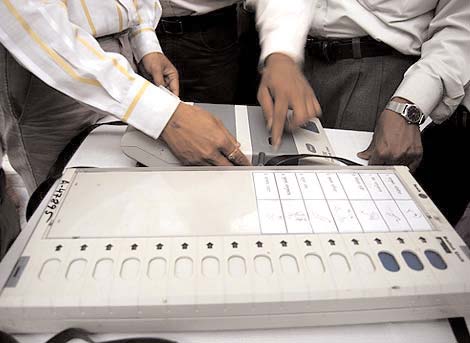
    NEW DELHI (TIP): The BJP’s poll symbol, “lotus”, has got a “bold” makeover, with the Election Commission clearing a bolder outline for the symbol. Though the design remains the same, the EC allowed the BJP’s request to give the “lotus” a darker outline for added visibility. The party had approached the EC to alter the design of its election symbol, pleading that the present form made the ‘lotus’ appear much lighter in comparison to other symbols. The BJP intends to use the bolder look of ‘lotus’ in its election publicity material and make the voters aware of its new look to make it look eye-catching. “The BJP had approached the Election Commission with a request to allow it to use bolder outline for its election symbol “lotus” and the poll body has allowed us so. We will use the new form of our symbol as printed in black and white on the EVMs in all our publicity material henceforth,” BJP vice-president Mukhtar Abbas Naqvi was quoted by news agencies as saying.

  • Mayawati’s ‘housing merger’ under scanner

    Mayawati’s ‘housing merger’ under scanner

    NEW DELHI (TIP): BSP supremo Mayawati has combined three bungalows into one in the prime location of the Lutyen’s zone of Delhi and the unauthorised construction has come under the scanner of state-builder Central Public Works Department (CPWD). Three Type VIII government bungalows, with four bedrooms each, were allocated in the name of Mayawati, BSP and a trust run by the party, on Gurudwara Rakab Ganj Road, next to Parliament House. These bungalows have since been amalgamated into one in the name of Bahujan Prerna Trust, according to documents available. The amalgamation has been done through an unauthorised construction which has come under the scanner of CPWD. It has reported the matter to the Department of Estates, which allocates the bungalows, as well as the Urban Development Ministry under which the Estates Department functions, sources said. Besides the three bungalows, the BSP supremo has a bungalow in her name at 4, Gurudwara Rakab Ganj Road which is separate from these three. According to the documents received through a Right to

    Information plea by Subhash Agarwal, the amalgamated single unit has been approved by the Directorate of Estates. “Rules do not allow any modification in bungalows in the Lutyen zone but unauthorised constructions have been found in all three bungalows and it has been reported to the authorities,” said a senior CPWD official. He said all the alterations and modifications were done by the allottee (BSP) and not by CPWD. According to the RTI reply, unauthorised construction of rooms, office, toilet, kitchen along with fibre sheet, covering an area of 238 sq m has been added at bungalow no 12. This bungalow is allotted to the Chairman, managing trustee of Bahujan Prerna Trust. Bungalow no 16, which has been allotted to the president of BSP, has unauthorised construction. It includes rooms with AC sheets and a toilet, AC steel shed along with three other rooms and a bathroom. In addition, there is a temporary unauthorised construction of tin sheets made of steel and metal. Terming the allotment “illegal”, Agarwal has sought a probe into it. “There should be a proper inquiry into the allotment of bungalows because it is violation of rules of Lutyen bungalow zone,” Agarwal said. To a question on BJP objecting to UPA having allocated three bungalows to BSP for party office and citing it as an example of how the Congress-led government seeks the support of allies, Information and Broadcasting Minister Manish Tewari recalled that institutional land was alloted to RSS-affiliated organisations in BJP-ruled Madhya Pradesh.

  • Muzaffarnagar: fresh killings bleed peace efforts

    Muzaffarnagar: fresh killings bleed peace efforts

    MUZAFFARNAGAR (TIP): With October 30 killing of three youth — Afroz, 20, Meherban, 21, and Ajmal, 22, of Mohammadpurraisingh village of Muzaffarnagar peaceniks have lost another round to communal tension that has engulfed the western Uttar Pradesh district for the last two months. Many Muslim families of Mohammadpurraisingh, a Jat-dominated village, took shelter in the nearby Muslim-majority village Hussainpur after the September violence. “These families wanted to return to their village and a peace committee had been formed with Chaudhry Feru of Mohammadpurraisingh and Shahnawaz Khan, husband of village Pradhan or chief of Hussainpur as members. An understanding was reached that after Diwali the displaced Muslim families of Mohammadpurraisingh will go back to their houses. But on Wednesday three youths from Hussainpur were killed and whole process now looks impossible as of now,” says district magistrate Kaushal Raj Sharma. “When my husband Rajendra Fauzi, a resident of Mohammadpurraisingh, had gone to water his fields in the evening, he was beaten up. When other villagers saw the condition of my husband they went back looking for those responsible for it but they were fired upon and in the clash that followed the three boys of Hussainpur were killed,” says Kavita Rani, wife of Rajendra Fauzi, who is now in police custody.

    Rajanth blames state
    BJP president Rajnath Singh said violence wouldn’t have returned to Muzaffarnagar had the authorities taken “severe and unbiased” action against those responsible for the earlier riots. “The trouble begins when such sad incidents are politicised. It only exacerbates the issue. I think if severe action was taken against those responsible for violence earlier….if just and fair action was taken, the violence would not have been repeated.”

  • Law bans foreign firms from making political donations

    Law bans foreign firms from making political donations

    NEW DELHI (TIP): The law forbids a “foreign company” to make any donation to political parties even if it has an Indian subsidiary. Yet, the home ministry and the two leading parties, Congress and BJP, have all filed affidavits claiming that a political donation is allowed if the majority shareholding in the foreign company registered abroad is of an Indian.

    The affidavits were filed in August before the Delhi high court in response to a PIL filed by Association for Democratic Reforms (ADR) and retired civil servant EAS Sarma. The PIL alleged that Congress and BJP have for years been receiving donations to the tune of tens of crores from foreign companies through their Indian subsidiaries.

    The one example cited against the government and the two parties is of UK-registered Vedanta Resources, in which Indian citizen Anil Agarwal holds at least 50% of the paid-up capital. Referring to the donations admittedly made by Vedanta through three of its Indian subsidiaries, Sterlite, Sesa Goa and MALCO, the petitioners alleged that the government had not taken any action against Congress and BJP because, among other reasons, finance minister P Chidambaram had been on the board of directors of the parent company.

    The PIL has asked for a court-monitored investigation as foreign funding of political parties is prohibited by at least two laws. In a bid to prevent “utilization of foreign contribution for any activities detrimental to the national interest”, Section 29B of the Representation of the People Act stipulates that no political party be allowed to accept any donation from “any foreign source”. Accordingly, Section 3(1)(e) of the Foreign Contribution Regulation Act (FCRA) prohibits any financial contribution from any foreign company to a political party. Section 2(1)(g)(ii) of FCRA clarifies that a foreign company includes its Indian subsidiaries.

    In their separate but similarly argued affidavits, the government and the two named political parties contended however that contributions from the subsidiaries of a foreign company such as Vedanta were allowed by FCRA. Their justification is that one of definitions of a foreign company, spelt out in Section 2(1)(g)(i) of FCRA, is an entity “within the meaning of Section 591 of the Companies Act”. The implication of this reference, in their interpretation, is that a donation made by any foreign company through its Indian subsidiary will not be regarded as a foreign contribution so long as an Indian holds a majority stake in the parent company.

  • PM says CBI can question him on coal scam: PM

    PM says CBI can question him on coal scam: PM

    NEW DELHI (TIP): Prime Minister Manmohan Singh on October 24 on board his special aircraft offered to open his doors for questioning by the Central Bureau of Investigation (CBI) in the probe into the allocation of a coal block to Aditya Birla Group company Hindalco. “I am not above the law of the land. If there is anything that the CBI, or for that matter, anybody wants to ask, I have nothing to hide,” Singh said as he headed back from Beijing ahead of polls in five states including Delhi and Madhya Pradesh. Singh’s offer to put himself under the CBI scanner is his first. The opposition has been seeking to know why the CBI is not investigating Singh, who had cleared the allocation of the coal block in Odisha as the minister incharge in 2005. Hindalco has denied any wrongdoing in the allocation. The Prime Minister’s Office had hoped to cap the controversy before Singh left on a two-nation tour to cement ties with Russia and China with a detailed statement, explaining the circumstances and reasons for the decision. It had recalled that Odisha chief minister Naveen Patnaik had written to them to give Hindalco the coal block to help generate more employment in the state. The opposition Bharatiya Janata Party (BJP), however, did not relent and has kept up the pressure on the Congress-led UPA government and the CBI, which is investigating 14 cases in the coal scandal. Asked if a string of scandals, from the 2G spectrum allocation to the coal allocation scam, had cast a shadow on his legacy, Singh said, “That is for history to judge”. “I am doing my duty… What impact my 10 years of Prime Ministership will have is something which is for historians to judge.”

  • Beyond the border

    Beyond the border

    The Border Defense Cooperation Agreement signed during Prime Minister Manmohan Singh’s visit to China is without doubt a constructive step towards resolving the boundary dispute. The BDCA itself is not a gamechanger: it simply reinforces the basic international norm that countries ought to settle differences through peaceful means. Specifically, the Agreement adds to the existing layer of confidence-building measures through flag meetings, joint military patrols, and periodic highlevel interaction. The BDCA nevertheless indicates both New Delhi and Beijing have accorded high priority to preventing hostile incidents along the Line of Actual Control. That Chinese Premier Li Keqiang and Dr. Singh have exchanged visits within six months of the incident reflects this fact. The Chinese intrusion and subsequent withdrawal from the Depsang plain earlier this year provided the impetus to BDCA negotiations, and prompted serious introspection on the effectiveness of the Working Mechanism on Border Affairs. By opting for a tempered Agreement though, Dr. Singh has chosen to play his hand cautiously in an election year.

    The BJP, which facetiously claimed the government has ceded territory to China, would do well to acknowledge the spirit with which former Prime Minister Atal Behari Vajpayee established the Special Representative mechanism on border talks during his 2003 Beijing visit. The ultimate objective of finalizing an LAC acceptable to both countries is still some distance away.With no clear understanding of how the other perceives the Line, and China preferring “status quo” along the boundary, the onus will be on India to seize the initiative. Preparing the framework for a lasting settlement is important: that said, India-China ties cannot be hostage to the boundary dispute. It is unfortunate – but entirely predictable – that plans to usher in a liberal visa regime were shelved owing to the controversy over China handing out stapled visas to two athletes from Arunachal Pradesh. The stapled visa issue has assumed dangerous proportions. It cannot be allowed to eclipse the need for greater cooperation, particularly in the fields of trade and tourism. While making the case for robust engagement at the Strategic Economic Dialogue scheduled for next month, India must also ensure our exporters gain a stronger foothold in the Chinese market. Whether it is on the strategic or the commercial side, both governments can only reap the benefits of cooperation through constant dialogue. In snuffing out “old theories of alliance and containment,” Dr. Singh has rightly emphasized a workmanlike approach to dealing with this important relationship.

  • Coalgate: Former top bureaucrats back ex-coal secretary’s accusation against PM

    Coalgate: Former top bureaucrats back ex-coal secretary’s accusation against PM

    NEW DELHI (TIP): Former top bureaucrats have come out in support of ex-Coal Secretary P C Parakh, who has been named by CBI in the coal blocks allocation scam, warning that harassment of honest officers will erode Government’s credibility and stop senior officers from taking decisions. “Parakh, as I have known him, is an honest, competent officer. While I do not wish to comment on the CBI investigation as such, as I do not have all the facts, I am at a loss to understand how an FIR has been filed only against him and no one in the PMO and no Minister,” said E A S Sarma, former Coal Secretary. If it is a case of conspiracy, all the conspirators should be taken into account. I hope there is no conspiracy!, said Sarma, a former IAS officer. “I feel that investigations in such cases should be objective and uninfluenced by extraneous pressures. A clear distinction must be made between decisions taken in good faith and malafide decisions. It is unfortunate that dishonest Ministers, politicians and officers should be let off and honest officers harassed.

    It will only erode the credibility of the government which has already been on the decline in the recent times,” he said. Sarma said he has written to CVC on June 15 last year requesting it to initiate an investigation into the role of the PMO in the coalgate affair and three other scams. “I reminded CVC at least two times after that. There has been no visible response from CVC on my letters,” Sarma said. Former Cabinet Secretary T S R Subramanian said such kind of action by CBI against Parakh will stop others from taking decisions. “There are all kind of bureaucrats, good, bad, honest… There has to be a reasonable basis for any action by the agency,” he said. “According to the FIR, it was said Parakh met Kumar Mangalam Birla. As Cabinet Secretary, I used to meet ten bureaucrats, ten politicians and ten businessmen daily. Should that mean that I be also made an accused?” he asked. Parakh wanted the system to be changed for good, rued Subramanian. The former Cabinet Secretary also felt that there was an “ulterior motive” behind the move to name Parakh as an accused. “If he has been made an accused, he could be crippled as a witness. There could be an ulterior motive,” he said.

    Nothing to hide on coal blocks, need no certificate: Government
    The government has nothing to hide on the coal block allocations, which were done on basis of recommendations of state governments, and it does not need certificates from anybody, senior ministers said Thursday. Minister of State in the Prime Minister’s Office V. Narayanasamy told reporters here it has been the government’s stand that allocations have been made to public sector undertakings and some private companies “on the recommendations of state governments where coal blocks were available”. “We have nothing to hide,” he said. Commerce and Industry Minister Anand Sharma, meanwhile, hit out at the Bharatiya Janata Party over its demand of the prime minister’s resignation, and said the government does not need certificates. Narayanasamy did not comment on former coal secretary P.C. Parakh’s claim that it was Prime Minister Manmohan Singh who decided on the allocation of two Odisha coal blocks in 2005, over which the Central Bureau of Investigation (CBI) filed a first information report (FIR) Tuesday. “The matter is sub judice.

    It is being investigated by the CBI,” the minister said. The FIR named Parakh and industrialist Kumar Mangalam Birla for alleged irregularities and criminal conspiracy in the allocation of the two blocks. Parakh said he did not know why the CBI thought Birla and he were in a conspiracy, when the person who took the decision was not part of it. “If a conspiracy is there, everyone is part of the conspiracy. If we are accused, the PM is as much a part of the conspiracy,” he contended. Asked about Parakh’s remarks, Sharma said the fundamental question was whether “everything be questioned” once a decision was taken. “Now who is going to give certificate to prime minister of India, who is globally respected, or to his ministers? I don’t think we need certificates,” Sharma told Times Now TV channel. The prime minister did nothing wrong by signing the coal allocation file, he said. An atmosphere where ministers or bureaucracy do not sign papers out of fear was a “recipe for disaster”, Sharma said, contending the economic environment has been vitiated over the past three years. “You cannot hold decision making to ransom so that nobody takes a decision, everybody is fearful,” he said. The BJP Wednesday said that the prime minister should take “final responsibility” for irregularities in the allocation of coal blocks, and resign.

  • PAKISTANI TROOPS VIOLATE CEASEFIRE FOR NINTH TIME IN 4 DAYS

    PAKISTANI TROOPS VIOLATE CEASEFIRE FOR NINTH TIME IN 4 DAYS

    JAMMU (TIP): Pakistani army pounded civilian areas along LoC by violating ceasefire for the ninth time in four days on October 17 resulting in injuries to four people, prompting retaliation from Indian troops. Police said Pakistani troops resorted to unprovoked firing on forward Indian posts including civilian areas along LoC in Najwal-Pargwal belt of Jammu district around 12.30pm. In the firing on civilian areas, four people including three children were injured in Najwal border hamlet, they said. They have been identified as Nisha Devi (45), Rama Kumari (12), Usha Devi (14) and Surjeet Kumar (10) — all children of a Sham Lal. They have been shifted to GMC Hospital for treatment, they said. Congress MP Madan Lal Shama, who along with divisional commissioner Jammu, Shant Manu and senior police officers, visited GMC hospital to inquire about the injured, said, “enough is enough — India should give a befitting reply to Pakistan.”

    BJP activists led by its legislature party leader Ashok Khajuria held protest demonstration and burnt Pakistan flag in protest against Pakistan firing in civilian areas of Jammu. “Give Pakistan a befitting reply. They are attacking us every time,” Khajuria said. This is the ninth ceasefire violation by Pakistani troops in the past four days. Earlier in the day, Pakistan violated ceasefire. “There was suspected movement of some persons along the international border close to Kharkola border out post in R S Pura border belt of Jammu district at 0930 hours today,” a BSF officer said. BSF troops guarding the borderline took positions and challenged them near Kharkola BoP, the officer said, adding during this period, Pakistan Rangers resorted to unprovoked firing on the forward area. Troops also retaliated resulting in exchanges, which are still going on when last reports came in. Pakistani troops have been repeatedly violating the ceasefire.

    On October 16, Pakistani troops had violated the ceasefire thrice in Kamalkote forward area of Uri belt, Krishnagati and Bhimbhergali subsectors of Poonch district and Mangu Chak and Khatav Border Out posts along international border in Samba district. Lance Naik MF Khan of 15 Bihar Regiment was killed on October 15 when Pakistani troops opened fire at Indian forward posts in Hamirpur-Balakote subsector in Poonch district. The same day, Pakistani army had shelled mortars and fired from small arms in forward areas along LoC in Hamirpur and Bhimbher Gali sub-sectors of Poonch district. On October 14, BSF Constable M Basu was injured when Pakistani troops resorted to firing on Katav border outpost along the international border in Samba district. In Islamabad, a military source claimed that a Pakistan Rangers’ jawan was killed in firing by BSF troops along the LoC. The incident took place in Chaprar sector. “Firing was carried out by BSF post Kharkola,” the source claimed.

  • J&K HOUSE TO SUMMON FORMER ARMY CHIEF VK SINGH

    J&K HOUSE TO SUMMON FORMER ARMY CHIEF VK SINGH

    SRINAGAR (TIP): Jammu and Kashmir Assembly Speaker Mubarak Gul on October 9 said he would summon former Army Chief General VK Singh (retd) to explain allegations that the Army’s secret fund was being used to pay mainstream political leaders of the state since 1947. Amid uproar, the Speaker said VK Singh would be summoned to appear before the House and, if need arises, a special session would be convened to discuss the matter. The Speaker, however, did not fix a timeframe to summoning Singh, who had alleged money was being paid to ministers in the state for getting certain jobs done. “I will not give any time-frame for summoning him, but it can happen very soon,” he said as legislators of the People’s Democratic Party (PDP), BJP and Panthers Party shouted slogans seeking summoning of the Army ex-chief in the House, which was adjourned twice over the issue. Earlier in the day, the Speaker said he had decided to write to VK Singh to explain his position. The ruling National Conference had moved a privilege motion in the Assembly against the former Army Chief on September 30. “I will give the former Army Chief an opportunity to explain his position,” Gul said. As the Speaker announced this, PDP legislators demanded that VK Singh should be summoned to the House. State Law Minister Mir Saiffullah, too, intervened and requested the Speaker to summon the former Army Chief.

  • Rahul-for-PM clamour resurfaces in Congress

    Rahul-for-PM clamour resurfaces in Congress

    NEW DELHI (TIP): Congress echoed with calls on October 10 that Rahul Gandhi lead the next government, putting back on centrestage the demand that the party vice-president be declared the PM candidate for 2014 elections. A day after Rahul announced that the party would form a government of youth after the next Lok Sabha elections, Congress said it was the collective wish of workers that he take charge. AICC spokesman P C Chacko said, “We hope he will lead the party in the elections and take up the reins of the administration after elections.” The stance diverged from the Congress leadership’s reluctance to pitch Rahul in the prime ministerial contest that would pit him in a direct contest with the BJP candidate for the top job, Narendra Modi. The reluctance has been attributed as much to the desire to avoid a clash of personalities in the 2014 polls as to deal with an unclear mandate in which heading a coalition may require an experienced hand.

    That is where Rahul’s comments in Rampur are seen as a big leap, indicating a willingness to be seen as the PM in the next government. On Thursday, Rahul told a rally, “The 2014 elections are coming. Once again, a government of the common man and the poor will be formed. Listen to me carefully. A government of the youth will be formed in 2014, which will transform this country.” It was enough for Congress leaders to raise the Rahulfor- PM clamour. Home minister Sushil Kumar Shinde said, “I welcome Rahul’s statement. Very rightly, he has said that the leadership should go into the hands of the youth. And our desire is that Rahul should become the PM of this great country.” Asked about the prime ministership, Delhi chief minister Sheila Dikshit said, “I would like to, and I know a lot of young people would like to, see him (Rahul) take a much bigger role. He is playing a bigger role and he will come to it gradually. Things happen in Congress politics when the moment comes.”

  • Babadom in India

    Babadom in India

    The arrest of “Sant Sri Asaram Ji Bapu” on charges of rape has provoked strong reactions. The majority has condemned the conduct of Asaram and his son, Narayan Sain. But then there are Baba’s devotees who refuse to believe Baba could ever do anything wrong, much less commit the heinous crime of raping. They see all kinds of conspiracy to defame Baba who they look at as the manifestation of God Himself. Then we have the sadhus and sants who do not wish to be perceived as practitioners of immorality, coming forward to defend Asaram. Again, there are some more so called Babas, like Baba Ramdev, who are more in to politics than into any semblance of spirituality, who must cry foul against a government, not to their liking, when it initiates any action against an erring “godman”. Baba Ramdev was in New York a couple of days ago, attending the Hindu Unity Day celebrations. He was categorical in claiming that the Congress led UPA government harassed Sadhus and Sants and that it was being unfair to Asaram. One would like to know from Baba Ramdev if the evidence that has surfaced till now against Asaram and his son Narayan Sain is not enough to warrant a legal action against them.

    Is the evidence not enough to provoke the wrath of people against Asaram and his son, in particular, and Babas, in general? Is the evidence not enough to embarrass the class of Sadhus worth the name? If Baba Ramdev is an honest and right thinking man, he should demand the strictest possible penalty for the man who has violated with impunity the laws of the land, betrayed the trust of hundreds and thousands of believing followers and brought a bad name to all shades of spiritual leaders whether they are called Sants, Sadhus or Babas. Since the arrest of Asaram, several other cases of corruption in his ashrams have come to light. Many complaints from local residents have surfaced. Charges have been laid against his ashrams for embezzling huge sums of government funds and annexing government land. There are also reports of illegal activities being carried out in the ashrams. But these scams were not exposed earlier because most godmen have political backing. When BJP leader Uma Bharti was the Chief Minister of Madhya Pradesh, she had organized a sermon of Asaram in the state legislature. The entire cabinet and the MLAs of the ruling party attended the meet. The government even prepared the press note for the event and published it in newspapers across the state. Such support from political leaders is responsible for the widespread influence of godmen. Babas also spread their empire by selling merchandise – a multi-crore business. Their products include medicines, cosmetics and clothes and have a ready-made market among their followers. They are also sold on the pretext of encouraging indigenous products instead of foreign brands. Babadom prevails in India.

  • Pakistan’s new envoy to US was once expelled from India

    Pakistan’s new envoy to US was once expelled from India

    WASHINGTON (TIP): Pakistan has appointed as its ambassador to the United States an envoy who was once expelled from New Delhi for “indulging in activities incompatible with his official status.” Typically, that’s officialese for spying, but in that 2003 episode, Jalil Abbas Jilani was packed off from New Delhi for allegedly supplying cash to the Hurriyat leadership. Jilani, currently Pakistan’s foreign secretary, has been named by the Nawaz Sharif government as the country’s ambassador to Washington, filling a high-profile post that has remained vacant for several months after the resignation of Sherry Rehman, who was appointed by the Zardari-Bhutto’s PPP and who quit when the new Sharif’s PML came to power. Jilani’s appointment comes just ahead of Sharif’s visit to the White House on October 23 on an invitation from President Barack Obama as the two countries attempt to revive a relationship that has gone into steep decline in recent years.

    Pakistan is clearly out of favor in Washington DC because of its inability or unwillingness to act against terrorism that it has engendered as a state policy. Even its most ardent supporters and apologists in the administration, on the Hill, and in the think-tank circuit, seem to have a bleak view of the country and its future. A typical Pakistan-related event based on one of the many dismal, negative themes and books on the country will take place next week when Council of Foreign Relations’ Senior Fellow Daniel Markey will launch his new work “No Exit from Pakistan: America’s Tortured Relationship with Islamabad.” While a few well-wishers on both sides keep up the fiction of an alliance, Markey sees it as a dead-end relationship in which American and Pakistani policy makers have been condemned to agony in the same way as the sinners in John Paul Sartre’s play No Exit discover their hell is a room where they antagonize one another forever. “Like Sartre’s sinners, the United States and Pakistan have tormented each other for decades, if in very different ways,” Markey writes. “Both sides believe they have been sinned against. Even at high points in the relationship there were still underlying irritations and disagreements that got in the way of building any sort of strong, sustainable cooperation.”

    But like many other Washington pundits, he too believes the United States has important national security interests in Pakistan, and “both countries will have to cooperate even as the relationship evolves.” The Sharif-Jilani combine will have an uphill task of changing the discourse, which depends on how free they are from the stranglehold of the country’s military. For a change though, it will be the first time in nearly a decade that Pakistan has posted a career foreign service official as its ambassador to Washington. Jahangir Ashraf Qazi (2002-2004) was the last career diplomat who served as ambassador. He was succeeded by General Jehangir Karamat and Gen. Mahmud Ali Durrani, followed by Hussain Haqqani and Sherry Rehman, both PPP political appointees. Jilani meantime has kissed and made up with New Delhi, where he counts many friends despite the 2003 contretemps. He has visited India many times since then and has even met BJP leader, L KAdvani, who was the home minister when Jilani was expelled. In fact, it is a measure of New Delhi’s inconsistent approach to Pakistan that Jilani was even allowed to meet the Hurriyat leadership some years after he was expelled for bankrolling them.

  • 12 CRORE FIRST-TIME VOTERS HOLD KEY TO 2014 LOK SABHA POLLS

    12 CRORE FIRST-TIME VOTERS HOLD KEY TO 2014 LOK SABHA POLLS

    CHENNAI (TIP): Close to 12 crore youths will be eligible to vote for the first time in the 2014 Lok Sabha elections. To put that in perspective, no single party garnered more than 12 crore votes in the 2009 polls, showing how significant this segment can be if all of them register to vote. In the 2009 polls, the Congress polled 11.9 crore votes, the BJP 7.8 crore, BSP 2.6 crore and CPM 2.2 crore. No other party polled even a crore of votes across the country.

    79 crore eligible voters
    The draft electoral rolls published by various states at this stage show that the national total is just under 79 crore votes. Uttar Pradesh will have the highest potential firsttime voters with 2.3 crore young people crossing 18 in time for the polls. They will account for 17.6% of the state’s electorate of 12.9 crore. Maharashtra comes next with 1.05 crore first-time voters or 13.2% of the state’s electorate. Bihar is third with 94.3 lakh youths, followed by West Bengal with 90 lakh. These figures are derived from the age data released recently by the census, and are based on all those aged between 15 and 19 at the time of the 2011 census. All of them will be old enough to register to vote in 2014; none of them would have been eligible in 2009. The numbers have been reduced on the basis of the age-specific death rate for people between 15 and 19 years to account for people in this age group dying between 2011 and the polls. The state-wise numbers may vary slightly if one takes into account interstate migration from this age group, but the national number would be unaffected. “As per the latest census, UP and Bihar have the maximum number of children due to high birth rate. Naturally, there will be more young people eligible to vote,” said P Arokiasamy of the International Institute for Population Sciences. The Election Commission (EC) does a study to arrive at the number of eligible voters before every general election.

    “It examines the data of those in the 18 to 25 age group. If enrolment is low, state chief electoral officers conduct special campaigns to enlist more young people. On the other hand, if there are too many voters over the age of 80, officials check again to ensure that names of all dead voters have been deleted,” said N Gopalaswami, former chief election commissioner. Among the southern states, Andhra Pradesh will have more than 80 lakh potential first-time voters followed by Tamil Nadu with 62 lakh. Karnataka and Kerala could have 58 lakh and 26 lakh such voters respectively. Delhi, which goes to the assembly polls in December, has 16.6 lakh youths eligible to register as voters. Rajasthan has 72.9 lakh and Madhya Pradesh 74 lakh. Smaller states like Himachal Pradesh and Union territories will have less than 10 lakh first-timers each. “We have tied up with internet browsing centres to make it easy for first-time voters and others to be included in the electoral rolls,” said Tamil Nadu chief electoral officer Praveen Kumar. “Volunteers are running campaigns in universities and colleges to register eligible students to vote.”

  • TIMELINE

    TIMELINE

    JANUARY 1996: Fodder scam surfaces after Deputy Commissioner Amit Khare raids offices of animal husbandry department, seizing documents showing syphoning of funds by non-existent companies in the name of supplying fodder.
    MARCH 11, 1996: Patna High Court directs CBI to probe the scam. Supreme Court upholds the order.
    MARCH 27, 1996: CBI registers FIR in Chaibasa treasury case.
    JUNE 23, 1997: CBI files charge sheet and makes Lalu Prasad accused.
    JULY 30, 1997: RJD chief Lalu Prasad surrenders before CBI court, sent to judicial custody.
    APRIL 5, 2000: Charges framed before special CBI court.
    OCTOBER 5, 2001: Supreme Court transfers fodderscam cases to Jharkhand after the creation of new state.
    FEBRUARY, 2002: Trial begins in Ranchi special CBI court.
    AUGUST 13, 2013: Supreme Court rejects Lalu Prasad’s plea seeking transfer of the trial court judge hearing the case.
    SEPTEMBER 17, 2013: Special CBI court reserves judgement.
    SEPTEMBER 30, 2013: Two former Bihar Chief Ministers Lalu Prasad and Jagannath Mishra along with 43 others convicted by special CBI judge Pravas Kumar Singh.
    OCTOBER 3, 2013: Lalu Prasad sentenced to five years in jail, fined Rs. 25 lakh. Jagannath Mishra gets four years in jail.

    BJP WELCOMES SENTENCING OF LALU
    The BJP welcomed the sentencing of Lalu Prasad and others in the fodder scam. “BJP feels this is a very important milestone in the fight against corruption. The whole country was up against corruption and wanted results,” BJP spokesperson Prakash Javadekar said.

    Lalu is a hero: Rabri Devi
    Lalu Prasad is a hero and will remain a hero in future too, says his wife Rabri Devi.

    When I have not done any crime, how have I been punished, asks Lalu Prasad Yadav
    Reacting to the jail term of five years in fodder scam, Lalu’s instant reaction was – “When I have not done any crime, how have I been punished?” The RJD chief asked the question at the Birsa Munda Central Jail in Ranchi over video conferencing facility. Judge Pravas Kumar Singh retorted: “You can appeal in the higher court.”

    Will appeal in High Court, says Rabri Devi
    Talking to a news channel, Lalu’s wife, Rabri Devi said that the RJD chief did not get justice. She also said that they will appeal in the High Court against the verdict and also go before the people.

    Ex-CBI chief demands life term for Lalu
    An agitated former Central Bureau of Investigation (CBI) director Joginder Singh says RJD chief Lalu Prasad Yadav should have been given a life term in jail. He adds that the VIP culture in jails should be curbed

  • President seeks clarifications on ordinance protecting convicted lawmakers

    President seeks clarifications on ordinance protecting convicted lawmakers

    NEW DELHI (TIP): President Pranab Mukherjee has sought clarifications from senior Cabinet ministers on the justification for bringing an ordinance that allows convicted lawmakers to hold on to their seats in Parliament and state legislatures. The President, who was forwarded the ordinance cleared by the Cabinet on Tuesday, sought clarifications separately from home minister Sushil Shinde, parliamentary affairs minister Kamal Nath and law minister Kapil Sibal. The inquiry came against the backdrop of demands from the BJP, the Left, the Aam Aadmi Party and civil society activists that the President reject the ordinance. Government sources sought to play down the President’s queries, saying that as a stickler for norms, he was doing due diligence and may approve the ordinance after meeting the AAP delegation on Friday.

    Ordinances are meant for urgent situations during the periods when Parliament is not in session. Opposition and others have argued that in this instance, there is no urgency except the government’s anxiety to save RJD boss Lalu Prasad from a possible setback in a Ranchi court which is trying him for complicity in the fodder scam. The politically crucial judicial order is set for Monday. The government strongly supported the ordinance disregarding growing concern within its own ranks that the ordinance would boomerang on the Congress at a time when it’s already facing heat over corruption, particularly in urban areas. A BJP delegation led by L K Advani and comprising Leaders of Opposition in the two Houses, Sushma Swaraj and Arun Jaitely, earlier called on President to urge him to reject the Ordinance. “The Indian government is trying to dilute this (convicted lawmakers) decision of the Supreme Court.

    It should realize that the ordinance is against the Constitution,” Advani told reporters after meeting the President.With the debate escalating, finance minister P Chidambaram questioned the BJP’s opposition to the ordinance, saying the main opposition party was changing its stand. He cited the case of a BJP minister in Gujarat who continued to hold office despite being convicted. “Mr Bokhiria is minister of mines and belongs to the BJP. He has been convicted for a period of three years,” Chidambaram told reporters.

  • PROGRESS BLOW TO GUJARAT

    PROGRESS BLOW TO GUJARAT

    Human indicators put state that brags about growth behind Tripura and Sikkim

    NEW DELHI (TIP): A new development index has identified Gujarat as a less developed state, while ranking Odisha and Bihar along with eight others as “least developed” and Goa and Kerala among the seven “relatively developed” states. A panel headed by Raghuram Rajan, now the RBI governor, which submitted its report to finance minister P Chidambaram, also recommended a fresh approach to devolution of funds to states and moved away from the special category classification to devise three categories – least developed, less developed and relatively developed. According to the index, there are 10 least developed states, 11 less developed and seven relatively developed states in the country. The slotting of Gujarat, which has attracted attention due to its development model, in the “less developed” category is likely to escalate the already bitter political debate on the ‘Gujarat model of development’.

    The other states in this category are Manipur, West Bengal, Nagaland, Andhra Pradesh, Jammu and Kashmir, Mizoram, Tripura, Karnataka, Sikkim and Himachal Pradesh. The least developed states include, apart from Odisha and Bihar, Madhya Pradesh, Chhattisgarh, Jharkhand, Arunachal Pradesh, Assam, Meghalaya, Uttar Pradesh and Rajasthan. The relatively developed states according to the index are Haryana, Uttarakhand, Maharashtra, Punjab, Tamil Nadu, Kerala and Goa. The panel has developed a multidimensional index of backwardness based on monthly per capita consumption expenditure, education, health, household amenities, poverty rate, female literacy, percent of SC-ST population, urbanisation rate, financial inclusion and connectivity.

    The panel said less developed states rank higher on the index and would get larger allocations based on the need criteria. “The committee has proposed a general method for allocating funds from the Centre to the states based on both a state’s development needs as well as its development performance,” Chidambaram told reporters. “The committee has recommended that each state may get a fixed basic allocation of 0.3% of overall funds, to which will be added its share stemming from need and performance to get its overall share,” Chidambaram said. The panel was set up after persistent demand from Bihar CM Nitish Kumar who insisted a the special category status to help access more funds for its development. This sparked off a demand from several other states such Odisha for the special category state status. While the new index will ensure more funds for Bihar from the central kitty, it has stopped short of conferring the “special category” tag on the state, Shaibal Gupta, seen as Nitish’s nominee on the panel to submit a 10-page dissent note.

    However on Thursday, Nitish concealed his disappointment, if any, to celebrate the recommendation as a triumph even as BJP taunted him for failing to have his way despite cozying up to Congress. “It is a very decent report. For example under this index Odisha is at the bottom of the list and then Bihar. Therefore it recognizes that Odisha, Bihar, Madhya Pradesh are among the most backward states of India. That is I think the demand,” Chidambaram said. “The demand of these states is please recognize the fact that for a variety of reasons we are the most backward states. I think this index captures the degree of backwardness and acknowledges that Bihar is among the most backward states of India. Special category is the present categorisation. Now they are moving away from that,” finance minister said while detailing the recommendations of the panel.

    “This is not an answer to all the demands of the states. This is meant only to be a way forward on how to devolve funds to the more backwards states and areas of India. He said the index better captures the stage of development in a state, how backward it is or how relatively less backward it is and is a good measure for planning and devolution of funds. “Because some states are small very limited resources it is necessary to have a threshold below which the devolution of funds does not fall. So the committee has recommended that each one of the states will get a basic allocation of 0.3%,” Chidambaram said. The finance minister said that the report will be examined by various stakeholders before being implemented. “It will not be in the current year. It has to go through the examination process and will be implemented in an appropriate time in the next financial year.

    To which funds this should be applied a decision will be taken,” Chidambaram said. The report said that the National Development Council had accorded the status of special category state to eleven out of 28 states. They were based on a number of characteristics such as hilly and difficult terrain, low population density and or sizeable share of tribal population, strategic location along the borders with neighbouring countries, economic and infrastructural backwardness and non-viable nature of state finances. State under this category have a low resource base and are not in a position to mobilise resources for their developmental needs even though the per capita income of some of these states is relatively high, the report said.

  • LALIT MODI EXPELLED FROM BCCI

    LALIT MODI EXPELLED FROM BCCI

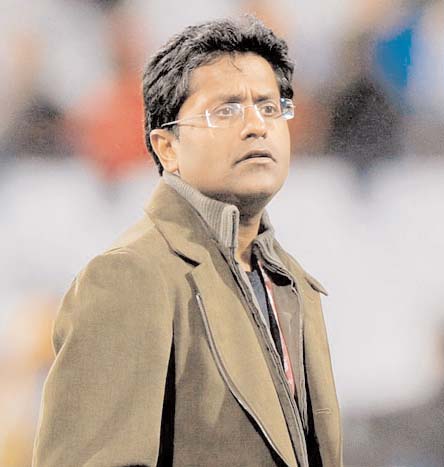
    CHENNAI (TIP) : The decision to ban Lalit Modi from BCCI for life was taken much ahead of the board’s special general meeting (SGM), which started at 2:05 pm on September 25 and was over by 2:20 pm. Modi the maverick became history as his sworn enemy, president-in-exile N Srinivasan, clinically packed him off, gaining a huge advantage ahead of the annual general meeting (AGM) on Sunday. The 29-0 scoreline in an electorate of 30 (the J&K representative was absent) said it all. There was no voice of support for Modi who was desperately trying to prolong his administrative career. All Srinivasan needed was a two-thirds majority (21 votes), but there was no voice of dissent, proving beyond doubt who is the supreme boss in BCCI at the moment. “Modi is guilty of committing acts of misconduct and indiscipline, and therefore, in exercise of powers as per Regulation 32 of the Memorandum of Rules and Regulations of the BCCI, Modi is hereby expelled from the board,” a terse note written by BCCI secretary Sanjay Patel was sent to the media. Modi’s Special Leave Petition in the Supreme Court to stop the SGM was rejected and a letter that he had sent to BCCI urging the members to allow him to present his case or defer the meeting to a date after the Sunday AGM wasn’t paid attention to.

    “Please note that I do intend to appear before the SGM and place my version and the facility that was extended to the BCCI witnesses for the purposes of recording of their evidence, that is by way of video conferencing, may kindly be extended to me as well,” Modi had said in his letter. According to a BCCI member present in the meeting, they were informed about the contents of Modi’s letter but they didn’t feel it important enough to attach importance to it. “He was found guilty by the disciplinary committee and there was no reason to waste too much time on it any longer. And Modi wasn’t available for video conferencing either,” a BCCI member present in the meeting said. “It was a unanimous choice to ban Modi. The proposer was Anirudh Chaudhury from the Haryana Cricket Association and the seconder was Ranjib Biswal from Orissa Cricket Association. There was no voice of opposition,” Rajeev Shukla said. IS Bindra, the president of Punjab Cricket Association and a known Modi sympathizer, didn’t attend the meeting and MP Pandove, who represented the association, went in favour of the motion. The only office-bearer absent from the meeting chaired by Srinivasan was North Zone vice-president Arun Jaitley, who was busy with a BJP rally in Bhopal.

    Officials only interested in themselves: Lalit Modi
    In a video interview to ESPN Cricinfo, Modi said: “Board officials are not interested in doing what is good for cricket. They are only interested in what they are getting out of it.” Modi spoke about how ridiculous it was for Srinivasan to stand for elections in the midst of a burning spot fixing controversy involving his son-inlaw. “There is unanimity in allowing him to continue. You never see a lone ranger standing out because they shut them all up. Only I S Bindra and myself have been lone rangers in the past, “ he said.

  • ‘AGGRESSIVE’ RAHUL RALLIES TRIBALS, TAUNTS GUJARAT CM

    ‘AGGRESSIVE’ RAHUL RALLIES TRIBALS, TAUNTS GUJARAT CM

    JAGDALPUR (TIP): Congress general secretary Rahul Gandhi on September 26 addressed a rally a mere 43km from the spot where the Maoists wiped out the entire party brass little more than three months ago, and said the leaders were killed to silence the voice of the common people. Showing rare aggression, he said the BJP government’s failure led to their slaughter. “Thirty-two people were killed in the Maoist attack. Where was the government? The tallest Opposition leader was killed, where was the government? When the leaders of tribals are not safe, what about masses?” he asked. Attacking the BJP and its prime ministerial candidate Narendra Modi, Rahul said just one man can’t run the nation. “The BJP thinks just one man can run the nation,” Rahul said, in a barb at Modi. He also took on the Raman Singh government for poor infrastructure and acquisition of tribal land. “Have you seen any doctor in hospitals and health centres in Bastar?” he asked. The crowd roared in the negative.

    “Our aim is to empower tribals by vesting power in their hands. We believe the nation is run by the people,” Rahul said. Criticising the BJP government for Chhattisgarh’s dilapidated health infrastructure, Rahul said hundreds of people die of gastroenteritis every year, but hospitals are in a shambles. “The land belonging to tribals is taken away. If they want land of the rich, they will buy it. If it’s of the poor, it’s acquired,” he said. The event brought leaders of warring factions of the state Congress on a common platform for the first time in more than three months in Rahul’s presence. How long will the warring groups led by former CM Ajit Jogi and Pradesh Congress chief Charandas Mahant remain on the same page is open to question. Criticising the Raman Singh government, Rahul said he had stopped at a village with a population of 2,000. “I tried to find out how many people have passed the 12th standard. There was one. What kind of government you have?” he said. The Centre has pumped in more than Rs 10,000 crore for development, but the government changed its names to take credit of Central schemes, he said.

  • Smriti Irani Inaugurates OFBJP National Convention

    Smriti Irani Inaugurates OFBJP National Convention

    Urges Indian Diaspora to Take Active Part in Mission 2014: BJP 272+

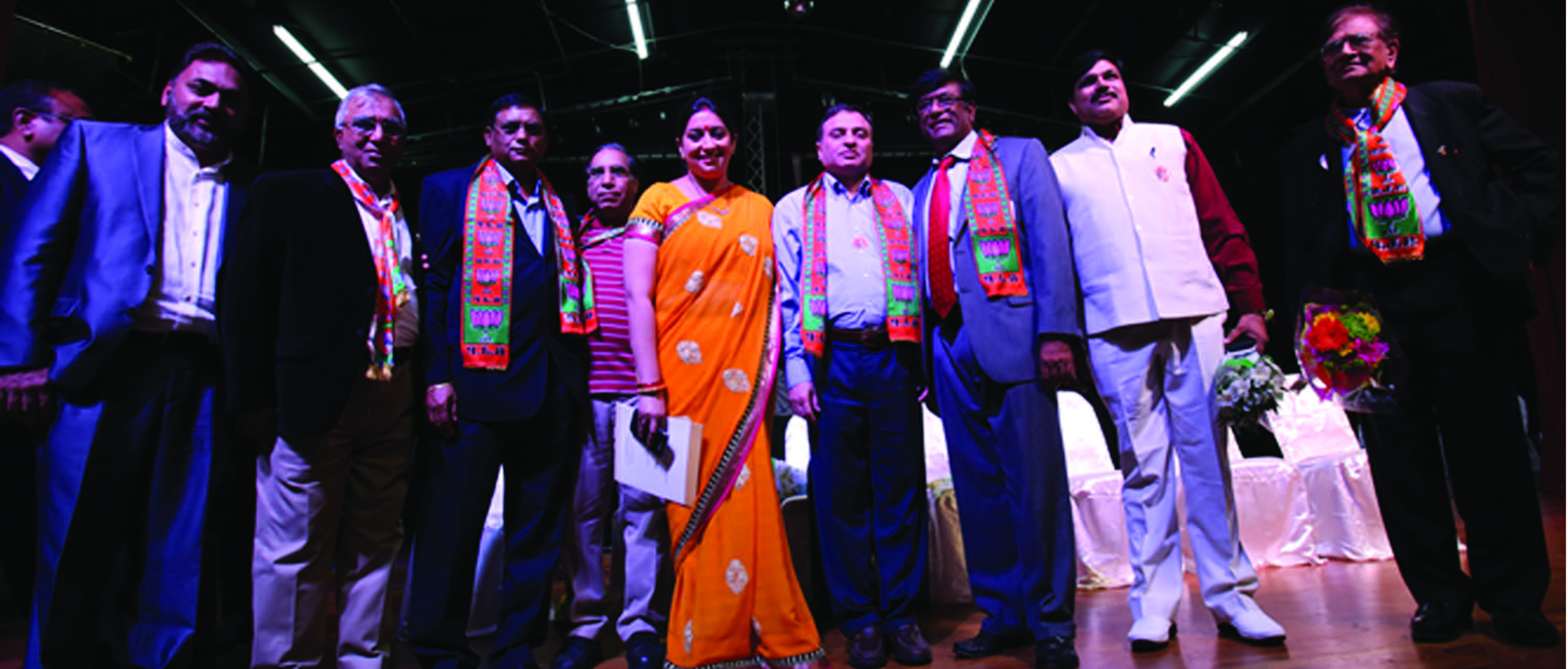
    TAMPA (TIP): Smt. Smriti Irani, BJP national Vice President, inaugurated the annual national convention of Overseas Friends of BJP (OFBJP) – USA on Friday September 20, 2013 at India Cultural Center (ICC) in Tampa, FL. Over 150 delegates including members of National Council and Executive Committee, and Advisory Council participated. The delegates representing OFBJP’s 22 chapters in USA had assembled to brain storm and evolve an effective strategy to achieve the goal of Mission 2014: a clear majority for the BJP in the next Parliamentary elections. Over 500 people attended the inaugural session on Friday evening. The theme of the convention was Mission 2014:BJP 272+. Smt. Irani highlighted the achievements of Gujarat government headed by its visionary Chief Minister, Shri Narendra Modi through sheer hard-work and good governance under trying circumstances. She said that Modi has brought the good governance on the electoral agenda through his growth oriented stellar performance.

    She said that a person who used to sell tea in his early childhood at the railway platform and became chief minister, and now prime ministerial candidate of BJP tells some-thing of the personal discipline, hard work, dedication and commitment to serve India and hard work of Shri Narendra Bhai. She continued that only in BJP, an ordinary worker can aspire to attain such a high position unlike Congress party where legacy and lineage are the primary components of leadership positions. She said that people of India are looking forward to elect NDA government headed by Shri Narendrabhai Modi and usher in India’s all round development and good governance; and bringing her to the top echelons in the international arena. Earlier, while addressing the women and youth forum during a panel discussion along with Prodyut Bora, national executive member of the BJP,Mrs. Irani said that Modi has become a “youth magnet” of India towards whom the entire young generation is looking with great hopes to solve India’s complex problems. To a question related to violence against women in the context of women gang rape cases,Mrs. Irani listed 10 strong steps to provide safety and protection to the women in the country.

    To another question related to BJP’s plan for women welfare and arresting child labor, she said that India is one of the countries that has the concept of Ardhanareeshwara, depicting equality between male and female. She personally fought for women’s bill of right to work in the Parliament and showcased amazing schemes implemented in Madhya Pradesh and Gujarat. Good examples are “Ladli Lakshmi Yojana” – girl’s economic security; “Pravash Utsav and Kanya Yojana” – girls’ right to education; and “Kanya Dhan Yojana” – giving a start-up kit for newly married couples. She also described about a 1,700 crore rupees revenue generation scheme called “Mission Mangalam” – a selfhelp group, in which 2.25 lakh companies have helped 32 lakh women and gave them employment. To a question related to youth, panelist Shri Prodyut Bora said that 50% of India’s population is below 26 years of age and asked the youth to reach out to colleges and universities to motivate them to register to vote and then vote for BJP. He also stressed that both education and experience are equally important in politics and reminded the youth that working from grass roots helps shape the character and personality in the long run. To another question related to Bangladesh infiltration, Prodyut Bora said that it is indeed a sorry state of affairs and the Congress government is responsible for this plight as they indulge in vote bank politics. He said that there are strict orders to Border Security guards to let their guard down and the migrants are rewarded with ration cards and voter ID cards. In fact, Delhi high court declared that 10 lakh illegal immigrants from Bangladesh live in Delhi and they must return to their country. The situation in Mumbai, Bhubaneswar, and Bangalore is same as in Delhi. He said that it has nothing to do with the religion but it’s the sanctity and integrity of the nation that is at stake.

  • Muzaffarnagar riots: Arrest warrants against 16 UP leaders

    Muzaffarnagar riots: Arrest warrants against 16 UP leaders

    LUCKNOW/NEW DELHI (TIP): A Muzaffarnagar court on September 18 issued non-bailable arrest warrants against a BSP MP, two MLAs each of the BJP and the BSP and 11 other political and community leaders for allegedly inciting communal violence that has claimed 47 lives. The warrants were issued on a day when the Central Government accused the Samajwadi Party-led UP Government of “extreme carelessness” in containing violence and demanded its resignation. No arrests have been made, but the police said action would be taken against the accused in two days. “We have collected some evidence and more evidence is being collected. The guilty will be arrested in two days,” said SSP Muzaffarnagar, Praveen Kumar. BSP’s Muzaffarnagar MP Qadir Rana, BJP MLAs Hukum Singh, Sangeet Som and Bhartendu Singh, BSP MLAs Noor Saleem and Maulana Jameel, Congress leader Saeed-ul-Zaman and BKU chief Naresh Tikait were among the 16 against whom warrants were issued, the police said. They are wanted for violating prohibitory orders and provoking communal tension by making inflammatory speeches at different meetings (mahapanchayats).

    As many as 10 police teams have fanned out across the state to arrest those against whom warrants have been issued. In the UP Assembly, Chief Minister Akhilesh Yadav hit out at the BJP accusing it of vitiating the atmosphere in view of the coming Lok Sabha elections and promised stern action against all those guilty. High drama was witnessed outside the Vidhan Sabha this evening amidst rumours that BJP MLAs — against whom a Muzaffarnagar court had issued warrants — would be arrested when they emerge from the House. The leaders hurriedly left the Assembly complex virtually shielded by a human armor of their MLAs. Shouting anti- SP slogans, BJP MLAs led by Hukum Singh and Uma Bharti crossed the Ashok Marg and found refuge in the heavily guarded BJP state office virtually across the road. Uma Bharti warned the SP government of dire consequences if it dared to arrest BJP MLAs. “First get the charges against them probed. There are charges against Mohd Azam Khan as well. If Hukum Singh and Sangeet Som are arrested, then he (Azam Khan) should also be arrested. Otherwise, all BJP MLAs would court arrest.

    The situation may turn ugly for which none but the SP government would be held responsible,” said Bharti. Later, BJP leaders quietly dispersed to their respective Lucknow homes. It is now believed that the arrests would be made after the conclusion of the monsoon session. In New Delhi, Congress spokesperon Meem Afzal said: “The UP Government has failed to contain the situation and has displayed extreme carelessness in containing violence. If they can’t run the government, they must resign immediately.” The Congress’ demand for the Akhilesh Yadav government’s resignation came on the day of mounting evidence that the state political machinery prevented UP cops from taking preemptive action. Amid two new sting CDs that have “caught the cops on camera” accusing some UP ministers (including Azam Khan who has denied his role) of asking them to go soft on rioters of a particular community, the Congress called for a thorough probe to determine the veracity of the policemen’s claims.

  • Riots threaten Mulayam’s rainbow coalition

    Riots threaten Mulayam’s rainbow coalition

    NEW DELHI (TIP): The Muzaffarnagar riots threaten to bring apart the ambitious social coalition that Mulayam Singh Yadav has been attempting with aggressive polarization politics and anti-quota rhetoric. The post-riot anger among Muslims has raised serious questions about their continuance in the Samajwadi tent. If the grievance persists among Muslims that the Akhilesh Yadav regime deliberately let the situation turn riotous, it could knock out a major component of the rainbow coalition that Mulayam has been eyeing. Taking Muslim support for granted as also OBCs, Mulayam recently embarked on a strategy to win over a chunk of upper castes to improve his chances in the 2014 elections. Turning his back on his Mandalite past, Mulayam opposed ‘reservation quota’ for dalits despite a large consensus in its favour in Parliament, a move designed as an olive branch for upper castes. In fact, Muslims, OBCs and upper castes are united in their hostility to quota.

    The Samajwadis are troubled at how the situation has panned out after riots, with no group happy with the state government. Given the extent of loss to the minorities, it remains an uphill task to convince the community otherwise. SP insiders believe the situation can be retrieved with exemplary action against rioters, most of whom named are from the BJP. Else, the party is staring at largescale desertion by the loyal minority base without any gain among upper castes who may be more amenable to appeals from BJP, and in parts to BSP and Congress. This would dash the hopes of the Samajwadi camp which has believed that communal tensions were not bad for its politics, the thinking drawing from the Ayodhya years when “secular” competitors like Congress and BSP were edged out. The Mulayam camp calculated that the advent of Narendra Modi on the national scene would push Muslims into a tighter embrace since its massive assembly triumph in 2012 had positioned it as the main challenger to BJP. The dip in Congress fortunes nationally only bolstered this belief. These calculations are being reviewed after the riots. Observers believe the angry minorities may see merit in BSP which has a stronger organization in western UP and, to some extent, Congress – defying traditional assumptions. Worse for SP could be the threat on the Hindu side. While upper castes may prefer non-SP parties, a polarized polity could even dent the Samajwadi’s Hindu backward caste base. A worried SP is eagerly looking to find a way out of the hole that the riots have dug for the party ahead of the 2014 polls.

  • BJP will emerge as single largest party in LS polls: Survey

    BJP will emerge as single largest party in LS polls: Survey

    NEW DELHI (TIP): BJP will emerge as the single largest party in the coming parliamentary elections, a survey has claimed. “BJP has emerged as a clear winner across the country, (more so in north and west). Majority of young people, in the age group of 18 to 30, favoured the party. While in south, both BJP and Congress were running neck to neck,” a survey by AC Nelson-ABP News said. Majority of people from north (around 42%) were unhappy with the performance of UPA-2 and in a setback to Prime Minister Manmohan Singh, the respondents rated his performance “even below his government’s performance”, it claimed. Narendra Modi has emerged as the favourable prime ministerial candidate as more than 60% people expressed satisfaction on his performance, the survey said, adding that majority of people feels that the Gujarat chief minister should be declared as BJP’s PM candidate.

    More than 60% have rated Modi’s performance as good or very good, he was more popular among the voters from north, younger generation and affluent. 70% respondents in Gujarat rated Modi’s performance as very good or good, with a mean score of 4.3, the survey said. Modi clearly emerged as front runner for the post of PM, followed by Congress vice-president Rahul Gandhi and Manmohan Singh. Across all zones except south, Modi emerged as the clear choice for the post of PM, while in south, he was neck to neck with Rahul Gandhi. Singh’s performance was rated as poor and very poor among the north Indian voters, who rated his performance even below the performance of UPA-2 government. Around 40% of the respondents feel that Singh was responsible for poor economic situation of the country. But surprisingly, in southern states, 45% people held finance minister P Chidambaram responsible for it. Congress may be calling itself as secular but people held both Congress and BJP equally responsible for communalisation of politics.