Tag: BJP

  • JD-U likely to ask BJP to name PM candidate

    JD-U likely to ask BJP to name PM candidate

    NEW DELHI (TIP): The Janata Dal- United (JD-U) is expected to press for an early projection of the National Democratic Alliance’s prime ministerial candidate, with a party MP stating yesterday that it had laid down “principles” in the matter. The JD-U, which has strong reservations on Gujarat Chief Minister Narendra Modi as the NDA’s prime ministerial candidate, is expected to clear its stance on the issue at its national executive and national convention meeting beginning here Saturday. JD-U president Sharad Yadav, who is set to be re-elected to the post at the meeting, has been evading a pointed reply on whether the party would oppose the projection of Modi.

    He has stated that the JD-U has never compromised on the issue of secularism. Party leaders said there was no restriction on discussing any issue and the signals about Modi’s growing clout in the BJP could figure in speeches at the JD-U meeting. They said the final line of the party on prime ministerial candidate would emerge from the meeting.

    There has been some unease in the JD-U over the rise of Modi in the BJP and indications that he could emerge as the prime ministerial candidate of the main opposition party. JD-U leader and Bihar Chief Minister Nitish Kumar has also expressed grave reservations over Modi’s candidature on account of the 2002 Gujarat riots, which occurred under his watch. The JD-U is the largest constituent of the NDA after the BJP, with 20 members in the Lok Sabha.

    The party leads the government in Bihar, with the BJP as its junior partner. Modi, in recent speeches, has indicated national ambitions, presenting Gujarat as a model for the rest of the country. Sources said that JD-U leaders were expected to demand a decision on the prime ministerial candidate to bring clarity on the issue.

    They said the JDU could take a decision to part ways with the BJP if Modi is projected the prime ministerial candidate in the 2014 Lok Sabha polls. JD-U MP Ali Anwar Ansari Thursday said the party has laid down ‘principles’ on the issue of prime ministerial candidate. ‘We have laid down principles: The candidate should have secular credentials, be able to take everyone along, and should be a votary of the rights of backward states,’ Ansari said. He said the NDA would take a decision on its prime ministerial candidate, and the BJP, being its largest constituent, should propose a name. ‘The final decision will be taken at a meeting of NDA,’ he said. Ansari, who is the party’s chief whip in the Rajya Sabha, said the constituents of the NDA would meet before an announcement of the prime ministerial candidate is made. JD-U leaders have said that their alliance with the BJP was working on a common national agenda.

  • Delhi cops responsible for Mamata Banerjee’s heckling: Digvijay Singh

    Delhi cops responsible for Mamata Banerjee’s heckling: Digvijay Singh

    BHOPAL (TIP): Terming as ‘unfortunate’ the heckling of Mamata Banerjee by Left activists in New Delhi, Congress general secretary Digvijay Singh on April 11 said that police failed to ensure safety of the West Bengal Chief Minister. “The incident was unfortunate and it should not have happened with her (Mamata) and that too in the Planning Commission Delhi police are responsible for it,” Digvijay said.

    Singh said Delhi police should have taken adequate steps to ensure Mamata’s safety as she is Chief Minister. The incident took place on Tuesday at Planning Commission office when Mamata was heckled by the Left-wing Student Federation of India (SFI) activists and the West Bengal finance minister Amit Mitra accompanying her was gheraoed. On BJP Vice President Uma Bharti’s remark that BJP will perform the ‘pind daan’ (rituals after cremation) of Congress in the forthcoming Assembly elections in Madhya Pradesh, Digvijay said, “She should first clarify her position in the BJP hierarchy in Madhya Pradesh”.

  • Navjot Sidhu suffocated by politics, says wife

    Navjot Sidhu suffocated by politics, says wife

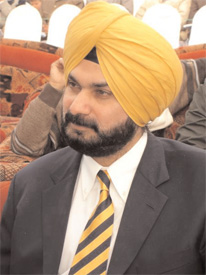
    AMRITSAR (TIP): Amritsar BJP MP Navjot Singh Sidhu’s wife, Dr Navjot Kaur Sidhu, on April 11 said her cricketer-turned-politician husband feels “suffocated in the system for his honesty and this has led to his alienation within the party”. She said Sidhu isn’t even allowed to select his own people in BJP’s Amritsar unit.

    Kaur, who is a BJP MLA, said, “Being in a system, you need to be given liberty to choose your people, and if you don’t get that then the system suffocates you.” Earlier in the day she had posted a Facebook comment saying, “Sidhu has returned to the profession where he is respected”; in other words cricket – triggering speculation that he was ending his political career. Asked whether Sidhu would quit politics, Kaur said, “A person lives where he gets respect; we are in politics for respect and we don’t need anything more than that.” Kaur said she was reacting to messages on Facebook saying, ‘Sidhu gum gaya, gayab ho gaya’ (Sidhu has disappeared). “That was the trigger. I wanted to convey that he has not disappeared, he felt suffocated and has gone back to cricket and television,” she said. “He was suffocated because he couldn’t adjust his own trusted people even in the Amritsar BJP,” said Kaur.

    For the past six months, Sidhu has remained largely out of Amritsar. Recalling how Sidhu was pulled out of a TV reality show and asked to campaign in Gujarat, she said, “He suffered a loss of Rs 6 crore for the party. He wanted to live in Amritsar, serve the people of his constituency and make his own team… If he has gone away, there must be some strong reason. He is not an irresponsible man.” Asked how long Sidhu would remain away from politics, she replied that it was for the party to decide. If he gets honour, it’s alright. Else he is happy with his cricketing career. Rejecting the possibility of switching political parties, Kaur said, “We both are not politicians. It was Atal Bihari Vajpayee who brought Sidhu into politics. We are not going to forget that.” BJP spokesperson Nirmala Sitharaman said the party had nothing to say in light of her “clarification”. When TOI contacted Kaur, she said she stood by her day’s statements.

  • Fighting with govt can put you in jail: Mulayam

    Fighting with govt can put you in jail: Mulayam

    LUCKNOW (TIP): Raking up the issue of misuse of CBI, Samajwadi Party supremo Mulayam Singh Yadav said fighting with the government is not easy as it can use CBI and put one in jail. “Sarkar se ladna asan nahi hai. Sarkar ke hazaron haath hote hain. CBI ka upyog kar sakti hai…jail me dal sakti hai” (It’s not easy to fight with the government. It has thousands of hand and can use CBI and put one in jail),” he told reporters here in reply to a question.

    Yadav had earlier also attacked Congress-led UPA government blaming misuse of CBI by it. “Congress used to take support by threatening. I supported the UPA government in bad times but Congress has put CBI after me,” the SP chief had told reporters here on March 29. Asked about socialist leader Ram Manohar Lohia’s praise by BJP leader L K Advani in Chitrakoot, Yadav said that it is good if he has done so. “A lot of hue and cry was raised in the media when I appreciated Advani… Those who had done or are doing good should be appreciated. Should one who is doing good be abused ?” Yadav said after a meeting with his party’s district presidents. During the closeddoor meeting, Yadav asked the district presidents to remain prepared for Lok Sabha polls, according to sources.

    He told the party functionaries to work in their districts to redress the grievances of the common man and stressed on the need for strengthening booth committees. Yadav also asked them to remain cautious about the Opposition parties in Uttar Pradesh which have been making allegations against the government. “Promises made in the party’s manifesto in 2012 Assembly polls are being fulfilled and a number of schemes including distribution of laptops have already started…The message that the SP government was working for the people should reach them,” he said.

  • Choose sides, Congress tells Mulayam

    Choose sides, Congress tells Mulayam

    NEW DELHI (TIP): The war of words between Congress and Samajwadi Party (SP) chief Mulayam Singh Yadav sharpened on March 28 with Congress asking the Uttar Pradesh stalwart to decide which side of the secularcommunal divide he is on.

    Stung at being labeled a party that hoodwinks voters at poll time, Congress spokesperson Rashid Alvi said the SP boss had begun to praise BJP leader L K Advani despite his role in the demolition of Babri Masjid. Information and broadcasting minister Manish Tewari reminded Yadav that the “basic political polarization” is communal versus secular. “He will also have to decide which side he is on,” Tewari said, responding to the SP chief’s attacks. The note of impatience in Congress’s responses do not mean the party is looking for a showdown with SP, but indicates an increasing wariness about SP’s likely action in the light of Yadav’s fulminations.

    So far, SP has stopped well short of reviewing its “outside support” to the UPA despite chaffing at what it feels is its lack of influence at the Centre. The SP government in Uttar Pradesh has repeatedly demanded large dollops of economic assistance. Apart from being a competitor for the minority vote that is essential to its electoral success, Yadav might be provoked by reports that the Centre is considering Bihar CM Nitish Kumar’s claims for special assistance in order to reduce its vulnerability to SP. Besides DMK’s withdrawal of support increasing UPA’s dependence on allies like Yadav, SP is keenly weighing when an election will suit it most.

    The UP outfit is aware it must ensure Congress is eliminated as an option to maximize its gains in a national election. Addressing SP workers at his native Saifai, Yadav warned Congress might pull off a clever scheme like the farm loan waiver. “They will again do that. They are so clever and cheat…they take people for a ride when the time comes,” he said. Yadav’s repeated assertions that he is eyeing the prime ministerial chair – he said in Saifai Lok Sabha polls are the “real elections as Delhi means everything” – again serve to emphasize why he needs to target Congress. “As far as Mulayam Singh is concerned, we respect all our allies.

    He also knows in his mind that the basic polarization in this country is communal versus secular forces. He will also have to decide which side he is on,” Tewari said. He also brushed off Yadav’s revisiting the “third front” as a “most enduring mirage” and hoped that SP will continue its “very constructive support” and that “an atmosphere of harmony will prevail”. Alvi pointed out that “We do not want to comment…He himself, can explain it best. But only a few months back, Yadav shared the dais with the Prime Minister when the UPA’s report card on its three-year performance was released.”

  • Cbi Raids Stalin, Pm Says Timing Bad

    Cbi Raids Stalin, Pm Says Timing Bad

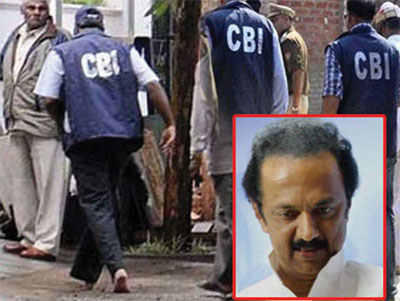
    NEW DELHI/ CHENNAI (TIP): A day after DMK ministers quit the Union Cabinet over the Sri Lankan Tamils issue, CBI sleuths on March 21 raided the house of party treasurer M K Stalin for allegedly violating import norms for luxury cars. A four-member team landed at Stalin’s Alwarpet residence in the morning, looking for him and his son Udayanidhi Stalin, an actor.

    The sleuths rummaged through the premises for about an hour. They demanded that purchase receipts of some luxury cars in possession of Stalin’s family be produced, sources said. The CBI also conducted searches at 17 other locations, including the premises of Stalin’s friend Raja Shankar.

    The investigating agency said that 17 imported cars were seized. The raids were a fallout of allegations that about 33 such vehicles were “imported to Tamil Nadu,” of which certain vehicles were sold in “violation of import provisions.” Consequently, the state exchequer incurred a loss of Rs 48 crore.

    Stalin’s family owns two Hummers, a special utility vehicle, allegedly bought in violation of rules. Senior DMK leaders were quick to denounce the raid as “an act of political vendetta” by the Centre since Stalin had played a key role in the DMK’s decision to quit the UPA coalition. “We came out (from the UPA) on Wednesday, and this seems like a threat.

    We will face it legally,” Stalin said. Reacting to the sudden development, Prime Minister Manmohan Singh said: “We are all very upset. The timing is unfortunate. The government had no role in this and I am sure of that.We will find out the details.” Even Finance Minister P Chidambaram, who was involved in the government’s failed attempt to convince the DMK to continue in the UPA, expressed his displeasure over the raid. “Normally, I do not comment on the working of another department (home ministry). But in this case I have to say that I strongly disapprove of the CBI’s action. It is bound to be misunderstood,” he told reporters. Meanwhile, DMK patriarch Karunanidhi has accepted the minister’s statement.

    Karunanidhi said though it was not unusual for the DMK to be at the receiving end of “political animosity,” he was not sure whether Thursday’s raid was one such instance. The nature of the alleged violations were not immediately clear. The CBI said a case has been registered “against an importer and a senior intelligence officer of the Directorate of Revenue Intelligence (DRI), who allegedly did not take action even after identification of vehicles at the premises of certain users and unknown others.” BJP spokesperson Ravi Shankar Prasad said: “The government was surviving in power using the CBI and the Enforcement Directorate as crutches.”

  • Angry Sushma tells govt not to challenge BJP, challenge Pakistan

    Angry Sushma tells govt not to challenge BJP, challenge Pakistan

    NEW DELHI (TIP): Raising the issue of terror attack in the CRPF camp in Srinagar, Bharatiya Janata Party (BJP) leader Sushma Swaraj on March 14 accused the government of not being concerned about CRPF jawans losing their lives in attacks by militants sponsored by Pakistan. “Are the top leaders of the government not concerned about terrorism? ” she asked and said: “Don’t challenge BJP, instead, let us unite and ‘challenge Pakistan unitedly.” “We should not challenge each other.

    We should be challenging Pakistan in one voice,” she said. ” It is sad that on a terror attack that the Parliament should seriously discuss, the members are challenging each other,” she added. Swaraj further asked the government to explain reports that there were intelligence inputs about the attack. “Why were the jawans not saved despite that?” she asked. She also criticized External Affairs Minister Salman Khurshid, who was in the House, for lunching recently with Pakistani Prime Minister Raja Pervez Ashraf when he visited the Ajmer Dargah or shrine near Jaipur last weekend.

    Union Home Secretary R.K. Singh on Wednesday said the terrorists who posed as cricketers and attacked the CRPF camp in Srinagar were from Pakistan. “Both the terrorists, who have been killed, appeared prima-facie to be not local, but from across the border. And the first impression is that they are probably from Pakistan,” he told media here.

  • Anti-rape bill gets Cabinet nod

    Anti-rape bill gets Cabinet nod

    Age for consensual sex lowered to 16 years
    NEW DELHI (TIP): The Cabinet on March 14 cleared the final draft of the Criminal Law (Amendment) Bill, which retained the word “rape” over the gender-neutral “sexual assault,” to define crime against women. It also dropped the provision to penalise complainants for filling false cases of harassment like stalking and voyeurism, besides lowering the age for consensual sex to 16 years. The Cabinet meeting, presided over by Prime Minister Manmohan Singh, gave its nod to the proposed legislation drafted after a Group of Ministers (GoM) sorted out differences among the home, law and women and child development ministries on certain issues.

    The United Progressive Alliance (UPA) government has convened an allparty meeting on Monday to seek diverse views on the proposed Bill that will replace the existing ordinance, so that Parliament can pass it without much hassle. The Samajwadi Party and the BJP have different opinions on some portions of the Bill, which they are likely to raise in the meeting.

    Sources said since the Cabinet has agreed to bring down the age for consensual sex from 18 to 16 years, the women and child development ministry will have to amend the Protection of Children from Sexual Offences Act of 2012 to introduce uniformity in both legislations. The Act differentiates a child from an adult. It defines a youngster as a person below 28 years of age. The Act also protects teenagers from crimes like sexual assault and harassment.

    Even consensual sex with a minor is considered rape. It was learnt that the Women and Child Development Minister Krishna Tirath had objected to reducing the age for consensual sex at the Cabinet meeting. Stalking, voyeurism and touching a woman without consent have been defined as criminal offences in the Bill.

    NBW offence
    Sustained stalking will be a nonbailable offence, while the provision for penalising complainants for falsely implicating people in harassment cases has been withdrawn from the final draft. It was debated that such a provision will deter women from registering sexual crime cases. The prime minister had constituted the GoM headed by Finance Minister P Chidambaram to evolve consensus among the warring ministries. The government wanted to introduce the Bill in the Budget session, which goes into recess on March 22. The Bill also proposes death penalty for the rape accused if the victim dies or is pushed to a vegetative stage. Besides, life term has been extended to ensure that the culprits spend their entire life behind the bars.

  • Dhaka needs focused approach

    Dhaka needs focused approach

    INDIA CAN’T IGNORE IT
    External Affairs Minister Salman Khurshid’s recent visit to Bangladesh laid the groundwork for the visit of the President, Pranab Mukherjee, to Dhaka. New Delhi has not been a great partner to Dhaka so far and by not signing the deals that matter most to Bangladesh is alienating pro-India forces in that country. Yet both visits have underscored the importance that India attaches to its relations with Bangladesh. Mukherjee had visited Dhaka in 2010 as the then Finance Minister to mark the signing of a $1 billion loan deal, the largest line of credit received by Bangladesh under a single agreement. India’s Exim Bank had signed this line of credit agreement with Bangladesh’s economic relations division and the loan was be used to develop railways and communications infrastructure there.

    This deal carried 1.75 per cent annual interest and would be repayable in 20 years, including a five-year grace period. It was offered during Sheikh Hasina’s visit to India in January 2010. This was followed by the two countries signing a 35-year electricity transmission deal under which India will be exporting up to 500 mw of power to Bangladesh. Dhaka has also signed a $1.7 billion pact with the National Thermal Power Corporation for the construction of two coal-fired plants in southern Bangladesh.

    Despite these initiatives India failed to build on the momentum provided by Hasina’s visit with its failure to implement two major bilateral agreements – finalization of land boundary demarcation and the sharing of the waters of the Teesta river. Bangladesh is rightly upset at the slow pace in the implementation of these.

    Hasina has taken great political risk to put momentum back into bilateral ties. But there has been no serious attempt on India’s part to settle outstanding issues. Bureaucratic inertia and lack of political will has prevented many of the deals from getting followed through. Dhaka is seeking response to its demand for the removal of tariff and non-tariff barriers on Bangladeshi products.

    India has failed to reciprocate Hasina’s overtures. The Bangladesh Nationalist Party (BNP) has used the India-Bangladesh bonhomie under Hasina to attack the government for toeing India’s line. India-Bangladesh ties had reached their lowest ebb during the 2001-2006 tenure of the BNP government. India has failed to capitalize on the propitious political circumstances in Bangladesh, damaging its credibility even further. New Delhi’s window of opportunity will not exist forever. Anti-Indian sentiments can be marginalized if India allows Bangladesh to harness its economic growth and present it with greater opportunities. Yet India remains obsessed with “AfPak” and has failed to give due attention to Bangladesh.

    Begum Khaleda Zia’s first visit to India came in March 2006, at the end of her term as Prime Minister. In contrast, Hasina visited India in January 2010, just a year into her term as the premier. New Delhi rolled out the red carpet to welcome Hasina as its first state guest of this decade. Overcoming formidable hurdles, Hasina’s Awami League had swept to a decisive electoral victory in December 2008.

    This tale of two visits is a reflection of how India’s relationship with Bangladesh seems to have become hostage to domestic political imperatives in Dhaka. It is ironic that this should happen given India’s central role in helping establish an independent Bangladesh and the cultural affinities and ethnic linkages they share. But friends are as temporary as enemies in international politics. Instead, it is a state’s national interests that determine its foreign policy.

    In the case of India and Bangladesh, these interests have been diverging for some years now, making this bilateral relationship susceptible to the domestic political narratives in New Delhi and Dhaka. India is the central issue around which Bangladeshi political parties define their foreign policy agenda. This shouldn’t be a surprise given India’s size and geographic linkages. Over the years political parties opposing the Awami League have tended to define themselves in opposition to India, in effect portraying Awami League as India’s “stooge”. Moreover, radical Islamic groups have tried to buttress their own “Islamic identities” by attacking India. Ever since she has come to power in December 2008, Sheikh Hasina has faced challenges from right-wing parties as well as the fundamentalist organizations such as the Jamaat-e- Islami and the Jamaat-ul-Mujahideen which enjoy Pakistan’s support.

    These groups are united in undermining efforts to improve ties with New Delhi. The greatest challenge that Hasina overcame in her first year was the mutiny by the paramilitary Bangladesh Rifles, which erupted in February, 2009. It soon became clear that the mutineers were being instigated by supporters of the Opposition led by the BNP and others connected to the Jamaat-e-Islami. India supported Hasina’s crackdown on the mutineers by sealing its borders with Bangladesh and forcing back mutineers attempting to cross over. Prime Minister Manmohan Singh visited Dhaka in September 2011 and was all set to sign the Teesta pact.

    But West Bengal Chief Minister Mamta Banerjee made sure that his plan got derailed at the last minute, damaging India’s credibility significantly. The Prime Minister ultimately managed to sign the land boundary agreement that demarcates territorial sovereignty along the 4,000-kilometre Indo-Bangladesh frontier. But even in this case, where Bangladesh has ratified this pact, India has failed to move forward because of the need for a constitutional amendment which requires support from the main opposition party, the BJP. India has finally signed a liberalized visa agreement and a landmark extradition treaty with Bangladesh that is likely to pave the way for the deportation of insurgents and criminals from Bangladesh.

    Salman Khurshid has been able to mollify some concerns in Dhaka about Indian intentions by making it clear that New Delhi will be taking the two pacts on the Teesta waters and land boundary to their logical conclusion soon. But the political dispensation in New Delhi should recognize the dangers of playing party politics with India’s foreign and security policy. India is witnessing rising turmoil all around its borders and, therefore, a stable, moderate Bangladesh is in its long-term interests. Constructive Indo- Bangladesh ties can be a major stabilizing factor for the South Asian region as a whole. It can’t afford to ignore Dhaka.

  • Cabinet okays Bill to ensure time-bound delivery of services

    Cabinet okays Bill to ensure time-bound delivery of services

    NEW DELHI (TIP): The Cabinet has approved a Bill that promises time-bound delivery of services such as passports, tax refunds, pensions and birth and death certificates to the citizens, and stipulates a penalty of 250 per day against errant government officials. The Right of Citizens for Time-Bound Delivery of Goods and Services and Redressal of their Grievances Bill, 2011, approved by the cabinet on March 7, makes it mandatory for all government departments and public authorities to publish Citizens’ Charter stating the time within which specific services will be provided.

    Each department will also have to provide for a grievance redressal mechanism for non-compliance of the charter’s provisions. The proposed legislation lays down a penalty extending up to 50,000 against an official who fails to provide the service.

    The Bill, spearheaded by the department of administrative reforms and public grievances also mandates a public authority to establish a call centre, customer care centre, help desk and people’s support system to ensure timebound delivery of services.

    It also seeks establishment of public grievance redressal commission at the Centre and in each state. As per the Bill, a person aggrieved by the decision of the commission may prefer an appeal before the Lokpal at the Centre (in case of decision by the Centre’s public grievances redressal commission) and the Lokayuktas in the states. All services provided by both the Centre and the state governments will be extended to citizens in a time-bound manner under the bill. According to an official familiar with the matter, the ministry of personnel, public grievances and pensions, and the law ministry, will decide whether non-resident Indians should be covered under the proposed legislation.

    The Bill, however, came under attack from the main opposition, BJP, which said the legislation attacked the federal structure by compelling states to adopt it. “The Cabinet has cleared the citizens’ charter bill, but they have mandated this Act on the states as well, forgetting that more than 10 states have their own citizens’ charter law. Some of them are stronger than the Centre’s Bill,” BJP spokesman Prakash Javadekar said. “This would be an attack on federal structure. The Centre should formulate a law only for central services,” Javadekar said, adding, “At best, they should make it a model law. The states that do not have a citizens’ charter already can follow it to make their own legislations.” Social activist-turned-politician Arvind Kejriwal said he did not agree with the BJP, even as he refused to comment on the merits of the Bill. “I do not agree with the BJP’s argument.

    But I cannot be sure whether it is a good bill till I get to read it,” said Kejriwal, founder of AAP. An official said the draft bill would go back to the ministries of law, home affairs and personnel and training as it required fresh paraphrasing. This means that it need not go to the Cabinet again and can be directly introduced in Parliament.

  • Capt Reacts

    Capt Reacts

    Amarinder Singh, who was removed as Congress Punjab unit chief, said he would have suggested a different name to replace him had he been consulted. Amarinder, a former Chief Minister of Punjab, was replaced by Gurdaspur MP Pratap Singh Bajwa as the new president of the Punjab Pradesh Congress Committee. “I was not consulted on the decision. Had I been consulted, I would have suggested a different name who could lead the party at this crucial time,” Singh said. He said there has been a talk of his replacement for quite some time as the party was finding an able leader to replace him and steer the party.

    70-year-old Singh, however, stood behind the party despite his removal and reposed complete faith in the Congress party under the leadership of Sonia Gandhi. “I am a faithful Congress leader and have complete faith in the party under the leadership of Sonia Gandhi. I will abide by all decisions of the party,” he said. Congress removed Singh as its Punjab unit chief in the backdrop of the party’s dismal show in Assembly elections last year.

    Bajwa, who has come in his place, is a younger face and a first-time MP. The talk of a change in the Punjab unit has been going for more than a year ever since the party’s defeat at the hands of the SAD-BJP alliance in the Assembly elections in January last year.

    The coalition had created history in the state by returning to power. The recent Moga bye-poll loss seemed to have precipitated the change. Congress lost to the Akalis in the bye-poll after its MLA quit the party and recontested as SAD candidate. Singh had been under attack from within the party for his style of functioning. Demands for replacing him were made by various sections in the party. After his appointment, Bajwa said his first priority would be to unite the entire Congress in the state.

  • Aggressive Pm Tears Into Bjp

    Aggressive Pm Tears Into Bjp

    NEW DELHI (TIP): Prime Minister Manmohan Singh on March 7 donned an unusually aggressive mantle in the Lok Sabha as he tore into the Opposition BJP’s recent tirade against the Congress and dared it at the hustings, saying people will repeat UPA at the Centre if they saw its track record. The quintessential economist listed one development statistic after the other to prove that in numbers, UPA’s nineyear rule was way above NDA’s. But more than the figures, it was the PM’s combative stance against the BJP leadership that took Leader of Opposition Sushma Swaraj and party president Rajnath Singh seated in the House by surprise. By the end of it, both were agitated enough to seek the right to reply to the PM,whose speech was described by Rajnath Singh as “ballistic, never heard before, but one that was akin to the last flight of a flame before it died”. As for the PM, he denounced Gujarat Chief Minister Narendra Modi’s (without naming him) recent attack on him and the Congress leadership, saying, “At the BJP National Council meeting, leaders used choicest of abuses for the Congress leadership. It is not in my interest to reply to them in that language.

    Our work will speak for itself.” He went on to play his political part to perfection as he quoted Mirza Ghalib to provoke the Opposition MPs: “Humko unse wafa ki hai umeed jo nahi jaante wafa kya hai… (We expect loyalty from those that do not know the meaning of the word).” Sushma later countered him with a couplet: “Kuch to majbooriyaan rahi hongi, yun hi koi bewafa nahi hota (There must have been some compulsion, one is not disloyal for no reason)”. UPA chief Sonia Gandhi by his side, the PM sounded the poll bugle for the 2014 General Election, citing the BJP’s arrogance as its anathema and saying people would re-elect the UPA if they saw its track record of development.

    “Jo garajte hain woh baraste nahi (thundering clouds don’t yield rain),” the PM told the Opposition, reminding them of the 2004 Shining India campaign that fell flat. He then ticked off Sushma Swaraj, a confidante of BJP veteran LK Advani, saying, “In 2009, they fielded the Iron Man LK Advani against the lamb Manmohan Singh.We all know the results.We have not seen BJP’s arrogance for the first time. Shining India had led to disastrous results for them. If people were to look at our records, they would repeat what they did in 2004 and 2009.” The PM was speaking to the thumping of Treasury benches led by Sonia and Congress vice-president Rahul Gandhi.

    He was replying to the Motion of Thanks by MPs to the President for his address to the joint session of Parliament. The motion was carried by a voice vote, but not before the PM’s reply became the trigger for a visible UPA-NDA war of words in the House. Before provoking the BJP, the PM had taken enough time to list how the UPA’s rule yielded better results on development. So, he said how growth rate of agriculture production was 3.7% in 2005-2011 as against just 2.9% in 1998- 2003; how per capita consumption in rural areas during UPA’s time is 3.4% as against 0.8% in the NDA’s rule among others.

  • Cabinet okays Bill to ensure time-bound delivery of services

    Cabinet okays Bill to ensure time-bound delivery of services

    NEW DELHI (TIP): The Cabinet has approved a Bill that promises time-bound delivery of services such as passports, tax refunds, pensions and birth and death certificates to the citizens, and stipulates a penalty of 250 per day against errant government officials. The Right of Citizens for Time-Bound Delivery of Goods and Services and Redressal of their Grievances Bill, 2011, approved by the cabinet on March 7, makes it mandatory for all government departments and public authorities to publish Citizens’ Charter stating the time within which specific services will be provided. Each department will also have to provide for a grievance redressal mechanism for non-compliance of the charter’s provisions. The proposed legislation lays down a penalty extending up to 50,000 against an official who fails to provide the service.

    The Bill, spearheaded by the department of administrative reforms and public grievances also mandates a public authority to establish a call centre, customer care centre, help desk and people’s support system to ensure timebound delivery of services. It also seeks establishment of public grievance redressal commission at the Centre and in each state. As per the Bill, a person aggrieved by the decision of the commission may prefer an appeal before the Lokpal at the Centre (in case of decision by the Centre’s public grievances redressal commission) and the Lokayuktas in the states. All services provided by both the Centre and the state governments will be extended to citizens in a time-bound manner under the bill. According to an official familiar with the matter, the ministry of personnel, public grievances and pensions, and the law ministry, will decide whether non-resident Indians should be covered under the proposed legislation. The Bill, however, came under attack from the main opposition, BJP, which said the legislation attacked the federal structure by compelling states to adopt it. “The Cabinet has cleared the citizens’ charter bill, but they have mandated this Act on the states as well, forgetting that more than 10 states have their own citizens’ charter law. Some of them are stronger than the Centre’s Bill,” BJP spokesman Prakash Javadekar said. “This would be an attack on federal structure.

    The Centre should formulate a law only for central services,” Javadekar said, adding, “At best, they should make it a model law. The states that do not have a citizens’ charter already can follow it to make their own legislations.” Social activist-turned-politician Arvind Kejriwal said he did not agree with the BJP, even as he refused to comment on the merits of the Bill. “I do not agree with the BJP’s argument. But I cannot be sure whether it is a good bill till I get to read it,” said Kejriwal, founder of AAP. An official said the draft bill would go back to the ministries of law, home affairs and personnel and training as it required fresh paraphrasing. This means that it need not go to the Cabinet again and can be directly introduced in Parliament.

  • Raja Bhaiya faces arrest

    Raja Bhaiya faces arrest

    CBI LODGES FIR AGAINST HIM IN DSP MURDER CASE

    LUCKNOW (TIP): The Central Bureau of Investigation on March 7 lodged four FIRs in connection with Pratapgarh violence in which three persons including deputy superintendent of police Zia-ul-Haq and two others were shot dead on Saturday last. Former minister Raghuraj Pratap Singh aliasRaja Bhaiya has been named as one of the accised in the FIR along with four others in connection with killing of the DSP. Raja Bhaiya, who belongs to family which once ruled the Beti princely estate, is an independent MLA from Kunda. Feudalism still rules Kunda and Raja Bhaiya’s word is still said to be the law in the area. He was forced to resign from the post of minister from theAkhilesh Yadav government after he was accused by DSP’s widow of conspiring to kill her husband. Sources said that the FIR registered by the CBI names Om Srivastava, Gulshan Yadav, Guddu Singh and Rohit Singh, besides Raja Bhaiyya. Sources said that the CBI team will arrive Kunda for investigation on Friday and is expected to question Raja Bhaiya. The high profile leader also faces threat of arrest. Already, two CBI inquiries are pending against Raja Bhaiya — one in connection with the mysterious death of a police officer RS Pandey, who raided Raja Bhaiya’s house in Kunda and arrested him in 2002 during Mayawati rule, in an accident and another on food grain scam. Chief minister Akhilesh Yadav referred the case to the CBI on the demand of DSP’s widow Parveen and public pressure.

    There are eight other criminal cases against 44-year-old Raja Bhaiya in police records. Haq was killed by a mob at Balipur village in Kunda, Pratapgarh, on Saturday last when he had reached there to control violence which erupted after village Pradhan Nanhe Yadav was shot dead over a land dispute. A few hours later, Nanhe’s brother Suresh was also shot dead in clashes between the two rival groups. Haq was attacked as soon as he reached the village. The police personnel escorting him fled and did nothing to save their senior who was brutally assaulted and then shot dead. Post mortem report confirmed that there serious injuries on his head, several ribs were also fractured and injuries indicated that he was dragged for several metres on the ground before being shot dead by the assailants. Slain officer’s service revolver and the bullet that killed him are missing. Akhilesh Yadav on Tuesday visited Haq’s family in Deoria and met his widow. He assured strict action against those responsible for DSP’s murder and accepted all the demands of the family. On Wednesday, Akhilesh also visited the family Nanhe Yadav and assured that people involved in the conspiracy will not be spared. The eight police personnel who deserted DSP when he was being attacked have been suspended and the process to sack them on charges of ‘cowardice in performance of duty’ has begun.

    Raja Bhaiya’s two aides Guddu Singh and Rohit Singh named in the FIR lodged initially with the UP police were arrested on Sunday itself but he was not touched so far. The CBI will take custody of the two arrested accused and may for second autopsy of the slain officer. Raja Bhaiya has been arrested twice in the past, each time when Mayawati was the chief minister. In 2002, he was arrested after being accused of kidnapping by a BJP MLA. Later, Mayawati slapped Prevention of Terrorist Act on him after police allegedly recovered sophisticated weapons from his house during a raid. Mayawati was angry with Raja Bhaiya because he played a crucial role in engineering defection in her party in 1997, leading to fall of her government. However, when the SP came to power in 2003, the then chief minister Mulayam Singh Yadav revoked POTA and later made Raja Bhaiya a minister. However, Raja Bhaiya was arrested again in 2010 during Maya rule on kidnapping charges but was released later. He became a minister again when SP came to power in 2012.

  • Vayalar Ravi Apologises As Activists Fume At Comment

    Vayalar Ravi Apologises As Activists Fume At Comment

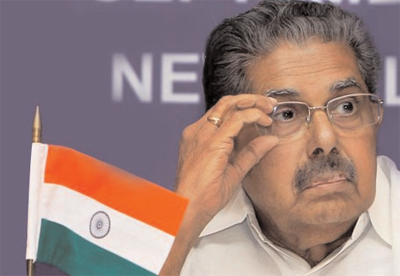
    NEW DELHI (TIP): OverseasIndian Affairs Minister VayalarRavi apologised after hiscomment with sexist innuendoagainst a woman journalist fromKerala landed him in troublewith women activists and the BJPdemanding his resignation.“I’m sorry for the comment. Ihave already conveyed my regretfor the remark to the TV channelin which the journalist works,”Ravi said. But NationalCommission for Womanchairperson Mamta Sharma saidthe commission would probe thematter.

    “Coming from theposition of power and maturity, itis really highly deplorable that hehas made such a sexistcomment,” said rights activistRanjana Kumari.She said the issue should beraised in parliament as “this hasbecome almost a habit of thepolitical class”. “If he lostcontrol, definitely apology isjustified,” said BJP spokespersonNirmala Sitharaman.Information and BroadcastingMinister Manish Tewari saidRavi has apologised for hiscomments and the matter shouldrest there.

    The woman journalist hadsought Ravi’s reaction on demandto make Rajya Sabha DeputyChairperson P J Kurien standtrial in the Suryanelli sex scam.Ravi responded with a swipe atthe reporter, asking if she had apersonal grudge against Kurien.“Do you have anythingpersonal against Kurien? I’m sureyou do. Has something happenedbetween you and him in thepast?” Ravi said as his commentswere caught on camera.

  • Afzal Guru Hanged

    Afzal Guru Hanged

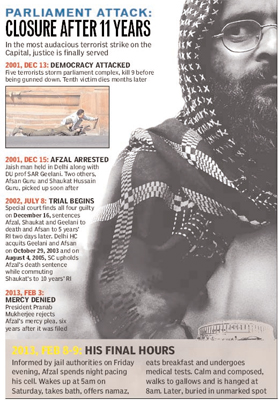
    New Delhi (TIP): AfzalGuru, convicted of plottingthe Parliament attack 11years ago, was quietlyexecuted at Tihar jail earlyon February 9. The hangingwas carried out indramatic secrecy amidfears that it could revivestreet protests in Kashmir.Guru was convicted ofplotting and providinglogistic support to the fiveJaish-e-Mohammedterrorists who stormedParliament on December13, 2001. The attack was foiled, the terrorists killedand a packed House oflawmakers saved, but notbefore eight securitypersonnel and a gardener losttheir lives. A tenth victim, ajournalist, died of injuries afew months later.The hanging is being seenas Congress’ renewedattempts after the party’srecent Jaipur conclave toappeal to the urban middleclass.

    As the UPA governmentdithered on taking a decisionon his mercy plea for years,Afzal came to symbolise whatthe BJP called the Congress’soft approach on terrorism.The hanging of Afzal, andbefore him 26/11 killer AjmalKasab last November, bluntsthis attack.On February 9 morning, aquiet but unrepentant Afzalwas hanged in Jail No. 3 ofTihar prison at 8am, less thana week after President PranabMukherjee rejected the mercypetition filed by the convictand his wife more than sixyears ago. Home ministerSushil Kumar Shinde andhome secretary RK Singhseparately stood in front ofTV cameras to announce thehanging.“Afzal Guru was hanged at8am. All legal procedureswere followed,” Shinde toldreporters.

    He was later buriedon the jail premises.RK Singh said Tiharauthorities had intimatedAfzal’s family in Kashmir ofthe rejection of his mercy pleathrough Speed Post andregistered post and the DG(director general of Jammu &Kashmir Police) had been toldto check with them whetherthey had got it or not.The BJP was quick towelcome the hanging. Leaderof Opposition Arun Jaitleysaid: “Though belated, justicehas been done.”

    Gujarat chiefminister Narendra Modi, whohas often used Afzal to attackthe UPA, tweeted: “Der aayedurust aaye (better late thannever).”Information andbroadcasting minister ManishTewari insisted in Chennaithat politics did not haveanything to do with theexecution, a point the homesecretary also made in Delhi.In Sopore, Afzal’s hometownin north Kashmir, and manyother places in the Valley,security forces imposedcurfew, detained separatistleaders and shut down cableTV networks. Chief ministerOmar Abdullah appealed forpeace and ordered police toexercise restraint in handlingstreet protests. By evening, 36people — mostly policemen —had been injured in strayviolence.

  • Chopper Scam Probe Should Be Under Parliamentary Committee: Venkaiah

    Chopper Scam Probe Should Be Under Parliamentary Committee: Venkaiah

    HYDERABAD (TIP): Rejecting a CBIprobe into the Rs 3600-crore VVIP chopperdeal, senior Bharatiya Janata Party (BJP)leader M Venkaiah Naidu said that theinvestigation should be held either underthe supervision of the Supreme Court orthe Parliamentary Committee, and addedthat the Congress Party is notoriouslyknown for misusing the CBI.

    “BJP demands setting up of a SIT toinvestigate into serious charges aboutpayments made in AugustaWestland VVIPchopper purchase. The probe should beeither under the supervision of theSupreme Court or the ParliamentaryCommittee, because the Congress party isnotoriously known for misusing CBI,”Naidu told media here.

    “That’s why the BJP is not expectable tothis suggestion of CBI inquiry. Becausethe CBI has no credibility and thegovernment intention is also doubtful,because this issue was raised in 2011 inthe Parliament and also a letter waswritten to the Defence Minister, in spite ofthat the government did not act so far,” headded.He further said that the oppositionparty would corner the governmnet onthis issue in Parliament.

  • As I See It : Hindu Terrorism

    As I See It : Hindu Terrorism

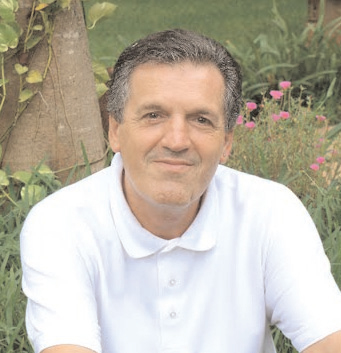
    Is there such a thing as ‘Hinduterrorism’, as Home MinisterShinde is heavily hinting at?Well, I am one of that rare breed offoreign correspondents – a lover ofHindus! A born Frenchman, Catholiceducatedand non-Hindu, I do hope I’llbe given some credit for my opinions,which are not the product of myparents’ ideas, my education or myatavism, but garnered from 25 years ofreporting in South Asia (for LeJournal de Geneve and Le Figaro).

    In the early 1980s, when I startedfreelancing in south India, doing photofeatures on Kalaripayattu, theAyyappa festival, or the Ayyanars, Islowly realized that the genius of thiscountry lies in its Hindu ethos, in thetrue spirituality behind Hinduism.The average Hindu you meet in amillion villages possesses this simple,innate spirituality and accepts yourdiversity, whether you are Christian orMuslim, Jain or Arab, French orChinese.

    It is this Hinduness thatmakes the Indian Christian differentfrom, say, a French Christian, or theIndian Muslim unlike a Saudi Muslim.I also learnt that Hindus not onlybelieved that the divine could manifestitself at different times, underdifferent names, using differentscriptures (not to mention thewonderful avatar concept, the perfectanswer to 21st century religious strife)but that they had also given refuge topersecuted minorities from across theworld-Syrian Christians, Parsis, Jews,Armenians, and today, Tibetans.

    In 3,500 years of existence, Hindushave never militarily invaded anothercountry, never tried to impose theirreligion on others by force or inducedconversions. You cannot find anybodyless fundamentalist than a Hindu inthe world and it saddens me when I seethe Indian and western press equatingterrorist groups like SIMI, which blowup innocent civilians, with ordinary,angry Hindus who burn churcheswithout killing anybody. We know alsothat most of these communalincidents often involve persons fromthe same groups-often Dalits andtribals-some of who have converted toChristianity and others not.

    However reprehensible thedestruction of Babri Masjid, noMuslim was killed in the process;compare this to the ‘vengeance’bombings of 1993 in Bombay, whichwiped out hundreds of innocents,mostly Hindus. Yet the Babri Masjiddestruction is often described byjournalists as the more horrible act ofthe two.We also remember how SharadPawar, when he was chief minister ofMaharashtra in 1993, lied about abomb that was supposed to have goneoff in a Muslim locality of Bombay.

    I have never been politicallycorrect, but have always written whatI have discovered while reporting. Letme then be straightforward about thisso-called Hindu terror. Hindus, sincethe first Arab invasions, have been atthe receiving end of terrorism,whether it was by Timur, who killed1,00,000 Hindus in a single day in 1399,or by the Portuguese Inquisitionwhich crucified Brahmins in Goa.Today, Hindus are still being targeted:there were one million Hindus in theKashmir valley in 1900; only a fewhundred remain, the rest having fledin terror.

    Blasts after blasts havekilled hundreds of innocent Hindusall over India in the last four years.Hindus, the overwhelming majoritycommunity of this country, are beingmade fun of, are despised, aredeprived of the most basic facilitiesfor one of their most sacredpilgrimages in Amarnath while theirgovernment heavily sponsors the Haj..They see their brothers and sistersconverted to Christianity throughinducements and financial traps, see aharmless 84-year-old swami and asadhvi brutally murdered. Their godsare blasphemed. So sometimes,enough is enough.At some point, after years or evencenturies of submitting like sheep toslaughter, Hindus-whom the Mahatmaonce gently called cowards-erupt inuncontrolled fury.

    And it hurts badly.It happened in Gujarat. It happened inJammu, then in Kandhamal,Mangalore, Malegaon, or Ajmer.It may happen again elsewhere.What should be understood is that thisis a spontaneous revolution on theground, by ordinary Hindus, withoutany planning from the politicalleadership. Therefore, the BJP, insteadof fighting over each other as to whomshould be the next party president, orwho will be their PM candidate for the2014 elections, should do well to put itshouse together.

    For, it’s evident that the Congresshas decided on this absurd strategy ofthe absurd, the untrue, the unjust, thetreacherous, only to target Mr.Narendra Modi, their enemy numberOne.It should also fight the Untrue withTruth: there are about a billionHindus, one in every six persons onthis planet. They form one of the mostsuccessful, law-abiding and integratedcommunities in the world today. Canyou call them terrorists? Let the BJPcompile a statistics of how manyHindus were killed by Muslims since1947 and how many Muslims byHindus. These statistics will speak bythemselves.

    (The author can be reached atfgautier26@gmail.com)

  • Sc Pulls Up Cbi In Babri Masjid Case

    Sc Pulls Up Cbi In Babri Masjid Case

    NEW DELHI (TIP): CBI’s submission in the BabriMasjid demolition case that senior BJP leader LKAdvani and others had committed a ‘national crime’drew a sharp reaction from the Supreme Court whichasked the agency not to use such a language till the caseis decided by the courts.”Please don’t say that it is a national crime or a matterof national importance. We are yet to decide it. Until weor trial court decide this way or other, you can’t makesuch statements,” a bench headed by Justice H L Dattusaid.

    The bench made the observations after senioradvocate PP Rao, appearing for CBI, submitted thatleaders of BJP and VHP were involved in a “nationalconspiracy” which was reflected in the Rath Yatra andits a case of “national crime”.Rao’s submission came while challenging the verdictsof Special CBI court and Allahabad high court droppingconspiracy charges against BJP leaders Advani, KalyanSingh, Uma Bharti Vinay Katiyar and Murli ManoharJoshi. The others against whom charges were droppedincluded Satish Pradhan, CR Bansal, Ashok Singhal,Giriraj Kishore, Sadhvi Ritambhara, V H Dalmia,Mahant Avaidhynath, RV Vedanti, Param Hans RamChandra Das, Jagdish Muni Maharaj, BL Sharma,Nritya Gopal Das, Dharam Das, Satish Nagar andMoreshwar Save.

    During arguments, the bench also questioned CBIover the delay in hearings before the special court andthe filing of the appeal challenging the verdicts of thetwo courts. “You said that it is a case of nationalimportance. Then can you say that the translation (ofcourt records) takes days and filing of case takes threemonths,” the bench said.The agency pleaded that it should be allowed to file afresh affidavit to explain its stand but the bench turnedit down and said no fresh affidavits or material will beallowed to be placed before it.

  • 2014 strategy: BJP sticks to politics, dumps Hindutava

    2014 strategy: BJP sticks to politics, dumps Hindutava

    NEW DELHI (TIP): Defining the battlelines for 2014 Lok Sabha elections, the Sangh Parivar has decided that the BJP will focus on development and decisive leader agenda, while the affiliated groups — such as the VHP — will help revive the “Hindu Identity” through Ram Janmabhoomi movement and the UPA charge of saffron terrorism.

    While the BJP core group met on Feb 1 to work out the reconstitution of its Parliamentary Board, Central Election Committee and the National Executive by the end of this month, top RSS, BJP and VHP leaders met at the residence of Goa LS MP Shripad Naik on Thursday to chalk out the future strategy and coordination among the Sangh affiliates. The meeting was attended by top BJP, RSS and VHP leaders.

    Party sources said it was decided at the meeting that Sangh affiliates would work to revive and bring back the focus on Hindutva issues with Ram Janmabhoomi movement, which is being re-launched at Kumbh Mela at Sant Mahasammelan on February 7 a day after the VHP Kendriya Marg Darshak Mandal meets in Allahabad. The BJP, on its part, will concentrate on the political agenda ofattacking the “rudderless” UPA government and showcase the development achieved in states ruled by the party, particularly Gujarat.

    Besides discussion on giving Gujarat chief minister Narendra Modi a larger role at the national level, the party also talked of the possibility of including Madhya Pradesh chief minister Shivraj Singh in the BJP Parliamentary Board, the larger issue was coordination among the Sangh affiliates. With the Sangh Parivar determined to project a united face for 2014 elections, differences between BJP and VHP were ironed out to rule out possibility of any conflicting statements in the future on core issues.

    At Thursday’s meeting, the Sangh leadersalso decided to target the UPA on socalled saffron terrorism with the aim of polarizing voters on the grounds that the UPA ministers — P Chidambaram and Sushilkumar Shinde — were deliberately “hurting” Hindu sentiments. “Further fine-tuning will be done at the Akhil Bhartiya Pratinidhi Sabha of the RSS on March 15-17, 2013 at Jaipur after reviewing the response to Ramjanambhoomi movement revival,” a party leader said.

  • Tracking violence and terror Worrying communal tendencies

    Tracking violence and terror Worrying communal tendencies

    Justice Verma and his two colleagues on the commission set up to examine laws dealing with sexual abuse and terror have served the nation well in making a thorough examination of the subject in its widest amplitude and coming up with a range of pertinent observations and recommendations. This elaborate report was prepared in just 29 days with exemplary speed without falling short on data, analysis and findings. It now remains for the government and Parliament to match this dedication and legislate a new legal framework without the endless delays and side-interventions that have marked the working of the commissions headed by Liberhan and Nanavaty. The main recommendations have been widely discussed and one should now expect the Centre to take counsel with the states and introduce and pass a new framework law in one or more enactments that honors and protects the girl child and women of India from rape, molestation, neglect and patriarchal discrimination. The legislation should, hopefully, find backing from all parties and social groups and be enacted not later than in the monsoon session. Among the matters examined by the commission are police reforms which are fundamental to every aspect of law and order and criminal justice. Evidence of the police’s participation in the recent Dhule riot in which Muslims were targeted by them, shows how deep the rot has spread. Unfortunately, there has been limited progress in implementing police reform despite the Supreme Court’s directive on the subject. The opposition comes from across the political spectrum. All political parties are determined to retain the police and intelligence agencies as handmaids to serve their partisan agendas rather than as efficient and effective instruments for ensuring a safe and orderly society, and as the bedrock of the criminal justice system. This aspect of the Verma report should not be fobbed off yet another time as parties continue to play their dirty little games. One other matter merits emphasis. There are a plethora of laws on the statute book and many matters could be ameliorated or resolved if only they were strictly and promptly implemented. Delay leads to evasion, immunity and impunity. Influential and moneyed persons are differentially treated. A lecherous politician like Narayan Dutt Tiwari or a convicted criminal like O.P. Chautala have sought consideration on grounds of age and status. These demands are accepted only at the cost of the hallowed principle of equality before law. Unequal justice is an injustice and justifies criminality in angry young minds because of the outrage it breeds as some are placed above and beyond the rigors of the law. The Trinamool Congress is fast becoming addicted to violence and bluster against all dissidents, internal or external. A dehorsed Nitin Gadkari, charged with financial misconduct, has claimed that the income tax investigations against the Purthi group of companies with which he is associated was timed to sabotage his reelection as BJP president! Further, he has warned the officials who have merely done their duty to beware the wrath of the BJP when it is returned to power in 2014.This is taking resort to threats and blackmail. Meanwhile, the Home Minister, Sushilkumar Shinde, has stirred an avoidable controversy by charging the RSS and the BJP with training and unleashing Hindu terror. He was referring to bombing incidents in Malegaon, Ajmer, Hyderabad and elsewhere in 2007 when people like Swami Asseemanand, Sunil Joshi, Sandeep Dange and others bearing “Hindu” names were apprehended.

    The cases are pending and nothing has been conclusively proven though strong circumstantial evidence has surfaced. The RSS and the BJP have reacted strongly against the use of the phrase “Hindu terror”, arguing that terrorists cannot be labeled by faith.

    This is true, though “saffron” is more commonly used to denote Hindu right-wing connections. The BJP has threatened to prevent Parliament’s functioning unless Shinde apologizes or is sacked. The Congress has dissociated itself from the phrase “Hindu terror” but has otherwise defended Shinde.

    The fact is that it was the Parivar that first used the phrase “Muslim terror” with glee. Men like Narendra Modi openly spoke of “Miah” misdeeds and declared that while not all Muslims were not terrorists, all terrorists so far apprehended were Muslim. The RSS and the BJP, therefore, protest too much, though it is true that all sides should eschew associating terrorism with faith.

    Be that as it may, obstructing Parliament yet again would be irresponsibly to punish the nation for Shinde’s faux pas and once again stall important and urgent legislation and hold the country to ransom. The marked communal tendencies that are surfacing in the country are most worrying, The Sachar Committee’s recommendations have been tardily implemented and open discrimination against the community persists.

    After being given a state funeral out of fear of Shiv Sena hooliganism, permission to build a memorial to him in Shivaji Park in Mumbai is being mooted after a first refusal. Communal elements of all hues once again targeted the Jaipur Literary Festival on frivolous grounds while in Chennai, the release of Kamal Haasan’s new film, “Viswaroopam”, has been stayed on the ground of alleged anti-Muslim bias that could cause law and order problems. Once again, a film passed by the Film Censor Board is being censored by groups alleging hurt sentiment though it has been released elsewhere without disturbing the peace. Appeasement of communalism only encourages the same.

    Externally, the sentencing of David Coleman Headley, a US-Pakistan double agent, to only 35 years in prison in the US for his central role in staking the killing fields for the 26/11 attack in Mumbai in close collaboration with the Lashkar-e- Taiba and Hafiz Saeed has come as a grave disappointment. Even the trial judge stated that Headley deserved the death sentence but was saved from that only because of his plea bargain with the US authorities who milked him for some very damaging information of the sequence of events but not fully shared with India. Requests by Delhi for his further interrogation by Indian sleuths or extradition to India have been turned down by Washington. The US war on terror is obviously selective at the expense of Indian lives.

    And now comes another confession by a Pakistani Corps Commander, Lt-Gen Shahid Aziz, in 1998 that it was Musharraf who planned and pushed the utterly deceitful Kargil war that resulted in “total disaster”. No Mujahideen were involved but only Pakistani troops who crossed the LoC. This is no new revelation but only a further confirmation of the history of malicious lies and crass denials that Pakistan has repeatedly lived off since 1947.

    No wonder that President Mukherjee said in his Republic Day address that while India seeks friendship with Pakistan, Islamabad should not take this friendship for granted. Let the Pakistan government respond to this latest piece of “literature” as the Pakistan High Commissioner, Salman Bashir, would so elegantly phrase it.

  • Cabinet Clears Lokpal Bill With Amendments, Keeps Parties Out Of Its Ambit

    Cabinet Clears Lokpal Bill With Amendments, Keeps Parties Out Of Its Ambit

    NEW DELHI (TIP): The Lokpal Billcleared by the Cabinet on January 31excludes political parties from itsjurisdiction and also rejects theproposal for the appointment of theCentral Bureau of Investigation chiefby a collegium comprising the PM,leader of opposition and the ChiefJustice of India.Minister of state for PMO VNarayanasamy informed the Cabinetthat political parties were being keptoutside the purview of the anti-graftombudsman as their functioning wascovered by the Representation ofPeople’s Act.The explanation is unlikely toconvince activist groups led by AnnaHazare and Arvind Kejriwal who feelthe bill falls well short of theirconcept of a strong and independentlokpal.

    The main opposition BJP isinsistent on a collegium deciding theappointment of the CBI chief ratherthan the consultative process set outin the bill that was examined by aselect committee of Parliament.Explaining the provision on theappointment of CBI chief,Narayanasamy claimed a clausealready existed in the Lokpal Billpassed by Lok Sabha. Asked why theselect committee made arecommendation which was alreadypart of the bill, he said, “Maybe thecommittee wanted to reaffirm itsstand on the issue.” However, the LokSabha version does not envisage acollegium.

    Bill may pass House test
    Official sources said the governmentis hopeful of the bill’s passage in theforthcoming budget session as the legislation will need a simple majoritythat the ruling coalition thinks it candrum up now that a controversialprescription for state lokayuktas hasbeen dropped.

    In the face of a strong publicsentiment in favor of accountabilityand opposition parties looking to putUPA-2 in the dock over corruptioncases, the government has travelled aconsiderable distance on the LokpalBill, conceding much more than it wasearlier willing to.The select committee’srecommendation to do away withmandatory sanctions required toproceed against senior officials hasbeen accepted with the caveat that theorganization or individual againstwhom an investigation report is filedwill be given an opportunity to presenthis case before a lokpal bench.

    This is a major concession as thebureaucracy has vociferously arguedthat this will strip officials ofprotection against motivatedcomplaints. However, the sanctionprocess has been used to delayprosecution, helping tainted officialsevade criminal proceedings aswitnesses are influenced and evidenceerased.The ombudsman will have aprosecution wing of its own but willnot have a say in the transfer ofofficials investigating a case taken upby it. The CBI will report to the lokpalwith regard to cases under lokpalscrutiny and the body will be able toask any relevant agency to take up aninvestigation.In all, the government accepted 14 of16 recommendations of the selectcommittee.

    On the committee’s view on lokpalapproval for transfer of CBI officersinvestigating cases referred by theanti-graft body, the government feltthis would affect smooth functioning ofthe investigating agency. The move is,however, seen as an attempt to keep ahold over officers of the agency.The bill excludes people “affiliated”with any political party from becomingmember of lokpal and keeps religiousand charitable organizations out of thepurview of the anti-graft body.Trusts like the one under yoga guruBaba Ramdev will, however, comeunder the purview of lokpal.Narayanasamy said, “Ramdev’s trust isnot a religious trust and therefore itwill definitely be under the lokpal.

    “The Rajya Sabha panel hadrecommended exclusion of bodies andinstitutions receiving donations fromthe public from the purview of lokpal.Since bodies receiving donations fromthe public were also covered in theoriginal Lokpal Bill, the governmentdid not accept the recommendation.However, at the same time, it decidedto exempt bodies or authoritiesestablished under a central or state Actproviding for administration of public,religious or charitable trustsregistered under the SocietiesRegistration Act.

    The approval of the officialamendments now paves the way forconsideration of the bill afresh by theRajya Sabha during the budget sessionexpected to begin towards the end ofFebruary.After getting a nod from the UpperHouse, the bill with amendments willgo back for fresh approval to LokSabha where it has already beenpassed.The government accepted therecommendation of the committee thatthe power to grant sanction forprosecution of public servants couldbe shifted to lokpal in place of thegovernment. It also agreed with therecommendation that lokpal may berequired to seek comments of thecompetent authority and the publicservant before taking such a decision.

  • Bjp To Boycott Home Minister Shinde For ‘Saffron Terror’ Remarks

    Bjp To Boycott Home Minister Shinde For ‘Saffron Terror’ Remarks

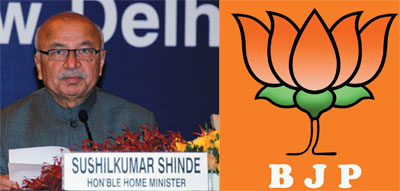
    NEW DELHI (TIP): The BJP has decided to boycott allpublic programmes of Home Minister Sushil KumarShinde to protest against his Hindu terror remarks till hetenders an apology. It will also not respond to anycommunication from him to the party top brass in hiscapacity as Leader of the House.The decision was taken in the first Core Group meetingof the BJP after Rajnath Singh took over as party presidenton January 23. “The Core Group observed that Mr Shinde’sremarks have hurt Hindu sentiments.

    It condemned hiscomments that the BJP and RSS run terror training camps.The party has decided that its members and workers willboycott all public programmes in which Mr Shinde takespart,” BJP General Secretary Ananth Kumar toldreporters.The BJP will also not respond to any communication orrequest for meetings from Mr Shinde to the party’s seniorparliamentarians, including NDA Working Chairperson LKAdvani, and leader of the Opposition in the Lok Sabha,Sushma Swaraj.

    Shinde may find it difficult to getgovernment business through during the forthcomingbudget session of Parliament if the BJP does not respondto his calls for discussions on crucial issues.However, the BJP president said his party does notintend to boycott Shinde inside Parliament and will notdisrupt proceedings when he rises to speak.

    “But we willraise this issue (Mr Shinde’s remarks on Hindu terror) inParliament,” he said.Significantly, this strategy of the BJP appears to be aslight climbdown, as the party had earlier insisted thatPrime Minister Manmohan Singh and UPA ChairpersonSonia Gandhi should apologise for Shinde’s remarks andthat he should be sacked from the post of home minister.

    The home minister had alleged during the CongressChintan Shivir in Jaipur last month that the BJP and RSSwere involved in training their cadre in terror activitiesand those allegedly involved in Hindu terror acts wereaffiliated to them.

  • Hit by raids, Nitin Gadkari threatens I-T officials

    Hit by raids, Nitin Gadkari threatens I-T officials

    NAGPUR (TIP): A day after BJP’s parliamentary board replaced him with UP leader Rajnath Singh as the next party chief following income tax action against firms linked to the Purti Group, an unfazed Nitin Gadkari instead threatened tax officials. Far from chastened by his sudden exit as BJP chief, Gadkari took on I-T officials, CBI, media and Congress as he hit out in all directions. “When BJP comes to power at the Centre, we will not spare any of them,” he said referring to I-T officials. Back on home turf, Gadkari warned officials that “There will no Sonia and Chidambaram to help you when BJP wins the next election in 2014”, accusing the UPA government of using the I-T department to fabricate cases against him. Holding the Centre responsible for the I-T action against Purti that triggered a last-minute revolt against him just as a second term as BJP president was in his grasp, he said officials should remember Congress is a sinking boat. “There’s only one ruler in Congress and others are her servants,” said Gadkari. In a show of defiance and petulance that might be more common in civic politics, the former BJP president said, “Mard hoon, dekh loonga. (I am a man, I will see you). I-T department yaad rakhe, BJP ki sarkar ayegi tab kahan jaoge…na Sonia rahegi na Chidambaram bachane ke liye.” A modest crowd of party workers, led by state party president Sudhir Mugantiwar, local MLAs and functionaries braved modest showers the orange city received on Thursday to try and boost the sagging spirits of their leader who is an MLC in the state legislature. “As BJP president, I had to maintain dignity and exercise restraint.

    Now, I am a free man,” said Gadkari while addressing the gathering unmindful of a huge traffic jam the rally caused close to the airport approach road. For about 90 minutes, not a single vehicle could move on the road. Clearly smarting from the I-T surveys being deftly used by his detractors in the party to seek a change in leadership on the ground that this is needed to control damage to BJP, Gadkari alternated between bluster and protestations of innocence. This is the second time Gadkari threatened action against I-T officials. Last year when the department had launched a probe to find the source of funding in Purti Group companies, he had leveled similar charges. “Earlier the Congress used the CBI to settle political scores, now it has started using I-T officials too,” he alleged. “I know how they are hatching conspiracies against me sitting in Delhi, Nagpur and Pune… I also know their names.

    Some people in the organization who are sympathetic to me and the BJP have told me about this,” he said. Gadkari said it was a political conspiracy to malign his image. “False allegations were made against me with issues that I had nothing to do with.

    I am going to fight it out till I come clean,” he said. Targeting the English media, he said a simple letter written to the government seeking release of funds for the Gosikhurd project was seen as favouring contractors. “Similarly when I took up project to provide cheap houses to industrial workers at Butibori, one TV channel said I had turned a builder. Nobody has the right to indulge in character assassination,” said Gadkari. The deposed BJP president got the support of Congress MP Vijay Darda, an old friend. “Gadkari is like a tiger, he did not compromise with his honour. Ups and downs keep happening in politics.

    He is one leader who has worked hard for Vidarbha,” Darda said. Referring to Gadkari as “mere azeez mitr (my dear friend)”, Darda added, “In the coming days we will work shoulder-to-shoulder.” Present on the dais were Congress MLA from Saoner Sunil Kedar, city BJP MLA Devendra Fadnavis, former BJP MP Banwarilal Puruhit, Chandrapur MP Hansraj Ahir, Chhattisgarh agriculture minister Chandrakant Sahu and several other zilla parishad presidents. SHIMLA (TIP): Congress

  • SC questions Centre’s power to allocate coal blocks

    SC questions Centre’s power to allocate coal blocks

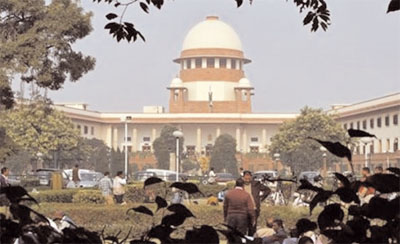
    NEW DELHI (TIP): The Supreme Court today raised doubts over the Centre’s authority to allocate coal blocks, pointing out that coal was a state resource under the Mines and Minerals (Development and Regulation) Act, 1957 and as such only the states had the power to execute mining leases. A Bench comprising Justices RM Lodha and J Chelameswar said that since both the MMDR Act and the Coal Mines (Nationalisation) Act 1973 had not vested any power with the Centre to allocate coal blocks, it could not have undertaken this exercise.

    The Bench made the observations while hearing PILs pleading for quashing the allotment of 194 coal blocks allotted by the Centre to private companies during 2004-11 “in a pick and choose manner” thereby causing a “huge loss” to the country. Noting that the coal blocks had been allotted either by the Union Coal Ministry or the Centre’s Screening Committee exercising their powers under executive orders, the Bench observed that such powers “can’t override the statutory provisions.” Acknowledging that the states had to take the “prior approval of the Central Government” for granting mining leases, the Bench asked Attorney General GE Vahanvati as to whether this provision could be extended to mean that coal block allocations could be done by the Centre. “All this requires a lot of legal explanation from the Centre as through the allocations it was “preempting” the execution of mining leases by the states with companies, the Bench said. The allocations by the Screening Committee were “extralegal” as the rules of business had no provision for this.

    The screening committee could only assess the applications and make recommendations, it felt. “The issue strikes at the root and raises fundamental legal questions,” the Bench remarked. Pointing out that all the legal provisions had been explained in the affidavit filed by the Union Coal Secretary in response to the court notice on the PILs, the Bench wanted to know as to how the Centre was still going ahead with the allocations. At this, the AG said he did not want to give an off the cuff response and sought time to explain the position through an affidavit. Granting time to the Centre, the Bench posted the case for next hearing on March 12. Advocate Prashant Bhushan, appearing for the PIL petitioners, said the CBI had registered three cases – one on the basis of a complaint filed by BJP MP Prakash Javdekar on the alleged irregularities during the UPA regime, another on a complaint by Congress MP Sandeep Dikshit covering the NDA period and the third on allocations done under the publicprivate scheme. The probe was on for about eight months now and wanted to know what had been done so far. Appearing for the CBI, Additional Solicitor General Harin Raval said the investigation was “comprehensive and broad-based” and no one was being spared. In another four months, the agency would be able to complete the “fair and thorough” probe.