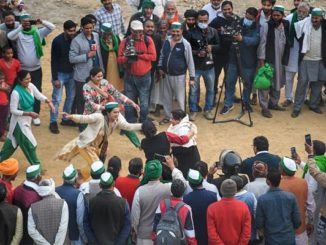
Experts call agitation ‘enriching of democracy’, but also term victory as one ‘forced due to political compulsions’
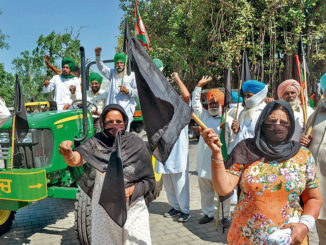
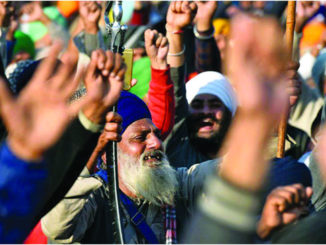
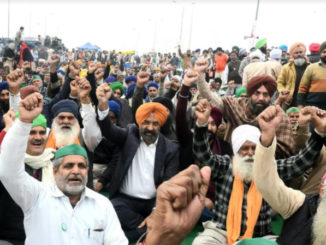
NEW DELHI (TIP): As the leaders of the Samyukta Kisan Morcha on Thursday, December 9, formally announced the ending of their year-long agitation at the Delhi borders in the backdrop of now-repealed farm laws and the Centre’s outreach, according to some agriculture experts the story may be far from over yet. They called the farmers’ victory “reclaiming of democracy” and one that exposed “inability/limitations of RSS-BJP strategy/instrument to counter agitation/movement without any religious tinge”. However, it was also one resulting from “pure political compulsions of the ruling BJP”, they said. “Yes, it is a glorious victory, but forced due to UP/Punjab/Uttarakhand elections. The Narendra Modi Government conceded to farmers’ demands because of the fear of losing in 2022 Assembly elections,” said agriculture expert from Western UP Sudhir Panwar, who is also associated with the Samajwadi Party.
“The compelling reasons for repeal was possibility of novel political alliance in Punjab and the growing support of farmers for political alliance of Akhilesh Yadav and Jayant Chaudhary (in Western UP),” he added.
Also pointing to the words used by the Prime Minister while announcing the decision to rollback, Panwar called it a “clear indication of future”. “The PM said he felt sorry over his failure in convincing a small number of farmers of the benefits of new agriculture laws. It was not an apology on the manner of implementation and implications of laws. In future the BJP government can always claim that farmers are now convinced on benefits of repealed laws,” he said.
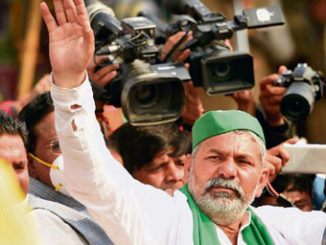
Amid speculations of divisions among farmer groups, it seems BKU leader Rakesh Tikait, who infused life into the agitation with his emotional outbreak after the January-26 Republic Day violence, was not in favor of ending the agitation till the time there was a legal guarantee of Minimum Support Price.
Panwar also said “farmers were divided”. While repeal was the main demand of those from Haryana and Punjab, for the rest of the country it was the legal guarantee of the MSP. “Rakesh Tikait was not as happy as farmer leaders of Punjab and Haryana. It also shows the dominant role of farmers from Punjab and Haryana in the agitation and subsidiary role of those from other regions,” he said. While there was “no real gain for farmers even after year-long agitation as issue related with electricity, burning of agriculture waste and legal guarantee of MSP handed over to committee”, the successful agitation exposed the inability/limitations of RSS-BJP strategy/instrument to counter agitation/movement without giving religious hues, Panwar said. “The BJP used all known strategies such as calling farmers anti-national, Khalistani, secessionist, anti-Hindu, etc. January 26 incidents were used to malign the image of farmer leaders and their organizations. The success of the agitation was clear records of its leaders and sustained food supply and shelters at agitation sites,” he said.
“For three consecutive elections since 2014, the BJP has managed to prove that Muslims can be made irrelevant to UP’s electoral paradigm if Hindus rise above caste differences and vote as a bloc. It stitched together a formidable coalition of Hindu social groups consisting of upper castes, non-Yadav backward castes and non-Jatav Dalits to win sweeping victories in the Lok Sabha polls of 2014 and 2019 and the Assembly polls of 2017.”
Rakesh Tikait, who hails from Muzaffarnagar and is the son of the late founder of the BKU, Mahendra Singh Tikait, is at the forefront of the farmers’ agitation. He has managed to mend fences between his community and the Muslims of western UP and in panchayat after mahapanchayat, farmers have vowed to defeat the BJP in 2022.
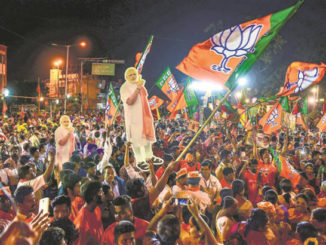
If there were any doubts about the BJP strategy for next year’s UP Assembly polls, RSS chief Mohan Bhagwat cleared the air in his annual Dasehra address. He set the stage for a polarized campaign by stoking Hindu insecurities about the minorities and flagging communally sensitive issues. He highlighted two measures which are likely to form prominent themes of the ground-level campaign. One is the compilation of a national register of citizens. The other is a population control law, which is already in circulation in UP in the form of a draft Bill. Bhagwat said that both are necessary to check the “vast differences in growth rates of different religious groups, infiltration and conversion resulting in religious imbalance of the population ratio, especially in border areas.”
These are dog whistles to unite Hindus by invoking fears of being outnumbered by “others”. In the context of UP, the “others” are Muslims who constitute an estimated 19.3 per cent of the state population and can influence the electoral outcomes in roughly 130 of the 403 Assembly constituencies. It is hardly surprising that Bhagwat used his Dasehra address for a political speech, laying out a majoritarian agenda for the UP polls. A tough battle lies ahead, with the BJP fighting to win a second term amid widespread public disaffection which has given rise to fears that its carefully crafted rainbow caste coalition is unravelling.Yet, it’s an election the BJP must win at all costs, not just because of UP’s clout in terms of the Lok Sabha numbers but also because the Sangh Parivar hopes to replicate its successful Hindutva experiment in Gujarat in this populous heartland state which is home to important Islamic centers of theology and has large, concentrated pockets of Muslims.
For three consecutive elections since 2014, the BJP has managed to prove that Muslims can be made irrelevant to UP’s electoral paradigm if Hindus rise above caste differences and vote as a bloc. It stitched together a formidable coalition of Hindu social groups consisting of upper castes, non-Yadav backward castes and non-Jatav Dalits to win sweeping victories in the Lok Sabha polls of 2014 and 2019 and the Assembly polls of 2017.
Much water has flowed under the bridge since 2019, giving rise to deepening concern that this winning Hindu alliance may be coming apart as the 2022 polls approach. Four groups are a major source of worry for the BJP-RSS. One is the lower backward castes. They were a new catch in 2014 and have been a pillar of the BJP’s support base in UP since. Today, they seem to be drifting away for a variety of reasons. For instance, this section has been the worst affected by the increasing joblessness in a Covid-afflicted listless economy. It has also been hit the hardest by the pandemic which raged through UP villages that were ill equipped to handle medical emergencies.
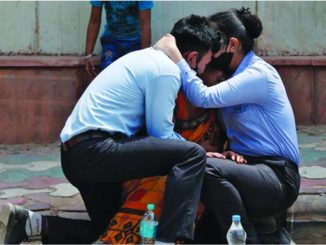
Pictures of bodies being washed up on the banks of the Ganga during the second wave continue to haunt as do photographs of mass cremations in open fields and on city pavements because overflowing crematoriums were hard pressed to offer a dignified farewell to the dead. A second worry is the Jats whose unstinted support since the 2013 communal violence in Muzaffarnagar has ensured the BJP’s domination of western UP. This support appears to be wavering because of the controversial farm laws. Rakesh Tikait, who hails from Muzaffarnagar and is the son of the late founder of the Bharatiya Kisan Union, Mahendra Singh Tikait, is at the forefront of the farmers’ agitation. He has managed to mend fences between his community and the Muslims of western UP and in panchayat after mahapanchayat, farmers have vowed to defeat the BJP in 2022.
The recent tragedy at Lakhimpur Kheri, where four Jat Sikh farmers were mowed down by a vehicle belonging to union minister Ajay Mishra’s son has only heightened tensions between the farming community and the BJP.
The alienation of non-Jatav Dalit groups is a third factor to contend with. Communities like the Passis and Koris have been committed voters, but there are signs that they too are doing a rethink because of a spurt in clashes and tensions between Scheduled Caste groups and UP Chief Minister Yogi Adityanath’s Thakur clan.
In fact, the Yogi administration is seen as a return to Thakurvad. A Thakur-packed police force running riot in the state amid frequent reports of fake encounters and harassment of ordinary businessmen has served to reaffirm this perception. And, Yogi has done little to dispel it by continuing to protect Thakur police officers accused of various misdeeds. From this flows the fourth reason for anxiety: a perceptible disenchantment among Brahmins who have been core supporters of the BJP ever since the Ram Janmabhoomi movement was launched in the late 1980s. Although community members still dominate the administration, the free run given to a police force dominated by Thakurs has upset Brahmins used to controlling all the levers of power.
The clouds darkening the electoral landscape leave the BJP with little choice but to follow Bhagwat’s prescription for a polarized campaign. The writing was on the wall when Yogi Adityanath won the tussle with the Modi-Shah duo some months ago and stayed on as UP CM. It is no secret that the top brass in Delhi wanted him out, or at least have his wings clipped by the induction of a former bureaucrat loyal to Modi.
Yogi triumphed thanks to the backing of the RSS which had decided as early as then that Hindutva would form the main campaign plank in UP. And who better to do the job than a saffron-clad monk whose claim to being a Hindu icon almost rivals that of Modi?
It is significant that after Bhagwat’s prod, Modi wove Hindu imagery into his speech at Kushinagar while inaugurating the first international airport in the region. The Opposition will have to think out of the box to counter what promises to be a high-pitched divisive campaign.
Smaller players may hold the key this time in poll-bound state
By Radhika Ramaseshan
“The mowing down of four protestors, whose only ‘crime’ was to wave black flags before a UP minister signified a low in the ongoing agitation. Not only has the unrest spilled from the west to Avadh in central UP, the issues have gone beyond the refusal to ratify the Centre’s farm ‘reforms’ and the state government’s small one-time payment hike for sugarcane growers to the rise in agricultural inputs, power tariffs, uneven irrigation facilities and the continuous preying on fields and standing crops by rogue cattle. The range of issues affects every farmer, big, marginal and small. No longer is the agitation about the ‘prosperous’ sugar-cane Jat farmers of the west. It spans the peasants in the other districts, cutting across caste and class divisions. Against such a fluid backdrop, Tikait’s role will be closely monitored by the SKM as well as the Opposition to see if he gets closer to the BJP or whether his engagement with Adityanath and his apparatchiks was a limited one.”
The brutality and horror of Lakhimpur Kheri, marked by a callous Central regime, a slippery UP Government which survives on chicanery and repression, and an Opposition that arose belatedly from sleepwalking, brought other twists and turns to the state’s politics as well before the elections. An interesting aspect that emerged was the unpredictability of the smaller players, who have not yet launched their parties, as well as the minor political entities who punch above their weight, giving the impression that they are more sought after by the mainline parties this time. One of them is Rakesh Tikait, the BKU spokesperson, who was thrust into the spotlight once the farmers’ protest picked up steam in west UP, his home ground.
Where does Lakhimpur Kheri fit into this jumbled picture? It does, if only farmers form a cohesive federation based on their economic interests and not caste allegiances.
Tikait wore his celebrity-hood with assumed reluctance, as though his head felt heavy wearing the crown, although he savored every moment of the attention he drew from politicians and the media. If he had political ambitions that were blown away in the past because he lacked conviction in the cause he supposedly espoused, this time he did not reveal a thing. Sanjeev Balyan, the MP from Muzaffarnagar, tempted Tikait to float a party when the BJP, Balyan’s party, was in hot water. Tikait didn’t bite the bait but he possibly did a bigger favor to the BJP and the Yogi Adityanath government when he accepted the brief to mediate and quell tensions in Lakhimpur Kheri after the farmers’ killings and the reprisals. Tikait partially delivered on the mandate set by the CM but probably lost face among his colleagues in the Samyukt Kisan Morcha (SKM), who span the ideological circumference from the left to the center and right of center.
The mowing down of four protestors, whose only ‘crime’ was to wave black flags before a UP minister signified a low in the ongoing agitation. Not only has the unrest spilled from the west to Avadh in central UP, the issues have gone beyond the refusal to ratify the Centre’s farm ‘reforms’ and the state government’s small one-time payment hike for sugarcane growers to the rise in agricultural inputs, power tariffs, uneven irrigation facilities and the continuous preying on fields and standing crops by rogue cattle. The range of issues affects every farmer, big, marginal and small. No longer is the agitation about the ‘prosperous’ sugar-cane Jat farmers of the west. It spans the peasants in the other districts, cutting across caste and class divisions. Against such a fluid backdrop, Tikait’s role will be closely monitored by the SKM as well as the Opposition to see if he gets closer to the BJP or whether his engagement with Adityanath and his apparatchiks was a limited one.
What accounts for the salience of once peripheral individuals like Tikait? The state Opposition lay dormant for the better part of Adityanath’s tenure, although issues came thick and fast. No Opposition leader raised his or her voice, fueling a perception that they were nonchalant, scared of a counterstroke if they spoke aloud, or risked alienating the Hindus of UP. The last factor was premised on a belief that Hindus had voted almost en bloc for the BJP since the 2014 Lok Sabha elections and the leader in saffron robes who presides over North India’s richest monastic order in Gorakhpur consolidated his position as the new ‘monarch of the Hindu heart’.
On the ground, people, Hindus and Muslims, Jat, Yadav, Saini and Dalit, rich, middle-class and poor, urban and rural, had reasons to not just worry but despair. The Opposition was not around to tap the sentiments and funnel them into a movement against the establishment. When the winds of an agrarian uprising blew from Punjab and Haryana to UP, the farmers of the west divined the potential to vent their problems and organized themselves, almost spontaneously. The BKU, and later the RLD, headed by Jayant Chaudhary, were default beneficiaries of the signals beamed from Punjab and Haryana and not the catalysts. It’s a reflection of popular desperation and disillusionment that people were ready to resurrect a has-been like Tikait.
If indeed the impending contest is bilateral and not multi-polar as in the recent past, why is a politician like Om Prakash Rajbhar — courted, co-opted, dumped and wooed again by the BJP — hot property? Om Prakash, who represents the backward caste Rajbhars, tried to band together the most backward and extremely backward castes as well as Muslims into an umbrella outfit called the Bhagyadari Sankalp Morcha (BSM). The BJP was partially successful in attracting some of these castes into its fold since 2014. However, Adityanath, who allegedly carried his patronage of the Rajputs, the caste to which he belongs, to inordinate lengths, might have antagonized not just the Brahmins but the backward castes too. Om Prakash was approached not by Adityanath but state BJP leaders whose only pre-condition to him was excluding Asaduddin Owaisi’s All India Majlis-e-Ittehadul Muslimeen from his front. Om Prakash indicated that he would reveal his roadmap at a mahapanchayat in east UP on October 27. Simultaneously, the Samajwadi Party that has positioned itself as the BJP’s direct rival is soliciting the support of parties which addressed specific castes to widen its backward caste base.
Where does Lakhimpur Kheri fit into this jumbled picture? It does, if only UP’s farmers form a cohesive federation, underpinned by their economic interests and not caste allegiances. It nearly happened in Madhya Pradesh in the 2018 elections. Will MP repeat itself in UP?
The contours of the BJP-led NDA alliance appear to be in place for the UP elections next year. The saffron party today announced alliance with Sanjay Nishad-led Nirbal Indian Shoshit Hamara Aam Dal (Nishad party), which represents communities like fishermen and boatmen whose traditional occupations are centered around rivers. UP election in-charge Dharmendra Pradhan said the BJP would contest the elections in alliance with the Nishad Party and Apna Dal, whose leader Anupriya Patel is also a Minister of State in the Narendra Modi council in the Centre. Both Pradhan and state party chief Swatantra Dev Singh specified that the alliance will contest under the leadership of CM Yogi Adityanath and PM Narendra Modi.
PM Narendra Modi congratulates new CM, applauds contribution of B.S. Yediyurappa
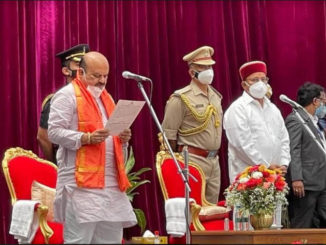
BENGALURU (TIP): Basavaraj Bommai was, on July 28, sworn in by Governor Thaawarchand Gehlot as the 30th chief minister of Karnataka, in the presence of senior Bharatiya Janata Party leaders, including former chief minister B.S. Yediyurappa, Union Minister Dharmendra Pradhan and BJP Karnataka in-charge Arun Singh.
Mr. Bommai took oath in the name of God amid cheers from well-wishers and his supporters, who were also raising slogans of Bharat Mata Ki Jai. Prime Minister Narendra Modi finally broke his silence on the change of guard in Karnataka. Congratulating new Chief Minister Basavaraj Bommai, he tweeted: “He brings with him rich legislative and administrative experience. I am confident he will build on the exceptional work done by our government in the state. Best wishes for a fruitful tenure.”
Mr. Modi praised former chief minister Mr. Yediyurappa, who resigned on July 26. “No words will ever do justice to the monumental contribution of Shri B. S. Yediyurappa Ji towards our party and for Karnataka’s growth. For decades, he toiled hard, travelled across all parts of Karnataka and struck a chord with people. He is admired for his commitment to social welfare,” the PM tweeted.
Mr. Yediyurappa tweeted back; “Thanking him for the kind words.”
Union Home Minister Amit Shah also congratulated Mr. Bommai. “I am sure, under the guidance of PM Narendra Modi Ji, he will further boost BJP’s resolve to serve the poor and farmers of the state with his wisdom and experience,” he tweeted.
He not only acknowledged the contribution of Mr. Yediyurappa in building the party in Karnataka, but also said he would continue to guide the party and the government. “Shri B. S. Yediyurappa Ji has served the party and people of Karnataka with utmost devotion. His contribution and hard work towards strengthening the BJP at the grassroots level in Karnataka is truly inspiring. I am sure he will continue to guide the party and government,” he tweeted.
A good number of Bommai’s supporters, many from his constituency Shiggaon in Haveri district, stood outside Raj Bhavan to cheer for him as he took the oath of office. Shiggaon comes under Dharwad Lok Sabha constituency and is about 365 km from Bengaluru.
Son of former chief minister and Janata parivar leader S.R. Bommai, he was chosen to replace B.S. Yediyurappa at the BJP legislative party meet held in Bengaluru on July 27.
Earlier, Mr. Bommai arrived at the venue along with his family members, including wife Channamma, children Bharat and Aditi.
Outgoing chief minister B.S. Yediyurappa looked cheerful and arrived at the venue early. His younger son B.Y. Vijayendra, whose role in his resignation from the post of chief minister, is a matter of speculation, was also present. Among those present in big numbers were ministers from the outgoing council, and legislators who are keen to make it to the new cabinet.
“The farmers are a force that can shape an alternative path to India’s development. Again, it is not that farmers believe in alternatives more than anyone else. It is just that their livelihood concerns and collective interest push them towards equity and ecological sustainability. The present movement underlines the farmers’ quest for equity, their demand for a dignified minimum price for their produce, and their determination to combat corporate takeover of agriculture. Sooner than later, the challenge of climate change would force the farmers to be the torchbearers of sustainability as well. Poor ecological practices are now beginning to turn into poor economics for the farmers and causing their ruin. Farmers are not some relic of the past. They can be a potent force to shape India’s future.”
The question now is not what the farmers can secure for themselves. The prime issue is not about if and when the farmers would succeed in their immediate objective of getting the anti-farmer laws repealed and securing legal guarantee of MSP. The real question is what the farmers can secure for the entire country — whether they can lead the larger battle for saving the very idea of India.
JULY 26 was a special day to ask a big question: can the farmers’ movement be the vanguard we need in rescuing our constitutional democracy and reclaiming the republic?
On July 26, the historic kisan morcha at the borders of Delhi completed eight months. The Samyukt Kisan Morcha (SKM) marked the day by organizing an all-women Kisan Sansad within earshot of Parliament. Just when the Bharatiya Janata Party (BJP) was hoping to erase the farmers’ movement from the country’s mindscape, it sprang up to occupy the center stage once again. The successful and peaceful conduct of Kisan Sansad addressed some of the real as well as orchestrated anxieties associated with the Republic Day protest this year. The same day, the SKM leadership was in Lucknow to announce ‘Mission UP and Uttarakhand’. The detailed calendar for these two states signaled a move to expand, deepen and intensify the movement.
It so happened that Rahul Gandhi chose the same day to drive a tractor to Parliament with a banner opposing the three farm laws, leading to a day-long detention of some Congress MPs. Within the House, all Opposition MPs followed the whip issued by the farmers’ movement and continuously raised the issues flagged by the farmers. This rare coincidence of protests inside and outside Parliament may have meant little to the Narendra Modi government, but it did indicate the political clout of the farmers’ movement and its role as the opposition in the country, currently.
The question now is not what the farmers can secure for themselves. The prime issue is not about if and when the farmers would succeed in their immediate objective of getting the anti-farmer laws repealed and securing legal guarantee of the Minimum Support Price (MSP). The real question is what the farmers can secure for the entire country — whether they can lead the larger battle for saving the very idea of India.
My answer is in the affirmative. Not because I draw upon ‘insider information’ as a participant, not because I believe in any special virtues of the peasantry. I believe the farmers can play a decisive role in reclaiming our rapidly shrinking republic because their class interest happens to coincide with the project of saving the soul of India. If democracy, diversity and development are the three key pillars of the idea of India, farmers’ movement cannot but provide anchors to all these ideas. In saving themselves, the farmers save the republic of India.
I am not suggesting that farmers are inherently more democratic than other classes of citizens. They are not. But one thing is clear: in today’s India, farmers need democracy more than other classes. Businessmen can buy their way to achieve what they need. The middle class can access power through bureaucracy and occasionally through judiciary as well. The working class in the organized sector still has some, though fast-dwindling, procedural protections to safeguard their interests. Farmers as a group have no avenue open to them other than street politics, agitations and movements. They need democratic spaces to exercise this option. Their class interest coincides with the project of saving democracy. The ongoing farmers’ movement is acutely aware of this. It is not a coincidence that exactly a month ago, the farmers had marked June 26, the Emergency Day, by organizing ‘Save Agriculture, Save Democracy’ protests outside Raj Bhawans across the country.
Similarly, the farmers’ movement provides the strongest bulwark against the assault on the idea of a diverse India. Not just because farmers and farming are inherently diverse and protecting farming is about protecting diversity. And not merely because the movement happened to have originated among the Sikh peasantry. Above all, the project of uniting farmers requires the movement to take on the BJP’s politics of divide and rule. In Punjab, Haryana and Uttar Pradesh, the farmers’ movement has already established itself as the most powerful organized force to take on the politics of communal division. As the movement spreads to other regions of the country, this is the true ‘Bharat Jodo Andolan’.
Finally, the farmers are a force that can shape an alternative path to India’s development. Again, it is not that farmers believe in alternatives more than anyone else. It is just that their livelihood concerns and collective interest push them towards equity and ecological sustainability. The present movement underlines the farmers’ quest for equity, their demand for a dignified minimum price for their produce, and their determination to combat corporate takeover of agriculture. Sooner than later, the challenge of climate change would force the farmers to be the torchbearers of sustainability as well. Poor ecological practices are now beginning to turn into poor economics for the farmers and causing their ruin. Farmers are not some relic of the past. They can be a potent force to shape India’s future.
First, this is not an argument about the necessity and inevitability of farmers’ role in history. Farmers need not always play the role of a revolutionary vanguard, the role assigned to the working class in the Marxist theory. But there is one commonality with the logic advanced in The Communist Manifesto: like the proletariat, the farmers in today’s India are the only class whose interest happens to be aligned with the forward movement in history.
Second, this won’t happen by itself. The alignment of interests ensures that the farmers are well placed to play a historic role. But it all depends on how consciously and carefully the farmers’ movement takes up this task. It depends upon how the present movement combines the immediate economic issues of the farmers with the larger political issues involving their long-term interest. It depends on how well the movement succeeds in spreading itself beyond its current geographic epicenter and in uniting all sections of Indian farmers, from big landowners to the landless peasants. That is the historic responsibility of the farmers’ leadership.
“At this stage in history, when we are experiencing “democracy capture” — a capture of democracy through democratic means — these examples hold out hope for the country. There is a parliamentary session going on but the PM is unwilling to make a statement on the floor of the House and answer questions on millions of deaths due to the second Covid wave. The Pegasus disclosures have opened our eyes, if that was needed, to the mockery of constitutionally guaranteed liberties. In this context, andolans and andolanjivis hold out hope for our democracy.”
Right from the inception of parliamentary democracy in our country, every party has appointed a whip tasked with disciplining the elected representatives. But what about direct command from the voters? Why can’t the voters bypass the parties and instruct their representatives on how to conduct themselves in Parliament?
The Samyukt Kisan Morcha’s decision to issue a ‘voters’ whip’ is one more democratic innovation in these dark times when formal democratic institutions and practices are taking a downturn. Democracy is being reclaimed on the streets just when the constitutional democratic apparatus is receding. As they say, creativity thrives in the dark.
The idea behind the voters’ whip is simple, though powerful. Right from the inception of parliamentary democracy in our country, every party has appointed a whip tasked with disciplining the elected representatives. This role has a legal sanction after the insertion of anti-defection provisions in the Tenth Schedule of the Constitution. Now every party can and does issue a whip to its MPs and MLAs, instructing them to be present on certain days and vote in specified ways. The basic idea is that the voters speak to the MPs and MLAs through the party; hence, they should not be allowed to violate its commands. But what about direct command from the voters? Why can’t the voters bypass the parties and instruct their representatives on how to conduct themselves in Parliament?
That is what the voters ‘whip does. On behalf of the farmers, the Samyukt Kisan Morcha has issued a whip to all the MPs for this Monsoon session that directs them to be present in Parliament for all days, to support the above mentioned demands of farmers’ movement on the floor of the House, not stage a walk-out and “not allow any other business to be transacted in the House till the Union Government accedes to the farmers’ demands”. This voters’ whip “overrides the whip issued by your party” and those who defy it face the prospect of farmers’ boycott.
It is a conceptual break, but a work in progress on the practicalities. The concept needs to be fleshed out in terms of procedures for issuing the whip (who can issue it? How do we know the voters back it?), mechanisms for monitoring (what exactly constitutes a violation?) and penalty for defiance (who implements it? Exactly how?). A mass movement like the present farmers’ agitation commands exceptional moral authority and can issue such a whip. But the protocols of its use in normal times are yet to be worked out.
This is but one more instance of innovation in a movement that has been forced to innovate all the time. Take the very form of protest, the morchas outside Delhi’s borders. These are not traditional marches or sit-ins or squatting. Occupying miles of highway to set up colonies defies classification. Similarly, turning toll plazas into sites of regular protest, organizing massive Kisan Mahapanchayats, coalition of farm unions with khap panchayats, building alliance with trade unions, the use of community langar for supporting agitations, extending the idea of langar to daily-use items or even oxygen cylinders — all these are innovations in democratic practices.
Last week, there was another such innovation, not connected to the farmers’ movement. Chhattisgarh’s capital Raipur witnessed a public hearing on the condition of migrant workers. But this was not another jansunwai, where the victims present their case to a panel of experts and judges. In this experiment, the jury comprised 17 migrant workers themselves.
They deliberated for three days, heard from co-workers and the experts, to arrive at their verdict. This reversal of gaze takes the idea of public hearing forward and deepens its democratic character.
One of the most startling innovations in recent time was, of course, Shaheen Bagh. It sprung up just when everyone thought it was impossible to raise minority voice under this government, just when the discriminatory Citizenship Amendment Act seemed like a fait accompli, just when all legitimate forms of protest were being criminalized. An all-women day and night neighborhood gathering was a breathtaking idea, executed to perfection with nationalist symbolism. It combined defiance with pedagogy, anti-politics with deep politics, questioning of political authority with questioning of gender roles.
These might appear like isolated examples, but they are not. Just start looking around for newer ways of expressing democratic aspirations and you would find something every day. A few months ago, unemployed youths in Uttar Pradesh played a prank on the Yogi government, an incident that served to highlight the widespread unemployment among the educated youth. Last week, some citizens started a #ThankyouModiji campaign, taking a photograph before Prime Minister Narendra Modi’s banner outside petrol pumps, to highlight the rising prices of petrol and diesel. You can keep adding to this list.
At this stage in history, when we are experiencing “democracy capture” — a capture of democracy through democratic means — these examples hold out hope for the country. There is a parliamentary session going on but the PM is unwilling to make a statement on the floor of the House and answer questions on millions of deaths due to the second Covid wave. The Pegasus disclosures have opened our eyes, if that was needed, to the mockery of constitutionally guaranteed liberties. In this context, andolans and andolanjivis hold out hope for our democracy.
A historian and theorist of democracy, John Keane, has described these as instances of “monitory democracy” —innovations that add instruments of monitoring the health of democracy and thus deepen its quality. He lists India as one of the prime examples of such democratic innovations. We must also recognize that in post-colonial democracies, such innovations do not merely supplement the existing and functional democratic institutions. They also fill a deeper gap. Many constitutionally mandated democratic institutions only exist on paper in our democracy. Newer practices like the voters’ whip promise to fill the void left by the non-functioning of such institutions.
(The author is the first and current National president of Swaraj India)
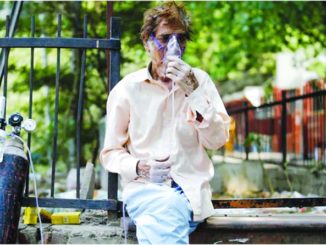
New Delhi (TIP): The ruling Bharatiya Janata Party (BJP) and several Opposition parties were locked in a war of words over how many people in India died due to lack of oxygen supplies while battling Covid-19, a day after the Union government told Parliament that no state reported such fatalities.
The submission to Parliament brought back focus on a crisis that in part defined the devastation of the second wave, but with little accountability being fixed since. A database of media reports from the time has identified at least 619 deaths that likely occurred because of lack of oxygen, while many more may have taken place outside of inundated hospitals. Still, with most states unwilling, even on Wednesday, to accept that there were deaths on account of oxygen supplies, the Union government’s submission, while insensitive, could well be technically correct.
The BJP accused the states of playing politics, and pointed to submissions by some of them to reaffirm that the central government was merely reporting data that states sent to it.
“The Centre says that health is a state subject. It says that it just collects the data, it doesn’t generate it. None of them said that a death occurred in their state and Union territory due to shortage of oxygen, there is no data for that. Did the Centre generate this data? No,” said Sambit Patra, BJP spokesperson.
Patra in particular pointed to the Congress, the Shiv Sena and the Aam Aadmi Party to accuse the rivals of “playing politics”.
“Rahul Gandhi is part of a coalition in Maharashtra and Sanjay Raut said he is shocked. The Maharashtra high court was given an affidavit by the state government where it stated that no death took place due to oxygen shortage,” he said. “On April 23 and 24, Arvind Kejriwal said 21 people died in Jaipur Golden Hospital due to oxygen shortage. He did a press conference and politicised it. This matter went to the high court. The Delhi government formed a committee and a report was submitted — it said patients got oxygen and no there was no mention of a shortage,” he said.
Patra’s comments appeared to be targeted at a tweet by Gandhi on Tuesday afternoon, in which the Congress leader said: “The shortage wasn’t only of oxygen; it was also of empathy and facts. The shortage was there then, and it’s there now.”
On Wednesday, July 21, Shiv Sena MP Sanjay Raut, whose party shares power with the NCP and Congress in Maharashtra, said people whose relatives died due to oxygen shortage should “take the Union government to court”.
Delhi health minister Satyendar Jain, too, attacked the Centre, saying it was “completely false” to say no one died for want of oxygen. “If no deaths occurred due to oxygen shortage, why did hospitals move high court one after another every day? Hospitals had been saying that oxygen shortage led to deaths. The media, too, flagged this issue daily,” Jain told reporters.
The AAP leader said the Delhi government set up a committee to collect data on such deaths and give ?5 lakh compensation to the families of the deceased, “but the Centre got the panel disbanded through the lieutenant governor”.
A day earlier, his cabinet colleague and deputy chief minister Manish Sisodia accused the Centre of a cover-up following its submission in Parliament. Neither Jain nor Sisodia put a number to deaths in Delhi on account of lack of oxygen.
As the controversy raged, officials in eight states – Goa, Maharashtra, Tamil Nadu, Madhya Pradesh, Odisha, Bihar, West Bengal and Uttar Pradesh – told HT that there were no deaths due to oxygen shortage in their hospitals.
Experts said the controversy was “unnecessary and unfortunate”. “The answers to parliamentary questions are compiled by respective ministries depending on inputs from various states and institutions, which means none of the states actually accepted that there were deaths due to oxygen shortage. The minister, however, could have just said that this is the official record and unofficially, there have been reports of deaths but there was no data,” said Dr MC Misra, former director of All India Institute of Medical Sciences.
“Barring stray individuals, the core team remained unquestioningly loyal to the BJP through thick and thin. But the BJP’s recent enlargement and the induction of defectors from the Congress and regional parties etched their own fault lines. Added to this trend is the over-centralization of authority in identifiable power centers ensconced in Delhi which ride roughshod over the regions and the provincial satraps who werelaw unto themselves in the years when the nucleus was less strong.”
The tension between adhering to the RSS’s ideology and executing its divisive agenda and maintaining the power balance among a motley group of new inductees is one aspect of the New BJP.
The BJP has reasons to applaud and raise a toast to the success that came its way over the past seven years. The party’s website commemorates every milestone there is to celebrate. The BJP is the world’s largest party with 11 crore members, it rules at the Centre and over 18 states and union territories autonomously or in conjunction with allies, and has an unassailable grip over Parliament with 301 MPs in the 543-member Lok Sabha and 95 in the 245-member Rajya Sabha. With its rapid spread in the east and the north-east, the BJP has shed the tag of a party confined to the north and west of India. The south stands like a parapet against the unbridled expansion and the core beliefs enshrined in the BJP’s versions of nationalism and Hinduism.
Power carries a price tag despite generously rewarding the BJP. The cost entailed in maintaining and retaining defectors from the other parties — variously labelled as imports, turncoats, opportunists and weathervanes — is enormous. These are men and women who did not enter the BJP to embrace its ideology and imbibe the RSS’s bible. Their entry was a derivative of the party’s rise to a pole position where it held out the promise of a supreme patron handing out the loaves and fishes of power in much the way the Congress did in the decades gone by. There are two significant differences: the BJP was birthed by an ideologically motivated RSS, albeit out of expediency, when the Sangh needed political and parliamentary presence to lobby in crises and was part of a large family with equally ambitious progenies desirous of sharing power. On the other hand, the Congress spawned off-springs such as the Sewa Dal and the National Students’ Union of India that were always subservient to the parent. Second, the BJP or the Bharatiya Jana Sangh in its previous incarnation was on the political periphery until 1989 but the party organization was put together by dedicated founders who never swerved from the original political objectives and built a corps of workers, initially drawn from urban India, with the RSS’s help. Barring stray individuals, the core team remained unquestioningly loyal to the BJP through thick and thin. But the BJP’s recent enlargement and the large-scale induction of defectors from the Congress and regional parties etched their own fault lines. Added to this trend is the over-centralization of authority in identifiable power centers ensconced in Delhi which ride roughshod over the regions and the provincial satraps who were law unto themselves in the years when the nucleus was less strong.
A recent manifestation of the post-2014 features was in the leadership changeover in Uttarakhand, seven months before the assembly elections. The BJP anointed its third chief minister in four years. The first, Trivendra Singh Rawat, went out on account of his ‘unpopular’ decisions, one of which upset the powerful Hindu clergy. His successor, Tirath Singh Rawat, a Lok Sabha MP, had to quit ostensibly because he could not meet the deadline set for his election to the legislature. The view from inside the BJP was that the leadership was afraid for Rawat to contest a by poll in case he lost. If this reasoning is even partially true, it shows that despite the Congress’s failure to step up to the plate, the BJP is unsure about its prospects of returning to power. The choice for the third incumbent fell on a relatively younger Pushkar Singh Dhami, who like his peers in Himachal Pradesh and Goa, Jai Ram Thakur and Pramod Sawant, enters through the by now established route of the ABVP and the Bharatiya Janata Yuva Morcha. If demography were a determinant, nothing explains why the leaders could not have chosen the 45-year-old Dhami over the senior Rawats in the first place. Except that Uttarakhand has a line-up of CM aspirants, consisting of the BJP’s originals as well as the migrants who are reportedly miffed at being passed over thrice and could work against the official candidates in their districts in the elections. Over to another state, Tripura, that was trumpeted and showcased as a bang-up win in 2018 after the Left Front government was ousted, because the event marked the victory of ‘nationalism’ over ‘communism’. Two years hence, the BJP government, led by Biplab Kumar Deb of RSS provenance, was up against intra-party dissensions led by seven legislators, all from the Congress and the Trinamool Congress (TMC). Before the elections, the BJP lacked a viable functioning organization and candidates. However, realizing the groundswell of anger against the Left Front government, the BJP pressed its traditional attributes, like campaigning and propaganda dissemination, to advantage and channelized popular disenchantment into an offensive against the former CM, Manik Sarkar. The Congress and the TMC were ineffective counters. Seeing the wind blow in the BJP’s favor, their leaders and rank-and-file switched allegiance and filled in the human resources vacuum. However, under Deb, the trust deficit between the originals and the outlanders never closed. They were mutually suspicious to the extent that Sudip Roy Burman, a former Congressman who became a minister, was dropped for allegedly “conspiring” against the CM.
In Madhya Pradesh, when the BJP candidate was convincingly defeated by the Congress nominee in the Damoh Assembly by poll in May, the axe fell on Jayant Malaiya, a former BJP minister and a heavyweight at that, on the suspicion of sabotage. Rahul Lodhi, the candidate, came to the BJP from the Congress in the en masse defections that precipitated the downfall of the Kamal Nath government. In this instance, a BJP old-timer paid the price for allegedly getting back at a Congress defector.
Goa, Karnataka and Uttar Pradesh are the other states that exemplify a system stressed out by the pulls and pressures of power and possibly, of overreaching its ambitions. The tension between adhering to the RSS’s ideology and executing its divisive agenda and maintaining the power balance among a motley group of new inductees is one aspect of the New BJP. Undergirding the unwieldy growth is a powerful and cohesive center in the hands of Prime Minister Narendra Modi and Home Minister Amit Shah who so far have demonstrated an uncanny ability to hold together the contradictions. It’s not just about enforcing ‘discipline’.
“What the Opposition needs to demonstrate at this stage is political cohesion. It needs to demonstrate a unity of purpose, a shared agenda (not just a hastily drawn up minimum programme) that inspires hope, an alternative approach to governance, a capacity to work together by subordinating their differences.”
Opposition unity is among the most fantoosh but faltu preoccupations. At this juncture of Indian politics, it is at once a critical ask and a futile pursuit. This was the flavor of the month gone by and understandably so. The BJP’s defeat in West Bengal has opened the oppositional spaces and encouraged routine confabulations. It does not take much to see that any project to take on the BJP at the national level must gather in some way the 63 per cent voters who did not vote for the BJP or its allies in 2019. Hence, the temptation to return to some of the most over-rated moves of Opposition unity. All the tested and tired political faces coming together to oppose Prime Minister Narendra Modi is one of the laziest and disastrous political recipes of our time.
It is pointless to discuss Opposition unity unless we are clear about three things: Who counts as Opposition? What kind of unity are we talking about? And, is Opposition unity all that we need to take on Modi’s BJP?
The idea of a hold-all Opposition, coming together of anyone and everyone who happens to be opposed to Modi, or to the BJP or to its current ideology, is both impossible and counter-productive. It is humanly impossible to achieve a harmonious merger of egos, ambitions and designs of all those who fall under the broad rubric of the Opposition. Even if this miracle were to happen, the cost of stitching together such an alliance would clearly outweigh its possible gains. It would have to be a sub-optimal coalition in terms of its efficacy in defeating the BJP. Besides, it might help Modi play the lone warrior who is taking on an entire ‘gang’. This could also help the BJP’s booth workers go for successful counter-mobilization of the Hindus.
To abandon the idea of a hold-all Opposition unity is to give up on the current quest for a coalition of the willing. The Opposition here must be a selectively crafted coalition of the deserving. Those who enter such a coalition would have to show what they bring to the table. Those who bring heft in terms of votes would be the most obvious candidates. It is impossible to think of any meaningful Opposition unity without the Congress and many of the key regional players who have taken on, and many times defeated, the BJP. The only filter here would be the willingness to subordinate individual or party ambitions to the collective project.
The definition of Opposition must not be limited to political parties, that too electorally successful ones. We must not forget that the real opposition to the BJP hegemony has come from non-party peoples’ movements. Popular mobilization is as important as electoral success.
The idea of ‘unity’ must be expanded beyond a one-time electoral alliance to a more enduring political union. The most common understanding of Opposition unity is that of the non-BJP parties forming a pre-election alliance for seat-sharing and vote-pooling.
But we tend to forget that such a unity is not relevant for most states of the country. There are states such as Kerala, Punjab, Tamil Nadu and Andhra Pradesh, where the BJP is still not an electoral force that calls for a unity of the non-BJP forces. Then there are states such as West Bengal, Chhattisgarh and Odisha, where the dominant non-BJP party does not need an alliance partner. Then there are BJP-Congress contest states such as MP, HP, Uttarakhand, Gujarat and, arguably Rajasthan, where the problem is not the lack of Opposition unity but the lack of an Opposition itself. The Congress is unable to take on the BJP and does not have anyone else to align with.
So, the formula of a pre-electoral alliance holds force in only a few states: Karnataka, Maharashtra, Bihar, Jharkhand and UP. With more than 200 Lok Sabha seats, these states carry a lot of weight, but they cannot set the template for Opposition unity in the rest of the country where the need is coordination rather than alliance.
At this stage, we need political unity more than electoral unity of the Opposition. We could do without the premature and necessarily fractious negotiations of a nationwide electoral alliance. What the Opposition needs to demonstrate at this stage is political cohesion. The voters, especially those who may have recently got wary of the BJP, do not doubt that anti-Modi leaders will come together to unseat him. They doubt if these leaders would do so in a meaningful way. They doubt if the Opposition parties can deliver a better and stable government. They doubt if these leaders can hang together even for some time.
So, the Opposition needs to demonstrate a unity of purpose, a shared agenda (not just a hastily drawn up minimum programme) that inspires hope, an alternative approach to governance, a capacity to work together by subordinating their differences.
Above all, we must realize that while Opposition unity of some sorts is necessary, it is certainly not sufficient. At this stage, the country is not ready to anyhow throw the BJP out. There is disenchantment with this government and PM Modi, but it has not reached a point where the people would vote for a lamp post to throw the incumbent out. They are anxiously looking for an alternative that is at least as attractive as Modi was in 2014.
As it stands today, the Opposition does not fit the description. It lacks credibility. It does not have a message of hope, a vision for the nation. It does not have messengers who inspire confidence, leaders who can be entrusted with the country’s future. This deficit cannot be made up by Opposition unity. Any Opposition unity that glosses over this lacuna is bound to magnify its own deficit and likely to fail in attracting new voters.
The country needs not just a vipaksha, but a pratipaksha. Vipaksha is limited to offering opposition and criticism; pratipaksha offers constructive criticism and feasible alternatives. Vipaksha is aimed at power-capture, pratipaksha is guided by a national purpose. Vipaksha is episodic, mostly active for elections; pratipaksha is omnipresent. Vipaksha has to be united; pratipaksha is unified to begin with.
The Opposition needs a glue to hold itself together and a glow to connect it to the people. That cannot happen through a mechanical stitching together of an alliance of the existing Opposition parties. The oppositional space needs a magnet to pull all the forces that seek to reclaim the republic. That magnet cannot be any one party or a leader. It has to be a coming together of citizens who enjoy credibility, movements that have demonstrated resilience and ideas that hold out hope.
Once this is achieved, the coming together of the existing Opposition parties and leaders can and will follow.
WASHINGTON (TIP): Indian-Americans, who constitute the second-largest immigrant group in the US, regularly encounter discrimination and polarization, according to a survey released on Wednesday.
The report, ‘Social Realities of Indian Americans: Results from the 2020 Indian American Attitudes Survey’ draws on the Indian-American Attitudes Survey (IAAS) — a collaboration between the Carnegie Endowment for International Peace, Johns Hopkins-SAIS, and the University of Pennsylvania.
The findings of the report are based on a nationally representative online survey of 1,200 Indian-American residents in the US — the 2020 IAAS — conducted between September 1 and September 20, 2020, in partnership with the research and analytics firm YouGov, it said in a statement. “Indian-Americans regularly encounter discrimination. One in two Indian Americans reports being discriminated against in the past one year, with discrimination based on skin color identified as the most common form of bias.
“Somewhat surprisingly, Indian-Americans born in the United States are much more likely to report being victims of discrimination than their foreign-born counterparts,” said the report.
According to the report, Indian-Americans exhibit very high rates of marriage within their community.
While eight out of 10 respondents have a spouse or partner of Indian-origin, US-born Indian-Americans are four times more likely to have a spouse or partner who is of Indian-origin but was born in the United States.
The survey found that religion plays a central role in the lives of Indian-Americans but religious practice varies.
While nearly three-quarters of Indian-Americans state that religion plays an important role in their lives, religious practice is less pronounced.
Forty per cent of respondents pray at least once a day and 27 per cent attend religious services at least once a week.
The report notes that roughly half of all Hindu Indian-Americans identify with a caste group. Foreign-born respondents are significantly more likely than US-born respondents to espouse a caste identity. The overwhelming majority of Hindus with a caste identity — more than eight in 10 — self-identify as belonging to the category of General or upper caste. “Indian-American” itself is a contested identity. While Indian-American is commonly used shorthand to describe people of Indian-origin, it is not universally embraced. Only four in 10 respondents believe that “Indian-American” is the term that best captures their background, the report said.
Civic and political engagement varies considerably by one’s citizenship status. Across nearly all metrics of civic and political participation, US-born citizens report the highest levels of engagement, followed by foreign-born US citizens, with non-citizens trailing behind.
Other people of Indian-origin heavily populate Indian-Americans’ social communities. Indian-Americans — especially members of the first generation — tend to socialize with other Indian-Americans.
Internally, the social networks of Indian-Americans are more homogenous in terms of religion than either Indian region (state) of origin or caste.
The report says that polarization among Indian-Americans reflects broader trends in the American society.
“While religious polarization is less pronounced at an individual level, partisan polarization — linked to political preferences both in India and the United States — is rife. However, this polarization is asymmetric: Democrats are much less comfortable having close friends who are Republicans than the converse,” it said.
The same is true of Congress Party supporters’ as compared to the supporters of the BJP.
“To some extent, divisions in India are being reproduced within the Indian-American community. While only a minority of respondents are concerned about the importation of political divisions from India to the United States, those who identify religion, political leadership and political parties in India as the most common factors,” the report added.
Indian-Americans comprise slightly more than 1 per cent of the total US population-and less than 1 per cent of all registered voters.
Indian Americans are the second-largest immigrant group in the United States. There are 4.2 million people of Indian origin residing in the United States, according to 2018 data.
With just nine months to go before the term of the Punjab legislature ends, the conflict in the ruling Congress tells a story about ambition and hunger for power. Dissidents have been firing salvos at Chief Minister Capt Amarinder Singh for much of his current term, causing embarrassment to their own government over alleged corruption, the inconclusive probe into sacrilege cases and last year’s horrible spurious liquor tragedy. Now, the knives have been sharpened — there is an insistent demand for a change of guard in the state leadership. There is strong sentiment in Punjab against the BJP-ruled Centre over the three contentious farm laws, the Akali Dal is still suspect in the eyes of the voters due to past association with the BJP, the Aam Aadmi Party is also affected by factionalism and seems to have lost steam — the Congress leaders believe, thus, that power would be theirs for the taking when the elections are held early next year.
Over the past few days, Congress leaders have vigorously washed their dirty linen in public. The dissidents have accused the CM of being distant and autocratic; they have pointed to the criminal syndicates operating in the state, especially the land, sand, drug and illicit liquor mafias. Former minister Navjot Singh Sidhu has been vocal on the sacrilege cases of 2015, alleging that the chief minister is protecting the culprits. Capt Amarinder Singh and the loyalists have countered the allegations, accusing Sidhu of trying to undermine his own party’s government over political ambitions. As the party’s central leadership tries to douse the fire, an unfavorable picture of the leaders’ priorities emerges before the populace, struck by loss, sorrow and economic deprivation amid the pandemic. There are no reports that these issues were discussed with the central leadership — an indication of flawed priorities.
Currently, only three states in India have Congress chief ministers. In spite of the despair prevailing in Punjab — and indeed, all over the country — due to the pandemic, the party would have hopes of overcoming the anti-incumbency factor in the 2022 elections. Dissidence and ambition, however, have the potential to hurt its chances — as has happened in several other states.
NEW DELHI (TIP): The Supreme Court of India, on Thursday, June 3, quashed an FIR registered by the Himachal Pradesh Police against senior journalist Vinod Dua last year for his comments critical of the government’s handling of Covid-19 lockdown on YouTube.
“We are of the firm view that the prosecution of the petitioner for the offences punishable under Sections 124A and 505 (1) (b) of the IPC would be unjust. Those offences, going by the allegations in the FIR and other attending circumstances, are not made out at all and any prosecution in respect thereof would be violative of the rights of the petitioner guaranteed under Article 19(1)(a) of the Constitution,” a Bench headed by Justice UU Lalit said.
Mar 30, 2020: Dua’s YouTube video slams government over nationwide lockdown in 2020
May 6: FIR against Dua in HP by local BJP leader, alleging sedition
June 4: Another FIR against Dua in Delhi by a BJP spokesperson
June 10: Delhi HC stays probe into FIR lodged in Capital
June 12: HP Police summon Dua
June 13: Dua moves SC
June 14: SC restrains HP Police from arresting Dua, but doesn’t stay probe
Sep 16: Centre tells SC Dua’s show incited people to migrate during pandemic
June 3, 2021: SC quashes sedition case against Dua
The Bench, which had reserved its verdict on October 6 last year, said: “We have quashed the proceedings and the FIR. Every journalist will be entitled to protection under the Kedar Nath Singh judgment (on sedition).” While upholding the validity of Section 124A of the IPC (sedition), a Constitution Bench of the Supreme Court had in Kedar Nath Singh case (1962) restricted the scope of the law by saying that its application should be limited to “acts involving intention or tendency to create disorder, or disturbance of law and order; or incitement to violence”.
The Bench, however, rejected Dua’s prayer for setting up of a high-level committee in each state for prior vetting of sedition charges against journalists of 10-year standing, saying that “it will be directly encroaching upon the legislative domain”.
The Shimla FIR was registered at the instance of a BJP leader, who filed a criminal complaint against Dua, accusing him of instigating violence against the government by allegedly spreading fake news.
Quoting from its verdict in the Kedar Nath Singh case, the top court said, “A citizen has a right to say or write whatever he likes about the government, or its measures, by way of criticism or comment, so long as he does not incite people to violence against the government established by law or with the intention of creating public disorder.”
It said, “It’s only when the words or expressions have pernicious tendency or intention of creating public disorder or disturbance of law and order that Sections 124A…of the IPC must step in.”
Referring to Dua’s alleged seditious statements, the Bench said they could “at best be termed as expression of disapprobation of actions of the government and its functionaries so that the prevailing situation could be addressed quickly.”
“They were certainly not made with the intent to incite people or showed a tendency to create disorder or disturbance of public peace. The petitioner was within the permissible limits laid down in the decision of this court in the Kedar Nath Singh case,” it said while quashing the First Information Report (FIR).
It was on June 1 in 1984 that the Indian armed forces launched a military action on the Golden Temple complex, allegedly to neutralize the Sikh militants led by Sant Jarnail Singh Bhindranwale. The operation lasted 10 days, resulting in the death of hundreds of innocent pilgrims inside the complex, besides extensive damage to thehighest seat of the Sikh temporal power Shri Akal Takht Sahib and the historic Ramgarhia Bungas. Indian military claimed it had lost 700 soldiers besides a few hundred wounded. -EDITOR
The Sikhs, a global community, have every reason to nurse a grouse both against the Congress – for engineering attack on their sancta sanctorum besides depriving the State of its rightful territorial and rivers water rights – and the Bharatiya Janata Party (BJP) for not assuaging their hurt psyche without taking any action to mitigate it.
Thirty-seven years after the traumatic Operation Blue Star, Punjabis in general and Sikhs in particular, continue to ponder what makes all ruling parties at the Centre to betray them.
All agitations in this border State have ended in trading of power without anything being said about its long-standing demands, be it territorial rights, dams and water works, prime institutions and its people.
Sikhs have been in the habit of hawking newspaper headlines for reasons that extend beyond the geographic boundaries of their motherland for whose independence they made nearly 80 per cent of the total sacrifices.
Of late some of the world leaders while eulogizing the contributions this minute minority community has made in the Corona pandemic went to the extent of saying that there should be a gurdwara – Sikh temple – everywhere to look after the suffering humanity.
It is that institution of gurdwara that has been making the Sikh community seek answers from the Central Government in India in general and the national political parties in particular.
Questions about the attack on their sancta sanctorum have either been ignored or they remained mired in controversies.
The Sikhs, a global community, have every reason to nurse a grouse both against the Congress – for engineering attack on their sancta sanctorum besides depriving the State of its rightful territorial and rivers water rights – and the Bharatiya Janata Party (BJP) for not assuaging their hurt psyche without taking any action to mitigate it.
Wreaked by two politics-engineered partitions, this once affluent State continues to struggle to get its long-standing demands, including territorial sovereignty and rightful claim over its river waters, met. While the first partition in 1947 played havoc with the life and property of this border province, the second partition took away whatever little progress or gains it had made since independence. All major projects, including its capital, dams and water works and institutions, were taken away and brought under control of the Centre.
It is all the more agonizing for the Sikhs when they look back at the history. Before the 1947 partition, says historian Research Professor Rajmohan Gandhi, the then British rulers tried to appease all major communities of northern India – the majority Hindu community and the minorities Muslims and the Sikhs. Though he did not say in many words that while the Hindus got India and the Muslims Pakistan, the Sikhs had to swallow false promises.
After partition, their agitation for a Sikh Homeland ended in a truncated State they got which was without a capital, most of its dams and water works and many Punjabi speaking areas.
While they were still trying to come out of the trauma of the two partitions, came the Operation Blue star. Whatever are the causes or reasons behind the “Dharam Yudh” morcha that made the Sikhs launch a struggle to get autonomy for States after adopting the Sri Anandpur Sahib resolution of August 1977.
Indian Military inside the Golden Temple.
Agreed violence has no place in any civilized society in general and liberal democracies in particular, Punjab has never been at peace with itself for a continuous period of 30 or more years. To be precise, Sikhs have always been at war, if not with the powers at the Center, then among themselves. And even in their struggle, political, religious or social, they have always pioneered a number of initiatives, both in and outside India. It is here where the role of journalists, as members of the fourth estate, becomes crucial in highlighting injustices done to the State or its people,
Journalists are eyes and ears of a society as they play a critical role in preserving democracy. They are mandated to act as watchdogs in liberal democracies as while weaving their stories, they not only understand the importance or significance of Rule of Law but also keep the public good above everything else. While judging a journalist or his or her work, especially in the context of Punjab, it is important to understand the trying circumstances in which they worked.
The State had the longest spell of President’s rule besides promulgation of draconian laws to contain militancy. A State that was once acknowledged as the sword arm or sports arm of the country besides serving as the food bowl of the country is now tottering at brink.
Some experienced journalists, both from within and outside the country, would invariably use objectivity and verification combined with storytelling skills to make a subject both credible and newsworthy. But journalists from Punjab remain a suspect in the eyes f the Centre. Punjab has had more spells of curfew than any other State in the country. It is not to suggest that what a journalist writes has general acceptance. Objectivity itself is subjective. Like everything else, criticism of journalistic works often has political dividends. Increasing attacks by politicians on the credibility of a journalist or a media house have often been part of a conscious strategy to weaken both the accountability and credibility of journalism in general and a journalist in particular.
Of late, we all have been a witness to a collapse of the notion that politically relevant facts can be discerned by news professionals, reiterating the general belief that journalists are no more apolitical leaving their readers uncertain about ingesting the messages communicated to them as credible. These changing perceptions and thoughts apart, there are old timers who are continuing to discharge their role as torchbearers. They religiously follow professional ethics and discharge their duties as ears and eyes of the society they represent. Recently I reviewed a book by one of my friends, Jagtar Singh, for The Tribune, an institution with which I remained associated for 37 years.
As a veteran journalist and columnist, Jagtar Singh, remained an eyewitness from the very beginning of the fight for Sikh Homeland, to the present.
His latest book “The Khalistan Struggle: Rivers on Fire” is the story of militant struggle in the border state of Punjab. It tells students of history as to what sparked this struggle, which were the people in the beginning and how this discourse shaped up as a fight for a separate Sikh state.
The Akal Takht Sahib bore the brunt of the military action.
Not only this, several other books about the Sikh religio-political discourse in synergy of both the peaceful and militant struggle from the earlier days, have taken up only selective militant actions, as these were the incidents as these shaped the discourse at crucial moments.
For Sikhs, it is not only their emotive bondage with the institution of gurdwara in general and the sanctum sanctorum in particular but has acted as a catalyst to prove to the world that the Sikh gurdwara which the Indian defence forces attacked with mortar, grenades and guns in 1984, are the shelter homes for those in distress. And these spiritual centers-cum-shelter homes do not discriminate with beneficiaries on the grounds of their ethnicity, colour, creed, religion or language. No Sikh would ever take or accept any attack 0n its place of worship.
Most of those who have done work or written essays on developments in Punjab since 1947 have documented their works well.However, a few important revelations made in the book, including one about the assassination of the then Prime Minister Indira Gandhi, need corroboration. The author says that the names of all those who gunned down Indira Gandhi and those who were part of the design to kill her were in public domain. At least three more people besides all those known names were part of the plan to avenge Operation Bluster.
This revelation has not been substantiated as he mentions that one of the three names – Manbir Singh Chaheru – purchased a plot in Mohali for Bimal Kaur Khalsa, wife of Delhi Police Sub Inspector Beant Singh, one of the two assassins who killed Indira Gandhi. It appears to be a post-action (assassination) association that brought Bimal Khalsa in contact with Manbir Chaheru and Damdami Taksal. All said and done, it was the religious hurt that made Beant and Satwant kill Indira Gandhi. The revelation cannot be dismissed, as corroboratory evidence may have remained unexplored.
A picture of destruction
Incidentally I covered most of the militant actions, including assassinations of Indira Gandhi and Beant Singh, besides Operation Bluestar, Kapuri Morcha and the Dharam Yudh morcha.
Coming to the emotive issue of rivers’ waters, it has been proved that the State Assembly ever ratified none of these awards. The assembly took up the issue twice, first during the Akali Government of Surjit Singh Barnala that annulled the 1981 award, and the second by the Congress Government of Capt Amarinder Singh that set aside all water agreements. It may sound strange that none of these Legislative pronouncements could become effective. The issue has been once again thrown open by the Apex Court necessitating the Centre to get back to the rigmarole of holding meetings with the Chief Ministers of Punjab and Haryana.
When the Barnala government annulled the 1981 award (Indira-Darbara award), the State Assembly simultaneously endorsed the Rajiv-Longowal accord that mandated for setting up of a Tribunal to resolve the waters’ sharing problem. And the Tribunal so set up – Eradi Tribunal – after submitting its interim report in 1987, failed to give its final report even after 24 years costing the state exchequer several crores.
When we talk of Punjab Rivers’ waters issue, reference to Riparian principle or law becomes imminent. Going by Encyclopedia Britannica, “In property right doctrine pertaining to properties adjacent to a waterway that (a) governs the use of surface water and (b) gives all owners of land contiguous to streams, lakes, and ponds equal rights to the water, whether the right is exercised or not. The riparian right is un-sufructuary, meaning that the landowner does not own the water itself but instead enjoys a right to use the water and its surface.”
Going by the basic philosophy of the Riparian Law or principle, the actual rights rest with the people who live adjacent to waterways. Intriguingly, in case of Punjab, the actual beneficiaries were uprooted and the State or the center claimed ownership rights over the waters. And select powerful people, holding high positions both in the state and the center, forget about the water awards without ever getting to the beneficiaries, the people, for their endorsement.
Now coming back to the Operation Blue star, after 37 years, there is no credible or authentic version of the whole unfortunate episode that reveals actual drills of the operation, exact total casualties, the fate of the archives, artifacts, books and documents that were there in the SGPC museum damaged during the attack on Operation Blue star.
Complicity of other powers, including the British government, in the events leading to the Operation Blue star, is still to be told.
(Prabhjot Singh is a former Chief of Bureau of The Tribune. He can be reached at prabhjot416@gmail.com)
– Govt. must hear out the social media industry, and shed its arbitrary rule-making
It does seem that most if not all global social media giants will miss complying with the new IT rules of intermediaries, which come into effect today. It would be unfortunate if this non-compliance were to trigger a further worsening of the already poor relationship between some social media players and the Government. The new rules were introduced in February. Among other things, they require the bigger social media platforms, which the rules referred to as significant social media intermediaries, to adhere to a vastly tighter set of rules within three months, which ended on May 25. They require these platforms to appoint chief compliance officers, in order to make sure the rules are followed, nodal officers, to coordinate with law enforcement agencies, and grievance officers. Another rule requires messaging platforms such as WhatsApp to trace problematic messages to its originators, raising uneasy questions about how services that are end-to-end encrypted can adhere to this. There are indeed many problems with the new rules, not the least of which is the manner in which they were introduced without much public consultation. There has also been criticism about bringing in a plethora of new rules that ought to be normally triggered only via legislative action. But non-compliance can only make things worse, especially in a situation in which the relationship between some platforms such as Twitter and the Government seems to have broken down. The latest stand-off between them, over Twitter tagging certain posts by BJP spokespeople as ‘manipulated media’, has even resulted in the Delhi Police visiting the company’s offices. Separately, the Government has been fighting WhatsApp over its new privacy rules. Whatever the back-story, it is important that social media companies fight the new rules in a court of law if they find them to be problematic. The other option, that of engaging with the Government, may not work in these strained times. But stonewalling on the question of compliance can never be justified, even if it is to be assumed that the U.S. Government has their back. Facebook, on its part, has made all the right noises. It has said that it aims to comply with the new rules but also needs to engage with the Government on a few issues. What is important is that the genuine concerns of social media companies are taken on board. Apart from issues about the rules, there have been problems about creating conditions for compliance during the pandemic. As reported by The Hindu, five industry bodies, including the CII, FICCI and the U.S.-India Business Council have sought an extension of 6-12 months for compliance. This is an opportunity for the Government to hear out the industry, and also shed its high-handed way of rulemaking.
“In the seven years since he took oath, Modi’s government has never looked as shaky as it does today. Its aura of power is melting. For Modi sceptics, the botched-up handling of the second wave of the Covid pandemic — under-testing the patients and under-reporting the dead, lack of preparedness, unavailability of oxygen, and vaccine mismanagement — has confirmed its callousness bordering on cruelty. For many die-hard Modi believers, the absence of the government during this crucial period has punctured the myth of omnipotence built around the Prime Minister. They have begun to entertain a suspicion that the PM is not quite in control of things, and not as powerful as he appears.”
“Mere Modi-bashing won’t lead to his defeat; the people look for an alternative before they can discard what they have. And let us face it: such an alternative does not exist, at least not on the menu that an ordinary person gets to see. Opposition unity is necessary, but not sufficient. The Opposition needs a glue that holds it together and a glow to radiate hope among the people. The creation of such a positive and viable alternative is the most pressing political task for those who believe in the idea of India, those who respect our constitutional values, those who despair at the erosion of democracy, and those who are committed to reclaiming our Republic.”
The black flag protest by the farmers’ movement on the occasion of the seventh anniversary of the Narendra Modi government on Wednesday told us something about the need for political alternatives. It also offered a hint as to how such an alternative might come about. In the seven years since he took oath, Modi’s government has never looked as shaky as it does today. Its aura of power is melting. For Modi sceptics, the botched-up handling of the second wave of the Covid pandemic — under-testing the patients and under-reporting the dead, lack of preparedness, unavailability of oxygen, and vaccine mismanagement — has confirmed its callousness bordering on cruelty. For many die-hard Modi believers, the absence of the government during this crucial period has punctured the myth of omnipotence built around the Prime Minister. They have begun to entertain a suspicion that the PM is not quite in control of things, and not as powerful as he appears. The carefully designed image of the all-powerful PM is coming unstuck in the political arena too. The anti-CAA protests showed that a small but determined group could stand up to this government. The farmers’ movement has already demonstrated that this government can be pushed on the back foot. West Bengal has called the bluff of the electoral prowess of the PM and his party. After seven years of untrammeled exercise of power, the Modi government has to contend with a truth that troubles all authoritarian rulers: power corrodes, absolute power corrodes absolutely.
Momentarily, the Modi government resembles the second innings of the Manmohan Singh government, whose countdown had begun in 2012. It might seem that the PM has lost his charm, that the government would collapse under the weight of the mountain of lies that it has spun to cover up its misgovernance and misdeeds. The Opposition has to just wait and watch, and possibly unite.
Here lies the danger. The danger is in assuming that the Modi government’s countdown has begun, in believing that democracy’s self-correcting mechanisms will control the excesses of this government, that history will do the job for us.
Nothing can be farther from the truth. At this moment, we are liable to over-read popular anger with the Modi government and under-estimate its reserve of popular support. There is certainly widespread discontent, disappointment and disaffection with the Modi government today, but it need not result in its popular rejection. There is a fairly large section that might back the incumbent irrespective of its governance record. For the rest, disappointment may not turn into disgust that leads voters to throw out the incumbent at all costs. In any case, the sight of all Opposition leaders holding hands together may not enthuse the voters; it might only reinforce the impression of one man against a gang.
Besides, the Modi government is bound to come up with a counter-offensive. At this moment, we are liable to underestimate the sheer power of propaganda at the command of the ruling establishment. Its spin-doctors are waiting for the storm to blow over before they launch the usual games of deflecting the blame, distracting the public and delaying the encounter with the public. They are waiting for an opportune moment to launch a vicious attack on the challengers. Its stories would be amplified with the help of money, media and organizational machinery. One thing is for sure: Unlike Dr Manmohan Singh, PM Modi will not fade away without fighting to the finish, without exhausting all the vast means at his command, fair and foul.
Let us be clear: Despite all his blunders, mere Modi-bashing won’t lead to his defeat; the people look for an alternative before they can discard what they have. And let us face it: such an alternative does not exist, at least not on the menu that an ordinary person gets to see. This is not to discount the existing Opposition parties, nor to dismiss the need for their unity. Opposition unity is necessary, but not sufficient. The Opposition needs a glue that holds it together and a glow to radiate hope among the people. As of now, it doesn’t seem to have either. This is why we need an alternative to supplement the existing Opposition. Such an alternative to Modi would need, first of all, a positive and believable message about India’s future. Beyond a point, people do not want to hear what has gone wrong in the past; they want to know how things can get better in the future. This time it cannot be fake dreams and jumlas. Having fallen for it once, the people now need something solid, something believable. The message must be universal, simple and inspire confidence. That message does not exist in the public domain today. It cannot be conjured up from the ideologies of the 20th century. The language of the old ideologies of the bygone era does not work with today’s India. A fresh message must involve a coming together of fresh ideas, a fresh combination of policies and positions.
Once we have a positive and believable message, we need credible messengers. Their words must carry more weight than run-of-the-mill politicians. The Opposition is deficient in this respect too. We do not have a Jayaprakash Narayan with us today. At the same time, Indian public life is not bereft of leaders with proven track record of selfless public service, integrity and intelligence. Some of them must step forward to respond to this historic need.
Finally, we need a powerful machine to carry this message across the country. This machine needs two parts: Organization and communication. Today, there is nothing in the oppositional space that can match the BJP on both these counts. Many of the Opposition parties have their cadre, no doubt. Therefore, bringing the existing Opposition parties on board is necessary for building an alternative. But it is not sufficient. A new alternative must involve a large-scale mobilization of citizens, mainly younger citizens, who have hitherto remained outside the political domain. Bringing this fresh energy into political life is a must to meet the current challenge. A powerful communication machine, with an IT team to match the BJP’s, must supplement the organization on the ground. India needs a Truth Army to take on the troll army of RSS-BJP.
The creation of such a positive and viable alternative is the most pressing political task for those who believe in the idea of India, those who respect our constitutional values, those who despair at the erosion of democracy, and those who are committed to reclaiming our Republic.
Would someone respond to this call of our times? If yes, how would this process unfold? We do not have answers. But Wednesday’s protest offers us a clue: the farmers’ movement took the lead, followed by trade unions and other organizations, before the political parties extended their support. Is that a model for the future?
While regional parties will continue to be significant in various States of the Union, the principal challenge of overcoming majoritarianism lies in the Hindi heartland, especially in U.P. Oppositional electoral alliances, notably the formation of a federal front, are important strategies in this battle but it is no less important to challenge the ideological foundations of the majoritarian project through progressive and inclusive politics.
The landslide victory of the All India Trinamool Congress in the West Bengal Assembly elections and the pushback of the Bharatiya Janata Party (BJP) in West Bengal, Tamil Nadu and Kerala have given rise to a pervasive belief that right-wing politics can be defeated by regional assertions. Undoubtedly, regional and cultural assertion in these States acted as an effective bulwark against the BJP’s expansionary plans in southern and eastern India. The regional-cultural tropes deployed by Mamata Banerjee, for example, worked so well that at one point, Home Minister and BJP leader Amit Shah was even forced to clarify that if the BJP is elected, someone from Bengal would be the Chief Minister. This underlines the effectiveness of regional culture and politics in trumping communal politics. However, this claim needs to be tempered by the realism that it cannot work in the Hindi heartland, which is dominated by caste and communal politics, and has so far not seen any serious ideological and political challenge to politics based on these identities.
Encompassing nine States whose official language is Hindi, namely Bihar, Chhattisgarh, Haryana, Himachal Pradesh, Jharkhand, Madhya Pradesh, Rajasthan, Uttar Pradesh (U.P.) and Uttarakhand, this region retains a central position in the electoral strategies of the BJP and its larger political imagination. The party’s stunning show in these States propelled it to power in the 2014 and 2019 parliamentary elections. Its continued political dominance in the heartland will neutralize its losses now as well as in future in States where it has been bested by regional players. I will focus here on U.P. to illustrate the limits of the regional assertion.
Dimensions in the heartland
The Hindi heartland is clearly different. There are at least four important dimensions of this difference. First is the absence of regional identity in States such as U.P. This is evident from the debate on States reorganization and the reorganization of Uttar Pradesh in the 1950s. The compulsions of nation-oriented identity emerged very clearly from the discussions in the States Reorganization Commission on suggestions for the division of U.P. for administrative convenience. U.P. leaders argued for a large and powerful State in the Gangetic valley as a guarantee of India’s unity.
In this sense, U.P. was considered the backbone of India and the centerpiece of political identity in modern India. Importantly, it was supposed to provide the chief bulwark against growing regionalization and fragmentation elsewhere. Instilling a sense of regional pride, an essential part of Congress strategy in southern and coastal India, was not followed in U.P. U.P. was seen as the political heartland in contrast to Punjab and Bengal for instance, which were splintered and incorporated into two different nation states. As is well known, the bases of this post-colonial identity varied from its location in the freedom struggle to staking claim as the cultural homeland of Hindi and Hinduism. In both cases, it was centered in the idiom of the nation-state and strong central authority.
Second, although U.P.’s cultural homogeneity remains a matter of disagreement, the idea of the heartland had great resonance among the political elite who opposed the demand for U.P.’s reorganization. The long-standing traditions of composite cultural identity and shared plural cultures began to yield place to a singular homogenized identity. The Hindi-Urdu divide, which mirrored the communal cleavage of U.P. society, played a crucial role in this process. Urdu was excluded as it was seen to symbolize Muslim cultural identity in independent India, while Hindi was boosted to promote the development of a Hindi-Hindu heritage for this region. The project of homogenization of Indian/U.P. culture as Hindu culture was quickened in later decades. Even though it would be hard to assume a direct link between Hindi dominance and communal politics of subsequent decades, it is nevertheless a fact that all political parties in the State used it as an ingredient of social and cultural differentiation and a means to consolidate political dominance.
Role of communal politics
Third, it is clear that communal politics and communal movements have played a key role in U.P.’s modern history which in turn have diluted other identities.
In some respects, this process gained momentum in the wake of Partition which cast its long shadow upon political institutions and culture in U.P. and to a great extent affected the perspectives of Hindus and Muslims alike. Hindu nationalism was marginalized within the Congress party but many of its ideas were accepted in framing party policies. The State leadership was instrumental in forging a conservative consensus in the State under Chief Minister G.B. Pant who steered the affairs of the state for eight years after Independence.
The intensification of communal politics took a new turn with the mass mobilization for the construction of a Ram temple at Ayodhya which was deftly used by the Hindu right to establish a major presence in U.P. and to facilitate the political reconstruction of U.P. through the promotion of a collective Hindu identity. The crusade for the appropriation of disputed shrines is central to the communalization of politics and short circuiting the more complex process of political expansion for the BJP.
Importantly, this has laid the groundwork for building permanent electoral majorities through the deployment of ascriptive symbols in U.P. which, given its huge size, helps it to establish a strong base in the Hindi heartland to offset the appeal of countervailing identities elsewhere in India.
Caste politics too
Finally, caste politics which was expected to counter Hindutva expansion has failed to do so; in fact, caste politics has become a building block for the BJP’s expansion. The party has reached out to Dalits, actively mobilizing them and other backward castes to assimilate them into the Hindutva meta-narrative. Instead of erasing caste from electoral politics, the BJP-Rastriya Swayamsevak Sangh has sought to court fragments of castes as a way of undermining broad-based political movements and opposition to it. It has used the wider appeal of Hindu nationalism to co-opt backward castes and Dalits who are keen to align themselves to the larger narrative of Hindu nationalism.
A reset is needed
While regional parties will continue to be significant in various States of the Union, the principal challenge of overcoming majoritarianism lies in the Hindi heartland, especially in U.P. Oppositional electoral alliances, notably the formation of a federal front, are important strategies in this battle but it is no less important to challenge the ideological foundations of the majoritarian project through progressive and inclusive politics. This requires a reset of the basic political mindset in U.P. which can only be done by reviving the splendid heritage of the national movement in which this region played a central role and in which Gandhiji and Nehru played a heroic part. Invoking the spirit of the Bhakti movement which was the first major challenge to the religious orthodoxy of Hinduism would also help in resetting the cultural clock. This must, however, combine with much greater concern for the fundamental social and economic issues of the State, and making the struggle between communal and secular forces the central issue through public campaigns that address the problems of religious traditionalism and the cultural underpinning that this provides to the push to make India a Hindu state.
(Zoya Hasan is Professor Emerita, Jawaharlal Nehru University)
“What the pandemic has done, unlike the disaster of demonetization, is bring to the fore the BJP’s incapacity for governance. It has shown the sheer incompetence of the majoritarian model of governance, which is just not suited for running a modern state. The administrative ineptitude is impossible to ignore even for those intoxicated by the right-wing’s electoral successes.”
The BJP’s defeat in West Bengal, Kerala and Tamil Nadu shows the limits of Hindutva. It shows regional parties can overpower Hindutva at the state level and hence the BJP cannot assume a natural monopoly over state politics.
The results of the just-concluded Assembly elections give us an indication of ground-level political changes in the key states of Assam, West Bengal, Kerala and Tamil Nadu. While it’s important to understand the results in terms of state-specific factors, the overall political outcome indicates a successful assertion of local/regional politics against the majoritarian-authoritarian politics of the BJP. The centrality of the local is visible from the Lokniti-CSDS survey which underlines the primacy of local factors and state leaders with a mass base in determining the choices of voters. The reasons for this vary from state to state but the limits of Hindutva’s expansionist politics and its agenda of polarization are apparent. This has decisively dashed the BJP’s avaricious plans of conquering new territories.
These setbacks suggest that the polarizing rhetoric of Hindu nationalism doesn’t thrive everywhere in India, especially in regions with a distinct culture, a history of social movements, strong secular tradition, and where vernacular languages hold primacy instead of Hindi. It showed how stunningly out of touch the BJP is from the political reality in these states where it was holding Uttar Pradesh (UP) Chief Minister Yogi Adityanath’s road shows, chanting slogans of Jai Shri Ram, talking love jihad and trying to excite Hindus with anti-Muslim dog whistles. None of this seems to have worked. The BJP lost decisively in Kerala (not winning a single seat), its alliance lost in Tamil Nadu (BJP won only four seats), and it lost spectacularly in Bengal (winning 77 seats, way short of 200 it boasted). The central point of the election outcome is that the majority of Hindus voted against the BJP to keep it out of power in three important states.
But this rebuff did not occur in the core areas of BJP’s support base in northern and north western India and these will be tested in the polls in 2022. The RSS has changed the political discourse in these states, especially in UP. But it would be a mistake to presume that issues of unemployment, jobs, farmers’ distress, regressive farm laws and the massive Covid mismanagement will not matter in India’s most significant state. In addition to Covid, the continuation of the farmers’ revolt, which began in November 2020, is likely to shift the balance of forces in many of these northern states, from Haryana to UP to Gujarat.
The gross mismanagement of the public health crisis in UP makes it one of the worst hit states with high caseload and fatalities. UP has an archaic and creaky medical infrastructure which is collapsing as Covid rages unchecked through the state with people running from pillar to post in search of hospital beds, including in the big cities of Lucknow, Kanpur, Allahabad and Banaras. The situation in villages and small towns is much worse. The virus has now reached rural parts where people are struggling to breathe.
However, the state government is claiming that it has the situation under control. This shows how completely unmindful it is of human suffering. Amid the surge of the virus, the Chief Minister has issued orders to set up help desks for the protection of cows in each district of the state and has directed that Covid-19 protocols are maintained at all cow shelters, including stocks of equipment like oximeters and thermal scanners “for cows and other animals as well”. The order comes while UP suffers from a crippling shortage of medical supplies and oxygen. Instead of tackling oxygen shortage, the government has slapped an FIR on a Lucknow city hospital, accusing it of spreading false rumors of shortage.
While people in the state are desperate for oxygen, its Chief Minister denies there’s even a problem. The denialist rhetoric and the government’s indifference to the crisis will impact the BJP’s popularity in UP. A report in Mint pointed out that even hardcore BJP supporters and party workers are sharply criticizing the government’s maladministration in WhatsApp groups in UP. The growing anger against the BJP leadership’s handling of the Covid crisis has found resonance in the panchayat polls. Opposition parties have won close to 50 per cent of all seats contested and swept districts which are BJP strongholds. The BJP is losing ground in Ayodhya, Varanasi, Mathura and Gorakhpur which is an important development given how much political attention has been showered on these cities by the government.
But let’s not forget that Modi and the BJP have the ability to turn things around. They did it after demonetization, sweeping UP in the 2017 Assembly elections even though everyone had predicted an adverse fallout for the party. However, the post-Covid situation is different. What the pandemic has done, unlike the disaster of demonetization, is bring to the fore the BJP’s incapacity for governance. It has shown the sheer incompetence of the majoritarian model of governance based on a politics of hate and obscurantism which is just not suited for running a modern state. It’s not simply a failure of the Indian State but a failure of the BJP model of the State. The administrative ineptitude and the government’s insensitivity are impossible to ignore even for those intoxicated by the right-wing’s electoral successes.
The huge governance failure in UP, in contrast to Kerala, for example, reminds us during the worst crisis, that a governance model can make the difference between life and death, and the absolute criticality of a politics based on empathy, concern, planning and human development in comparison with one based on building religious places of worship and vanity projects such as the Central Vista in the Capital in midst of the calamitous second wave.
The BJP’s defeat in West Bengal, Kerala and Tamil Nadu shows the limits of Hindutva. It shows regional parties can overpower Hindutva at the state level and hence the BJP cannot assume a natural monopoly over state politics. However, regional politics cannot counter the hold of Hindutva in UP which has been the BJP’s pathway to power in 2014 and 2019. The Hindutva project has built an enduring communal majority in the Hindi heartland. Its overwhelming size and support in this region give the BJP an overwhelming advantage over its rivals. Therefore, majoritarianism and the claim of the majority to dominate have to be challenged in these states. The most effective way of doing this, apart from building big-hearted alliances, is to claim greater equality of rights of every section of the people and region, and not simply the inclusion of minorities through the revival of pluralism.
(The author is Professor Emerita, Jawaharlal Nehru University)
The Uttar Pradesh Panchayat Election Results, touted as the semi-final of a high-stakes assembly election next year, have set the alarm bell ringing with for the ruling Bharatiya Janata Party (BJP).
Though the BJP leadership was claiming that their candidates have won in over 60 per cent of the seats, but the result declared in the districts shows a different scenario.
Among the 3 tier panchayat polls the contest of the District Development Council (DDC) member was the crucial for the political parties in which BJP lagged in almost in majority of districts including PM’ s constituency of Varanasi, Ayodhya of Ram Temple, Krishna Janamsthan Mathura and in state capital Lucknow.
However in Gorakhpur, the native of chief minister Yogi Adityanath, the BJP was successful in winning majority of seats. BJP president Swantra Deo Singh has claimed that party candidates have won over 918 DDC seats and were leading in 456 other places of the total 3050 at stake.
However the ruling BJP would get an edge during the election of the DDC chairman, as several independents, who have won the polls, could support the BJP nominee.
As no political party symbol were used in this poll it will also benefit the ruling party to rope in the winning candidates of the opposition.
According to reports in the state capital Lucknow, of the announced 25 seats, 10 were won by Samajwadi Party (SP), 4 by Bahujan Samaj Party (BSP), 3 by BJP and Independent and others 8.
In PM Narendra Modi’s, Varanasi district, seven DDC seats were won by BJP, 10 by SP, 4 by BSP, one of Congress, 2 by SBSP, 3 by Apna Dal (Sonelal) and 11 by Independents.
In Ayodhya, of the 40 seats, 22 were won by SP, 8 by BJP, 4 by BSP and 6 by others.
Of the 33 DDC seats announced in Mathura district, 12 were won by BSP, 9 by BJP, 8 by Rashtriya Lok Dal (RLD), one by SP and others 3.
In Auraiya district, of the 23 seats announced 5 were won by BJP, 10 by SP, 4 by BSP and 4 by others. While in Kanpur Dehat district of the 32 seats announced, BJP, 12 by SP, 7 by BSP and 9 by others.
In Shamli district of the 19 seats announced 4 were won by BJP, 2 by SP, 5 by RLD and 8 by others. In Hathras district, of the 24 seats declared 5 were won by BJP, 4 by SP, 2 by BSP, 3 by RLD and 10 by others.
A report from Baghpat said RLD won 8 seats of the 20 followed by 4 of BJP, 4 of SP, one of BSP and 3 others.
In Jalaun district, in the total 25 seats, 7 were won by BSP, 6 by BJP, 4 by SP, One by Congress and 7 by others.
In Etawah district, of the 24 seats announced so far, 18 were won by SP, 2 by BJP, one by BSP and 3 others while in Balrampur district 6 were won by BJP, 9 by SP, 6 by BSP, one by Congress and 2 by others.
In Mainpuri, 12 were won by SP, 8 by BJP one by Congress and 9 by Independents.
What it means for BJP
Considered mainly an urban party, the BJP had never directly entered panchayat polls and had rather avoided village polls. The setback comes after massive preparations including announcing the candidates list.
In January, the BJP set up high-level committees for each of its six regions in the state, with each committee including a minister, a senior leader as in-charge and local office bearers. Chief Minister Yogi Adityanath, BJP in-charge of Uttar Pradesh Radha Mohan Singh and national general secretary Arun Singh themselves held reviews of the preparations.
The party had announced that office-bearers willing to contest these polls would have to resign from their posts if elected. Many did so, hoping it would give them a better chance at upcoming Assembly elections.
Yet the results included losses in most seats in even Ayodhya and Varanasi. This comes in the backdrop of claims that the BJP has started construction of Ram Temple and also released huge funds for overall development of Ayodhya and Varanasi.
While the losses in the majority of the 3,050 zila parishad seats might not formally count as BJP defeats, it will have dented the party’s confidence ahead for Assembly polls. On the other hand, it will still look forward to the election of zila panchayat chairpersons, who enjoy huge administrative powers.
What it means for SP
Samajwadi Party leaders are talking about how they have defeated BJP candidates in large numbers, but are avoiding putting exact numbers to these victories. The party had not officially declared all candidates and left the decision to support candidates to local cadre; in many places there was more than one active party member willing to contest. While the SP has gained significantly, its next test would also be turn these numbers into victory for zila panchayat chairpersons.
What next
All parties will now focus on the election of 75 zila panchayat chairpersons posts and 826 block pramukhs. The BJP has announced that it would officially declare the list of candidates for these posts too. It is confident because most of the grassroots representatives traditionally go with the ruling party. Its next challenge would be to select right candidates. And the SP and the BSP will be expected to put up a tough fight.
The independent winners include a large number of rebels of the BJP itself, who were not given tickets but won. The BJP will do all it can to woo such candidates back into the party fold ensure victory. Zila panchayat chairpersons have powers to approve and sanction proposals of gram panchayats, impose taxes and even frame or sanction bylaws for any gram panchayat.
Barely two months ago in February the Government and the Bharatiya Janata Party declared victory over Covid. BJP adopted a resolution hailing Prime Minister Modi’s dynamic leadership as an example to the world. The Union Health Minister exulted that the endgame was close. Overconfidence was such that the Election Commission announced an expansive poll schedule; the Government gave the go ahead to the richest cricket tournament to go ahead on schedule.
The overconfident government permitted the once-in-12-years Kumbh Mela to be advance from 2022 to this year. Precious resources, manpower and energy were diverted to manage elections, the religious festival and cricket matches. The Government which had failed to arrange trains for migrant workers last year went ahead to arrange for 25 special trains to ferry the pilgrims.
While the Prime Minister continued to solemnly ask people to stay indoors, put on masks and maintain social distance, he himself and his ministers sent out mixed messages by claiming that India had overcome the pandemic and holding road shows in poll-bound states without masks. New facts are tumbling out daily over the past few weeks, which call the government’s bluff on good governance and its gross mismanagement of the pandemic. It encouraged irrational and unscientific cures with the health minister himself promoting Baba Ram Dev’s magic cure branded as Coronil.
The Government encouraged research on the efficacy of Gayatri Mantra and Yoga on Covid-19 patients while withholding funds for genome sequencing of samples. Despite being aware of the country’s vaccine manufacturing capacity pegged at seven Crore doses against the requirement of 180 Crore doses, it did nothing to secure vaccines from manufacturing companies abroad unlike other countries. License to manufacture vaccines were denied till this month to public sector companies with past experience.
While it boasted of having ramped up hospital beds, the second surge of Covid has exposed its complete unpreparedness with two to three Covid patients forced to share beds in Lok Nayak Jai Prakash Hospital in Delhi. It had the time to set up oxygen plants in hospitals and increase the storage capacity but once again it was complacent and took its eyes off the ball.
The government, one suspects, has used emergency provisions to spend enormous sums of money on advertisement and communication. That is why its failure to disseminate credible information about the pandemic and the failure to contain panic are so glaring. While police in the national capital and in several states went berserk, beating the daylights of people found without a mask, the uniformed force turned their eyes from ruling party workers taking out rallies, organizing roadshows and seeking donations for the Ram temple without masks.
The WHO dropped Remdesivir last year from its approved list of medicines to cope with Covid. But the government created an artificial shortage of the medicine and allowed its hoarding and sale at exorbitant prices. It failed to communicate to the people that 99% of the Covid patients can get well at home. It failed to convey that only around one percent of Covid patients ran the risk of death.
It is a different matter that it botched up the treatment of even these one percent of the cases, just as it botched up the vaccine rollout. Even more amusingly, a government which calls for ‘one country-one tax-one election’ and so on has now allowed private vaccine manufacturers to charge multiple prices from different users. An all-party meeting and a short session of Parliament need to be convened urgently to lay the road map ahead.
Global press turns guns on India, blames Modi for failure to tackle second wave
For image-conscious Prime Minister Narendra Modi, the foreign press’s reviews of his handling of the coronavirus pandemic must make devastating reading. Modi has gone from hero to minnow in fighting Covid-19 in the eyes of the world press as daily infections have soared to successive new records. After appearing to have skilfully ridden the first Covid wave with one of the world’s strictest national lockdowns, Modi has been engulfed by the second, according to the verdict of the foreign media.
Headlines like: “Modi flounders in India’s gigantic second wave,” in The Times, London, have been typical of the coverage that the Prime Minister has been receiving as the daily count of new Covid cases has barrelled past 300,000. The Times has blasted the government’s response to the latest coronavirus wave, saying it has “underscored the air of complacency and denial that have dogged his government’s response to the crisis.”
“The system has collapsed: India’s descent into Covid hell,” said an equally blistering headline in The Guardian, which led its main story with a photo of flames soaring high in a crematorium. The newspaper added: “Many falsely believed that the country had defeated Covid. Now, hospitals are running out of oxygen and bodies are stacking up in morgues.”
International coverage which had focused on Brazil as the global Covid disaster zone has now zeroed in on India as the place where the pandemic is raging out of control.
The global press has turned its guns especially on the Central government for having been complacent and not being prepared for the second wave. Also, the government has been castigated for holding mass election rallies in West Bengal that may have worsened the situation. The decision to allow the mega Kumbh Mela to go ahead has also been roundly denounced as reckless. International newspapers have splashed their front pages with pictures of huge crowds of mask-less devotees pressed against each other and accused the Indian government of lacking the courage to call the gathering off for fear of alienating their Hindu supporters.
The Times which makes a ferocious attack on the Central government says: “The speed and ferocity of the second wave have exposed a string of missteps at the start of the year, repeating the mistakes of 2020 and making new ones, to leave Indians facing a tsunami of infection that has pushed the country to the brink of collapse.”
It also talks about Modi, mask-less, at a West Bengal election rally attended by hundreds of thousands of voters, also not wearing masks, declaring that, “In all directions, I see huge crowds of people….I have never seen such crowds at a rally.”
The Financial Times departed from its usual sober style to describe devastating sights of people dying while waiting for hospital beds, the disastrous oxygen shortage and apocalyptic scenes of funeral pyres on the banks of the Ganges. It said the latest wave was “sparking a health crisis and human tragedy in India that is far surpassing anything seen last year.” FT also carried detailed charts about the wave of infections, including ones from each state showing rising positivity rates, which indicate the infections are likely to get worse.
FT, too, blamed the government for the devastating second wave, saying: “The devastation has sparked outrage at the lack of preparation among officials who believed the worst of the pandemic was over.”
The Washington Post led one of its stories with an aerial shot of a Muslim graveyard in Uttar Pradesh showing a large number of freshly filled graves. It said: “In India, this surge is not a wave but a wall.” It added: “In some cities, crematoriums are running their furnaces round the clock.”
The Washington Post divided the blame between, “more contagious variants of the virus, as well as an early relaxation of restrictions and a slow-moving vaccination campaign.” In another story, it also described damaging vaccine shortages in various states.
In last one year, rather than deploying resources in healthcare & vaccines; Prime Minister of India was busy in promoting himself, superstitions, quackery and mythology for Covid treatment like ringing of bells, banging of plates, clapping, lighting earthen lamps (diya) or candle, using Cow urine, Cow Dung, Quack Ramdev’s Coronil, his own minister Arjun Ram Meghwal’s Bhabhiji Pappad,and showering flower petals from helicopters on healthcare workers.
300,000 plus covid positive cases on April 21, 2021.2,000 plus deaths on April 21, 2021.
Trump lost elections because of his initial sloppy handling of Covid and rising Covid infections & deaths. Voters punished himfor that despite his administration worked on a war footing to get/develop vaccines by different Pharma companies for the entire world.Under Operation Warp Speed initiated in April-May 2020, billions of dollars were given to Pharma companies in USA, UK & EU countries for rapid development of a Vaccine. His administration totally revamped the healthcare infrastructure from testing tomedical supplies manufactured in USA, to availability of additional beds.
On Sep. 18, 2020, USA had 48,887 infections with 949 deaths and on that day, Indiahad peaked with 93,337 infections and 1,290 deaths. Think about it, India got almost a year. So did America. The second wave is hitting in America too, and the entire world. Entire universe knew about it that there will be a second and third wave. The only way humanity can be saved is rapid vaccination. Still Modi had no clear vision or plan or will or honesty on vaccinating Indians.
In USA, as of April 20, 2021 an average of 3.5 million shots are administered each day and nearly 1 in 4 adults are now fully vaccinated. According to CDC about 130 million or 50.4 % of the adult population have been vaccinated, 86.2 million or 33.5% of the adult population from 18 & above had been fully vaccinated. Vaccine doesn’t mean second wave won’t infect. Many have been infected despite being vaccinated. But the good of the bad, for which the second wave has not yet taken the form of an epidemic in America is the vaccine preparedness of this country. Today, America has 600 million Moderna and Pfizer vaccines in the special warehouses for its 340 million people. On top of that USA’s Fiscal response to Covid is $5.3 Trillion for 340 Million people with $12,900.00 direct cash payment to a family of 4 making less than $75,000.00 plus weekly Unemployment and Covid allowance. Modi’sfiscal response is $90 Billion (IMF data) for 1,400 Million people with no direct cash payment or unemployment to its citizens not even to poorest of the poor.
In May 2020, a European-led fund-raising effort brought $8 billion in pledges from the world’s governments, philanthropists and leaders for coronavirus vaccine research.By Aug 2020, US, UK & EU with a combined population of 800 million had placed orders for 850 million doses of vaccine. In contrast, India with 1,400 million population under Modi, placed its first order of 16.5 million doses in Jan. 2021 and later, 100 million to the domestic producer Serum Institute of India. A control-freak instinct took over Modi and he announced only Center would buy the vaccines. There will not be any private buying. Non-BJP ruled states like Punjab, Kerala, Maharashtra and Delhi have accused the Centre of not supplying enough vaccines. Modi “Nationalized” India’s private vaccine industry and now Indians are paying with their lives.
Since Modi had no clear vision or plan or will or honesty on vaccinating Indians; instead of vaccinating 1400 million Indians in the country, sent vaccines and medical supplies to 23 countries to assure India’s victory is all around! Knowingly that India is only 1 % fully vaccinated and 7 % has got one shot! Since Dec 2020 rate of infections was rapidly increasing and Modi ignored it, now when Covid has become epidemic, Modi is asking for Moderna and Pfizer vaccines from America! I mean Modi is forced!! The search for popularity is really a staircase to go down. Modi must understand that the procession of dead bodies cannot be stopped by promoting WhatsApp University. When the dead bodies will talk, can hisfans of WhatsApp University then stop this?
Prime Minister Narendra Modi’s visionary steps.
In last one year, rather than deploying resources in healthcare & vaccines; Prime Minister of India was busy in promoting himself, superstitions, quackery and mythology for Covid treatment like ringing of bells, banging of plates, clapping, lighting earthenlamps (diya) or candle, using Cow urine, Cow Dung, Quack Ramdev’s Coronil,his own minister Arjun Ram Meghwal’s Bhabhiji Pappad and showering flower petalsfrom helicopters on healthcare workers.
Asia’s richest person Mukesh Ambani & his family were seen banging bells made of gold to scare Covid to go away on the call of Modi!
Unfortunately, Modi is surrounded by “Yes Men” although some of them are highly educated,not uneducated like Modi, but they also believe in superstitions, quackery, and mythology. Modi takes credit for every work including work done by previous administrations even going back to Nehru, and his own ministers. People around him worship him like a Deity, once his minister now Vice President Naidu said,“Modi is a gift to the nation from God”. Recently, Modi, to look taller than one of the founding fathers,Sardar Vallabh Bhai Patel, replaced Patel’s name with his at the biggest Stadium in India. Since Dec. 2020 the number of daily infections was going up. A spokesmanof Modi, citing that reason, announced that the Kumbh Mela will not start on Makar Sankrantion Jan 14, 2021 but on March 11 and will end on April 10, 2021. It was not that Modi cared about people getting infected and dying; he was more concerned about 5 state assembly elections and influencing Hindu voters with Kumbh Mela. In January 2021, the rate of infections was much higher, still in Feb 2021, BJP declared Victory on Covid under the able leadership of Modi by passing a resolution.
BJP declared Victory on Covid under the able leadership of Modi in a resolution, February,2021
That ebullient mood was communicated across the country. It is not that they wanted to get the economy going but wanted to get back to campaigning.
CEC, ignoring the infection numbers in Feb & partial March 2021 declared the election dates for 5 State assembly elections starting from March 27 and ending on April 29. The worst hit was West Bengal with voting in 8 phases from March 27 to April 29, followed by Assam in 3 phases and Kerala, Tamil Nadu & Puducherry on April 6 in a single phase.
An 8-phase election in Bengal for whole 1 monthand a 3 phase in Assam gave to BJP an edge to play Hindu-Muslim card. It also gave Virus a chance to skyrocketagain because of mega election rallies of BJP, being the 2nd super spreader after the Kumbh Mela that was attracting 1 million devotees a day with a total of 100 million celebrants in a month -long festivitieswith no mask andno social distancing!BJP gave a full-page advertisement in local and national newspapers with Modi’s picture to invite people for Kumbh Mela and election rallies. All of this was done when the country was already grappling with a COVID-19 exponential surge on day-to-day basis.
BJP gave a full-page advertisement in local and national newspapers with Modi’s picture to invite people for Kumbh Mela. (Image : Courtesy TheHindu, March 31,2021)Amit Shah at a road show in Bengal, April 21,2021 No mask, no social distancing!.. Compare this with a strict lockdown when India had just over 500 cases.
Since 2014, there is a Hindu vs minority, including lower castes, Hindus and especially Muslims, narrative being promoted in India. It is a narrative to turn Indians against each other; to turn fellow countrymen against each other that they must hate each other based on their religion and caste. This is a sloppy, lazy and promiscuous argument that has been spreading in India since Modi took power in 2014. After the infections crossed 100,000 in a single day on April 6, 2021, Serum Institute asked for Rs 3,000 crore grant from the government so they can increase production. On April 21,2021, CEO of Serum Institute of India Adar Poonawalla told CNBC-TV18 on a question of price of vaccine. He said that GOI had only contracted for 100 million doses. Once the supplies were completed,SII revised the price. The new prices are Rs150 for the Center, Rs 400 for states and Rs 600 for Private Hospitals.
What Corona did last year –the first wave in India- that was just a trailer of a Tsunami. Because the first wave virus strain came from abroad. The basic immunity level of Indians is a little higher because 70-80% have been living in poor hygienic conditions, breathing foul air and drinking contaminatedwater. These are some of the benefitsof growing up in an immature country!
Modi ignored the warnings of epidemiologists who insisted that India would see a deadly second wave of Covid.The second wave has three major strains – they are so indigenous that they have mutated Indians in their immune system like in non-home ground adventure. It means, the Second Wave with domestic viruses ismuch more aggressive and much more infectious” and was now predominately affecting young people. Now it is people in their 20s and 30s who are having very severe symptoms and themortality rate among the young people is high. There is a shortage of beds, shortage of oxygen, shortage of drugs, shortage of vaccines, shortage of testing. Some have died waiting in the hospitals for want of oxygen. Some others died at the hospital entrances waiting to be admitted for necessary treatment.
India’s health scenario: 3 on a bed in a hospital.A Covid patient waits in a car for admittance to the hospital in Ahmedabad.
India is going to have catastrophic loss of human lives in the coming months and Modi is responsible for all lives lost till now and the ones that will be lost. Modi’s incompetence to deal with the fearful situation can no longer be hidden. It speaks loud in his lack of any vision or plan to deal with the crisis, his criminal negligence of the urgent health care needs of the people in preference for his favorite sport-electioneering- and the mad desire to win elections. He should be held responsible forculpable homicide of thousands upon thousands of children, young men and young women,old men and old women of India. Will justice be done?
The West Bengal Assembly election is passing through its most crucial phase. Four of eight phases of the Bengal Assembly election are over. Altogether, voters have decided the fate of candidates in 135 of 294 seats. The remaining 159 will go to the polls between April 17 and 29.
The fifth phase, polling for which will happen on Saturday, April 17, completes the most significant troika of election phases in Bengal — phases three to five for 120 seats.
Here is how the Bengal election stands at the halfway mark:
Phase 1: 30 seats
Polling for the first phase took place on March 29, when 30 seats went to the polls. Of these seats, the Trinamool Congress (TMC) had won 27 in the 2016 West Bengal election. The Congress bagged two and the RSP (Left Front) one.
The TMC had strengthened its position in 2016 over 2011 when it had won 19 of these 30 seats. The BJP drew a blank here in 2016. But it changed the election calculus in Bengal in the 2019 Lok Sabha polls. The BJP was leading in 20 of the 30 seats that voted in the first phase.
Phase 2: 30 seats
Another 30 seats went to the polls in the second phase on April 1. Of these seats, the TMC had won 21 in 2016, almost maintaining its 2011 figure of 22. The BJP had won one of these seats five years ago. The Congress-Left alliance bagged eight.
In the 2019 Lok Sabha election, the TMC maintained its lead despite the BJP’s massive challenge. It took lead in 18 of the 30 constituencies that voted in the second phase of the West Bengal Assembly election. The BJP took the lead in 12.
Nandigram voted in this phase. West Bengal Chief Minister Mamata Banerjee took a huge gamble by standing against local heavyweight and her former aide Suvendu Adhikari, who joined the BJP in December last year.
Phase 3: 31 seats
In the third phase, 31 seats went to the polls. This phase saw voting in areas where the TMC had enjoyed complete dominance in previous polls. In 2016, the TMC had won 29 of these seats. The Congress-Left alliance had won two, winning one seat each in Howrah and South 24 Paraganas.
In 2011, the TMC had won 25 and the Congress-Left alliance five. The BJP drew a blank. Even in the 2019 Lok Sabha election, the TMC maintained its hegemony by taking lead in 29 of these 31 constituencies. The BJP, however, replaced the Congress-Left with lead in two other constituencies.
The TMC’s performance in this phase and the next two phases would, to a large extent, decide whether Mamata Banerjee returns as the Bengal chief minister on May 2 or not.
Phase 4: 44 seats
Polling in the fourth phase of the Bengal election took place on April 10 for 44 seats. This was the phase in which Singur went to the polls. Along with Nandigram, Singur had played the catapulting role in the 2011 Bengal election in which the TMC defeated the Left Front.
In 2011, the TMC had won 33 of these 44 seats. The party bettered its record in 2016 winning 39 of these seats. The Congress had won two and the Left Front eight.
The BJP did not win any of these seats in 2011 but it got one in the 2015 Bengal polls. In the 2019 Lok Sabha polls, the BJP surprised the TMC in its stronghold by taking lead in 19 seats.
The TMC was still ahead with a lead in 25 seats but it was a serious jolt to Mamata Banerjee’s party. The Congress and the Left had been pushed out of the race.
Phase 5: 45 seats
Bengal will vote for 45 assembly seats on Saturday. The fifth phase has the maximum number of seats going to the polls. This is a crucial phase of the 2021 Bengal Assembly election.
The 45 assembly constituencies that vote in the next phase are the ones where the BJP collectively had more votes in the 2019 Lok Sabha election than the TMC. The BJP got nearly 45 per cent votes compared to the TMC’s 41.5 per cent. However, in terms of seats, the TMC led 23 and the BJP 22.
In 2016, the TMC had won 32 of these seats — six more than 2011 — going to the polls in the fifth phase. The BJP drew a blank. The Congress and the Left combined won 10 seats.
If the TMC does not crawl back to regain its lost foothold in this phase, Mamata Banerjee’s road to the Writers’ Building might be rough and bumpy.
Phase 6: 43 seats
Forty-three seats will go to the polls in the sixth phase. It is again a TMC-dominated region that will be voting on April 22. In 2011, the TMC had won 28 of these seats and improved its tally to 32 in 2016.
The Congress-Left had won 11 of these seats in 2016. But the real fight is likely to be between the TMC and the BJP. They had taken a lead in 24 and 19 assembly segments, respectively during the 2019 Lok Sabha polls.
Phase 7: 36 seats
The final two phases of the Bengal election will see polling in 71 seats. Of the 36 seats that go to the polls on April 26 in the seventh phase, the TMC held 14 in 2016 and 17 in 2011.
The Congress-Left alliance got the better of the TMC in 2016 on these seats as it won 22 seats here. In 2011, their combined share was 18.
During the 2019 Lok Sabha polls, the BJP matched the TMC, sharing the lead in 16 constituencies each. In the remaining four, Congress was in the lead.
Phase 8: 35 seats
Among the 35 seats going to the polls in the eighth phase, the TMC had 14 in 2011 and 17 in 2016. The Congress-Left alliance won 16 of these seats in 2016 with the Congress winning 13 alone. In 2011, their combined share was 21. The Congress had back then won 14 seats.
Of all the seats that will go to the polls in the last phase, the BJP won just one. But in 2019, the BJP secured a lead in 11 constituencies. The TMC was ahead in 19 and the Congress in five.
Up next
The 2019 Lok Sabha election brought a sharp change in the electoral dynamics of West Bengal.
Going by the latest electoral output, the TMC has a tougher fight at hand in the last three phases of the Bengal election (phases 6,7 and 8). As per the trends seen in the 2019 Lok Sabha election, it led in 59 of the seats in these phases, while the BJP was close behind, leading in 46 seats. Source: India Today
EC bars Bengal BJP chief for 24 hours for ‘inciteful remarks’
The Election Commission of India (ECI) on Thursday, April 15, banned Bharatiya Janata Party (BJP)’s West Bengal chief Dilip Ghosh from campaigning in the state for 24 hours for his “highly provocative and inciteful remarks” on the Sitalkuchi firing incident, in which four people were killed as polling was underway last week.
A day after violence broke out during fourth phase of polling in Cooch Behar district on April 10, Ghosh had said at a rally in Baranagar in North 24 Parganas that “there will be Sitalkuchi in several places”.
Four people were killed in firing by Central Industrial Security Force (CISF)?personnel in Sitalkuchi. While the ruling Trinamool Congress (TMC)?alleged the firing was unprovoked, the poll watchdog and central forces said it was in “self-defence”?as the security personnel at the polling booth were under attack by a mob.
On Sunday, the TMC filed a complaint against Ghosh for his statement, prompting the ECI to seek his response.
“The commission sternly warns Dilip Ghosh and advises him to desist from using such statement while making public utterances during the period when Model Code of Conduct is in force and imposes a ban of 24 hours…,” the ECI order said, adding that the “highly provocative and inciteful remarks” can “adversely impact law and order thereby adversely affecting the election process”.
The ban for violating the Model Code of Conduct is applicable from 7pm Thursday till 7pm Friday, April 16, the order stated.
Ghosh, when asked about the ban, said on Thursday he will take the time off campaigning to rest. “The ECI ordered whatever it thought was right. I will stay at home and take rest. I was not getting proper sleep and time to have a proper meal because of the campaigning,” he said.
Nothing could give us a greater pleasure than to present an edition with great reading. Here we are with Vaisakhi special edition which is dedicated to farmers in India who are protesting against the Farm Laws enacted by Modi government in June 2020 and demanding their repeal.
What is the issue? Well, it is a question of perception. The government claims the laws will protect the interests of the farmers, helping them to double their income, and also getting freedom from an exploitative system.
The farmers, on the other hand, see in the laws, an attempt to ultimately render them landless, turn them into laborers for the big businesses, and impoverish them.
Both sides have lined up economists and agricultural experts to support their claims. Government of India, with its vast resources to reach out to people have taken no chances in trying to convince Indians and the world of the utility of the enacted laws. The Indian media, believed to be pro-Modi, has been at pains to explain the laws to people. Indian missions abroad have been doing the same. They were tasked with reaching out to lawmakers in countries like the US, the UK and Canada, which have sizeable population of Indians, to reach out to lawmakers to convince them that the laws were in favor of the farmers, and that the protest of the farmers was unwarranted. They did it to prevent these lawmakersfrom taking up the cause of the farmers. But, in the process, it helped internationalize the issue, which has assumed enormous proportions now, being viewed as a movement to save democracy. Several lawmakers in the US, the UK, and Canada have expressed their concern at the violation of basic human rights of farmers in India.
Here are two such letters.
We are carrying in this edition a few articles by eminent and well-informed people which analyze the various aspects of the issue. We hope, readers will have a clearer view of the laws and the protest, which, in fact, probably no side wants.
However, we cannot but express concern at the apathy of the Indian government to the bread givers of the nation. Without going into the facts and the figures here, which readers will find in plenty in the articles in this edition, it would do well to remind ourselves that a democratic government is for the people. And, here we are, stonewalled by a government which does not believe in listening to people. Farmers have been protesting against the government’s farm laws for around 10 months now, first, in their states, and, for the last around five months at Delhi borders, in Haryana and Uttar Pradesh, in inclement weathers and the severe cold winter season, during which more than 350 persons lost their lives.
The government barricaded the protest area at Singhu border, which restricted free movement of people and stopped movement of vehicles; hindered supplies of essential articles, cut off internet, water and electricity supply, and even allowed BJP cadres to attack the protesters in the makeshift camps. On top of it, the goons who attacked were never apprehended; rather, the victims were charged with criminal assault. Videos and photographs available reveal the true story, as against the narrative of the government and the authorities. What an abdication of government duty to protect people and do justice!
Well, all this happens in a conflict. But the question is: Is demanding justice a conflict with the elected, chosen government? Is asking for ones’ rights sedition?
No, my friends, we ought to respect the common man who, in fact, is the MASTER. A government is there to serve people who have elected them. People have chosen them to work for them, according to the Constitution. Because billions cannot be directly governing, the concept of democracy has a few chosen by billions managing the affairs of the nation for the good of the people.
We believe, Mr. Modi will find time from the unending election campaigns, to consider thereal vital issue of saving the country’s economy, agriculture, and the future of the farmers, and above all, ensuring the human rights of the people are not trampled underfoot.
There will be no better Vaisakhi gift for all Indians and friends of India than a resolution of the contentious issue, NOW.
Indian farmers have been on the road since November last year, seeking repeal of three new farm laws and demanding minimum support prices for their produce. Leaders from the ruling Bharatiya Janata Party (BJP) say the new farms laws will double farmers’ income – a promise made by Prime Minister Narendra Modi in 2016.
So is there any evidence that rural livelihoods have been improving?
What’s happened to rural incomes?
More than 40% of India’s workforce is engaged in agriculture, according to the World Bank.
There are no official figures for rural household income in recent years, but there is data on agricultural wages (an important part of rural income) which shows the rate of growth slowing down between 2014 and 2019.
And India has seen rising inflation in the last few years, with World Bank data showing that consumer price inflation grew from just under 2.5% in 2017 to nearly 7.7% in 2019.
This has eaten into wage gains.
India conducted surveys in 2013 and 2016 which showed an increase in farmers’ incomes in absolute terms of nearly 40% over that period.
However, a report by the Organisation for Economic Co-operation and Development (OECD) in 2018 estimated that in real terms, farmers’ incomes increased by just 2% a year over those three years.
The report also makes clear that these farmers’ incomes were just one-third of those for non-agricultural households.
Agricultural policy expert Devinder Sharma believes farmers’ incomes in real terms have remained stagnant or even declined for several decades.
“An increase of a couple of thousand [rupees] a month doesn’t make much difference if we account for inflation,” he says.
He also points to the rising costs that farmers face, as well as the wildly fluctuating prices they receive for their produce.
It’s also worth adding that in recent years, there have been periods of extreme weather such as droughts, which have seriously affected livelihoods.
So, the six years of grand national mission for raising the farmers’ real income by 100 per cent are likely to end with less than 30 per cent actual increase. That works out to about 4 per cent per annum against the target of 10.4 per cent. This is no different from the real increase in farmers’ income between 2002 and 2012.
Finally, the bluff of doubling farmers’ income has been called. Not by any critic of the government, but by Dr Ramesh Chand, Member (Agriculture) of the Niti Aayog. No, it was not a confession. You don’t expect that from functionaries in the Narendra Modi government. Rather, the truth tumbled out in the course of a casual and disingenuous plea for the three farm laws. This is what the PTI copy of Chand’s interview reads: “I will say that if these three farm laws are not adopted immediately, then I don’t see that goal (of doubling farmers’ income by 2022) getting fulfilled.”
Just chew on this one. The grand mission of doubling the income of farmers was announced in February 2016. The deadline for meeting this target is 2022. We are already in the fifth year. Now, the Modi government’s top expert on agriculture admits that the target may not be realized, neither because it was unrealistic to begin with, nor because of any failure on the part of this government, but because of non-adoption of the three laws that were introduced in course of the fifth year that have been stalled for the last three months. Weird logic? Well, you have not followed the story of the mirage called DFI — Doubling of Farmers’ Income.
No homework
Prime Minister Narendra Modi had made this announcement at Bareilly on February 28, 2016, a day before the Union Budget. This was not one of the manifesto promises of the BJP. So, you would imagine that some homework had gone into such a major declaration. Presumably, the government would know, first of all, what the farmers’ income was in 2016. It must have done some basic arithmetic on what it would take to double that income within six years. You hope that the government would have at least a rough roadmap of policies that help achieve that target. Finally, you would expect that regular monitoring and review of the farmers’ income follows such a major declaration. You are wrong on every single count!
As soon as Finance Minister Arun Jaitley repeated the PM’s announcement in his budget speech, questions were asked about what was the farmers’ income at that time and what it would take to double it. No one had any answer. It took the government a few months to answer an elementary arithmetic question: was the calculation going to happen at constant price or current price? In other words, was the target of doubling going to discount inflation? Thankfully, the government finally acknowledged that the target was to double the real income of the farmers, controlling for inflation, and not just their nominal income.
So, what would it amount to in rupee terms? Well, the government appointed a committee, six weeks after making the announcement to the country, to find this out. The Doubling of Farmers’ Income Committee (DFIC), headed by a sensible and knowledgeable civil servant, presented the basic arithmetic of doubling income in August 2017. The committee had to extrapolate from an old survey carried out by the National Sample Survey in 2011-12, as there was no other reliable source of data to benchmark the starting point. It estimated the annual income of a farm family in 2015-16 at Rs 96,703. That works out to about Rs 8,000 per month for a family of five or more. Mind you, this income included earning from non-farm activities like service, business or dairy. Doubling of farm income by 2022 would mean an annual family income of Rs 1,72,694 at the prices of 2015-16 (doubling of farm income, but not that of non-farm income of the farmer household), or about Rs 2.5 lakh at the expected prices in 2022. This would require income to grow at an annual rate of 10.4 per cent in real terms-something Indian farmers had never experienced before. We were already one and half years into a six-year mission by the time its starting point and the target was clearly identified.
No policy roadmap
What, then, should be the policies to achieve this unprecedented growth? It took the DFIC another year to submit its substantive report in September 2018. The 14-volume report 0is undoubtedly a comprehensive document on agriculture policies. By the time the report arrived, two and half years had passed and India was already in election mode. The government had no time to consider the report. The only major step that the BJP government took then, following its defeat in assembly elections, was something the DFIC had not recommended: a handout of Rs 6,000 a year to every farm family.
So, at the halfway mark of this historic mission, the Modi government did not even have a plan on paper on how the farmers’ income was going to be doubled. None of the budgets of this government has made any separate allocation for this publicized programme. Indeed, we do not know, if this is a “vision” or a “mission” or a “scheme”. No one has ever clarified its official status. Yet, no BJP leader or spokesperson can speak for a minute on agriculture without mentioning the DFI. The most generous reading of the party’s claims would be that the DFI is not a separate plan or programme, but a vision to be realized through all the agrarian policies put together.
No monitoring, no data
In that case, what about monitoring and review? So far, there is none. In the last five years, the Modi government has not gathered or released a single piece of information about the increase in farmers’ income ever since the announcement of DFI. It has not commissioned any ground survey to check the progress of this national mission. In 2020, it announced an ‘empowered body’ to ‘review and monitor the progress’. It is yet to put out any document in the public domain. The closest, though not strictly comparable, survey carried out by the NSS in 2018 was junked by this government, apparently because it showed a decline in the real income in rural India. It is fair to assume that we don’t have data on farmers ’income because the government is not interested in bad news.
The closest proxy for trends in farmers’ income during this period is the official data on Gross Value Addition (GVA) in agriculture and allied sectors. The latest official data in the Economic Survey of 2021 (https://www.indiabudget.gov.in/economicsurvey/doc/vol2chapter/echap07_vol2.pdf) shows that the average rate of annual growth of agri GVA during the seven years of the Modi government has been 3.3 per cent, compared to the average of 4.6 per cent during UPA-I and UPA-II. In the last five years, the agri GVA grew by a total of 24.5 per cent. Ramesh Chand expects a growth of 3.5 per cent in the coming year.
So, the six years of grand national mission for raising the farmers’ real income by 100 per cent are likely to end with less than 30 per cent actual increase. That works out to about 4 per cent per annum against the target of 10.4 per cent. This is no different from the real increase in farmers’ income between 2002 and 2012.
What, then, has the DFI achieved? Nothing for the farmers. Not to put too fine a point, it was a cynical propaganda devised to create positive vibes about the BJP government. Its success is to be measured not by cold agricultural statistics, but by airtime, TRPs and votes for the BJP. If there ever was a contest for super jumla of the century, doubling of farmers’ income would be among the top contenders.
(The author is National President, Swaraj India)
Signup to our Newsletter!
Don’t miss out on all the happenings around the world