Tag: BKU

  • Chinks in Yogi’s armor ahead of UP polls

    Chinks in Yogi’s armor ahead of UP polls

    By Arati R Jerath

    “For three consecutive elections since 2014, the BJP has managed to prove that Muslims can be made irrelevant to UP’s electoral paradigm if Hindus rise above caste differences and vote as a bloc. It stitched together a formidable coalition of Hindu social groups consisting of upper castes, non-Yadav backward castes and non-Jatav Dalits to win sweeping victories in the Lok Sabha polls of 2014 and 2019 and the Assembly polls of 2017.”

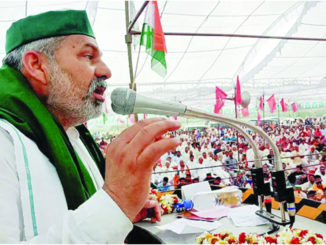
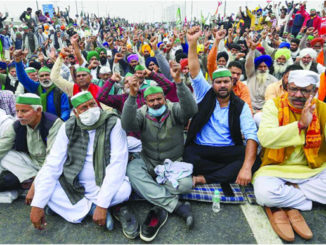
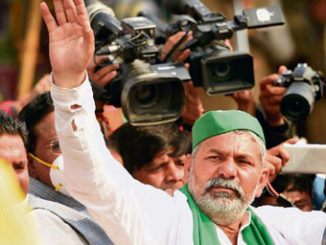
    Rakesh Tikait, who hails from Muzaffarnagar and is the son of the late founder of the BKU, Mahendra Singh Tikait, is at the forefront of the farmers’ agitation. He has managed to mend fences between his community and the Muslims of western UP and in panchayat after mahapanchayat, farmers have vowed to defeat the BJP in 2022.

    If there were any doubts about the BJP strategy for next year’s UP Assembly polls, RSS chief Mohan Bhagwat cleared the air in his annual Dasehra address. He set the stage for a polarized campaign by stoking Hindu insecurities about the minorities and flagging communally sensitive issues. He highlighted two measures which are likely to form prominent themes of the ground-level campaign. One is the compilation of a national register of citizens. The other is a population control law, which is already in circulation in UP in the form of a draft Bill. Bhagwat said that both are necessary to check the “vast differences in growth rates of different religious groups, infiltration and conversion resulting in religious imbalance of the population ratio, especially in border areas.”

    These are dog whistles to unite Hindus by invoking fears of being outnumbered by “others”. In the context of UP, the “others” are Muslims who constitute an estimated 19.3 per cent of the state population and can influence the electoral outcomes in roughly 130 of the 403 Assembly constituencies. It is hardly surprising that Bhagwat used his Dasehra address for a political speech, laying out a majoritarian agenda for the UP polls. A tough battle lies ahead, with the BJP fighting to win a second term amid widespread public disaffection which has given rise to fears that its carefully crafted rainbow caste coalition is unravelling.Yet, it’s an election the BJP must win at all costs, not just because of UP’s clout in terms of the Lok Sabha numbers but also because the Sangh Parivar hopes to replicate its successful Hindutva experiment in Gujarat in this populous heartland state which is home to important Islamic centers of theology and has large, concentrated pockets of Muslims.

    For three consecutive elections since 2014, the BJP has managed to prove that Muslims can be made irrelevant to UP’s electoral paradigm if Hindus rise above caste differences and vote as a bloc. It stitched together a formidable coalition of Hindu social groups consisting of upper castes, non-Yadav backward castes and non-Jatav Dalits to win sweeping victories in the Lok Sabha polls of 2014 and 2019 and the Assembly polls of 2017.

    Much water has flowed under the bridge since 2019, giving rise to deepening concern that this winning Hindu alliance may be coming apart as the 2022 polls approach. Four groups are a major source of worry for the BJP-RSS. One is the lower backward castes. They were a new catch in 2014 and have been a pillar of the BJP’s support base in UP since. Today, they seem to be drifting away for a variety of reasons. For instance, this section has been the worst affected by the increasing joblessness in a Covid-afflicted listless economy. It has also been hit the hardest by the pandemic which raged through UP villages that were ill equipped to handle medical emergencies.

    Pictures of bodies being washed up on the banks of the Ganga during the second wave continue to haunt as do photographs of mass cremations in open fields and on city pavements because overflowing crematoriums were hard pressed to offer a dignified farewell to the dead. A second worry is the Jats whose unstinted support since the 2013 communal violence in Muzaffarnagar has ensured the BJP’s domination of western UP. This support appears to be wavering because of the controversial farm laws. Rakesh Tikait, who hails from Muzaffarnagar and is the son of the late founder of the Bharatiya Kisan Union, Mahendra Singh Tikait, is at the forefront of the farmers’ agitation. He has managed to mend fences between his community and the Muslims of western UP and in panchayat after mahapanchayat, farmers have vowed to defeat the BJP in 2022.

    The recent tragedy at Lakhimpur Kheri, where four Jat Sikh farmers were mowed down by a vehicle belonging to union minister Ajay Mishra’s son has only heightened tensions between the farming community and the BJP.

    The alienation of non-Jatav Dalit groups is a third factor to contend with. Communities like the Passis and Koris have been committed voters, but there are signs that they too are doing a rethink because of a spurt in clashes and tensions between Scheduled Caste groups and UP Chief Minister Yogi Adityanath’s Thakur clan.

    In fact, the Yogi administration is seen as a return to Thakurvad. A Thakur-packed police force running riot in the state amid frequent reports of fake encounters and harassment of ordinary businessmen has served to reaffirm this perception. And, Yogi has done little to dispel it by continuing to protect Thakur police officers accused of various misdeeds. From this flows the fourth reason for anxiety: a perceptible disenchantment among Brahmins who have been core supporters of the BJP ever since the Ram Janmabhoomi movement was launched in the late 1980s. Although community members still dominate the administration, the free run given to a police force dominated by Thakurs has upset Brahmins used to controlling all the levers of power.

    The clouds darkening the electoral landscape leave the BJP with little choice but to follow Bhagwat’s prescription for a polarized campaign. The writing was on the wall when Yogi Adityanath won the tussle with the Modi-Shah duo some months ago and stayed on as UP CM. It is no secret that the top brass in Delhi wanted him out, or at least have his wings clipped by the induction of a former bureaucrat loyal to Modi.

    Yogi triumphed thanks to the backing of the RSS which had decided as early as then that Hindutva would form the main campaign plank in UP. And who better to do the job than a saffron-clad monk whose claim to being a Hindu icon almost rivals that of Modi?

    It is significant that after Bhagwat’s prod, Modi wove Hindu imagery into his speech at Kushinagar while inaugurating the first international airport in the region. The Opposition will have to think out of the box to counter what promises to be a high-pitched divisive campaign.

    (The author is a Political Commentator)

  • Ready for jabs, but unwilling to abandon stir: Farmer leaders

    Ready for jabs, but unwilling to abandon stir: Farmer leaders

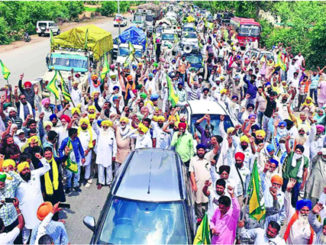
    Farmers on April 21 marched in large numbers from three Punjab borders towards Delhi’s Tikri border despite Covid curbs being in place.

    Claiming that the farmers were fighting both against Covid-19 and the government, farmer leaders said they understood their responsibility during the pandemic, but had no choice but to protest. They appealed to all attending dharnas to get vaccinated. Farmers also reiterated that the dharnas were not causing any obstruction to emergency services.

    Shingara Singh Mann, president of BKU (Ugrahan)’s Bathinda unit and also vice president of the union, led a convoy from Bathinda-Dabwali road along with thousands of farmers.

    He said, “I am 61 years old and I have got myself vaccinated. My second dose is due in the second week of May. No doubt corona is a disease, but not as deadly as being projected. However, our union’s entire state committee has got the first jab and we will be getting the second dose next month. Our president had tested positive for Covid last month and we do understand our responsibilities.”

    The farmer leader added: “If the Haryana government will organise any vaccination camp in Bahadurgarh area, we will appeal to our members to get themselves vaccinated. The government put us all at risk after passing farm laws in September. Instead of managing Covid, they forced us to come out on roads. Otherwise, villagers were busy giving thikri pehras in villages to get lockdown implemented.”

    Jagseer Singh, district committee member of BKU (Ugrahan) from Bathinda, said, “I have also got the first jab and in fact hundreds of us have got the first dose. It is up to a person as to whether to get themselves vaccinated or not. However, we do appeal to people coming to dharna because the government has forced us to sit on roads. So, we should get ourselves vaccinated at least as we cannot avoid dharnas till our demands are met.”

    So far, first dose of the vaccine has been administered to Sukhdev Singh Kokrikalan, general secretary of BKU (Ugrahan), Joginder Singh Ugrahan, president of the union, Roop Singh Chhana, union’ vice president and Jhanda Singh Jethuke, the union’s senior vice president apart from a few other state committee members.

    On Wednesday, Ugrahan led farmers on the Khanauri-Jind highway.

    ‘Op Shakti to courter eviction plans’

    Kokrikalan said, ”As an answer to the Union government’s plans of ‘Operation Clean Up’, we organised ‘Operation Shakti’ and went in large numbers to Tikri despite the fact that farmers are busy with harvesting these days. In Punjab, our pakka dharnas are going on at 40 different places. We are facing problems in procurement of wheat as well in Punjab but still, our batches will continue to go to Delhi borders.”

                    Source: Indian Express

  • Hectic activity at Singhu as farmers renew protest call amid Covid crisis

    Hectic activity at Singhu as farmers renew protest call amid Covid crisis

    It has been over 200 days that farmers have been blocking the Singhu border and other areas just outside Delhi to protest the three contentious farm laws. But even as they continue the fight to get the government back to the negotiation table, a more pressing challenge confronts them now in the form of a second and more potent Covid-19 wave.

    While India, and especially the Capital, is seeing unimaginable losses owing to the second wave, farmers’ unions at the Delhi border have refused to vacate the protest sites and are determined to continue the path of confrontation. In fact, one of the largest farmers’ organisations of Punjab, BKU (Ekta Ugrahan), has called for more people to join the protests starting this week.

    What satellite images show us

    The entire stretch along the Singhu border has turned into a township of sorts extending up to 4 kilometres in length. Hundreds of tents and makeshift accommodations have been set up to house protesters. This location is just on the other side of the Delhi border.

    The entire 4-kilometre stretch imagery is an exclusive image shared by @detresfa_ to India Today, made available by Maxar Technologies and Google Maps.

    Covid concerns

    Growing concerns of a Covid spread in protest sites have often been discounted by protesters by comparing the congregations at Kumbh Mela and in election rallies across different states.

    The protest sites have the potential of becoming a new Covid epicentre. In January 2021, the Supreme Court criticised the Centre for not ensuring strict enforcement of Covid protocols in protest sites. The civil surgeon’s office had offered to set up testing units at the protest sites, but farmers’ unions refused to cooperate.

    BKU (Ekta Ugrahan) general secretary Sukhdev Singh spoke to journalists over concerns regarding the second Covid wave. He agreed there are concerns about the safety of protesting farmers and their families, but this was not the time to call off the protests. He opined that unless the government repealed the farm laws, they cannot afford to lose the gathered momentum.

    Many of the farmers also cited the example of Shaheen Bagh, which used to be the epicentre of anti-CAA protests. The site was forcibly vacated because of Covid, and since then, the movement has lost all the gained momentum.

    Singh, however, assured that they are taking necessary precautions and ensuring that everyone wears a mask and cooperates with officials at Covid testing centres set up near the protest sites.

    Highway blockades and diversions

    It is noteworthy that farmers have been protesting since October 2020 and as per the National Highway Authority of India (NHAI), these highway blockages have resulted in losses amounting to over Rs 600 crore owing to the non-functioning of toll plazas.

    Farmers, on the other hand, claim over 300 of their brethren have lost lives during the protests. The governments of Haryana and Uttar Pradesh have enhanced pressure on farmers’ unions to vacate the protest sites on Delhi’s borders, namely Singhu, Tikri and Ghazipur.

    The Union Home Ministry is working with the two BJP governments, along with the Congress government in Punjab, to make farmers’ unions understand the severity of the second wave. All three state governments have started conducting aerial surveillance of the protest sites and setting up makeshift testing centres for protesters.

    Singhu and Tikri are two of the most important border points between Delhi and Haryana, and these continue to remain closed as of today. The Ghazipur crossing connecting Delhi and UP, however, is open for those travelling to Ghaziabad from Delhi, despite the other elevated highway continuing to remain blocked. Commuters have been asked to take routes passing through Anand Vihar, Loni DND and Apsara borders, and all carriageways connecting the Delhi-Noida Chilla borders are open right now.

    There have also been accusations of protesters blocking the transport of liquid oxygen cylinders for medical use. Farmers’ unions, however, have denied this. The Samyukt Kisan Morcha, a representative body of several protesting farmers’ unions, said on April 21 that they have kept a way open for emergency services since Day One of their agitation.

                    Source: India Today

  • Farmers’ protest will go on for 8 more months: Tikait

    Farmers’ protest will go on for 8 more months: Tikait

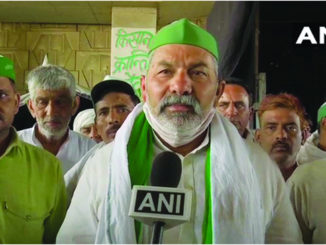
    New Delhi (TIP): Bharatiya Kisan Union (BKU) spokesperson Rakesh Tikait said on Thursday the agitation against the Centre’s three new farm laws will have to go on for eight more months as it is a question of their rights and lands. The movement will pick up speed after May 10, as till then farmers will remain engaged in harvesting wheat crops, Tikait said. “Farmers can harvest their wheat crops till May 10 post which the agitation will pick up speed,” Tikait was quoted as saying by news agency ANI.

    Farmers have been camping at several border points in Delhi for more than four months, seeking a repeal of the laws– Farmers’ Produce Trade and Commerce (Promotion and Facilitation) Act, 2020; the Farmers Empowerment and Protection) Agreement on Price Assurance and Farm Services Act 2020 and the Essential Commodities (Amendment) Act, 2020 — which were cleared by Parliament in September last year.

    Despite several rounds of negotiation and repeated requests by the government, the farmers have remained determined that they would not stop protesting until the laws are completely rolled back and are also firm on their demand for a legal guarantee for the Minimum Support Price (MSP).

    All India Kisan Sabha (AIKS) general secretary Hannan Mollah told ANI on Wednesday that lakhs of protesters would march to Parliament in May. “Modi Government and Parliament are not listening to the farmers then it is our right to go in front of Parliament and raise our demand and we will decide sometime between the middle in the month of May,” he said. Pointing out that the march would be peaceful, he added that they (farmers) will go to Parliament to express their pain and grief before the citizens.

    Several strikes and marches have been staged by farmers across India since last year and the majority of them were peaceful. However, the farmers’ tractor rally on Republic Day (January 26) in Delhi took a violent turn as protesters deviated from the designated route and entered the national Capital after breaking barricades and were also involved in incidents of vandalism. A few protesters reached the iconic Red Fort and hoisted religious flags on it. The Delhi Police has made multiple arrests in the case.

    In January, the Supreme Court suspended the implementation of the farm laws and appointed a committee on January 12 to examine these laws and further recommend changes. The committee on Wednesday submitted its report and the apex court will hear the matter on April 5. Speaking to Hindustan Times, one of the expert members in the committee Anil Ghanwat said that it is entirely up to the apex court to act on the recommendations given.

  • Farmers prepared to continue protest till November, says BKU leader Rakesh Tikait

    Farmers prepared to continue protest till November, says BKU leader Rakesh Tikait

    Farmers agitating against the Centre’s farm laws are prepared for a long haul, BKU leader Rakesh Tikait said on Thursday. Tikait, who is at the helm of the farmers’ protest in Ghazipur, was addressing a mahapanchayat at Assandh in Haryana’s Karnal district. Asserting that protesting farmers will not relent unless the laws are repealed, Rakesh Tikait said, “We have made preparations till November-December.” Spokesperson of the Bharatiya Kisan Union (BKU), Rakesh Tikait reiterated his demand for withdrawal of the agriculture reform laws and the provision of a legal guarantee on MSP. Referring to his late father Mahender Singh Tikait, Rakesh Tikait said, “Tikait sahib used to say that when Haryana stands in support of an agitation, government shivers.”

    Farmer leader Tikait went on to say that the Centre’s farm laws will have an adverse impact not just on farmers but also on other sections. “This fight is not just of farmers but it is also for the poor, small traders,” he said.

    During his speech in Karnal on Thursday, Rakesh Tikait also said that the central government tried to break the agitation by dividing it on the lines of Punjab and Haryana. That did not work, he said adding that the protesting farmers have shown that they can look after their crops and the agitation at the same time.

    “There is the possibility that in the name of corona, restrictions may be imposed but our agitation will go on. We will follow all the guidelines, but we will not end our dharnas,” Rakesh Tikait said.

  • Tikri farmers shun jab, to be sensitized

    Tikri farmers shun jab, to be sensitized

    Jhajjar (TIP): Despite the best efforts of the district health authorities, farmers camping at the Tikri-Bahadurgarh border have so far been reluctant to get vaccinated against Covid-19. For the second consecutive day today, no farmer turned up for vaccination at a booth set up at the protest site. The dismal response has forced the health authorities to plan holding an awareness campaign at Tikri. “We have been contacting farmers for vaccination, but they refuse to take jab. They often claim that the Covid-19 pandemic is nothing but a conspiracy of the Centre to divert the public attention,” said an official. Parminder Singh of Moga claimed no farmer had been infected for three months at the stir site hence there was no need for vaccination.

    “The issue will be discussed in the next meeting of the Sanyukt Kisan Morcha to take a final call in this regard,” said Purushottam Singh Gill, a senior BKU leader.

    Civil Surgeon Dr Sanjay Dahiya said efforts were being made to convince the protesters.

    Dr Vinay Deswal, Senior Medical Officer, said health officials had been directed to meet the farmers to motivate them. No one had been vaccinated, he added.

                    Source: The Tribune

  • Farmers ready to protest till Modi govt lasts, says Narendra Tikait

    Farmers ready to protest till Modi govt lasts, says Narendra Tikait

    New Delhi (TIP): Farmers are ready to continue protests on the borders of Delhi, against the three agricultural laws, for the remaining three and half years of the Narendra Modi government’s second term, said farmer leader Narendra Tikait. The protests cannot be “culled” he said. The farmers’ protest has been continuing for more than 100 days. Narendra Tikait does not hold any official position in the Bharatiya Kisan Union (BKU), formed by his father, Mahendra Singh Tikait, in 1986. He mostly focuses on the family’s farming activities but is as vocal on farmers’ issues as his two elder brothers, Naresh and Rakesh Tikait, who are leading from the front.

    Speaking to news agency PTI, at his home in Muzaffarnagar’s Sisauli,  the 45-year-old farmer also said his two brothers and the entire Tikait family would leave the protest if any wrongdoing is proved against a single family member. Narendra Tikait rejected allegations of making money from the agitation.

    The eldest brother, Naresh Tikait is the BKU president, while Rakesh Tikait holds the position of national spokesperson of the organisation. BKU under Mahendra Singh Tikait’s leadership in 1988 had laid a virtual siege of Meerut demanding higher prices for sugarcane, cancellation of loans and lowering of water and electricity rates. The same year, BKU held a week-long protest in Delhi’s Boat Club to focus on the plight of farmers.

    After Mahendra Singh Tikait’s death in 2011, Naresh and Rakesh Tikait have been leading the BKU in various roles, though a number of factions have emerged in various parts of the country over the years.

    Narendra Tikait said the Centre thinks that it can “cull” the farmers’ protest like it has “culled” other agitations in the past using various tactics. “I am here in Sisauli but my eyes are on the protest,” he said, adding that he keeps visiting Ghazipur border where hundreds of farmers and BKU supporters are camping since November 2020.

    “This government has a misconception, probably because it never faced such kind of protest, but we have seen agitations and been part of those for 35 years. This government only has an experience of facing smaller protests and of getting those culled through various tactics,” Mr Tikait said. “They cannot crush this protest by any means. This will continue for as long as our demands are not met. This government has a tenure of three and a half years left, and we can continue the movement till the end of its term,” he said.

    “If the government keeps saying again and again that crops would be bought at MSP, then why cannot they give this in writing? They keep harping about giving subsidies on LPG cylinders, but that subsidy is also gone,” he said. Mr Tikait alleged that the Centre has done the same to the school education sector where private institutes are thriving and minting money while the condition of government facilities are suffering.

  • After Tikait’s emotional appeal, farmers swell at Delhi borders

    After Tikait’s emotional appeal, farmers swell at Delhi borders

    New Delhi/Meerut (TIP): Thousands of farmers poured into Ghazipur on the eastern fringes of Delhi on Friday, January 29,  after an emotional appeal for support by farm leader Rakesh Tikait, indicating that the government crackdown on the two-month-old agitation following violence on Republic Day may have partially backfired.

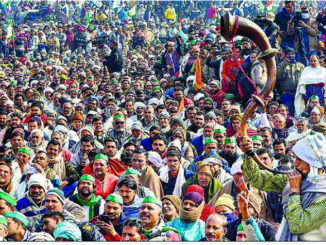
    Farmers from 10 districts in western UP, a stronghold of the influential Jat community, congregated at a massive gathering in Muzaffarnagar, where they announced the social boycott of anyone not backing the movement. In Haryana, khaps, or clan-based bodies, vowed to send at least one person from each family to bolster the ongoing stir against three agriculture laws passed in September.

    Throughout the night, cultivators took tractors, trucks and motorbikes to reach the Delhi border, where numbers swelled and morale mounted with the arrival of a new contingent of protesters determined to defend the honour of Bharatiya Kisan Union (BKU) leader Tikait. While just about a thousand farmers had gathered at Ghazipur on Thursday, the number swelled around 10,000 on Friday.

    “If the police use force on us for not leaving, it is not a problem. But if some political organisations attempt to trouble us, that is unacceptable…Now, I will not surrender (to the police), we’ll continue to protest here,” Tikait told the gathering. It was a dramatic reversal from Thursday afternoon, when dwindling numbers, bitter public fallout of violence by farmers at the Republic Day tractor rally, and increasing police presence, left the protesters demoralised.

    The Ghaziabad administration served Tikait, son of legendary farm leader Mahendra Singh Tikait, with an ultimatum to vacate the site or face penal consequences, part of a wider crackdown on the agitation since January 26. Farmers also said that the authorities cut off their water and power supply to the site.

    But instead of caving in, Tikait broke down in front of television cameras and vowed to not leave the site until the government repealed the laws. “If the farm laws are not repealed, Rakesh Tikait will commit suicide,” he had said, biting back tears. These visuals were beamed on television channels and went viral on social media, triggering calls for mobilisation from temples, mosques and panchayats across western UP throughout the night. Tikait’s resolve to not drink water unless it was brought from his village in particular touched a chord with the people, who carried water in bottles and pouches from their homes in the heartland to the Capital’s edge.

    Prabhjeet Singh, a farmer from Muzaffarnagar who returned to Ghazipur a day after he left for his home, said, “We couldn’t leave him (Tikait) to battle it alone when he needed us the most”

    By morning, the agitation seemed to have regained some of the momentum it lost when on Republic Day, farmer groups broke through barricades, clashed violently with police, ran riot on the Capital’s streets, and stormed the Red Fort, hoisting the Nishan Sahib, the flag of the Sikhs, on its ramparts.

    The violence and vandalisation were widely condemned and sparked statements of remorse and anguish from farm groups across north India, even as unions leading the stir blamed fringe elements, a government “conspiracy”, and Punjabi actor Deep Sidhu for stoking passions.

    The improvement in morale was visible in the principal protest site at the Singhu border despite violence by a mob of around 200 people earlier in the day. The Samyukt Kisan Morcha, the umbrella body leading the stir, said farmers will hold a one-day hunger strike to mark Mahatma Gandhi’s death anniversary on January 30.

    “Today, we just saw farmers arriving in Ghazipur. In a couple of days, more protesters will arrive at Tikri, Singhu, and Shahjahanpur border from Haryana, Punjab, Uttar Pradesh, and Rajasthan,” said Darshan Pal, president of Krantikari Kisan Union Punjab. Ghazipur is the smallest of the three protest sites — after Singhu and Tikri on the Capital’s northwestern and western borders respectively — where farmers have camped since November.

    But on Friday, it was the focal point of the agitation as politicians, journalists, ordinary people made a beeline to meet Tikait, and union leaders scrambled to put up more tents, and set up community kitchens for the incoming crowds. Delhi’s deputy chief minister Manish Sisodia met Tikait and extended unconditional support on behalf of chief minister Arvind Kejriwal. “It is in such tough times that one aandolankari (protesters) come to help other aandolankari (protesters),” Tikait responded. Other politicians to visit were Rashtriya Lok Dal leader Jayant Chaudhary, UP Congress chief Ajay Kumar Lallu, and Congress leader Deepinder Singh Hooda. Opposition politicians across the country also extended their support.   Source: HT

  • Centre-farmers talks : Ahead of 9th round, Mann recuses himself from SC-appointed committee

    Centre-farmers talks : Ahead of 9th round, Mann recuses himself from SC-appointed committee

    NEW DELHI (TIP): Ahead of the ninth round of Centre-farmer talks on Friday, January 15, there have been some major developments on the ongoing agitation. Amid growing criticism, including from his own union, BKU’s Bhupinder Singh Mann (one of the four experts nominated by the Supreme Court for negotiations with farmers protesting against the three farm laws) , on January 14,  recused himself from the committee.

    Meanwhile, amid the growing social media buzz on unions “tractor parade” on the Republic Day, farmers’ leader Balbir Singh Rajewal said the January-26 plan will be revealed after the meeting with the Union ministers. He also urged everyone to maintain peace and harmony and not pay heed to “false and unfounded inflammatory propaganda and rumor mongering” on the tractor march to “malign and scuttle the movement”.

    Even as Rajewal said unions will finalize the contours of January 26 tractor march after their meeting with Central ministers on Friday, BKU leader from Uttar Pradesh Rakesh Tikait announced the program for the day saying that farmers will hold simultaneous parade from Red Fort to India Gate on the Republic Day.

    “The Republic Day Parade has been cut short, it will now be from Rashtrapati Bhawan to India Gate, I am told. We will march from Red Fort to India Gate and meet it there. It will be a historic event,” Tikait said in what is being seen as breaking ranks in the agitation.

    Agriculture Minister Narendra Singh Tomar expressed hope of positive discussions on January 15.

    Clearing the confusion over the fate of tomorrow’s meeting (the only outcome of the January-8 talks) after the SC ruling on Tuesday and Mann recusing from the court-appointed panel today, Tomar said the talks will be held as scheduled. While they have already specified that they will not appear before the court-appointed panel, farmer unions said they were ready to attend the scheduled talks with the government.

    In his statement, Mann said he was thankful to the Supreme Court for nominating him to the committee to start a dialogue with unions on the laws. However, as a farmer leader and union leader, “in view of the prevailing sentiments and apprehensions amongst the farm unions and public in general, I am ready to sacrifice any position offered or given to me so as to not compromise the interests of Punjab and farmers in the country, I am recusing myself from the committee and I will always stand with my farmers and Punjab,” Mann said after the union he headed also distanced itself from him.

    After being selected by the SC, he had urged everyone to put forward their views before the panel.

    Union leaders claimed others on the panel will “also resign soon”.

    Rajewal said efforts were being made to malign the agitation through ‘dushprachar’ (false propaganda). “The whole world is watching. This is not just a farmers’ movement. It has become a mass movement across the country. A movement is successful only when it is completely peaceful, if there is violence it collapses.

    “Misconceptions/false inflammatory propaganda are being spread about the 26 January movement. Some people are saying that the national flag should be hoisted at the Red Fort, some are saying the Parliament will be stormed,” he said, accusing “anti-farmer forces and government agencies” of trying to malign and scuttle the peaceful agitation of farmers and common people. Urging everyone to maintain peace and calm, he told the farmers that the tractor march will be “from” Delhi borders. The exact outline of the programme for January 26 will be given after tomorrow’s meeting.

                    (With inputs from TNS)

    Farmers to attend ninth round of talks with government without ‘much hope’

    New Delhi (TIP): Protesting farmer leaders on January 14 said they will attend the ninth round of talks with the government amid indication that it may be the last such meeting with the Centre, but added that they don’t have much hope as they will not settle for anything less than the repeal of the contentious farm laws.

    Since a Supreme Court-appointed panel on farm laws is likely to hold its first meeting on January 19, the meeting on January 15 between with the government and the unions may be the last one.

    Bhartiya Kisan Union (Ekta Ugrahan) Joginder Singh Ugrahan told PTI, “We are going to hold talks with the government tomorrow. We don’t have much hope from the Friday meeting as the government will cite the SC-appointed panel. The government doesn’t have good intention to resolve our issues.” Mr. Ugrahan said that the unions do not want any committee, adding “we just want a complete repeal of three farm laws and legal guarantee on minimum support price for our crops”. He said that farmers will not call off their protest until their demands are met.

    Another farmer leader, Abhimanyu Kohar, said that government knows that the court cannot repeal the laws and added that the Centre should stop playing with the sentiments of farmers who have been camping at several Delhi borders since November 28.

    He said that forming a committee is not a solution, adding that the new farm laws have been enacted by Parliament and the court cannot do much. While the previous eight rounds of negotiations have failed to end the protests continuing for several weeks on various borders of the national capital, Agriculture Minister Narendra Singh Tomar said earlier in the day that the government is hopeful of positive discussions at the scheduled January 15 meeting.

    In an interview to PTI, Anil Ghanwat, a member of the Supreme Court-appointed committee, said that the panel will have no “ego or prestige issue” if it has to go to farmers’ protest sites to talk to them.

    On the government holding parallel talks with protesting farmers scheduled for January 15,  Ghanwat said, “I think this will be their last meeting with the government. They will say henceforth you (farmers) have to sit with the committee, which will give a report to the Supreme Court.”

    Agriculture Ministry denies RTI query on farm law consultations

    New Delhi (TIP): The Agriculture Ministry has denied a Right to Information (RTI) request for details on pre-legislative consultations on the farm reform laws, saying the matter is sub judice.

    In its response, the Ministry cited the clause from the RTI Act that exempts information which has been expressly forbidden to be published by a court of law or whose disclosure would amount to contempt of court.

    This comes after an earlier response claiming that the Ministry did not have any record of such consultations.

    RTI activist Anjali Bhardwaj had filed her request on December 11, asking for specific details regarding the stakeholder consultations held before the Centre promulgated the three ordinances on agricultural reforms in June. Within the 30-day period given to respond, two Central Public Information Officers (CPIOs) in the agricultural marketing divisions of the Ministry disposed of her request, saying that they did not have any record of such consultations.

    The Hindu had reported this on January 12, a day after the Ministry told the Supreme Court that farm unions were “peddling an erroneous notion” that no consultations were held.