Tag: Black Lives

  • Parliament of the World’s Religions 2023 impels faiths toward activism

    Parliament of the World’s Religions 2023 impels faiths toward activism

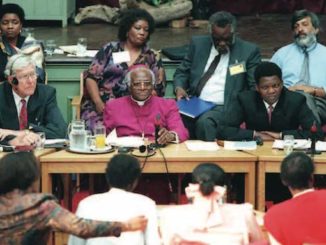
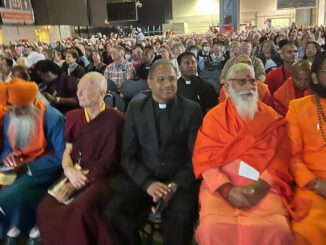
    Jesse Jackson is honored.
    The Sikh community served the langar ( free lunch) to all convention attendees over 5 days.
    Author at the Mormons’ booth.
    • By Parveen Chopra

    CHICAGO (TIP): Parliament of the World’s Religions (PoWR) 2023 convened in Chicago from August 14-18 under the chairmanship of an Indian American, Nitin Ajmera, tried to propel faith groups towards activism. The title makes the focus clear: ‘A Call to Conscience: Defending Freedom & Human Rights’.

    Knowing that PoWR has emerged as the biggest interfaith movement in the world, they are pushing for faith groups to get involved in global issues like social justice and climate action. Quite a few symposiums scheduled for the 5-day event had these themes. The presence of Black Lives Matter in the exhibition area also made a point.

    When queried, Nitin Ajmera, a Jain CPA from Plainview, NY, explained to me, “Our pressing problems are not about respecting each other’s religion anymore. What we are now striving for is how our faith and religious groups support solutions to global problems. What are we going to do about climate change that is going to make our lives difficult in 30 to 50 years? What are we going to do about issues like inequality?”.

    However, Eric Lawson, senior leader of Brahma Kumaris, who is a regular at PoWRs, is unsure of the Parliament’s transition away from reflection, introversion, and qualities of meditation.

    PoWR, as we know, was revived in 1993, a century after its first convening in Chicago in 1893, made famous by the electric speech by Swami Vivekananda that became an important contact between the East and the West.

    According to the organizers, over 6,500 people from 95 countries belonging to over 200 religious-spiritual groups ranging from Buddhists to Zoroastrians attended the massive event at the McCormick Place convention center in the Windy City. An estimated 500 people flew in from India. The diversity of humankind and the bonhomie witnessed among people, many wearing their colorful ethnic attires was worth a watch.

    The convention was opened by the Mayor of Chicago, Brandon Johnson. US ambassador-at-large for religious freedom, Rashad Husain, said the US strives to protect religious freedom for all everywhere in the world. Dignitaries who sent video messages included UN Secretary-General António Guterres, former Speaker Nancy Pelosi, and US Senator Dick Durbin.

    Religious leaders who graced the convention included Cardinal Blasé J. Cupich from Chicago, Swami Ishatmananda of Vedanta Society – Chicago, and Bhai Mohinder Singh, Chairman of Nishkam Sewak Jatha, UK.

    The Parade of Faiths on August 13 which preceded the Parliament, was a colorful affair with hundreds of people from different faith groups based in Chicago marching near the convention venue. The Sikh group was visibly the largest. The Sikh community also served the langar lunch for all convention attendees over 5 days. The community raised half a million dollars for the purpose, an insider shared, adding that local trade unions resisted the free meals inside the venue, so they had to pitch tents outside for langar.

    At the parade, I spotted Hindu spiritual guru Amma Sri Karunamayi ensconced in a ceremonial horse-driven carriage, and Jain guru Acharya Lokesh Muni.

    With over 600 breakout panels and workshops, it was hard to decide which ones to attend. You also needed many hours to browse at the 200 booths in the exhibition hall, to gawk at the art exhibits, or to walk the labyrinth. I made it a point to attend the soul-satisfying Sacred Music Night on August 17, where the wheelchair-bound civil rights icon Jesse Jackson was honored.

    (Parveen Chopra, founder of ALotusInTheMud.com, attended the Parliament of the World’s Religions )

  • The best way to respond to our history of racism:  A Truth and Reconciliation Commission

    The best way to respond to our history of racism: A Truth and Reconciliation Commission

    To create lasting change in the United States, we must do more than reform the police. We must reconcile with our history — with race and with racism. And to do that, there is no better model to guide us than South Africa’s

    By Olúfẹ́mi Táíwò

    The killings of George Floyd, Ahmaud Arbery, Breonna Taylor and Rayshard Brooks are the latest in a continuing pattern of violence inflicted by state agents and citizens, mostly white, against Americans of African descent. Their deaths have stoked strong denunciations and calls for justice and change, to do something, anything, to put an end to such incidents

    But to date, there has been very little interest in real change from the highest levels of political leadership. Through executive order, the president has issued modest police reforms, and congressional legislation has already stalled. To create lasting change in the United States, we must do more than reform the police. We must reconcile with our history — with race and with racism. And to do that, there is no better model to guide us than South Africa’s.

    We are at a fork in the road of the kind that made South Africa, during the last days of apartheid, opt for the Truth and Reconciliation Commission model as the preferred path to a new society. South Africa chose to enter into the record the ugly history of deprivation, violence and denial of humanity of black people perpetrated by the white-dominated state and other groups within it, so that no one could reasonably disavow what happened or claim ignorance of what was done in their name and to their benefit.

    Every state agent who sought forgiveness from the commission had to give a full account of the crimes they committed as state agents in granular detail and identify their victims’ names, educating the population about how low their society had sunk while apartheid lasted. That is how the truth played out; South Africa now has a full record of this history, for not only South Africans but all who desire access.

    This same process is what the United States needs in order to confront the truth about what it did to black people throughout its history.

    The United States has faced many past forks in the road. At its inception, the country could have gone full steam ahead in building the utopia promised by its founding fathers. Instead, it chose slavery. It had another turning point at the conclusion of the Civil War when it chose white reconciliation at the expense of full citizenship for black compatriots. There was yet another opportunity at the conclusion of the Jim Crow era; again, the United States elided full citizenship for black Americans by taking the easy path of trying to institute progress through litigation that is constantly being challenged and reversed.

    At every step, the United States refused to acknowledge the wrong inflicted on its black citizens. But the nation is once again at a decision point.

    We are dealing with a mind-set — including among nonwhite immigrants — that was constructed in a time of slavery and used to justify the dehumanization of black Americans. Black Americans and we, their immigrant cousins, are never routinely considered to have a place in America’s space. Our citizenship has never been full nor taken for granted: it is always asterisked. This mind-set must be the subject of a national conversation.

    We needed an amendment to the Constitution to secure our citizenship even when we were born on U.S. soil and nonblack immigrants were routinely admitted. We had to have our equality with others litigated in courts. We had to have our right to live anywhere we want and can afford restated and guaranteed by additional legislation and court judgments. We have had our right to vote unimpeded periodically subject to renewal by Congress. And we must continue to suffer the indignities of having our fellow citizens act as if only we have problems.

    Over the past century, other societies realized they had wronged segments of their populace either through racial discrimination, genocide or military misrule. They accepted that they had fallen short of what kind of society they desired to be, and that they had to reconcile with the undeserving victims of their deeds. Reconciliation required acknowledging and atoning for the wrong done — asking for their victims’ forgiveness while resolving never to repeat the wrongs and working to restore their victims to full humanity as fellow citizens.

    The United States and South Africa share similar histories of denying the humanity of black people. In South Africa, there is collective sharing of the burden of what the country did to its black citizens and understanding that black South Africans deserve to be made whole if South Africa is to become the nation of its modern founders’ dreams. South Africa is a long way from realizing this dream, and the reluctance of white South Africa to reciprocate the generosity of the black majority is scandalous. But the foundation laid by the truth remains an indispensable starting point.

    To become the perfect union its founders intended, the United States must make its black citizens whole, without legal equivocations or constitutional hair-splitting. That is the ultimate argument for a Truth and Reconciliation Commission in our land. It is the precondition for a different future.

    (Olúfẹ́mi Táíwò is professor and chair of the Africana Studies and Research Center at Cornell University)

    (Source: The Washington Post)

  • Indian-American organization Indiaspora condemns racism, says will strive for just AmericaIndian-American organization Indiaspora condemns racism, says will strive for just America

    Indian-American organization Indiaspora condemns racism, says will strive for just AmericaIndian-American organization Indiaspora condemns racism, says will strive for just America

    WASHINGTON (TIP): An Indian-American organization has resolved to work together with the African-American and other minority communities for a more just America.

    This comes after 46-year-old George Floyd, an African-American, died in Minneapolis on May 25 when a white police officer pinned him to the ground and knelt on his neck while he gasped for breath.

    “At Indiaspora, we stand strongly and squarely with the African-American community, as we strive together for a more just America. Their struggle is ours too. Indeed, aided by allies from different communities, it needs to be our national purpose,” Indiaspora said in a statement, June 11.

    The Indian-American diaspora, it said, is mindful of the fact that had it not been for the civil rights movement and the Immigration and Naturalization Act of 1965, many of its members would not be in the US today.

    “But the letter of the law does not inevitably or automatically translate into the experience of the people. We, too, are not immune from racial persecution, as demonstrated by well-chronicled events that have occurred in the distant and recent past,” Indiaspora said.

    “So we have more work to do. More to do for Floyd’s six-year-old daughter, Gianna,” it said.

    “Therefore, we resolve to work together, hand in hand, with the African-American and other minority communities, until we can all be assured of successfully encashing our collective promissory note, set forth in America’s constitutional declaration that we are all created equal, in the bank of justice. Let us end systemic racism,” Indiaspora said.

    (Source: PTI)

  • Student writes ‘BlackLivesMatter’ 100 times, gets into Stanford University

    Student writes ‘BlackLivesMatter’ 100 times, gets into Stanford University

    NEW YORK (TIP): An 18-year-old Bangladeshi-American Muslim student has won a place at the prestigious Stanford University after writing ‘#BlackLivesMatter’ a 100 times in the essay section of his application.

    Ziad Ahmed said he was “stunned” when his innovative approach to the application process, which he described as “unapologetic activism”, paid off.

    On his Stanford University application, Ahmed was posed the question, “What matters to you, and why?”

    The activist from Princeton, New Jersey, decided to use the opportunity to write “#BlackLivesMatter” a 100 times.

    To his surprise, the answer caught the attention of the California school’s admissions office and Ahmed received his acceptance letter on Friday.

    He proudly tweeted his answer and his acceptance letter to the prestigious American university, which boasts 20 applications per place.

    “I was actually stunned when I opened the update and saw that I was admitted,” Ahmed told Mic.

    “I didn’t think I would get admitted to Stanford at all, but it’s quite refreshing to see that they view my unapologetic activism as an asset rather than a liability,” he said.

    Ahmed said as an ally of the black community, he felt it was his duty to make a statement and speak up against the injustices he witnesses. “As an ally of the black community though, it is my duty to speak up in regards to the injustice, and while this was not a form of ‘activism’ as it was simply an answer in a college application. I wanted to make a statement,” he said. (PTI)

  • Race Matters in US

    Race Matters in US

    “Even with Trump’s supporters being 90 per cent white, he was trailing Hillary Clinton because of the demographic diversity in the US. Sadly, the damage he has done to the psyche of both the whites who believed in his delusory “movement” to restore America to its roots, and the minorities he relentlessly denigrated, will outlast him. Meanwhile, the terror of racism lives on, stronger and emboldened than before”, says the author.

    The history of the United States is founded on the backs of African slaves purchased and brought to its shores to work in the most abject conditions under white ownership to make colonies more habitable. Human beings were bought and sold like cattle and treated worse than the animals. George Washington, the first President of an independent America, promised to make liberty, equality and justice the bedrock of the nation, but had African slaves working for him. It has been a terrible legacy that America has tried to shake off.

    Slavery was subsequently abolished and affirmative action put in place with the rights of blacks and other minorities acknowledged and legitimatized through changes in political and social policy. With the awful past buried, America was ready to move on. With the whites in overwhelming majority, the post-war industrial boom and jobs aplenty, whites sat content at the top of the pyramid. For the middles class upwardly mobile majority, the blacks had been given their rights, and could shape their lives as they pleased as long as they did not encroach on the privileged status of the whites. Matters of race went largely underground. However, racism may have been submerged under a thriving economy but social divisions based on race solidified and were marked by frequent sordid incidents of white against black crime, usually in the Confederate Southern States, where white power still reigned supreme. Since there was no economic insecurity, there was no immediate threat from any minority and the country hummed along, creating millions of jobs in manufacturing, and helping Americans realize their dream that if you work hard, you will always have a job, and the future will be secure. The awareness of race was very much in place, but was not perceived as a political, economic or social threat.

    Several factors upended that dream scenario. Waves of immigration from Asia, Mexico and Africa began to change the demographic map. America entered its post-industrial era, where millions of jobs evaporated with the demise of heavy industry and the shift of manufacturing overseas. Previously thriving white dominated swathes became ghost towns, occupied by disaffected jobless poorly educated factory workers. While the new immigrants strived to succeed in their new home, the disillusioned native population became increasingly resentful at the government, at the entitlement policies towards the blacks, the Latinos and other minorities who all began to turn to alcohol and drugs to soothe their discontent.

    The Recession of 2008 further exacerbated a situation already teetering on the edge. Middle class whites now began to lose their jobs and fell behind, losing their homes, their security and watching their American Dream shatter with no hope of resuscitation. The recession affected everyone, particularly the minorities already living on the edge but the white majority, facing an unimaginable dire future, needed to assign blame. Consequently, all ignorant white fingers pointed to the immigrants who had stolen their jobs. Furthermore, anger and resentment began to simmer against blacks who they had always believed were intellectually and culturally inferior. Latinos were blamed for swooping the low-paying service jobs, accepting lower wages while the Asians who looked different and appeared to be a cultural and social anomaly, became a formidable threat.

    This stupendous rise in the non-white population was unstoppable and now poised to change the political landscape of the country. In came the first black President of the United States, Barack Obama with an overwhelming support from the non-white and educated white population. With his election in 2008, the white elite declared the death of racism, while the uneducated blue-collar whites deepened their resolve to blame the “other” for all their ills. The working class was historically a Democratic stronghold, but the election of a black President was intolerable and presaged the death of white supremacy. This seething racism was legitimized by the conservative media which thrived on projecting Obama as anti-American, a Muslim, a wolf in black clothing, someone to be despised, overturned at the earliest.

    The demographic constitution of America had now gone through a sea change. For the first time in the history of the country, children under five are a non-white majority, and it is rightly projected that by 2050 whites will be a minority. In fact, no race or ethnicity will be in majority; the country is moving towards a diverse plurality which is radically reshaping the entire political, socio economic and cultural landscape irreversibly and for the better. But it has also been a catastrophic blow to the demographic hegemony of the whites. To see themselves as an underclass of under educated, in the throes of drugs and alcohol, equalizes them with the blacks who have lived like that for generations. The picture is frightfully real and one that they would do anything to reverse. Contemporary America abounds with the violence of racism. The time, therefore, was ripe for a Presidential candidate like Donald Trump, a blustering bigot to successfully tap into this simmering racial hatred breeding in a bed of economic and social impoverishment, and turn it onto a campaign to restore American greatness to where and how it was when the whites were dominant and color of the skin determined status in life. He gave voice to racism that had been palpably felt but not overtly expressed. He brought differences of race, class and ethnicity to the forefront of the political narrative and underpinned his entire pitch on the divisions. It was the whites against the “other”; the anger was unleashed, and his populist, nativist, demagoguery struck a powerful chord with the disgruntled whites who began to dream of a country they once knew. Racism was once again legitimized and the country riven by serious divisions.

    Even with Trump’s supporters being 90 per cent white, he was trailing Hillary Clinton because of the demographic diversity in the US. Sadly, the damage he has done to the psyche of both the whites who believed in his delusory “movement” to restore America to its roots, and the minorities he relentlessly denigrated, will outlast him. Meanwhile, the terror of racism lives on, stronger and emboldened than before.

    (The author is a Professor in the Department of English & Cultural Studies, Panjab University, Chandigarh)


  • Police in California kill black man acting erratically

    Police in California kill black man acting erratically

    LOS ANGELES (TIP): Police in a California city fatally shot a black man who had been acting erratically, prompting protesters to quickly gather and accuse officers of an unjustified killing.

    The shooting on sept 27 afternoon in El Cajon, 15 miles (24 kilometers) east of San Diego, was the latest in a string of killings of black men by police that have fueled outrage across America.

    Two police officers encountered the unidentified man, who was in his 30s, behind a restaurant after receiving reports of someone “not acting like himself” and walking in traffic, El Cajon police said in a statement.

    The man, who was pacing back and forth, refused officers’ orders to take his hand out of his pocket, police said.

    According to the police account, at one point, as the officers tried to talk to the man, he “rapidly drew an object from his front pants pocket, placed both hands together and extended them rapidly toward the officer taking up what appeared to be a shooting stance.”

    Police Chief Jeff Davis did not say what the object was, but told a news conference that no firearm was recovered.

    The officer whom the man was pointing at fired his weapon “several times,” while the second officer simultaneously fired his Taser, police said. They released a photograph taken from video footage, showing the man in a black tank top and blue jeans seemingly aiming at the officer.

  • Indian American Official Leads Drive Against Police Brutality

    Indian American Official Leads Drive Against Police Brutality

    NEW YORK (TIP) — An Indian American official spearheading the Obama administration’s campaign against police brutality and mistreatment of minorities has issued a scathing indictment of the city of Baltimore, accusing its police force of violating the Constitution and federal anti-discrimination laws.

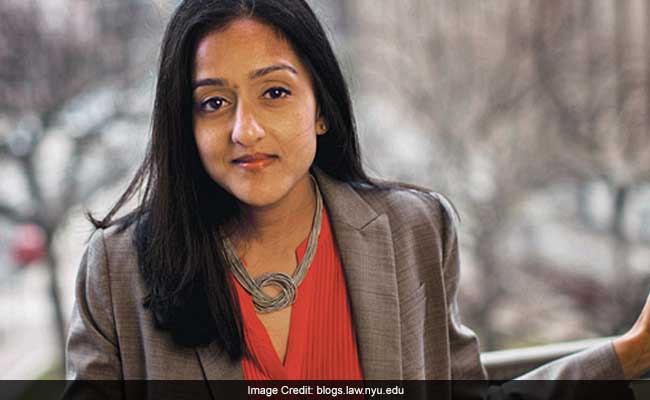
    The head of the federal Civil Rights Division, Vanita Gupta, who oversaw an inquiry into police brutality and excesses in the city, said on Aug. 8 that its African American community “bore the brunt.”

    Speaking at a news conference to release a Department of Justice report from the inquiry, she said her agency had entered into an agreement with Baltimore to reform the police.

    Gupta, who is also the Principal Deputy Assistant Attorney General, is the most prominent of several Indian Americans working in the civil liberties arena.

    The federal inquiry was launched after riots broke out in Baltimore last year during protests against the death of an African American man, Freddie Gray, while in police custody.

    All the six police officers charged in the case were either acquitted or had the charges withdrawn leading to outrage among African Americans and civil liberties activists.

    The Baltimore incident came after the police shooting of an unarmed teenager in Ferguson, Miss., the previous year sparked massive riots and turned national attention to police killings of African Americans.

    Several such incidents gave an impetus to the nationwide Black Lives Matter movement against alleged police atrocities on African Americans.

    While the U.S. government routinely accuses other nations of human rights violations and brutality against minorities, the Baltimore report and Gupta’s actions against several cities turn a rare government spotlight on what goes on within the U.S.

    Baltimore police, she said, engaged in a pattern of making unconstitutional stops, searches and arrests; using excessive force; muzzling constitutionally-protected expressions, and using strategies that disproportionately targeted African Americans.

    Gupta said the inquiry found that 44 percent of the people stopped by police in Baltimore were in two small African American neighborhoods that had only 11 percent of the city’s population.

    The report released by her said that complaints of misconduct were not properly investigated or followed up by officials and were often covered up. Besides improper use of violence, the report said police coerced sex from people.

    Gupta has been working to reform police across the country amid growing protests against discrimination. Among the cities she has taken on are Chicago, Cleveland, and Newark, N.J.

    Her broad portfolio includes discrimination in voting, housing, banking, education and employment against religious, ethnic and racial minorities, immigrants, gays and transgender people.

    In May, she filed a case against the state of North Carolina which passed a law requiring people to use the public bathrooms according to their sex. Gupta said the law discriminates against transgender people because they cannot use the bathrooms of the sex they identify with.

    Gupta shot to fame when straight out of New York University Law School she exposed police corruption and discrimination in Tulia, Texas. In 2003, she won the release of 40 African Americans and six others falsely convicted on drug charges.

    She was then working for the Legal Defense and Education Fund of the National Association for the Advancement of Colored people.

    Before joining the federal government, she was the Deputy Legal Director of the American Civil Liberties Union.

  • James O’Neill to succeed Bill Bratton as NYPD Commissioner

    James O’Neill to succeed Bill Bratton as NYPD Commissioner

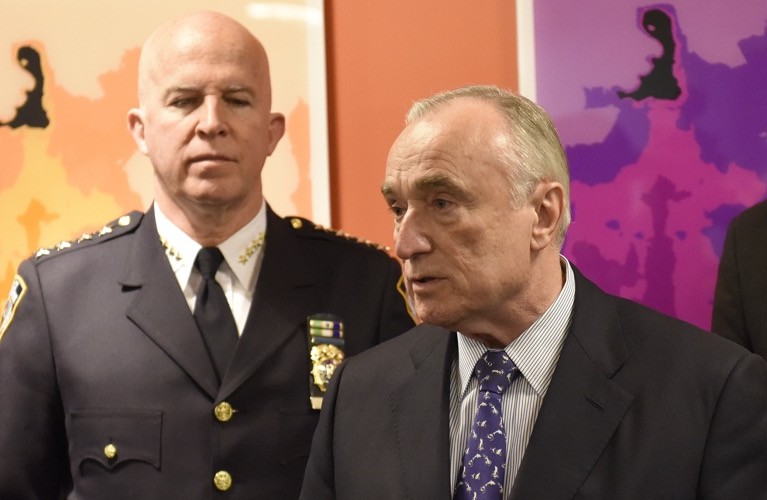
    NEW YORK CITY (TIP): NYPD Commissioner Bill Bratton is stepping down as the city’s top cop and will be replaced by Chief of Department James P O’Neill in September, Mayor de Blasio announced Tuesday, August 2.

    Chief of Department James P O'Neill
    James P. O’Neill
    Twitter @NYPDChiefofDept

    De Blasio lauded the commissioner’s contributions to New York City since taking over the job in January 2014 and praised the man who will replace him, a veteran cop with more than 30 years on the force who grew up in the city and whose experience he said will advance the work of neighborhood policing.

    “I don’t think anyone could’ve imagined a more productive 31 months. We will never forget or fail to honor the achievements of Bill Bratton,” de Blasio said.

    Under Bratton, the city already has made plans to shift toward that strategy, one predicated on building trust and working relationships between police and communities. O’Neill has been heavily involved in those efforts, and de Blasio said neighborhood policing would be in place in 51 precincts as of this fall.

    Bratton’s resignation comes a year after Bratton first told City & State that he was considering not staying on the job after de Blasio’s first term concluded. It also coincides with a recent string of protests by the NYPD Patrolmen’s Benevolent Association against the mayor outside his Brooklyn gym and Upper West Side home – and as Black Lives Matter activists called for de Blasio to oust Bratton.

    De Blasio has struggled to please both police reform advocates who believe he’s not moving quickly enough to institute changes and officers, who have had a tense relationship with the mayor and have taken issue with how he described telling his biracial son to take care if interacting with police.

    Bratton will stay on with the department until mid-September to ease the transition, officials said. According to a news release from global consulting firm Teneo, Bratton will join the company as the senior managing director and executive chairman of a newly formed risk management division.

    Sources close to the commissioner told NBC 4 New York that the job was a “perfect fit” for financial and lifestyle reasons, and that Teneo wanted him sooner than he had planned to be available.

    Of O’Neill, Mayor de Blasio said: “Jimmy is the real thing in every way.”

  • US must improve probes of police use of force, Barack Obama says

    US must improve probes of police use of force, Barack Obama says

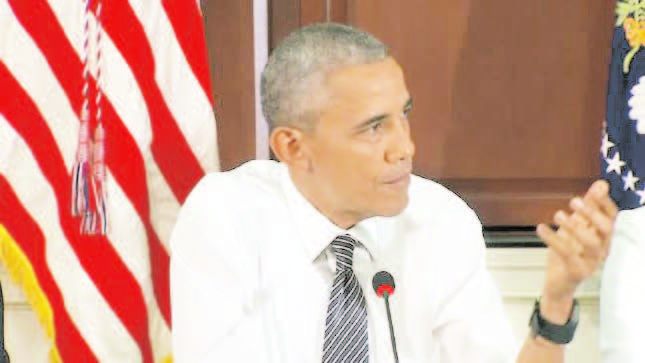
    WASHINGTON (TIP): US President Barack Obama on July 12 said more must be done to build trust that police violence against blacks and Hispanics will be properly investigated.

    “We’re going to have to do more work together in thinking about how we can build confidence that after police officers have used force, particularly deadly force, that there is confidence in how the investigation takes place and that justice is done,” Obama said after a meeting with activists, lawmakers and law enforcement leaders.

    Obama said there might be a need to develop a set of practices to ensure that investigations are carried out effectively and fairly for all parties involved.

    The meeting on Wednesday focused on how to bridge the divide between police officers and the black and Hispanic communities after a series of high-profile police killings of black men in the past two years sparked angry protests throughout the country.

    Obama has called for the country to come together and not give in to despair and division after the shooting deaths of five police officers in Dallas and the police killings of black men in Louisiana and Minnesota. He laid out a series of steps that could help to improve relations between law enforcement and communities, including improving data collection and updating police training practices.

    Attendees at the meeting included Louisiana governor John Bel Edwards, the president of the National Association of Police Organizations, Michael McHale, and leaders of the #BlackLivesMatter movement.

    A White House task force released a report last year recommending various reforms for local law enforcement in the United States, but Obama said more action is needed.

    “What’s been apparent is that it’s not enough just for us to have a task force, a report and then follow up through our departments, we have to push this out to communities so that they feel ownership for some of the good ideas that have been floating around this table,” he said.

  • 5 police officers killed in Dallas Ambush

    5 police officers killed in Dallas Ambush

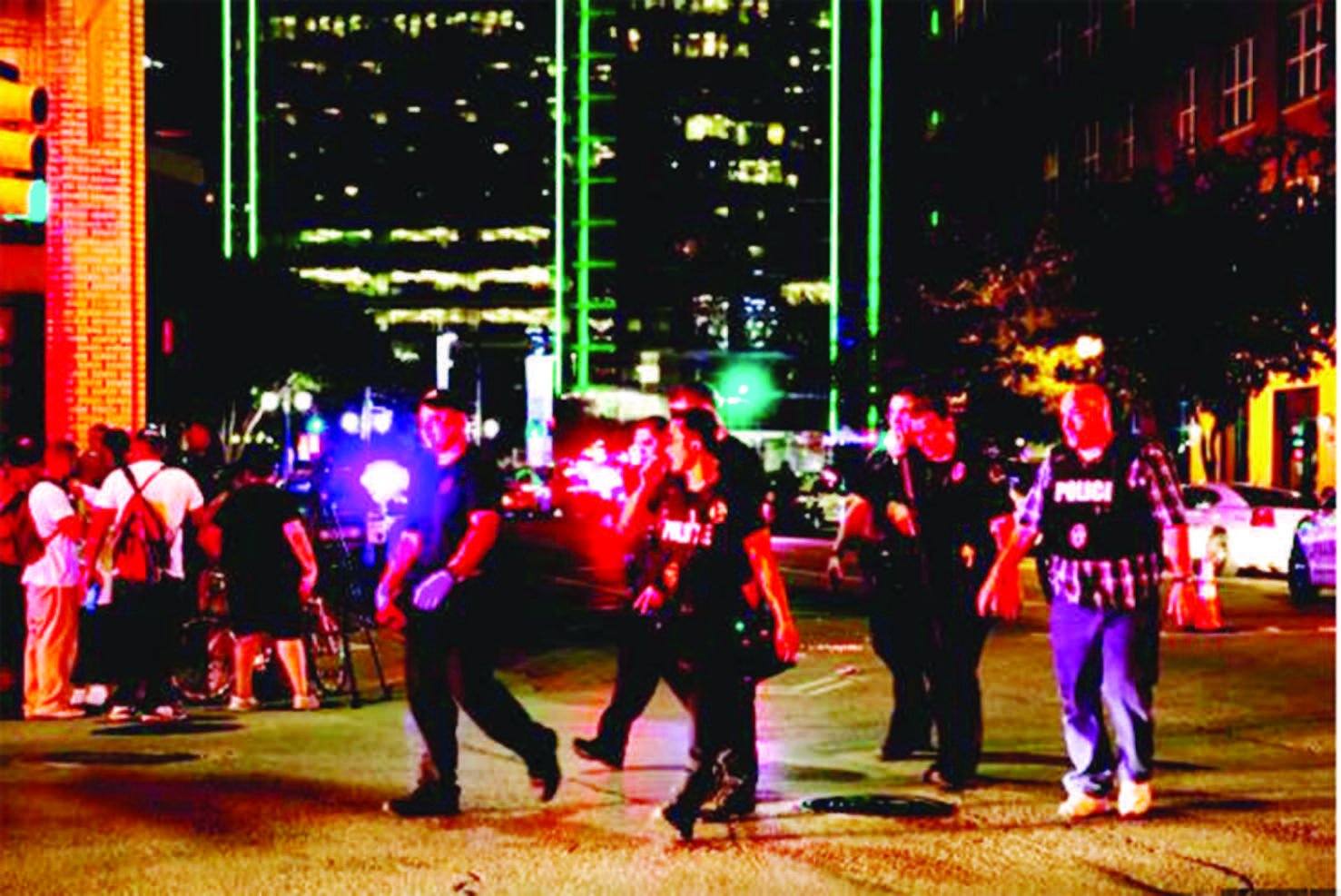
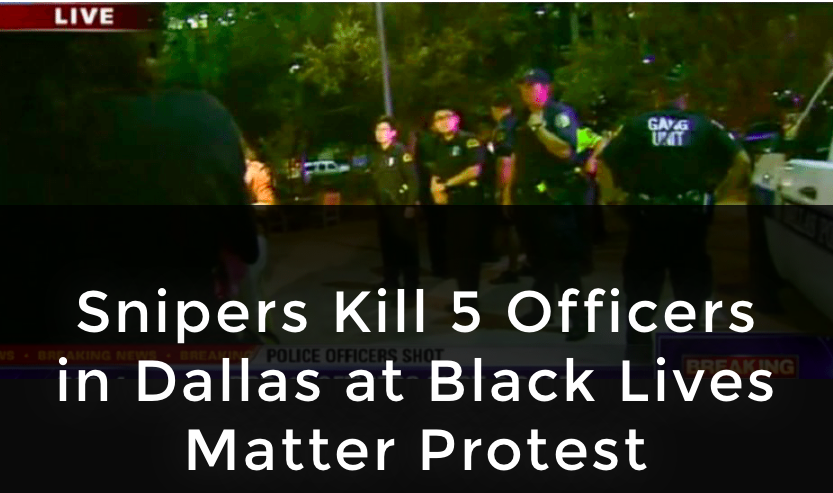
    DALLAS (TIP): At least one sniper shot 14 people, killing five police officers, in Dallas late Thursday, July 7 night, turning a peaceful protest against the police shootings of Alton Sterling in Baton Rouge, Louisiana, and Philando Castile in Falcon Heights, Minnesota, into a scene of chaos and carnage.

    The wounded include seven police officers and two civilians. It was the deadliest day for US law enforcement since the 9/11 attacks.

    Micah X. Johnson, 25, of Mesquite
    Micah X. Johnson, 25, of Mesquite

    One suspect has been identified as Micah X. Johnson, according to media reports. Johnson died after a standoff with police that lasted hours and ended when the police sent in a robot with a bomb and detonated it, killing him.

    This is an ongoing breaking news story, meaning the facts are likely to change as events continue and new information emerges.

    Highlights● A few minutes before 9 pm local Dallas time, as the protest was ending, gunfire rang out.
    ● At least one sniper shot 12 police officers and two civilians from elevated positions along the protest route, according to Dallas police and Dallas Mayor Mike Rawlings.
    ● Five of those officers have died: 4 were Dallas Police Department officers and one was a Dallas Area Rapid Transit (DART) officer.
    ● The suspect killed in a standoff with police was Micah X. Johnson of Mesquite, Texas, according to the Associated Press and the Los Angeles Times. The US Army confirmed Johnson had been an enlisted soldier, who had served a tour in Afghanistan, the AP reported.
    ● Johnson was involved in an armed standoff with police that lasted for several hours. According to police, the standoff ended when police sent in a “bomb robot” and the resulting explosion killed the suspect.
    ● The 9 people who were injured do not have “life-threatening” injuries, according to Rawlings, and Dallas Police Chief David Brown stated that most of them have now been released from the hospital.
    ● Brown said that during the “negotiations” with the armed suspect, the suspect said he was “upset about Black Lives Matter” and recent police shootings. The suspect said he was “upset with white people” and that he “wanted to kill white people, especially white officers.”

    Obama says US police must reform and calls the incident as “Vicious, Calculated and Despicable”

    US President Barack Obama said that the fatal shootings of black men by police this week were “symptomatic of a broader set of racial disparities” and all Americans should be troubled by these incidents of brutality.

    “All of us as Americans should be troubled by these shootings, because these are not isolated incidents. They’re symptomatic of a broader set of racial disparities that exist in our criminal justice system,” Obama said.

    “Last year, African-Americans were shot by police at more than twice the rate of whites. African-Americans are arrested at twice the rate of whites. African American defendants are 75 per cent more likely to be charged with offenses carrying mandatory minimums. They receive sentences that are almost 10 per cent longer than comparable whites arrested for the same crime,” he said after landing in Warsaw, Poland, to attend the NATO Summit, according to an official statement here. So that if you add it all up, the African American and Hispanic population, who make up only 30 per cent of the general population, make up more than half of the incarcerated population. Now, these are facts,” he said.

    “And when incidents like this occur, there’s a big chunk of our fellow citizenry that feels as if because of the color of their skin, they are not being treated the same. And that hurts. And that should trouble all of us,” Obama said.

    “This is not just a black issue. It’s not just a Hispanic issue. This is an American issue that we should all care about. All fair-minded people should be concerned,” he said.

    Obama spoke a day after the fatal shooting of a black man by the police in Minnesota. The incident was captured in a cell phone videos that quickly went viral and sparked renewed discussions about police brutality against African-Americans.

    In another video-recorded killing incident, a black man was slayed after scuffled with two white police officers on the pavement outside a convenience store Louisiana on Tuesday.

    Obama said these shootings were not just an issue of law enforcement, but were reflective of the values that the vast majority of law enforcement bring to the job. “If communities are mistrustful of the police, that makes those law enforcement officers who are doing a great job and are doing the right thing, it makes their lives harder,” he said.

    “So when people say “Black Lives Matter,” that doesn’t mean blue lives don’t matter; it just means all lives matter, but right now the big concern is the fact that the data shows black folks are more vulnerable to these kinds of incidents,” he added.

    Obama to travel to Dallas, cut European trip short: WH

    US President Barack Obama will cut short a trip to Europe and travel to Dallas next week in the wake of the deadly ambush in Dallas that left five policeofficers dead, the White House has said. “The president has accepted an invitation from Dallas Mayor Mike Rawlings to travel to Dallas early next week,” spokesman Josh Earnest said in a statement yesterday, adding that Obama would return to the United States tomorrow night — one day ahead of schedule.

    Obama, who was in Warsaw this week attending a NATO summit, weighed in on the attacks from the Polish capital, calling the episode “vicious, calculated and despicable.”

  • The voice of the American Left

    The voice of the American Left

    It was 6.45 p.m. and Neal Meyer was not sure how many people would turn up for the Jacobin reading group on a cold, rainy day. As the magazine’s outreach coordinator, he was used to seeing around 60 readers at their monthly session held in the New York City borough of Brooklyn.

    But in the next 15 minutes, the ground floor hall of the venue, a neighborhood school, was crammed with at least 50 people. Many of them looked like regulars – men and women mostly in their late 20s or early 30s, including schoolteachers, coding professionals, union organizers, journalists, and graduate students.

    In the five years since its launch, the New York-based publication, which prides itself in being a leading voice of the American Left, has made many within the U.S. and outside sit up and take notice. It has drawn high praise from the likes of Noam Chomsky who called the magazine “a bright light in dark times”.

    Getting off the ivory tower

    Mr. Meyer divided the crowd into four smaller groups and directed them into different classrooms, each with a facilitator. The group was going to discuss Erik Olin Wright’s essay ‘How to Be an Anticapitalist Today’ and Ralph Miliband’s classic ‘The Coup in Chile’.

    Participants discussed the readings, often drawing parallels to social movements in the U.S. For them, reflecting on Miliband’s strategies for transitioning into socialism also meant using the analysis to think of ways to sustain the Bernie Sanders momentum at home. The discussion went on for an hour and a half.

    “Don’t study collective action alone,” Jacobin exhorts its readers on its website. Clearly, the message has had the desired effect. Readers of the magazine now meet in over 40 cities in the U.S. and Canada, and in cities across Europe and Australia.

    At 8.40 p.m., Mr. Meyer signaled us to wind up, assuring that the discussion would, as usual, continue at a pub a couple of blocks away. At one level, they intensely debated some contemporary political questions. At another, they were hanging out as if at a campus party, peppering their analysis with ready wit and sarcasm. In a sense, that’s also the vibe of the magazine – something its now 26-year-old founder-editor and publisher Bhaskar Sunkara has consciously cultivated.

    “Jacobin draws on the old tradition of ‘No-bullshit Marxism’. Don’t talk about ‘dialectics’, [but] try to explain things as clearly as possible. We lay out our framework and then let people critique it,” Mr. Sunkara told me earlier, when I met him on the terrace of Jacobin’s red-paneled offices in Brooklyn.

    Even the inspiration for the magazine’s name came from Trinidadian activist-writer C.L.R. James’s book on the Haitian revolution, The Black Jacobins, which Mr. Sunkara read as a school boy. He found it in his parents’ library – they were of Indian origin and lived in Trinidad before moving to the U.S. a year before he was born. It was George Orwell’s Animal Farm and 1984 that gradually led Mr. Sunkara, in his teens, to thinkers like Leon Trotsky. At 17, he was an active member of Democratic Socialists of America whose blog he edited.

    The idea of Jacobin was born in the summer of 2010. Mr. Sunkara strongly felt the need for a publication that would present socialist ideas in an easy-to-read, jargon-free style. Today, the magazine is known for exactly that, in addition to sleek design and bold colors. Its contributors range from PhD students to seasoned scholars, all of them writing in an easy and engaging style. “I contrast that with the efforts of more academic Leftists or literary publications that came out of the Left in the past decade. They were consciously or unconsciously trying to speak to a more rarefied elite, whereas Jacobin strives to be more accessible.”

    Its growing popularity is evidenced in the 15,000 paid subscriptions that the quarterly print edition of the magazine currently has, and the nearly one million unique visitors its website records every month. Subscriptions are the primary source of revenue driving the non-profit venture. The model, the amount of subscribers and online traffic, and the staff that Jacobin has been able to maintain – Mr. Sunkara thinks all that has been possible because they are drawing from beyond the existing Left in the country.

    Sanders and the socialist surge

    More so now, with the heightened interest in socialist ideas following Mr. Sanders’s surge. “We understood that the American people were just not exposed to these ideas…[or] to a politician who was willing to speak to their problems and also pose solutions in the form of actual, economic demands and redistribution.” The Vermont Senator, he said, deserved much credit for pushing income inequality to mainstream political discourse – an important shift in the U.S. where socialism and communism have for long been politically taboo and where even liberal voices are considered dangerously left wing.

    The focus also shifted from the individual to broader structures and systems. “It is hard to overstate how personalized the American discourse was. When times are good, some of what is compelling about America is reflected in the bootstrap, individualistic rhetoric. When times are bad, it is often very sad to see people blaming themselves for things that are obviously not their fault, like massive unemployment.”

    Mr. Sanders has been chiefly instrumental to such a shift, but that does not mean everything he says is appealing. Mr. Sunkara finds some aspects of Mr. Sanders’s platform to be “at best uninspiring and at worst slightly retrograde” – such as his “isolationist” foreign policy stance that lacks a wider critique of NATO (North Atlantic Treaty Organization) and the role of the U.S. “It is necessary to put pressure on Sanders on those platforms, especially if he has an outside chance of becoming the Democratic [presidential] nominee.”

    Many supporters share his optimism, especially after Mr. Sanders made important gains in the primaries. Even though mainstream American media underplayed or, in many cases, dismissed them. “Many of the establishment liberal types, from whom a lot of the media classes are drawn, are concerned about losing control of their party or losing a general election.”

    Mainstream U.S. media’s coverage of Mr. Sanders is hardly surprising, given its tendency to stay away from class analysis. Liberal publications have taken strong positions against racial discrimination from time to time, but Mr. Sunkara would qualify even that. “They are fine with race being used as long as it is kept as purely symbolic, or as long as it is connected to diversity without a class content. If I were to say we want more of black working-class kids in universities and we do that by massive programs of redistribution, I am sure that would elicit a different response.”

    Despite all that, income inequality is a hot topic in this election and is politicizing thousands of young Americans. “Some of this is good. For example, the Sanders campaign or Black Lives Matter, [an activist movement that campaigns against violence towards black people], but others [are] bad – the kind of anger and resentment seething around the [Donald] Trump campaign, which is disproportionately drawing white working-class voters and others.” According to him, the only way these voters could be won over to the Left is if Mr. Sanders had a chance to speak to them in a general election.

    Jacobin, however, will continue to speak to them. “In a country with such a small, explicitly socialist Left, we are the ambassadors for these sets of ideas,” Mr. Sunkara said.


    Meera SrinivasanBy Meera Srinivasan – (The author was the IWMF Elizabeth Neuffer Fellow 2015-16)

  • No, Trump, Islam Doesn’t Hate America

    No, Trump, Islam Doesn’t Hate America

    Donald Trump told CNN that Islam hates America. Like the Muslims who fight and die for, and otherwise serve, this country? Outrageous.

    Donald Trump’s interview to CNN’s Anderson Cooper, Wednesday, March 9 has invited sharp reactions. Trump had said, “I think Islam hates us”.

    Donald Trump took his anti-Muslim jihad to a new, bone-chilling level on Wednesday night. That’s when he declared to CNN’s Anderson Cooper that “Islam hates us.” Trump is wrong, but let me blunt. I hate Trump. Not because he demonizes Muslims, but because he’s a threat to our nation’s soul.

    If Trump truly thinks “Islam hates us,” then he should tell that to the families of Muslim Americans who have died for our country. I doubt Trump has the balls to tell the family of U.S. Army Capt. Humayun Khan, who received the Purple Heart and is buried in Arlington National Cemetery after being killed in Iraq in 2004. And let’s see Trump tell that to the family of Corp. Kareem Khan, who also received the Purple Heart and is buried in Arlington after giving his life in 2007 in defense of our nation.

    “We have to be very vigilant. We have to be very careful. And we can’t allow people coming into this country who have this hatred of the United States,” Trump said. The real estate tycoon-turned politician made headlines in December when he called for a temporary ban on Muslimsentering the US “until our country’s representatives can figure out what is going on.”

    Does Trump even have the courage to tell the Muslims who have volunteered to serve our nation, including my cousin who served in the U.S. Marines, that they hate America?In fact, almost 6,000 Muslims are currently serving in our armed forces fighting to ensure that all Americans-not just ones of certain faiths-have the same rights.

    Will Trump tell the Muslims serving in our Congress, Keith Ellison and Andre Carson, that they hate America? Will he say that to the thousands of Muslims serving as police officers, paramedics, judges, schoolteachers, and others in professions designed to help the people of our nation?

    Nah, Trump won’t ever do that because bullies are cowards. But what Trump despicably did during his interview on CNN was to paint all Muslims as potential threats to our country. “It’s very hard to define” and “very hard to separate” the good from the bad Muslims, “because you don’t know who’s who,” Trump stated.

    I want you to think about what Trump is saying here. The GOP frontrunner is telling Americans to fear every single Muslim because any one of them might be plotting to kill you and your family. If you believe Trump’s words, what’s the next likely step?Trump has already proposed policies to discriminate against Muslim Americans, which polls show his supporters overwhelmingly support. What could be in store next for American Muslims?

    Maybe because I recently read an article saying that Trump, according to his ex-wife, kept by his bedside a book of Hitler’s speeches that the Fuhrer gave during his ascent to power, I couldn’t help but wonder, what did Jews living in Germany when Hitler first sought office think? Did they dismiss his extreme rhetoric as nothing more than political talk to get the support of people? Or were they frightened, like many Muslim Americans are today?

    To be clear, I’m am in no way saying that if he became president, Trump would be like Hitler, seizing emergency powers and worse. But perhaps we need to pause as a nation when Anne Frank’s stepsister, Eva Schloss, an Auschwitz survivor, warned us in January that Trump “is acting like another Hitler by inciting racism.”

    But Trump’s hate has not just been about Muslims. His campaign from Day One can best be best summed up as putting minorities back in their place. That’s why we have seen white supremacists flock to Trump’s side. For example, the vile white supremacist leader Jared Taylor, a man who publicly endorsed Trump and has made robocalls on Trump’s’ behalf, wrote a few months ago: “Donald Trump may be the last hope for a president who would be good for white people.”

    And Trump has given these hatemongers exactly what they have been dreaming of for years. He has stirred up hate versus Latinos, implying that they were coming to rape your wives and daughters. He has defended his white supporters in November beating up a Black Lives Matter protester and calling the man a “monkey” and the n-word. And we just saw Trump refuse to denounce the support of former Klan leader David Duke.

    But let’s return to Trump’s comment that Islam hates us. Is there a fraction of Muslims who hate our nation? No doubt. Is that because of Islam, a religion that came into being over a thousand years before America was founded? The counter-terrorism experts I have spoken to have made it clear that the anger directed against our nation is generally grounded in foreign policy grievances or personal issues such as wanting to join an organization that makes them feel a sense of self-worth. But there is a fraction of radical religious leaders who will try to teach younger Muslims that somehow America is a religious-based enemy. We must be united to countering their hateful message, not divided along religious lines as ISIS hopes we become.

    Perhaps Trump is simply making the remarks about Muslims now because the GOP race is tightening and he knows bashing Muslims plays well with the GOP base. Trump noted as much after Ben Carson stated in October that no Muslim should be president of the United States, and he got a big boost in the polls. Trump then remarked, Carson’s “been getting a lot of ink on the Muslims… I guess people look at that and they probably like it.” Within weeks Trump began first using Muslims as a scapegoat.

    Or perhaps Trump’s info comes from Frank Gaffney, whose poll Trump read from on the campaign trail about alleged hatred of Muslims. Gaffney is a discredited figure whom the Southern Poverty Law Center recently listed as the leader of an Anti-Muslim group. And Gaffney has also been a supporter of the very same White Supremacy leader, Jared Taylor, who has been campaigning for Trump. As the SPLC notes, Gaffney invited Taylor on his radio show and has heaped praise upon his work that promotes “anti-Black and anti-Latino racists.”

    No, Islam doesn’t hate America. But Trump clearly hates American values.


    (The author is a former lawyer turned political comedian and writer, is the host of The Dean Obeidallah show on SiriusXM radio. He co-directed the comedy documentary The Muslims Are Coming! His blog is The Dean’s Report)

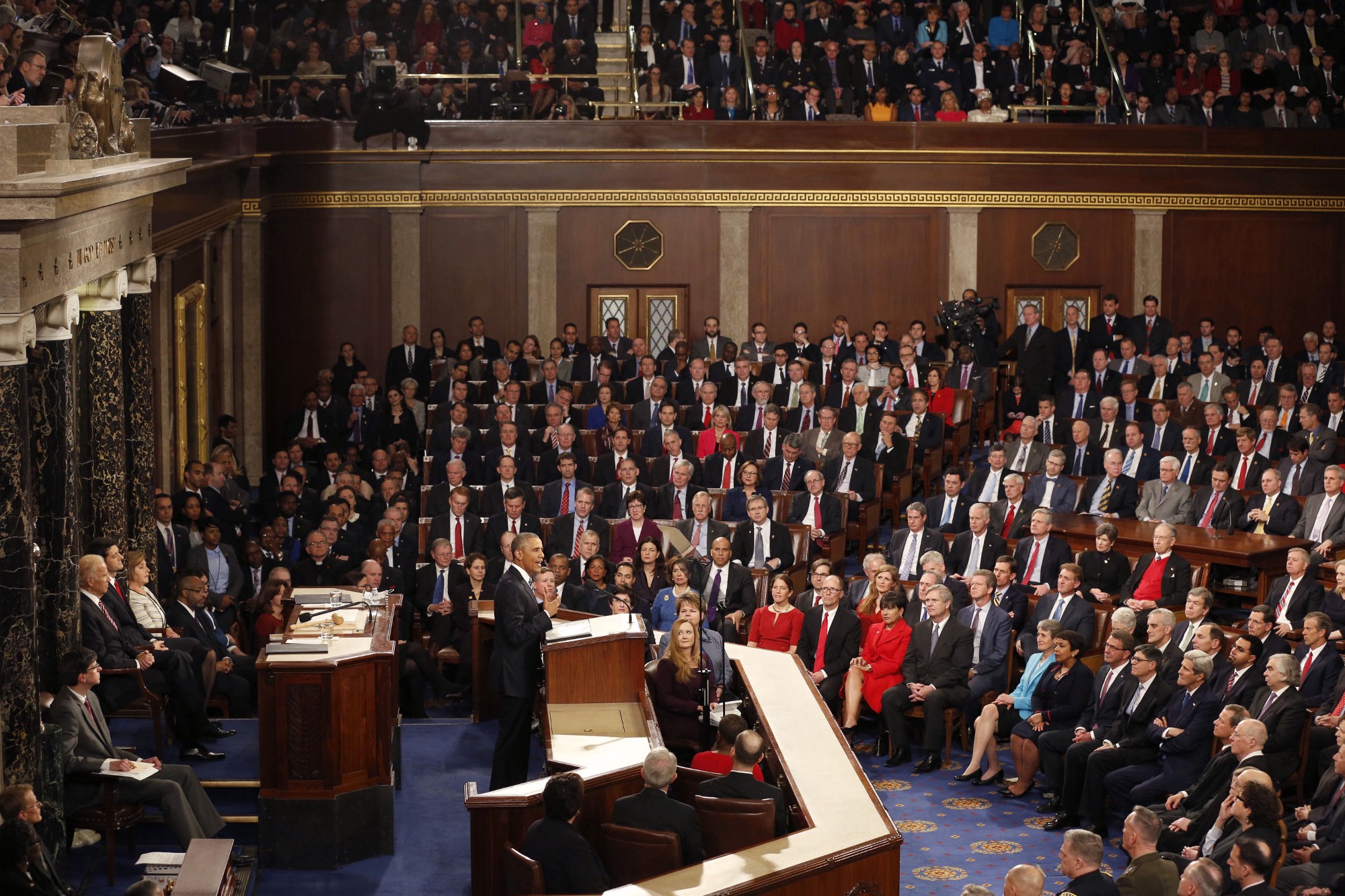
  • President Obama’s 2016 State of the Union Address | Full Text

    President Obama’s 2016 State of the Union Address | Full Text

    Mr. Speaker, Mr. Vice President, Members of Congress, my fellow Americans:
    Tonight marks the eighth year I’ve come here to report on the State of the Union. And for this final one, I’m going to try to make it shorter. I know some of you are antsy to get back to Iowa.

    I also understand that because it’s an election season, expectations for what we’ll achieve this year are low. Still, Mr. Speaker, I appreciate the constructive approach you and the other leaders took at the end of last year to pass a budget and make tax cuts permanent for working families. So I hope we can work together this year on bipartisan priorities like criminal justice reform, and helping people who are battling prescription drug abuse. We just might surprise the cynics again.

    But tonight, I want to go easy on the traditional list of proposals for the year ahead. Don’t worry, I’ve got plenty, from helping students learn to write computer code to personalizing medical treatments for patients. And I’ll keep pushing for progress on the work that still needs doing. Fixing a broken immigration system. Protecting our kids from gun violence. Equal pay for equal work, paid leave, raising the minimum wage. All these things still matter to hardworking families; they are still the right thing to do; and I will not let up until they get done.

    But for my final address to this chamber, I don’t want to talk just about the next year. I want to focus on the next five years, ten years, and beyond.

    I want to focus on our future.

    We live in a time of extraordinary change — change that’s reshaping the way we live, the way we work, our planet and our place in the world. It’s change that promises amazing medical breakthroughs, but also economic disruptions that strain working families. It promises education for girls in the most remote villages, but also connects terrorists plotting an ocean away. It’s change that can broaden opportunity, or widen inequality. And whether we like it or not, the pace of this change will only accelerate.

    America has been through big changes before — wars and depression, the influx of immigrants, workers fighting for a fair deal, and movements to expand civil rights. Each time, there have been those who told us to fear the future; who claimed we could slam the brakes on change, promising to restore past glory if we just got some group or idea that was threatening America under control. And each time, we overcame those fears. We did not, in the words of Lincoln, adhere to the “dogmas of the quiet past.” Instead we thought anew, and acted anew. We made change work for us, always extending America’s promise outward, to the next frontier, to more and more people. And because we did — because we saw opportunity where others saw only peril — we emerged stronger and better than before.

    What was true then can be true now. Our unique strengths as a nation — our optimism and work ethic, our spirit of discovery and innovation, our diversity and commitment to the rule of law — these things give us everything we need to ensure prosperity and security for generations to come.

    In fact, it’s that spirit that made the progress of these past seven years possible. It’s how we recovered from the worst economic crisis in generations. It’s how we reformed our health care system, and reinvented our energy sector; how we delivered more care and benefits to our troops and veterans, and how we secured the freedom in every state to marry the person we love.

    But such progress is not inevitable. It is the result of choices we make together. And we face such choices right now. Will we respond to the changes of our time with fear, turning inward as a nation, and turning against each other as a people? Or will we face the future with confidence in who we are, what we stand for, and the incredible things we can do together?

    So let’s talk about the future, and four big questions that we as a country have to answer — regardless of who the next President is, or who controls the next Congress.

    • First, how do we give everyone a fair shot at opportunity and security in this new economy?
    • Second, how do we make technology work for us, and not against us — especially when it comes to solving urgent challenges like climate change?
    • Third, how do we keep America safe and lead the world without becoming its policeman?
    • And finally, how can we make our politics reflect what’s best in us, and not what’s worst?

    Let me start with the economy, and a basic fact: the United States of America, right now, has the strongest, most durable economy in the world. We’re in the middle of the longest streak of private-sector job creation in history. More than 14 million new jobs; the strongest two years of job growth since the ’90s; an unemployment rate cut in half. Our auto industry just had its best year ever. Manufacturing has created nearly 900,000 new jobs in the past six years. And we’ve done all this while cutting our deficits by almost three-quarters.

    Anyone claiming that America’s economy is in decline is peddling fiction. What is true — and the reason that a lot of Americans feel anxious — is that the economy has been changing in profound ways, changes that started long before the Great Recession hit and haven’t let up. Today, technology doesn’t just replace jobs on the assembly line, but any job where work can be automated. Companies in a global economy can locate anywhere, and face tougher competition. As a result, workers have less leverage for a raise. Companies have less loyalty to their communities. And more and more wealth and income is concentrated at the very top.

    All these trends have squeezed workers, even when they have jobs; even when the economy is growing. It’s made it harder for a hardworking family to pull itself out of poverty, harder for young people to start on their careers, and tougher for workers to retire when they want to. And although none of these trends are unique to America, they do offend our uniquely American belief that everybody who works hard should get a fair shot.

    For the past seven years, our goal has been a growing economy that works better for everybody. We’ve made progress. But we need to make more. And despite all the political arguments we’ve had these past few years, there are some areas where Americans broadly agree.

    We agree that real opportunity requires every American to get the education and training they need to land a good-paying job. The bipartisan reform of No Child Left Behind was an important start, and together, we’ve increased early childhood education, lifted high school graduation rates to new highs, and boosted graduates in fields like engineering. In the coming years, we should build on that progress, by providing Pre-K for all, offering every student the hands-on computer science and math classes that make them job-ready on day one, and we should recruit and support more great teachers for our kids.

    And we have to make college affordable for every American. Because no hardworking student should be stuck in the red. We’ve already reduced student loan payments to ten percent of a borrower’s income. Now, we’ve actually got to cut the cost of college. Providing two years of community college at no cost for every responsible student is one of the best ways to do that, and I’m going to keep fighting to get that started this year.

    Of course, a great education isn’t all we need in this new economy. We also need benefits and protections that provide a basic measure of security. After all, it’s not much of a stretch to say that some of the only people in America who are going to work the same job, in the same place, with a health and retirement package, for 30 years, are sitting in this chamber. For everyone else, especially folks in their forties and fifties, saving for retirement or bouncing back from job loss has gotten a lot tougher. Americans understand that at some point in their careers, they may have to retool and retrain. But they shouldn’t lose what they’ve already worked so hard to build.

    That’s why Social Security and Medicare are more important than ever; we shouldn’t weaken them, we should strengthen them. And for Americans short of retirement, basic benefits should be just as mobile as everything else is today. That’s what the Affordable Care Act is all about. It’s about filling the gaps in employer-based care so that when we lose a job, or go back to school, or start that new business, we’ll still have coverage. Nearly eighteen million have gained coverage so far. Health care inflation has slowed. And our businesses have created jobs every single month since it became law.

    Now, I’m guessing we won’t agree on health care anytime soon. But there should be other ways both parties can improve economic security. Say a hardworking American loses his job — we shouldn’t just make sure he can get unemployment insurance; we should make sure that program encourages him to retrain for a business that’s ready to hire him. If that new job doesn’t pay as much, there should be a system of wage insurance in place so that he can still pay his bills. And even if he’s going from job to job, he should still be able to save for retirement and take his savings with him. That’s the way we make the new economy work better for everyone.

  • Chicago mayor asks for police superintendent’s resignation

    Chicago mayor asks for police superintendent’s resignation

    CHICAGO (TIP): Chicago Mayor Rahm Emanuel said Tuesday, December 1, he has asked for the resignation of Chicago Police Superintendent Garry McCarthy.

    The announcement at a news conference came amid angry protests in Chicago over the way the city responded when a white police officer shot a black teenager 16 times in October 2014. Dashboard camera footage of Laquan McDonald’s killing was released last week after a judge ordered it be made public.

    “Superintendent McCarthy knows that a police officer is only as effective as when he has the trust of those he serves,” said Emanuel, speaking at City Hall.

    McCarthy was not at the news conference. But the mayor’s office told CNN the superintendent had, in fact, resigned.

    The mayor went on to describe a new task force on law enforcement accountability that will review how the city trains and oversees its police officers. It will include five Chicagoans who have been leaders in the justice system. Chicago native and former Massachusetts Gov. Deval Patrick will be a senior adviser to the group, Emanuel said.

    Later Tuesday, Illinois Attorney General Lisa Madigan said she sent a letter to the U.S. attorney general asking the Department of Justice’s Civil Rights Division to open an investigation into the Chicago Police Department to see whether its practices violate the Constitution and federal law.

    “Trust in the Chicago Police Department is broken,” Madigan said in a statement. “Chicago cannot move ahead and rebuild trust between the police and the community without an outside, independent investigation into its police department to improve policing practices.”

    The turmoil in Chicago isn’t unique to the city. For more than a year Black Lives Matter activists and others have tried to call attention to an assertion that some police across the country discriminate against black people. They point to cases in New York; Ferguson, Missouri; Baltimore and other cities, where they say police have used excessive and deadly force against black males.

    In Chicago, the outrage has been focused on the killing of McDonald. Dashboard camera footage from October 2014 shows the 17-year-old walking in the middle of a street toward squad cars while holding a knife. He then veers away and turns his back to police, and immediately is shot multiple times.

    Jason Van Dyke, the officer who shot McDonald, has been charged with first-degree murder.

  • Outlandish Trump & His Politics of Fear

    Outlandish Trump & His Politics of Fear

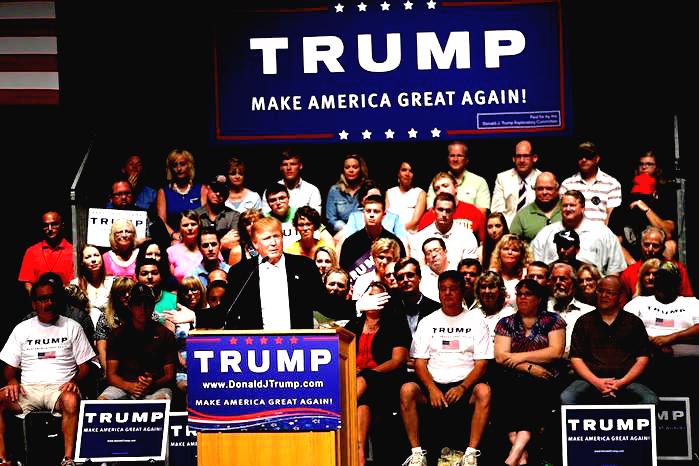
    Trump has garnered huge support among the Republican voters by playing the fear trump card. Since the Paris attacks, while the “serious” GOP contenders have proposed establishing no-fly zones and arming Kurdish rebels in Syria, Trump has focused on registering Muslims and closing mosques in the U.S. while insisting that he “watched … thousands” of Muslims in New Jersey celebrate 9/11 as the Twin Towers were coming down.

    Republican presidential hopeful Donald Trump at a rally in Oskaloosa, Iowa, July 25.
    Republican presidential hopeful Donald Trump at a rally in Oskaloosa, Iowa, July 25.

    He’s turned the focus of the debate on the right candidate to terrorism and immigration, with a vociferous anti-Muslim rhetoric. His racist approach and fear mongering statements are propelling him in debates. This needs a reality check.

    Let us see what Trump has to say on various issues.

    On Domestic Issues

    1. Arab-Americans cheered the attacks on 9/11 – Trump repeatedly claimed that on September 11, 2001, there were thousands of Arab-Americans celebrating in New Jersey after two planes flew into the Twin Towers. He says such public demonstrations “tell you something” about Muslims living in the US. However, there are no media reports or police records to back up the claim.

    2. There should be surveillance on US mosques – Trump believes Muslims should be tracked by law enforcement as a counterterrorism initiative. He has walked back some comments about keeping a database on all American Muslims, but says he doesn’t care if watching mosques is seen as “politically incorrect”.

    3. The US should use waterboarding and other methods of “strong interrogation” in its fight against the Islamic State.

    4. “Would build a “great, great wall” between the US and Mexico. In some of his earliest campaign comments, Trump suggested that Mexicans coming to the US are largely criminals. “They are bringing drugs, and bringing crime, and they’re rapists,” he said. A wall on the border, he claims, will not only keep out undocumented immigrants but Syrian migrants as well. He also believes that Mexico should have to pay for the wall, which could cost between $2.2bn and $13bn (BBC analyst).

    5. A mass deportation of the estimated 11 million illegal immigrants living in the US should go into effect. Despite criticism that this idea is xenophobic and prohibitively expensive – estimated at $114bn – Trump says his deportation plan is as achievable as it will be humane. In addition, his immigration reforms would end “birthright citizenship”, the policy that grants the children of illegal immigrants citizenship so long as they are born on American soil. He does not support creating a new path to citizenship for undocumented workers.

    6. In order to end mass shootings, the US should invest in mental health treatment rather than Gun Control. In a position paper on gun rights, Trump revealed he has a concealed carry permit and that when it comes to gun and magazine bans, “the government has no business dictating what types of firearms good, honest people are allowed to own”. He would also oppose an expansion of background checks.

    7. The Black Lives Matter movement is “trouble”. Trump mocks Democratic candidates like Martin O’Malley for apologizing to members of the protest movement against police brutality and casts himself as a pro-law enforcement candidate. “I think they’re looking for trouble,” he once said of the activist group. He also tweeted a controversial graphic purporting to show that African Americans kill whites and blacks at a far higher rates than whites or police officers. However, the graphic cites a fictitious “Crime Statistics Bureau” for its numbers, and has been widely debunked using real FBI data.

    On Foreign Policy

    1. Trump and Vladmir Putin would “get along very well”. In an interview with CNN, Trump said that Putin and Obama dislike one another too much to negotiate, but that “I would probably get along with him very well. And I don’t think you’d be having the kind of problems that you’re having right now”.

    2. Climate change is just “weather” . While Trump believes that maintaining “clean air” and “clean water” is important, he dismissed climate change science as a “hoax” and believes environmental restrictions on businesses makes them less competitive in the global marketplace. “I do not believe that we should imperil the companies within our country,” he told CNN on the issue. “It costs so much and nobody knows exactly if it’s going to work.”

    3. The world would be better off if Saddam Hussein and Muammar Gaddhafi were still in power . Trump told CNN that he believes the situation in both Libya and Iraq is “far worse” than it ever was under the two deceased dictators. While he concedes Hussein was a “horrible guy”, he says he did a better job combating terrorists.

    4. No asylum to Syrian migrants . He says that the Paris attacks prove that even a handful of terrorists posing as migrants could do catastrophic damage, and so he will oppose resettling any Syrians in the US, and deport those who have already been placed here.

    5. “Bomb the hell” out of IS. Trump claims that no other candidate would be tougher on the Islamic State and he would weaken the militants by cutting off their access to oil.

    On Healthcare

    1. Veteran healthcare in the US needs a major overhaul . Trump wants to clear out the executive level in the Department of Veterans Affairs, saying that wait times for doctor visits have only increased after previous interventions failed. Thousands of veterans have died while waiting for care, he says. He will invest in the treatment of “invisible wounds” like post-traumatic stress disorder and depression. He would also increase the number of doctors who specialize in women’s health to help care for the increasing number of female veterans.

    2. Obamacare is a “disaster”. Trump says he favors repealing the president’s Affordable Care Act, which aims at extending the number of Americans with health insurance, but he believes that “everybody’s got to be covered”. A spokesman for Trump told Forbes that he will propose “a health plan that will return authority to the states and operate under free market principles”.

    On Economy

    1. Create a simpler tax code . Trump wants anyone who earns less than $25,000 to pay no income tax. They would submit nothing more than a single page tax form that reads “I win”. He would lower the business tax to 15%. He would also allow multinational companies keeping money overseas to repatriate their cash at a 10% tax rate.

    2. Hedge fund managers are “getting away with murder” . Trump found common ground with Democrats like Senator Elizabeth Warren when he said that hedge fund managers and the ultra-wealthy do not pay enough taxes. However, after the campaign released specifics of his plan, analysts argued that hedge fund managers would actually get a tax cut along with the middle class.

    3. China should be taken to task . If elected , Trump says he will make China stop undervaluing its currency, and force it to step up its environmental and labor standards. He is also critical of the county’s lax attitude towards American intellectual property and hacking.

    4. Unemployment. Trump has said repeatedly that unemployment in the US is at 20% – once commenting it may be as high as 42% – despite the fact that the Bureau of Labor Statistics pegs the number at 5.1%. Trump says he doesn’t believe that figure is real.

    But can Americans buy the stuff Trump is so zealously dishing out?

    Americans know well presidential candidates must make unrealistic guarantees. The difference in Trump’s blather is that it is dangerous. Trump’s megalomania borders craziness.

    Everyone who has bought into Trump needs take a step back, rethink and make informed decisions about what America stands for and who will uphold the great values and tradition of America. Those who care deeply about the values of this nation need to recognize where we are. Throughout history, anxiety has brought out the worst in people.

  • Hillary Clinton’s Call to turn Texas Blue

    Hillary Clinton’s Call to turn Texas Blue

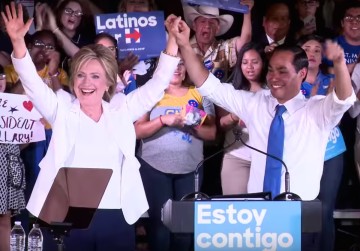
    SAN ANTONIO, TX (TIP): Hillary Clinton came to San Antonio Thursday, October 15 to receive the blessing of the Castro brothers, making her first official campaign stop in Texas and marking a significant moment in her second bid for the White House. At two events — a Q&A with the U.S. Hispanic Chamber of Commerce and an outdoor rally at Sunset Station — she sought to appeal to Hispanic voters, a core constituency of the Obama coalition, and underline the possibility that her campaign could mount a serious bid to win Texas in the 2016 general election.

    Clinton is one of the most fascinating figures in modern American politics, in part because of the remarkable, even Sisyphean, way that the nation’s political architecture rearranges itself seemingly with the intention of thwarting her.

    The Clintons appeared to have finally found the path to return Democrats from exile in 1992, with Hillary playing an unusually prominent role in making policy, but the Republican revolution of 1994 put a damper on that, and much of the rest of her time as first lady was derailed by other matters. She came back to independent prominence as a respectably centrist senator from New York in the 2000s, an Iraq war hawk and a defender of Wall Street, but when it came time to run for president, those positions helped sink her.

    Now, her supporters say, she’s one of the most experienced presidential contenders ever, and it’s a claim with some merit — she’s been the closest advisor of a governor and a president, and she’s served in the U.S. Senate and the cabinet. She’s been privy to history in the last quarter-century like few other people on the planet. And yet she’s running in a year of seemingly unprecedented hatred of the establishment, where her experience and record is in some ways a liability. She’s popular with Dems, for the most part, but she still needs to bolster her left credentials to win over parts of the base afflicted with Clinton fatigue.

    At the launch of the “Latinos for Hillary” initiative, October 16 Clinton was introduced by Julián Castro, who was in turn introduced by Joaquin Castro. Both brothers have now endorsed Clinton, and emphasized to the crowd that Clinton was someone for whom Hispanic issues were, and had always been, close to heart. “She’s always been there for us,” Julián Castro told the crowd, “and today we’re there for her.”

    Some Democrats had hoped to see Clinton take on more of the mantle of the left. On Thursday, she spoke about the wage gap and family leave policies, thanked the #BlackLivesMatter movement for their activism, and told the crowd she would take up immigration reform from the beginning of her presidency, aggressively pursuing a reform package with a full pathway to citizenship for undocumented people. She told the crowd that she would actively pursue gun control in office. “If you join me,” she said, “I will continue taking on the NRA!”

    Introducing Clinton, Julián Castro told the crowd he looked forward to seeing Fox News announce Clinton’s taking of Texas’ electoral votes come November, and Clinton responded by asking the audience to help her “turn Texas blue.” She lauded former San Antonio mayor Julián Castro’s advocacy for pre-K in San Antonio. She emphasized her belief that government could help level the playing field. “Talent is universal, and opportunity is not in America,” she said.

    And she lavished praise on the sitting president: “This country’s come a long way in the last six and-a-half years,” she said, thanks to the “leadership of President Obama.” He didn’t get enough credit for avoiding a second great depression, she said, to cheers. In other arenas, particularly when it comes to foreign policy, Clinton has carefully underlined differences with Obama. In front of this crowd of Texas Democrats, there was no such distancing.

    Another important thread at the Clinton event on Thursday was the possibility that Clinton’s campaign will invest some of its massive resources in Texas during the general election, with an eye to strengthening the party’s infrastructure here. That’s a hope related to long-running speculation that Clinton will pick Julián Castro to be her running mate when the time comes.

    Texas Democrats would love that, but there’s always been plenty of reason to be skeptical of the idea that Clinton would invest heavily in Texas. In a close presidential race, putting a lot of money in a state Democrats are exceptionally unlikely to win would be an inefficient use of resources, especially given the problems with party unity and competency that surfaced in 2014, and given that the third election for an incumbent party after two terms in office is traditionally a time of atrophying energy and turnout.

    But Thursday, it seemed clear that the Clinton campaign was trying to lay the foundation for a Lone Star subplot this cycle. There was the simple fact that today’s rally, the launch of the campaign’s Hispanic outreach project, happened in San Antonio, with the Castros. Introducing Clinton, Julián Castro told the crowd he looked forward to seeing Fox News announce Clinton’s taking of Texas’ electoral votes come November, and Clinton responded by asking the audience to help her “turn Texas blue.”

    Clinton also emphasized her time, spent with then-boyfriend Bill, doing organizing work in South Texas, by all accounts a formative experience for the two. Back then, she said, she and Bill, with his beard and big head of hair “like a Viking,” had a grand old time in Texas. They ate “a lot of green enchiladas,” and “drank our share of Shiner Bocks.” They “ate way too much mango ice cream at the Menger Hotel.”

    When Bill and Hillary came to Texas in 1972, they came to do campaign work for George McGovern, the liberal no-hope Democratic nominee who limped to a crushing defeat against Richard Nixon, winning only one state. That crushing defeat is one of the things that pushed the Clintons toward finding a kind of Democratic identity that could win in what was becoming a more conservative country. That search changed the Clintons in surprising ways: Years later, after Bill Clinton won the White House, Nixon and Bill became friends.

    History’s funny that way. Now the winds have changed again. The country is shifting, in some ways, to the left — at least in presidential elections, when younger and more diverse voters come out. And again, a Clinton is trying to surf the wave. Can she manage it this time? While most people are transfixed by the vulgar Republican primary, Clinton’s the best show in politics right now.


  • Police Chief Forced to Retire after Racist Rant | North Carolina

    Police Chief Forced to Retire after Racist Rant | North Carolina

    The police chief of Surf City, North Carolina was abruptly forced into retirement on Tuesday, Sep 15, 2015 after an emergency meeting with city commissioners regarding an angry Facebook rant the chief posted about the Black Lives Matter movement. (read below)

    Chief Mike Halstead wrote that Black Lives Matter is “nothing more than an American born terrorist group” that was “brought on by the government, the President and his cronies Al Sharpton, who is a criminal tax evader (but has the support of our so called President), Jessi Jackson, Eric Holder and that ignorant S.O.B. Farrakhan who should be charged with solicitation for murder.”

    Surf City Mayor Zander Guy called an emergency meeting where the town of Surf City agreed to give Police Chief Mike Halstead a 60 day severance pay provided he retire — effective immediately — following the rambling, nearly incoherent, and massively problematic post to his personal Facebook page on September 3rd.

    Open letter from a Police Chief, this Black Lives Matter group is nothing more than an American born terrorist group brought on by the lie of the hands up don’t shoot during the criminal thug Michael Brown incident. The FBI and other Government Law Enforcement groups need to step up and put a stop to this. The Government and blacks would not tolerate the White Supremacist group to march through the streets and call for the murders of a race of people and a group of public servants.” Halstead’s post began.

    The chief then proceeded to state that the only race problem in this country has been brought on by black leaders, including the president.

    “I agree there is a race problem in this country. It is not brought on by police officer doing their sworn duty, it is brought on by the government, the President and his cronies Al Sharpton, who is a criminal tax evader (but has the support of our so called President), Jessi[sic] Jackson, Eric Holder and that ignorant S.O.B. Farrakhan who should be charged with solicitation for murder, lord knows a white man would be arrested for the same actions of idiot Farakhan. I am sure there are many hard working Black people who will agree with me.”

    In the next grammatically horrifying section he went on to blame the media for all recent shootings of police officers — despite the fact police officers being shot and killed by suspects are down 26 percent from this time last year. Meanwhile, 842 people have been killed by cops — that we know of — since January 1.

    “I have been a Police Officer for 35 years. I do not judge anyone by the color of their skin, but by there[sic]actions. A criminal is a criminal whether a police officer or any other profession. I will not state statistics because black lives matter do not care or believe proven statistics. I put allot[sic] of the blame for these cop murders on the media and the way they report police related shootings. There is no need to list or even state the race of a person shot by the police. It is more important to wait for the facts and report those. But and a big but that does not make money for these greedy media ass holes.”

    If that wasn’t enough, to make your head spin, Halstead continued on to tell President Obama to step down, because police do not need him.

    “When a black thug is killed by the police they are all over it as is Mr. Barack Obama. However when a police officer white, black or any race is murdered for doing his job the media is short with it’s reporting or not at all. When a white person is killed by a black officer you hear nothing. Has our so called President spoke publicly about these murders of police officers by blacks, HELL NO he has not. Step up Mr. President, or step down because we do not need you.  Has our Attorney General spoke against these murders, no of course not because she was appointed by Barack Obama.”

    The former chief then took things even further, stating that he instructed his officers to “shoot a thug” if they feel threatened and “answer for it” later.

    “Now let me say this, and this is not a threat but common knowledge. I have instructed my officers to be vigilant, if threatened take appropriate action. If that means shoot a thug, then do it and answer for it while you are still alive not dead. Law Enforcement is fed up with this murderous society who want to take out those who protect and serve.”

    Halstead next decided to rant about what would happen if law enforcement shut down for one day.  According to his fanatical claims, the country would dissolve into chaos — despite the fact that during the NYPD slowdown tickets and summons for minor offenses dropped more than 90 percent and the city is still standing.

    “Imagine if all law enforcement shut down for just 1 day. There would be murders, rapes, robberies, you name it. America wake up, all of you black, white, Mexican whatever you need the police, we do not need you. End this Black Lives Matter bull shit and start a movement that all lives matter.”

    Finally, to top it all off, the former chief laid out a strange threat to the New Black Panther Party, stating that if they kill one white person or police officer, 100 people will step up to “end them,” despite no threats having been made.

    “As for the New Black Panther movement who wants to kill whites and cops, go for it, we are ready for you. You take one of us and there will be 100 who will step up and end you. This letter is not meant to offend anyone, just the feelings of a man who has spent the last 35 years of his life serving and protecting, for what so a thug can take it or to be treated as a criminal by the very people I swore to protect.”

    He then asked for people to make his crazy rambling go viral — which it sure is, but probably not in the way he expected.

    “Let’s get this around folks so maybe our President and the media will get a wake up call. Be safe all of my Brothers and Sisters in blue, not white, black, yellow or brown BLUE.”

    Surf City Mayor Zander Guy called an emergency meeting on Tuesday to address the post, which Halstead has since deleted.

    Town Manager Larry Bergman claims the former chief is apologetic for “how his statements have been interpreted,” WALB reported, though his blunt and lengthy post left little up for interpretation.

    “As public employees we are often held to higher level of scrutiny,” Bergman told WALB, who reminded Halstead, “Even if it is a personal social media account and despite not associating himself directly to the Town in his posting, that some will draw the connection.”

  • White officer charged with murder in deadly traffic stop of black motorist

    White officer charged with murder in deadly traffic stop of black motorist

    CHICAGO (TIP): A white Ohio police officer who shot a black man during a routine traffic stop was charged with murder on Wednesday in what prosecutors called a
    “senseless” act motivated by anger.

    The case comes as the United States grapples with heightened racial tensions in the wake of a series of high-profile incidents of unarmed African Americans being killed by police in disputed circumstances.

    “He wasn’t dealing with someone who was wanted for murder – he was dealing with someone with a missing license plate,” Hamilton County Prosecutor Joseph Deters told reporters.

    “This is in the vernacular a pretty ‘chicken crap’ stop. If he started rolling away, seriously, let him go. You don’t have to shoot him in the head.”

    University of Cincinnati campus police officer Ray Tensing initially told investigators that he shot Sam DuBose in the head after DuBose tried to drive away and dragged the officer along with him.

    But a review of the officer’s body camera footage showed Tensing was never in danger during the July 19 incident.

    The university shut down its campus and placed barricades at entrances, in concern over possible violent protests as has been seen in the in response to other high-profile police shootings over the past year.

    City officials pressed for calm and said they were prepared “for any scenarios that present themselves.”

    Despite concerns, there appeared to be no flare-up of violent protesting Wednesday night.

    A small group of marchers gathered, waving “Black Lives Matter” placards, in reference to the grassroots movement opposing violence by law enforcement against blacks.

    One sign read “They kill our daddies then make fun of us for being fatherless.”

    Body-cam tells truth 


    Deters said he hopes the swift action by his office will show that justice is being done in this case.

    “I feel so sorry for his family and I feel sorry for the community,” Deters said.

    “People want to believe that #SamDubose did something violent against the officer.. He did not.”

    Deters said Tensing pulled out his gun and shot DuBose very quickly.

    “It’s incredible. And so senseless,” Deters said as he prepared to release the video.

    “I think he lost his temper because Mr DuBose wouldn’t get out of his vehicle.”

    The video shows Tensing approach the black car and ask DuBose for his license and registration.

    DuBose calmly asks why he was pulled over and eventually tells Tensing that he left his license at home.

    Then – less than two minutes into the exchange – DuBose reaches for the keys and Tensing can be heard shouting
    “STOP! STOP!”

    In the blink of an eye, a gun pops into view and DuBose slumps over in his seat. The video bounces as Tensing chases after the car as it rolls down the street. DuBose died instantly, Deters said.

    “For a cop to lie on paperwork knowing there’s video evidence against him means he’s functioning in a system set up to protect him,” outraged writer Daniel Jose Older said on Twitter.

    ‘Asinine’ policing 

    Tensing should never have been allowed to carry a badge and gun, Deters said, adding that the University of Cincinnati should hand policing duties over to the city’s force.

    “This is the most asinine act I have ever seen a police officer make,” he said.

    “It was totally unwarranted and it’s an absolute tragedy that in 2015 anyone would behave in this manner.”

    Cincinnati was struck by days of violent unrest following the police shooting of an unarmed black man in 2001.

    “There is obviously reason for people to be angry,” Mayor John Cranley said.

    “Everyone has the right to peacefully protest, but we will not tolerate lawlessness.”

    DuBose’s family asked people to respect his memory by responding peacefully as they vowed to continue to fight for justice in policing.

    “My brother was about to be just one other stereotype and now that’s not going to happen,” Terina Allen, DuBose’s sister, told reporters.

    “I’m as pleased as I can be that we’re actually getting some kind of justice for Sam.”

    Tensing, 25, had been a police officer for four years, the Cincinnati Enquirer reported.

  • Sandra Bland’s death ruled suicide by hanging; family skeptical

    Sandra Bland’s death ruled suicide by hanging; family skeptical

    DALLAS (TIP): Sandra Bland, like many people her age, regularly voiced opinions about racism and other topics on social media.

    The 28-year-old posted about going natural with her hair, the “Black Lives Matter” movement, and even offered a “shout out” to a girl who handed her a bottle of water after a John Legend concert. On Facebook, using the #SandySpeaks hashtag, she would monologue about police brutality and the plight of African Americans.

    “Being a black person in America is very, very hard,” she said in a video posted in April. “At the moment black lives matter. They matter.”

    Her last tweet, dated June 18, offered prayers for the nine people gunned down by a young white man a day earlier during a Bible study meeting at the historically black Emanuel African Methodist Episcopal Church in Charleston, South Carolina.

    On July 13, Bland was found hanging from a noose made from plastic bag in her cell at the Waller County Jail in Texas, where she was incarcerated after allegedly assaulting an officer during a July 10 traffic stop.

    Her death is being investigated as a murder, though authorities have said Bland appeared to have hanged herself. The cause of her death has been determined to be hanging; the manner of death, suicide, according to early autopsy results that do not show obvious signs of a violent struggle.

    Her family has said the idea that she committed suicide is unthinkable.

  • Islamic State claims Garland attack: Possible Extremist link being investigated

    Islamic State claims Garland attack: Possible Extremist link being investigated

    DALLAS, TEXAS (TIP): The Islamic State on Tuesday, May 5 claimed responsibility for Sunday’s attack by two gunmen outside Garland’s Curtis Culwell Center. But while the White House has called the assault an “act of terror,” officials said a possible connection to the extremist group remained under investigation.

    Meanwhile, a federal law enforcement official said authorities had an open investigation of 31-year-old Elton Simpson at the time he and Nadir Soofi, 34, opened fire on police stationed outside the events center, which was hosting an anti-Islam gathering that included a contest for cartoons depicting the prophet Muhammad.

    The official, who was not authorized to discuss the investigation and spoke on condition of anonymity, also said investigators will be studying contacts — in both the U.S. and abroad — that the men had prior to the shooting in order to determine any terror-related ties.

    Simpson and Soofi, who were friends and roommates from Phoenix, stepped from a black Chevrolet car in body armor with assault weapons and began firing, hitting unarmed Garland ISD security officer Bruce Joiner in the ankle. A Garland police traffic officer and SWAT team members returned fire. Both gunmen were killed.

    The Islamic State’s Al Bayan radio station later issued a bulletin saying that “two soldiers of the caliphate” carried out the attack. The statement expressed the hope that Simpson and Soofi would be granted “the highest rank of paradise.” And it warned: “We tell America that what is coming will be even bigger and more bitter, and that you will see the soldiers of the Islamic State do terrible things.”

    But it provided few details about the attack, and White House spokesman Josh Earnest said it was too early to say if the Islamic State was involved.

    Sen. Ted Cruz, who is seeking the GOP nomination for president, accused the Obama administration of bungling matters, arguing that federal officials should have intercepted the gunmen before they reached the anti-Muslim event in Garland.

    “Once again, as with Nidal Hasan and the Tsarnaev brothers, we had radical Islamic terrorists who this administration knew about and yet failed to connect the dots and prevent this act of terrorism,” Cruz said.

    Hasan’s November 2009 shooting rampage at Fort Hood and the Tsarnaevs’ Boston Marathon bombing reflect “the same evil” that was behind the attack in Garland, Cruz said.

    ABC News reported that an Islamic State recruiter known online as “Miski” had been in close contact with Simpson for months before Sunday’s attack outside the gathering, which was sponsored by the New York-based American Freedom Defense Initiative and was framed as a free-speech event.

    FBI officials say Miski is Muhammed Hassan, who has been a fugitive since 2009 when he fled Minneapolis as a teenager to join terror groups in Africa. In an April exchange about the cartoon contest, Simpson tweeted: “When will they ever learn?”

    A few minutes later, Miski replied: “Where are the warriors of this Ummah [community]?” And then, referring to the January attack that killed 11 at a French satirical magazine: “The brothers from the Charlie Hebdo attack did their part. It’s time for brothers in the #US to do their part.”

    Tracing firearms

    In Dallas, the FBI and the Bureau of Alcohol, Tobacco, Firearms and Explosives had little to say about the early stages of their investigations. The FBI’s Dallas office didn’t comment, and ATF spokesman Russ Morrison said the FBI and Garland police were handling the investigation, though he said the ATF is playing a supporting role.

    Morrison said the ATF had traced the firearms used by the gunmen, but provided no additional information. NBC News cited law enforcement officials in reporting Tuesday that the guns were purchased legally.

    Local Muslim leaders said the FBI hadn’t contacted them to ask about the gunmen.

    “They were not part of our community,” said Imam Zia ul-Haque Sheikh, who leads the Islamic Center of Irving.

    He said he wasn’t aware of anyone in the Dallas area helping the men, and added that he and the center have good relationships with the FBI. If he had details, he said he’d have “no reservations” about passing them on.

    Imam Moujahed Bakhach of Arlington said he, too, hadn’t talked with the FBI, but would cooperate if the agency contacted him. The imam said he applauds law enforcement for stopping the gunmen, potentially saving lives.

    “Don’t mess with Texas,” he said. “Texas is protected. All of us, we are together here.”

    Mayor’s reaction

    Garland Mayor Douglas Athas, like many in his city, said he wished AFDI president Pamela Geller hadn’t picked Garland as the site for Sunday’s event.

    “Certainly in hindsight, we as a community would be better off if she hadn’t,” Athas said Tuesday. “Her actions put my police officers, my citizens and others at risk. Her program invited an incendiary reaction. She picked my community, which does not support in any shape, passion or form, her ideology.

    “But at the end of the day, we did our jobs,” he said. “We protected her freedoms and her life.”

    The Culwell Center, which is owned by Garland ISD, will host as many as 200,000 visitors in the coming weeks for school graduations. Athas said he expects no problems.

    “There is no safer place in the country right now. The truth is, when ISIS goes looking for a target in the United States, they’re not going to pick the Curtis Culwell Center,” he said, using another name for the Islamic State.

    Garland ISD Superintendent Bob Morrison agreed.

    “There’s nothing out there that’s given us any indication that the building itself is threatened,” Morrison said. “We have not had any indication from the FBI or Homeland Security or anyone else that there’s that kind of talk out there. And they would let us know.”

    Scene in Arizona

    In Phoenix, the apartment complex where Simpson and Soofi lived was markedly quieter than it was Monday, when news trucks and media roamed the palm-tree-dotted premises in search of anyone who might have known the two. Apartment security officers were enforcing a no-trespassing policy and claimed to have had two members of the media arrested.

    Meanwhile, the Council on American-Islamic Relations’ Arizona office issued a statement condemning the attack.

    “Violence in response to anti-Islam programs … is more insulting to our faith than any cartoon, however defamatory,” CAIR’s statement read. “Bigoted speech can never be an excuse for violence.”

    CAIR spokeswoman Kristy Sabbah said the agency had no knowledge of either Simpson or Soofi before the shooting and was working with local mosques to prevent such radicalism.

    “Individuals with inflammatory rhetoric need to be reported immediately to law enforcement,” Sabbah said. “Individuals like these are not tolerated and will be asked to leave.”

    Staff writers Ray Leszcynski and Michael E. Young reported from Dallas and Todd J. Gillman reported from Washington. Staff writers Naomi Martin and Kevin Krause in Dallas and Marc Ramirez and special contributor Dom DiFirio in Phoenix and The Associated Press contributed to this report.


    Center’s bag policy

    Garland ISD on Tuesday announced a new policy for bags brought into the Curtis Culwell Center for graduation ceremonies. Although attendees are urged to leave purses and bags at home, the following will be allowed:

    – Clear plastic, vinyl or PVC bags no larger than 12 by 6 by 12 inches.

    – Clear 1-gallon zip-lock bags.

    – Clutch bags about the size of a hand and any medically necessary items are allowed upon inspection.

    (Source: The Dallas Morning News)

  • POLICE HUNT FOR SUSPECTS AFTER OFFICERS SHOT IN MISSOURI CITY

    POLICE HUNT FOR SUSPECTS AFTER OFFICERS SHOT IN MISSOURI CITY

    FERGUSON (Missouri): The shooting of two police officers during a protest rally in Ferguson, Missouri, sparked a sweeping manhunt for suspects on Thursday and ratcheted up tensions in a city at the centre of a national debate over race and policing.

    US President Barack Obama and Attorney General Eric Holder condemned the attack on the officers, who were treated for wounds at a local hospital and released.

    “What happened last night was a pure ambush,” Holder said at a press conference. “This was not someone who was trying to bring healing to Ferguson; this was a damn punk.” 

    The two officers were part of a security detail at a rally being staged in front of the Ferguson police station when they were hit by gunfire.

    Demonstrators had gathered to demand sweeping changes in the St. Louis suburb after the release of a scathing US Justice Department report that found that deep-rooted racial bias within its mostly white police force. The report grew out of the shooting in August of an unarmed black teenager by a white police officer.

    While condemning the wounding of the officers, organizers vowed more protests on Thursday night.

    “We deplore all forms of violence,” said Reverend Osagyefo Sekou, who was in the crowd when shots rang out. “But we also deplore the findings of the Department of Justice report and the suffering and the misery that this community has endured.” 

    To prevent further violence, St. Louis County police and the state’s Highway Patrol will take over security from the mostly white Ferguson force during any demonstrations.

    The state took a similar step in November after two nights of rioting that followed the announcement that a grand jury would recommend no charges in the killing of 18-year-old Michael Brown. Outrage over the officer’s use of deadly force and how the justice system handled it touched off a nationwide wave of protests.

    Thursday’s shooting left a 41-year-old St. Louis County police officer with a shoulder wound and a 32-year-old officer from nearby Webster Groves Police Department with a bullet lodged near his ear, St. Louis County Police Chief Jon Belmar said.

    Two Missouri congressman offered a $3,000 reward for information leading to an arrest.

    In one video taken at the chaotic scene after the gunfire, a witness can be heard commenting, “Acknowledgement nine months ago would have kept that from happening.” 

    The shooting came less than three months after a man ambushed two New York City patrolmen, seeking to avenge the killings of Brown and an unarmed black man in New York.

    The White House sent a Tweet that read: “Violence against police is unacceptable,” a message echoed by Brown’s family. “We reject any kind of violence directed toward members of law enforcement,” they said in a statement.

    Investigators wasted no time in bringing people in for questioning but all of them were later released and no arrests were made, the St. Louis County Police said.

    The shooter used a handgun and shell casings had been recovered, Belmar said.

    Police and protesters appeared to disagree about where the shots originated. Belmar, who said police did not return fire, asserted the gunshots came from the middle of the crowd.

    “I don’t know who did the shooting … but somehow they were embedded in that group of folks,” Belmar said.

    Protesters at the scene insisted the shots came from further away. “The shooter was not with the protesters. The shooter was atop the hill,” activist DeRay McKesson said on Twitter.

    Tom Jackson, the police chief, was the latest in a string of Ferguson officials who have quit after the Justice Department report. It found that the city used police to issue traffic citations to black residents to boost its coffers. The harassment created a “toxic environment.” 

    The shooting reignited a months-long debate over the use of force by police against minority groups. Among the trending Twitter hashtags was #BlueLivesMatter, a reference to the blue uniforms often worn by US police and a play on the #BlackLivesMatter slogan popularized by Ferguson protesters.

    “A police officer can get away with killing someone on video. Black ppl are often blamed for crimes they didn’t commit. But #BlueLivesMatter,” read a Tweet from Keziyah Lewis.

  • Nationwide protests follow Grand Jury verdict in Michael Brown killing case

    Nationwide protests follow Grand Jury verdict in Michael Brown killing case

    I.S. Saluja

    NEW YORK (TIP): New York has been among the large number of cities across the United States of America to witness loud protests following the Grand Jury verdict to not indict police officer Darren Wilson who had shot and killed the 18 year old Michael Brown in Ferguson, a suburb of St. Louis County, Missouri on August 9, 2014. Since November 24 when the Grand Jury verdict was announced by Prosecutor McCulloch in a 20-minute press conference in Ferguson at least 400 protesters have been arrested across the US, as they rallied against the grand jury decision on the shooting of Mike Brown in Ferguson, and police violence in general.


    18

    Thousands of protesters marched through the streets of New York City for the second night on Tuesday 25th November, 2014, chanting loudly and blocking traffic on some of Manhattan’s busiest streets to express outrage over the decision not to indict a white police officer in Ferguson, Mo., in the death of an unarmed black man. The protesters marched on Franklin D. Roosevelt Drive, through Times Square and across the Manhattan Bridge, disrupting traffic along those routes and at the Lincoln Tunnel, and Union Square. The protesters, a diverse and relatively young crowd, held signs saying, “Hands up, don’t shoot,” and “Black Lives Matter.” Around 9 p.m. they began to enter the roadway on the Manhattan Bridge, chanting, “Whose bridge? Our bridge,” and then crossed into Brooklyn.

    Some 200 activists were detained in Los Angeles. At 7:30 pm local time on Wednesday, November 26. Police told the demonstrators to leave within four minutes. Those who stayed were taken to police stations, with a possible bail of $500. If the bail isn’t paid, the detainees are to stay in prison until at least December 1. “We won’t stand aside. The LAPD’s temper is known to the whole world. There’s no need to think of the film plots! We should protect ourselves, our patience has run out, we’ll be seeking the re-examination of the Wilson case,” a protester called Angelo told a news agency.


    19


    In Oakland, California, hundreds of protesters marched through the city, spraying walls, billboards and bus stops with graffiti and smashing storefront windows. It all led to clashes with police in a public plaza adjacent to City Hall. San Diego saw a peaceful march, with around 300 people chanting “Ferguson, we’ve got your back!” In Dallas, Texas, three members of a group called ‘Come and Take It’ marched alongside demonstrators, saying they were prepared to step in and protect private property if things turned ugly.


    20


    Things have also been largely peaceful in Ferguson, Missouri. Amid the snowy weather, several dozen protesters remained near the police station. On Monday, protests turned violent, with looting, gunfire, and clashes leading to over 60 arrests. Forty-five more people were detained on Tuesday. Over 2,000 National Guard forces were sent to step up security in Ferguson over the past few days. The protests kicked off after Darren Wilson, a white police officer who shot dead unarmed African-American teenager Michael Brown back in August, was not indicted by a grand jury on Monday.

    The governor of Missouri has reportedly rejected calls for a new grand jury to reexamine the case. In a statement on Wednesday, November 26 Wilson said that he had a “clean conscience” over the killing. Brown’s family said that they were “crushed” by the grand jury’s decision, and that their son was “crucified” by the prosecutors, but called on the rallies to remain peaceful.