
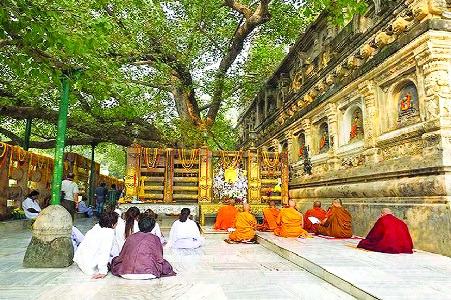

Bihar is a land where history, spirituality and ancient traditions come together. Among its most significant religious destinations is Bodh Gaya, a place that holds a special position in the hearts of Buddhists across the world. It was here, beneath the sacred Bodhi Tree, that Prince Siddhartha Gautama attained enlightenment and became the Buddha, or the Enlightened One.
Located in Gaya district, Bodh Gaya attracts pilgrims, monks, scholars and tourists from across the globe. Its spiritual atmosphere, ancient monasteries, magnificent temples and historical monuments make it one of India’s most important pilgrimage destinations. The Mahabodhi Temple Complex, a UNESCO World Heritage Site since 2002, stands as a reminder of the profound event that transformed the course of religious and philosophical history. The region, however, offers much more than Buddhist heritage. Ancient caves associated with Buddha’s spiritual journey, Hindu pilgrimage sites dedicated to ancestral rituals, and centuries-old temples make Gaya and its surroundings an extraordinary destination for those interested in India’s diverse religious traditions.
Bodh Gaya: Where Buddha
attained enlightenment
Situated on the banks of the Niranjana River, Bodh Gaya is regarded as one of the four most sacred pilgrimage destinations in Buddhism. The other three are Lumbini in Nepal, where Buddha was born; Sarnath in Uttar Pradesh, where he delivered his first sermon; and Kushinagar, where he attained Mahaparinirvana.
Bodh Gaya was historically known as Uruvela. It was also referred to as Sambodhi, Vajrasana and Mahabodhi in different historical and religious traditions.
According to Buddhist accounts, Siddhartha Gautama renounced his princely life in search of the truth about human suffering. After years of spiritual practice and severe austerities, he arrived at Uruvela. Here, he adopted a balanced approach to spiritual discipline, abandoning extreme self-mortification.
He eventually sat in meditation beneath a Peepal tree, determined to discover the truth. After deep contemplation, he attained enlightenment and understood the nature of suffering, its causes and the path to liberation. The tree came to be known as the Bodhi Tree, while the place became one of the most revered destinations in Buddhism.
The magnificent Mahabodhi Temple Complex is the centrepiece of Bodh Gaya. Its main temple, with its towering pyramidal structure and intricate carvings, houses a golden image of the Buddha in the earth-touching posture, symbolizing his enlightenment.
The complex also contains the sacred Bodhi Tree, the Vajrasana or Diamond Throne, and several locations associated with the seven weeks Buddha is believed to have spent in meditation after attaining enlightenment.
The site attracts Buddhist pilgrims from Sri Lanka, Thailand, Myanmar, Japan, China, Tibet, Bhutan and several other countries. International Buddhist communities have also contributed to the development of monasteries and religious facilities in the area, giving Bodh Gaya a distinctly international character.
The Great Buddha Statue
One of Bodh Gaya’s most striking landmarks is the Great Buddha Statue, an imposing representation of Gautama Buddha seated in meditation on a giant lotus. Standing approximately 80 feet tall, the statue is among the tallest Buddha statues in India. It was inaugurated by the 14th Dalai Lama in 1989 and has since become a major attraction for visitors.
Constructed using sandstone and red granite, the statue reflects remarkable craftsmanship. Its peaceful expression and meditative posture create an atmosphere of tranquillity, making it a popular place for devotees and visitors seeking moments of reflection.
Surrounded by smaller statues of Buddha’s disciples, the monument represents the spiritual values of compassion, peace and wisdom that lie at the heart of Buddhism.
Pretshila Hill: A sacred
destination for ancestral rituals
While Bodh Gaya is internationally recognised for its Buddhist significance, Gaya is equally important to Hindu pilgrims. Around eight kilometres northwest of Gaya lies Pretshila Hill, a sacred destination associated with the performance of Pind Daan, a religious ritual conducted for the peace and salvation of departed ancestors.
The name Pretshila is commonly interpreted as the Hill of Spirits. According to Hindu belief, performing ancestral rites at this location helps departed souls attain peace and liberation. Atop the hill stands a temple dedicated to Lord Yama, the Hindu deity associated with death and justice. The temple is traditionally attributed to the patronage of Rani Ahilyabai Holkar of Indore and has undergone several renovations over the years.
Near the temple is Ramkund, a sacred water tank associated with Lord Rama. According to local belief, Rama bathed here during his stay in the region. Devotees consider a dip in the tank spiritually purifying. The hill is particularly visited during Pitru Paksha, the fortnight dedicated to remembering and honouring ancestors. Gaya is one of the most important destinations for these rituals, and thousands of families travel here to perform Pind Daan.
Dungeshwari Cave Temples:
Where Buddha practised austerities
Approximately 12 kilometers northeast of Bodh Gaya are the Dungeshwari Cave Temples, also known as the Mahakala Caves. These ancient caves are closely associated with the years Buddha spent in spiritual exploration before attaining enlightenment.
According to Buddhist tradition, Siddhartha Gautama practised severe austerities in these caves. He subjected himself to extreme fasting and physical deprivation in an attempt to overcome worldly desires and discover the path to liberation.
His prolonged self-mortification left him extremely weak. It was at this critical stage that a village woman named Sujata offered him food, traditionally described as a bowl of milk-rice pudding.
The offering helped Siddhartha regain his strength and prompted an important realization: neither indulgence nor extreme deprivation could lead to enlightenment. Instead, he recognized the importance of the Middle Way, a balanced path between the two extremes.


Be the first to comment