

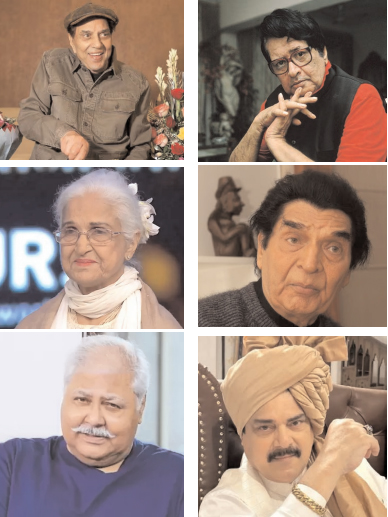
 They shaped our imagination, our language of emotions, our collective memory. In 2025, India paused repeatedly-to mourn, to remember, and to honor those whose lives left an indelible imprint on its cultural soul.
The year 2025 will be remembered as one of profound transition-not merely for political churn or social change, but for the quiet departures of giants who had long been part of India’s everyday life. Actors whose faces felt familiar as family, singers whose voices became emotional landmarks, creators who shaped how India spoke to itself-many took their final bow this year.
What united these losses was not just fame, but enduring relevance. These were figures who had outlived trends, crossed generations, and remained woven into India’s shared consciousness. Their passing marked the end of eras-and the beginning of reflection.
Dharmendra (1935-2025): The Eternal He-Man with a Gentle Soul
For over six decades, Dharmendra stood tall as one of Hindi cinema’s most enduring leading men. Dubbed the “He-Man” of Bollywood, he embodied rugged masculinity-but beneath the brawn lay an actor of extraordinary emotional sensitivity.
From the rebellious passion of Phool Aur Patthar to the stoic righteousness of Satyakam, from the thunderous camaraderie of Sholay to the playful warmth of Chupke Chupke, Dharmendra moved effortlessly between intensity and tenderness. He represented an India that was idealistic yet grounded, heroic yet humane.
In his later years, Dharmendra became less a star and more a living institution-a bridge between cinema’s golden age and its modern reinventions. His death in November 2025 prompted tributes that cut across generations, languages, and ideologies. For many, he was not just an actor-but a reminder of cinema’s moral heart.
Manoj Kumar (1937-2025): Cinema’s Conscience Keeper
Known eternally as “Bharat Kumar,” Manoj Kumar redefined patriotism on screen-not through spectacle, but through quiet conviction. At a time when nationalism was still finding its post-Independence voice, his films spoke directly to the nation’s conscience.
Upkar, Purab Aur Pachhim, Roti Kapda Aur Makaan-these were not merely films, but cultural statements. Manoj Kumar believed cinema had a responsibility to society, and his body of work reflected that belief with unwavering clarity.
His passing in April 2025 felt symbolic, coming at a time when India was once again debating ideas of nationhood, identity, and belonging. His films remain a reminder that patriotism, at its strongest, is rooted in empathy and social justice.
Kamini Kaushal (1927-2025): A Pioneer Who Refused to Fade
Kamini Kaushal belonged to an era when women on screen were expected to vanish after marriage. She quietly-and resolutely-defied that norm.
From her historic debut in Neecha Nagar to her continued presence in cinema across decades, Kamini Kaushal embodied dignity, restraint, and inner strength. She aged on screen with grace at a time when roles for older women were scarce-and often stereotyped.
Her passing closed a rare chapter of Indian cinema: that of an actress who had witnessed-and participated in-its journey from pre-Independence realism to contemporary storytelling.
Asrani (1941-2025): Laughter That Outlived the Punchline
Comedy in Indian cinema has often been underestimated. Asrani proved it could be immortal.
Whether as the unforgettable jailer in Sholay or the gentle disruptor in Hrishikesh Mukherjee classics like Guddi and Chupke Chupke, Asrani possessed a rare gift-he could make audiences laugh without malice, satire without cruelty.
His death in October 2025 felt deeply personal to viewers who had grown up repeating his dialogues, often without remembering when they first heard them. His legacy is laughter that never felt dated-and kindness that never felt forced.
Satish Shah (1952-2025): Wit, Warmth, and the Middle-Class Mirror
Few actors captured the quirks of India’s urban middle class as sharply as Satish Shah. With impeccable comic timing and observational humour, he made everyday absurdities unforgettable.
For a generation, he will forever remain Indravadan Sarabhai-opinionated, sarcastic, and oddly lovable. Yet his career stretched far beyond sitcom fame, encompassing theatre, cinema, and voice work.
Satish Shah’s death marked the loss of an actor who made intelligence funny and humor thoughtful-a rare balance in popular entertainment.
Zubeen Garg (1972-2025): The Voice of a Region, the Sound of a Generation
Zubeen Garg was not just a singer-he was a cultural movement. From Assam to Bollywood, his voice carried emotion, defiance, and deep-rooted identity.
Equally at home singing soulful Bollywood numbers and Assamese folk-inspired compositions, Zubeen represented a generation of artists who refused to be boxed into one language or geography.
His sudden passing in September 2025 sent shockwaves across the Northeast and beyond, highlighting how deeply regional voices have shaped India’s national cultural fabric.
Pankaj Dheer (1956-2025): The Warrior with a Tragic Grace
To millions, Pankaj Dheer will always be Karna-the noble warrior wronged by fate. His portrayal in Mahabharat was marked by dignity, restraint, and quiet pain.
Beyond mythological television, Dheer worked steadily in films and serials, embodying authority figures with moral complexity. His death in October 2025 reminded audiences of an era when television characters were written-and performed-with epic gravitas.
Mukul Dev (1971-2025): The Actor Who Thrived in the Shadows
Mukul Dev never chased stardom-yet he never went unnoticed. With a commanding screen presence and understated intensity, he excelled in supporting roles that elevated entire narratives. From action dramas to comedies, he brought credibility and depth, often becoming the emotional anchor of the story. His untimely death in May 2025 was widely mourned within the industry, a reminder of how essential character actors are to Indian cinema’s ecosystem.
Piyush Pandey (1955-2025): The Man Who Taught Brands to Speak Human
Few individuals shaped India’s emotional vocabulary as profoundly as Piyush Pandey. Through advertising, he taught brands to speak the language of people-not markets.
His campaigns blended humour, nostalgia, social insight, and storytelling, often reflecting India back to itself with warmth and honesty. His passing in 2025 was mourned not just by advertisers, but by anyone who had ever smiled at a commercial that felt deeply personal.

Entertainment
Parineeti Wants To Flirt With Ranbir Kapoor
Actress Parineeti Chopra says if she has an option to flirt with someone in Bollywood, it would be the current heartthrob Ranbir Kapoor. Mesmerised by the young Kapoor scion, the actress calls him “one of […]

Featured
Pongal: Tamil Nadu’s festival of gratitude to the sun, soil and sustenance
As the winter Sun climbs higher in the southern sky and the land turns generous after months of cultivation, South India, particularly Tamil Nadu awakens to one of its most cherished festivals-Pongal. Celebrated over four […]

Bollywood
Alia Bhatt’s the perfect bridesmaid at best friend’s wedding
Alia Bhatt was a stunning bridesmaid as she attended her friend’s pre-wedding ceremony. Alia took to Instagram to share a series of photos as she had a good time with her friends. Alia was glowing […]
Be the first to comment