Tag: Brazil

  • Prime Minister Modi’s foreign visits from 2021-24 cost the nation USD 34,114,449 (Rs 295 cr)’;  USD 7,746,345 (Rs 67 cr ) on trips to 5 countries in 2025: Govt data

    Prime Minister Modi’s foreign visits from 2021-24 cost the nation USD 34,114,449 (Rs 295 cr)’; USD 7,746,345 (Rs 67 cr ) on trips to 5 countries in 2025: Govt data

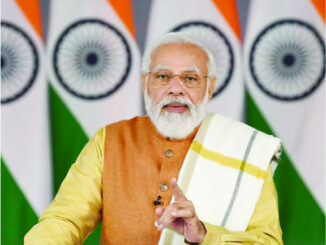
    NEW DELHI (TIP): Over Rs 67 crore (USD 7,746,345) was incurred on Prime Minister Narendra Modi’s visit to five countries, including the US and France, in 2025, while the total expenditure figures related to his foreign trips from 2021 till 2024 stood at nearly Rs 295 crore (USD 34,114,449) , according to data shared by the government, says a PTI report.

    As per the country-wise and year-wise data, the corresponding figures for Modi’s visits to Mauritius, Cyprus, Canada and Croatia, and Ghana, Trinidad & Tobago, Argentina, Brazil and Namibia this year were not available.

    For these visits, the column for ‘total expenditure’ in the data shared by Minister of State for External Affairs Kirti Vardhan Singh on Thursday, in his written response to a query by TMC MP Derek O’Brien in Rajya Sabha, said, “Bills under settlement. Total expenditure is not yet available.” Of these visits, the costliest one was to France, which incurred over Rs 25 crore (USD 2,890,009) , while the one Modi undertook to the US in June 2023 incurred over Rs 22 crore (USD 2,542,900) .

    On March 20, the ministry had shared data in in Rajya Sabha, according to which nearly Rs 258 crore ( USD 29,821,291) was incurred on 38 foreign visits of Modi between May 2022 and December 2024.

    In 2025, Modi had travelled to France and the US from February 10-13. In Paris, he held bilateral talks with President Emmanuel Macron and attended an AI Summit, while in the US he met and held talks with President Donald Trump, among other engagements.

    According to the data shared, the country-wise figures for these five countries Modi visited in 2025 are–Rs 25,59,82,902 (France); Rs 16,54,84,302 (US); Rs 4,92,81,208 (Thailand); Rs 4,46,21,690 (Sri Lanka) and Rs 15,54,03,792.47 (Saudi Arabia).

    The cumulative figures for the preceding four years are–about Rs 109 crore (2024) spanning 16 countries, including Russia, Ukraine, the US and Brazil; nearly 93 crore (2023); Rs 55.82 crore (2022) and about Rs 36 crore (2021).

    In 2021, Modi visited Bangladesh (Rs 1,00,71,288–total expenditure); the US (Rs 19,63,27,806); Italy (Rs 6,90,49,376); and the UK (Rs 8,57,41,408). His trips in 2022 included visits to Germany (Rs 9,44,41,562); Denmark (Rs 5,47,46,921); France (Rs 1,95,03,918); Nepal (Rs 80,01,483) and Japan (Rs 8,68,99,372), it said. For Modi’s 2023 visit to Egypt, the expenditure on advertising and broadcasting was Rs 11.90 lakh, according to the data.

  • Brazil to join South Africa’s Gaza genocide case against Israel at ICJ

    Brazil to join South Africa’s Gaza genocide case against Israel at ICJ

    BRASILIA / NEW YORK (TIP): Brazil is finalizing its submission to join South Africa’s genocide case against Israel’s actions in Gaza at the International Court of Justice, the Foreign Ministry said in a statement on Wednesday, July 23, 2025, a Reuters report says.

    South Africa filed a case in 2023 asking the ICJ to declare that Israel was in breach of its obligations under the 1948 Genocide Convention. The case argues that in its war against Hamas militants Israel’s military actions go beyond targeting Hamas alone by attacking civilians, with strikes on schools, hospitals, camps, and shelters.

    Other countries – including Spain, Turkey, and Colombia – have also sought to join the case against Israel. In its statement, the Brazilian government accused Israel of violations of international law “such as the annexation of territories by force” and expressed “deep indignation” at violence suffered by the civilian population.

    Israel denies deliberately targeting Palestinian civilians, saying its sole interest is to annihilate Hamas. Lawyers for Israel have dismissed South Africa’s case as an abuse of the genocide convention.

    Brazil’s National Israeli association CONIB said in a statement in response to Wednesday’s decision that “the breaking of Brazil’s long-standing friendship and partnership with Israel is a misguided move that proves the extremism of our foreign policy.”

    Brazilian President Luiz Inacio Lula da Silva has long been an outspoken critic of Israel’s actions in Gaza, but Wednesday’s decision carries added significance amid heightened tensions between Brazil and Israel’s ally, the United States. The Trump administration announced 50% tariffs on all Brazilian goods this month.

    A diplomat familiar with the thinking of the Lula administration told Reuters that Brazil does not believe its decision to join South Africa’s case will impact its relationship with Washington, however.

    The United States has opposed South Africa’s genocide case under both former President Joe Biden and Trump. In February, Trump signed an executive order to cut U.S. financial assistance to South Africa, citing in part its ICJ case.

  • India stands ‘isolated’ over abstention on Gaza ceasefire in the UNGA, says Congress

    India stands ‘isolated’ over abstention on Gaza ceasefire in the UNGA, says Congress

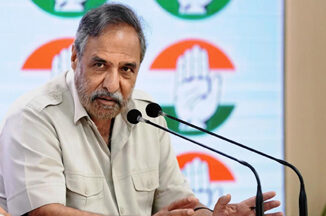
    NEW DELHI (TIP): Expressing concern over the flare-up in West Asia after the escalation of the Israel-Iran conflict, the Congress on Tuesday, June 17, 2025, urged the Union Government to work with partner countries to ensure an immediate ceasefire in the region. “India should work with partners to bring an immediate halt to hostilities as any escalation can destabilize the entire region,” Congress Working Committee member Anand Sharma, who heads the party’s foreign affairs department, told The Hindu.

    Mr. Sharma, who was part of the Narendra Modi government’s diplomatic outreach in Operation Sindoor and the Pahalgam terror attack, mounted a scathing criticism of India’s abstention from a UN vote on a motion for the protection of civilians and upholding legal and humanitarian obligations in Gaza. “It is a humanitarian catastrophe that has unfolded in Gaza, where people are facing collective retribution for their identity. It is indefensible that the land of Mahatma Gandhi doesn’t stand for peace,” Mr. Sharma said.

    As Israel ends ceasefire, India expresses concern over Gaza, humanitarian situation, release of hostages

    In fact, the abstention at the UN was cited as yet another example of “weak diplomacy” by India. Congress general secretary (organization) and Lok Sabha member from Kerala’s Alappuzha seat, K.C. Venugopal, said India stood isolated among multilateral fora such as BRICS — a grouping of Brazil, Russia, India, China and South Africa — and SCO or Shanghai Cooperation Organization because of its stance.

    “India has always stood for peace, justice, and human dignity. But today, India stands alone as the only country in South Asia, BRICS, and SCO to abstain on a UNGA resolution demanding a ceasefire in Gaza,” he said on X last Saturday (June 14, 2025).

    Terming India’s stance “shameful and disappointing” in an X post the same day, Priyanka Gandhi Vadra, Lok Sabha member from Kerala’s Wayanad, said, “60,000 people, mostly women and children, have been killed already, an entire population is being confined and starved to death, and we are refusing to take a stand”.

    “Cold-blooded murder”: Priyanka Gandhi slams Israel, says its actions show humanity means nothing to them

    “This is a tragic reversal of our anti-colonial legacy. In fact, not only are we standing silent as Mr. (Benjamin) Netanyahu annihilates an entire nation, we are cheering on as his government attacks Iran and assassinates its leadership in flagrant violation of its sovereignty and complete contravention of all international norms,” Ms. Vadra added. Pawan Khera, who heads the party’s media and publicity wing, countered criticism from some quarters that Kerala’s politics may determine the position of some of their MPs from the State. “Congress’s position on Israel-Gaza and Iran-Israel stems from our own legacy of anti-colonial solidarity, non-alignment, and a firm commitment to human rights and international law,” Mr. Khera said.

    Stressing on the role India can play in the Iran-Israel conflict, he said, “Instead of seeing this moment as a strategic conundrum, India could see it as an opportunity — to act as a moral bridge between the warring sides, both of which happen to be our allies. That is what our legacy allows us to do, and what global leadership demands.”

  • World leaders to join thousands of mourners for Pope’s funeral ceremony

    World leaders to join thousands of mourners for Pope’s funeral ceremony

    India’s President Droupadi Murmu will attend the Pontiff’s funeral

    VATICAN (TIP): Pope Francis’s funeral will be held in St Peter’s Square in Rome at 10am local time on Saturday, April 26. The outdoor service, which will be led by Cardinal Giovanni Battista Re, the dean of the college of cardinals, is expected to be attended by dignitaries from 170 foreign delegations, as well as tens of thousands of ordinary people wanting to pay their respects.

    President Trump, Prime Minister Keir Starmer of Britain, President Volodymyr Zelensky of Ukraine, President Javier Milei of Argentina and President Luiz Inácio Lula da Silva of Brazil, the world’s largest Catholic country.

    India will be represented by the President Droupadi Murmu.
    “President Droupadi Murmu will be visiting Vatican City on April 25 to 26 to attend the state funeral of Pope Francis and offer condolences on behalf of the government and people of India,” the MEA said.

    Once the funeral mass has finished, Francis’s coffin will be taken, in procession, to Santa Maria Maggiore. The Vatican announced that people will be able to visit Francis’s tomb in the basilica from Sunday morning.

  • How India flexed its global power muscles in 2024

    How India flexed its global power muscles in 2024

    India’s foreign policy in 2024 showcased a bold stance, with India asserting its influence not only in its immediate neighbourhood but also on the global stage. External Affairs Minister S. Jaishankar in December highlighted a decade-long shift toward prioritizing economic diplomacy, a trend that continued to define India’s strategic engagements this year.
    As per Jaishankar, India’s foreign policy today is based on three principles. “Active engagement with countries, nation’s interests first under any circumstance and humanitarian approach with ethics”.
    Here’s how India flexed its global power muscles in 2024:
    India stares down China
    It took India and China 21 rounds of Corp Commander-level talks on disengagement to end the military impasse that plagued the relationship for five years. While military disengagement had been achieved earlier at four points, the same remained elusive in Depsang and Demchok, the two friction points.
    China maintained that the impasse in these areas were legacy issues that predated the 2020 standoff and should not be allowed to block resumption of normal bilateral exchanges. However, India too steadfastly maintained there couldn’t be any progress in ties till the time disengagement is completed in the remaining areas, calling it an essential basis for peace in the border areas.
    Patient and persevering diplomacy helped clinch the disengagement agreement with China, Jaishankar said.
    Both the countries agreed to return to the patrolling agreements along the Line of Actual Control (LAC) in eastern Ladakh that were in place before the Galwan clashes in 2020 after several negotiations.
    Chabahar port powerplay
    India’s agreement with Iran in May to manage the strategic Chabahar Port for the next decade marked a significant milestone, as it was the first time India assumed management of a port overseas and that too amid Iran’s tensions with the US and Israel. This move underscores Prime Minister Narendra Modi’s emphasis on using strategic ports to bolster regional connectivity and influence.
    Chabahar port is a vital link in India’s efforts to enhance connectivity with Afghanistan, Central Asia, and the broader Eurasian region. It also serves as a counterbalance to Pakistan’s Gwadar Port and China’s expansive Belt and Road Initiative.
    The pact with Iran was signed despite the looming threat of US sanctions. Although the sanctions were never imposed, External Affairs Minister S. Jaishankar addressed concerns raised by the US about the “potential risk” to companies involved in the India-Iran joint venture. Jaishankar stressed that India would “work at” explaining Chabahar’s importance as a project serving the region’s broader interests.
    Maldives comes back
    India’s relationship with Maldives faced turbulence after Mohamed Muizzu, known for his pro-China and anti-India stance, assumed office as president. Mere hours after his swearing-in, Muizzu demanded the withdrawal of Indian military personnel stationed to operate three aviation platforms gifted by India. Following negotiations, the Indian military personnel were replaced with civilian operators.
    Tensions escalated further when three Maldivian deputy ministers made controversial remarks about India and Prime Minister Modi on social media. The Maldivian Foreign Ministry swiftly distanced itself from the comments, leading to the suspension of the three junior ministers.
    Amid these strained ties, President Muizzu made his first bilateral visit to India in October, as Maldives grappled with an economic crisis. The financial challenges facing his country were likely a key topic in discussions with India. Before the visit, Muizzu adopted a conciliatory tone, stating that he has never opposed India and acknowledging that New Delhi was aware of Maldives’ financial difficulties and willing to assist.
    Sri Lanka sides with India
    Sri Lankan President Anura Kumara Dissanayake on his inaugural foreign visit since taking office in September assured Prime Minister Modi that Sri Lanka would not permit its territory to be “used in any way that is detrimental to the interest of India.
    The assurance from Sri Lankan president came at a crucial point as China is intensifying its presence in the Indian Ocean region, particularly targeting Indian interests.
    China’s control over Hambantota Port, acquired through Sri Lanka’s debt default, has enabled Beijing to station vessels like the Yuan Wang 5, a 25,000-tonne satellite and missile tracking ship. This development concerns India due to Sri Lanka’s geographical proximity.
    Despite India’s initial objections in August 2022, Sri Lanka eventually permitted Chinese vessels to dock for ‘replenishment’ at Hambantota. Meanwhile, Chinese surveillance vessels keep on patrolling the Indian Ocean region and using the Hambantota port.
    China secured a 99-year lease on Hambantota port after Sri Lanka struggled with loan repayments. The $1.7 billion project, with phase one completed in 2010, required annual payments of $100 million, which Colombo failed to meet.
    The Canadian challenge
    India in October this year expelled six Canadian diplomats and announced withdrawing its high commissioner and other targeted officials from Canada after strongly dismissing Ottawa’s allegations linking the envoy to a probe into the killing of Sikh extremist Hardeep Singh Nijjar, in a major downturn in already frosty ties between the two nations. India’s decision to recall High Commissioner Sanjay Verma and some other diplomats came shortly after the Canadian Charge d’Affaires Stewart Wheelers was summoned to the Ministry of External Affairs (MEA). Wheelers was bluntly told that baseless “targeting” of the Indian envoy and other officials was “completely unacceptable”.
    India is not neutral in Russia-Ukraine war
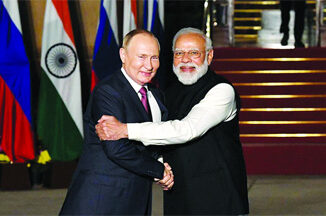
    Despite opposition of the West, India has managed to find a middle way on the Russia-Ukraine conflict while also constantly underlining its strong relations with Russia. During the BRICS summit in October, when Prime Minister Modi visited Russia, President Vladimir Putin remarked that he believed Modi would understand his comments without translation, highlighting the strong relationship between the two nations. Modi responded with a hearty laugh. India’s approach to the Russia-Ukraine conflict has been shaped by its steadfast commitment to peace, dialogue, and diplomacy. This year, Modi visited Ukraine and met with President Volodymyr Zelenskyy, reaffirming India’s stance. During the meeting, Modi emphasized that India has never been neutral in the conflict but has consistently sided with peace.
    India’s role in the conflict has drawn international attention. Italian Prime Minister Giorgia Meloni, after her meeting with Zelenskyy, pointed out the potential roles India and China could play in resolving the crisis. Following his visit to Kyiv, Modi telephoned Putin to share his perspectives. Apart from the BRICS summit visit, Modi visited Russia in July, holding extensive talks with President Putin. While India has not proposed a peace formula like those of Brazil or China, it has maintained contact with all stakeholders, advocating for negotiations and emphasizing the importance of Russia’s involvement in peace summits for a sustainable resolution to the conflict.
    Diplomatic win in Qatar
    In a significant diplomatic win for India in February, eight former Indian Navy personnel, who were initially sentenced to death in Qatar on charges of spying, were released, marking a crucial turn of events in a case that had garnered international attention and led Modi critics to make it a test case for his global diplomatic clout.
    India’s diplomatic efforts led to the commutation of the capital punishment to extended prison terms for the eight veterans, who had been facing severe charges in Qatar. This decision came after sustained diplomatic intervention by India, showcasing the effectiveness of bilateral engagements in resolving complex legal matters. Expressing gratitude for the release of the Indian nationals, the Indian government welcomed the decision made by the Amir of the State of Qatar to facilitate their return. The swift resolution of this sensitive issue underscores the significance of diplomatic dialogue and cooperation between nations in addressing challenges faced by their citizens abroad.

  • Putin invites Modi for talks at BRICS

    Putin invites Modi for talks at BRICS

    In a boost to peace efforts in the Russia-Ukraine conflict, Indian National Security Advisor (NSA) Ajit Doval met Russian President Vladimir Putin today and conveyed details of the discussions between India and Ukraine on possible measures for resolving the conflict.
    Doval met Putin on the sidelines of the Brazil, Russia, India, China, and South Africa (BRICS) NSAs meeting at Saint Petersburg. During the meeting, Putin proposed a bilateral meeting with Prime Minister Narendra Modi next month on the sidelines of the BRICS leaders’ summit in Kazan, Russia.
    PM Modi and Ukrainian President Volodymyr Zelenskyy had met in Kyiv on August 23, with Doval present among the inner core group of Modi’s team during the meeting. The Indian NSA conveyed details of the talks in Kyiv, according to the Kremlin, which published a transcript and photos of the Putin-Doval meeting on its website. The transcript quoted Doval as saying, “He (Modi) wanted me to come in person and tell you about the talks that took place (in Kyiv). It was a closed format, only the two leaders were present, and I was with Prime Minister (Modi); I witnessed this conversation.”
    Earlier this month, Putin suggested that China, India, and Brazil could act as mediators in potential peace talks with Ukraine. Source: TNS

  • Modi to travel for Brics Summit in Johannesburg

    PM Narendra Modi will be heading for the BRICS summit after host and South African President Cyril Ramaphosa invited him for the meet in a phone call on Thursday, Aug 3.
    During a phone call with Modi on Thursday evening, South African President Cyril Ramaphosa invited the prime minister to the Brics Summit and briefed him on preparations for the meeting.
    “PM accepted the invitation and conveyed that he looked forward to his visit to Johannesburg to participate in the summit,” the external affairs ministry said in a readout of the conversation.
    The ministry had earlier described as “speculative” media reports that Modi might skip the summit of the leaders of Brazil, Russia, India, China and South Africa.
    Russia has said Putin will join the summit virtually while foreign minister Sergey Lavrov will lead a delegation to Johannesburg.

  • Bolsonaro home searched as Brazil probes fake vaccine cards

    BRASILIA (TIP): Brazil’s Federal Police searched former President Jair Bolsonaro’s home and seized his phone May 3 in what they said was an investigation into the alleged falsification of COVID-19 vaccine cards. Several other locations also were searched and a half dozen people faced arrest, police said.
    The former president confirmed the search of his residence while speaking with reporters, as did his wife, Michelle, on her Instagram account.
    A police official, who spoke on condition of anonymity because the person wasn’t authorized to speak publicly, said Bolsonaro would be questioned at Federal Police headquarters and confirmed that one of his closest allies, Mauro Cid, was arrested.
    Asked about the search of Bolsonaro’s home, the Federal Police’s press office provided a statement saying officers were carrying out 16 searches and six arrests in Rio de Janeiro related to the introduction of fraudulent data related to the COVID-19 vaccine into the nation’s health system. The statement didn’t name Bolsonaro or Cid.
    Local media reported that the vaccine cards of Bolsonaro, his advisers and his family members were altered. The police statement said the investigation focused on cards altered in order to comply with U.S. vaccine requirements to enter the country.
    “There was no adulteration on my part, it didn’t happen,” Bolsonaro told reporters after the search. “I didn’t take the vaccine, period. I never denied that.” In an interview for Jovem Pan television, Bolsonaro said his vaccination records were not required for any of his trips to the U.S.
    “The way heads of state are treated is different than for the common citizen. Everything is arranged ahead of time, and in my travels to the United States, I was not at any time required to have a vaccination card,” Bolsonaro said. Bolsonaro visited the U.S. at least three times after it began generally requiring in November 2021 that non-citizens be fully vaccinated to enter. He went in June 2022 for the Summit of the Americas, September 2022 for the U.N. General Assembly and last December after he left office for a stay in Florida.
    The investigation raises questions about whether falsified vaccine information might have been included in documentation for any members of the former president’s entourage during those trips.
    During the pandemic, Bolsonaro spent months sowing doubt about the efficacy of the vaccine and defiantly refusing to get a shot.(AP)

  • Clamour grows in Brazil over jail for rioters

    Rio De Janeiro (TIP): “No amnesty! No amnesty! No amnesty!” The chant reverberated off the walls of the jam-packed hall at the University of Sao Paulo’s law college on January 10 afternoon. Hours later, it was the rallying cry for thousands of Brazilians who streamed into the streets of Rio de Janeiro and Sao Paulo, penned on the protest posters and banners. The words were a demand for retribution against the supporters of former President Jair Bolsonaro who stormed Brazil’s capital on Sunday, and those who enabled the rampage. (AP)

  • Ukraine War, Chinese Protest, Imran Khan’s Ouster; top global Events in 2022

    The year 2022 has been a tumultuous one, with many uprisings, new faces coming to prominence and dictators losing hold of power. It has been a year of economic shockers, from the West to the East. Needless to say, it has been a year of clashes and of new alliances.

    This year saw a significant rise of leaders like Ukraine President Zelensky, French President Macron and Chinese leader Xi Jinping. On the other hand, prominent international leaders, considered to have clout, including former US President Trump and Brazilian President Bolsonaro lost their power.

    There were several prominent events which shaped 2022 in their own ways. To name a few, the Ukraine War, Sri Lankan Economic crisis and the unprecedented protests in China defined the year in their unusual ways.

    UKRAINE WAR

    The Russian invasion of Ukraine, which began earlier this year in February, has entered its 300th day this month, proving to be a tough challenge for both Russia and Ukraine. Russian President Vladimir Putin, who began a blitzkrieg assault on Kyiv taking over the eastern and southern part of the country, is now facing challenge to keep the war going amid reports of ailing health and internal strife.

    So far, over 100,000 Russian and 100,000 Ukrainian soldiers have been killed or injured in the war in Ukraine. For the Ukrainians, this winter is going to be tough with Russian attacks on Ukrainian power plans and consecutive Russian missile attacks. However, the war has shaped the hero out of Ukraine’s President Zelensky, who not only stood against the Russian aggression, but also managed to forge a western unity.

    SRI LANKAN CRISIS

    The Sri Lanka protests which started in April had led to the ouster of President Gotabaya Rajapaksa and two-time President and former Prime Minister Mahinda Rajapaksa. The Sri Lankan crisis, which started as a protest in Colombo, spread across the country with the people demanding reforms in the government.

    Ranil Wickremesinghe was elected President through a parliamentary vote, in which the Rajapaksas’ party backed him in July. The government blamed the Covid pandemic, which badly affected Sri Lanka’s tourist trade, and later led to a shortage of fuel and foreign dollars. However, many experts blame President Rajapaksa’s poor economic mismanagement.

    The country continues to remain under crisis with Colombo anticipating the IMF loan to secure the country’s economy.

    OUSTER OF IMRAN KHAN

    Former Pakistan Prime Minister Imran Khan, who came to power in 2018, is the only Pakistani Prime Minister to be ousted in a no-confidence vote in Parliament earlier this year.

    Khan was ousted from power in April after losing a no-confidence vote in his leadership, which he alleged was part of a US-led conspiracy targeting him because of his independent foreign policy decisions on Russia, China, and Afghanistan.

    Since he lost the vote in Parliament, Khan has mobilized mass rallies across the country, whipping up crowds with claims that he was a victim of a conspiracy by his successor, Prime Minister Shahbaz Sharif, and the United States.

    IRAN PROTESTS

    Iran has been rattled by protests over opposition to the mandatory hijab law as thousands of common citizens have taken to the streets.

    Iran has been rocked by protests since September 16, with the death of 22-year-old Mahsa Amini, who died after being detained by the morality police. The protests have since morphed into one of the most serious challenges to Iran’s theocracy installed by the 1979 Islamic Revolution.

    So far, the country’s police have arrested renowned actresses, footballers, actors and influencers for supporting the protests. It has also executed two protestors for participation in the protests.

    RARE PROTEST IN CHINA

    China saw two major developments this year- Xi Jinping becoming President for the third time and rare protests weeks after against tough anti-Covid restrictions.

    In November, thousands of people took to the streets in several major cities across China, including Beijing and Shanghai, to call for an end to lockdowns and greater political freedoms, in a wave of protests not seen since pro-democracy rallies in 1989 were crushed.

    Despite heavy crackdown, surveillance and censorship, the protests expanded into calls for broader political freedom and left a major negative impact on the reputation of Xi and the Party.

    US MIDTERM ELECTIONS

    The midterm elections in the US, which is usually seen as a mandate against the ruling government, failed to make a Republican sweep as the Democrats gained razor-thin control of the Senate, while the Republicans got a narrow margin against the dems in the House of Representatives.

    However, the misterms was special in the sense that it rained down on the ambitions of former President Donald Trump, who was looking forward to run for the second term, his “Make America Great Again” movement and the broader Republican agenda.

    A silver lining which came out of the midterm elections for the Republicans has been the victory of Florida Governor Ron DeSantis. DeSantis is seen as the possible challenger to Trump and a possible source of revival for the GOP.

    Surging inflation, ongoing strikes, economic crisis and war in Europe: the new UK Prime Minister Rishi Sunak faces these major challenges. Sunak came to Power after his predecessor Truss resigned after just 44 days in power.

    After 12 years in power, the Conservative party is more divided than ever. Earlier this year, Boris Johnson had resigned as PM in July after losing the confidence of some 60 ministers.

    Sunak has become the fifth Tory prime minister since 2016 — following David Cameron, Theresa May, Johnson and Truss. The challenges continue to mount for Sunak, who hopes to get his country out of the economic and political mess.

    BOLSONARO’S EXIT

    Brazilian President Jair Bolsonaro, lost election in October in a nail-biting presidential vote count against Luiz Inacio Lula da Silva.

    Almost from the start of his controversial mandate in 2019, Bolsonaro racked up accusations and investigations for everything from spreading disinformation to crimes against humanity. He survived more than 150 impeachment bids — a record.

    Most of these were over his flawed management of the coronavirus pandemic, which claimed the lives of more than 685,000 people in Brazil — the world’s second-highest toll after the United States.

    On January 1, 2023, Bolsonaro’s arch-rival, leftist ex-president Luiz Inacio Lula da Silva will take over the reins once more and Bolsonaro loses his presidential immunity.

    COP27 SUMMIT

    The UN COP27 climate summit in Egypt had some success and some failures. While the summit achieved a landmark deal on funding to help vulnerable countries cope with devastating climate impacts, the talks stalled on key issues and failed to secure commitments to stop greenhouse gas emissions.

    Though the participating nations agreed to contribute to the cost of the harm an overheated planet causes to developing nations, but they concluded the talks without doing anything more to address the burning of fossil fuels, which is the primary cause of these catastrophes.

  • Brazil, Argentina target blockbuster World Cup semi-final

    Brazil, Argentina target blockbuster World Cup semi-final

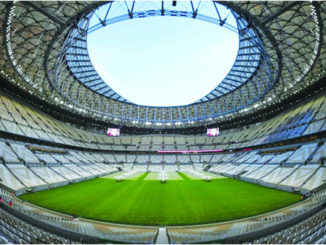
    Qatar (TIP)- Brazil seek to become the first team through to the World Cup semi-finals on Friday, while Argentina could set up a blockbuster all-South American clash if they get past the Netherlands.

    After three weeks of pulsating action, just eight teams are left standing as the 32-nation tournament heads into the final rounds of the knockout competition after a two-day break.

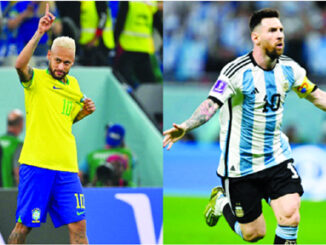
    Five-time champions Brazil kick off the quarter-finals against surprise 2018 runners-up Croatia, with Neymar fit and firing again after an ankle injury he suffered in the opening game.

    “I’ll be doing everything that I can to win with the Brazilian national team. That’s our mission and our dream,” said Neymar. “We’re getting ever closer, we’ve got another step to go now.”

    Croatia are a much-changed team from the one that reached the final four years ago, but 37-year-old Luka Modric remains the player that makes them tick.

    “I agree that we did a great thing by getting to the quarter-finals but regardless of that we would like to do more,” said Modric, who will come up against his Real Madrid teammates Vinicius Junior, Rodrygo and Eder Militao in the match at Education City Stadium.

    “We know that the greatest match is ahead of us. Brazil are always favourites. We have to be ourselves.”

    Seven-time Ballon d’Or winner Lionel Messi is hoping to finally end his wait for a World Cup title with Argentina, after losing the final to Germany in extra time eight years ago. The Copa America holders go up against the Netherlands in Friday’s second quarter-final at Lusail Stadium, the venue for the December 18 final.

    The two countries have met five previous times at the World Cup, including in the 1978 final, which Argentina won 3-1 after extra time. Argentina have never beaten the Dutch in 90 minutes.

    It is a repeat of their 2014 semi-final clash in Brazil, where the South Americans won on penalties following a 0-0 draw after 120 minutes. “In 2014 I was there and things ended slightly differently (to how we wanted) but I’d like to change that now,” Dutch forward Memphis Depay said at a pre-match press conference. After Argentina’s shock loss to Saudi Arabia in their first match, Messi has dazzled in Qatar and the Dutch will have to nullify his effect on the game. “We’re not going to reveal our tactics to you (about stopping Messi). It would be pretty stupid to reveal your own tactics,” coach Louis van Gaal told reporters.

    “Messi is the most dangerous creative player, he is able to create a lot and to score goals himself. But when they lose the ball he doesn’t participate much, this gives us chances,” he said.

                    Source: AF

  • CIFF MARKS 18TH EDITION

    Weckuwapok (The Approaching Dawn) (Photo: pointsnorthinstitute.org)By Mabel Pais

    Featuring

    • SHAUNAK SEN’S All That Breathes
    • GEETA GANDBHIR & SAM POLLARD’S Lowndes County And The Road To Black Power
    • NEHAL VYAS’S Dapaan
    • SOHIL VAIDYA’S Murmurs Of The Jungle
    • SHRUTIMAN DEORI’S My Courtyard (Ne Sotal)
    • KAVITA PILLAI’s Weckuwapok (The Approaching Dawn)

    The Camden International Film Festival (CIFF) for its 18th edition presents feature and short films and documentaries. The festival takes place in person from September 15-18 at venues in Camden and Rockland, Maine, and online from September 15-25 for audiences across North America.

    A program of the Points North Institute, CIFF remains widely recognized as a major platform championing the next generation of nonfiction storytellers and one of the hottest documentary and industry festivals on the festival and awards calendars. This year’s edition is the most international and formally adventurous to date and includes 34 features and 37 short films from over 41 countries. Over 60% of the entire program is directed or co-directed by BIPOC filmmakers and this is the 6th consecutive program the festival has reached gender parity within the program and across all competitions. Nearly half of the feature program will be US or North American premieres, including several new titles fresh from Venice, Locarno, and TIFF premieres, alongside award-winning films from Sundance, Rotterdam, Cannes, and Visions du Reel.

    This year’s program celebrates the diversity of voices and forms in documentary and cinematic nonfiction,” says Ben Fowlie, Executive and Artistic Director of the Points North Institute, and Founder of the Camden International Film Festival. “These films help us make sense of an ever-changing world, and do everything we expect from great art – they ask provocative questions and interrogate the form. This year’s program emphasizes the international that represents the ‘I’ in CIFF, and reminds us time and again of the limitless creative potential and potency of the documentary form. Just as we have been for each of the past seventeen years, we are grateful to the filmmakers who have made these works of art and shared these stories.”

    CIFF 2022 FEATURES

    5 DREAMERS AND THE HORSE

    Dirs: Aren Malakyan & Vahagn Khachatryan | Armenia, Georgia, Germany |

    US Premiere

    A COMPASSIONATE SPY 

    Dir: Steve James | USA, United Kingdom

    AFTER SHERMAN

    Dir: Jon-Sesrie Goff | USA

    ALL OF OUR HEARTBEATS ARE CONNECTED THROUGH EXPLODING STARS

    Dir: Jennifer Rainsford | US Premiere

    ALL THAT BREATHES

    Dir: Shaunak Sen | India, USA, UK

    BURIAL

    Dir: Emilija Škarnulytė | Lithuania, Norway | US Premiere

    COWBOY POETS

    Dir: Mike Day | UK, Scotland, US | World Premiere

    CROWS ARE WHITE

    Dir: Ahsen Nadeem | Japan, Ireland, USA

    DAY AFTER…

    Dir: Kamar Ahmad Simon | Bangladesh, France, Norway

    DESCENDANT

    Dir: Margaret Brown | USA

    DETOURS

    Dir: Ekaterina Selenkina | Russia, Netherlands | US Premiere

    DOS ESTACIONES

    Dir: Juan Pablo González | México, with France, USA

    EAMI

    Dir: Paz Encina | Paraguay, Argentina, Mexico, USA, Germany, France, The Netherlands | North American Premiere

    FORAGERS

    Dir: Jumana Manna | Palestine | North American Premiere

    GEOGRAPHIES OF SOLITUDE

    Dir: Jacquelyn Mills | Canada

    Dir: Carlos Pardo Ros | Spain | North American Premiere

    HERBARIA

    Dir: Leandro Listorti | Argentina, Germany | North American Premiere

    I DIDN’T SEE YOU THERE

    Dir: Reid Davenport | USA

    IN HER HANDS

    Dirs: Tamana Ayazi, Marcel Mettelsiefen | USA, Afghanistan | US Premiere

    IT IS NIGHT IN AMERICA (É Noite na América)

    Dir: Ana Vaz | Italy, Brazil, France | North American Premiere

    LOWNDES COUNTY AND THE ROAD TO BLACK POWER

    Dirs: Geeta Gandbhir, Sam Pollard | USA

    MATTER OUT OF PLACE

    Dir: Nikolaus Geyrhalter | Austria | North American Premiere

    MY IMAGINARY COUNTRY (Mi País Imaginario)

    Dir: Patricio Gúzman | Chile, France | Sneak Preview

    NOTHING LASTS FOREVER

    Dir: Jason Kohn | USA

    POLARIS

    Dir: Ainara Vera | Greenland, France | North American Premiere

    REWIND & PLAY

    Alain Gomis | France, Germany

    All That Breathes. (Photo: pointsnorthinstitute.org)

    Dir: Chris Smith | USA

    SUBJECT

    Dir: Jennifer Tiexiera, Camilla Hall | USA

    TERRANOVA

    Dirs: Alejandro Alonso & Alejandro Pérez | Cuba | North American Premiere

    THE AFTERLIGHT

    Dir: Charlie Shackleton | UK

    THE TERRITORY

    Dir: Alex Pritz | Brazil, Denmark, USA

    THIS MUCH WE KNOW

    Dir: Lily Frances Henderson | USA | World Premiere

    WHAT WE LEAVE BEHIND (LO QUE DEJAMOS ATRÁS)

    Dir: Iliana Sosa | USA, Mexico

    CIFF 2022 SHORTS

    ARALKUM

    Dirs: Daniel Asadi Faezi, Mila Zhluktenko | Germany, Uzbekistan |

    North American Premiere

    THE ARK

    Dir: Amira Louadah | Algeria, France | North American Premiere

    THE ARTISTS

    Dirs: Noah David Smith, Elizabeth L. Smith | USA | World Premiere

    BELONGINGS

    Dir: Alex Coppola | USA

    BIGGER ON THE INSIDE

    Dir: Angelo Madsen Minax | USA | Sneak Preview

    BRAVE

    Wilmarc Val | France | US Premiere

    CALL ME JONATHAN

    Dir: Bárbara Lago | Argentina | US Premiere

    CONGRESS OF IDLING PERSONS

    Dir: Bassem Saad | Lebanon, Germany

    CONSTANT

    Dir: Beny Wagner, Sasha Litvintseva | Germany, United Kingdom

    DAPAAN

    Dapaan. (Photo: pointsnorthinstitute.org)

    Dir: Nehal Vyas | USA

    DEERFOOT OF THE DIAMOND 

    Dir: Lance Edmands | USA | World Premiere

    ECHOLOCATION

    Dir: Nadia Shihab | USA

    EVERYTHING WRONG AND NOWHERE TO GO

    Dir: Sindha Agha | USA, United Kingdom | World Premiere

    THE FAMILY STATEMENT

    Dir: Grace Harper, Kate Stonehill | USA

    FIRE IN THE SEA

    Dir: Sebastián Zanzottera | Argentina | North American Premiere

    THE FLAGMAKERS

    Dirs: Cynthia Wade, Sharon Liese | USA | World Premiere

    LA FRONTIÉRE (THE BORDER)

    Dirs: Katy Haas, Megan Ruffe | USA, Canada | Sneak Preview

    HANDBOOK

    Dir: Pavel Mozhar | Germany, Belarus

    IRANI BAG

    Dir: Maryam Tafakory | Iran, Singapore, United Kingdom

    LA FRONTIÉRE

    Dirs: Katy Haas & Megan Ruffe | USA |  work in progress

    LIFE WITHOUT DREAMS

    Dir: Jessica Bardsley | USA, France

    LUNGTA

    Dir: Alexandra Cuesta | Mexico, Ecuador | North American Premiere

    MASKS

    Dir: Olivier Smolders | Belgium | North American Premiere

    MOUNE 

    Dir: Maxime Jean-Baptiste | Belgium, French Guiana, France

    MURMURS OF THE JUNGLE

    Dir: Sohil Vaidya | India

    MY COURTYARD (NE SOTAL)

    Dir: Shrutiman Deori | India | North American Premiere

    NAZARBAZI

    Dir: Maryam Tafakory | Iran

    ONE SURVIVES BY HIDING

    Dir: Esy Casey | USA, Philippines

    PACAMAN

    Dir: Dalissa Montes de Oca | Dominican Republic

    PARADISO, XXXI, 108

    Dir: Kamal Aljafari | Palestine, Germany | North American Premiere

    SEASICK

    Dir: João Vieira Torres | Brazil, France | North American Premiere

    SOLASTALGIA

    Dir: Violeta Mora | Cuba, Honduras | North American Premiere

    SOMEBODY’S HERO

    Dir: Morgan Myer | USA

    THE SOWER OF STARS (EL SEMBRADOR DE ESTRELLAS)

    Dir: Lois Patiño | Spain | US Premiere

    SUBTOTALS

    Dir: Mohammadreza Farzad | Poland, Germany, Iran | North American Premier

    SWERVE

    Dir: Lynne Sachs | USA

    UNSINKABLE SHIP

    Dir: Lamia Lazrak, Josie Colt | USA | North American Premier

    WECKUWAPOK (THE APPROACHING DAWN)

    Dirs: Jacob Bearchum, Taylor Hensel, Adam Mazo, Chris Newell, Roger Paul, Kavita Pillay, Tracy Rector, and Lauren Stevens | USA

    WECKUWAPASIHIT (THOSE TO COME) Weckuwapasihtit (Those Yet to Come)

    Weckuwapok (The Approaching Dawn) (Photo: pointsnorthinstitute.org)

    Dir: Geo Neptune, Brianna Smith | USA

    WHEN THE LAPD BLOWS UP YOUR NEIGHBORHOOD

    Dir: Nathan Truesdell | USA

    TICKETS

    For Tickets and Passes, visit pointsnorthinstitute.org/ciff/box-office

    Online registration for pass holders began on September 1. General tickets for screenings will open on September 8.

    POINTS NORTH INSTITUTE

    To learn about the Points North Institute, visit pointsnorthinstitute.org.

    (Mabel Pais writes on Social Issues, The Arts and Entertainment, Health & Wellness, Cuisine and Spirituality.)

  • Mutual cooperation can help global post-Covid recovery: Modi at BRICS summit

    Mutual cooperation can help global post-Covid recovery: Modi at BRICS summit

    New Delhi (TIP)- Prime Minister Narendra Modi on Friday said members nations of the BRICS (Brazil, Russia, India, China and South Africa) grouping had managed to undertake structural changes over the last few years that increased the influence of the institution. In his opening remarks at the 14th BRICS summit hosted by China, the PM said cooperation among the member nations in several sectors has benefited our citizens. Among other leaders present at annual were Chinese President Xi Jinping, Russian President Vladimir Putin and top leaders of Brazil and South Africa.

    “BRICS members have a similar approach regarding the governance of the global economy. Our mutual cooperation can make a useful contribution to the global post-Covid recovery,” he said, adding, “Confident that our deliberations today will produce suggestions to further strengthen our ties.” “There’re multiple areas wherein through cooperation between BRICS nations, the citizens have benefitted. By increasing connectivity between BRICS Youth Summits, BRICS Sports, civil society organisations and think-tanks, we have strengthened our people-to-people connect.”

    It is a matter of happiness that membership of the New Development Bank (NDB) has increased, Modi said adding cooperation among the member countries has benefitted their citizens.

  • The world in 2022: Another year of living dangerously

    The world in 2022: Another year of living dangerously

    On the brink of a new year, the world faces a daunting array of challenges: the resurgent Covid-19 pandemic, the climate emergency, the struggle between democracy and authoritarianism, humanitarian crises, mass migration, and trans-national terrorism. There is the risk of new inter-state conflicts, exacerbated by the breakdown of the rules-based international order, and the spread of lethal autonomous weapons. All in all, for most people on Earth – and a handful in space – 2022 will be another year of living dangerously.

    Middle East

    Events in the Middle East will make global headlines again in 2022 – but for positive as well as negative reasons. A cause for optimism is football’s World Cup, which kicks off in Qatar in November. It’s the first time an Arab or a Muslim country has hosted the tournament. It is expected to provide a major fillip for the Gulf region in terms of future business and tourism – and, possibly, more open, progressive forms of governance.

    But the choice of Qatar, overshadowed by allegations of corruption, was controversial from the start. Its human rights record will come under increased scrutiny. Its treatment of low-paid migrant workers is another flashpoint. The Guardian revealed that at least 6,500 workers have died since Qatar got the nod from Fifa in 2010, killed while building seven new stadiums, roads and hotels, and a new airport.

    Concerns will also persist about Qatar’s illiberal attitude to free speech and women’s and LGBTQ+ rights in a country where it remains dangerous to openly criticise the government and where homosexuality is illegal. But analysts suggest most fans will not focus on these issues, which could make Qatar 2022 the most successful example of “sports-washing” to date.

    More familiar subjects will otherwise dominate the regional agenda. Foremost is the question of whether Israel and/or the US will take new military and/or economic steps to curb Iran’s attempts, which Tehran denies, to acquire capability to build nuclear weapons. Israel has been threatening air strikes if slow-moving talks to revive the 2015 nuclear deal fail. Even football fans could not ignore a war in the Gulf.

    Attention will focus on Turkey’s authoritarian president, Recep Tayyip Erdogan, whose neo-Islamist AKP party will mark 20 years in power in 2022. Erdogan’s rule has grown increasingly oppressive at home, while his aggressive foreign policy, rows with the EU and US, on-off collusion with Russia over Syria and chronic economic mismanagement could have unpredictable consequences.

    Other hotspots are likely to be Lebanon – tottering on the verge of becoming a failed state like war-torn Yemen – and ever-chaotic Libya. Close attention should also be paid to Palestine, where the unpopular president, Mahmoud Abbas’s postponement of elections, Israeli settler violence and West Bank land-grabs, and the lack of an active peace process all loom large.

    Asia Pacific

    The eyes of the world will be on China at the beginning and the end of the year, and quite possibly in the intervening period as well. The Winter Olympics open in Beijing in February. But the crucial question, for sports fans, of who tops the medals table may be overshadowed by diplomatic boycotts by the US, UK and other countries in protest at China’s serial human rights abuses. They fear the Games may become a Chinese Communist party propaganda exercise.

    The CCP’s 20th national congress, due towards the end of the year, will be the other headline-grabber. President Xi Jinping is hoping to secure an unprecedented third five-year term, which, if achieved, would confirm his position as China’s most powerful leader since Mao Zedong. There will also be jostling for senior positions in the Politburo and Politburo standing committee. It will not necessarily all go Xi’s way.

    Western analysts differ sharply over how secure Xi’s position truly is. A slowing economy, a debt crisis, an ageing population, huge environmental and climate-related challenges, and US-led attempts to “contain” China by signing up neighbouring countries are all putting pressure on Xi. Yet, as matters stand, 2022 is likely to see ongoing, bullish attempts to expand China’s global economic and geopolitical influence. A military attack on Taiwan, which Xi has vowed to re-conquer by any or all means, could change everything.

    India, China’s biggest regional competitor, may continue to punch below its weight on the world stage. In what could be a symbolically important moment, its total population could soon match or exceed China’s 1.41 billion, according to some estimates. Yet at the same time, Indian birth rates and average family sizes are falling. Not so symbolic, and more dangerous, are unresolved Himalayan border disputes between these two giant neighbours, which led to violence in 2020-21 and reflect a broader deterioration in bilateral relations.

    The popularity of Narendra Modi, India’s authoritarian prime minister, has taken a dive of late, due to the pandemic and a sluggish economy. He was forced into an embarrassing U-turn on farm “reform” and is accused of using terrorism laws to silence critics. His BJP party will try to regain lost ground in a string of state elections in 2022. Modi’s policy of stronger ties with the west, exemplified by the Quad alliance (India, the US, Japan, Australia), will likely be reinforced, adding to China’s discomfort.

    Elsewhere in Asia, violent repression in Myanmar and the desperate plight of the Afghan people following the Taliban takeover will likely provoke more western hand-wringing than concrete action. Afghanistan totters on the brink of disaster. “We’re looking at 23 million people marching towards starvation,” says David Beasley of the World Food Programme. “The next six months are going to be catastrophic.”

    North Korea’s nuclear brinkmanship may bring a showdown as Kim Jong-un’s paranoid regime sends mixed signals about war and peace. The Philippines will elect a new president; the foul-mouthed incumbent, Rodrigo Duterte, is limited to a single term. Unfortunately this is not the case with Scott Morrison, who will seek re-election as Australia’s prime minister.

    Europe

    It will be a critical year for Europe as the EU and national leaders grapple with tense internal and external divisions, the social and economic impact of the unending pandemic, migration and the newly reinforced challenges, post-Cop26, posed by net zero emissions targets.

    More fundamentally, Europe must decide whether it wants to be taken seriously as a global actor, or will surrender its international influence to China, the US and malign regimes such as Vladimir Putin’s Russia.

    The tone may be set by spring elections in France and Hungary, where rightwing populist forces are again pushing divisive agendas. Viktor Orbán, the authoritarian Hungarian leader who has made a mockery of the EU over rule of law, democracy and free speech issues, will face a united opposition for the first time. His fate will be watched closely in Poland, the Czech Republic, Slovenia and other EU member states where reactionary far-right parties flourish.

    Emmanuel Macron, the neo-Gaullist centrist who came from nowhere in 2017, will ask French voters for a second term in preference to his avowedly racist, Islamophobic rivals, Marine Le Pen and Éric Zemmour. Polls put him ahead, although he also faces what could be a strong challenge from the centre-right Republicans, whose candidate, Valérie Pécresse, is the first woman to lead the conservatives. With the left in disarray, the election could radicalise France in reactionary ways. Elections are also due in Sweden, Serbia and Austria.

    Germany’s new SPD-led coalition government will come under close scrutiny as it attempts to do things differently after the long years of Angela Merkel’s reign. Despite some conciliatory pledges, friction will be hard to avoid with the European Commission, led by Merkel ally Ursula von der Leyen, and with France and other southern EU members over budgetary policy and debt. France assumes the EU presidency in January and Macron will try to advance his ideas about common defence and security policy – what he calls “strategic autonomy”.

    Macron’s belief that Europe must stand up for itself in a hostile world will be put to the test on a range of fronts, notably Ukraine. Analysts suggest rising Russian military pressure, including a large border troop build-up and a threat to deploy nuclear missiles, could lead to renewed conflict early in the year as Nato hangs back.

    Other trigger issues include Belarus’s weaponising of migration (and the continuing absence of a humane pan-European migration policy) and brewing separatist trouble in Bosnia-Herzegovina and the Balkans. The EU is planning a China summit, but there is no consensus over how to balance business and human rights. In isolated, increasingly impoverished Britain, Brexit buyers’ remorse looks certain to intensify.

    Relations with the US, which takes a dim view of European autonomy but appears ambivalent over Ukraine, may prove tense at times. Nato, its credibility damaged post-Afghanistan, faces a difficult year as it seeks a new secretary-general. Smart money says a woman could get the top job for the first time. The former UK prime minister Theresa May has been mentioned – but the French will not want a Brit.

    South America

    The struggle to defeat Jair Bolsonaro, Brazil’s notorious rightwing president, in national elections due in October looks set to produce an epic battle with international ramifications. Inside Brazil, Bolsonaro has been widely condemned for his lethally negligent handling of the Covid pandemic. Over half a million Brazilians have died, more than in any country bar the US. Beyond Brazil, Bolsonaro is reviled for his climate change denial and the accelerated destruction of the Amazon rainforest.

    Opinion polls show that, should he stand, Luiz Inácio Lula da Silva, the former president who was jailed and then cleared on corruption charges, would easily beat Bolsonaro. But that assumes a fair fight. Concern is growing that American supporters of Donald Trump are coaching the Bolsonaro camp on how to steal an election or mount a coup to overturn the result, as Trump tried and failed to do in Washington a year ago. Fears grow that Trump-style electoral subversion may find more emulators around the world.

    Surveys in Europe suggest support for rightwing populist-nationalist politicians is waning, but that may not be the case in South America, outside Brazil, and other parts of the developing world in 2022. Populism feeds off the gap between corrupt “elites” and so-called “ordinary people”, and in many poorer countries, that gap, measured in wealth and power, is growing. In Cuba, Nicaragua, Haiti and Venezuela, supposed champions of the people have become their oppressors, and this phenomenon looks set to continue. In Chile, the presidential election’s first round produced strong support for José Antonio Kast, a hard-right Pinochet apologist, though he was ultimately defeated by Gabriel Boric, a leftist former student leader, who will become the country’s youngest leader after storming to a resounding victory in a run-off.

    Argentina’s president, Alberto Fernández, faces a different kind of problem in what looks like a tough year ahead, after elections in which his Peronists, one of the world’s oldest populist parties, lost their majority in Congress for the first time in nearly 40 years. Mexico’s president, Andrés Manuel López Obrador, will face ongoing tensions with the US over trade, drugs and migration from Central America. But at least he no longer has to put up with Trump’s insults – for now.

    North America

    All eyes will be on the campaign for November’s mid-term elections when the Democrats will attempt to fend off a Republican bid to re-take control of the Senate and House of Representatives. The results will inevitably be viewed as a referendum on Joe Biden’s presidency. If the GOP does well in the battleground states, Donald Trump – who still falsely claims to have won the 2020 election – will almost certainly decide to run for a second term in 2024.

    Certain issues will have nationwide resonance: in particular, progress (or otherwise) in stemming the pandemic and ongoing anti-vax resistance; the economy, with prices and interest rates set to rise; and divisive social issues such as migration, race and abortion rights, with the supreme court predicted to overrule or seriously weaken provisions of the landmark 1973 Roe v Wade decision.

    The Democrats’ biggest problem in 2022 may be internal party divisions. The split between so-called progressives and moderates, especially in the Senate, undermined Biden’s signature social care and infrastructure spending bills, which were watered down. Some of the focus will be on Biden himself: whether he will run again in 2024, his age (he will be 80 in November), his mental agility and his ability to deliver his agenda. His mid-December minus-7 approval rating may prove hard to turn around.

    Also under the microscope is Kamala Harris, the vice-president, who is said to be unsettled and under-performing – at least by those with an interest is destabilising the White House. Pete Buttigieg, the transportation secretary who sought the Democratic nomination in 2020, is a man to watch, as a possible replacement for Harris or even for Biden, should the president settle for one term.

    Concern has grown, meanwhile, over whether the mid-terms will be free and fair, given extraordinary efforts by Republican state legislators to make it harder to vote and even harder for opponents to win gerrymandered congressional districts and precincts with in-built GOP majorities. One survey estimates Republicans will flip at least five House seats thanks to redrawn, absurdly distorted voting maps. This could be enough to assure a Republican House majority before voting even begins.

    Pressure from would-be Central American migrants on the southern US border will likely be a running story in 2022 – a problem Harris, who was tasked with dealing with it, has fumbled so far. She and Biden are accused of continuing Trump’s harsh policies. Belief in Biden’s competence has also been undermined by the chaotic Afghan withdrawal, which felt to many like a Vietnam-scale humiliation.

    Another big foreign policy setback or overseas conflagration – such as a Russian land-grab in Ukraine, direct Chinese aggression against Taiwan or an Israel-Iran conflict – has potential to suck in US forces and wreck Biden’s presidency.

    In Canada, Prime Minister Justin Trudeau is expected to push new policy initiatives on affordable childcare and housing after winning re-election in September. But in 2021’s snap election his Liberals attracted the smallest share of the popular vote of any winning party in history, suggesting the Trudeau magic is wearing thin. Disputes swirl over alleged corruption, pandemic management, trade with the US and carbon reduction policy.

    Africa

    As befits this giant continent, some of 2022’s biggest themes will play out across Africa. Among the most striking is the fraught question of whether Africans, still largely unvaccinated, will pay a huge, avoidable price for the developed world’s monopolising of vaccines, its reluctance to distribute surpluses and share patents – and from the pandemic’s myriad, knock-on health and economic impacts.

    This question in turn raises another: will such selfishness rebound on the wealthy north, as former UK prime minister Gordon Brown has repeatedly warned? The sudden spread of Omicron, first identified in South Africa, suggests more Covid variants could emerge in 2022. Yet once again, the response of developed countries may be to focus on domestic protection, not international cooperation. The course of the global pandemic in 2022 – both in terms of the threat to health and economic prosperity – is ultimately unknowable. But in many African countries, with relatively young populations less vulnerable to severe Covid harms, the bigger problem may be the negative impact on management of other diseases.

    It’s estimated 25 million people in Africa will live with HIV-Aids in 2022. Malaria claims almost 400,000 lives in a typical year. Treatment of these diseases, and others such as TB and diabetes, may deteriorate further as a result of Covid-related strains on healthcare systems.

    Replacing the Middle East, Africa has become the new ground zero for international terrorism, at least in the view of many analysts. This trend looks set to continue in 2022. The countries of the Sahel, in particular, have seen an upsurge of radical Islamist groups, mostly home-grown, yet often professing allegiance to global networks such as al-Qaida and Islamic State.

                    Source: Theguardian.com

  • Brazilian singer and Latin Grammy winner dies in plane crash at 26

    Brazilian singer and Latin Grammy winner dies in plane crash at 26

    Sao Paulo (TIP): Marilia Mendonca, one of Brazil’s most popular singers and a Latin Grammy winner, died on November 7 in an aeroplane crash on her way to a concert. She was 26. Mendonca’s press office confirmed her death in a statement, and said four other passengers on the flight also perished. Their plane crashed between Mendonca’s hometown Goiania and Caratinga, a small city in Minas Gerais state located north of Rio de Janeiro.

    Minas Gerais state’s civil police also confirmed Mendonca’s death, without providing details about the cause of the accident, which occurred shortly before arrival.

    Photographs and videos show the plane laying just beneath a waterfall; Mendonca had posted a video this afternoon showing her walking toward the plane, guitar case in hand.

    The rising star performed country music, in Brazil called sertanejo. She was known for tackling feminist issues in her songs, such as denouncing men who control their partners, and calling for female empowerment.

    On Friday evening, the news triggered an outpouring of sadness on social media from all corners of Brazil, including fans, politicians, musicians and soccer players. Her Instagram account has 38 million followers. “I refuse to believe, I just refuse,” Brazil soccer star Neymar, who is a friend of Mendonca’s, said on Twitter after the news broke.

    Brazil’s government also offered its condolences. Brazilian President Jair Bolsonaro also used social media to mourn the passing “of one of the greatest artists of her generation”. “The entire country receives the news in shock,” he said.

    Her album ‘Em Todos os Cantos’ won her the 2019 Latin Grammy for best sertanejo album. She was nominated for the same award this year for ‘Patroas’. Mendonca was also famous for her romantic songs, often expressing the loss of loved ones. “You always make me cry, you’re unique and eternal,” said fan Michelle Wisla on Twitter. Mendonca leaves behind a son, who will turn two next month. AP

  • Oil slump deepens as Europe faces pandemic lockdowns

    Oil slump deepens as Europe faces pandemic lockdowns

    Oil prices fell on Friday, extending losses for a sixth day as a new wave of COVID-19 infections wash across Europe, spurring new lockdowns and dampening hopes for a recovery in demand for fuels anytime soon.

    Prices plunged the most on Thursday since last summer, leaving oil down nearly 10 percent this week with the reality that the pandemic is abiding, even if infections have plummeted in the US, the worst-hit country and biggest crude consumer. US crude fell below $60 again and was trading at $59.97 a barrel by 0115 GMT. Brent crude was off by 1 cent at $63.27.

    Several large European countries have reimposed lockdowns as new infections increase again, while vaccination programs slow because of concerns about side effects of the AstraZeneca vaccine, which was being widely distributed in Europe.

    “Demand concerns linked to a bumpy vaccine roll-out in Europe and other parts of the world” are hitting prices, said Vivek Dhar, director, mining and energy commodities research, at Commonwealth Bank of Australia. Rising infections in Brazil were also weighing on the market, he said.

    Germany, France and other countries have since announced the resumption of inoculations after regulators declared the AstraZeneca vaccine safe, but the programme halt has made it harder to overcome resistance to vaccines among some of the population.

    Rising COVID-19 cases, particularly in Brazil, also weighed on the demand outlook, and a stronger US dollar pressured oil prices.

    Supplies of oil are plentiful as well, with Saudi Arabia’s crude exports increasing in January for a seventh straight month to the highest since April 2020, according to the Joint Organisations Data Initiative website on Thursday.

    Shipments from the world’s biggest oil exporter increased to 6.582 million barrels per day in January from 6.495 million the previous month.

    In the US, crude inventories increased for a fifth week last week, according to official figures released on Wednesday.

  • Global Covid-19 caseload tops 121.7 mn

    Global Covid-19 caseload tops 121.7 mn

    In its latest update on Friday, March 19, morning, the University’s Center for Systems Science and Engineering (CSSE) revealed that the current global caseload and death toll stood at 121,714,255 and 2,689,898, respectively.

    The US is the worst-hit country with the world’s highest number of cases and deaths at 29,664,869 and 539,659, respectively, according to the CSSE. Brazil follows in the second place with 11,780,820 cases and 287,499 fatalities.

    The other countries with more than a million confirmed coronavirus cases are India (11,474,605), Russia (4,378,656), the UK (4,294,327), France (4,241,963), Italy (3,306,711), Spain (3,212,332), Turkey (2,950,603), Germany (2,628,629), Colombia (2,319,293), Argentina (2,226,753), Mexico (2,175,462), Poland (1,984,248), Iran (1,778,645), Ukraine (1,553,659), South Africa (1,533,961), Indonesia (1,443,853), Czech Republic (1,439,019), Peru (1,435,598)  and the Netherlands (1,196,045), the CSSE figures showed.

    In terms of deaths, Mexico comes in the third place with 195,908 fatalities. Nations with a death toll of over 50,000 are India (159,216), the UK (126,163), Italy (103,855), Russia (92,266), France (91,833), Germany (74,271), Spain (72,910), Colombia (61,636), Iran (61,581), Argentina (54,386) and South Africa (51,724).

  • Bolsonaro warns US-like political crisis could happen in Brazil

    Bolsonaro warns US-like political crisis could happen in Brazil

    Brasilia (TIP): Brazil’s President Jair Bolsonaro said on Thursday the lack of trust in the vote count in the US election led to Wednesday’s mob attack on Congress and warned that the same could happen in his country.
    The far-right leader repeated claims of widespread fraud in the November 3 vote and said Brazil’s electronic voting system, internationally praised for its efficiency and speed in counting ballots, can be manipulated.
    Hundreds of President Donald Trump’s supporters stormed the U.S. Capitol on Wednesday in a harrowing assault on American democracy. A shaken Congress early on Thursday formally certified Democrat Joe Biden’s election victory.
    Bolsonaro, an admirer of Trump and whose anti-establishment style of politics he has mimicked, advocates a return to printed ballots for the 2022 presidential election, in which he plans to seek a second term.
    “What happened in the American elections? Basically, what was … the cause of the whole crisis? The lack of confidence in the vote,” he told supporters outside his residence. Bolsonaro said, without giving any evidence, that there were people who voted three or four times, and dead people had voted. “Here, in Brazil, if you have electronic voting, it will be the same. Fraud exists,” he said. “If we don’t have the ballot printed in 2022, a way to audit the votes, we’re going to have bigger problems than the United States,” he said. Reuters

  • Global Covid-19 cases top 52.6mn: Johns Hopkins

    Global Covid-19 cases top 52.6mn: Johns Hopkins

    The overall number of global coronavirus cases has topped 52.6 million, while the deaths have surged to 1,291,920, according to the Johns Hopkins University.As of Friday (Nov 13) morning, the total caseload and death toll stood at 52,643,939 and 1,291,921, respectively, the University’s Center for Systems Science and Engineering (CSSE) revealed in its latest update. The US is the worst-hit country with the world’s highest number of cases and deaths at 10,535,828 and 242,654, respectively, according to the CSSE.
    India comes in second place in terms of cases at 8,683,916, while the country’s death toll soared to 128,121.
    The other countries with more than a million confirmed cases are Brazil (5,747,660), France (1,914,918), Russia (1,822,345), Spain (1,417,709), Argentina (1,273,356), the UK (1,260,198), Colombia (1,165,326) and Italy (1,028,424), the CSSE figures showed. Brazil currently accounts for the second highest number of fatalities at 163,368. The countries with a death toll above 20,000 are Mexico (96,430), the UK (50,457), Italy (42,953), France (42,599), Spain (40,105), Iran (39,664), Peru (34,992), Argentina (34,531), Colombia (33,312) and Russia (31,326).
    US reports record daily increase of
    over 140,000 Covid-19 cases
    The US reported 143,408 new Covid-19 cases on Wednesday, Nov 11, a record daily increase since the onset of the pandemic in the country, the US Centers for Disease Control and Prevention (CDC) said Thursday.
    The new number refreshed the previous nationwide record of 134,383 cases set in previous day, pushing the seven-day average daily increase to a record high of 121,496 cases, according to latest CDC data.

  • Global Covid-19 Cases top 48.5mn: Johns Hopkins

    Global Covid-19 Cases top 48.5mn: Johns Hopkins

    The overall number of global coronavirus cases has topped the 48.5 million mark, while the deaths have surged to more than 1,231,610, according to the Johns Hopkins University.

    As of Friday (Nov 6) morning, the total caseload and death toll stood at 48,590,825 and 1,231,616, respectively, the University’s Center for Systems Science and Engineering (CSSE) revealed in its latest update. The US is the worst-hit country with the world’s highest number of cases and deaths at 9,604,077 and 234,904, respectively, according to the CSSE. India comes in second place in terms of cases at 8,364,086, while the country’s death toll soared to 124,315.

    The other top 15 countries with the maximum amount of cases are Brazil (5,590,025), Russia (1,699,695), France (1,648,989), Spain (1,306,316), Argentina (1,217,028), the UK (1,126,469), Colombia (1,117,983), Mexico (943,630), Peru (911,787), Italy (824,879), South Africa (732,414), Iran (654,936), Germany (619,186), Chile (516,582), and Iraq (489,571), the CSSE figures showed.

    Brazil currently accounts for the second highest number of fatalities at 161,106.

    The countries with a death toll above 10,000 are Mexico (93,228), the UK (48,210), Italy (40,192), France (39,088), Spain (38,486), Iran (36,985), Peru (34,671), Argentina (32,766), Colombia (32,209), Russia (29,285), South Africa (19,677), Chile (14,404), Indonesia (14,348), Ecuador (12,730), Belgium (12,331), Iraq (11,175), Germany (11,006), Turkey (10,639) and Canada (10,432).

  • “The UN: if it doesn’t exist, we would have to invent it”

    “The UN: if it doesn’t exist, we would have to invent it”

    By George Abraham

    Here is a special article on the occasion of the diamond jubilee of the United Nations. The United Nations officially came into existence on 24th October 1945 when the Charter was ratified by China, France, the Soviet Union, the United Kingdom, the United States of America , and a majority of other signatories.

    George Abraham who has had a long association with the United Nations underscores the relevance of the world body  in the past, in the present, and in the future. -EDITOR

    Today, thousands of Indian citizens are employed by the United Nations around the world. The Asian Headquarters for the World Health Organization is located in New Delhi. UNICEF is highly active in India, helping Children in responding to emergencies and providing them essentials to survive. India’s own contribution to the regular budget assessment is less than half of what the Netherlands pays. Therefore, all the casual talk about getting out of the UN from certain circles are not only ludicrous but a disservice to the people of India.

    Peace, dignity and equality on a healthy planet.
    The San Francisco Conference: Egypt signs the UN Charter. A facsimile copy of the Charter is superimposed on the photo. The Charter of the United Nations was signed on 26 June 1945, in San Francisco, at the conclusion of the United Nations Conference on International Organization, and came into force on 24 October 1945. Preamble to the UN Charter was read out by Sir Lawrence Olivier. Photo / Courtesy UN

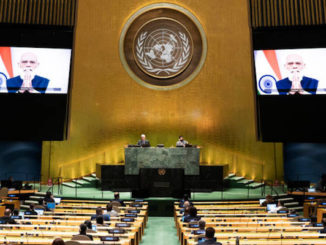
    “The International Community must ask if the UN is still relevant 75 years after its founding”, said Prime Minister Narendra Modi addressing the General Assembly in a virtual conference in its 75th session. He demanded that a UN reform is the need of the hour and questioned whether the Organization has been effective in tackling Covid-19. Some commentators even went further to say that India should get out of the UN, and it no longer serves any purpose. Sir Brian Urquhart, a former Under-Secretary-General of the United Nations with special responsibility for peacekeeping operations, once quoted as saying, “to be called irrelevant is, I suppose, the most biting insult you can possibly give to anything, a person or an institution, and it’s been used quite a bit about the UN. But it is still here. And for better or worse, I think that its demise is somewhat unlikely, certainly in the near future”.

    It again shows the United Nations’ predicament, where it is a challenging job to get everybody to agree on any single issue. If we look back at history, the United Nations was founded in 1945 to save the succeeding generations from the scourge of another war just as the world was emerging out of World war II. It is also important to remember that the UN Charter and the UN’s whole concept was the brainchild of Franklin D. Roosevelt. The assumption then was that the Allies who were on the way to victory then would continue to observe the peace and, if necessary, enforce it.

    The World war has led to the cold war between the United States and the Soviet Union, resulting in proxies fighting all over the globe. However, the United Nations may still take consolation because it has succeeded in thwarting a large-scale war between nuclear-armed superpowers. Moreover, in the Cold war era, peacekeeping became a strategic tool in the UN’s hands in containing regional conflicts in places like the Middle East, Kashmir, Cyprus, Congo, Sudan, and so forth.

    The critics are often eager to paint a negative view of the UN primarily because of its failures on the political front. However, if one closely examines the structure of the Security Council, the most important organ of the United Nations, it still reflects the status quo in the immediate aftermath of World War II.  It is almost as if it was built to fail. All permanent members of the Security Council have one time, or another misused their right to veto in preventing a potential solution to a crisis and often leaving the UN remain largely paralyzed with expanding rifts and mounting tensions. Although the challenge is to shake up the Council’s structure, most governments continue to pay lip service to the need for reform, and the public seems to direct their fire and fury at the Organization.

    There is great merit to the argument that Security Council is woefully ill-prepared to deal with the contemporary challenges, and the chamber should accommodate countries like India, Germany, Japan, and Brazil with or without veto powers. However, it is a tall order that would require two-thirds of the votes in the General Assembly and the endorsement of all five permanent members. The growing ideological division among council members in dealing with sanction regimes or protracted regional conflicts may not give any ray of hope that the status-quo may change anytime soon. Nevertheless, it provides an excellent forum for the global community to air their grievances and let off steam.

    Apart from the political front, the United Nations and its Specialized Agencies have done a phenomenal job, especially in the Social and Economic arena. Having worked for the Organization on two different continents, I have had the opportunity to view the UN activities from a front-row seat. UN personnel have been directly involved as advisors and technical experts in many projects in many developing countries, especially in Africa. I have witnessed some of those valuable contributions from dedicated civil servants around the world, often under very trying conditions, working with the local officials, whether in the areas of food security, land use planning, deforestation, water, sanitation, or preventive medicine.  Of course, these efforts may not make headlines anywhere but have made an incredible difference in the daily lives of those ordinary folks who live in some of the remotest parts of the world.

    India played a seminal role in the early history of the United Nations. Although not part of the Security Council, India focused its attention on the General Assembly and worked with the newly independent nations in Asia and Africa on decolonization and socio-economic development. India may have a lot to do with the Organization’s evolution from a security-driven one to a developmental and promotional body.

    India was also one of the leaders that led the campaign against Apartheid resulting in the General Assembly adopting a resolution against racial discrimination in South Africa. Sanctions were also imposed on South Africa and Rhodesia (now, Zimbabwe) as part of the continuing opposition to Apartheid, and India played a significant role in that effort. India was also at the forefront in advocating reforms for the global economic order and was instrumental in setting up the UNCTAD to provide developmental assistance to developing countries.

    India is a major contributor to the UN’s peacekeeping efforts across the globe. As per the 2019 data, it has provided about 240,000 personnel in 49 of the 71 peacekeeping operations. Currently, Indian Military personnel is participating in 9 out of 14 peacekeeping missions. More than 160 Indian peacekeepers have paid the ultimate price in service to peace, losing lives serving under the UN flag.

    UN  is also known for its work on behalf of democracy and human rights.  With so much pride, India can remember that it has contributed significantly to the Universal Declaration of Human Rights content. Indian leadership – represented by Indian National Congress – articulated its concern for human rights and called upon the world body to learn from the coalescing of ideas and vision learned from India’s freedom struggle and urged for peoples’ self-determination everywhere.

    India truly deserves to be in the Security Council, given the demographics and its rising economic might. However, it is worth remembering that India has influenced and changed the UN’s trajectory from a security organ to a developmental body and has been a trailblazer for emerging nations towards a path forward in freedom and self-sufficiency. It was all done without having a seat at the Security Council.

    Today, thousands of Indian citizens are employed by the United Nations around the world. The Asian Headquarters for the World Health Organization is located in New Delhi. UNICEF is highly active in India, helping Children in responding to emergencies and providing them essentials to survive. India’s own contribution to the regular budget assessment is less than half of what the Netherlands pays. Therefore, all the casual talk about getting out of the UN from certain circles are not only ludicrous but a disservice to the people of India. “The UN: if it doesn’t exist, we would have to invent it.”

     (The author is a former Chief Technology Officer of the United Nations)

  • Permanent UNSC membership for India — mirage or achievable?

    Permanent UNSC membership for India — mirage or achievable?

    By Prabhu Dayal
    • PM Narendra Modi advocated India’s inclusion among the permanent members of the UNSC during the 75th session of the UN General Assembly
    • The only increase in the membership of the Security Council came in 1965, when the number of non-permanent members was increased from six to 10
    • Any reform to the Security Council would require an amendment to the UN Charter

    There have been expressions of support for India’s candidature from four out of the five permanent members–USA, UK, Russia and France. But what about China? Given the nature of Sino-Indian relations, it is not surprising that Beijing does not support India’s case. China’s close friendship with Pakistan is a compounding factor in this regard.

    On September 26, Prime Minister Narendra Modi delivered a virtual address during the General Debate of the 75th session of the UN General Assembly in which he made an impassioned and forceful plea for India’s candidature for permanent membership of the UN Security Council. His speech was brilliant, but when he had finished I was still asking myself this question: Is India’s quest heading anywhere, or is it just a pipe dream?

    The composition of the Security Council was established in 1945. The victors of the Second World War shaped the UN Charter in their national interests, giving to themselves the veto power in the Security Council. Since then the geopolitical realities have changed drastically, but the Council has changed very little. The Prime Minister did well to stress this when he said that the world of 1945 was significantly different from today’s world; the global situation, sources-resources, problems-solutions; all were quite different. Keeping this in mind, he urged that “Reform in the responses, in the processes, and in the very character of the UN is the need of the hour”.

    This was not the first time in recent months that PM Modi had urged the need for UN reforms. It would be recalled that while speaking at the high-level dialogue of the U.N.’s Economic and Social Council (ECOSOC) on July 17 this year, he had said that “Only reformed multilateralism with a reformed United Nations at its center can meet the aspirations of humanity.”

    PM Modi put forward several arguments that make India’s case for permanent membership appear quite strong. Highlighting India’s achievements and role in 75 years of the United Nations, he called for reforms with “changing times” and India’s inclusion in the decision-making process within the global body. He mentioned that India is the largest democracy of the world, with more than 18% of the world population; it had sent its soldiers for about 50 peacekeeping missions; it is also the country that has lost the maximum number of soldiers in the course of establishing peace; even during these very difficult times of the Covid 19 pandemic, the pharma industry of India has sent essential medicines to more than 150 countries. In this context, PM Modi assured that India’s vaccine production and delivery capacity will help all humanity in fighting the COVID-19 crisis.

    Thus, articulating the role being played by India for lending a helping hand to other nations, and putting forward cogent arguments for India to be given a permanent membership of the UN, he asked the General Assembly a very pointed question: “For how long will India be kept out of the decision-making structures of the United Nations?”

    It may be recalled that the only increase in the membership of the Security Council occurred in 1965 when the non-permanent membership was increased from six to 10 members, thus increasing the total strength from 11 to 15 members; fifty-five years have elapsed since then. Thus, PM Modi was right on target when he pointed out that the United Nations in its present form is out of date: “The international community today is faced with a very important question: Whether the character of the institution, constituted in the prevailing circumstances of 1945, is relevant even today”?

    However, the challenges which lie in India’s path should not be underestimated. Any reform of the Security Council would require an amendment to the UN Charter. In this regard, it is useful to remember that Article 108 of the UN Charter states:

    ‘Amendments to the present Charter shall come into force for all Members of the United Nations when they have been adopted by a vote of two thirds of the members of the General Assembly and ratified in accordance with their respective constitutional processes by two thirds of the Members of the United Nations, including all the permanent members of the Security Council’.

    Thus, any reform of the Security Council not only requires the support of at least two-thirds of UN member states, but also all the permanent members of the UN Security Council must also agree to this as they have veto powers. Assuming that India can get the support of two-thirds of the members of the General Assembly, the question which arises is simply this: Will all the Security Council’s permanent members give their nod for adding India as a permanent member?

    India’s quest has to be viewed in a broader perspective. The need for Security Council reform has been actively discussed among the UN member states for quite some time. By 1992, Japan and Germany had become the second and third-largest financial contributors to the United Nations , and they started to demand a permanent seat; so too did Brazil (the world’s fifth largest country in terms of territory) and India (the largest democracy and the second largest country in terms of population) which had emerged not only as the most important countries within their regional groups but also key players in the emerging global scenario. These four countries formed an interest group which came to be known as the G-4.

    On the other hand, their regional rivals opposed the idea of G4 countries becoming permanent members. Italy, Pakistan, Argentina and South Korea formed an interest group, known as the ‘Uniting for Consensus’ (also nicknamed the ‘Coffee Club’) which later grew to around 40 members. The Coffee Club members are opposed to increasing the number of the Security Council’s permanent members while wanting an increase in the non-permanent members category.

    Simultaneously, the African countries also started to demand two permanent seats for themselves, arguing that historical injustices had been done to them, and also that much of the Council’s agenda related to their continent. All these developments have further complicated the situation.

    On their part, the G-4 countries have shown flexibility on the veto issue in their bid to get the United Nations reform process moving. In a joint statement on their behalf delivered by India’s Permanent Representative to the UN Ambassador Syed Akbaruddin at an inter-governmental negotiations meeting in March 2017, the G4 nations– India, Brazil, Germany and Japan–stated that while the new permanent members would in principle have the same responsibilities and obligations as the current permanent members, they shall not exercise the veto until a decision on the matter has been taken during a review. Despite this flexibility, there has not been any progress in regard to the G4 demands.

    There have been expressions of support for India’s candidature from four out of the five permanent members–USA, UK, Russia and France. But what about China? Given the nature of Sino-Indian relations, it is not surprising that Beijing does not support India’s case. China’s close friendship with Pakistan is a compounding factor in this regard.

    There are many who believe that in actual fact, all the P-5 countries have reservations about adding any other country including India to their privileged group. The support extended to India by the US, UK, Russia and France has to be viewed against the background of their being fully aware that in any case, the process of Security Council reform is making no headway whatsoever. Many analysts think that they only render lip service by way of support to India in order to derive political mileage as they are fully aware of the Chinese position. In other words, whether their support is genuine is a matter of debate, for it is extended whilst knowing full well that the Chinese will oppose India anyway.

    Meanwhile, China, the world’s biggest dictatorship sits on the high table as a permanent member of the UN Security Council while India, the world’s largest democracy has to be content with getting a seat on that table from time to time as a non-permanent member. We can raise our voice against this injustice, as Prime Minister Modi has done. However, one cannot say when the winds of change will actually reach the UN Security Council, for diplomacy, like politics is only the art of the possible.

    Prime Minister Modi said in his address: “Today, people of India are concerned whether this reform-process will ever reach its logical conclusion”. He asked:” How long would a country have to wait particularly when the transformational changes happening in that country affect a large part of the world?” His words had a ring of anguish as well as disappointment.

    As I reflect on Prime Minister Modi’s address at the UN, I cannot help reminding myself of a verse from the Rubaiyat of Omar Khayyam:

    “Could thou and I with fate conspire,

    To grasp this sorry scheme of things entire,

    Would we not shatter it to bits–and then

    Remold it nearer to the heart’s desire.”

    (The author is a career diplomat. He can be reached at prabhu_dayal70@hotmail.com)

    (Courtesy OPOYI)


  • 41 DEAD IN TWO BRAZIL BOAT WRECKS: OFFICIALS

    41 DEAD IN TWO BRAZIL BOAT WRECKS: OFFICIALS

    RIO DE JANEIRO (TIP): The death toll from two separate ferry wrecks in Brazil surged on Thursday, with 41 people killed overall, according to authorities.

    The public safety department in north-central Para state said 19 people were confirmed dead so far after a boat sank on the Xingu river late Tuesday.

    That vessel, the Capitan Ribeiro, had 49 people on board, of whom 23 were rescued and seven remained missing, the department said in a statement.

    Separately, the navy said 22 people died when a ferry sank early Thursday off the northeastern state of Bahia.

    That boat had 133 people on board, of which at least 21 had been rescued, naval commander Flavio Almeida told AFP. The vessel was running the short route from the island of Itaparica across the bay to the city of Salvador, capital of Bahia state, when it went down.

    There was no immediate information about the causes of the two sinkings. Newspaper Folha de Sao Paulo said the boat in Para, in a northern Amazon region, may have been caught in a storm.

    The vessel in the fatal incident in Para had left the port of Santarem bound for Vitoria de Xingu.

    Ferries, fishing vessels and big commercial ships ply the Amazon waterways as one of the main forms of transport in a region with relatively few roads. Source: AFP

  • Beijing sends conciliatory signals after Doval’s first meeting with his Chinese counterpart Yang Jiechi

    Beijing sends conciliatory signals after Doval’s first meeting with his Chinese counterpart Yang Jiechi

    BEIJING (TIP): In the first official meeting between top Indian and Chinese officials since the Doklam stand-off+ became public, national security adviser Ajit Doval met state councillor Yang Jiechi here on July 27, offering the possibility of serious diplomatic efforts to deescalate the confrontation.

    Yang, who as China’s state councillor overseeing foreign affairs occupies a powerful position in the state council, is the Chinese nominee in the India-China special representative level dialogue with Doval. An influential post, the state councillor is a member of the state council.

    Indications of how the bilateral meeting went could be gleaned by the commentary released by the official Xinhua news agency which sent out a conciliatory signal before Doval is expected to meet Chinese president Xi Jinping on Friday. It spoke of the need to enhance mutual trust as the two countries are “not born rivals”.

    The comments released by the official Xinhua news agency made a strong plea to avoid the possibility of a war. “Most economies, including those in the West, will find themselves negatively affected by an India-China war in a globalised and intertwined world today,” it said. In Delhi, the Indian government reminded China of the agreements on peace and tranquility that go back to 1993.

    Yang also held separate meetings with security officials of three other countries on the sidelines of a security dialogue of BRICS nations comprising Brazil, Russia, India, China and South Africa.

    He discussed issues concerning bilateral relations, international and regional issues and multilateral affairs with the visiting security officials, the official Xinhua news agency said.

    The remarks are a contrast to the hectoring tone in the comments published in publications like Global Times that are seen to reflect the views of the government.

    China’s official spokespersons have accused India of trespassing into Chinese territory, ignoring India’s protests that the face-off near the Sikkim-Tibet-Bhutan trijunction has been caused by unilateral attempts by China to alter the ground position.

    There are signs that the two neighbours might be able to scale down tensions that have spiked due to the military muscle flexing over China’s bid to build a road through a plateau in Bhutanese territory.

    This is the first time in weeks that the official media ran a commentary without demanding withdrawal of Indian troops from the disputed Doklam region. China has so far been insisting that troop withdrawal is a pre-condition to a “meaningful dialogue”.

    Doval reached Beijing on Thursday ahead of his planned meetings with Chinese President Xi Jinping and state counsellor Yang Jiechi on Friday. “The recent border issue between the two countries shows a lack of strategic trust on the Indian side,” Xinhua said.

    It is not China but a set of problems common to all developing countries like corruption, a lack of quality education and healthcare that is holding back India.

    “India must understand that China wishes what’s good for the Indian people and would love to see a strong India standing shoulder by shoulder with China,” Xinhua, which reflects the government’s thinking said, giving an emotional touch to the vexed relationship.

    Doval’s formal purpose of visiting Beijing is to attend a security dialogue of BRICS nations. He is expected to discuss the border standoff with Chinese leaders in separate meetings. Chinese foreign ministry has said that bilateral meetings are usually held during BRICS meetings and indirectly confirmed meetings on the border issue with Doval.

    “Instead of being rivals, India and China have much more common ground, common interests and common aspirations. Both as developing countries, the two need to work together on important issues like fighting climate change, protectionism and the financial privileges of Washington,” Xinhua said.

    It further said, “Hopefully, wisdom will guide the two countries to common prosperity. There is more than enough room for them to co-exist and thrive in Asia and in the world”.

    “Both China and India need to enhance communication and nurture trust between them, first by recognizing that the two are not born rivals and that harboring ill will against each other is dangerous,” Xinhua added.

  • Ex Brazil President Lula sentenced to nearly 10 years for corruption

    Ex Brazil President Lula sentenced to nearly 10 years for corruption

    BRASILIA (TIP): Former Brazilian leader Luiz Inacio Lula da Silva, a top contender to win next year’s presidential election, was convicted on corruption charges on July 12 and sentenced to nearly 10 years in prison. The ruling marked a stunning fall for Lula, one of the country’s most popular politicians, and a serious blow to his chances of a political comeback. The former union leader, who won global praise for policies to reduce stinging inequality in Brazil, faces four more corruption trials and will remain free on appeal.

    The verdict represented the highest-profile conviction yet in a sweeping corruption investigation that for over three years has rattled Brazil, revealing a sprawling system of graft at top levels of business and government.

    Judge Sergio Moro found Lula, 71, guilty of accepting 3.7 million reais ($1.2 million) worth of bribes from engineering firm OAS SA, the amount of money prosecutors said the company spent refurbishing a beach apartment for Lula in return for his help winning contracts with state oil company Petroleo Brasileiro.

    Federal prosecutors have accused Lula, Brazil’s first working-class president from 2003 to 2011, of masterminding a long-running corruption scheme that was uncovered in a probe into kickbacks around Petrobras.

    Lula’s legal team said in an emailed statement that he was innocent and they would appeal. “For over three years, Lula has been subject to a politically motivated investigation,” they wrote. “No credible evidence of guilt has been produced, and overwhelming proof of his innocence blatantly ignored.”

    Lula’s lawyer Cristiano Martins has repeatedly accused judge Moro of being biased against his client, which Moro strongly denies. Moro wrote in his ruling that he “took no personal satisfaction in this conviction, quite to the contrary.” “It’s lamentable that a president of the republic is criminally convicted,” Moro said. “No matter how important you are, no one is above the law.” (Reuters)