Tag: Brazil

  • HONOURED TO WELCOME PRESIDENT PUTIN, LOOKING FORWARD TO TALKS WITH CHINA: PM MODI

    HONOURED TO WELCOME PRESIDENT PUTIN, LOOKING FORWARD TO TALKS WITH CHINA: PM MODI

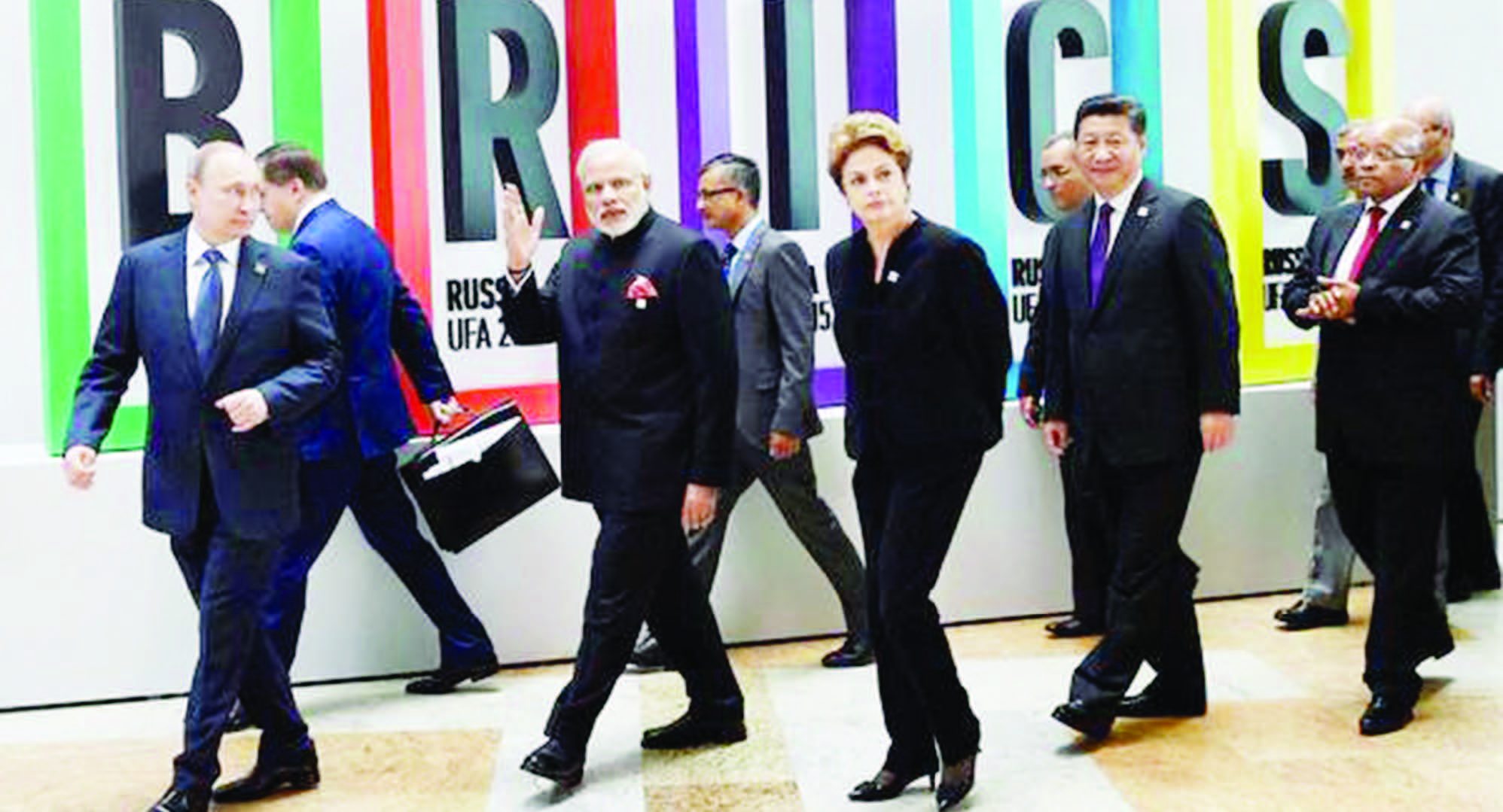
    NEW DELHI (TIP): Asserting that India is delighted to host the 8th BRICS Summit in Goa followed by a first-ever BRICS-BIMSTEC Outreach Summit, Prime Minister Narendra Modi on Friday extended a warm welcome to all nations participating in the event and said that India looks forward to finding common resolve and solutions.

    Taking to Facebook to post a welcome message for the arriving delegations, the Prime Minister said that he is honoured to receive Russian President Vladimir Putin and President Michel Temer of Brazil for a bilateral visit.

    “President Putin’s visit will give us an opportunity to consolidate and reaffirm a unique time-tested friendship and partnership with Russia. President Temer’s visit will open up new areas for cooperation with Brazil, an important strategic partner,” he said.

    He further stated that he looks forward to useful conversations with his fellow leaders from China, South Africa, Brazil and Russia on addressing pressing international and regional challenges that stand in the way of their goals.

    “As Chair of the BRICS this year, India has embraced a stronger emphasis on promoting people-to-people linkages in diverse fields including trade, sports, education, films, scholarship, and tourism. It is anchored in the belief that our people are pivotal partners in our effort to craft responsive, collective and inclusive solutions,” the Prime Minister said.

    Emphasising on the new initiatives that will be launched in Goa during the Summit, Prime Minister Modi expressed his optimism that the BRICS Summit will strengthen intra-BRICS cooperation and advance our common agenda for development, peace, stability and reform.He further said that he is happy that India is facilitating an outreach Summit with the BIMSTEC leaders of Bangladesh, Bhutan, Myanmar, Nepal, Sir Lanka and Thailand.”Representing nearly two thirds of humanity together, we hope to tap the potential for cooperation and the dividends this will bring. India looks forward to building bridges to new partnerships and finding common resolve and solutions to our entrenched problems,” the Prime Minister said.


  • I can’t wait to celebrate Rio success in India with family, friends: Deepa Malik

    I can’t wait to celebrate Rio success in India with family, friends: Deepa Malik

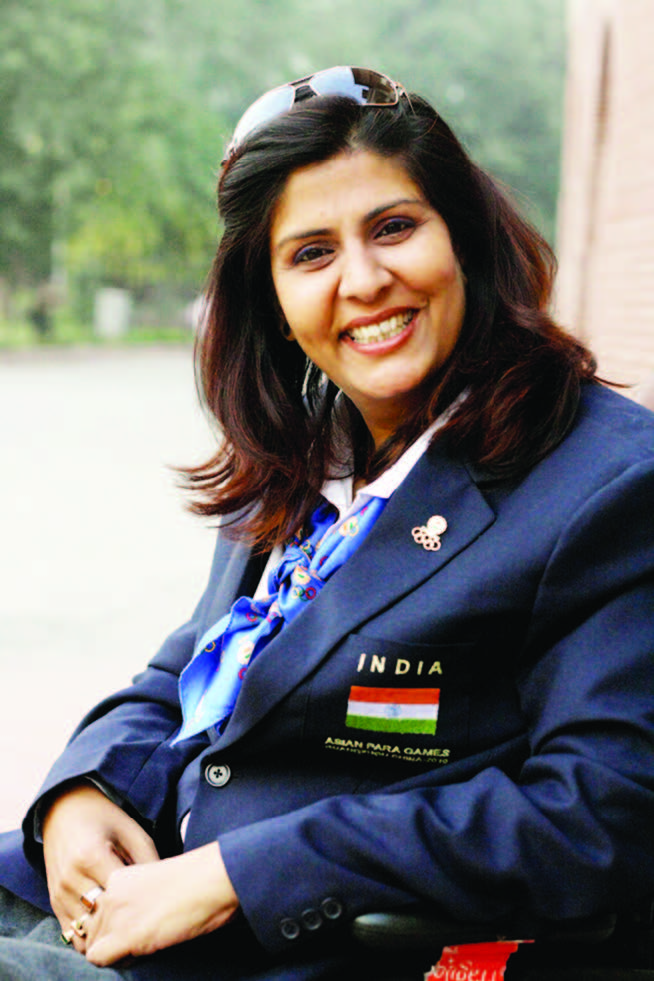
    If it is said that women juggle different roles with ease, it is absolutely right in the case of Deepa Malik – a wife, mother, biker, swimmer, motivational speaker, and now, a silver medalist in shot put at the 2016 Paralympic Games in Rio, Brazil. All this, in spite of being a paraplegic and confined to a wheelchair since surgeries to remove a tumour, 15 years ago. A day after she scripted history in Rio, she interacted with us and opened up about her path to success at the Paralympic Games, motivations, plans ahead and more. Excerpts…

    I still cannot believe it. To become the first Indian woman to win a Paralympic medal is an honour and it is something I will cherish for the rest of my life. I hope my journey and the medal can serve as an inspiration for differently abled Indian women to break out from their social boundaries and pursue their dreams.

    I remember that when I was first diagnosed with a tumour, people thought I would be restricted to my house throughout my life with others looking after my daily needs. But I wanted to break out from that mould and took to sports – swimming, motorsports and eventually javelin and shot put. My performance was good in the lead up to the Games, but I wanted to leave a mark and not just come here to compete and go back home. So, I put even more effort into my training, performed my personal best at the trials in July and bettered that here in Rio.

    My family first – my two daughters who have always stood by me, my husband who quit his job to travel with me for competitions. It would not have been possible without their support. Then my strength and conditioning coach Vaibhav Sirohi, who worked round the clock to help me get fitter and stronger. Finally, I would like to thank the Sports Authority of India for funding my training in the lead up to the Games, and of course the GoSports Foundation team for always being there for me and for funding my international competition in the US earlier this year and also facilitating my strength and conditioning coach Vaibhav’s travel to Rio to be with me ahead of my event.

    I trained in Delhi at Siri Fort with my strength and conditioning coach. Suggestions of training abroad was often offered to me but I preferred to stay in India to train in a familiar environment where I was more comfortable. You don’t always need to go abroad to train to achieve something great. What is important is to plan your preparations the right way, and I think my performance in Rio proved that.

    When people around you are supporting and cooperative, everything becomes easier. My family understands the challenges. I always try and work around my schedules. Being a biker has always been my passion. The athlete part is probably the most challenging, but the rewards (like the one in Rio) make it all worth it.

    Without doubt. You always gain strength from adversity and I think I did that as well. The tumour and the subsequent surgeries forced me to reconsider my life’s goals and inspired me to venture on a new path of self- exploration and excellence.

    Nothing much for now. I just cannot wait to get back to India to be with my family and friends and celebrate the success at the Paralympic Games.

    The government, through the Target Olympic Podium Scheme (TOPS), funded my preparations here in India. They have offered a lot of support this time. But the support needs to continue in a planned and sustained manner. The next major event is the World Championships in 2017. What needs to be done is to implement developmental programmes specifically for para sports, including investing in infrastructure to ensure that the support reaches a wider group of athletes. (PTI)

  • Messi goal puts Argentina top of World Cup group

    Messi goal puts Argentina top of World Cup group

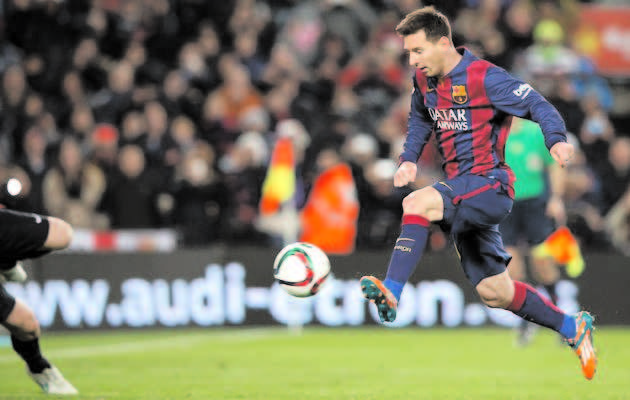
    MENDOZA (TIP): Lionel Messi marked his retirement with a goal to give 10-man Argentina a 1-0 win over Uruguay on Sept 1 that lifted them to the top of the South American qualifying group for the 2018 World Cup finals in Russia.

    In a match of few chances, Messi created something out of nothing three minutes before halftime when, surrounded by defenders, his shot from outside the box took a deflection on Jose Maria Gimenez and wrongfooted goalkeeper Fernando Muslera.

    It took Messi’s record as Argentina’s top scorer to 56 in his 114th international and proved the perfect insurance for his team who were reduced to 10 men when young forward Paulo Dybala was sent off on the stroke of halftime. Dybala, who had almost put his side ahead in the 31st minute with a shot that hit the post, was sent off for a second booking and left the pitch in tears after his first start for Argentina. Uruguay, who had spent virtually the entire first half defending, took the game to Argentina in the second but hardly troubled goalkeeper Sergio Romero.

    “I wanted to be here after all the confusion I’d caused by first saying I wasn’t coming and then that I was,” Messi told reporters.

    Messi said in June he was quitting international soccer after the disappointment of losing the Copa America final on penalties to Chile. “From the moment I said that, the fans showed me a lot of affection and I’m really grateful, I couldn’t not come back.”

    Argentina now lead the 10-nation group with 14 points from seven matches, one point more than Uruguay, Colombia and Ecuador in the four qualification places.

    Brazil, who beat Ecuador 3-0 in Quito with two goals by teenager Gabriel Jesus, are fifth –

    – which would put them in an inter-continental playoff for one more berth. (AP)

  • INDIA’S FOREIGN DEBT-GDP RATIO LOWEST AMONG 83 EMS

    INDIA’S FOREIGN DEBT-GDP RATIO LOWEST AMONG 83 EMS

    MUMBAI (TIP): At 23% in 2015, India had one of the lowest foreign debt-to-GDP ratios among 83 emerging market (EM) countries, although it had risen from 17% in 2005. Even among the Asian countries covered in an analysis by global ratings major Moody’s Investors Service, compared to an average debt-to-GDP ratio of 47%, India’s was less than half that number.

    China’s external debt-to-GDP ratio is still the second-lowest globally at 13% of GDP in 2015. The lowest is Nigeria with 3.3%.

    According to the report, India experienced the second largest increase in external debt between 2010 and 2015. “India had $474 billion in external debt as of 2015, representing 16% of the Asia-Pacific region’s total debt. India’s external debt has grown two to three times slower than China’s, at a five-year annual average rate of 8.4% and a 10-year annual average rate of 13.4%.

    As a result, the external debt-to-GDP ratio in India has risen from 17% in 2005 to 23%in 2015, but is still one of the lowest globally,” it noted. The analysis also found that the BRIC nations block owns 37% of all emerging market external debt. In dollar terms, as of end-2015, China represented 17% of total emerging market external debt, Brazil 8%, Russia 6%, and India another 6%.

  • Nuclear Suppliers Group Meeting Ends:  No Decision on India’s Entry

    Nuclear Suppliers Group Meeting Ends: No Decision on India’s Entry

    NEW DELHI (TIP): In what may be interpreted as a diplomatic setback for India, the NSG meeting in Seoul ended Friday, June 24, without taking a decision on India’s entry into the group. It was not unexpected, given the earlier Chinese statement that the issue of India’s entry into the exclusive club was not on the agenda. Ahead of the discussions, China’s top negotiator told reporters that the country “won’t back India or Pakistan” until Non-Proliferation Treaty (NPT) rules are followed.

    Ambassador Wang Qun, Director General, arms control division at the Chinese Foreign ministry said: “The NSG won’t discuss Indian membership yet. Many differences are there on admitting non-NPT members.” He called it a matter of principle.

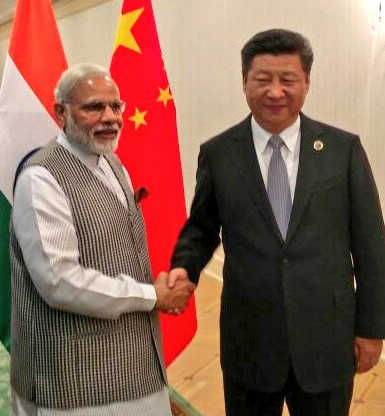
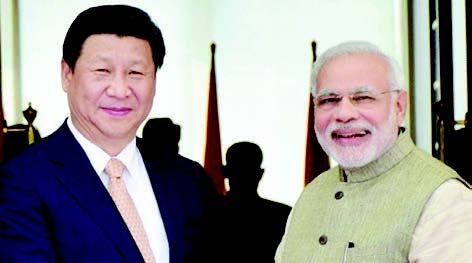
    China’s statement followed Prime Minister Narendra Modi’s meeting with Chinese President Xi Jinping on the sidelines of a multilateral summit in Tashkent on Thursday, June 23.

    Requesting a “fair and objective assessment” of India’s bid, PM Modi had said New Delhi’s case should be judged on its own merits and that China should contribute to an emerging consensus in Seoul.

    Sources say Switzerland has also raised objections to the process of including non-NPT states like India. It was one of the countries that had supported India after PM Modi’s visit.

    Brazil, Austria and Ireland have also raised concerns on the “processes” and questioned how a non-NPT signatory can be admitted to the NSG, which controls access to nuclear technology. Brazil’s objections are a worry for India since it is a key ally.

    A marathon three-hour post-dinner NSG meeting in Seoul on Thursday had ended in a deadlock over India’s membership.

    China has been unrelenting in its opposition, harping on the need to have a criteria for non-NPT countries like India and clubbing India’s case with that of Pakistan for which it is batting.

    About 300 participants from 48 member countries attended the meeting in Seoul.

  • ISIS has a ‘kill list’ with 8,318 assassination targets, report says

    ISIS has a ‘kill list’ with 8,318 assassination targets, report says

    LONDON (TIP): A pro-ISIS “hacking” group calling itself the United Cyber Caliphate distributed its latest “kill” list this week. The group claims the list includes names, addresses, and email addresses belonging to 8,318 people, making it one of the longest target lists ISIS-affiliated groups have distributed.

    The “kill list” includes names of Canadians, Australians and Europeans, a British media report said on June 9.

    It urged its supporters to “follow” those listed — and “kill them strongly to take revenge for Muslims”, Daily Mirror reported.

    It is one of the longest kill lists any ISIS-affiliated group has distributed to date and reportedly includes the names of 7,848 Americans, 312 Canadians, 39 Britons and 69 Australians.

    The rest of the targets listed are reported to be from a variety of nations including Belgium, Brazil, China, Estonia, France, Germany, Greece, Guatemala, Indonesia, Ireland, Israel, Italy, Jamaica, New Zealand, Trinidad and Tobago, South Korea and Sweden.

    They are mostly military or government workers or people in the public eye, like royalty or celebrities.

    The list, written in both English and Arabic, was uncovered by the media group Vocativ , which specializes in investigating the hidden side of the web.

    It discovered it on a messaging app service called Telegram earlier this week.

    (PTI)

  • Serena Williams cruises into French Open third round

    Serena Williams cruises into French Open third round

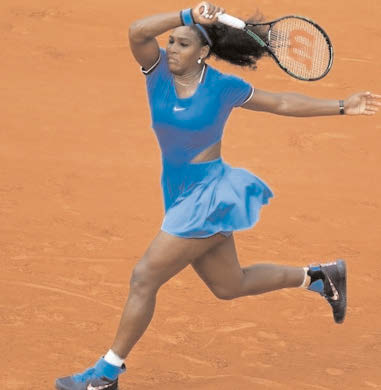
    PARIS (TIP): Top seed and defending champion Serena Williams cruised into the French Open third round with a 6-2, 6-1 win over Teliana Pereira of Brazil.

    It was a routine victory for the world number one that keeps her on course to win a 22nd Grand Slam title and equal the modern day record of 22 set by Steffi Graf in Paris in 1999.

    “Today I played very well and I am happy to have won,” Williams said in brief courtside comments before making way for big sister Venus who was next up on Court Suzanne Lenglen against another American, Louisa Chirico.

    The three-time winner of the French Open needed just 66 minutes to see off the challenge of the world number 81, who was bidding to reach the third round of a Grand Slam tournament for the first time.

    The 34-year-old American will next go up against the winner of the tie between France’s Kristina Mladenovic and Timea Babos of Hungary with a place in the last 16 at stake. (AFP)

  • Brazil faces its own ‘Nirbhaya’ crisis: 16-year-old raped by 33 men in Rio

    Brazil faces its own ‘Nirbhaya’ crisis: 16-year-old raped by 33 men in Rio

    SAO PAULO (TIP): With less than two months to go before the world’s top athletes and hundreds of thousands of sport lovers head to Rio de Janeiro for Olympics 2016, the city’s reputation has taken a severe beating with a gang-rape of a 16-year-old girl by more than 30 men in an impoverished favela (slum) of the city. The girl’s ordeal began on May 20 night when she went to stay at her boyfriend’s house on the western fringe of the city. She woke up on May 22 morning and found herself surrounded by 33 men, many of them carrying heavy arms.

    Badly shaken by the assault that went on for more than 36 hours, the victim tried to escape from the hospital several times on Thursday. “I just want to go home,” the teenager has reportedly told pleaded with hospital staff and her family members.


    The case, which has sent shock waves across the biggest South American country, came to the light on this Wednesday after more than 800 people contacted a hotline in the state public prosecutor’s office to report about certain tweets in which a couple of men were bragging about assaulting a girl. Filled with obscene description of her body, the tweets had photos and videos of the girl, who is apparently drugged, naked and struggling to regain consciousness.

    What is causing outrage in this country, where women are 52% of the population, is the fact that the tweets, which have now been deleted, had more than 500 likes and many vulgar comments which blamed the girl for her condition.

    As the victim now undergoes treatment and counselling at the hospital, her poor family is completely devastated. “She is crying and still shaken. They messed up my daughter. They almost killed her. I am in pain. She is traumatized,” the 16-year-old’s father told local media, asking them not to reveal his identity. The girl’s grandmother too spoke to a local radio station, saying the girl suffered a blackout during the assault.

    “The video is shocking. I watched it. She’s completely off,” the grandmother told the radio.

    Though sexual crimes are not uncommon in the favelas where armed gangs operate and often target their unsuspecting victims, the brutality of this assault has completely shaken the country. With the #Estupro (rape) trending on the social media, thousands of people have asked for quick action against the men responsible for the crime. The police have so far detained only two persons.

    With a sudden wave of crimes sweeping the city that will be hosting the biggest sporting spectacle between August 5 and 21, Brazil’s cultural capital is on the edge as anger grows against the city and state governments. “It is an act of barbarity and cowardice. The attack on this young woman is also an aggression against all women. We are seeing an increasing dehumanization and disrespect for others. The main victims have been women. Our solidarity with the young victim, her family and all women,” said a statement from the Human Rights Commission of Rio de Janeiro

    Though the crime has revived the memories of the March 2015 case when an American tourist was abducted by three men in a van and raped in front of her French boyfriend, the mainstream Brazilian media has almost blacked out the assault on the 16-year-old girl. This has sparked anger on the social media, with thousands slamming the big media groups ignoring the story. “This crime deserved to be reported for several minutes on national news. They did so when the Swiss tourist was raped in India. Or when the gringa (American) was raped in Copacabana, but not now” Cecilia Olliveira, a Rio resident, wrote on facebook.

    When India was rocked by the Nirbhaya case in December 2012, the Brazilian mainstream media – print and television -had covered the incident in great detail, branding India as a “dangerous place for women”. But as the media here keeps silent on the Rio case and one more gang-rape reported in the state of Piaui last week, it’s coming under severe criticism from all quarters. “People talk of India and every case of rape there is reported. But India is here. In India, the case generated strong reaction, but our reality is similar,” Silvia Chakian, a prosecutor of Sao Paulo told the BBC, adding that crimes against women tend to be more common in countries where gender inequality is more pronounced.

    In Brazil, a woman is raped every 11 minutes, according to data released by the Brazilian Forum on Public Security at the end of last year. In 2015, the country recorded 47,646 cases of rape.

    For Brazil’s interim government, headed by Michel Temer, the crime could not have happened at a worse time. Already facing angry protests every day across the country, the growing anger against the rape in Rio may bring more people on the streets against the government which does not have even a single female minister.

  • Brazil’s interim president Michel Temer calls for unity

    Brazil’s interim president Michel Temer calls for unity

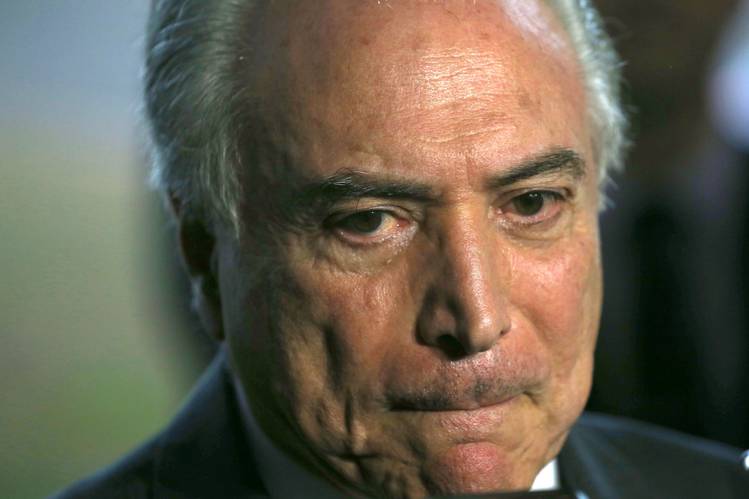
    BRASILIA (TIP): Brazil’s interim President Michel Temer called on his country to rally behind his government of “national salvation,” hours after the Senate voted to suspend and put on trial his leftist predecessor, Dilma Rousseff, for breaking budget laws.

    Temer, a 75-year-old centrist now moving to steer Latin America’s biggest country toward more market-friendly policies, told Brazilians to have “confidence” they would overcome an ongoing crisis sparked by a deep economic recession, political volatility and a sprawling corruption scandal. “It is urgent we calm the nation and unite Brazil,” he said, after a signing ceremony for his incoming cabinet. “Political parties, leaders, organizations and the Brazilian people will cooperate to pull the country from this grave crisis.”

    Brazil’s crisis brought a dramatic end to the 13-year rule of the Workers Party, which rode a wave of populist sentiment that swept South America starting around 2000 and enabled a generation of leftist leaders to leverage a boom in the region’s commodity exports to pursue ambitious and transformative social policies.

    But like other leftist leaders across the region, Rousseff discovered that the party, after four consecutive terms, overstayed its welcome, especially as commodities prices plummeted and her increasingly unpopular government failed to sustain economic growth.

    In addition to the downturn, Rousseff, in office since 2011, was hobbled by the corruption scandal and a political opposition determined to oust her.

    After Rousseff’s suspension, Temer charged his new ministers with enacting business-friendly policies while maintaining the still-popular social programs that were the hallmark of the Workers Party. In a sign of slimmer times, the cabinet has 23 ministers, a third fewer than Rousseff’s. A constitutional scholar who spent decades in Brazil’s Congress, Temer faces the momentous challenge of hauling the world’s No. 9 economy out of its worst recession since the Great Depression and cutting bloated public spending.

    He quickly named respected former central bank governor Henrique Meirelles as his finance minister, with a mandate to overhaul the costly pension system.

    Rousseff defiant

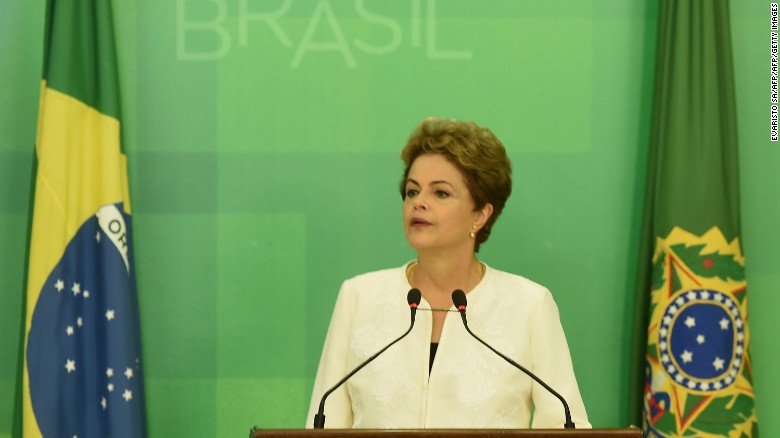
    The Senate deliberated for 20 hours before voting 55-22 early on Thursday to put Rousseff on trial over charges that she disguised the size of the budget deficit to make the economy look healthier in the runup to her 2014 re-election. Rousseff, 68, was automatically suspended for the duration of the trial, which could be up to six months. Before departing the presidential palace in Brasilia, a defiant Rousseff vowed to fight the charges.

    In her speech, she reiterated what she has maintained since impeachment proceedings were launched against her last December by the lower house of Congress. She denied any wrongdoing and called the impeachment “fraudulent” and “a coup.” “I may have made mistakes but I did not commit any crime,” she said.

    Rousseff’s mentor, former President Luiz Inacio Lula da Silva, who now faces corruption charges, stood behind her and looked on dejectedly. Even as outgoing ministers wept, Rousseff remained stolid. “I never imagined that it would be necessary to fight once again against a coup in this country,” Rousseff said, in a reference to her youth fighting Brazil’s military dictatorship.

    “This is a tragic hour for our country,” said Rousseff, an economist and former Marxist guerrilla, calling her suspension an effort by conservatives to roll back the social and economic gains made by Brazil’s working class.

    The Workers Party rose from Brazil’s labor movement in the 1970s and helped topple generals who had held power for two decades ending in 1985.

    In the heady days of Lula’s presidency, starting in 2003, it helped lift millions of people out of poverty before running into recession and scandal, with many of its leaders now tainted by corruption investigations and criminal convictions. Despite Rousseff’s vows to fight, she is unlikely to be acquitted in the Senate trial. The size of the vote to try her showed the opposition already has the support it will need to reach the two-thirds majority required to remove her definitively from office.

    “It is a bitter though necessary medicine,” opposition Senator Jose Serra, who became the new foreign minister, said during the marathon Senate debate. “Having the Rousseff government continue would be a bigger tragedy.”

  • Pandemic could kill 165 million people in near future: Indian American writer Sonia Shah

    Pandemic could kill 165 million people in near future: Indian American writer Sonia Shah

    Indian American journalist and writer Sonia Shah writes how epidemiologists are bracing themselves for what has been called the next “Big One” — a disease that could kill tens of millions of people in the coming years.

    In an interview to Fresh Air’s Dave Davies (NPR), Shah talks about her new book, Pandemic: Tracking Contagions from Cholera to Ebola and Beyond, Shah discusses the history and science of contagious diseases. She notes that humans put themselves at risk by encroaching on wildlife habitats. “About 60 percent of our new pathogens come from the bodies of animals,” she says.

    Citing a 2006 survey, Shah says, “the majority of … pandemic experts of all kinds, felt that a pandemic that would sicken a billion people, kill 165 million people and cost the global economy about $3 trillion would occur sometime in the next two generations.”

    Shah adds that international travel is also a factor in the spread of disease. “Air travel shapes our epidemics in such a powerful way that scientists can actually predict where and when an epidemic will strike next just by measuring the number of direct flights between infected and uninfected cities,” she says.

    Looking toward the future, Shah says that epidemiologists can do more to identify potential outbreaks before they happen. But eliminating them altogether is another matter. “Our relationship to disease and pandemics is really … part of our relationship to the natural world,” she says. “It’s a risk we have to live with.”

    Interview Highlights

    On our first response to new pathogens
    A lot of times when we talk about being more prepared in preventing pathogens from spreading or preventing pandemics, what we’re really talking about is first response, stepping up our first response, so that when we have outbreaks of disease that our hospitals are prepared and we have vaccines stockpiled and we are able to fly our experts around really quickly to get to the scene of the outbreak, and things like that. But that’s not actually preventing these pathogens from emerging and from causing outbreaks. That’s kind of after the fire has started, then we rush in with our fire extinguishers.

    But to really prevent them would mean stepping it way farther back, and that is possible now, because … we know there’s certain places that have higher risk of pathogens emerging, and we can do kind of active surveillance in those places by mapping the microbes that are there, by surveilling people or animals who are more likely to spread or to have spill-overs of microbes into their bodies. … We have more advanced detection capacity now with genetic analysis and other kinds of ways that we can see where these invisible microbes are spreading and changing.

    On how most of our pathogens come from animals

    From bats, we got Ebola; from monkeys we got HIV, malaria, most likely Zika, as well; from birds we got avian influenzas, all other influenzas as well, West Nile virus, etc. So it’s when we invade wildlife habitat or when we disrupt it in ways that brings people and animals into close contact, that their microbes start to spill over and adapt to our bodies.

    On how Zika emerged

    I think Zika is a great example of how new pathogens are emerging today. It came out of the bodies of animals; for many years, we had Zika virus in the equatorial forests of Africa and Asia. It mostly infected monkeys and possibly other creatures, too, but it very rarely came into humans. …

    We don’t know what the triggering event was that allowed Zika virus to start spreading into humans, but we do know what it exploited — and it exploited two things that a lot of other pathogens have exploited, too, which is urbanization and flight travel. So in the 1940s and ’50s and ’60s when we had Zika virus in the forests of Africa, it was carried by a forest mosquito and that mosquito very rarely bit humans, it mostly bit animals, which is why we didn’t have a lot of Zika virus in people, at least it’s one reason why.

    What we’re seeing now is Zika virus has crossed over into a mosquito called Aedes aegypti, and this is a mosquito that has expanded its range over recent years as we have urbanized. It specializes in living in human cities. It loves garbage, it can breed in a drop of water in a bottle cap … and it only bites humans.

    So once we had Zika virus coming into Aedes aegypti, this highly urbanized mosquito, that’s when we started having this explosive spread. Of course, it traveled from Asia. It came out of Africa. It came into Malaysia, and then probably into the Philippines, Micronesia and French Polynesia. And that was the sort of slow spread, but then the rapid expansion happened when it came from French Polynesia into Brazil, and that was almost certainly through a flight, either people from French Polynesia coming to Brazil for the World Cup or possibly an international canoe race. But whatever it was, it was on a flight that it came over, and from there it’s able to access these huge, highly urbanized populations and have no immunity, and that’s what created the epidemic.

    On the evolution of antibiotic-resistant bacteria

    We’ve known since antibiotics were first developed that if we use them in ways that were not medically necessary that it would lead to the evolution of resistant bacteria. And yet, in this country, 80 percent of our antibiotic consumption is not medically necessary, it’s done for commercial reasons.

    When we have livestock farmers giving antibiotics in low doses to their animals because it fattens them, it helps them gain weight faster and that gets them to market faster, so this is a commercial use. And that’s the vast majority of the antibiotics that are consumed in this country are for that reason. …

    We’ve known this for years and we do have an increasing problem with antibiotic-resistant pathogens, which is a very serious problem where we’re running out of these drugs to treat these runaway infections, and we’re on the cusp of entering an era when we have no more antibiotics that work for some of these bugs. …

    We need to use antibiotics more rationally. We don’t do that now. That’s sort of the hardest part of it that we need to do. But the other part of it is we also need to develop new antibiotics to keep up — these pathogens are always going to evolve resistance eventually, so we always need to come up with new weapons to fight them.

    On why incidents of Lyme disease are increasing

    Lyme disease is caused by a bacteria that lives in rodents and is spread by ticks. Now in the intact northeastern forest where Lyme disease first emerged, there used to be a diversity of different woodland animals there, like chipmunks and opossums as well as deer and mice and other things, but as we spread our suburbs into the northeastern forest and we kind of broke up that forest into little patchworks, we got rid of a lot of that diversity. We lost chipmunks, we lost opossums, and it turns out that those animals actually control tick populations. The typical opossum destroys about 6,000 ticks a week through grooming, but the typical white-footed mouse, which is what we do have left in those patchwork forests, a typical mouse destroys maybe 50 ticks a week. So the fewer opossums you have and the more mice you have, the more ticks you have and the more likely it becomes that this tick-borne pathogen will spill over into humans. And that’s exactly what happened with Lyme disease and now with many other tick-borne illnesses as well.

    On what scares virologists most

    Novel forms of influenza are what really keeps most virologists up at night, because we are so good at spreading those around quickly, and it happens every year. We have a flu pandemic every year, and now we’re hatching all kinds of new kinds of flu viruses, mostly in Asia, and then they’re spreading across the globe, and we don’t have immunity to some of those. …

    Right now, a typical flu virus, the seasonal flu, will still kill a lot of people every year and it’s a real drain on our global economy. But we kind of put up with that, so if you had a new flu virus that even had a slightly higher mortality rate, you could see a lot more death and destruction because so many people get the flu. Think about the 1918 flu, which killed maybe 100 million people, maybe more, estimates vary, but certainly huge numbers of people died from that flu. The mortality rate was like 1 percent, which isn’t huge. It sounds like a small number, but when you think about how many people get the flu, that adds up to a huge number of deaths. So these new kinds of influenza, I think, are what virologists are most fearful of.


  • Brazil’s Rousseff scores court win in impeachment case

    Brazil’s Rousseff scores court win in impeachment case

    BRASILIA (TIP): Brazil’s Supreme Court ruled Dec 17 that Congress must restart impeachment proceedings against Dilma Rousseff from scratch and overhauled the procedure, in a badly needed win for the embattled president.

    In an 8-3 decision, the judges annulled an opposition-dominated impeachment commission established by secret ballot in the lower house last week and ordered the procedure be restarted in an open vote.

    It also gave the final word on whether to open an impeachment trial to the Senate, where Rousseff has greater support.

    Rousseff is accused of fudging the government’s accounts during her re-election campaign last year. The 68-year-old leftist maintains the budgeting maneuvers were accepted practice.

    Under the court’s ruling, a new commission to decide whether or not to impeach the president must now be created in an open vote by the lower house.

    If the commission recommends impeachment, the decision will then pass to the full lower house — and then, the judges ruled, to the Senate.

    “It would be illogical for the Senate to act as a rubber stamp and execute whatever the lower house determines,” said Supreme Court Justice Roberto Barroso.

    If both chambers are needed to overcome a presidential veto, then “something more grave, like relieving a president— shouldn’t that also depend on both chambers?” he asked.

    The march towards the unpopular president’s possible ouster was stalled by her allies in Congress, who say opposition legislators violated the constitution in their rush toward impeachment. They claimed the impeachment commission illegally insisted on secret votes while picking its members, and that it was stacked with Rousseff opponents.

    The speaker of the lower house, Eduardo Cunha — an outspoken Rousseff opponent — oversaw the controversial session to form the commission and is an architect of the impeachment drive.

    However, Cunha himself has been charged with taking millions of dollars in bribes.

    Rousseff has not even completed the first year of her second term in office and is facing an economy in recession, a fiscal deficit, double-digit inflation and growing unemployment. Rating agency Fitch cut Brazil’s sovereign debt rating to junk status on Wednesday, the second downgrade for the world’s seventh-biggest economy.

    (AFP)

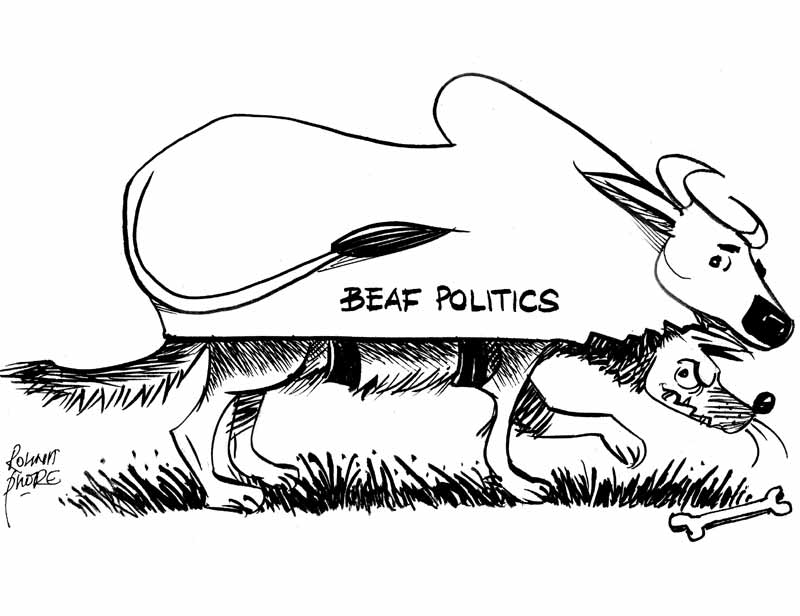
  • Why the Ban on Cow Slaughter is not just Anti-Farmer but Anti-Cow as well

    Why the Ban on Cow Slaughter is not just Anti-Farmer but Anti-Cow as well

    The recent killings of Mohammad Akhlaq, Noman and Zahid Ahmad Bhatt on the claim that they were slaughtering cows is not only an attack on the right to life, livelihood and diverse food cultures but an assault on the entire agrarian economy.

    The cynical fetishisation of cows by Hindutva politicians is not only profoundly anti-farmer but, paradoxically, also anti-cow.

    What these bigots fail to realize is that the cow will survive only if there are pro-active measures to support multiple-produce based cattle production systems, where animals have economic roles. The system must produce a combination of milk, beef, draught work, manure and hide, as has been the case in the rain-fed food farming agriculture systems of the sub-continent over the centuries.

    In meat production systems – whether meat from cattle, buffaloes, sheep, goat, pigs or poultry – it is the female which is reared carefully in large numbers to reproduce future generations, and the male that goes to slaughter. It is only the sick, old, infertile and non-lactating female that is sold for slaughter. In every society where beef consumption is not politicized, farmers known that eating the female bovine as a primary source of meat will compromise future production, and hence they are rarely consumed.

    On the other hand, the destiny of a male bovine is clear: it will either become a work animal (bullock), a breeding bull, or be sold for meat – which is the fate of the vast majority. In the end, the male bovine will reach a slaughterhouse. Villages earlier had a system of having one community breeding bull which roamed around servicing village cows that came to heat. Typically, 70% of a cattle herd or sheep/goat flock is female breeding stock; the rest comprises a couple of breeding males, and young male and female offspring.

    Indian cows do better in Brazil than India

    Today, rural indigenous cows are a rarity in India and community breeding bulls are history. Farmers no longer want to rear cattle, particularly cows. This trend is validated by an analysis of India’s livestock census: Between 2003 and 2012, the annual growth of young female bovines – a key indicator of future growth trends of animal populations -on a compound annual growth rate basis declined from 1. 51% to 0.94% in indigenous cattle and from 8.08% to 5.05% in crossbred cattle. On the other hand, it increased from 2.12% to 3.13% in young female buffaloes.

    Whilst India’s population of fine indigenous cattle breeds keeps decreasing year by year, Brazil’s cattle populations of Ongole, Kankrej and Gir breeds – imported from the Indian sub-continent nearly 200 years ago – keep increasing. We have laws to ‘protect’ cows, ban cow slaughter and ban the consumption of beef: the whole of the North-East, Kerala and West Bengal have no restrictions on cattle slaughter, nine states allow all cattle slaughter except cows, and the rest have a ban on all cattle slaughter. In Brazil, on the other hand, beef-based cattle production systems are the driving force behind its flourishing indigenous Indian cattle breed populations.

    Between 1997 and 2012, according to the government’s successive livestock censuses, India’s indigenous cattle population declined by over 15% from 178 million to 151 million, less than what we began with at the time of independence (155 million), when all cattle were indigenous breeds. Fifty years of sustained white revolution policy interventions to enhance milk production have actively advocated and financed replacement of indigenous cattle with high yielding breeds. Cross breeds like Jersey and Holstein Friesan now comprise some 21% of India’s cattle population. But even India’s total cattle population, including crossbreds has increased by a mere 23% (from 1951 to 2012) and stands at 190 million.

    In stark contrast, Brazil’s cattle population -comprising 80% pure Indian cattle breeds
    (Indicine) or Indian cattle breed crossed cattle – grew by 74% from 56 million in 1965 to 214 million today. The Gir, which is the favored dairy breed, comprises 10% of Brazil’s cattle population. The Ongole (or Nellore), which is the mainstay of beef production, makes up most of Brazil’s cattle population.The Ongole of India, however, is a threatened breed in its own homeland.

    While Brazil continues to have acres of lands for their cattle to graze, here in India we have successfully done away with common grazing lands where animals can be put to pasture. In the land of the Ongole, pre-2014 united Andhra Pradesh, permanent pastures and grazing lands declined by 78% from 1.17 million hectares in 1955-56 to 0.56 million hectares in 2009-10. The rate of decline was much faster in the post economic liberalization decades of 1990-2010 – a time of aggressive industrial growth and Hindutva influence.[1]

    As bullocks are displaced, less cows are reared

    In today’s India, cattle have been displaced from their productive role in agricultural livelihoods: tractors have replaced bullocks/draught animals that were used to plough, thresh, and anchor rural transportation. India’s population of work cattle or bullocks declined by 28% between 1997 and 2012. This has been the result of economic policies that have strived to industrialize, and “green” and “white” revolutionize our agriculture and livestock production.

    Chemical fertilizers have replaced manure. A shift from diverse food cropping systems of cultivation to mono-cropped production of commodity crops like cotton, sugarcane, and tobacco, or palm oil has depleted crop residues as a rich fodder source, and made bullock ploughing virtually redundant. The bullock is no longer needed to extract oil from oil seeds (in any case we now import 60% of our edible oil and even poor oil millers have closed shop), extract juice from sugarcane, pull water out of wells or be the main mode of rural transportation.

    Hence why should farmers keep indigenous bullocks? Or rear indigenous cows for that matter, which produce bullocks? Once animals stop having an economic value, they stop being reared. Simple.

    Lessons from a growing buffalo population

    Contrast the sorry state of India’s cattle with its thriving buffalo population. Our buffalo population has grown by 21% since 1997. Why? Very simple: buffaloes anchor milk and beef production in India. We are the 2nd largest exporters of buffalo beef in the world, with an annual export of nearly 2.4 million tons. Bovine meat contributes nearly 60% of total Indian meat production, as against small ruminants (15%), pigs (10%) and poultry
    (12%). Buffaloes survive well on limited, coarse, less nutritious crop residues, whilst cattle need more green fodder and green grass. This is evidence itself that given all other conducive input factors for the animal to be reared (primarily feed, fodder, water, ecological adaptability, knowledge, labor, health care and a remunerative livelihood), allowing the slaughter of an animal actually drives its numbers up. The same holds true for goat and sheep. Between 1997 and 2012, the sheep population increased overall by 13%, and goats by 10%, despite a 33-38% slaughter rate.

    In short, the secret to flourishing animal populations appears to be meat consumption.

    The highly industrialized beef producing nations of the world – the United States, Australia and New Zealand – produce beef by replacing large acres of land where food could be grown to feed human beings, with animal feed. Regrettably, in Latin America, large beef corporations are steadily converting huge tracts of natural prime Amazonian forests, home to indigenous peoples, into grazing lands: in short these systems are unsustainable, contributing hugely to carbon emissions.

    India’s beef production on the other hand, is one of the most sustainable and least ecologically damaging in the world. Beef is a by-product of buffalo rearing livelihood practices, and not its primary objective, which continue to be milk and milk products. Whilst male buffaloes end up in the slaughter houses, farmers also sell their infertile, old, diseased and non-lactating females. Our animals are not fed on predominantly grain-based concentrate diets, but on crop-residues, and natural vegetation.

    Allow slaughter to save the indigenous cow

    Threats to impose a nationwide ban on beef consumption and cattle slaughter also ignore the close relationship between those who eat beef and those who look after cattle. In India, cattle have always been relished and their meat is a critical source of nutrition for various communities – including Adivasis, Dalits, Christians, Muslims and several other castes (many of whom are too scared to admit they eat beef).

    A Dalit social activist asserts: “The Brahmins and other agraha (upper) castes who are cow worshippers have never in their lives ever grazed the animal, fed it, cleaned its dung or buried its carcass. For all that they have used our labor: we graze, we feed, we clean the sheds and dung, we bury the carcass, and we eat beef.”

    “The so-called upper castes visit our hamlets in search of beef, and are scared to publicly acknowledge their beef eating practices”, says an adivasi community leader from Telangana. “This year, Hindu families hired cows from us for the Godavari Pushkaralu, because there are no cows left in caste rural Indian villages, where people worship cows and shun beef ! We adivasis, on the other hand, eat beef, plough our fields with cattle, and farm with cattle manure; therefore we continue to own cows and cattle herds!”

    In this land of the holy cow, depleting grazing resources of common lands and forests, disappearing roles for indigenous cattle breeds in agriculture production as providers of milk, energy, manure and beef, policies to replace indigenous breeds with crossbreds, coupled with a ban on slaughter of cattle in several parts of India, have led to plummeting cattle populations and the cow fast becoming a creature of the past.

    There is only one conclusion to be drawn. If you really want to protect the cow, do not ban beef, cattle slaughter and the ecological culture that sustains the bovine economy.


    (The author has a Masters in Animal Breeding and Genetics from the University of California, Davis, USA. She is a trained veterinarian and works with the Food Sovereignty Alliance, India. He can be reached at Sagari.ramdas@gmail.com; foodsovereigntyalliance@gmail.com.)

    [1] Compendium of Area and Land Use Statistics of Andhra Pradesh 1955-56- 2004-05. Directorate of Economics and Statistics: An Outline of Agricultural Situation in Andhra Pradesh 2007-08. DES. Hyderabad.

  • Brazil mine mudslide kills at least 17

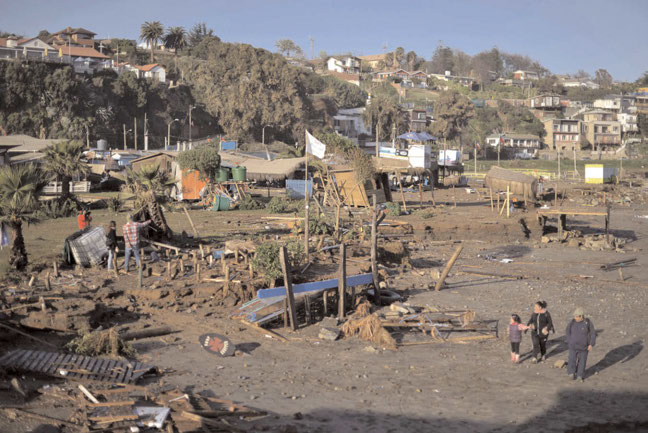
    RIO DE JANEIRO (TIP): A dam burst at a mining waste site in Brazil, unleashing a deluge of thick, red toxic mud that engulfed a village and killed at least 17 people, an official said.

    More than 50 more were injured in the disaster in southeastern Minas Gerais state on Thursday, said Adao Severino Junior, fire chief in the city of Mariana.

    The number of missing looks set to surpass 40 but this is not official yet, he added.

    Television footage showed a torrent of muck several hundred metres long that had swamped houses and ripped off their roofs.

    The mud reached the intact roofs of some houses, atop of which stranded people waited to be rescued. Some homes seemed to have been swept hundreds of meters by the rushing wall of mud.

    The village of Bento Rodrigues near the dam is practically buried, the fire chief said.

    “The situation is grim. It is dark. There is a lot of mud,” Severino said. “There is no way to survive under that material.”

    The nearby area is sparsely populated, mainly by people who work for the mining company.

    Civil defense teams have been dispatched but it hard to reach the affected area because of all the mud, Minas Gerais governor Fernando Pimentel said.

    The mining company Samarco, which operates the site, had yet to confirm whether there were fatalities or injured.

    Samarco is jointly owned by two mining giants, Vale of Brazil and BHP Billiton of Australia.

    “We flew over the area. All access roads are blocked by the stream of mining waste,” a police officer from the nearby town of Mariana told AFP. He did not give his name.

    The surface area of mud held back by the dam that gave way is equivalent to 10 football fields. Twenty-five people worked there, said local mining union leader Ronaldo Bentro said. He earlier gave the death toll as just one person.

    The dam broke about 4:20pm (local time) between the old colonial towns of Ouro Preto and Mariana, in a major mining region.

    Firefighters and other emergency teams rushed to the scene and residents were ordered to evacuate.

    Minas Gerais has been the main mining hub of Brazil since the 16th century. First came gold, then mining of iron ore, other minerals and semi-precious stones.
    (Source: AFP)

  • INDO AMERICAN celebrates its success on the 10th Anniversary, Nov 7th

    INDO AMERICAN celebrates its success on the 10th Anniversary, Nov 7th

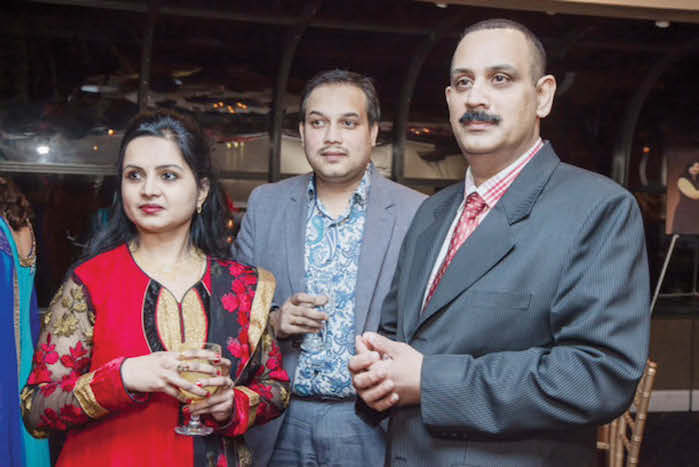
    RUTHERFORD, NJ (TIP): One of the largest distributors of Natural Stones, INDO AMERICAN is celebrating their 10th anniversary on Nov 7th 2015 at the Renaissance in Rutherford, NJ. Felicitating their key associates and partners in the growth of the Company

    INDO AMERICAN has acquired their new warehouse located in Kearny, just outside of Manhattan, comprising of 88000 sq ft warehouse of natural and artificial stones.

    They began their journey in 2005 from just one row of basic granite procured locally; the company has grown to one of the largest distributors of natural stones in the country with over 250 shades of colors from around the world.

    We directly import Material from all over the world, such as Italy, Brazil, China, India, Spain, Turkey, etc., and it is stored in our own warehouse and distributed to places around the country

    Devraj N Aiyar with his nieceOne long-term goal is to establish remote locations in North America and set up factories in (at least three) the exporting countries to facilitate material acquisition, processing and self-export onward to North America.

    To stay ahead of the curve, INDO AMERICAN is investing heavily in capital expenditure on its indoor and outdoor products. We are also continually expanding our fleet of trucks and manpower to extend the beat services to our clients.

    In addition to our current 2,400-square-foot office space and an equally spacious ‘state of art’ new showroom is being created for high-end designers and architects, which would be one of a kind in the Tri State.

    “The growth of the company could be largely attributed to the excellent teamwork, focus and 100% commitment of our key members and hence our team needs to be fighting fit, both physically and mentally” believes Mr. Devraj N Aiyar, CEO of the organization. Hence their new location is also being outfitted with a gymnasium and an indoor games room.

    “Work is Play” is the motto at Indo American.

    INDO AMERICAN delivers materials to destinations over 250 miles away, which is a testament to its commitment towards customer service and competitiveness. The company prides itself on maintaining a steady stream of loyal customers by offering quality products and service.

    According to Usha “The key ingredients to our growth are maintaining a client base with strong credit and keeping close tabs on receivables.”

    INDO AMERICAN is celebrating their 10th anniversary on Nov 7th, 2015 at the Renaissance in Rutherford, NJ felicitating their key associates and partners in the growth of the Company.

  • INDIA BRIGHT SPOT IN SLOWING GLOBAL ECONOMY: IMF CHIEF

    NEW DELHI (TIP): Global growth will be likely weaker this year than last with only a modest acceleration expected in 2016, International Monetary Fund chief Christine Lagarde said on Wednesday, and reiterated that India remains a bright spot.

    “The good news is that we are seeing a modest pickup in advanced economies. The moderate recovery is strengthening in the euro area, Japan is returning to positive growth, and activity remains robust in the US and the UK as well. The not-so-good news is that emerging economies are likely to see their fifth consecutive year of declining rates of growth,” Lagarde said in a speech ahead of October 9-11 IMF-World Bank annual meetings.

    “India remains a bright spot. China is slowing down as it rebalances away from export-led growth. Countries such as Russia and Brazil are facing serious economic difficulties. Growth in Latin American countries, in general, continues to slow sharply. We are also seeing weaker activity in low-income countries – which will be increasingly affected by the worsening external environment,” she said.

    The IMF will release its World Economic Outlook next week. She said policy makers will need to strengthen policies to address current challenges and help lead the world economy to recovery.

    “I am calling on policy makers to make a policy upgrade to address the current challenges,” Lagarde said, adding that the world is at a “difficult and complex juncture”.

    The prospect of rising US interest rates, China’s slowdown, a sharp deceleration in the growth of global trade, and the rapid drop in commodity prices are contributing to global uncertainty, she noted.

    With conflict and forced migration, Lagarde said there is the “human toll” from economic dislocation and low activity. More than 200 million people remain unemployed worldwide, income inequality is rising, and women continue to be disadvantaged both in pay and labour market opportunities.

    “My key message today, however, is this: With the right policies, strong leadership, and global cooperation, it can be managed,” Lagarde stressed. “The bottom line is that proactive policy management by everyone…is now more important than ever.”

  • One million evacuated  in Chile after 8.3-magnitude earthquake

    One million evacuated in Chile after 8.3-magnitude earthquake

    SANTIAGO, CHILE (TIP): A strong 8.3-magnitude earthquake struck off Chile’s coast on Wednesday, shaking buildings in cities around the country and forcing the authorities to evacuate residents along the 2,690-mile coast after tsunami warnings were issued. At least eight deaths were reported.

    The quake hit at 7.54pm west of Illapel, about 177 miles north of the capital, Santiago, and was felt in Sao Paulo, Brazil, more than 2,100 miles away.

    Chile’s national emergency service ordered the immediate evacuation of the coast, as well as Easter Island and the archipelago Juan Fernandez. President Michelle Bachelet appeared on national television, telling citizens that her government was closely examining the damage.

    “Once again we have to confront a tough blow from nature,” Bachelet said in a reference to her nation’s long history of quakes.

    The under secretary of the interior, Mahmud Aleuy, said one million people had been evacuated and 243,000 homes had lost power.

    People moved to higher ground in vehicles and on foot in relative calm as waves began flooding parts of some cities with differing intensity. Waves reached as high as 15 feet in Coquimbo, a port city 285 miles north of Santiago. The flooding spread to many parts of the city, causing extensive damage to the port, the fishing wharf and much of downtown.

    Among those who died, a 35-year-old woman died in Illapel when a wall fell on her, and in Monte Patria in northern Chile, a 20-year-old woman was reported killed after being crushed by rocks. Three men died of heart attacks: a 67-year-old and an 81-year-old in Valparaiso and a 96-year-old in Santiago. One person was reported missing near Tongoy, a town 225 miles north of Santiago.

    Flooding in Tongoy was extensive and destroyed a preschool, a police station and part of a health clinic, the authorities said.

    Tsunami warnings were issued as far away as California and New Zealand, although the warning for Chile was lifted.

    Adobe homes and infrastructure in towns and rural areas, especially in northern Chile, were seriously damaged, evoking the havoc caused by an 8.2-magnitude earthquake last year.

    Chile ranks among the countries that are most vulnerable to earthquakes, and Chileans have painful memories of an 8.8-magnitude quake in 2010 in southern Chile that killed 525 people, many of them in a tsunami in the south-central part of the country.

    Officials failed to issue a tsunami alert for that earthquake, resulting in 81 of those deaths. As a result, new protocols were put in place. Four government officials were later charged with involuntary manslaughter after they were accused of improperly evaluating the risks from the tsunami.

  • There will never be another Pele or a Maradona: Roberto Carlos

    There will never be another Pele or a Maradona: Roberto Carlos

    NEW DELHI (TIP): His 100 mile-plus free-kicks earned him the title of the ‘Bullet Man’. The scorer of some of the most spectacular goals in the history of the game, Brazilian star Roberto Carlos was announced as the marquee player cum manager of Delhi Dynamos on July 9. One of the most recognisable football stars in the world, Carlos spoke to TOI in an exclusive interview on Thursday.

    Excerpts:

    Brazil seem to be surviving on reputation alone these days. The team is not the same it used to be. Where do you think lies the problem? 

    Thank God for that (laughs). At least people will remember me for the next four years. The last good side was 2002. Our group was very good.

    Ronaldo, Rivaldo, Ronaldinho, you… Your generation seems to be the last of the greats. Do you see Brazil reaching that level and unearth such players in foreseeable future? 

    There will never be another Pele. There will never be another Maradona. There will always be new players but not at the same level.

    Recently, Dani Alves claimed Pep Guardiola wanted to coach Brazil before the World Cup but Brazilian Football Confederation failed to appoint him. Your thoughts…

    I believe it’s better if the Brazilian national team has a Brazilian coach. Brazil has a lot of quality coaches. We have a culture of football. It’s important to have a home-grown coach. I think we need to stick to our people.

    Romario said corruption and not just poor play is to blame for the country’s humiliating exit from the World Cup a year ago. Would you agree? 

    It has to stop now. We need to have young people with a modern mindset managing affairs. They need to have full knowledge about the game. The coach and the Brazilian Football Confederation (CBF) officials need to understand the game and the culture of our country.

    Wednesday marked the first anniversary of Brazil’s 7-1 defeat at the hands of Germany. Will Brazil ever recover from the result? If yes, then what is the way to recovery? 

    We need to start playing the way we used to during my playing days. We need to play without fear and play quality football. We have the support of 200 million people. That support needs to be turned into performance. There is nothing else we can do.

    Did criticism from the fans and media play a part in your decision to stop playing for Brazil and Real? Do you believe you were made a scapegoat of others’ mistakes?

    No. I played for Brazil for 18 years. I won the World Cup and Copa America with them. There is a time when a person wants to stop. It’s better to stop playing when you are at your best. I did that. I was happy when I decided to stop playing. There was nothing else. If there was, I would have said so. There is a time when a person has to think about when to stop. One has to think about his family. A footballer does not have time to enjoy life in his playing days. Now I am able to spend time with my family.

    How did you react to the whole FIFA corruption fiasco? Who would you like to see as FIFA president? 

    So many bad things have happened in the past. Those who were arrested were at pretty high positions. It was shameful for the sport. Justice has to prevail. Zico, Luis Figo, Prince Ali of Jordan are some of the people I would like to see as president. They understand football and are serious about the sport. Bringing such people at the helm will ensure that such things do not happen in the future. Zico can be the perfect choice. He is one of the great coaches I have had in my career.

    Word on Brazil coach Dunga and Real coach Rafa Benitez…I know Dunga both as a player and a coach. He has won many trophies with the national team. I think at this moment, the responsibility has to be on the players and not on the coach. The players are doing what the coach wants and not what they want. Benitez understands Real Madrid very well. He has been associated with Real Madrid for a long time. I wish him all the best.

  • Indian American Professor R Paul SIngh named World Agriculture Prize laureate

    Indian American Professor R Paul SIngh named World Agriculture Prize laureate

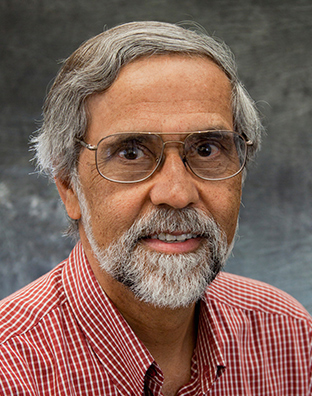
    Indian American Professor Emeritus R. Paul Singh who has held dual appointments in the departments of Biological and Agricultural Engineering and of Food Science and Technology at the University of California, Davis, has been named as the 2015 Global Confederation for Higher Education Associations for Agriculture and Life Sciences World Agriculture Prize laureate.

    The award was announced at the annual GCHERA conference, held June 24-26 at the Holy Spirit University of Kaslik, Jounieh, Lebanon. Formal presentation of the award will take place Sept. 20, during a ceremony at Nanjing Agricultural University, Jiangsu Province, China.

    “I’m deeply humbled and honored, upon receiving news of this award,” Singh said. “I’m proud of my students, postdoctoral fellows and visiting scientists for their numerous contributions to our research program. I’m also indebted to my UC Davis colleagues for their consistent support, which has allowed me to pursue my research and teaching activities in food engineering.”

    Singh earned a bachelor’s degree in agricultural engineering at India’s Punjab Agricultural University, then a master’s degree and Ph.D. at the University of Wisconsin-Madison and Michigan State University, respectively. He joined the UC Davis faculty one year later, in 1975.

    “For over four decades, Professor Singh’s work as a pioneer in food engineering has been improving lives the world over,” said UC Davis Chancellor Linda P.B. Katehi. “This prestigious, and well-deserved, honor is a testament to the importance of his research, and UC Davis is tremendously honored to call him a member of our faculty.”

    Singh became recognized for a body of research in areas such as energy conservation, freezing preservation, postharvest technology and mass transfer in food processing. His research on airflow in complex systems helped design innovative systems for the rapid cooling of strawberries, and his studies on food freezing led to the development of computer software that is used to improve the energy efficiency of industrial freezers. Under a NASA contract, his research group created food-processing equipment for a manned mission to Mars.

    He has helped establish and evaluate food-engineering programs at institutions throughout the world, including in Brazil, India, Peru, Portugal and Thailand. As of June 2015, his 115 video tutorials have been viewed more than 150,000 times by individuals from 193 countries.

    In recent years, his research focused on the physical mechanisms responsible for the digestion of foods in the human stomach, with an eye toward developing the next generation of foods for health.

  • Business leaders urge G20 to push digital economy, e-commerce

    ISTANBUL (TIP): An influential group of business leaders have urged the G20 to improve the global trade system for the emerging digital economy as well as focus on reforms to ensure strong and sustainable growth.

    The group known as B20, met in Turkey on the sidelines of the G20 sherpas meeting and discussed the recommendations which would be finalised for the G20 leaders meeting in November. It called for eliminating data flow restrictions and softening regulations on data privacy to decrease the cost of doing business. It said customs regimes must be harmonized to ensure that bottlenecks to e-commerce are minimized and transactions are made more predictable.The G20 comprises the largest and emerging economies, which account for 85% of global GDP and 75% of world trade. It comprises the US, the UK, the European Union, India, Argentina, Australia, Brazil, Canada, China, France, Germany, Indonesia, Italy, Japan, South Korea, Mexico, Russia, Saudi Arabia, South Africa and Turkey.

    “Harmonize customer protection rules, specifically on core issues relating to purchase processes, to better facilitate e-commerce efforts and eliminate costs and administrative difficulties,” it said in its draft recommendations.

    According to estimates, the digital economy is expected to contribute $4.2 trillion or more than 5% of GDP for the G20 countries in 2016 and is growing at 10% annually. Cross border e-commerce accounts for 10-15% of total e-commerce volumes, depending on the region. By 2025, annual global cross-border e-commerce revenues could swell to between $250 billion and $350 billion-up from about $80 billion now, according to Mckinsey Global Institute and BCG analysis. The B20 has six task forces on infrastructure and investment, trade, financing and growth, anti-corruption, employment and small and medium enterprises and entrepreneurship. Each of the task forces made specific recommendations to improve business prospects within the G20, which would help lift GDP growth.

    It called for reaffirming the commitment to rollback of existing protectionist measures, particularly non-tariff barriers and said the G20 must start taking distinct actions by eliminating localization barriers to trade as a first step. Numerous reports show that G20 governments are not adhering to their standstill and roll back commitments with regards to regular tariff barriers, the B20 said.

    “Non-tariff barriers can have a much greater negative impact on GDP growth than tariffs. The benefits of reversing all barriers introduced between 2008 and 2013 is at least $460 billion increase in global exports, a $423 billion increase in global GDP and 9 million jobs supported worldwide,” it said. The B20 strongly backed the creation of an enabling environment for increased flow of private funds into more sustainable infrastructure. It said there is a need to increase the number of projects developed through public-private partnerships (PPPs) and build capabilities of governments to deliver PPPs.

  • India at 100 on human capital index, Finland leads pack

    GENEVA (TIP): India has been ranked at a lowly 100 position on the global Human Capital Index, which measures countries on development and deployment of human capital.

    Finland has topped the 124-nation list. India is ranked lower than all its BRICS peers — Russia, China, Brazil and South Africa – – and smaller neighbours like Sri Lanka, Bhutan and Bangladesh. But Pakistan follows at 113.

    In the top 10 of the list, compiled by the World Economic Forum (WEF), Finland is followed by Norway, Switzerland, Canada, Japan, Sweden, Denmark, the Netherlands, New Zealand and Belgium. WEF said the list has been compiled on the basis of 46 indicators about “how well countries are developing and deploying their human capital, focusing on education, skills and employment”. “It aims to understand whether countries are wasting or leveraging their human potential,” it added.

    On India, the report said that although the educational attainment has improved markedly over different age groups, its youth literacy rate is still only 90 per cent, well behind the rates of other emerging economies.

  • Strategic Autonomy as an Indian Foreign Policy Option

    Strategic Autonomy as an Indian Foreign Policy Option

    [quote_right]For a large country like India, which has the potential of becoming a big power in the future, strategic autonomy is a compelling choice. By virtue of its demographic, geographic, economic and military size, India must lead, but does not have yet the comprehensive national power to do so. It cannot subordinate itself to the policies and interests of another country, however powerful, as its political tradition and the functioning of its democracy will not allow this. India may not be strong enough to lead, but it is sufficiently strong not to be led”, says the author.[/quote_right]

    In the joint statement issued during the Indian prime minister’s visit to France in April, the two sides reaffirmed “their independence and strategic autonomy” in joint efforts to tackle global challenges. In the French case, as a member of NATO it is not so clear what strategic autonomy might mean, but in our case it would essentially mean independence in making strategic foreign policy decisions, and, consequently, rejecting any alliance relationship. It would imply the freedom to choose partnerships as suits our national interest and be able to forge productive relationships with countries that may be strategic adversaries among themselves.

    In practical terms, this means that India can improve relations with the United States of America and China while maintaining close ties with Russia. It can forge stronger ties with Japan and still seek a more stable relationship with China. It can forge strong ties with Israel and maintain very productive ties with the Arab world, including backing the Palestinians in the United Nations. It means that India can have strategic partnerships with several countries, as is the case at present with the US, France, Germany, the United Kingdom, the European Union, Russia, China, Japan, Brazil, Saudi Arabia, Australia, Canada, Kazakhstan, Afghanistan, Vietnam, Iran and the like.

    It means that India can be a member of BRICS and the RIC dialogues, as well as IBSA, which exclude the West, and also forge closer political, economic and military ties with the Western countries. Our strategic autonomy is being expressed in other ways too. India is a democracy and believes that its spread favors its interests, but it is against the imposition of democracy by force on any country. If the spread of democracy is in India’s strategic interest, using force to spread it is against its strategic interest too, as is shown by the use of force to bring about democratic changes in West Asia by destroying secular authoritarian regimes and replacing them with Islamic authoritarian regimes. Likewise, India believes in respect for human rights, but is against the use of the human rights agenda to further the geo-political interests of particular countries, essentially Western, on a selective basis.

    For a large country like India, which has the potential of becoming a big power in the future, strategic autonomy is a compelling choice. By virtue of its demographic, geographic, economic and military size, India must lead, but does not have yet the comprehensive national power to do so. It cannot subordinate itself to the policies and interests of another country, however powerful, as its political tradition and the functioning of its democracy will not allow this. India may not be strong enough to lead, but it is sufficiently strong not to be led.

    India preserved its strategic autonomy even in the face of severe technology sanctions from the West on nuclear and missile issues. It preserved it by not signing the non-proliferation treaty and continuing its missile program. By going overtly nuclear in 1998, India once again exercised its strategic autonomy faced with attempts to close the doors permanently on its nuclear program by the permanent extension of the NPT and the comprehensive nuclear test ban treaty and fissile material cutoff treaty initiatives.

    In some quarters in India and abroad, the idea of strategic autonomy is contested as another manifestation of India’s non-aligned mindset, its propensity to sit on the fence, and avoid taking sides and assuming responsibility for upholding the present international order as a rising power should. These critics want India to join the US camp more firmly to realize its great power ambitions. These arguments ignore the reality that while the US has been crucial to China’s economic rise, China has been sitting on the fence for many years, even as a permanent member of the UN security council. Far from sacrificing its strategic autonomy, it has become a strategic challenger of the US.

    To be clear, the US government has officially stated its respect for India’s position on preserving its strategic autonomy, and denies any expectation that India would establish an alliance kind of relationship with it. It is looking for greater convergence in the foreign policies of the two countries, which is being realized.

    During Narendra Modi’s visit to the US in September, 2014, and Barack Obama’s visit to India in January this year, a strategic understanding on Asia Pacific and Indian Ocean issues, encapsulated in the January 2015 joint strategic vision for the Asia Pacific and the Indian Ocean has emerged. This document suggests a shift in India’s strategic thinking, with a more public position against Chinese maritime threat and a willingness to join the US in promoting partnerships in the region.

    Modi chose a striking formulation in his joint press conference with Obama in September when he said that the US was intrinsic to our Look East and Link West policies, which would suggest a growing role for the US in our foreign policy thinking. During Obama’s January visit, the joint statement noted that India’s Act East policy and the US rebalance to Asia provided opportunities for India, the US and other Asia-Pacific countries to work closely to strengthen regional ties. This was the first time that India implicitly endorsed the US rebalance towards Asia and connected our Act East policy to it.

    Rather than interpreting it as watering down our strategic autonomy, one can see it as strengthening it. So far, India has been hesitant to be seen drawing too close strategically to the US because of Chinese sensitivities. China watches closely what it sees are US efforts to rope India into its bid to contain China. At the same time, China continues its policies to strengthen its strategic posture in India’s neighborhood and in the Indian Ocean at India’s expense, besides aggressively claiming Indian territory.

    By strengthening relations with the US (which is strategically an Asian power), Japan and Vietnam, and, at the same time, seeking Chinese investments and maintaining a high-level dialogue with it, India is emulating what China does with India, which is to seek to build overall ties as much as possible on the economic front, disavow any negative anti-India element in its policies in our neighborhood, but pursue, simultaneously, strategic policies intended to contain India’s power in its neighborhood and delay its regional extension to Asia.

    In discussing the scope of our strategic autonomy, one should recognize that the strength of US-China ties, especially economic and financial, far exceeds that of India-US ties. India has to be careful, therefore, in how far it wants to go with the US with a view to improving its bargaining power with China. The other point to consider is the US-Pakistan equation. The US has just announced $1 billion of military aid to Pakistan; its position on the Taliban is against our strategic interests in Afghanistan; its stand on Pakistan’s sponsorship of terrorism against us is not robust enough.

    To conclude, strategic autonomy for India means that it would like to rely as far as possible on its own judgment on international issues, balance its relations with all major countries, forge partnerships with individual powers and take foreign-policy positions based on pragmatism and self-interest, and not any alliance or group compulsion.

    (The author is former foreign secretary of India. He can be reached at sibalkanwal@gmail.com)

  • Shell to buy BG for $70bn, take on Exxon

    Royal Dutch Shell agreed to buy smaller rival BG Group for 47 billion pounds ($70.2 billion) in the first major energy industry merger in more than a decade, closing the gap on market leader ExxonMobil after a plunge in prices.

    Anglo-Dutch Shell will pay a mix of cash and shares that values each BG share at around 1,350 pence, the companies said. This is a hefty premium of around 52% to the 90-day trading average for BG, setting the bar high for any potential counter-bid by a company like Exxon, which has said it would also use the oil markets downturn to expand. The third-biggest oil and gas deal ever by enterprise value will bring Shell assets in Brazil, East Africa, Australia, Kazakhstan and Egypt, including some of the world’s most ambitious liquefied natural gas (LNG) projects. Shell is already the world’s leading LNG company and it would get BG’s capacity in LNG logistics—complex infrastructure that includes terminals, pipelines, specialized tankers, rigs, super coolers, regasification facilities and storage points.

  • HONDA CEO TO STEP DOWN AMID AIR BAG CRISIS

    HONDA CEO TO STEP DOWN AMID AIR BAG CRISIS

    TOKYO (TIP): Honda Motor Co hurt by falling sales and embroiled in a crisis over defective air bags is replacing its CEO.

    The Japanese automaker said on Tuesday that Takanobu Ito, its president and chief executive officer since 2009, will step aside in June and be succeeded by longtime executive Takahiro Hachigo.

    The unexpected decision follows the recalls of more 6.2 million Honda vehicles in the US and millions of others elsewhere equipped with air bags made by Japan’s Takata Corp.

    The air bags have inflators that can explode, expelling shards of metal and plastic. At least six deaths and 64 injuries have been linked to the problem worldwide.

    At a press conference the 61-year-old Ito said it was his own decision to step down. He has been at Honda since 1978, when he joined the company as a chassis engineer.

    “I believe Honda needs to become one strong team in order to overcome challenges and the team requires a new, youthful leadership,” Ito said, according to a transcript provided by Honda. Hachigo is 55.

    Other automakers use the Takata air bags, but Honda has the most exposure and is spending heavily on the recalls. The company has lowered its full-year profit forecast to $4.6 billion from $4.8 billion.

    Honda is also facing civil penalties and lawsuits over the issue. In January, the US fined the company $70 million, which was the largest civil penalty levied against an automaker, for not reporting to regulators some 1,729 complaints that its vehicles caused deaths and injuries and for not reporting warranty claims.

    Amid the crisis, Honda lowered its global vehicle sales forecast for the full year to 4.45 million vehicles from 4.6 million. Its US sales grew just one per cent last year as plummeting gas prices hurt demand for its lineup of small cars such as the Civic.

    Earlier this month, Ito scrapped Honda’s goal of selling 6 million vehicles per year by 2017, saying the company needed to focus on quality instead of on sales targets.

    Stephanie Brinley, a senior analyst with IHS Automotive, said Ito’s six-year tenure as Honda’s chief is in line with Honda’s past three CEOs.

    Ito’s tenure was largely a successful one, Brinley said. Between 2009 and 2014, Honda’s global sales grew 28.5 per cent. He encouraged a focus on sportier cars, like the upcoming Acura NSX, and returned Honda to Formula 1 racing. He also expanded Honda’s global manufacturing footprint with new plants in Mexico, Brazil, Thailand, Indonesia, India and China.

  • Reset of a policy of equidistance

    Reset of a policy of equidistance

    Soon after Prime Minister Narendra Modi took office, an Indian TV channel held a discussion on likely foreign policy reorientation. When the doyen of South Asian Studies, Stephen Cohen, was asked in which direction Mr. Modi would tilt -the U.S. or China – without hesitation he replied, “China,” adding, “because it is the Asian century.” Mr. Modi hosted Chinese President Xi Jinping last year but despite the fanfare preceding the visit, there was little to suggest any strategic overlap. Alas, Mr. Cohen was proved wrong after the Modi-Obama Joint Vision Statement reflected a sharp, strategic congruence. Mr. Modi has reset the United Progressive Alliance (UPA) government’s policy of equidistance between the U.S. and China and dropped the political refrain that India will not contain China.


    Choosing friends and allies

    In New Delhi last year, at a seminar, the former U.S. Ambassador to India, Robert D. Blackwill, posed the question: “How can New Delhi claim strategic autonomy when it has strategic partnerships with 29 countries?” After the latest Modi-Obama vision statement, even less so. Strategic autonomy and no military alliances are two tenets of India’s foreign policy. Quietly, India has converted strategic autonomy to strategic interconnectedness or multi-vectored engagement. When the Indo-Soviet Treaty of Peace, Friendship and Cooperation 1971 was signed, Mrs Indira Gandhi had requested the Soviet Union to endorse India’s Non-Aligned status, so dear was the policy at the time. That multifaceted treaty made India a virtual ally of the Soviet Union. Russia inherited that strategic trust and has leased a nuclear submarine, provided high-tech weapons to all three Services including technology for nuclear submarines and aircraft carriers. At the BRICS meeting in Brazil last year, when asked a question, Mr. Modi said as much: “If you ask anyone among the more than one billion people living in India who is our country’s greatest friend, every person, every child knows that it is Russia.” 

    On the other hand, differences over foreign policy with the U.S. are many including over Syria, Iran, Russia, BRICS and the Shanghai Cooperation Organisation (SCO). These policy irritants will not go away. The vision statement highlights (at the U.S.’s insistence) that both countries were on the same page in ensuring that Iran did not acquire nuclear weapons. The tongue-lashing by Mr. Obama to Mr. Putin over his bullying small countries has certainly embarrassed Mr. Modi who was himself disingenuous by inviting the leader of Crimea as a part of the Putin delegation in 2014, which deeply offended the Americans.

    What Mr. Obama and Mr. Modi easily agreed on was China’s “not-peaceful rise” which could undermine the rule-based foundations of the existing international order. So, Mr. Modi became a willing ally to stand up to China. The synergisation of India’s Act East Policy and U.S. rebalancing to Asia is intended to ensure that China does not cross red lines including the code of conduct at sea. The two theatres of action where freedom of navigation and overflight have to be ensured were identified as Asia-Pacific especially the South China Sea and, for the first time, the Indian Ocean Region.

    This is a veiled riposte to Chinese assertiveness in the South China Sea. Mr. Modi had earlier mooted the revival of the Quad, an enlarged format for naval exercises between India, the U.S., Japan and Australia. When it was mooted earlier in 2006, it was shot down by China. Underlying the strategic centrality of the Indian Ocean Region is the realisation that the existing India-China military imbalance across the high Himalayas can be offset only in the maritime domain where India has the initiative. Beijing realises that teaching India a lesson in 1962 was only a tactical success because territorial claims on Arunachal Pradesh got delegitimised after the unilateral withdrawal and worse, pushed India into the U.S.’s arms.


    Defence ties

    The rise of India which will punch to its weight under a new self-confident leadership pursuing a policy of multi-engagement is a manifest U.S. strategic goal. Defence has been the pivot around which India-U.S. relations were rebuilt, starting in 1991 with the Kicklighter Plan (Lt.Gen. Kicklighter of the U.S. Pacific Command) who initiated the multilayered defence relations which fructified in 1995 into the first Defence Framework Agreement. It was renewed in 2005 and now for the second time this year, the difference though is that for the first time, the vision statement has provided political and strategic underpinnings to the agreement. What had also been lacking until now was trust and the extent to which India was prepared to be seen in the American camp. Just a decade ago, while contracting for the Hawk trainer aircraft with the U.K., India inserted a clause that “there will be no US parts in it.” This followed the Navy’s sad experience of the U.S. withholding spare parts for its Westland helicopters. Such misgivings have held up for a decade the signing of the three “alphabet- surfeit” foundational defence agreements of force-multiplication. But we have moved on and purchased $10 billion of U.S. high-tech military equipment and another $10 billion worth will soon be contracted. The most elaborate defence cooperation programme after Russia is with the U.S.


    Dealing with China

    What made Mr. Modi, who visited China four times as Chief Minister, change his mind on the choice of the country for primary orientation was the jolt he received while welcoming President Xi Jinping to Gujarat last year. Mr. Xi’s delegation was mysteriously accompanied by a People’s Liberation Army (PLA) intrusion in Ladakh which did not yield ground till well after he had left. A similar affront preceded the 2013 visit of Premier Li Keqiang, making routine the PLA’s bad habits. While the UPA government had made peace and tranquillity on the Line of Actual Control (LAC) a prerequisite for consolidation of bilateral relations, border management rather than border settlement had become the norm. Seventeen rounds of Special Representative talks on the border yielded little on the agreed three-stage border settlement mechanism. It was therefore path-breaking when Mr. Modi during the Joint Statement asked Mr. Xi for a clarification on the LAC -the process of exchanging maps that had failed in the past and led to the ongoing attempt at a political solution skipping marking the LAC. Clearly, we have moved full circle in calling for a return to that process. Foreign Minister Sushma Swaraj, who was in Beijing this month, sought an out-of-the-box solution for the border, in which category LAC clarification will not figure. Mr. Modi is determined not to leave resolution of the border question to future generations as Chinese leaders have persistently counselled. 

    Mr. Modi, in Japan last year, expressed concerns over “expansionist tendencies.” 

    Chinese scholars I met in Beijing last year said that conditions for settling the territorial dispute were not favourable because the border is a very complicated issue, entailed compromise and had to take public opinion along. And most importantly, strong governments and strong leaders were needed for its resolution.

    While Mr. Xi did promise last year investments worth $20 billion, the fact is that, so far, Chinese investments in India do not exceed $1.1 billion. Mr. Xi’s dream of constructing continental and maritime Silk Roads are intended to complement the String of Pearls in the Indian Ocean Region, bypassing choke points like the Malacca Straits as well as neutralising the U.S. rebalancing to Asia.


    Risks and opportunities

    How will India walk the tightrope between the U.S. and China, given that the U.S. is about 13,000 kilometres away and Beijing exists cheek by jowl, peering over a disputed border and with a whopping $40 billion in trade surplus? China’s reaction to the vision statement has been to warn India against U.S. entrapment. Operationalising the strategic-security portions of the vision statement will not be easy, especially as India has no independent role in the South China Sea. Once the euphoria over the Obama-Modi statement dissipates, ground reality will emerge. Instigating Beijing, especially in the South China Sea will have costs like having to deal with the full frenzy of the PLA on the LAC with most likely ally, Pakistan lighting up the Line of Control (LoC) – the worst case two-front scenario.

    Given Mr. Modi’s growth and development agenda, for which he requires the U.S., China, Japan and others, he cannot afford to antagonise Beijing. The U.S. is vital for India’s rise and a hedge to China. So, New Delhi will necessarily be on a razor edge. In any realisation of the Asian century, while China and India are likely key players, Washington will be large and looming, making a geostrategic ménage à trois.

  • China backs bigger role for India, Brazil at UNSC

    China backs bigger role for India, Brazil at UNSC

    BEIJING (TIP): China said it respects the aspirations of India and Brazil to play bigger roles at the UN Security Council, while keeping mum on Japan’s candidature.

    About the Indian and Brazilian applications to become permanent members, China respects the willingness of the two countries to play a bigger role in the UN body, Foreign Ministry spokesperson Hua Chunying said.

    Hua, however, told reporters that Beijing would like to reach a “broadest consensus through diplomatic means” on UNSC reform.

    She was replying to a question whether Beijing backs Brazil to become a permanent member of the UNSC in the backdrop of China and Russia supporting India’s candidature at a recent Russia, India, China (RIC) foreign ministers meeting here.

    The joint statement after the meeting attended by External Affairs Minister Sushma Swaraj said: “Foreign Ministers of China and Russia reiterated the importance they attached to the status of India in international affairs and supported its aspiration to play a greater role in the United Nations.”

    Hua said China pays high attention to the desire of Brazil to play bigger role in the UNSC.

    India along with Brazil, Germany and Japan together staked their claims for permanent membership of the UNSC as part of a larger reform of the United Nations.

    While China has backed India for a bigger role at the UN, it has expressed reservations in the past over Japan becoming a permanent member in view of the political and historical issues between the two countries.

    China-Japan ties have deteriorated following a row over the Senkaku Islands in the East China Sea, and also over some history-related issues.

    In December 2013, Japanese Prime Minister Shinzo Abe visited the Yasukuni Shrine — which honours not only the nation’s 2.5 million war dead but also 14 Class-A war criminals from World War II.