Tag: Brazil

  • IMF cuts global growth outlook, calls for accommodative policy

    IMF cuts global growth outlook, calls for accommodative policy

    BEIJING (TIP): The International Monetary Fund lowered its forecast for global economic growth in 2015, and called on Tuesday for governments and central banks to pursue accommodative monetary policies and structural reforms to support growth.

    Global growth is projected at 3.5 per cent for 2015 and 3.7 per cent for 2016, the IMF said in its latest World Economic Outlook report, lowering its forecast by 0.3 per centage points for both years.

    “New factors supporting growth – lower oil prices, but also depreciation of euro and yen – are more than offset by persistent negative forces, including the lingering legacies of the crisis and lower potential growth in many countries,” Olivier Blanchard, the IMF’s chief economist, said in a statement released by the Washington-based lender.
    The IMF advised advanced economies to maintain accommodative monetary policies to avoid increases in real interest rates as cheaper oil increases the risk of deflation.
    If policy rates could not be reduced further, the IMF recommended pursuing an accommodative policy “through other means”.

    The United States was the lone bright spot in an otherwise gloomy report for major economies, with projected growth raised to 3.6 per cent from 3.1 per cent for 2015. The United States largely offset prospects of more weakness in the euroarea, where only Spain’s growth was adjusted upward.

    Projections for emerging economies were also broadly cut back, with the outlook for oil exporters Russia, Nigeria and Saudi Arabia worsening the most.

    The IMF predicts that a slowdown in China will draw a more limited policy response as authorities in Beijing will be more concerned with the risks of rapid credit and investment growth.

    The IMF also cut projections for Brazil and India.

    Lower oil prices will give central banks in emerging economies leeway to delay raising benchmark interest rates, although “macroeconomic policy space to support growth remains limited,” the report said.

    Falling prices will also give countries a chance to reform energy subsidies and taxes, the IMF said.

    The prospects of commodity importers and exporters will further diverge.

    Oil exporters can draw on funds they amassed when prices were high and can further allow for substantial depreciation in their currencies to dull the economic shock of plunging prices.

    The report is largely in line with remarks by IMF Managing Director Christine Lagarde last week, in which she said falling oil prices and strong U.S. growth were unlikely to make the IMF more upbeat.

  • World Economy Past and future tense

    World Economy Past and future tense

    A Financial crash in Russia; falling oil prices and a strong dollar; a new gold rush in Silicon Valley and a resurgent American economy; weakness in Germany and Japan; tumbling currencies in emerging markets from Brazil to Indonesia; an embattled Democrat in the White House. Is that a forecast of the world in 2015 or a portrait of the late 1990s?

    Recent economic history has been so dominated by the credit crunch of 2008-09 that it is easy to forget what happened in the decades before. But looking back 15 years or so is instructive-in terms of both what to do and what to avoid.

    Then, as now, the United States was in the vanguard of a disruptive digital revolution. The advent of the internet spawned a burst of innovation and euphoria about America’s prospects. By 1999 GDP was rising by more than 4% a year, almost twice the rich-country average. Unemployment fell to 4%, a 30-year low. Foreign investors piled in, boosting both the dollar and share prices. The S&P 500 index rose to almost 30 times earnings; tech stocks went wild.

    The optimism in America stood in stark contrast to gloom elsewhere, as it does today. Japan’s economy had slipped into deflation in 1997. Germany was “the sick man of Europe”, its firms held back by rigid labor markets and other high costs. Emerging markets, having soared ahead, were in crisis: between 1997 and 1999 countries from Thailand to Brazil saw their currencies crash as foreign capital fled and dollar-denominated debts proved unpayable.

    Eventually, America ran into trouble too. The tech-stock bubble burst in early 2000, prompting a broader share price slump. Business investment, particularly in technology, sank; and as share prices fell, consumers cut back. By early 2001 America, along with most of the rich world, had slipped into recession, albeit a mild one.

    America the powerful

    Inevitably the parallels are not perfect. The biggest difference is China, a bit-part player in 1999 and now the world’s second-biggest economy, contributing disproportionately to global growth. But there are three trends at work that destabilized the world economy then and could do the same now.

    The first is the gap between America, where growth is accelerating, and almost everywhere else, where it is slowing. In the late 1990s Larry Summers, then the US deputy treasury secretary, warned that the world economy was “flying on one engine”. For 2015 The Economist’s panel of forecasters expects 3% growth in America, compared with 1.1% in Japan and the euro area. China’s growth rate may fall to around 7%.

    Americans can comfort themselves that, as in the late 1990s, the optimism gap is partially warranted. Jobs are being created in their country faster than at any time since 1999, cheap petrol has buoyed consumer spending and business investment has picked up. But the news is not all good: cheaper oil could tip plenty of America’s shale producers into bankruptcy in 2015, while a stronger dollar and weakness abroad will hurt exporters-just as they did 15 years ago. Britain, the other Anglosphere champion, may also be clobbered by the euro zone’s woes.

    The second worrying parallel with the late 1990s is the dismal outlook for the rich world’s two other big economies. Germany’s growth rate has tumbled to around 1% and there is a deeper malaise caused by years of underinvestment, a disastrous energy policy and a government that is too obsessed by its fiscal targets to spend money and too frightened of its voters to push through the sort of structural reforms that Gerhard Schröder implemented in 2003. Meanwhile Japan has repeated the error it made in 1997-thwarting its escape from stagnation with a premature rise in consumption tax.

    The third echo of the 1990s is the danger in emerging markets. Back then the problem was fixed exchange rates and hefty foreign debt. Now the debts are lower, the exchange rates float and most governments have built up reserves. Still, there are growing signs of trouble, especially in Russia. But other commodity exporters also look vulnerable, especially in Africa. Oil accounts for 95% of Nigeria’s exports and 75% of its government revenue. Ghana has already gone to the IMF for support. In other countries the danger lies in the corporate sector. Many Brazilian firms are heavily indebted in dollars. A rash of corporate defaults may prove less spectacular than Asia’s sovereign-debt crises in the 1990s, but they will make investors nervous and push up the dollar.

    Fear the hangover

    Add all this up and 2015 seems likely to be bumpy. Bears will bet that a surging dollar coupled with euro-zone torpor and a few emerging-market crises will eventually prompt a downturn in America. On the plus side, stock markets do not look as frothy as they did in the 1990s: the price/earnings ratio of the S&P 500 is 18, not far above its historical average. Although many big tech firms are investing recklessly, most have decent balance-sheets . And the global financial system is less leveraged and hence less vulnerable to contagion. In 1998 Russia’s default felled LTCM, a big American hedge fund. Such knock-on effects are less likely today.

    But if the world economy does stumble, restoring stability will be harder this time round because policymakers have so little room for maneuver. Back in 1999 the Federal Reserve’s policy rate was around 5%, leaving plenty of scope for cutting when the economy slowed. Nowadays interest rates all over the rich world are close to zero.

    The political scene is also different, and not in a good way. At the end of the 1990s most people in the rich world had enjoyed the fruits of the boom: median American wages rose by 7.7%in real terms in 1995-2000. Since 2007, by contrast, they have been flat in America, and have fallen in Britain and much of the euro zone. All over the rich world voters are already grumpy with their governments, as polling numbers and their willingness to vote for protest parties show. If they are squeezed next year discontent will turn to anger. The economics of 2015 may look similar to the late 1990s, but the politics will probably be rather worse.

    By James G Rickards

    The world economy in 2015 will carry troubling echoes of the late 1990s
    Economist, Jim Rickards explains the coming economic crisis in 2015.
    (The author is an American lawyer. He is a regular commentator on finance, and is the author of The New York Times bestseller Currency Wars: The Making of the Next Global Crisis, published in 2011, and The Death of Money: The Coming Collapse of the International Monetary System, published in 2014)

    (Source: The Economist)

  • Lok Sabha Speaker Sumitra Mahajan calls for early Reforms to UNSC

    Lok Sabha Speaker Sumitra Mahajan calls for early Reforms to UNSC

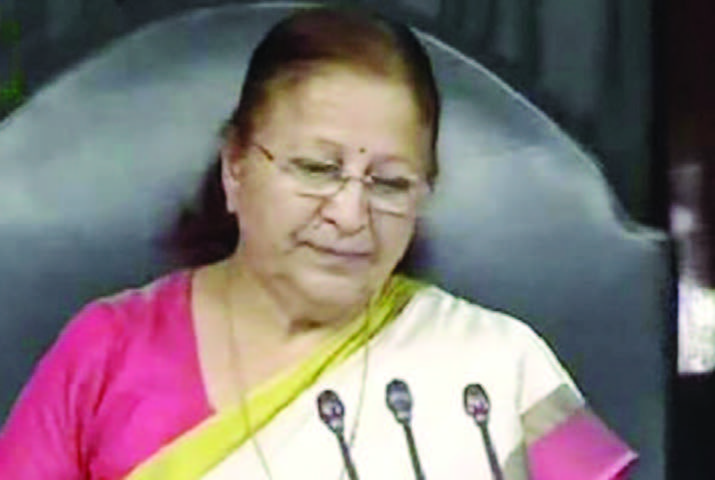
    UNITED NATIONS (TIP): “The Security Council is, undoubtedly, one of the most important institutions of global governance,” Sumitra Mahajan, speaker of Lok Sabha, the lower house of India’s parliament, stated. “If its legitimacy is in doubt then so would be the legitimacy of the United Nations. And, in fact, of the notion of global governance itself.” Mahajan was speaking Tuesday, November 18, at a session of the Preparatory Committee for the Fourth World Conference of Speakers of Parliaments on the subject of key challenges to world peace and democracy.

    She pointed out that the Council’s composition was based on UN’s structure in 1945 and she asked in a series of rhetorical questions to drive her point home, “Is that composition still representative of the international community? The United Nations then had 51 members. The figure now is 193.” At the founding of the UN, there were only three African members, including South African apartheid regime, Mahajan pointed out. “Today it has 54,” she said.


    3
    The delegates at the Fourth World Conference of Speakers of Parliaments. Sumitra Mahajan is seated fourth from the right.


    “How many permanent members of the Security Council are from Africa?” After a briefing by Liechtenstein Ambassador Christian Wenaweser on the work of the Accountability, Coherence and Transparency Group, which brings together 22 nations working on UN reform, Mahajan said she would like to know what it proposes to do to “bring more legitimacy to the permanent membership of the Council.” Pressing the case for changing the composition of the Council, she asked, “While improvement in working methods, or a code of conduct on use of the veto, are important, can they substitute for reform of the composition? Can improvement in working methods legitimize a structure that is not legitimate? To say that is anachronistic is only an understatement.”

    In 2010 during the 65th Anniversary of the United Nations, world leaders had committed themselves to the early reform of the Council. She asked, “When would early be?” Although the membership of the Council was increased from 11 to 15 in 1965 with addition of four elected members, permanent membership continues to be restricted to the original five who wield veto powers. In any expansion of the permanent membership, India, Germany, Brazil, Japan and an African nation would be the top contenders.

  • MEXICO CANCELS BULLET TRAIN DEAL WITH CHINA

    MEXICO CANCELS BULLET TRAIN DEAL WITH CHINA

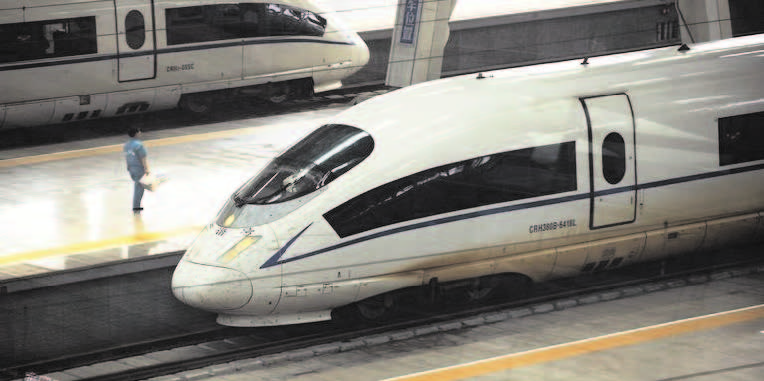
    BEIJING (TIP): Mexico has suddenly canceled a $3.75 billion contract to buy bullet trains from China. This is a major blow to the Chinese railway manufacturing industry, which is trying to sell high-speed trains to India and other countries. Justifying the decision, Mexican president Enrique Pena Nieto said he wanted to avoid “any doubts about the legitimacy and transparency” of the bidding process. The cancellation came within days of the contract being signed on November 3. Earlier, two other Latin American countries, Brazil and Argentina, postponed their own high-speed rail projects.

    The Nieto government came under pressure from local politicians and lawmakers, who said China Railway Construction Corp. has been favored in the deal. The country’s transport ministry said a new auction for the contract would be held soon. The decision, which came soon after the deal was signed, would mean new opportunity for rivals like Germany’s Siemens, Canada’s Bombardier and France’s Alsthom. Japan’s Mitsubishi also expressed an interest in the contract. Reports said their requests for more time to make submissions were refused. Only CRCC and its Mexican partners had submitted a joint proposal by the 15 October deadline.

    The issue may come up during discussion when the Mexican president visits Beijing next month. Work on the new line was due to begin in December but it might be delayed now. The project involves building a 210- kilometer high-speed line to connect the capital, Mexico City, with the growing industrial hub of Queretaro to the north by 2017. The goal is to cut travel time from about two and a half hours to less than an hour, with trains traveling at a maximum of 300 km/h.

  • UN member states owe world body about $3.5 billion

    UN member states owe world body about $3.5 billion

    UNITED NATIONS (TIP): The UN management chief says member states owe the world body about USD 3.5 billion for its regular operating budget and far-flung peacekeeping operations.

    Yukio Takasu told reporters after briefing the General Assembly’s budget committee on Thursday that “as a whole the financial situation of the United Nations is very sound and generally good except the regular budget.”

    Unpaid assessments for the regular budget total just over USD 950 million, including about USD 800 million owed by the United States, USD 77 million by Brazil and USD 28 million by Venezuela, he said.

    Member states owe about USD 2.6 billion to the separate peacekeeping budget, Takasu said.

    France owes USD 356 million, the United States USD 337 million and Italy around USD 250 million, he said.

  • INDIA’S FARM SOPS UNDER LENS AT WTO

    INDIA’S FARM SOPS UNDER LENS AT WTO

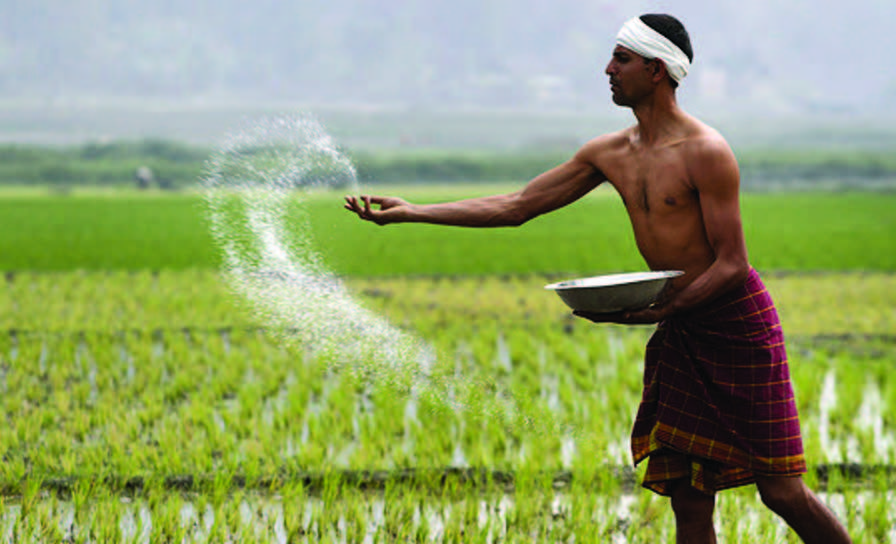
    NEW DELHI (TIP): The United States and Pakistan have questioned several of India’s farm trade policies, including its land holding laws and the subsidy mechanism at the World Trade Organization, which is the latest assault being faced by the country after it raised the red flag over domestic support to farmers in Bali.

    Since the Bali ministerial meeting last December, WTO members have repeatedly put the lens on India’s farm sector policies, especially those related to exports and the scrutiny has only gone up since the BJP government blocked a deal on trade facilitation this July, arguing that it will not back it till concerns over domestic support for public stockholding are sorted out.

    In a document released by WTO on Wednesday, Australia and Brazil’s attempts to get some answers to their concerns over the export subsidy for sugar once again come through. In a detailed questionnaire, they not only asked about the support that is provided, but Australia has reiterated that the subsidy is not compatible with WTO rules.

    Similarly, the US and Canada have expressed concern over India exporting subsidized wheat and the Americans have even given a detailed cost analysis, which includes calculations from Comptroller & Auditor General’s report. The government has, however, parried the questions and did not disclose the data, arguing that the tender process was underway.

    In fact, several countries have blocked India’s attempts to push through the plan to allow limitless minimum support price (MSP), arguing that it will help it export subsidized grains into the world market, and distort the price. The government has been exporting excess stock of wheat to reduce the burden on overflowing silos, raising fears that subsidized grains are being sold in the international markets.

    Pakistan – which was part of the coalition that was pushing the food subsidy proposal at the WTO but walked out at the last minute – has also alleged that India is following a “double subsidization” process, which means that subsidized inputs such as power and fertilizer are given to farmers along with MSP to offer an assurance to buy the rice and wheat. While India countered it by saying that the policies were in line with the WTO agreement on agriculture, the US and Pakistan have sought detailed data, arguing that India is the largest rice exporter in the world.

    For the US, even the farm holdings and land laws in India are a big area of concern as data released by India has showed that between 2000-01 and 2010-11, there was a spurt in the proportion of land with marginal and small farmers, while the population of those with large farms went down. India has responded by saying that this is due to an increase in the holdings or population with existing hereditary laws.

  • INDIA: THE ODD BRIC OUT

    INDIA: THE ODD BRIC OUT

    India must strike a balance between its new emerging partners and beneficial Western ties

    India would be foolish to join an anti-Western bloc as India’s rise is inherently tied to the West. Given the popular view that the BRICS are opposed to the West, India finds itself in the unique position of being a part of the BRICS collective as well as having overtly friendly relations with the U.S., a relationship that is likely to further improve in the future as Modi visits the U.S. and ties strengthen.

    By Stephen Junor The BRICS nations have rapidly evolved from a group of emerging economies into political contenders in a new world, driven by the search for an alternative to Western hegemony. Recent Western failures have also helped to launch the BRICS concept as an alternative, and have possibly pushed the countries closer together than they may have initially intended.

    There are also differences (the China-India border disputes for example) that would have seriously tested the relationship between other countries, but for now they are responsible for the multi-polar world that appears to be emerging. The Western approach toward BRICS has generally been one of skepticism, but when it comes to India there is a conspicuously different portrayal in the media compared to the rest of the countries. Although the recent U.S.-Africa summit suggests friendly relations, South Africa has always seen itself as a member of the global South and champions countries that don’t acquiesce to U.S. dominance. The conflict between the U.S. (somewhat supported by much of Europe) and Russia is well-known, and the media consistently highlights the conflict and difference between the U.S. and China.

    American interference in Latin America has made relations between Brazil and the U.S. touchy, and the rhetoric from Brazil in the wake of NSA spying last year was scathing. Despite relations taking a hit last year when Indian diplomat Devyani Khobragade was arrested in New York, U.S. and Western media have generally been friendly toward India, exemplified by President Barack Obama’s invitation to newly elected Prime Minister Narendra Modi to visit the U.S., despite Modi previously being blocked from the U.S. over his failure to stop sectarian violence as Gujarat’s chief minister in 2002, when more than 1,000 people were killed. It is likely that the U.S. views India as a potential foothold in Asia.

    India is often heralded in the Western media as the world’s largest democracy, in an attempt to provide common ground and a nod of disapproval to the likes of China and Russia. In contrast to the other BRICS members, Indian elites aspire to the wealth and influence of the U.S., and it is only natural that this aspiration would manifest itself in the politics of the country. Modi is a proponent of free market capitalism and this bodes well for relations with the U.S., which will see him as an accessible figure.

    There are further important differences between India and the rest of the BRICS nations.World Bank data shows that India’s GDP per capita severely lags behind the rest at around $1,500, four times less than China and South Africa, seven times less than Brazil and almost 10 times less than Russia. India hasn’t replicated the rapid growth of the other BRICS countries since the turn of the millennium, and this is also reflected in a slower reduction in the poverty gap. Just under 25 percent of the population still live on less than $2 a day, compared to 10 percent or less for the other countries. Such a severe development problem will hinder Indian growth in the near future and will see it fall further behind.

    Modi will be expected to implement reforms that improve growth and lift hundreds of millions out of crippling poverty. Growth alone will not solve the poverty problem in India however. When it comes to literacy rates in adults, the 2011 Indian census recorded a figure of 74 percent while the rest of the BRICS nations record over 90 percent. Literacy among women is even lower at 64 percent. Infrastructure in India is also sub-standard. An overburdened transport systems and insufficient electricity grids that are overly reliant on coal contribute to the poverty problem while hindering growth. Rapid urbanization is also putting pressure on these systems, making the problem more acute.

    India also has a digital problem as only 15 percent of the population uses the internet, compared to upwards of 40 percent for the other BRICS. Connectivity is important, particularly for those often marginalized in society, as evidence points towards benefits for education and health. India has a distinctive set of problems that the other BRICS countries have largely moved beyond. Given the political and economic clout of the BRICS collective, India could soon find itself left behind within the group. Indeed the statistics above and the obvious clout of China and Russia suggest that India may lack influence within the group already, despite efforts to spread power within the recently announced New Development Bank.

    This is where the U.S. could become more influential with India. In a recent interview with The Diplomat, Sadanand Dhume, a resident fellow at the American Enterprise Institute (AEI) and Wall Street Journal columnist, said that India would be foolish to join an anti-Western bloc as India’s rise is inherently tied to the West. Given the popular view that the BRICS are opposed to the West, India finds itself in the unique position of being a part of the BRICS collective as well as having overtly friendly relations with the U.S., a relationship that is likely to further improve in the future as Modi visits the U.S. and ties strengthen.

    India will need to manage its relationships carefully, as it will not want to find itself isolated from either the U.S. or the BRICS. It is also important that India doesn’t become geopolitically caught between the two sides: Any point of tension between the West and an individual BRICS country could reflect on the rest of the group. Indeed if India wants to achieve strong growth and solve its development crisis, then it will need to harness relationships with both sides. The next few years will be crucial for Indian development, and as the international political situation slowly evolves, it will be interesting to see how India locates itself in relation to the West and the other BRICS countries.

    (Stephen Junor writes on the rise of BRICS and geopolitics) (Source: The Diplomat)

  • Bopanna to get Davis Cup Commitment Award

    Bopanna to get Davis Cup Commitment Award

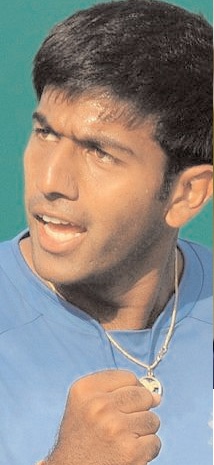
    BANGALORE (TIP): Indian tennis player Rohan Bopanna will be presented the Davis Cup Commitment Award during the World Group play-off tie against Serbia which begins here tomorrow. The International Tennis Federation (ITF) will present the Awards through its national associations during the Davis Cup World Group and Zone Group matches on Saturday.

    Former Grand Slam champions Lleyton Hewitt of Australia and Gustavo Kuerten of Brazil will also be awarded after their respective games. “The Davis Cup Commitment Award reflects the dedication by players for more than a century to represent their country in this prestigious competition.

    These players have continued to rise to the unique challenge of competing in a team environment in front of their home fans, and we believe that it is fitting to recognise their efforts,” said ITF President Francesco Ricci Bitti.

    List of players to be awarded: Australia: Lleyton Hewitt, Brazil: Carlos Kirmayr, Gustavo Kuerten, Luiz Mattar, Cassio Motta, Jaime Oncins, Canada: Frank Dancevic, Chinese Taipei: Ti Chen, France: Pierre Darmon, India: Rohan Bopanna Romania: Victor Hanescu, Russia: Andrei Chesnokov, Andrei Olhovskiy, Thailand: Sanchai Ratiwatana, Sonchat Ratiwatana, Danai Udomchoke, Ukraine: Sergiy Stakhovsky.

  • INDIA SLIPS TO 71ST RANK IN GLOBAL COMPETITIVENESS LIST

    INDIA SLIPS TO 71ST RANK IN GLOBAL COMPETITIVENESS LIST

    GENEVA/NEW DELHI (TIP): Weighed down by challenging economic conditions for most part of the past year, India has slipped to 71st position — the lowest among BRICS countries — in an annual global competitiveness list, with Switzerland claiming the top spot.

    The annual list, released on September 3 by Geneva-based World Economic Forum (WEF), comes at a time when the new Indian government has completed 100 days in power and has promised further steps to revive its economy and the ease of doing business in the country. “Continuing its downward trend and losing 11 places, India ranks 71st.

    The country’s new government faces the challenge of improving competitiveness and reviving the economy, which is growing at half the rate of 2010,” WEF said. As per the Global Competitiveness Report 2014-15, Switzerland is the most competitive economy, followed by Singapore. Other countries in the top ten are Finland (4), Germany (5), Japan (6), Hong Kong SAR (7), Netherlands (8), United Kingdom (9) and Sweden (10). China, which has improved its position by one place to 28th spot, leads the BRICS grouping, among which India has the least ranking.

    Russia is ranked at 53rd position, followed by South Africa (56) and Brazil (57). “India’s decline of 11 places to 71st, set against the gains of the ASEAN 5 countries, suggests that the competitiveness divide South and Southeast Asia is becoming more pronounced,” WEF said. Besides India, WEF said that some of the world’s largest emerging market economies continue to face difficulties in improving competitiveness.

    These include Saudi Arabia (24th rank), Turkey (45), Mexico (61), Nigeria (127th), South Africa and Brazil — all of them have slipped in their rankings. According to the report, India’s slide in the competitiveness rankings began in 2009, when its economy was still growing at 8.5 per cent (it even grew by 10.3 per cent in 2010). “Back then, however, India’s showing in the Global Competitiveness Index (GCI) was already casting doubt about the sustainability of this growth. “Since then, the country has been struggling to achieve growth of 5 per cent.

    The country has declined in most areas assessed by the GCI since 2007, most strikingly in institutions, business sophistication, financial market development, and goods market efficiency,” it added. Noting that improving competitiveness would yield huge benefits for India, WEF said it would help re-balance the economy and move the country up the value chain ensuring more solid and stable growth. “This in turn could result in more employment opportunities for the country’s rapidly growing population,” it added. WEF further said that India needs to create a sound and stable institutional framework for local and foreign investors as well as improve connectivity.

    The rankings are based on WEF’s GCI which is based on scores covering 12 categories. They are institutions, infrastructure, macroeconomic environment, health and primary education, higher education and training, goods market efficiency, labour market efficiency, financial market development, technological readiness, market size, business sophistication and innovation.

    “The strained global geopolitical situation, the rise of income inequality, and the potential tightening of the financial conditions could put the still tentative recovery at risk and call for structural reforms to ensure more sustainable and inclusive growth,” WEF founder and executive chairman Klaus Schwab said. As per the report, there is uneven implementation of structural reforms across different regions and levels of development as the biggest challenge to sustaining global growth. Talent and innovation are the two areas where leaders in the public and private sectors need to collaborate more effectively in order to achieve sustainable and inclusive economic development, it added.

  • Genetic sexual attraction: Husband and wife discover they are brother and sister

    Genetic sexual attraction: Husband and wife discover they are brother and sister

    ABrazilian married couple, who have both searched for their mothers who abandoned them as children, have discovered the two women they were looking for was infact the same person while live on air, making them brother and sister. Adriana, 39, and her husband Leandro, 37, who did not want to share their surnames, have known each other for 10 years and now have a six year old daughter together.

    Both Adriana and Leandro, who live in Sao Paulo, had been searching for their mother for a number of years. Leandro knew his mother was called Maria, and that she had abandoned him at the age of eight. He was brought up by his stepmother. Adriana knew her mother was also called Maria, and that she had been abandoned at the age of one. She was brought up by her father. The couple thought that their mothers, who they believed to be two different women, should the same name was a “coincidence,” as Maria is a common name in Brazil.

    But Adriana’s refusal to give up the search for her mother led her to calling into to Brazilian radio station Globo Radio, and eventually managing to speak to her mother on The Time is Now programme, which specialises in finding lost relatives, the Mirror reports. At the end of Adriana’s conversation with Maria, her mother revealed she also had a son called Leandro, who did not know her. Adriana, shocked at the realisation that her husband was also her brother, said: “I don’t believe that you’re telling me this. Leandro is my husband.”

    The phenomenon that Leandro and Adriana have experienced is called Genetic Sexual Attraction, and it occurs between “two adults who have been separated during the critical years of development and bonding and are reunited alter as adults,” according to a GSA website, which has now been turned into a GSA support-based forum.

  • India holds its ground, WTO fails to reach $1 trillion deal on customs rules

    India holds its ground, WTO fails to reach $1 trillion deal on customs rules

    GENEVA (TIP): The World Trade Organization failed on July 31 to reach a deal to standardise customs rules, which would have been the first failed global trade reform in two decades but was blocked by India’s demands for concessions on agricultural stockpiling. “We have not been able to find a solution that would allow us to bridge that gap,” WTO director-general Roberto Azevedo told trade diplomats in Geneva just two hours before the final deadline for a deal. “Of course it is true that everything remains in play until midnight, but at present there is no workable solution on the table, and I have no indication that one will be forthcoming.”

    The deadline passed without a breakthrough. WTO ministers had already agreed the global reform of customs procedures known as “trade facilitation” last December, but it needed to be put into the WTO rule book by July 31. Most diplomats saw that as rubberstamping a unique success in the WTO’s 19 year history, which according to some estimates would add $1 trillion and 21 million jobs to the world economy, so they were shocked when India unveiled its veto.

    Trade experts say on Thursday’s failure is likely to end the era of trying to cobble together global trade agreements and to accelerate efforts by smaller groups of likeminded nations to liberalise trade among themselves. India has been vocal in opposing such moves, making its veto even more surprising. “Today’s developments suggest that there is little hope for truly global trade talks to take place,” said Jake Colvin at the National Foreign Trade Council, a leading US business group.

    “The vast majority of countries who understand the importance of modernizing trade rules and keeping their promises will have to pick up the pieces and figure out how to move forward.” Some nations have already discussed a plan to exclude India from the agreement and push ahead regardless, and the International Chamber of Commerce urged officials to “make it happen.” “Our message is clear. Get back to the table, save this deal and get the multilateral trade agenda back on the road to completion sooner rather than later,” ICC secretary general John Danilovich said.

    US secretary of state John Kerry, on a visit to New Delhi, had earlier said he was hopeful that differences between India and much of the rest of the world could be resolved. But after Azevedo’s speech, US ambassador to the WTO Michael Punke was downbeat. “We’re obviously sad and disappointed that a very small handful of countries were unwilling to keep their commitments from the December conference in Bali, and we agree with the Director- General that that action has put this institution on very uncertain new ground,” Punke told reporters.

    India had insisted that, in exchange for signing the trade facilitation agreement, it must see more progress on a parallel pact giving it more freedom to subsidise and stockpile food grains than is allowed by WTO rules. It got support from Cuba, Venezuela and Bolivia. India’s new nationalist government has insisted that a permanent agreement on its subsidised food stockpiling must be in place at the same time as the trade facilitation deal, well ahead of a 2017 target set last December in Bali. Kerry, whose visit to India was aimed at revitalising bilateral ties but was overshadowed by the standoff, said the United States understood India’s position that it needs to provide food security for its poor but India would lose out if it refused to maintained its veto.

    Deal without India?
    Diplomats say India could technically attract a trade dispute if it caused the deal to collapse, although nobody wanted to threaten legal action at this stage. The summer break will give diplomats time to mull options, including moving ahead without India. Technical details would still have to be ironed out, but there was a “credible core group” that would be ready to start talking about a such a deal in September, a source involved in the discussions said.

    “What began as a murmur has become a much more active discussion in Geneva and I think that there are a lot of members in town right now that have reached the reluctant conclusion that that may be the only way to go,” he said. An Australian trade official with knowledge of the talks said a group of countries including the United States, European Union, Australia, Japan, Canada and Norway began discussing the possibility in Geneva on Wednesday afternoon. New Delhi cannot be deliberately excluded, since that would mean other countries slowing down containers destined for India, but if it becomes a “free-rider” it will add another nail in the coffin of attempts to hammer out global trade reform.

    Trade diplomats had previously said they were reluctant to consider the idea of the allbut- India option, but momentum behind the trade facilitation pace means it may be hard to stop. Many countries, including China and Brazil, have already notified the WTO of steps they plan to take to implement the customs accord immediately. Other nations have begun bringing the rules into domestic law, and the WTO has set up a funding mechanism to assist.

    But WTO head Azevedo said he feared that while major economies had options open to them, the poorest would be left behind. “If the system fails to function properly then the smallest nations will be the biggest losers,” he said. “It would be a tragic outcome for those economies — and therefore a tragic outcome for us all.”

  • INDIA TO HOST IBSA SUMMIT NEXT YEAR

    INDIA TO HOST IBSA SUMMIT NEXT YEAR

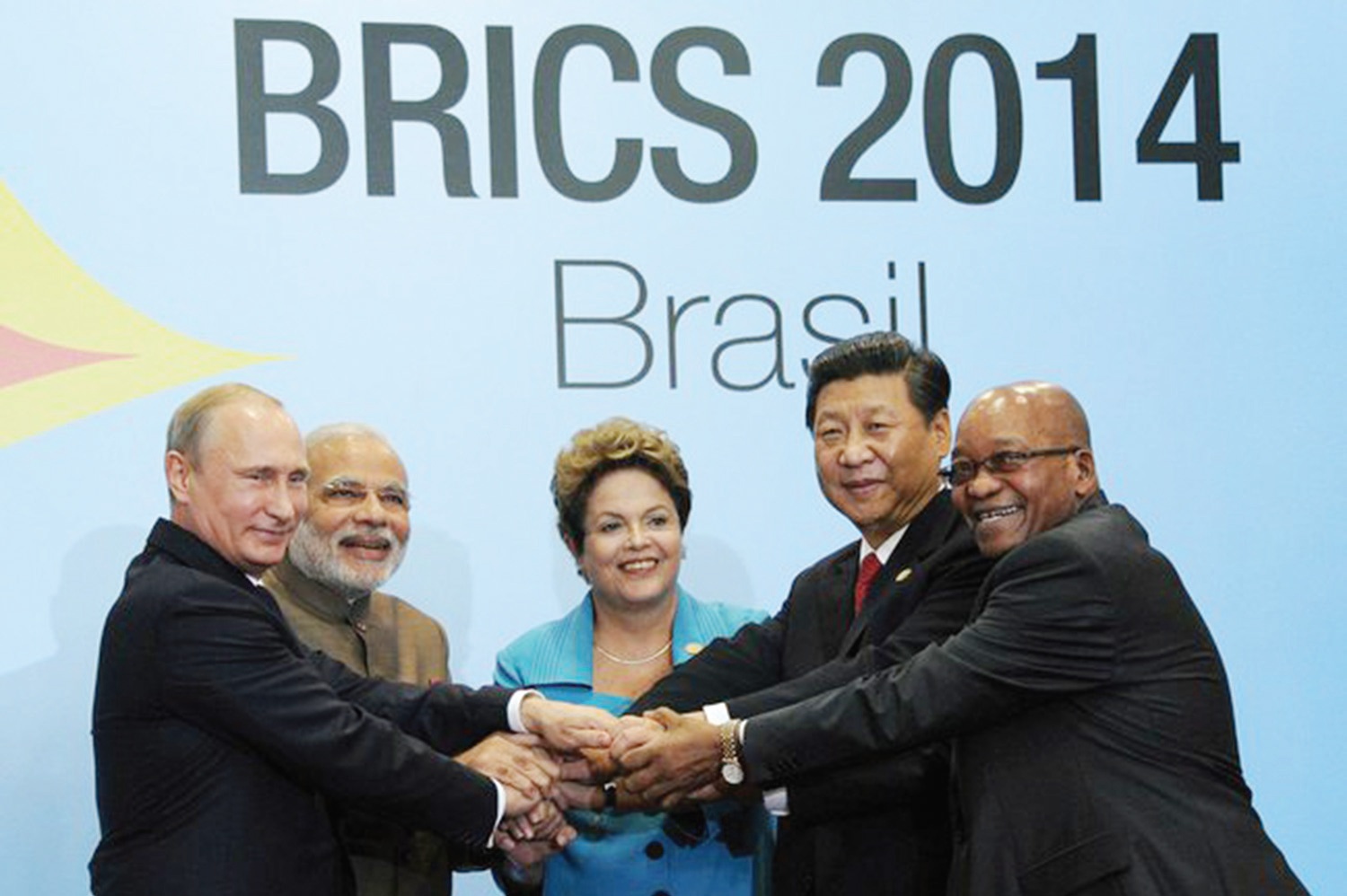
    BRASILIA (TIP): India will host the next summit of IBSA (India, Brazil, South Africa) in New Delhi next year, giving importance to the grouping notwithstanding the BRICS forum of which these countries are also members. This was agreed to when Prime Minister Narendra Modi with South African President Jacob Zuma here last night on the sidelines of the summit BRICS leaders held with South American leaders.

    Both leaders recognised the importance of IBSA as a forum of members who have long established democracies and similarities of views on various matters of international agenda of political and economic consequences.The dates will be decided in consultation with each other, Dinkar Khullar, Secretary West in the External Affairs ministry told reporters travelling with the Prime Minister on the way back to India.

    It was also decided that the meeting of India Africa Forum (IAF) will be held in December in Delhi this year. During the meeting, Zuma spoke of the long-standing relationship between South Africa and India and the respect Mahatma Gandhi has in his country. Modi also spoke of the regard people of India have for the late anti-apartheid icon Nelson Mandela.

    Zuma said that the two countries have a strong engagement in view of the fact that the Indian diaspora is 1.5 million strong in South Africa with the Indian population in Durban being the single largest Indian community outside India.

  • Fifa red card for Rosberg World Cup helmet

    Fifa red card for Rosberg World Cup helmet

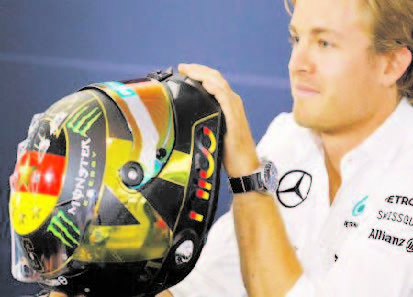
    HOCKENHEIM (GERMANY) (TIP): Formula One championship leader Nico Rosberg has had to abandon plans to wear a special helmet decorated with the World Cup trophy at his home German Grand Prix due to copyright issues after Fifa intervened. Rosberg, who drives for German Football Association sponsors Mercedes, had shown his 712,000 followers on Twitter a picture of the planned helmet in the German colours with four stars and the golden trophy on top. “This will be my Hockenheim World Cup special edition helmet with the Fifa trophy.

    How do you like it?,” the German had asked fans still celebrating Germany’s 1-0 triumph over Argentina in the final in Brazil last weekend. The helmet infringed world soccer body Fifa’s copyright however and Rosberg’s spokesman Georg Nolte confirmed that the image of the trophy would not now appear.

    A new version, shown to reporters, featured one big star with a 14 inside it and three smaller stars denoting Germany’s four world championships. “All the things you have to think about, It’s amazing,” commented Rosberg. “Even a trophy has its trade mark or whatever. this will be my Hockenheim World Cup special edition helmet with the FIFA trophy.

    How do you like it??? @DFB_Team pic.twitter.com/ZKE4gh5EpA — Nico Rosberg (@nico_rosberg) July 15, 2014 “That was a surprise but of course I fully understand,” said the German. “It was a pity because it looked really cool with the trophy on top. Now it has a big star and nobody can take that away. The star is ours.” Rosberg, who signed a contract extension with Mercedes earlier this week, leads British team mate Lewis Hamilton by four points ahead of Sunday’s race – which marks the halfway point in the season.

  • Team Germany vs Lionel Messi

    Team Germany vs Lionel Messi

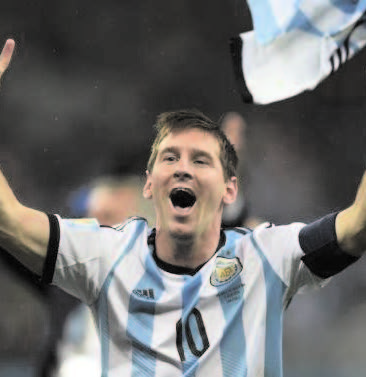
    Whatever happens at the Maracana in Rio de Janeiro on Sunday (early Monday morning for the bleary-eyed in India), history will have been made. Either the World Cup will have its first European champion on South American soil, or world football will have a new king to place beside Pele, Diego Maradona and Zinedine Zidane. Team Germany versus Lionel Messi: the narrative writes itself, a rematch 24 years in the making. While it isn’t without truth, it suffers from a reduction in nuance.

    German football has evolved since 1990, when an Andreas Brehme penalty won the Cup. Efficiency and collective play remain the substance, but there has been a refinement of style. Under Jurgen Klinsmann and then Joachim Low, a new German generation has showcased skilful, tactically fluid football while continuing the tradition of going deep in tournaments. But without a trophy, patience has begun to wear thin in Germany. Argentina, on the other hand, appears not to have escaped the personality cult.

    It was Maradona in 1990 when he nearly managed a repeat of 1986; it’s Messi now. Much as with Maradona, the opposition’s extra-defensive attention limits Messi, but it extracts a cost: the other team can’t commit to attack without risking a match-turning moment of Messi magic. It can only work, however, if the rest of Argentina privileges an individual for its greater good.

    The finalists could not have taken more contrasting routes. Argentina has managed eight goals in six matches, often leaving it very late; Germany nearly scored that number against Brazil, and has 17 in total. Argentina and the Netherlands set out not to lose their semifinal, two cautious, disciplined sides cancelling each other out.

    Neither could seize the initiative over 120 minutes. Germany and Brazil, in the other semifinal, went out to win, even if the host did it with absurd recklessness, “running into an open knife” as a German writer described it. In a sense it was surprising to see Brazil play thus.

    It had led the tournament in fouls, yellow cards, and tackles per game: this was a pragmatic unit, which despite the gaps at the back was capable of churning out results. But without Neymar, its creative force, and Thiago Silva, its leader and defensive organiser, the five-time champion crumbled.

    Despite inflicting such a heavy defeat, Low’s men can count on Brazil’s support in the final; not only has Germany’s football captivated the spiritual home of the game, Brazilians will rather see anyone win it but Argentina. Alejandro Sabella has sought to lessen the pressure on his side by portraying Argentina as the underdog. But big finals know no favourites. All one can hope for is a contest that a thoroughly enjoyable World Cup can be remembered by.

  • POOR MONSOON THREATENS FIRST DROUGHT IN FIVE YEARS

    POOR MONSOON THREATENS FIRST DROUGHT IN FIVE YEARS

    New Delhi (TIP): Weak rainfall in India since the start last month of the monsoon season, crucial to the country’s agricultural earnings, has raised concerns of a first drought in five years, although weather experts are hopeful rains will revive in the next week. A poor monsoon cuts exports, stokes food inflation and leads to lower demand for products ranging from cars to consumer goods, while a slow start could delay exports of some crops and increase the need for imports.

    Rains last week spread to soybean areas in central parts of India and cane areas in the north, but overall rains stood at 43 percent below the seasonal average, a weather office update showed. In 2009 the worst drought in nearly four decades forced India, the world’s top sugar consumer, to buy large quantities of the sweetener from top producer Brazil, driving benchmark New York futures to a 30-year high. The farm sector accounts for around 14 percent of India’s nearly $2 trillion economy, and two-thirds of its 1.2 billion population live in rural areas.

    “The monsoon appears to be more unpredictable,” Finance Minster Arun Jaitley said, presenting his maiden budget on July 10. India, one of the world’s top producers and consumers of rice, corn, cooking oil, sugar and cotton, relies heavily on the summer rains as nearly half its farmland lacks irrigation. The lacklustre monsoon could push up edible oil imports by the world’s top palm oil buyer. That in turn could underpin benchmark Malaysian prices of the tropical oil that have plunged more than a tenth this year.

    The monsoon this year arrived five days late on the southern Kerala coast, and then covered half of India four days later than the usual date of June 15. Usually, the monsoon covers the entire country around mid-July. “The water-stressed western region is expected to receive good rainfall next week as conditions have become favourable for a revival,” said M. Rajeevan, a senior meteorological scientist with the ministry of earth sciences.

    DROUGHT CONCERNS
    Delayed progress of monsoon rains towards the grain belt of northwest India and oilseed-growing regions of central and western India has prompted concerns about a shortfall in grains output, causing prices of some food items to rise. Jaitley said last week there was no cause to panic about the possibility of higher inflation, after a private forecasting agency said there was a 60 percent chance India would face a drought this year.

    “Even if due to inadequate rainfall there is a marginal decline in agricultural production, stocks in the central pool are adequate to meet any exigency (emergency),” Jaitley said. India’s government under new Prime Minister Narendra Modi has moved to ease market concerns over supply shortages and price speculation with a number of steps, including raids against hoarders.

    Policy makers in New Delhi fear a failure of this year’s monsoon could push up retail food inflation by at least one percentage point. Soaring prices of basic goods such as milk and potatoes lifted retail food inflation in May to 9.4 percent and the poor monsoon has fanned fears of worse to come.

  • Brazil vs Netherlands: Battle of bruised ego

    Brazil vs Netherlands: Battle of bruised ego

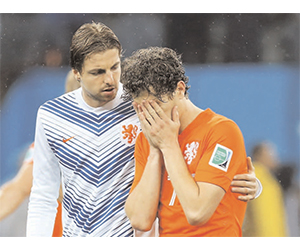
    RIO DE JANEIRO (TIP): In the battle between Louis and Luiz, an otherwise irrelevant football fixture has assumed a strange but different meaning for the teams involved. It is called the Losers Final, but for the losing semifinalists, Brazil and the Netherlands, Saturday’s third place playoff game in Brasilia becomes one where damaged reputations can be repaired and hurt egos soothed. Still, all this is just humbug for the hurting Dutch. “This match should never be played, I’ve been saying that for 10 years,” thundered the Netherlands coach Louis van Gaal after his team had been bundled out by Argentinian goalkeeper Sergio Romero in the semifinal in Sao Paulo. In charge of his last match as the Dutch coach before he takes up the job at Manchester United in the coming season, this consolation prize is not what he was looking for as a farewell.

    “There is only one award that counts and that is becoming world champions. The worst thing is that there is a chance you are going to lose twice in a row, and in a tournament in which you have played so well, you go home as a loser. This has got nothing to do whatsoever with sport… not in my view,” he said, mincing no words. His opposite number, Luiz Felipe Scolari, may share the same view in private but at the moment he will clutch at even this Brasil ia straw after what he and his team were made to go through in their semifinal against Germany in Belo Horizinte. Scolari will be forever be known as the Brazil manager under whom the Selecao plunged to its worst-ever defeat in its football history.

    “I know my career will be marked by this defeat,” he said after the 7-1 mauling, but still offered a forwardlooking approach when he said, “We have an obligation to move on, thinking about the next goal, which in this case is the match for third place in Brasilia.” Up until then, nobody had given the thirdplace match any thought, but Scolari saw that as an opening for a belated shot at redemption. “I know it’s a much smaller dream than what we all wanted but we have to honour the shirt of the national team,” he said, attempting to sound sage-like about the freefall of his team.

    Brazil had played before the Argentina- Netherlands semifinal a day earlier, and immediately the wily Scolari had caused a tizzy, briefly deflecting from the larger issue of the 7-1 humiliation and having the uncomfortable glare of the spotlight away from him. The irrepressible Brazilian fan suddenly saw another ‘final’ looming with their bitter, old rivals Argentina in the event of Leo Messi and mates failing against the Dutch.

    All of Brazil’s eyes were firmly trained on Argentina, and Scolari could breathe easy. Later, a triumphant Argentine coach Alejandro Sabella was even asked – in jest – whether he was relieved to avoid a meeting with Brazil in the ‘real final’. Was he scared? Sabella broke into a rare smile, and nodded that it would have been a disaster for Argentina had they been forced to play the Third Place game. “That ‘final’ would have been very tough for us,” he said, but was clever to bring the real issue back into the frame -that Argentina and not Brazil were going to the Maracana on Sunday.

    Recent third-place play-off winners
    2010: Germany 3-2 Uruguay
    2006: Germany 3-1 Portugal
    2002: Turkey 3-2 South Korea
    1998: Croatia 2-1 Netherlands
    1994: Sweden 4-0 Bulgaria
    1990: Italy 2-1 England
    1986: France 4-2 Belgium
    1982: Poland 3-2 France

    NUMBERS GAME
    171 – The 1998 World Cup saw more goals than any other tournament. So far, there have been 167 in 2014

    10 – There have been fewer red cards in the tournament than any other edition since 1986 (8)

    10 – of theNetherlands’12 goals in themeet have come after half-time.

    4 – Second half substitute Ramires had more shots than Bernard, Willian, Hulk and Fred put together (3) against Germany

    0 – Robin Van Persie is yet to score a goal in the knockout stages in his WC career.

  • MESSI, MUELLER, RODRIGUEZ AMONG CONTENDERS FOR WORLD CUP’S BEST

    MESSI, MUELLER, RODRIGUEZ AMONG CONTENDERS FOR WORLD CUP’S BEST

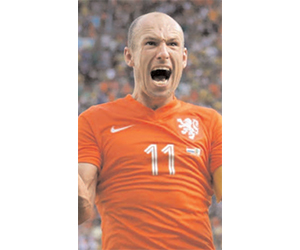
    RIO DE JANEIRO: Four Germans, three Argentines, and one player each from Brazil, Colombia and the Netherlands were shortlisted for the “Golden Ball” award to the World Cup’s best player. The top ten list included World Cup finalists Germany’s defender Mats Hummels, right back Philipp Lahm, midfielder Toni Kroos and forward Thomas Mueller who has scored five goals. For their opponents in Sunday’s final, Argentina, winger Angel Di Maria, midfielder Javier Mascherano and – inevitably – four-goal striker and captain Lionel Messi made the list.

    Also included was Colombia’s attacking midfielder James Rodriguez, widely considered to be the revelation of the tournament and top scorer so far with six goals in his team’s run to the quarterfinal where they were beaten by Brazil. The other two players short-listed were Dutch forward Arjen Robben who tormented defences throughout and scored three in the Netherlands’ progress to the semifinal, and Brazil’s Neymar who had played superbly and bagged four goals before being injured.

    World governing body Fifa will announce the winner after Sunday’s final. Uruguay striker Diego Forlan was named best player of the South African tournament four years ago. Up for the “Golden Glove” award for best goalkeeper are Germany’s Manuel Neuer, Argentina’s Sergio Romero and Costa Rica’s Keylor Navas who underpinned the Central Americans’ fairy-tale run into a first ever World Cup quarterfinal. The award for best young player is between France’s Paul Pogba and Raphael Varane, and the Netherlands’ Memphis Depay.

  • SCOLARI HAILS ROBBEN AS STAR OF WORLD CUP

    SCOLARI HAILS ROBBEN AS STAR OF WORLD CUP

    BRASiLIA (TIP): Netherlands winger Arjen Robben has been the standout performer of this year’s World Cup in the eyes of Brazil coach Luiz Felipe Scolari. Brazil and the Netherlands meet in Saturday’s third-place play-off in Brasilia and Scolari indicated that he will be making a special effort to stop Robben from hurting his side as they try to end the tournament on a high.

    “I think Robben has been the best player of the World Cup,” said Scolari on Friday as he confirmed that Brazil have trained with the focus on stopping the Bayern Munich winger from causing havoc with his favoured move of cutting in from the right wing onto his left foot.

    Earlier on Friday, Robben was included on a 10-man shortlist by Fifa for the Golden Ball, the prize given to the player of the tournament. A total of seven players from finalists Germany and Argentina, including Lionel Messi, are also on the shortlist along with Neymar of Brazil and James Rodriguez of Colombia.

  • Sex is good for footballers, at least in this Fifa World Cup

    Sex is good for footballers, at least in this Fifa World Cup

    SAO PAULO (TIP): It might be hard to stand up in court but evidence is mounting that sex is good for footballers – at least in this World Cup. All eight of the teams through to the quarterfinals allowed their players to have sexual relations with partners during down time, according to Brazil’s Lance! newspaper.

    All of the teams that banned it have been knocked out, the paper added. Studies suggest sexual intercourse up to two hours before an event does not adversely affect the performance of high level athletes but not all 32 squads had a clear policy on whether to allow their players conjugal visits during the tournament, which is being held in Brazil for the first time since 1950.

    Some teams, such as Bosnia, Chile, and Mexico, who have all gone home, slapped a ban on sexual relations. Others, like the Netherlands and Germany, who are in the last eight, set aside time for their players to see wives and girlfriends. Brazil’s squad have been given days off after some games and manager Luiz Felipe Scolari said he did not mind if they had “normal sex” but warned them off anything too “acrobatic”.

    Scolari’s strategy seems to be working, with Brazil through to face Colombia on Friday as they attempt to lift a record sixth World Cup, and is in keeping with the hosts’ love of love. Former Brazil forward Romario said having sex before a game helped him relax and play better while the late Socrates, who had six children, wrote that results were “exceptional” when he had sex the night before and the morning after a game. “Sex isn’t bad for you before or after games,” said ex-Corinthians and Porto striker Casagrande. “Only during.”

  • Overpass collapse kills two in Brazil World Cup city

    Overpass collapse kills two in Brazil World Cup city

    BELO HORIZONTE, BRAZIL (TIP): An unfinished overpass being built for the World Cup crashed down on several vehicles in Brazil’s southeastern city of Belo Horizonte on July 3, killing at least two people and injuring 19. Globo television images showed the front of a yellow bus crushed under a large stretch of the fallen highway, which is about five kilometers (three miles) from the city’s World Cup stadium and was being built as part of delayed infrastructure improvements for the tournament.

    “The overpass was in the final stages of construction and they were taking down the scaffolding when the accident happened,” a fire brigade spokesman told AFP. Two people were killed and 19 injured, the health agency of the state of Minas Gerais said, up from an earlier toll of one dead and 10 hurt. A firefighters’ spokesman said 13 people were rescued from the bus unscathed but the woman driver was killed. car was also crushed but it was not immediately known how many people were inside and what their condition was, firefighter spokesman Edgard Estevo da Silva told reporters. “The vehicle is completely under the overpass,” he said. Two trucks belonging to the construction company were also hit but the firm said nobody was inside them at the time, Silva said. A total of 14 firefighting teams were at the scene.

    The structure, which was begun last year, is in the Sao Joao Batista district of the city. A public works spokesman for the city hall told AFP that the overpass had been due to carry an express bus service through the city. “All mayoralty staff have been mobilized — the priority is to attend to the victims,” said the spokesman. Belo Horizonte’s Mineirao Stadium has hosted five World Cup matches and is due to stage a semi-final next Tuesday. The Brazil World Cup has been dogged by delays to stadiums and infrastructure, and there were several accidents during construction of the stadiums. Just three days before the World Cup began on June 12, another accident in Brazil’s business hub Sao Paulo killed one worker and injured two when an unfinished monorail collapsed.

  • WORLD CUP FIRST ROUND LEAVES EUROPE ALL AT SEA

    WORLD CUP FIRST ROUND LEAVES EUROPE ALL AT SEA

    RIO DE JANEIRO (TIP): Cristiano Ronaldo, Wayne Rooney, Andrea Pirlo and Xavi have left Brazil with their tails between their legs highlighting the hard times for Europe at the World Cup. Having provided seven of the last eight World Cup semifinalists, Europe’s dominance appears to be on the wane after a brutal group phase for the continent’s teams.

    Where Latin American sides such as Chile and Costa Rica created sensations, Europe’s powerhouses flopped, with Italy, England, Portugal and defending champions Spain among seven teams from the UEFA zone eliminated in the first round. European superstars disappointed. In sharp contrast, World Cup crowds have thrilled to the virtuoso performances of Neymar and Lionel Messi, the swashbuckling football of Chile and Colombia, and the daring displays of giant-killing Costa Rica.

    While France, Netherlands, Germany, Belgium, Switzerland and Greece remain in contention for glory, the tournament has done little to encourage hope of a first European World Cup success in the Americas. “It cannot be a coincidence that a European team couldn’t win a World Cup held in South America,” declared Switzerland’s decorated German coach Ottmar Hitzfeld before the tournament. “Not in Uruguay, not in Mexico, not in Argentina, and for sure not in Brazil.”

    Europe’s World Cup difficulties may be part of an emerging trend. Whereas European teams filled 10 of the last-16 places in five of the first six tournaments after the round was introduced in 1986 (with nine getting there in 2002), only six made it in 2010 and this year. With tens of thousands of fans from neighbouring countries flooding into Brazil, the South American teams have clearly benefited from home advantage.

    Supporters from Argentina and Chile took over Rio de Janeiro’s Maracana when their sides played there in the group phase and France coach Didier Deschamps believes such mass support can make a difference. “We are in Brazil, so the South American teams certainly acclimatise better, and maybe the fact that they are playing so close to home and have so many supporters with them gives them added strength and energy,” he said on June 14. Developing Deschamps’s theme, Brazil striker Fred said: “I think the climate can make a bit of a difference, because we are better adapted to it.

    “The tactical aspect makes a difference, too. We see Colombia, Ecuador, Uruguay, Chile all playing technically good football. And as they are used to the very hot climate, it can end up helping a bit.” England manager Roy Hodgson feels that European sides are hindered by the strengths of their respective domestic championships. Citing the examples of Costa Rica and Iran, who almost held Argentina to a goalless draw in Group F, he said that it is easier for the tournament’s supposed weaker sides to gather together for pre-competition training camps, making them more well-drilled and tactically flexible. “Iran and Costa Rica have been together for months, so they’ve really had a chance to do the type of work that we’ve been happy to do for three or four weeks with our players,” he said after his side’s groupphase exit.

    “We’ll never get the access to our players that an Iran or a Costa Rica get.” One consolation for the Europeans is that only one of Brazil, Chile, Colombia and Uruguay can reach the semi-finals due to the configuration of the draw.

    And although only six teams from Europe reached the last 16 in 2010, three of those went on to reach the semi-finals, while the final between Spain and Holland was the second all-European affair in a row after France and Italy in 2006. France, Germany and the Dutch are again looking strong and confident. While it has been a chastening first fortnight for the old continent, the cream of European football can still rise to the top.

  • Fifa bites back: Suarez gets nine-match ban

    Fifa bites back: Suarez gets nine-match ban

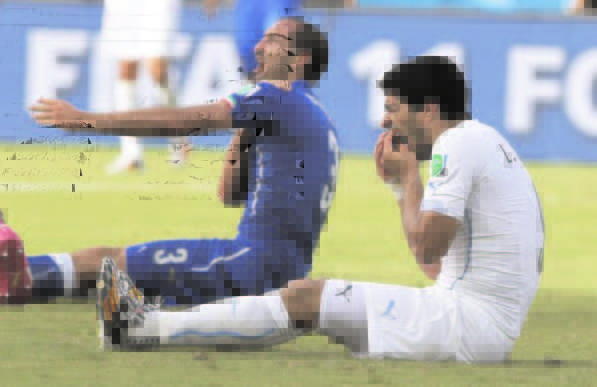
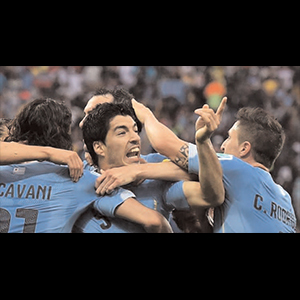
    BRASILIA (TIP): Even before the knockout rounds have kicked off, a key South American figure is out of the World Cup. Uruguay striker Luiz Suarez was handed a nine-game ban by FIFA’s Disciplinary Committee following his bite on Italian defender Giorgio Chiellini’s shoulder during the final Group D match in Natal on Tuesday.

    He has also been debarred from taking part in any football-related activity for a period of four months, a sentence which includes a stadium ban whenever Uruguay is playing. He was also ordered to pay a fine of 100,000 Swiss francs ($111,000). Already there is talk of how much this latest ‘bite’ will cost Suarez. Experts reckon a hit of £1 million with Adidas and 888poker both reviewing their relationship with the star.

    This is the heaviest sanction against a player in the tournament’s history. It surpasses the eight-match ban against Italy’s Mauro Tassotti in 1994 for an elbowing which broke the nose of Luis Enrique. This is the third time Suarez has been banned for biting a player during a match. “Such behaviour cannot be tolerated on any football pitch, and in particular not at a FIFA World Cup when the eyes of millions of people are on the stars on the field.

    The Disciplinary Committee took into account all the factors of the case and the degree of Mr Suarez’s guilt in accordance with the relevant provisions of the code. The decision comes into force as soon as it is communicated,” said Claudio Sulser, chairman of the committee. Uruguay will appeal against this decision, the media in Montevideo reported. “The punishment is too strong for the foul,” the country’s football federation’s president Wilmer Valdez told local TV, which reported that the appeal would be filed later on Thursday. The ban prevents Suarez from even entering the stadium for Uruguay’s Saturday’s game against Colombia.

    It will also hit his club career with Liverpool as he cannot play until the end of October. In Natal on Tuesday, Suarez rushed into the rival penalty area looking for a pass and appeared to have collided with Chiellini in the process. As they two men clashed, the Uruguayan was seen sinking his teeth into the Italian’s shoulder. Immediately both fell to the ground and while Suarez was seen holding his teeth, Chiellini kept calling for the attention of the referee, Mexican Marco Rodriguez. Rodriguez saw nothing in the plea and waved on play.

    Uruguay took the lead through a Diego Godin header a minute later to qualify for the Round of 16. Italy were knocked out. This is the second censure for Suarez at the World Cup. In the 2010 quarterfinal match against Ghana, he stopped Asamoah Gyan’s goal-bound attempt with his hand. He was shown a red card and later defended the act by calling it ‘the real Hand of God’. “Stopping a goal with my hand, I believe I did nothing evil to anyone – it was just stopping a goal,” he said later.

    Ghana failed to score off the resulting penalty and Uruguay eventually advanced to the semifinals after winning the penalty shootout. In Brazil here, however, in addition to his brilliant goal-scoring ability and form for Liverpool, Suarez had also arrived on the back of a reputation that bordered on the unpredictable and at times, violent. A favourite of the Kop – the Liverpool faithful – Suarez enjoyed an ambivalent relationship with rest of the Premiership fans who slowly warmed to his goal-scoring abilities but never forgot his other escapades.

    In April last year, he appeared to bite Branislav Ivanovic, Chelsea’s Serbian defender, during a similar goalmouth melee. He was handed a 10-match band and many said it was nothing new, since he arrived in England after having bitten PSV Eindhoven’s Otman Bakkal during his Ajax days in the Netherlands. He was also involved in a racial slur controversy with Manchester United’s French defender Patrice Evra.

  • Suarez scores brace as Uruguay beat England 2-1

    Suarez scores brace as Uruguay beat England 2-1

    SAO PAULO (TIP): As promised, the Luis Suarez threat proved real and potent for hapless England. Returning to full fitness, right in time for this fixture, the Liverpool striker – voted Player of the Year in England — came up the goal when it was needed the most.

    It destroyed England who had just been rejuvenated by their late equalizer. This one by Suarez, after his superb first half opening goal to put the South Americans ahead. It was all so sickening familiar for the English – they are not even sure if they stay or leave, having to wait for the outcome of the other games in the group to learn of their fate. Staring at a World Cup ouster, plucky England had managed to turn the tide and extend their stay in Brazil. Wayne Rooney finally got his first World Cup goal, and Uruguay for all their swashbuckling ways in freezing conditions in Sao Paolo on Friday, suddenly looked to be the ones hanging by a thread in this Group of Death.

    As things stood, with the possibility of England beating Costa Rica greater than Uruguay quelling the Italian challenge in the last fixture of the group, it looked like curtains for Oscar Tabarez’s side despite being on top of proceedings here. Then, as always, out of nowhere, Suarez arrived to take Uruguay to safety with him. It had promised an equal, physical game at the early exchanges all pointed towards that. Quarter of an hour gone and the burly Cristian Rodriguez forced a close save off Joe Hart.

    It immediately showed intent of the Uruguayans, who, it was clear would not sit back and wait for things to happen in this make or break Group D tie. While England stayed on even keel during the game – not giving up the fight — Uruguay’s technical superiority, depth and the presence of Suarez and Cavani upfront looked to them in good stead. There was a clear Atletico Madrid accent on the Uruguayan lineup with three first-choice Atleti players – captain Diego Godin, striker Cristian Rodriguez and defender Jose Gimenez – making Oascar Tabarez’s team on Thursday.

    On the other hand, England, probably after North Korea at the last World Cup, was a line-up comprising wholly homebased players. Make of that what you will. At the half-hour, Rooney’s header off a Steven Gerrard fee kick rocked Fernando Muslera’s bar. England were growing stronger with the two Danny’s – Wellbeck and Sturridge showing great movement. They forced the Uruguayan defenders to resort to their famous physical game. But whatever promise, they were gaining with their in-your-face performance, they had not accounted for the innate footballing intelligence and invention of the aptly-named Edinson Cavani.

    A few before the minutes before Rooney came so agonizingly close to putting England ahead, Cavani had showed us glimpse of the danger he presented, alone and even more so, when combining with the nakedly-wily Suarez. A corner from the right taken by Suarez had Cavani unmarked, seemingly stranded at the far past. Then suddenly, unnoticed he cut inside, but instead of heading towards the melee at the goalmouth, he cut a wide arc along the edge of the box and met the low corner to turn it first-time towards Joe Hart’s goal. It was a close call, but gave a glimpse of what could unfold.

  • IT’S SAMBA TIME! Football World Cup kicks-off

    IT’S SAMBA TIME! Football World Cup kicks-off

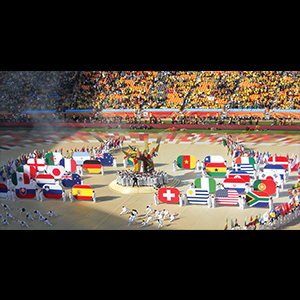
    SAO PAULO (TIP): The 2014 Fifa World Cup got under way with a colourful opening ceremony before hosts Brazil kicked off against Croatia. A cast of 660 dancers paid tribute to the country’s nature, people and football with a show around a “living” ball on the Arena de Sao Paulo pitch. The final act saw a performance of official World Cup song “We Are One” by Jennifer Lopez and rapper Pitbull.

  • Goa MLAs to ‘Study’ World Cup in Brazil, Congress Cries Foul

    Goa MLAs to ‘Study’ World Cup in Brazil, Congress Cries Foul

    PANAJI (TIP): Football fever is running high and the BJP government in Goa has scripted a controversy by sanctioning a Rs. 90 lakh junket for six MLAs, including the sports minister, to Brazil, where the FIFA World Cup began on June 12 night. It has been pegged as a “study tour.” The Congress has alleged that Chief Minister Manohar Parrikar is misusing public funds and has demanded that the trip be scrapped.

    “Yesterday Narendra Modi spoke in Parliament about sanitation, house, water for poor people and today his own government in Goa is investing 89 lakhs so that his MLAs can go and watch a football match,” said the party’s Rashid Alvi. A livid Goa Congress leader Durgadas Kamat called it an “utter loot of the state treasury.” Sources in the Goa government argued that the trip is a “study tour” for politicians of a state that regularly holds sporting events. They pointed out that no bureaucrats were being sent. Only politicians who “bring the vision.”

    “The decision has been taken in the interest of Goa, football is our state sport. Some MLAs on the team are exfootballers,” explained Chief Minister Manohar Parrikar. The delegation has no sportsman or anyone connected with football either, though the tiny state has given India some of its leading national football stars. Two of Goa’s former footballers, Bruno Coutinho, and Brahmanand Shankhwalkar, both Arjuna award winners, had reportedly asked if they could be sent to Brazil to watch the tournament.

    Bruno Coutinho a former India captain, said, “I am hurt, if MLAs can go, why not a sportsman. I am not just any footballer, am an Arjuna Awardee. I have captained the Indian football team.” Sources said Mr Coutinho’s name was on an initial list for the trip but was dropped. Apart from Goa sports minister Ramesh Tawadkar, two other ministers and three MLAs will now watch matches to be held at the end of this month. The final of the tournament will be played in Rio on July 13. India is ranked a poor 154 in world football, but lakhs of fans eagerly await the World Cup held every four years. The first match was played between Brazil and Croatia.