

- By Damilola Banjo
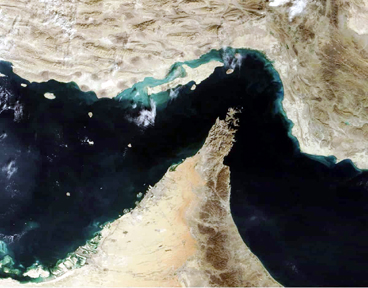
NEW YORK (TIP): The Strait of Hormuz between the Persian Gulf and the Gulf of Oman is only about 21 miles wide at the leanest point and roughly 96 miles long. The Mideast war has virtually closed the strait, creating critical maritime chokepoints and a mounting global trade crisis in such essential goods as fertilizer. The UN has created a task force to find a diplomatic path for restoring the flow of humanitarian goods through the strait amid the conflict.
The United Nations is stepping into the multifront war in the Mideast as threats to global food security mount due to the virtual closure of one of the world’s most-critical maritime chokepoints, a month into the United States-Israeli attacks on Iran.
Secretary-General António Guterres announced on March 27 the creation of a task force to develop a diplomatic path for restoring the flow of fertilizer and humanitarian goods through the Strait of Hormuz, the only passage from the Persian Gulf to the open ocean. Amid relentless assaults and retaliations, Iran’s military barricade of the strait is preventing passage of fuel, agricultural products and humanitarian goods to the rest of the world.
The task force aims to find ways to meet global humanitarian needs from the nearly blocked strait, Guterres’s spokesperson, Stéphane Dujarric, told journalists at UN headquarters in New York City on Friday. In Geneva, the Iranian envoy to the UN tweeted just hours after the announcement by Dujarric that Iran “has decided to facilitate and further expedite the safe passage of humanitarian shipments through the Strait of Hormuz.”
The new task force will be led by Undersecretary-General Jorge Moreira da Silva, the executive director of the UN Office for Project Services (UNOPS) and will include representatives from the UN Conference on Trade and Development (UNCTAD), the International Maritime Organization (IMO) and the International Chamber of Commerce (not a UN entity).
“If successful,” Dujarric said in an earlier note to UN correspondents, sent on Friday, about the task force, “it would also create confidence among Member States on the diplomatic approach to the conflict and constitute a valuable step towards a wider political settlement.”
Additionally, on March 25 Guterres appointed a French national and longtime diplomat, Jean Arnault, as his personal envoy to lead the UN’s political engagement on the multifront wars in the Mideast with support from the task force. Arnault was expected to meet Guterres on March 27, before beginning his regional travels, but Dujarric confirmed to PassBlue that Arnault would arrive at the headquarters on Monday, March 30.
The appointment of Arnault has also prompted questions from UN observers over how his role interacts with existing UN diplomatic positions in the Mideast. The UN has a special coordinator for the Middle East Peace Process, based in Jerusalem, as well as a special coordinator for Lebanon.
The Jerusalem post sits vacant, but Ramiz Alakbarov runs the office as deputy. Jeanine Hennis-Plasschaert is the special coordinator for Lebanon. Both Mideast positions represent established diplomatic frameworks with defined mandates. But Arnault’s appointment does not delineate his geographic scope, and the announcement did not refer to the other Mideast roles.
Dujarric told PassBlue in an email that the existing diplomatic endeavors in the Mideast do not overlap with Arnault’s new role, but he did not answer specific questions as to whether Arnault’s mandate includes diplomatic efforts in Lebanon and Gaza.
The new initiative draws on previous models, Dujarric told reporters, like the Black Sea Grain deal, which, brokered with Türkiye and Russia, enabled wartime grain and fertilizer exports from Ukraine in 2022 to be shipped out amid Russia’s war on the country. The other model is the UN Verification and Inspection Mechanism for Yemen, which helps ease commercial shipping through the Houthi-controlled Red Sea while ensuring compliance with the arms embargo under Security Council Resolution 2216. The Black Sea Grain deal fell apart in 2023, after Russia ended its participation.
“One immediate marker of success will be the Task Force’s ability to get all of the relevant parties to participate in the mechanism,” Daniel Forti, the head of UN affairs at the International Crisis Group think tank, said. “But this is not completely within the UN’s control, as the pace and intensity of hostilities will determine countries’ calculations around the Strait.”
Forti added that the new mechanism “can offer helpful inputs into eventual negotiations to de-escalate the crisis [and] reaffirm that the UN can help mitigate the global repercussions of major wars even if the organization is not at the forefront of political discussions to end them.”
The near closure of the Strait of Hormuz chokepoint has heightened global economic and food security concerns, according to numerous UN agencies. Shipping traffic through the corridor has dropped by over 90 percent since US and Israeli attacks on Iran began on Feb. 28, pushing oil prices sky-high and sharply increasing shipping costs, insurance premiums and prices across global supply chains.
The Food and Agriculture Organization estimates that increases of 15 to 20 percent will occur in the price of fertilizers as costs of fuel and natural gas continue to rise. The dual shock is expected to reduce fertilizer use, lower crop yields and shift planting decisions, particularly for staple crops such as wheat, rice and maize, the UN agency said.
The World Food Program warned that prolonged instability in the strait could push up to 45 million more people into acute food insecurity, potentially returning global hunger to levels reached in the early phase of the full-scale war in Ukraine in 2022.
(Source: PassBlue.com )

Be the first to comment