Tag: British Columbia

  • Extortions and transnational crime worry the Indian community in general, and Sikhs in particular

    Extortions and transnational crime worry the Indian community in general, and Sikhs in particular

    By Prabhjot Singh

    TORONTO (TIP): The fear of extortion continues to escalate as the local, provincial and federal agencies continue to grope in the dark without finding any substantial solutions to the problems that have been spreading their tentacles to communities across Canada, especially those with a significant Indian immigrant population.

    The worst hit are the affluent members of the Indian community in general and the Sikhs in particular.

    Extortions, which have been a rising concern for years, continue to rock meetings of city councils, provincial assemblies, and the national Parliament, the House of Commons.

    The problem has been in the public domain that after a series of town hall meetings, debates and deliberations, those allegedly behind the rattling crime have started spreading the terror by making the shocking videos of their actions viral. The other day, a video of a man shooting up a Brampton home while brandishing two pistols allegedly went viral. It sent shock waves among members of the Indian community.

    A recent report in a major tabloid of Toronto said that extortion was a “story of people being threatened with violence, like the shooting, or arson to the business or home, if they do not pay up. While the shootings and other acts of violence are carried out by hired local thugs, the money is often wired to organized crime groups in India. While the notoriously vicious and violent Bishnoi gang in India has claimed responsibility for some of these extortion rackets, there are other groups and copycat outfits involved.

    “In the Brampton incident earlier this month, the shooting was recorded by an accomplice of the gunman and then sent to the homeowner the next day with a demand for $500,000. While Brampton and the surrounding area are a hotspot for this activity, it’s also been a problem in Winnipeg, Edmonton, and British Columbia’s Lower Mainland,” the report said.

    After the Brampton City Council and Mayor urged the Federal Government to declare it a national crisis. Now, the city council of Surrey in BC, headed by Mayor Brenda Loc, passed a unanimous motion calling for a national state of emergency and for strong action by the federal government after 35 extortion incidents since the beginning of the year.

    “Surrey is facing a serious and growing crisis of organized extortion, intimidation, and targeted shootings,” Locke said. “Residents and business owners are living in constant fear. Public safety is at risk, and the social and economic impact is real.”

    She wants additional police resources, suggesting a joint federal-provincial-municipal task force and expedited deportation of “non-citizens charged or convicted of extortion, firearms offences, or participation in extortion-related criminal activity.”

    On return from his India visit, British Columbia Premier David Eby went after the head of a police anti-extortion task force. After his interaction with Indian media in Mumbai, where he found himself in a piquant situation when asked repeatedly about the Hardeep Singh Nijjar case, Eby said that the head of the anti-extortion needed to step aside if he could not demonstrate a sense of urgency in the fight. His remarks about RCMP Assistant Commissioner John Brewer come a day after Brewer repeatedly declined to characterize a wave of extortion-related shootings in the Lower Mainland as a crisis.

    Soon after, the premier said that Brewer’s comments “cut at public confidence” and he needed to clarify himself. “If Mr. Brewer does not feel that urgency, does not feel this is a crisis, perhaps he’s not the right person to head up this task force,” Eby said, maintaining that “the reason we established this task force … was to respond to a crisis. We need them to bring that urgency to this job and to do it quickly and effectively for the people of Surrey and the people south of the Fraser,” the premier continued. “That is what they expect, that is what they demand, and that is what I expect.”

    A few days earlier, Brewer, in an update on the work of the B.C. extortion task force, held that it was “actively hunting” suspects in 32 files across the Lower Mainland. But he would not describe the situation as a crisis after being pressed to do so in a news conference. Police were “actively hunting” those who were extorting businesses and individuals in B.C. John Brewer urged residents not to take matters into their own hands. This statement came as a sequel to yet another shooting in Surrey, which was believed to be linked to extortion.

    There have been instances when victims reportedly retorted and fired back at the extortionists. Interestingly, Brewer apologized for not using the term “crisis” in his news conference and said the opportunity to provide an update had instead called the RCMP’s commitment into question and impacted public confidence.

    The issue has been rocking the House of Commons, which resumed its sitting after the holiday break on Monday.

    Conservative Deputy Leader Tim Uppal said that Canadians were living in fear in their own neighborhoods as extortion runs rampant right across the country. In British Columbia alone, extortion has increased by nearly 500%, yet the Liberals continue to ignore this crisis, so much so that the Surrey city council desperately passed a unanimous motion to ask the government to take some action. Canadians do not need more empty announcements or more meetings and town halls. Canadians need action. Why was the government ignoring the safety of Canadians? When will the Liberals finally work with us to bring in mandatory minimum sentences for extortion to help protect Canadians? he asked.

    Responding to Tim Uppal, Minister of Justice and Attorney-General Sean Fraser admitted that extortion was a real and pressing problem in this country and that members had an opportunity to do something about it. Laws are being debated in Parliament right now that would make it harder for people charged with extortion-related offences to be released on bail, that would result in deeper and longer sentences for people who are convicted of extortion, and that would give new tools to law enforcement, who are asking the House to pass the strong borders act on lawful access so they can investigate, charge, and prosecute criminals. The thing that these different measures have in common is that the Conservative Party of Canada has been obstructing them for months. I ask them to get with the program, support these important bills, and bring extortion to an end in Canada.

    Conservative MP Harb Gill from Windsor West, while joining the debate, said that as a former police officer, “I know a crisis when I see one. Extortion is out of control. Businesses and families are being threatened, shot at, and shaken down daily, yet the Liberals deny there is a crisis. They are dragging their feet. Some municipalities are even asking for a state of emergency to be declared. When will the government stop its hug-a-thug policy, work with Conservatives, restore mandatory minimums, and repeal the catch-and-release laws? For crying out loud, do something about this crisis.

    Ruby Sahota, Secretary of State, Combatting Crime, intervened to say that in this country, we have life in prison for extortion and mandatory minimum sentences when extortion is committed by organized criminals or with a firearm.” We are taking this issue very seriously. That is why I have crisscrossed the country, finding out what is needed and where the gaps are. Everywhere I have gone, police and law enforcement agencies have asked for lawful access. That was the second measure that we brought to Parliament, but the Conservatives have been obstructing it every step of the way. What do they have against catching extortionists?

    Another Conservative MP, Amarjeet Gill from Brampton West, held that extortion was “exploding and terrorizing communities across Canada, such as Brampton and Surrey. Homes and businesses are being threatened and shot at. Families are living in fear. Some residents have recently fled the country. Their families are in fear for their lives. This crime surge cannot become the new normal. Canadians are paying the price, but Canadians deserve safety, not excuses. When will the Liberal government take real action to stop extortion, crack down on organized crime, and keep Canadians safe?

    Veteran Affairs Minister Jill McKnight said that the rise in “extortion-related threats, shootings, and intimidation across Ontario and the Lower Mainland is a grave concern. I know how much fear it is causing for families, businesses, and our communities. Our government is advancing expanded legislative powers so that law enforcement has the tools it needs to effectively combat extortion and organized criminal networks. Political opponents in Surrey put aside their differences to act with quick urgency. I am asking their Conservative counterparts to stop obstructing necessary legislation and work with us to provide practical solutions. Our communities need to feel safe at home,” he said.

    (If space permits, please carry the full introduction of Prabhjot. If not, please print the following)

    (Prabhjot Singh is a Toronto-based Senior Journalist. He can be reached at prabhjot416@gmail.com)

  • Indo-Canadians are emerging as a strong political entity

    Indo-Canadians are emerging as a strong political entity

    By Prabhjot Singh

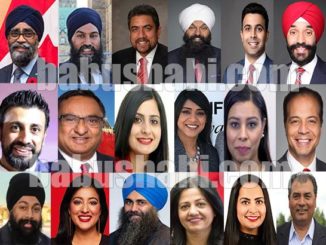
    Indo-Canadian politicians after establishing their credibility at the community level, and now, on the basis of their track record, are  emerging as a strong political entity  with their growing presence on the provincial and federal stage.  When Ontario goes to polls in first week of June, they will be  major  playmakers,  says Prabhjot Singh, holding  their past record since their entry in provincial politics in British Columbia in 1986 has been a success story that every immigrant community across the globe should emulate.

    After making  a dent in the political scenario of the province of British Columbia in Canada in the early 80s when they sent Moe Sihota to the state legislature as an elected MLA on the New Democratic Party ticket, South Asian politicians have come a long way. They have not only scripted a success story but are a vibrant and rapidly growing political entity that has  successfully spread its wings  as  both federal and provincial  lawmakers.

    Born in Duncan, Moe  – Munmohan Singh – Sihota has been the second generation politician of Indian origin who served on the BC Cabinet in different capacities before heading the BC NDP. “Immigrants  from South Asia take more interest in politics back home than flex theirpolitical sinews in the new countries of their domicile. They, somehow, do not get assimilated in their new political environments.” This observation, made by one of the scholars-cum-writers on the Indian diaspora about 30 years ago, now needs to be revised.

    The South Asian politicians are now more into Canadian politics at all levels – from municipal to federal – than remaining involved in politics back home.  Their diminishing interest in politics back home was evident from their token presence in the just concluded Punjab Vidhan Sabha elections that gave a landslide win to the Aam Aadmi party with 92 of 117 seats.

    South Asian immigrants now not only occupy 20 odd seats in the House of Commons but also have one of them as the leader of a major federal party, the NDP. It is this leader, Jagmeet Singh, who earlier sat in the Ontario Provincial Parliament for nearly two terms, signed an agreement with the minority Liberal Government of Justin Trudeau to keep it in office till the completion of its term in 2024, for getting important demands of NDP, including free dental care, accepted.

    What started as a single seat in the British Columbia Provincial Parliament in October 1986 has now spread to five Provincial Parliaments that have South Asian politicians as members. The latest on the list is Saskatchewan that had in 2020 elected its first ever Indo-Canadian Gary Grewal from Regina.

    The South Asian politicians in general and Indo-Canadians in particular will now be sending 50-odd candidates for the ensuing elections to the Ontario Provincial Parliament in the first week of June. Besides representing the ruling Conservatives, they will also be contesting under the banners of Liberal, NDP, Green and other parties.

    Interestingly, most of these candidates are not only second generation Canadians but are also well qualified professionals, including lawyers, teachers, nurses, engineers and social activists with degrees from top universities in Canada. Only a handful of first generation politicians will be in fray for the June polls. The growth  of Indo-Canadian politicians has been phenomenal. Fourteen years after Moe Sihota was elected to British Columbia Provincial Parliament, Ujjal Dosanjh earned the distinction of becoming the first Indo-Canadian to take oath as Premier of British Columbia. The Indo-Canadian community, especially Punjabis, have, since then, not looked back.

    Though initial political successes came in British Columbia under the banner of NDP, the South Asian politicians jumped on the Liberal bandwagon for rapid strides in Canadian politics.

    The 1990 Calgary Convention of the Liberal Party, leading to the election of Jean Chretien as its leader, was a milestone, for it formed a solid, loyal voting block for the future Prime Minister of Canada. It was the first time the community organized itself as a political force. Some still believe that the events back home in 1984 was a strong factor that mobilized a small but highly vociferous community into a political group.

    Now 30 years later, the Indo-Canadian community not only boasts of  Indo-Canadian as Defense Ministers of Canada in Harjit Singh Sajjan or Anita Anand  or a Punjabi as the first woman Leader of the House of Commons in Bardish Chagger or first Punjabi Premier of British Columbia in Ujjal Dosanjh but  also  several  ministers  starting with Herb Dhaliwal, Navdeep Bains,  and Amarjit Sohi ; Gurbax Malhi, the first turbaned Sikh as Member of the House of Commons for five successive terms; and Grewals, Gurmant and wife Neena, as the first Punjabi couple in Parliament, but also several Punjabis sitting in Provincial Parliaments of Ontario, British Columbia, Manitoba, Alberta and Saskatchewan.

    In Ontario , Raminder Gill, who represented the Conservative Party, was  one of pioneers of Punjabi politicians  to be elected as  a Member of the Provincial Parliament. Since then, the number of  Punjabi politicians  as MPPs (Members of Provincial Parliament or MLAs in common parlance) has been growing with every election.

    Dr Gulzar Cheema has the distinction of sitting in both Manitoba and British Columbia Provincial Parliaments.

    Besides the 1990 Calgary convention of the Liberals, the emergence of this new phenomenon of ethno-politics in Canada is  also linked more to the election of three Indo-Canadians to the House of Commons in 1993 — Herb Dhaliwal, Gurbax Singh Malhi and Jag Bhaduria — it has been gradually gaining ground to what the Canadian media used to  describe as the “apna factor”, symbolizing a movement that was gaining strength using the “block voting” technique.

    Arguments given in favor of the “apna factor” and “block voting” techniques were substantiated by the fact that most of the political success stories, for example in Ontario,  came from the suburbs of major  cities like Brampton, Mississauga and Scarborough of the Greater Toronto Area. It is true that not many politicians of South Asian origin have won from the main cities. But things are changing.

    Late Deepak Obhrai, who won from Calgary East for a record number of times, used to attribute the influence of the Indo-Canadian community to a passion for politics that he believed was rooted in a movement that led to India’s Independence from Britain in 1947.

    It is pertinent to mention here that Kamagata Maru or the Ghadar Movement, too, took off from the shores of British Columbia in Canada, the region from where the battle for political recognition began. The then Indo-Canadians or Indian immigrants worked as lumberjacksand participated in development projects, before getting together and heading homewards to get their motherland freed.

    It was argued  that the freedom movement galvanized the whole nation as every cross-section of society was involved. It infused Indians with an intense interest in politics that is still palpable in the Indo-Canadian community, which has been called the “most politically active ethnic group in Canada now.”

    Interestingly, the Indo-Canadian community mostly  supported the NDP inBritish Columbia in provincial elections.  It  also ensured that  Sukh Dhaliwal now and HerbDhaliwal  earlier retained their  seat in the House of Commons as  Liberals. In Alberta, the Indo-Canadian community, though small in number, elected more Reform or Conservative  MPs. In Ontario,  initially they used to go  with Liberals in Federalelections  but gradually started supporting Conservatives also. It has supported both Liberals and Conservatives in the provincial elections.

    That diversity of view is seen at the elected level, where there are MPPs or MPs with the Reform, Liberals, NDP and Conservative parties. Some former Canadian MPs of Punjabi origin, including Gurbax Malhi, used to attribute the success of Indo-Canadian politicians totiming rather than to the “apna factor”. They argued  that Indo-Canadian politicians had spent many years establishing their credibility at the community level, and now on the basis of their track record, they are getting widespread voter support to jump to the provincial or federal stage.

                                                                                 (To be concluded)

    (Prabhjot Singh is a veteran journalist with over three decades of experience covering a wide spectrum of subjects and stories. He has covered  Punjab and Sikh affairs for more than three decades besides covering seven Olympics and several major sporting events and hosting TV shows. For more in-depth analysis please visit probingeye.com  or follow him on Twitter.com/probingeye. He can be reached at prabhjot416@gmail.com)


  • Indian origin  man is Chief Superintendent of Surrey police in Canada

    Indian origin man is Chief Superintendent of Surrey police in Canada

    SURREY, CANADA (TIP): Hailing from Rajeana village in Moga district, Sharanjit Singh Gill, popularly known as Shawn Gill, has been promoted as the Chief Superintendent and is now the Senior Operations Officer for the Royal Canadian Mounted Police (RCMP) in Surrey, British Columbia, Canada, reports Kulwinder Sandhu  from Moga for Tribune News Service.

    Hailing from Rajeana village in Moga district, Sharanjit Singh Gill, popularly known as Shawn Gill, has been promoted as the Chief Superintendent and is now the Senior Operations Officer for the Royal Canadian Mounted Police (RCMP) in Surrey, British Columbia, Canada. 

    British Columbia province is one of the biggest cities in Canada with a dominating Punjabi community.

    Sharanjit Singh Gill was superintendent-rank officer — Community Services Officer — before being promoted to Chief Superintendent, early this week.

    Congratulating him on his promotion, the Surrey police tweeted: “His 31 years of policing experience are a huge asset to our Frontline, Investigative and Community Services teams.”

    In September 2015, then-Inspector Sharnjit Gill, who was Operations Officer for the Integrated Homicide Investigation Team, was promoted to the rank of superintendent in the position of Community Services Officer in Surrey police.

    After beginning his career in 1989 on general duty in the Surrey police, he moved to Investigative Services where he worked in the Burglary and Serious Crime Units. Over the next 15 years, Gill gained extensive investigational police experience in various fields.

    In 2012, Gill was commissioned as an officer and joined as a duty officer for general duty until he was transferred back to the Integrated Homicide Investigation Team in 2014. Gill was also a member of the Lower Mainland Hostage Negotiation Team and a past member of the E Division Interview Team.

    Gill is fluent in Punjabi language and is fond of Punjabi lifestyle. He has been living in Surrey for the past five decades. He migrated to Canada in 1969. Gill is also a sportsman and used to play hockey, baseball and was also associated with soccer associations as a volunteer and also worked as an assistant coach.

    In his career in the RCMP, Gill has won many accolades while in services.

    In 1997, he was awarded the officer-in-charge certificate of recognition for his role in the arrest and conviction of two serial sex offenders. In 2009, he was conferred Long Service Medal for completing 20 years of service with good conduct and in 2012, he was awarded the Queen Elizabeth-II Diamond Jubilee Medal for his role as the team commander in-charge of the pipeline bombings investigation in Columbia.

    British Columbia province is one of the biggest cities in Canada with a dominating Punjabi community.

    Sharanjit Singh Gill was superintendent-rank officer — Community Services Officer — before being promoted to Chief Superintendent, early this week.

    Congratulating him on his promotion, the Surrey police tweeted: “His 31 years of policing experience are a huge asset to our Frontline, Investigative and Community Services teams.”

    In September 2015, then-Inspector Sharnjit Gill, who was Operations Officer for the Integrated Homicide Investigation Team, was promoted to the rank of superintendent in the position of Community Services Officer in Surrey police.

    After beginning his career in 1989 on general duty in the Surrey police, he moved to Investigative Services where he worked in the Burglary and Serious Crime Units. Over the next 15 years, Gill gained extensive investigational police experience in various fields.

    In 2012, Gill was commissioned as an officer and joined as a duty officer for general duty until he was transferred back to the Integrated Homicide Investigation Team in 2014. Gill was also a member of the Lower Mainland Hostage Negotiation Team and a past member of the E Division Interview Team.

    Gill is fluent in Punjabi language and is fond of Punjabi lifestyle. He has been living in Surrey for the past five decades. He migrated to Canada in 1969. Gill is also a sportsman and used to play hockey, baseball and was also associated with soccer associations as a volunteer and also worked as an assistant coach.

    In his career in the RCMP, Gill has won many accolades while in services.

    In 1997, he was awarded the officer-in-charge certificate of recognition for his role in the arrest and conviction of two serial sex offenders. In 2009, he was conferred Long Service Medal for completing 20 years of service with good conduct and in 2012, he was awarded the Queen Elizabeth-II Diamond Jubilee Medal for his role as the team commander in-charge of the pipeline bombings investigation in Columbia.

    (Source: Tribune India)