
Tag: Buddhism

  • BODHGAYA

    BODHGAYA

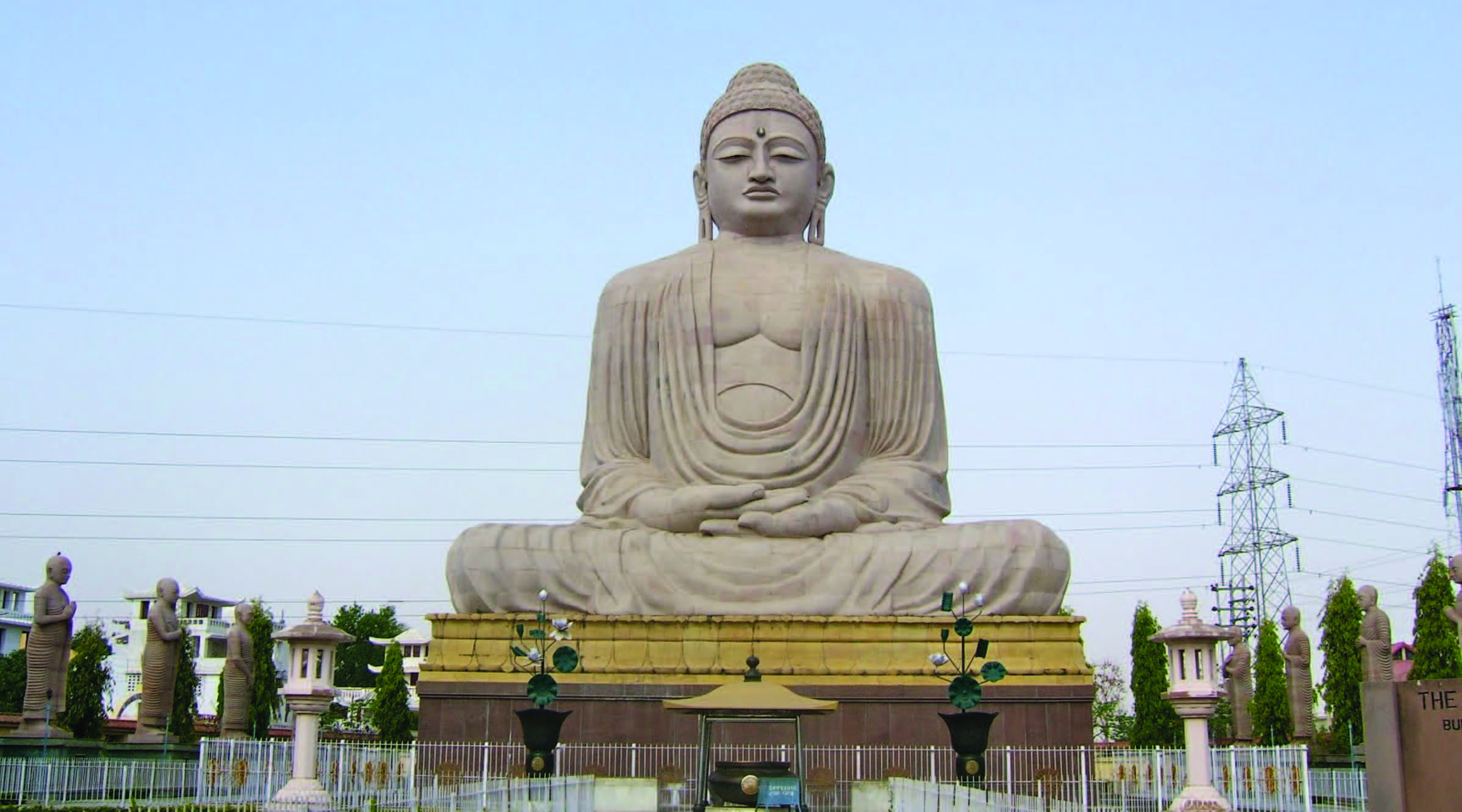
    Bodhgaya is the most important Buddhist pilgrimage place in the world. Located in the state of Bihar, it’s here that Lord Buddha became enlightened during intense meditation under a Bodhi tree. The exact spot is now marked by the sprawling Mahabodhi Temple complex. It’s a very serene and peaceful place. Monks from all over the world can be found sitting at the foot of an enormous carved Buddha statue, reading holy scriptures in deep contemplation. The town is also home to dozens of Buddhist monasteries, maintained by various Buddhist countries.


    8

    Getting There

    Gaya airport, 12 kilometers (7 miles) away, has infrequent direct flights from Kolkata. If you’re coming from other major Indian cities, the nearest airport is in Patna, 140 kilometers (87 miles) away. From Patna, it’s around a three to four hour drive. Alternatively, Bodhgaya can be conveniently reached by train.

    The nearest railway station is Gaya, which is well connected with Patna, Varanasi, New Delhi, Kolkata, Puri, and other places in Bihar. The journey from Patna by train is around two and a half hours. If you’re interested in visiting Bodgaya as part of a pilgrimage to other Buddhist sites in India, Indian Railways operates a special Mahaparinirvan Express Buddhist Tourist Train service.

    When to Visit

    The pilgrimage season starts in Bodhgaya from September, and reaches a peak in January. Ideally, the best time to visit weather wise is between November and February. You should avoid visiting in monsoon season between June and September. The weather gets quite oppressive, followed by heavy rains. Summers, from March to May, are very hot. However, Bodhgaya still attracts a large number of devotees during this time for Buddha Jayanti (Buddha’s birthday) celebrations, held in May.

    Attractions

    The elaborately carved Mahabodhi Temple, Buddhism’s holiest shrine, is the big attraction in Bodhgaya. The temple was declared a UNESCO World Heritage Site in 2002. It’s open from 5 a.m. to 9 p.m. daily, with chanting and meditation held an hour after opening and an hour before closing. The other monasteries, built and maintained by various Buddhist countries, are also fascinating — particularly the different architecture styles. Opening hours are from 5 a.m. to noon and 2 p.m. to 6 p.m. Don’t miss the very ornate Thai temple, shimmering with gold. Another popular attraction is the towering 80 foot statue of Lord Buddha. Bodhgaya also has an Archaeological Museum displaying an interesting array of relics, scriptures, and ancient statues of Buddha.

    Meditation and Buddhism Courses

    You’ll find plenty of meditation and Buddhism courses and retreats on offer in Bodhgaya. The Root Institute for Wisdom Culture offers introductory and intermediate meditation and philosophy courses, explained in the Tibetian Mahayana tradition, from October to March. Those interested in Vipassana Meditation can learn it at the Dhamma Bodhi Vipassana Centre. Ten day residential retreats start on the 1st and 16th of every month. Some monasteries also offer various Buddhism courses.

    Festivals

    The biggest festival in Bodhgaya is Buddha Jayanti, held on a full moon in May each year. The festival celebrates Lord Buddha’s birthday. Other festivals in Bodhgaya include the annual Buddha Mahotsava, a three day celebration filled with cultural and religious activities. The Kagyu Monlam Chenmo and Nyingma Monlam Chenmo prayer festivals for world peace are held around January- February every year. The Maha Kala puja is conducted at monasteries for several days before the new year, for purification and to remove obstacles.

    Where to Stay

    A stay in one of Bodgaya’s monasteries is a peaceful alternative to a hotel. One of the best options is the well maintained Bhutanese monastery (phone: 0631 2200710), which is extremely quiet and has rooms located in a beautiful garden. It’s also possible to also stay at the Root Institute , which is well located near the Mahabodhi Temple and offers meditation retreats. If you’d prefer to stay in a hotel or guest house, Kundan Bazaar is very popular with travelers. It’s located in the quaint village of Bhagalpur, a five minute bicycle ride from the center of Bodhgaya. Hotel Taj Darbar is the pick of the topend hotels, and it has a convenient location near the Mahabodhi Temple.

    Side Trips

    A side trip to Rajgir, where Lord Buddha spent most of his life teaching his disciples, is recommended. It’s located 75 kilometers (46 miles) from Bodgaya, and can be reached by bus or taxi. There you’ll be able to visit Gridhakuta (also known as Vulture’s Peak), where the Buddha used to meditate and preach in the rainy season. You can take the aerial chair lift up to the top, for great views. The hot springs, at the foot of Vaibhara Hill in Rajgir, are believed to have medicinal properties. It’s possible to bathe in them, and there are separate areas for men and women.

  • Somdet Phra Nyanasamvara, Thai Buddhism’s supreme patriarch, dies at 100

    Somdet Phra Nyanasamvara, Thai Buddhism’s supreme patriarch, dies at 100

    BANGKOK (TIP): Thai doctors say the supreme patriarch, the head of the country’s Buddhist monks, has died. He was 100. Chulalongkorn hospital doctors say Somdet Phra Nyanasamvara died on October 23 from an infection in his blood vessels. He was the 19th supreme patriarch of Thailand and led the nation’s monks since 1989. The patriarch had battled health problems and had been hospitalized since 2002. He had undergone surgery earlier this month. His inability to perform his duties in recent years has led to speculation about his successor. A senior Buddhist monk who worked on his behalf since 2004 also died this year. Thailand is the world’s most heavily Buddhist country. More than 90 per cent of its 67 million people are members of the religion.

  • Council Member Daniel Dromm leads demand for Diwali as School Holiday

    Council Member Daniel Dromm leads demand for Diwali as School Holiday

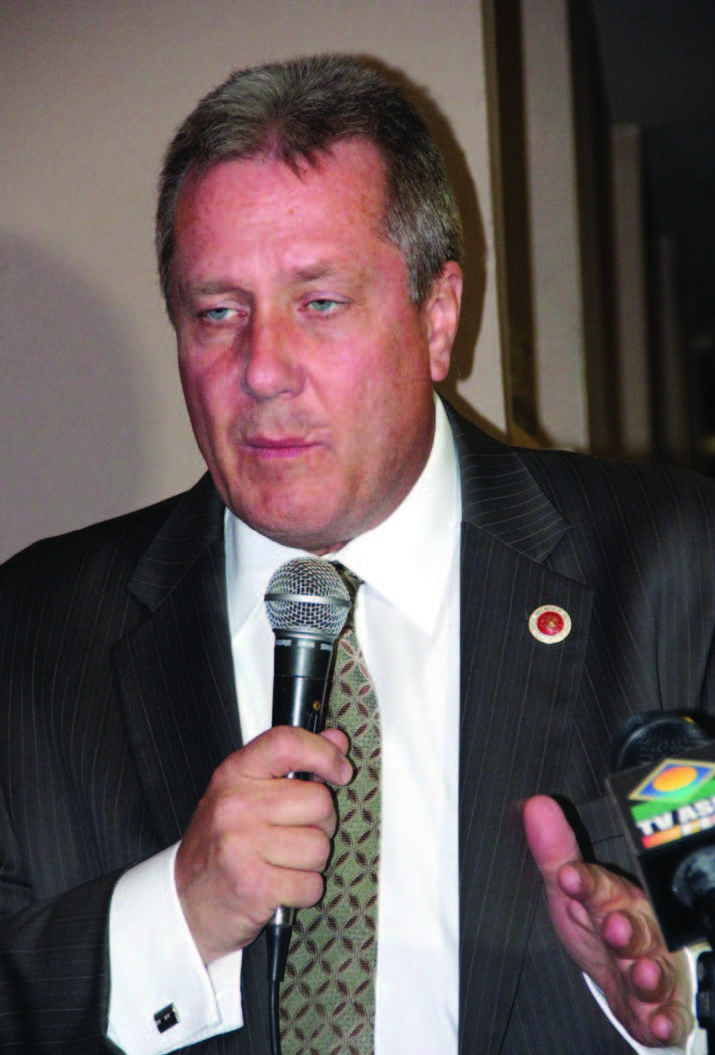
    NEW YORK (TIP): Council Member Daniel Dromm (D-Jackson Heights, Elmhurst), along with several elected officials and community members, are demanding that the Department of Education designate the Hindu, Jain, Buddhist and Sikh holiday of Diwali as an official day off for public school students. “There are tens of thousands of public school students in New York City who celebrate Diwali,” CM Dromm said. “These students must pick between attending class or spending the day with their families, while students in the Christian and Jewish faiths do not have to make this decision when they celebrate holidays like Rosh Hashana and Christmas. There shouldn’t be this discrepancy. I urge the Department of Education to recognize this important holiday called Diwali.” “I would like to wish all New Yorkers a safe and happy Diwali,” state Senator Toby Stavisky (D-Flushing) said. “With the South Asian population growing quickly in my district and across the city, more and more parents unfortunately have to make the tough choice between celebrating an important holiday or sending their children to school.

    I urge the City Council to strongly consider Council Member Dromm’s resolution to designate Diwali as a public school holiday. As New Yorkers and Americans what makes us special is our commitment to respecting new customs and I hope that the Council can follow through on this commitment for the over 200,000 Diwali celebrants that live in our great city.” “Diwali is one of our community’s key celebrations, and is deserving of the same respect from our school system as other religious days,” Assembly Member Michael Den Dekker (D-Jackson Heights) said. CM Dromm introduced a resolution to the City Council on July 24. Since then, 15 Council Members have signed on as cosponsors and several state elected officials have voiced their support. Diwali or Deepavali, known as the festival of lights, wherein millions of celebrants worldwide light lanterns to symbolize inner light to dispel ignorance and darkness, is a five-day festival that begins on the 13th day of the Hindu month of Kartik. It is the most important festival on the Hindu calendar.

    For Sikhs, Diwali is the day the Mughal Emperor released Hargobind, the revered sixth Guru, from captivity. For Jains, Diwali marks the anniversary of the attainment of moksha, or liberation, by Mahavira, who was the last of the Tirthankaras, or the great teachers of Jain dharma. Some Buddhists celebrate Diwali to commemorate the day King Ashok converted to Buddhism. According to the Census Bureau’s 2011 American Community Survey, there were 207,414 New York City residents who identify themselves as Asian Indian, of which many are adherents of Hinduism, Sikhism, Jainism or Buddhism. Despite the large number of Hindus, Sikhs, Jains, and Buddhists in New York City, Diwali is not recognized as a school holiday in the city’s public school system. The DOE closes for Christmas, Rosh Hashanah and Easter. Those who celebrate Diwali should be given the same respect. “To me, Diwali’s message of ‘Light over Darkness’ means eliminating ignorance and discrimination of every kind. Diwali’s row of diyas is very significant. It is the row of diyas, their unity and unified light that beats the darkness – not one diya alone. Its togetherness – Diwali’s hidden message of necessary unity,” said Ranju Batra, Chair of the Diwali Stamp Project and President of Association of

    Indians in America-NY 2011-2013. “I celebrate Council Member Daniel Dromm and his Diwali School Holiday Resolution, and ask all good people to support it.” “Danny Dromm’s Diwali School Holiday Resolution 1863 is an American landmark to be achieved on the road to forming ‘ . . . a more perfect union.’ It is E Pluribus Unum in action. I call upon Mayor Bloomberg or the next Mayor to have the DOE observe Diwali as a school holiday, so that New York City’s principled action is followed across our land, in every town and city across America, and ‘equal protection of the law’ becomes a sweet reality. Danny Dromm is an American hero,” said Ravi Batra, attorney and chair of National Advisory Council on South Asian Affairs. “Chhaya CDC is very happy to support these efforts to make Diwali an official holiday in the city’s public schools,” said Seema Agnani, Executive Director at Chhaya CDC. “This is one of the more important holidays that is celebrated by millions across the globe. Chhaya also closes its doors on this day to mark the occasion so staff can celebrate with their families and friends. We are so lucky to have so much diversity in New York City and making Diwali an official holiday will serve to increase awareness about the communities here that celebrate the holiday.” The federal government has slowly given the important holiday more respect.

    In 2007, the United States House of Representatives passed a resolution recognizing the religious and historical significance of Diwali, and since 2009, the White House has held an annual Diwali celebration. The United States Postal Service has recently decided it will issue a Diwali commemorative stamp. On the city level the significance of Diwali is acknowledged by suspending alternate side parking rules on Lakshmi Puja, the third and most important day of the holiday. For years the Muslim community has petitioned that the important holidays of Eid Al Adha and Eid Al Fitr be a day off for public school students, but in 2009 a City Council approved resolution was not signed by Mayor Bloomberg. This year Diwali will be celebrated on Sunday, Nov. 3. Next year, the day falls on Oct. 23, a Thursday, and in 2015 on Wednesday, Nov. 11. In Jackson Heights, the community celebrated Diwali last Sunday on 74th Street, the heart of Little India in New York City. Council Members Inez Dickens, Charles Barron, Margaret Chin, Leroy Comrie, Vincent Gentile, Letitia James, Peter Koo, Karen Koslowitz, Rosie Mendez, Annabel Palma, Donovan Richards, Deborah Rose, Ydanis Rodriguez and Daniel Halloran support the resolution.

  • Bhutan Revisited: Balancing Modernity With Tradition

    Bhutan Revisited: Balancing Modernity With Tradition

    Like a giant Brahminy kite swooping down on its prey, Drukair’s Airbus, plumed in the national colours of orange and yellow, veered sharply to the left over the Himalayas to head for an unexpected v-shaped opening in the mountains. To the collective gasps of its passengers – who had barely recovered from the excitement of flying alongside the world’s mountain peaks, including Mount Everest, Kanchenjunga, Jumolhari, Dhaulagiri and Makalu among others – it emerged through the gap to present a vista that was both panoramic and breathtaking.

    A long strip of asphalt beckoned below in a welcoming carpet at the quaint Paro airport, the gateway to the mystical kingdom of Bhutan. It was flanked on either side by verdant slopes of cypress, pine and oak, dotted in the foothills by pretty traditional cottages and chhordens (Buddhist stupas), with their fluttering white flags, and the sparkling chu (river) that gives company a good way during the one-hour journey from Paro to capital Thimphu.

    Welcome to the country often described as “the last Shangri La on earth”, that Lonely Planet calls one of the world’s most enigmatic and intriguing nations. “Felicitations to the Royal Couple on their Wedding”, greeted a giant billboard with a coloured photo of HRH Jigme Kesar Namgyel Wangchuk, the fifth king of Bhutan, and his wife Gyaltusuen Jetsun Pema Wangchuk, as one set foot in a land whose benevolent rulers have chosen to measure their people’s well being through the unique concept of Gross National Happiness (GNH) rather than the universal metric of Gross National Product (GNP).

    Though the couple are observing their first wedding anniversary this month, the kingdom – it now calls itself a democratic constitutional monarchy – is still to get over the international attention it got when the world media came to cover the royal wedding last Oct 13.

    Immigration is a breeze (Indians require no visa but on the whole tourism has to be of high-value – other foreigners have to pay $200 each and travel in groups – ecologically friendly and cultural acceptable) and soon one is settled on the road to Thimphu in one of the Maruti Suzukis or Hyundai Santros that seem to predominate the 66,000 odd private vehicle population of the country.

    Although the snaking road to Thimphu is full of hairpin bends, no one honks because, as our driver put it sagely, the mountain gods “would feel disturbed”. Thimphu has changed since the time I was last here two decades ago. The city – which resembles an Indian hill town – of about 50,000 people is much more crowded, has many more markets, hotels and restaurants, and there is new construction everywhere, although everyone has to adhere to traditional Bhutanese architectural norms – white-washed rectangular buildings with sloping, crested roofs and gilded windows and all carrying the local icons of dragon and lotus.

    There is also the ubiquitous phallic symbol dangling from the eaves of Bhutanese homes to ward off malevolent spirits. In the words of a Bhutanese writer, “phallic rituals appear everywhere in our daily lives, marking events that range from the mundane to the momentous.

    “The birth of a calf, for instance, the purchase of a new truck, or the augury of a brand new home all merit a nod to the preeminent phallus.” Bhutan is a deeply spiritual nation of nearly 700,000 people whose history stretches back to the origins of Buddhism and who have developed a unique identity, derived largely from a religious and cultural heritage, designed for a harmonious evolution of man with nature.

    Such is the Bhutanese obsession with retaining their pristine lifestyle that the biggest media debate a few months ago was about the installation of the first traffic light at the busiest downtown crossing. Ultimately, the traditionalists, backed by the king, prevailed and the lights were dismantled. Today, a policeman directs traffic under a crafted canopy, traffic is orderly and noncacophonous and Bhutan, the land of the thunder dragon, continues with its delicate balance between tradition and modernity.

  • Ajanta Caves A Legacy From The Golden Age

    Ajanta Caves A Legacy From The Golden Age

    Ajanta and Ellora are the pride of Maharashtra. The rock-cut caves of both these sites are world famous and illustrate the degree of skill and artistry that Indian craftsmen had achieved several hundred years ago. Ajanta dates from 100 B.C. while Ellora is younger by some 600 years. The village of Ajanta is in the Sahyadri hills, about 99 kms. From Aurangabad; a few miles away in a mammoth horseshoe-formed rock, are 30 caves overlooking a gorge, `each forming a room in the hill and some with inner rooms.

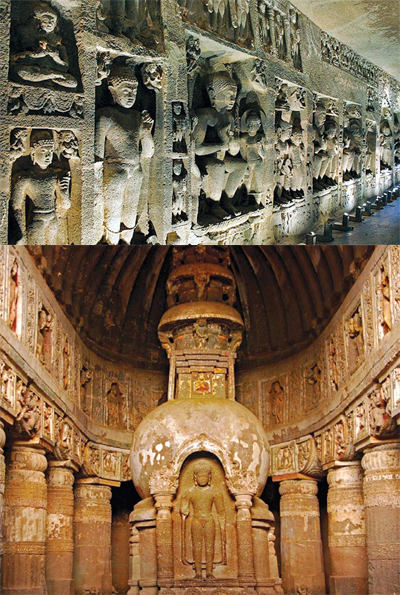
    Al these have been carved out of solid rock with little more than a hammer and chisel and the faith and inspiration of Buddhism. Here, for the Buddhist monks, the artisans excavated Chaityas (chapels) for prayer and Viharas (monasteries) where they lived and taught. Many of the caves have the most exquisite detailed carvings on the walls, pillars and entrances as well as magnificent wall paintings.

    These caves were discovered early in the 19th century quite by chance by a party of British Officers on manoeuvres. Today the paintings and sculptures on Buddha’s life, belonging to the more mellow and ritualistic Mahayana Buddhism period, are world famous. Copies of them were shown in the Crystal Palace exhibition in London in 1866. These were destroyed in a fire there.

    Further copies were published soon afterwards and four volumes of reproductions were brought out in 1933 by Ghulam Yazdani, the Director of Archaeology of the then Hyderabad State. Ajanta has formed an epicentre of interest for those who appreciate and are eager to know more about Indian history and art. It is a protected monument under the Archaeological Survey of India and has been listed in the World Heritage list of monuments.

    The 30 caves of Ajanta were created over a span of some 600 years. In their range of time and treatments they provide a panorama of life in ancient India and are a source of all kinds of information… hair styles, ornaments, textiles, musical instruments, details of architecture, customs etc.

    It was from this collection of classical Indian art that a particular style was formed that traveled with Buddhism to many parts of the world. Similar paintings can be seen in Sigiriya in Sri Lanka, Bamiyan in Afghanistan, temples and shrines in Tibet, Nepal, China and Japan. Royal patronage made Ajanta possible. Professional artists carried out much of the work and each contributed his own individual skill and devotion to this monumental work.

    Visitors often ask how the artist who painted the detailed frescoes and chiseled out the intricate carvings, managed to work in the dark interiors of the caves. It has been noticed that the caves are illuminated by natural light for part of the day and it is presumed that metal mirrors or sheets of white cloth were used to reflect sunlight into the inner recesses.

    Here, briefly, are some of the highlights of the caves. In the Cave 26, the sculpture is elaborate and beautiful though the painted frescoes are incomplete. The arched chapel window set in an elegantly simple façade, is repeated in an elaborate frontage in Cave 19 with its complete Chaitya and a slender votive stupa enclosing a standing Buddha at the far end. Of particular note is a sculpture of a seated Nagaraja with his consort and female attendant.

    Cave 16 is an elegant Vihara with an inscription that mentions the king and his minister who had the cave built. Here a towering Buddha sits preaching. He is flanked by attendants with fly whisks.

    There are undamaged portions of the wall paintings that are clear and vibrant in Caves 1, 2, 16 and 17. Cave I has the well known Bodhisattva Padmapani which is a wonderful portrayal of tender compassion. A gentle figure holding a lotus delicately in one hand. In the same cave is the golden figure of Avalokiteswara, elaborately adorned. The women, nymphs, princess and attendants are elegant and beautifully attired.

    Here also is a lively panel of dancing girls and musicians. In Cave 2 there is a detailed panel of Queen Maya’s dream, of the white elephant which was interpreted by royal astrologers to mean the birth of an illustrious son. The row upon row of Buddhas, can be seen in this cave. In Cave 17, there is a flying apsara in a fashionable embroidered turban and splendid jewellery.

    It is worth walking away from the caves in order to look back on to the horseshoe gorge. The ingenuous water cistern system can be seen which must have provided water for the monks and their visitors. Ajanta was on the ancient trade route leading to the coast so there must have been considerable activity and many visitors. Nobody really knows what life was like in those times and visitors can interpret the past as they wish, which is perhaps yet another secret charm of Ajanta.

  • SIKKIM beckons you

    SIKKIM beckons you

    Sikkim, a mountainous region in the eastern Himalayas, has 600 species of birds, or about half of the over 1200 species to be found in India. Perched between Nepal in the west, Bhutan in the east, and Tibet( China) in the north, Sikkim is 7300 square miles in area and contains Mount Khangchendzonga, the third-highest peak in the world. Formerly a kingdom, since 1975 it has been a tiny land -locked province to India.

    Sikkim, with its rich biodiversity, has 150 lakes ranging in altitude from 200 meters to almost 8000 meters. Besides birds, Sikkim has 4000 species of flowering plants, making it a botanist’s paradise. It has 600 species of orchids, and 40 species of rhododendrons. With the introduction of eco-tourism, including serious birding, Sikkim has begun to focus on enterprise-based conservation.

    BIRD WATCHING
    Sikkim is considered a hot spot of biodiversity in the Himalayas. Sikkim is rich in avifauna and is considered to be a birdwatchers paradise. Its avian population extends to almost 550 species. The climate varies between the tropical heat of the valleys and the alpine cold of the snowy regions.

    The altitudinal zones of vegetation range from tropical, sub tropical, temperate to Alpine. In some places only 10 Kms in a direct line separate the warm valleys from perpetual snow.

    The telescoping of terrain has created marked altitudinal zonation in the humidity, rainfall, climate and vegetation. This factor is responsible for the great variety and abundance of the resident bird life, making this area arguably one of the richest areas of its size anywhere in the world.

    PLACES TO SEE
    The terrain of Sikkim, being rugged, is not conducive to agriculture and even industrialization here is not updated. So the bulk of the economy of the state of Sikkim is shared by the tourism industry of the place.

    There are some fabulous places to see in Sikkim, making it one of the most frequented tourist destinations in the north eastern part of India.

    The variety of sightseeing spots in Sikkim ranges from parks to lakes, monasteries to political buildings, from sanctuaries to research institutes. Some of the places to see in Sikkim are:
    ENCHEY MONASTERY:
    This most important ‘stupa’ of Buddhism, a 200 years old monumental building is the seat of the Nyigma order.
    RUMTEK DHARMA CHAKRA
    CENTER: Built in 1960 by the 16th Gyalwa Karmapa, it is a replica of the original Kagyurpa Monastery in Tibet.
    TSOMGO LAKE: Home of Brahmini and other migratory ducks, it is situated at an altitude of 1200 ft. NATHULA PASS: It is situated on the Indo-Chinese border, hale a day’s ride from Gangtok.
    HIMALAYAN ZOOLOGICAL PARK: Covering 205 hectares, this park houses barking deers, bears, red pandas and a variety of Himalayan birds. The park also exhibits hundreds orchids and flowers.
    SIKKIM RESEARCH INSTITUTE OF TIBETOLOGY: This is an internationally acclaimed center of Buddhism and Tibetan studies.
    PELLING: Located about 4 hours ride from Gangtok, this place has some voluminous waterfalls.
    WHITE HALL: 5 minutes from Gangtok, it was built in 1932 to commemorate the first Political Officer of Sikkim.
    TASHI VIEW POINT: This spot presents a scenic view of the majestic Kanchenjunga and other surrounding hills. Apart from these beautiful spots, there are other sightseeing spots in Sikkim.
    They are:
    1)Hanuman Tok
    2)Ganesh Tok
    3)Shri Nalanda Institute for Higher
    Buddhist Studies
    Water Garden
    Jawaharlal Nehru Botanical Garden
    Sa-Ngor-Chotshog Center
    Ridge Park, Deer Park
    Do-Drul Chorten
    Government Institute of Cottage Industry
    Saramsa Garden
    Menmecho Lake
    Fambong La Wildlife Sanctuary and many more to make Sikkim a tourist’s nirvana