Tag: Budhwa Mangal

  • Budhwa Mangal: Sacred Tuesday devoted to Lord Hanuman

    Budhwa Mangal: Sacred Tuesday devoted to Lord Hanuman

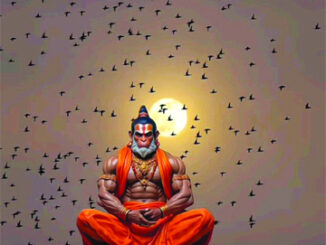
    Budhwa Mangal is a day dedicated to Lord Hanuman. This day holds an important place for Hindus. Budhwa mangal is also called big mangal. Lord Hanuman is worshiped on this day.
    Budhwa Mangal is an important festival dedicated to Lord Hanuman. Budhwa Mangal is mainly celebrated in the Indian state of Uttar Pradesh, especially in cities like Lucknow and Varanasi. This festival is celebrated on Tuesday during the Hindu month of Bhadrapada or sometimes in the month of Jyeshtha.
    Budhwa Mangal is on the first Tuesday of Jyeshtha month i.e. 13 May 2025, however, all the Tuesdays coming in Jyeshtha month are called the days of Budhwa Mangal.
    Importance of Budhwa Mangal
    This festival holds special significance for the devotees of Lord Hanuman. Budhwa Mangal is a festival completely dedicated to Lord Hanuman. Hanuman ji protects his devotees, hence it is believed that worshiping Hanuman on Budhwa Mangal gives strength, courage and protection from evil forces to the devotees. Hanuman ji, who is completely devoted to Lord Rama with his devotion, physical and spiritual strength, these three qualities are the famous qualities of Hanuman ji. It is believed that worshiping Hanuman on this day helps the devotees to adopt these qualities and receive the blessings of Hanuman.
    According to mythology Hanuman ji is the god who is still alive on earth. Following the orders of his beloved Lord Shri Ram, he does the welfare of his devotees while still alive on earth. It is a religious belief that worshiping Lord Hanuman removes all the miseries of the devotees.
    Lord Hanuman, considered the embodiment of strength, courage, and devotion, is deeply venerated during Bada Mangal. Believers consider him the protector from evil, negative energies, and untimely death. Astrologically, it is believed that worshipping Lord Hanuman helps mitigate the malefic effects of Mars and Saturn.
    Devotees engage in special rituals including recitation of the Hanuman Chalisa, Sunderkand, and Bajrangbali Aarti. Chanting the following powerful mantra 108 times on Budhwa Mangal is said to bring peace, happiness, and divine blessings:
    “Om Namo Hanumate Rudravataray Vishwaroopay Amit Vikramay
    Praktaparakramay Mahabalaya Surya Kotisamprabhay Ramdootay Swaha.”
    According to ancient scriptures, it was during the month of Jyeshtha that Lord Ram first encountered Hanuman while searching for Sita, marking the beginning of a divine alliance.
    A fascinating historical link also connects Bada Mangal with the Mughal era. During the reign of Nawab Wajid Ali Shah of Awadh, his son fell gravely ill. Upon local advice, prayers were offered at the Hanuman temple in Aliganj, Lucknow. Miraculously, the child’s condition improved.
    In gratitude, the Nawab and his Begum had the temple renovated, with the work completed in the month of Jyeshtha. Since then, the tradition of offering gur (jaggery) prasad and organising bhandaras on these Tuesdays has continued across Lucknow.
    Bada Mangal is more than just a religious event, it is a vibrant expression of faith, unity, and community service. With temples adorned, devotees offering prayers, and the aroma of freshly prepared prasad filling the air, the festival continues to be a beloved tradition that strengthens spiritual bonds and cultural heritage year after year.
    The story of Hanuman ji’s birth is more related to the Ramayana period. When Lord Hanuman went to Lanka in search of Mata Sita, Ravana held him as a captive and set his tail on fire. In return, Hanuman ji set fire to the entire Lanka with his burnt tail.

    According to beliefs, that day was the Budhwa Mangal of Jyeshtha month. Since then, the Budhwa Mangal of Jyeshtha month has been considered important to worship Lord Hanuman.
    If you want the auspicious blessings of Lord Hanuman, then you must visit Lord Hanuman’s temple on Budhwa Mangal and offer him Prasad. The donation also holds vast importance on this day. You can also offer a leaf of a banyan tree to Lord Hanuman.
    And, when this leaf dries, let it float in a holy river. Following this remedy will help you get rid of all problems in your life.
    How To Perform The Pooja On Budhwa Mangal?
    On the day of Budhwa Mangal, you must wake up early in the morning and get done with your morning routine. After this, you need to clean the Pooja place of your house. You should wear neat and clean clothes on this day. Then, take the place of Kush in front of Pooja place.
    If you are observing a fast on that day, then you must light up a Diya of Ghee in front of Lord Hanuman and take an oath to keep a fast. After this, offer Sindoor, flowers, Tilak, and Dhoop-Deep to Hanuman ji. Also, he loves Boondi Ladoos so make sure to offer him this sweet on Budhwa Mangal. Later, pray to Lord Hanuman and make sure to recite Hanuman Chalisa.
    Must Remember Things To Worship Hanuman
    In Vedic Astrology, keeping a fast on Tuesday is considered extremely important. If someone in your house has kept a Budhwa Mangal fast, then you must avoid Tamasic foods and stay away from alcohol as well
    It is inauspicious to wear white or black colored clothes on Tuesdays. Also, you should not lend or borrow money on this day. Donate on the day of Bhudwa Mangal and don’t disrespect or insult anyone. It would be best if you follow celibacy on this day

  • Budhwa Mangal

    Budhwa Mangal

    Budhwa Mangal falls during Jyeshtha month every year. On this day, the aged form of Lord Hanuman is worshiped and that’s why it is known as Budhwa Magal. By Worshiping Hanuman ji, one can get rid of all their troubles and problems of life. So, if you also want to get relief from some problem of your life or want to get a heartfelt wish fulfilled then you can worship Hanuman ji on the day of Budhwa Mangal.
    According to Hindu mythology, the first Budhwa Mangal will fall on 28th May this year.
    According to mythology, Hanuman ji is the god who is still alive on earth. Following the orders of his beloved Lord Shri Ram, he does the welfare of his devotees while still alive on earth. It is a religious belief that worshiping Lord Hanuman removes all the miseries of the devotees.
    The first Budhwa Mangal will be observed on 28th May 2024 and an auspicious yoga is also going to form on this day, known as Brahma Yoga. This yoga will begin on 28th May in the morning at 04:27 and will last till midnight, 02:05 am.
    Brahma Yoga is an auspicious yoga that offers happiness, materialistic pleasures, knowledge, and longevity. Donations and several other auspicious things are performed during this yoga. If you are thinking of doing something good or starting a new work, then you can do it during this yoga which will form on Budhwa Mangal. All the work done during this yoga is successful.
    The history of these auspicious days goes back to the Ramayana and Mahabharata period. It is believed that once, one of the Pandav Son Bheem became too proud of his strength and power. At that time, Lord Hanuman appeared in the form of an old monkey.
    Lord Hanuman taught a lesson to Bhima in this form and since then, that day has come to be known as Budhwa Mangal in Hindu religion.
    The story of Hanuman ji’s birth is more related to the Ramayana period. When Lord Hanuman went to Lanka in search of Mata Sita, Ravana held him as a captive and set his tail on fire. In return, Hanuman ji set fire to the entire Lanka with his burnt tail.

    According to beliefs, that day was the Budhwa Mangal of Jyeshtha month. Since then, the Budhwa Mangal of Jyeshtha month has been considered important to worship Lord Hanuman.
    If you want the auspicious blessings of Lord Hanuman, then you must visit Lord Hanuman’s temple on Budhwa Mangal and offer him Prasad. The donation also holds vast importance on this day. You can also offer a leaf of a banyan tree to Lord Hanuman.
    And, when this leaf dries, let it float in a holy river. Following this remedy will help you get rid of all problems in your life.
    How To Perform The Pooja On Budhwa Mangal?
    On the day of Budhwa Mangal, you must wake up early in the morning and get done with your morning routine. After this, you need to clean the Pooja place of your house. You should wear neat and clean clothes on this day. Then, take the place of Kush in front of Pooja place.
    If you are observing a fast on that day, then you must light up a Diya of Ghee in front of Lord Hanuman and take an oath to keep a fast. After this, offer Sindoor, flowers, Tilak, and Dhoop-Deep to Hanuman ji. Also, he loves Boondi Ladoos so make sure to offer him this sweet on Budhwa Mangal. Later, pray to Lord Hanuman and make sure to recite Hanuman Chalisa.
    Must Remember Things To Worship Hanuman
    In Vedic Astrology, keeping a fast on Tuesday is considered extremely important. If someone in your house has kept a Budhwa Mangal fast, then you must avoid Tamasic foods and stay away from alcohol as well
    It is inauspicious to wear white or black colored clothes on Tuesdays. Also, you should not lend or borrow money on this day.
    Donate on the day of Bhudwa Mangal and don’t disrespect or insult anyone. It would be best if you follow celibacy on this day.
    During Bada Mangal, a certain tradition is followed every year and that is the tradition of offering Sindoor to Bajrangbali. It is believed it pleases Bajrangbali and he fulfills the desires of his devotees. But it is a thing to think about how this tradition began? Actually, there is a story related to this tradition too. So, let us know about it.
    According to the Ramayana, it is said that Lord Hanuman once saw Maa Sita applying vermilion on her forehead. He asked Sita Mata that why is she applying Sindoor on her forehead? Then she answered that when she applied Sindoor, it pleased her husband Lord Rama and it also increased his life span. Then Hanumanji began to think that if a pinch of Vermilion makes Lord Rama happy then why not apply it on my whole body so that he will also be happy with me and he will be immortal.
    Then he immediately covered himself in Vermillion. When Lord Rama saw him covered in Sindoor, he asked the reason for it from Hanuman ji. Then Lord Hanuman explained everything to him and Lord Rama hugged his devotee Hanuman Ji. Since that time, this tradition has begun. So, if you also have a keen desire for something, you have more problems in life, or you want to get success in any of the work, then on Bada Mangal, you must visit Hanuman Temple and offer Sindoor.

  • Budhwa Mangal

    Budhwa Mangal

    Budhwa Mangal is a day dedicated to Lord Hanuman. This day holds an important place for Hindus. Budhwa mangal is also called big mangal. Lord Hanuman is worshiped on this day.

    Budhwa Mangal is on the first Tuesday of Jyeshtha month i.e. 17 May 2022, however, all the Tuesdays coming in Jyeshtha month are called the days of Budhwa Mangal.  It is believed that worshipping Lord Hanuman on this day protects us from evil and brings wealth and prosperity. The festival is a symbol of Ganga-Jamuni tehzeeb of Lucknow and said to have originated during the Mughal rule some 400 years ago. Bada Mangal is celebrated every Tuesday during the Hindu month of Jyestha which usually falls during the month of May and June, as per Gregorian calendar.

    The Hanuman Temple in Aliganj is the focal point for all devotees. It is because the ritual is said to have started there.

    History and Significance

    The ”Bada Mangal” has an interesting story behind it. According to historians, the Hanuman temple in Aliganj was constructed by Nawab Saadat Ali Khan in 1798 when his mother Aliya Begum”s prayers were reportedly answered and the Nawab was blessed with a son. Aliya Begum insisted on building the temple and the Nawab complied.

    Nawab Wajid Ali Shah, the last nawab of Awadh, continued the tradition by holding community feasts for Hanuman devotees. The Aliganj temple has a star and a crescent on the dome and the ”Bada Mangal” festival is a perfect example of Hindu-Muslim unity.

    There are over 9,000 big and small Hanuman temples in Lucknow who open their doors at the stroke of midnight and devotees continue to offer prayers for the entire day.

    Celebrations

    People flock to the temples in large numbers during early morning and late evening to avoid long queues and heat.

    Devotees set up large bhandaras across the city to distribute prasad and jal to everyone. From halwa-puri, aloo-kachori, chola-chawal, kadhi chawal to juice– the bhandaras offer tasty prasad to everyone.

    Overall, there are 4-5 Bada Mangal days in the month of Jyestha. Though you may be unable to reach out to temples on the first Tuesday due to coronavirus lockdown, you can still worship Lord Hanuman from your home.

    Lord Hanuman is believed to be an incarnation of Lord Shiva. The son of Kesari and Anjana, Hanuman was born on the full moon day during the Hindu month of Chaitra on a Tuesday. Hence, devotees worship Sri Hanuman on Tuesdays. If you were to go by the gregorian calendar, then Hanuman Jayanti would coincide with a day in March or April. Moreover, Tuesdays are called Mangalvar in Hindi, meaning a day of auspiciousness. Interestingly, Hanuman is also called Chiranjeevi, meaning he is immortal. He exists in some form or the other even today.

    More revered as the faithful devotee of Shri Rama, Hanuman is known for his strength and knowledge. He is also known as Pavan Putra because the God of the winds carried the blessings of Lord Shiva and conveyed the message about his birth to Mata Anjana.

    Also known as Bajrangbali, Hanuman’s unshakable faith in his Lord (Rama) inspires millions of people even today. He epitomises selfless service and devotion. There can be none like him. Here’s a small story that proves his undying devotion for Shri Rama.

    After the war against Ravana, Sita returned to Ayodhya with her husband, Rama. They honoured all those who contributed in the battle from their side by giving them a token of thanks. Mata Sita, gave Hanuman, the pearl necklace she was wearing, as a gesture of appreciation for his efforts. Hanuman accepted it respectfully but tore it soon after. Everyone who witnessed Hanuman’s action wondered why he ruined the present given by Sita. But his answer left people speechless. He said that no matter how precious things are, they are meaningless to him if they don’t have Shri Rama. Later, to prove what he meant, he tore his chest apart with his own hands to show an image of his Lord and his consort reflecting gloriously.

    One can worship Hanuman during any day of the week, but Tuesdays are considered more auspicious. Hence, people visit temples dedicated to Hanuman on Tuesdays. One can achieve success, peace, happiness, strength and courage by worshipping him.

    The reason behind the Lord Hanuman’s name as “Bajrangbali”

    Once, seeing Goddess Sita applying sindoor, Lord Hanuman asked her “why does she apply it on her forehead”. To this Goddess Sita replied that “since Shri Ram is her husband, I apply sindoor to wish her long life.” Lord Hanuman thought that if Goddess Sita applied a little sindoor on her forehead, the age of Sri Ram can be prolonged, then if I apply it on the whole body, the life of Shri Ram will increase manifold. Thinking this, he applied sindoor all over his body. As sindoor is also called “Bajrang”, from that day onwards Lord Hanuman came to be called as “Bajrangbali” and that is why whenever he is worshipped sindoor is offered to him.

    The Power of Devotion

    The character of Hanuman is used in the Hindu religion as an example of the unlimited power that lies unused within each human individual. Hanuman directed all his energies towards the worship of Lord Rama, and his undying devotion made him such that he became free from all physical fatigue. And Hanuman’s only desire was to go on serving Rama.

    In this manner, Hanuman perfectly exemplifies ‘Dasyabhava’ devotion—one of the nine types of devotions—that bonds the master and the servant. His greatness lies in his complete merger with his Lord, which also formed the base of his genial qualities.