Tag: Business & Economics

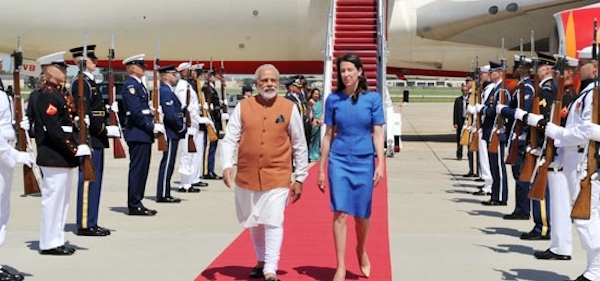
  • In 41 trips to 52 countries in 4 years, PM Narendra Modi spent Rs 355 crore: RTI

    In 41 trips to 52 countries in 4 years, PM Narendra Modi spent Rs 355 crore: RTI

    NEW YORK(TIP): Of the 41 trips by Modi to 52 countries, the highest amount was spent on his nine-day tri-nation visit to France, Germany and Canada.

    In his 48 months as Prime Minister, Narendra Modi made 41 trips to over 50 countries, at a total cost of Rs 355 crore.  He was abroad for a cumulative 165 days. The figures are up to Mid-June 2018.

    This was revealed through replies to Right to Information (RTI) queries submitted to the Prime Minister’s Office (PMO) by RTI activist Bhimappa Gadad, who shared these replies with the media.

    Of these 41 trips by PM Modi to 52 countries, the highest amount was spent on his nine-day tri-nation visit to France, Germany and Canada between April 9 and 15, 2015, which incurred expenses to the tune of Rs 31,25,78,000; and the least expensive trip was his very first one as Prime Minister, to Bhutan on June 15-16, 2014 at a cost of Rs 2,45,27,465.

    Gadad, who filed the RTI petition seeking details about expenses on PM’s foreign trips, said he filed it out of curiosity. “A few years ago, I had applied for details of foreign visits by chief ministers of Karnataka. Recently, I was going through news reports wherein Prime Minister’s foreign visits were heavily criticized. Then I applied under RTI seeking details of PM’s foreign visits and I was really shocked to know the details,” he said.

    He is bitter about the PMO not providing information on domestic travels of the Prime Minister. “They have not furnished details of domestic visits and expenses for security provided during the visits. I did not ask for details of security measures. I just asked for the expenses, but they refused, saying the SPG security organization, which takes care of PM security, is exempted from the purview of RTI,” he said.

    “Though I got the information out of curiosity, I want it to reach the public. Everyone should know about it,” he said, adding that the Centre should also release reports on the benefits to the country emerging from these visits.

  • Rebooting the system for a skills upgrade

    Rebooting the system for a skills upgrade

    There needs to be a road map to rescue private Industrial Training Institutes from their weak state

    The only way to mobilize adequate resources the right way is to do skills training and have equipment and tools that keep pace with changing needs and ensure that employers have skin in the game.

    Small shops, basements, tin sheds and godowns. These are not random workplaces but places where private Industrial Training Institutes (ITIs) are running in the country (India). Disturbing facts such as these come from the report of the Standing Committee on Labour (2017-18) headed by Bharatiya Janata Party MP Kirit Somaiya, on the “Industrial Training Institutes (ITIs) and Skill Development Initiative Scheme” of the Ministry of Skill Development and Entrepreneurship (MSDE). It was submitted to Parliament few months ago.

    Explaining the scale-up

    The ITIs were initiated in the 1950s. In a span of 60 years, until 2007, around 1,896 public and 2,000 private ITIs were set up. However, in a 10-year period from 2007, more than 9,000 additional private ITIs were accredited.

    What explains this huge private sector scale-up? The committee says that it is not efficiency but a disregard for norms and standards. However, the ITIs are not alone. The National Skill Development Corporation (NSDC) today has more than 6,000 private training centers. Since it has short-term courses and its centers open and close frequently, it is all the more prone to a dilution of standards. Private training partners have mushroomed at the rate of five a day (mostly with government support) and it is clear that the government has been unable to regulate private institutions for quality. Private sector engagement in skill development has been taken up by standalone private training partners and not employers. The latter could have made the system demand-driven. Meanwhile, the lack of a regulator for skill development, with teeth, has led to poor quality affiliation, assessment and certification.

    The Somaiya committee report is scathing in its tone and specific in details. It outlines instances of responsibility outsourcing, no oversight, connivance and an ownership tussle between the Central and State governments.

    Private-ITI accreditation troubles started when the Quality Council of India (QCI), a private body, was hired due to “high workload of affiliation and shortage of [government] staff”. The QCI did not follow accreditation norms created by the National Council for Vocational Training (NCVT) and it appears that neither scale nor standard was achieved, but only speed. ‘Speed’ now risks the future of 13.8 lakh students (on an average, 206 students per ITI) studying in these substandard ITIs, which can be closed any time.

    The ITIs have a unique functioning set-up. While they were formed under the government’s Craftsman Training Scheme, their day-to-day administration, finances and admissions are with State governments. The NCVT performs an advisory role. The ITIs often run into issues with no one to take ownership. A case in point is the examination process — the question paper is prepared by the NCVT, but administered and evaluated by instructors of the State Councils for VT. The NCVT is just a stamp with no role in actually assessing quality. How can quality outcomes be expected without quality assessments?

    The parliamentary committee has shed light on the ITIs. If the same exercise were extended to other skill development schemes, the picture would be grimmer. There are 183 cases pending in High Courts on non-compliance of norms by the ITIs. However, the short-term training programs of the Ministry evade any scrutiny and action. For example, the Standard Training Assessment and Reward scheme spent ₹850 crore in 2013-14 with no norms for quality. There were no Aadhaar checks, attendance requirements and batch size limitations. Private training operators have made a profit with no court cases.

    The report also reinforces disturbing findings of a national survey by the research institute (NILERD) of the Planning Commission in 2011 about private ITIs: they offered training in less than five trades (in government ITIs it is less than 10); had fewer classrooms and workshops for practice; and their teachers were very poorly paid.

    A starting point

    So, what can we do systemically? A good point to start would be the Sharda Prasad Committee recommendations.

    We need better oversight, with a national board for all skill development programs. The core work (accreditation, assessment, certification and course standards) cannot be outsourced. Like every other education board (such as the CBSE), a board is required in vocational training that is accountable. Since we have the NCVT as a legacy, it should be used as a kernel to constitute the board. We should also have a mandatory rating system for the ITIs that is published periodically. A ranking of the ITIs on several parameters such as the one done by the National Assessment and Accreditation Council in tertiary education can be replicated.

    There should be one system, with one law and one national vocational education and training system. The silos in which vocational training happens in India is unfortunate. We need to create a unified national vocational system where the ITIs, NSDC private vocational trainers and vocational education in schools, and the other Central ministries conducting training gel seamlessly and can learn from, and work with each other. A unified legal framework can facilitate such a unification. The absence of a law has only weakened regulation and monitoring. What we need is a national vocational act that replaces all scattered regulations — recommended in the 12th Five Year Plan.

    Micro-institutional reforms

    The ITIs have many internal issues such as staffing and salaries that need attention, as the NILERD nationwide survey in 2011 had found. There is also a critical need to reskill ITI teachers and maintain the student-teacher ratio. Since technology obsolescence is a continuous challenge, financial support envisaged through the NSDC should be extended to the ITIs.

    The primary reason for hiring the QCI and the mess that followed was this: “huge workload of affiliation and shortage of staff”. This is true even today. It is unlikely that without fixing this, the QCI mistake will not be repeated. There has been a tremendous push by the government for private sector talent in government; perhaps it is worth considering talent from the open market to fill up higher posts in skill development.

    Institutional reforms such as moving the office of the Directorate General of Employment (the arm that has all data on employment) from the Ministry of Labour to the MSDE would help. It would also complement the Directorate General of Training already under MSDE.

    Employers and financing

    This is the last but perennial challenge. Given the scale of our demographic challenge, a belief that financing from corporate social responsibility, multilateral organizations such as the World Bank, and the government will meet the financial needs for skill development is wishful thinking.

    The only way to mobilize adequate resources the right way is to do skills training and have equipment and tools that keep pace with changing needs and ensure that employers have skin in the game. This is possible through a reimbursable industry contribution (RIC) — a 1-2% payroll tax that will be reimbursed when employers train using public/private infrastructure and provide data. RIC, which is implemented in 62 other countries, was recommended in the 12th Plan and is an idea whose time has come. An estimate by the first author of this article indicated that such a tax would generate ₹17, 000 crore per annum for skilling in India — which is several multiples of State/Union governments’ current annual budget for skilling.

    Finally, while there is so much talk of skills for the future and the impact of artificial intelligence and automation, data show that 13.8 lakh students in the ITIs are suffering due to poor institutional accreditation. Placement in NSDC training has been less than 15%. Maybe if we take care of the present, we will be better prepared for the future.

    (Santosh Mehrotra is Professor of Economics, Centre for Labour, Jawaharlal Nehru University, a member of the Prasad Expert Committee on Sector Skill Councils, and a lead author of the National Skills Qualification Framework. Ashutosh Pratap works on skills and jobs issues and has worked with the Expert Committee)


  • Asia Society Names 2018 Asia Game Changer Award Honorees

    Asia Society Names 2018 Asia Game Changer Award Honorees

    Awards will be presented in New York on October 9

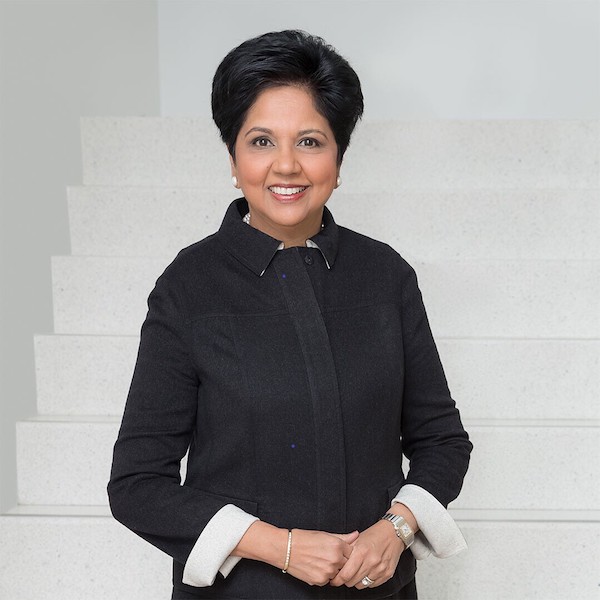
    NEW YORK(TIP): PepsiCo Chairman and CEO Indra Nooyi has been selected as Asia Society’s Game Changer of the Year for 2018 in recognition of her pioneering business achievements, humanitarian record, and advocacy for women and girls around the world. She leads a slate of groundbreaking women, including a team of Afghan girls who have made waves at international robotics competitions and Mira Rai, a record-shattering runner from a small village in Nepal, who is also an inspiration for millions of girls and young women.

    Asia Society, in partnership with Citi, has announced the recipients of its 2018 Asia Game Changer Awards, in recognition of individuals and institutions who have broken barriers, defined courage, worked miracles, and in turn inspired their fellow citizens of the world.

    The awards will be presented at the 5th Annual Asia Game Changer Awards Dinner and Celebration in New York City on October 9, 2018 at Cipriani 25 Broadway in Lower Manhattan. The event will also feature the first-ever U.S. performance of Koolulam.

    Nooyi, who this month announced she would be stepping down as CEO of PepsiCo, has driven one of the world’s most iconic global companies into the future, leading the way when it comes to delivering strong financial performance, while making more nutritious products and advancing women’s access and excellence in Asia and around the world.

    The Indian-born Nooyi was PepsiCo’s first-ever female CEO, joining only a handful of women as leaders of Fortune 500 companies. During her 12-year tenure, she not only established initiatives to meet the changing demands of consumers, increased the company’s net revenue more than 80 percent, and saw share price nearly double; she also led efforts — such as Women With Purpose and Spark A Future — to empower millions of women and girls through education, entrepreneurship, and employment opportunities. Under Nooyi’s leadership, PepsiCo was consistently rated among the top workplaces for women. Nooyi also transformed PepsiCo into a more environmentally sustainable and health-conscious company.

    “Indra Nooyi is truly a transformational leader,” said Asia Society President and CEO Josette Sheeran today. “In my United Nations work, I have witnessed firsthand her humanitarian leadership, as she steered Pepsi’s life-saving collaboration with the United Nations on food, nutrition, global water, climate, and women’s empowerment issues.”

    Nooyi leads a group of other revolutionary women as Asia Society’s Game Changers at a time when their issues and voices are at the forefront of public discourse.

    “It is a crucial moment to honor women from Asia who have battled the odds to shatter glass ceilings, opening pathways for a new generation of women to thrive and prosper,” said Sheeran. “In addition, we honor those who are devoting their own lives to improve and save the lives of others. Humanity owes them a debt of gratitude and we are so honored to recognize their works of passion and compassion. We are proud to be a part of their journey.”

    The group of Game Changers includes: the Thai rescuers who saved a dozen teenage soccer players in a flooded cave; the Japanese first responders who risked their lives following the tsunami and nuclear disaster at Fukushima; the founder of the Syrian White Helmets, whose volunteers are among the few “first responders” remaining in that country; a global champion for “green cities” — Wang Shi of China; Dr. Munjed Al Muderis  — a pioneering surgeon who has brought new hope for amputees; and the founders of Koolulam — a musical phenomenon that aims to bridge the most difficult ethnic and religious divides.

    This year marks the fifth iteration of the Asia Game Changer Awards, and the fifth time that Asia Society and Citi have given prominence to Asia-Pacific individuals and organizations who are making indelibly positive differences in the lives of others.

    “Citi is an institution that connects and seeks to improve the lives of millions of people across the world. This year’s recipients of the Asia Game Changer Awards represent further examples of progress makers who make positive contributions in their communities,” said Francisco Aristeguieta, Chief Executive Officer of Citi Asia Pacific. “We are thrilled to partner with the Asia Society again in shining a light on these extraordinary Game Changers.”

    Previous recipients of the Asia Game Changer Awards include His Highness the Aga Khan, founder of the Aga Khan Development Network; Jack Ma, founder of Alibaba; Malala Yousafzai, education activist; the non-profit organization Sesame Workshop; champion for literacy Madhav Chavan; the global architecture icon I.M. Pei, and dozens more. Honorees are nominated and chosen by members of Asia Society’s global network.

    More information about the 2018 Asia Society Game Changers is available here. For press inquiries, please email pr@asiasociety.org.

    About Asia Society

    Founded in 1956 by John D. Rockefeller 3rd, Asia Society is a nonpartisan, nonprofit organization that works to address a range of challenges facing Asia and the rest of the world.  Asia Society has cultural centers and public buildings in New York, Hong Kong, and Houston, and offices in Los Angeles, Manila, Mumbai, Tokyo, San Francisco, Seoul, Shanghai, Sydney, Washington, D.C., and Zurich. Across the fields of arts, business, culture, education, and policy, Asia Society provides insight, generates ideas, and promotes collaboration between Asia and the world.

    About Citi

    Citi, the leading global bank, has approximately 200 million customer accounts and does business in more than 160 countries and jurisdictions. Citi provides consumers, corporations, governments and institutions with a broad range of financial products and services, including consumer banking and credit, corporate and investment banking, securities brokerage, transaction services, and wealth management. Citi is the founding partner of Asia Society’s Asia Game Changer Awards.

  • Yes, a D.J. Can Make a Difference!

    Yes, a D.J. Can Make a Difference!

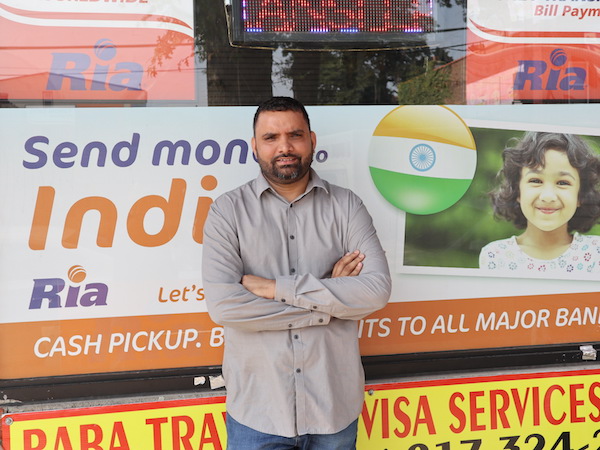
    RICHMOND HILL, NY: Loud music and wild parties are probably what comes to mind when we hear the words disc jockey (DJ).  Sukhjinder Singh is not one to argue against that, having worked as the DJ in the successful Punjabi Mela concert in New York last May.  But try asking South Richmond Hill residents and they will be quick to say that Sukhjinder is not your ordinary DJ.  DJ Sukhjinder is more than loud music and wild parties.  DJ Sukhjinder is also all heart.

    Born in Bholath, a town in Kapurthala district in the state of Punjab, India, DJ Sukhjinder went to the U.S. in 2000 on his own search of the American dream – good job, nice house and car, family, and plenty of money.  But the American dream did not come easy to the then 18-year old DJ Sukhjinder. “I did all kinds of jobs. I worked whatever job I could get – in restaurants, construction, you name it. I was earning only $80 to $90 a day.  Taxi work was not available at that time.”

    For years, DJ Sukhjinder tirelessly worked multiple jobs, but without losing sight of his goal – having his own business.  Then in 2012, DJ Sukhjinder opened his very own CD/DVD store in South Richmond Hill, NY. And his formula for success: Service.  As inspired by his personal experience as an unhappy customer.  “I needed a new SIM card for my phone.  The guy at the store was charging me $10 to swap SIM cards!  When all he needed to do was to pick up the cellphone and change the SIM cards.  From there I ventured into the cellphone business as well.  And never did I take money for changing a SIM card!”

    Since then, DJ Sukhjinder has dedicated himself to helping make things easier for the South Richmond Hill community.  To this end, DJ Sukhjinder now offers DJ, photography, videography services and financial services in his CD/DVD store.  DJ Sukhjinder processes international money transfers, domestic money orders, and bill payments.  For all these, DJ Sukhjinder has partnered exclusively with RIA Money Transfer: “RIA is great!  They have competitive fees, best rates, and extra mile service.

    DJ Sukhjinder continues, “With RIA’s money transfer service, I have yet to hear a customer complaining that money was not received.  Instead, customers are happy that loved ones don’t have to go out of their villages to get the money.  To them RIA is reliable and convenient.  And because customers are happy with RIA, I am happy with RIA.”

    Visit DJ Sukhjinder at his Ria location, 116-01 101st Ave, South Richmond Hill, NY.  He is currently offering fee-free bill payments to all new and existing customers.


  • Indian- Origin British Billionaire Plans Clean Energy Project in Australia

    Indian- Origin British Billionaire Plans Clean Energy Project in Australia

    CANBERRA(TIP): India-origin British billionaire has launched a $1 billion, one-gigawatt renewable energy plan based in South Australia’s mid-north that he says will lead the country’s industry transition to more competitive power.

    Sanjeev Gupta’s energy company Simec Zen and its Cultana Solar Farm released the details on August 16. It said that “In the first of a number of projects slated for the upper Spencer Gulf region, will include a 120MW lithium-ion battery bigger than the 100MW battery built by Elon Musk’s Tesla in South Australia in 2017.”

    The project will produce 280 megawatts of power and feature 780,000 solar panels, generating enough electricity for 96,000 homes. The Cultana Solar Farm will begin construction in early 2019, employing 350 workers during construction, reports stated

    “Today’s event is symbolic of our desire to develop and invest in new-generation energy assets that will bring down Australia’s electricity prices to competitive levels again,” Mr Gupta said on Wednesday, August 16.

    “Solar will be the main base of our ambitions in Australia but we will have some wind and we have lots of storage solutions.”

    When completed, Mr Gupta’s battery will surpass the battery built by Tesla as the largest in the world, reports said.

    However, the Gupta Family Group (GFG) Alliance has no intention to stop there with plans for pumped hydro projects and expanded solar farms being developed for South Australia.

    “All of these projects will not only improve reliability and greatly reduce the cost of electricity in our own operations, they will also provide competitive sources of power for other industrial and commercial users, while at the same time playing a key role in the market’s transition towards renewables,” he said.

    “We have a strong conviction that traditional carbon-intensive generation sources do not have a long-term future as the predominant source of power in Australia and globally.”

    “We believe the world is undergoing a momentous transition to renewable power as the cost of renewables drops dramatically and quickly,” he added.

  • Federal deficit jumps 20 percent after tax cuts, spending bill

    Federal deficit jumps 20 percent after tax cuts, spending bill

    WASHINGTON(TIP): The federal deficit jumped 20 percent in the first 10 months of the 2018 fiscal year, the Congressional Budget Office (CBO) reported Wednesday, August 8.

    Spending outpaced revenue between the beginning of the fiscal year, on Oct. 1, and July by $682 billion, $116 billion more than over the same period in the last fiscal year.

    The rising deficit is largely the result of the tax cuts President Trump signed into law at the end of last year, as well as a bipartisan agreement to boost spending, according to CBO.

    Tax revenues from individuals rose, even as revenues from corporate taxes dropped.

    The Trump administration has argued that the tax cuts would bring down the deficit, as economic growth led to higher tax revenue. The economy did expand in the second quarter by 4.1 percent.

    But economists have argued the growth would have to be much larger to reduce the deficit.

    The CBO projects that the deficit will reach $793 billion by the end of the year and approach $1 trillion next year. White House estimates have the deficit surpassing $1 trillion in 2019.

    Budget watchers have warned that interest payments — the amount the Treasury has to pay just to service the debt — are slated to become the fastest-growing annual expenditure.

    The CBO projects that in 30 years, the government will spend more on servicing debt than on Social Security or defense.

  • PepsiCo chief executive Indra Nooyi to step down on October 3

    PepsiCo chief executive Indra Nooyi to step down on October 3

    Ramon Laguarta to replace Ms Nooyi, who will continue as chairwoman until next year

    WASHINGTON(TIP): PepsiCo said on Monday, August 6, that Indra Nooyi would step down as chief executive after 12 years at the helm and named president Ramon Laguarta as her successor.

    Mr Laguarta will take over from Ms Nooyi on October 3rd and will also join the board, the company said in a statement.

    Ms Nooyi (62), who has been with the company for 24 years, will continue as chairwoman of the board until early 2019.

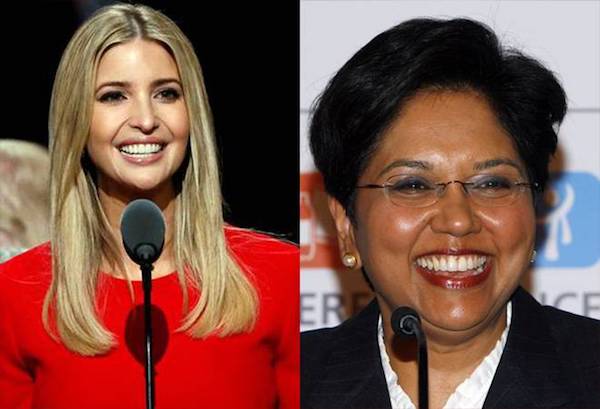
    Ivanka Trump who looks upon Indra Nooyi as her inspiration and mentor commented: “The great Indra Nooyi is stepping down as PepsiCo CEO, after 12 years. Indra, you are a mentor + inspiration to so many, myself included,”

    Indra Nooyi has been a darling of Indian Americans who have always taken pride in her as a shining example of the achievements of women of Indian origin abroad.

    Commenting on her stepping down as CEO of one of the largest companies of the world, Dr. VK Raju, eminent Indian American ophthalmologist who hails from Andhra Pradesh, said, “Indra Nooyi has been a towering personality in the corporate world of America and is responsible for the growth of PEPSICO”.

    Ms. Nooyi grew up in Chennai, India, where during food shortages in the 1960s her middle-class family stood in line for rice rations studded with stones. When Indra and her sister were young, their mother challenged them at the dinner table each night to give speeches about what they would do if they were prime minister or another world leader. After the speeches, their mother would vote.

    Ms. Nooyi came to the U.S. in 1978 on a scholarship to the Yale School of Management and worked at several companies before joining PepsiCo in 1994 as head of strategy. She was chief financial officer and president before she was named chief executive, succeeding Steve Reinemund.

    After becoming CEO in 2006, Ms. Nooyi said she wanted to make PepsiCo “a defining corporation of the 21st century.” “Nobody’s going to remember you for delivering earnings to stockholders; they will remember you for the lasting impact you made on society,’’ she said in a 2009 speech.

    The company’s shares have gained 78 per cent since Ms Nooyi took the top job in 2006.

    Mr Laguarta, a 22-year veteran of PepsiCo, oversaw global operations, corporate strategy, public policy and government affairs in his role as president.

    He also served as head of the company’s Europe Sub-Saharan Africa division before becoming president.

  • Apple becomes first U.S. public company to reach $1 trillion valuation

    Apple becomes first U.S. public company to reach $1 trillion valuation

    WASHINGTON(TIP): The tech giant on Thursday, August 2, became the first public U.S. company to reach a valuation of $1 trillion.

    Amazon had been close behind Apple in the race to the one trillion mark, surpassing $900 billion market value in July, but a strong earnings report on Tuesday pushed Apple over the mark.

    Apple shares briefly touched $207.05, the mark needed to reach $1 trillion, but dropped down shortly thereafter. Apple shares remained up 2.4 percent at $206.35 in early afternoon trading on Thursday.

    Other large companies are close to Apple’s valuation, but none have hit $1 trillion. Google is currently worth around $852 billion and Facebook about $508 billion. Other well-known companies are smaller, such as Coca-Cola at $198 billion and Ford at $39 billion.

    Apple was founded in the garage of Steve Jobs in 1976 when personal computers were in their infancy. Along with the other co-founder, Steve Wozniak, Jobs began steering the industry toward devices that would appeal to consumers, culminating in the introduction of the iPhone in 2007.

    Along the way, Apple has launched a series of products that changed the way people use technology. It popularized the computer mouse and the graphical user interface, which is now ubiquitous, and it altered music-listening habits with its iPod and accompanying digital music store, iTunes.

    The company almost went bankrupt in the late 1990s. It had failed to continue making popular products after Jobs left the company in 1985 amid a dispute with the company’s then-CEO. Jobs returned in 1997 and accepted a $150 million investment from rival Microsoft.

    Jobs was featured on the cover of Time magazine, where he thanked Microsoft CEO Bill Gates and said “the world’s a better place” after the investment.

    The bulk of Apple’s revenue comes from selling hardware, particularly iPhones. As growth in smartphones sales has begun to slow and some consumers have turned to cheaper devices from other manufacturers, analysts had begun to question whether Apple would be able to hit $1 trillion mark.

    But recent strength from one of Apple’s smaller services business, which includes the App Store, helped convince investors to push the company’s stock higher, said Daniel Ives, head of technology research at GBH Insights, a market research firm.

    “This is a historic milestone not just for Apple but the overall tech sector as Cook & Co. hit the elusive trillion dollar market cap club,” Ives said, referring to Apple CEO Tim Cook. “The services business has been the high octane fuel in Apple’s engine and got the company to this trillion dollar valuation quicker than many had thought with a major iPhone product cycle on the horizon.”

    Patrick Moorhead, principal analyst at Moor Insights & Strategy, a technology advisory firm, said he was not surprised to see Apple hit the trillion mark, but noted that it has some challenges ahead.

    “Apple’s biggest challenge going forward is to maintain its lead,” Moorhead said. “The smartphone market is in decline, and Apple will need to win big in brand-new markets.

  • Facebook loses $123 billion in value in a single day

    Facebook loses $123 billion in value in a single day

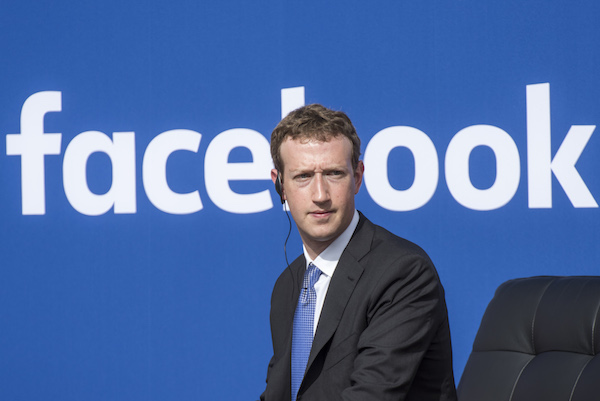
    NEW YORK(TIP): In possibly the biggest one-day drop of all time, Facebook shares, on July 26, opened at $174.89, down 19.6 percent compared to yesterday’s closing price of $217.50 (NASDAQ: FB).

    When it comes to market capitalization, Facebook was worth $629.6 billion yesterday. The company is now worth $506.2. In other words, Facebook has lost $123.4 billion in value overnight.

    Today’s performance isn’t due to yet another data misuse or election interfering scandal. The company has reported disappointing earnings. For the first time, Facebook’s growth is stalling.

    There are barely more people checking Facebook every day compared to previous quarter. Even worse, Facebook’s user base shrank in Europe. Facebook is still growing, but it’s clear that GDPR combined with a saturated market aren’t helping the company.

    That’s why Facebook is trying to change the narrative. For the first time, the company shared a new “family of apps audience” metric. There are 2.5 billion people using at least one of the company’s app — Facebook, Instagram, Messenger and WhatsApp.

    It’s clear that Facebook thinks Instagram and ephemeral stories represent the future of the company. But this is going to be a question mark in the coming months as it’s unclear if Instagram can generate as much money as Facebook’s main app.

    Most people have been focused on Facebook’s losses for now. It’s a staggering event. But it’s now time to look at Facebook’s business model and understand what’s happening.

    Facebook is an incredible success story. It became a massive business in just a few years. But the company has a dangerous business model. Thousands of employees are looking for ways to collect more data. Business teams can then sell expensive ads because they’re perfectly targeted.

    And the best way to optimize those efficient ads is by making addictive products. If you spend more time looking at stories, you’re going to be exposed to more ads.

    That’s why Facebook optimizes for engagement. You get outraged, you become sad, you like and you share. And Facebook makes money.

    This year is a turning point for Facebook. People will look back at this moment as an inflection point in the company’s trajectory. But it’s still unclear if Facebook has the answer to its structural issues.

    (Source: Queens Daily News Ticker)

  • Trade War- US slaps more tariffs on $200b Chinese goods

    Trade War- US slaps more tariffs on $200b Chinese goods

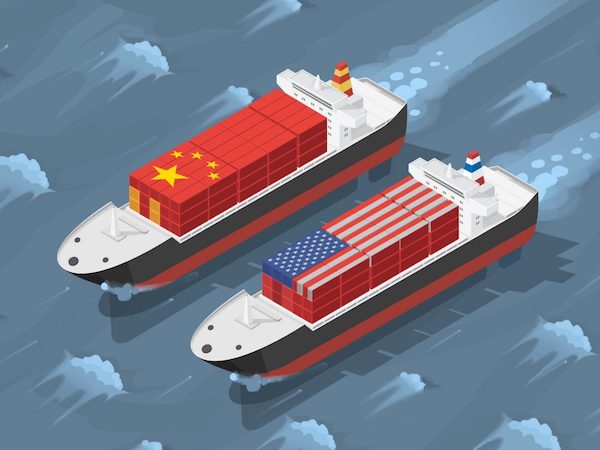
    WASHINGTON(TIP): Escalating the US-China trade war, the Trump administration on Wednesday, July 11, announced 10 per cent tariffs on an additional $200 billion worth of Chinese imports, prompting Beijing to warn of “counter measures” to safeguard its interests.

    The Trump administration’s move comes after the US imposed 25 per cent tariffs on Chinese goods worth $34 billion last Friday. Beijing immediately responded with its own tariffs on US goods worth $34 billion. The retaliatory tariffs that China enacted Friday targeted US cars and major agricultural goods, such as soybeans and meat.

    US Trade Representative Robert Lighthizer released a list of thousands of additional goods that could face 10 per cent tariffs after a public comment period. It includes fruit and vegetables, handbags, refrigerators, rain jackets and baseball gloves.

    (Source: PTI)

  • Trump disrupts global governance

    Trump disrupts global governance

    By G Parthasarathy

    India has been at the receiving end of Trump’s economic policies of “America first.” His duties on imports of aluminum and steel have resulted in India taking up the issue with the WTO and imposing reciprocal trade curbs on US exports.

    New Delhi has been at the receiving end of Trump’s economic policies of “America first.” Trump’s duties on imports of aluminum and steel have resulted in India taking up the issue with the WTO and imposing reciprocal trade restrictions on US exports. India’s trade surplus with the US in 2017-18 was around $21 billion, barely 5 per cent of the trade surplus of China. But, the Trump administration would evidently like to end GSP trade preferences, accorded to India since 1974, together with demands that India ends restrictions on imports of American dairy products.

    While Trump is proposing tariffs on some $50 billion of Chinese exports, he also supports special treatment for China, while heaping praise on President Xi Jinping. He intervened to reverse a US Congressional ban on ZTE, China’s manufacturer of Android phones, which accepted that it had violated sanctions, by exports to Iran and North Korea.  The US Commerce Department banned US companies from exporting components essential for ZTE’s survival and brought the company to its knees. Trump, however, stepped in, tweeting that he would work with Xi, to reverse the ban.

    With high-level meetings under way, India should respond to Trump’s policies by being judicious in extending support, while seeking a quid pro quo for its actions, which support US policies. Any significant purchase of defense equipment, or civilian transport aircraft should be linked to specific political, economic and security gestures from Washington, while ensuring that US actions do not undermine the India-Russia defense relationship.

    We need to work with Russia and China so that Washington does not take us for granted. Defense Secretary Mattis and Secretary of State Pompeo appear to have a realistic understanding of India’s policies, potential and imperatives.

    We need to keep a close watch on US policies on Afghanistan, where an effort appears under way to mainstream the Taliban. This should not lead to politically equating the Taliban with the legitimate Afghan Government.

    The annual summit meetings of the G7 grouping are marked by camaraderie. They make a significant contribution to issues of global governance, ranging from environment, trade and investment, to peace, stability and security. Trump shook this record by his behavior during and after the G7 summit in Vancouver earlier this month. The summit was marked by simmering tensions on trade relations, with the US unilaterally imposing additional tariffs on imports of steel and aluminum, from its G7 partners. Differences on this issue led to Trump disowning the Summit Declaration he had signed and calling Canadian Prime Minister Trudeau: “Dishonest and Weak.” Outraged European leaders joined ranks, taking exception to Trump’s comments, while Japanese Prime Minister Shinzo Abe, already shaken by Trump’s U-turns on China and North Korea, maintained a silence.

    He revoked US participation in the “Trans-Pacific Partnership”, which sought to integrate the economies of the Asia-Pacific, ranging from Canada and the US to Japan, South Korea and ASEAN markets. China, now pushing for a “Comprehensive Economic Cooperation” agreement with ASEAN and its dialogue partners like India, Japan and Australia, will only increase its economic domination of the Indo-Pacific, by these American actions.

    Other destabilizing Trump policies include his determination to scuttle the North American Free Trade Agreement, his ban on travel to the US by people from six Muslim countries, his imposition of nuclear sanctions on Iran and his insulting labelling of Haiti and countries in Africa as “shithole countries,” which provoked formal protests by six African countries.

    Trump has created new tensions by recognizing the whole Jerusalem as part of Israel, ignoring the global consensus that East Jerusalem would be under Palestinian control in any peace settlement in West Asia.

    Trump’s impetuously ignored the security concerns of key allies South Korea and Japan and went ahead with a summit meeting in Singapore, with North Korean leader Kim Jong Un, whom he had earlier spoken of in derogatory terms. Trump expressed his admiration for the North Korean leader and cancelled longstanding military exercises with South Korea, thereby implicitly accepting the assurances of the North Korean leader that he would end his country’s nuclear weapons program. These actions were ill advised, naïve and undermined the trust that South Korea and Japan had reposed in the US. There is little prospect of North Korea discarding its nuclear arsenal anytime soon. Moreover, one wonders if Shinzo Abe can afford to remain a mere spectator, with China and North Korea possessing missile and nuclear arsenals, with US acquiescence.

    Interacting with well-informed journalists and analysts in the US during a stay at the US west coast, where people voted massively against Trump, one feels that a larger section of people now appear more indulgent towards religious bigotry and racism. There is appreciation of the fact that not only did Trump receive nearly 63 million votes in the presidential elections, but his economic policies, particularly on tax relief, have been accompanied by reduced unemployment, with a booming stock market.  Acceptance and support, particularly amongst small-town white Americans, of Trump’s immigration policies, is evident. A large number of Americans, especially in the mid-west and south, feel that far too much of their national resources has been spent on involvement beyond the country’s borders and that there is, therefore, merit in Trump’s slogan of “America First”. Aspirants for quick “green cards” and those with unrealistic expectations of continuing American “liberalism,” would be well advised to bear this in mind.

    (The author is a career diplomat)

  • Indian American Neel Gonuguntla among The Dallas Business Journal 2018 Women in Business Awards honorees

    Indian American Neel Gonuguntla among The Dallas Business Journal 2018 Women in Business Awards honorees

    The 30 honorees, including US India Chamber of Commerce President, Neel Gonuguntla represent a variety of industries and roles

    DALLAS(TIP): The Dallas Business Journal has announced the honorees for its 11th annual Women in Business Awards program.

    These 30 individuals, including Indian American Neel Gonuguntla represent a variety of industries and roles that are crucial to the Dallas-Fort Worth ecosystem, including financial and legal services, commercial real estate and construction, and non-profit organizations.

    From leaders of global institutions, like Frito-Lay Chief Marketing Officer Jennifer Saenz and AT&T Business’ Anne Chow, to entrepreneurs behind innovative startups, like Elyse Dickerson of Eosera, the 2018 class of Women in Business touches on a concentration of transformative ingenuity and enterprising imagination that can only be found in North Texas.

    Four members of the Women in Business Awards class – Betty Garrett, Linda Kunz, Sandy Phillips, and Courtney Sinelli – have been selected to receive the distinction as a “Tourism, Travel and Hospitality” honoree. This category highlights the vital role that these verticals play in keeping North Texas a contender in national and international spheres.

    The 2018 honorees will be honored at a luncheon and trade show on Thursday, August 23, at the Omni Hotel Dallas.

  • Indian-American woman to become CFO of US carmaker General Motors

    Indian-American woman to become CFO of US carmaker General Motors

    NEW YORK(TIP): Dhivya Suryadevara, currently the vice president of corporate finance, will succeed Chuck Stevens, the GM’s present CFO, on September 1, the company said in a statement.

    Chennai-born Suryadevara, 39, has been GM’s vice president of corporate finance since July 2017. She will report to Chief Executive Officer (CEO) Mary Barra, 56, who has been head of the automaker since 2014.

    Barra and Suryadevara are the first women in their respective positions in the auto industry, as no other major global automaker has a female CEO, nor a CEO and CFO who are both female.

    Suryadevara earned her bachelor’s and master’s degrees in commerce from the University of Madras in Chennai, India She moved to the US at the age of 22 to pursue her MBA from Harvard University.

    She is a chartered financial analyst and accountant and worked at UBS and PricewaterhousCoopers before joining the Detroit-based GM in 2005 at the age of 25.

    “Dhivya’s experience and leadership in several key roles throughout our financial operations positions her well to build on the strong business results we’ve delivered over the last several years,” Barra said in a statement.

    Stevens, 58, has been CFO at the largest US automaker since January 2014 and will retire in March next year as a more than 40-year veteran of the company.

    He will remain with the company as an adviser until his retirement, the statement said.

    Stevens began at the Buick division in 1978 and, like Barra, was educated at General Motors Institute, which became Kettering University. He had a key role in GM establishing its joint venture in China with SAIC Motor Corp. and was a crucial player in GM selling its long-struggling Opel business to French automaker PSA Group.

  • Month of May is ‘Small Business Month’ in New Jersey: Senate Passes Gopal, Corrado Bill

    Month of May is ‘Small Business Month’ in New Jersey: Senate Passes Gopal, Corrado Bill

    TRENTON, NJ(TIP):  A Resolution sponsored by Senator Vin Gopal and Senator Kristen M. Corrado that would designate the month of May each year as “Small Business Month” in New Jersey advanced from the Senate, June 7.

    “Small businesses are what make the economy in New Jersey flow, and propel our state to an even brighter future,” said Senator Gopal (D-Monmouth).  “As a small business owner myself, I understand the day-to-day difficulties that these entrepreneurs can face.  I am committed to supporting mom-and-pops not only in Monmouth County, but throughout the entire state.”

    The resolution, SJR-27, aims to recognize the vital importance of small businesses in the state and local economies, and how their success strengthens community identity and pride.

    The resolution would request the Governor to annually issue a proclamation calling upon public officials, private organizations, and all citizens and residents of this state to observe the month by patronizing small businesses, as well as engaging in appropriate activities and programs designed to support small businesses across the state.

    “The roundtable discussions were incredibly productive, and I hope we can take what we learned and apply them in order to make New Jersey a better state to do business in,” continued Senator Gopal.

    New Jersey has over 800,000 small businesses, comprising more than 98 percent of all employers in the state.  Small businesses employ 1.7 million workers, making up more than 50 percent of the state’s workforce.  They have a strong presence in New Jersey communities, and support a range of local services.

    During the month of May, Senator Gopal hosted a number of small business roundtable discussions to honor National Small Business Month. Business owners were encouraged to visit www.ReportRedTape.com, Senator Gopal’s small business initiative, to inform him about their business and submit written comments about the issues they have encountered.

    The resolution was released from the Senate by a vote of 37-0, and next heads to the Assembly for further consideration.

  • Indian American Preethi Kasireddy’s startup TruStory raises $3 million in seed funding

    Indian American Preethi Kasireddy’s startup TruStory raises $3 million in seed funding

    LOS ANGELES(TIP): Indian American Preethi Kasireddy who founded TruStory, an online fact-checking platform, has raised a $3 million in seed funding.

    The funding will help TruStory, a Los Angeles-based startup that was launched seven months ago,  “build a world-class engineering, design, and community development team to work towards its mission”, Kasireddy said in a blog post.

    The funding, led by True Ventures, had participation from Pantera Capital, Kindred Ventures, Homebrew, Coinbase Ventures, Wonder Ventures, Abstract Ventures, Ausum Ventures, and Dream Machine (Alexia Tsotsis), among others, she wrote.

    Several angels also invested in the round, among them Fred Ehrsam, David King, Scott Belsky, Josh Elman, Alok Vasudev and Jessica Verrilli. “It’s an honor to have each of these partners on board,” Kasireddy wrote.

    The platform allows users to find out and validate various claims people make online on blogs, website and social media posts.

    “Unlike in today’s web where the onus for fact-checking is on the reader, in TruStory, every ‘story’ or claim goes through a unique validation process that leverages a distributed network of participants with robust economic and social incentives to surface the truth,” the founder wrote.

    Kasireddy, who grew up in Monroe, New Jersey, has a B.S. in industrial and systems engineering from the University of Southern California. She quit a Silicon Valley job to found the blockchain startup.

    Kasireddy added that in her experience as a developer in the blockchain space, including at the digital currency exchange Coinbase, she has “been haunted by the proliferation of low-quality information, rampant inauthenticity, and sheer disinformation.”

    “There are no longer universally trusted central parties to keep tabs on what’s real,” she wrote, adding, “That’s why I started TruStory. TruStory is a platform that uses the collective knowledge of the crowd, combined with the right incentives and disincentives, to validate and curate a better reality — starting with the blockchain space.”


  • Indian Americans Appointed By New York Mayor To Board Of Advisors

    Indian Americans Appointed By New York Mayor To Board Of Advisors

    NEW YORK (TIP):  Two Indian American executives are among 19 people appointed by New York City Mayor Bill de Blasio as members to an organization that addresses the city’s most pressing challenges, with a particular focus on improving the lives of vulnerable New Yorkers.

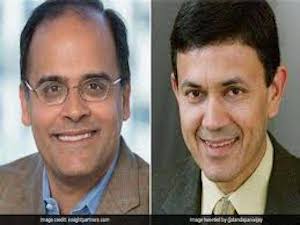
    Hotel Association of New York City President and CEO Vijay Dandapani and Insight Venture Partners Managing Director Deven Parekh, along with 17 other individuals have been appointed members to the Mayor’s Fund to Advance New York City Board of Advisors.

    Mr. Dandapani is a hotel industry veteran, recognized in 1998 as one of Crain’s New York Business top 100 minority business leaders in New York City.

    In 2002, the Asian American Business Development Center, New York selected him as one of 50 outstanding Asian Americans in Business. He is an alumnus of Cornell University’s School of Hotel Administration.

    According to its website, the Hotel Association of New York City is one of the oldest professional trade associations in the nation. Currently it represents 280 hotels, 80,000 rooms and about 50,000 employees.

    Mr. Parekh manages investments in vertical and horizontal software and consumer internet companies globally. He is also a member of the Council on Foreign Relations, the Economic Club of NY and the Greater NY Partnership.

    He was nominated by former president Barack Obama, and confirmed by the US Senate to serve on the Overseas Private Investment Corporation Board. In addition, he is chairman emeritus of Publicolor, a New York City based non-profit organization that focuses on inner city schools.

    During the period 2010 2012, he served as a Member of the Advisory Board of the US Export-Import Bank which is the official export credit agent of the United States. Mr. Parekh is regularly featured on Forbes’ list of the world’s top venture capitalists.

    For over 20 years, the Board of Advisors has provided expertise and critical support for the Fund as it pursues its goal of creating innovative and evidence-based approaches to address the City’s most pressing challenges, a press statement issued yesterday said.

    “To address the challenges facing our city, we need all New Yorkers pushing for progress together including those in our robust private sector,” de Blasio said.

    First Lady Chirlane McCray, Chair of the Mayor’s Fund to Advance New York City said the administration depends on New York City’s civic leaders to partner with government to make the city more vibrant and equitable.

    Founded in 1994, the Mayor’s Fund is a not-for-profit organization which annually works with an average of over 80 City programs, projects and initiatives; over 300 institutional funders; and more than 100 community-based organizations.

    The Mayor’s Fund and its partners work on a diverse set of initiatives that address needs across the city’s five boroughs, with a particular focus on improving the lives of vulnerable New Yorkers and New Yorkers in need.

    The Fund has made strategic investments to promote mental health services for all New Yorkers, increase workforce development opportunities for young New Yorkers, and meet the needs of New York City’s diverse immigrant community.

    Recently, the Mayor’s Fund has supported relief work in response to the unprecedented natural disasters that hit Puerto Rico, Texas and the Caribbean, including collecting USD 1.7 million in aid for residents displaced by Hurricane Maria.


  • Indian American Former federal CIO Vivek Kundra joins Sprinklr as COO

    Indian American Former federal CIO Vivek Kundra joins Sprinklr as COO

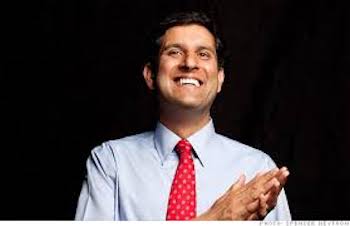
    New York (TIP):Indian American Former federal Chief Information Vivek Kundra has been named as the Chief Operating Officer of the social media management software provider Sprinklr.

    He was earlier the president of Salesforce, until he left the company in December.

    According to an official press release, with the appointment of Kundra, Sprinklr wants to provide brands a unified platform for customer experience management.

    “I’ve been incredibly fortunate in my career to learn from amazing leaders running some of the largest companies and governments in the world. All of them share one goal: to build enduring relationships that create value for every one of their constituents,” said Kundra.

    “The social revolution has created an unprecedented disruption for these organizations, but when they overcome it, the results are transformational — for them, and for their customers. I couldn’t be more excited to bring what I’ve learned to the only company that was built from the ground up to solve this problem, and to do so at massive, global scale.”

    Kundra, who was born in New Delhi, is a University of Maryland graduate.

    He has experience creating ecosystems for partners and launching new apps to solve industry-specific challenges. Kundra also launched a new government cloud, opening up new markets and accelerating growth in the United States, Europe, Middle East, Africa, and the Asia Pacific region.

    As the CIO of the Obama Administration, Kundra was responsible for managing $80 billion in annual technology spending. He was responsible for moving the government to the cloud, and strengthening the cybersecurity posture of the nation.

    Sprinklr, which focuses on social media management and customer experience management, was founded by Indian American Ragy Thomas in September 2009.

    “There are only a handful of execs in the world that have scaled SaaS companies at the level we aspire to, and even fewer who understand at their core, as we do, that the ability to create happy customers — listening to, engaging, and reaching them across dozens of digital channels — is the most strategic investment for the modern enterprise. To find both in one person is incredibly rare,” said Thomas, who is also the CEO of Sprinklr. “With a foundation in social, Sprinklr was purpose-built to be the defining enterprise software company for CXM, and with Vivek in our corner, we’re going to be relentless in our pursuit of that vision, executing with more momentum than ever.”

  • Indian American-founded SpringML opens office in Indianapolis and India

    Indian American-founded SpringML opens office in Indianapolis and India

    PLEASANTON, CA(TIP): On May 15th, SpringML, Inc., a leader in machine learning and advanced data analytics services, announced that it is expanding with new offices in Indianapolis and Hyderabad, India.

    Indian Americans Prabhu Palanisamy and Girish Reddy are co-founders of the company. Palanisamy is the President and Chief Strategy Officer of the company, while Reddy is the Chief Technology Officer.

    “In order to better serve our growing customer base, we are expanding our capabilities and starting to scale,” said Charles Landry, CEO of SpringML in a press release.

    “Opening offices in Indianapolis and Hyderabad gives us access to large, highly educated talent pools with great proximity to customers and partners,” he said. “It also provides great career opportunities for those looking to join a company and work on complex machine learning solutions.”

    Founded in 2015, SpringML helps businesses accelerate by providing them insights from their data. The company’s application solutions and services apply machine learning to find solutions to some of the business problems, enabling them to serve customers quantifiable results. SpringML maintains strategic partnerships with Salesforce and Google.

    The release also says that the new capabilities will enhance SpringML’s commitment to provide state-of-the-art enterprise solutions and services that help customers benefit from the latest advances in machine learning and AI.

    Our work in the energy, healthcare, technology and media industries drives major improvements to speed and accuracy by leveraging the power of automation and artificial intelligence.

    Headquartered in Pleasanton, CA, SpringML is a Premier Google Cloud and Salesforce partner. The company has offices across North America.

  • Facebook data breach: CEO Zuckerberg says it was a “mistake”, “I’m sorry”

    Facebook data breach: CEO Zuckerberg says it was a “mistake”, “I’m sorry”

    Vows tougher security steps to restrict developers’ access to such information.

    SAN FRANCISCO (TIP): Facebook Inc chief executive Mark Zuckerberg apologized on Wednesday, March 21, for mistakes his company made in how it handled data belonging to 50 million of its users and promised tougher steps to restrict developers’ access to such information.

    The world’s largest social media network is facing growing government scrutiny in Europe and the US about a whistleblower’s allegations that London-based political consultancy Cambridge Analytica improperly accessed user information to build profiles on American voters that were later used to help elect US President Donald Trump in 2016.

    “This was a major breach of trust. I’m really sorry this happened. We have a basic responsibility to protect people’s data,” Zuckerberg said in an interview with CNN, breaking a public silence since the scandal erupted at the weekend.

    Zuckerberg said in a post on Facebook the company “made mistakes, there’s more to do, and we need to step up and do it.” He said the social network planned to conduct an investigation of thousands of apps that have used Facebook’s platform, restrict developer access to data, and give members a tool that lets them to disable access to their Facebook data more easily.

    His plans did not represent a big reduction of advertisers’ ability to use Facebook data, which is the company’s lifeblood.

    Zuckerberg said he was open to additional government regulation and happy to testify before the US Congress if he was the right person. “I’m not sure we shouldn’t be regulated…. I actually think the question is more what is the right regulation rather than yes or no, should it be regulated?… People should know who is buying the ads that they see on Facebook.”

    Zuckerberg said Facebook was committed to stopping interference in the US midterm election in November and elections in India and Brazil. Zuckerberg, in an interview with The New York Times, referred to the artificial intelligence (AI) tools deployed by Facebook to detect fake accounts trying to manipulate news and influence the elections.

    Such a tool was deployed for the first time in the French elections in 2017. “The new AI tools we built after the 2016 elections found, I think, more than 30,000 fake accounts that we believe were linked to Russian sources who were trying to do the same kind of tactics they did in the US in the 2016 election. We were able to disable them and prevent that from happening on a large scale in France,” he said.

    This is for the first time that Zuckerberg has publicly talked about Facebook being allegedly used for influencing polls. “I feel a lot better about the systems now. At the same time, I think Russia and other governments are going to get more sophisticated in what they do, too. So, we need to make sure that we up our game,” he said.

    “This is a massive focus for us to make sure we’re dialed in for not only the 2018 elections in the US, but the Indian elections, the Brazilian elections, and a number of other elections that are going on this year that are really important,” Zuckerberg said.

    He said there is a lot of hard work that the Facebook needs to do to make it harder for nations like Russia to do poll interference. — Agencies

    FB to Enhance security for India elections

    Zuckerberg said Facebook is enhancing security features to ensure integrity of upcoming key elections in countries like India on its platform, as the social media giant faced flak over a major data breach scandal by a UK firm linked to Donald Trump’s poll campaign.

    Mark Zuckerberg says he is “sure someone’s trying” to use Facebook to meddle with US mid-term polls in Nov

    “I’m sure someone’s trying, “he said when asked about the possibility of meddling happening right now

    “I’m sure that there’s v2, version two, of whatever the Russian effort was in 2016, I’m sure they’re working on that,” he said

    Meanwhile, Facebook shares fell 1.5 per cent in premarket trading on Thursday, March 22, as the apology failed to quell Wall Street nerves

    The company has lost nearly $46 billion of its stock market value over the past three days

    Investors fear that any failure to protect personal data could deter advertisers and users and invite tougher regulation for the social media giant.

  • Trump announces new trade tariff plans, Faces Opposition within and without

    Trump announces new trade tariff plans, Faces Opposition within and without

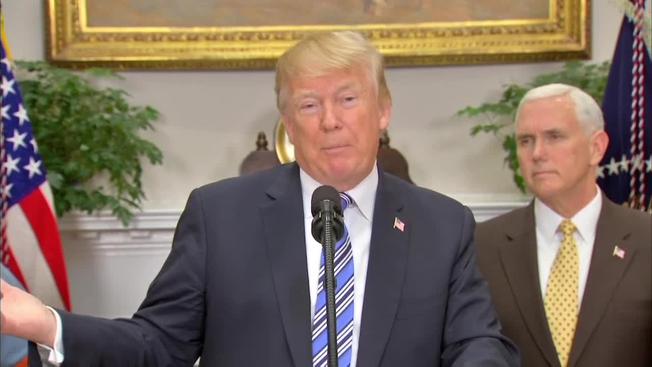
    WASHINGTON (TIP): Republicans on Capitol Hill reacted angrily to President Donald Trump’s announcement Thursday, March 8, that he is going forward with new tariffs on steel and aluminum, arguing that the move will harm the economy and that it threatens to start a broader trade war.

    WASHINGTON — Republicans on Capitol Hill reacted angrily to President Donald Trump’s announcement Thursday that he is going forward with new tariffs on steel and aluminum, arguing that the move will harm the economy and that it threatens to start a broader trade war.

    And while there are limits to what they can do to stop it, members are contemplating measures that could block the president from fully implementing his proposal.

    “I don’t think Republicans will put up with this, and I personally believe that we may be able to stop it in the Congress,” Sen. Orrin Hatch, R-Utah, said.

    Sen. Hatch: Trump has ‘been misled’ over tariffs 1:07

    The president announced a 10 percent tax on imported aluminum and a 25 percent tax on imported steel, carving out exceptions for imports from Canada and Mexico. But those exemptions weren’t enough to placate congressional Republicans who have traditionally opposed protectionist action on trade.

    GOP leaders had lobbied the White House from moving forward, writing letters, speaking out in the media and through outreach to the president and his advisers.

    During a conference call between White House officials and GOP Hill staffers Thursday, administration representatives requested favorable comments from members on the president’s plan, a suggestion that the staff in one office laughed at, according to a Republican aide.

    In a rare rebuke of the president, Republicans are vowing to continue challenging him in ways that could result in either new legislation or support for expected legal challenges to the move.

    “I disagree with this action and fear its unintended consequences,” House Speaker Paul Ryan said. “There are unquestionably bad trade practices by nations like China, but the better approach is targeted enforcement against those practices.”

    Senate Majority Leader Mitch McConnell said the exemptions for Canada and Mexico are not enough.

    “Members of the Senate, myself included, are concerned about the scope of the proposed tariffs on steel and aluminum and their impact on American citizens and businesses, including many I represent in Kentucky,” McConnell said.

    And, outside, EU talked tough. “If Donald Trump puts in place the measures this evening, we have a whole arsenal at our disposal with which to respond,” European Financial Affairs Commissioner Pierre Moscovici said.

    Counter-measures would include European tariffs on US oranges, tobacco and bourbon, he said, adding that some products under consideration for an EU riposte were largely produced in constituencies controlled by Trump’s Republicans. “We want Congress to understand that this would be a lose-lose situation,” Moscovici told BFM TV.

    The EU is by far the biggest trading partner of the United States by value and, after China, member states have together the biggest trade surplus with the country. Once approved by Trump, the tariffs would go into effect after two months.

    In Beijing, Foreign Minister Wang Yi said history showed that trade wars were not the correct way to resolve problems. “Especially given today’s globalization, choosing a trade war is a mistaken prescription. The outcome will only be harmful,” he said on the sidelines of an annual meeting of China’s Parliament.

  • Indian Americans make it to the Forbes billionaires list

    Indian Americans make it to the Forbes billionaires list

    (TIP): Rakesh Gangwal, is the richest Indian American. The cofounder of India’s budget airline Indigo is worth $3.3 billion, according to Forbes’ latest list of The World’s Billionaires, which was released on March 6.

    Information technology entrepreneur and philanthropist Romesh T. Wadhwani, who led the list last year, is the second richest Indian American, with a net worth of $3.1 billion.

    The latest Forbes list, which has a record 2,208 members, has two new Indian American billionaires: Niraj Shah, CEO and cofounder of e-commerce company Wayfair, and Arista Networks CEO Jayshree Ullal.

    According to Forbes, the 44-year-old Shah, a second generation Indian American based in Boston, is worth $1.6 billion. Ullal, who was born in London and raised in Delhi, is worth $1.3 billion.

    Other Indian Americans billionaires are venture capitalist Vinod Khosla (who is worth $2.3 billion); venture capitalist and Google investor Kavitark Ram Shriram ($2.1 billion); Vista Equity Partners cofounder Brian Sheth ($2 billion); pharmaceutical executive John Kapoor ($1.8 billion); software executive and investor Aneel Bhusri ($1.6 billion); and Syntel cofounder Bharat Desai ($1.1 billion).

    The wealth of Gangwal, who owns more than a third of IndiGo, increased by a whopping $1.2 billion in the past year. Sheth, the youngest Indian American billionaire at 42, saw his wealth go up by $900 million, while Khosla’s net worth increased by $700 million. The net worth of Wadhwani, Shriram, Kapoor and Desai increased by $100 million each in the past 12 months.

    The combined net worth of Indian American billionaires is $20.2 billion.

    The richest South Asian American is Jacksonville Jaguars owner Shahid Khan, who has a net worth of $7.2 billion.

    Source: Forbes

  • Jugaad Culture is the Best Improvisation in Corporate India, but it can’t take the place of established systems, says Harvard Business School Dean Nitin Nohria

    Jugaad Culture is the Best Improvisation in Corporate India, but it can’t take the place of established systems, says Harvard Business School Dean Nitin Nohria

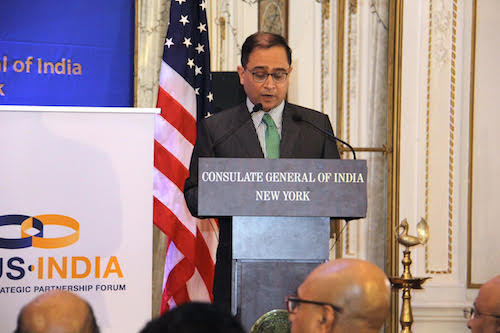
    NEW YORK CITY, NY (TIP): Indian CEOs are best at improvisation or jugaad culture which is unique as well as remarkable, said Professor Nitin Nohria, Dean of Harvard Business School. Prof. Nohria was speaking at the second ‘New India Lecture’ series at the Indian consulate in New York on February 26. Eminent journalist Bobby Ghosh moderated the session.

    In his brief welcome address Consul General Ambassador Sandeep Chakraborty explained the significance of the lecture series, which will be held on fourth Monday of every month. “We are exchanging visions for creating a new India – India of our dreams”, he said.

    Speaking on ‘Doing Business in India – The Good and the Bad’ Professor Nohria touched upon all aspects of corporate culture in India. “Findings of a study on how Indian CEOs practice leadership are very compelling and connect with my own experiences. The thing that Indian CEOs are best at is improvisation or jugaad as we call it. This is the unique quality in India, it’s a remarkable capacity”, he said. But he also explained why jugaad can’t take the place of established systems. “Too often, our conversations tend to focus on the extremes. It’s like punditry on the Indian cricket team. They’re either so good that can’t get beaten or they’re in their worst form. We need to be able to focus on the middle. So, my comments on jugaad culture should not be misunderstood as pessimism. But then, jugaad cannot take the place of established systems and processes either”, he further added.

    Seen in the picture, from L to R: Bobby Ghosh, Dr. Nitin Nohria, and Consul General Sandeep Chakraborty

    Professor Nohria also explained how the corporate culture of USA is different from India’s. “In the US, the relationship between employers and employees is very transactional. In India, so many family businesses dominate the Indian landscape that the employer- employee relationship becomes one of familiarity. They (employer) begin to think of the business itself as their Parivaar.

    “For many Indian business owners, these are people whose mission for the company is more than just to create shareholder value. American leaders are preoccupied with creating shareholder value. In India, the firm is seen by most people as an instrument for society”, he further explained.

    A view of the gathering

    The event was followed by a Q&A session. The next ‘New India Lecture’ series will be held on March 26 where Hussain Haqqani, who served as Pakistan’s ambassador to the United States from 2008-2011, will deliver the lecture.

    The response to the lecture was tremendous, with a roomful attendance.

  • Sun Mark holds annual Celebration & Awards Dinner at Gulfood 2018, Dubai

    Sun Mark holds annual Celebration & Awards Dinner at Gulfood 2018, Dubai

    DUBAI (TIP): Sun Mark held its annual Celebration & Awards Dinner in Dubai during the Gulfood exhibition at the lavish Shangri-La Hotel on 19th February 2018. It was, as always, a glittering affair with esteemed guests from the Middle East and South Asian region but with many also flying in from as far away as Canada, Cameroon and South Africa; with the array of guests resembling a gathering of the United Nations. Sun Mark is the only British company to have been awarded the Queens Award for Enterprise in International Trade for an unprecedented 5 consecutive years and exports to over 130 countries. Sun Mark’s achievements are seen as the gold standard and recognized as an Ambassador for UK Business. The Chief Guest from the British Government was the Rt. Hon. Richard Harrington MP, Under-Secretary of State for the Department for Business, Energy and Industrial Strategy. The Guest of Honor was Her Majesty’s Consul General to the U.A.E, Mr Paul Fox.

    The cricket legend Mr Muttiah Muralitharan at the event

    The evening was also attended by the cricket legend Mr Muttiah Muralitharan and the Honorable Mr Maalaine Salama, Head of Media Relations at Dubai Municipality. H.E Mirza Al Sayegh, Representative of HH Sheikh Hamdan bin Rashid Al Maktoum, Deputy Ruler of Dubai and Finance Minister of the UAE, could not attend the gala dinner, but conveyed his best wishes to Sun Mark for the event.

    Mr Harmeet Ahuja, Director of Sun Mark, welcoming the guests

    The evening began with Mr. Harmeet (Sunny) Ahuja, Director and CEO of Sun Mark, welcoming the guests. He informed them that 2017 had been a monumental year in the history of the company as it was the year of the 70th birthday of the company’s founder and chairman, Dr Rami Ranger CBE. He then proceeded to show a special video outlining Dr Ranger’s story and milestones through his life.

    Dr Rami Ranger CBE, Chairman of Sun Mark, addressing the guests

    Dr. Ranger, in his speech, paid tribute to all those who worked closely with him and how the success of Sun Mark was a result of a combination of customers, and suppliers and other service providers coming together to help each other to progress. He thanked his team from Sun Mark for all of their efforts. He reminded his guests that with the right values anyone can succeed and told his own story and how it can inspire anyone to do the best they can.

    Mr Paul Fox, Her Majesty’s Consul General to the UAE delivering his speech
    The Rt. Hon. Richard Harrington MP, Under-Secretary for the department for Business, Energy and Industrial Strategy delivering his speech

    The guests were then addressed by Her Majesty’s Consul General to the UAE, Mr Paul Fox, who spoke of the importance of trade and reiterated its importance in forging improved relations across the world. He also acknowledged Dr. Ranger’s philanthropic efforts and achievements. He spoke of the British food industry being a major employer and is the largest sector of UK manufacturing and an unsung hero of the British economy. He encouraged British companies to work in the UAE and to use it as a base to grow their business further. The Chief Guest, Mr Richard Harrington MP, spoke of Dr Ranger and his team’s achievements and lauded him for acknowledging the efforts of all those who worked for him and also of his wife’s great contribution to the company’s success.

    Mr Sunny Kulathakal, Global President of GOPIO (Global Organisation of People of Indian Origin) delivering his speech

    Mr Sunny Kulathakal, Global President of GOPIO (Global Organisation of People of Indian Origin) addressed the guests and acknowledged the contribution of Dr Ranger in social and cultural arenas and encouraged others to join them in their efforts.

    Award presented to: Sir Prince Oji Okisisi of company Prince Oji, Nigeria
    Award presented to Mr Izzat Ullah Khan of Naveed Trading, Pakistan.
    Award presented to Mr Vijay Aswani of Al Vihag Enterprises, Gambia
    Special award for outstanding lifetime achievement presented to Sheikh Khalid Mahmood and his son, Sheikh Omer Khalid of Bismillah Stores, Pakistan.

    Sun Mark then recognized some of its regional partners and distributors in the region who had made a significant contribution to the growth and development of business. They were Sir Prince Oji Okisisi of company Prince Oji in Nigeria. Mr Izzat Ullah Khan of Naveed Trading, Pakistan, Mr Vijay Aswani of Al Vihag Enterprises, Gambia and there was a special award for outstanding lifetime achievement for Sheikh Khalid Mahmood of Bismillah Stores of Pakistan who collected his award with his son, Sheikh Omer Khalid.

    The Vote of Thanks was given by Mr. Harmeet Ahuja, who thanked Dr. Rami Ranger and Sun Mark UK and UAE team for making the evening possible and for bringing together such a myriad of people from all over the world.

    The formal part of the evening was then concluded, and dinner was served.

  • India’s Budget focuses on farm sector, gives little to middle class

    India’s Budget focuses on farm sector, gives little to middle class

    National Health Protection scheme announced

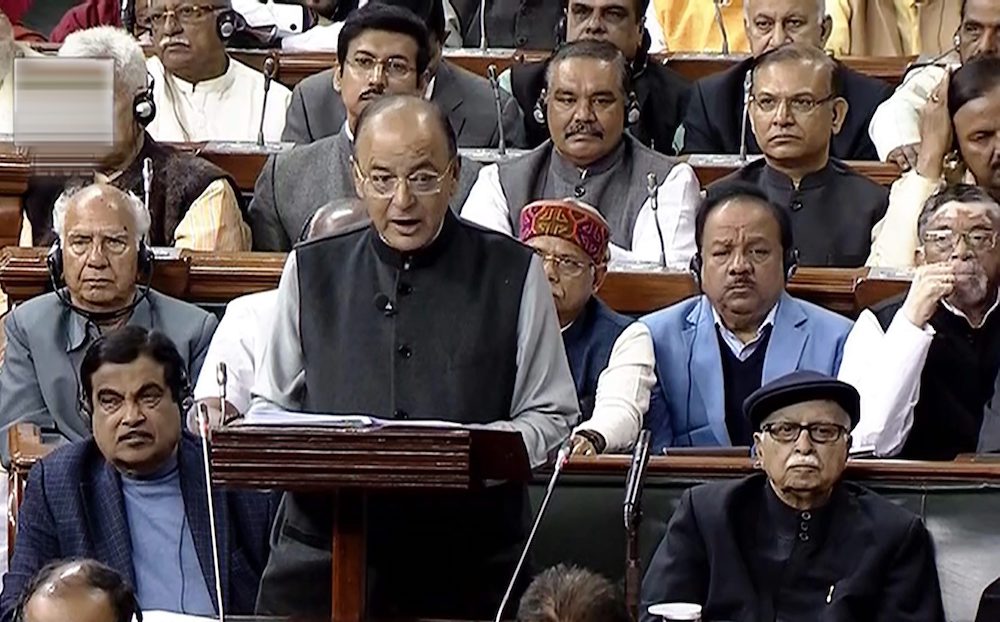
    NEW DELHI (TIP): In his last budget before general elections, India’s Finance Minister Arun Jaitley on Feb 1 unveiled a slew of measures for agriculture as well as the rural sector and announced a new health insurance scheme for the poor but provided little relief to the middle class.

    With chaotic implementation of the Goods and Services Tax and demonetization causing distress in the economy, Jaitley announced massive spending on rural and urban infrastructure as also lower tax rates for small and medium enterprises.

    While continuing the 10-15 per cent surcharge on super-rich, he raised the health and education cess, levied on all taxable income, to 4 per cent from 3 per cent at present.

    Keeping the income tax rates and slabs unchanged, he introduced a Rs 40,000 Standard Deduction for salaried employees and pensioners in lieu of the present exemption in respect of transport and medical expenses.

    Presently, no tax is applicable on Rs 19,200 of transport allowance and medical expenditure of up to Rs 15,000. This has now been subsumed into the new Standard Deduction of Rs 40,000 which may mean very little benefit in tax saving considering that health and education cess has gone up.

    Senior citizens will get higher exemptions on income from interest on bank and post office deposits, health insurance premium and critical illness expense.

    Jaitley, however, made import of a host of products – from cellphone to perfumes and toiletry, from watches to parts of automobiles, sunglasses to truck and bus tires, footwear to diamonds and edible oils to fruit juices — costly by raising customs duty.

    Fourteen years after it was scrapped, he brought back tax on gains made from sale of shares to offset revenue losses.

    Capital gains exceeding Rs 1 lakh from shares held for more than a year will be taxed at 10 per cent. Presently, gains from equity investments held for more than 12 months are exempt from tax.

    In July 2004, the government had abolished long-term capital gains tax on shares and replaced it with the securities transaction tax (STT) – a same-day tax credit system that continues.

    In the 110-minute speech, in which he kept switching from English to Hindi for wider mass appeal, Jaitley announced plans for agriculture, rural housing, organic farming, animal husbandry and fisheries with a total allocation of Rs 14.34 lakh crore.

    “My government is committed for the welfare of farmers,” he said announcing that his party’s election promise of fixing a minimum support price (MSP) at 150 per cent of the cost will be implemented for all kharif crops this year.

    Also, credit to agriculture would be raised to Rs 11 lakh crore in the coming fiscal from Rs 10 lakh crore and kisan credit card extended to fisheries and animal husbandry farmers. Rs 2,000 crore will be provided for development of agri market and export of agriculture commodities will be liberalized.

    In a bid to provide universal healthcare, he announced a ‘National Health Protection scheme’, providing a cover of up to Rs 5 lakh per family per year for second and tertiary care hospitalization to 10 crore poor and vulnerable family (about 50 crore beneficiaries).

    This, Jaitley said, will be world’s largest health protection scheme.

    He committed an expenditure of Rs 1.38 lakh crore on health, education and social protection.

    But to fund these, he let go of the fiscal consolidation roadmap. As a result, fiscal deficit for the current fiscal will be 3.5 per cent of the GDP as against the previous target of 3.2 per cent, and 3.3 per cent in 2018-19, as opposed to 3 per cent set earlier.

    Fiscal deficit in 2016-17 was 3.5 per cent of the GDP.

    Jaitley, who had in 2015 promised to reduce corporate tax from current 30 per cent to 25 per cent over four years, proposed lower tax rate of 25 per cent for companies with turnover of up to Rs 250 crore in 2016-17.

    The Union Budget 2018-19 was the last full budget before the general elections next year, when a vote on account would be presented. The next full budget will be presented by the new government.

    With GST and demonetization pulling down GDP growth rate in Asia’s third largest economy to its lowest level in three years, he said economic growth was picking up and “firmly on path to achieve 8 per cent plus growth soon”.

    Gross domestic product (GDP) is expected to grow at 6.5 per cent to 6.75 per cent in 2017-18.

    “Indian economy is now USD 2.5 trillion – seventh largest in the world. India is expected to become the fifth largest economy very soon,” he said.

    Prime Minister Narendra Modi termed the Budget as “development-friendly” and said it will strengthen the vision of a ‘new India’.

    The budget is “farmer friendly, common citizen friendly, business environment friendly” and will add to ‘ease of living’ and ‘ease of doing business’, Modi added.

    A 100 per cent tax deduction will be given for the first five years to companies registered as farmer producer companies with a turnover of Rs 100 crore and above.

    “While making the proposals in this year’s budget, we have been guided by our mission to especially strengthen agriculture, rural development, health, education, employment, MSME (micro, small and medium enterprises) and infrastructure sectors of Indian economy,” Jaitley said.

    He put revised expenditure for 2017-18 at Rs 21.57 lakh crore and projected Rs 24.42 lakh crore expenditure in 2018-19.

    Railway capital expenditure has been put at Rs 1.49 lakh crore in 2018-19.

    Gross market borrowing is seen at Rs 6.06 lakh crore and net borrowing at Rs 4.62 lakh crore in 2018. Government will also switch Rs 28,000 crore of bonds next fiscal.

    Customs duty on import of mobile phones is proposed to be increased to 20 per cent from 15 per cent, on some of their parts and accessories to 15 per cent and certain TV parts to 15 per cent.

    Jaitley said measures to address bad loans of small and medium enterprises would be announced soon. He proposed setting up Rs 3 lakh crore target for lending to small enterprises.

    Three government-owned non-life insurers – National Insurance Co, United India Assurance Co and Oriental India Insurance Co — will be merged into a single entity and listed subsequently.

    The process of strategic sale in 24 state-run companies including privatization of Air India has begun and more exchange-traded fund offers including debt ETFs will come.

    Special schemes for states around Delhi will be implemented to address air pollution, he said adding removal of crop residue will be subsidized in order to tackle the problem of pollution due to burning of crop residue.

    (Source: PTI)

  • HungerBox raises $2.5 million in pre-series A funding lead by Lionrock Capital and Kris Gopalakrishnan

    HungerBox raises $2.5 million in pre-series A funding lead by Lionrock Capital and Kris Gopalakrishnan

    BENGALURU (TIP): HungerBox, the Growth Story-promoted B2B food-tech company t announced, January 22, the closing of USD $2.5 million in pre-series A funding led by Lionrock Capital and Kris Gopalakrishnan, Co-Founder, Infosys.

    Started in 2016, HungerBox is a full stack, food-tech company that is focused on the B2B space and operates 100+ digital cafeterias for more than 75 corporate clients including Qualcomm, Microsoft, FirstSource, Accenture, CapGemini, Genpact, ABB, Amazon and McKinsey, across Bangalore, Chennai, Hyderabad, Mumbai, Pune, Delhi/NCR and Jaipur.

     “HungerBox’s business has scaled tremendously over the last 15 months with nearly 7 million orders placed on our platform till date. We are clocking more than 120,000 daily orders and expect to scale this to half a million orders per day by end-2018,” said Sandipan Mitra, CEO & Co-Founder, HungerBox. “The funding we have received from marquee investors will boost our ability to scale our operations to keep pace with the traction we are seeing for our digital cafeteria management solution.”

    Kris Gopalakrishnan, Co-Founder, Infosys commented, “There is tremendous potential for innovation in the B2B food-tech arena as corporate spends on F&B are already massive and growing year-on-year. HungerBox addresses this large space with an easily scalable model and an end-to-end solution that provides a win-win to employees as well as to corporate clients”.

    “The B2B food space has plenty of headroom for growth and innovation for years to come.  The winners in the sector will be those with a powerful, tech-led offering and the ability to scale in-step with their clients. HungerBox certainly has all the credentials to be a leader in this space,” said Hari Kumar, Founder & CEO, Lionrock Capital.

     Spending on F&B in the B2B space alone is estimated to reach US $ 14 billion in India in 2018. The space is growing at ~ 15% per annum.

    HungerBox’s seamless, tech-led solution enables end-to-end digital cafeteria management with the company’s proprietary technology platform connecting food vendors to employees within client organizations through a customized mobile app available to each employee.

    Using the app, employees can view the F&B menu provided by all enlisted food vendors at their workplace café’s, place orders and track delivery accurately. They can also provide ratings / feedback. HungerBox’s solution provides admin teams at the client organization with the ability to track the entire F&B operation including food consumption, orders, feedback etc., in real-time. More than 50 different payment methods are integrated into the service offering including in-app purchases by an employee, payment via smart cards, m-wallets, self-serve kiosks at the café’s etc.

     HungerBox uses latest technology advancements like IoT in its solution to seamlessly connect the vendor side hardware (designed by HungerBox) and employees of corporate. The HungerBox solution also provides features like ‘Personalized Recommendations’ to employees through its AI-driven technology, ‘Health Mode’ for health conscious employees, ability to undertake group-ordering and orders from restaurants in the vicinity when corporate cafés are closed etc.

    HungerBox employs 200 staff across India and was started by Sandipan Mitra and Uttam Kumar, who are both veterans of the food tech space in India whose previous stints included global food takeaway ordering service Just Eat’s India operations. HungerBox is promoted by GrowthStory, the venture-builder platform founded by serial entrepreneurs, K Ganesh and Meena Ganesh.