Tag: C Uday Bhaskar

  • Trump sets a perilous precedent

    Trump sets a perilous precedent

    The use of force by the US in Venezuela raises doubts about the legitimacy of its actions

    “The fact that the US action flouts international law related to state sovereignty and humanitarian rights protocols has been highlighted worldwide and even within the US — but to little avail. The Trump doctrine (Donroe is specific to Latin America) boils down to bludgeoning any interlocutor who does not toe the “Donald line”, and the use of tariffs as a weapon is all too familiar.”

    By C Uday Bhaskar

    The outcome of the UN Security Council’s emergency meeting on the US military operation, which resulted in the outrageous abduction of Venezuelan President Nicolas Maduro and his wife, was predictable. Strategic timidity in the face of the intimidation unleashed by US President Donald Trump is the dominant orientation of the global community. The famed horseshoe table did not issue any statement. Given that the spotlight was on the US, with its veto power as a permanent member of the UNSC, Washington would not have allowed any censure of its Operation Absolute Resolve.

    Panama was subjected to a similar action in 1989. There are notable parallels between the US capture of Panamanian leader Manuel Noriega on January 3, 1990, and the kidnapping of the Venezuelan President on the same day in 2026. The latter is the most direct US military intervention in Latin America since the Panama operation.

    In both cases, heads of state — sitting (Maduro) and de facto (Noriega) — have been indicted on federal drug trafficking charges; Noriega for racketeering and cocaine smuggling, and Maduro for narco-terrorism and related conspiracies that were deemed inimical to US national security. This action is being interpreted as the first step to implement the new doctrine unveiled by President Trump that builds on the 1823 Monroe doctrine and has been dubbed the Donroe doctrine.

    However, notwithstanding Trump’s assertion that Latin American affairs are now a top US security priority and that he would authorize military action and intervention at will, rumblings of dissent were evident at the UNSC’s January 5 meeting.

    The deliberations reflected the widespread international condemnation of the US action as a violation of international law, sovereignty and the UN Charter’s prohibition on the use of force against a state’s territorial integrity or political independence. Despite the distinctive backdrop, UN Secretary-General António Guterres was not present at the meeting; his statement, which was read out by an official, emphasized that “the power of the law must prevail” and called for inclusive democratic dialogue respecting human rights and Venezuela’s sovereignty. To his credit, Guterres was the first to condemn the US action and voiced the overwhelming global shock and anguish.

    At the UNSC meeting, two of the permanent members, Russia and China, along with Brazil, Colombia (which made a request for the meeting), Cuba and Mexico denounced the operation as an act of aggression, armed attack or “imperialist” intervention. Some demanded Maduro’s immediate release and rejected unilateral actions.

    Even US allies such as France and Denmark criticized the move for undermining the principles of international order, though some acknowledged Maduro’s repressive rule and the need to address drug trafficking and human rights issues through lawful means.

    In response, Mike Waltz, US Ambassador to the UN, defended the action as a “surgical law enforcement operation” against indicted “narco-terrorists”, not an act of war or occupation, and stated that the US had no plans to occupy Venezuela. This was not accepted by the global community. It is instructive that no nation, except Argentina and Ecuador, has unambiguously endorsed the belligerent US action against Maduro.

    The fact that the US action flouts international law related to state sovereignty and humanitarian rights protocols has been highlighted worldwide and even within the US — but to little avail. The Trump doctrine (Donroe is specific to Latin America) boils down to bludgeoning any interlocutor who does not toe the “Donald line”, and the use of tariffs as a weapon is all too familiar.

    Hence, most nations have chosen prudence in response to the US military operation. India, Japan and many other countries have issued anodyne statements that do not directly condemn the US action or uphold any normative principle of international law.

    The operation has raised disturbing questions. If the US arrogates unto itself the right to abduct/kidnap the head of another state for perceived transgression of American laws, is any global leader safe from such predatory action? Will leaders attending the UN General Assembly meeting in New York be sanguine about their own safety?

    The use of force by the US in Venezuela raises doubts about the legitimacy of its actions. At least 115 deaths were reported from US military strikes on alleged drug-smuggling boats (including go-fast boats and semi-submersibles) in the months leading to Operation Absolute Resolve.

    These strikes were part of a campaign that began in early September 2025 and targeted vessels primarily in the Caribbean Sea and eastern Pacific Ocean. A total of 36 vessels were struck on the suspicion of carrying drugs. Should the US military have been part of such an operation against unarmed small vessels? The January 3 operation itself reportedly caused 70-80 fatalities, mostly Venezuelan and Cuban personnel tasked to protect Maduro.

    There is little doubt that the US has an impressive array of trans-border military capability that includes delivery of lethal precision-guided ordnance, pinpoint surveillance accuracy, strategic airlift and overwhelming cyber capabilities. All this was demonstrated both in Abbottabad (the killing of Osama bin Laden in 2011) and in the audacious capture of President Maduro. But Trump’s resolve to discipline Venezuela will remain tainted for blurring the Weberian dictum about the legitimacy of the use of military force.

    More such resolute actions have been mooted — Colombia, Cuba, Iran and even Mexico have been threatened by Trump. Fall in line or else face US ire. Greenland may provide the ultimate Alice in Wonderland scenario. If the next Trump move is to ‘acquire’ Greenland, and Denmark invokes Article VI of the NATO provisions, it is possible that troops of the US military will defend a NATO ally against the occupying US forces!

    Welcome to Trumpland, and all hail Emperor Donroe!

    (C Uday Bhaskar is Director, Society for Policy Studies)

  • Iran-Pak clash adds to the chaos

    Iran-Pak clash adds to the chaos

    Kickerline: Tangled and multi-layered geopolitics of West Asia has entered the South Asian strategic calculus

    It may be inferred that both Iran and Pakistan have acted to establish the credibility of their deterrence posture. However, given the shadowy nature of terror-related intelligence inputs and the identity of the main state actors behind proxy groups, it is difficult to arrive at an objective and informed assessment on whether the actions by the two states were measured and appropriate, or impulsive.

    By C Uday Bhaskar

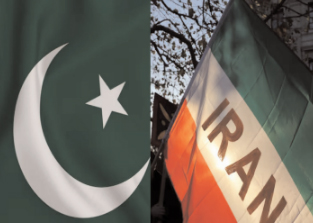
    In a couple of dramatic developments last week, Iran launched air attacks on its nuclear-armed neighbor Pakistan and was subjected to tit-for-tat strikes. Though billed as counter-terrorism operations, the use of missiles and fighter jets raised concerns that the conflict could escalate into a war. However, both nations have now agreed to defuse tensions. On January 19, Pakistan stated that it desired to work with Iran in “the spirit of mutual trust and cooperation” and would strengthen coordination on counter-terrorism.

    Whether China will use its leverage in the region to promote stability or discord, driven by Beijing’s penchant to fetter India, remains a moot point.

    There is an ironic twist in the way Iran and Pakistan are responding to perceived threats from terror groups across their border, given that both nations have honed the strategy of covert state support to non-state entities engaged in terror activities to advance their geopolitical objectives. The Iran-Pakistan border areas are largely inhabited by a restive Balochi population that has been ruthlessly oppressed by both states to quell separatist aspirations. Over the last few decades, the Shia-Sunni theological divide has fueled terror groups that are also influenced by religious fervor in the extended West Asian region, where the Iran-Saudi geopolitical and socio-religious competition has a long history. Another significant factor is the age-old Arab-versus-Persian ethnic fault lines and Iran’s distinctive strategic identity and aspirations in the Islamic world.

    In the current instance, despite the welcome turn of events wherein a potential Iran-Pakistan crisis was averted, it is evident that the tangled and multi-layered geopolitics of West Asia has entered the South Asian strategic calculus and this will pose many challenges to India in the near future. The extended region that encompasses South and West Asia was convulsed in recent decades by the tectonic events of 1979 — the overthrowing of the Shah of Iran and the emergence of political Shia-Islam; the Soviet invasion of Afghanistan that brought the Cold War to the region; and the rise of militancy-cum-terrorism symbolized by Kalashnikov-wielding mujahideen driven by religious zealotry.

    India felt the negative effects of the 1979 upheaval in the early 1990s. Following the Soviet withdrawal from Afghanistan, a triumphant Pakistan, which had supported the Afghan mujahideen, stepped up its anti-India terror activities and the erstwhile state of Jammu and Kashmir was badly scarred.

    More recently, the October 7, 2023, Hamas terror attack on Israel and the disproportionate reprisal that Tel Aviv is prosecuting have had a non-linear consequence that has adversely impacted the world at large. This is manifested in Houthi attacks on global merchant shipping, and once again, a non-state entity with state support (Iran) has posed an intractable challenge to the major powers and the safety of critical SLOCs (sea lines of communication).

    Iran’s locus in the larger southern Asian strategic template, Tehran’s nuclear aspirations and anxieties, its deeply ingrained anti-US/anti-Israel orientation and the proximity to both China and Russia will shape the regional strategic framework in the years ahead. This, in turn, will have acute relevance for India, given China’s ambitions related to Beijing’s Belt and Road Initiative (BRI) that has the Xi Jinping imprimatur. Both Iran and Pakistan have critical areas to advance BRI objectives.

    Thus, it is instructive that Beijing was seen as the preferred mediator for defusing the current Iran-Pakistan situation, and while there has been no official confirmation, the possibility that China had a quiet role in lowering the bilateral temperatures remains high. Whether China will use its leverage in the region to promote stability or discord, driven by Beijing’s penchant to fetter India, remains a moot point, but it will be a significant element in the affairs of the subcontinent.

    Iran’s mid-January counter-terror actions, which included strikes against Iraq, Syria and Pakistan, mark a departure from the norm that Tehran had followed until now. The use of air power and precision-guided weapons could become the new benchmark for such exigencies. While Tehran has claimed that it took action based on intelligence inputs in each case, domestic political compulsions are also significant drivers.

    Early in January, a terrorist attack in Kerman, southeast of Tehran, resulted in the death of nearly 100 people at a memorial for Iran’s top commander Qasem Soleimani. Subsequently, the ISIL/ISIS claimed responsibility for this dastardly attack, making it clear that Iran had to take action against ISIS to assuage the anger and grief of its citizens. In the case of Pakistan, the rationale offered by Iran is that it was targeting bases of the Jaish al-Adl, a Sunni Baloch armed group operating from Balochistan (formerly designated as Jundallah) that was involved in a mid-December attack in the Sistan province. The January 16 attack was purportedly carried out to pre-empt another strike.

    It may be inferred that both Iran and Pakistan have acted to establish the credibility of their deterrence posture. However, given the shadowy nature of terror-related intelligence inputs and the identity of the main state actors behind proxy groups, it is difficult to arrive at an objective and informed assessment on whether the actions by the two states were measured and appropriate, or impulsive.

    Dissuading non-state terror groups through resolute military action can be protracted and costly and yield negative returns, as demonstrated by the US-led ‘global war on terrorism’ in the wake of the 9/11 attacks.

    Jittery deterrence holds even greater significance in a troubled region armed with weapons of mass destruction, and the Iran-Pakistan tit-for-tat attacks provide valuable crisis management lessons for regional policymakers.
    (The author is Director, Society for Policy Studies)