Tag: CAATSA

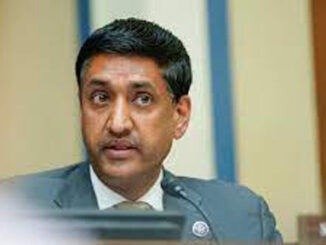
  • Indian American Congressman Ro Khanna introduces standalone bill in US House of Representatives for CAATSA waiver to India

    Indian American Congressman Ro Khanna introduces standalone bill in US House of Representatives for CAATSA waiver to India

    WASHINGTON, D.C (TIP): Indian-American Congressman Ro Khanna has introduced a standalone bill in the US House of Representatives seeking a waiver to India against the punitive CAATSA sanctions, asserting that it is in the best interests of both countries to deter “aggressors” in light of Russia and China’s close ties.

    The Countering America’s Adversaries Through Sanctions Act (CAATSA) is a tough US law that authorizes the US administration to impose sanctions on countries that purchase major defense hardware from Russia in response to Moscow’s annexation of Crimea in 2014 and its alleged meddling in the 2016 US presidential elections.

    The resolution, which has also been endorsed by Congressman Brad Sherman and David Schweikert along with Khanna, has been sent to the House Foreign Affairs Committee for necessary action.

    “While India faces immediate needs to maintain its heavily Russian-built weapons systems, a waiver to sanctions under the Countering America’s Adversaries Through Sanctions Act during this transition period is in the best interests of the United States and the United States-India defense partnership to deter aggressors in light of Russia and China’s close partnership,” it said.

    A similar legislative amendment to the National Defense Authorization Act (NDAA) was introduced by Khanna, a Democrat, this summer and it was passed by the House with bipartisan support.

    “I first introduced this as an amendment to the National Defense Authorization Act and now I am proud to introduce it as a standalone bill to continue to build momentum and support for it. It is necessary for us to pass this in order to strengthen the relationship between the US and India and deter aggressors like China,” Khanna told media.

    The resolution asserts that India faces immediate and serious regional border threats from China, with continued military aggression by the government of China along the India-China border.

    While India has started importing the S-400 missile defense system from Russia, US President Joe Biden is yet to take a call on CAATSA waiver sanctions. Under the existing laws, the president can give a national interest waiver to countries. Khanna said that this is a strong bill to affirm the US and India defense partnership.

  • US Senator seeks clarity from Biden Admin on CAATSA sanctions waiver to India

    US Senator seeks clarity from Biden Admin on CAATSA sanctions waiver to India

    WASHINGTON, D.C. (TIP): A powerful Democratic Senator on Tuesday sought clarity from the Biden Administration on CAATSA sanctions waiver to India on purchase of S-400 missile defense system from Russia.

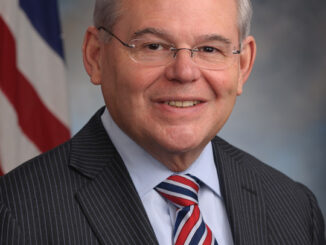
    “In South and Central Asia, we need clarity on whether the administration will waive CAATSA sanctions for India’s purchase of the Russian S-400 missile defense system and what role, if so, are they going to continue to play in the QUAD,” said Senator Bob Menendez, Chairman of the powerful Senate Foreign Relations Committee.Menendez, a Democratic Senator from the State of New Jersey, said this in his opening remarks during the Committee’s hearing on the annual budgetary proposals of the State Department by Secretary of State Antony Blinken.

    The Countering America’s Adversaries Through Sanctions Act (CAATSA), which was brought in 2017, provides for punitive actions against any country engaged in transactions with Russian defense and intelligence sectors.

    In October 2018, India had signed a USD 5 billion deal with Russia to buy five units of the S-400 air defense missile systems, despite a warning from the then Trump administration that going ahead with the contract may invite US sanctions. The US has already imposed sanctions on Turkey under the CAATSA for the purchase of a batch of S-400 missile defense systems from Russia.Following the US sanctions on Turkey over the procurement of S-400 missile systems, there were apprehensions that Washington may impose similar punitive measures on India.

    Menendez said that he would like to hear the administration’s plans for countries in NATO eastern flank and for Taiwan, for that fact, which is facing a similar threat from China.

    “Whether it is Japan, South Korea, or Australia, when it comes to countering China, a strong alliance with our partners is vital. Xi Jinping’s hyper nationalism is more assertive around the globe than ever before,” he said.

    “The State Department must work on a pragmatic appraisal of how to best combat China’s predatory economic and trade practices, so we have the ability to outcompete China in the generation ahead, bilaterally and through robust presence and action in regional and international institutions,” the Senator said.

    (Source: PTI)

  • After Omicron pandemic, it is Russia-Ukraine war afflicting world of sports now

    After Omicron pandemic, it is Russia-Ukraine war afflicting world of sports now

    By Prabhjot Singh

    Gallant attempts by the world of sports to wriggle out of the devastating impact of the Omicron pandemic may be severely hit by the Russia-Ukraine military conflict that threatens to divide the world again. Unfortunately, the timing of the Russian invasion of Ukraine coincides with the holding of a major International Olympic Committee event, the Paralympic Games, scheduled to start in Beijing on March 4. Twice before the Olympic movement had been hit hard by World War II. The  1940 and 1944 editions of the Olympic Games had to be cancelled during the global hostilities at that time.

    Led by the United States, the NATO nations, in expression of their complete solidarity with Ukraine, have already heaped a series of sanctions on Russia in their valiant attempt to force cessation of hostilities.

    It was for almost similar reasons that the 1980 Moscow Olympic Games were boycotted by a group led by the NATO leader, the United States. The boycotters had objected to the presence of the then Soviet Union forces in Afghanistan.

    Interestingly, the Beijing Winter Olympic Games 2022, that witnessed a diplomatic boycott by most of the NATO nations, including the US and Canada,  had the Russian President, V. Putin, as a guest of honor

    Other than NATO, it is the International Olympic Committee (IOC) that has come hard on both Russia and its aide Byelorussia by  urging all International Sports Federations (ISFs)  to relocate or cancel their sports events currently planned in Russia or Belarus. The ISFs should take the breach of the Olympic Truce by the Russian and Belarussian governments into account and give the safety and security of the athletes absolute priority. The IOC itself has no events planned in Russia or Belarus.

    The IOC Executive Board also wants that no Russian or Byelorussian national flag be displayed and no Russian or Byelorussian anthem be played in international sports events that are not already part of the respective World Anti-Doping Agency (WADA) sanctions for Russia. In the just concluded Beijing Winter Olympic Games, it was the Russian Olympic Committee (ROC) and not Russia that was allowed to send its contingent. Neither any Russian flag was flown, nor the Russian national anthem was played during the Games though the ROC athletes were placed at number two in the overall medals (32) tally with six gold. 12 silver and 14 bronze medals. Norway topped the tally with 37 medals, including 16 gold. Eight silver and 13 bronze medals while Germany took the third spot with 27 medals and Canada finished fourth with a tally of 24. Incidentally, Norway, Germany and Canada are now on the other side opposing the Russian action in Ukraine.

    Though the IOC Executive Board  has expressed its full support to the International Paralympic Committee (IPC) for the upcoming Paralympic Winter Games in Beijing from March 4, the shadow of the Russian action may impact the games in a big way.

    Immediately after Russia launched its military operations, the International Olympic Committee (IOC)  came out with a strong condemnation of the breach of the Olympic Truce by the Russian government by referring to the December 2, 2021 resolution of the UN General Assembly adopted by consensus of all 193 UN Member States. The Olympic Truce began seven days before the start of the Olympic Games, on February 4, 2022, and ends seven days after the closing of the Paralympic Games.

    Earlier in a similar resolution passed by the General Assembly of the United Nations on  9 December 9, 2019, it was decided to include in the provisional agenda of its seventy-sixth session the sub-item entitled “Building a peaceful and better world through sport and the Olympic ideal” and also recalling its prior decision to consider the sub-item every two years, in advance of the Summer and Winter Olympic Games. The Olympic Truce was first taken up by the UN General Assembly  on October 25, 1993, which, inter alia, revived the ancient Greek tradition of ekecheiria (“Olympic Truce”) calling for a truce during the Olympic Games to encourage a peaceful environment and ensure safe passage, access and participation for athletes and relevant persons at the Games, thereby mobilizing the youth of the world to the cause of peace.

    The core concept of ekecheiria, historically, has been the cessation of hostilities from seven days before until seven days after the Olympic Games, which, according to the legendary oracle of Delphi, was to replace the cycle of conflict with a friendly athletic competition every four years. Other than the Paralympic Olympic Games  starting in Beijing on March 4, where winter para athletes of both Russia and Ukraine are scheduled to participate, the first test for any International Sports Federation under the new IOC directive is for field hockey (International Hockey Federation – FIH).

    An elite FIH event – Junior Women World Cup – will be organized at Potchefstroom in South Africa from April 1 where both Russia and Ukraine are among 16 nations confirmed to participate. Going by the hostilities back home, participation of both Russia and Ukraine in the Potchefstroom event looks doubtful, both the South African Hockey Federation and the FIH have a problem on hand.

    The tournament had already been postponed once. The list of participants, too, has witnessed changes. For example, Japan had withdrawn at the last minute. It was replaced by Malaysia. Now the  sword of uncertainty is hanging over the Potchefstroom event again following the Russia-Ukraine war.

    (Prabhjot Singh is a veteran journalist with over three decades of experience covering a wide spectrum of subjects and stories. He has covered  Punjab and Sikh affairs for more than three decades besides covering seven Olympics and several major sporting events and hosting TV shows. For more in-depth analysis please visit probingeye.com  or follow him on Twitter.com/probingeye. He can be reached at prabhjot416@gmail.com)


  • How Ukraine imbroglio can impact India

    How Ukraine imbroglio can impact India

    By Gurjit Singh

    The standoff between Russia and US-Europe over Ukraine has come at an inopportune time for India. As a UN Security Council (UNSC) member, India is contributing to ensuring peace, security and stability in the world. This role has opportunities for enhancement due to the inability of the permanent five (P5) to act in unison. In the case of Ukraine, the P5 are threatening to go to war with each other, with the UK, US, France on one side, and Russia supported by China on the other. This takes matters totally out of the hands of the UNSC, making it redundant. The Ukraine crisis is curtailing Indian role in the UNSC. New Delhi is doing its best to remain relevant. India is developing relations with the EU and other European countries. This initiative leads India to support the Normandy process and the Minsk agreement, which are European efforts to engage Russia on Ukraine. India would prefer the European way of dealing with Russia than the tough posture which the US wants NATO to adopt. European countries will toe the US line if war erupts. That reduces the efficacy of India’s European initiative presently. India is calling for diplomacy as that will defuse the tension and also give India more leeway.The Russian posture on Ukraine and the reaction to it, strengthened the Sino-Russian partnership. The Xi-Putin summit at the Beijing Winter Olympics lent firmness and robustness to that relationship. China is challenging India, has overthrown extant agreements and increased its military threat. This does not augur well. For long, India depended on Russia for strategic partnership. It still largely depends on Russia for military hardware. While the defense relationship is mutually beneficial, the Sino-Russian axis curtails the Russian ability and intent to support India as in the past.

    Russia’s confrontation with NATO will lead to rigorously imposed sanctions. India has delicately negotiated to stay out of CAATSA (Countering America’s Adversaries Through Sanctions Act) with the purchase of S-400 Triumf missile systems which may not work when a war-like situation prevails. Countries like Germany have stark choices on economic issues, and India will be faced with similar choices on defense supplies from Russia with tougher sanctions that the US is ready to impose. India-Russia trade of about $9 billion annually is about 1% of India’s global trade. The significance is the impact on defense, energy, grain delivery and prices.

    Curtailing of defense supplies will impact India’s ability to respond to China. The diversification of defense purchases that India achieved would come into play but without the competitive pricing and transfer of technology of Russian equipment.

    Strategically, Russia will not attempt to restrain China. In exchange for Chinese support for Russian intent in Ukraine, they would concur with Chinese initiatives in the Indo-Pacific. Russia’s nuanced divergence on India could melt away if the Ukraine crises blows up as both NATO and Russia seek clear Indian support which India hesitates to provide.

    The Ukraine crisis brings Russia and China closer and diverts the attention of Western powers towards Ukraine. The Europeans would have a lesser appetite for the Indo-Pacific once they are embroiled in European matters. France held its Indo-Pacific conference right after the Munich Security Conference this month. They wish to continue to deal with the region while engaged with Russia as well. However, the EU member countries do not have diverse abilities and their Indo-Pacific polices are likely to be on hold till the Russian challenge is settled. At present, US naval forces are at strength in the South China Sea and the broader Indo-Pacific as Taiwan is at stake. They will need allies Japan and AUKUS to play a role. They could well call upon India to act in the Indo-Pacific even if India is not directly involved in an operation around Taiwan.

    This is not different from what India is doing in the Indo-Pacific at present, but India expects support for its position with China on the border issue, as was discussed at the Quad foreign ministers’ meeting in Australia recently. Indian activity, in the midst of the Ukraine crisis, may not be ignored by China and Russia.

    India’s energy security is a matter of worry as there is already a $20 per barrel increase in the price of oil over the estimates used by the Economic Survey 2022. This impacts India’s growth story. Russia is a significant oil producer and the Ukraine crisis and sanctions on Russia would destabilize the oil market. This would gravely impact India’s development plans.

    In 2021, India imported merely 1% of its oil and 0.2% of its gas from Russia. GAIL has a 20-year contract to import 2.5 million tons of LNG from Russia annually. It’s not the direct supply but the prices that will be impacted negatively. Thus, India’s repeated calls for peaceful resolution. The diversification of Indian energy supplies over time will perhaps protect supplies but not control prices.

    Similarly, if the Ukraine crisis leads to Europe, particularly Germany, curtailing gas imports from Russia, it will bring other gas providers to strategically shift supplies to Europe impacting Asian economies. The gas prices nevertheless will rise. The pandemic has slowed down India’s investment in Mozambique in gas offtake and this needs to be hastened to diversify gas imports and stabilize gas pricing in India. There are nearly 25,000 Indians in Ukraine, mostly students. They have been advised to leave Ukraine as flights are still available. Indian mission families too are leaving. This is the correct advisory planned well ahead of a full-scale crisis. Students remain averse to depart when it is feasible, to avoid spending on high-priced tickets. They believe that the government will always step in to rescue them once a crisis unfolds. This attitude needs to change.

    This is an inflection point for India as the Ukraine crisis challenges its ability to influence events in its favor, avoid an impact on its economy, without taking sides in a crisis of indirect interest to it. Such impacts of globalization need careful handling.

    (The author is a former ambassador)

  • Republican senator supports waiving CAATSA sanctions against India

    Republican senator supports waiving CAATSA sanctions against India

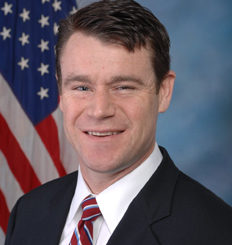
    WASHINGTON, D.C. (TIP): Arguing that the Biden Administration should resist from any action that might drive New Delhi away from Quad, a top Republican senator supported waiving of CAATSA sanctions against India for purchase of S-400 missile systems from Russia. India, Senator Todd Young said, is currently taking delivery of the Russian S-400 system. The country is also in the process of acquiring new frigate ships from Russia. ”Both are important systems for the Indians,” he said on Wednesday, January 12, during a confirmation hearing for James O’Brien for the position of the State Department coordinator for Sanctions Policy.

    ”India is a vital ally in our competition against China, and thus, I believe we should resist taking any actions that might drive them away from us and the Quad. I am therefore strongly supportive of waiving CAATSA sanctions against India, given our shared foreign policy interests,” Senator Young said. ”As most here know, the Indians have a lot of legacy systems from previous decades, and they are interoperable with the Russians’ systems. And the Indians seek to defend their land border from Chinese incursions and defend the Indian Ocean from an increasingly adventurous and lawless blue ocean navy in the People’s Liberation Army,” he said. The Indiana senator asked O’Brien if the US experience with Turkey provided any warning or lessons on how to proceed with India.

    ”I believe they are very different circumstances, and, of course, different security partnerships — but how do you believe we should think about the possibility of sanctioning our friends and not just threats,” he asked.

    In response, O’Brien said it is difficult to compare the two situations, with a NATO ally that is breaking with legacy defense procurement systems, and then with India, a partner of growing importance, but that has legacy relationships with Russia. ”The administration has made clear that it is discouraging India from proceeding with the acquisitions of Russian equipment, and there are important geostrategic considerations, particularly with (unintelligible) relationship to China. So, I think we have to look at what the balance is. And, of course, India’s got some decisions in front of it, so it would be premature to say more. But this is something I look forward to working with you and other interested members,” O’Brien said.

    (Source: PTI)