In Letter to Attorney General Bondi and Secretary Noem, 22 AGs Call DOJ’s Demand Letter an “After-The-Fact Attempt to Justify a Highly Concerning Federal Operation.”
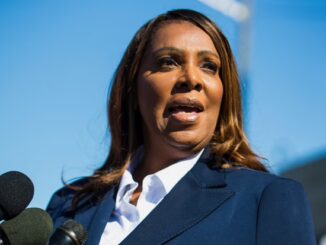
NEW YORK (TIP): New York Attorney General Letitia James today led a coalition of 21 other attorneys general in denouncing the Department of Justice’s (DOJ) latest attempt to coerce the state of Minnesota. In a letter to U.S. Attorney General Pam Bondi and Secretary of Homeland Security Kristi Noem, Attorney General James and the coalition condemn the Trump administration’s effort to exploit recent chaos in Minnesota to pressure state leaders into turning over sensitive resident data and dismantling longstanding public safety policies. The attorneys general warn that these thinly veiled federal threats are likely to conflict with ongoing litigation and court-ordered protections.
“The federal government is asking us to accept a belated justification for its unlawful actions in Minnesota,” said Attorney General James. “We refuse to be intimidated by these threats, and we reject their unlawful demands that infringe on Minnesota’s fundamental sovereignty. My fellow attorneys general and I will continue to stand firm in defense of the rule of law and Americans’ rights.”
Attorney General James and the coalition sent today’s letter in response to Attorney General Bondi’s January 24 letter to Minnesota Governor Tim Walz, which accused the state – without any concrete evidence – of enabling widespread fraud. The Bondi letter, sent the same day federal immigration agents fatally shot a Minneapolis resident for the second time in as many weeks, demanded a series of drastic actions in exchange for the withdrawal of federal agents from Minnesota.
In today’s letter, the attorneys general write that Attorney General Bondi’s demands are “inconsistent with fundamental principles of our federal system,” including the request that Minnesota turn over sensitive Medicaid and Supplemental Nutrition Assistance Program (SNAP) data, dismantle critical local public safety policies, and grant the federal government access to Minnesota voter information.
The attorneys general warn that Attorney General Bondi’s actions toward Minnesota represent a dangerous escalation that threatens the constitutional balance of power between states and the federal government. They assert that the demands amount to a profound intrusion on state sovereignty and conclude that DOJ’s letter is an unlawful and unsupported attempt to “terrify the people of Minnesota and coerce the state into abandoning” the residents it is sworn to protect. With so many of DOJ’s actions already blocked by courts across the country, the attorneys general decry the administration for “attempting through force what it cannot achieve through the courts.”
Attorney General James and the coalition unequivocally condemn the administration’s dangerous and escalating assault on Minnesota. They express their unwavering support for the people of Minnesota and reject the Trump administration’s “demand[s] that we ignore the unlawful acts that our eyes clearly see and accept pretextual justifications or outright fabrications instead.” As the attorneys general emphasize, “states and their residents should not be subjected to violence and terror at the hands of federal law enforcement.” In New York and nationwide, state governments remain focused on protecting the safety and well-being of their residents. In contrast, the attorneys general write, the unleashing of rogue federal agents into the neighborhoods of Minnesota has brought only fear, chaos, and violence.
Attorney General James and the coalition make clear that their states will continue to stand firm against unlawful federal interference and will defend both state sovereignty and the rights of their residents. The coalition respectfully urges the administration to end its dangerous and unlawful campaign against Minnesota immediately, before anyone else gets hurt.
Joining Attorney General James in sending this letter are the attorneys general of Arizona, California, Colorado, Connecticut, Delaware, Hawaii, Illinois, Maine, Massachusetts, Maryland, Michigan, New Jersey, New Mexico, Nevada, Oregon, Rhode Island, Vermont, Virginia, Washington, Wisconsin, and the District of Columbia.
Christian Sturdivant, 18, was charged with attempting to provide material support to a foreign terror organization after officials say he communicated his attack plans to an undercover FBI employee
The FBI has foiled several alleged attacks through sting operations in which agents posed as terror supporters, supplying advice and equipment.
CHARLOTTE, N.C (TIP): Associated Press quoted the FBI as saying on Friday , January 2, 2026, that it had disrupted a plot to attack a North Carolina grocery store and fast-food restaurant on New Year’s Eve, arresting a man who officials said was inspired by the Islamic State group and had pledged loyalty to the extremist militants.
Christian Sturdivant, 18, was charged with attempting to provide material support to a foreign terror organization after officials say he communicated his attack plans to an undercover FBI employee who was posing as an encouraging confidant.
He was arrested by federal agents on Wednesday (December 31, 2025). He remained held following a Friday morning court appearance. Another hearing is set for Jan. 7. The lawyer representing Sturdivant in federal court on Friday didn’t immediately respond to an email seeking comment.
An FBI affidavit filed in the case said Mr. Sturdivant came under investigation last month following information that a social media account, which officials connected to Mr. Sturdivant, had made posts supportive of IS. Those included posts that depicted a ballistic vest and appeared to promote violence, the affidavit said, and the display name for the account referenced the name of the late IS leader, Abu Bakr al-Baghdadi.
Mr. Sturdivant began communicating on social media with someone who he thought was supportive of his plans but who was actually an undercover FBI employee, the affidavit said.
Russ Ferguson, the U.S. Attorney for western North Carolina, declined to name the grocery store and fast-food restaurant that were allegedly targeted, citing the ongoing investigation. But he said both were in Mint Hill, a small bedroom community of Charlotte.
The affidavit says Sturdivant had been on the FBI’s radar in January 2022, when he was a minor, after officials learned that he had been in contact with an IS member in Europe and had received instructions to dress in all black, knock on people’s doors and commit attacks with a hammer. Mr. Sturdivant did actually set out for a neighbor’s house armed with a hammer and a knife but was restrained by his grandfather, the affidavit says.
The North Carolina attack would’ve come a year after 14 people were killed in New Orleans by a U.S. citizen and Army veteran who had proclaimed his support for IS on social media.
Other IS-inspired attacks over the past decade include a 2015 shooting rampage by a husband-and-wife team who killed 14 people in San Bernardino, California, and a 2016 massacre at a gay nightclub in Orlando, Florida, by a gunman who fatally shot 49 people.
The FBI has foiled several alleged attacks through sting operations in which agents posed as terror supporters, supplying advice and equipment. Critics say the strategy can amount to entrapment of mentally vulnerable people who wouldn’t have the wherewithal to act alone.
(Source: AP)
State postpones action until March as US transportation officials warn of a January 5 deadline, potential $160 million funding loss
SACAMENTO (TIP): A week after a group of immigrant truckers sued California’s Department of Motor Vehicles, California said Tuesday that it will delay revocation of 17,000 commercial driver’s licenses until March, giving authorities more time to ensure that truckers and bus drivers who legally qualify for the licenses can retain them.
According to HT, citing an Associated Press report, US Transportation Secretary Sean Duffy said the state could lose $160 million in federal funding if it fails to meet a January 5 deadline to revoke the license. He has already withheld $40 million, saying California is not enforcing English proficiency requirements for truck drivers.
California sent notices invalidating the license after pressure from Duffy to ensure that immigrants who are in the country illegally are not granted commercial licenses. “California does NOT have an ‘extension’ to keep breaking the law and putting Americans at risk on the roads,” Duffy posted on the social platform X.
“Our number one mission is to ensure that every American gets home safely. We’re backing aggressive enforcement and empowering states to keep unqualified, unvetted drivers off the road with over $118 MILLION in grants. 2026 is the year of safer roads!” he said in another post.
Concerns about immigrant truck drivers gained attention after a tractor-trailer driver who was not authorized to be in the US made an illegal U-turn and caused an August crash in Florida that killed three people. A fiery California crash that also killed three people in October and involved a Sikh truck driver in the country illegally added to the worries.
The Sikh Coalition, a national civil rights group, and the San Francisco-based Asian Law Caucus filed a class-action lawsuit on behalf of affected California drivers, arguing that immigrant truck drivers were being unfairly targeted.
Immigrants make up about 20% of all truck drivers, while non-domiciled licenses available to immigrants account for about 5% of all commercial driver’s licenses, or roughly 200,000 drivers, the report said.
Munmeeth Kaur, legal director of the Sikh Coalition, said the delay “is an important step towards alleviating the immediate threat that these drivers are facing to their lives and livelihoods.”
The federal government had threatened to withhold millions of dollars in funding from California, Pennsylvania, Minnesota and New York after audits found major problems, including licenses remaining valid long after immigrant truck drivers’ work permits expired.
NEW YORK (TIP): A grand jury in Virginia on Thursday, December 4, rejected the Justice Department efforts to charge New York Attorney General Letitia James with mortgage fraud, declining to indict her again after a judge dismissed the charges last week. The refusal by a grand jury in Norfolk marks a major defeat for President Donald Trump, who has made a priority of prosecuting James, a longtime foe. As New York attorney general, James brought a civil fraud case against Trump and his real estate empire, which resulted in a verdict that Trump and others in his company had committed fraud. An official familiar with the matter, who spoke on the condition of anonymity because they were not authorized to speak publicly, said “there should be no premature celebrations,” implying that the administration could try a third time to obtain an indictment.
In September, Trump pushed out his pick for U.S. attorney in the Eastern District of Virginia, Erik S. Siebert, over his decision to not indict James and another of Trump’s targets, former FBI director James B. Comey.
He also posted a message on social media demanding that Attorney General Pam Bondi move ahead with the prosecutions. The administration then appointed Lindsey Halligan, one of Trump’s personal lawyers, to replace Siebert. She personally presented the case against James to a grand jury in September, securing an indictment on one count of bank fraud and one count of making a false statement related to a Virginia property she purchased years ago. Halligan also presented the case against Comey.
But a federal judge dismissed both indictments last month, determining that Trump’s rushed appointment of Halligan was unlawful and therefore she did not have the authority to present the cases to a grand jury.
That left the Justice Department with a choice: reindict the cases or appeal the decision.
On Thursday, Halligan was not involved. The administration has named Roger Keller a prosecutor previously based in Missouri, to handle the case. The case against James stems from a criminal referral sent to the Justice Department in April by Bill Pulte, the head of the Federal Housing Finance Agency. Pulte, a Trump ally, has also made similar mortgage-fraud allegations against Sen. Adam Schiff (D-California) and Federal Reserve governor Lisa Cook.
Pulte alleged that James lied on loan documents for a house she purchased in Norfolk in 2023. In paperwork related to that purchase, she said the home would be her primary residence even as she served as attorney general in New York. That constituted an effort to fraudulently obtain “more favorable loan terms,” Pulte said.
(Source: The Washington Post)
The newly identified Covid-19 variant, named NB.1.8.1, is spreading rapidly across parts of Asia including India and other regions such as the United States.
While the variant has sparked concern due to its rising numbers, global health experts are urging caution, not panic.
The Global Virus Network (GVN) – an international coalition of top virologists and research centres – which is closely tracking the situation, says there is no current evidence that NB.1.8.1 causes more severe illness than earlier variants.
However, its growing presence has led the World Health Organisation (WHO) to list it as a ‘Variant Under Monitoring.’
The variant, a sub-lineage of the Omicron family, was first detected in January 2025 and has now been found in 22 countries.
As of May 18, 2025, NB.1.8.1 accounted for 10.7% of global Covid-19 virus samples submitted to the international database GISAID, global science initiative and primary source for freely sharing genomic data of viruses, especially influenza viruses.
This is a sharp rise from just 2.5% four weeks earlier. In India, active Covid-19 cases have climbed to 6,491 (as of June 9), with more than 500 new infections reported in the past 24 hours.
States such as Delhi, Kerala, Gujarat, Uttar Pradesh, and West Bengal are reporting steady increases in cases.
Other countries are also seeing a rise. In Taiwan, hospital visits due to Covid-19 symptoms rose by 78% in one week, with nearly 6,000 people seeking care between April 27 and May 3.
In the United States, more than a dozen cases of NB.1.8.1 have been reported, initially detected through airport screenings in California, Washington, Virginia, and New York. The variant has since been found in Ohio, Rhode Island, and Hawaii.
Usha Bala Chilukuri Vance, born on January 6, 1986, in San Diego, California, has emerged as a prominent figure in American public life. As the wife of Vice President JD Vance, she holds the distinction of being the first Indian-American, Hindu, and Millennial to serve as the Second Lady of the United States.
Early Life and Education
Raised in Rancho Peñasquitos, a suburb of San Diego, Usha is the daughter of Telugu-speaking Hindu immigrants from Andhra Pradesh, India. Her father, Radhakrishna “Krish” Chilukuri, is an aerospace engineer and lecturer at San Diego State University, while her mother, Lakshmi Chilukuri, serves as the provost at the University of California, San Diego.
Usha’s academic journey began at Yale University, where she earned a Bachelor of Arts in History and was inducted into Phi Beta Kappa. She then pursued an MPhil in Modern History at Clare College, University of Cambridge, as a Gates Cambridge Scholar. Returning to Yale, she obtained her Juris Doctor from Yale Law School, serving as the executive development editor for the Yale Law Journal.
Legal Career
Usha’s legal career is marked by prestigious clerkships and positions. She clerked for Judge Brett Kavanaugh on the U.S. Court of Appeals for the D.C. Circuit and later for Chief Justice John Roberts on the U.S. Supreme Court. Subsequently, she joined the law firm Munger, Tolles & Olson, specializing in civil litigation and appeals, with a focus on higher education, local government, and technology sectors.
Personal Life and Political Involvement
Usha met JD Vance at Yale Law School, where they co-organized a discussion group on “social decline in white America.” They married in 2014 and have three children: Ewan, Vivek, and Mirabel. Initially a registered Democrat, Usha’s political alignment evolved alongside her husband’s career. She played a pivotal role in JD Vance’s 2024 vice-presidential campaign, offering strategic advice and support. Following his nomination, she resigned from her legal position to focus on family and public service.
Role as Second Lady
Since assuming the role of Second Lady in January 2025, Usha has been active in diplomatic and cultural engagements. During a visit to India, she emphasized the cultural significance of the trip for her family, highlighting her Indian heritage.
In the absence of First Lady Melania Trump from public duties, Usha has taken on increased responsibilities, including international visits and hosting major events, effectively stepping into a First Lady-like role.
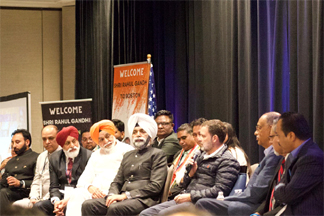
BOSTON, MA (TIP): In a warm and impactful address to the Indian diaspora, Hon. Shri Rahul Gandhi, Member of Parliament and Leader of the Opposition spoke to a packed audience at the Marriott Boston Long Wharf during a special Meet and Greet hosted by the Indian Overseas Congress, USA. The event drew attendees from across New England and beyond, eager to hear his vision for India’s future.
Gandhi ji began by expressing heartfelt appreciation for the community’s discipline and dedication. He noted that the Indian Overseas Congress and its members serve as vital ambassadors for the Congress Party and India itself. “Your presence and commitment bring great respect to our country abroad. This relationship we share is not merely political—it’s a bond of family, rooted in love, values, and mutual respect,” he said.
The core of his address focused on ongoing efforts to transform the Indian National Congress from within. Gandhi detailed a reform initiative underway in Gujarat aimed at decentralizing power within the party’s structure. He emphasized empowering local leaders by giving decision-making authority to district presidents and their committees. “We’re building a system where voices from the ground—including those of our overseas brothers and sisters—will be heard and respected. Constructive competition, accountability, and accessibility will shape the new Congress,” he affirmed.
In a stirring reflection on India’s diversity, Gandhi spoke against the growing tide of ideological centralization under the RSS-BJP regime. “India is not defined by one language, one religion, or one tradition. Its soul is pluralistic, where a Punjabi, a Malayali, and a Gujarati can sit together in harmony. This is India, which is under attack today.” He warned that attempts to impose a singular ideological narrative threaten the very foundation of Indian democracy and unity.
He also drew attention to the challenges the opposition faces in today’s India, including the capture of mainstream and social media, which limits public access to alternative viewpoints. Despite these roadblocks, Gandhi pointed to the recent Lok Sabha elections, where the BJP faced unexpected resistance, as a sign that the tide is turning. “This is a fight between two ideologies—one that believes India belongs to everyone and another that seeks to concentrate power and wealth among a select few. We’ve faced harder battles before, and we will prevail.”
Following his keynote, Gandhi opened the floor to an unscripted Q&A session, responding to critical questions from the audience. When asked about voting irregularities in Maharashtra, he raised serious concerns about the integrity of India’s electoral system. He cited that between 5:30 and 7:30 PM during the state election, over 650,000 votes were reportedly cast—a physical impossibility based on voter speed and capacity. Requests for official videography, as required by law, were denied and followed by changes to the law to prevent such requests in the future. “This indicates a compromised Election Commission,” he said. “The issues with Electronic Voting Machines (EVMs) and voter trust are not just ours—even international voices like Tulsi Gabbard have called them hackable. We will continue to raise these issues despite resistance.”
A young student in the audience asked how the youth could play meaningful roles in politics despite barriers. Gandhi responded candidly, emphasizing that politics is not easy—it is often grueling and requires resilience. However, he encouraged passionate young minds to get involved through internships and party programs. “If you are patient and committed, we will gladly open the way for you. The future belongs to those who are willing to work for it.”
Another question addressed the growing ideological infiltration in India’s universities, particularly the appointment of RSS-aligned faculty. Gandhi agreed that the educational system is being misused as a tool for ideological indoctrination rather than academic excellence. “This is damaging our intellectual foundation, and when we return to power, we will look into these appointments seriously.”
In his closing remarks, Gandhi acknowledged the short nature of this U.S. visit, having been invited primarily to speak at Brown University. However, he promised to return soon, with plans to visit cities such as in Illinois, California, Washington, and New Jersey. To enthusiastic applause, he also committed to bringing his sister, Priyanka Gandhi Vadra, along on a future trip.
Following the great speech of Dr. Sam Pitroda ji, President Mohinder Singh Gilzian welcomed everyone and emphasized that “…This is not just a political battle – this is a moral struggle to protect the very soul of India, a struggle to defend our Constitution, preserve our democracy, and uphold the values our freedom fighters once dreamed of.” He added that we are witnessing a government that, even after losing its moral mandate, continues to operate with authoritarian arrogance.
George Abraham, the vice-chair of the Indian Overseas Congress, in his speech, encouraged the Boston Diaspora to be a more visible advocate on behalf of democracy, freedom, and equal justice. ” Indians are the largest group of economic refugees anywhere in the world where we would like to have our culture respected and religious freedom protected; however, if our motherland is failing to defend those values towards its minority citizens, what message are we sending abroad?” he further implored.
Secretary-General Harbachan Singh thanked Sri Rahul Gandhi ji, Dr. Sam Pitroda ji, all the Boston group and all other supporters, Working Presidents Pradeep Samala of North East Zone, Devinderpal Bhullar of West Coast Zone, Gurdev Singh Hayer of South West Zone, Vice President John Joseph, Vice President Baldev Randhawa, Treasurer Dr. Joshua Jayasingh, and other senior members such as Chapter Presidents and General Secretaries of the IOC.USA by recognizing each one by name, and expressed gratitude to the overall jam-packed massive audience for their enthusiastic rendering of the event a very successful one.
The evening concluded with a renewed sense of solidarity among attendees, many of whom had traveled great distances to engage with a leader they see as a torchbearer of truth, democracy, and compassion. As Gandhi ji reminded the audience, “In the marketplace of hatred, we must open a shop of love.” His message was clear—India’s soul is plural, resilient, and worth fighting for.
(Based on a press release issued by Harbachan Singh,, General Secretary, IOCUSA)
Sudden policy reversal brings relief though some students already lost jobs or left country due to deportation risk
SAN FRANCISCO (TIP): The US government is restoring the legal status of hundreds of international students after a wave of lawsuits challenged the abrupt suspension of their visas.
The sudden policy reversal was announced during a court hearing in Oakland, California, which brought together eight lawsuits filed by international students who argued that the federal government had terminated their right to remain in the US without due process. Attorneys in those cases had asked the court to issue a nationwide injunction covering all students whose official records granting them legal status were terminated since 1 March and were at risk of deportation.
On Friday, April 25, assistant US attorney Elizabeth D Kurlan said that Immigration and Customs Enforcement (Ice) was developing a new policy to govern how records are terminated on the Student and Exchange Visitor Information System (Sevis), a federal database used to track international students’ immigration status. A similar announcement was made in a court in Washington.
In recent weeks, numerous students received notifications that their records were terminated with little explanation, jeopardizing their legal right to remain in the US and sparking outrage and confusion. Some said they had their status revoked for infractions as minor as a speeding ticket.
“DSOs [designated school officials] certified to assist international students) around the country are freaking out because out of nowhere they’re starting to see Ice manipulating the Sevis system to terminate students’ records around the country,” plaintiffs’ attorney Brad Banias said in an earlier interview.
According to the Department of Homeland Security (DHS), once a Sevis record is deleted from the database, which is often called being “terminated”, a student immediately falls out of status and risks deportation or future visa denials unless they quickly depart the US or regain lawful status.
Until the new Ice policy is finalized, Sevis records for the plaintiffs and other students affected by similar terminations will remain active or be reactivated. On Thursday afternoon, students across the country began receiving official notices from their schools stating that their Sevis records had been unexpectedly reactivated.
The news has brought some relief but not a full resolution, with some students saying the change has already caused irreparable harm.
“They call it a ‘restoration’, but for those of us who lived through it, who’s accountable for what we lost?” said one California student, who asked to remain anonymous. She was in the US on an F-1 work authorization when her Sevis record was terminated in April, she suspects due to being fingerprinted when she received a driving ticket six years ago. Her employer fired her the next day after learning she could no longer legally work.
The judge ordered the government to submit an explanation of the policy and its legal impact by the end of Friday. All plaintiffs in the hearing were granted 14-day temporary restraining orders (TROs) shielding them from deportation or any adverse legal consequences.
Marc L Van Der Hout, one of the plaintiffs’ attorneys, said he believes Ice’s new policy is a direct response to a recent order from the US district judge Jeffrey S White, who presided over Friday’s hearing in Oakland and had already granted TROs in some of the eight lawsuits.
“They’re trying to argue the court doesn’t need to act now – but they’re only doing this because of Judge White’s order, 1,000%.”
According to data collected by National Association of Foreign Student Advisors (Nafsa), more than 1,400 students have reported Sevis terminations so far this year, with about 40% of them from India and China.
Nationwide, more than 70 lawsuits have been filed in 21 states challenging Sevis terminations. In at least 45 cases, judges have granted temporary restraining orders, citing possible violations of the Administrative Procedure Act and due process protections.
Kurlan added that Ice retains the authority to terminate Sevis records for other reasons, such as a student failing to maintain lawful status or engaging in what it considers to be removable conduct.
Pam Johann, a lawyer for the US government, argued against the request for national relief in the Oakland courthouse on Friday, stating that the agency’s ongoing actions to restore Sevis records make such an order unnecessary. Government lawyers responded that Ice was already addressing the issue in real time and that a nationwide injunction would be an “extraordinary remedy”.
Judge White pushed back. “Seems like with this administration, it’s a new world order every single day,” he said. “I think the administration writ large has a tendency to do everything in this particular area on an ad hoc basis, and we have to now consider it.”
The plaintiffs’ attorney John Nicholas Sinodis said unresolved gaps in Sevis timelines could still put students at risk of deportation or future visa denials. Lasting harm had already been done, especially for those who filed for reinstatement or left the US believing their status had ended.
Following the news, plaintiff expressed a mix of relief and lingering anxiety. “I’m worried my record might still have a stain, and it could cause problems later with jobs, visas, or getting through immigration,” said one, who asked to stay anonymous due to concerns about retaliation.
According to court records, their status was terminated based on an arrest record on reported domestic violence two years ago that did not result in any charges.
Despite the uncertainty, they remain confident about the eventual outcome. “I believe we will win, because I know very clearly that I don’t deserve this.”
(Agencies)
WASHINGTON, D.C. (TIP): President Donald Trump plans to impose tariffs on Canada and Mexico starting Tuesday, March 4, 2025, in addition to doubling the 10% universal tariff charged on imports from China. In a Truth Social post Thursday, February 27, Mr. Trump said illicit drugs such as fentanyl are being smuggled into the United States at “unacceptable levels” and that import taxes would force other countries to crack down on the trafficking.
“We cannot allow this scourge to continue to harm the USA, and therefore, until it stops, or is seriously limited, the proposed TARIFFS scheduled to go into effect on MARCH FOURTH will, indeed, go into effect, as scheduled,” the Republican President wrote. “China will likewise be charged an additional 10% Tariff on that date.”
The prospect of escalating tariffs has already thrown the global economy into turmoil, with consumers expressing fears about inflation worsening and the auto sector and other domestic manufacturers suffering if Trump raises import taxes. But Mr. Trump has also at times engaged in aggressive posturing only to give last-minute reprieves, previously agreeing to a 30-day suspension of the Canada and Mexico tariffs that were initially supposed to start in February.
The threat of tariffs frightened the stock market with the S&P 500 index falling 1.6% on Thursday. The S&P 500 is now just 1.4% higher than it was after Mr. Trump won the election in November, giving up almost all of the gains that the president once cited as evidence of an economic revival.
Asked Thursday about the fact that tariffs are largely paid for consumers and importing companies, Mr. Trump dismissed any concerns by saying: “It’s a myth.” It’s possible for a stronger U.S. dollar to offset some of the costs of tariffs, but Trump’s statement goes against most economic modeling given the breadth of his planned taxes.
Mr. Trump intends to put 25% tariffs on imports from Mexico and Canada, with a lower 10% tax on Canadian energy products such as oil and electricity. The move, ostensibly about drug trafficking and immigration, led Mexico and Canada to respond by emphasizing their existing efforts to address these issues. Canada created a fentanyl czar, and Mexico sent 10,000 members of its National Guard to its border with the United States. Mexican President Claudia Sheinbaum said Thursday that she hoped to speak with Mr. Trump after the Cabinet-level meetings occurring in Washington this week. Mexico’s Foreign Affairs Secretary Juan Ramón de la Fuente was scheduled to meet with Secretary of State Marco Rubio on Thursday afternoon.
Mr. Trump, “as you know, has his way of communicating,” Ms. Sheinbaum said. But she said that her government would stay “cool-headed” and optimistic about an agreement coming together to avoid the tariffs. “I hope we are able to reach an agreement and on March 4 we can announce something else,” she said.
She said Mexico’s security chiefs were discussing intelligence sharing with their American counterparts that would allow for important arrests in the U.S. On the economic front, she said Mexico’s goal is to protect the free trade pact that was negotiated during the first Trump administration between Mexico and the United States. That 2020 deal, which included Canada, was an update of the North American Free Trade Agreement from 1994.
Canadian Prime Minister Justin Trudeau said his country has invested more than 1 billion Canadian dollars to improve border security, adding that his government’s ministers and officials are also in Washington this week.
“There is no emergency for the United States at the border with Canada when it comes to fentanyl, and that is exactly what we are demonstrating at this time,” Mr. Trudeau said in Montreal. “If the United States goes ahead and imposes tariffs, we already shared the details of our plan. We have $30 billion worth of U.S. products that will be subject to tariffs. And $125 billion of tariffs that will be applied three weeks later. But we don’t want to be in that position.”
Mr. Trump did impose a 10% tariff on China for its role in the manufacturing of chemicals used to make fentanyl, and that tax would now be doubled, according to his social media post.
On Thursday, China’s Commerce Minister Wang Wentao wrote to Jamieson Greer, the newly confirmed U.S. trade representative, that differences on trade should be resolved through dialogues and negotiations.
The 25% tariffs on Mexico and Canada would amount to a total tax increase on the U.S. public of somewhere between $120 billion to $225 billion annually, according to Jacob Jensen, a trade policy analyst at the American Action Forum, a center-right think tank. The additional China tariffs could cost consumers up to $25 billion.
The potential for higher prices and slower growth could create political blowback for Mr. Trump, who promised voters in last year’s presidential election that he could quickly lower the inflation rate, which jumped during Democratic President Joe Biden’s term. But, Mr. Trump also campaigned on imposing broad tariffs, which he plans to launch on April 2 by resetting them to match the taxes that he determines are charged by other countries on American goods.
“The April Second Reciprocal Tariff date will remain in full force and effect,” Mr. Trump said as part of his new social media post.
In an interview with News Nation, Kevin Hassett, the director of the White House National Economic Council, said progress by Mexico and Canada on fentanyl “was not as impressive as the president had hoped.” There are significant differences between Canada and Mexico on the scale of drug smuggling. U.S. customs agents seized 43 pounds (19.5 kilograms) of fentanyl at the Canadian border during the last budget year, compared with 21,100 pounds (9,570 kilograms) at the Mexican border. Mr. Hassett stressed that the reciprocal tariffs would be in addition to the ones being placed on Canada and Mexico.
Mr. Trump indicated Wednesday that European countries would also face a 25% tariff as part of his reciprocal tariffs. He also wants separate tariffs on autos, computer chips and pharmaceutical drugs that would be levied in addition to the reciprocal tariffs.
The President already announced that he’s removing the exemptions on his 2018 steel and aluminum tariffs, in addition to planning taxes on copper imports.
The prospect of a broader trade conflict should other nations follow through with their own retaliatory tariffs is already spooking U.S. consumers, potentially undermining Trump’s promise to unleash stronger economic growth.
The Conference Board reported on Tuesday that its consumer confidence index had dropped 7 points to a reading of 98.3. It was the largest monthly decline since August 2021, when inflationary pressures began to reverberate across the United States as the economy recovered from the coronavirus pandemic. Average 12-month inflation expectations jumped from 5.2% to 6% in February, the Conference Board noted.
“There was a sharp increase in the mentions of trade and tariffs, back to a level unseen since 2019,” said Stephanie Guichard, a senior economist at the Conference Board. “Most notably, comments on the current administration and its policies dominated the responses.”
(Source: AP)
SAN FRANCISCO (TIP): A California federal judge on Thursday, February 27, temporarily blocked the Trump administration from ordering the US Department of Defense and other federal agencies to carry out the mass firings of thousands of recently hired employees. US District Judge William Alsup in San Francisco said during a hearing that the US Office of Personnel Management lacked the power to order federal agencies to fire any workers, including probationary employees who typically have less than a year of experience. Republican President Donald Trump and billionaire Elon Musk, who oversees the so-called Department of Government Efficiency, are spearheading an unprecedented effort to shrink the federal bureaucracy, including through job cuts.
Those efforts have resulted in a fierce pushback from Democrats, unions and federal workers, who argue the job cuts are illegal and could compromise government functions.
Already, the administration has been forced to recall some personnel in critical roles. But Trump has backed Musk to the hilt and has embraced Musk’s goal of slicing $1 trillion from the nation’s $6.7 trillion budget.
Budget experts say Musk, the CEO of SpaceX and Tesla, is unlikely to reach his target by trimming jobs and reducing waste and fraud, and may have to slash government programs, including benefits.
On Thursday, hundreds of probationary workers at the National Oceanic and Atmospheric Administration, which conducts climate science, were notified they were being let go, according to a source familiar with the situation.
The tabla fell silent as Ustad Zakir Hussain (1951-2024), one of the greatest global ambassadors of Indian classical music, passed away on Monday (December 16, 2024) after a brief illness in San Francisco, California. A maestro who transformed the modest instrument into a robust voice for universal peace and humanity, Hussain’s incredible speed, dexterity, and creativity mesmerised audiences across cultures.
Having grown up singing odes to Mother Saraswati, verses of the holy Quran, and hymns of the Bible as a daily ritual, India’s syncretic soul echoed through Hussain’s rhythmic art. With a flair for carving stories out of percussive sound, his conversational music buzzed with a spark of spontaneity. Natural flow defined his music and personality. The Padma Vibhushan would impress the purists, enthrall the seekers of fusion, and handhold the fans of Bollywood music into his creative space with equal felicity. At the peak of his creativity genius, he bagged three Grammys in one night this February.
Like his carefully designed free-flowing style, the versatile artist would execute complex rhythms, intricate patterns, and nuanced dynamics and then move on to items like the sound of traffic signal and deer’s walk, without putting music into brackets. In tune with technology, over the years, he experimented with frequencies to highlight the subtle shades of the instrument to establish that tabla is not just a rhythmic instrument but also a melodic one. He emerged on the scene alongside eminent tabla artists like Anindo Chatterjee, Shafaat Ahmed Khan, Kumar Bose, and Swapan Chaudhuri, but Hussain’s role in popularising tabla and providing it a global platform remains unparalleled.
Born to Ustad Alla Rakha, the eminent accompanist of Pandit Ravi Shankar, credited with taking tabla to foreign shores, tabla chose Hussain. He grew up in Mumbai in an environment where his father believed that every instrument has its spirit. Hussain befriended the tabla at the age of three and by the time he hit teenage, the instrument had become his muse for life and perhaps an extension of his personality. After watching him play, one couldn’t see playing tabla as a chore in classical music.
His other two brothers, Taufiq and Fazal, are also noted percussionists but Hussain took his father’s legacy to the next level by adding a touch of showmanship and expanding the riches he inherited from the Punjab gharana. A keen learner and listener, Hussain was like a responsive satellite in orbit as an accompanist, shone like a star in his solos, and reserved the adventurous streak of a meteor for creating fusion music.
A child prodigy who gave his first professional performance at 12, Hussain was not regimented by his teacher-father. Rooted in Indian tradition, he was allowed to develop wings and explore new shores. His day would start with devotional music that would invoke Hindu deities followed by polishing Koranic verses in the neighbourhood madarsa before he would join the morning prayers at the Convent school. By 19, Hussain taught at the University of Washington before joining Ustad Ali Akbar Khan’s music college in San Francisco where he met his soulmate Antonia Minnecola.
Another fortuitous meeting in New York led to a lifelong bond with the iconic English guitarist John McLaughlin. Their friendship led to the formation of the groundbreaking Shakti band in 1973 which included violinist L. Shankar and percussionist T. H. Vinayakram who blended Hindustani and Carnatic classical music with Western jazz influences. This year, the band where Hussain joined hands with a new set of distinguished musicians won the Grammy for Best Global Music.
Hussain’s desire to experiment led to rewarding collaborations with Irish singer Van Morrison, American percussionist Mickey Hart, Latin Jazz percussionist Giovanni Hidalgo, and Jerry Garcia, the lead vocalist and guitarist of the Grateful Dread. He joined the Asian Underground music’s electronic surge as well in the 1990s but retained the natural acoustic quality of tabla. He shared a special bond with Santoor maestro Pandit Shiv Kumar Sharma, flautist Hari Prasad Chaurasia, and sarangi stalwart Ustad Sultan Khan. Their jugalbandis would start as melodic banter and then turn meditative. In sync with the next generation, last year, he composed the Triple Concerto for Tabla, Sitar and Flute, with Niladri Kumar and Rakesh Chaurasia, and his collaboration with Carnatic musicians extended to violinist Kala Ramnath and veena exponent Jayanthi Kumaresh.
Fusion was never a novelty for Hussain as he had grown up listening to stories of how Amir Khusrau blended the Indian traditions of Dhrupad and Haveli sangeet with Sufi Qaul to create Khayal. As a young musician, he saw his father and colleagues contributing to Hindi film music that liberally drew from diverse musical streams. Hussain had his brush with cinema when he played tabla for Laxmikant Pyarelal’s maiden venture Parasmani. Later he composed music for Ismail Merchant’s films like Muhafiz, Aparna Sen’s Mr And Mrs Iyer, and Rahul Dholakia’s Parzania. The meaningful sound of his tabla lent layers to storytelling in international productions like Francis Ford Coppola’s Apocalypse Now and recently Dev Patel’s Monkey Man.
Hussain also had a flair for acting from a young age. It is said Dilip Kumar recommended his name to K Asif for the role of young Salim in Mughal-e-Azam but Ustad Alla Rakha vetoed it. Later, he performed in Ismail Merchant’s Heat & Dust and Sai Paranjpye’s Saaz. However, he became a household figure when he brought classical music to the mainstream by promoting a tea brand in a commercial where he played tabla at the iconic Taj Mahal. As an article in The Hindu described, “The combination of “Wah Taj!” with the dashing young Hussain’s curly locks flying about his face as his fingers flew across the surface of his tabla — not to mention that charming smile accompanied by the resonance of his playing — ensured brand immortality.
Fame didn’t diminish his humility and age didn’t wilt his curiosity. Music was an endless journey for Hussain. Every time someone would toss the word perfection, he would say, “I haven’t played good enough to quit.”
Source: The Hindu
Says election offers “fleeting opportunity” to move past “bitterness, cynicism”
Indrajit Saluja
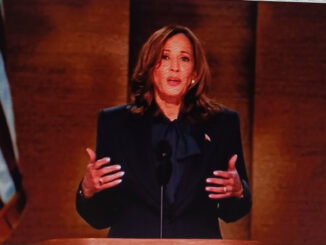
CHICAGO, August 23, (TIP): Vice President Kamala Harris officially accepted the Democratic presidential nomination Thursday, August 23, promising to be “the president for all Americans”. “I will be a president who unites us around our highest aspirations”, she pledged.
Framing the upcoming election as an opportunity for the nation to “chart a new way forward” , she encouraged voters to write the “next great chapter in the most extraordinary story ever told.”
“As a prosecutor, when I had a case, I charged it not in the name of the victim, but in the name of the people. For a simple reason, in our system of justice, a harm against any one of us is a harm against all of us. And I would often explain this to console survivors of crime, to remind them, no one should be made to fight alone. We are all in this together, and every day in the courtroom, I stood proudly before a judge, and I said five words, “Kamala Harris, for the people”. And to be clear, my entire career, I’ve only had one client, the people, and so on behalf of the People, on behalf of every American, regardless of party, race, gender or the language your grandmother speaks, on behalf of my mother and everyone who has ever set out on their own unlikely journey, on behalf of Americans like the people I grew up with, people who work hard, chase their dreams and look out for one another, on behalf of everyone whose story could only be written in the greatest nation on Earth, I accept your nomination, President of the United States of America.”
Harris makes history as the first Black woman to lead a major party’s presidential ticket, and her remarks closed out the final day of the Democratic National Convention in Chicago.
Promising to be the President for all Americans, Harris said “ and with this election, our nation has a precious, fleeting opportunity to move past the bitterness, cynicism and divisive battles of the past, a chance to chart a new way forward, not as members of any one party or faction, but as Americans, and let me say, I know there are people of various political views watching tonight, and I want you to know I promise to be a president for all Americans, you can always trust me to put country above party and self, to hold sacred America’s fundamental principles, from the rule of law to free and fair elections to the peaceful transfer of power.
Democratic Convention in Chicago, August 22, 2024.
Harris kicked off her speech by offering her thanks to President Biden, calling his character “inspiring,” and she predicted history would look favorably upon his record in office.
“Let us show each other and the world who we are and what we stand for: freedom, opportunity, compassion, dignity, fairness and endless possibilities,” she said. “We are the heirs to the greatest democracy in the history of the world and on behalf of our children and our grandchildren and all of those who sacrificed so dearly for our freedom and liberty, we must be worthy of this moment.”
“We are charting, and we are charting a new way forward, forward to a future with a strong and growing middle class, because we know a strong middle class has always been critical to America’s success, and building that middle class will be a defining goal of my presidency”, Harris said.
“As President, I will bring together labor and workers and small business owners and entrepreneurs and American companies to create jobs, to grow our economy and to lower the cost of everyday needs like health care and housing and groceries. We will provide access to capital for small business owners and entrepreneurs and founders, and we will end America’s housing shortage and protect Social Security”.
“As a young courtroom prosecutor in Oakland, California, I stood up for women and children against predators who abused them. As Attorney General of California, I took on the big banks, delivered $20 million for middle class families who faced foreclosure and helped pass a homeowner bill of rights, one of the first of its kind in the nation.”
“I stood up for veterans and students being scammed by big for-profit colleges who are workers who are being cheated out of their wages, the wages they were due for seniors facing elder abuse. I fought against the cartels who traffic in guns and drugs and human beings who threaten the supply security of our border and the safety of our communities. And I will tell you, these fights were not easy, and neither were the elections that put me in those offices. We were underestimated at practically every term, but we never gave up, because the future is always worth fighting for, and that’s the fight we are in right now, a fight for America’s future. Fellow Americans, this election is not only the most important of our lives, it is one of the most important in the life of our nation, in many ways”.
Lambasting her opponent Donald Trump, Harris said, “ Donald Trump is an unserious man. But the consequences of putting Donald Trump back in the White House are extremely serious. Consider not only the chaos and calamity when he was in office, but also the gravity of what has happened since he lost the last election. Donald Trump tried to throw away your votes. When he failed, he sent an armed mob to the United States Capitol, where they assaulted law enforcement officers when politicians in his own party begged him to call off the mob and send help. He did the opposite. He fanned the flames and now for an entirely different set of crimes, he was found guilty of fraud by a jury of everyday Americans, and separately found Bible through committing sexual abuse and consider what he intends to do if we give him power again, consider his explicit intent to set free violent extremists who assaulted those law enforcement officers at the Capitol, his explicit intent to jail journalists, political opponents and anyone he sees as the enemy, his explicit intent to deploy our active duty military against our own citizens. Consider the power he will have, especially after the United States Supreme Court just ruled that he would be immune from criminal prosecution. Just imagine Donald Trump with no guard rails and how he would use the immense powers of the presidency of the United States, not to improve your life, not to strengthen our national security, but to serve the only client he has ever had- himself. And we know what a second Trump term would look like. It’s all laid out in Project 2025, written by his closest advisors, and its sum total is to pull our country back to the past, but America, we are not going back. We are not going back. We are not going back. We are not going back to when Donald Trump tried to cut Social Security and Medicare. We are not going back to when he tried to get rid of the Affordable Care Act, when insurance companies could deny people with preexisting conditions. We are not going to let him eliminate the Department of Education that funds our public schools, and we are not going to let him end programs like Head Start that provide preschool and childcare for our children. America, we are not going back.”
“Now compare that to Donald Trump. I think everyone here knows he doesn’t actually fight for the middle class, no, he doesn’t actually fight for the middle class. Instead, he fights for himself and his billionaire friends, and he will give them another round of tax breaks that will add up to $5 trillion to the national debt. And all the while, he intends to enact what in effect is a national sales tax, call it a Trump tax, that would raise prices on middle class families by almost $4,000 a year. Well, instead of a Trump tax hike, we will pass a middle-class tax cut that will benefit more than 100 million Americans friends, I believe America cannot truly be prosperous unless Americans are fully able to make their own decisions about their own lives, especially on matters of hearth and home.”
Harris criticized Trump’s nationwide abortion ban, taking away the rights of women to have control over their bodies. She said it needed to be reversed. “And when Congress passes a bill to restore reproductive freedom, as President of the United States, I will proudly sign it into law.”
“In this election, many other fundamental freedoms are at stake, the freedom to live safe from gun violence in our schools, communities and places of worship, the freedom to love who you love openly and with pride, the freedom to breathe clean air and drink clean water and live free from The pollution that fuels the climate crisis and the freedom that unlocks all the others, the freedom to vote. With this election, we finally have the opportunity to pass the John Lewis Voting Rights Act and the freedom to vote.”
“And let me be clear, after decades in law enforcement, I know the importance of safety and security, especially at our border last year, Joe and I brought together Democrats and conservative Republicans to write the strongest border bill in decades. The Border Patrol endorsed it, but Donald Trump believes a border deal would hurt his campaign, so he ordered his allies in Congress to kill the deal….. And here is my pledge to you as President, I will bring back the bipartisan border security bill that he killed, and I will sign it into law. I know we can live up to our proud heritage as a nation of immigrants and reform our broken immigration system. We can create an earned pathway to citizenship and secure our border and America.
We must also be steadfast in advancing our security and values abroad. As Vice President, I have confronted threats to our security, negotiated with foreign leaders, strengthened our alliances, and engaged with our brave troops overseas. As Commander in Chief, I will ensure America always has the strongest, most lethal fighting force in the world, and I will fulfill our sacred obligation to care for our troops and their families, and I will always honor and never disparage their service and their sacrifice, I will make sure that We lead the world into the future on space and artificial intelligence, that America, not China, wins the competition for the 21st century, and that we strengthen, not abdicate our global leadership. Trump, on the other hand, threatened to abandon NATO. He encouraged Putin to invade. Our allies said Russia could do whatever the hell they want. Five days before Russia attacked Ukraine, I met with President Zelensky to warn him about Russia’s plan to invade, I helped mobilize a global response over 50 countries to defend against Putin’s aggression. And as President, I will stand strong with Ukraine and our NATO allies”.
“With respect to the war in Gaza, President Biden and I are working around the clock, because now is the time to get a hostage deal and a cease fire deal done.
And let me be clear. And let me be clear, I will always stand up for Israel’s right to defend itself, and I will always ensure Israel has the ability to defend itself, because the people of Israel must never again face the loss that a terrorist organization called Hamas caused on October 7. At the same time, what has happened in Gaza over the past 10 months is devastating. So many innocent lives lost, desperate, hungry people fleeing for safety. Over and over again, the scale of suffering is heartbreaking. President Biden and I are working to end this war so that Israel is secure, the hostages are released, the suffering in Gaza ends, and the Palestinian people can realize their right to dignity, security, freedom and self-discrimination, And know this, I will never hesitate to take whatever action is necessary to defend our forces and our interests against Iran and Iran backed terrorists. I will not cozy up to tyrants and dictators like Kim Jong Un who are rooting for Trump. Because, you know, they know, he is easy to manipulate with flattery and favors. They know Trump won’t hold autocrats accountable because he wants to be an autocrat himself.
And as President, I will never waver in defense of America’s security and ideals, because in the enduring struggle between democracy and tyranny, I know where I stand and I know where the United States belongs”.
“We are the heirs to the greatest democracy in the history of the world, and on behalf of our children and our grandchildren and all those who sacrificed so dearly for our freedom and liberty, we must be worthy of this moment. It is now our turn to do what generations before us have done, guided by optimism and faith, to fight for this country we love, to fight for the ideals we cherish and to uphold the awesome responsibility that comes with the greatest privilege on Earth, the privilege and pride of being an American.”
“So, let’s get out there. Let’s fight for it. Let’s get out there. Let’s vote for it, and together, let us write the next great chapter in the most extraordinary story ever told”, concluding her speech, she said.
US lawmakers pay tributes to Sikh victims on 12th anniversary of massacre
NEW YORK (TIP): US lawmakers paid tributes to the members of the Sikh community who were killed in a massacre at a Milwaukee gurdwara 12 years ago, underscoring the need to reject bigotry and recommit to fighting hate and racism, as well as ending the gun violence epidemic in America. US Ambassador to the UN Linda Thomas-Greenfield visited the Oak Creek Sikh Temple in the Wisconsin city on the 12th anniversary of the “deadliest massacre of Sikhs on US soil” when a white supremacist claimed the lives of seven members of the Sikh community, according to a statement issued here Monday by the US Mission to the United Nations Spokesperson Nate Evans. “The Ambassador joined the victims’ families, community members, and temple leaders to honor those lives lost and lead a conversation on their ongoing efforts to combat hate against marginalized communities,” the statement said.
Thomas-Greenfield “heard firsthand accounts of the impact of hate crimes, reiterated the ongoing efforts of the Biden-Harris Administration and across the UN to promote religious freedom, and commended the families of the victims, whose remarkable resilience allowed the tragedy to become a point of necessary reform”.
On August 5, 2012, Wade Michael Page (40) entered the gurdwara in Oak Creek and opened fire, as members of the congregation had gathered to prepare for Sunday service.
The victims of the massacre were Suveg Singh Khattra (84), Satwant Singh Kaleka (65), Ranjit Singh (49), Sita Singh (41), Paramjit Kaur (41), Prakash Singh (39) and Baba Punjab Singh (72).
Baba Punjab Singh had remained almost fully paralyzed after being shot during the attack and passed away in March 2020 from complications related to his injuries.
Members of The Congressional Asian Pacific American Caucus (CAPAC) released statements in observance of the anniversary. Congressman Raja Krishnamoorthi of Illinois said that Sikh Americans were killed and others injured after the white supremacist, driven by hate and bigotry, opened fire at the Oak Creek Gurdwara in Wisconsin.
“Today, as we remember the lives lost and impacted by this senseless act of violence, we must recommit ourselves to fighting hate, racism, and prejudice in all its forms, as well as ending the gun violence epidemic in America,” he said.
Krishnamoorthi said that all Americans should be able to worship and practice their faiths without fear, and “it falls on all of us to make the United States a better and more tolerant country for people of all faiths and backgrounds”.
Representative Ro Khanna of California said that the Sikh community was devastated by a senseless act of hate, bigotry and violence. “As my CAPAC colleagues and I remember and grieve the six innocent lives lost, we are more committed than ever to pushing for transformative gun legislation. It is our duty as a nation to work together to remove weapons of war and ensure everyone is safe to worship without fear,” he said.
Representative Shri Thanedar of Michigan said that on the anniversary of this tragic event, “we reaffirm that violence against any group is never acceptable. As the Chair of the Hindu, Buddhist, Sikh, and Jain American Congressional Caucus, I am committed to ensuring that Sikhs and all other religious groups can practice their religion freely without fearing for their safety.” Representative Pramila Jayapal of Washington stressed the need to “recommit to fighting the scourge of bigotry and racism that we see directed at the AAPI community. On this difficult day, I send my prayers and strength to the Oak Creek community and Sikh communities across the country and stand with them in the battle against both hate and gun violence”.
CAPAC Chair Representative Judy Chu of California said the “horrific act of hate and gun violence” in the place of worship should not happen anywhere.
“Sikh Americans, and all Americans, deserve to live, learn, worship, and play with a sense of safety. White supremacy, hate, and xenophobia rip apart the fabric of equality and unity that binds our nation, and we must reject any bigotry that puts more lives at risk,” Chu said.
CAPAC First Vice Chair Representative Grace Meng of New York said, “We must remain committed to standing up against bigotry and racism in all its forms. In the United States diversity is our strength.
CAPAC Chair Representative Judy Chu of California said the “horrific act of hate and gun violence” in the place of worship should not happen anywhere.
“Sikh Americans, and all Americans, deserve to live, learn, worship, and play with a sense of safety. White supremacy, hate, and xenophobia rip apart the fabric of equality and unity that binds our nation, and we must reject any bigotry that puts more lives at risk,” Chu said.
CAPAC First Vice Chair Representative Grace Meng of New York said, “We must remain committed to standing up against bigotry and racism in all its forms. In the United States diversity is our strength.
“There is no place for the mass violence and religious intolerance that took place in Oak Creek. As a nation we must remain committed to creating a more tolerant and accepting society where everyone can freely and safely worship without the fear of violence and persecution.”
CAPAC Whip Rep. Ted Lieu of California said white supremacy and xenophobia have no place in America. “Together, we must ensure that all individuals, regardless of religion, race, or ethnicity, can live without fear for their safety.” Wisconsin Governor Tony Evers proclaimed August 5 2024 as ’12th Anniversary of the Oak Creek Sikh Temple Shooting’ throughout the state. It said that the “anniversary remains a painful reminder of the work that still must be done to protect all communities in the United States against the rising threat of targeted, hate-fueled violence, it is also a shining example of resilience in the face of tragedy, and a continued, shared hope that a better tomorrow can exist for all.”
Governors admit worries but rally behind Biden : ‘We have his back’
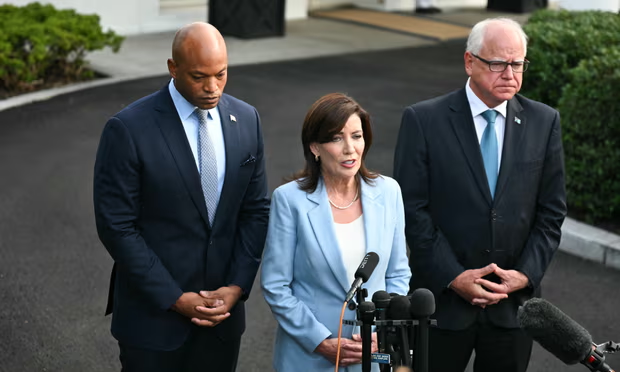
WASHINGTON, D.C. (TIP): A group of leading Democratic governors offered words of support for Joe Biden on Wednesday as pressure mounted on the president to leave the race. The governors, including Tim Walz of Minnesota, Wes Moore of Maryland, Gavin Newsom of California and Kathy Hochul of New York, held a closed-door meeting with Biden in Washington as he sought to reassure his party – and the public – that he is up to the job after a shaky debate performance.
Biden met for more than an hour at the White House in person and virtually with more than 20 governors from his party. The governors told reporters afterward that the conversation was “candid” and said they expressed concerns about Biden’s debate performance last week. They reiterated that defeating Donald Trump in November was the priority, but said they were still standing behind Biden and did not join other Democrats who have been urging him to withdraw his candidacy.
“We, like many Americans, are worried,” Walz of Minnesota said. “We are all looking for the path to win – all the governors agree with that. President Biden agrees with that. He has had our backs through Covid … the governors have his back. We’re working together just to make very, very clear that a path to victory in November is the No 1 priority and that’s the No 1 priority of the president … The feedback was good. The conversation was honest.” “The president is our nominee. The president is our party leader,” added Moore of Maryland. He said Biden “was very clear that he’s in this to win it”.
“We were honest about the feedback we’re getting … and the concerns we’re hearing from people,” Moore said. “We’re going to have his back … the results we’ve been able to see under this administration have been undeniable.”
The meeting capped a tumultuous day for Biden as members of his own party, and a major democratic donor, urged him to step aside amid questions over his fitness for office. Two Democratic lawmakers have called on Biden to exit the race, and a third Congressman said he had “grave concerns” about Biden’s ability to beat Trump. The White House, meanwhile, was forced to deny reports that Biden is weighing whether his candidacy is still viable. Biden, for his part, has forcefully insisted that he is staying in the race.
“Let me say this as clearly as I possibly can, as simply and straightforward as I can: I am running … no one’s pushing me out,” Biden said on a call with staffers from his re-election campaign. “I’m not leaving. I’m in this race to the end and we’re going to win.”
Kamala Harris has also stood by his side, despite some insiders reportedly rallying around her as a possible replacement. “We will not back down. We will follow our president’s lead,” the vice-president reportedly told staffers on Wednesday.
Michigan governor Gretchen Whitmer also threw her support behind Biden. “He is in it to win it and I support him,” she said on Twitter/X after the meeting.
Whitmer is one of several Democratic governors who have been cited as possible replacements if Biden were to withdraw his candidacy. Gavin Newsom, whose name has also been floated, flew in for the governors’ meeting on Wednesday, saying afterwards: “I heard three words from the president tonight – he’s all in. And so am I.”
Newsom has been a top surrogate for Biden’s re-election campaign, but has also garnered increasing buzz as a potential replacement if Biden were to withdraw. He was swarmed by reporters after the debate ended last week, some asking him if he’d replace Biden.
A Siena College/New York Times poll released Wednesday suggested Trump’s lead had increased since the debate, with him winning 49% of likely voters compared to 43% for Biden. Only 48% of Democrats in the poll said Biden should remain the nominee. A Reuters/Ipsos poll published Tuesday, July 2, said that former first lady Michelle Obama is the only hypothetical candidate to definitively defeat Trump, but she has previously said she’s not running. That poll had Biden and Trump tied.
Meanwhile, as Joe Biden faces increasing pressure to withdraw his candidacy following last week’s poor debate performance, Kamala Harris has emerged as the frontrunner to replace him.
Senior sources at the Biden campaign, the White House and the Democratic National Committee told the media that the vice-president was the top alternative.
Harris, a former senator from California, has stood by the president’s side as he weathers the debate fallout this week, and reportedly told campaign staffers on Wednesday: “We will not back down. We will follow our president’s lead.”
A CNN poll published Tuesday, July 2, found Harris “within striking distance of Trump in a hypothetical matchup” – 47% supporting the former president, and 45% supporting Harris, a result within the margin of error. The Biden-Trump matchup in that poll had Trump earning 49% of votes and Biden earning 43%. Harris’s modest advantage was due partly to her having broader support from women and independents, CNN said.
With two Democratic congressmen now publicly calling on Biden to step aside, other party leaders have privately suggested they favor Harris as his potential replacement, according to reports. Hakeem Jeffries, House minority leader, signaled to members that she would be the best option, the Washington Post reported.
James Clyburn, a senior congressional Democrat, said publicly he’d support Harris if Biden were to withdraw his candidacy, urging Democrats to “do everything to bolster her, whether she’s in second place or at the top of the ticket”. Summer Lee, a House Democrat from Pennsylvania, also said Wednesday that Harris was the “obvious choice” to replace Biden, if he decided not to run.
Some Harris supporters who are advocating she take over the campaign have argued that she would perform better than Biden with Black and Latino communities, and that she is a more powerful abortion-rights spokesperson than Biden.
Skeptics, however, have noted that Harris also remains fairly unpopular and have pointed to polls suggesting she has vulnerabilities in terms of voters’ trust in her ability to handle immigration, China relations and Israel’s war on Gaza.
The other names that have been floated as possible replacements include California governor Gavin Newsom, Michigan governor Gretchen Whitmer, Illinois governor J B Pritzker and Kentucky governor Andy Beshear. The Reuters poll, however, suggested they would all perform worse than Biden and Harris. If Harris became the presidential candidate, she could take over the funds raised by the campaign since the account is registered under Biden and Harris.
On Wednesday, the White House also announced a series of “summer of engagement” events for Harris, including visits to New Orleans, Las Vegas, Dallas and Indianapolis.
SAN FRANCISCO (TIP): In a recent poll conducted for the open California Congressional District 16 seat, Indian American Democrat Rishi Kumar has emerged as the frontrunner in a closely contested race, positioning himself as a formidable candidate in a field of 10 hopefuls.
Kumar, a software tech executive, previously challenged incumbent Anna Eshoo in the November 2022 election, securing an impressive 42.3 percent of the votes. In the current race, he leads with 12 percent of the vote, surpassing competitors Joe Simitian at 1 percent, Sam Liccardo at 7 percent, and Low at 6 percent. However, a significant portion of likely voters, approximately 57 percent, remains undecided.
The poll, conducted by Clarity Campaign Labs, surveyed 633 registered voters in CD-16. Clarity, a nationally recognized polling leader, is utilized by major Democratic organizations such as the DNC, DCCC, DGA, DSCC, and DAGA. As the race unfolds, Rishi Kumar’s lead showcases his growing support and positions him as a strong contender for the California Congressional District 16 seat.
Results of the poll were shared with the American Bazaar by Kumar’s campaign.
One of Kumar’s key campaign points is his status as the sole non-career politician in the race, emphasizing his refusal to accept PAC money, developer contributions, and special interest group funding. He highlights a track record of accomplishments, including a notable reduction in crime during his tenure on the Saratoga Council.
Kumar has also served on former Gov. Jerry Brown’s University of California Regent committee and California’s Department of Education K-12 public school computer science implementation panel. His political journey includes multiple elected terms as a Saratoga Councilmember, where he secured reelection with the highest votes in 66 years, even surpassing the incumbent mayor. Kumar has also served as both a Delegate and Executive Board member of the California Democratic Party.
Kumar’s platform addresses a range of critical issues, including crime reduction, tackling inflation, advocating for abortion rights, supporting Congressional term limits, overturning Citizens United to promote clean money in American politics, advocating for a ban on insider trading in Congress, addressing climate change, and boosting Silicon Valley’s innovation economy. He emphasizes a focus on the upcoming Artificial Intelligence automation economy.
Born to Indra Prasad and Shanta Prasad, Rishi is married to Seema Kumar, with two sons, Rishub and Shivaum Kumar. He attributes his success to their role in his life.
With a master’s in mechanical engineering from the University of Connecticut, Rishi Kumar has been living in Silicon Valley for nearly 20 years.
This week we are looking at Prime Minister Narendra Modi’s visit to Washington, which saw US President Joseph Biden roll out the red carpet for him. PM Modi’s visit included a private dinner at the White House, a ceremonial welcome, a state banquet, an address to the US Congress joint session and lunch at the State Department.
PM Modi is the third international leader, after French President Macron and South Korean President Yoon Suk Yeol to be invited as a State guest to the Biden White House. He is also the third Indian leader to be invited as a State visitor to Washington. In 2009, Prime Minister Manmohan Singh was invited by President Barack Obama, and in 1963, President Sarvepalli Radhakrishnan was invited by President John F Kennedy.
“Decades from now — decades from now, people will look back and say the Quad bent the arc of history toward “global good,” as the Prime Minister describes it. Together, India and the United States are working closely on everything from ending poverty and expanding access to healthcare to addressing climate change to tackling food and energy insecurity stoked by Russia’s unprovoked war on Ukraine,” U.S President Joe Biden said.
“We were strangers in defense cooperation at the turn of the century. Now, the United States has become one of our most important defense partners. Today India and the US are working together, in space and in the seas, in science and in semi-conductors, in start-ups and sustainability, in tech and in trade, in farming and finance, in art and artificial intelligence, in energy and education, in healthcare and humanitarian efforts, PM Narendra Modi said.
High-Tech partnership
The big deal announced during this visit was the MoU for a co-production deal between GE and HAL to manufacture GE-F414 jet engines in India for Tejas Light Combat Aircraft
Semiconductor supply chains: Micron Technology will invest $800 million toward a new $2.75 billion semiconductor assembly and test facility in Gujarat- the Indian Semiconductor mission will fund the rest of the project
Under the newly launched Initiative on Critical and Emerging Technology (iCET), a number of innovation partnerships, also on India and the United States have established a Joint Indo-U.S. Quantum Coordination Mechanism to facilitate joint research looking at Quantum, Advanced Computing, and Artificial Intelligence
India to join the 11-nation minerals security partnership (msp) meant to reduce dependence on China for critical minerals
Defense cooperation
India will buy 16 Drones- armed MQ-9B SeaGuardian UAVs.
The US Navy has concluded a Master Ship Repair Agreement (MSRA) with Larsen and Toubro Shipyard in Kattupalli (Chennai) and is finalizing agreements with Mazagon Dock Limited (Mumbai) and Goa Shipyard (Goa).
Placing Indian liaison officers at 3 US commands
Launch of India-U.S. Defense Acceleration Ecosystem (INDUS-X)— between private defense industries in US and India
Space cooperation:
India signed the Artemis Accords, joining 26 other countries working on exploration of the Moon, Mars, and beyond.
NASA will provide advanced training to Indian Space Research Organization (ISRO) astronauts with the goal of launching a joint effort to the International Space Station in 2024.
NASA and the ISRO are developing a strategic framework for human spaceflight cooperation by the end of 2023
Trade and Consular issues
Resolution of six of seven outstanding WTO disputes between the two countries through mutually agreed solutions, market access
India to set up consulate in Seattle, 2 other US cities. US to set up new consulates in Ahmedabad and Bengaluru
Relaxation in H1B visa norms for in country renewal and more availability of visas
The broad geopolitical takeaways of the Modi visit
Reaffirmation of India-US strategic ties, also within Quad and the Indo-Pacific, although no specific messaging on China.
High technology partnerships will drive the next phase of the relationship, just as the nuclear deal, or the defense agreements, or the search for an FTA once did. In particular, the Jet engine deal if it goes through could pave the way for more technology transfer that has thus far eluded the relationship
Leadership level summits and meetings continue to ensure India-US ties grow year on year as they have over the past two decades. Biden will visit India for the G20 summit in September, and there’s speculation PM Modi will be invited to California for the APEC summit in November, where leaders of 21 countries including US and China will meet.
Reading the fine print- the left-outs
The big-ticket item on this visit- for the GE F414 jet engines to be co-produced in India still has a long regulatory road ahead- a manufacturing license agreement has now been submitted for Congressional Notification. US Congress will need to clear the deal on two counts of Export Administration Regulations (EAR) and International Traffic in Arms Regulations (ITAR). Questions are still open on just how much technology will actually be transferred- and whether India will accept conditions attached to that….some of the reasons previous attempts on jet engine tech transfer, as the two countries attempted from 2010-2019 under DTTI, failed.
Indian regulations have similarly held up the Indo US nuclear deal between Nuclear Power Corporation of India Limited (NPCIL) and Westinghouse Electric Company (WEC) for the construction of six nuclear reactors in Kovvada, Andhra Pradesh. 8 years after Modi-Obama announced the nuclear deal is done, and worked a way around the CLNDA, there’s still no techno-commercial offer. ‘
The Biden administration has made it clear it has no interest in continuing the Trump-era FTA talks, and the Modi government has made it clear it still expects the Biden administration to restore India’s GSP status for exports. But no movement during this visit
The big ticket deal from 2019 on an Indian investment in a US LNG plant- specifically the $2.5 bn planned by Petronet in Tellurian’s Driftwood LNG project- has not been revived, nor was any announcement made on GAIL India’s plans to invest in US LNG plants.
India and US agreed to disagree, but differences over the Russian war in Ukraine remained- while Biden referred to what he called Russia’s brutal war on two occasions, PM Modi didn’t, nor did the Joint statement reflect it.
Human Rights-this remains as prickly an issue as it was in 2014, when PM Modi visited India for the first time after his visa was revoked in 2005. Ahead of this visit as many as 75 members of the US Congress wrote to President Biden demanding that he raise concerns over human rights and democracy in India publicly, which he did not.
And former President Obama said this in an interview that released the same day as the State visit:
“I think it is true that if the President meets with Prime Minister Modi, then the protection of the Muslim minority in a majority Hindu India, that’s something worth mentioning. Because, and by the way, if I had a conversation with Prime Minister Modi, who I know Well, part of my argument would be that if you do not protect the rights of ethnic minorities in India, then there is a strong possibility, and at some point, starts pulling apart. And we’ve seen what happens when you start getting those kinds of large internal conflicts”
When asked at a rare press event with – where he answered a few questions from the media, here’s what PM Modi said
“We have proven that democracy can deliver, and there is no discrimination in India on the issues of cast, creed, religion”
World View Take
Quite aside from the moment at hand, the underlying logic for India-US relations, especially between its people has always been strong- and is the reason relations remained close despite cold war tensions. PM Modi’s state visit to Washington is one more step in ties that have grown year on year over 2 decades and are poised to take the next leap on technology transfer. When it comes to questions over Indian democracy, that are internal to India, PM Modi made a rare exception in taking questions in the US, but it is the answers he gives to Indians in India on democratic freedoms that will actually count.
Rahul Gandhi gets a warm reception on arrival at the San Francisco airport on May 30, 2023. Seen among others is IOC USA President Mohinder Gilzian in white turban (Photo / PTI
I.S. Saluja
NEW YORK (TIP): On his first visit abroad after being disqualified from the Lok Sabha, Rahul Gandhi spoke candidly on a number of national and international issues at a number of events which included a National Press Club appearance in Washington, D.C. , meetings with students at universities, and with the public in California and Washington D.C.
On a six-day visit to the US, Rahul Gandhi was in California on May 30 and 31 on the first leg of his tour where he spoke at the ‘Mohabbat Ki Dukaan’ event organized by Indian Overseas Congress USA in Santa Clara on Tuesday, May 30.
On May 31, he held interactions with Silicon Valley AI experts and startup entrepreneurs.
Rahul Gandhi was in Washington, D.C. on June 1 and 2 where he appeared at a number of events including the National Press Club appearance , held meetings with students, business and trade representatives, the Indian Diaspora organizations and with US lawmakers.
He would arrive in New York on June 3 on the last leg of his tour where the Indian Overseas Congress USA has planned a huge public meeting at the Javits Center in Manhattan on Sunday, June 4, and before that, on June 3, a dinner has been organized where Rahul Gandhi will meet people in an informal setting.
During his stay in New York, he will be meeting with representatives of various organizations and have interactions with a number of delegations . He will also speak to students.
Indian Overseas Congress chairperson Sam Pitroda said Gandhi’s visit is aimed at promoting shared values and a vision of “real democracy”.
“The purpose of his (Gandhi’s) trip is to connect, interact and begin a new conversation with various individuals, institutions and media, including the Indian diaspora that is growing in numbers in the United States and abroad to promote the shared values and vision of the real democracy with a focus on freedom, inclusion, sustainability, justice, peace and opportunities world over,” Pitroda said in a statement on Sunday, May 28. The Indian Panorama brings you below the media coverage of Rahul Gandhi’s visit to the US from May 30 to June 2, 2023.
BJP can be defeated if Opposition is ‘aligned properly’: Rahul Gandhi
@RahulGandhi Interacts with activists, academics and civil society at University of California, Santa Cruz (Twitter photo)
SANTA CLARA, CA (TIP): The ruling BJP can be defeated if the Opposition is “aligned properly” and the Congress party is working towards it and it is “coming along very nicely”, Rahul Gandhi has told Indian Americans here, citing his party’s emphatic victory in the recent assembly elections in Karnataka.
Responding to questions from the moderator and the audiences at an event at the Silicon Valley Campus of the University of California in Santa Cruz on Tuesday, Gandhi said he can clearly see “vulnerabilities” in the BJP.
“As a political entrepreneur, I can clearly see vulnerabilities in the BJP… The BJP can be defeated if the Opposition is aligned properly,” he said.
“If you look at the Karnataka elections, the general sense is that the Congress Party fought the BJP and defeated the BJP. But what is not well understood is the mechanics that we used,” he said.
The Congress party used a completely different approach to fighting an election and building a narrative, Gandhi said, adding that elements of what happened in Karnataka came out of the ‘Bharat Jodo Yatra’.
In the May 10 elections to the 224-member Karnataka Assembly, the Congress won 135 seats, while incumbent BJP and the former prime minister H D Deve Gowda-led Janata Dal (Secular) got 66 and 19, respectively.
Gandhi said in the Karnataka elections, the BJP spent 10 times more money than the Congress party.
He said the country needed an alternative vision to defeat the ruling Bharatiya Janata Party (BJP), in addition to having a united Opposition in the 2024 general elections.
“On the matter of opposition unity, we are working towards it and it is coming along very nicely. But I think in order to defeat the BJP, you need more than just opposition unity. Just opposition unity, in my opinion, is not going to be enough to do the job. I think you need an alternative vision to the BJP,” he said.
“Part of Bharat Jodo Yatra was the first step in proposing such a vision. It’s the vision that all opposition parties are aligned with. No opposition party would disagree with the idea of the Bharat Jodo Yatra,” he said.
Bharat Jodo Yatra (Unite India March) was a Gandhi-led mass movement aimed at uniting India. The yatra began on September 7 from Kanyakumari, passed through 12 states and culminated in Jammu and Kashmir on January 31. During the course of the yatra, Gandhi, 52, addressed 12 public meetings, over 100 corner meetings and 13 press conferences. He had over 275 planned walking interactions and more than 100 sitting interactions.
“So, I think bringing the opposition together is important, but also aligning the opposition and making the people of India understand that there is not just a group of opposition parties that have combined but a proposed way forward for the country. And we’re working on those things,” Gandhi said.
The ex-Wayanad MP said it is the president of the Congress party who will decide the prime ministerial candidate.
“We believe that everybody in India, regardless of who they are, whichever part of the society they come from, they should have a voice that voice should be respected, to be listened to be appreciated. And I think that voice is an asset,” he said.
In his address, Gandhi also took a dig at the ruling BJP government, saying it is “threatening” the people and “misusing” the country’s agencies.
“The BJP is threatening people and misusing government agencies. The Bharat Jodo Yatra started because all the instruments that we needed to connect with the people were controlled by the BJP-RSS,” he said.
“We were also finding that in some way, it had become quite difficult to act politically. And that’s why we decided to walk from the southernmost tip of India to Srinagar,” he said.
Gandhi said the yatra carried the spirit of affection, respect and humility.
“If one studies history, it can be seen that all spiritual leaders — including Guru Nanak Dev ji, Guru Basavanna ji, Narayana Guru ji — united the nation in a similar way,” he said.
Gandhi said India is not what is being shown in the media which likes to promote a political narrative that is far from reality, asserting that there is a “huge distortion”.
“It was very clear to me in the Yatra that it’s in the media’s interest to project these things, it helps the BJP. So, don’t think that everything you see in the media is the truth,” he said.
“India is not what the media shows. The media likes to show a particular narrative. It likes to promote a political narrative that is actually not what is going on in India,” he said.
The Congress leader arrived here on Tuesday, May 30 on a three-city US tour during which he will interact with the Indian diaspora and meet American lawmakers.
He had a first-hand experience of the American immigration system as he had to wait for about two hours along with his other co-passengers on the Air India flight because of the common shortage of staff at the US airports.
People were seen taking selfies with him and asking him questions. He was seen interacting and mingling with other traveler’s at the San Francisco airport.
(Source: PTI)
Rahul Gandhi says PM Modi thinks he knows more than God, calls him ‘specimen’
SANTA CLARA, CA (TIP): There are people in India who think they know more than God and Prime Minister Narendra Modi is “one such specimen”, Congress leader Rahul Gandhi has said.
Speaking at the ‘Mohabbat Ki Dukaan’ event organized by Indian Overseas Congress USA in Santa Clara in the US state of California on Tuesday, May 30, Gandhi said these people are “absolutely convinced” that they know everything and can explain history to historians, science to scientists and warfare to the army.
“The world is too big and complicated for any person to know everything. That is the disease…There is a group of people in India who are absolutely convinced they know everything. They think they know even more than God.
“They can sit with God and explain to him what’s going on. And of course, our prime minister is one such specimen. If you sat Modiji with God, he would explain to God how the universe works and God will get confused about what have I created,” he said, evoking peals of laughter from hundreds of his Indian American supporters.
“They think they can explain history to historians, science to scientists and warfare to the army. But at the core of it is mediocrity. They’re not ready to listen!” he said.
Gandhi’s event was attended by community members not only in Silicon Valley but also from Los Angeles and Canada. Gandhi told the Indian Americans that the idea of India was under attack and is being challenged.
He applauded the Indian Americans for holding up the Indian flag in America, showing the American people what it means to be an Indian by respecting their culture and learning from them while also allowing the Americans to learn from them.
“You make us all proud. When we think of our country, you are all our ambassadors. When America says Indian people are extremely intelligent. Indian people are masters of IT, Indian people are respectful. All these ideas that have come, they’ve come because of you and because of your actions and your behaviors,” he said.
(Source: PTI)
Rahul Gandhi says his disqualification from Lok Sabha has given him huge opportunity
Congress @INCIndia Scenes from @RahulGandhi ji’s interaction with the Indian diaspora in San Francisco, California, in the United States. Twitter photo
SAN FRANCISCO (TIP): Congress leader Rahul Gandhi has said that he did not imagine his disqualification from Lok Sabha was possible when he joined politics but asserted that it has given him a “huge opportunity” to serve the people.
Gandhi, who is in the US for a three-city US tour, made the remarks on Wednesday, June 31 night in response to a series of questions from Indian students at the prestigious Stanford University Campus in California.
The Wayanad (Kerala) Member of Parliament was disqualified from Lok Sabha earlier this year after he was convicted by a Surat court in a 2019 criminal defamation case over his “Modi surname” remark.
In his remarks, Gandhi said that when he joined politics in 2000, he never imagined this is what he would go through. What he sees is going on now is way outside anything that he had thought when he joined politics.
Referring to his disqualification from Lok Sabha as a Member of Parliament, Gandhi, 52, said he didn’t imagine that something like this was possible.
“But then I think it’s actually given me a huge opportunity. Probably much bigger than the opportunity I would have. That’s just the way politics works,” he said.
“I think the drama started really, about six months ago. We were struggling. The entire opposition is struggling in India. Huge financial dominance. Institutional capture. We’re struggling to fight the democratic fight in our country,” he said, adding that at this point in time, he decided to go for the ‘Bharat Jodo Yatra’.
“I am very clear, our fight is ours fight,” he said. “But there is a group of young students from India here. I want to have a relationship with them and want to talk to them. It’s my right to do it,” he said during his interaction with Indian students and academicians of Indian origin at the University here.
He also emphasized in his frequent foreign trips like this, he is not seeking support from anybody.
“I don’t understand why the prime minister doesn’t come here and do it,” Gandhi asked amidst applause from the audience who had packed the entire auditorium at Stanford.
The moderator said that the Prime Minister is welcome to come to Stanford anytime and interact with the students and academicians.
Some of the students were denied entry as the auditorium was packed. Students started queuing up two hours before the event started. In the last one and a half years, several Indian ministers have interacted with Indian students.
(Source: PTI)
Rahul Gandhi holds interactions with Silicon Valley AI experts, startup entrepreneurs
SUNNYWALE, CA (TIP): Congress leader Rahul Gandhi Wednesday, May 31 spent the first half of his day with Silicon Valley-based startup entrepreneurs, known for doing path-breaking work in the field of Artificial Intelligence and cutting-edge technologies.Sitting in the front row of the Plug and Play auditorium along with Indian Overseas Congress chairperson Sam Pitroda and some other key aides who have been travelling with him from India, Gandhi was seen engrossed in the panel discussion of experts on various aspects of artificial intelligence, big data, machine learning and their implications on mankind in general and on issues like governance, social welfare measures and also disinformation and misinformation.
Based out of Sunnyvale in California, the Plug and Play Tech Centre is one of the largest incubators of startups. According to its CEO and Founder Saeed Amidi, more than 50 per cent of the startups founder at Plug and Play have been Indians or Indian Americans. Amidi told PTI after the event that Gandhi has shown a deep understanding of the IT sector and his knowledge of the latest and cutting edge technologies are quite impressive.
Participating in a fireside chat with Amidi and Shaun Shankaran, founder of FixNix Startup, Gandhi tried to link all the technologies with the impact this would have on the common man in the remote villages of India.
“If you want to spread any technology in India, you have to have a system where power is relatively decentralized,” he said in response to a question and then went on to share with the select group of invited entrepreneurs about his personal experience of drone technology and its regulation, which, according to him, “faced massive bureaucratic hurdles”.
Data, Gandhi said, is the new gold and countries like India have realized the real potential of it. “There is need to have appropriate regulations on data safety and security”. However, on the issue of Pegasus spyware and similar technologies, Gandhi told the audience he is not worried about it. At one point of time he said he knows his phone is being tapped. And jokingly said, “Hello! Mr Modi” on his iPhone.
“I presume my iPhone is being tapped. You need establish rules with regard to privacy of data information as a nation and also as an individual,” he said.
“If a nation state decides that they want to tap your phone, no one can stop you. This is my sense,” he said. “If the nation is interested in tapping phone, then this is not a battle worth fighting. I think whatever I do and work, is available to the government,” he claimed.
Shankaran, who hosted Gandhi for the AI event at Plug and Play, said he is very much impressed about the knowledge he has shown about the latest developments in technology.
(Source: PTI)
India, China relationship is going to be ‘tough’, says Rahul Gandhi
Rahul Gandhi speaks at a gathering during his US visit (Photo / ANI)
SAN FRANCISCO (TIP): Congress leader Rahul Gandhi has asserted that India cannot be pushed around by China as he underlined that the relationship between the two neighbors is going to be “tough” and not an easy one.
Gandhi, who is in the US for a three-city US tour, made the remarks on Wednesday, May 31 night in response to a question from Indian students at the Stanford University Campus in California.
“How do you see the India-China relationship evolving in the next 5-10 years?” he was asked.
Gandhi replied, “It’s tough right now. I mean, they’ve occupied some of our territory. It’s rough. It’s not too easy (a relationship).” “India cannot be pushed around. That something is not going to happen,” Gandhi said.
India and China are also locked in a lingering border standoff in eastern Ladakh for three years.
The bilateral relationship came under severe strain following the deadly clash in Galwan Valley in eastern Ladakh in June 2020.
India has maintained that the bilateral relationship cannot be normal unless there is peace in the border area.
During his interaction at Stanford University, Gandhi supported New Delhi’s policy of having its relationship with Russia in the context of the Ukrainian war, despite the pressure it feels from the West.
“We have a relationship with Russia, we have certain dependencies on Russia. So, I would have a similar stance as the Government of India,” Gandhi said in response to a question when asked does he supports India’s neutral stance on Russia. At the end of the day, India has to look for its own interest. India, he said, is a big enough country whereby it generally will have relationships with other countries.
It’s not so small and dependent that it will have a relationship with one and nobody else, he added.
“We will always have these types of relationships. We will have better relationships with some people, evolving relationships with other people. So that balance is there,” the former Congress president said.
Supporting a strong relationship between India and the United States, Gandhi underscored the importance of manufacturing and both countries collaborating in emerging fields like data and artificial intelligence. Simply focusing on the security and defense aspect of this bilateral relationship is not enough he said.
(Source: PTI)
BJP will be ‘decimated’ in the next three-four assembly elections: Rahul Gandhi
WASHINGTON, D.C. (TIP): Rahul Gandhi has said that the BJP will be “decimated” in the next three-four assembly elections by the Congress, emphasizing that they have the basic requirements that are needed to defeat the ruling party which do not have the support of the vast majority of the Indian population.
These remarks were made by Gandhi, who is in the US for a three-city US tour, on Thursday, June 1, at a reception hosted for him by eminent Indian American Frank Islam.
“There is a tendency of people to believe that this sort of juggernaut of the RSS and the BJP is unstoppable. This is not the case. I’ll make a little prediction here. You will see that the next three or four elections that we fight directly with the BJP will be decimated,” Gandhi said in response to a question at the reception.
“I can give it to you right now, that they’re gonna have a really tough time in these assembly elections. We’ll do to them the very similar stuff that we’ve done in Karnataka. But if you ask the Indian media that’s not going to happen,” he said.
The Congress secured a comfortable majority and ousted the BJP from power in Karnataka in the May 10 assembly elections. The visiting leader told the invited group of Indian Americans, members of the think-tank community and lawmakers that the Indian press is currently giving a highly favorable version of the BJP.
“Please realize that 60 per cent of India does not vote for the BJP, does not vote for Narendra Modi. That’s something you have to remember. The BJP has the instruments of noise in their hand, so they can shout, they can scream, they can distort, they can yell, and they are much better at doing that. But they do not have the vast majority of the Indian population (supporting them),” he said.
Responding to another question, Gandhi said that he is convinced that the Congress will be able to defeat the BJP.
Assembly elections will be held in five states — Madhya Pradesh, Chhattisgarh, Rajasthan, Telangana and Mizoram — later this year, setting the stage for the crucial general elections in 2024.
“Rebuilding the democratic architecture is not gonna be easy. It’s gonna be difficult. It’s gonna take time. But we are absolutely convinced that we have the basic requirements that are needed to defeat the BJP,” the 52-year-old former Congress party President said.
“You will hear from the media that Modi is impossible to defeat. A lot of it is exaggerated. Modi is actually quite vulnerable. There’s huge unemployment in the country, a massive increase in prices in the country, and these things in India, pinch people, very, very quickly and very hard,” he said.
“But it’s been a very interesting time for me to see how this process plays out. I would’ve never imagined that this is how democracy is attacked. This is the method of attacking a democracy. It has been very good for me,” he said responding to a question on his disqualification as an MP.
The Wayanad (Kerala) Member of Parliament was disqualified from Lok Sabha earlier this year after he was convicted by a Surat court in a 2019 criminal defamation case over his “Modi surname” remark.
“These are good things for me because they teach me and they crystallize exactly what I’m supposed to do and how I’m supposed to do it. I thank all of you for your support, your love and affection. It means a lot to me, especially coming to the United States and seeing that there are many, many people who are ready to fight for Indian democracy and protection,” he said.
(Source: PTI )
Indian democracy is a ‘global public good’; its ‘collapse’ will have an impact on world says Rahul Gandhi
Rahul Gandhi at the National Press Club in Washington D.C. Photo / PTI
WASHINGTON, D.C. (TIP): Asserting that Indian democracy is a “global public good”, Congress leader Rahul Gandhi has said that its “collapse” will have an impact on the world and is not in America’s national interest.
At the same time, Gandhi, who is currently on a six-day tour of the United States, said in multiple settings that the issue of democracy is an internal matter of the country, and he is committed to fighting against it.
“It’s our job, it’s our business, and it’s our work to fight the battle for democracy in India. “And it’s something that we understand, we accept, and we do,” he told reporters at a news conference here at the National Press Club on Thursday, June 1.
“But the thing to remember is that Indian democracy is a global public good. Because India is large enough that a collapse in democracy in India will affect…will have an impact on the world. So that is for you to think about how much you have to value Indian democracy. But for us, it’s an internal matter, and it’s a fight that we are committed to, and we are going to, we are going to win,” Gandhi said. He gave a similar answer to questions on democracy at a reception hosted for him by eminent Indian American Frank Islam.
Responding to a question, Gandhi said that there is a need to broaden the India-US relationship and it should not be restricted to just defense relationships alone. “India has to do what’s in its interest. And that’s what will guide us… So, I am not entirely convinced about the sort of autocratic vision that is being promoted. I think that it’s very important that democracy is protected on the planet. So, India has a role there. India, of course, has its view on things, and I think that that view should be put on the table, but I don’t think one should think about these things as the center of things. I think that’s, that would be arrogant,” he said.
“We understand the strengths that we bring to the table: democratic values, data, these are some of the things that technology, a highly educated, technically educated population. These are our strengths. I think we have to chart our course based on these strengths,” he said in response to a question on the India-US relationship.
During an interaction with the media at the National Press Club, Gandhi said that “the US and India have synergies, that if they come together can be very powerful. What we are facing is a particular vision of the world, the Chinese vision of the world that offers productivity, and prosperity, but under a non-Democratic field.”
“That’s not acceptable to us, because we simply cannot thrive under non-democratic. So, we have to think about productive production and prosperity in a Democratic field. And I think that’s where the bridge between India and the United States can play a very important role for us and for you,” he said.
Responding to a question on China, at a dinner reception, Gandhi said the Chinese system offers prosperity, but under a non-democratic system. “I feel that an alternative vision needs to be put on the table. I think that’s the real challenge facing the United States and India and other democracies. What exactly does a countervailing vision look like and what are the core elements of that vision?” he said.
“I think we are in the midst of a number of transitions. We are in the midst of a transition in mobility, a transition in energy, a transition in communication. How do we, how do we think about those transitions? I think those are really the big questions. Of course, uh, with regards to the United States, we have cooperation on defense, and that’s very important, but I think it’s equally important to widen the relationship and make it broader so it’s more secure,” Gandhi said.
China is occupying Indian territory, the former Congress party chief claimed.
“It’s an accepted fact. I think 1,500 square kilometers of land the size of Delhi is occupied by them. It’s absolutely unacceptable. The Prime Minister seems to believe otherwise. Maybe he knows something that we don’t know,” he said at the National Press Club.
(Source: PTI)
Publishers and editors reveal how they have been coping and the business strategies they have adopted.
By Parveen Chopra Founder, ALotusInTheMud.com Founding Editor, The South Asian Times
In 2020, India Abroad, known as the gold standard in ethnic newspapers in America, closed operations after 50 years in circulation. In 2022 New India Abroad was started by a different team.
That tells you the story of Indian media in America. Down and up. Resilience and renewal. Learning and adapting.
The downturn for all journalism – not just Indian ethnic media – has been caused by the ever-growing digital revolution. The 2008 economic meltdown was bad for the media too. Covid years were worse. Now, social media is the new villain in the journalism story. Many storied newspapers in the US have closed or curtailed operations.
Indian ethnic media has been more vulnerable because of a lack of promoters with deep pockets for sustaining operations and a dearth of committed journalists doing quality work to keep readers engaged. Surprisingly, the big media houses from India have not ventured here.
The need for quality journalism to serve the Indian community is greater than ever. For one, the community is growing – their numbers increased from about 3 million in 2010 to more than 4.5 million as per the 2020 census. Indian Americans make headlines as achievers in the US media and are referred to as a model minority.
But being new immigrants, the community cannot let its guard down. Knowledge is power. It is the job of community media to bring to the notice of their readers issues that need collective action. And, becoming their voice, take their issues to officials and lawmakers concerned. For example, they need to keep hammering the US Congress to resolve the monstrous green card backlog for Indians.
A new, combustible case is Washington state passing a law (now under consideration in California) banning discrimination based on caste, a practice allegedly extended here from India. Some Hindu groups condemned the move as anti-Indian. The community papers should be explaining the implications of the bill and build a consensus – for or against.
Surely, all regions of the US with large Indian populations have community newspapers. But most of them have mainly ended up as aggregators compiling news and features available freely. In contrast, New York-based India Abroad once spawned editions in other diaspora countries and a news agency.
India Abroad, under publisher Gopal Raju, even made press freedom history. They published a story linking megastar Amitabh Bachchan’s brother, Ajitabh Bachchan, to kickbacks in a defense deal. Ajitabh sued in London and won 40,000-pound damages in 1990. Raju fought the enforcement at home. US legacy media including The New York Times filed briefs in Raju’s support. Raju won.
Unfortunately, declining ad revenue while honor-bound to keep printing copies to serve its 20,000+ paid subscribers made the paper a hot potato eventually.
One contemporary of India Abroad was India West, a paper with big circulation on the West Coast. Its aging owners, Bina and Ramesh Murarka, shut it down when Covid struck.
Today, a new opportunity has arisen for the Indian media. With the greater visibility of South Asians in many spheres of American life, it is time to tell their story to the mainstream. But to achieve that you need some gumption and broader vision. Indian Americans are well-educated and high earners. Rightly leveraged, this market can support a vibrant media.
So, what is blocking that from happening, and what is the way forward? Publishers and editors responded to reveal how they have been coping and the business strategies they have adopted.
The San Francisco International Film Festival (SFFILM) returns for the 66th year. It is considered the longest-running film festival in the Americas. This year’s program, curated from over 5,000 submissions and invitations features work from 37 countries and spotlights new work from Bay Area Filmmakers. These will screen exclusively in theaters across San Francisco, Oakland, and Berkeley, April 13–April 23.
The 2023 SFFILM Festival will run in theaters across the Bay Area, including the Grand Lake Theatre in Oakland, the Dolby Cinema @ 1275 Market, the Castro Theatre, the Premier Theater, The Walt Disney Family Museum, and Berkeley Art Museum and Pacific Film Archive (BAMPFA). The central hub of the Festival will be at CGV San Francisco to allow for maximum viewing; this location will also feature a hospitality lounge presented by KLM Royal Dutch Airlines for guests to meet and mingle with each other in between screenings.
BIG NIGHTS + SPECIAL EVENTS
Opening Night: “Stephen Curry: Underrated”
Peter Nicks (USA 2023, 110 min)
Thursday, April 13 | 6:30 pm PT | Grand Lake Theatre
Thursday, April 13 | 9:30 pm PT | Grand Lake Theatre
CALIFORNIA PREMIERE
Award-winning filmmaker Peter Nicks delivers a searing documentary illuminating the career of NBA superstar Stephen Curry. Intertwining Curry’s emergence at Davidson College with thrilling footage of the 2021–22 Golden State Warriors season when the team won its fourth championship of the Curry era, Nicks deftly builds a portrait of a man who continually defies expectations. With unique access, heart-pounding edits, and electrifying footage, Stephen Curry: Underrated tells the remarkable story of a local legend. Expected Guests: Director Peter Nicks, and producer Ryan Coogler.
TICKETS
Tickets are available to Opening Night Film & Party, Second Showing (screening only) for members & the general public.
Centerpiece: “Past Lives”
Celine Song (USA/South Korea 2023, 106 min)
Tuesday, April 18 | 8 pm PT | Castro Theatre
CALIFORNIA PREMIERE
Playwright Celine Song makes a masterful leap to film with this tenderly wrought relationship drama revolving around long-separated childhood friends’ attempts to define their unusual connection over two reunions set 12 years apart. Expected Guests: Director Celine Song, and actor Greta Lee.
TICKETS
Tickets are available for members and the general public.
Closing Night: “I’m A Virgo”
Boots Riley (USA 2023, 115 min)
Sunday, April 23 | 6 pm PT | CGV 3
Sunday, April 23 | 7:30 pm PT | CGV 2
CALIFORNIA PREMIERE
From visionary filmmaker Boots Riley (Sorry to Bother You, Festival 2018), I’m A Virgo is a darkly comedic fantastical coming-of-age joyride about Cootie (Jharrel Jerome, When They See Us), a 13-foot-tall young Black man in Oakland, CA. Having grown up hidden away, passing time on a diet of comic books and TV shows, he escapes to experience the beauty and contradictions of the real world. He forms friendships, finds love, navigates awkward situations, and encounters his idol, the real-life superhero named The Hero, played by Walton Goggins. Riley will be in attendance at this special screening of the first four episodes of I’m A Virgo, which will be followed by a Q&A, presented by Prime Video. Expected Guests: Creator, Co-Showrunner, Executive Producer, Writer, Director, Boots Riley.
TICKETS
Tickets are available for members and the general public.
For the complete film lineup, visit sffilm.org.
FILMS CONNECTED TO THE INDIAN DIASPORA
DOCUMENTARIES: INTERNATIONAL
Against the Tide. (Credit : SFFILM.)
Against the Tide
Sarvnik Kaur (India 2023, 97 min)
Thursday, April 20 | 6 pm PT | CGV 3
Saturday, April 22 | 5:30 pm PT | BAMPFA
CALIFORNIA PREMIERE
As the Arabian Sea’s fish population dwindles, two fishermen from Mumbai’s Koli community endeavor to change their fortunes. United by a shared ambition, their friendship is tested when each man chooses different technology. While Rakesh adheres to ancient practices handed down through generations of ancestors, Ganesh seeks modern methods that in the short-term promise a bigger catch but contribute to overfishing, dooming both men’s long-term prospects. Ultimately powerless against the raging waters and growing mountains of debt, Rakesh and Ganesh sway along the waves of life, trying their best to keep their heads above the water that threatens to engulf them. Bookending it all, amidst centuries-old songs of valor and courage, is the customary hum of fishing boats and their promise of hope. ‘Against the Tide’ won a special jury prize for vérité filmmaking at the 2023 Sundance Film Festival and is an SFFILM Documentary Film Fund recipient.
SHORTS
How We Get Free
Geeta Gandbhir (USA 2023, 31 min)
CALIFORNIA PREMIERE
In Denver, an intrepid activist runs for office with the aim of eliminating cash bail.
Birdsong. (Credit : SFFILM.)
Birdsong
Omi Zola Gupta + Sparsh Ahuja (UK/Laos 2023, 18 min)
CALIFORNIA PREMIERE
A meditation on the act of listening and perceiving, guided by the vanishing Hmong tradition of whistling.
Growing up with Memory Loss | A Gift for My 16th Birthday
Keertana Sreekumar (USA 2023, 3 min)
BAY AREA PREMIERE
A young artist with an impaired memory reflects on what it means to grow up.
Hop Heel Drop. (Credit : SFFILM.)
Hop Heel Drop
Sania Bhatia (USA 2023, 3 min)
Tap dancer Sydney Barnas shares her story of encouragement and passion for movement.
American Ball Game
Teja Mettu + Krish Mysoor (USA 2023, 9 min)
WORLD PREMIERE
With twisting dark humor, Dan uncomfortably tries to fit in with his friend’s white family.
Connect with SFIFF:
Hashtags: #SFFILM and #SFFILMFestival
Twitter: @SFFILM
Instagram: @sffilm
Facebook: facebook.com/SFFILM
Letterboxd: letterboxd.com/sffilm
2023 San Francisco International Film Festival (SFFILM Festival)
The official SFFILM program—curated from over 5,000 submissions and invitations—includes premieres, eagerly anticipated award titles, debut work from emerging storytellers, international narrative and documentary, mid-lengths and shorts, a Cine Latino section, and the Golden Gate Award juried competition. Filmmakers and guests can network at industry meetings and talks, and everyone will get to celebrate the magic of cinema with SFFILM’s prestigious Persistence of Vision, Mel Novikoff, Sloan Science in Cinema awards, and a tribute to a special honoree.
The SFFILM Festival always centers the Bay Area with selections by local creators and crews, and serves students, teachers, and families with Youth Works, family friendly workshops, and educational screenings through Schools at the Festival that reaches thousands of students each year.
SFFILM
SFFILM’s mission ensures independent voices in film are welcomed, heard, and given the resources to thrive. SFFILM connects and inspires audiences, students and teachers, and filmmakers through film exhibition, youth education, and artist development programs.
Annual public film programs include the San Francisco International Film Festival (SFFILM Festival) which is the longest running film festival in the Americas, Doc Stories documentary series, special events with the best and brightest in contemporary film, and family programming.
SFFILM Education serves more than 15,000 students and educators with learning opportunities designed to cultivate media literacy, global citizenship, and a lifelong love of movies. SFFILM Makers supports the careers of independent filmmakers from the Bay Area and beyond with grants, residencies, and other creative development services. For more information, visit sffilm.org.
(Mabel Pais writes on The Arts and Entertainment, Social Issues, Health & Wellness, Cuisine and Spirituality.)
WASHINGTON, D.C. (TIP): The Internal Revenue Service wrapped up the annual Dirty Dozen list of tax scams for 2023 with a reminder for taxpayers, businesses and tax professionals to watch out for these schemes throughout the year, not just during tax season.
Many of these schemes peak during filing season as people prepare their tax returns. In reality, these scams can occur throughout the year as fraudsters look for ways to steal money, personal information, data and more.
To help people watch out for these scams, the IRS and the Security Summit partners are providing an overview recapping this year’s Dirty Dozen scams.
“Scammers are coming up with new ways all the time to try to steal information from taxpayers,” said IRS Commissioner Danny Werfel. “People should be wary and avoid sharing sensitive personal data over the phone, email or social media to avoid getting caught up in these scams. And people should always remember to be wary if a tax deal sounds too good to be true.”
Working together as the Security Summit, the IRS, state tax agencies and the nation’s tax industry, including tax professionals, have taken numerous steps since 2015 to warn people about common scams and schemes during tax season and beyond that can increase the risk of identity theft. The Security Summit initiative is committed to protecting taxpayers, businesses and the tax system from scammers and identity thieves.
Some items on this year’s list were new and some made a return visit. While the list is not a legal document or a formal listing of agency enforcement priorities, it is intended to alert taxpayers and the tax professional community about various scams and schemes.
2023 Dirty Dozen summary:
Employee Retention Credit claims
Taxpayers should be aware of aggressive pitches from scammers who promote large refunds related to the Employee Retention Credit (ERC). The warning follows blatant attempts by promoters to con ineligible people to claim credit. The IRS highlighted these schemes from promoters who have been blasting ads on radio and the internet touting refunds involving Employee Retention Credits. These promotions can be based on inaccurate information related to eligibility for and computation of the credit. Additionally, some of these advertisements exist solely to collect the taxpayer’s personally identifiable information in exchange for false promises. The scammers then use the information to conduct identity theft.
Phishing and smishing
Taxpayers and tax professionals should be alert to fake communications from those posing as legitimate organizations in the tax and financial community, including the IRS and the states. These messages arrive in the form of an unsolicited text (smishing) or email (phishing) to lure unsuspecting victims to provide valuable personal and financial information that can lead to identity theft. The IRS initiates most contacts through regular mail and will never initiate contact with taxpayers by email, text or social media regarding a bill or tax refund.
Online account help from third-party scammers
Swindlers pose as a “helpful” third party and offer to help create a taxpayer’s IRS Online Account at IRS.gov. In reality, no help is needed. The online account provides taxpayers with valuable tax information. But third parties making these offers will try to steal a taxpayer’s personal information this way. Taxpayers can and should establish their own online account through IRS.gov.
False Fuel Tax Credit claims
The fuel tax credit is meant for off-highway business and farming use and, as such, is not available to most taxpayers. However, unscrupulous tax return preparers and promoters are enticing taxpayers to inflate their refunds by erroneously claiming the credit. The IRS has seen an increase in the promotion of filing certain refundable credits using Form 4136, Credit for Federal Tax Paid on Fuels.
Fake charities
Bogus charities are a perennial problem that gets bigger whenever a crisis or natural disaster strikes. Scammers set up these fake organizations to take advantage of the public’s generosity. They seek money and personal information, which can be used to further exploit victims through identity theft. Taxpayers who give money or goods to a charity might be able to claim a deduction on their federal tax return if they itemize deductions, but charitable donations only count if they go to a qualified tax-exempt organization recognized by the IRS.
Unscrupulous tax return preparers
Most tax preparers provide outstanding and professional service. However, people should be careful of shady tax professionals and watch for common warning signs, including charging a fee based on the size of the refund. A major red flag or bad sign is when the tax preparer is unwilling to sign the dotted line. Avoid these “ghost” preparers, who will prepare a tax return but refuse to sign or include their IRS Preparer Tax Identification Number (PTIN) as required by law. Taxpayers should never sign a blank or incomplete return.
Social media: Fraudulent form filing and bad advice
Social media can circulate inaccurate or misleading tax information, and the IRS has recently seen several examples. These can involve common tax documents like Form W-2 or more obscure ones like Form 8944. While Form 8944 is real, it is intended for a very limited, specialized group. Both schemes encourage people to submit false, inaccurate information in hopes of getting a refund. Taxpayers should always remember that if something sounds too good to be true, it probably is.
Spearphishing and cybersecurity for tax professionals
Phishing is a term given to emails or text messages designed to get users to provide personal information. Spearphishing is a tailored phishing attempt to a specific organization or business. The IRS is warning tax professionals about spearphishing because there is greater potential for harm if the tax preparer has a data breach. A successful spearphishing attack can ultimately steal client data and the tax preparer’s identity, allowing the thief to file fraudulent returns.
Offer in Compromise mills
Offers in Compromise are an important program to help people who can’t pay to settle their federal tax debts. But “mills” can aggressively promote Offers in Compromise in misleading ways to people who clearly don’t meet the qualifications, frequently costing taxpayers thousands of dollars. A taxpayer can check their eligibility for free using the IRS Offer in Compromise Pre-Qualifier tool.
Schemes aimed at high-income filers
Charitable Remainder Annuity Trust (CRAT): Charitable Remainder Trusts are irrevocable trusts that let individuals donate assets to charity and draw annual income for life or a specific period. Unfortunately, these trusts are sometimes misused by promoters, advisors and taxpayers to try to eliminate ordinary income and/or capital gain on the sale of the property.
Monetized Installment Sales: In these potentially abusive transactions, promoters find taxpayers seeking to defer the recognition of gain upon the sale of appreciated property. They facilitate a purported monetized installment sale for the taxpayer in exchange for a fee. Bogus tax avoidance strategies
Micro-captive insurance arrangements: A micro-captive is an insurance company whose owners elect to be taxed on the captive’s investment income only. Abusive micro-captives involve schemes that lack many of the attributes of legitimate insurance. These structures often include implausible risks, failure to match genuine business needs and, in many cases, unnecessary duplication of the taxpayer’s commercial coverages.
Syndicated conservation easements: A conservation easement is a restriction on the use of real property. Generally, taxpayers may claim a charitable contribution deduction for the fair market value of a conservation easement transferred to a charity if the transfer meets the requirements of Internal Revenue Code 170. In abusive arrangements, which generate high fees for promoters, participants attempt to game the tax system with grossly inflated tax deductions. Schemes with international elements
Offshore accounts and digital assets: The IRS continues to scrutinize attempts to hide assets in offshore accounts and accounts holding digital assets, such as cryptocurrency. The IRS continues to identify individuals who attempt to conceal income in offshore banks, brokerage accounts, digital asset accounts and nominee entities. Asset protection professionals and unscrupulous promoters continue to lure U.S. persons into placing their assets in offshore accounts and structures saying they are out of reach of the IRS. These assertions are not true. The IRS can identify and track anonymous transactions of foreign financial accounts as well as digital assets.
Maltese individual retirement arrangements misusing treaty: These arrangements involve U.S. citizens or residents who attempt to avoid U.S. tax by contributing to foreign individual retirement arrangements in Malta (or potentially other host countries). The participants in these transactions typically lack any local connection to the host country. By improperly asserting the foreign arrangement as a “pension fund” for U.S. tax treaty purposes, the U.S. taxpayer misconstrues the relevant treaty provisions and improperly claims an exemption from U.S. income tax on gains and earnings in and distributions from the foreign individual retirement arrangement.
Puerto Rican and foreign captive insurance: U.S. business owners of closely held entities participate in a purported insurance arrangement with a Puerto Rican or other foreign corporation in which the U.S. business owner has a financial interest. The U.S. business owner (or a related entity) claims a deduction for amounts paid as premiums for “insurance coverage” provided by a fronting carrier, which reinsures the “coverage” with the Puerto Rican or other foreign corporation. Despite being labeled as insurance, these arrangements lack many of the attributes of legitimate insurance. Where appropriate, the IRS will challenge the purported tax benefits from these types of transactions and impose penalties. The IRS Criminal Investigation Division is always on the lookout for promoters and participants of these types of schemes. Taxpayers should think twice before including questionable arrangements like this on their tax returns. After all, taxpayers are legally responsible for what’s on their return, not a promoter making promises and charging high fees. Taxpayers can help stop these arrangements by relying on reputable tax professionals they know and trust.
Help stop fraud and scams
As part of the Dirty Dozen awareness effort, the IRS encourages people to report individuals who promote improper and abusive tax schemes as well as tax return preparers who deliberately prepare improper returns.
To report an abusive tax scheme or a tax return preparer, people should mail or fax a completed Form 14242, Report Suspected Abusive Tax Promotions or Preparers and any supporting material to the IRS Lead Development Center in the Office of Promoter Investigations.
Mail:
Internal Revenue Service Lead Development Center
Stop MS5040
24000 Avila Road
Laguna Niguel, California 92677-3405
Fax: 877-477-9135
Washington (TIP)- The Federal Reserve on Wednesday, March 22, raised interest rates by a quarter of a percentage point, but indicated it was on the verge of pausing further increases in borrowing costs amid recent turmoil in financial markets spurred by the collapse of two U.S. banks. The move set the U.S. central bank’s benchmark overnight interest rate in the 4.75%-5.00% range, with updated projections showing 10 of 18 Fed policymakers still expect rates to rise another quarter of a percentage point by the end of this year, the same endpoint seen in the December projections.
But in a key shift driven by the sudden failures this month of Silicon Valley Bank (SVB) and Signature Bank, the Fed’s latest policy statement no longer says that “ongoing increases” in rates will likely be appropriate. That language had been in every policy statement since the March 16, 2022 decision to start the rate hiking cycle.
Instead, the policy-setting Federal Open Market Committee said only that “some additional policy firming may be appropriate,” leaving open the chance that one more quarter-of-a-percentage-point rate increase, perhaps at the Fed’s next meeting, would represent at least an initial stopping point for the rate hikes.
Though the policy statement said the U.S. banking system is “sound and resilient,” it also noted that recent stress in the banking sector is “likely to result in tighter credit conditions for households and businesses and to weigh on economic activity, hiring, and inflation.”
There were no dissents on the policy decision.
The document made no presumption that the battle with inflation has been won. The new statement dropped language saying that inflation “has eased” and replaced it with the declaration that inflation “remains elevated.”
Job gains are “robust,” according to the Fed. Officials projected the unemployment rate to end the year at 4.5%, slightly below the 4.6% seen as of December, while the outlook for economic growth fell slightly to 0.4% from 0.5% in the previous projections. Inflation is now seen ending the year at 3.3%, compared to 3.1% in the last projections.
The outcome of the two-day meeting this week marks an abrupt repositioning of the central bank’s strategy from just two weeks ago, when Fed Chair Jerome Powell testified in Congress that hotter-than-expected inflation would likely force the central bank to raise interest rates higher and possibly faster than expected.
The March 10 collapse of California-based SVB and the subsequent collapse of New York-based Signature Bank highlighted broader concerns about the health of the banking sector, and raised the possibility that further Fed rate increases might tip the economy towards a financial crisis. Source: Reuters
At Ganesh Vandana. Seen among others are Padma Bhushan DR Mehta, Prem Bhandari, CJI Randhir Jaiswal, KK Mehta.D R Mehta giving award and flowers to Dr Subha Jain on behalf of Dr Vijay Arya Deep Chopra, BOD RANA, and her son.Prem Bhandari giving flowers to LP Pant, national head, Dainik Bhaskar.Consul General of India, New York, Randhir Jaiswal, givinga plaque to Dr Raj Bansal, Mrs Raj Bansal. RANA joint treasurer Dr Sharad Kothariis giving flowers to Mrs Raj Bansal.Dr Sadhna Joshi from Canada being awarded by Dr Varun Jeph, Deputy Counsel General of India, New York.Rakesh Goenka of Canada being honored by Rashi Bajaj, Canada RANA President.RANA President Prem Bhandari noted the importance of unity among various diaspora communities and organizations in the US andsaid “it is important that all are united in raising their voices against discrimination and hate crimeslike vandalism of the Gandhi statue at the Hindu temple in Queens. He alsopledged to continue his efforts to bring together all Rajasthanis living in different parts of the world.Nidhi Ladda and Krupa Patel performed Ganesh Vandana and Mahishasur Mardini.Founder of Bhagwan Mahaveer Viklang Sahayata Samiti (BMVSS) Padma Bhushan D.R. Mehta is seen in attendance among other honorable guests.Actor Prashantt Guptha, who acted in Neerja Tashkand Files among others, hosted the Gala Event.
NEW YORK (TIP): The Rajasthan Association of North America (RANA) held its annual gala event in Long Island, where it honored community leaders from the Indian diaspora for their selfless service and contributions to society. The Indian diaspora in the US has risen to the occasion time and again, in the direst circumstances. Some of the community leaders have led by example by giving selflessly for the welfare of fellow diaspora and beyond in need. The Rajasthan Association of North America (RANA),one such organization that has been a reliable source of help, organized an annual gala in Long Island to honor the community members from the Indian diaspora for their service and contributions to society.
At the grand event, RANA also raised a generous $1.3 million from various community leaders in contribution to various charitable causes such as Jaipur Foot. Founder of Bhagwan Mahaveer Viklang Sahayata Samiti (BMVSS), which is the parent organization of Jaipur Foot USA, Padma Bhushan D.R. Mehta attended the event as the special guest alongside Consul General of India in New York Randhir Jaiswal, IFS, who was the chief guest, Deputy Consul General Varun Jeph as well as prominent members of the Indian-American community, particularly those hailing from Rajasthan. Dr. Samin Sharma, a noted interventional cardiologist at Mt Sinai, was the guest of honor at the event. At the event, D.R. Mehta spoke at length and gave a power point presentation about the charitable work of Jaipur Foot, which is a prosthetic limb provider to the differently-abled for free of cost. With BMVSS at the helm, Jaipur Foot camps have benefitted millions in India and abroad through various camps.
As a way to show their support and appreciation, many diaspora members made generous contributions to Jaipur Foot USA and other charitable purposes. K K Mehta and Chandra Mehta announced a contribution of $1 million from their family trust and $100,000 in scholarships. KK Mehta was also the first NRI to donate Rs 1 crore on the first day PM Narendra Modi announced the PM CARES Fund, which was at the peak of the COVID-19 pandemic in India. RANA president and Jaipur Foot USA Chairman Prem Bhandari, who is also the family trust advisory board chairman, said BMVSS chief patron D.R. Mehta will be advising the trust with respect to utilizing the contribution in the best way possible. Bhandari also praised KK Mehta and Chandra Mehta for offering the Times Square Hotel to Air India pilots and crew members during the second phase of the Vande Bharat mission amid the COVID-19 pandemic. He also hailed the generosity with which 100 rooms were given to distressed Indian students for free at the request of the Indian consulate in NY request during the peak of COVID. Demonstrating yet another peak of generosity, Dr. Raj Bansal pledged to sponsor one Jaipur Foot camp in the memory of his late father. Besides this, Dr. Shubha Jain, a noted philanthropist from California, announced a contribution of $100,000 to RANA for charity purposes, and Anil Jain and Jugal Kishore Ladda also announced contributions of $50,000 each for Jaipur Foot.
RANA posthumously honored Dharamchand Hirawat, and former RANA presidents Dr. Ajay Lodha and Rajiv Garg with the Lifetime Achievement Award “for their memorable contribution towards society.”
The association also felicitated prominent diaspora members Dr. Raj Bansal, Dr. Sadhna Joshi, Dr. Shubha Jain and Rakesh Goenka for their contribution to the community over the years, including during the pandemic.
Bhandari noted the importance of unity among various diaspora communities and organizations in the US. He pointed out that there are many state and community-specific organizations like RANA, Telugu Association of North America (TANA) and Bihar Jharkhand Association of North America (BJANA) GANA Gujrat Association of North America and diaspora organizations like FIA and Associations of Indians In America (AIA). But it is important that all are united in raising their voices against discrimination and hate crimes, he said highlighting the incident of vandalism of the Gandhi statue at the Hindu temple in Queens. “We are all Indians first,” Bhandari said, adding that he will continue efforts to bring together all Rajasthanis living in different parts of the world. On the sidelines of the gala event, Prem Bhandari praised International Business Times and said that “IBT is not like other international newspapers that are unable to digest India’s progress under the leadership of Prime Minister Narendra Modi.” He condemned such international news outlets while criticizing their efforts to “spoil India’s image by the means of fake news.” The RANA gala turned out to be an engaging event, complete with cultural performances showcasing Rajasthan’s heritage as well as songs by prominent artists from India. A group of RANA members’ wives also performed Rajasthan’s traditional Ghoomar dance at the event, which enthralled the audience. Nidhi Ladha and Kripa Patel did Ganesh Vandana and performed the Mahishasura Mardini dance.
At the event, a Hindi newspaper and a TV channel were also awarded for their coverage of social concerns, COVID-19 updates, the Ukraine crisis, and issues related to immigrants. The entire event was hosted by the talented Prashantt Guptha, a Rajasthan-origin actor, producer and writer. He kept the proceedings of the event interesting, keeping the audience occupied in the most fun and entertaining way.
LONDON (TIP): Indian origin Amrapali ‘Ami’ Gan, CEO of content-sharing website OnlyFans, is one of this year’s “Time 100 Next,” honoring 100 rising stars from various fields across the world.
Along with her, Pakistani singer, songwriter, composer, and author Ali Sethi famed for his song ‘Pasoori,’ British-Pakistani actress Nida Manzoor, and Indian tycoon Akash Ambani, chairman of telecom major Jio have also made it to the list.
Ami Gan was appointed to handle the London-based media firm into a billion-dollar business that porn stars, singers, and fitness enthusiasts use to share material with their fans in December of last year.
“OnlyFans hit rough waters in 2021 when it announced, and then walked back, a plan to ban the sexually explicit content the subscription-based social platform was increasingly known for. When Amrapali Gan took over as CEO that winter, she had a decision to make,” according to Gan’s profile in media. “I’m very proud to embrace our adult-content creators, and also all of our other creators,” Gan told the media. “Under her leadership, OnlyFans launched a safety and transparency center, and the platform’s popularity has continued to boom,” it said. Gan, a Mumbai native, joined OnlyFans, a rapidly expanding subscription-based content business, as Chief Marketing and Communications Officer in 2020. Since its founding in 2016, OnlyFans has built a reputation as a platform for hosting adult material. The company gained attention during the pandemic when many adult content producers switched to it as a result of lockdown.
Prior to joining OnlyFans, the 36-year-old communicator earned expertise in the quickly evolving consumer products and services sector. She was an advisor for the Arcade Agency. Earlier she served as vice president of marketing at Cannabis Café in the US, where she played a crucial role in rebranding and opening the country’s first cannabis restaurant.
Born in Mumbai, Gan earned an Associate of Arts degree in Merchandise Marketing from the Fashion Institute of Design & Merchandising (FIDM), Los Angeles. She has a BA degree in Public Relations and Organizational Communication from California State University. Later she joined Harvard Business School for a Certificate in Entrepreneurship Studies.
This video image provided by SpaceX shows a SpaceX Falcon 9 mission to launch 53 Starlink satellites to low-Earth orbit from Space Launch Complex 4 East (SLC-4E), takes off from Vandenberg Space Force Base, Calif. Photo: AP/PTI
A SpaceX rocket carried 53 satellites for the Starlink internet constellation into orbit after blasting off from California.
The Falcon 9 booster lifted off from the Vandenberg Space Force Base at 3:07 pm and minutes later, the first stage landed on a droneship in the Pacific Ocean while the second stage continued toward low Earth orbit.
SpaceX later tweeted that the satellites were successfully deployed.
Starlink is a space-based system that SpaceX has been building for years to bring internet access to underserved areas of the world. Hawthorne, California-based SpaceX has hundreds of Starlink satellites orbiting Earth at an altitude of 340 miles (550 kilometres).
EDISON, CA (TIP): : Two Indian American girls, Rhea Jethvani and Monica Pal are among 30 high school seniors in Southern California Edison’s service area named 2022 Edison Scholars by one of America’s largest electric utility holding companies. Edison International will award a total of $1.2 million in scholarships intended to help these students pursue science, technology, engineering or math (STEM) studies, according to a press release.
Jethvani, a student of Oxford Academy, Cypress, California plans to dedicate herself to cybersecurity safety to protect her community and spread awareness of this danger. She led a team in creating IOTAnet, a centralized security management platform, which placed in the top five finalists of the United Nations Office for Disarmament Affairs’ Apps for Digital Peace Competition.
Jethvani is also co-founder of her school’s first Hackathon Learnathon, where she hosted the Basics of Cryptography workshop to highlight the importance of password encryption.
“My pursuit of applying cybersecurity skills to help build a more resistant society is just beginning and I’m excited to protect my community from the evolving danger,” she says. Jethvani plans to major in computer science.
Pal of San Joaquin High School studied computer science all four years in high school and has plans to continue in college. Pal credits her goal of pursuing a degree in computer science to her two mentors: her mother, a former chemistry professor, who has supported and inspired women in science, and her cousin, currently completing his medical residency, who has mentored and advised Monica with programming skills. She too plans to major in computer science. “Congratulations to the 2022 Edison Scholars. They represent a diverse group of exceptional students who plan to pursue studies in STEM fields and create a better world,” said Pedro J. Pizarro, president and CEO of Edison International. “My teammates and I are very proud that Edison International provides this support for deserving students. I wish them success in college and look forward to seeing how they plan to use their education. Our industry can certainly use their passion and commitment as we work toward a clean energy future that is equitable and affordable for everyone.” Each Edison Scholar will receive a $40,000 scholarship, paid over four years, to further their academic pursuit of STEM fields at a four-year accredited US college or university. All thirty Edison scholars will be celebrated at a reception held at SCE Headquarters on May 6, 2022. Since 2006, 730 high school seniors have earned more than $13.5 million in scholarships through the Edison Scholars Program.
Signup to our Newsletter!
Don’t miss out on all the happenings around the world