Tag: California

  • Nationwide protests follow Grand Jury verdict in Michael Brown killing case

    Nationwide protests follow Grand Jury verdict in Michael Brown killing case

    I.S. Saluja

    NEW YORK (TIP): New York has been among the large number of cities across the United States of America to witness loud protests following the Grand Jury verdict to not indict police officer Darren Wilson who had shot and killed the 18 year old Michael Brown in Ferguson, a suburb of St. Louis County, Missouri on August 9, 2014. Since November 24 when the Grand Jury verdict was announced by Prosecutor McCulloch in a 20-minute press conference in Ferguson at least 400 protesters have been arrested across the US, as they rallied against the grand jury decision on the shooting of Mike Brown in Ferguson, and police violence in general.


    18

    Thousands of protesters marched through the streets of New York City for the second night on Tuesday 25th November, 2014, chanting loudly and blocking traffic on some of Manhattan’s busiest streets to express outrage over the decision not to indict a white police officer in Ferguson, Mo., in the death of an unarmed black man. The protesters marched on Franklin D. Roosevelt Drive, through Times Square and across the Manhattan Bridge, disrupting traffic along those routes and at the Lincoln Tunnel, and Union Square. The protesters, a diverse and relatively young crowd, held signs saying, “Hands up, don’t shoot,” and “Black Lives Matter.” Around 9 p.m. they began to enter the roadway on the Manhattan Bridge, chanting, “Whose bridge? Our bridge,” and then crossed into Brooklyn.

    Some 200 activists were detained in Los Angeles. At 7:30 pm local time on Wednesday, November 26. Police told the demonstrators to leave within four minutes. Those who stayed were taken to police stations, with a possible bail of $500. If the bail isn’t paid, the detainees are to stay in prison until at least December 1. “We won’t stand aside. The LAPD’s temper is known to the whole world. There’s no need to think of the film plots! We should protect ourselves, our patience has run out, we’ll be seeking the re-examination of the Wilson case,” a protester called Angelo told a news agency.


    19


    In Oakland, California, hundreds of protesters marched through the city, spraying walls, billboards and bus stops with graffiti and smashing storefront windows. It all led to clashes with police in a public plaza adjacent to City Hall. San Diego saw a peaceful march, with around 300 people chanting “Ferguson, we’ve got your back!” In Dallas, Texas, three members of a group called ‘Come and Take It’ marched alongside demonstrators, saying they were prepared to step in and protect private property if things turned ugly.


    20


    Things have also been largely peaceful in Ferguson, Missouri. Amid the snowy weather, several dozen protesters remained near the police station. On Monday, protests turned violent, with looting, gunfire, and clashes leading to over 60 arrests. Forty-five more people were detained on Tuesday. Over 2,000 National Guard forces were sent to step up security in Ferguson over the past few days. The protests kicked off after Darren Wilson, a white police officer who shot dead unarmed African-American teenager Michael Brown back in August, was not indicted by a grand jury on Monday.

    The governor of Missouri has reportedly rejected calls for a new grand jury to reexamine the case. In a statement on Wednesday, November 26 Wilson said that he had a “clean conscience” over the killing. Brown’s family said that they were “crushed” by the grand jury’s decision, and that their son was “crucified” by the prosecutors, but called on the rallies to remain peaceful.

  • Centenary of KOMAGATA MARU TRAGEDY

    Centenary of KOMAGATA MARU TRAGEDY

    The younger generation of Indians may not have heard about Komagata Maru. And the older one may have a faded recollection of one of the historic events in India’s struggle for independence. Inder Singh who has been associated with the foundation in USA to preserve history of Komagata Maru, here recounts the hundred year old event and speaks about how important it is not to forget our shining history. –EDITOR

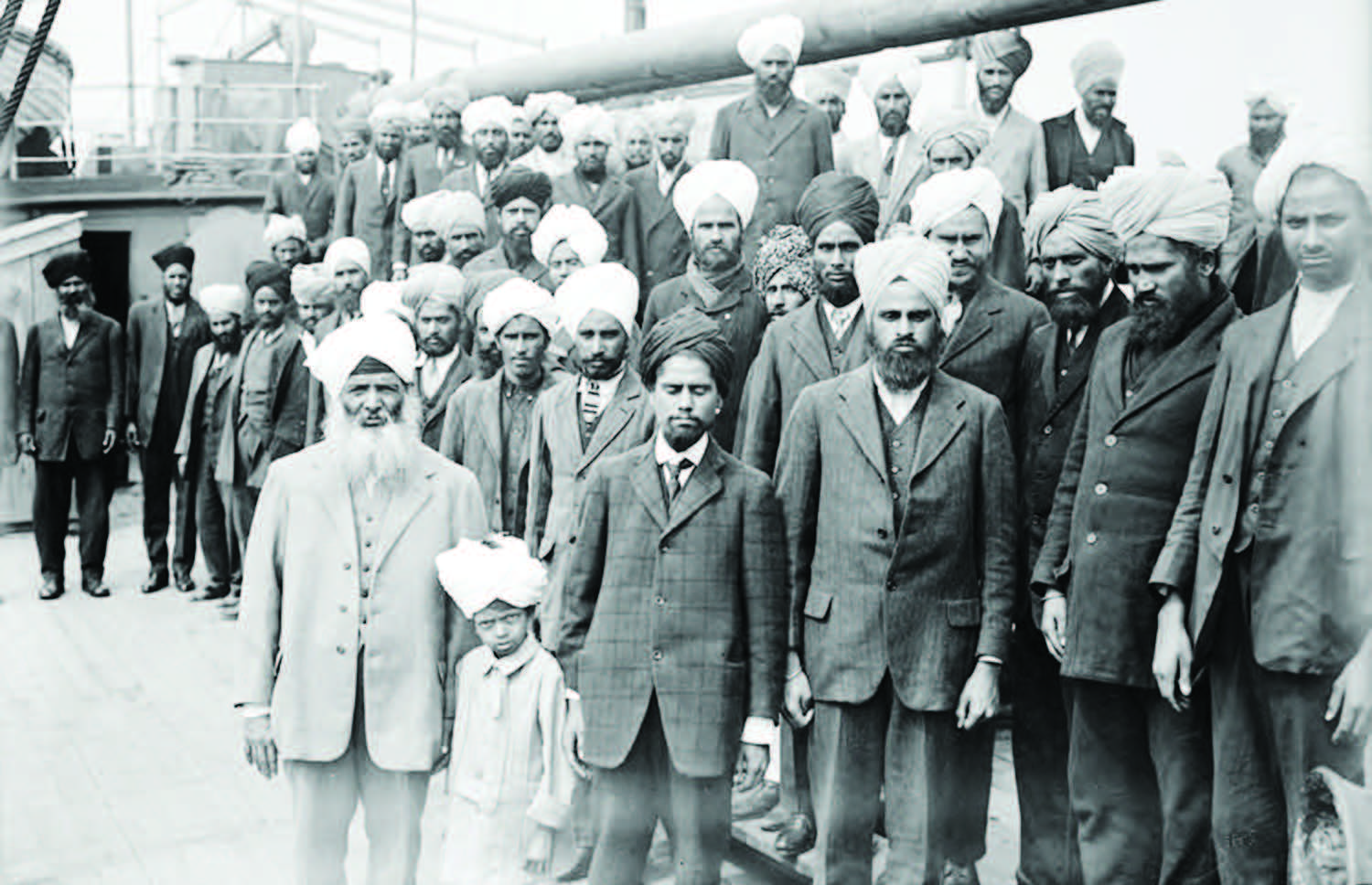
    Komagata Maru was a ship that took 376 Indians to Canada in 1914 to challenge the racist Canadian law. The passengers had taken the voyage in search of economic opportunities. They were connected neither with the Gadar Party nor with any other freedom movement. On reaching Vancouver, they were not allowed to land and were forced to stay on the ship for two months, sometimes without food and water. They were unhappy, some even rebellious at the unjust verdict of the highest Canadian justice court. The British Indian Government considered the passengers not as opportunity seekers but anti-British freedom fighters. On their return journey, they were not allowed to land in Hong Kong, Singapore or Shanghai, from where they started their voyage.


    6


    Majority of the passengers wanted to find work and make some money before going to their villages. They paid heavy price for dreaming to improve their economic situation, some spent part of their lives in jail, many were confined to their villages and eighteen of them lost their lives. Indians started coming to Canada from 1904 for economic opportunities. They had an easier access to Canada as both India and Canada were British colonies. The new immigrants were willing to do any kind of manual job and found work on farms, in factories, mills and lumberyards.


    7


    They were paid lower wages and worked for long hours. Some Canadian employers considered India as a source of cheap labor and publicized the economic and job opportunities available in Canada to attract more workers. By the end of 1907, number of Indian immigrants had reached over 5000, comprising mostly of Punjabi military veterans, farmers and unskilled laborers. As the number of immigrants increased, the white workers felt threatened that the Indians would take over their jobs. Fear of labor competition led to jealousy, racial antagonism and demands for exclusionary laws for foreign workers.


    8


    The local press carried many scare stories against the Asians and “Hindu Invasion.” The Government of Canada came up with two new laws to curb Indian immigration to Canada. One law required Indians to carry $200 in cash upon landing in Canada and the other, the “Continuous Passage” Act 1908, required immigrants to come to Canada via direct passage from their point of origin. These restrictions were very unreasonable. There were no ‘through’ ships from India to Canada and $200 was a significant amount of money, considering an average daily wage of 10 Cents of an Indian worker at that time.

    Thus, Indian immigration to Canada literally came to an end. The restrictive legislation led to discontent and anti-colonial sentiments within the Indian community. The Canadian immigration policy was exclusionist, based on race and nationality. Public and political sentiments were racist also. Over 2 million Europeans were welcomed from 1906 to 1915, while the number of Asian immigrants admitted during the same period was only about 50,000. Chinese immigrants had also to pay head tax on arrival, which was increased to $500 in 1904. Japanese government, by a gentleman’s agreement, was limited to issue only 400 passports for their nationals immigrating to Canada.

    Indians, although British subject like Canadians, were prohibited in 1908 to land in Canada because of the “Continuous Journey” law. Many Indians in Hong Kong, Singapore, Shanghai and other places were keen to come to Canada. But Steamship companies were not allowed to sell tickets to Indians for Canada. An enterprising and resourceful Indian in Singapore, Gurdit Singh, chartered a Japanese vessel Komagata Maru to challenge the racist Canadian law.

    He obtained clearance from the British Colonial secretary in Hong Kong to sail to Canada. He renamed the ship as Guru Nanak Jahaz in a prayer meeting and left Hong Kong with 165 passengers on April 4, 1914. He got 111 passengers at Shanghai and 85 more passengers joined at Moji, Japan. At Moji, Bhai Balwant Singh, head priest of Vancouver Sikh Temple, who was on a return journey to Vancouver, met with the passengers and explained them the attitude of the Canadian government. At Yokohama, Gyani Bhagwan Singh met with the passengers and told them the story of his deportation from Canada in November, 1913. Maulvi Mohammad Barkatullah, a renowned revolutionary who had lived in New York, also met with the passengers.

    Both, Bhagwan Singh and Barkatullah, were involved with India Independence Movement, started in America and known as Gadar Movement. They brought latest issue of weekly Gadar magazine and other revolutionary literature for passengers to read. The ship arrived in Vancouver on May 23, 1914 with 376 passengers, all British subjects (340 Sikhs, 24 Muslims and 12 Hindus). British Columbia Premier Richard McBride, one day prior to the arrival of the ship, made statement that the Komagata Maru passengers would not be allowed to disembark. The passengers, however, thought that as British subjects, they had the right to enter Canada.

    The Canadian public and political sentiments were against Indians getting permission to land. Canadian media in Vancouver was unsympathetic to the arriving passengers. Inflammatory articles in Vancouver newspapers helped to ignite and promote anti- Indian sentiments. The Sun newspaper called the passengers “Hindu Invaders.” Only an Indian newspaper, The Hindustanee welcomed the passengers.

    The immigration officials did not allow the passengers to land in Vancouver. Indians in Canada and the USA were outraged. The local Indians rallied in support of the passengers and organized protest meetings against the racist policy of the government. They formed a shore committee to help the passengers with food, provisions and legal challenges. The last installment for chartering the ship was due. Neither Gurdit Singh nor the passengers had money to pay. The shore committee organized a meeting of local Indians to raise funds for making installment payment and for legal fee and other expenses.

    In 1913, 38 Sikhs who had come by Panama Maru ship, were refused immigration. They challenged the continuous journey law in the court and were allowed to stay in Canada. The Government amended the Immigration law in January 1914 to plug loopholes and face any challenges. The shore committee hired an attorney to fight a test case against Canadian government’s refusal to allow Komagata Maru passengers to land in Canada. Unfortunately, the Court gave a unanimous judgment that it had no authority to interfere with the decisions of the Department of Immigration and Colonization. Only 20 returning passengers, and the ship’s doctor and his family were given permission to leave the ship.

    All the other passengers were ordered to leave the Canadian waters. The passengers had endured incredible hardships on the ship for two months and refused to leave without provision for their journey back to India. The government brought a navy cruiser to intimidate the passengers into leaving. However, the last minute negotiations averted confrontation. On receipt of provisions for the return journey, Komagata Maru left the harbor on July 23, 1914. The action of the Canadian Government created bitterness, frustration and vengefulness among the passengers as also among Indians in Canada and the US.

    Many passengers had boarded the Komagata Maru ship to Canada at Hong Kong, Singapore and Shanghai. On return journey, several of them wanted to land from where they had started their voyage but were refused permission to disembark. On September 5, 1914, before Komagata Maru reached India, the British authorities had enacted a new law, “Ingress into India Ordinance”, which empowered the Punjab Government to check the people entering India. The Government also had power to confine their movements to their villages or imprison them without trial. On reaching Budge Budge, near Calcutta, on September 29, 1914, the British Indian Government asked the passengers to board the train for Punjab.

    Except 62 passengers, all others wanted to stay in Kolkata and find employment there. The passengers had the Holy Sikh Scriptures, Guru Granth Sahib which they wanted to deposit at the Sikh temple, Kolkata. They proceeded in a procession to go to the temple but the police did not want them to go. In the scuffle between the police and the passengers, the police opened fire resulting in the death of twenty-three people – eighteen passengers, two innocent Begalis, two European officials, and one Punjab police official. Several suffered injuries and were hospitalized. Gurdit Singh and forty five of the passengers escaped.

    The police arrested two hundred and two passengers and put them in prison or confined them to their villages in Punjab for several years. (Harish Puri, The Ghadar Movement, 100) The brutal treatment of the returning passengers generated a wave of resentment against the British government. The Komagata Maru incident encouraged new converts to the Gadar cause, from not only North America but also Indians from all over the world and gave impetus to the movement for India’s independence. Jawala Singh had undertaken a simple business enterprise to transport his compatriots to Canada. But the venture ended with political implications. After evading arrest in Kolkata, he stayed in hiding for seven years.

    Finally, he surrendered to the police at the birth anniversary celebration of Guru Nanak Dev, at Nankana Sahib on November 15, 1921. He spent five years in jail for violating no laws. He joined Congress and in 1937, contested Punjab Legislative Assembly election. Unfortunately, he lost to the Akali candidate, Partap Singh Kairon who later joined Congress and was Punjab Chief Minister from 1952 to 1964. In 1951, Jawala Singh requested Prime Minister Jawahar Lal Nehru to build a memorial at Budge Budge in memory of the martyrs of Komagata Maru. On January 1, 1952, Mr. Nehru unveiled the completed monument which is popularly known as the “Punjabi Monument”. (www.rangandatta.wordpress.com/2013/01/30/ komagata-maru-memorial-budge-budge-24- parganas-south/) Indian community in Canada did not forget Komagata Maru tragedy. Baba Gurdit Singh, his colleagues and the ship have become an integral part of the history of Canada.

    A giant-sized mural of Baba Gurdit Singh and others in the ship, adorns the front wall of the Senior Citizen Housing Unit in Surrey, near Vancouver. A plaque commemorating the 75th anniversary of the departure of the Komagata Maru was placed in the Sikh temple in Vancouver on July 23, 1989. A plaque commemorating the 80th anniversary of the arrival of the Komagata Maru was placed in the Vancouver harbor in 1994.

    The first phase of the Komagata Maru Museum was opened in June 2012 at the Khalsa Diwan Society, Ross Street Temple, Vancouver. A monument in remembrance of the Komagata Maru incident was unveiled on July 23, 2012. It is located near the steps of the seawall near Convention Centre West in Vancouver. The Canadian government provided funding for both the monument and the museum. A stamp commemorating the 100th anniversary of the arrival of the Komagata Maru was released by Canada Post on May 1, 2014. On August 3, 2008, Canadian Prime Minister Stephen Harper appeared at the 13th annual Gadri Babiyan Da Mela (festival) in Surrey to apology for the Komagata Maru incident.

    In response to the House of Commons motion calling for an apology by the government, he said, “On behalf of the government of Canada, I am officially conveying as prime minister that apology.” On May 23, 2008, the Legislative Assembly of British Columbia unanimously passed a resolution “that this Legislature apologizes for the events of May 23, 1914, when 376 passengers of the Komagata Maru, stationed off Vancouver harbor, were denied entry by Canada.

    The House deeply regrets that the passengers, who sought refuge in our country and our province, were turned away without benefit of the fair and impartial treatment befitting a society where people of all cultures are welcomed and accepted.” The Government of India has decided to commemorate the centenary of Komagata Maru incident. The inaugural function of the yearlong centenary commemoration was organized on September 29, 2014 by Union Ministry of Culture. Three granddaughters of Baba Gurdit Singh – Ms. Harbhajan Kaur, Ms. Satwant Kaur and Ms. Balbir Kaur were honored by the Culture Minister Shri Shripad Naik on the occasion. A set of commemorative coins of denominations of ?100 and ?5 was released to mark the occasion. The government also decided to build a memorial at Budge Budge port.

    The National Film Development Corporation of India (NFDC) would make a film on the tragedy. A postal stamp would be issued in commemoration of the centenary. The Government of India has constituted a National Implementation Committee which has planned a number of programs such as national and international conferences, publications, development of digital archives and preparation of films and documentaries, etc. The Committee shall hold a week-long function at Vancouver from 23rd May to 30th May, 2015 which would include cultural events, seminars and exhibitions besides honoring the descendants of the Komagata Maru passengers as well as non-Indians including Canadians who rendered assistance both financially and legally to the cause of Komagata Maru passengers.

    The Punjab government would commemorate the centenary of Komagata Maru tragedy by installing a replica of the steamship Komagata Maru at the Azadi Memorial at Kartarpur in Jalandhar. A statue of Gurdit Singh shall be installed in Amritsar. His small house at Sarhali village in Amritsar shall be renovated and preserved. The government would also organize a state level function in February 2015. A brochure on Komagata Maru tragedy would be published.

    The book, Voyage of Komagata Maru, a translation of Gurdit Singh’s Zulmi Katha, edited by Darshan Singh Tatla and Prithipal Singh Kapur, shall be reprinted. A special library section is planned to house documents relating to Gadar and Komagata Maru in Punjabi University, Patiala. A play on Komagata Maru would be written, staged and video graphed for showing in colleges. This would be financed by Union ministry of Culture.

    (The author regularly writes and speaks on Indian Diaspora. He is the author of The Gadar Heroics – life sketches of over 50 Gadar heroes. He is Chairman of Global Organization of People of Indian Origin (GOPIO) and was president of GOPIO from 2004-2009. He was Chairman of National Federation of Indian American Associations (NFIA) from 1992-96, and president from 1988-92. He was founding president of Federation of Indian Associations in Southern California. He is Chairman of Indian American Heritage Foundation which has been awarding scholarships for excellence to top Indian students in Southern California since 1987. He can be reached at indersingh usa@hotmail.com)

  • Florida woman latest to accuse Bill Cosby of forced sex

    Florida woman latest to accuse Bill Cosby of forced sex

    BOCA RATON (TIP): A Florida woman who came forward November 20 became the fourth in recent weeks to say Bill Cosby gave her pills that made her feel groggy then forced himself on her sexually. Therese Serignese, now 57 and a nurse in Boca Raton, said the television icon raped her in 1976 when she was 19 years old following a show in Las Vegas. She said she went backstage and when the two were alone, Cosby gave her two pills and a glass of water, saying, “Take these.” “My next memory is clearly feeling drugged, being without my clothes, standing up,” she said.

    “Bill Cosby was behind me, having sex with me.” Dozens of Cosby’s television and comedy colleagues have either refused to comment or not returned telephone calls from the AP in recent days. The allegations by Serignese and three others are similar: * Barbara Bowman, an aspiring actress, said in a Nov 13 Washington Post column that she was 17 and blacked out after Cosby drugged her, waking up to find herself in panties and a man’s t-shirt with the television icon looming over her.

    She said she was certain she was raped. * Joan Tarshis on Monday said she was 19-year-old who wanted to be a comedy writer when Cosby gave her a drink and forced her to perform oral sex on him. * Janice Dickinson on Tuesday told “Entertainment Tonight” that Cosby had given her red wine and a pill when they were together in a Lake Tahoe, California, hotel room in 1982. Cosby’s lawyer, Martin Singer, said in a letter to the AP that Dickinson’s charges were “false and outlandish.” Serignese says after the alleged rape, she willingly stayed with Cosby in Las Vegas for some time, but could not specify how long or whether the two had sex again during their time together.

    The two also maintained sporadic contact for years after the alleged rape. Cosby spokesman David Brokaw did not respond to a request for comment. Cosby’s lawyer, in a statement released Sunday, criticized previous “decade-old, discredited allegations,” stating that “the fact that they are being repeated does not make them true.” The 77-year-old television star’s attempt at a career comeback has been collapsing in recent days as the abuse allegations resurfaced.

    This week Netflix said it was postponing a comedy special it had planned with Cosby to air later this month; NBC said it was stopping development of a sitcom with him and TV Land pulled reruns of “The Cosby Show” off the air. Serignese said she filed a statement with Philadelphia police in January 2005 detailing her allegations and provided a copy of that statement to The Associated Press. The AP could not confirm Thursday that a report had been filed with the Philadelphia police department. She had agreed to testify on behalf of Andrea Constand, a Pennsylvania woman who alleged that she was sexually assaulted by Cosby and settled before the case when to trial.

    In an interview with The Associated Press on Thursday, Serignese said she was standing in a Hilton gift shop when she felt someone approach her, put his arm around her and say, “Will you marry me?” When she turned around, it was Cosby. She said they had a friendly conversation and he invited her to the show. Afterward, she said she was escorted to the green room, where she said the rape took place. Serignese said she returned to the hotel sometime after the rape and stayed with Cosby for numerous nights, though she said she couldn’t remember precisely when or for how long.

  • Indian-American Ami Bera re-elected to US Congress

    Indian-American Ami Bera re-elected to US Congress

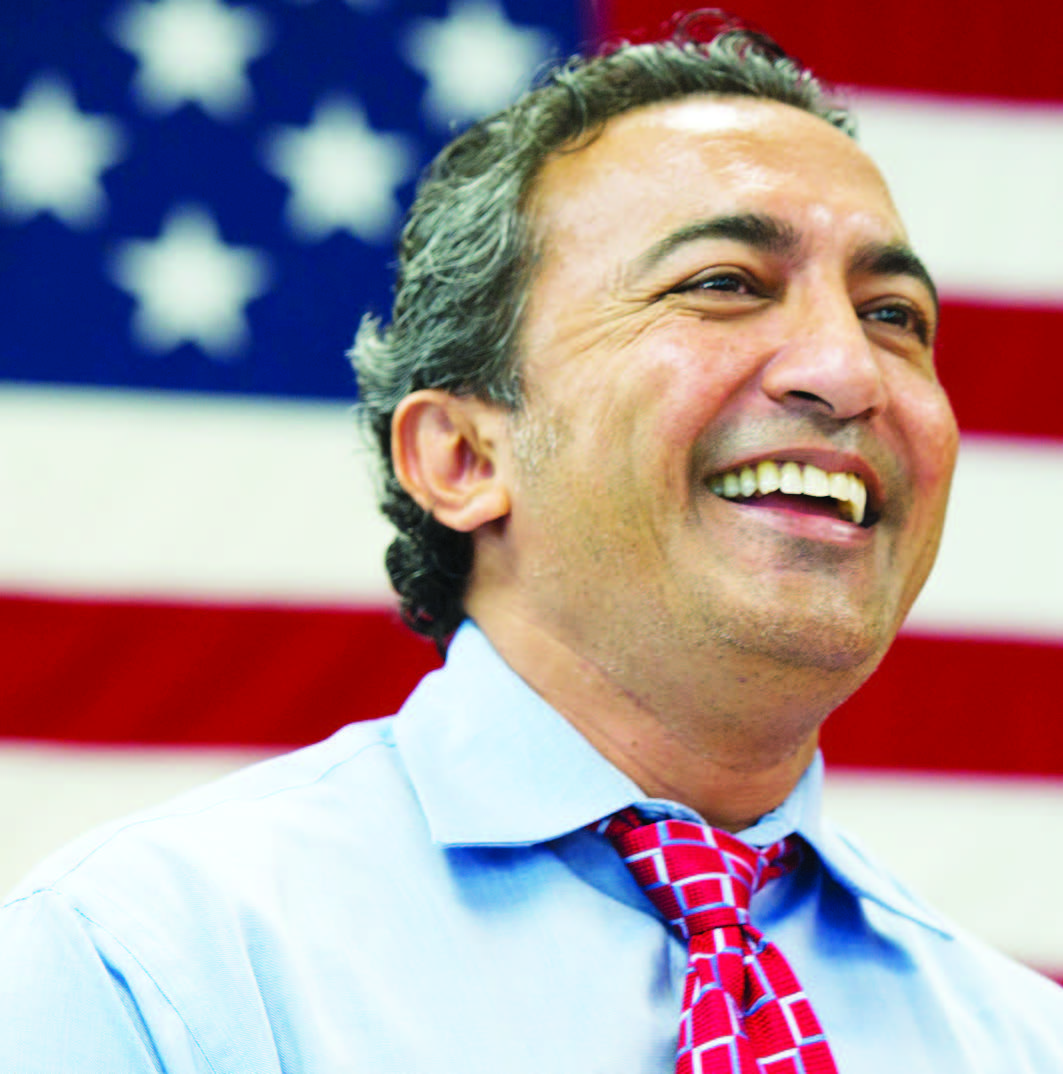
    SACRAMENTO (TIP): Amiresh ‘Ami’ Bera, the lone Indian American lawmaker in the US House of Representatives, managed to edge out his Republican opponent in a California race two weeks after the elections. Bera, who had won in a similar fashion in 2012, trailed Republican Doug Ose by more than 3,000 votes at the close of election night and steadily closed the gap as election officials tallied tens of thousands of remaining ballots. Bera, the third Indian American House member after Dalip Singh Saund and current Louisiana Governor Bobby Jindal, had ousted then sitting Republican House member Dan Lungren in 2012.

    “It’s been my honor serving this community as a doctor for the last 19 years and I am grateful I will have the opportunity to continue serving as the representative for California’s 7th Congressional District in Congress,” Bera said in a statement. “If you remember in the contest in 2012, we were tied and after the ballots were counted, we won by over 9,000 votes,” Bera said. Ose congratulated Bera on the hard fought win saying he “celebrates the fact that our institutions and our laws provide us a system whereby elections can be peacefully resolved”. The race was deemed the most expensive one with both candidates spending at least $19.6 million in the campaign, according to the Centre for Responsive Politics.

  • Texas Leads Best States For Future Job Growth

    Texas Leads Best States For Future Job Growth

    DALLAS (TIP): Rick Perry ascended from Lieutenant Governor to Governor of Texas in December 2000 when thengovernor George Bush resigned after being elected the 43rd President of the United States. Perry will retire in January with the tenth longest gubernatorial tenure in U.S. history. Perry made job creation one of his principle mantras, and he has overseen remarkable employment gains under his watch with 2.1 million jobs added during his tenure.

    The total represents 30% of the jobs added in the U.S. since 2000 and more than twice as many as any other state. The so-called “Texas miracle” does not show any signs of slowing either with 413,000 jobs added over the last 12 months. Texas is expected to have the nation’s fastest annual job growth rate at 2.7% over the next five years, according to data from Moody’s Analytics. Texas has low taxes and light regulation, but Perry’s record also has benefited from the headwinds at his back regarding energy. Oil prices hovered around $30 a barrel between 1986 and 2002 before a stunning climb that peaked at $145 in 2008. Prices plummeted during the Great Recession and over the past month, but oil is still trading around $80 a barrel. The higher prices have propelled massive investments in Texas both financially and in regards to human capital. “Texas has done well primarily because it is an energy center.

    You really can’t get around that,” says Edward Friedman, an economist who tracks Texas for Moody’s Analytics. “Every major energy and oil company has realized over the last 15 years that the only place to be is Houston.” Texas’ prosperity and pro-business environment have led companies outside of the energy sector to flock to the state in recent years. Toyota announced plans to move its North American headquarters from California to a new campus in Plano that will create 4,000 jobs. The Texas Enterprise Fund granted Toyota $40 million to sweeten the pot.

    San Francisco brokerage firm Charles Schwab is moving hundreds of jobs out of California with Austin and El Paso targeted for company expansion. Apple is undergoing an expansion that will roughly double its Austin workforce by hiring 3,600 new employees. Texas ranks first for both its current economic climate and growth prospects in our annual study on the Best States for Business. There are 118 of the largest companies in the U.S. based in Texas, including heavyweights like AT&T ,Exxon Mobil and Dell .

  • US nurses hold strikes, protests over Ebola measures

    US nurses hold strikes, protests over Ebola measures

    SAN FRANCISCO/WASHINGTON (TIP): Tens of thousands of nurses across the United States staged protest rallies and strikes on Wednesday over what they say is insufficient protection for health workers dealing with patients possibly stricken with the deadly Ebola virus. California-based National Nurses United had expected about 100,000 nurses nationwide to participate in the protest, and a spokesman for the union said he expected about that many people to take part before the end of the day.

    The union is embroiled in contract talks with the operators of nearly 90 California hospitals and clinics, and one hospital in Washington, DC. About 19,000 nurses who on Tuesday began a two-day strike against those California facilities were part of the Ebola measures protest, which in other parts of the country did not involve nurses walking off the job. Healthcare provider Kaiser Permanente, which operates most of the California facilities where the nurses were striking, has accused the union of using Ebola as a pretext for labor action.

    The nurses are pressing hospitals to buy hazardous materials suits which leave no skin exposed, as well as powered air-purifying respirators, to properly protect them from exposure, and they are seeking more training to handle patients suspected of having Ebola. “The best way to protect our community is to protect our nurses,” said Evan Brost, a nurse who joined more than 30 people in a protest outside the White House over Ebola measures. Elsewhere, protests took place in Chicago, Oakland, and outside the offices of some state governors, said National Nurses United Executive Director Rose Ann DeMoro. The US Centers for Disease Control and Prevention says it has ordered $2.7 million worth of personal protective equipment to help hospitals care for Ebola patients, but union officials contend that is insufficient.

  • Robin Williams’ autopsy found no illegal drugs

    Robin Williams’ autopsy found no illegal drugs

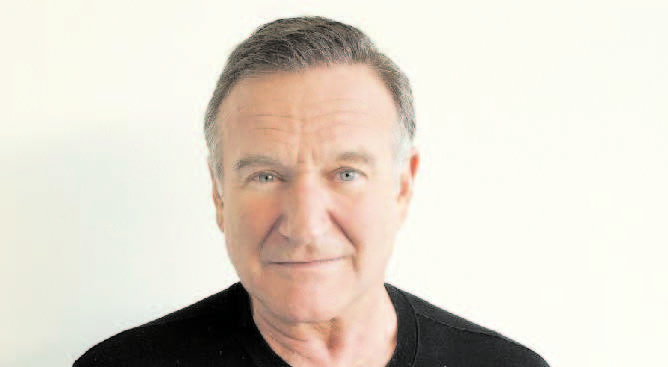
    SAN FRANCISCO (TIP): Robin Williams’ autopsy found no alcohol or illegal drugs were in his body when he killed himself at his Northern California home in August, sheriff’s officials said on November 7. The results released by the Marin County sheriff’s office found that the actor had taken prescription medications, but in “therapeutic concentrations.” The coroner ruled Williams’ death a suicide that resulted from asphyxia due to hanging. Sheriff’s officials have said Williams was found in the bedroom of his home in Tiburon on the morning of August 11.

    His death had been preliminarily ruled a suicide, with sheriff’s officials saying he hanged himself with a belt. Williams’ wife, Susan Schneider, has said the actor and comedian was struggling with depression, anxiety and a recent Parkinson’s diagnosis when his personal assistant found him dead. Williams had publicly acknowledged periodic struggles with substance abuse, and he had entered a substance abuse program shortly before his death. According to the coroner’s report, his wife told an investigator Williams did not go there because of recent drug or alcohol abuse, but rather to reaffirm the principles of his rehabilitation.

    According to his wife, Williams was having trouble sleeping and had shown increased signs of paranoia before he committed suicide, the autopsy report said. Medical records confirmed he was diagnosed with Parkinson’s disease in November 2013 but had symptoms since 2011, including a left arm tremor and the slowing of left hand movements. Treatments with drugs in May 2014 led to some improvement, according to the report, and he remained physically active until his death. Williams had two types of antidepressants in his system when he died, as well as a Parkinson’s medication, caffeine and another ingredient found in tea and cocoa, the autopsy found. Authorities have said Williams was last seen alive by his wife when she went to bed the night of Aug. 10.

    She woke up the next morning and left, thinking he was still asleep elsewhere in the house. Shortly after that, Williams’ assistant came to the home and became concerned when he failed to respond to knocks at a door. The assistant found the 63-year-old actor in a bedroom, according to sheriff’s officials. Williams also had superficial cuts on his wrist, and a pocketknife was found nearby. The results of Williams’ autopsy, including the toxicology tests, were originally slated to be released Sept. 20. Marin County officials later announced a Nov. 3 release date, but the report was further delayed. Toxicology reports routinely take up to six weeks to complete.

  • In tight electoral race, Bill Clinton bats for Ami Bera

    In tight electoral race, Bill Clinton bats for Ami Bera

    WASHINGTON (TIP): Congressman Ami Bera’s reelection bid has got a major boost with former US President Bill Clinton campaigning for him in the California seat where the Indian-American is locked in a tight contest. With Clinton, the star campaigner for the Democratic Party, personally seeking votes for Bera, the only Indian- American in the current Congress and only the third ever Indian-American to be elected to the US House of Representatives, his electoral chances brightened on Wednesday. Clinton described Bera as the embodiment of the American dream. 49-year-old Bera is facing tough competition from Republican Doug Ose, a businessman who served three terms in Congress through 2005. Appreciating Bera, Clinton described him as a “local remedy” for the intransigence gripping Washington. He cited Bera’s support for the federal health care overhaul, equal pay for women and increasing the minimum wage.

  • THE BIRTH AND GROWTH OF AN IDEA

    THE BIRTH AND GROWTH OF AN IDEA

    Every big idea has a small beginning. Gift of Life has been no exception.

    In 1974, Rotary District 7250 brought a little 5-year old named Grace Agwaru on an intercontinental voyage from Uganda to New York. Grace suffered from a hole between the two lower chambers of her young but strong heart. On November 15, 1974 surgeons at Saint Francis Hospital in Roslyn, New York successfully operated on little Grace. A big idea was born that day. The Gift of Life now includes Rotarians from all over the world, with independent chapters in countries as far away as Korea and India.

    Today, the Gift of Life is a worldwide Rotary International Service Program responsible for approximately 5000 heart surgeries for children from over 30 countries. The Gift of Life has gone global. Every good idea grows exponentially. In 2001, PDG of District 7250 Eileen Gentlecore had a simple conversation with a friend of hers and related the altruistic vision of the Gift of Life. Her friend, Past District Governor Ravishankar Bhooplapur, with the assistance of Past RI Director Sushil Gupta – Trustee of Rotary Foundation , Dr. Rajan Deshpande and many other devoted Rotarians, AC Peter, PDG Rajendra Rai, Rtn OP Khanna, DGE Kamlesh Raheja, took up the challenge to provide critical heart surgeries for the children of India.

    PDG Ravishankar Bhooplapur still serves as Honorary Chairman of Gift of Life, India today. Is it not amazing what can come of a conversation? The sole purpose of the Gift of Life, India is to secure life saving heart surgery for children in desperate need regardless of race, creed, color or country of origin. The Gift of Life, India is a not-for-profit, tax-exempt corporation with no administrative costs. All of our team members work voluntarily; all of the monies are generously donated by caring donors and through the numerous matching grants disbursed by the Rotary Foundation.

    Gift of Life program in New York has the unique distinction of bringing children from all over the world to the New York Metro Area and providing free heart Surgeries to them. These children are housed in Ronald McDonald house which is specifically given to us for this purpose. Rotarians have significantly contributed to build the Ronald McDonald house and continue to give financial support on the local level in exchange our children are accommodated pre & post-operative their surgeries. The Gift of Life still grows. We reach more children in more countries than ever before. We would like to reach more. There is no limit to this idea as long as we remain committed to saving children’s lives.

    Mission:

    To further the cause of world peace and understanding by facilitating free medical services to children suffering from heart disease regardless of race, creed, sex or national origin and who otherwise lack access to such services.

    “A Crusade of the Heart”

    The Gift of Life is a crusade of the heart, touching children in peril. An idea born in 1975 to a group of Rotarians from Manhasset, Long Island, NY, is today a global effort. We reach out to many children, who would otherwise die, and heal their failing hearts with the miracle of cardiac surgery. Our outreach spans the world, nurtured by compassion for young victims we alone can cure. Each child whose future we restore is a tribute to humanity and love, helping build bridges of friendship and peace among people everywhere.

    History

    The lives of more than 10,000 children from countries throughout the world have been saved through the miracle of open-heart surgery, in medical centers throughout the U.S. and in participating Gift of Life hospitals in Russia, Israel, Malaysia, China, Ukraine, India, Dominican Republic and the Philippines. Dedicated surgeons and nurses donate their skill to the cause. American families assist Rotarians as hosts and interpreters, bringing warmth and comfort to children and their escorts.

    Board of Directors and Officers

    Gift of Life is a dynamic program of Rotarians of Brooklyn, Queens and Nassau in partnership with the Rotary members and physicians worldwide who evaluate children for treatment in our country. Foreign doctors may also receive technical training on these shores and return to help children in their own lands. We have since opened pathways to Korea, Poland, the Russian Republics, China, Caribbean Nations and to places as distant as Mongolia, medically screening many thousands of children for lifesaving surgery.

    The spirit of the Gift of Life ignores borders. Medically advanced countries are being encouraged to do as we do – to open their own hospital doors to imperiled youngsters from developing nations. With the Gift of Life as an international model, cardiac medicine will extend its power to save many who were unreachable before. The Gift of Life has also become more of a public presence through our fund raising program Save-A-Child. In addition we hold four annual fundraisers: the Crusade of the Heart Kick-Off Dinner and black tie Gala, the Agnes T. Funk Kids for Kids Memorial 5K Walk, and our new skydiving event Jump for Life.

    Partnering Hospitals

    The following hospitals support the Gift of Life program:

    ● Loma Linda University Medical Center, Loma Linda, California

    ● Maria Fareri Children’s Hospital at Westchester Medical Center Valhalla, New York

    ● St. Francis Hospital, The Heart Center Roslyn, New York

    ● The Children’s Hospital at Montefiiore Medical Center Bronx, New York

    ● The Hospital for Sick Children Toronto, Canada

    ● The Steven and Alexandra Cohen Children’s Medical Center of New York New Hyde Park, New York

  • MOTHERHOOD WAS ‘RISKY’ FOR JESSICA ALBA

    MOTHERHOOD WAS ‘RISKY’ FOR JESSICA ALBA

    Actress Jennifer Lawrence buys a $4,500 French bulldog puppy for her close friend Laura Simpson. The 24-year-old star and her good friend Simpson found the puppy for sale online and picked it up from a private seller’s home in Thousand Oaks, California. Lawrence brought her own pet dog Pippi along for the ride. Once at the seller’s house, the divas had a blast meeting and playing with Simpson’s new pet.

  • JENNIFER LAWRENCE GIFTS $4,500 PUP TO FRIEND

    JENNIFER LAWRENCE GIFTS $4,500 PUP TO FRIEND

    Actress Jennifer Lawrence buys a $4,500 French bulldog puppy for her close friend Laura Simpson. The 24-year-old star and her good friend Simpson found the puppy for sale online and picked it up from a private seller’s home in Thousand Oaks, California. Lawrence brought her own pet dog Pippi along for the ride. Once at the seller’s house, the divas had a blast meeting and playing with Simpson’s new pet.

  • 5 FACTS ABOUT INDIAN AMERICANS

    5 FACTS ABOUT INDIAN AMERICANS

    Indian Prime Minister Narendra Modi received a rapturous reception in New York City on Sunday, speaking to more than 19,000 people – largely Indian Americans, according to The New York Times – at Madison Square Garden. During his packed five-day visit, Modi also addressed the UN General Assembly and met with a bevy of U.S. business leaders Monday morning before heading to an “intimate dinner” with President Obama.

    This is the first official trip to the U.S. for Modi, who was elected in May. His visit not only marks an effort to repair strained U.S.-India relations, but also spotlights the growing presence of Indians and Indian Americans in American life. Two sitting governors (Louisiana’s Bobby Jindal and South Carolina’s Nikki Haley, both Republicans) are of Indian ancestry; so are Preet Bharara, U.S. attorney for the Southern District of New York, and Neel Kashkari, former Treasury Department official and current GOP candidate for California governor.

    In 2012, the Pew Research Center released a pair of reports on Asian Americans – one focused on demographics and attitudes, the other on religion. The reports, which drew from 2010 census data and 2012 survey results, included much information about the country’s nearly 3.2 million Indian Americans; we’ve selected a sampling of facts from both reports:

    1 Many Indian Americans are recent arrivals.
    87.2% of Indian-American adults in 2010 were foreign-born, the highest percentage among the six largest Asian-American groups; 37.6% of those had been in the U.S. 10 years or less. One consequence of so many Indian Americans having arrived so recently: Only 56.2% of adults were U.S. citizens, the lowest share among the six subgroups studied in detail.

    5 FACTS ABOUT INDIAN AMERICANS1

    2 Indian Americans are among the most highly educated racial or ethnic groups in the U.S.

    70% of Indian Americans aged 25 and older had college degrees in 2010, by far the highest rate among the six Asian-American groups studied and 2.5 times the rate among the overall U.S. population. More recent (2013) data from the American Community Survey provides more detail: 40.6% of Indian Americans 25 and older have graduate or professional degrees, and 32.3% have bachelor’s degrees; an additional 10.4% have some college education. One likely factor: the large segment of Indian Americans who entered the country under the H1-B visa program, which allow highly skilled foreign workers in designated “specialty occupations” to work in the U.S. In 2011, for example, 72,438 Indians received H1-B visas, 56% of all such visas granted that year.

    5 FACTS ABOUT INDIAN AMERICANS2

    3 Not all Indian Americans are Hindu.

    Only about half (51%) of Indian Americans are Hindu, though nearly all Asian-American Hindus (93%) trace their heritage to India, according to our 2012 survey. 18% of Indian Americans identified themselves as Christians (as both Haley and Jindal do); 10% said they were Muslim. The religious shares of Indian Americans are markedly different from those of India itself (where an estimated 79.5% of the population is Hindu and only 2.5% is Christian, according to Pew Research’s 2012 Global Religious Landscape report), reflecting differential migration patterns.
    5 FACTS ABOUT INDIAN AMERICANS3

    4 Indian Americans generally are well-off.
    Median annual household income for Indian Americans in 2010 was $88,000, much higher than for all Asian Americans ($66,000) and all U.S. households ($49,800) – perhaps not surprising, given their high education levels. Only 9% of adult Indian Americans live in poverty, compared with 12%of Asian Americans overall and 13% of the U.S. population. In 2010, by our analysis, 28% of Indian American worked in science and engineering fields; according to the 2013 American Community Survey, more than two-thirds (69.3%) of Indian Americans 16 and older were in management, business, science and arts occupations.

    5 FACTS ABOUT INDIAN AMERICANS4

    5 Indian Americans lean left.
    65% of Indian Americans were Democrats or leaned toward the Democrats, making them the Asian-American subgroup most likely to identify with the Democratic Party. An identical share of Indian Americans approved of Obama’s job performance in 2012

    5 FACTS ABOUT INDIAN AMERICANS5

  • Soaring Dallas apartment costs haven’t put a dent in rentals

    Soaring Dallas apartment costs haven’t put a dent in rentals

    DALLAS (TIP): An average new apartment in Dallas’ popular Uptown neighborhood can cost you twice as much as the mortgage payment on a mid-priced North Texas home.

    And developers can’t build apartments fast enough, even though most of their new renters – a combination of young professionals and affluent empty nesters – could save money buying a house in the suburbs.

    Of course, they don’t want to live there. They are willing to pay more for the luxury rental lifestyle and an address in the heart of Dallas. “A lot of them are people moving into town – people coming from other urban experiences,” Dallas developer Lucy Billingsley told developers at an apartment seminar this week. “We know we have lifetime renters who will be with us now.” While spending $1,800 to $2,000 a month for a unit of less than 1,000 square feet may sound crazy to many Dallas residents, there are thousands of tenants signing up for the newest wave of apartments. So far this year, more than 13,000 renters have signed leases in North Texas. New projects woo residents with luxe lifestyle amenities and hotel-style services. “Renting apartments is a much more attractive option than it used to be,” developer Dirik Oudt with Lang Partners says. “We are fiercely competing for tenants, and the only way to differentiate our project is with better amenities and better design. “Some of the apartments we live in now are like resorts.” A generation ago, apartments in Dallas were the waiting rooms for homeownership. That’s not the case anymore. Starter homes stall Changes in the job market and tougher mortgage qualifying standards have pushed home buying down on young America’s list of must-haves. “Thirty-five years ago when I started in the business, apartments were feeders into singlefamily homes,” said apartment builder Brad Miller with Encore Multi-Family. “Now, singlefamily homebuilders are not building starter homes anymore. “And people have to wait longer to be able to afford to buy a house.” While they are waiting, they want deluxe digs. Top-of-the-market apartment rents in Dallas are eye-popping, but they are still cheap compared to a lot of other major U.S. markets. Dallas ranked 15th among top apartment rental markets in a new report by Zumper Inc. Rents are, of course, less here than on the coasts. But we are also less expensive than Denver, Atlanta and Minneapolis, a new report shows. Thousands of residents who are moving to North Texas from California, Chicago and the Northeast to fill new jobs in Dallas-Fort Worth find our apartment rents a bargain. “We import people from all over the country,” said Drew Kile with Institutional Property Advisors. “For them, our apartments are cheaper, and they want to live in town.” Bargain for some Recently, I bumped into an exec working in Toyota Motors’ new headquarters up in Plano who just rented in Uptown. He’s moving from New York and knows all about urban lifestyle. The run-up in Dallas apartment rents still is big enough to make some industry analysts nervous. Zumper’s report on rents said that Dallas had the fastest month-over-month average rent increase among the 25 major markets it surveyed. And overall rents here are up about 40 percent from a decade ago. Greg Willett, vice president with longtime Dallas apartment market firm MPF Research, warns, “we need to pay attention to the affordability factor.” “You are pushing rents above the wage growth level,” Willett told developers meeting in Dallas this week. “You can do that for a while but not indefinitely. “A big share of the people that want that product don’t make near enough to afford it.”

    (Source: Dallasnews)

  • ELECTRIC CAR SETS WORLD SPEED RECORD

    ELECTRIC CAR SETS WORLD SPEED RECORD

    WASHINGTON (TIP): An ultra-light electric car built by students at a US university has set a new land speed record in its class, besting the previous mark by nearly 80kmph. Electric Blue, an E1 streamliner designed and modified by more than 130 Brigham Young University (BYU) students over the past 10 years, averaged 330kmph on two qualifying runs this month. The new mark obliterates the previous record, 250kmph, which was set by the same BYU car in 2011.

    “When we set the record three years ago we felt like we left a lot on the table,” said BYU student and team captain, Kelly Hales. “On paper we thought we could get 322kph but we never had the conditions just right – until now,” said Hales. The car notched the record this month in front of approximately 180 teams and their cars at the Bonneville Salt Flats in northwestern Utah. Jim Burkdoll, president of the Utah Salt Flats Racing Association, drove the car to set the record, which was certified by the Southern California Timing Association. Electric Blue is called a streamliner because it has a long, slender shape and enclosed wheels that reduce air resistance.

  • Hurricane Norbert heads up Mexico’s Pacific coast

    Hurricane Norbert heads up Mexico’s Pacific coast

    LOS CABOS, MEXICO (TIP): Hurricane Norbert scattered rain along Mexico’s Pacific coast on september 4 as it headed for a brush with the Los Cabos resorts. Officials in Los Cabos closed schools and beaches and prepared emergency shelters, though the hurricane’s center was expected to stay offshore as it roars past. The US National Hurricane Center in Miami said that Norbert had top sustained winds of 90mph (150kph) Thursday evening and it was centered about 115 miles (185 kilometers) southwest of the Baja California peninsula. Forecasters said Norbert, which reached hurricane strength Wednesday, was headed northwest at 8mph (13kph). A tropical storm warning was in effect from La Paz to Cabo San Lazaro and Mexico’s National Meteorological Service said Norbert could unleash intense rains over much of the country’s northwest.

  • Global Citizen Forum Launches New York Chapter

    Global Citizen Forum Launches New York Chapter

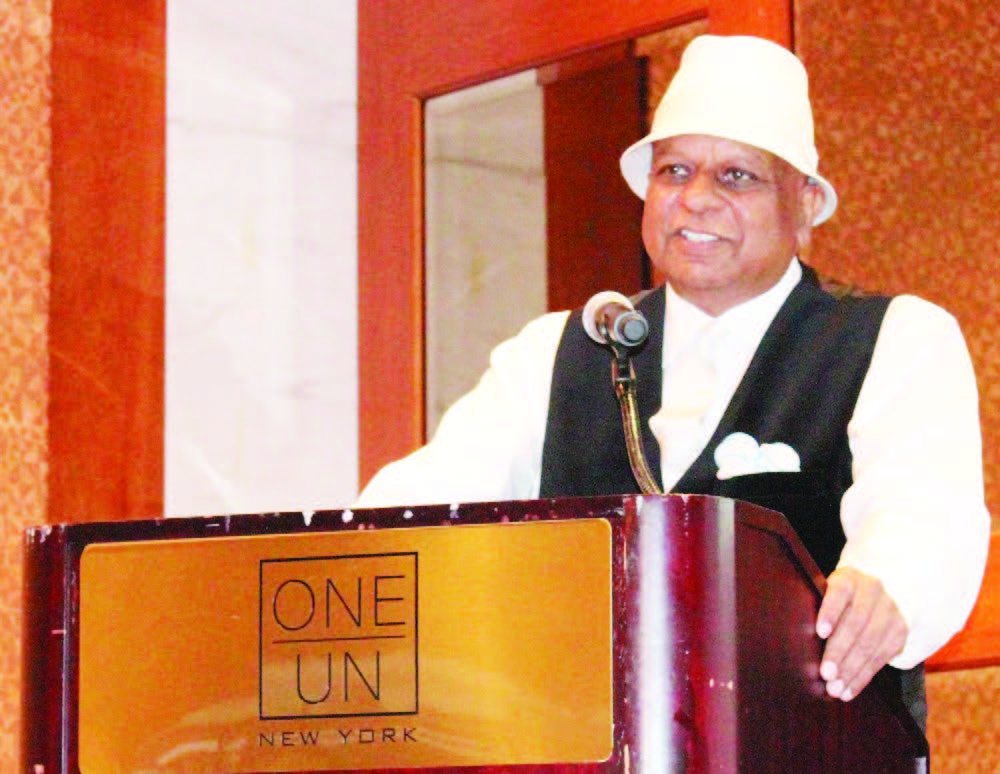
    NEW YORK (TIP): The Global Citizen Forum, New York branch was launched here on August 23. Addressing prominent members of the Indian-American community and representatives of some American think-tanks at the launch, at the UN New York Millennium Hotel, the founder and chairman of the GCF, Indian industrialist Bhupendra Kumar Modi said that the world today is not defined by countries, but by cities and metropolises, thereby heralding a big change in the world order.

    Modi talked about laying the foundation of a new world order under India’s leadership, and promoting understanding between India, China and the U.S., under the leadership of India’s Prime Minister Narendra Modi. The world has changed rapidly in the past decade, and so have the people of India, Modi, said. “There is not a single city in the world where there is no ‘Little India,” he said, noting how the Diaspora has made its presence in every part of the world.


    15
    Bhishma Agnihotri, former Ambassador at Large, Government of India, in his keynote address congratulated B.K. Modi for taking the age old Indian message of “Vasudhaiva Kutumbakam”- the whole world is a family – to every nook and corner of the world. He also said India had now an opportunity to be the world leader under Prime Minister Narendra Modi.


    It was with this growing change in mind that Modi founded the GCF in January 2013 to create a world without boundaries. Modi, lived in New York City from 1999 to 2004, before moving to California and then to Singapore and is currently based in New Delhi. Modi is also the chairman of Spice Global, an Indian conglomerate headquartered in Singapore as well as the council and chairman of Asia Crime Prevention Foundation’s India chapter. He was appointed by the United Nations as the coordinator for the Indian subcontinent for the Millennium World Peace Summit. Modi became a citizen of Singapore in 2012 and ranks 23rd in the Forbes list of Singapore’s richest people.


    16
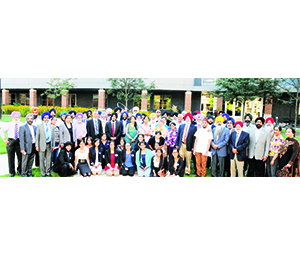
    A view of the gathering at the launch of Global Citizen Forum in New York on August 23, 2014.


    On Feb. 17, 2004, the U.S. House of Representatives issued a proclamation in appreciation of Modi’s efforts to promote deeper understanding between the two countries and congratulated him on his innovations and humanitarian efforts worldwide. Author of many books, including “One God, Hinduism – The Universal Truth” and “Performance – A Manager’s Challenge and Whispers of Peace”, Modi is essentially a man of ideas and vision. On the idea of establishing the forum, Modi said, one of the main reasons was to make sure that humanity remains the number one priority of people around the world.

    “Over the years one has seen a change in the business and spiritual leadership”, Modi said, adding that what is lacking is political change. “One first needs to be a global citizen and then a citizen of his or her respective country he said. “How many take the world as a family,” he questioned. Elaborating on the concept of ‘one world,” Modi told the gathering that India, under the leadership of Narendra Modi, could be the answer to bring the world closer. Narendra Modi has taken Indian psyche, and is bringing changes according to that and is seen as a man of wisdom and has thus raised hopes for a global change, Modi said.

    The philosophy of a global India, Modi said, is based on Gautama Buddha’s teachings, which expounded the virtues of compassion and giving. “When you give [something] to somebody, you receive more happiness than the man who receives it,” Modi said. While striving for being a global citizen, one should not forget the “poorest people” in the world, and should find ways in connecting with them, he warned. “Wisdom to see world as one, courage to go to any part of the world and live there, and compassion”are the three main qualities of a global citizen, he said. A film on Gautam Buddha was screened.

    It depicted Buddha’s disillusionment with princely life and his search for enlightenment. The Creative Producer of the film which is telecast in episodes on a TV channel in India, Ms. Ridwana was also present on the occasion and spoke with the media about the making of the film. Some more notable guests at the event included Bhishma Agnihotri, former Ambassador at Large, Government of India, who was the keynote speaker, and Swami Chidananda Saraswati, president and spiritual head of the Parmarth Niketan Ashram in Rishikesh, India, and co-founder of the Global Interfaith WASH Alliance (GIWA) at the UNICEF Headquarters at the United Nations.

  • US GURDWARAS ENDORSE THE CAMPAIGN TO CHANGE PERCEPTION OF SIKHS AND PLEDGE FINANCIAL BACKING

    US GURDWARAS ENDORSE THE CAMPAIGN TO CHANGE PERCEPTION OF SIKHS AND PLEDGE FINANCIAL BACKING

    WASHINGTON (TIP):
    Gurdwaras across the country convened in Washington D.C. August 16-17for an unprecedented grassroots meeting called by the newly formed National Sikh Campaign (NSC) to shape the Sikh image in America. Over 100 Representatives from Gurdwaras from all over the United States pledged their support to the National Sikh Campaign’s plan to engage top US political operatives and media firms for presenting the community positively.

    During the strategy session, Geoff Garin of Hart Research, who served as Hillary Clinton’s former top political strategist and Isaac Baker of AKPD Message and Media, President Obama’s media firm, outlined a roadmap of how Sikhs can change perceptions in the United States and how crucial the campaign will be to the future of Sikhs. Mr. Garin, also gave the meeting’s participants an exclusive update on the National Sikh Campaign’s groundbreaking messaging research that will underpin the effort and inform the community how it can effectively communicate to the American public.

    Gurwin Ahuja, Executive Director of the National Sikh Campaign, while welcoming the Sikh leaders, said, “The Sikh community in US has never been more educated, more wealthy, and more successful than today and we’ve also never had this many Gurdwara leaders together in a room. We have never been more primed to do something big. This is perhaps the first time a thorough scientific data will be made available to the community within and without to set the next path of our campaign.”

    After hearing from the strategists, the meeting held a closed door strategy session, which lasted several hours and focused on specific action steps to make lasting change in the United States. Sikh Leaders worked together to create a realistic region by region breakdown of US Gurdwaras and fundraising strategies were also discussed and approved to reach an overall target of $5 Million USD.

    Dr. Rajwant Singh, President of the Sikh Council on Religion and Education and Senior Advisor to NSC, who facilitated the discussion among the Gurdwara leaders, said, “The consensus was that there is a critical need for this kind of media strategy for the Sikh community. Secondly, all possible efforts need to be made to include as many Gurdwaras as possible in the network as partners.

    Thirdly, our goal is to keep the focus on introducing Sikhism and the Sikh identity while showing the positive contribution of the community in the media.” He added, “Almost every person said that this type of campaign should have been launched long time ago and would have prevented many hardships that many members of the community have had to face since 9/11.” Dr. Kulwant Singh Dhaliwal, President of the Oak Creek Gurdwara from Wisconsin, said, “As I understood the aim of the campaign is to counteract the negative image and perceptions Americans have about Sikhs and Sikhism and create a positive image of Sikhs and our faith.

    We are 100% behind this campaign. It is well conceived and planned and I am sure it will also be well executed by the team. This is about taking a proactive approach, or as in medicine we would say, a preventative approach– ‘Prevention is better than a cure’ approach. Hopefully that will prevent future tragedies for our people.” Sikh representatives came from the following states: Illinois, Connecticut, Texas, North Carolina, South Carolina, California, Virginia, Maryland, Pennsylvania, New Jersey, New York, Michigan, Ohio, Minnesota, Indiana, Delaware, and over 70 people joined from others states over the phone.

    In addition, 30 youth from high school and college age held their separate meeting as part of the organizing for this campaign. Gagan Kaur, an active leader at Guru Gobind Singh Foundation, who attended the meeting said, “I think what stuck with me the most about this conference was watching the transformation in people’s perceptions and attitudes by the end of the conference.

    It was obvious that the organizers had done their homework as everyone left feeling excited and ready to do their part for the campaign in their respective states and organizations.” She continued, “We have waited long enough- now is the time to stop the victim mentality and become proactive in how we are perceived. I urge all Sikhs to take this campaign seriously and make sure that our voice is heard.”

    Another attendee from the Sikh Religious Society in Chicago, Jasvir Kaur Singh, said “I was honored to be a part of the strategy session. It’s long overdue that Sikh organizations and Gurdwaras work together to take a proactive approach to the challenges Sikhs face in America. This was the first time I’ve attended a Sikh event where we hoped to check our egos at the door and have a candid conversation about the lack of progress we’ve made despite our attempts and personal, professional successes.”

    Dr. Inderpal Singh, President of the Gurdwara in Atlanta, GA said: “This Campaign will provide research-based solutions to the awareness crisis facing the Sikh community in America and all over the world. We have a story to share about the Sikh values, which are American values. The National Sikh Campaign is our hope and aspiration for a better world through awareness and collaboration.”

    Swaranjit Singh Khalsa of the Sikh Sewak Society International based in Connecticut stated “The National Sikh Campaign will not only educate our fellow Americans about Sikhism but I think this will also provide a common platform to all Sikhs institutes to work together and show their unity.” Surinder Singh, treasurer of NSC, said, “Each moment in which something happens is the right moment. It is relevant to our current effort, no matter how belated. There is unity of purpose and now we have to create harmony of actions. This will be relevant to our collaborative effort and participation by the entire community.”

    Jivan Singh Achreja, the National Strategy Director who facilitated the fundraising strategy, said, ” Although the task of raising 5 million dollars seems difficult, looking at the overwhelming response we have seen since this campaign was launched in March 2014, this task seems surmountable. A large section of the community will be tapped through Gurdwaras and online sources in a creative fundraising strategy that will involve all levels of the community.”

    Dr. Manjeet Kaur of North Carolina said “I am so pleased to see that Gurdwaras and representatives from throughout the world showed that they are willing to come together and work on this project with full enthusiasm for the future. Only by working together can we achieve lasting change in this country. This cause is too vast to be done alone, only through the combined effort of the US sangat (community) can we make this a reality.” Charandeep Singh from Sikh Channel in the UK left the meeting saying, “The National Sikh Campaign has marked a historically important first step in changing the American perception of the Sikh identity.

    A clear, transparent and achievable funding structure has been developed requiring support from the global Sikh Diaspora. This endeavor is imperative for the future of the American and ultimately global Sikh community.” The meeting also heard presentations from Gurwin Singh Ahuja, the Executive Director, Dr. Rajwant Singh, Senior Adviser, Jivan Achreja, National Strategy Director, and Surinder Singh, Treasurer. The event was organized by Misha Kaur, Nuri Kaur, Sehejneet Kaur, Hana Kaur, Jagjot Kaur, Jasraj Singh, Gurwinder Singh, Maninder Singh, and Harpreet Singh.

  • Bank of America to pay record $16.65 billion to settle mortgage claims

    Bank of America to pay record $16.65 billion to settle mortgage claims

    NEW YORK (TIP):
    Bank of America Corp. has agreed to pay $16.65 billion to end federal and state investigations into the sale of toxic mortgage securities during the subprime housing boom, the largest settlement by a single company in U.S. history, the Justice Department said Thursday, August 21.

    The settlement includes $9.65 billion in fines and $7 billion in aid to communities and homeowners hit hard by the housing market crash that triggered the Great Recession. “This historic resolution — the largest such settlement on record — goes far beyond ‘the cost of doing business,’” Atty. Gen. Eric H. Holder Jr. said in describing what he called “pervasive schemes to defraud financial institutions and other investors.”

    “Under the terms of this settlement, the bank has agreed to pay $7 billion in relief to struggling homeowners, borrowers and communities affected by the bank’s conduct,” he said. “This is appropriate given the size and scope of the wrongdoing at issue.” Most of the toxic loans that backed the securities came from firms BofA acquired in 2008, including Countrywide Financial Corp. of Calabasas and Wall Street investment bank Merrill Lynch & Co. BofA already had incurred about $60 billion in losses and legal settlements from the purchase of Countrywide, which was one of the nation’s biggest subprime mortgage lenders during the housing boom of the mid 2000s. Associate Atty. Gen. Tony West said employees of BofA or the firms it acquired misled investors about the quality of the mortgages in the securities.

    “It’s kind of like going to your neighborhood grocery store to buy milk advertised as fresh, only to discover that store employees knew the milk you were buying had been left out on the loading dock, unrefrigerated, the entire day before, yet they never told you,” West said. The deal settles claims from the Justice Department, the Securities Exchange Commission and other federal agencies, as well as California, New York and four other states.

  • Robin Williams suffered from early Parkinson’s at death: Wife

    Robin Williams suffered from early Parkinson’s at death: Wife

    LOS ANGELES (TIP):
    Robin Williams was sober but suffering from the early stages of Parkinson’s disease as well as severe depression and anxiety at the time of his apparent suicide, the actor’s widow said in a statement on August 14. Susan Schneider said Williams “was not yet ready to share publicly” his struggles with Parkinson’s, an incurable and debilitating nervous system disorder that causes tremors and slowness of movement.

    “It is our hope in the wake of Robin’s tragic passing, that others will find the strength to seek the care and support they need to treat whatever battles they are facing so they may feel less afraid,” Schneider said in the statement. The 63-year-old Oscar-winning comedic virtuoso, whose madcap style and dramatic versatility made him one of film and television’s top stars, was found hanged at his Tiburon, California, home north of San Francisco on Monday.

    The news that the comedian also suffered Parkinson’s disease has drawn attention to the correlation between the disorder and depression. “While a diagnosis of any serious disease can be overwhelming, Parkinson’s and depression can go hand in hand,” the National Parkinson Foundation said in a statement following Schneider’s announcement.

    “Depression affects quality of life more than the motor impairments of the disease,” the foundation said, adding that more than half of those who suffer from Parkinson’s also experience clinical depression as part of the disease.Actor Michael J Fox, boxer Muhammad Ali and singer Linda Ronstadt have all be diagnosed with Parkinson’s. Ronstadt said last year that the disease had robbed her of her singing voice. Between 50,000 and 60,000 people are diagnosed with Parkinson’s each year in the United States. It typically affects people over 50 years old.

  • MESSAGE

    MESSAGE

    On the occasion of the 68th Independence Day of India, I congratulate the Indian community based in US and convey my greetings and best wishes to the readers of The Indian Panorama.It is an important occasion for us to remember those who sacrificed their lives for the Indian freedom take stock of our accomplishments and shortfalls and implement our vision of a peaceful and prosperous nation keen to play its role on the world stage.


    18
    Dnyaneshwar M. Mulay Consul General of India, New York

    In the last 67 years, India has indeed come a long way and made its mark on the contemporary world. With its regular elections since 1952 and successful transfers of power, it has established an unmatched legacy as the largest democracy of the world. By achieving self-sufficiency in food production, increasing standard of living of people, providing health and education and creating social and economic infrastructure, the country has made great strides.

    In our ever complex and increasingly challenging global environment, India with its strong heritage and equally strong capabilities has been playing an important role on the world stage. Whether it is peace keeping operations of the UN or technical assistance under its development partnership program (ITEC), India has never hesitated in assuming her responsibilities towards both international and regional partners.

    In this endeavour, it has also been proactively cooperative with the major countries of the world and built strategic partnerships both at bilateral and multilateral levels. Vis-a-vis US, our relations are improving by leaps and bounds. Numerous joint working groups such as on nuclear cooperation, space cooperation, cyber security, counter-terrorism, science & technology, health and education are engaged in improving bilateral partnership.

    Our trade relations have crossed $ 100 billion mark, mutual investment continues to grow rapidly, presence of Indian diaspora is creating new imprint and hundred thousand odd Indian students are laying the foundation of stronger relationship for the future. The Indian diaspora needs a special mention on this occasion.

    Overcoming formidable multiple challenges, over 4 million people of Indian origin have already created a strong impression in the US. Their contributions in the fields of economic, culture, education, health and medical services, media and IT industry have been commendable. On this auspicious occasion, let us take a pledge to build a stronger partnership between India and US and also participate proactively in building a brighter future for our motherland, India.


    17
    Ashoke K Mukerji Permanent Representative of India to the United Nations


    20


    16
    NEW JERSEY GENERAL ASSEMBLY UPENDRA J. CHIVUKULA

    Iwould like to congratulate The Indian Panorama for bringing a special issue of The Indian Panorama on the occasion of the India’s 67th Independence Day. As an Indian American State Legislator in New jersey, I want to join you in recognizing the contributions of nearly 25 million nonresident Indians around the world and in particular, the growing impact the Indian Diaspora is having in North America on this occasion. I am quite hopeful that India under Prime Minister Modi’s leadership will rise to greater heights.

    India has a great opportunity to be a world leader through its participation in promoting democratic principles. I take great pride of my heritage and my gratitude to mother India for giving the opportunity to get a decent education. I am also very happy that Indian economy has come a long way in economic development and its geo-political importance. As a New Jersey legislator, I am constantly looking for opportunities to promote trade between New Jersey and India. I would like to thank you for publishing articles on NRI issues, including NRIs’ contribution to India and various countries of their adoption.


    15
    NAVIN C. MEHTA. MD. FACS. FICS. PC. NEW YORK

    It gives me great pleasure to know that region’s premier newspaper The Indian Panorama is bringing out an illustrated special issue to mark the 67th anniversary of India’s Independence. It is a thoughtful and appropriate attempt to focus on India’s struggles for freedom and subsequent struggle to strengthen roots of democracy and achieve the rightful place in comity of nations.

    From an impoverished nation, where enough food grains were not available when India got her freedom in 1947, in 67 years she has grown in to a country which is self sufficient in food and aspires to compete with the developed world, projected to be one of the three major economic powers in the next few years. The 1.2 billion Indians are a strong work force, of which more than 35% are young. It is this human capital which combined with material wealth can put India in to number one position in the world.

    I might just as well congratulate my Indian American friends for their singular contribution to this country and to their home country. They have built bridges between the to great democracies of the world, with the result that India and US enjoy a unique strategic partnership. The untiring effort of the Indian American community to preserve and promote the rich cultural heritage in an altogether different cultural milieu is indeed laudable and the institutions and individuals, including media which are involved in this gigantic task deserve to be remembered and appreciated on this occasion. I wish all Indian Americans a happy Independence Day and congratulate The Indian Panorama for bring out a commemorative issue.


    14
    Ashok Kumar Garg Chief Executive, US Operations Bank of Baroda, New York

    Iam delighted to know that ‘The Indian Panorama’ is bringing out a special issue on the occasion of India’s Independence Day on 15th August 2014. On behalf of Bank of Baroda, I extend warm greetings to one and all Indians in America. The Independence gained 67 years ago from the British Empire did more than just establish a new nation.

    It endeavored to bring freedom and opportunity to the common man; to the peasants and workers of India; to fight and end poverty and ignorance and disease; to build up a prosperous, democratic and progressive nation, and to create social, economic and political institutions which will ensure justice and fullness of life to every man and woman. Indo – US bilateral relationship is now poised to achieve great heights of mutual benefit to both the nations.

    The Indian diaspora in USA has become an integral part of the multi cultural identity of this great country and continue to uphold and preserve the ethical values, tradition and the principles of democracy. Bank of Baroda is honored to join in the Indian Independence Day celebrations and exhort all, to come together in combining with the spirit of America to achieve dreams and aspirations of the citizens of both countries.

    In this great land of opportunities, where ideas are accepted and allowed to fructify, let us pledge to make other’s life comfortable. I once again convey the greetings and best wishes from Bank of Baroda to the readers of Indian Panorama on this auspicious and happy occasion.


    12
    Pramoda Kumar Pattanaik Chief Executive Bank of India, US Operation

    It gives me great pleasure to know that region’s premier newspaper “The Indian Panorama “is bringing out an illustrated special issue to mark the 67th anniversary of India’s Independence. It is a thoughtful and appropriate attempt to remember the supreme sacrifice to achieve freedom and subsequent struggle to strengthen the roots of democracy and achieve the rightful place in comity of nations.

    In the last 67 years after independence, it has come a long way surpassing many hurdles, challenges and crisis and now forging ahead to compete with the developed world, projected to be one of the three major economic powers in the next few years. With more than 1.2 billion of people, it is now the largest democracy in the world. Rich demographic dividend in the form of younger population will now be our prime trigger for growth.

    Coupled with this, India’s bourgeoning middle class, tech savvy, skilled, educated and English speaking youths are adding to its strength to make it a force to reckon with. We, at Bank of India, are contributing our bit to accelerate the process of India becoming an economic superpower. I wish all Indian Americans a happy Independence Day and congratulate “The Indian Panorama” for bring out a commemorative issue.


    13
    Saleem Iqbal President & CEO HAB BANK, New York

    On behalf of HAB BANK, I would like to extend our Independence Day greetings to Indian American community in the tri-state area. As we celebrate India’s Independence sixty eights years ago, we can take pride in our achievements as a community in the U.S. despite the challenges that lie ahead. We have, in a short span of time, been able to establish ourselves as a vibrant community engaged at so many levels, culturally and economically, and determined to pursue our American dream of achieving success in our adopted homeland.

    HAB BANK, since is inception in 1983 as a New York State chartered bank, has played a vital role in nurturing communities through its network of branches in New York, New Jersey, and California. We are proud to be the first bank in the U.S. solely focused on meeting and serving the banking needs of South Asian community.

    We take this opportunity to express our gratitude to Indian American community for their unwavering support since our inception. We are honored to join in celebrating India’s Independence Day celebration and reaffirm our Bank’s commitment to South Asian community in the U.S.

  • ROBIN WILLIAMS: THE SADNESS OF A CLOWN THAT COULDN’T BE FIXED

    ROBIN WILLIAMS: THE SADNESS OF A CLOWN THAT COULDN’T BE FIXED

    Robin Williams, the versatile actor whose madcap comic style made him one of television and film’s biggest stars, was found dead on Monday from an apparent suicide at his home in Northern California. He was 63. Robin McLaurin Williams was born in Chicago. His father, Robert, was an executive for the Ford Motor Company, while his mother, Laurie, was a fashion model.

    The comedian and actor came into the world on 21 July 1951 in Chicago, Ilinois to former model Laura and Ford Motor executive Robert. Williams was bullied badly during childhood for being chubby and would often spend much of his time playing alone in the family’s large home to avoid his tormentors. Eventually, he conquered his overweight label though by joining the wrestling and tracks teams, and realised he could make the other children laugh as a way of gaining respect from them.

    Williams’ father took early retirement when he was 16 and they moved to California where he finished his education at Redwood High School. After graduation in 1969, Williams attended Claremont Men’s College, studying political science and playing soccer. He ended up taking lessons in improvisation, which perfectly suited his sharp wit and he was soon hooked.

    After leaving Claremont, Williams enrolled at the College of Marin to study acting and quickly won a full scholarship to the renowned Juilliard School in New York City where he studied with Christopher Reeve. The pair became great friends – a friendship that would last until Reeve’s death in 2004. He also met dancer Valerie Velardi while at Juilliard and the couple wed in 1978 and had a son, Zachary.

    Williams practiced stand-up in his spare time and he soon realised, after taking advice from a friend, that comedy rather than acting was his best way forward. He promptly left Juilliard for Los Angeles and ended up working his act on the West Coast comedy circuit. In 1977, Williams won a spot on ‘The Richard Pryor Show’ but his big break was just around the corner. Garry Marshall, creator of the hugely popular ‘Happy Days’ TV programme, was planning an ‘out-there’ episode where the Fonz would be abducted by aliens.

    At the auditions, Marshall asked Williams to sit down but he instead sat on his head and was instantly employed. Playing Mork from the planet Ork, Robin was a sensation so much so that a new show was created for him – ‘Mork And Mindy’. The show was a hit, earning Williams his first Golden Globe win in 1979 – Mork’s greeting, ‘Nanu-nanu’, became a worldwide catch-phrase. In 1980, Hollywood finally came knocking and Williams took the title role in Robert Altman’s ‘Popeye’.

    The critics and audience alike panned the film though and Williams was forced to seek solace in the comfort of Mork and Mindy for a further two years, until he starred in the film ‘The World According To Garp’. 1982 marked a downfall in Williams’ personal life as his battle with alcohol and drugs, specifically cocaine, had a destructive effect on his marriage, despite Valerie’s attempts to curb his addictions. 1983’s ‘The Survivors’ was another relative flop and it wasn’t until 1987 and five films later, that Williams finally hit the jackpot with ‘Good Morning Vietnam’.

    Playing real-life military DJ Adrian Cronauer, Williams earned himself his first Academy Award nomination and his second Golden Globe win. The following year, Valerie hired Marsha Garces to be nanny to Zachary. By 1987, Valerie and Williams had separated and Marsha became his assistant, travelling with him before the pair eventually fell in love and married in 1989, going on to have two children together – Zelda Rae and Cody Alan. Three films were released starring Williams in 1988, ‘The Adventures of Baron Munchausen’, ‘Rabbit Ears: Pecos Bill’ and ‘Portrait of a White Marriage’. However, it wasn’t until the following year that he would firmly grab the critic’s attention once more with his star turn as a maverick teacher in ‘Dead Poet’s Society’, a role which notched him his second Oscar nomination.

    1990 saw Williams star in ‘Cadillac Man’, ‘Back to Neverland’ and ‘Awakenings’ – his performance as doctor Oliver Sacks alongside Robert De Niro was celebrated as being one of his most moving and heartfelt to date. Terry Gilliam’s ‘The Fisher King’ (1991) is often classed as Williams’ best film and his role as a down-and-out who saves Jeff Bridges’ life saw him nominated for an Academy Award for the third time.

    Steven Spielberg’s ‘Hook’ in the same year was the total opposite theme of The Fisher King with its action-packed plot, yet despite breaking the $100 million barrier, the film was deemed to be overly sentimental and Spielberg’s first flop. Disney’s ‘Aladdin’ in 1992 was a landmark in establishing the talents of Williams as a voice actor in his role of the Genie, the majority of which he improvised and ad-libbed. His performance as one the film’s most notable A-list stars carried the box office receipts past $200 million.

    Following on from the less successful ‘Toys’ (1992) and ‘’Being Human’ (1993), it was Williams’ wife Marsha who stumbled upon the script for ‘Mrs Doubtfire’ in 1993 and in turn, she went on to produce the film. The film was a huge international hit and won Williams a Golden Globe, plus the achievement of once again making a $200 million taking. Williams was reunited with director Chris Columbus (Mrs Doubtfire) in the film ‘Nine Months’ (1995) which was far less of a success by comparison. He then received an Emmy nomination for a brief role in the TV programme ‘Homicide: Life On The Streets’, before returning to the children’s market with the fantasy film ‘Jumanji’. ‘The Birdcage’ (1996) saw Williams play the part of a gay club-owner whose son wants to bring his girlfriend (Calista Flockheart) and her strict conservative parents (Gene Hackman and Dianne Wiest) to stay and was yet another $100 million hit.

    Williams followed this flamboyant part with the lead in ‘Jack’, directed by Francis Ford Coppola. He played a child with an ageing disorder that saw him in a 40-year-old body at the age of 10 and while he gave an endearing performance, the premise of the film failed to attract a wide audience.

    Williams diversified his work throughout 1996 and 1997, taking small parts in ‘Hamlet’ (1996) and ‘The Secret Agent’ (1996) as well as Woody Allen’s ‘Deconstructing Harry’ (1997). 1997 was set to be a great year, first marking success with the release of Disney’s ‘Flubber’ – a box office triumph. Yet it was to be the collaboration with newcomers Matt Damon and Ben Affleck that would raise the stakes in Williams’ career. ‘Good Will Hunting’ saw Williams play Sean Maguire, psychiatrist to Damon’s troubled genius, and his performance earned him his first Academy Award for Best Actor in a Supporting Role.

    A series of less impacting films between 1999 and 2001 followed, until Williams played a ‘baddie’ for the first time in his career in the film ‘One Hour Photo’ (2002). He won rave reviews as a photo lab worker who becomes devoted to a young local family, but gradually starts to become more strange and sinister. ‘Death To Smoochy’ in 2002 failed to rake in the box office big bucks despite having a great script and cast including Ed Norton, with Danny De Vito in the director’s chair.

    That year, as ‘Death to Smoochy’ and ‘Insomnia’ were released, Williams returned to his roots, selling-out on Broadway with another impressive stand-up show. Despite not being seen on screen again for another two years, he was in fact extremely busy and his stock of alreadycomplete films were being released in slow droves. These included 2004 movies ‘Noel’, a Christmas-themed drama, David Duchovny’s directorial debut ‘House of D’ and ‘The Final Cut’, which also co-starred James Caviezel and Mira Sorvino. He went on to star in ‘The Aristocrats’ and ‘Robots’ in 2005 and picked up a nomination for a Blimp Award for Favourite Voice from an Animated Feature. Six movie releases in 2006 highlighted Williams’ versatility as an actor.

    In ‘Man of the Year’, he played the role of Tom Dobbs, the host of a comedy/political talk show. He then took on a different character in computer animated feature film ‘Everyone’s Hero’ in which he had a voice role. ‘Runaway Vacation’ saw him portray a California beverage company executive struggling with a dysfunctional family on a holiday full of mishaps. ‘The Night Listener’, based on the novel by Armistead Maupin, saw Williams as a gay radio show host who, on air, befriends a 14-year-old abuse victim – a role which he accepted for only $65,000. This was followed by the rather more cheerful animation ‘Happy Feet’, which was a global hit.

    ‘Night At The Museum’, with Ben Stiller, followed suit, with Williams playing a comic version of the former president Theodore Roosevelt. In 2007, Williams entertained fans in romantic comedy ‘License to Wed’ and drama ‘August Rush’, which were followed by roles in ‘Shrink’ and ‘World’s Greatest Dad’ in 2009. During this period his marital status changed again as Marsha filed for divorce citing irreconcilable differences in 2008. Reprising his role as President Roosevelt, Williams teamed up with Ben Stiller and Owen Wilson once more in ‘Night at the Museum: Battle of the Smithsonian’.

    Despite mixed reviews from critics, the movie was a commercial success like its predecessor. ‘Old Dogs’ (2009), a collaboration with John Travolta, Kelly Preston and Matt Dillon, also performed well at the box office. Since then he has reprised his voice roles in animated ‘Happy Feet Two’ in 2011, which was his only project that year. Williams married his third wife, graphic designer Susan Schneider, on 23 October 2011 in St Helena, California. In 2012, he appeared in the TV comedy ‘Wilfred’, which stars Elijah Wood who is the only man that can see his neighbour’s dog as a full-grown man.

    This was followed by an appearance in ‘The Big Wedding’, which was released in November 2012, as well as ‘The Face of Love’, ‘The Butler’ in 2013 and ‘The Angriest Man In Brooklyn’, in 2014. With a career spanning 30 years, during which he has received over 40 awards, including an Oscar, and been nominated nearly 50 times, Williams’ appeal will no doubt span many more generations to come. Robin died on 11 August 2014 at his home in California in an apparent suicide. His spokesperson released a statement stating that Robin had recently been struggling with depression.

  • PENTAGON CONFIRMS US GENERAL KILLED IN KABUL ATTACK

    PENTAGON CONFIRMS US GENERAL KILLED IN KABUL ATTACK

    WASHINGTON: The Pentagon on Tuesday confirmed that a US general was killed in an attack in Afghanistan — the highest-ranking American fatality since the 9/11 attacks. The US defence department also identified the assailant, who was wearing a uniform, as an Afghan soldier and said that he was killed after he opened fire on coalition forces, his supposed allies.

    “I can … confirm among the casualties was an American general officer who was killed,” Pentagon spokesman, Rear Admiral John Kirby, told reporters. Kirby said that he would not give the general’s name pending notification of next of kin. The Washington Post identified the deceased as Major General Harold J Greene, who served as the deputy for systems acquisitions at the US army headquarters. Greene’s official biography said that the New York State native held a doctorate in materials science from the University of Southern California as well as three master’s degrees.

    The general was the highest-ranking US officer killed since the September 11, 2001 attacks when Lieutenant General Timothy Joseph Maude was killed by a hijacked airliner that crashed into the Pentagon. No US general has been killed in combat since the Vietnam War, with topranking service members spared during the Iraq war and, until now, the Afghanistan conflict. President Barack Obama plans to withdraw most troops from Afghanistan later this year.

    A US official, speaking to AFP on condition of anonymity, said that around 15 people were injured including eight Americans. The nationalities of the other victims were unclear, but the German army said that one of its generals was wounded and the US official said that the injured included Afghans. The Pentagon spokesman said that the assailant was killed, although he did not have more detail on how the incident unfolded. “We believe that the assailant was an Afghan soldier,” Kirby said.

    Kirby said it was too early to assess whether US forces needed to improve vetting of Afghan troops. But he described the attack as an isolated incident and credited Afghan troops for their work in securing national elections. “I’ve seen no indication there’s a degradation of trust between coalition members and their Afghan counterparts,” Kirby said.

    “It’s impossible to eliminate, — completely eliminate — that threat, I think, particularly in a place like Afghanistan, but you can work hard to mitigate it,” Kirby said of insider attacks. “As terrible as today is — and it is a terrible day, a terrible tragedy — we haven’t seen in the course of the last year or so… a ‘spate’ of these insider threat attacks. I think that’s testament to the good work authorities have done,” he said in response to a question.

  • Couple married for 62 years die on same day

    Couple married for 62 years die on same day

    CALIFORNIA: A couple married for almost 62 years have died on the same day in Bakersfield, California. Don and Maxine Simpson passed away within four hours of each other last month at their granddaughter’s home, where they spent their last days together.

    Simpson, 90, and his 87-year-old wife suffered from illness in recent years but had travelled the world in the early years of their marriage. “They did a lot of amazing things” together, their granddaughter Melissa Sloan told the Bakersfield Californian.

  • BILLIONS SPENT, BUT VISION FOR FAST TRAINS IN US IS UNREALIZED

    BILLIONS SPENT, BUT VISION FOR FAST TRAINS IN US IS UNREALIZED

    WASHINGTON (TIP) :
    High-speed rail was supposed to be President Obama’s signature transportation project, but despite the administration spending nearly $11 billion since 2009 to develop faster passenger trains, the projects have gone mostly nowhere and the United States still lags far behind Europe and China. While Republican opposition and community protests have slowed the projects here, transportation policy experts and members of both parties also place blame for the failures on missteps by the Obama administration – which in July asked Congress for nearly $10 billion more for highspeed initiatives.

    Instead of putting the $11 billion directly into those projects, critics say, the administration made the mistake of parceling out the money to upgrade existing Amtrak service, which will allow trains to go no faster than 110 miles per hour. None of the money originally went to service in the Northeast Corridor, the most likely place for high-speed rail. On a 30-mile stretch of railroad between Westerly and Cranston, RI, Amtrak’s 150mph.

    Acela hits its top speed — for five or 10 minutes. On the crowded New York to Washington corridor, the Acela averages only 80mph, and a plan to bring it up to the speed of Japanese bullet-trains, which can top 220mph, will take $150 billion and 26 years, if it ever happens. Florida, Ohio and Wisconsin, all led by Republican governors, canceled high-speed rail projects and returned federal funds after deeming the projects too expensive and unnecessary.

    “The Obama administration’s management of previously appropriated high-speed rail funding has been as clumsy as its superintending of the Affordable Care Act’s rollout,” said Frank N Wilner, a former chief of staff at the Surface Transportation Board, a bipartisan body with oversight of the nation’s railroads. When Obama first presented his vision for high-speed rail nearly four years ago, he described a future of sleek bullet trains hurtling passengers between far-flung American cities at more than 200mph.

    “Within 25 years, our goal is to give 80 per cent of Americans access to high-speed rail,” Obama said in his 2011 State of the Union address. “This could allow you to go places in half the time it takes to travel by car. For some trips, it will be faster than flying — without the pat-down.” But as Obama’s second term nears an end, some experts say the president’s words were a fantasy.

    “The idea that we would have a high-speed system that 80 per cent of Americans could access in that short period of time was unadulterated hype, and it didn’t take an expert to see through it,” said Kenneth Orski, the editor and publisher of an influential transportation newsletter who served in the Nixon and Ford administrations. “And scattering money all around the country rather than focusing it on areas ripe for highspeed rail didn’t help.” The Acela, introduced by Amtrak in 2000, was America’s first successful high-speed train, and most days its cars are full.

    The train has reduced the time it takes to travel between Washington, New York and Boston, but aging tracks and bridges – including Baltimore’s 100-year-old tunnel where trains come to a crawl – have slowed it down. It takes two hours and 45 minutes to travel from New York to Washington on the Acela. If the Acela were a bullet train traveling on new tracks, it would take 90 minutes. Another problem is that Amtrak’s funding is tied to annual appropriations from Congress, leaving it without a long-term source of money. “I do what I can do,” said Joseph Boardman, Amtrak’s president. “But I don’t sit back and wait for $15 billion to rebuild the Northeast Corridor.” For now, Amtrak is rebuilding a stretch of track in central New Jersey that will permit travel at 160mph for 23 miles.

    But advocates say they are hopeful. “Once something gets built, then we’re going to see more projects get going,” said Ray LaHood, Obama’s first transportation secretary. LaHood said it took the Interstate System of highways decades to be completed, and he predicts that high-speed rail will be the same. LaHood said California seemed the most likely candidate for success with high-speed rail, even though plans for a 520-mile train route between Los Angeles and San Francisco have been mired in controversy.

    Despite strong backing from Gov. Jerry Brown, a court ruling had tied up state bond funding for the $68 billion project. An appeals court on July 31 threw out that ruling, which had been based on a lawsuit. But opponents are still increasing calls to kill the project, and polls show waning public support for it. Still, California has begun construction of the tracks and put out bids for a vendor to build the trains. And the new rail project will get an infusion of funds from the state’s cap-and-trade program, which requires business to pay for excess pollution.

  • Royal® Basmati Rice celebrates Ramadan and Eid with the community in New York, California and Illinois

    Royal® Basmati Rice celebrates Ramadan and Eid with the community in New York, California and Illinois

    LOCATIONS:
    Chicago: July 22nd- Ayesha Masjid
    Address: 2409 W. Devon Ave., Chicago, IL 60659

    Los Angeles: July 24th- Islamic Center of Orange County
    Address: One Al-Rahman Plaza, Garden Grove, CA 92844

    New York: July 24th – Muslim Majlis of Staten Island
    Address: 104 Rhine Ave. , Staten Island, NY10304

    July 27th: CHAAND RAAT
    Address: Coney Island Avenue, Brooklyn, NY 11230

    NEW YORK (TIP):
    Royal® Basmati Rice shared the spirit of giving this Ramadan by reaching out to communities at different locations in selected target markets in the U.S. During the last week of Ramadan, Royal® Basmati Rice brand ambassadors gave out free Iftar to Muslim communities in Chicago, IL, Staten Island, NY and Garden Grove, CA. In addition, Royal®Basmati Rice provided, for free, henna applications for the Chaand Raat Mela in Brooklyn, NY on the eve of Eid, the biggest celebration in the Muslim world observed at the end of Ramadan.

    The overall response of the program was very positive and Royal® Basmati Rice outreach to the local community was welcomed by all attendees. As part of the program, Royal® Basmati Rice hosted Iftar in selected mosques located in the heart of major community hubs, such as Devon Ave. in Chicago, IL.

    Most of these events were attended by a large audience who truly appreciated Royal® Basmati Rice’s involvement in the community. The events were promoted by the Imams of the mosque prior to the iftars as a sign of their appreciation for the company’s efforts. As a leading food brand that works closely within these communities, Royal® brand is embracing the culture of its customers during the time of Ramadan and Eid.

    The Royal® Brand recognizes that their high quality food products are used in many Muslim households throughout the USA and this was their way of thanking this community for their loyalty and patronage in making Royal® products one of the best selling brands for basmati rice, chakki atta and tea. “This is an important time of the year for our Muslim consumers and we want to ensure that we partake in their customs and traditions” – says Nadine Curias, VP Marketing. “Reaching out to the community to celebrate their major holiday is a part of Royal®’s continued commitment to our diverse communities.

    Ramadan is among the biggest celebration in the Muslim community and we wanted to ensure that we celebrate this at the grassroots level”, Curias added. A trusted household brand for 25 years, Royal® is the #1 best-selling Basmati Rice in America. To understand why, it’s important to realize that all Basmati is not created equal. Similar to what champagne is to France, truly authentic Basmati Rice can only come from the foothills of the Himalayas. Under the attentive care of India’s finest farmers, Royal® Basmati Rice grows within the perfect harmony of climate, fertile soil and pure mountain spring water.

    After harvesting, we then age our rice in temperature-controlled silos for a minimum of 12 months. The result is a non-sticky, fluffy long-grain rice that is distinctively rich in aroma and delicately flavored. To guarantee that our rice meets the highest standards, we have rigorous QC measures in place that test each batch for purity, length, consistency and density.

    We also use state-of-the-art equipment to ensure that every ROYAL® bag is packed with only the finest rice grains containing natural goodness. For more product information visit www.ltfoodsamericas.com or call 800-550- RICE.