Tag: California

  • American Society of Engineers of Indian Origin (ASEI) 2014 Awards – Nominations Invited

    American Society of Engineers of Indian Origin (ASEI) 2014 Awards – Nominations Invited

    SACRAMENTO (TIP): American Society of Engineers of Indian Origin (ASEI) is a national organization of professionals of Asian Indian diaspora in the USA that shares knowledge among its members, shapes the next generation of engineers, entrepreneurs, scientists and technologists and perform community service helping the disadvantaged and underprivileged in communities across the world. ASEI Southern California chapter is hosting the 29th ASEI National Convention at the campus of University of California, Irvine.

    The theme of the convention is ‘STEM: Ideas for the 21st Century’ with presentations in multiple tracks. Over 500 professionals including scientists, engineers, technologists, entrepreneurs and corporate leaders are expected to attend this convention. The program starts with an evening welcome reception on September 26th and a full day conference session on Sept. 27th with 4 tracks covering Bio-medical Devices and Life Sciences, Disruptive Technologies, Emerging Trends in Engineering and Growth in STEM (Science, Technology, Engineering and Math).

    Speakers will include prominent business leaders, entrepreneurs, technologists, educators, policy makers, angel investors and investment bankers. See more details at http://www.aseiusa.org/events/upcoming-events. The convention will end with a finale awards banquet on Sept. 27th where those who have made outstanding achievements in engineering and technology and those contributed to society at large and to ASEI organization will be recognized.

    ASEI is seeking nominations in various award categories as follows:
    ASEI Entrepreneur of the Year (Open to everyone)
    ASEI Exceptional Merit Award (Open to everyone)
    ASEI Engineer/Scientist of Year (Open to everyone in all engineering disciplines, i.e. Architecture, Bio, Chemical, Civil/Structural, Electrical, Electronics/Computer, Industrial, Mining/Minerals/Materials, Mechanical and Telecommunication)
    ASEI Service Excellence (Open to an ASEI member who has done service to community at large)
    ASEI Lifetime Achievement (Open to those who have served ASEI for over 10 years). If no candidate qualifies, Life Time award is not given that year
    ASEI Founder’s Award sponsored by ASEI Founder Hari Bindal (Open to those who have provided dedicated services to ASEI in the immediate past year). Award includes a plaque and $1,000 to the charity of award recipient’s choice.
    ASEI Student of the Year (Open to all students of Indian origin)

    Nomination Process
    Please fill in the appropriate nomination form and send it in with a bio and other supporting documents such as press cuttings of any achievement or previous awards. Nomination can be made self or by a colleague, except for ASEI Service Excellence, Lifetime Achievement and Student of the Year Awards, which have to be nominated as prescribed in the nomination forms. All nominations must be received before August 15th by e-mail to asei.awards@aseiusa.org or mail to ASEI 2014 Awards Committee, P.O. Box 16760, Stamford, CT 06905.
    For further information, please visit www.aseiusa.org.

  • Indian American caterer Falguni Shah killed in a road accident in CA

    Indian American caterer Falguni Shah killed in a road accident in CA

    SACRAMENTO (TIP):

    In a two-car crash in Rancho Cucamonga, California, where a car driving the wrong way crashed into another car on a freeway, three people died, and two others were severely injured. The wrong-way driver on the 210 Freeway just west of Day Creek Road on the early hours of Sunday was identified as Mack A. Jaramillo, 28, of La Habra, according to the San Bernardino County Coroner’s Office. He was the sole occupant of a 2011 Hyundai, reported the San Gabriel Valley Tribune, quoting California Highway Patrol Sgt. Josh Buffum said.

    Investigators were looking into the possibility he was under the influence of alcohol or drugs. The other four victims, the two who died and two got injured were all in the other car, a 2013 Hyundai, and were related to each other. The dead were identified as Falguni Shah, 38, of Fontana, who ran a catering business, and Veena Shah, 42, who was visiting from Leicester, England.

    Falguni Shah is survived by her husband Dharmesh Shah and two children – a daughter, 9, and son, 19. The driver of the 2013 Hyundai, 60-year-old Nitin Shah of Chino Hills, and front passenger Jyotsna Shah, 56, also of Chino Hills were hospitalized with major injuries, Buffum said, reported the Tribune.

  • Indian-American CEO Convicted For Paying Kickbacks

    Indian-American CEO Convicted For Paying Kickbacks

    NEW YORK (TIP): An Indian-American CEO of two publicly-traded companies has been convicted on charges of paying kickbacks in return for purchases of his companies stock. Shailesh Shah, 48, of California pleaded guilty before US District Judge Richard Stearns to two counts of mail fraud and two counts of wire fraud. He will be sentenced in October and could face a sentence up to 20 years in prison followed by three years of supervised release and a fine of $250,000, the FBI said in a statement.

    As President and CEO of two publicly-traded companies, Shah agreed to pay secret inducements to an investment fund representative in exchange for having the firm buy stock in his companies. The kickbacks were concealed through the use of sham consulting agreements and other fraudulent documents. Shah, however, did not know that the purported investment fund representative was an undercover FBI agent. The plea follows a lengthy investigation focusing on preventing fraud in the microcap stock markets. Microcap companies are small publicly-traded companies whose stock often trades at pennies per share.

  • California man sentenced to 15 years for espionage

    California man sentenced to 15 years for espionage

    OAKLAND (US) (TIP): A federal judge has sentenced a California chemical engineer to 15 years in prison and fined him USD 28.3 million for a rare economicespionage conviction for selling China a secret recipe to a widely used white pigment. US District Court Judge Jeffrey White in Oakland said Liew, a naturalised US citizen, had “turned against his adopted country over greed.” A jury previously convicted the 56-yearold Liew of receiving USD 28 million from companies controlled by the Chinese government in exchange for DuPont Co’s pigment technology for making cars, paper and a long list of everyday items whiter.

    Along with the USD 28.3 million Liew was ordered to forfeit and pay to DuPont, the engineering company launched by him and his wife was fined $18.9 million. White expressed doubt yesterday that Liew would pay back much of his debt. White noted that US authorities had managed to trace USD 22 million of the $28 million received by Liew to various Singapore and Chinese companies controlled by Liew’s in-laws before losing the trail. “We’ll never get it,” White said. “It has been spirited out of the country.” Liew and his wife, Christina Liew, launched a small California company in the 1990s aimed at exploiting China’s desire to build a DuPont-like factory to manufacture the white pigment known as titanium dioxide.

    The Liews hired retired DuPont engineers and, according to the FBI, paid them thousands of dollars for sensitive company documents laying out a process to make the pigment. Two former DuPont engineers have also been convicted of economic espionage. Another engineer committed suicide in early 2012 on the day he was to sign a plea bargain acknowledging his role in the conspiracy. Except for a few months of release on bail, Liew has been in jail since his arrest in 2011. Wearing yellow jail garb and with his wife and family looking on from the gallery, Liew apologised for his actions. “There are many things I would have liked to have done differently,” Liew told the judge. “I regret my actions.” Liew was born on a farm in Malaysia to Chinese parents and went on to earn advanced degrees in chemical engineering.

  • PROSTITUTE LEFT GOOGLE EXECUTIVE TO DIE ON BOAT: POLICE

    PROSTITUTE LEFT GOOGLE EXECUTIVE TO DIE ON BOAT: POLICE

    SANTA CRUZ, CALIFORNIA (TIP): As a Google executive lay dying on his yacht, an upscale prostitute casually walks over him, picks up her clothes and heroin and swallows the last of a glass of wine before lowering the boat’s blinds and walking back on the dock to shore, police say surveillance footage shows. Authorities charged Alix Tichelman, 26, with manslaughter on Wednesday for her role in the death of Forrest Hayes, who was found dead by the captain of his 50-foot (15-meter) yacht last November.

    Police said the surveillance video from the yacht shows everything that happened from the time Tichelman came aboard to when she left. Santa Cruz Deputy Police Chief Steve Clark told the Associated Press on Wednesday that Hayes, 51, had hired Tichelman before, and that their November 23 encounter “was a mutually consensual encounter including the introduction of the heroin.” Clark said it appears this might not have been the first time she left someone in trouble without calling police or trying to help. Without elaborating, he said his agency is cooperating with police in a different state on a similar case.

    “There’s a pattern of behavior here where she doesn’t seek help when someone is in trouble,” he said. News vans gathered outside Hayes hilltop estate overlooking the glittering Monterey Bay, where the five-bedroom home is on the market for $4.2 million. Hayes’ widow has not spoken publicly and a blog created in his memory was deleted. On the website, friends and coworkers were seemingly unaware of how he died. They fondly described their time together, Christmas parties on his boat, engineering teams at Sun Microsystems, traveling to China for Apple and most recently at Google, where they said he was involved in the Glass eyewear projects.

    Clark said it’s not clear if Hayes was a frequent drug user, and that in the video, it appears he needed Tichelman to help him shoot up. Clark described Tichelman as a high-end prostitute, who charged $1,000 and lived three hours away in the Sacramento suburb of Folsom. He said she had other clients from Silicon Valley, home to about 50 billionaires and tens of thousands of millionaires. “There’s no question that Silicon Valley feels different than it felt 28 years ago when I moved here,” said Russell Hancock, president of Joint Venture Silicon Valley, an organization focused on the local economy and quality of life.

    “Something has happened. We used to be a Valley full of techies living middle class lives, and now we’re a Valley of the uber-rich carrying toy poodles around with them.” Tichelman was arrested on July 4 after police said a detective lured her back to the Santa Cruz area by posing as a potential client at an upscale resort. Clark said they didn’t just arrest her because they didn’t know exactly where she lived, and they were concerned she would flee. Police said Tichelman boasted she had more than 200 clients and met them through a website that purports to connect wealthy men and women with attractive companions.

    Her clients included other Silicon Valley executives, Clark said. Tichelman’s father has ties to the tech industry. Folsom software firm SynapSense announced hiring her father, Bart Tichelman in 2012. Neither the firm nor her father responded to immediate requests for comment. She is being held on $1.5 million bail after appearing in court Wednesday wearing red jail scrubs. Santa Cruz Superior Court Judge Timothy Volkmann approved a request from Tichelman’s court appointed attorney, Diana August, to continue the arraignment until July 16. August did not immediately return a call seeking comment.

    Assistant District Attorney Rafael Vazquez said authorities are still investigating and may file more serious charges. Santa Clara University Finance professor Robert Hendershott said financial windfalls like those seen in the Silicon Valley often bring problems as people have trouble managing their newfound wealth. But he said there’s no obvious hedonistic culture in the Silicon Valley. “There’s no Great Gatsby type of parties famous in the Silicon Valley,” he said.

  • Saleem Iqbal  President & CEO HAB BANK, New York

    Saleem Iqbal President & CEO HAB BANK, New York

    On behalf of HAB BANK, I would like to extend Independence Day greetings to our community in the tri-state area. As we celebrate Independence Day this year, we can take pride in our achievements as a community despite the challenges that lie ahead. We have, in a short span of time, been able to establish ourselves as a community engaged at so many levels, culturally and economically, and determined to pursue our American dream of achieving success in our adopted homeland. Our South Asian community has become part and parcel of our great country and collectively, we will continue to uphold and preserve American values and tradition of democracy in the years to come.

    HAB BANK, since is inception in 1983 as a New York State chartered bank, has played a vital role in nurturing communities through its network of branches in New York, New Jersey, and California. We are proud to be first bank in the U.S. solely focused on meeting and serving the banking needs of South Asian community working and living in the Tri-State and greater Los Angeles areas. We are honored to join in celebrating our Nation’s birthday. May we come together in the enduring spirit of America to achieve our dreams and aspirations.! I wish you all the best for a happy Fourth of July. May God Bless all those who serve, and may God Bless the United States of America!

  • From Slavery to Freedom The Journey of American Nation

    From Slavery to Freedom The Journey of American Nation

    Story of American Journey from British Occupation to slaving and racially discriminating its own citizens to vibrant Democracy to Crony Capitalism

    The journey of America from a little known land mass inhabited by primitives to what it is today is an interesting piece of history of man and evolution of a nation. Today, America is known to the world as a country built by immigrants and governed by immigrants. Whether some one’s ancestors arrived last year or last century, every American with the exception of Native Americans the Red Indians; has a family tree with roots somewhere else. People have come in to America from all continents- Europe, Africa, Latin America, Asia, and Australia. What a wonderful mosaic of nationalities here! America is currently the most religiously diverse nation in the world. It is the quintessential melting pot for world’s major religions, Americans honor the divine in mosques, churches, synagogues, temples, Monasteries, Gurudwaras and they are a multi-cultural, multi-religious nation. At the same time America belongs to the nonbelievers, too.

    The many nationalities and religions brought with them their culture, their value systems which we find have beautified and enriched the composite culture, yes, the composite culture, of America. But the making of America of today is a long story of a protracted and grim struggle, trials and travails. The Story of American Journey from British Occupation to slaving and racially discriminating its own citizens to evolving in to a vibrant and functional Democracy is worth studying. It is a long history, from the initial battles in the Revolutionary War which broke out in April 1775 for complete independence from Great Britain to the first commemoration by Philadelphia of independence on July 4, 1777.

    I will not go in to details of the history of the freedom struggle. I believe most of us have read about it either at school or at some other point. Nor will I dwell on the Flag of America, the national song of America, the manner of celebration of July 4th. These are commonplace knowledge. But I will certainly touch upon the human aspect of America’s evolution in to a great functional democracy. 1777 brought freedom from colonial rule. But it did not bring freedom to all human beings in America. Unfortunately some Americans especially the African Americans were excluded from the Independence and freedom.

    Enslaved men women and children labored to make millions for their masters. The seeds of this slavery were planted with the birth of a nation built upon the labor derived from slave-wages and the contradiction-in-terms produced by claiming freedom and democracy while owning and profiting from slavery at the same time. Millions of enslaved people were bought and sold; practically one third of all Southerners lived in bondage. Even in Washington D C, slave auctions were a daily occurrence with chained human beings marched routinely in front of the Capital of the nation dedicated to the proposition of human freedom.

    The de-humanization of black-people being treated as animals, traded as commodity, tortured beyond human tolerance, murdered and lynched in cold blood and their separation from the common run of humanity gave birth to confrontation between North and South on the issue of slavery that tormented the nation for almost a century. I hope, you have seen the wonderful movie “12 Years a Slave” which deals precisely with this subject It took America more than a century to end discrimination. We remember that on August 28, 1963, 186 years after independence, a March to Washington was held with the active support of President Kennedy, in a collaborative effort of all of the major civil rights organizations.

    The march had six official goals:
    (1) meaningful civil rights laws
    (2) a massive federal works program
    (3) full and fair employment
    (4) decent housing
    (5) the right to vote
    (6) adequate integrated education. The major focus was on passage of the civil rights law that the Kennedy administration had proposed after the upheavals in 100 cities including Birmingham earlier in the summer. The march was a success, an estimated 200,000 to 300,000 demonstrators gathered in front of the Lincoln Memorial, where Dr King delivered his famous “I Have a Dream” speech. Dr King said even after one hundred years after signing of Emancipation Proclamation, (which Lincoln had signed on January 1, 1863) the Negro is still not free, the life of the Negro is still sadly crippled by the manacles of segregation and the chains of discrimination.

    One hundred years later, the Negro lives on a lonely island of poverty in the midst of a vast ocean of material prosperity and is still languished in the corners of American society and finds himself an exile in his own land. And so we’ve come here today to dramatize a shameful condition. He said, “And so let freedom ring from the prodigious hilltops of New Hampshire. Let freedom ring from the mighty mountains of New York. Let freedom ring from the heightening Alleghenies of Pennsylvania. Let freedom ring from the snow-capped Rockies of Colorado. Let freedom ring from the curvaceous slopes of California.

    But not only that: Let freedom ring from Stone Mountain of Georgia. Let freedom ring from Lookout Mountain of Tennessee. Let freedom ring from every hill and molehill of Mississippi. From every mountainside, let freedom ring. And when this happens, when we allow freedom ring, when we let it ring from every village and every hamlet, from every state and every city, we will be able to speed up that day when all of God’s children, black men and white me, Jews and Gentiles, Protestants and Catholics, will be able to join hands and sing in the words of the old Negro spiritual: Free at last! Free at last! Thank God Almighty, we are free at last!” July 2, 1964, Johnson signed the Civil Rights Act of 1964, that banned discrimination based on “race, color, religion, sex or national origin” in employment practices and public accommodations.

    The bill authorized the Attorney General to file lawsuits to enforce the new law. The law also nullified state and local laws that required such discrimination. President Lyndon Johnson’s call for “Great Society” further expanded and guaranteed access to opportunity by minorities in America while Congress helped support new federal spending in the form of programs such as Medicare and Food Stamps. A year later, on August 6, 1965 Johnson signed the Voting Rights Act suspending poll taxes, literacy tests, and other subjective voter registration tests. It authorized Federal.

  • Gunman kills one, injures three on Seattle campus

    Gunman kills one, injures three on Seattle campus

    LOS ANGELES (TIP): A lone gunman killed one person and injured three others on June 5 on a college campus in the northwestern US city of Seattle, where the mayor denounced America’s “epidemic of gun violence”. The latest bloody rampage to shake the United States came just two weeks after an apparently mentally disturbed man opened fire at a California university and killed six people. Those wounded at Seattle Pacific University, including at least one who was critically hurt, were being treated in hospital.

    The dead victim was a 20- year-old man, according to police. The Seattle police department described how the gunman opened fire in a lobby of a science building on the campus. “Police have one suspect in custody, an adult male who was subdued after being pepper-sprayed by a student security guard,” the police statement added. Initial reports suggested there were two gunmen, but police said that proved false. Mayor Ed Murray expressed outrage that his city had fallen victim once more to the gun violence plaguing the United States.

    “Today should have been a day of celebration at the end of the school year. Instead it’s a day of tragedy and of loss,” he told reporters. “Once again, the epidemic of gun violence has come to Seattle, the epidemic of gun violence that’s haunting this nation.” Witnesses described their fear as the shooting unfolded, and the bloody aftermath. One student recounted hearing a loud bang from next to the classroom he was in. His teacher initially thought it was a science experiment, but someone went out and came back saying: “I think someone’s been shot.” “So we turn off the lights we lock the door and we close the blinds,” the student, identified as Blake, told KIRO 7 TV.

    “I was scared for about a minute,” he added, recalling hearing shouting and someone running past the door. After a couple of minutes, “cops come in through another classroom which was connected to ours and they escorted us out. “I just saw piles of blood on the ground, just scattered throughout the lobby. And I actually stepped in a puddle…. “I saw someone was on the ground. Someone was on top of them, their hands behind their head.” Police spokesman Chris Fowler described how the young male gunman was taken into custody after opening fire in the lobby of a building on the campus.

    He began to reload when a student who was monitoring the building “confronted the shooter (and) was able to subdue the individual,” Fowler told reporters, without directly confirming the death. “Once on the ground, other students jumped on top of them and they were able to pin the shooter to the ground until police arrived.” Less than two weeks ago, a reportedly mentally unstable 22-year-old man killed six people before turning the gun on himself at a college campus in Santa Barbara, California.

    School shootings have become a tragic periodic occurrence in the United States in recent years. They include the December 2012 massacre in Newtown, Connecticut that left 20 small children dead, and the Virginia Tech shooting in April 2007 in which 33 died, including the gunman.

  • Civil rights activist Yuri Kochiyama dies at the age of 93

    Civil rights activist Yuri Kochiyama dies at the age of 93

    SAN FRANCISCO (TIP): Civil rights activist Yuri Kochiyama, whose photograph famously appeared in Life magazine showing her cradling the head of Malcom X moments after he was shot, has died of natural causes in her Berkeley home. She was 93. Kochiyama’s family said she died in her sleep on June 1 .

    Among her many accomplishments during 50 years of work, Kochiyama’s activism led directly to the US Senate’s agreement to pay reparations and apologize to Japanese-Americans and others who were interred during the World War II. Kochiyama was living in New York when she forged an unlikely bond with Malcolm X, and she witnessed his 1965 assassination in New York. Kochiyama was born in San Pedro, California, to a middle-class family. She and her family were interred for two years in Arkansas during World War II.

    After the war, she moved to New York and married her husband, Bill, who died in 1993. After her release at the war’s conclusion, Kochiyama dedicated her life to social activism that spanned races, nationalities and causes, including vocal opposition of the Vietnam War and anti-apartheid policies in South Africa while supporting independence for Puerto Rico. “Her tireless dedication to civil rights helped inspire generations of activists, including within the American Muslim community,” the California chapter of the Council on American-Islamic Relations said in a statement.

    “She will be fondly remembered by all those of us who continue to defend civil liberties and promote justice.” The mother of six was living in New York’s Harlem neighbourhood when she forged an unlikely bond with Malcolm X in the 1960s. She was sitting in the front row of the Audubon Ballroom Auditorium in New York when assassins burst in and gunned him down. The California assembly adjourned in Kochiyama’s memory on Thursday. Kochiyama is the author of a memoir, “Passing It On”, and is survived by four of her children and several grandchildren.

  • Burglars targeting Indian families busted in US

    Burglars targeting Indian families busted in US

    LOS ANGELES: Five members of a “dangerous” street gang who allegedly targeted Indian families across US states of California and Nevada to steal gold and other valuables from them have been arrested. The gang members in Long Beach, a city in Los Angeles county in southern California, have been burglarising Indian families, often stealing gold, cash and other valuables since February 2013, CBS news reported.

    Police say the ring of thieves averaged two burglaries per week and netted approximately $2 million over the past year. Juan Guerrero, 22; Ivan Ramirez, 22; Albaro Miranda, 24; Salvador Ramirez, 24; and Teresa Ramirez, 57 have been arrested, authorities said adding 4 others are still at large. “They are known for murders, take-over robberies, extortions, drive-by shootings,” said Detective Abel Morales of the Long Beach Police Department.

  • IN PRIMARIES, TWO PIOS MAKE THE CUT IN CALIFORNIA

    IN PRIMARIES, TWO PIOS MAKE THE CUT IN CALIFORNIA

    WASHINGTON (TIP): Two Indian- American political rookies in California chalked up modest victories in nationwide primary elections on Tuesday for a long-shot challenge at established veterans in mid-term polls slated for November. In one of the most watched races nationally, Democrat Ro Khanna came a distant second to fellow Democrat Mike Honda in California’s 17th district, polling only about 25% votes to Honda’s 50%.

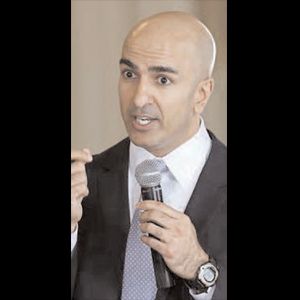
    But the top two candidates, regardless of party affiliation, qualify for the November poll, so there will be another face-off for the House of Representatives seat that Honda has won some half dozen times. Another Indian- American, Republican Vanila Singh, a professor at Stanford Medical Center, came third with 16.2% votes. In another race that has attracted nationwide interest, Indian-American Neel Kashkari, a former Treasury official and a moderate Republican, defeated a Tea Party favorite Tim Donelly in the primaries for the governorship of California to earn the right to challenge the incumbent three-term governor Jerry Brown in the general election in November.

    Brown, a Democrat seeking a fourth term, took 55% of the votes to run out an easy winner, with Kashkari a distant second with 18 per cent votes, and Donelly polling 15%. Both Kashkari and Khanna are long shots to displace the incumbents. The Japanese- American Honda, 72, is a political veteran endorsed by the party old guard, including President Barack Obama, House minority leader Nancy Pelosi, and the state’s two Senators Dianne Feinstein and Barbara Boxer. Khanna, 37, has strong support from the tech community in a Congressional district that includes the heart of the Silicon Valley, including endorsements from Yahoo CEO Marissa Mayer, Facebook Chief Operating Officer Sheryl Sandberg, and Google Chairman Eric Schmidt.

    Which is how Khanna has outraised and outspent Honda in one of the costliest Congressional primaries in the country, but he would still need to bridge the nearly 25% gap if he is to oust the labor union-backed incumbent. Kashkari has an even slimmer chance against Jerry Brown, who was one of California’s youngest governors when he was elected for the first time in 1975, and also the oldest governor when he re-elected in 2010 with a 28-year gap between his second and third terms.

    His father Pat Brown was also a two-term California governor in the 1960s. Although Kashkari is a moderate Republican, registered Republicans account for only 28.5% of California’s voters, compared with the Democrats’ 43.5%. Both races were marked by snide, raciallytinged attacks. Tea Party’s Donelly accused Kashkari of ties to Islamic fundamentalism all because he once participated in a Treasury department conference about Islamic Finance.

    Khanna, in a thinly disguised reference to his Indian origin, was attacked in campaign mailers over the possibility that he would outsource jobs if he won. Another Indian-American candidate, sitting Democratic Congressman Ami Bera of California’s 7th district, has a more realistic chance of winning a second term after a comfortable victory in the primaries. Some other Indian-American candidates, including Upendra Chivukula in New Jersey and Swati Dandekar in Iowa, failed to make the cut.

  • After shooting, California mulls new gun law

    After shooting, California mulls new gun law

    LOS ANGELES (TIP): Just days after a 22-year-old killed six college students and himself near the campus of the University of California, Santa Barbara, state lawmakers are championing legislation that would permit law enforcement officials and private individuals to seek a restraining order from a judge that would keep people with a potential propensity for violence from buying or owning a gun. The process would be similar to the one currently used for restraining orders in cases of domestic violence.

    The legislation is being introduced this week in response to the attack on Friday by Elliot O Rodger, who was able to buy three guns and go on a rampage despite warnings from his family and mental health professionals that he was unstable and possibly dangerous. Although mass shootings have not translated into stricter gun control laws nationally, they have prompted changes on the state level — largely limiting access to guns, but in some cases loosening existing laws.

    But California, which already has some of the strictest gun control laws in the country, could go even further. The legislation, known as a gun violence restraining order, would allow people to notify courts or law enforcement officials if they are concerned that a family member or friend is at risk of committing violence. Gun control advocates have recently started pushing for such restraining orders in statehouses, expanding on similar laws passed in Connecticut, Indiana and Texas. The bill is expected to face opposition from National Rifle Association.

  • Indian American Akhil Rekulapelli wins National Geographic Bee: Beats 11 yearold Ameya Mujumdar for the title

    Indian American Akhil Rekulapelli wins National Geographic Bee: Beats 11 yearold Ameya Mujumdar for the title

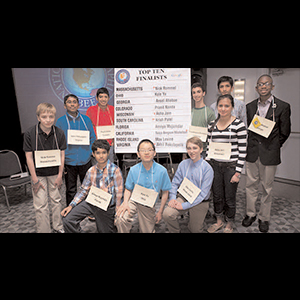
    WASHINGTON, DC (TIP): Akhil Rekulapelli, a 13 year-old eighth grader from northern Virginia’s Loudoun County, is the winner of the 2014 National Geographic Bee. Rekulapelli emerged as the victor of the Bee’s 26th annual iteration on Wednesday, May 21, beating out competitors from each state and territory in the US. His win as the national Geographic Bee champion continues a streak of Bee dominance displayed by Indian American students, who have also regularly topped the Scripps National Spelling Bee in recent years, too.

    Last year, Indian-origin 12 year-old Sathwik Karnik, of Massachusetts, won the National Geographic Bee. Of the top 10 competitors in this year’s Geographic Bee, exactly half were Indian, including Rekulapelli. The others were Coloradao’s Pranit Nanda, Florida’s Ameya Mujumdar, South Carolina’s Krish Patel, and Wisconsin’s Asha Jain. All, like Rekulapelli, are in eighth grade except for Mujumdar, who is in fifth grade.

    All are also 14 except Mujumdar, who is 11. Despite being the youngest, Mujumdar ended up placing second, losing to Rekulapelli at the very end. Rekulapelli stumped his competition by correctly answering a question about oil drilling in the Neuquén province of a major South American country (it’s Argentina, by the way). Now that he’s the US champion, Rekulapelli will represent the nation at the International Geographic Bee, which will take place in Monaco later this year.

    Geographic Bee host Soledad O’Brien, alongside National Geographic Society President and CEO Gary E. Knell, presented Rekulapelli with a check for $50,000 to be used towards a college scholarship. According to National Geographic, Rekulapelli is already looking to attend either Stanford, or his state’s University of Virginia.

    Additionally, Rekulapelli has won a trip to the Galapagos Islands, which he will take with National Geographic’s Lindblad Expeditions. Mujumdar walked away with $25,000 for his second-place performance. The third place winner, Tuvya Bergson- Michelson of California, received $10,000.

  • Congressman Garamendi Selected as Co-Chair of Bipartisan American Sikh Congressional Caucus

    Congressman Garamendi Selected as Co-Chair of Bipartisan American Sikh Congressional Caucus

    WASHINGTON, DC (TIP): The bipartisan American Sikh Congressional Caucus announced, May 22, the appointment of Congressman John Garamendi (D-CA- 03) and Patrick Meehan (R-PA-07) as co-chairs of the Caucus. They will serve as leaders of the Caucus with the current co-chairs Congresswoman Judy Chu (D-CA-27) and Congressman David Valadao (R-CA-21). The selection of Garamendi and Meehan was made official through a letter to the House Committee on Administration. Garamendi has worked with the California Sikh community for decades.

    His Congressional District is home to tens of thousands of Sikhs and many Sikh run farms. “It is an honor to be selected as cochair of the bipartisan American Sikh Caucus. I am proud to take this next step in my work with Sikh-Americans to defend civil rights, fight discrimination, and educate Members of Congress and the public about the community,” said Garamendi. “I commend the community on their industriousness and entrepreneurship. I also want to thank them for their democratic civic engagement – for speaking up for their rights and beliefs.

    Regardless of background, we all want a good environment to raise a family. I will work in a bipartisan fashion to achieve this.” Last year, Congressman Garamendi joined a coalition that successfully persuaded the FBI to track hate crimes against Sikh, Hindu, and Arab- Americans through a letter signed by over 100 Members of Congress and by advocating for this cause through interviews with the press. Garamendi also introduced House Resolution 550 to wish the Sikh- American community a joyous spring festival of Vaisakhi.

  • Indian American Ishan Shah appointed to Ohlon College Board

    Indian American Ishan Shah appointed to Ohlon College Board

    FREMONT (TIP): Ishan Shah is the first Indian American ever to be appointed to Ohlone College’s board. Shah, 21, a Mission San Jose High graduate and former Ohlone student, bested two other finalists to nab the appointment. “Ishan brings the perspective of being a recent student at Ohlone College,” board President Garrett Yee said. “That’s a perspective that none of the other board members can bring.”

    While barely old enough to legally enter a bar, he already is a political veteran. In 2009, he ran for City Council at age 16. A year later, he ran for an open Ohlone College board seat. He lost both races but gained valuable experience and a reputation as a solid candidate with fundraising abilities beyond his years. He also caught the eye of local and state leaders. Gov. Jerry Brown appointed him to the California Student Aid Commission, on which he served while studying political science at the University of Southern California.

    He also has served on the Alameda County Human Relations Commission. “Ever since (losing the Ohlone election in 2010), a significant part of my life has been spent on fighting for students,” he said. “I think the board saw in me someone who could say to the student body, ‘I get what you’re going through.’” Shah plans to commute between Fremont and Los Angeles, splitting time between Ohlone College and USC until he earns his bachelor’s degree later this year.

  • New government should strike balance between growth and inflation

    New government should strike balance between growth and inflation

    First the good news. India’s wholesale inflation rate has moderated, albeit marginally, to 5.20%, in April from 5.70% in the previous month, driven down by a sharp drop in vegetable prices.

    Now for the bad news – by all indications, the price situation could worsen, given a higher likelihood of deficient rains this summer. Global and domestic meteorological agencies have forecast a sharp increase in the likelihood of an El Nino weather pattern this year, which can shake up global weather and trigger a poor monsoon in India, potentially posing an immediate challenge for a new government set to take office in the next few days. El Nino – ‘little boy’ in Spanish – is a climate glitch marked by higher seasurface temperatures in the equatorial Pacific.

    Its effects can ripple globally, from storms in California to leaving Australia and India at greater risks of a drought. The retail inflation data, which was released on Monday, has already shown that food prices have begun to rise again.

    The retail inflation rate jumped to 8.6% in April from 8.3% in the previous month as the food inflation rate rose to 9.8%. While vegetable and fruit prices contributed 50% to the rise, non-food, non-fuel inflation, or what economists call core inflation, remained unchanged in April. For the incoming government, this isn’t quite a happy situation to be assuming office. Its immediate task would be to revive growth, which has slipped into sub-5% levels.

    This is the first time in a quarter of a century that India’s economy would grow at below 5% in two successive years. At the same time, however, it cannot drop guard on taming inflation. The Reserve Bank of India has firmly maintained its commitment to its priorities on price control, even though it may come at the cost of lower growth.

    Fiscal and macroeconomic managers will have their task cut out on balancing the growth-versus-inflation control objectives. Growth is critical to create additional jobs and raise people’s income levels; but persistent inflation can erode the gains from growth.

  • In US, gay men clash over HIV prevention pill

    In US, gay men clash over HIV prevention pill

    WASHINGTON (TIP): A single daily pill may help prevent HIV. And in America, gay men who have lost countless loved ones to AIDS can’t stop fighting about it. Much of the debate has played out on the Internet and social media as tempers flare over promiscuity, erratic condom use and the potential to either eliminate or worsen the stubborn HIV/AIDS epidemic, which has killed 36 million people worldwide in the past three decades.

    The drug in question is Truvada, an oblong blue pill that combines two antiretroviral medications — tenofovir and emtricitabine. “In the medical community, this is more of a controversial, divisive issue than I ever thought it would be,” said Ray Martins, chief medical officer at the Whitman-Walker Clinic. Martins told AFP a month’s supply of pills costs between $1,200 and $2,000, which is usually covered by health insurance.

    Side effects are rare but can include nausea, bloating and diarrhea. Made by Gilead Sciences in California, Truvada was already available as a medication for HIV-positive patients when it was approved by US regulators in 2012 as a prevention strategy for people who are HIV-negative but engage in sex with HIV-positive partners, or who inject drugs.

    On Wednesday, the US Centers for Disease Control and Prevention issued its first formal guidelines for doctors, urging them to recommend the prevention pill for patients at substantial risk of getting HIV. The daily pill should be used in conjunction with condoms as a way to cut back on new HIV infections, which have stayed steady at some 50,000 new annual cases in the United States in recent years, officials said.

    – ‘Truvada whores’ –

    is a position I fear the CDC will come to regret,” said Michael Weinstein, president of the Los Angeles-based AIDS Healthcare Foundation (AHF). Weinstein predicted the guidelines “will likely have catastrophic consequences in the fight against AIDS in this country.”

    He has also described Truvada as a “party drug,” sparking a fresh wave of angst among supporters of pre-exposure prophylaxis, or PrEP, whereby healthy people take antiretrovirals as a way to prevent HIV infection. AHF spokesman Ged Kenslea said Truvada is available in AHF’s pharmacies, and that the group does not oppose PrEP if a doctor and patient agree it could be useful in a given situation.

    “The government’s wholesale endorsement, we believe, is dangerous and will result in needless new infection,” Kenslea explained. Human nature, the inability to take pills daily even among the most responsible adults, and the rise in syphilis among gay men are all reasons cited for concern. The backlash against Truvada — the only pill presently approved for HIV prevention — has led some gay men to speak out in favor of it, even describing themselves online as “Truvada whores” in a tongue-in-cheek gesture.

    One of them is Bradley, 28, a San Francisco technology worker who tweets as @TruvadaWhore and asked that his last name not be published. “I am adamantly against slut shaming and policing of people’s consensual behavior,” he said in an interview. “PrEP may not work for or be accessible to everyone, but I want to celebrate its effectiveness and fight stigma.”

    – Science of ‘risk’ –

    Studies have shown that when taken regularly, Truvada is effective against HIV transmission by up to 92 percent, the CDC said. However, when patients failed to take it daily, its effectiveness dropped steeply. As to whether PrEP encourages riskier sex, Whitman- Walker clinical research director Richard Elion said studies on thousands of people have shown it does not. “The evidence is quite clear.

    There is no documentation of increased risk behavior,” he said.

  • Investigators look for arson in California wildfire outbreak

    Investigators look for arson in California wildfire outbreak

    SAN DIEGO: A 57-year-old man was charged with arson on May 16 in one of at least 10 wildfires that erupted in California this week, and investigators were working to determine whether other blazes in the unusually early and intense outbreak were ignited by something as ordinary as sparks from cars or something more sinister.

    State fire officials said the first blaze that erupted between Tuesday and Thursday was caused by a spark from malfunctioning construction equipment. But it could take months to get to the bottom of the most damaging fires. Alberto Serrato pleaded not guilty to arson in connection with one of the smaller fires — a 105-acre (42-hectare) fire in suburban Oceanside that started on Wednesday and is fully contained.

    Bail was set at $250,000. Tanya Sierra, a spokeswoman for the San Diego County district attorney’s office, said witnesses saw Serrato adding dead brush onto smoldering bushes, which flamed up. He has not been connected to any other fire, Sierra said. Oceanside police Lieutenant Sean Marshand said Serrato is believed to have added fuel to the fire but not to have started it.

    “Unfortunately we don’t have the guy that we really want,” he said. Serrato was booked into jail on Wednesday, according to the San Diego County sheriff’s department website, but his arrest wasn’t announced until Friday. Sierra didn’t know if he had an attorney. All together, the wildfires have raced through an estimated 20,000 acres (8,093.89 hectares) about 30 miles (48 kilometres) north of San Diego, causing more than $20 million in damage. One burned body was found in an encampment of homeless people.

    At least eight houses and an 18-unit condominium complex were destroyed, and tens of thousands of people were warned to leave their homes. Eight of the blazes popped up between late morning and sundown on Wednesday, raising suspicions that some had been set.

    The region has become a tinder box in recent days because of conditions not normally seen until late summer — extremely dry weather, 50 mph (80.46 kph) Santa Ana winds and temperatures in the 90s. On Friday, though, cooler weather aided the 2,600 firefighters, and thousands of people began returning home. In one of the hardest-hit cities, Carlsbad, investigators finished examining the burn site across the street from a park and focused on interviewing people who called a hotline that was set up to report any suspicious activity.

    “Do people have suspicions? Yes,” said police Captain Neil Gallucci, noting there has been no lightning that could explain the blazes. “But can we confirm them? The answer is no.” The list of possible causes is long and investigators will visit each burn site and go down a list, marking what they know and don’t know.

  • Reps. Joe Crowley (D-NY) and Ami Bera (D-Calif.) commend elections in India

    Reps. Joe Crowley (D-NY) and Ami Bera (D-Calif.) commend elections in India

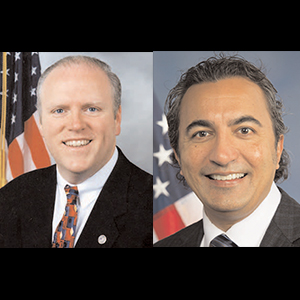
    NEW YORK (TIP): Rep. Joe Crowley (D-NY)who has represented New York City Congressional districts since 1999 and Rep.Ami Bera (D-Calif.) who has represented California’s 7th Congressional District since 2013, have commended elections in India. “At a time when democracy is under pressure in many corners of the globe, officials are currently tallying votes in the largest exercise of democracy in the world: the elections in India.

    “The numbers are staggering. In an election that took place over several weeks, nearly 815 million voters were eligible to vote at 930,000 polling locations. Indians cast their ballots for control of the Lok Sabha, Parliament’s lower house and the body that chooses the country’s prime minister. “To put this in perspective, the number of eligible voters in the Indian election surpasses the entire population of Europe.

    The number of new voters alone in India exceeds 100 million – just shy of one third of the entire population of the United States. It’s extraordinary to see a country of more than one billion people that could be the world’s most populous nation within a decade, carrying out another election. The world is truly watching history being made. “India’s commitment to democracy is something the United States, as well as other nations, should remember, acknowledge and respect.

    That respect is returned by the Indian people — our country’s common values are one reason why a clear majority of Indians, from all generations and educational levels, hold high opinions of the U.S., according to a recent Pew Research Center Survey. “This dynamic of respect and a desire for greater mutual support is especially visible to those of us who have traveled to India to help strengthen ties between our two countries.

    For all of our differences, we are struck by the many similarities in our political systems: the competing parties, the vigorous debates, the vibrant media and the independent judiciary are signs of democracy in action. “Our ties, however, go far beyond similarities and respect. We have many common underlying interests: we share goals in standing up against terrorism, ensuring stability in South Asia and globally, in growing our economies, and increasing development.

    Indians have also faced many problems similar to our own – after all, it was only weeks after 9/11 that the Indian Parliament was attacked. “If the United States and India can move our relationship further ahead, it could benefit our own constituents, as well as people throughout the world. Working on a path for India’s ascension to the United Nations Security Council is one important way to take concrete steps forward.

    Deepening our technological, security, educational and economic ties in a way that creates more high-paying American jobs is another. Beyond these priorities, India and the United States can collaborate on countless individual initiatives, in areas like research, transportation or development. “One thing is certain: moving closer together will do more good for our two countries than moving apart.

    In many ways, this is already happening organically. With more than 3 million Indian-Americans in the United States, many of whom remain close to families still in India, our people- to-people ties are stronger than ever and expanding by the day. Most Americans interact daily with Indian-American community members, who are visible and active in all aspects of our national life, whether it is business, entertainment, public service, medicine, religion, education and more.

    “The elections in India are a good reminder about the importance of democracy, our countries’ shared histories, and the potential for future growth. But they are also an opportunity to review, renew and reinvigorate our ties with a natural friend and partner”.

  • Hodgson: Everybody associates Brazil with football

    Hodgson: Everybody associates Brazil with football

    In the final part of our three-part interview with Roy Hodgson, the England manager speaks about his FIFA World Cup™ memories from 1958, when he was just ten years old, to 1994 as coach of Switzerland. Having also toured Germany in 2006 as a member of FIFA’s Technical Study Group and worked as a pundit for the BBC in 2010, Hodgson has had a wide experience of World Cups from which to draw. And as the former Inter Milan and Liverpool boss told FIFA.com, he believes that Brazil 2014 will be a little special.

    ROY HODGSON: 1958 would be the first one, but mainly because of my time in Sweden when I sort of got reacquainted with it. It was something that should have interested England and Great Britain enormously, as I think it’s the last time all four home nations actually took part. I learned a lot about the ’58 World Cup in Sweden and in particular I became close friends with Orvar Bergmark,who for many years was the most-capped player in the world with his 92 caps. That’s been surpassed many times since, but around the 1958 mark he was right up there.

    And of course, playing against us, managers and colleagues, a lot of the people who played in that: Bengt Gustavsson and Agne Simonsson. All of these people were coaches in Sweden when I was there, and famous players from the ’58 team. Then when I went going to Italy I got to know Nils Leidholm and Gunnar Gren, so I got to know seven or eight of the team and took more interest, I suppose.

    The ’62 World Cup I don’t remember well. And the ’66 one I of course remember very, very well! WHERE WERE YOU DURING 1966? AT CRYSTAL PALACE, TRYING TO BE A PLAYER! Brazil is considered such a football crazy country,where the people basically live for the game. Being a footballer is as good as it gets for anybody in Brazil. WHAT ARE YOUR MEMORIES OF THE TOURNAMENT? DID YOU GO TO ANY OF THE GAMES? No.

    To be fair, aside from the games that were played at Wembley, a lot of the games were played around the country at that time. I was never in a position to get a ticket to be perfectly honest. So I watched the games on TV. I remember the games and the England games quite well. I remember the various moments and controversies. The same with ’70.We had high hopes of doing well because the ’70 team was as strong as the ’66 team on paper because we still had the remnants of the ’66 team and a few interesting younger players had come on the scene.

    In ’74 I was in South Africa, so I only saw the Final. And I saw that in retrospect. I drove from Pretoria to Johanesburg to Wits University. They actually bought the tape of the film for their students and me and my friend were playing in Pretoria,we drove up and got ourselves tickets and watched it in a hall. It was just a taped version of the Final.We knew the score. But that’s the only game we actually saw in ’74.

    Then obviously in ’78 I was in Sweden so I quite liked following that one. WHICH TEAMS OR WHICH MATCHES, PARTICULARLY OF THE LATER WORLD CUPS, STICK OUT FOR YOU? It has to be 1994 when I was involved with Switzerland. I remember all of the games, but in particular the first two, the ones played in Detroit against America and then Romania. I remember those very, very well. Both were in an indoor dome,where they rolled the grass in,which was quite revolutionary at the time. I think in Europe it was only Arnhem (GelreDome) that had a similar system,where they had a dome allowing them to roll in different surfaces. It was quite a novelty in that respect.

    THE HUMIDITY IN THE GAMES THERE WAS EXTREME,WASN’T IT? Our third game, in Palo Alto,was right in the midday sun. In terms of actual temperature it was the hottest. It was over 100 degrees Fahrenheit, because it was right in the heat of the day, with the sun right above you in California. But the worst, in terms of heat and humidity, I thought was the Silverdome in Detroit. They measured the temperature in the low 30s (Celsius) but because it was very hot outdoors, indoors it was even hotter and of course you get the humidity in there as well.

    Washington I don’t remember as being too bad. I think it was in the evening, a later kick-off, and I remember Washington being a normal summer’s day, in the mid-20s. WHAT DO YOU THINK WILL MAKE THE WORLD CUP IN BRAZIL SO SPECIAL? I think the real feeling that this World Cup is special because of Brazil’s relationship to football.

    Everybody associates Brazil with football. Partly because of the success the Brazilian national teams have had and the tournaments they’ve won. But it’s not just that, it’s all the Brazilian players who have played all over the world. They export so many thousands of players. We’re all used to seeing the Copacabana and other beaches filled with people playing on the sand and Brazil is considered such a football crazy country, where the people basically live for the game.

  • E-cigarette: US to ban sales to minors

    E-cigarette: US to ban sales to minors

    WASHINGTON (TIP): The US Food and Drug Administration (FDA) proposed rules on Thursday that would ban the sale of e-cigarettes to anyone under 18, but would not restrict flavoured products, online sales or advertising, which public health advocates say attract children.

    The long-awaited proposal would subject the $2 billion e-cigarette industry to federal regulation for the first time. FDA commissioner Margaret Hamburg said at a briefing that the proposal represented the first “foundational” step towards broader restrictions if scientific evidence shows they are needed to protect public health.

    Critics of e-cigarette advertising say it risks introducing a new generation of young people to conventional cigarettes when little is known about the long-term health impact of the products.

    “It’s very disappointing because they don’t do anything to rein in the wild-west marketing that is targeting kids,” Stanton Glantz, a professor at the Centre of Tobacco Control Research and Education at the University of California, said. “They should not have been so timid.”

  • The United States and India: Global Partners in the Global Economy

    The United States and India: Global Partners in the Global Economy

    Remarks made by Nisha Desai Biswal, Assistant Secretary, Bureau of South and Central Asian Affairs, at Tampa Convention Center, Tampa, FL on April 25, 2014

    Thank you, Dr. Singh, for your warm welcome. It is a great honor to participate in the 2014 FICCI-IIFA Global Business Forum. Tampa is an ideal location to talk about the important and growing economic ties between the United States and India. Not only is Tampa the seventh-largest port in the United States by volume, it also handles the highest volume of goods headed to India.

    And FICCI is certainly the right partner for this conversation, as they have been such a key player in advancing our economic relationship. And how thrilling it is for the IIFA Awards to be held in the United States for the first time! Indian culture is increasingly influencing popular culture, not just in America but around the globe. I recall a moment some two decades ago,when I was a Red Cross volunteer in Tbilisi, Georgia, and I went to a local theater where Sholay was playing, dubbed in Russian.

    Imagine listening to some of the most iconic dialogues of Hindi cinema in Russian! And I will never forget the time I was in the small mountain town of Kutaisi and was asked to sing a folk song. I started singing “mera joota hai japani,” and the entire room of 200 Georgians started singing with me. They knew all the words! Indian art, culture, and film have global appeal. Every day, ethnic, linguistic, and cultural lines are blurred, because from Kabul to Kinshasa, from Moscow to Mumbai, from Tampa to Trivandrum,we are all under the thrall of Indian popular culture. But it isn’t just pop culture.

    It is the idea of India itself that holds such special appeal to so many around the world. As for the United States, we want to take what three successive presidents and two prime ministers and most importantly our 1.6 billion citizens have built in 15 years, in this defining partnership of the 21st century, and make it even better. Today, I want to discuss the opportunities that lie ahead as the U.S.-India economic relationship expands and matures, and as our two economies become increasingly intertwined and interdependent.We are living in a truly globalized world, brought closer by technology and trade – and yes, even movies! But despite the lightning speed of technological advances that are transforming so many aspects of our life for the better,we’re also contending with one of the most complex moments in world affairs with very real challenges, including conflict, poverty, and climate change.

    Nowhere is this more apparent than in Asia, which boasts nearly two-thirds of the world’s population, squeezed into only a third of its landmass. It is a region with tremendous promise and potential. As President Obama said in Tokyo yesterday,when he reiterated that we are and always will be a Pacific nation, “America’s security and prosperity is inseparable from the future of this region,” and that’s why we’ve made it a priority to renew American leadership in the Asia Pacific. By 2050, Asia may well comprise half of global GDP. But for the region to realize its potential, it must embrace strong, inclusive, and sustainable economic growth, one where the private sector, not government, leads economic development.

    It must defeat terrorism and counter violent extremism,while at the same time advancing human dignity and human rights. And in an age where citizens have more access to information and are demanding more accountability than ever, governments must promote effective and transparent governance. Despite these challenges,we’ve never been more optimistic about the future of Asia – and the role the United States and India will play in advancing prosperity and stability in the region. One reason is India’s growing economic connectivity – eastward with Bangladesh, Burma, and Southeast Asia; and we see promise in links westward with Pakistan, Afghanistan, and Central Asia. These are vital to the prosperity and stability of Asia.We are committed to supporting economic linkages that will cultivate new markets and knit these countries even closer together – and make them more integrated with the global economy. We’re advancing regional initiatives that do just that.

    First, there’s the historic opportunity to connect South and Southeast Asia into an integrated economic landscape. This Indo-Pacific Economic Corridor is a unique geography teeming with opportunity, but traditional northsouth trade still trumps east-west movement of goods and services by a factor of five. And through our New Silk Road initiative,we have been focused on creating regional energy markets that link Central Asia with South Asia; promoting trade and transportation routes and investing in critical infrastructure; improving customs and border procedures; and linking businesses and people. Today, Afghanistan and its neighbors are increasingly championing and owning that New Silk Road vision, creating new transit and trade routes that complement the very vibrant east-towest connections across Eurasia.

    And the region is making concrete efforts to reduce barriers to trade, invest in each other’s economies, and support development and cross-border projects. At the heart of all of that is India, because prosperity in South Asia hinges on dynamic growth of its economic powerhouse. The United States is committed to working with India to fully unlock the true potential of our economic ties. Today, the United States is one of India’s largest trade and investment partners. Our bilateral trade in goods and services has grown to nearly $100 billion. I think India’s excellent envoy in Washington, Ambassador Jaishankar, said it best recently when he noted that the extraordinary growth in our trade relations has “changed the chemistry of our ties.”

    Tectonic shifts in global economics have helped bring us to where we are today. And it didn’t happen overnight. After the Second World War, the creation of a rules-based trading system increased commerce, connectivity, and prosperity across the globe.While India’s economic transformation is more recent, its progress has been swift. Import tariffs on average are more than 30 times lower than they were in 1991,when then-Finance Minister Manmohan Singh began sweeping reforms. And since 2005 we have seen an increase in goods trade by 250%, in services trade by 350%. But we can do even better.

    As Vice President Biden said last July, there is no reason why our bilateral trade shouldn’t quintuple again if our countries work to grow together and remain candid with each other about the obstacles that exist. I believe $500 billion in total trade is entirely possible. Bilateral investment flows have also grown immensely, with foreign direct investment into India from the United States reaching $28.2 billion last year. Cumulative Indian FDI into the United States has also grown remarkably, from a negligible $96 million in 2000 to $5.2 billion by 2012. Even so,we still lack the investment diversity needed to fuel the growth of new and emerging sectors in our respective economies.

    India needs a transparent, straightforward way of attracting foreign investment, offering private capital a way to share in India’s opportunity. There must be a welcoming business environment that allows every dollar of investment to work efficiently. Currently, the United States and India are negotiating a Bilateral Investment Treaty, or BIT, which will be critical to deepening our economic relationship, improving investor confidence, and supporting economic growth in both countries. A BIT will go a long way toward bringing our economies closer and reducing the friction that’s only natural with two complex free-market systems such as ours. It will help us move past the choppiness that comes from not having an over-arching investment framework. And it will open up even more opportunities for American and Indian firms.

    Beyond our BIT, India’s investment and tax policies need to be designed to attract capital flows from across the world. Regulatory requirements need to be transparent and consistently enforced. Contracts must be upheld and honored across jurisdictions, and perhaps most importantly, intellectual property rights – based on international norms – must be recognized. And the future of India’s economy critically depends on the ability of people and goods to move where they are needed – efficiently and affordably. Soon, some sixty-eight Indian cities will have populations of over one million people each. India’s planned trillion-dollar commitment to infrastructure, with its strong emphasis on public-private partnerships, is both ambitious and admirable.

    No doubt infrastructure improvements will help to relieve the congestion on roads, railways, ports, airports, and in the power supply. American businesses are eager to participate – an effort the U.S. government fully supports. India’s future prosperity will also depend on one of our shared strengths – innovation. Increasingly, our two countries are putting our best minds together, to make growth more sustainable and inclusive and address 21stcentury challenges like climate change and energy security. That’s why we are so excited about the U.S.-India Technology Summit and Expo in November of this year in Delhi. The event will showcase our cooperation on science and technology, helping commercialize technology for economic growth and development, and shaping an ecosystem that incentivizes innovation.

    Policy-makers, industry leaders, educators, and scientists will discuss topics including manufacturing; life sciences and healthcare technologies; clean and renewable energy; IT; and earth science – all areas where U.S.-India collaboration can help us seize the opportunities, and respond to the challenges, of the 21st century. The Tech Summit is the idea place to showcase initiatives like the Millennium Alliance with FICCI,where we support Indian innovators and entrepreneurs who are coming up with new technologies to meet India’s development challenges. In March, I saw first-hand some of the most cutting-edge cooperation in science and technology,when I visited the Indian Space Research Organization, ISRO.NASA’s cooperation with ISRO on India’s Mars Orbiter Mission – India’s first inter-planetary space launch – and ongoing discussions about future joint initiatives, show that even the sky is not the limit when it comes to our partnership. And our energy partnership is changing the way our economies are powered.With 400 million people in India lacking reliable access to energy, the stakes for India’s future growth are enormous.

    We’re collaborating on clean and renewable energy, oil and gas, new technologies, energy efficiency, and civil nuclear energy. But real prosperity is only possible if it is also truly inclusive. That’s why ensuring women and girls are part of the conversation is a critical element to all these areas of partnership. Positive linkages between women’s engagement and a country’s economic status have been definitively proven, and the Obama Administration is determined to elevate the status of women and girls as a critical aspect of our foreign policy.We firmly believe that women’s rights are human rights, and women’s security is national security. While India is a leader in supporting women’s leadership across government, civil society and certainly in business, in many ways the potential of women and girls in India remains untapped and underutilized as a force for growth and development.

    This is why we support efforts like the Girl Rising Project to encourage public dialogue on gender and education issues to encourage community level interventions to help improve girls’ education. So I look forward to the next panel as a way to advance this discussion. In this area and in so many others, our relationship is much broader than our government and business ties. As the late Senator Edward Kennedy noted, our relations are not just government to government, but people to people, citizen to citizen, and friend to friend. Nowhere is that more evident than in the deep and rich ties between the people of the United States and India. Nearly 100,000 Indian students are studying at colleges and universities in the United States. Last year, almost 700,000 Indians visited the United States for business or tourism.

    It is these connections, between our entrepreneurs, scientists, scholars, and artists that make this partnership whole. We find that the relationship is also flourishing at the state and city level. And our cities and states are partnering more extensively than ever before, helping plant even deeper and stronger roots for our partnership. A growing number of states and cities are tailoring their international outreach efforts for India, with delegations from Arizona, Iowa, Indianapolis and San Francisco visiting the subcontinent over the last year. And these trips are yielding real results, opening new doors for business, educational exchanges, and workforce skill development.

    A great example is California and Maharashtra, home to the megacities of Los Angeles and Mumbai, sharing ideas on how to improve fuel quality for India’s fast-growing vehicle fleets. These efforts will not only improve the health of urban inhabitants, but help mitigate climate change. So in conclusion, let me say that I am bullish on this relationship because I believe in the strength and vibrancy of our two countries. I know there is no challenge that we can’t address, no problem that we can’t solve when we bring our two societies together. Thank you again for this opportunity. I would be happy to take a few questions.

  • Sikh International Film Festival 2014 – May 2-3 in New York City

    Sikh International Film Festival 2014 – May 2-3 in New York City

    Celebrating 10 years of preserving Sikh Heritage, Culture & Traditions

    NEW YORK (TIP): To celebrate and commemorate Sikh art, culture, leadership, and film, The Sikh Art & Film Foundation is presenting its 10th Sikh International Film Festival (SIFF) on Friday and Saturday, May 2 and 3, 2014.

    The Premiere Night will take place on Friday, May 2 at the McGraw-Hill Conference Center (1221 Avenue of the Americas, 2nd floor) from 6:30pm onwards. The Festival will be held from 1 to 9:30 p.m. on Saturday, May 3 at the NYU Skirball Center for the Performing Arts (566 LaGuardia Place) in New York.

    The Premiere Night on May 2nd will start with Chief Guest and 2014 Honoree Mr. Fakir Syed Aijazzudin, presenting an illustrated lecture on his latest book The Resourceful Fakirs. This remarkable book is set during the reign of Maharaja Ranjit Singh, the Sikh ruler who unified the Punjab for the first and only time in its tumultuous history.

    Mr. Aijazzudin explores this colorful period through the careers of the Fakirs, three brothers who were courtiers at the Sikh Darbar of Lahore. Mr. Aijazzudin, OBE, FCA, is an internationally recognized art historian and author of more than a dozen books which include a catalogue of miniature paintings from the Punjab Hills, the works of 19th century British and European artists who visited the Punjab, a definitive monograph on antique maps of the region and two books on the history of Lahore.

    presentation will be followed by the US East Coast Premiere of Dalip Singh Saund: His Life, His Legacy directed by E. Samantha Cheng. This documentary shares the remarkable story of Dalip Singh Saund – the first Asian/Indian/Sikh-American elected to the US Congress. Born in a small town of Punjab, Saund was a trailblazer who came to study agriculture at the University of California in 1920. At a time of great discrimination against Asian minorities, Dalip persevered and rose to serve California’s 29th district in the House of Representatives three times between 1957 and 1963.

    An inspirational documentary with powerful archival footage, Dalip Singh Saund tells the little known story of a man of high integrity who made history through his contribution to American political life. The night will close with, drinks, dinner, and high energy Bhangra music at the After Party. The May 3rd Film Festival at the NYU Skirball Center will present 11 short films, documentaries, and a feature film based on Sikh stories from across the globe, from both established and emerging filmmakers. Short films will be shown from 1 to 2:45 p.m., short documentaries from 4 to 6:15 p.m., and feature presentation from 7:15 to 8:45 p.m. The event will culminate with an awards ceremony from 9 to 9:30 p.m.

    Six films will compete for the best Short Film at SIFF 2012 including three hardhitting films based on the Sikh Genocide of 1984 in India: Kush, from award-winning filmmaker Shubhashish Bhutiani, inspired by a true story of a teacher protecting a 10 year old Sikh student in her class; Message from Satwant Kaur, directed by Eshvinder Singh, about a message to a powerful politician about the crimes he committed during the anti-Sikh pogroms; and Rab Da Vaasta (For God’s Sake), Chakravarty Devulapalli’s adaptation of Hernando Tellez’s well known story “Just Lather, That’s All”. Four Films will compete in the Documentary session.

    These include Kaur directed by Rasna Kaur Neelam and Harnek Singh Neelam, which shows how diverse, inspiring and unique each Sikh woman can be; a powerful narration on the extra judicial killing of Sikhs in Punjab, as documented in The Last Killing produced by the civil rights group Ensaaf; Raw Conversations, directed by Anureet Kaur on the terrible state of farmers in Punjab; and Wrinkles of Life, directed by Jarnail Singh, which deals with the abandonment and anguish of elderly family members by their children in modern day Punjab. Feature presentation – Empty Inside, will close out the Film Festival on May 3rd.

    Award winning director Satdeep Singh’s film depicts the growing drug addiction menace that has engulfed Punjab’s youth. This powerful film tries to uncover the root causes that lead a person to fall into addiction, but also searches for answers and solutions. Empty Inside speaks to a global audience, showing events in our daily lives which lead to something terrible when they are ignored. Addiction is a broad term, and the movie begins from one root cause of all forms of addictions-the emptiness which prevails inside all of us despite having everything on our side. One of the Sikh Art & Film Foundation’s goals is supporting the work of filmmakers who delve into Sikh themes and culture.

    Winning films in the category of Best Short Film and Best Documentary will be recognized with a cash prize, and each film participating receives a screening fee. The Sikh Art & Film Foundation’s awards, fees, and cash prizes total $15,000. The Sikh International Film Festival was founded in 2003 to create awareness and pride in the diversity, culture and history of the Sikhs, a people rooted in the Punjab region of South Asia who practice the world’s fifth largest religion.

    Announcing the 2014 Film Festival, Tejinder S. Bindra, President of the Foundation, said, “In offering this excellent lineup of films at our 10th Film Festival in New York, we renew our mission to demonstrate Sikh culture and stand with our partners in declaring that intercultural understanding, fighting for the oppressed, and respect for each other’s differences are not just our core Sikh values, they are also our American values”. For the complete schedule, film descriptions, stills, trailers, and ticket information, please visit www.sikharts.com.

  • American-Sikh man prevented from carrying ‘kirpan’ on jury duty

    American-Sikh man prevented from carrying ‘kirpan’ on jury duty

    WASHINGTON (TIP): An American-Sikh man has been denied permission to carry a kirpan or ceremonial dagger while serving on a jury by a California court. Gursant Singh, who converted to Sikhism over three decades ago, says he will still go to court for the jury duty next week with community leaders, asking for a chance to serve with his kirpan which is carried as an article of faith by baptised Sikhs. “I feel very strongly that as a citizen of the United States that I should be able to serve as a juror,” Singh told local CBS news.

    “They’ve put me in a position. Either I violate my code of conduct with my religion, or I break the law,” he added. However, the court justified its stand on not allowing Singh to serve on the jury duty with a kirpan in the court room. “It’s important that we provide a safe environment for people’s issues to be heard,” Sutter County jury commissioner Mary Beth Todd told the news channel, adding that they are trying to provide alternate options to Singh. One idea is what some Sikhs have done in other counties, including storing the kirpan with security, she noted. “It’s extremely important that we be sensitive to this, and we’re trying to be sensitive to it, and we’re trying to find a solution that will work for both sides,” Todd said. In a statement, North American Punjabi Association (NAPA) urged all government agencies to respect the law of the land and not violate the law in the name of security.

  • At least 9 killed as truck collides with bus carrying students in California

    At least 9 killed as truck collides with bus carrying students in California

    LOS ANGELES (TIP): At least nine people were killed and 32 injured on April 10 when a tour bus carrying high school students collided with a FedEx truck in Northern California, a California Highway Patrol (CHP) spokeswoman said.

    The crash occurred after the truck driver lost control of the vehicle, crossed over a divider on Interstate 5 and then slammed into a passenger vehicle and then the tour bus, CHP spokeswoman Fran Clader said. Clader said the bus was carrying high school students and other passengers to Humboldt State University for a tour.

    The crash took place near the community of Orland, about 95 miles north of Sacramento. She said 32 of the injured were taken to hospitals in the area. Their condition was not immediately known. Interstate 5 was closed in both directions and was not expected to reopen until early Friday morning.

    Pictures from the scene showed the bus reduced to a burned-out chassis and resting sideways across the highway. A spokeswoman for FedEx Corp said the company was aware of media reports that one of its trucks had crashed into a tour bus in California. “Our thoughts and prayers are with everyone involved in the tragic accident on I-5 in California,” said spokeswoman Bonnie Kourvelas.

    “We are cooperating fully with authorities as they investigate.” She said the condition of the truck’s driver was unknown. Humboldt State University President Rollin Richmond said in the students, from Southern California, had been due to visit the college campus on Friday. “Our hearts go out to those who have been affected, and we are here to support them, and their families, in any way possible,” he said in a written statement.