Tag: California

  • California man confesses to 40 killings

    California man confesses to 40 killings

    FRESNO, CALIFORNIA (TIP): Prosecutors say a man charged with murdering nine people in California has told authorities that he has killed up to 40 people while working for a drug cartel. Errek Jett, a district attorney in Lawrence County, Alabama, said Wednesday that 51-year-old Jose Manuel Martinez told investigators he carried out the crimes working as a drug cartel enforcer.

    Jett said they believe Martinez because of the details he gave. Martinez was arrested last year and sent to Alabama, where he awaits trial on one murder charge. He once lived in central California where prosecutors say he awaits nine more cases stemming from crimes committed in three counties. He’s also accused of kidnapping and committing murder for financial gain, which makes him eligible for a death sentence. Prosecutors in California say the slayings happened over 30 years.

  • What Shah’s departure means for Fracking in New York

    What Shah’s departure means for Fracking in New York

    ALBANY, NY (TIP): The departure of Nirav Shah as state health commissioner means he will hand off the lengthy review that has allowed Governor Andrew Cuomo to put off making a decision on whether to allow hydrofracking in New York. Shah’s three-year tenure as state health commissioner will come to an end in June, when he will be replaced by first deputy commissioner Howard Zucker.

    The only two people who can know for sure whether Shah’s departure will have any effect on Cuomo’s decision to approve or reject high-volume hydraulic fracturing are the governor and Shah himself. On Thursday, April 10, neither man had much to say about the review, which is being watched nationally. Lawmakers are considering bans in other states, including California and Colorado, where the industry already is well established. Shah said he still had time to make progress. “It’s a work in progress,” he said, referring to the long-awaited study, as he hurried through the Capital corridors Thursday.

    “I’m not gone yet.” Shah said he was sure the Cuomo administration would continue to “surprise and impress folks.” He said his departure for a job as an executive at the Kaiser Foundation Health Plan in Southern California was the right thing for his family. Cuomo said it was about money. “The salaries are a real problem in state government,” Cuomo said at an editorial board meeting with the Rochester Democrat and Chronicle on Thursday morning. “You know, you want one of the best health professionals in the country as the health commissioner. You don’t get that for $130,000.

    You just don’t. And then you tell the person work seven days a week and you can’t have any other outside income, and people can only do it for a period of time.” Cuomo also declined to elaborate on what Shah’s departure would mean for the closely watched study. He repeated his claims that the health review was ongoing, without a timeline, and that he was not going to pressure anyone for a result, regardless of Shah’s departure. The attenuated study is almost universally regarded as a political shield that allows Cuomo to put off what would be, either way, a controversial decision, at least until after Election Day. By now, the arguments for and against fracking are well-worn.

    Those who support fracking say it will bring more than 25,000 jobs to the state and infuse communities with a strong tax base in parts of the state that have seen industry depart for a generation. Those who oppose fracking say it will taint the water supply, increase air pollution and put the state’s agriculture industry at risk. Studies that declare fracking dangerous to human health, or by contrast, relatively innocuous, come out seemingly every week. Shah has purportedly been reviewing all of them, traveling the country to explore fracking in other states, and has said that dozens of his employees have worked at one time or another on the review.

  • FACEBOOK TO ACQUIRE VIRTUAL REALITY FIRM OCULUS FOR $2B

    FACEBOOK TO ACQUIRE VIRTUAL REALITY FIRM OCULUS FOR $2B

    LAS VEGAS (TIP): Nearly a month after announcing $19 billion acquisition of instant messaging firm WhatsApp, Facebook said it had reached a definitive agreement to acquire virtual reality technology company Oculus VR, Inc., for about $2 billion in a cash and stock deal. The California headquatered Oculus’ flagship product — Oculus Rift — is a goggle like ‘virtual reality headset’ for video gaming.

    Cash and stock offer
    Commenting on the acquisition, Facebook founder and CEO Mark Zuckerberg said, “Mobile is the platform of today, and now we’re also getting ready for the platforms of tomorrow. “Oculus has the chance to create the most social platform ever, and change the way we work, play and communicate.” The offer includes $400 million in cash and 23.1 million shares of Facebook common stock (valued at about $.6 billion).

    Besides, the agreement provides for an additional $300 million earn-out in cash and stock based on the achievement of certain milestones. The transaction is expected to close in the second quarter of 2014. While the applications for virtual reality technology beyond gaming are in their nascent stages, several industries are already experimenting with the technology, and Facebook plans to extend Oculus’ existing advantage in gaming to new verticals, including communications, media and entertainment, education and other areas, the social networking giant in a statement said.

    “Given these broad potential applications, virtual reality technology is a strong candidate to emerge as the next social and communications platform,” it added. According to Facebook, Oculus has received more than 75,000 orders for development kits for the Oculus Rift.

    “We are excited to work with Mark and the Facebook team to deliver the very best virtual reality platform in the world,” said Brendan Iribe, cofounder and CEO of Oculus VR. “We believe virtual reality will be heavily defined by social experiences that connect people in magical, new ways. It is a transformative and disruptive technology, that enables the world to experience the impossible, and it’s only just the beginning.”

  • Sikh children in US schools targets of hate: Report

    Sikh children in US schools targets of hate: Report

    WASHINGTON (TIP): More than half of Sikh children in US schools endure bullying with over two-thirds of turbaned Sikh children among its worst victims, according to a new national report. Sikh children have been punched kicked, and had their turbans ripped off by fellow students, it found.

    Focused on Seattle, Indianapolis, Boston, and Fresno, California metropolitan Areas, the report, entitled “Go Home Terrorist — A Report on Bullying Against Sikh American School Children”, was released last week on Capitol Hill, seat of US Congress. The bullying of Sikh children is often associated with post-9/11 bias, the report found with epithets such as “terrorist” or “Bin Laden” frequently accompanying verbal and physical abuse.

    According to the National Centre for Education Statistics, 32 per cent of all students ages 12 to 18 report that they are bullied in school. Turbaned Sikh children, therefore, likely experience bullying at more than double the national rate, the report said. Consistently Sikh children have called on educators and administrators to teach more about Sikhs and the Sikh religion in order to build understanding in school, it noted.

    The report cites lack of federal data on the bullying of Sikh school children as a systematic concern that should be addressed in order to better diagnose and target efforts to solve the issue. In addition, the absence of or negative representation of Sikhs in school textbooks nationwide was cited by the report as an opportunity to better combat or mitigate school bullying. The report is based on surveys and focus groups of over 700 Sikh school children and interviews of over 50 Sikh students in four metropolitan areas: Seattle, Indianapolis, Boston, and Fresno, California during 2012 and 2013.

  • California major target for cyber-criminals: Kamala Harris

    California major target for cyber-criminals: Kamala Harris

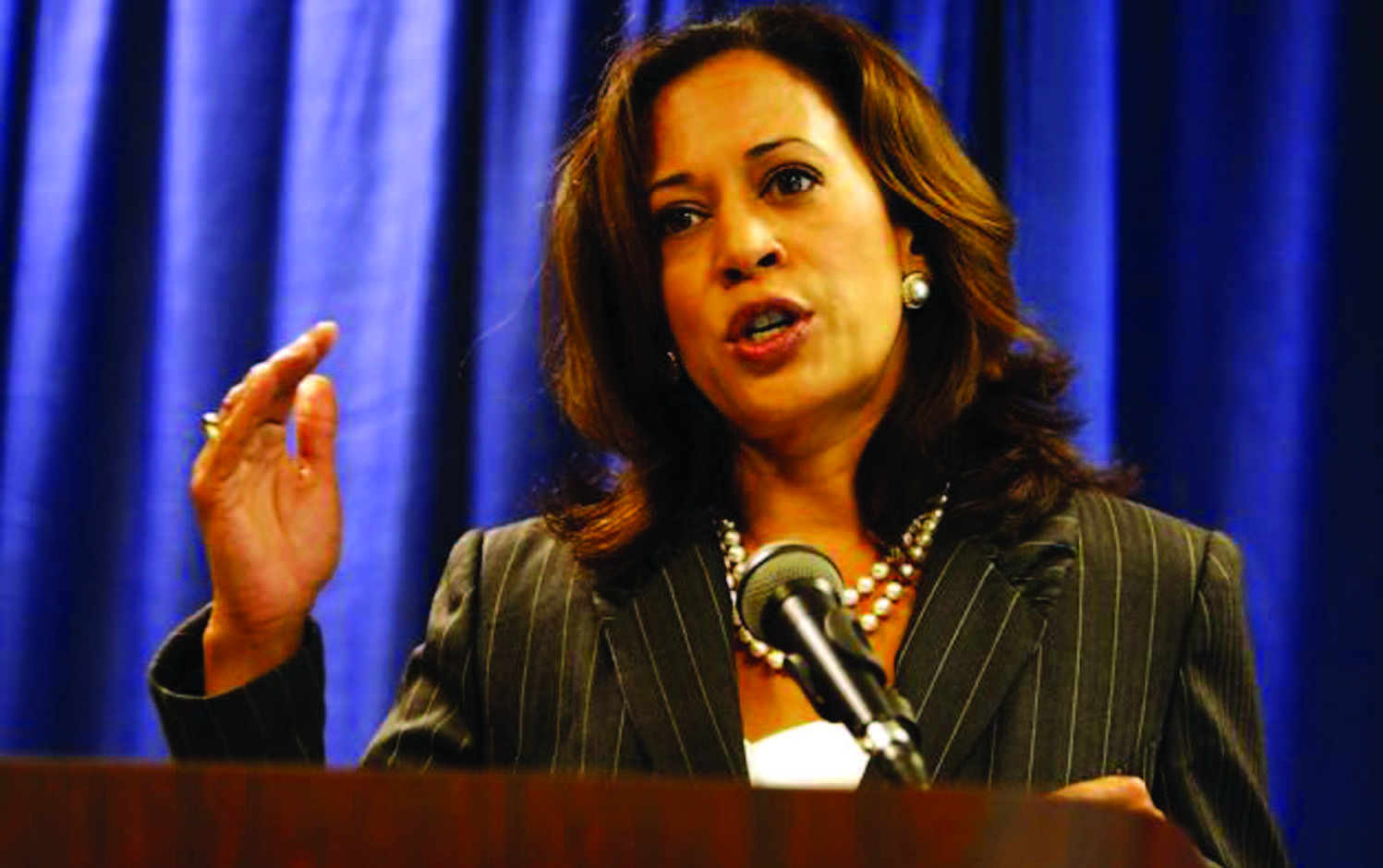
    SACRAMENTO (TIP): California has become a major U.S. target of cyber crimes committed by outlaw groups with ties to Eastern Europe, China and Africa, according to a report by state Attorney General Kamala Harris released on Thursday, March 20.

    As part of a broader report on international organized crime groups, Harris said about 17 percent of attempts to hack into major computer networks in the United States in 2012 were aimed at California, which is the most populous U.S. state.

    “Transnational criminal organizations are relying increasingly on cybercrime as a source of funds – which means they are frequently targeting, and illicitly using, the digital tools and content developed in our state,” Harris said in a statement attached to the 97-page report.

    In addition to computer crimes, Harris’s report detailed activities of international organized crime groups including human trafficking and drug smuggling, along with classic scams. Many groups are organized along ethnic lines, with ringleaders often outside the United States and foot soldiers and victims in immigrant communities in the country, it said. “The growth of transnational criminal organizations seriously threatens California’s safety and economic well-being,” said Harris, who plans to lead a series of meetings in Mexico next week to discuss the problem.

    Criminal groups with ties to the former Soviet Union and Central Europe run gangs throughout California, including the Armenian Power gang, which has links to cyber-crime, financial fraud, identity theft gambling, narcotics and human trafficking, the report said. More than two-thirds of methamphetamine imported into the United States comes through California from Mexico, trafficked by international gangs, Harris said. In addition, the state’s technology and entertainment-driven economy has made it particularly vulnerable to computer virus attacks and stolen intellectual property, the report said.

    The amount of online activity used for copyright infringement across the world has grown about 160 percent from 2010 to 2012 and threatens to affect California more than other U.S. states, the report said. “There is little doubt that over the years digital piracy has robbed creative industries based in California of hundreds of millions of dollars in revenue and jobs,” it said. Online fraud schemes in which goods or services are purchased online but never delivered have affected Californians more than people in other states, the report said. “As transnational criminal organizations evolve in the search for profits, California will continue to be an attractive target,” Harris said.

  • Pennetta shocks Li to reach Indian Wells final

    Pennetta shocks Li to reach Indian Wells final

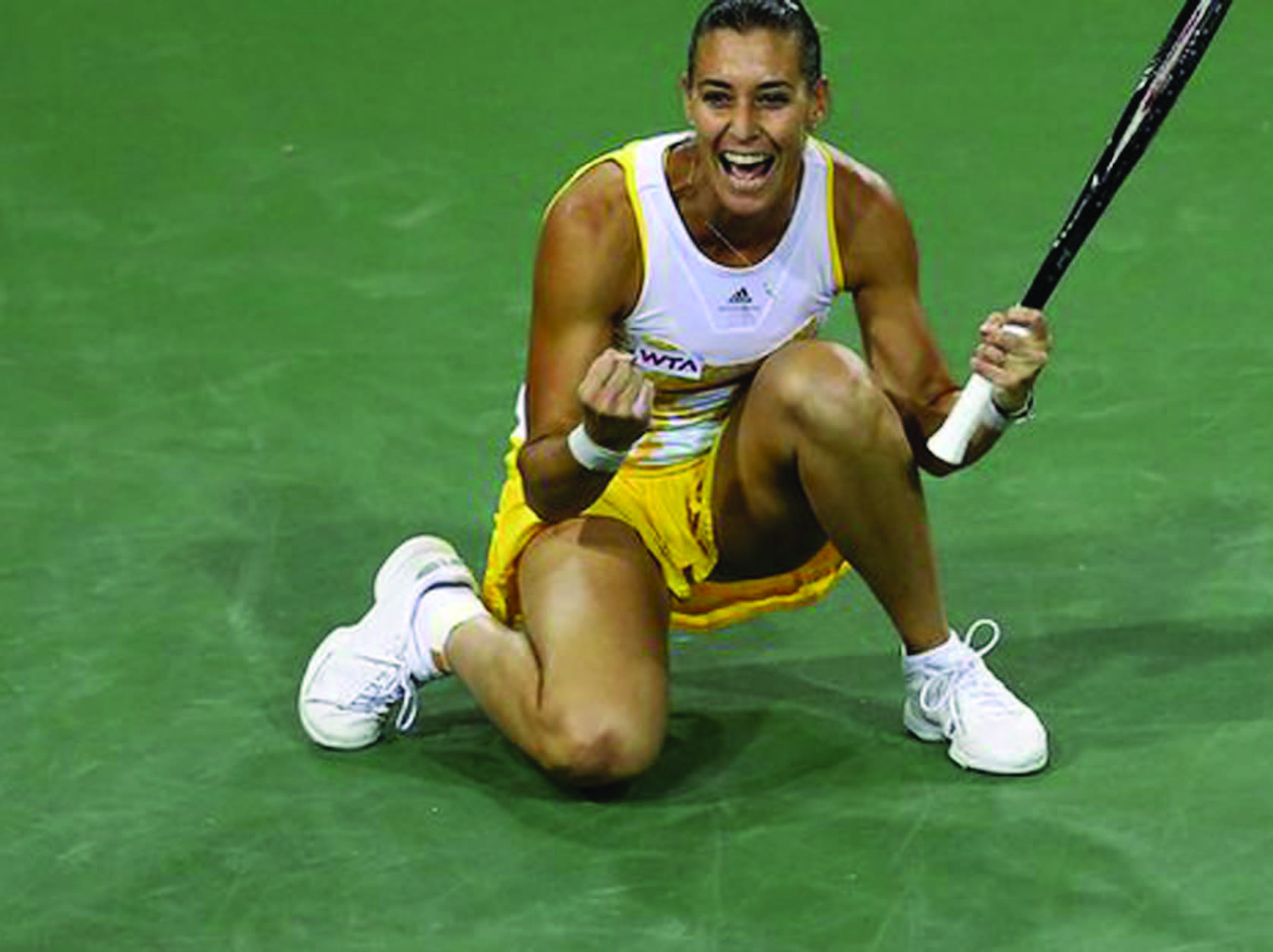
    INDIAN WELLS (TIP): Flavia Pennetta shocked Li Na in the semifinals at Indian Wells on Friday, beating the Australian Open champion 7-6 (7/5), 6-3 to set up a title clash with Agnieszka Radwanska. Li, the Chinese world number two who was the top seed in the elite WTA premier event, had pounded winners past Pennetta in a crushing 6-2, 6-2 victory in the Australian Open quarterfinals in January.

    But her bid to reach the final in the California desert for the first time was hampered by a welter of forehand errors and nine double faults. “I don’t think I was playing bad,” Li said. “I think it was pretty high level match. Some points I was feeling I still have chance (but) more important point I got double fault.”

    Eight of her nine double faults came in the opening set, including one to hand Pennetta the set on her second set point in the tiebreaker. Li put the double faults down to a change in the mechanics of her serve, and said it was something she would just have to fight through. “Of course if I want to change something, you cannot change for one or two days,” she said.

    “You need time to organize everything. “I was feeling better and better. Should be OK in next tournament or tournament after,” she added. Pennetta, ranked 21st in the world and seeded 20th here, had never made it past the fourth round in 11 prior appearances. Now she will vie for the title on Sunday against Poland’s Radwanska, the world number three and second seed who beat sixth-seeded Romanian Simona Halep 6-3, 6-4.

  • AT&T is bringing its super fast broadband service to Dallas

    AT&T is bringing its super fast broadband service to Dallas

    AT&T Inc. plans to soon offer its ultrahigh-speed fiber service to customers in North Texas. “We are going to launch this service in Dallas this summer,” CEO Randall Stephenson said at atechnology conference today in California.

    As the launch gets closer, the company plans to offer more details. Last December, AT&T introduced the service – which it calls U-verse with GigaPower – in Austin, in competition there with Google. At the time, Stephenson said his company was likely to offer the service in other cities. “The economics of fiber deployment are really starting to look good,” he said.

    In Austin, AT&T said its fiber Internet broadband network would deliver speeds up to 1 gigabit per second. Along with faster Internet access, the fiber connection will also deliver advanced TV services. In a statement today, March 6, the company said that sales of U-verse with GigaPower in Austin have surpassed expectations and are the reason the company is expanding service to twice as many Austin households this year.

  • Vince Chhabria to be the first Indian-American judge in California

    Vince Chhabria to be the first Indian-American judge in California

    WASHINGTON (TIP): Indian- American attorney Vince Chhabria, who has represented San Francisco in defense of its health insurance law, adoption rights of same-sex couples and other major cases, has won Senate confirmation for a federal judgeship.

    Chhabria, 44, who presently serves as the deputy attorney of San Francisco City, will become California’s first federal judge of South Asian descent and one of only a few South Asian federal judges across the US. The Senate vote on Wednesday, March 5, was 58-41, with four Republicans joining Democrats in approving President Barack Obama’s nomination of Chhabria.

    A University of California Berkeley Law School graduate, he fills the last of three vacancies on the Bay Area’s 14- member US District Court. Born to Indian parents, who are Mumbai natives, Chhabria is currently visiting family in India. “I am thrilled to begin this new chapter of my career in public service, and to set up shop down the hall from my greatest mentor, Judge Charles Breyer,” he said in a press statement.

    “While I had high expectations when I started here nine years ago, I never dreamed I would be lucky enough to work on so many exciting cases, for so many dynamic clients, with so many dedicated and high-caliber public lawyers.” Chhabria also thanked the members of the South Asian legal community saying: “The fact that I have been confirmed while traveling in India with my family makes this an especially proud moment for me.”

    He began his legal career by clerking for Judge Charles R. Breyer of the US district court for the Northern District of California from 1998 to 1999. The South Asian Bar Association of North America and the South Asian Bar Association of Northern California have applauded Chhabria’s historic confirmation to the US district court.

    The lone Indian-American member of the US House of Representatives, Ami Bera, the Congressional Asian Pacific American Caucus chair, Judy Chu, and CAPAC chair emeritus, Mike Honda, also applauded Chhabria’s confirmation. “Vince Chhabria will make an excellent judge for the US district court. I’m delighted that he was confirmed,” Bera said. “As the first South Asian to serve on the federal bench in California, he has also made California’s Indian-American and South Asian community proud.”

  • Facebook announces steps to stop illegal gun sales

    Facebook announces steps to stop illegal gun sales

    SAN FRANCISCO (TIP): Facebook is taking aim at people who are using the social network or Instagram photo-sharing platform to sell guns. Under pressure from gun safety advocates, the social network will block members under 18 years of age from viewing pages or timeline posts reported to involve private sales of firearms and will set up online “checkpoints” warning people that such deals may be illegal.

    And people offering guns for sale on Facebook will not be allowed to indicate that background checks are not required or that sales will be done across state lines without involving licensed firearms dealers, it said. “We will not permit people to post offers to sell regulated items that indicate a willingness to evade or help others evade the law,” Facebook head of global policy management Monika Bickert said in a blog post.

    The California-based company said that it worked with New York attorney general Eric Schneiderman and advocacy groups to modify policies to fight illegal gun sales. “Responsible social media sites know that it is in no one’s interest for their sites to become a 21st century black market in dangerous and illegal goods that place our families and communities at risk,” Schneiderman said in a statement praising Facebook’s move.

    Facebook and Instagram will remove content that represents a “direct, credible risk” to users and notify police when appropriate, according to Bickert. Facebook’s new rules also require people using social network pages to sell guns or other regulated items to display messages instructing buyers to obey applicable laws.

    “By taking these unprecedented educational and enforcement steps, we’ve been able to strike an important balance in helping people express themselves, while promoting a safe and responsible community,” she added. The leading social network’s hardened policy will also apply to its smartphone photo sharing service Instagram, where gun sellers had taken to showing pictures of wares tagged with terms such as #gunsforsale.

  • US businessman convicted in China economic espionage case

    US businessman convicted in China economic espionage case

    SAN FRANCISCO (TIP): A California businessman was convicted on Wednesday of stealing DuPont trade secrets to help a stateowned Chinese company develop a white pigment used in a wide range of products. In a San Francisco federal court, a jury found Walter Liew guilty on over 20 criminal counts including conspiracy to commit economic espionage and trade secret theft.

    It also convicted another defendant, former DuPont engineer Robert Maegerle, on multiple counts as well. US prosecutors contended Liew paid former DuPont employees like Maegerle to reveal trade secrets that would help the Chinese company, Pangang Group, develop a white pigment called chloride-route titanium dioxide, also known as TiO2.

    The pigment is used to make a variety of white-tinted products, including paper, paint and plastics. Liew was ordered into custody after the verdict. In a statement, his attorney Stuart Gasner said they were “very disappointed” in the result. “Walter Liew is a good man in whom we believe and for whom we will continue to fight,” Gasner said. An attorney for Maegerle could not be reached for comment. Defence attorneys argued Liew never intended to benefit the Chinese government, and that the DuPont materials Liew and Maegerle handled were not trade secrets.

    The United States has identified industrial spying as a significant and growing threat. DuPont is the world’s largest producer of TiO2. Prosecutors also charged Pangang Group, a steel manufacturer in Sichuan province, in the case, but that indictment stalled after a US judge ruled that prosecutors’ attempts to notify Pangang of the charges were legally insufficient. US attorney Melinda Haag in San Francisco said fighting economic espionage is a top priority. “We will aggressively pursue anyone, anywhere who attempts to steal valuable information from the United States,” she said in a statement.

    DuPont had filed a civil lawsuit against Liew in 2011 and alerted the FBI, which launched the criminal case. During trial, Liew’s attorney called the relationship between DuPont and the government an “unholy alliance.” Federal prosecutors,meanwhile, countered Liew attended a banquet in 1991 with a number of Chinese officials. In court filings, prosecutors say the banquet was hosted by Luo Gan, who at the time was a high-ranking official of the Communist Party of China Central Committee. Luo Gan went on to become a member of the nine-member Standing Committee of the Politburo, prosecutors wrote in a court filing.

    ‘Puffery’
    Liew described the meeting in a draft letter that US federal officials say they seized from his safety deposit box and presented to the jury. “The purpose of the banquet is to thank me for being a patriotic overseas Chinese who has made contributions to China,” Liew wrote in a memo to a Chinese company, according to U.S. prosecutors, “and who has provided key technologies with national defense applications, in paint/coating and microwave communications.” Luo Gan gave Liew directives at the meeting, and two days later Liew received a list of “key task projects,” including TiO2, prosecutors said. Pangang ultimately paid Liew’s company $28 million. Liew’s attorney told jurors the letter was merely “puffery” on the part of his client. Sentencing for Liew and Maegerle is scheduled for June.

  • US couple finds $10 million in gold coins while walking their dog

    US couple finds $10 million in gold coins while walking their dog

    LOS ANGELES (TIP): A California couple out walking their dog on their property stumbled across a modern-day bonanza: $10 million in rare, mintcondition gold coins buried in the shadow of an old tree. Nearly all of the 1,427 coins, dating from 1847 to 1894, are in uncirculated, mint condition, said David Hall, co-founder of Professional Coin Grading Service of Santa Ana, which recently authenticated them.

    Although the face value of the gold pieces only adds up to more than $28,000, some of them are so rare that coin experts say they could fetch nearly $1 million apiece. “I don’t like to say once-in-a-lifetime for anything, but you don’t get an opportunity to handle this kind of material, a treasure like this, ever,” said veteran numismatist Don Kagin, who is representing the finders.

    “It’s like they found the pot of gold at the end of the rainbow.” Kagin, whose family has been in the rare-coin business for 81 years, would say little about the couple other than that they are husband and wife, are middleaged and have lived for several years on the rural property where the coins were found.

    They have no idea who put them there, Kagin said. The pair are choosing to remain anonymous, Kagin said, in part to avoid a renewed gold rush to their property by modern-day prospectors armed with metal detectors. They also don’t want to be treated any differently, said David McCarthy, chief numismatist for Kagin Inc. of Tiburon.

    “Their concern was this would change the way everyone else would look at them, and they’re pretty happy with the lifestyle they have today,” he said. They plan to put most of the coins up for sale through Amazon while holding onto a few keepsakes. They’ll use the money to pay off bills and quietly donate to local charities, Kagin said.

    Before they sell them, they are loaning some to the American Numismatic Association for its National Money Show, which opens Thursday in Atlanta. What makes their find particularly valuable, McCarthy said, is that almost all of the coins are in near-perfect condition. That means that whoever put them into the ground likely socked them away as soon as they were put into circulation.

  • Strong Indian American challenge in US Congressional election in Silicon Valley

    Strong Indian American challenge in US Congressional election in Silicon Valley

    SAN JOSE (TIP): US Congressional election in Silicon Valley this year was being seen as a two-person race between incumbent Congressman Mike Honda (Democrat) and his main challenger Rohit “Ro” Khanna (Democrat) until recently. It all changed when Dr. Vanilla Mathur Singh (Republican), a member of Hindu American Foundation (HAF), entered the race in December 2013.

    The HAF first made headlines in 2005 with its failed attempt in California state to “improve 6th grade textbooks so that these books actually reflect their (Hindu) beliefs and their religious practices.” Media reports indicate that Singh was recruited to run by Shalabh “Shalli” Kumar, a Chicagobased Indian-American businessman and Republican fundraiser. Kumar is the founder of a super PAC, Indian Americans for Freedom, with close ties to Hindu Nationalists. He has been lobbying members of US Congress to help rehabilitate his “idol” Narendra Modi of India’s Hindu Nationalist Bharatiya Janata Party (BJP).

    Modi has been denied US visa multiple times by the State Department because of his widely suspected role in the killing of thousands of Muslims in 2002 Gujarat riots. Singh said that she raised $100,000 in the five days after declaring her candidacy, including $25,000 of her own money. The rest, she said, came from about “20 family and friends.” Kumar’s super PAC could change the dynamics of the South Bay race if he chooses to back Singh financially. In 2002, his super PAC spent $500,000 in an unsuccessful attempt to defeat Rep. Tammy Duckworth, D-Ill., including producing an ad set to Middle Eastern music that showed the double amputee Iraq war veteran wearing a headscarf during a visit to a local Muslim community center.

    Ro Khanna, a Silicon Valley patent attorney of Indian origin, is backed by many of Silicon Valley’s top VCs and executives at Google, Facebook, Yahoo and other tech companies. Other Notables include Marc Andreessen, the Netscape cofounder; John Doerr, the venture capitalist; and Randi Zuckerberg, the chief executive of Zuckerberg Media and the sister of Mark Zuckerberg and Sean Parker, former President pf Facebook. Four months before the primary, Khanna has $1,975,000 in cash on hand, or more than triple the incumbent’s $623,000, according to campaign finance records filed last Friday as reported by the New York Times.

    Khanna supporters expect him to win to push legislation in Congress to liberalize US visas for foreign workers needed to fill Silicon Valley tech jobs. He supports raising the number of H1-B visas, keeping a lid on capital gains taxes and cracking down on patent trolls while charting a progressive agenda on most social issues. Faced with the surprise new challenge from the Hindu Right, Ro Khanna has refused to denounce Narendra Modi for fear of alienating a significant chunk of the substantial pro-BJP Indian- American voters in Silicon Valley. Mike Honda, the incumbent congressman from 17th district, is a Japanese-American who was put by the United States in an internment camp as a child during World War II.

    He has been a featured speaker at many Muslim- American events where he has spoken out for American Muslims’ civil rights since the terrorist attacks of September 11, 2001. During a 2009 keynote speech at Human Development Foundation fund-raiser that I attended, Congressman Honda said the US foreign policy should have the same goals that the HDF has in Pakistan. Drawing from his experience as a US peace corps volunteer to support education and infrastructure development in Central America in the 1960s, he proposed a similar effort in restoring US credibility in Pakistan and Afghanistan. Honda praised the US emphasis on economic aid and said he supports the 80/20 rule that General Petraeus had outlined, with 80% emphasis on the political/economic effort backed by 20% military component to fight the Taliban insurgency.

    Honda says he has been a strong advocate for the tech industry in Congress. As a member of the House Appropriations Committee, he helped get millions of dollars in funding for BART extension to San Jose, a top priority for Valley leaders, as well as federal investment in nanotechnology research. His strong backing from organized labor and veteran Democrats reflects the decades he’s spent in public service. Honda also supports an increase in H1-B visas, although he’s also expressed concerns about its potential harm to the local labor pool.

    A number of polls in 17th district so far show that Honda enjoys a healthy lead over his challenger Khanna. Honda’s lead could increase if Singh takes a significant chunk of Indian-American votes away from Khanna. In spite of a powerful tech industry funded challenge by Ro Khanna, Honda remains a favorite to win. Honda also enjoys the strong endorsement of President Obama and Democratic Party’s establishment. Singh’s entry in the race could further help Honda extend his lead and keep his seat in Congress. I intend to vote for Mike Honda based on the Congressman’s strong record of service to Silicon Valley and his unambiguous procivil rights stance

  • Kamala Harris seeks re-election as California attorney general

    Kamala Harris seeks re-election as California attorney general

    WASHINGTON (TIP): California’s Indian-American Attorney General Kamala Harris, the first woman as well as the first African American and South Asian to hold the job, has filed her papers for re-election. “So far, so good,” said Harris,who is so far running unopposed, after filing the papers with San Francisco’s Department of Elections last week.

    “The deadline is March 7, so we’ll see,” she was quoted as saying by local San Francisco Appeal. Harris, 48, daughter of an Indian mother and an African-American father, previously served two terms as San Francisco’s district attorney before winning her current seat in 2010. As of Jan 31, Harris had reported more than $3.1 million in campaign funds – $2.5 million of which was raised in 2013, according to the California Secretary of State’s office.

    Harris said her strong fundraising totals reflect that people support the work she has done over the past four years. She said she hopes to continue work in areas including human trafficking, privacy rights, homeowner foreclosure relief and criminal justice reforms aimed at reducing recidivism among criminal offenders.

    “I love this job,” she added. She said she could not comment on measures that could appear on the ballot this year that would decriminalize recreational marijuana use because her office is required to write summaries for the ballot initiatives. A career prosecutor, Harris began her career in the Alameda County District Attorney’s Office,where she specialized in prosecuting child sexual assault cases.

  • Strong Indian American challenge in US Congressional election in Silicon Valley

    Strong Indian American challenge in US Congressional election in Silicon Valley

    SAN JOSE (TIP): US Congressional election in Silicon Valley this year was being seen as a two-person race between incumbent Congressman Mike Honda (Democrat) and his main challenger Rohit “Ro” Khanna (Democrat) until recently. It all changed when Dr. Vanilla Mathur Singh (Republican), a member of Hindu American Foundation (HAF), entered the race in December 2013.

    The HAF first made headlines in 2005 with its failed attempt in California state to “improve 6th grade textbooks so that these books actually reflect their (Hindu) beliefs and their religious practices.” Media reports indicate that Singh was recruited to run by Shalabh “Shalli” Kumar, a Chicago-based Indian-American businessman and Republican fundraiser.

    Kumar is the founder of a super PAC, Indian Americans for Freedom, with close ties to Hindu Nationalists. He has been lobbying members of US Congress to help rehabilitate his “idol” Narendra Modi of India’s Hindu Nationalist Bharatiya Janata Party (BJP). Modi has been denied US visa multiple times by the State Department because of his widely suspected role in the killing of thousands of Muslims in 2002 Gujarat riots.

    Singh said that she raised $100,000 in the five days after declaring her candidacy, including $25,000 of her own money. The rest, she said, came from about “20 family and friends.” Kumar’s super PAC could change the dynamics of the South Bay race if he chooses to back Singh financially. In 2002, his super PAC spent $500,000 in an unsuccessful attempt to defeat Rep. Tammy Duckworth, D-Ill., including producing an ad set to Middle Eastern music that showed the double amputee Iraq war veteran wearing a headscarf during a visit to a local Muslim community center.

    Ro Khanna, a Silicon Valley patent attorney of Indian origin, is backed by many of Silicon Valley’s top VCs and executives at Google, Facebook, Yahoo and other tech companies. Other Notables include Marc Andreessen, the Netscape co-founder; John Doerr, the venture capitalist; and Randi Zuckerberg, the chief executive of Zuckerberg Media and the sister of Mark Zuckerberg and Sean Parker, former President pf Facebook.

    Four months before the primary, Khanna has $1,975,000 in cash on hand, or more than triple the incumbent’s $623,000, according to campaign finance records filed last Friday as reported by the New York Times. Khanna supporters expect him to win to push legislation in Congress to liberalize US visas for foreign workers needed to fill Silicon Valley tech jobs. He supports raising the number of H1-B visas, keeping a lid on capital gains taxes and cracking down on patent trolls while charting a progressive agenda on most social issues.

    Faced with the surprise new challenge from the Hindu Right, Ro Khanna has refused to denounce Narendra Modi for fear of alienating a significant chunk of the substantial pro-BJP Indian-American voters in Silicon Valley. Mike Honda, the incumbent congressman from 17th district, is a Japanese-American who was put by the United States in an internment camp as a child during World War II. He has been a featured speaker at many Muslim- American events where he has spoken out for American Muslims’ civil rights since the terrorist attacks of September 11, 2001.

    During a 2009 keynote speech at Human Development Foundation fund-raiser that I attended, Congressman Honda said the US foreign policy should have the same goals that the HDF has in Pakistan. Drawing from his experience as a US peace corps volunteer to support education and infrastructure development in Central America in the 1960s, he proposed a similar effort in restoring US credibility in Pakistan and Afghanistan. Honda praised the US emphasis on economic aid and said he supports the 80/20 rule that General Petraeus had outlined, with 80% emphasis on the political/economic effort backed by 20% military component to fight the Taliban insurgency. Honda says he has been a strong advocate for the tech industry in Congress.

    As a member of the House Appropriations Committee, he helped get millions of dollars in funding for BART extension to San Jose, a top priority for Valley leaders, as well as federal investment in nanotechnology research. His strong backing from organized labor and veteran Democrats reflects the decades he’s spent in public service. Honda also supports an increase in H1-B visas, although he’s also expressed concerns about its potential harm to the local labor pool.

    A number of polls in 17th district so far show that Honda enjoys a healthy lead over his challenger Khanna. Honda’s lead could increase if Singh takes a significant chunk of Indian- American votes away from Khanna. In spite of a powerful tech industry funded challenge by Ro Khanna, Honda remains a favorite to win. Honda also enjoys the strong endorsement of President Obama and Democratic Party’s establishment. Singh’s entry in the race could further help Honda extend his lead and keep his seat in Congress. I intend to vote for Mike Honda based on the Congressman’s strong record of service to Silicon Valley and his unambiguous pro-civil rights stance.

  • Indian-Americans should be politically more active: Neel Tushar Keshkari

    Indian-Americans should be politically more active: Neel Tushar Keshkari

    WASHINGTON (TIP):
    Running for California governor election with the promise of creating jobs and providing good education, Neel Tushar Keshkari feels it is time that Indian Americans, who have made their presence felt in almost every sphere, should be more active politically as well. The 40-year-old Republican, son of Indian immigrants from Jammu & Kashmir, is likely to face incumbent Jerry Brown, who is yet to declare his candidature for re-election scheduled to be held later this year. Keshkari, the architect of the US’s bank bailout at the height of the 2008 recession, said the Indian- American community has made its presence felt in every sphere of life.

    “We all feel a sense of gratitude as America has been very good to our families, given us wonderful opportunities and we feel our duty to help others have the same opportunities that we had. And given the success that Indians in America have had, it is high time that the Indians have more influence politically as well,” Keshkari told PTI. Keshkari, who has raised over $900,000 in the two weeks after announcing his decision to enter the governor’s race, said his family members, including his parents, are very excited that he is in a position to run for the post. Before entering into direct contest with governor Brown, Keshkari would have to win the primary, where Tim Donnelly is the other Republican in the race in the resource-rich state.

    “We are establishing ourselves as the premier Republican ticket to challenge Governor Brown. And so far the feedback has been excellent,” said Keshkari. He said his Indian-American heritage will be advantageous for him during the election for the highest political post in the state, which is highly diverse ethnically. “I think it is helpful because California is a state of immigrants so many people have come to California from around the US and from around the world and one of my goals is to bring many different ethnicities in the Republican Party,” he said. “So I am reaching out not only to Indians, but also to Asians, to African-Americans, to Latinos and saying that come into our party, we welcome you here.

    We want you to be successful. We want your kids to get good education. I feel that my Indian background is going to be a big education, but would also help me reach out to other ethnicity bring them with me,” he said when asked about his Indian heritage. If elected, he would be the third Indian-American governor after Louisiana’s Bobby Jindal and South Carolina’s Nikki Haley. Incidentally all the three are Republicans. Keshkari alleged that the economic agenda of the Obama administration is not very supportive of small businesses. Describing India as very powerful growth engine, he said India need to pursue a very aggressive economic reform to allow entrepreneurs to prosper.

  • Wendi Deng’s love note for Tony Blair published

    Wendi Deng’s love note for Tony Blair published

    LONDON (TIP): An extraordinary love note has emerged exposing media mogul Rupert Murdoch’s former wife Wendi Deng’s alleged infatuation with Tony Blair’s “good body”.

    In the undated note, the Chinese-born 44-year-old Deng has written how she was “so missing” the “charming” former British prime minister who she liked because “his clothes are so good” and because of his “power on the stage”.

    She also writes of her admiration for 60-year-old Blair’s “piercing blue eyes”. Eighty-two-year-old Murdoch and Deng divorced last year after 14 years of marriage. Tongues had wagged during the time that Blair’s friendship with Deng could have been a factor. Blair, godfather to one of Murdoch’s children, was a regular at the Murdoch home.

    Deng’s passionate note, published by ‘Vanity Fair’ magazine, is written in broken English. “Oh, shit, oh, shit,” it reads. “Why I’m so missing Tony. Because he is so charming and his clothes are so good. He has such good body and he has really good legs Butt. And he is slim tall and good skin. Pierce blue eyes which I love. Love his eyes.

    Also I love his power on the stage and what else and what else and what else.” Wendi and Murdoch have two daughters, Grace, now 12, and Chloe, 10. A source has said that Blair supposedly would stay in Murdoch’s homes where Wendi would visit without her husband’s knowledge.

    It is believed that last summer Murdoch met with staff members individually and asked them to give a detailed account of his wife’s meetings with Blair. ‘Vanity Fair’ says on October 7, 2012, Wendi had told Rupert she was having a girls’ weekend at the family ranch in Carmel, California, according to the former News Corp employee. Only one girlfriend, Kathy Freston, the estranged wife of former Viacom CEO Tom Freston, joined Wendi but left soon, only for Blair to arrive the following day.

  • GOOGLE SELLING MOTOROLA PHONE BUSINESS TO LENOVO FOR $2.9 BILLION

    GOOGLE SELLING MOTOROLA PHONE BUSINESS TO LENOVO FOR $2.9 BILLION

    SAN FRANCISCO (TIP): Google is selling Motorola’s smartphone business to Lenovo for $2.9 billion, a price that makes Google’s biggest acquisition look like its most expensive mistake.

    The deal announced on January 29 will rid Google Inc. of a financial headache that has plagued the internet company since buying Motorola Mobility for $12.4 billion in 2012. Motorola has lost nearly $2 billion since Google took over, while trimming its workforce from 20,000 to 3,800. Google had previously recovered some of the money that it spent on Motorola by selling the company’s set-top operations last year to Arris Group Inc. for $2.35 billion.

    Google is also keeping most of the patents that came with the Motorola purchase. It’s unclear if Google will have to absorb a charge to account for the difference between what it paid for Motorola Mobility and what it is getting back. The Mountain View, California, company may address the issue Thursday when it announces its fourth-quarter earnings after the market closes. Most investors viewed Motorola as an unnecessary drain on Google’s profit, a perspective that was reflected by Wall Street’s reaction to the sale.

    Google’s stock gained $28.08, or 2.5%, to $1,135 in extended trading. While Google is backpedaling, Lenovo Group Ltd. is gearing up for a major expansion. Already the world’s largest maker of personal computers, Lenovo now appears determined to become a bigger player in smartphones as more people rely on them instead of laptop and desktop computers to go online.

    Lenovo already is among the smartphone leaders in its home country of China, but it has been looking for ways to expand its presence in other markets, especially the US and Latin America. The company had been rumored to be among the prospective buyers for BlackBerry Ltd. when that troubled smartphone maker was mulling a sale last year. This marks Lenovo’s second highprofile deal this month. The company announced plans last week to buy a major piece of IBM Corp.’s computer server business for $2.3 billion.

    Buying Motorola will enable Lenovo to join Apple Inc. as the only major technology companies with global product lines in PCs, smartphones and tablets, putting Lenovo in a better position to become a one-stop shop for companies to buy all their devices from the same vendor, said Forrester Research analyst Frank Gillett. “This makes Lenovo a company to watch,” Gillett said in an email. “The personal device manufacturer business is consolidating, and manufacturers must compete in all three device markets, plus emerging wearable categories, or get left out of the next market shift.” After it takes over, Lenovo plans to retain a Motorola management team led by Dennis Woodside.

    Google had reassigned Woodside, one of its top executive, to run Motorola Mobility in hopes he could engineer a turnaround. Under Woodside, Motorola released two new smartphones last year, the Moto X and Moto G. The phones attracted lots of headlines, but didn’t sell as well as anticipated, analysts say. Lenovo executives also said they aren’t planning to lay off any more Motorola employees and that the subsidiary would remain based in its current headquarters in Libertyville, Illinois. “We buy this business, we buy this team as our treasure,” Lenovo CEO Yang Yuanqing said during a Wednesday conference call.

    Google is retaining most of Motorola’s portfolio of mobile patents, providing the company with legal protection for its widely used Android software for smartphones and tablet computers. Gaining control of Motorola’s patents was the main reason Google CEO Larry Page decided to pay so much for Motorola Mobility at a time the smartphone maker was already losing money and market share. Most analysts thought Page had paid too much money for Motorola and questioned why Google wanted to own a smartphone maker at the risk of alienating other mobile device makers that rely on Android. Selling Motorola’s smartphone operations will “enable Google to devote our energy to driving innovation across the Android ecosystem,” Page said in a statement. Lenovo is picking up about 2,000 Motorola patents in addition to the phone manufacturing operations.

  • Indians a rising force in California politics

    Indians a rising force in California politics

    SACRAMENTO (TIP): When Neel Kashkari announced he was running for governor, he became the latest Californian of Indian descent to step onto the political stage, the most recent example of a rising trend in one of America’s most ethnically diverse states.

    Kashkari is part of a surge of second-generation Indians emerging in politics, despite their relatively small population in California. While Sikh Californians have been farming in California’s Central Valley for nearly a century, the last couple of decades have brought a wave of technology workers and entrepreneurs into Silicon Valley, where they have formed a tight-knit, supportive and financially successful community.

    Tapping into that donor base will be key to the Republican Kashkari’s campaign, even if many donors will have to cross party lines to support him. The growing roster of candidates and elected officials of Indian descent includes Democrat Ami Bera, a doctor who holds a Sacramento-area congressional seat; Democrat Ro Khanna, who is challenging for another in the San Francisco Bay Area; Vanila Singh, a Republican who recently announced she is entering the same Bay Area race; and Republican Ricky Gill, who attracted millions of dollars from Indian-Americans in the Central Valley before losing a tight congressional race two years ago.

  • Hundreds of living, dead pythons found in US home

    Hundreds of living, dead pythons found in US home

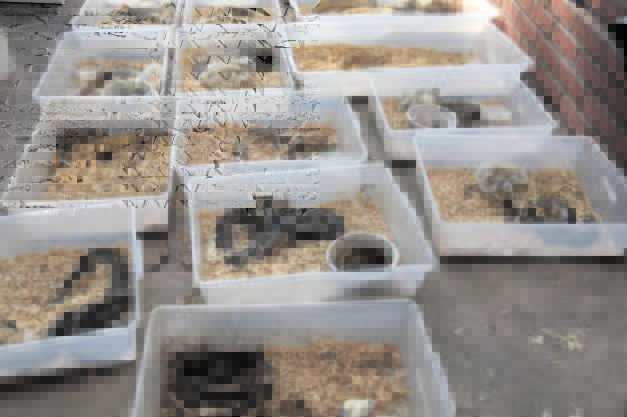
    SANTA ANA, CALIFORNIA (TIP): A schoolteacher was arrested on January 29 after hundreds of living and dead pythons in plastic bins were found stacked floor to ceiling inside his stenchfilled suburban California home.

    As investigators wearing respirator masks carried the reptiles out of the house by the score and stacked them in the driveway, reporters and passers-by gagged at the smell. Some held their noses or walked away from the fivebedroom home to get a breath of air. “The smell alone, I feel like I need to take a shower for a week,” said police Cpl.

    Anthony Bertagna. “They’re pretty much in all the bedrooms, everywhere.” Officers found as many as 400 snakes, as well as numerous mice and rats, in the Santa Ana home of William Buchman after neighbors complained about the smell. He was arrested for investigation of neglect in the care of animals, Bertagna said. Buchman, 53, was still in custody Wednesday afternoon, Bertagna said. The Newport-Mesa Unified School District, where he works, declined comment, saying it was a police matter.

    Buchman has not yet had a court appearance or been formally charged and it wasn’t clear if he had an attorney. Authorities said he lived alone, and neighbors said his mother, who had lived with him, had passed away within the past few years. Sondra Berg, the supervisor for the Santa Ana police department’s Animal Services Division, said four of the five bedrooms in the home were stacked from floor to ceiling and wall to wall with plastic bins on wooden and metal racks.

    The bins were packed so tightly, Berg said, that they didn’t require lids because there was no room for the snakes to slither out. Each snake was catalogued by name and type, and Berg said Buchman told authorities he was involved in a snakebreeding enterprise. “House of Horrors: That’s the best way to describe it,” Berg said of the house. “I mean there’s so many dead snakes … ranging from dead for months to just dead. There’s an infestation of rats and mice all over the house. There are rats and mice in plastic storage tubs that are actually cannibalizing each other.” Some of the snakes were little more than skeletons. Others, only recently dead, were covered with flies and maggots.

  • Two Texas energy giants take multibillion-dollar dispute to jury

    Two Texas energy giants take multibillion-dollar dispute to jury

    DALLAS (TIP): Energy Transfer Partners of Dallas contends that Houston-based Enterprise Products Partners broke its commitment to jointly build a pipeline from Cushing, Okla., to Houston.

    Energy Transfer Partners argues that Enterprise and Enbridge Inc. of Calgary, Alberta, conspired to cut Energy Transfer Partners out of the deal. Enterprise and Enbridge, in court documents, say Energy Transfer Partners’ lawsuit is without merit because there never was an actual partnership or joint venture with Energy Transfer Partners.

    “Energy Transfer Partners is trying to get in the courthouse what it could not achieve in the marketplace,” lawyers for Enterprise said in court documents asking the judge to dismiss the case. Dallas County District Judge Emily Tobolowsky denied the request. Jury selection started Monday, and the trial is expected to last four weeks.

    “This is going to be a great case because the issues are important and there are so many great lawyers involved,” said David Elrod, a Dallas trial lawyer whose practice focuses on energy litigation. The case pits some of Texas’ most prominent trial lawyers against each other. Dallas trial lawyer Mike Lynn of Lynn Tillotson Pinker & Cox represents Energy Transfer Partners. David Beck of Beck Redden in Houston and Dick Sayles of Sayles Werbner are defending Enterprise.

    Dallas attorney Jeffrey Levinger and a team from Sullivan & Cromwell in California represent Enbridge. All of the lawyers declined to comment on the case. The trial is expected to provide insight into the business operations and strategic thinking of leaders at three of the largest and fastest-growing oil companies in North America. Top executives at all three companies are expected to testify. The issue is whether Energy Transfer Partners and Enterprise legally formed a partnership to build the pipeline from Cushing, which is a major oil hub, to Houston, where the crude could be refined or shipped.

    Energy Transfer Partners says yes. The Dallas-based energy conglomerate, which has about $50 billion in oil and gas assets, claims that Enterprise majority owner and chairman Dan Duncan of Houston approached Energy Transfer Partners about a joint venture in the months before he died in 2010. Enterprise, which has an estimated $38 billion in assets, and Energy Transfer Partners renewed discussions in spring 2011 and signed a nonbinding agreement a few weeks later. “ETP and Enterprise shared joint control over the partnership’s commercial activities, jointly meeting with potential customers, jointly marketing the partnership to potential customers and jointly making operational decisions,” Energy Transfer Partners’ lawyers say in court records.

    “The parties unequivocally and repeatedly told potential pipeline customers, regulators and investment banks in formal written materials that they had formed a joint venture and that the parties had agreed to share profits and losses on a 50-50 basis,” Energy Transfer Partners claims. The two companies, which called their new venture Double E Pipeline, even signed a deal in August 2011 with Chesapeake Energy to ship “at least 100,000 barrels of oil per day on the Double E Pipeline for a 10-year period.”

    Less than a month later, Enterprise announced that it was ending its relationship with Energy Transfer Partners to do a similar partnership with Enbridge, which has about $30 billion in oil and gas assets and annual revenue of about $11 billion. Energy Transfer Partners claims that Enterprise and Enbridge conspired to end the joint venture with Energy Transfer Partners, which is seeking more than $1.2 billion in actual and punitive damages. Enterprise and Enbridge argue that Enterprise legally backed out of the proposed joint venture. Enterprise lawyers, in court documents, point to the April 21, 2011, letter between the two companies as proof that their partnership had not been finalized.

    “No binding or enforcement obligations shall exist between the parties with respect to the [relationship] unless and until the parties have received their respective boards’ approvals,” the agreement stated. “The parties made crystal clear that they had not yet agreed to undertake the proposed joint venture,” Enterprise lawyers said in court records. “Despite months of hard work by Enterprise’s employees, Enterprise and ETP were unable to secure sufficient commitments from prospective shippers of crude oil to make the proposed joint venture with ETP commercially viable.” Energy Transfer Partners lawyers, in court documents, say the relationship between the two companies had moved well beyond the terms agreed to in the April 2011 letter. Lawyers for Energy Transfer Partners argue that Texas law liberally defines the existence of a business partnership, even in some cases in which the parties involved claim there is no such partnership, much like the existence of a common-law marriage under Texas family law.

  • Texas ranks No. 2 for human trafficking crime

    Texas ranks No. 2 for human trafficking crime

    DALLAS (TIP): The National Human Trafficking Resource Center has released its 2013 data and it may or may not come as a surprise to you that Texas ranks No. 2 in number of calls placed to the hotline.

    Texas maintained its No. 2 position, behind California, even as overall calls skyrocketed last year. It’s safe to say that a large number of those calls came from the North Texas region, as the Dallas-Fort Worth traditionally has been a relative hotbed for human trafficking.

    Experts have said that has to do with the convergence of highways in the region as well as the area’s proximity to the U.S.-Mexico border. While it’s difficult to capture the specific data because of the hidden nature of the crime, Mosaic Family Services in Dallas, for example, typically serves 100 victims a year. And in 2012, the national hotline received about 250 calls from the city of Dallas alone.

  • AFTER FACEBOOK, GOOGLE BUYS STARTUP WITH INDIAN LINK

    AFTER FACEBOOK, GOOGLE BUYS STARTUP WITH INDIAN LINK

    BENGALURU (TIP): After Facebook’s acquisition of Bangalore-based Little Eye Labs earlier this month, it’s Google that has now bought a three-year-old startup that had two Indians — Vish Ramarao and Naveen Jamal — as co-founders and offices in Bangalore and California.

    The startup, Impermium, had a third co-founder Mark Risher. Jamal was based in Bangalore and looked after the office here, while Ramarao and Risher were based in California. All three had previously worked together in Yahoo and came out of it in 2010 to found Impermium. The startup focused on building security products for websites. Impermium’s website now has just a note from Risher, who was the CEO, with the headline ‘Impermium is joining Google’.

    It goes on to say: “By joining Google, our team will merge with some of the best abuse fighters in the world. With our combined talents we’ll be able to further our mission and help make the internet a safer place. We’re excited about the possibilities.” Impermium had received $9 million in funding from a host of venture firms including Accel Partners, AOL Ventures, Charles River Ventures and Highland Capital Partners. Google has not disclosed the terms of its deal with Impermium. Acquisitions of India-based startups by the likes of Google and Facebook are expected to provide a big boost to the startup ecosystem. Not too many Indiabased startups have had great exits yet, but the latest instances look to be changing that trend.

    Software product startup associations like iSpirt are actively engaged in trying to marry Indian startups with global ones. Jamal is originally from Thanjavur in Tamil Nadu, went to the US to study, worked as a software engineer in a small US company and then joined Yahoo in 1998. He moved to Bangalore around the time Impermium was being founded and established the office here. Ramarao is from Bangalore, went to the US for higher studies, and has since been there. Prior to Impermium, all three cofounders were in Yahoo Mail, where they dealt with problems of spam, web security and fraudulent account creation. In an interview to TOI early last year, Risher said they realized that the problems they dealt with weren’t an issue with just Yahoo’s services but rather a problem with every website on the internet, and that encouraged them to found Impermium.

    Risher said the company had built a number of services that worked as a riskdetermination system, which could help identify when an account had been compromised. The system calculates the risk from parameters like where you accessed the account from, the device software and historical usage pattern of the links you’re posting. And Risher then had this to say about his new employer: “Security is always a balance between convenience and safety. And a complete overhaul (of the password system) becomes difficult. Google talked about an RFID ring that you would wear and which would transfer a secure certificate. Yes it would work but it would be a hassle and everybody would have to buy a reader. It’s not going to happen overnight.” Impermium has said it has 300,000 clients, including Tumblr, Pinterest, CNN, ESPN, Typepad and Washington Post.

  • Texas executes Mexican man despite his nation’s objections

    Texas executes Mexican man despite his nation’s objections

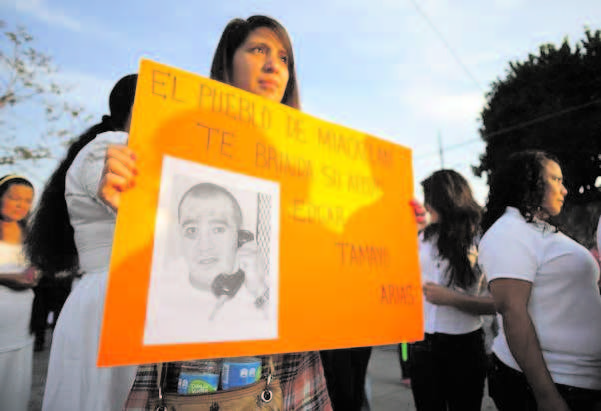
    HUNTSVILLE (TIP) A Mexican national was executed January 22 night in Texas for killing a Houston police officer, despite pleas and diplomatic pressure from the Mexican government and the U.S. State Department to halt the punishment.

    Edgar Tamayo, 46, received a lethal injection for the January 1994 fatal shooting of Officer Guy Gaddis, 24. Asked by a warden if he had a final statement, he mumbled “no” and shook his head. As the lethal dose of pentobarbital began taking effect, he took a few breaths and then made one slightly audible snore before all movement stopped.

    He was pronounced dead 17 minutes after the drug was administered, at 9:32 p.m. CST. Tamayo never looked toward Gaddis’ mother, two brothers and two other relatives who watched through a window. He selected no witnesses of his own. There were several dozen police officers and supporters of the slain patrolman revving their motorcycles outside of the prison before witnesses were let inside the death chamber.

    The execution, the first this year in the nation’s most active death penalty state, came after the U.S. Supreme Court and lower federal courts rejected lastday appeals and Texas officials spurned arguments that Tamayo’s case was tainted because he wasn’t informed, under an international agreement, that he could get legal help from the Mexican consulate after his arrest for the officer’s slaying. Attorneys had also argued unsuccessfully that Tamayo was mentally impaired, making him ineligible for execution, and that the state’s clemency procedures were unfair.

    The Texas Board of Pardons and Paroles on Tuesday had rejected Tamayo’s request for clemency. “It doesn’t matter where you’re from,” Perry spokeswoman Lucy Nashed said. “If you commit a despicable crime like this in Texas, you are subject to our state laws, including a fair trial by jury and the ultimate penalty.” Gaddis, who had been on the force for two years, was driving Tamayo and another man from a robbery scene when evidence showed the officer was shot three times in the head and neck with a pistol Tamayo had concealed in his pants.

    The car crashed, and Tamayo fled on foot but was captured a few blocks away, still in handcuffs, carrying the robbery victim’s watch and wearing the victim’s necklace. Mexican officials and Tamayo’s attorneys contend he was protected under a provision of the 1963 Vienna Convention on Consular Relations. Legal assistance guaranteed under that treaty could have uncovered evidence to contest the capital murder charge or provide evidence to keep Tamayo off death row, they said. Records show the consulate became involved or aware of the case just as his trial was to begin.

    Secretary of State John Kerry previously asked Texas Attorney General Greg Abbott to delay Tamayo’s punishment, saying it “could impact the way American citizens are treated in other countries.” The State Department repeated that stance Wednesday. But Abbott’s office and the Harris County district attorney opposed any delays. At least two other inmates in circumstances similar to Tamayo’s were executed in Texas in recent years. The Mexican government said in a statement this week it “strongly opposed” the execution and said failure to review Tamayo’s case and reconsider his sentence would be “a clear violation by the United States of its international obligations.”

    Tamayo was in the U.S. illegally and had a criminal record in California, where he had served time for robbery and was paroled, according to prison records. Tamayo was among more than four dozen Mexican nationals awaiting execution in the U.S. when the International Court of Justice in The Hague, Netherlands, ruled in 2004 they hadn’t been advised properly of their consular rights. The Supreme Court subsequently said hearings urged by the international court in those inmates’ cases could be mandated only if Congress implemented legislation to do so. “Unfortunately, this legislation has not been adopted,” the Mexican foreign ministry acknowledged.

  • West Texas in line for solar farm

    West Texas in line for solar farm

    TEXAS (TIP)For years Texas has watched as solar developers flock to greener pastures in California and Arizona where state subsidies and high power prices have created a solar boom.

    The announcement Wednesday that First Solar, one of the world’s largest solar companies, was building a sprawling 22 megawatt farm in West Texas represented a rare piece of good news for the state’s nascent solar industry. Tim Rebhorn, First Solar’s senior vice president for project development in North and South America, said his company was betting on the conditions for solar improving in Texas.

    “When energy prices are as low as they are in Texas, it makes it very difficult to come in and build,” he said. “But we’re seeing constraints on capacity. And we think on the merchant side there’s going to be a price effect.” The project, named Barilla, is being built on a 200-acre site about 30 miles west of Fort Stockton. Rebhorn said the site is large enough the facility could ultimately expand to 150 megawatts of capacity, which would make it the largest solar farm in Texas.

  • Doctor convicted in Michael Jackson death loses appeal

    Doctor convicted in Michael Jackson death loses appeal

    LOS ANGELES (TIP): A California appellate court refused on January 15 to overturn the conviction of Michael Jackson’s personal physician, Conrad Murray, who was found guilty of involuntary manslaughter in the death of the pop star. The three-judge panel of California 2nd District Court of Appeal unanimously upheld Murray’s 2011 conviction, ruling that there was sufficient evidence and there were no errors during his trial.

    Grenada-born Murray, 60, was released from a Los Angeles jail in October after serving two years. Murray’s six-week trial in 2011 grabbed global attention after Jackson, preparing for a series of comeback concerts in London, died unexpectedly in 2009 at age 50 from an overdose of the surgical anesthetic, propofol. Prosecutors successfully argued at the trial that Murray, who was hired by concert promoter AEG Live as Jackson’s general practitioner, was grossly negligent in administering the powerful anesthetic, which was used to help the singer sleep.

    Murray’s attorneys presented the case that Jackson had injected himself with the powerful anesthetic. The cardiologist’s current attorney handling his appeal, Valerie Wass, said she anticipated an appeal would be filed to the California Supreme Court. “I’m always of the opinion that he has a better chance in the (California) Supreme Court or federal court,” Wass said. Murray, whose medical license was either suspended or lapsed in California, Nevada, Texas and Hawaii, has said he wants to practice again, but so far his appeals have been turned down.