Tag: California

  • Slow and steady tortoise beats rabbit, wins pet ski-off

    Slow and steady tortoise beats rabbit, wins pet ski-off

    BEIJING (TIP): A tortoise beat a rabbit in a skiing competition held for pets and their owners in China, a report said on January 13. Cats and dogs faced off against a menagerie including a rooster and a yellow duck in a race to the finish line on snowy slopes in Henan province, the state-run China News Service said. The 40 human competitors were allowed to place their animals on skis or sledges, or could guide the pet with a lead while skiing, the report said. In an unexpected outcome akin to an ancient Greek fable, a tortoise beat a rabbit, with the shelled reptile eventually claiming third place overall, the report said. “Because the rabbit loved jumping and didn’t follow its owner’s commands, it was overtaken by the tortoise,” it said.

    The tortoise — which would normally be expected to hibernate during the winter — apparently hitched a ride on its owner’s ski equipment, the report added. Pictures showed a yellow duck taking to the slopes in a fetching red neck tie, attracting curious stares from two dogs, before being held aloft by its owner who clutched a red certificate of honour after it waddled over the finish line — even though it finished last overall. The bird’s “spirit of persistence rendered onlookers speechless with admiration,” the report said. Skiing has become more popular in China in recent years, with a range of slopes opening across the country’s cold north, and it is bidding for the 2022 Winter Olympics.

    The bid, though, faces a number of challenges, not least that Asia will host both the 2018 winter Games in South Korea’s Pyeongchang and the 2020 summer Olympics in Tokyo. The US state of California plays host to an annual dog-surfing competition, and a Chinese farmer made headlines in 2012 for training pigs to dive from a threemetre platform.

  • NY Mayor elect’s daughter speaks of her struggle with substance abuse

    NY Mayor elect’s daughter speaks of her struggle with substance abuse

    I.S. Saluja:
    NEW YORK (TIP): Coming on Christmas eve, Chiara de Blasio’s statement about her battle with substance abuse must inspire those, particularly the young, suffering from the scourge. The 19-year-old daughter of New York City Mayor-elect Bill de Blasio is reported to have spoken about her personal struggles, saying she spent years battling substance abuse and depression, in a four minute video released Tuesday, December 24, on the eve of Christmas by the incoming mayor’s transition team. She said she drank alcohol and smoked marijuana to deal with clinical depression and anxiety.

    “It made it easier, the more I drank and did drugs, to share some common ground with people,” she said, speaking under soft lights with piano music tinkling in the background. “It didn’t start out as, like, a huge thing for me, but then it became a really huge thing for me.” She said she thought she could escape the problem by leaving for college in California, but her sense of “physical insecurity” only grew worse. “My mom was trying really hard to help me and my dad was doing the same, but obviously he was really busy,” she said.

    “They were both very emotionally committed to trying to find out some way to get me better.” De Blasio said she eventually found success in group therapy at a treatment center in New York. “Removing substances from my life opened so many doors for me. I was actually able to participate in my dad’s campaign,” she said in the video. “Getting sober is always a positive thing, and by no means is it easy – it’s the hardest thing I’ve ever done – but it’s so worth it.”In a statement accompanying the video, Bill de Blasio and his wife, Chirlane McCray, said they were “so proud of Chiara and love her deeply.”

    “As parents, our instinct has been to protect our daughter and privately help her through a deeply personal struggle,” they said in the statement. “But not only has Chiara committed to her own health, she is also committed to helping young people everywhere who face similar challenges.” The campaign did not say what prompted it to release the video on Christmas Eve, a day when many news consumers are more concerned with travel or shopping than current events. The announcement was framed as a way to help others struggling with depression and substance abuse during the holiday season. Rumors swirled during the mayoral primary campaign that Chiara had battled drug issues.

    But the de Blasio campaign fiercely beat back reporters who pursued the topic, saying that his two children were off limits from the press. No media outlet published a story. Yet even as the campaign pleaded for privacy, de Blasio’s family played a key role in his campaign. De Blasio was frequently joined at campaign events by his wife, and McCray is considered his top adviser who will wield considerable influence at City Hall. Both Chiara and her brother stumped for their father and appeared in television ads. Dante appeared first, and the teen’s soaring Afro and heartfelt descriptions of his father was the most effective ad of the campaign, helping de Blasio surge in the polls.

    Chiara de Blasio’s ad appeared closer to Election Day and she gave a sunny description of her dad’s vision “that leaves no one behind.” She also introduced her father at his raucous primary night party. She gave one hint about some of her struggles after being spotted in tears at a parade in September. She told reporters that she sometimes suffered from anxiety. In the hours after the video was released, de Blasio briefly appeared outside his Brooklyn home and, flanked by the other three members of his family, repeated how proud he was of his daughter. The mayor-elect did not take questions.

    During the campaign, de Blasio spoke about his father’s substance abuse, particularly with alcohol. His father later committed suicide.White House Drug Policy Director Gil Kerlikowske released a statement late Tuesday praising Chiara de Blasio’s decision “to give voice to the millions who suffer from substance abuse disorders.”

  • NY Mayor elect’s daughter speaks of her struggle with substance abuse

    NY Mayor elect’s daughter speaks of her struggle with substance abuse

    NEW YORK (TIP): Coming on Christmas eve, Chiara de Blasio’s statement about her battle with substance abuse must inspire those, particularly the young, suffering from the scourge. The 19-year-old daughter of New York City Mayor-elect Bill de Blasio is reported to have spoken about her personal struggles, saying she spent years battling substance abuse and depression, in a four minute video released Tuesday, December 24, on the eve of Christmas by the incoming mayor’s transition team. She said she drank alcohol and smoked marijuana to deal with clinical depression and anxiety.

    “It made it easier, the more I drank and did drugs, to share some common ground with people,” she said, speaking under soft lights with piano music tinkling in the background. “It didn’t start out as, like, a huge thing for me, but then it became a really huge thing for me.” She said she thought she could escape the problem by leaving for college in California, but her sense of “physical insecurity” only grew worse. “My mom was trying really hard to help me and my dad was doing the same, but obviously he was really busy,” she said. “They were both very emotionally committed to trying to find out some way to get me better.” De Blasio said she eventually found success in group therapy at a treatment center in New York. “Removing substances from my life opened so many doors for me. I was actually able to participate in my dad’s campaign,” she said in the video. “Getting sober is always a positive thing, and by no means is it easy – it’s the hardest thing I’ve ever done – but it’s so worth it.

    “In a statement accompanying the video, Bill de Blasio and his wife, Chirlane McCray, said they were “so proud of Chiara and love her deeply.” “As parents, our instinct has been to protect our daughter and privately help her through a deeply personal struggle,” they said in the statement. “But not only has Chiara committed to her own health, she is also committed to helping young people everywhere who face similar challenges.” The campaign did not say what prompted it to release the video on Christmas Eve, a day when many news consumers are more concerned with travel or shopping than current events. The announcement was framed as a way to help others struggling with depression and substance abuse during the holiday season. Rumors swirled during the mayoral primary campaign that Chiara had battled drug issues. But the de Blasio campaign fiercely beat back reporters who pursued the topic, saying that his two children were off limits from the press. No media outlet published a story.

    Yet even as the campaign pleaded for privacy, de Blasio’s family played a key role in his campaign. De Blasio was frequently joined at campaign events by his wife, and McCray is considered his top adviser who will wield considerable influence at City Hall. Both Chiara and her brother stumped for their father and appeared in television ads. Dante appeared first, and the teen’s soaring Afro and heartfelt descriptions of his father was the most effective ad of the campaign, helping de Blasio surge in the polls. Chiara de Blasio’s ad appeared closer to Election Day and she gave a sunny description of her dad’s vision “that leaves no one behind.” She also introduced her father at his raucous primary night party. She gave one hint about some of her struggles after being spotted in tears at a parade in September. She told reporters that she sometimes suffered from anxiety.

    In the hours after the video was released, de Blasio briefly appeared outside his Brooklyn home and, flanked by the other three members of his family, repeated how proud he was of his daughter. The mayor-elect did not take questions.During the campaign, de Blasio spoke about his father’s substance abuse, particularly with alcohol. His father later committed suicide.White House Drug Policy Director Gil Kerlikowske released a statement late Tuesday praising Chiara de Blasio’s decision “to give voice to the millions who suffer from substance abuse disorders.”

  • Target customers file lawsuits after data security breach

    Target customers file lawsuits after data security breach

    MINNEAPOLIS (TIP): Target Corp., the second-largest U.S. discount chain, faces almost two dozen lawsuits filed by customers after a computer security breach exposed data on 40 million debit and credit cards. Customers have filed complaints seeking class action status for their suits in state and federal courts from the company’s home state of Minnesota to California and New York. Most accuse Target of failing to protect their private information.

    The information obtained during the breach “is a treasure trove for identity theft criminals who could use it to gain access to credit card and other private and valuable information about customers,” one of the plaintiffs, Alfonso E. Alonso III of San Francisco, said in a complaint. Target said Thursday, December 19 that security for the cards may have been breached between Nov. 27 and Dec. 15 during purchases in stores. While the chain said it had identified and resolved the issue, the compromise occurred during the most important period of the year for retailers, with shoppers already showing reluctance to spend. In its latest statement, Target said December 24, it’s unveiling a special website for to communicate with customers.

    The retailer said “limited incidents” of fake communications claiming to be from the company prompted it to set up the dedicated channel for posting information about the breach. Since disclosing the breakdown the Minneapolis-based company has agreed to give some shoppers free credit reporting, assured them they wouldn’t be responsible for fraudulent charges and offered a 10 percent discount on purchases last weekend to regain their trust. Massachusetts is among states probing the security breakdown. The company also said it is “actively partnering” with the U.S. Department of Justice and the Secret Service on a continuing forensic and criminal probe. Neither entity is investigating Target, according to the statement.

    Molly Snyder, a spokeswoman for Target, said the company “typically doesn’t comment on pending litigation.” Meanwhile, one of the victims of Target security breach is targeted again, in Maryland. George Nader, who is a deputy police chief in a county let slip the card, issued him after the breach on Friday, December 20. Nader “unknowingly dropped his newly acquired credit card” at a restaurant on Route 1.Within an hour, the police said, two people, termed “Scrooges,” had scooped up the plastic and started shopping. It was not immediately clear whether Nader has yet received a third card.

  • Same-sex marriage now legal in Utah & New Mexico

    Same-sex marriage now legal in Utah & New Mexico

    S. Saluja SALT LAKE CITY, UTAH (TIP): A federal judge, on December 20, struck down the state’s ban on same-sex marriage, saying the law “conflicts with the United States Constitution’s guarantees of equal protection and due process under the law.” In striking down the state law, which voters had approved in 2004, U.S. District Court Judge Robert J. Shelby wrote in a 53-page ruling that the state’s “current laws deny its gay and lesbian citizens their fundamental right to marry and, in so doing, demean the dignity of these same-sex couples for no rational reason.

    “Accordingly, the court finds that these laws are unconstitutional,” he said. A day earlier, on December 19, the New Mexico Supreme Court legalized same-sex marriage in the State, declaring in a ruling that it is unconstitutional to deny a marriage license to gay and lesbian couples. There are 18 States now that allow same sex marriage. 7 States have allowed pursuant to Court decision. These are California (June 28, 2013), Connecticut (Nov. 12, 2008), Iowa (Apr. 24, 2009), Massachusetts (May 17, 2004), New Jersey (Oct. 21, 2013), New Mexico (Dec. 19, 2013), Utah (Dec. 20, 2013). 8 States have allowed same sex marriage through State legislation.

    The states are Delaware (July 1, 2013), Hawaii (Dec. 2, 2013), Illinois (law will take effect June 1, 2014), Minnesota (Aug. 1, 2013), New Hampshire (Jan. 1, 2010), New York (July 24, 2011), Rhode Island (Aug. 1, 2013), Vermont (Sep. 1, 2009). 3 States have allowed same sex marriage by Popular Vote. These states are Maine (Dec. 29, 2012), Maryland (Jan. 1, 2013),Washington (Dec. 9, 2012). Massachusetts is the first State to allow same sex marriage while Utah is the latest to join. However, Illinois legislation to allow same sex marriage will take effect on June 1, 2014.

  • Let us Know Texas – The State

    Let us Know Texas – The State

    Texas, the second most populous (after California) and the second -largest state (after Alaska) in the United States of America, has had a checkered history which all residents need to know. A state of immigrants, the state has made tremendous progress in the last few decades, and is growing. The Indian Panorama readers will get to know the state of Texas from a series of articles that will appear each week. – EDITOR

    Texas is the second most populous (after California) and the secondlargest of the 50 states (after Alaska) in the United States of America, and the largest state in the 48 contiguous United States. Geographically located in the South Central part of the country, Texas shares an international border with the Mexican states of Chihunahua, Coahuila, Nuevo León, and Tamaulipas to the south and borders the U.S. states of New Mexico to the west, Oklahoma to the north, Arkansas to the northeast, and Louisiana to the east. Texas has an area of 268,820 square miles (696,200 km2) and a growing population of 26.1 million residents. Houston is the largest city in Texas and the fourth-largest in the United States, while San Antonio is the second largest in the state and seventh largest in the United States. Dallas- Fort Worth and Greater Houston are the fourth and fifth largest United States metropolitan areas, respectively. Other major cities include El Paso and Austin-the state capital.

    Texas is nicknamed the Lone Star State to signify Texas as a former independent republic and as a reminder of the state’s struggle for independence from Mexico. The “Lone Star” can be found on the Texas state flag and on the Texas state seal today. The origin of the state name, Texas, is from the word, “Tejas”, which means ‘friends’ in the Caddo language. Due to its size and geologic features such as the Balcones Fault, Texas contains diverse landscapes that resemble both the American South and Southwest. Although Texas is popularly associated with the Southwestern deserts, less than 10 percent of the land area is desert. Most of the population centers are located in areas of former prairies, grasslands, forests, and the coastline. Traveling from east to west, one can observe terrain that ranges from coastal swamps and piney woods, to rolling plains and rugged hills, and finally the desert and mountains of the Big Bend. The term “six flags over Texas”, as can be seen in the Grand Prairie-based large national and international amusement park operator Six Flags, came from the several nations that had ruled over the territory. Spain was the first European country to claim the area of Texas. France held a shortlived colony in Texas.

    Mexico controlled the territory until 1836 when Texas won its independence, becoming an independent Republic. In 1845 it joined the United States as the 28th state. The state’s annexation set off a chain of events that caused the Mexican-American War in 1846. A slave state, Texas declared its secession from the United States in early 1861, joining the Confederate States of America during the American Civil War. After the war and its restoration to the Union, Texas entered a long period of economic stagnation. One Texas industry that thrived after the Civil War was cattle. Due to its long history as a center of the industry, Texas is associated with the image of the cowboy. The state’s economic fortunes changed in the early 20th century, when oil discoveries initiated an economic boom in the state. With strong investments in universities, Texas developed a diversified economy and high tech industry in the mid-20th century. As of 2010 it shares the top of the list of the most Fortune 500 companies with California at 57. With a growing base of industry, the state leads in many industries, including agriculture, petrochemicals, energy, computers and electronics, aerospace, and biomedical sciences. Texas has led the nation in export revenue since 2002 and has the second-highest gross state product.

    History
    Texas lies between two major cultural spheres of Pre-Columbian North America: the Southwestern and the Plains areas. Archaeologists have found that three major indigenous cultures lived in this territory, and reached their developmental peak before the first European contact. These were: ● the Pueblo from the upper Rio Grande region, centered west of Texas; ● the Mississippian culture, also known as Mound Builder, which extended along the Mississippi River Valley east of Texas; and ● the civilizations of Mesoamerica, centered south of Texas. Influence of Teotihuacan in northern Mexico peaked around AD 500 and declined over the 8th to 10th centuries. No culture was dominant in the presentday Texas region, and many peoples inhabited the area. Native American tribes that lived inside the boundaries of presentday Texas include the Alabama, Apache, Atakapan, Bidai, Caddo, Coahuiltecan, Comanche, Choctaw, Coushatta,Hasinai, Jumano, Karankawa, Kickapoo, Kiowa, Tonkawa, and Wichita.

    The name Texas derives from táysha?, a word in the Caddoan language of the Hasinai, which means “friends” or “allies”. Whether a Native American tribe was friendly or warlike was critical to the fates of European explorers and settlers in that land. Friendly tribes taught newcomers how to grow indigenous crops, prepare foods, and hunt wild game. Warlike tribes made life difficult and dangerous for Europeans through their attacks and resistance to the newcomers.[ The first historical document related to Texas was a map of the Gulf Coast, created in 1519 by Spanish explorer Alonso Álvarez de Pineda. Nine years later, shipwrecked Spanish explorer Álvar Núñez Cabeza de Vaca and his cohort became the first Europeans in what is now Texas. Cabeza de Vaca reported that in 1528, when the Spanish landed in the area, “half the natives died from a disease of the bowels and blamed us.” Francisco Vasquez de Coronado describes his 1541 encounter with “Two kinds of people travel around these plains with the cows; one is called Querechos and the others Teyas; they are very well built, and painted, and are enemies of each other. They have no other settlement or location than comes from traveling around with the cows.

    They kill all of these they wish, and tan the hides, with which they clothe themselves and make their tents, and they eat the flesh, sometimes even raw, and they also even drink the blood when thirsty. The tents they make are like field tents, and they set them up over some poles they have made for this purpose, which come together and are tied at the top, and when they go from one place to another they carry them on some dogs they have, of which they have many, and they load them with the tents and poles and other things, for the country is so level, as I said, that they can make use of these, because they carry the poles dragging along on the ground. The sun is what they worship most.” European powers ignored the area until accidentally settling there in 1685. Miscalculations by René Robert Cavelier de La Salle resulted in his establishing the colony of Fort Saint Louis at Matagorda Bay rather than along the Mississippi River. The colony lasted only four years before succumbing to harsh conditions and hostile natives. In 1690 Spanish authorities, concerned that France posed competitive threat, constructed several missions in East Texas. After Native American resistance, the Spanish missionaries returned to Mexico. When France began settling Louisiana, mostly in the southern part of the state, in 1716 Spanish authorities responded by founding a new series of missions in East Texas.

    Two years later, they created San Antonio as the first Spanish civilian settlement in the area. Hostile native tribes and distance from nearby Spanish colonies discouraged settlers from moving to the area. It was one of New Spain’s least populated provinces. In 1749, the Spanish peace treaty with the Lipan Apache angered many tribes, including the Comanche, Tonkawa, and Hasinai. The Comanche signed a treaty with Spain in 1785 and later helped to defeat the Lipan Apache and Karankawa tribes. With more numerous missions being established, priests led a peaceful conversion of most tribes. By the end of the 18th century only a few nomadic tribes had not converted to Christianity. When the United States purchased Louisiana from France in 1803, American authorities insisted that the agreement also included Texas. The boundary between New Spain and the United States was finally set at the Sabine River in 1819, at what is now the border between Texas and Louisiana. Eager for new land, many United States settlers refused to recognize the agreement. Several filibusters raised armies to invade the area west of the Sabine River.

    In 1821, the Mexican War of Independence included the Texas territory, which became part of Mexico. Due to its low population, Mexico made the area part of the state of Coahuila y Tejas. Hoping that more settlers would reduce the near-constant Comanche raids, Mexican Texas liberalized its immigration policies to permit immigrants from outside Mexico and Spain. Under the Mexican immigration system, large swathes of land were allotted to empresarios, who recruited settlers from the United States, Europe, and the Mexican interior. The first grant, to Moses Austin, was passed to his son Stephen F. Austin after his death. Austin’s settlers, the Old Three Hundred, made places along the Brazos River in 1822. Twenty-three other empresarios brought settlers to the state, the majority of whom were from the United States. The population of Texas grew rapidly. In 1825, Texas had a population of approximately 3,500, with most

  • HAB BANK Reaches out to Community in Queens

    HAB BANK Reaches out to Community in Queens

    NEW YORK (TIP): “We are a bank that understands the needs of the South Asian community.We speak your language and can communicate better.We are your bank. Come to us. We are ready to help.” These were some of the pronouncements of Mr. Saleem Iqbal, President and CEO of HAB BANK, in his address to the Punjabi community at Royal India Palace banquet in the City of Richmond Hill, Queens, November 13, 2013. Mr. Iqbal was accompanied by the top brass of the bank that included Navneet S. Chugh, Director, Rizwan Qureshi, SEVP & Chief Compliance Officer, Zilay Wahidy, SVP & Chief Marketing Executive, Teddy Persaud, Business Development Officer, Ismail Ahmed, Branch Manager at Liberty Avenue, Richmond Hill and Kamal S. Puri, Branch Manager at Jackson Heights branch of the bank. Mr. Navneet S. Chugh, a Director of the bank, who had come from California, made an impressive case for compliance with rules and laws for a smooth sail in this country. He exhorted nearly 50 community leaders present to play by the rule.

    And the first rule, he said, they need to follow is to pay taxes. However, he also added in the same breath that there always is a way out to help those who do not have a perfect credit score. But it is a limited scope that cannot be relied on. It is always better to go in for a sound financial dealing and have a clean financial record. There is no dearth of loans and advances to those who pay their taxes and bills and have a good credit score. Members of the community poured out their difficulties and problems, most of which related to non availability f loans from banks because of low credit scores. Some even claimed that they had property but not the cash they needed to bolster their businesses because of low credit scores.


    13
    Mr. Navneet S. Chugh, a Director of the bank, established immediate rapport with the gathering and exhorted them to pay taxes and maintain a good credit score to raise loans from banks to bolster their businesses

    16

    The outreach program was coordinated by Prof. Indrajit S Saluja, Editor, The Indian Panorama who conducted the proceedings and thanked all for their presence, on behalf of HAB Bank, and a senior community leader Master Mohinder Singh, Founder President of Gurdwara Baba Makhan Shah Lobana and a former President of the largest Sikh shrine on the East Coast, Gurdwara Sikh Cultural Society, Richmond Hill, New York.

  • Spiritual Master Sant Rajinder Singh honored by Indian American Medical Association of Illinois

    Spiritual Master Sant Rajinder Singh honored by Indian American Medical Association of Illinois

    NEWYORK (TIP): His Holiness Sant Rajinder Singh Ji Maharaj was the honored guest and speaker at the Indian American Medical Association of Illinois’ (IAMA) 33rd Annual Meeting and Banquet on Friday, November 16, 2013 at the Meadows Club in Rolling Meadows, Illinois. Illinois Governor Pat Quinn, Chicago Mayor Rahm Emanuel, and Congressman George Foster commended the Association for their commitment to the community and the quality of health care services they are providing.

    The internationally recognized spiritual Master of meditation on the inner Light and Sound was introduced with a tribute to his many achievements as president of the Human Unity Conference, head of Science of Spirituality, and best-selling author of books translated into over fifty languages including Meditation as Medication for the Soul, Inner and Outer Peace through Meditation, Empowering Your Soul through Meditation, and Spark of the Divine.

    Not only has H. H. Sant Rajinder Singh Ji Maharaj presented the benefits of meditation to medical practitioners worldwide-including the National Institute of Health, All India Institute of Medical Sciences, and universities such as Harvard University, University of California, Berkeley, IIT Madras (Chennai), IIT Delhi, and IIT Mumbai-but many doctors have also learned the meditation technique from him and use it regularly with their patients as an invaluable healing modality. In his address, H. H. Sant Rajinder Singh Ji Maharaj recognized the mission of the IAMA comprised of Illinois physicians of Indian origin “committed to professional excellence in quality patient care, education, and community healthcare.”

    He congratulated the doctors who work tirelessly to assist their communities toward achieving impeccable health. He noted that it is a universal truth that the health of our body and mind depend unequivocally on our spiritual health. He spoke on the importance of meditation, citing national journals that have published research into the physical, mental, and emotional advantages of meditation. These benefits, the spiritual Master explained, are merely byproducts of the meditation practice.

    The true purpose of meditation is to experience the reality of our true selves, who we really are at the level of our soul. H. H. Sant Rajinder Singh Ji Maharaj then spoke about research into near-death experiences by medical doctors Raymond Moody and Melvin Morris who investigated this phenomenon and concluded that spirit or soul exists beyond the human body, mind, and emotions. The spiritual Master stated that vistas of inner light, beauty, and music, as well as the Power that brought all creation together, exist within each and every one of us.We do not have to undergo physical trauma he said, but through meditation, we can experience this reality ourselves.

    He then explained the simple process of Jyoti meditation-meditation on the inner Light-and put the audience of hundreds of doctors and medical practitioners into meditation. Following this uplifting discourse, His Holiness Sant Rajinder Singh Ji Maharaj was presented with an honorary plaque by the IAMA. For more information about His Holiness Sant Rajinder Singh Ji Maharaj and the Science of Spirituality, visit www.sos.org.

  • International Conference confers the title ‘Gyani’ on Max Arthur Macauliffe

    International Conference confers the title ‘Gyani’ on Max Arthur Macauliffe

    MONTREAL (TIP): An International conference was held in MontrealSept 20- 22, 2013to formulate methodology for interpreting hymns of the Guru Granth Sahib. The conference was dedicated to the Max Arthur Macauliffe Centennial. Scholars from Canada, USA and UK made presentations to highlight the inadequacies of the available translations of the Sikh scripture on Sept 20-22, 2013. They discussed the criteria that must be met when interpreting the scripture of the Sri Guru Granth Sahib. In his Keynote Address Dr. Devinder Singh Chahal quoted Max Arthur Macauliffe who first time pointed out the lack of understanding of the universal message of the Guru. Macauliffe was the first to serve as the gateway to promote Sikh teachings to the West. Dr. Avtar Singh Dhaliwal from North Carolina, USA stressed “Explicative Methodology for Interpreting Gurbani”. Dr. Kulbir S Thind, from California, USA titled his presentation as “Some Pitfalls of Translation of Aad Guru Granth Sahib into English”. Prof. Davinder Singh Chahal, from Laval, Quebec, Canada discussed “Application of Science and Logic in Interpreting Gurbani”.


    img23
    Max Arthur Macauliffe, born in Ireland is best known as English translator of the Sikh scriptures and historian of early Sikhism. The International Conference on interpreting Gurbani held in September, 2013 in Montreal was dedicated to the Max Arthur Macauliffe Centennial.

    Dr. Harbans Lal, from Texas, USA stressed that translations must always be consistent with Gurmat doctrines. Using many illustrations he stressed that the Guru’s hymns use metaphors to make their meanings relevant to all cultures and all times. Dr. Lal dedicated his paper to the Macauliffe Centennial. Devinder Singh Sekhon, from Brampton, Canada illustrated examples of incorrect splitting of Larivar (continuous text) caused errors in the interpretation of Gurbani. There were other presentations such as “Exploration of Gender Equality in Sikhism” by Lovpreet Kaur from Wolverhampton University, UK; “Amrit Bani as a Trajectory of a Distinct Identity” by Charan Singh of Ashwa, Canada. Prof. P.S. Bhandari, Montreal, Canada presented a slide show depicting of photos the Guru Granth celebrations in Montreal. The conference was organized by the Institute for Understanding Sikhism (IUS) and supported by local Gurdwara. It started with informal discussion at a dinner on September 20 and ended with a roundtable discussion on September 22, 2013.

    The conference unanimously passed two resolutions.
    1. It was resolved that ‘Formulation of Methodology for Interpreting Gurbani’ by world class scholars is urgently needed. The resolution was moved by Dr. Kulbir Singh Thind, San Mateo, USA and seconded by Dr. Teja Singh, Brampton, Ontario, Canada and approved unanimously by the attendees with voice vote.
    2. It was unanimously passed to bestow the honorific title of GYANI upon Max Arthur Macauliffe for his contributions to Sikhi (Sikhism) and introducing Sikhism to the English speaking people of the West. He will now be known as Gyani Max Arthur Macauliffe. The resolution was moved by Dr. Harpal Singh Buttar of Ottawa, Canada and seconded by Dr Teja Singh of Brampton, Ontario, Canada and was passed unanimously.

  • Obamacare-how caring?

    Obamacare-how caring?

    Some 106,185 people signed up for Obamacare in its first month of operation, a period marred by major technological problems with both the federal and state enrollment websites.

    Troubled HealthCare.gov is unlikely to work fully by end of November, says an official with knowledge of the project. According to this source of information, software problems with the federal online health insurance marketplace, especially in handling high volumes, are proving so stubborn that the system is unlikely to work fully by the end of the month as the White House has promised. The insurance exchange is balking when more than 20,000 to 30,000 people attempt to use it at the same time – about half its intended capacity, said the official, who spoke on the condition of anonymity to disclose internal information. And CGI Federal, the main contractor that built the site, has succeeded in repairing only about six of every 10 of the defects it has addressed so far. Government workers and technical contractors racing to repair the Web site have concluded, the official said, that the only way for large numbers of Americans to enroll in the health-care plans soon is by using other means so that the online system isn’t overburdened.

    This inside view of the halting nature of HealthCare.gov repairs is emerging as the insurance industry is working behind the scenes on contingency plans, in case the site continues to have problems. And it calls into question the repeated assurances by the White House and other top officials that the insurance exchange will work smoothly for the vast majority of Americans by Nov. 30. Speaking in Dallas a week ago, President Obama said that the “Web site is already better than it was at the beginning of October, and by the end of this month, we anticipate that it is going to be working the way it is supposed to, all right?” Julie Bataille, director of communications at the Centers for Medicare and Medicaid Services (CMS), which is part of the Department of Health and Human Services, said: “We are working 24/7 to make improvements so that by the end of the month the site is working smoothly for the vast majority of users.We are making progress, including fixes to reduce error rates and get the site moving faster. “The challenges we are addressing today,” she added, “are a snapshot of November 12th, not November 30th.” Meanwhile, pressure intensified Tuesday on the Obama administration to address the growing complaints of Americans whose individual insurance policies are being canceled because they do not comply with new government rules for coverage. The online magazine Ozy published a video interview with former president Bill Clinton saying that Obama must “honor the commitment” he made to Americans that they could keep their insurance – even if it requires a change in the law. Fewer than 27,000 Americans selected an insurance plan through the federal healthcare.gov site, which is handling enrollment for 36 states, according to figures released Wednesday by the Obama administration.

    The site is still far from fully operational, leaving tech experts racing to get it working by month’s end, as the administration promised. The states running their own exchanges are responsible for the bulk of the sign-ups. Nearly 79,400 people have selected a plan through state-based exchanges, with California leading the way with nearly 35,400 selecting a plan. States have also been battling system errors, with Oregon having yet to accept online applications. Only 11 states reported sign-up figures Wednesday. These figures reflect people who have selected insurance plans through the exchanges, but not necessarily paid for them. Americans have until Dec. 15 to pay if they want coverage to begin on Jan. 1. Open enrollment lasts through March 31. Kansas Insurance Commissioner Sandy Praeger said she and her counterparts in other states have offered suggestions to the White House on how best to address the problem of canceled policies. The most obvious solution, she said, would be to allow customers to renew policies early to let them stay in effect until November 2014. But that would come with a trade-off, she said: Those people would not receive federal subsidies for which they might be eligible if they bought a plan on the exchange. She said that she and other insurance commissioners are trying to address consumers’ desire to use the federal exchange. “Honestly,” she said, “it’s just a big mess right now. .?.?. I don’t know what to tell people.” Debate over how to respond to Americans who are irate about losing their insurance is intensifying on Capitol Hill.

    The House plans to vote this week on a bill introduced by Energy and Commerce Committee Chairman Fred Upton (R-Mich.) that would extend this year’s insurance plans for a year. On Tuesday, Sen. Dianne Feinstein (D-Calif.) said she is co-sponsoring a bill with Sen. Mary Landrieu (D-La.) that would require insurers to offer 2013 plans on the individual market indefinitely. The software defects that ware making the Web site unstable with too much volume mean that some people face frozen computer screens when they try to enter information – and then get timeout errors, said the official with knowledge of the project. Call centers have had problems, too. Within the network of 17 federally sponsored call locations staffed by more than 10,000 people, consumers are discovering that telephone representatives lack the authority to correct errors in online applications. And sometimes, consumers with more than routine questions are promised that specialists will call them back, but the calls never come. Insurance companies, which have been pressing the White House for greater ability to sign up customers directly, are stuck at the moment, unable to complete enrollments. That is because they must connect with the federal online system to determine whether customers’ incomes qualify them for tax credits to help pay for their insurance – a part of the system that does not work. According to the official, workers are trying to streamline the computer system so that it can handle outside queries from insurers and the call centers about whether people are eligible for subsidies. Technical workers are striving to have this part of the system working reliably within two to three weeks.In a telephone call with reporters earlier Tuesday, Bataille said that HHS is emailing about 275,000 consumers who have gotten stuck while trying to shop for and buy health plans. The e-mails encourage them to try again. Asked whether the Web site could handle all those consumers if they logged on at once, Bataille replied, “That’s why we are sending this series of e-mails in waves.” The CMS has said it has cut the waiting time for pages on the federal Web site from an average of eight seconds to one second and has reduced errors that have blocked consumers from 6 percent to 2 percent.

  • Sikhs in Thousands Attend ‘Justice Rally’ in Geneva

    Sikhs in Thousands Attend ‘Justice Rally’ in Geneva

    ‘Sikh Genocide Petition’ Submitted to UN

    GENEVA (TIP): The Justice Rally held in front of the UN office in Geneva was attended by thousands of Sikhs from across Europe, the US and Canada. The rally was organized by Sikhs for Justice (SFJ) Movement Against Atrocities and Repressions (MAR) with the support of Gurudwara management committees from across Europe. November 01 rally before UN was one of the biggest rallies ever held before UN in Geneva. SFJ coordinators Avtar Singh Pannun of New York and Sukhwinder Singh Thana worked tirelessly past several weeks to organize the rally and toured the UK and Europe to gather support from the local Sikh community. Doctor Bakhshish Singh Sandhu, SFJ Coordinator also traveled to Geneva to attend the rally. According to SFJ coordinators, the rally before UN woke the world community that organized killing of Sikhs during November 1984 was Genocide and not riots. A delegation comprising of representatives of SFJ, MAR, AISSF and European gurudwaras personally filed the “Sikh Genocide Petition” in the United Nations Human Rights Council. The delegation included SFJ legal advisor Gurpatwant Singh Pannun, SFJ Coordinator Avtar Singh Pannun, Harminder Singh Khalsa of MAR, Doctor Karj Singh Dharamsinghwala of AISSF, Jatinder Singh Grewal of SFJ and Jasbir Singh Delhi.


    img17
    SFJ legal advisor Gurpatwant Singh Pannun and SFJ Coordinator Avtar Singh Pannun display the petition submitted to UN Office in Geneva

    Jasbir Singh Delhi a resident of California, who is main witness against Congress leader Tytler also traveled across Europe to gather community support for the Genocide petition and rally before UN. According to Jasbir Singh Delhi, the victims of November 1984 have approached United Nations for justice because all the attempts to obtain justice in India have failed and organizers of November 1984 are rewarded by India instead of being prosecuted. Addressing the rally, SFJ Coordinator, Avtar Singh Pannun stated that for past 29 years Sikh community has been demanding justice for India’s crimes of November 1984. Now we have approached the UN and global community for recognition of November 1984 Sikh Genocide. According to Sukhwinder Singh Thana, SFJ Coordinator, Sikh community have come together in demanding justice and UN intervention on the issue of November 1984 Sikh Genocide. Doctor Bakhshish Singh Sandhu of SFJ stated that filing petition before the UN on the issue of November 1984 is just the first step in seeking justice and recognition for Sikh Genocide. With the help and support of Sikh community worldwide, we will have to take the matter to all international forums. Tejinder Kaur from Surrey, Canada, traveled all the way to Geneva for submission of the petition and to participate in the rally. She also addressed the rally, saying: “I was just 13 years old when this massacre took place and daughter of a senior Indian government official. That was the moment in my life, to discover my identity as a Sikh.” SFJ legal adviser Gurpatwant Singh Pannun, who had been touring various European countries for the last few weeks, claimed that this signature campaign has once again focused the Sikh Diaspora on the issue of demanding justice for the victims of the November 1984 killings.

  • Boy who killed Nazi dad at age 10 to be sentenced

    Boy who killed Nazi dad at age 10 to be sentenced

    SANTA ANA, CALIFORNIA (TIP): The blond boy was 10 when he put a gun to the head of his sleeping neo-Nazi father and pulled the trigger. It was over in an instant for Jeff Hall, but sorting out the fate of his troubled son has been a 2{-year journey that approaches its final stage Friday in a hearing to determine where he’ll spend his teens and, possibly, his early adult years. The judge hearing the case must decide not how to punish a child for seconddegree murder, but how to rehabilitate someone who grew up in an abusive home, attacked his school teachers and was indoctrinated in the beliefs of white supremacy. Attorneys have sparred for months over what is best for the boy. He has been living in the county’s juvenile hall since the killing but spent about three months at a state youth detention center where he was evaluated to see whether a placement there could serve his needs. Several people from the state are expected to testify at the hearing. In the meantime, the small child who scribbled on a notepad and looked bored during his trial as prosecutors displayed photos of his father’s blood-splattered body has grown into a gangly teenager who is more focused than ever before.

    He attends class, gets regular therapy and has made progress in controlling the violent outbursts that got him kicked out of almost every school he attended. He has even, with time, won the affection of the prosecutor who got him convicted. “I have grown attached to him in an odd way. I enjoy watching him grow and change but I am convinced he has done better in a quasi-military penal environment,” said Deputy District Attorney Michael Soccio. “He seems to like it, he knows what the rules are and what is expected and he is treated with dignity.” That’s why Soccio believes the boy, now 13, would do best in the state’s juvenile justice system, where he would go to school and live in a dorm-like setting at a high-security facility for young offenders, possibly until age 23. Defense attorneys, however, say the teen has serious emotional disabilities that the state isn’t equipped to handle. They want to see him placed in a residential treatment center, where security would be lighter and the therapy would be more intense. Punam Patel Grewal, the boy’s defense attorney, said he would also be at risk in a state facility because of his father’s neo- Nazi beliefs. “It is a very dangerous place for him. He’s got a lot of vulnerability here,” she said. “When he comes out at 23, we’ve got a huge problem.”

    Murders by defendants as young as the one in Riverside are extremely rare and usually involve children who have mental health issues and have lived through extreme physical and psychological trauma, said Sarah Bryer, director of the National Juvenile Justice Network. “If the end goal is rehabilitation, then that youth’s mental health concerns are going to have to be front and center,” she said. “I think the judge has to ask the question, when this kid walks out, and this kid will walk out eventually, how is this kid going to be better?” Hall’s killing attracted national attention when it happened on May 1, 2011, and not just because of the defendant’s age. Hall, an out-of-work plumber, was also a regional leader of the National Socialist Movement who organized neo-Nazi rallies at synagogues and day labor sites and had hosted a meeting for the group at his house the day before he died. Hall, 32, ran unsuccessfully for a water board in 2010 and alarmed voters with his white supremacist rhetoric. Prosecutors said the boy shot his father behind the ear at point-blank range as he slept on the sofa after coming home from a night of drinking.

    The child took the .357- Magnum from his parents’ bedroom and later told police he was afraid he would have to choose between living with his father and his stepmother, who had been fighting and were headed for a divorce. The boy’s stepmother initially told police she had killed her husband, but later recanted and said she was trying to protect her stepson. His sister testified that he told her of his plan the day before, while they were playing on a swing set. During trial, the boy’s defense attorney portrayed him as a victim of both his father’s racist beliefs and of his violent upbringing. The boy’s stepmother told authorities that Hall had hit, kicked and yelled at his son for being too loud or getting in the way. Hall and the boy’s biological mother had each accused the other of child abuse multiple times during a protracted custody dispute. Social service workers visited 20 times but never removed the boy or his siblings from Hall’s custody. The child also had a history of being expelled from school for violent outbursts, starting at age 5 when he stabbed a teacher with a pencil on the first day of kindergarten. He also tried to strangle a teacher with a telephone cord.

  • US cops shoot boy carrying toy gun

    US cops shoot boy carrying toy gun

    (CALIFORNIA) TIP): A 13-yearold California boy carrying a replica of an assault rifle to a friend’s house was shot and killed by a sheriff’s deputy who believed the gun was real, authorities said. The incident took place in Santa Rosa, Northern California, on October 21, a day after a 12- year-old boy killed a teacher at a Nevada middle school with a gun he also used to take his own life. The Santa Rosa boy’s father said his son, Andy Lopez Cruz, a middle schooler who played the saxophone and liked basketball, was shot while on his way to a friend’s house with a pellet gun . “It’s not right what they did to my son,” said the father, Rodrigo Lopez as he sat with family and friends outside Santa Rosa City Hall in a quiet protest. The incident took place against a backdrop of growing concern about officer-involved shootings in California, where a spate of such incidents prompted protests in 2012.

  • Indian-American Woman is Running for Seattle City Council

    Indian-American Woman is Running for Seattle City Council

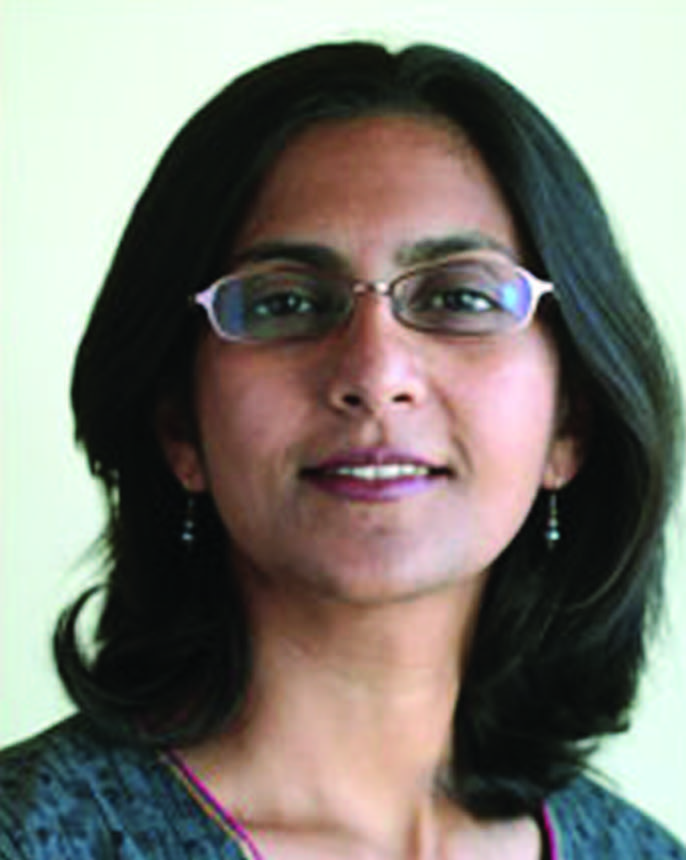
    SEATTLE (TIP): Kshama Sawant, trained as a computer engineer in her native India and now a professor of economics, is running for a seat on the City Council of Seattle under an unambiguously far-left banner. Even in this liberal bastion of the Northwest, Sawant’s political views stand out. Having gained sufficient electoral support in the August primary (44,000 votes, or about 35 percent of the total, finishing second in a threeway race), Sawant is now challenging the entrenched 16-year Democratic incumbent Richard Conlin for a council seat in the November general election. A veteran of the Occupy Wall Street movement, Sawant espouses an explicitly anticapitalist creed that champions the rights of the poor, low-wage workers,women, immigrants, the homeless, the disabled, homosexuals and other marginalized segments of the population. Her current political campaign rests on three principal platforms: a $15-per-hour minimum wage; higher taxes on millionaires to fund mass transit and education; and rent control.

    “A majority of workers and young people face an increasingly unaffordable city,” she told local media. “Most are disgusted by the endless parade of politicians who play with progressive rhetoric at election time, then pander to big corporations and the super-rich while in office.” The Stranger, a Seattle area newspaper that has endorsed Sawant, along with six labor unions, said she is the only element of the campaign season that is providing any excitement or interest. After Sawant performed well in the August primary, John Halle wrote in the North Star, a Socialist newspaper, that her success should not have come as a surprise. “Recent polls have indicated a widespread sympathy to socialism, a sign that the many years of indoctrination equating ‘free markets and free people,’ capitalism and democracy, and of there being ‘no alternative’ to neo-liberal austerity are finally losing their power to convince,” Halle wrote. “Sawant’s candidacy is the first to give a concrete indication that these attitudes are beginning to find expression in terms of real political power.” The Socialist Alternative newspaper called Sawant’s showing in the run-off “stunning” and a “breakthrough.”

    A well-known political commentator in Seattle, Tom Barnard, wrote of Sawant’s campaign: “What happened conceptually was even more revolutionary.… For what Kshama did was to simply overturn the common wisdom of how to succeed in local elections in general and City Council races in particular. She took what were viewed as two immutable political laws [the need for big money and Democratic Party endorsements] and essentially threw them out the window… It’s nothing short of an earthquake… Kshama has shown a new path for independent candidates who directly advance working people’s interests and issues.” Sawant is trying to translate her activism into practical terms – for example, she has vowed that if she wins election, she will not accept the full $120,000 annual salary awarded to City Council members. Instead, she will take the average salary for city workers and hand over the rest to social movements. In an interview with International Business Times, Sawant laid out some of her vision and her disappointment with the administration of President Barack Obama. “I don’t support the Democrats because they are largely financed by corporate interests, [just] like the Republicans,” she said. “After the initial campaign of ‘Hope and Change’ in 2008, disillusion has set in among much of the electorate.

    The hopes of progressive people have been dashed after five years of Obama.” Sawant cited such issues as the government’s treatment of Wikileaks’ source Bradley Manning, the saber-rattling over Syria, the assault on public schools, drone missile attacks in Pakistan and the deportation of thousands of immigrants, among others, for the disillusionment with Obama. “I think in the current environment, the appeal of independent and alternative candidates has greatly increased,” she noted. “And I don’t think my embrace of socialism has much stigma as it might have had in the past.” Sawant is quick to point out that she embodies the principles of democratic socialism, not the repressive, bureaucratic nature of the former Soviet Union. She also suggests that after the devastation of the housing market collapse, the huge government bailouts of banks and large corporations, and the emergence of a whole new generation of debt-strapped college graduates with bleak job prospects, many members of the American public may simply be “sick of capitalism.” “I think many Americans, particularly the youth, feel demoralized, dejected and disenfranchised by corporate-driven politics,” she said. Indeed, with respect to Seattle, the economy is weakening. After driving the bulk (70 percent) of the state of Washington’s job growth since 2010, in August of this year, the Seattle area (which includes Bellevue and Everett) shed 4,300 jobs, including 1,600 manufacturing jobs, pushing up the local jobless rate to 5.2 percent. For the state as a whole, the jobless rate edged up to 7.0 percent.

    Still, these figures represent a much brighter picture than the rest of the country, particularly California (which is suffering under a nearly 9 percent jobless rate). Even if Seattle has a much healthier economy than other parts of the nation, the cost of living is rising and wages are stagnant. Sawant, a professional economist, contends that one of her fundamental campaign proposals – a $15/hour minimum wage – makes sense, citing that if consumers don’t have enough money to buys goods and services, small businesses will collapse. “Some corporate executives make more in one day than their lowest-paid employees make in a whole year,” she said. “Many companies could easily increase employee salaries. And even at $15/hour, that’s hardly an income that one can easily live on.” Sawant’s proposal even has the support of some local capitalists. Nick Hanauer, founder of Second Avenue Partners, a Seattle venture capital fund, wrote in Bloomberg that the widening wealth gap in the U.S. presents some difficult challenges for the economy. Hanauer noted that low-wage jobs are quickly replacing middle-class jobs in the U.S. economy. “Sixty percent of the jobs lost in the last recession were middle-income,while 59 percent of the new positions during the past two years of recovery were in low-wage industries that continue to expand such as retail, food services, cleaning and health care support,” he wrote. “By 2020, 48 percent of jobs will be in those service sectors.”

    Hanauer also indicated that if the federal minimum wage had simply tracked the rate of U.S. productivity gains since 1968, it would now be $21.72 an hour — three times the current wage. He also estimated that raising the minimum wage to $15 an hour would inject about $450 billion into the economy each year. “That would give more purchasing power to millions of poor and lower-middle-class Americans, and would stimulate buying, production and hiring,” he declared. Separately, as an Indian-American, Sawant presents a rather unusual alternative for most voters. Indeed, the two most famous and prominent Indian-American politicians – Govs. Nikki Haley of South Carolina and Bobby Jindal of Louisiana – are both right-wing Republicans, the polar opposite of Sawant’s decidedly leftist ideology. Sawant suggests that Jindal and Haley, as well as Florida Sen. Marco Rubio, represent attempts at window-dressing by the Republican Party in order to appeal to ethnic minorities.”These minority politicians are outliers,” she stated. “Most ethnic minority people in the U.S. do not support the Republican Party.” She also points out that in defiance of the “model minority” image of Indian-Americans earning high salaries, there are many in the Seattle area who receive low wages, including taxi drivers,who support her candidacy. Also, Sawant’s embrace of some social issues, namely abortion, gay rights and marriage equality,might strike observers as rather odd, given the deep conservatism and traditional values inherent in Indian culture. But Sawant counters that many Indians in U.S., particularly among the young, support such issues as gay rights. “It might be more of a problem if I was running for office in India itself,” she conceded. The Seattle election will be held on Nov. 5.

  • Indian American introduces US government reform agenda

    Indian American introduces US government reform agenda

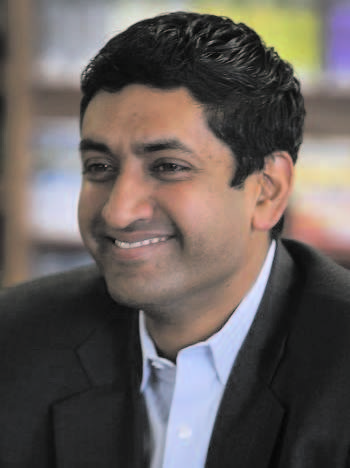
    WASHINGTON (TIP): Amidst widespread frustration surrounding the US shutdown and reckless brinkmanship over the debt limit, an Indian-American leader, seeking his maiden Congressional bid, has introduced a vision of bold government reform agenda. One of the top fund raiser, Rohit Ro Khanna, a former top Obama Administration official unveiled October 17 a five step plan to change the Congress. The proposal includes refusal to donations from political action committees (PACs) and federally registered lobbyists, refusal to Congressional pay raises, end of Congressional pension system, banning legislators from lobbying for five years after leaving office and Members of Congress from taking special interest-funded trips. “These proposals will help turn our Members of Congress back into the representatives of the people that they’re supposed to be,” Khanna said.

    “It will make them more like the voters who send them to office, who have to worry about supporting their families on paychecks that haven’t grown in years. “It will make them think twice about cutting Social Security benefits and blocking health coverage that millions of Americans rely on. It will make them more like you and me,” he said. He said America’s founders invented a government flexible enough that more and more Americans have become full shareholders in it. “Women, African Americans, Latino Americans, and Asian Americans have all obtained the right to vote, and a greater voice in our society. We’re making progress on LGBTQ, too, although we’ve still got a ways to go,” he said. “It’s because of this sometimes unsteady progress toward fairness and equality and freedom and citizenship that our country remains a model for the world. It inspired my grandfather, who joined Mahatma Gandhi’s movement for freedom and democracy in India and spent four years in jail for his activities,” he said. Khanna was addressing a gathering in California from where he is seeking to get elected to the House of Representatives from the Democratic Party. He is pitted against his own party colleague and incumbent Mike Honda and has raised more funds as compared to his rival. Khanna pledged to abide by all the five proposals if elected to the Congress. He said he has refused to accept donations from PACs, special interests, and Washington lobbyists.

  • Sikh student in US not allowed on bus for wearing kirpan

    Sikh student in US not allowed on bus for wearing kirpan

    NEW YORK (TIP): A Sikh student in the US was not allowed to board a bus because he was wearing a knife called kirpan, a symbol of his faith, media reported. Harsimran Singh, a student of University of California in Davis, said he was not allowed to board an Amtrak bus Saturday because the driver was against Singh wearing the ceremonial knife. The student said he has travelled for the last two years with the knife in full view and had not had any issues till the incident on Saturday, CBS News reported Wednesday. “They don’t say anything. They always wish me safe travel, and they continue on with their business… they didn’t see me as a potential threat,” Singh said. According to the report, bus driver Al Smithee got concerned at the presence of a weapon on the bus. “I’m doing 70 miles an hour down the freeway, and he slits my throat, and I crash and wreck, and kill five other people or oncoming traffic. You don’t know,” he was quoted as saying. Smithee then called the police who then told Singh that he could board the bus if he stowed the kirpan. But Singh did not agree and decided against the trip he had planned to visit his family.

  • THE POLITICS OF THE GOVERNMENT SHUTDOWN

    THE POLITICS OF THE GOVERNMENT SHUTDOWN

    With the government having lurched into its first shutdown since the 1990s, many commentators are focusing on the potential ill effects that it might have for Republicans. Almost all of these analyses use the shutdowns of 1995- 1996 as their starting point. While I don’t think this development will be great for Republicans, many of the concerns are likely overwrought. Here are four points to ponder:
    1. While the GOP’s tactics are similar to those employed in the mid-’90s, the goals are different.
    The earlier budget debates were broad in nature and dealt with the scope of government. The 104th Congress, led by Newt Gingrich, believed that they were the culmination of the realignment supposedly begun by Ronald Reagan, that Bill Clinton’s election was a fluke caused by Ross Perot’s candidacy, and that they had been elected with a mandate to shrink the size and scope of government dramatically. They entered the shutdown believing that the public would rally to their side, that Clinton’s job approval would fall in the wake of the shutdown, and that he would ultimately cave on their demands. Despite the lore that has since sprung up, this wasn’t a completely harebrained view of the underlying politics: An earlier shutdown, in 1990, did play an important role in persuading George H.W. Bush to abandon his famous “no new taxes” pledge a few weeks later. Of course, that isn’t how it played out at all in 1995 and 1996; Bill Clinton was widely viewed as having held the line against the Republican onslaught, although he actually did give substantial ground on taxes and a number of other issues.

    The budget fight became the focal point of Democrats’ attempt to take back the House and Senate in the 1996 elections. But the Democrats didn’t actually use the shutdown itself as their main line of attack on Republicans. It was part of it, but the real attacks came over the Republicans’ motivation for the shutdown. Because of the expansive nature of the GOP’s cuts, the Democrats were able to focus on several unpopular portions of the GOP budget: the so-called M2E2 strategy. They commenced a mantra-like repetition of their opposition to Republican attempts to gut “Medicare, Medicaid, Education and the Environment” in favor of a “risky tax scheme” that benefited the rich. In other words, in evaluating 1996 as an illustration of what will happen to the GOP today, we probably have to separate the tactic of a shutdown from the substance of what motivates it. And today, the GOP is focused on defunding Obamacare, a law that isn’t particularly popular. For the analogy to 1995-96 to really stick, the GOP will probably have had to try something along the lines of shutting down government to implement the Paul Ryan balance-budget plan. While public opinion might be against the shutdown tactic, there probably won’t be the same level of outrage against the underlying policy motivation, which is what 1995-96 was mostly about. If Obamacare turns out to be the train wreck some conservatives predict (I have no clue whether it will or won’t), the tactic itself might be viewed as less of a negative.

    2. John Boehner is not Newt Gingrich, and Barack Obama is not Bill Clinton.
    This is a fairly minor point, but Gingrich’s public persona did play a part in bringing the shutdown to an unhappy end for the GOP. He was polarizing from the start, and the media didn’t bend over backwards to help him out. Case in point: The Daily News cover depicting him as a crybaby who shut down the government because he had to sit in the back of Air Force One. Boehner, on the other hand, has kept a much lower profile, and while he isn’t all that popular, he isn’t a lightening rod either (although Ted Cruz seems to be inching toward filling Gingrich’s shoes in that regard). At the same time, Obama is not really Clinton. The current president’s ability to present himself as a cautious centrist in political face-offs with Republicans to date have been mixed at best; his strength has always been energizing the liberal base for elections rather than tacking to the center. Clinton might be the most successful president of my lifetime when it comes to publicly framing a debate in a way favorable to his side (see, for example, the M2E2 strategy above). There are actually few examples, if any, of Obama rallying the public to his side in the various battles he’s fought; there are plenty of failures, with the fight over sequestration being the most recent case in point.

    3. The net effect of the shutdown was small in the 1990s.
    For all the talk of the sustained damage the Republicans suffered, the actual evidence for this is pretty weak. In 1994, Republicans won 230 seats in Congress. Five party switches and a special election victory later, they entered the 1996 elections with 236 seats. They emerged from those elections with 228 seats, for a loss of eight total (including the open seat of one of the Democratic Party switchers). So while Republicans lost seats, it ended up being something of an empty victory for Democrats: Americans elected a Republican Congress back-to-back for the first time since the 1920s. Republican candidates won the popular vote for the House, albeit very narrowly (Democrats won the vote only if you split up votes cast for candidates running on multiple party lines, e.g., a Republican also running on the Conservative Party line in New York). Republicans even gained a seat in a special election held in a Democraticleaning district in between government shutdowns, and only narrowly lost a Senate seat in Democratic-leaning Oregon immediately after the shutdown (Republicans proceeded to win another open Senate seat in the same state by four points in November). Those Republican House losses weren’t terribly surprising.

    Republicans were overexposed as a result of the 1994 “wave election” that swept a number of weak members into swing-to-Democratic-leaning districts. Losing representatives like Andrea Seastrand, Michael Flanagan and Fred Heineman was more a part of regression-to-the-mean than any wholesale rejection of Republicans. Of the 21 House seats that Democrats claimed from Republicans in 1996 (it was actually 22, but I don’t have presidential data for Louisiana’s 7th District), Clinton had carried 18 in 1992. The other four seats were all something of special cases: Bob Dornan in California, Gary Franks in Connecticut, David Funderburk in North Carolina, and Toby Roth’s open House seat in Wisconsin. This presents a problem for Democrats hoping to capitalize on the 2013 shutdown: The seats are much better sorted these days. Going into the 1996 elections, 79 Republicans occupied seats that had voted for Clinton in 1992. In other words, they lost 23 percent of their caucus from “Clinton seats.” Today, only 17 Republicans come from “Obama seats” to begin with. If Republicans suffered losses in unfriendly territory at the same rate as they did in 1996, they’d lose only four seats, before we start looking at the effect on Democrats from “Romney seats.” Perhaps Republicans would have fared better had they not attempted to shut down the government in the first place.

    Republicans picked up 10 open House seats and defeated three Democratic incumbents in 1996; absent the shutdown, perhaps they might have gained seats. In the Senate, Republicans narrowly lost open Democratic seats in Louisiana and Georgia, while missing good opportunities to defeat Tom Harkin in Iowa and Max Baucus in Montana. But as Harry Enten has ably demonstrated, Republicans did about as well in the House and in presidential elections as we would have expected given the performance of the economy, especially when you consider that exit polls showed Ross Perot pulling votes disproportionately from Republicans (unlike 1992, when he pulled evenly from both parties). Clinton’s comeback was likely due more to the flurry of good economic news in the run-up to the election than to anything else. Indeed, while Clinton’s job approval improved over the course of the shutdown, it had also improved in the months leading up to the shutdown at a similar rate. Senate losses in Louisiana and Georgia look bad today, but in 1996 both states were more Democratic; Clinton had carried both states in 1992 and only narrowly lost Georgia in 1996 while winning Louisiana by 12 points. Republicans had only won two narrow Senate elections in Georgia before 1996 (and hadn’t won the governorship since Reconstruction), while Republicans had never won a Senate election in Louisiana and were burdened by a controversial candidate in Woody Jenkins. Republicans were unable to defeat Harkin, Baucus or Mary Landrieu in the good GOP year of 2002.

    4. What happens to red state Senate Democrats?
    Of course, the real action for 2014 is not the House, where the GOP will continue to control the agenda except in the unlikely event that it loses 17 seats. The real fight is for control of the Senate, which in turn revolves around races in eight states: West Virginia, Arkansas, Kentucky, South Dakota, Louisiana, Alaska, Montana and North Carolina. Obama lost those states by, respectively, 27, 24, 23, 18, 17, 14, 14 and two points, respectively. The politics of a shutdown in these states are very different than in the nation as a whole. We can try to estimate the popularity of a shutdown by taking as a national baseline CNN’s recent finding that 46 percent of voters would blame Republicans for a shutdown vs. the 36 percent that would blame Obama. If we adjust these numbers according to the results of the presidential election in 2012, we would estimate that the president would shoulder the blame for a shutdown in each of those states save for North Carolina, and that outright majorities would blame the president in West Virginia, Arkansas and Kentucky. The last thing Democratic candidates in these states want is a public spat over a piece of legislation that is highly controversial, that might have a problematic rollout in the coming weeks and months, and that places them on the side of an unpopular president.

    If there’s an upside for the GOP, this is probably it. Even after the 1995-96 shutdowns, the GOP managed to gain Senate seats, largely by making gains in reddish states. Of course, none of this should be read as advocating the shutdown, or predicting that it could not possibly have any negative consequences for the GOP. For starters, a government shutdown is essentially lighting a fuse without knowing exactly where it will go. This is something that could easily get out of control if the shutdown stretches out for weeks and bleeds into the debt ceiling battle, which could be potentially catastrophic for the county. Moreover, it could give Democrats an issue to rally around. Unlike 1996, the economy is weak; the president’s job approval has suffered in recent months as a result of his perceived failure to move the Democratic agenda forward, and the aborted intervention in Syria. Many of these losses have come as a result of Democrats becoming dissatisfied with the president. If the election were held with the president’s job approval at its present level, Democrats would probably lose another 10 House seats or so, giving Republicans their largest House majority since 1946 (and possibly 1928). A dustup with congressional Republicans would probably help bring these Democrats back into the fold, especially if the president emerges victorious from the fight, helping to limit Democratic losses. Finally, we should also remember that the current weak recovery has been ongoing now for 52 months.

    It’s already longer than six of the 11 recoveries in the post-War era. By this time next year, it will be longer than seven of them. By 2016, only the booms of the mid-’60s, mid-’80s, and mid-’90s will have lasted longer. And, well, this recovery doesn’t much resemble those recoveries so far. In other words, there’s a decent chance that we’ll encounter a downturn in the economy in the next year, and a very good chance that we’ll encounter one in the next three years. Obama is probably reaching the end of the time period where his predecessor can be blamed for the state of the economy. But a lengthy shutdown could conceivably give Democrats ammunition to place the blame back on Republicans. The bottom line is this: The shutdown will probably not be a good thing for the GOP, and there’s a good chance Republicans won’t achieve their intended goal of limiting Obamacare’s reach. But at the same time, a lot of the prophecies of doom for Republicans are heavily overwrought. Unless things get too far out of control, the predictions of heavy GOP losses from a shutdown are likely overstated.

  • California to grant driver’s licenses to illegal immigrants

    California to grant driver’s licenses to illegal immigrants

    SACRAMENTO (TIP): California Gov. Jerry Brown has signed a bill adding California to a growing list of states that will grant driver’s licenses to immigrants in the country illegally. Brown signed the legislation at a Los Angeles City Hall ceremony October 3 morning. Immigrant advocates have long lobbied for the change in California so immigrants in the country illegally can drive without fear of being pulled over for a ticket, which could wind up getting them deported. Department of Homeland Security estimated 2830,000 illegal immigrants in California in 2011. The new licenses will not be considered valid federal identification and will be marked differently from other licenses. The licenses are expected to be issued starting Jan. 1, 2015.

  • Ambassador Rao Visits Orange County, CA at the Invitation of HFAC Chairman Ed Royce

    Ambassador Rao Visits Orange County, CA at the Invitation of HFAC Chairman Ed Royce

    WASHINGTON (TIP): India’s Ambassador to the U.S. Nirupama Rao visited Orange County in the vicinity of Los Angeles, California on September 14, 2013 at the invitation of the Chairman of the House Foreign Affairs Committee, Congressman Ed Royce, who represents that district in the United States Congress. As one of the well-respected leaders on foreign policy in the U.S. Congress, Chairman Royce has been an ardent supporter of India and India-U.S. relations, and one of the earliest protagonists of the Congressional Caucus on India and Indian Americans, which he has co-chaired in the past on more than one occasion. He continues to be an active member and a leading voice of the Caucus. Speaking at a welcome gathering of local leaders and the Indian American community hosted in her honor by the former Mayor of Anaheim, Mr. Harry Sidhu, Ambassador Rao thanked Chairman Royce and Mrs. Marie Royce for their invitation, saying that she counted them among her closest friends in the United States.

    Ambassador Rao described the “great resurgence” in India-U.S. ties as a partnership in a “state of irreversible excellence” and “with its sights firmly set on the future”. She praised Chairman Royce’s personal contribution in this transformation, calling him “one of the greatest champions and pioneers of the India-U.S. Strategic Partnership.” She spoke of the “natural affinity” between the peoples of the two countries, who she said were at the heart of this partnership spanning from defense cooperation and counter-terrorism to trade, innovation, technology and education. Ambassador Rao affirmed that geopolitical shifts in the world made India and the U.S. “natural partners in the advancement of common goals of peace, prosperity and development for all of humanity”. In his welcome remarks, Chairman Royce praised Ambassador Rao’s untiring efforts to promote India-U.S. cooperation in diverse fields. He reflected on the role of the India Caucus in the transformation of India-U.S. relations over the last two decades, which he described as “phenomenal” and “based on same interests and values”.

    Chairman Royce counted deepening of India- U.S. trade relations and counter-terrorism cooperation among his priorities. He commended the role of the Indian American community in building closer India- U.S. partnership with their talent and determination. The California State Senator Mimi Walters also joined the event to welcome Ambassador Rao. Later that afternoon, the American Women for International Understanding (AWIU) hosted Ambassador Rao for a discussion on recent developments in India and India-U.S. relations. AWIU is a non-government organization which has been working on promoting awareness and understanding on issues facing women through worldwide delegations and international networking. During the discussion moderated by Mrs. Marie Royce, Ambassador Rao answered questions on women’s empowerment, economy, education and technology, as well as foreign policy issues in India’s neighborhood.

  • ABOUT MANOHAR TOOR

    ABOUT MANOHAR TOOR

    Manohar Singh Toor’s life story is an example of the American dream come true. Through hard work, perseverance and effort,Mr. Toor overcame simple beginnings to become an American success story. He is a shining example of what Punjabi focus, grit and determination can accomplish. Manohar Singh Toor arrived to the United States in 1982. His first two years in the U.S. were spent working in the California farm fields. By 1984, he had decided to take on the challenge of New York. Upon arriving in New York, he took various odd jobs available to him until he could get his own construction business underway. In 1986, he marched up one rung of the ladder of success by opening his own construction company. As luck would have it, god granted him the best support and partner he could have, as he was married to Apinderjit in 1987.

    After making his construction company a success, he purchased his first gas station business in 2005. As with all things he has put his mind to, the gas station business flourished to the point where he now has several stations.With the success and blessings he has received, Mr. Toor recognized the necessity to remember his roots and to give back to his community so that others may have the same success he obtained. Mr. Toor thus began a lifelong pursuit of community service. For example, he has worked for the last couple of years by volunteering his time and effort with the L.I. India Day Parade committee. Further, he has provided expertise and money to public projects in Jalandhar and Amritsar. Additionally, he has provided material support to numerous Sikh temples here in New York. Finally, he is proud of the time and energy he has devoted to various associations to support Kabaddi tournaments. These tournaments provide a slice of home to recent Punjabi immigrants and give an outlet for young Punjabis to focus their energies. He currently lives in East Meadow with his loving wife Apinderjit and three children, Simran, Harry and Kabir.

  • Indians now the third largest immigrant group in the US

    Indians now the third largest immigrant group in the US

    NEW YORK (TIP): Mexicans and Chinese alone are ahead of India when it comes to considering the presence of immigrant groups in the US. Indians have emerged as the third largest immigrant group in the United States with their numbers touching 1.9 million as of 2011. The Indian-born population in America has grown by over 150 times in size since 1960, says a new study from the Washington-based Migration Policy Institute. Back in 1960, America had just about 12,000 Indianborn immigrants, accounting for less than 0.5 per cent of the total immigrant population of 9.7 million immigrants at that time.

    Now, the US immigrant population stands at 40.4 million, with Indians representing almost 5 per cent of the total. “As a group, immigrants from India are better educated, more likely to have strong English language skills and arrive on employment-based visas, and are less likely to live below the federal poverty line than the overall foreign-born population,” says the study. In 2011, India was the second most common country of origin for international students at US institutions of higher learning, after China. Although the Indian immigrants are scattered all over America, more than one-quarter of them live in just three metropolitan areas: Greater New York, Chicago and San Jose in California’s Silicon Valley. Nearly one-third of the community resides in just two states: California and New Jersey.

    California alone accounts for 21 per cent of the Indian population, followed by New Jersey (11 per cent), Texas (9 per cent); New York (8 per cent), and Illinois (7 per cent). According to the figures cited by the study, more than 29 per cent of employed Indian-born men worked in information technology occupations, while 19 per cent of employed Indian-born women worked in management, business and finance. In 2012, more than 66,000 Indian-born immigrants were granted US legal permanent residency or green cards, the study says, noting that compared to other immigrant groups, Indians have made it largely through the employment-based channel. About 43,000 Indian immigrants became naturalized US citizens in 2012. The share of Indian immigrants who have naturalized (47 per cent) is said to be slightly greater than that of the overall foreign-born population (45 per cent).

  • SAN DIEGO MAYOR QUITS OVER SEX CHARGES

    SAN DIEGO MAYOR QUITS OVER SEX CHARGES

    SAN DIEGO (TIP): San Diego Mayor Bob Filner agreed on August 23 to resign on August 30, bowing to enormous pressure after lurid sexual harassment allegations brought by at least 17 women eroded his support after just nine months as leader of the US border city. Immediately after Filner told the City Council he would leave office next week, the California attorney general’s office opened a criminal investigation into the allegations. Filner, a Democrat who served 20 years in Congress before becoming mayor of the nation’s eighth-largest city, was both regretful and defiant during a City Council meeting as he explained the “the toughest decision of my life.” He apologized to his accusers but insisted he was innocent of sexual harassment and said he was the victim of a “lynch mob.”

    The council voted 7-0 on a deal that ended a political stalemate after more than a dozen women publicly identified themselves as targets of unwanted advances, including touching, forcible kisses and lurid comments. “The city should not have to go through this, and my own personal failures were responsible and I apologize to the city,” Filner said after vote. The 70-year-old Filner previously insisted he still could be an effective mayor and underwent two weeks of behavioral therapy before returning to work this week. But his support diminished as more women, one of them a great-grandmother and another a retired Navy admiral, came forward and told stories of Filner touching, forcibly kissing, making lewd comments and even placing them in headlocks. Some of Filner’s closest political allies and all nine members of the council called on him to quit. On August 23 , just before the Council vote, the Democratic National Committee took the extraordinary step of passing a resolution demanding Filner leave.

  • Saleem Iqbal, President & CEO

    Saleem Iqbal, President & CEO

    On behalf of HAB BANK, I would like to extend our Independence Day greetings to Indian American community in the tri-state area. As we celebrate India Day this year, we can take pride in our achievements as a community despite the challenges that lie ahead. We have, in a short span of time, been able to establish ourselves as a community engaged at so many levels, culturally and economically, and determined to pursue our American dream of achieving success in our adopted homeland.

    HAB BANK, since is inception in 1983 as a New York State chartered bank, has played a vital role in nurturing communities through its network of branches in New York, New Jersey, and California. We are proud to be first bank in the U.S. solely focused on meeting and serving the banking needs of South Asian community working and living in the Tri-State and greater Los Angeles areas. We are honored to join in celebrating India’s independence celebration and reaffirm our Bank’s commitment to South Asian community in the U.S.

  • Many House Republicans Favor A Pathway To Citizenship For Illegal Immigrants

    Many House Republicans Favor A Pathway To Citizenship For Illegal Immigrants

    WASHINGTON (TIP): With Congress out of town for five weeks, many predicted that immigration reform would fall by the wayside, but back at home, several Republican congressmen have voiced support for a pathway to citizenship for illegal immigrants. In discussions with constituents at town halls and in interviews with news media, several Republican members of the House have indicated a willingness to support a pathway to citizenship proposed in the Senate immigration bill that passed in June – something that had been a major sticking point as House Republicans attempted to craft their own piecemeal approach to immigration reform, after leadership opted not to take up the Senate bill.

    Last week, Washington Republican Rep. Dave Reichert said in a radio interview with KVI that he would support a pathway to citizenship for the estimated 11 million people in the country illegally. Those people, he said, are “working here, and they’re here illegal, but they can’t purchase homes … because they’re hiding from the government, and they’re not paying income tax.

    I want them to get to the point where they’ve got to pay a fine, there are some penalties they have to go through, and there are some steps they have to go through. And then I want to hold them accountable: then they get citizenship and they’re gonna pay taxes.” He specifically pointed to the DREAMers – people who were brought here illegally when they were young children – as people whose situations must be remedied.

    California Republican Rep. Jeff Denham said last week that he would have supported the Senate’s Gang of Eight Bill, saying he was “frustrated” that the House was not going to take it up. The Senate bill won’t get a vote in the House, and it’s something that could have helped this community,” he said. “I am frustrated. I thought we’d get this done before the August work period. I think the Senate made tremendous progress.

    It was done bipartisan and I thought that would be enough to get the House moving forward.” Illinois Republican Rep. Aaron Schock said at a town hall that he favored an eventual path to citizenship for undocumented immigrants already in the country along the guidelines laid out in the Senate bill. “I think undocumented citizens should have to come forward, they should have to self-identify, they should pay a penalty and back taxes, and then I think they should … go on a probationary period, and then the border needs to be secured.

    The Senate bill has a provision in there that somebody in the administration ultimately makes the determination that the border is secure before those who have legal staff can then be in the line for citizenship to actually make application to citizenship,” he said. He noted that he could not predict what a House bill might look like, but said that that is what he would personally support. Florida Republican Rep. Dan Webster also came out for a pathway to citizenship in an interview with the Orlando Sentinel.

    He said he would support a pathway that roughly followed the guidelines laid out in the Senate bill, with one exception: he wanted state and local officials to help in enforcement of immigration laws. In what could perhaps signal a meeting in the middle, New York Democrat Sen. Chuck Schumer, a member of the Gang of Eight and one of the architects of the Senate bill, said last week that he would be all right with a piecemeal approach to passing immigration reform.

  • Indian-American Gets Life Term For Murder

    Indian-American Gets Life Term For Murder

    SACRAMENTO (TIP): An Indian-American has been sentenced to life in prison without parole for 35 years for the murder of another Indian- American outside a Sikh Gurdwara in California in 2008. Jurors in Sacramento Superior Court last week sentenced Gurpreet Singh Gosal, 28, for the second degree murder of Parmjit Singh Pamma outside the Bradshaw Gurdwara in Sacramento during a Sikh sports festival Aug 31, 2008.