Tag: California

  • Indian Envoy woos Silicon Valley Investors for Next Phase of India’s Development

    Indian Envoy woos Silicon Valley Investors for Next Phase of India’s Development

    WASHINGTON (TIP): Describing Silicon Valley as the best regional partner of India in the social innovation arena, India’s Ambassador to the US Harsh Vardhan Shringla expressed hope that more VC funding from Silicon Valley will go to India that are vital for the next phase of India’s development.

    During a short but productive visit to San Francisco June 21, Ambassador Harsh Vardhan Shringla, accompanied by Consul General Sanjay Panda, released the ‘Bay Area – Silicon Valley and India: Convergence and Alignment in the Innovation Age’ India Report. For the first time, the Bay Area Council of San Francisco launched a special focus Report on India.

    “As the report suggests, India’s third wave of venture capital investment shows maturity with US-based firms now steadying their local presence with dedicated India funds and shifting decision-making to local partners. A whole new breed of 10 Indian start-ups has become unicorns in 2018. This should interest more VC funding from Silicon Valley”, said the Ambassador.

    “India offers further opportunities for Silicon Valley companies in healthcare and life sciences, energy, IT, Smart Cities, Fintech, Telecom, Semiconductors and AI, as the report rightly identifies. Products and services that use AI for social innovation – applications in agriculture, irrigation, drinking water, education, life sciences, etc, are vital for the next phase of India’s development. There isn’t a better regional partner than Silicon Valley for us in this arena”, he further added.

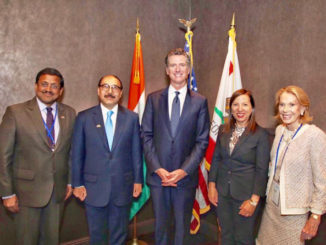
    Earlier Ambassador Shringla met Governor of California Gavin Newsom and Lt. Governor Eleni Kounalakis. Ambassador also invited the Governor to lead the International Yoga Day 2019 event at Sacramento organized by Consulate General of India, San Francisco. Governor Newsome agreed to schedule a visit to India as early as possible and was appreciative of the growing popularity of yoga in USA. The Governor agreed to consider leading a business delegation to India to expand the India-California partnership. Ambassador thanked the Governor for his strong support for India-US ties.

    The Ambassador spoke on “Economic Prosperity in the Pacific” at the Pacific Summit of the Bay Area Council. At a Panel Discussion with Lt Governor Eleni Koulanakis, he highlighted how India has been a positive and stabilizing partner of the US in South Asia and Indo-Pacific region. “India and the US have formed a robust dialogue with each other and other partners to secure a peaceful, prosperous and inclusive Indo-Pacific. We are working very well with the U.S. side to make a success of our Indo-Pacific vision and strategy. The launch of India-US-Japan Summit-level Trilateral during 2017 and regular official meetings of the Quadrilateral with Japan and Australia have been a positive development” he said.

    Ambassador Shringla paid tribute to the martyrs of the anti-colonial Gadar Movement
    Pictures / Courtesy Indian Embassy

    Later, at a function hosted by CG Sanjay Panda in San Francisco, Ambassador Shringla paid tribute to the martyrs of the anti-colonial Gadar Movement and addressed members of the Indian community at the Gadar Memorial. “The voice of the Gadar Party and movement is one of sacrifice and justice. Gadri Babas dedicated their lives to the cause of India. To ensure that the voice does not fade from our memories, the Government of India has embarked on a restoration project. The project will restore this building’s original facade from the early 1900s. Inside, we will have a museum and a community hall, as well as spaces for books and artefacts from the Gadar period. We will also dedicate space for research scholars of the future who can study the writings of these brave men”, he assured.

    During the visit, Ambassador Shringla also met healthcare industry leader Bob Ingram and interacted with the California based media.

  • Indian American Congressman Ro Khanna Named ‘Best Officer’ for Constituent Services

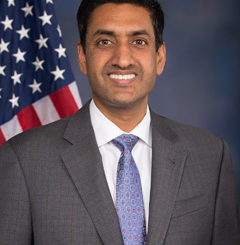
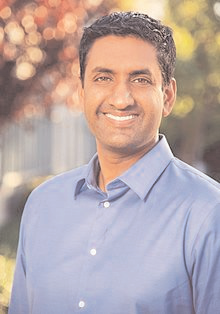
    Indian American Congressman Ro Khanna Named ‘Best Officer’ for Constituent Services

    SAN JOSE, CA (TIP): On May 30, the Congressional Management Foundation (CMF) announced that Rep. Ro Khanna (D-CA) is a winner for the 2019 Democracy Awards, CMF’s honors program recognizing non-legislative achievement in operations and constituent service by congressional offices and Members of Congress. Rep. Khanna is recognized for excellence in the Constituent Service category, which focuses on how an office interacts with and serves constituents, especially how it utilizes and leverages specific, methodical, and consistent processes for achieving measurable results in constituent service.

    “I congratulate my team for this well-deserved recognition for their hard work,” said the Indian American Congressman. “From securing veterans’ benefits to navigating the complex immigration process, congressional work is centered on improving the lives of our constituents. I am incredibly proud of the tremendous job we have done for Silicon Valley.”

    “As a Democracy Award winner, Rep. Khanna’s office is one of the best in Congress,” said Bradford Fitch, President and CEO of the Congressional Management Foundation. “This designation demonstrates that Rep. Khanna has made a significant commitment to being the best public servant for his constituents in California. Rep. Khanna and his staff are to be congratulated for not only being a model for colleagues in Congress, but for helping to restore trust and faith that our democratic institutions can work,” he said.

    California’s 17th congressional district represents the only majority Asian district in the continental United States, and as a result manages an unusually high number of cases that fall into the general category of immigration. These cases constitute over 80% of their constituent services work, thus personal interactions with constituents play a significant role in their district. Due to the diverse origins of their constituents and the heavy immigration-related caseload, the office places a premium on language ability in both their interns and permanent staffers. To address these unique constituent needs, they have hired staffers with fluency in in Tagalog, Mandarin, Vietnamese, Hindi, and Russian, and this summer have paid interns fluent in Spanish, Cantonese, Hebrew and Hindi. Finally, the office continually updates their “Wall of Fame”, where emails of thanks from constituents are posted. They have received so many notes from appreciative constituents that they have now spread to a second wall.

    California’s 17th congressional district is one of two congressional offices across both chambers of Congress to receive this honor. A committee comprised primarily of former Members of Congress and former congressional staffers selected the two winners (one Democrat and one Republican) for each category. A ceremony to honor finalists and winners will be held on June 20, 2019.

  • Nassau County Legislator Drucker Introduces Legislation Protection of Houses of Worship

    Nassau County Legislator Drucker Introduces Legislation Protection of Houses of Worship

    MINEOLA, NY (TIP): Following a series of violent incidents at houses of worship that shocked the consciences of people in the United States and around the world, Nassau County Legislator Arnold W. Drucker (D – Plainview) has filed new legislation that would ensure police resources are utilized in a manner that prioritizes the safety of religious institutions in Nassau County.

    Legislator Drucker’s proposal, filed on Tuesday, May 7, would direct the Police Department to concentrate police resources to prioritize the protection of houses of worship and religious institutions, including but not limited to parochial and religious schools and religious cemeteries and burial grounds. Enhanced police protection will be carried out without discrimination or favoritism based on creed, denomination or religious affiliation.

    “No Nassau County resident should ever have to choose between practicing their faith and their personal safety,” Legislator Drucker said. “Through this legislation and our continued collaboration with the outstanding Nassau County Police Department, we can take a large step toward ensuring that the houses of worship we cherish remain vital, secure community centers and true sanctuaries for anyone seeking respite. I look forward to working with my colleagues so we can enact this common-sense proposal without delay.”

    To maximize the effectiveness of this proposal and ensure it meets the needs of congregants, Legislator Drucker is continuing his outreach to religious leaders for feedback on his legislation.

    This action by Legislator Drucker came on the heels of a Thursday, May 2 Safety and Security Briefing hosted by JCRC-LI in the aftermath of mass shootings at a mosque in New Zealand and a synagogue in Poway, California and the bombing of churches in Sri Lanka on Easter Sunday.

    During the briefing, Nassau County Executive Laura Curran, Police Commissioner Patrick Ryder and District Attorney Madeline Singas provided updates on their efforts to keep congregants of all faiths safe and addressed questions and concerns raised by religious leaders during a subsequent Q-and-A session.

  • Mayhem in California: Ex-Marine kills 12 in ‘horrific’ mass shooting in a bar

    Mayhem in California: Ex-Marine kills 12 in ‘horrific’ mass shooting in a bar

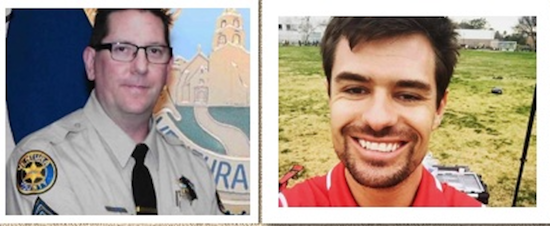
    THOUSAND OAK CITY, CA(TIP): A US Marine veteran dressed in black sprayed bullets inside a crowded dance bar popular with college students Wednesday, November 7 night, killing at least 12 persons, including a police officer, Sgt. Ron Helus,  here  in a ‘horrific’ mass shooting incident, reminiscent of Oct. 1, 2017 shootings in Las Vegas where 64-year-old Stephen Paddock broke through the window of his suite at the Mandalay Bay Resort and Casino and fired at 22,000 people gathered at the country music concert, resulting in the death of 58 persons.

    Besides the 12 killed, twenty-one persons were hurt.  They were taken to area hospitals where they were treated for their injuries and released.

    Ventura County Sheriff Geoff Dean identified the gunman as 28-year-old Ian David Long, a retired Marine who served in Afghanistan. The suspect used a .45 caliber Glock handgun during the shooting, Dean said.

    Long, who shot himself, was dead when officers made entry into the bar, Dean said as he described the shooting incident as ‘horrific’.

    He said the motive of the shooter is still unclear. He was known to authorities for minor crimes. The shooter was on active duty with the US Marine Corps from August 2008 to March 2013, according to Department of Defense records. He also served in Afghanistan from November 2010 to June 2011.

    Sheriff Sgt. Ron Helus was among the first to arrive on the scene, entering the bar with a California Highway Patrol officer. Helus exchanged gunfire with the suspect before being shot multiple times. He later died at a hospital.

    The tragedy left a community that is annually listed as one of the safest cities in America reeling. Shootings of any kind are extremely rare in Thousand Oaks, a city of about 130,000 people about 40 miles (64 kilometers) from Los Angeles, just across the county line.

    Scores of people stood in line for hours to donate blood for the wounded, and all morning, people looking for missing friends and relatives arrived at a community center where authorities and counselors were informing the next-of-kin of those who died. Many people walked past TV cameras with blank stares or tears in their eyes. In the parking lot, some comforted each other with hugs or a pat on the back.

    It was the nation’s deadliest such attack since 17 students and teachers were killed at a Parkland, Florida, high school nine months ago. It also came less than two weeks after a gunman massacred 11 people at a synagogue in Pittsburgh.

    Democratic Gov.-elect Gavin Newsom, in his first public appearance since winning office on Tuesday, lamented the violence that has come again to California.

    “It’s a gun culture,” he said. “You can’t go to a bar or nightclub? You can’t go to church or synagogue? It’s insane is the only way to describe it. The normalization, that’s the only way I can describe it. It’s become normalized.”

    President Donald Trump praised police for their “great bravery” in the attack and ordered flags flown at half-staff in honor of the victims.

    Authorities searched Long’s home in Newbury Park, about 5 miles from the Borderline bar, for clues to what set him off.

    “There’s no indication that he targeted the employees. We haven’t found any correlation,” the sheriff said. “Maybe there was a motive for this particular night, but we have no information leading to that at all.”

    Long was in the Marines from 2008 to 2013, rose to the rank of corporal and served in Afghanistan in 2010-11 before he was honorably discharged, the military said. Court records show he married in 2009 and was divorced in 2013.

    Authorities said he had no criminal record, but in April officers were called to his home, where deputies found him angry and acting irrationally. The sheriff said officers were told he might have PTSD because of his military service. A mental health specialist met with him and didn’t feel he needed to be hospitalized.


  • Indian American Techie Shubham Goel is California’s youngest Governor Candidate

    Indian American Techie Shubham Goel is California’s youngest Governor Candidate

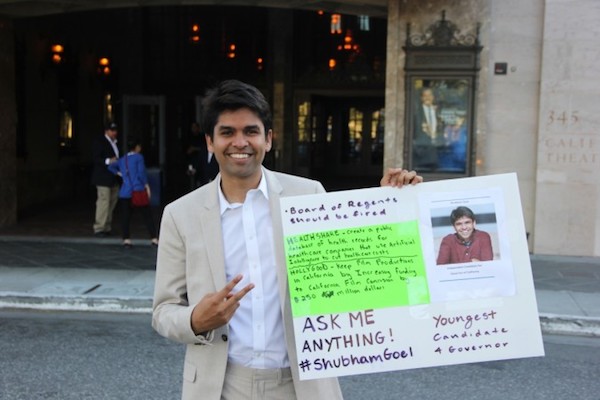
    SACRAMENTO(TIP): Indian American Shubham Goel, who has his roots in Uttar Pradesh is the youngest candidate running for governor of California, Mr. Goel calls for “fresh voices to change the state government”. He was born and raised in California and campaigns for need for practical solutions to problems that the state faces.

    A virtual reality manager by profession, the 22-year-old has been using social media platforms to reach out to the public. His campaigns show him on the streets of California with a megaphone in hand, advocating transparency in the political system.

    In a video he posted on Twitter, the young techie in a dark blue t-shirt is seen asking people at a carnival to support him, while one of his aides is standing beside him holding a big, white placard to pitch his candidacy for California governor.

    Mr. Goel will contest alongside 27 other candidates, according to a two-page state governor contest list that shows he does not have a party preference.

    Another video posted on his Twitter profile shows him campaigning on virtual reality or VR platforms. “Technology has been able to fix a lot of issues. I want to run for governor just to implement technologically feasible platforms,” he said.

    Shubham Goel recently graduated from the University of California or UCLA and holds a degree in economics and film studies. Calling himself an “everyday person,” soon after he announced his candidacy, he tweeted, “California is struggling and this is the moment for change!”

    According to Mr. Goel, the primary reason for running for office is that one needs no political backing or funding to bring about change. “I wanted to run to show that in state-wide offices, it is presumed that to run for office, you need loads of money and fame and loads of political backing. I want to show that all you need is efficiency, platforms and conviction,” he said.

    If elected, Mr. Goel hopes to take California back to its Gold Rush period, arguably one of the most significant events to shape American history.

    Mr. Goel campaigns on a seven-point platform that includes a handbook for the governor that talks of creating centralized and digitalized profiles on social media for office-holders. The profiles will show their economic interactions for the past 10 years with regards to money and donations they have received from any source.


  • Indian American Democrats Ami Bera, Ro Khanna win California primaries

    Indian American Democrats Ami Bera, Ro Khanna win California primaries

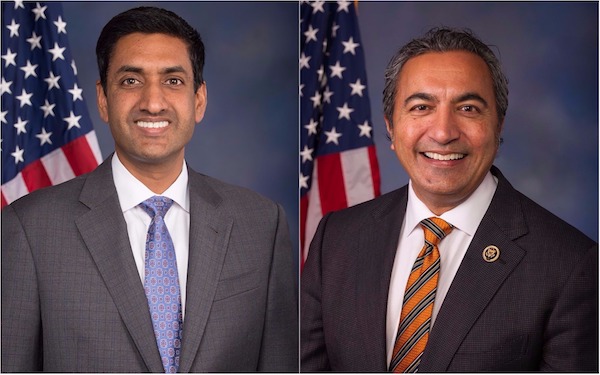
    SACRAMENTO, CA(TIP): Indian American Democrats Ami Bera and Ro Khanna have won their primaries in their bid to hold on to their congressional seats in California.

    Bera, the longest serving Indian American in the US House of Representatives, polled nearly 52 percent of the total votes cast in the California District 7 on June 5th. He will face Republican Andrew Grant, who finished second with 33 percent votes.

    Ami Bera was first elected in 2012, when he defeated incumbent Dan Lungren by two percentage points. Since then both his reelection runs were very competitive.

    Freshman congressman Ro Khanna finished first in District 17, winning 59 percent of the votes. Republican Ron Cohen, who received 25 percent of votes, will challenge the Indian American in the November election.

    Khanna, who represents Silicon Valley, entered Congress by beating incumbent and fellow Democrat Mike Honda in 2016.

    In the statewide elections, Indian American Vivek Viswanathan, who ran for treasurer, finished third.

    The former Hillary Clinton aide, who ran an innovative campaign by running on his sneakers from one end of the state to the other, polled nearly half a million votes. Fellow Asian American Fiona Ma received more than 1.6 million votes (43 percent) — nearly double the votes polled by his nearest rival, Republican Greg Conlon.

    In California, there is only one primary, and candidates from all parties compete, with the top two finishers advancing to the general election.

    Last month, two Indian American Democrats won primaries in Texas and Arkansas.

    Sri Preston Kulkarni won the runoff for Texas’ 22nd Congressional District, while school teacher Chintan Desai won Arkansas’ first congressional district Democratic primary unopposed.


  • Californians Protest “Cow Culture” Conference Featuring Subramanian Swamy

    Californians Protest “Cow Culture” Conference Featuring Subramanian Swamy

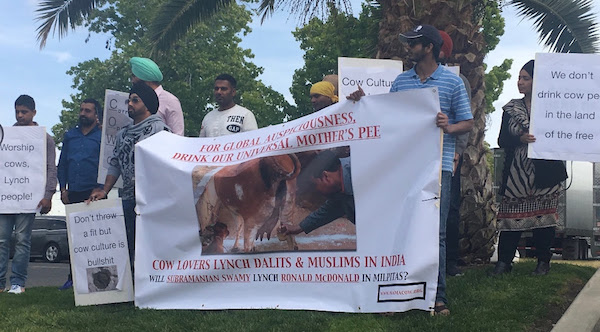
    MILPITAS, CA(TIP): On May 20, Indian immigrant communities from throughout California gathered to protest a “Cow Culture” conference at the India Community Center in Milpitas, CA which featured Indian Member of Parliament Subramanian Swamy.

    “We welcome all cow lovers,” announced the OM Sri Surabhi Campaign (OSSC), which organized the conference. “Join use for an engaging Cow Culture Conference for Global Auspiciousness in service to our universal mother, Sri Surabhi.” The name “Surabhi” refers to the idea of a “divine mother cow.” The conference called people to “adopt our universal mother.”

    Protestors who gathered outside the India Community Center claimed that “cow culture” is being used a political tool to coerce minorities. “Dalit and Muslim people stand here with our Bahujan brothers and sisters saying, ‘enough is enough with this violence,’” declared Thenmozhi Soundararajan at the protest. Soundararajan, who is President of Ambedkar Association of North American, led the group of approximately 40 protestors in chants of “No more lynchings, no more rapes, Hindutva is a culture of hate.”

    The United States Commission on International Religious Freedom reports that the BJP embraces “an ideology of Hindutva, which holds non-Hindus as foreign to India.” The BJP achieved national power in India in 2014, with Narendra Modi as Prime Minister. In 2017, Swamy praised Modi’s work with the Rashtriya Swayamsevak Sangh (RSS), the parent organization of the BJP, stating, “If you peel off his exterior, it is all Hindutva.” Explaining the BJP’s victory, Swamy said, “We articulated this Hindutva — of uniting the Hindus and dividing the minorities.”

    Inside the conference, Swamy praised the benefits of cows. “Milk, urine, the gobar — excreta — is converted into fertilizer, pesticide, as well as bricks for building huts,” said Swamy. “So here is an animal which gives you everything. Why is that you want this to be killed?” He said people do not have the right to eat what they want, stating, “In India, there is no such thing as an absolute fundamental rights to anything.” Demanding that India pass a national law criminalizing cow slaughter, he added, “Anyone killing a cow should be prosecuted for murder.”

    Outside, protestors chanted, “Cow culture has got to go. Cow culture is hatred.” They displayed signs and banners, including one featuring a photo of Mohammed Ikhlaq underneath the tagline, “Hindutva cow culture lynches.” Ikhlaq was a Muslim who was dragged from his home in Uttar Pradesh on the night of September 28, 2015 and beaten to death on suspicion of possessing beef. Citing a 2017 report by IndiaSpend, a public interest journalism website, the banner also stated, “Since 2010, 97% lynchings by ‘cow protectors’ happened after Modi’s 2014 victory.”

    Expressing concern that “Hindu Sharia law” is coming to the United States, several protestors took to a bullhorn to deliver short speeches. “We love India,” said Zafar Haq. Speaking on behalf of the Indian American Muslim Council, he continued, “India is our country. We cannot let Hindutva claim their share and say that, ‘We will drive you out.’ They cannot tell us that the cow is a deciding factor for life and death for so many Muslims. Just yesterday, in Madhya Pradesh, an innocent Muslim man was lynched and killed for allegations that he had beef in his house.”

    “Subramanian Swamy is the big culprit who is behind the policy of killing Muslims, killing minorities, and he’s coming here to demand more killing of the minorities,” warned Jaswant Singh Hothi of Milpitas Gurdwara. “We are here to send him a message that we will not put up with what he is doing. Cow culture is a culture of rape, it’s a culture of hate, and we will not put up with this. We pledge to galvanize the Sikh Sangat of the Bay Area against this Hindutva.”

    Sandeep Singh of Turlock Gurdwara called the conference “an RSS program,” adding, “Cow culture is against American values of liberty and equality.” He joined in chants of “RSS, go away.” Other slogans raised by the protestors included “RSS out of America,” “Hey, hey, ho, ho, Hindutva has got to go,” and “Hindutva out of India.”

    Inside the conference, leaders of Hindu Swayamevak Sangh (HSS) — the international affiliate of the RSS — took the podium before Swamy gave his keynote speech. “Thank you very much for giving me the opportunity to speak at the cow conference which is so needed, especially in a country like the US,” said Ajay Singhal. Sanjay Tripathi, assuring the conference that HSS stands ready to provide “whatever is needed,” claimed, “The god came to serve cow.”

    Meanwhile, a few conference attendees stepped outside to engage protestors.

    One large white man dressed as a swami walked up to the protest, saying, “My friends.” He quickly turned to anger, however, and began screaming, “One cow is equal to a thousand humans.” As he was escorted away by fellow conference attendees, protestor Bhajan Singh remarked, “This is the cow culture.” Singh continued, “You saw his violent attitude. If this is the cow culture that is coming in America, where they’re going to come and attack you like that, it’s a scary thought for all of us.”

    Narayan Higgins, manager of Hawaii-based Krishna Cow Sanctuary, briefly engaged in debate with Soundararajan. “If the Hindutvas are as bad as you say they are, they will destroy you for acting like this,” said Higgins. “They actually are killing our people,” replied Soundararajan. They were then joined by Sriramadas Brs, the Continental Coordinator (Asia) of OSSC, who told Higgins, “We need to go.” Higgins replied, “I was just trying to talk with them.” Sriramadas quickly escorted Higgins away. Protestors then began chanting, “Hey, hey, ho, ho, Brahmanism’s got to go.”

    Delivering remarks from a bullhorn, Singh declared, “They have successfully fooled the world into declaring from the United Nations October 2nd as a Nonviolence Day. They then decided that wasn’t enough. They then said they will declare International Yoga Day, which is now being celebrated all over the world. Guess what’s coming next? International Cow as Our Universal Mother Day…. We do not want the universal cow mother day. I respect my mother. If I called my mother a cow, she would slap me.”

    “Subramanian Swamy is Hindutva in a cow mask,” remarked Arvin Valmuci, a spokesperson for Organization for Minorities of India (OFMI). “The Bahujan Mulnivasi people of India are being oppressed and persecuted by Hindu supremacist elements who politicize cow worship and use it as a pretext for violence.”

    Laws in 21 of India’s 29 states criminalize the slaughter of cattle to one degree or another. Violence related to cow protection has been a feature of Indian society for a long time, but the country has undergone a massive spike in incidents since 2014. IndiaSpend, which conducted the first statistical analysis of cow-related attacks and lynchings, documented and analyzed all reported incidents since 2010. “Of 63 attacks recorded since 2010, 61 took place under Mr. Modi’s government,” reported IndiaSpend.

    Further data analysis reveals several shocking trends. Of 28 people killed, 24 were Muslim. Out of 63 attacks, 32 victims were Muslim, five were Dalit, and one was Christian. In 13 of 63 attacks, police pressed charges against the victims. In 23 of 63 attacks, the attackers were identified as members of Hindu nationalist groups. Of 63 attacks, 32 occurred in states governed by the BJP. Finally, 2017 has seen a 75% increase in attacks versus the same period in 2016.

    Commenting in March 2018, Karnataka Home Minister Ramalinga Reddy accused the BJP of holding a double-standard by only seeking a ban on the slaughter of cows. “If they want to ban, let them ban everywhere and all animals,” said Reddy. He added, “They say that they will ban cow slaughter if they come to power in Karnataka, while our country exports cow meat, beef to other countries. It has been four years since they came to power. Why have they not stopped these exports.”

    Groups participating in the protest included OFMI, B. R. Ambedkar Sikh Foundation, American Religious Freedom Coalition, Ambedkar King Study Circle, Indian American Muslim Council, and Ambedkar Association of North America.

  • Indian American-founded SpringML opens office in Indianapolis and India

    Indian American-founded SpringML opens office in Indianapolis and India

    PLEASANTON, CA(TIP): On May 15th, SpringML, Inc., a leader in machine learning and advanced data analytics services, announced that it is expanding with new offices in Indianapolis and Hyderabad, India.

    Indian Americans Prabhu Palanisamy and Girish Reddy are co-founders of the company. Palanisamy is the President and Chief Strategy Officer of the company, while Reddy is the Chief Technology Officer.

    “In order to better serve our growing customer base, we are expanding our capabilities and starting to scale,” said Charles Landry, CEO of SpringML in a press release.

    “Opening offices in Indianapolis and Hyderabad gives us access to large, highly educated talent pools with great proximity to customers and partners,” he said. “It also provides great career opportunities for those looking to join a company and work on complex machine learning solutions.”

    Founded in 2015, SpringML helps businesses accelerate by providing them insights from their data. The company’s application solutions and services apply machine learning to find solutions to some of the business problems, enabling them to serve customers quantifiable results. SpringML maintains strategic partnerships with Salesforce and Google.

    The release also says that the new capabilities will enhance SpringML’s commitment to provide state-of-the-art enterprise solutions and services that help customers benefit from the latest advances in machine learning and AI.

    Our work in the energy, healthcare, technology and media industries drives major improvements to speed and accuracy by leveraging the power of automation and artificial intelligence.

    Headquartered in Pleasanton, CA, SpringML is a Premier Google Cloud and Salesforce partner. The company has offices across North America.

  • Indian American family that went missing confirmed dead after a fatal accident in Eel river

    Indian American family that went missing confirmed dead after a fatal accident in Eel river

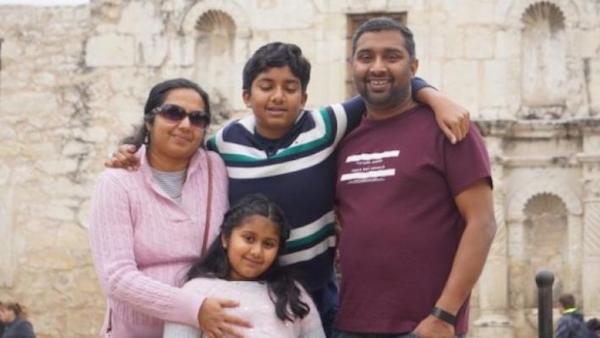
    SAN JOSE (TIP): The hopes of finding the Thottapilly family alive have ended as the investigators on April 16 announced that they have found the bodies of all four members of the Indian American family that went missing while on a road trip to San Jose.

    After a week of thorough search and rescue operation undertaken by the California Highway Patrol, the authorities found the Honda Pilot car that the family was traveling submerged in the Eel River. An eyewitness in Mendocino County had  reportedly seen  an SUV being swept away in Eel River.

    According to the latest release from the Mendocino Sheriff, they found the SUV that met with the fatal accident submerged under Eel River, half a mile away from the location where they believe the car plunged into the river.

    “Search divers entered the water and were able to feel what they believed to be a person inside of the vehicle. Visibility was extremely poor and divers noted the vehicle was encased in a large amount of sediment from the river current,” said the press statement from the Sheriff’s office.

    “Recovery efforts continued for several hours and at approximately 6:30 PM the vehicle was partially removed from the Eel River by use of a tow truck. This provided searchers the ability to conduct a visual inspection of the inside of the vehicle. Searchers subsequently recovered the bodies of Sandeep Thottapilly and Saachi Thottapilly from inside the vehicle,” the press release added

    The authorities had earlier found the body of Soumya Thottapilly, 7 miles away from the crash site.

    On April 16, CNN reported that the body of the 12-year-old boy, Siddhant Thottapilly, was found in 6 miles away from where the rest of his family was found dead.

    Sandeep Thottapilly (42), his wife, Soumya (38), and their two children Siddhant (12) and Saachi (9) had been missing since April 5. They had left for a road trip from Portland, Oregon, to San Jose, California, last month.


  • Indian American from California adopts village in Telangana

    Indian American from California adopts village in Telangana

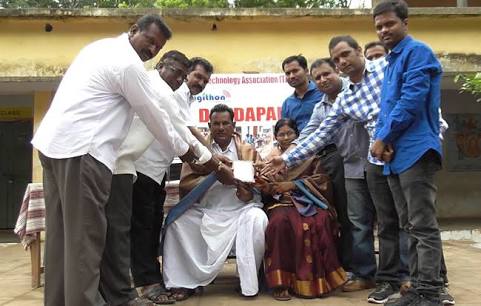
    CALIFORNIA (TIP): Indian American Annapareddy Appi Reddy from California has adopted the remote Dondapadu village in Suryapet district as a part of Digithon Digital Village initiated by the Telangana Information Technology Association (TITA).

    Till a few months ago, residents of the village believed a computer was just another gadget meant for students and the educated. But this initiative helps villagers understand banking, agriculture and even access anything beyond their village.

    218 villagers are selected to be given basic computer training that equipped them to conduct digital transactions and be financially literate. The team selected participants who did not have access to a smartphone and trained them. They were introduced to E-Sage, an agriculture knowledge platform developed by the IIIT-Hyderabad, where they could learn new methods of farming and understand the market to sell their produce at apt prices.

    While the team provided ground-level support, TITA president Sundeep Kumar Makthala said more than 40 NRIs responded to their call to adopt their villages under the Digithon programme.

    TITA, a non-profit and non-governmental organisation working for the welfare of Telangana IT students, was started in 2013 by IT veterans who hail from Telangana region.


  • California wildfires Cause Devastation.  Nearly 200,000 flee amid new blaze

    California wildfires Cause Devastation. Nearly 200,000 flee amid new blaze

    LOS ANGELES (TIP): Nearly 200,000 residents have now been evacuated due to California wildfires as crews pivot to fight a new blaze, says a BBC report.

    Some 5,000 firefighters have been battling four brushfires that have destroyed hundreds of homes in the south of the state.

    The number of evacuees nearly quadrupled on Thursday, December 7, as a fifth fire broke out north of San Diego.

    One death has been reported so far – a woman’s body was found in a burned-out area in Ventura County.l

    By Thursday afternoon local time, California’s fire service said the blaze had forced the evacuation of 189,000 residents.

    The newest blaze, the Lilac fire, has scorched at least 2,500 acres (1,000 hectares), the state fire authority said on Twitter.

    California Governor Jerry Brown has declared a state of emergency in the area.

    The White House said it was in contact with Californian authorities and ready to offer whatever help is needed.

    Authorities have issued a purple alert – the highest level warning – amid what it called “extremely critical fire weather”.

    The powerful desert-heated Santa Ana winds have been fanning the flames.

    The University of California, Los Angeles cancelled all classes on Thursday.

    Though its campus lies outside the evacuation zone on the city’s west side, it said it took the decision “given the array of uncertainties”.

  • Indian American Appointed Executive Director of ACLU-NJ Chapter

    Indian American Appointed Executive Director of ACLU-NJ Chapter

    EDISON, NJ (TIP): The American Civil Liberties Union’s New Jersey chapter (ACLU-NJ) announced that Indian American attorney Amol Sinha has been named as executive director. The Jersey City resident, who most recently led state advocacy campaigns to address wrongful convictions nationwide at the Innocence Project, will begin his term on September 1.

    “In the first few months, my plan is to travel across the state, listen to the needs of people here, meet with as many organizations, community groups, and people as possible, and make the ACLU completely accessible,” Sinha said. “I want people across the state to know that we’re here as a partner, to collaborate together to make New Jersey better and more welcoming than it already is.”

    For Sinha, who grew up in Lawrenceville, taking the helm is a homecoming, not just to his home state, but to an organization that has always anchored him. Sinha’s first role as a newly minted lawyer – after interning for the national ACLU while a student at Benjamin N. Cardozo School of Law – was as director of the Suffolk County Chapter of the New York Civil Liberties Union. He said the job posting had an unforgettably fluid yet empowering description: “Be the face of the NYCLU.”

    Approaching the responsibility with great pride, he transformed the Suffolk County Chapter into an advocacy powerhouse, making inroads with unexpected allies like the Suffolk County Police Department and Sheriff’s Office. The chapter, working with allies, convinced Suffolk County to stop honoring Obama-era immigration detainers – although that policy has been rolled back, a reminder that no battle for liberty stays won, no matter the administration. Under Sinha’s leadership, the chapter successfully defeated unconstitutional policing and surveillance schemes and investigated public schools that prohibited immigrant students from enrolling. The ACLU-NJ has done similar investigations of public schools and taken legal action as a result.

    Sinha’s childhood in the Garden State was integral to his passion for civil rights. The son of Indian immigrants who came to America in the early 1970s, Sinha vividly recalls a persistent feeling that he couldn’t quite articulate. He has always been proud of his roots, but as with many first-generation Americans, struggled to find the right balance of identities. While finding comfort in New Jersey’s growing diversity, he witnessed interactions growing up that indicated some people viewed him and his family differently because of their immigrant South Asian roots. Such incidents often rolled off his parents’ backs. But for him, it was an introduction to larger injustices faced by many groups.

    “The issues South Asian communities face are emblematic of civil rights issues – immigrants’ rights, racial justice, religious freedom, economic injustice, language access, gender-based discrimination, LGBT issues, and biased policing all impact South Asian communities in significant ways,” Sinha said.

    “New Jersey has the largest proportion of South Asian residents of any state, so it’s meaningful for a member of that community to lead our state’s ACLU,” Sinha added. “But, I truly believe in unity and breaking barriers across communities. I want every community and every person in New Jersey to know they can call on the ACLU as a resource.”

    Sinha is the first person of color to lead the ACLU-NJ and one of the first South Asian executive directors of an ACLU affiliate. Maya Harris, who led the ACLU of Northern California from 2006 to 2009, was the first person of South Asian descent to lead a state ACLU affiliate.


  • Indian American Businesswoman Pleads Guilty to Tech Worker Visa Fraud

    Indian American Businesswoman Pleads Guilty to Tech Worker Visa Fraud

    SAN JOSE (TIP): A San Jose businesswoman of Indian origin pleaded guilty in federal court last week to three counts of visa fraud. In pleading guilty, Sridevi Aiyaswamy, 50, of San Jose, admitted that between April 2010 and June 2013 she made numerous false statements, and submitted over 25 fraudulent documents, to the United States Citizenship and Immigration Services (USCIS) for the purpose of obtaining H-1B non-immigrant classifications for skilled foreign workers.

    Acting as a petitioner on behalf of foreign worker beneficiaries, Aiyaswamy falsely represented in I-129 petitions that the foreign worker beneficiaries would be working at Cisco, an information technology and networking company in San Jose, Calif.  Aiyaswamy further submitted counterfeit statements of work with forged signatures as back-up documentation to the I-129 petitions.  In fact, at the time she submitted these documents to USCIS, Aiyaswamy knew that the statements regarding offers of work from Cisco for these beneficiaries were false statements, and that Cisco had not made any offers of employment regarding these individuals.

    A federal grand jury indicted Aiyaswamy on December 3, 2015, charging her with 34 counts of visa fraud, in violation of 18 U.S.C. § 1546(a).  Pursuant to today’s pea agreement, Aiyaswamy pleaded guilty to three of the counts of visa fraud and the government agreed to request dismissal of the remaining counts.

    Aiyaswamy is currently free on bond.  Judge Koh scheduled her sentencing for November 15, 2017, at 9:15 a.m.  The maximum statutory penalty for visa fraud is 10 years in prison and a $250,000 fine.

    (Source: U.S. Attorney’s Office, Northern District of California)

  • Indian Americans among top investors in residential property in US

    Indian Americans among top investors in residential property in US

    MUMBAI (TIP): A Times of India report published July 21 says that the pall of gloom owing to protectionist policies has not kept Indians residing in the US from investing in real estate. By purchasing residential property worth $7.8 billion during the 12-month period ending March 2017, Indians emerged as the fifth largest investors in real estate in the US. Backed by mortgage finance, these properties were largely acquired for use as primary residence or for use by a child studying in the US.

    Chinese nationals were the biggest buyers, purchasing residential property worth $31.7 billion in the same period. They were followed by the Canadians, British, Mexicans and, lastly, Indians.

    Between April 2015 and March 2016, Indians had invested $6.1 billion and occupied third place on the list of biggest buyers. However, a surge of investments from other nationalities resulted in Indians slipping to fifth position in 2016-17.

    The bulk of buyers from China, India, and Mexico were working and residing in the US, while most buyers from Canada and the UK were non-resident buyers, adds the report, “2017- Profile of international activity in US residential real estate” released recently by the National Association of Realtors (NAR).

    More than a third of the Chinese buyers purchased residential property in California. Compared to the other major foreign buyers, Indians were not as concentrated in any state in the US and the location of their jobs largely determined their purchase. While California, New Jersey, Texas, Massachusetts, and Kentucky were top destinations, more than two in five Indian buyers purchased in another state.

    In aggregate, foreign buyers purchased $153 billion of residential property in US between April 2016 and March 2017, which is a 49% jump from the figure of the corresponding previous period of $102.6 billion. In terms of number of units, foreign buyers purchased 2.84 lakh residential properties in US in April 2016-March 2017, up 32% from the previous period’s figure of 2.14 lakh properties.

    On an average, foreign buyers paid $536,852 for their properties, 12% more than the average price during the previous 12-month period. The average purchase price of properties bought by Indians was $522,440.

    “The political and economic uncertainty both here and abroad did not deter foreigners from exponentially ramping up their purchases of US property over the past year,” said Lawrence Yun, NAR’s chief economist. “While the strengthening of the US dollar in relation to other currencies and steadfast home-price growth made buying a home more expensive in many areas, foreigners increasingly acted on their beliefs that the US is a safe and secure place to live, work and invest,” he added.

    While a stronger dollar makes it more expensive to purchase US property, fears of a further weakening of a local currency against the dollar prompts some foreign buyers to accelerate their purchase.

    Referring to the value of the Indian rupee, the report says it depreciated modestly (by 2%) relative to the dollar over the entire survey period. However, post-demonetization in November 2016, which caused a severe liquidity squeeze, the rupee reversed course and began to appreciate.

    From November 2016 to March 2017 (the end of the survey period), the rupee had appreciated nearly 3% against the dollar. Data from June 2017 shows that the rupee had strengthened nearly 5% against the dollar from November 2016, suggesting that terms could improve for Indian buyers of US real estate next year.

    (Source: TOI)

  • California Democrat files article of impeachment against US President and accuses him of obstruction of justice

    California Democrat files article of impeachment against US President and accuses him of obstruction of justice

    WASHINGTON (TIP): A Democratic Congressman has filed the first article of impeachment against President Donald Trump charging him with obstruction of justice in the probe into alleged Russian meddling in the US polls.

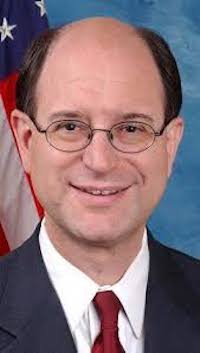
    Democratic Congressman from California Brad Sherman introduced the article of impeachment against Trump for high crimes and misdemeanors. Democrat Al Green has signed on to the resolution introduced by Sherman.

    This is for the first time that a US lawmaker has introduced an article of impeachment against Trump, who was sworn in as the 45th US President on January 20. However, the move is likely to be stalled in the Republican-controlled Congress.

    The House of Representatives needs to pass it by a majority vote for the article to move forward. Trump’s Republican party has an advantage of 46 votes in the current House of Representatives and it is unlikely that the Republican lawmakers would vote on such an impeachment move.

    The White House dismissed Sherman’s move with spokeswoman Sarah Huckabee Sanders saying: “I think that is utterly and completely ridiculous and a political game at its worst.”

    “Recent disclosures by Donald Trump Jr indicate that Trump’s campaign was eager to receive assistance from Russia. It now seems likely that the President had something to hide when he tried to curtail the investigation of National Security Advisor Michael Flynn and the wider Russian probe,” Sherman said after introducing the article of impeachment against Trump.

    “I believe his conversations with, and subsequent firing of, FBI Director James Comey constitute Obstruction of Justice,” he said.

    Everyday Democrats, Republicans, and the entire world are shocked by the latest example of America’s “amateur President”, he said.

    “Lack of impulse control, accompanied by a refusal to have his staff control his impulses. We’re no longer surprised by any action, no matter how far below the dignity of the office—and no matter how dangerous to the country,” Sherman said.

    “But the Constitution does not provide for the removal of a President for impulsive, ignorant incompetence. It does provide for the removal of a President for High Crimes and Misdemeanors,” he asserted.

    As the investigations move forward, additional evidence supporting additional articles of impeachment may emerge, he noted. “However, as to the Obstruction of Justice…the evidence we have is sufficient to move forward now. And the national interest requires that we do so,” the Democratic lawmaker said.

    (Source: PTI)

  • Indian American and an Indian receive California’s premier air quality award

    Indian American and an Indian receive California’s premier air quality award

    SACRAMENTO (TIP): The California Air Resources Board on June 21 honored recipients of the 2016 Haagen-Smit Clean Air Awards, California’s premier award recognizing individuals who have made outstanding contributions to improving air quality. Two Indians– Dr V. “Ram” Ramanathan, Distinguished Professor, Climate and Atmospheric Sciences, Scripps Institution of Oceanography, University of California, San Diego and Anumita Roychowdhury, Executive Director, Centre for Science and Environment, India were among the recipients.

    “The Haagen-Smit Award is our way of honoring individuals who have championed public health with extraordinary contributions to air pollution research, science and clean air technology,” CARB Chair Mary D. Nichols said.  “From shaping our understanding of air pollutants and informing policy on climate health, to advocating for the right to clean air in severely polluted cities, their long and distinguished careers have changed how we address climate change and fight air pollution around the world.”

    Considered the “Nobel Prize” in air quality achievement, the Haagen-Smit Clean Air Awards are given annually to individuals who have made significant lifetime contributions toward improving air quality and climate change science, technology and policy, furthering the protection of public health.

    Dr. Veerabhadran “Ram” Ramanathan is being recognized for his sustained and innovative contributions to understanding complex linkages between manmade emissions and climate change, especially the need for simultaneous and deep reductions of short- and long-lived climate pollutants in order to avoid the most catastrophic impacts of global warming. Dr. Ramanathan’s historic research on climate and atmospheric science has been widely recognized around the world. Because of his research, atmospheric physics was linked to atmospheric chemistry, leading to a paradigm shift in the way climate scientists approached the problem of global warming.

    Anumita Roychowdhury is being recognized for her notable work on a suite of emission control strategies to mitigate severe air pollution. Ms. Roychowdhury has a long list of success stories for clean air and public health in India. Her most recent policy victory was the national adoption of sweeping new emission standards for cars, trucks, buses, two-wheelers and three-wheelers. Anumita remains a central force in air pollution control in India and throughout the developing world.

  • Indian American former CEO faces SEC suit in California

    Indian American former CEO faces SEC suit in California

    SACRAMENTO, CA (TIP): An Indian American former CEO of Systems America Inc., has been charged for violating federal security rules by allegedly misrepresenting facts about his company and engaging in manipulative penny stock trades to boost its share price.

    The 49-year-old Adesh Kumar Tyagi issued exaggerated press releases and made misleading disclosures about his company, Law360 reported quoting a complaint filed on Wednesday by the US Securities and Exchange Commission in California federal court.

    “His game plan was to grow the company through acquisitions. Lacking cash, however, he engaged in a fraudulent scheme to artificially inflate the per-share price of the company’s securities so that he could use Systems America stock to acquire other companies,” the legal news service reported.

    Systems America, which was later renamed Cloudeeva was founded by Tyagi as a privately held company in 1994. In the mid-2000s the company started falling into neglect, but, in 2010, Tyagi wanted to revive the company.

    The company claimed that it has eight full-time employees and Fortune 500 clients when it actually had no full-time employees and only two clients. Tyagi also said that no officer or director of the company had been named as a defendant in a criminal proceeding when he himself had two pending criminal proceedings as a defendant.

    The SEC alleges that Tyagi tried to push up his company’s share price by ‘marking the close’ – buying the stock just before the close of the trading day at a slightly higher price than was on offer on at least 16 different dates.

    According to Law360, he pleads guilty to criminal securities fraud charges brought over trading schemes in November 2016 and is scheduled for sentencing in January 2018.

    SEC seeks disgorgement of the more than $274,000 from Tyagi, which he allegedly earned through the sales of inflated stock and unspecified civil monetary penalties. It also seeks prejudgment interest, officer-and-director bar, penny stock offering bar and permanent injunctions that refrain Tyagi from participating in transactions of any security of an entity that he is related to.

  • Indian American lawyer dies after being struck by a train in California

    Indian American lawyer dies after being struck by a train in California

    SAN MATEO, CA (TIP):  Indian American lawyer Kirtee Kapoor, who was head of Davis Polk & Wardwell’s India group and a partner at the firm in Menlo Park, California, died after being struck by a train in San Mateo, California, June 5, according to a belated report.

    He was killed by Caltrain at the Watkins Avenue crossing. “Early reports indicate this was an intentional act,” Caltrain spokesperson Tasha Bartholomew said in a statement.

    “Kirtee was a truly wonderful man. His optimism, warmth, honesty and wisdom were inspiring. He will be remembered as a great partner of the firm, a beloved colleague and adviser, and a steadfast friend to so many”, Davis Polk group said in a statement.

    Born in Bangalore, India, Kirtee earned his LL.B. from the University of Delhi Faculty of Law, where he was Editor-in-Chief of the Student’s Law Review and Moot Court Society President. He received his B.C.L. from Balliol College, University of Oxford and was an Inlaks Scholar. He was a Hauser Global Scholar and Graduate Editor of the Journal of International Law and Politics at New York University School of Law, where he earned his LL.M.

    Kirtee joined Davis Polk’s New York office as an associate in 1999, and over the next 18 years spent time in several of their offices advising clients on significant M&A matters and in investments and other transactions around the world. He was elected to the partnership in 2007 and moved to Hong Kong later that year. In 2015, he joined the Northern California office.

  • Indian American confirmed to key Judicial Post

    Indian American confirmed to key Judicial Post

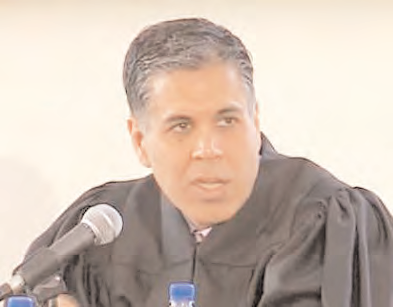
    US Senate confirms Judge Amul Thapar for the 6th US Circuit Court of Appeals

    WASHINGTON (TIP): The US Senate has confirmed Indian-American Judge Amul Thapar to a key judicial position on the powerful US court of appeals.

    The first Indian-American to be nominated by US President Donald Trump for the 6th US Circuit Court of Appeals, Thapar was confirmed by the Senate 52-44, a vote which took place on party lines.

    With this, Thapar becomes the second South Asian judge to be on a US Circuit Court of Appeals, which hears appeals from Kentucky, Tennessee, Ohio and Michigan.

    “Judge Thapar will make an outstanding addition to the US Appeals Court for the Sixth Circuit,” said senate majority leader Mitch McConnell on Thursday, May 25.

    Currently a US District Court Judge, Thapar was nominated by Trump on March 21. Thapar was among the 20 judges whose names Trump had released during his presidential campaign as shortlisted candidates for his Supreme Court nominees.

    McConnell said Thapar has a reputation as a qualified judge with an impressive legal mind who will fairly apply the law to all who enter his courtroom.

    “Judge Thapar has been recognized for his work on the bench, and the most recent edition of the Almanac of the Federal Judiciary quoted attorneys who agreed that Thapar has excellent legal ability,” he added.

    McConnell said that the American Bar Association, which prominent Senate Democrats have called “the gold standard” for evaluating judges, awarded Thapar its highest rating.

    The South Asian Bar Association of North America (SABA) also congratulated Judge Thapar on his confirmation to the Sixth US Circuit Court of Appeals. “On behalf of SABA, I congratulate Judge Thapar who is a proven asset to the federal judiciary, the people of the commonwealth of Kentucky whom he’s served for almost a decade, and the South Asian legal community,” said SABA president Vichal Kumar.

    “Judge Thapar’s confirmation further cements his legacy as a pioneer, esteemed jurist and dedicated public servant. We anticipate that Judge Thapar’s renowned dedication to his craft and commendable judicial temperament will serve him well in this integral position,” he said.

    Indian-American attorney Ravi Batra said that unlike Sri Srinivasan, Amul Thapar has been elevated while thinking that law is “devoid of equity or compassion”. “There is a difference between reality and a reality show, the latter is fiction. One hopes that he will find the moral compass of the late great Justice Antonin Scalia,” said Batra.

    In 2007, the then George W Bush nominated him to be a United States District Judge for the Eastern District of Kentucky. At that time, the Senate confirmed his nomination by a voice vote, and Judge Thapar became the first South Asian American federal judge in the history of the US.

    Prior to joining the bench, Thapar, winner of SABA’s Pioneer Award, served as the US attorney for the Eastern District of Kentucky from 2006-2007, where he was one of the first American Attorneys of South Asian descent.

    During that period, Thapar was appointed to the attorney general’s advisory committee (AGAC) and chaired the AGAC’s Controlled Substances and Asset Forfeiture subcommittee. He also served on the Terrorism and National Security subcommittee, the Violent Crime subcommittee, and Child Exploitation working group. He has also taught at the University of Virginia School of Law, Vanderbilt Law School, and the Northern Kentucky University Chase College of Law. Thapar received his undergraduate degree from Boston College and his law degree from the University of California, Berkeley.


  • Clinton analyses defeat: ‘Was victim of broad assumption that I was going to win’

    Clinton analyses defeat: ‘Was victim of broad assumption that I was going to win’

    WASHINGTON (TIP): Hillary Clinton has blamed her unexpected defeat in the US presidential elections on a variety of factors including Russian meddling, her own party, the FBI, the media and “a very broad assumption that I was going to win”.

    Clinton, in a lengthy interview at a tech conference in California, for the first time went into detail about the reasons behind her loss to Republican Donald Trump. She said took responsibility for every decision she made during her campaign, “but that’s not why I lost.”

    The former secretary of state said Russian interference in the election and the “weaponising” of information and fake news were among the key reasons behind her defeat. She said it was likely that Trump’s associates had a hand in it.

    “The Russians, in my opinion, and based on the intel and counter-intel people I’ve talked to, could not have known how best to weaponise that information unless they had been guided,” Clinton said. Some of those people helping the Russians, she said, had access to “polling and data information.”

    Asked who those persons could be, Clinton said: “We’re getting more information about all of the contacts between Trump campaign officials and Trump associates with Russians before, during and after the election. So I hope that we’ll get enough information to be able to answer that question.” “I’m leaning Trump,” she added. “I think it’s pretty hard not to.”

    The 69-year-old Democrat said her party had fallen behind the Republicans in using technology and data to target voters. She also attacked the media for covering her e-mail controversy “like it was Pearl Harbour” and not following up on the Russian interference. “At some point it sort of bleeds into misogyny,” she said. Clinton, the first woman presidential candidate for a major political party in the US, was widely expected to win the November 8 election as per poll projections and political pundits . The high expectations for her candidacy also did her in, she felt. “I was the victim of a very broad assumption I was going to win.”

    Clinton also pointed to ex-FBI director James Comey, who was recently fired by President Donald Trump, for re-opening an investigation into her use of a private email account and server, just over a week before the election.

    “Remember, Comey was more than happy to talk about my emails, but he wouldn’t talk about the investigation of the Russians. So people went to vote on November 8th having no idea that there was an active counter intelligence investigation going on of the Trump campaign,” she said. Clinton said she always thought the election would be a close affair, but she ended up winning three million more votes than Trump.

    “And let’s just be honest, people who have a set of expectations about who should be president and what a president looks like, they’re going to be much more skeptical and critical of somebody who doesn’t look like and talk like and sound like everybody else who’s been president,” she said. (PTI)

  • Indian-American high school athletes among 20 Foot Locker scholarship recipients

    Indian-American high school athletes among 20 Foot Locker scholarship recipients

    NEW YORK (TIP): TWO Indian- American high school athletes Malika Jain and Puneet Kaur were among 20 athletes nationwide named as 2016-2017 ‘Foot Locker Scholar Athletes’. Both have earned a USD 20,000 scholarship each.

    Malika Jain

    The 20 winners were selected from among 37,000 applicants. Jain, also the captain of her school’s varsity soccer, golf and tennis teams, placed third this year in her tennis league and went to the tennis division finals. Her leadership skills are apparent in her athletics. She recruited girls to join the tennis team and supported them throughout the season and in her community involvement as student body president, president of the Key Club and a strategy member of the Robotics Club at her high school, Foot Locker said in her bio.

    Jain has received several awards, including the Girl Scouts Gold Award, the President’s Award for Education and Excellence, and the Duke of Edinburgh International Gold Award for Leadership and Service. She held a 4.0 GPA in high school and will attend the University of Southern California in the fall.

    Puneet Kaur

    Kaur is a four-year varsity basketball and track athlete. She was the first in her family to be born in the US, and will be the second in her family to go to college, Foot Locker said.

    After multiple students at her high school committed suicide, Kaur sought to create some type of support for them, starting a school-wide walk to raise awareness about mental health issues, which was featured on many national media platforms, it added. She is also the president and creator of the We’re All Human Club, which helps kids dealing with suicide and aims to decrease the stigma around mental health.

    Kaur earned a 3.75 GPA in high school and plans to attend George Mason University in the fall.

  • Indian American Congressman Ro Khanna says Trump’s budget proposal is ‘Budget of Broken Promises’

    Indian American Congressman Ro Khanna says Trump’s budget proposal is ‘Budget of Broken Promises’

    WASHINGTON (TIP): Indian American Congressman Ro Khanna, who represents the 17th District of California and a member of the House Budget Committee, heavily criticized President Trump’s FY 2018 budget proposal, describing it as one ‘that breaks President Trump’s promise to forgotten Americans.’ “This budget would leave millions of individuals and families at a loss to the critical programs they turn to in times of need and help keep them out of poverty.

    The administration wants to dismantle Medicaid, cut Social Security, eviscerate public education funding, weaken our ability to fight climate change and countless other damaging choices – all for a massive tax cut for the very rich”, he said. “The budget proposal also undermines how the government supports job growth and American innovation. The administration wants to eliminate the Appalachian Regional Commission, Economic Development Administration, and the Manufacturing Extension Partnership – just a few of the many successful programs that have led to the rapid growth of new 21st century industries across the U.S”, he further added.

    On May 24, Khanna joined the members of Congress questioning OMB Director Mick Mulvaney in a public hearing on the President’s Fiscal Year 2018 Budget.

  • Indian American Sarita Kohli takes over as President and CEO of AACI

    Indian American Sarita Kohli takes over as President and CEO of AACI

    SAN JOSE, CA (TIP): Indian American executive Sarita Kohli assumed the role of President and CEO of Asian Americans for Community Involvement (AACI) on May 16, 2017.Sarita has been a pivotal part of AACI for nearly 14 years and most recently served as the Interim President and CEO for the past 11 months.

    “After an extensive search of qualified candidates, we are excited that Sarita will continue her service to AACI and the community as the new President and CEO. Her dedication and passion to providing health and wellness services to communities in need, coupled with her business acumen makes her ideal person to lead AACI into its next chapter. She has a proven track record at AACI, and we are confident that she will chart a successful path for AACI as they expand their services to more communities,” said Hanley Chew, Chair of AACI’s Board of the Directors.

    Sarita has been extensively involved in AACI and the community. Starting in 2003, she joined AACI as the Program Coordinator for the Center for Survivors of Torture, and quickly ascended to become the Director of Mental Health and Community Programs in 2005. She eventually served as Executive Vice President from 2014 – 2016. During her tenure, she has provided clinical services, created and expanded mental health and community programming, secured funding, and set the business strategy. In 2011, she was appointed by Governor Brown to the California Board of Behavioral Sciences, and is currently serving her second term.

    The Behavioral Sciences Board oversees all regulations, clinical licensing, and consumer protections for behavioral therapists in California. Locally, she has served on the Board of Directors for West Valley Community Services, served as a Commissioner on the Santa Clara County Social Services Advisory Commission, Vice President of the Behavioral Health Contractors of Santa Clara County, and a member of the Intimate Violence Task Force. She was honored in 2015 as a Woman of Influence by the Silicon Valley Business Journal.

    “I joined AACI 14 years ago because I knew I wanted to be part of an organization that would make a difference. The team at AACI is dedicated and passionate to serve and I am honored and excited to have the opportunity to lead in this new capacity. I am looking forward to working with the team to not only continue providing high quality and culturally sensitive care, but to also think strategically as to how we can expand our impact here in Silicon Valley,” said AACI’s new President and CEO, Sarita Kohli.

    AACI was founded in 1973 to meet the health and cultural needs of the incoming immigrants and refugees during the time. Forty-four years later, AACI now has two clinic sites serving the Silicon Valley and is the largest direct service provider for the Asian American community.

  • Shen Yun: The Stunning Theatrical Extravaganza

    Shen Yun: The Stunning Theatrical Extravaganza

    By Mabel Pais

    NEW YORK CITY (TIP): Preity Uupula, a former Miss India International, said of Shen Yun, “The energy was very powerful in the room. (For) some of the pieces, I just closed my eyes and I felt like it was a meditation. It’s very healing actually.”

    Like India, China can be proud of 5000 years of an ancient, rich civilization and culture. Having some of its roots in the ancient Indian spiritual path of Buddhism, Shen Yun, based in New York, has a mission to revive 5000 years of divinely inspired culture.

    The last performances of this breathtaking theatrical amazement, for the season, were held at NJPAC (the New Jersey Performing Arts Center, NJ) from May 3-7. For 5,000 years, divine culture flourished in the land of China.

    Shen Yun Performing Arts, Manchurian Elegance
    Shen Yun Performing Arts, Sleeves of Grace
    Shen Yun Performing Arts, Han Imperial Air

    Humanity’s treasure was nearly lost, but through breathtaking music and dance, Shen Yun is bringing back this glorious culture. Shen Yun means, “The beauty of heavenly beings dancing.”

    Falun Dafa, also known as Falun Gong, is a practice that combines teachings for self improvement and meditation exercises. The teachings are centered on three main principles-truth, compassion, and tolerance.

    Shen Yun’s artists practice Falun Dafa, and it is a source of inspiration for their performances. However, over the last 60 years of Communist rule, the regime has treated Chinese values – centered on the idea of harmony between heaven and earth – as a threat to its existence and banned traditional beliefs and practices.

    Through the universal language of music and dance, Shen Yun weaves a wondrous tapestry of heavenly realms, ancient legends, and modern heroic tales, taking you on a journey through 5,000 years of Chinese culture. Its stunning beauty and tremendous energy leave audiences uplifted and inspired.

    A Shen Yun performance features the world’s foremost classically trained dancers, a unique orchestra blending East and West, and dazzling animated backdrops-together creating one spectacular performance. The Shen Yun Symphony Orchestra blends the singular beauty of Chinese melodies with the precision and power of the Western orchestra.

    “Amazing! The artists perform as if they are fluid bodies with no bones. Gravity does not apply to them. They leap and fly in the air while they perform their numbers…..” quipped Pattie King, audience member at NJPAC.

    “Mesmerizing! Reclaiming the divinely inspired cultural heritage of China,” remarked Donna Karan, creator of DKNY.

    “I was mesmerized and astonished within the first few minutes…..Shen Yun music proves that not every message needs to be delivered via language or written words…..” Rojin Rahmani, musician.

    Shen Yun Performing Arts is the world’s premier classical Chinese Dance and Music company. In 2006, a group of leading classical internationally award winning Chinese artists came together in New York with one wish: to revive the 5000-year-lost world of traditional Chinese culture and share it with the world. Through breath taking music and dance, Shen Yun is bringing back this glorious culture.

    Each season, the company produces an all new show and tours with it around the globe, performing at the world’s top venues – Lincoln Center in New York, The New Jersey Performing Arts Center, New Jersey, Kennedy Center in Washington, the London Coliseum.

    Since ancient times, Chinese culture has been heralded as a gift from the divine; and part of that divine gift was a supreme art form that has endured to this day: Classical Chinese Dance. “It (Classical Chinese Dance) has a history of several thousand years in both folk and imperial settings. It served as entertainment for large gatherings and celebrations”, says Ms. H. Sue Guo, Principal, The Fei Tian Academy of the Arts College, New York, the college that trains the performers of Shen Yun. Branches of the college exist in California and Taiwan.

    Within China’s grand civilization of 5000 years, many traditions are linked together: martial arts, Chinese opera, folk dance and acrobatics. They all have something in common. Chinese dance has 3 main components: technical skill, form and a special feature called yun or physical bearing. Chinese dance’s technical skills include a whole series of challenging leaps, jumps, flips and many difficult tumbling techniques.

    In eastern philosophy, there is a saying “beauty and roundness,” explains choreographer, principal dancer and associate company manager Yungchia Chen. “The path of the movement needs to be circular, rounded and full. It’s different from ballet which focuses on straight lines.”

    What takes classical Chinese dance to another level is yun or physical bearing that is a certain sensibility when Chinese people perform classical Chinese dance. “It’s an artistic feeling that rises from the culture” demonstrates dance teacher Gu Yun. When the dancer moves there is an internal energy connected to the breath. The breath meets the body. The breath is crucial.

    Over the centuries, the technical skills, form and bearing all come together to make classical Chinese dance one of the richest, most expressive and most demanding art forms in the world.

    The training process for each dancer is extremely arduous. Daily training lasts for 7- 8 hours. It takes 6 years schooling just to be good enough to go on stage. After 10 years training in college is completed.

    Every year, Shen Yun creates a whole new production with original dances, costumes and music. By adding the distinctive melodies of ancient Chinese instruments, over Western orchestration, Shen Yun brings together two of the greatest classical musical traditions the world has ever known.

    Johnny Stuart, music director, calls the music “just phenomenal, mind blowing!” Music conductor Leon Natker says that “putting together classical Chinese instruments and classical western instruments is a way towards the future for me as a musician.” Jing Xian, a composer of the performance, says, “Both these (Chinese and western) musical systems are excellent. But it’s just like cooking. You might have great ingredients but if we don’t understand the characteristics of the ingredients, and to stir fry random things together, it simply won’t taste good.”

    Shen Yun music displays China’s traditional melodies. Just like dance, music can also present different times, places, characters and moods. China has 5 millennia worth of culture: from the melodic styles of over 50 ethnic groups to grand imperial court music and lavish folk tunes. This heritage is an endless source of inspiration.

    “What we are taking on is a responsibility we simply cannot shirk. There are times when I really feel it’s our life’s mission. It may take many life times to complete.” “I have dedicated my entire life to the arts. Yet it was only after I reached my 70s that I found that this is where it has the greatest meaning,” says Ms. H. Sue Guo, Principal, The Fei Tian Academy of the Arts College, New York.

    (Mabel Pais is a freelance writer. She writes on theater, health and wellness, social issues and spirituality)


  • US Justice department names special counsel to probe Trump campaign Russia ties

    US Justice department names special counsel to probe Trump campaign Russia ties

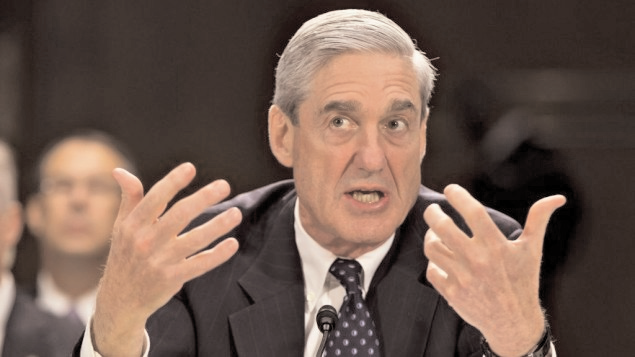
    WASHINGTON (TIP): The US Justice Department on May 17 independently named former FBI Director Robert Mueller as special counsel to investigate ties between President Trump’s campaign and Russian officials, sending the four month old Presidency into a deeper crisis.

    The appointment, apparently made by an independent-minded Deputy Attorney General Rod Rosenstein without prior knowledge of or intimation to the White House, drew a sharp reaction from President Trump even as it gathered bipartisan support for its impartial nature given Mueller’s reputation as a fair investigator.

    ”This is the single greatest witch hunt of a politician in American history!” Trump complained in a Twitter post to much derision soon after the Justice Department announcement. He pointed out that ”With all of the illegal acts that took place in the Clinton campaign & Obama Administration, there was never a special councel (sic) appointed!”

    The announcement of a special counsel came amid new reports that the Trump campaign had at least 18 previously undisclosed contacts with Russian officials in the seven months prior to the 2016 Presidential elections. Conversations between disgraced and fired National Security Advisor Michael Flynn and Russian ambassador Sergei Kislyak accelerated after the November 8 vote as the two discussed establishing a back channel for communication between Trump and Russian President Vladimir Putin that could bypass the U.S. national security bureaucracy, which both sides considered hostile to improved relations, Reuters reported, quoting four current U.S. officials.

    At first blush there appeared to be nothing illegal in the contacts, but such extensive and intensive exchanges with a historic foe, and the pace and secrecy with which it was done, has riled the traditional Washington establishment — Republican and Democratic — that remains leery of Moscow.

    In fact, even as news of appointment of the special prosecutor and previously undisclosed Russia contacts broke on Wednesday, the Trump dispensation and Republicans supporting him had the mortification of another embarrassing disclosure. A key GOP leader reportedly alleged at a party meeting during the 2016 campaign that Trump was on Russian leader Putin’s payroll.

    ”There’s two people I think Putin pays: Rohrabacher and Trump,” Republican House Majority leader said at the meeting according to a recording of the June 2016 exchange first reported in Washington Post, which along with the New York Times has been relentlessly landing a one-two on the Trump Presidency over the past several days. Rohrabacher is a California Republican who is a staunch defender of Putin. Republican lawmakers at the meeting laughed at McCarthy’s comment, presumably seeing it as a joke, at which point McCarthy added, “swear to God.”

    The party leadership, notably Speaker Paul Ryan, quickly stepped in to ensure the matter was not leaked to the media. On Thursday, McCarthy, who like Speaker Ryan later joined the Trump camp after initial reservations, maintained that the remark was a joke and nothing further should be read into it. (PTI)