At least three winning tickets for the record $1.6bn Powerball lottery jackpot have been announced as per officials and media reports.
The winning tickets in the Powerball jackpot were sold in California, Tennessee and Florida.
The previous draw was the 19th without a grand prize winner, which requires all six numbers to match.
Officials said it would take several hours to know if there were any other winning tickets.
The identity of the winners is not yet known.
Thousands of people queued up outside shops across the US on Wednesday, hoping to defy the odds of 292.2 million to one.
California Lottery tweeted that the winning ticket in the state was sold at a 7-Eleven store in Chino Hills, a suburb east of Los Angeles.
7-Eleven store clerk M. Faroqui celebrates with customers after learning the store sold the only winning Powerball ticket on Wednesday, Jan. 13, 2016 in Chino Hills, Calif. One winning ticket was sold at the store located in suburban Los Angeles said Alex Traverso, a spokesman for California lottery. The identity of the winner is not yet known. (Will Lester/The Sun via AP)
Television pictures showed a cheering crowd gathering at the shop after the result was announced.
The winners will share a prize of $1.586bn. They can collect their winnings in annual payments over 29 years, or opt to share a lump-sum payment of $930m.
The government will also share in the big prize, however, levying a 39.6% federal income tax on the winners – and the payout will also be subject any taxes that the winners’ home states may impose.
How did the jackpot get so big?
No-one has won the draw since 4 November. The prize is based on ticket sales so high jackpots usually create a snowball effect until a winning combination is picked. A new format introduced in October makes these massive jackpots more likely, meaning more records could be broken in future.
Here’s four tips from Wells Fargo Advisors if you win the Powerball Lottery.
Take lottery winnings in a lump-sum. If you’re disciplined enough not to spend the money all at once, you may want to consider taking it all in a lump-sum. Typically, receiving your winnings in this manner will give you more money in the end than if you were to be given payments over the years. For example, if you receive $1 million and pay half of that in taxes, you’ll end up with $500,000 to invest. At a hypothetical 10% rate of return, your winnings would have the opportunity to grow to more than $3.3 million in 20 years. By comparison, if you chose to receive your windfall in 20 annual installments of $50,000 and invest each year at that same 10%, you would end up with approximately $2.8 million — a difference of more than $500,000. The more money you can get invested right away, the better off you could be.*
Choose the installment option if you’re a spendthrift. On the other hand, if having an account with a lot of money in it is too tempting for you to handle, take your fortune over a period of several years. You may not have this option with every type of windfall, but if you happen to win the lottery, the sponsor may invest your winnings for you. You may get a better rate of return by taking the money in a lump-sum, but that’s no use if you end up spending all of it without planning.
Keep income taxes in mind. Most likely, about half of what you win or inherit will go to pay federal and state income taxes. And remember, a multimillion dollar payout this year would put you in the highest federal tax bracket at 39.6%. Add state income taxes to that, and you may end up losing half of your money to taxes. In cases where winning lottery tickets are purchased outside your home state, it’s possible that you would be taxed in your home state and the state where you purchased the ticket. Careful tax planning can help you keep as much of the money as possible.
What happens when you die? If you’re married, the money – no matter how much – may be transferred to your spouse free from estate taxes. However, if you’re single, the amount totals more than $5,430,000, and you die this year, your heirs may have to turn over 40% of it to the federal government in the form of estate taxes.
There were the six children, their mother and her boyfriend in Houston, Texas. The nine worshippers in a church in Charleston, South Carolina. The 53-year-old father who tried to stop three men ransacking a metalworker’s minivan in Brooklyn. The 28-year-old mother of two in Indianapolis whose new husband shot her in the face 13 times. The two young reporters shot to death during a live news broadcast in Moneta, Virginia. And the thousands just like them whose deaths did not make the front page.
While many victims’ names may quickly disappear from the public eye, their stories live on in the statistics that help us to understand the scale of gun violence in the United States. Below is a compilation of numbers that added up to a significant year in gun debate in 2015.
According to the Gun Violence Archive (GVA), a nonprofit website that scours more than 1,200 sources to track gun deaths and injuries in the United States, there have been more than 50,000 incidents of gun violence in 2015.
The numbers include everything from homicides and multiple-victim gang assaults to incidents of self-defense and accidental shootings. The organization’s records show that more than 12,000 people have been killed with guns this year, but what its numbers do not record – due to government reporting practices – is a massive hole in the data: the nearly 20,000 Americans who end their lives with a gun each year. Nor does its already high injury tally capture the full extent of the victims who continue life with debilitating wounds and crushing medical bills. When the federal statistics for 2015 are released two years from now, the government’s models will show tens of thousands more gun-related injuries.
Major Incidents / Shootings (order by severity)
San Bernardino
Roseburg, Oregon
Charleston, South Carolina
Chattanooga, Tennessee.
Colorado Springs, Colorado
Garland, Texas
Gun Violence in America: By the Numbers
MORE THAN 4 MILLION: Number of American victims of assaults, robberies, and other crimes involving a gun in the last decade
MORE THAN 30,000: Number of gun deaths in America each year
MORE THAN 20,000: Number of children under 18 killed by firearms over the last decade
MORE THAN 20,000: Number of Americans who commit suicide with a firearm each year
466: Number of law enforcement officers shot and killed by felons over the last decade
As of December 23, a total of 12,942 people had been killed in the United States in 2015 in a gun homicide, unintentional shooting, or murder / suicide.
Terrorism dominates headlines and budget lines while a more lethal scourge persists at home.
In his remarks following the mass shooting at Umpqua Community College on October 1, President Obama said he knew his outrage over the country’s unrelenting gun violence would be interpreted by critics as “politicizing” the issue. Fine, he said, and asked news organizations to check the facts: “Tally up the number of Americans who’ve been killed through terrorist attacks over the last decade and the number of Americans who’ve been killed by gun violence, and post those side-by-side.” Several did, and Obama’s point was made: Amid the government’s massive, justifiable effort to squelch terror threats, comparatively little has been done to address a problem that has claimed exponentially more U.S. lives. According to an October poll, 40 percent of Americans say they know someone who was fatally shot or committed suicide with a gun.
Mass shootings – as measured by four or more people shot, regardless of total fatalities – have taken place in nearly 100 metro areas over the past 12 months.
According to the Mass Shooting Tracker, a crowdsourced database of shootings in which four or more people are injured or killed, all but one major American city has had a mass shooting since 2013, with Austin, Texas as the lone exception. This year alone, nearly 100 metro areas have experienced mass shootings. The Tracker counts domestic homicides in its tally, as well as sprays of gunfire that wound several people at once – but often aren’t counted among the San Bernardinos or Umpquas because the victims survived. Two such incidents year-old Adam Lanza fatally shot 20 children and 6 adult staff members occurred on Father’s Day this year, when 10 people were shot at a block party in West Philadelphia, Pennsylvania, and 12 people were shot at a child’s birthday party in Detroit, Michigan.
“This is not the time to be fearful,” said Detroit Police Chief James Craig. “These are urban terrorists who do nothing positive for our neighborhoods.”
School kids who fell victim to shootings at Sandy HookElementary School in Newton, Connecticut on December 14, 2012 when 20-children & 6 adults were shot
The vast majority of the nation’s gun violence does not look like Umpqua or Charleston or San Bernardino.
Though mass shootings demand nonstop coverage, it’s the shootings taking place in parking lots, bars, schools, bedrooms, and street corners across America that are responsible for most gun injuries and deaths.
Black men are disproportionately affected by gun violence.
A November ProPublica article noted that half of American gun death victims are men of color in “poor, segregated neighborhoods that have little political clout.” Timothy Heaphy, a former U.S. attorney in Virginia, says this is precisely why they don’t capture the public’s attention. “I don’t think we care about African-American lives as much as we care about white lives,” he said.
At a rate of more than twice a day, someone under 18 has been shot and killed.
A remarkable 75 percent of children killed with guns this year have been under the age of 12. Since the mass shooting at Sandy Hook Elementary in Newtown, Connecticut, three years ago, an American child under 12 has died by intentional and accidental gunfire every other day, according to analysis by NBC News. And those children are far more likely to die from guns held by family members and acquaintances than strangers, according to an NBC News analysis of FBI data.
On August 18, 9-year-old Jamyla Bolden was killed by a bullet fired into her Ferguson, Missouri, home as she did her homework on her bed. “Usually when we hear the gunshots, she’s the first one who yells ‘Mom, they’re shooting!’” her mother told KMOV.com, a local news station. “I noticed Jamyla wasn’t saying anything. That’s the main thing I remember: her not moving.”
Unsecured guns have turned dozens of toddlers into killers – and many more into victims.
Kids younger than three have gotten ahold of guns and shot someone at least 59 times this year, a disturbing trend first reported by Christopher Ingraham at the Washington Post in October. Most often, these toddlers injure or kill themselves, but more than a dozen have shot other people, sometimes fatally. Gun violence prevention advocates say that gun storage requirements and the adoption of smart guns that only fire for their owners could reduce these deaths, but the gun lobby vehemently opposes such mandates. In November, after the Post’s report, 20 Democrats in the U.S. Senate asked the Government Accountability Office to issue a report on the safe storage of guns in American homes.
Guns are now ending as many American lives as cars.
The comparative mortality rates – also first flagged by the Post’s Christopher Ingraham – come from CDC figures released earlier this month. They reflect a larger story: While motor vehicles have been getting progressively safer, guns have killed people at a consistent clip over the past 15 years. Unpacking the numbers further reveals that firearm fatalities are holding steady while suicides by firearm have climbed along with the number of guns in circulation. Some theorize that medical advances are saving shooting victims who formerly would have died of their injuries.
A gun in a troubled home continues to raise the risk of death
This enduring statistic from a decade-old California Attorney General report emphasizes just how dangerous it is to introduce firearms into a turbulent relationship. In no state is that more pronounced than in South Carolina, which ranks first in the rate of women killed by men – a rate that is more than twice the national average. After several frustrated starts, South Carolina finally passed legislation this year limiting firearms access for domestic abusers -along with Alabama, Delaware, Maine, Oregon, and Vermont. But 17 states still do not have their own equivalent of a federal law banning criminal domestic misdemeanants from possessing guns, according to the Law Center to Prevent Gun Violence.
In one of those states, Georgia, Vanessa Soyer was gunned down in front of her 13-year-old son in their Lawrenceville apartment on November 16. A mother of four, the Harlem-bred Soyer, 47, authored a book about domestic violence. Her husband of 15 years, from whom she was in the process of separating, was arrested for the murder. “Nobody would’ve ever thought that the words from the pages of her books would become her reality,” her GoFundMe page reads.
Gun sales in 2015 continued at a blistering pace.
The same day Robert Lewis Dear opened fire at a Planned Parenthood in Colorado Springs, Colorado, killing three and wounding nine, the FBI reported five percent more NICS checks than Black Friday last year, setting an all-time single-day record. If each of those checks resulted in a gun sale, it would means Americans bought enough new firearms to arm every active duty Marine.
8 % of gun owners own a stockpile of 10 or more weapons.
In an online survey of 3,000 people, Harvard’s Injury Control Research Center found that 22 percent of Americans professed to own guns – and 25 percent of those gun owners own five or more guns. The Center’s director, Dr. David Hemenway, told The Trace in October that guns in fewer hands might actually lower rates of gun suicide and accidental shootings. But the fact that these gun owners feel they must compile an arsenal raises another set of questions. “Who are these people and why do they have so, so many guns?” Hemenway asked. “And are they really responsible?”
Tens of thousands more stolen guns entered the illegal market – many a result of theft.
The advisories echoed from sheriffs in Jacksonville, Florida; St. Louis, Missouri; and Lafayette, Louisiana: Lock up your guns. More than 400 firearms were stolen from cars in Duval County, Florida, this year – and 60 percent of those were from unlocked cars. In St. Louis, reports of gun theft were up 70 percent in August, and cars and trucks were targeted far more than homes. A gun stolen out of a car in Lafayette was used to wound a police officer last year, and in Pinellas County, Florida, a gun stolen from an unlocked car was used to kill another officer. Stolen guns, which are increasingly showing up at crime scenes, were called “the engine of violence in Chicago” by police spokesman Anthony Guglielmi in August.
The increase in such thefts has sparked a debate about personal responsibility and gun ownership. The town of Orange, Connecticut, went so far as to charge a resident with misdemeanor reckless endangerment after he reported his loaded .38-caliber revolver stolen from his unlocked truck. Pro-gun advocates argue that stadiums and schools should be removed from gun-free zone designations, so people can carry their guns with them instead of leaving them in their cars. The bottom line, Jacksonville Sheriff Mike Williams said in November, is “be a responsible gun owner, take care of your weapon, lock it up.”
American cities continue to seize illegal guns at an astounding rate.
The Chicago Police Department announced earlier this month that it confiscated 6,521 illegal guns in 2015, which it said works out to one gun every 90 minutes. But Newsweek analyzed the department’s own figures and concluded that it’s been more successful than advertised. “With 335 days so far this year and 6,521 guns removed, that is about 19 guns a day, or about one every 74 minutes,” Polly Mosendz wrote. (In July, Adam Sege conducted a similar audit for The Trace, and determined Chicago Police were removing a gun off the streets every 75 minutes.)
Officers in Little Rock, Arkansas, took 118 guns off the street as of November 2015. Baltimore, Maryland, police estimate that they’ve seized nearly 3,500 illegal guns in the last 12 months.
Tyshawn Lee was the second 9-year-old boy murdered in Chicago in the last 15 months.
The gunshot wounds to his temples had to be sealed with wax. He wore a white tuxedo, red bow tie, white gloves, and red, size 5 gator-skin shoes, and his 25-year-old mother wore a white dress and a red hat to match. Tyshawn Lee was the second 9-year-old boy to be targeted and killed by gangs within the last 15 months in Chicago, and he was lured from a swing set in the Auburn Gresham neighborhood and murdered in an alley because his father allegedly belonged to a gang that may have been involved in the murder of the brother of one of the suspects. Peter Nickeas, the overnight crime reporter at the Chicago Tribune, detailed the days after the boy’s death – during which a battle-hardened city found it still had the capacity for shock.
The 114th Congress is still hesitant to engage with the gun issue.
At a hearing on the third anniversary of the Sandy Hook shooting, California Representative Mike Thompson, chairman of the House Gun Violence Prevention Task Force, noted that Congress has held more than two dozen moments of silence since the massacre – but has not approved any gun safety bills. In March, Thompson, a Democrat, and Representative Peter King of New York, a Republican, introduced a bipartisan bill that would implement background checks on private gun sales. Since then it’s been bouncing from one House subcommittee to another.
This was also the year that saw a backlash against politicians who offer “thought and prayers” after mass shootings but no legislative action. Left-leaning reporters noticed that the same lawmakers who only offered empty platitudes were highly rated by the NRA. On the evening of the San Bernardino shooting, Igor Volsky, a contributing editor at ThinkProgress, began Twitter-shaming them. One by one, he replied to three dozen Republican legislators’ “thoughts and prayers” tweets with the amount they’d been given by the NRA – a total of $12.5 million.
SACRAMENTO (TIP): US authorities said on Thursday that two people have been arrested on terrorism-related charges in California and Texas, including a refugee from Iraq who is charged with lying to federal investigators about his travels to Syria. A criminal complaint unsealed on January 7 accused Aws Mohammed Younis Al-Jayab, 23, of traveling to Syria to fight alongside terrorist organizations and lying to investigators about it.
The complaint said Al-Jayab, a Palestinian born in Iraq who came to the United States as an Iraqi refugee in October 2012, communicated on social media about his intent to return to Syria to fight for terrorist organizations, discussing his previous experience fighting against the regime in Syria. When he was interviewed by citizenship officials, he lied about his travels and ties, the complaint alleges. Ben Galloway of the federal defender’s office is the suspect’s attorney. He did not immediately return telephone and emailed messages Thursday. The US Attorney’s Office in Sacramento said Al-Jayab was arrested on Thursday morning in Sacramento. Meanwhile, the governor and lieutenant governor of Texas praised the arrest in Houston of what Lt Gov Dan Patrick called a terror suspect.
“Based on the facts, as we know them, today’s action may have prevented a catastrophic terror related event in the making and saved countless lives,” Patrick said in a statement. Federal officials in Houston did not immediately provide more details. Federal officials say a separate arrest in Milwaukee that grew out of the Sacramento investigation is not related to national security.
NEW YORK (TIP): Released this past fall on Universal Music Classics, American Pilgrimage, an album of Indian melody and jazz improvisation, has ascended to No. 8 on the Indian Jazz Charts on iTunes. The track ‘Kesariya’ has been featured on Spotify’s Jazz Playlist and California’s jazz and world radio station KCRW featured it in a list of their top jazz albums of 2015.
Pianist Jay Oliver, featured on the album praised the record, saying, “Some of the most interesting music I’ve ever been a part of comes from the rich cultural tapestry of India. Of the highest measure, American Pilgrimage is an international blend of musical style and influence that is both timeless and innovative. Working with Sanjay Chitale and Sandeep Chowta was quite possibly the most profound musical experience of my life.”
The album is the culmination of a life-long dream of Bollywood music director, multi-instrumentalist and composer Sandeep Chowta. He wanted to meet and record with his jazz idols, including John Scofield, Bunny Brunel, Eddie Daniels, Andy LaVerne, Dave Valentine and more. His friend and musical partner, vocalist Sanjay Chitale, made it his mission to bring this dream to reality. Several years ago, the two embarked on a two-year-long journey across the United States, nocking on doors, calling friends, crashing on couches and recording music with the aforementioned legends they sought out.
Spyro Gyra, Tom Schuman and Indian Violin maestro L Subramanyam have immensely praised the effort of Sandeep Chowta and Sanjay Chitale.
American Pilgrimage fuses jazz improvisation with ethereal Indian grooves. Sandeep would lay down tracks, creating a backdrop of pulsing Indian rhythms and melodies and Sanjay would add his floating vocals. The two would present the tracks to the jazz artists, who all displayed their own brand of virtuosity, finding new voice in the context of these foreign sounds.
Sandeep Chowta is a prolific Indian Bollywood music director whose work can be heard in some of the biggest Bollywood films such as Om Shanti Om and Rowdy Rathore. He has also has recorded his own jazz albums including Mitti and Matters of the Heart, both on Sony Music.
Sanjay Chitale’s life was rooted in music until he found himself working in Information Technology. When the opportunity to record American Pilgrimage came along, he sold his investments and dove head first into the project. This is both Sanjay and Sandeep’s recording debut on Universal Music Classics.
WASHINGTON (TIP): The US has conveyed that the decision to deny entry to Indian students was not because of black-listing of two California-based institutions but based on the immigration assessment of individuals even as India asserted that American authorities need to honor visas issued by them.
The Indian reaction came after more Indians traveling on business/tourism/work visas have been deported recently.
In a fresh advisory today, External Affairs Ministry here said according to the US Government, the deported persons had presented information to the border patrol agent which was inconsistent with their visa status.
In continuation of December 23 advisory in connection with denial of entry by the US to Indian students having valid student visas to pursue studies in educational institutions -Silicon Valley University at San Jose and Northwestern Polytechnic University, Fremont, the ministry noted that there have been more cases of deportation of Indians.
Subsequently, there have been further cases of denial of entry to Indian students holding valid visas to pursue studies in other US educational institutions, it said, adding some Indian nationals traveling on business/tourism/work visas have also been deported.
“The US Government has conveyed that the decision to deny entry to these students is not because of the corresponding institutions being ‘black-listed’ but based on the assessment made by the US immigration authorities of individual applicants. “According to the US Government, the deported persons had presented information to the border patrol agent which was inconsistent with their visa status,” the ministry said while noting that India continues to remain closely engaged with the US Government on this subject. “We have strongly emphasized the need for the US authorities to honor the visas issued by their own Embassy/Consulates,” it added.
Meanwhile, the ministry reiterated that all Indian students seeking admission in US educational institutions should do due diligence to ensure that the institutions to which they are seeking admission have proper authorization and capacities. Apart from travel documents, the students should also carry all required documentation regarding their study plans, housing, financial support, health care arrangements etc. and be prepared for admission (entry to the US) interviews with US immigration officials, it said.
Similarly, all Indian nationals traveling to the US on other visas are also advised to carry the necessary supporting documentations regarding place of stay, financial support, medical arrangements, sponsorship details etc, the advisory added.
SACRAMENTO (TIP): Prominent Indian American businessmen will lead a venture to collect funds for University of California with an aim to invest in innovation opportunities.
Silicon Valley entrepreneur Vivek Ranadivé, a pioneer in the realm of big data and real-time technology, will lead a fund and build a team to invest in innovation opportunities emerging from the University of California, UC officials announced Dec. 15. UC’s Office of the Chief Investment Officer (UC Investments) will be an anchor investor with a $250 million commitment.
“Our business plan for the UC innovation fund is designed for the next 100 years,” said Paul Wachter, chair of the UC Board of Regents Committee on Investments.
“Therefore, it’s important that we get this right with a great team and an independent structure, which is what we have accomplished by recruiting Vivek to lead the fund,” he said.
Mr Ranadive, is the founder and former CEO of TIBCO, a multi million-dollar real-time computing company. The Indian- American is also the owner and chairman of the Sacramento Kings, a National Basketball Association (NBA) team.
“Vivek is a visionary who has transformed the way businesses operate across the world and developed his own innovations in Silicon Valley,” UC’s Investment Officer Jagdeep Singh Bachher said.
“This venture will support the research and entrepreneurship of UC faculty and student researchers whose discoveries can benefit people throughout California, the nation and the world,” the university’s President Janet Napolitano said.
“Vivek is a leader who can make that happen. His involvement will enable us to achieve our objective of capitalizing on UC innovation,” he added.
“It is a tremendous honor to partner with the University of California in this unique collaboration focused on investing in breakthrough technologies emerging from the world-class University of California system,” said Ranadivé. “As an entrepreneur, I look forward to supporting fellow entrepreneurs and growing innovative, value-driven enterprises with a mission to advance our society and make the world a better place.”
The University of California is a rich environment for innovation. For each year of the past few decades, UC has been granted more patents than any other university in the world. Researchers produce on average five inventions a day. There are at least 30 incubators and accelerators throughout the UC system. More than 800 start-up companies with UC patents have been founded since 1980.
The system spans the state of California, with its 10 campuses, five medical centers, three affiliated national laboratories, 246,000 students, more than 200,000 faculty and staff, and 1.7 million living alumni.
An Indian firm will pay a fairly hefty restitution to the state of California for using pirated software. This unauthorized use, according to the state’s Attorney General, Kamala Harris, gave the company unfair advantage and also constituted theft of intellectual property. Pratibha Syntex Ltd, an apparel manufacturer, will pay $1 lakh in restitution, clean up its act, put into place proper policies to stop such practice in the future, and conduct regular audits to ensure that this is done.
The US has again demonstrated the long reach of its law, and the figure of $22 billion is being cited as estimated loss in revenue to California manufacturers due to global companies using pirated American software. The use of pirated software is practically ubiquitous and different studies come up with varying figures, but it is generally agreed that the US is the largest paying consumer of software with a low piracy rate of 17 per cent. Emerging economies like Venezuela, Indonesia, China and India indulge in the rampant use of pirated software.
While propriety software will always be necessary, and should always be paid for, there are now many options that allow open-source software or ‘shareware’ to be used. Some such software is of very high quality and is given free, Google’s Android systems being one example. Individuals and companies can thus, with some effort, find free or reasonable substitutes for almost all kinds of software in common use, and thereby benefit from it without infringing the law. There is also evidence of a change in attitude.
The emerging idea of software as a service available on shared ‘cloud’ servers, rather than as a product, makes it available at a less daunting price. But that requires robust Internet services, which may not be readily accessible in many parts of the world. It is in the interest of software vendors to price their products fairly and to make them approachable in emerging markets, just as it is in the interest of users to eschew pirated software, as the latest case has demonstrated.
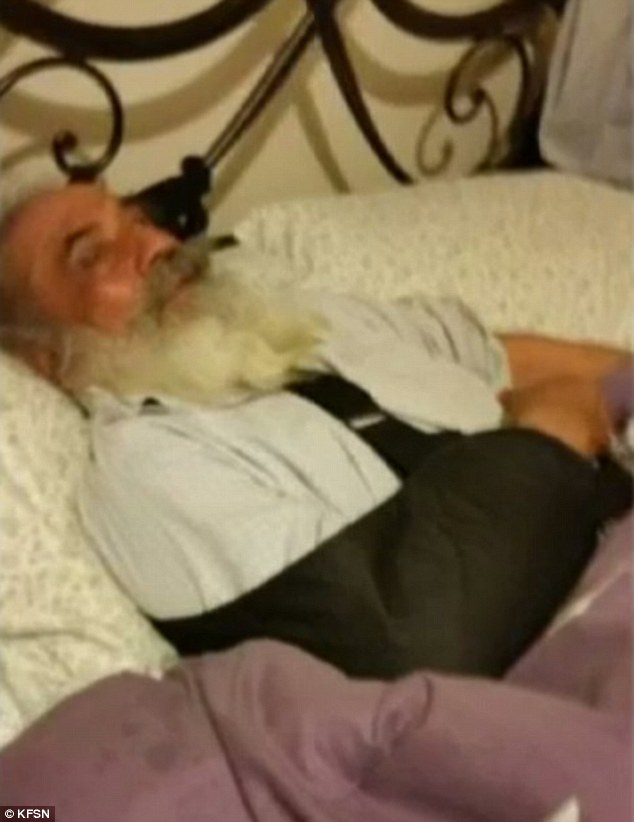
NEW YORK: A 68-year-old Sikh man was attacked Saturday, December 26, morning west of Highway 99 in what Fresno police are investigating as a hate crime – the latest such attack on a Sikh resident in the Fresno area.
Around 6:30 a.m., Amrik Singh Bal, 68, was waiting alone for a ride to work in the cold, 30-degree fog on Shields Avenue between Brawley and Blythe avenues when he was assaulted by two persons in California.
Two white males stopped their car in front of Bal and started yelling obscenities at him, said Fresno police Sgt. Greg Noll. Fearing for his safety, Bal attempted to cross the street. It was then that the suspects backed up their car, hitting Bal with their back bumper, Noll said.
The two men then got out of the car and attacked Mr Bal, hitting him in the face and upper body. Mr Bal fell to the ground and hit his head.
During the assault, one of the suspects yelled “Why are you here?”
The suspects fled only after they heard another vehicle approaching.
Mr Bal, who was taken to a local hospital, suffered abrasions to his nose and right hand and a broken collar bone.
Noll said police have started a hate-related criminal investigation into the attack on Mr Bal adding that the Fresno police would coordinate with the Department of Homeland Security and FBI to solve this case.
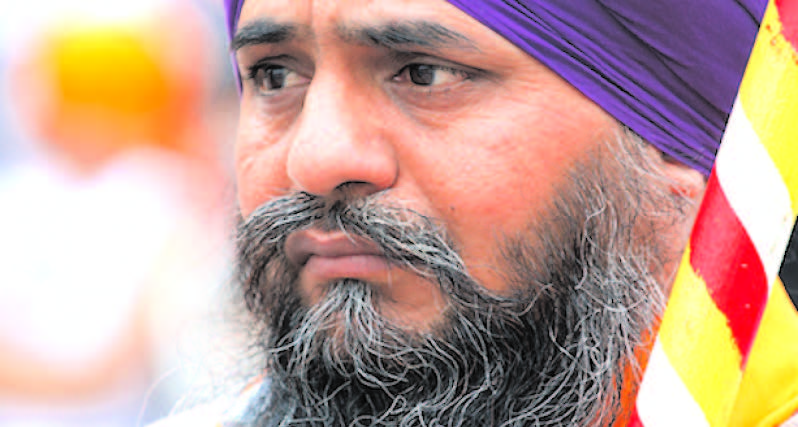
“Sikhs have been mistaken for terrorists and radicals and continue to suffer after 9/11,” member of the Sikh Council of Central California Ike Iqbal Grewal said.
Rights group The Sikh Coalition said its thoughts and prayers go out to Mr Bal and his family.
“We are quickly investigating and will share updates when we have them,” it said.
Racism & Hate Crimes on a rise
The attack is the latest in a line of hate crimes against Sikhs in America.
Earlier this month, a Gurudwara in California was vandalised with hateful graffiti, including the word ‘ISIS’, in the aftermath of the mass shootings in San Bernardino.
In September, a Sikh American father was viciously assaulted in a suburb outside of Chicago after being called ‘Bin Laden’.
In May 2013, 82-year-old Piara Singh was attacked outside the Nanaksar Sikh Temple in south Fresno by a man who later allegedly made inflammatory comments about Muslims.
The alleged assailant, Gilbert Garcia Jr., later pleaded no contest to a hate crime and was sentenced to 13 years in state prison.
Shah Noor, a recent transplant to California from Maryland, was driving through a nearby community one evening with his wife and stopped at a 7-Eleven to get some milk.
A police car pulled up with lights flashing. Officers walked to their car and grilled them for 45 minutes. They were aggressive, he said, and asked what they were doing there, where they work. At one point, he saw the officer put his hand on his gun.
“It was scary,” Noor said. “Pure harassment.”
Police — Noor declined to identify the agency because of an ongoing investigation —cited him for talking on his cell phone while driving. He said the charge is bogus.
“My phone had been dead for over three hours,” said Noor, 32, a lawyer who now runs JS Noor, a jewelry business. And the log on his wife’s cell phone shows no activity during that time.
He’s convinced that racial profiling was in play. He wears a turban and has a beard. His wife, Stephanie, is African-American. And all of this happened within days of a mass shooting in San Bernardino carried out by a Muslim couple.
After every attack on U.S. soil committed by Muslims, the backlash seems to increase. But hate crimes don’t target only Muslims.
Noor is originally from India and a Sikh, not an Arab or Muslim.
‘[Sikhism] preaches a message of devotion, remembrance of God at all times, truthful living, equality between all human beings, social justice, while emphatically denouncing superstitions and blind rituals.’ – Sikh Coalition
Since 9/11, Islamophobia has spread and has targeted groups indiscriminately. Sikhs, who wear a turban as an article of faith, have often been mistaken for Muslims in the U.S. They pray at a gurdwara, not a mosque, but a gurdwara in Buena Park, Caifornia, was vandalized days after the San Bernardino shooting. Graffiti sprayed on the façade included the misspelled “Islahm” and an expletive directed at the Islamic State of Iraq and the Levant.
The San Bernardino shooters had apparently been inspired by the group that has been behind horrific violence worldwide, including the Nov. 13 attacks in Paris.
The 20-year-old man arrested for the vandalism issued a public apology to the congregation of Buena Park Gurdwara Singh Sabha, a Sikh house of worship in Orange County.
But other assaults have been more violent. On Sept. 15, 2001, four days after the attacks on the World Trade Center towers, Balbir Singh Sodhi was shot and killed outside of his Mesa, Arizona, gas station by Frank Roque. Roque wanted to “kill a Muslim” in retaliation for the attacks on Sept. 11. Sodhi is considered the first murder victim of post-9/11 backlash. Roque was convicted of first-degree murder and sentenced to life in prison for the hate crime.
The Sikh Coalition was founded by volunteers in 2001 in response to a spate of attacks against Sikh Americans.
“Sikh adults were assaulted, Sikh children were bullied, places of worship were vandalized,” said Arjun Singh, the coalition’s law and policy director. “Terrorist attacks lead to xenophobia and anyone who looks different is targeted, including Sikhs.”
The Sikh Coalition reports a spate of attacks and harassment this month alone.
A Sikh woman traveling to California shortly after the San Bernardino attacks said she had to show her breast pump to airline employees to prove she wasn’t a “terrorist”.
In Grand Rapids, Michigan, a store clerk originally from the state of Punjab in India was shot during an armed robbery. The assailants called the clerk a terrorist.
Five days after the San Bernardino attack, Gian Singh, a 78-year-old grandfather, was walking to pick up his grandson from school in Bakersfield, when a man in a pick-up truck threw an apple at him with such force that the apple split when it hit his head, according to the Sikh Coalition, which is representing him.
‘Sikh adults were assaulted, Sikh children were bullied, places of worship were vandalized. Terrorist attacks lead to xenophobia and anyone who looks different is targeted, including Sikhs.’ – Arjun Singh, law and policy director, Sikh Coalition
There have been Sikhs in the U.S. for more than a century. Many came to build the railroads in the West. There is no accurate data on the number of Sikhs here, and estimates vary widely between 750,000 and 1.6 million, according to the coalition. Almost half of them live in California, the state with the largest Sikh population, but the densest concentration of Sikhs is in the tri-state area of New York, Connecticut and New Jersey.
The Sikh religion is a monotheistic religion that originates in the Punjab region of India. According to the coalition, it “preaches a message of devotion, remembrance of God at all times, truthful living, equality between all human beings, social justice, while emphatically denouncing superstitions and blind rituals.”
“We were shocked after finding out about the graffiti,” said Jaspreet Singh, 40, on the board of the Buena Park gurdwara that was vandalized. “Especially the hate words being used.”
For Sikhs who grew up in the U.S., harassment has been a way of life. For Noor, schoolyard teasing was common but never did he feel so much hatred as after 9/11.
“You feel people don’t like you, like an outsider,” he said. People would call him “Osama” in reference to Osama bin Laden, the founder of Al-Qaeda, the group that claimed responsibility for the 9/11 attacks. They also called him “Taliban,” the armed fundamentalist movement in Afghanistan.
“Sometimes, I would walk up to [the hecklers] and yell back, ‘I’m not a terrorist,’” Noor said.
One time, someone pulled a knife on him in Wheaton, Maryland, a suburb of Washington. Another time, in Amsterdam, people in a car yelled out “bin Laden” at him, he said. When he yelled back, they followed him up an alley. He escaped.
And there was another encounter with police in a Detroit suburb. He had a bracelet in his hand that he was playing with. Police mistook it for a masbaha, Muslim prayer beads. He showed them that it had a cross on it.
“I wear religious symbols of all kinds,” Noor said. “I go to church, to gurdwara, to mosque.”
He has attended service at a Baptist congregation, his wife’s religion.
His cousin, Jaisal Noor, 30, a reporter for The Real News Network, a nonprofit news and documentary service based in Baltimore, wrote about assaults on Sikhs for the 10th anniversary of 9/11.
“The day of 9/11, I was confronted with the reality that things changed,” he said in an interview.
He was in high school when the World Trade Center towers collapsed.
“I remember that day feeling worried for my family, my parents,” he said. His father was a frequent business traveler who encountered a lot of discrimination at airports.
His classmates would rant, “We’re gonna get these A-rabs” but then would turn to him and tell him they had no problem with him because he was Indian.
“But it’s never gone away,” said Jaisal Noor. “Whenever we’re at war, the attacks increase … They see images of turban-wearing men as the enemies.”
Sikhs say their first reaction may be to distance themselves from Muslims and explain to people that they are not Arabs or Muslim. But they stress that no one, Sikh or Muslim or any other religious or ethnic minority, should be targeted.
“Many Sikhs are worried, and rightly so,” said Arjun Singh. “If the bigoted rhetoric continues, hate violence will continue too … Today’s toxic political climate has led to bias, discrimination and hate violence.”
ISLAMABAD (TIP): All cellphone coverage was blocked by the government for three hours one recent afternoon in the Pakistani capital, and it did not take people long to discover why: Maulana Abdul Aziz, the radical preacher of the Red Mosque, was sermonizing again.
Banned from giving sermons in the mosque, the scene of an army siege on extremists that killed as many as 75 people in 2007, Aziz had announced that he would relay his latest Friday sermon by cellphone, calling aides at the mosque who would rebroadcast it over the mosque’s loudspeakers.
But instead of arresting the jihadi preacher, as many moderate Pakistanis would like, the authorities simply turned off the city’s cell networks last Friday from 11am to 2pm, the traditional time for Friday Prayer, according to senior Pakistani officials, speaking on condition of anonymity because they were not authorized to talk to the news media.
Aziz’s relative untouchability is a measure of how enduring the power of militant Islamist ideology has remained in Pakistan. Even as the Pakistani military has driven some jihadi groups out of business or into hiding over the past year, other technically banned jihadi or sectarian groups like Lashkar-e-Taiba and Ahle Sunnat Wal Jamaat are still thriving, with little apparent effort by the government or military to curb them.
The ascendance of such groups and of radical mosques and madrassas was well underway during the years that Tashfeen Malik, half of the husband-wife pair of mass shooters in California, returned to Pakistan for her university education in Punjab province.
Many Pakistani officials have been quick to suggest that Malik must have found her extremist beliefs while she was growing up in Saudi Arabia. But the reality in Pakistan is that hard-line Islamist views in line with some of the most conservative Saudi teachings are more mainstream than ever.
While the Shariah law the hard-liners here tend to espouse calls for their women to be kept in purdah — strictly separated from men at all times — some Pakistani women have been at the fore in pushing the Islamist agenda themselves.
That fact came into view most prominently with the case of Aafia Siddiqui, a Pakistani neuroscientist and member of al-Qaida who was convicted in 2010 of trying to kill American personnel in Afghanistan. She is serving an 86-year prison sentence in the United States.
A recent example popped up here at the Jamia Hafsa school, a girls’ madrassa attached to Aziz’s Red Mosque. About 15 of the older students recently posted a video of themselves in full burqas in front of the flag of the Islamic State, praising the group’s leader, Abu Bakr al-Baghdadi, and asking him to come help them avenge their followers and others who have been killed — especially Osama bin Laden. “May God annihilate America and those who support it,” their spokeswoman said. “We pray for you every night here in the land of Pakistan.” (NYT News Service)
The police in California and the Federal Bureau of Investigation on Sunday, December 13, opened a hate crimes investigation after two mosques were vandalized overnight.
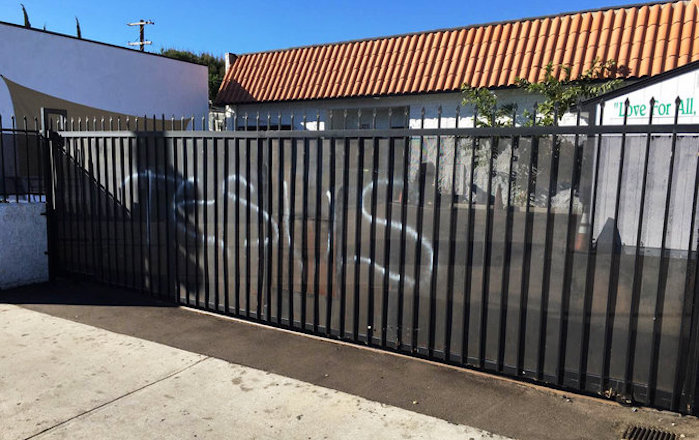
One mosque had “Jesus is the Way” spray-painted across the front. Another mosque was defaced and left with a fake grenade in the driveway.
Both acts of vandalism took place in the same California city, about an hour west of where the San Bernardino terror attack took place this month.
And Hawthorne police said both incidents are now classified as hate crimes.
Early Sunday morning, Hawthorne police received a call about vandalism and a possible explosive device in front of the Ahmadiyya Muslim Community Baitus-Salaam Mosque, the Police Department said.
When officers arrived, they found what looked like a grenade and evacuated the area. But the object turned out to be a fake plastic grenade.
Someone had also spray-painted “Jesus” across the mosque’s fence.
The same day, another mosque — the Islamic Center of Hawthorne — was found vandalized, with “Jesus is the Way” spray-painted on the front of the building.
Hawthorne police believe both crimes took place overnight.
The FBI and the Los Angeles County Sheriff’s Department are working with Hawthorne police in the investigation.
“Investigators will work to identify the person or group responsible, the motivation and whether religious bias was a factor,” the FBI said.
“All evidence will be reviewed by state and federal prosecutors to determine whether a violation under federal civil rights statutes occurred. The FBI is committed to ensure law-abiding citizens are protected and to deter those who would threaten them.”
Hawthorne police said that after the San Bernardino attack, the department has communicating more closely with local Islamic centers.
“The Department will continue to closely support our faith-based partners and work to assure the safety of its members,” Hawthorne police said.
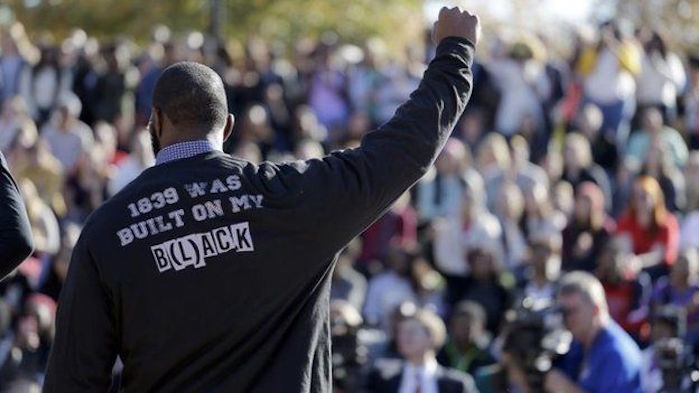
Universities across the United States are caught up in a wave of protests swirling around issues of race, identity and how institutions should respond to their history.
It’s raised far-reaching questions about campus culture and the boundaries of free speech.
Much of this battle has been fought out in symbols and arguments over language.
In Harvard, there are calls to ditch “master” from the academic title of “house masters”, the heads of residential houses, because of the word’s associations with slavery.
The title has more to do with the British education system, with its “school masters” and “house masters”. But in the US context, where “master” has different historical echoes, the word itself has become toxic.
And reflecting the mood on campus, this argument has been accepted by the Harvard house masters themselves, who say they are now looking for a different title.
They say the use of the word “master” causes discomfort and creates images of “human subjugation”.
Harvard’s Law School has been embroiled in a row over its crest, which displays the coat of arms of the Royall family. This is a link to an 18th Century college donor, Isaac Royall, who as well as establishing the college’s first professorship in law, was a particularly brutal slaveholder.
This has been the law school’s official seal since the 1930s, but now this winter, following accusations that this was a racist emblem, a committee has been set up to reconsider its use.
In Princeton, the dispute has focused on a school named after Woodrow Wilson. The former US president stands accused of holding deeply entrenched racist views, and protesters from the Black Justice League want the building renamed.
In Yale, there has been a campaign to rename Calhoun College, to remove links with John Calhoun, a 19th Century advocate of slavery.
The thread linking the protests is the suggestion that racism is not a thing of the past but remains as an unresolved question on campus.
There is a website, the Demands, listing the grievances in more than 70 universities where students have “risen up” against such prejudice.
‘Tribal identity’
But why are so many protests hitting universities now?
Carol Christ, director of the Center for Studies in Higher Education, University of California, Berkeley, says that “symbolic fights are always about real and current political issues” and in the US, the issue of race is never far from the surface.
“Race is so traumatic and central an issue in American culture – with both the history of slavery and the genocide of Native Americans always present,” says Dr Christ.
The sensitivity over race and discrimination was heightened by events such as the shooting of a young black man by a police officer in Ferguson, Missouri.
“That created a lot of activism on college campuses,” Dr Christ says.
And the arguments over emblems and traditions are part of a wider battle over identity and whose culture should be commemorated on campus.
“Colleges and universities in the United States make a huge amount of their history, they’re always telling their story, it’s the way in which they try and make almost a tribal identity,” Dr Christ says.
But these stories might make difficult listening for minority groups, with the college names and emblems having echoes of slavery and segregation.
“They will feel an alienation from the stories that they’re told to accept as part of their college identity,” says Dr Christ.
Economic significance
What makes this an even more significant struggle is that university is now seen as the gateway to a better job.
Even though universities might have a public commitment to inclusion and diversity, protesters have accused them of remaining the domain of a white middle and upper class.
Only about 5% of lecturers in US universities are black, according to official figures. Protesters have argued that universities have turned a blind eye to a long legacy of discrimination.
“It’s about the increasing sense that college is the way to economic security and power in modern society,” Dr Christ says, adding this is combined with fears prestigious colleges are increasingly being dominated by the wealthy.
Another provocative thread in the campus disputes has been about free speech and whether activities or language or opinions should be blocked if they upset some students.
This has included the concept of “safe space” where students can be protected from language or arguments that might offend them.
But this has been criticised by opponents as contradicting the intellectual purpose of a university, which should be about challenging ideas and contesting beliefs.
‘Narcissistic’
Among the most forthright attacks came from Everett Piper, president of Oklahoma Wesleyan University.
Dr Piper told his students: “This is not a day care. This is a university.”
And he warned: “Our culture has actually taught our kids to be this self-absorbed and narcissistic. Any time their feelings are hurt, they are the victims.
“Anyone who dares challenge them and thus makes them feel bad about themselves, is a ‘hater’, a ‘bigot’, an ‘oppressor’ and a ‘victimiser’.”
There have also been arguments that changing the names of buildings is a way of avoiding uncomfortable questions about past attitudes, rather than addressing the historic legacy of universities.
But this simmering winter protest shows no sign of subsiding.
The president of the University of Missouri resigned last month, amid claims he had failed to respond adequately to allegations of racism.
And this week, a Yale lecturer, caught up in a row over the right to wear Halloween costumes, even if they caused offence, decided to step down from teaching.
Dr Christ says that “because race is so vexed and turbulent a subject” in the United States, the “controversies will continue”.
SACRAMENTO (TIP): An Indian-American couple has donated USD 4.6 million for Hindu Studies program in Berkeley, California.
The Center for Dharma Studies -will be established in the Graduate Theological Union University in the UC Berkeley campus – is the first of its kind and will be home to the largest Ph.D program in religious studies in North America.
The California based couple Dr Ajay and Mira Shingal have pledged to create an endowment fund that will create the Mira and Ajay Shingal Center for Dharma Studies. Ajay, a resident of San Jose, has been a Silicon Valley entrepreneur with a career spanning several brand name Technology companies in the Bay Area and is currently in the hospitality industry.
Under the endowment, valued at USD 4.6 million, the Center for Dharma Studies will begin with a focus on Hindu studies and offer a Graduate Certificate MA and Ph. D in Hindu Studies.
It will welcome all traditions that self-identify themselves as a Dharma tradition, including the Jain, Buddhist and others systems of thought, derived from these ancient traditions.
“This Gift from Mira and Ajay Shingal enables the Graduate Theological Union to expand the representation of the world’s great religious traditions at this consortium and create a robust and singular place for scholars, students and the public to engage one another to build deep mutual understanding and promote the common good,” said GTU president Dr Riess Potterveld and reported by PTI.
Applauding this historic gift, Professor Shiva Bajpai, a renowned historian and President of the Dharma Civilization Foundation, observed that “Our philosophy is: The Concord, rather than the Clash, of Civilizations; The GTU is a perfect place for promoting this; We invite the Indo-American community to get engaged with this historic vision and contribute towards its fulfillment.”
WASHINGTON (TIP): Four persons of Indian origin are featured in Foreign Policy magazine’s list of 100 Leading Global Thinkers who have generated ideas that could promise humankind a better future.
Featured among ‘Innovators’ whose work has advanced “progress in global health, human rights, security, and more” is Nina Tandon, co-founder of Epibone, New York City, “For healing broken bones by growing new ones.”
Typically, to reconstruct bone, surgeons must take bone either from somewhere else in a patient’s body, necessitating a double surgery, or from an outside source, such as a prosthesis or a donor.
But Nina Tandon has created a third way: Growing new bones. A patient’s stem cells are placed in a bone-shaped mold, which is then put into a special chamber that simulates the body’s temperature, nutrient composition, and other conditions.
After three weeks, the cells have essentially formed a new bone. This method requires only one surgery and avoids implanting foreign materials, thereby reducing pain and complications, Foreign Policy noted.
EpiBone has successfully replaced the jaw of a pig and is gearing up to start its first clinical trials, to be held within two years.
Among the ‘Moguls’ who have “showed that progress is possible, whether in corner offices or on factory floors” are Rajan Anandan, managing director of Google, Southeast Asia and India, and Ayesha Khanna, founder of the Civic Accelerator, an investment fund for socially conscious enterprises.
While Sri Lanka-born Rajan Anandan is included “For lobbying on behalf of the unconnected”, Ayesha Khanna gets in “For nudging women into the corner office”.
Mr Anandan “has used his stewardship of Google in India to greatly improve tech access for the poor by successfully lobbying Indian manufacturers to launch low-cost phones, pushing carriers to bring down the prices of data plans, and increasing the translation of Google products into many Indian languages.”
“Beyond that, he’s also one of the country’s most active tech investors: Between January 2014 and June 2015, he was the most prolific, according to Quartz, investing in 15 start-ups.”
“Anandan’s work simply proves that good business doesn’t have to be at odds with good citizenry,” FP said.
In November 2014, Ayesha Khanna and Shannon Schuyler, head of corporate responsibility at PricewaterhouseCoopers (PwC), pooled resources to help women gain access to capital.
This spring, with PwC funding, Civic Accelerator’s cohort of 13 US start-ups -all of which had at least one female founder, and 11 of which were started entirely by women – participated in a 10-week boot camp to test ideas and connect with investors.
Ayesha Khanna and Shannon Schuyler have pledged that at least half of future Accelerator-supported ventures will be owned by women.
Featured among ‘Challengers’ who have “proved that even sacred cows can be toppled” is India-born Zainab Ghadiyali “For cracking the STEM ceiling.”
In Menlo Park, California, Ghadiyali and Erin Summers, both engineers at Facebook, are running “wogrammers,” a movement to end the “brogrammer” stereotype and highlight the technical accomplishments of their peers.
In its first year, wogrammers highlighted 50 female engineers from around the globe.
SAN BERNARDINO , CA (TIP): Gunmen opened fire on a holiday party on Wednesday, December 2, at a social services agency in San Bernardino, California, killing 14 people and wounding 17 others, then fled the scene, triggering an intense manhunt that ended several hours later in a police firefight that left two suspected shooters dead.
By the end of the carnage, investigators tallied 14 victims and 21 wounded – considered the worst mass shooting in modern U.S. history since Newtown, Connecticut, in December 2012.
A Timeline of chaos in San Bernardino, California
Wednesday, December 2, 11 a.m. PT | Initial 911 calls report shots fired at the InlandRegionalCenter, a state-run facility that serves people with developmental disabilities. Police say the shooting took place during a holiday party and lasted only a few minutes before the suspects fled. They had fired some 75 rifle rounds.
One of the suspects – later identified as county health inspector Syed Rizwan Farook, 28 – had attended the party that morning, according to reports, but reportedly left after a dispute. Police believe between 10 and 30 minutes went by between Farook’s departure and the suspect’s return to the conference room.
11:07 a.m. | Firefighters begin arriving at the scene within seven minutes of the first 911 calls.
11:20 a.m. | Julie Paez, an inspector with the county’s Department of Health attending the holiday party, sends a text to her family, the Los Angeles Times reported: “Love you guys. Was shot,” it read. Paez survived two gunshot wounds and a broken pelvis.
11:40 a.m. | Police begin reporting multiple victims shot at the scene. Several roads are shut down in the area.
12:25 p.m. | Police say they are looking for as many as three shooters after sweeping the building and determining the suspects fled. Emergency responders are also seen treating people outside and ambulances rush in and out to take the injured to the hospital.
12:30 p.m. | President Obama is briefed on the shooting by Homeland Security. “It does appear that there are going to be some casualties, and obviously our hearts go out to the victims and the families,” he later tells CBS News.
1:05 p.m. | Police confirm at least three people were killed. Reports come out from family members of survivors who say the shooters were wearing “military-style” attire.
2 p.m. | Police confirm at a news conference that there are 14 dead and 17 wounded. Area buildings are on lockdown as authorities search for the suspects.
2:30 p.m. | San Bernardino Police Chief Jarrod Burguan declines to say what kind of weapons were used, but that the shooters “were on a mission” and “came in with a purpose.”
3:05 p.m. | Reports come in of police in pursuit of a black SUV that had fled the scene. A shootout with police ensues a few miles away.
3:20 p.m. | Police aim guns at a dark-colored SUV with shattered windows on a residential street. A firefight ensues. Nearly two dozen officers fired some 380 rounds at the suspects. The suspects return fire with 76 rounds. Local media reports say a person appears to be on the ground, but it is unclear who they are or what their injuries may be.
3:30 p.m. | Police confirm shots have been fired and a suspect is down near the SUV. According to reports, a male suspect’s body is on the street, while a female suspect’s body has been pulled from the car. Some 1,600 unused rounds are found on the two suspects, police would later say.
San Bernardino police Sgt. Vicki Cervantes said one officer suffered non-life-threatening injuries during the shootout.
5:05 p.m. | Police serve a search warrant on a home in Redlands in connection with the shooting. An Associated Press reporter watched as a half-dozen vehicles carrying helmeted police drove into the area. One officer carrying an assault rifle ordered reporters to clear the area, and an armored vehicle parked outside a row of homes.
5:50 p.m. | Police say a person was detained who was seen running near the gunbattle, but it was not clear if that person is connected to the shooting.
7:40 p.m. | A law enforcement official has identified Farook as one of the suspects in a mass shooting in Southern California. Police also confirm that the two suspects – Farook and a woman – were killed in the gunbattle.
8:55 p.m. | The brother-in-law of Farook says at a news conference that he was stunned to hear of his relative’s alleged involvement in the shooting. Farhan Khan, who is married to the sister of Farook, spoke to reporters at the Anaheim office of the Council on American-Islamic Relations.
Khan says he last spoke to Farook about a week ago. He added that he had “absolutely no idea why he would do this. I am shocked myself.”
10:10 p.m. | Police say they believe the man and woman killed in the gunbattle were the only two shooters. Burguan identifies the woman killed as 27-year-old Tashfeen Malik, who is described as Farook’s wife.
The couple had been living in Redlands with Farook’s mother.
No motive is known, but terrorism has not been ruled out.
Thursday, December 3 (Updated till the press time)
7:35 a.m. PT | Loma Linda University Medical Center CEO Kerry Heinrich says of the five patients being treated at its facility, two remain in critical condition and three are in stable condition.
8:10 a.m. | Obama says the FBI is leading the investigation, and that it’s still unclear whether the shooting was either terrorism-related or workplace-related.
He adds that legislators and all Americans have a part to play to make sure that “when individuals want to do harm, we make it a little harder for them to do it.”
9:30 a.m. | Law enforcement officials tell NBC News that the SUV in which Farook and Malik made their getaway, and in which they were killed in a gunbattle with police, was a rental with Utah plates.
Officials say Farook rented it “recently,” which they believe was another step in preparation for the attack.
9:45 a.m. | Police at a news conference say the suspects fired as many as 75 rounds at the InlandRegionalCenter, and then another 76 rounds during the pursuit with police. A remote-controlled car with three pipe bombs was also found at the social services center but it did not detonate, Burguan says.
Officials add that a second officer was wounded during the police shootout. The overall number of wounded rises to 21 from 17.
The search of the Redlands home, where the couple’s name was on the lease, also turns up an additional 12 pipe bomb devices and thousands of rounds of ammo, police say.
“Clearly they were equipped” to launch another attack if they wanted to, Burguan adds.
The FBI confirms that Farook had rented the SUV – a black Ford Expedition – about three or four days ago, and it was supposed to be returned on the day of the rampage.
10:15 a.m. | Farook appears to have been radicalized, authorities tell NBC News. The extent of his radicalization wasn’t immediately clear, but he had been in touch with persons of interest in the Los Angeles area who have expressed jihadist-oriented views.
The Inland Regional Center is one of 21 facilities set up by the state and run under contract by non-profit organizations to serve people with developmental disabilities, said Nancy Lungren, spokeswoman for the California Department of Developmental Services.
STRING OF SHOOTINGS
So far in 2015, there have been more than 350 shootings in which four or more people were wounded, according to the crowd-sourced website shootingtracker.com, which keeps a running tally of U.S. gun violence.
The shooting in California comes less than a week after a gunman killed three people and wounded nine in a shooting rampage at a Planned Parenthood clinic in Colorado Springs, Colorado. In October, a gunman killed nine people at a college in Oregon, and in June, a white gunman killed nine black churchgoers in South Carolina.
Gun control advocates, including Democratic President Barack Obama, say easy access to firearms is a major factor in the shooting epidemic, while the National Rifle Association and other pro-gun advocates say the Second Amendment of the U.S. Constitution guarantees Americans the right to bear arms.
Two Indian-origin businessmen have been ranked by Forbes magazine among the richest entrepreneurs in America under the age of 40, a list that has been topped by Facebook CEO Mark Zuckerberg.
Vivek Ramaswamy
Vivek Ramaswamy, 30, a former hedge fund manager, has been ranked 33rd on the list with a net worth of $500 million. Forbes said his source of wealth is investments.
On the 40th spot is 29-year old Apoorva Mehta, the founder and CEO of Instacart, the web-based grocery delivery service.
Mehta’s net worth is $400 million.
Zuckerberg leads the pack with a net worth of $47.1 billion, more than four times as much as the second person in the ranks, his cofounder and college friend Dustin Moskovitz.
At number three is Jan Koum, who came to America at age 16.
He started WhatsApp, now the world’s biggest mobile messaging service with 800 million users in 2009 and sold it to Facebook for about $22 billion in cash and stock in 2014.
Forbes said California techies dominate the first ever list of the nation’s 40 most successful young entrepreneurs under the age of 40, “reaffirming the American Dream and proving yet again that there is no better way right now to get rich fast than to go west and convince venture investors to back your most ambitious ideas.”
Elizabeth Holmes is the only woman to make the ‘America’s Richest Entrepreneurs Under 40’.
Holmes quit Stanford at age 19 to start blood testing company Theranos.
However recently in a setback, the FDA told Holmes that her company was using an unapproved blood collection device.
All of the young entrepreneurs in the list have net worths of $400 million or more and 34 made their money in the tech sector.
Twenty-one are billionaires and many either created or work for some of the hottest tech companies, including Uber, AirBnB, Fitbit, GitHub, Instacart and Pinterest.
The list’s youngest member is Palmer Luckey, who was just 21 years old when he sold his virtual reality equipment company, Oculus, to Facebook for $2.3 billion in July 2014.
Luckey’s net worth is $700 million and is one of half a dozen in the ranks who are still in their 20s, Forbes said.
Activision Blizzard accquiers Candy Crush maker King Digital Entertainment by paying $5.9 billion, combining a console gaming power with an established player in the fast-growing mobile gaming field.
Activision, which owns the extraordinarily successful “Call of Duty” series, said the deal will create one of the largest global entertainment networks with more than half a billion combined monthly active users in 196 countries.
It also will help Activision get its games out of the living room and into the hands of potential players through smartphones and tablets, a market with seemingly unlimited growth potential.
Activision said mobile gaming is expected to generate more than $36 billion in revenue by the end of 2015 and grow cumulatively by more than 50 percent from 2015 to 2019.
The deal also will help Activision diversify its customer base. CEO Robert Kotick told CNBC on Tuesday that about 60 percent of King’s audience is female.
“Attracting women to gaming is a really important part of our strategy,” he said.
Still, questions remain about what the advantage will be for the two companies, and perhaps more importantly, to gamers.
King has struggled to follow up on the success of its Candy Crush series, a game so pervasive that a British lawmaker was admonished after being caught playing it during a Parliamentary committee hearing.
King’s revenue fell 18 percent to $490 million in the second quarter, and gross bookings also dropped 13 percent, both of which the company attributed to the maturing of its Candy Crush franchise.
Jefferies analysts Brian Pitz and Brian Fitzgerald said that replicating the success of Candy Crush is a daunting task.
“We expect a heavy dose of skepticism from investors especially given the large deal size,” the analysts wrote in a research note.
Activision Blizzard Inc., based in Santa Monica, California, will pay $18 in cash for each King share, a 20 percent premium over its Friday closing price. Kotick said the deal gives his company “a very productive way” to use foreign cash that had not been earning a lot of money.
U.S. tax rates prompt companies to avoid transferring money earned overseas back home to the parent.
The boards of both companies have approved the deal, but King shareholders must still vote on it and regulators in Ireland must also sign off. The companies expect it to close next spring.
Shares of King Digital Entertainment Plc., which went public in March 2014, jumped 15 percent, or $2.34, to $17.88 Tuesday in pre-market trading and after the deal was announced. Meanwhile, Activision slipped 12 cents to $34.35.
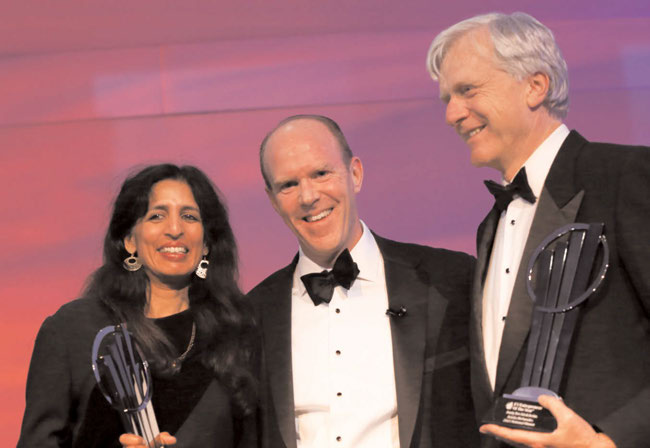
WASHINGTON (TIP): The Arista Networks team of Jayshree Ullal and Andy Bechtolsheim, based out of Santa Clara-California, have been honored by Ernst and Young as the 2015 Entrepreneur of the Year.
Ullal and Bechtolsheim, who also won in the Technology category, were honored at the EY Entrepreneur of the Year National Awards gala, the culminating event of the EY Strategic Growth Forum® in Palm Springs, California.
“To be an entrepreneur is to be a game changer,” said Mike Kacsmar, EY Entrepreneur of the Year Americas Program Director. “Jayshree Ullal, Andy Bechtolsheim and the Arista Networks team embody all of the characteristics we value in entrepreneurship. They have successfully challenged industry norms and redefined the industry standard.”
In their acceptance speech, Arista’s Indian American CEO Jayshree Ullal said, “Arista means ‘agree to be the best.’ … It’s very, very fitting, and we’re truly honored to stand and live by our name.”
Arista Networks delivers software-driven cloud networking solutions for large data centre storage and computing environments.
The EY Entrepreneur of the Year Award, one of the world’s most prestigious business award for entrepreneurs, recognizes visionary business leaders who demonstrate innovation, financial success and commitments to their communities as they create and build world-class companies.
EY Entrepreneur of the Year National category winners
Additional awards were presented in 11 categories, honoring a number of exceptional entrepreneurs for their innovation and leadership. Regional winners also included 13 Indian Americans.
By category, they include:
Distribution and Manufacturing
Award winner: Berto Guerra, CEO & Chairman – Avanzar Interior Technologies, LTDSan Antonio, TXFinalists:
Andrew Philipp, Jeremy Rincon, Robby Whites – Clarus Glassboards, LLC
Scott C. Mueller, Dean Mueller – Dealer Tire
Jason Luo – Key Safety Systems
Emerging
Award winner: David Royce, Founder & CEO – AlterraProvo, UTFinalists:
Ilia Papas, Matt Salzberg, Matthew Wadiak – Blue Apron
Adam Hepworth – Jamberry
Jeff Church – Suja Juice
Energy, Cleantech and Natural Resources
Award winner: Eric Dee Long, CEO – USA CompressionAustin, TXFinalists:
John B. Walker – EnerVest, Ltd.
Donald Young – Hoover Group, Inc.
Kevin McEvoy – Oceaneering International, Inc.
Family Business
Award winner: Andrew D. Peykoff II, President & CEO – Niagara Bottling, LLCOntario, CAFinalists:
Lou Gentine, Louie Gentine – Sargento Foods Inc.
Robert M. Beall – Beall’s, Inc.
Edward Weisiger, Jr. – CTE
Financial Services
Award winner: Alfred P. West, Jr., Chairman & CEO – SEIOaks, PAFinalists:
Jonathan Steinberg – WisdomTree Investments, Inc.
Kenneth Lin – Credit Karma
Noah Breslow – OnDeck
Life Sciences
Award winner: Jean-Jacques Bienaimé, Chairman & CEO – BioMarin PharmaceuticalNovato, CAFinalists:
Charles Dunlop, James Dunlop – Ambry Genetics
Mike Mussallem – Edwards Lifesciences
Tim Walbert – Horizon Pharma
Media, Entertainment and Communications
Award winner: Maggie Wilderotter, Chairman & CEO – Frontier CommunicationsStamford, CTFinalists:
Frank Addante – Rubicon Project
Chris DeWolfe – SGN
Sean Eugene Reilly – Lamar Advertising Company
Real Estate, Hospitality and Construction
Award winner: Adam Neumann, Co-Founder & CEO – WeWorkNew York, NYFinalists:
John Kilroy – Kilroy Realty Corporation
Zeke Turner – Mainstreet
James Michael Appling, Jr. – TNT Crane & Rigging, Inc
Retail and Consumer Products
Award winners: Reade Fahs, CEO, and Bruce Steffey, President and COO – National Vision, Inc.Duluth, GAFinalists:
John Foraker – Annie’s, Inc.
Marla Malcolm Beck – Bluemercury, Inc.
Jamie Lima, Paulo Lima – IT Cosmetics
Services
Award winner: Y. Michele Kang, Founder & Chief Executive Officer – CognosanteMcLean, VAFinalists:
Lawrence Janesky – Basement Systems Inc.
Abhi Shah – Clutch Group
Setul G. Patel – Neighbors Health System, Inc.
Technology
Award winners: Jayshree Ullal, President & CEO, and Andy Bechtolsheim, Founder, Chief Development Officer and Chairman – Arista NetworksSanta Clara, CAFinalists:
CALIFORNIA(TIP): A California man who found his long-lost twin brother has died of cancer at 82-years-old.
In 1933, Jack Yufe was born in Trinidad with his identical twin brother but 6-months later the boy’s parents would separate.
Mr Yufe lived with his father and was raised Jewish, eventually serving in the Israeli Navy, while his brother Oskar Stohr lived with his mother in Germany. Mr Stohr grew up as a Nazi, eventually joining the Hitler Youth, the Los Angeles Times reports.
The brothers remained in contact with each other and reunited when they were 21-years-old.
They shared the same mannerisms, humor and nervous ticks. But they would never agree on Palestine and Israeli politics nor the cause of World War II, the Washington Post reports.
Cal State Fullerton psychology professor Nancy Segal wrote a book on the brother’s aptly titled “Indivisible by Two: Lives of Extraordinary Twins.”
Professor Segal told the Times that the twins has an “extraordinary love-hate relationship.”
“They were repelled and fascinated by each other. They could not let go of the twinship,” she said.
The Post reports that Mr Yufe iis survived by three daughters: Anita Yufe, Hovi Reader and Debvra Gregory; And his two stepsons Renee and Enrique Vega.
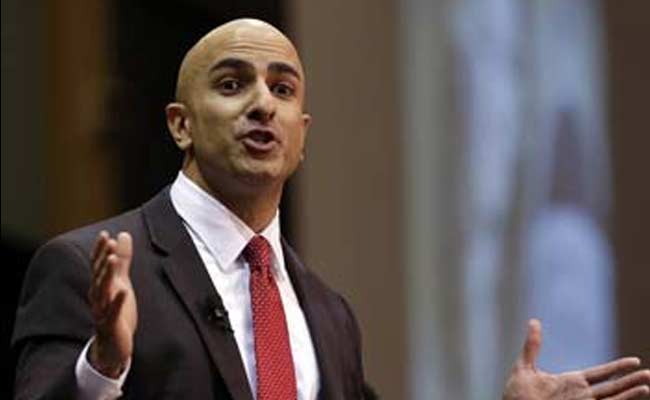
WASHINGTON: Prominent Indian-American business executive Neel Kashkari was today appointed as the head of the US Federal Reserve’s regional bank in Minneapolis.
Mr Kashkari, who was once a Republican gubernatorial candidate in California, would replace another Indian-American Narayana Kocherlakota whose tenure as CEO and president ends on December 31.
“Kashkari is the right person to build on the Minneapolis Fed’s core strengths and successfully lead the Bank into the future,” said Randall Hogan, chairman of the Minneapolis Fed’s board of directors and co-chair of the search committee.
As president of the Minneapolis Fed, the 42-year-old will participate on the Federal Open Market Committee in the formulation of US monetary policy.
He will oversee 1,100 employees. “I am truly honoured to have the opportunity to lead the Federal Reserve Bank of Minneapolis. I look forward to working with the Bank’s dedicated staff and continuing the Bank’s long-standing tradition of excellent service to the Ninth Federal Reserve District and to the nation,” Mr Kashkari said.
“The Minneapolis Fed has built a strong reputation for economic research and thought leadership as well as excellence in Bank operations. I am delighted that I will be working with the Federal Reserve Bank of Minneapolis team to build on the Bank’s many achievements,” he said.
Mr Kashkari had earlier served in the US Department of the Treasury from 2006 to 2009, first as senior adviser to Secretary Henry Paulson and then as assistant secretary of the Treasury.
In the latter role, he established and led the Office of Financial Stability and oversaw the Troubled Asset Relief Program (TARP) for both Presidents George W Bush and Barack Obama.
Mr Kashkari holds an MBA from the Wharton School of the University of Pennsylvania and bachelor’s and master’s degrees in mechanical engineering from the University of Illinois at Urbana-Champaign.
The Federal Reserve Bank of Minneapolis is one of 12 regional Reserve Banks that make up the Federal Reserve System, the nation’s central bank.
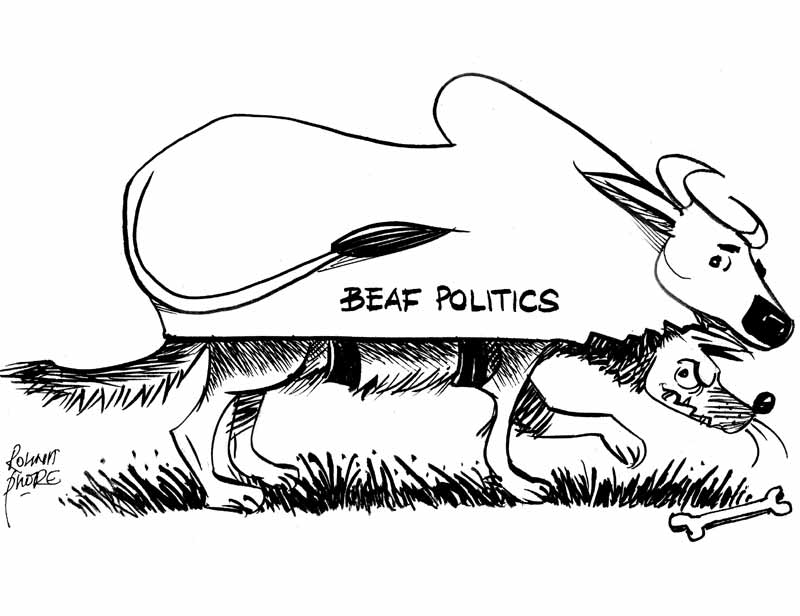
The recent killings of Mohammad Akhlaq, Noman and Zahid Ahmad Bhatt on the claim that they were slaughtering cows is not only an attack on the right to life, livelihood and diverse food cultures but an assault on the entire agrarian economy.
The cynical fetishisation of cows by Hindutva politicians is not only profoundly anti-farmer but, paradoxically, also anti-cow.
What these bigots fail to realize is that the cow will survive only if there are pro-active measures to support multiple-produce based cattle production systems, where animals have economic roles. The system must produce a combination of milk, beef, draught work, manure and hide, as has been the case in the rain-fed food farming agriculture systems of the sub-continent over the centuries.
In meat production systems – whether meat from cattle, buffaloes, sheep, goat, pigs or poultry – it is the female which is reared carefully in large numbers to reproduce future generations, and the male that goes to slaughter. It is only the sick, old, infertile and non-lactating female that is sold for slaughter. In every society where beef consumption is not politicized, farmers known that eating the female bovine as a primary source of meat will compromise future production, and hence they are rarely consumed.
On the other hand, the destiny of a male bovine is clear: it will either become a work animal (bullock), a breeding bull, or be sold for meat – which is the fate of the vast majority. In the end, the male bovine will reach a slaughterhouse. Villages earlier had a system of having one community breeding bull which roamed around servicing village cows that came to heat. Typically, 70% of a cattle herd or sheep/goat flock is female breeding stock; the rest comprises a couple of breeding males, and young male and female offspring.
Indian cows do better in Brazil than India
Today, rural indigenous cows are a rarity in India and community breeding bulls are history. Farmers no longer want to rear cattle, particularly cows. This trend is validated by an analysis of India’s livestock census: Between 2003 and 2012, the annual growth of young female bovines – a key indicator of future growth trends of animal populations -on a compound annual growth rate basis declined from 1. 51% to 0.94% in indigenous cattle and from 8.08% to 5.05% in crossbred cattle. On the other hand, it increased from 2.12% to 3.13% in young female buffaloes.
Whilst India’s population of fine indigenous cattle breeds keeps decreasing year by year, Brazil’s cattle populations of Ongole, Kankrej and Gir breeds – imported from the Indian sub-continent nearly 200 years ago – keep increasing. We have laws to ‘protect’ cows, ban cow slaughter and ban the consumption of beef: the whole of the North-East, Kerala and West Bengal have no restrictions on cattle slaughter, nine states allow all cattle slaughter except cows, and the rest have a ban on all cattle slaughter. In Brazil, on the other hand, beef-based cattle production systems are the driving force behind its flourishing indigenous Indian cattle breed populations.
Between 1997 and 2012, according to the government’s successive livestock censuses, India’s indigenous cattle population declined by over 15% from 178 million to 151 million, less than what we began with at the time of independence (155 million), when all cattle were indigenous breeds. Fifty years of sustained white revolution policy interventions to enhance milk production have actively advocated and financed replacement of indigenous cattle with high yielding breeds. Cross breeds like Jersey and Holstein Friesan now comprise some 21% of India’s cattle population. But even India’s total cattle population, including crossbreds has increased by a mere 23% (from 1951 to 2012) and stands at 190 million.
In stark contrast, Brazil’s cattle population -comprising 80% pure Indian cattle breeds
(Indicine) or Indian cattle breed crossed cattle – grew by 74% from 56 million in 1965 to 214 million today. The Gir, which is the favored dairy breed, comprises 10% of Brazil’s cattle population. The Ongole (or Nellore), which is the mainstay of beef production, makes up most of Brazil’s cattle population.The Ongole of India, however, is a threatened breed in its own homeland.
While Brazil continues to have acres of lands for their cattle to graze, here in India we have successfully done away with common grazing lands where animals can be put to pasture. In the land of the Ongole, pre-2014 united Andhra Pradesh, permanent pastures and grazing lands declined by 78% from 1.17 million hectares in 1955-56 to 0.56 million hectares in 2009-10. The rate of decline was much faster in the post economic liberalization decades of 1990-2010 – a time of aggressive industrial growth and Hindutva influence.[1]
As bullocks are displaced, less cows are reared
In today’s India, cattle have been displaced from their productive role in agricultural livelihoods: tractors have replaced bullocks/draught animals that were used to plough, thresh, and anchor rural transportation. India’s population of work cattle or bullocks declined by 28% between 1997 and 2012. This has been the result of economic policies that have strived to industrialize, and “green” and “white” revolutionize our agriculture and livestock production.
Chemical fertilizers have replaced manure. A shift from diverse food cropping systems of cultivation to mono-cropped production of commodity crops like cotton, sugarcane, and tobacco, or palm oil has depleted crop residues as a rich fodder source, and made bullock ploughing virtually redundant. The bullock is no longer needed to extract oil from oil seeds (in any case we now import 60% of our edible oil and even poor oil millers have closed shop), extract juice from sugarcane, pull water out of wells or be the main mode of rural transportation.
Hence why should farmers keep indigenous bullocks? Or rear indigenous cows for that matter, which produce bullocks? Once animals stop having an economic value, they stop being reared. Simple.
Lessons from a growing buffalo population
Contrast the sorry state of India’s cattle with its thriving buffalo population. Our buffalo population has grown by 21% since 1997. Why? Very simple: buffaloes anchor milk and beef production in India. We are the 2nd largest exporters of buffalo beef in the world, with an annual export of nearly 2.4 million tons. Bovine meat contributes nearly 60% of total Indian meat production, as against small ruminants (15%), pigs (10%) and poultry
(12%). Buffaloes survive well on limited, coarse, less nutritious crop residues, whilst cattle need more green fodder and green grass. This is evidence itself that given all other conducive input factors for the animal to be reared (primarily feed, fodder, water, ecological adaptability, knowledge, labor, health care and a remunerative livelihood), allowing the slaughter of an animal actually drives its numbers up. The same holds true for goat and sheep. Between 1997 and 2012, the sheep population increased overall by 13%, and goats by 10%, despite a 33-38% slaughter rate.
In short, the secret to flourishing animal populations appears to be meat consumption.
The highly industrialized beef producing nations of the world – the United States, Australia and New Zealand – produce beef by replacing large acres of land where food could be grown to feed human beings, with animal feed. Regrettably, in Latin America, large beef corporations are steadily converting huge tracts of natural prime Amazonian forests, home to indigenous peoples, into grazing lands: in short these systems are unsustainable, contributing hugely to carbon emissions.
India’s beef production on the other hand, is one of the most sustainable and least ecologically damaging in the world. Beef is a by-product of buffalo rearing livelihood practices, and not its primary objective, which continue to be milk and milk products. Whilst male buffaloes end up in the slaughter houses, farmers also sell their infertile, old, diseased and non-lactating females. Our animals are not fed on predominantly grain-based concentrate diets, but on crop-residues, and natural vegetation.
Allow slaughter to save the indigenous cow
Threats to impose a nationwide ban on beef consumption and cattle slaughter also ignore the close relationship between those who eat beef and those who look after cattle. In India, cattle have always been relished and their meat is a critical source of nutrition for various communities – including Adivasis, Dalits, Christians, Muslims and several other castes (many of whom are too scared to admit they eat beef).
A Dalit social activist asserts: “The Brahmins and other agraha (upper) castes who are cow worshippers have never in their lives ever grazed the animal, fed it, cleaned its dung or buried its carcass. For all that they have used our labor: we graze, we feed, we clean the sheds and dung, we bury the carcass, and we eat beef.”
“The so-called upper castes visit our hamlets in search of beef, and are scared to publicly acknowledge their beef eating practices”, says an adivasi community leader from Telangana. “This year, Hindu families hired cows from us for the Godavari Pushkaralu, because there are no cows left in caste rural Indian villages, where people worship cows and shun beef ! We adivasis, on the other hand, eat beef, plough our fields with cattle, and farm with cattle manure; therefore we continue to own cows and cattle herds!”
In this land of the holy cow, depleting grazing resources of common lands and forests, disappearing roles for indigenous cattle breeds in agriculture production as providers of milk, energy, manure and beef, policies to replace indigenous breeds with crossbreds, coupled with a ban on slaughter of cattle in several parts of India, have led to plummeting cattle populations and the cow fast becoming a creature of the past.
There is only one conclusion to be drawn. If you really want to protect the cow, do not ban beef, cattle slaughter and the ecological culture that sustains the bovine economy.
(The author has a Masters in Animal Breeding and Genetics from the University of California, Davis, USA. She is a trained veterinarian and works with the Food Sovereignty Alliance, India. He can be reached at Sagari.ramdas@gmail.com; foodsovereigntyalliance@gmail.com.)
[1] Compendium of Area and Land Use Statistics of Andhra Pradesh 1955-56- 2004-05. Directorate of Economics and Statistics: An Outline of Agricultural Situation in Andhra Pradesh 2007-08. DES. Hyderabad.
A male student armed with a hunting knife stabbed four people on Wednesday, Nov 05, before he was shot dead by campus police at the University of California, Merced, in the heart of the state’s Central Valley, law enforcement and school officials said.
The attack occured at outside the university’s Classroom and Office Building.
The attacker burst into a morning class to kill his intended victim, and may have, had it not been for the heroic intervention of a construction worker who ran into the room to break up the attack.
The construction worker and three others were injured, but all are expected to survive. The alleged assailant, described as a college student in his 20s, was shot and killed by campus police as he fled the scene at the University of California, Merced.
All those attacked at the University of California, Merced, were conscious when paramedics reached them, Assistant Vice Chancellor Patti Waid said.
Two victims were airlifted to a local hospital while three were treated at the scene. Niether the suspect or victims have been identified.
Police said the assailant was a student but had not confirmed his identity or provided a motive for the attack. Officials said they were still working out a timeline of events leading up to the stabbings, and it wasn’t clear how the attack played out.
The stabbings come about a month after a gunman killed nine people and himself at a college in Oregon, in the deadliest of dozens of U.S. mass shootings over the past two years.
NEW YORK (TIP): The National Institutes of Health recently announced the recipients of the National Institutes of Health (NIH) Director’s New Innovator Awards. Six Indian American researchers are amongst the recipients of the Award for 2015. The six Indian Americans include: Sanjay Basu of Stanford University, Karunesh Gangly of University of California at San Francisco, Kamil Godula of University of California at San Diego, Deepika Mohan of University of Pittsburgh, Manu Prakash of Stanford University, and Abhishek Prasad of University of Miami.
Basu is an assistant professor in the Department of Medicine at Stanford University. He received his B.S. from MIT, M.Sc. from Oxford, and M.D./Ph.D. from Yale before completing internal medicine residency at UCSF.
Ganguly is an assistant professor at UCSF and a staff physician in the Neurology and Rehabilitation Service at SFVAMC. He graduated from Stanford University and then received a Ph.D. in neuroscience and a M.D. degree from the University of California, San Diego.
Godula is an assistant professor in the Department of Chemistry and Biochemistry at UC San Diego. He earned his M.Sc. in organic chemistry at Marquette University and his Ph.D. at Columbia University, working in the area of C-H bond activation.
Mohan is an assistant professor of critical care medicine and surgery at the University of Pittsburgh. He received a B.A. in religion and political theory from Princeton University in 1997, an M.D. from Emory University in 2001, and an M.P.H. from Columbia University in 2003.
Prakash is an alum of the Indian Institute of Technology, Kanpur. He has a Ph.D. in the area of Applied Physics lab from the Massachusetts Institute of Technology.
Prasad, an assistant professor in the Department of Biomedical Engineering at the University of Miami, received his M.S. in biomedical engineering from Louisiana Tech University. He has a Ph.D. in biomedical engineering from the New Jersey Institute of Technology and University of Medicine and Dentistry in New Jersey.
Facebook may not be coming to the Indian Institutes of Technology (IITs) this year, both for internship and final placement, according to sources from IIT placement cells, reports ET.
At least five IITs confirmed that the online social networking service, headquartered in Menlo Park, California, was not visiting them this year. Facebook had made about a dozen offers at three of these institutes last year with salaries going upwards of a crore and even touching Rs 2 crore for positions of software engineers in California.
“Visa is an issue for US based technology companies that hire from India,” said former placement manager at IIT Bombay, Mohak Mehta. The current quota for H1B visas is 65,000 which is exhausted in a matter of days of the annual allocation becoming available at the beginning of April each year. US demand for talent in science, technology, engineering and mathematics (STEM) is estimated to go up to a million by the year 2020.
“Considering that a million of STEM workers would be needed by the US in some years, they are likely to fall short by almost 50 per cent. India has a good supply of talent in this space, which also includes the young IITians,” said Shivendra Singh, VP, NASSCOM.
Facebook declined to comment. But sources close to the company said it had visa problems last year too. It was forced to position its IIT hires at the UK for almost a year before getting visas in place for the US.
“Facebook did not come this year for undergraduate interns at our IIT,” confirmed Atal Ashutosh Agarwal, Vice President, Technology Students’ Gymkhana at IIT Kharagpur. It is the same story at other IITs.
SAN JOSE (TIP): A 72-year-old Indian-origin San Jose resident was killed in a hit-and-run accident and was later identified by the Santa Clara County Medical Examiner-Coroner’s Office in California.
Inderjeet Sharma was walking near a road in San Jose on Tuesday, October 13 morning when he was hit by a pickup truck. The driver fled the spot.
Sharma was pronounced dead at the scene and his identity was revealed on Friday, October 16, San Jose Mercury News reported.
With the help of eyewitnesses and footage from a surveillance camera, the police identified and located the vehicle on Wednesday.
Signup to our Newsletter!
Don’t miss out on all the happenings around the world