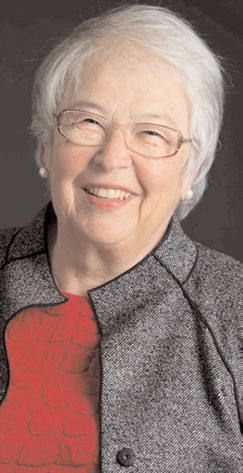
Tag: Carmen Fariña

  • Preparing Global Citizens: Expanding Multilingual Classrooms in New York City

    Preparing Global Citizens: Expanding Multilingual Classrooms in New York City

    Like many New Yorkers, I am a child of immigrants. Being a City of immigrants is what makes us strong and resilient, and as New Yorkers, we take pride in living in a diverse, multicultural place. That same pride extends to our schools. First and foremost, we know that in the 21st century, speaking more than one language opens doors and opportunities for our City’s students. That’s why, as Chancellor, I am dedicated to increasing Dual Language and Transitional Bilingual Education programs across the City, which provide instruction for students to acquire fluency in two languages while fostering an appreciation for multiple cultures. In other words, to be thoughtful and productive citizens of our country – and our world.

    This year, I am particularly proud that we are opening 68 new Dual Language and Transitional Bilingual Education programs across all five boroughs in September 2017. This large expansion includes our first Urdu Transitional Bilingual Education program in Brooklyn, in addition to programs in Chinese, Russian, Arabic, French, Bengali, and Spanish.

    Bilingual programs are critical for the 150,000 English Language Learners who attend public school in New York City. As a former ELL myself, I know the many benefits that come with being bilingual. This expansion will give hundreds of ELLs access to high-quality bilingual programs, preparing them for real world experiences and success in the classroom and beyond.

    Bilingual programs give our students confidence as they develop proficiency in a second language and can also help students to develop a vision for their futures. One of our remarkable students, Carlos Vega, attends Manhattan Bridges High School. Carlos was born in Mexico and arrived in New York with his parents six years ago. Moving to New York City exposed him to different languages, cultures and needs of people, in particular he noticed many handicapped New Yorkers struggling to get on the train, climb stairs and overall navigate the City independently. Carlos is a Pre-Engineering and Dual Language student and hopes to one day create prosthetics and sensory aids to help people without limbs to become more independent. This is the beauty of our City and our bilingual programs, which increase opportunities for thousands of students like Carlos every day.

    Parents are partners in expanding bilingual programs. Family engagement helps us open bilingual programs in neighborhoods that need them, and I am pleased to hear from parents at town hall meetings requesting these programs in their schools. We want to hear from our communities about the Dual Language and Transitional Bilingual Education programs that they need.

    And doing a better job of reaching parents – who represent the diversity and many cultures of New York City – is also on our mind. As Chancellor, providing families with limited English skills access to information, workshops and conferences in their native language has been one of my biggest priorities. Since the fall, for the first time, we’ve offered Native Language Parent Conferences for families in Mandarin, Bengali, Arabic and Spanish. I encourage families to attend these conferences, and also to find other ways to get involved in their child’s education. It could be through a weekend club or English classes-there are many ways for the entire family to support their child’s future.

    I look forward to visiting these programs, and seeing the benefits firsthand for our students and families. As we continue to bring more educational opportunities to students across the city, we’re celebrating our diversity, building Equity and Excellence across our schools, and putting more students on the path to college and meaningful careers.

    To learn how to apply for these programs, families can call 718-935-3500 or visit one of our family welcome centers.

  • Chancellor Fariña Announces $3 Million Investment in Classroom Libraries through Universal Literacy Initiative

    Chancellor Fariña Announces $3 Million Investment in Classroom Libraries through Universal Literacy Initiative

    Through Universal Literacy, 103 reading coaches are strengthening literacy instruction at all 107 elementary schools in Districts 9, 10, 17, and 32

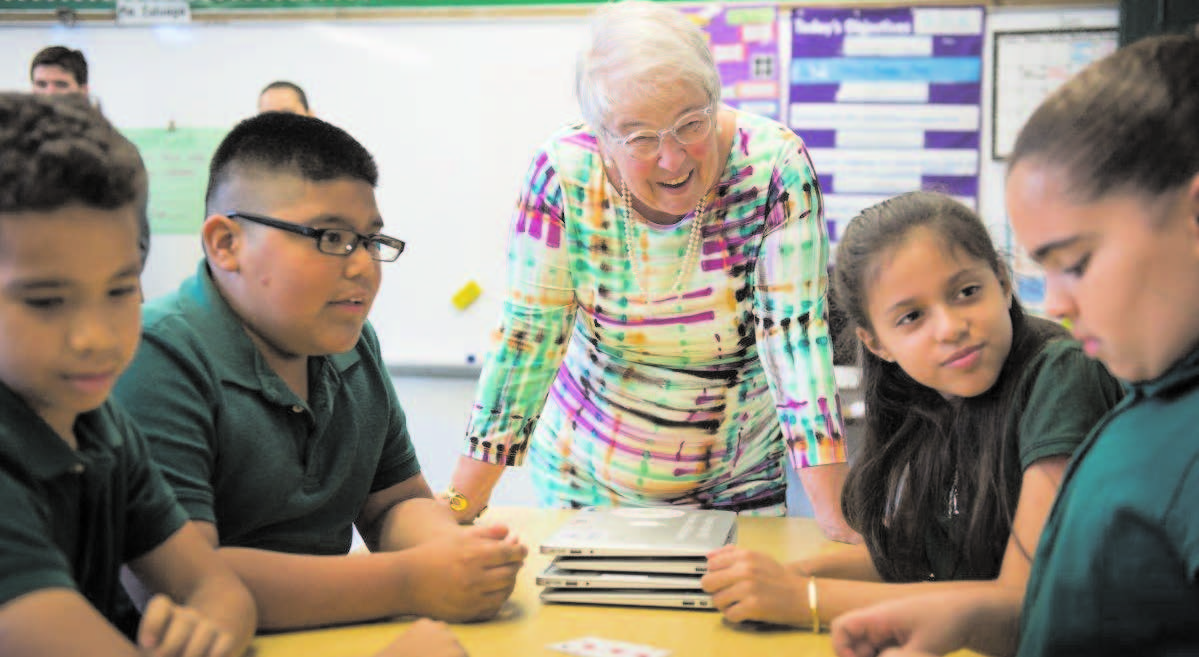
    Schools Chancellor Carmen Fariña announced that the 107 elementary schools participating in the Universal Literacy initiative this year are receiving $3.05 million to build classroom libraries for Kindergarten, 1st, and 2nd grades. Chancellor Fariña made the announcement at PS 375 in Brooklyn, where she celebrated World Read Aloud Day with a 2nd-grade class.

    “We are laser-focused on building a stronger early foundation for New York City’s students, and that’s reflected in our investment in Pre-K for All, Universal Literacy, and Algebra for All,” said Schools Chancellor Carmen Fariña. “This $3 million investment will help strengthen our students’ early learning by increasing access to quality, age-appropriate books and building a love of reading. I am also excited to celebrate and foster a love of reading through World Read Aloud Day.”

    This year, the Universal Literacy initiative – one of the initiatives in Mayor de Blasio and Chancellor Fariña’s Equity and Excellence for All agenda – is being implemented in all 107 elementary schools in Districts 9 and 10 in the Bronx, and Districts 17 and 32 in Brooklyn. There are 103 Universal Literacy reading coaches supporting these 107 elementary schools. The goal of the initiative is for, within six years, at least two-thirds of students to read proficiently by the end of 2nd grade, with the target of 100 percent of all 2nd-graders reading at grade level by 2026. By the 2018-19 school year, this initiative will expand to all 32 New York City school districts.

    Principals will work with their Universal Literacy reading coaches to purchase classroom library books as well as collections of texts for small group instruction in the three target grades. “Big books” may also be purchased. In schools with large English Language Learner populations, new books will reflect all of the languages spoken in the school.

    The allocation is $105.61 per student; schools will receive a share of the $3.05 million based on their number of students in the three target grades. Individual schools’ allocations range from about $7,000 to $77,000. This is the first allocation of its kind; allocations for classroom library and book purchases will be part of the Universal Literacy initiative as it expands to additional districts next year and in 2018-19.

    Contact: Chancellor’s Press Office (212) 374-5141

  • NYC’s new education plans aim to diversify more classrooms, restore failing schools

    NYC’s new education plans aim to diversify more classrooms, restore failing schools

    NEW YORK CITY (TIP): The nation’s largest public school system roars back to life Thursday as more than a million New York City kids return to class.

    As families and students scramble to get ready for the new school year, they will encounter a system at a pivotal moment, as it tries to restore some of the city’s struggling schools while making classrooms more diverse.

    City schools boss Carmen Fariña and Mayor de Blasio are fighting to build on the administration’s successful roll-out of universal pre-kindergarten programs, and critics still say they are doing too little. In an exclusive interview with the Daily News on Wednesday, Fariña outlined her plans to invest more money in strapped schools to create a more level playing field.

    “Right now I’m grinning from ear to ear. Anything is possible,” gushed Fariña, 73, a veteran of both the classroom and school politics. She is entering her 51st year as an educator working in the city schools.”Every child will achieve, every parent will be happy and every teacher will feel their best,” she added. “That’s what I hope to do over the course of the year. I’m very excited.”

    In her third full year leading the public schools under Mayor de Blasio, Fariña said she intends to build on new programs that bring added social services to hundreds of schools.

    She also aims to boost academics – particularly reading – with the addition of hundreds of literacy coaches. Believing that second graders are entering a pivotal year with language skills, she has a goal, she says, to have them all read at grade level.

    Much of Fariña’s efforts will hinge on the twin concepts of equity and excellence first unveiled by Mayor de Blasio in an education policy speech in October.

    The public schools will be rolling out a slew of programs to increase the use of guidance counselors, take students on college visits and promote Advanced Placement classes.

    Fariña will also be doubling down on the city’s efforts to overhaul 94 troubled schools that have posted mixed results despite the city’s efforts to fix them with an investment of $761 million in added services and staffers.

    The city will look to close or combine some of those struggling schools that have resisted improvement, Fariña said.

    She will also work to improve diversity in the city’s schools – including some that are the most racially segregated in the nation.

    More schools are setting enrollment targets to promote diversity, Fariña said, and the city will hold a series of meetings across the city with parents and educators to build on those efforts. Overall, her goal is to improve upon a citywide high school graduation rate of just over $70, to bring it to 80% by 2026, Fariña said. “We need to make sure we have student achievement where it needs to be, so our students will graduate and get good jobs and be productive citizens,” she added.

    Critics, such as Brooklyn College education professor David Bloomfield, have faulted Fariña and de Blasio for failing to produce a sea change for a school system where just 38% of students passed state reading tests in 2016.

    He says he doesn’t trust the administration’s metrics.

    “De Blasio promotes no vision, so he is constantly criticized, without the ability to announce large scale success, just new programs and suspect data points,” Bloomfield said.

    Bronx public school parent and education activist Tracy Woodall shares Bloomfield’s impatience with the public schools’ slow transformation under de Blasio. “I’ve met so many teachers who want to be innovative in the ways they teach kids but feel stifled,” said Woodall. “The whole system needs to be changed.”

  • DOE kicks off annual summer meals program to provide free breakfast and lunch to children across NYC

    DOE kicks off annual summer meals program to provide free breakfast and lunch to children across NYC

    NEW YORK CITY (TIP): More than 8 million free, healthy meals will be distributed from June 29 to September 2 at nearly 1,100 sites in all 5 boroughs for those 18 years old and younger

    Anyone 18 years old and younger is eligible to receive a meal, and participation does not require any form of identification or application. Sites stretch across all five boroughs at various locations, including schools, parks, pools, libraries, and NYCHA facilities.

    The DOE also launched a new expanded advertising campaign in collaboration with the New York State Department of Education to promote Summer Meals and ensure families across the City are aware of this incredible program. The campaign features new branding and designs in English and Spanish that will appear in ads on subways and bus shelters; in community, ethnic and online news outlets; and will also be displayed on the outside of the food trucks that will be providing meals at various locations. Volunteers from partner organizations will also go door to door and hand out flyers in 10 languages to spread awareness of the program.

    “This critical program provides free meals during the summer months to ensure students are prepared to start the school year healthy and ready to learn,” said Schools Chancellor Carmen Fariña. “Eating healthy meals for breakfast and lunch is essential to a child’s development, and the Summer Meals program will ensure that children can easily access these important meals during the summer.”

    This year’s menu features bagels, an egg and cheese sandwich, and yogurt and granola for breakfast; as well as pizza, hamburgers, deli sandwiches and antibiotic-free roasted chicken for lunch; and will introduce new items including BBQ roasted chicken, grilled chicken pasta salad, and fruit juice ices. As part of the DOE’s larger NY Thursdays initiative, the yogurt and apples provided on Thursdays are all locally sourced. Daily menus and location details are available on the SchoolFood app.

    “We encourage all children across New York city to participate in the program and take advantage of the free breakfast and lunch that’s available over the summer,” said Deputy Chancellor Elizabeth Rose. “The Summer Meals program is an easily accessible resource for families to provide nutritious meals to children.”

    In 2015, 8.2 million meals were served, a significant increase from the 7.1 million meals served in the summer of 2012. The annual cost of the program is approximately $7 million. The nutritious meals meet and exceed the U.S. Department of Agriculture Nutrition Standards for School Meals.

    “The Summer Meals menu offers nutritious and high-quality breakfast and lunch options to children across the City,” said Eric Goldstein, CEO of the Office of School Support Services, which oversees SchoolFood. “Having access to healthy meals is critical and the expansion of this year’s campaign will increase awareness and encourage more families to participate.”

    “Thanks to this great program, families across New York City can be sure their kids get healthy meals all summer long, so they can enjoy food, friends and fun,” said Megan Cryan, New York Director, No Kid Hungry Campaign.

    “Nationwide, only one in six low-income kids who received a free school lunch during the school year accessed a summer nutrition program like Summer Meals in 2014,” said Manhattan Borough President Gale A. Brewer. “This federally-funded program is a win-win, but outreach is critical: we have to get the word out, so New York City families know when, where, and how to access free summer meals for their kids this summer.”

    “The summer meals program is vital to the well-being of children who come from low-income families,” said NYC Council Education Committee Chairperson Daniel Dromm. “Far too many of our young people fall victim to food insecurity. These free, healthy meals bring us closer to eliminating hunger in our City once and for all. I am proud to support this program and will continue to work alongside the Chancellor to expand it.”

    Summer Meals are available from Monday to Friday, with breakfast served from 8:00am to 9:15am and lunch served from 11:00am to 1:15pm. To learn more, find a nearby Summer Meals location, and access daily menus:

  • Chancellor Fariña announces 63 high schools to offer new advanced placement courses for 2016-17 through AP for all

    Chancellor Fariña announces 63 high schools to offer new advanced placement courses for 2016-17 through AP for all

    Carmen Fariña
    Schools Chancellor Carmen Fariña says: “AP for All is a critical part of bringing equity and excellence to all our high schools”.

    NEW YORK (TIP): Schools Chancellor Carmen Fariña has announced that this fall, 63 high schools will offer new Advanced Placement courses, including 35 that offered no AP courses during the 2015-16 school year. The expansion comes in the first full year of the AP for All Initiative, one of the eight initiatives in Mayor de Blasio’s Equity and Excellence agenda. The goal of AP for All is to increase college readiness among New York City students; research has shown that the rigor of these courses and exams better prepare students for college. Through AP for All, 75 percent of high school students will have access to at least five AP classes by fall 2018 and all high school students will have access by fall 2021. The initiative will cost $51 million annually when fully scaled in fall 2021, and about $21 million for the 2016-17 school year.

    The 63 selected high schools currently offer few or no AP courses and have demonstrated readiness to begin offering additional AP coursework. They include 20 high schools in the Bronx, 22 in Brooklyn, 15 in Manhattan, and six in Queens. Among the 63 high schools, 39 schools across 12 high school campuses will utilize a “campus model,” sharing courses with co-located schools to provide increased opportunity across the school building. In 2016-17, the 63 high schools will offer 118 additional AP courses, including 52 in STEM subjects.

    “AP for All is going to expand rigorous, challenging coursework at all of our high schools, and the first expansion to 63 high schools represents exciting progress,” said Mayor Bill de Blasio. “This is a critical part of our work towards equity and excellence for all New York City public school students, across all our neighborhoods and boroughs.”

    “AP for All is a critical part of bringing equity and excellence to all our high schools, and this expansion will make a real difference for students at 63 schools next year,” said Schools Chancellor Carmen Fariña. “Through our Equity and Excellence agenda, we are laser-focused on putting all our students on the path to college and careers, and I look forward to the work ahead of us.”

    Administrators and teachers from the selected high schools will receive rigorous, subject-specific professional development this spring and summer, including an AP Summer Institute, and ongoing workshops and support provided by the DOE and external partners throughout the 2016-17 school year. Additionally, 750 students from these high schools have been invited to participate in a new two-week summer enrichment session to prepare them for greater success in new AP courses. AP for All students will also receive support throughout the school year, including weekend study sessions providing up to an additional 20 hours of learning, review, and opportunities to take practice AP exams.

    As part of AP for All, the DOE has also identified over 100 schools for pre-AP support starting this spring and continuing through the 2016-17 school year. These high schools offer few or no AP courses, and also need additional support to strengthen student and teacher readiness. The pre-AP support will focus on strengthening student instruction across high schools, and identifying and providing professional development to potential AP teachers for the 2017-18 school year and beyond.

  • DOE’s Language Access Expansion Builds Important Bridge to City’s Public School Families

    DOE’s Language Access Expansion Builds Important Bridge to City’s Public School Families

    For years, advocates and community based organizations have urged the New York City Department of Education to increase the translation and interpretation services to public school parents and guardians with limited English proficiency. On Monday, I was honored to join NYC Schools Chancellor Carmen Fariña, a true champion for the immigrant community to announce a series of initiatives aimed at easing language access for parents in schools.

    Immigrant families face tremendous obstacles – speaking to their child’s teacher or principal should not be one of them. With nearly half of public school students – almost half a million families – speaking a language other than English at home, it is essential that these families have the ability to participate in their child’s school lives. That’s why the New York Immigration Coalition and our Education Collaborative of member organizations representing Asian, Arab, Caribbean, African, Latino, and other immigrant families, launched our “Build the Bridge” Campaign that advocated for increased translation and interpretation for immigrant parents.

    And we are grateful that the DOE has stepped up and heard our calls. The DOE’s language access expansion efforts are a significant step that will help notably reduce language gaps in our schools. The expansion includes the creation of nine new full-time positions in the Borough Field Support Centers and Affinity Groups that will determine the specific needs of each school, and build the necessary supports so that parents receive quality translation and interpretation services.

    The expansion also includes new direct access to over-the-phone interpreters available after 5 p.m. In the past, schools had to contact the Translation and Interpretation Unit, which then connected the call – a step that has been eliminated. This will help reduce wait time for an interpreter, and allow teachers and staff to call non-English speaking families after business hours. Interpreters are available in 200 languages. In addition, starting this month, members of the Citywide and Community Education Councils will also receive additional language support. We want our elected parent leaders to be representative of our diverse school system and want to make sure they are able to communicate among themselves no matter the language they speak.

    Having the ability to communicate with parents in a language they understand and in a timely fashion is key to the DOE’s work with parents. We will continue working to ensure that immigrant students and parents are provided with culturally competent services to further strengthen this bridge to immigrant families that the DOE with help and support from advocates has built. We celebrate this groundbreaking accomplishment and thank Chancellor Fariña and the DOE for their continued efforts to improve services for immigrant families all across our City.

  • Kindergarten Applications Open Between December 7 and January 15

    Kindergarten Applications Open Between December 7 and January 15

    NEW YORK (TIP): Chancellor Carmen Fariña announced, October 8 that the kindergarten application process will begin earlier in order to make the application process easier for families. Families will be able to apply to kindergarten starting December 7 and will receive an offer letter in mid-March – one month earlier than last year. The earlier application process will give families and students more time to learn about their new school, offer greater transparency around zoned waitlists, and help ensure a smoother transition from pre-K to kindergarten for our youngest learners.

    “With a historic number of students enrolled in free, full-day, high-quality pre-K, it’s critical that we build on this strong foundation to make sure students are entering kindergarten prepared. By making kindergarten offers earlier, we will make the process easier for families and strengthen the transition between pre-K and kindergarten. This is a common-sense approach to helping our families and students,” said Schools Chancellor Carmen Fariña.

    The application process and priority structure will remain the same. Starting on December 7, families will be able to apply online, over the phone, or in person at a Family Welcome Center through a single application. The application allows parents to apply to up to 12 options, ranking them in order of preference. Online applications are translated into all nine of the DOE’s languages and families can receive assistance in over 200 languages by calling 718-935-2009.

    To inform families of this exciting change, and to guide them through the application process, the DOE will be holding information sessions for families in every borough in December. Additionally, we are providing copies of the kindergarten directory at schools, pre-K sites and Family Welcome Centers around the City, including translated copies where they are needed. The DOE will also reach out directly to families, ensure that all pre-K sites provide information to families on the application process, and inform families of the change at an upcoming pre-K forum.

    Families can learn more about the kindergarten application process by visiting our
    websitewww.nyc.gov/ schools/kindergarten, calling 718-935-2009, or visiting a Family Welcome Center. Families interested in a specific school can reach out to the school about tours and to learn more.

  • Urge NYC Schools Chancellor to Recognize Diwali as Official School Holiday

    Urge NYC Schools Chancellor to Recognize Diwali as Official School Holiday

    Crowley, Rangel, Meng, Meeks, Clarke and Maloney

    NEW YORK (TIP): Rep. Joe Crowley (D-Queens, the Bronx), co-chair of the Congressional Caucus on India and Indian Americans, along with Reps. Charles B. Rangel, Grace Meng, Gregory W. Meeks, Yvette D. Clarke, and Carolyn B. Maloney sent a letter, February 19, to NYC Schools Chancellor Carmen Fariña urging the Department of Education to include the festival of Diwali on the list of new public school holidays.

    “We appreciate your consideration of school holidays that reflect our diverse city and ensure that students aren’t forced to choose between attending school and observing important holidays with their families,” wrote the lawmakers in the letter. Diwali, which marks the beginning of the Hindu New Year, is a festival of great significance to millions of Indians and Indian Americans and is widely celebrated amongst the 3 million-plus Indian-American community, as well as others.

    Known as the festival of lights, Diwali is a time for thanksgiving and prayer for health, knowledge and prosperity. The festival is widely celebrated by Hindus, Sikhs and Jains, as well as others. Crowley led his colleagues in creating the first-ever Congressional Diwali celebration in October 2013. The event brought together hundreds of celebrants – including members of Congress, prominent Indian leaders, and members of the Indian American community – to build a greater understanding of differing cultural backgrounds and increase understanding and tolerance.
    In 2011, Crowley introduced a resolution to recognize Diwali and the strong and growing partnership between the U.S. and India. The full text of the letter to Chancellor Fariña is below: February 19, 2014 Carmen Fariña Chancellor, New York City Department of Education Tweed Courthouse 52 Chambers Street New York, NY 10007 Dear Chancellor Fariña, We understand that you are considering the designation of Eid al-Fitr, Eid al-Adha and Lunar New Year as New York City public school holidays. As members of Congress representing constituents in New York City, we support a potential move to recognize these holidays and urge you to include the festival of Diwali on the list of new public school holidays.

    For nearly a decade, Diwali has been gaining increased recognition throughout the United States. In fact, this year the Congressional Caucus on India and Indian-Americans celebrated the first-ever Congressional Diwali, and the White House has recognized the festival under successive administrations. In New York City, Diwali is celebrated by countless residents, including Hindus, Jains and Sikhs. The majority of New York’s Indian-Americans, which include not only those of direct South Asian origin but also those of Indian-Caribbean heritage, consider Diwali amongst their most significant holidays.

    Further, New York City is home to several dozen temples and gurdwaras, some of which are among the largest in our nation. The numerous Diwali celebrations in the city, such as the popular South Street Seaport event, is a testament to the recognition and popularity of Diwali, attracting thousands from in and around the area. We appreciate your consideration of school holidays that reflect our diverse city and ensure that students aren’t forced to choose between attending school and observing important holidays with their families.

    This is all the more important since members of the communities that celebrate Diwali not only contribute in countless ways to our great city, but their children also compose a sizeable and rapidly growing portion of our schools’ students.We hope to see them recognized by the designation of Diwali as a public school holiday. Sincerely, Joseph Crowley Charles B. Rangel Grace Meng Gregory W. Meeks Yvette D. Clarke Carolyn B. Maloney