Tag: Central Bureau of Investigation (CBI)

  • Supreme Court of India  ropes in CBI to probe Tirupati laddu case; new SIT to have FSSAI representative too

    Supreme Court of India  ropes in CBI to probe Tirupati laddu case; new SIT to have FSSAI representative too

    NEW DELHI (TIP): The Supreme Court on Friday, October 4, 2024,  constituted an “independent” five-member Special Investigation Team (SIT) consisting of two Central Bureau of Investigation (CBI) officers to replace the one formed by the Andhra Pradesh government to probe Chief Minister N. Chandrababu Naidu’s allegations of contaminated ghee used for the preparation of Tirupati laddus during the previous Yuvajana Sramika Rythu Congress Party (YSRCP) regime in the State.

    A Bench of Justices B.R. Gavai and K.V. Viswanathan said it did not want the ruling Telugu Desam Party of Mr. Naidu and the YSRCP of former Chief Minister Y.S. Jagan Mohan Reddy to utilize the apex court as a “political battleground” to trade allegations at each other.

    “We don’t want any political drama. Fortunately or unfortunately, both sides are warring groups,” Justice Gavai remarked orally. In a September 30 hearing, the apex court had remarked that “gods at least should be kept away from politics”.

    On Friday, October 4, 2024, the court roped in the Centre, saying it too should play a role in unearthing the truth about the allegations. Besides making the CBI a part of the probe, the Bench brought the enquiry directly under the supervision of the Central agency’s Director.

    The court’s move to give the CBI a larger role in the probe was despite Solicitor General Tushar Mehta, appearing for the Centre, expressing confidence in the competency of the State’s SIT. Mr. Mehta had submitted in court that there was “no issue if the investigation is conducted by the SIT [constituted by the Andhra Pradesh government]”. He had at the most, suggested having an officer of the Central government supervise the State SIT’s probe.

    But the Bench on Friday emphasized the gravity of the allegations of adulterated ghee used in the manufacture of the temple prasadam.

    “The allegation in the FIR has the potential of hurting the sentiments of crores of devotees/people residing worldwide,” the top court stressed.

    The court clarified that the formation of the independent SIT, which would also include two Andhra Pradesh Police officers and a representative of the Food Safety and Standards Authority of India (FSSAI), was a step taken to “assuage the feelings of crores of people/devotees” and must not be seen as a negative remark on the State SIT.

    “We clarify that the instant order should not be construed as any reflection on the independence or fairness of the officers of the SIT constituted by the State government. We are entrusting this matter to an independent agency only to assuage the feelings of crores of people/devotees having faith in the deity,” the court explained.

    The court disposed of petitions, including one filed by former Rajya Sabha member Dr. Subramanian Swamy, seeking a direction to constitute a committee consisting of a retired Supreme Court judge or a former High Court Chief Justice for a “deeper probe into the allegations about the preparation of prasadam” at the Tirupati temple.

    The probe would be based on an FIR that ghee received in two tankers supplied on July 6 and July 12 by the same supplier was adulterated. Mr. Naidu had held a press conference on the issue on September 18.

    Senior advocate Mukul Rohatgi, for the Andhra Pradesh government, said there was “conclusive proof that lard was used” in the ghee. He said the Chief Minister had been speaking on the completion of 100 days of government. He was responding to the stern observations from the Bench in the previous hearing about the Chief Minister’s supposed haste in calling a press conference. Mr. Rohatgi defended that the media had quoted Mr. Naidu out of context.

    Mr. Mehta submitted that if there was any element of truth in the allegations, it was unacceptable.

    “Devotees are spread all over the world. Food safety is also involved,” he highlighted.

  • Kolkata doctor rape-murder: AIIMS-Delhi doctors to continue protest; CBI begins probe

    Kolkata doctor rape-murder: AIIMS-Delhi doctors to continue protest; CBI begins probe

    KOLKATA (TIP): A team of senior CBI officers reached Kolkata on Wednesday, August 14 morning to investigate the alleged rape and murder of a woman doctor at a state-run hospital in West Bengal, sources at the Central agency said.

    The CBI team, which comprises medical and forensic experts, will visit the RG Kar Medical College and Hospital’s seminar hall where the body of the trainee doctor was found on August 9, they said.

    The Calcutta High Court on Tuesday, August 13, ordered the transfer of the probe from the Kolkata Police to the Central agency. A source in the Central Bureau of Investigation (CBI) said that the agency has filed an FIR under relevant sections of the Bharatiya Nyaya Sanhita (BNS) in New Delhi in connection with the alleged rape and murder of the doctor.

    “Today, our officers will seek the call details of the deceased woman and those on duty on that day. They may submit the FIR in a local court,” another central agency source said.

    The CBI may take Sanjay Roy, who was arrested by Kolkata Police in connection with the case, into its custody during the day, he said. Two CBI officers on Tuesday, August 13 evening went to the Tala Police Station here and took documents related to the Kolkata Police’s investigation. The court directed the city police to hand over the case diary to the Central probe agency by this evening, and all other documents by 10 am on Wednesday.

    Meanwhile, the Federation of Resident Doctors’ Association (FORDA) called off its strike late on Tuesday as Union Health Minister JP Nadda accepted their demands.

    However, the medics at the Central Government-run AIIMS, the Indira Gandhi Hospital and other resident doctors’ associations, including the Federation of All India Medical Associations (FAIMA) told PTI that their stir would continue until a Central law to curb attacks on medical personnel is implemented and a concrete solution found.
    (Source: PTI)

  • SC closes case to probe sexual harassment allegations against ex-CJI Gogoi

    SC closes case to probe sexual harassment allegations against ex-CJI Gogoi

    New Delhi (TIP): The Supreme Court Thursday, February 18, closed the proceedings initiated to probe a larger conspiracy behind sexual harassment allegations against ex-CJI Ranjan Gogoi and “fixing” of benches at the top court. A bench headed by Justice Sanjay Kishan Kaul said that nearly two years have passed and the possibility of retrieving electronic records is very little.

    The top court, while closing the suo motu proceedings in the case, said the in-house probe has been completed and the three-member panel headed by Justice S A Bobde, the current CJI, has already given the report exonerating the former CJI.

    The bench, also comprising justices AS Bopanna and V Ramasubramanian, said the Justice (retd) A K Patnaik panel was not able to get electronic records like WhatsApp messages to probe the conspiracy and hence no purpose would be served by continuing with the suo motu case.

    The top court referred to the letter of the Director of Intelligence Bureau that some conspiracy might have ensued due to certain tough decisions taken by former Chief Justice Gogoi like verdict on preparation of the National Register for Citizens (NRC) in Assam.

    There are strong reasons to believe that some kind of conspiracy might have been undertaken against the then CJI Gogoi, the bench said, while quoting the report of Justice Patnaik.

    It said that in view of the mandate of the order dated April 25, 2019 Justice Patnaik’s report opines that it cannot really inquire whether the decisions of the then CJI on the judicial side had triggered the conspiracy against Gogoi.

    We are of the view that the suo motu proceedings in the present case is accordingly closed and the report be sealed again, it said, adding that the veracity of the allegations levelled by lawyer Utsav Singh Bains could not be verified completely due to the limited access of records and other collaborative material.

    The top court, while referring to the report of Justice Patnaik, further said that simultaneously the report on the existence of conspiracy cannot be completely ruled out.

    On April 25, 2019, the top court had appointed former apex court judge Justice Patnaik to hold an inquiry into the sensational allegations of a lawyer about “larger conspiracy” to frame Gogoi and fixing of benches in the top court.

    The apex court made it clear that inquiry by Justice Patnaik shall not be with respect to the “alleged misbehavior” involving the CJI, against whom allegations of sexual allegations have been levelled by a former top court employee.

    It had said that the outcome of inquiry by Justice Patnaik “shall not affect the in-house procedure/inquiry which is pending on the administrative side.”

    The top court had asked the Directors of Central Bureau of Investigation (CBI) and Intelligence Bureau (IB) and Delhi Police Commissioner to “co-operate” with Justice (retd) Patnaik as and when required by him during the inquiry.

    It had directed the Secretary General of the apex court to “forthwith” hand over the photocopies of affidavits and documents filed by Bains in a sealed cover to Justice (retd) Patnaik along with the order.

    Bains had filed an affidavit following the unprecedented hearing in the court during which Justice Gogoi had said some “bigger force” was behind the sexual harassment allegations as they wanted to “deactivate” the CJI’s office.


  • ED files chargesheet against ex-ICICI Bank chief Chanda Kochhar

    ED files chargesheet against ex-ICICI Bank chief Chanda Kochhar

    The Enforcement Directorate (ED) has filed a chargesheet in a Mumbai court against former ICICI Bank chief Chanda Kochhar, her husband Deepak Kochhar and Videocon Group MD Venugopal Dhoot in a fraud case. The court is yet to take cognizance of the chargesheet. According to people quoted by news agency PTI, the chargesheet or the prosecution complaint was filed on Tuesday under the Prevention of Money Laundering Act (PMLA).

    The ED had launched a probe into money laundering after the Central Bureau of Investigation (CBI) registered a case of corruption against the Kochhars. The CBI had initiated an inquiry in 2017 against the couple after allegations surfaced that ICICI had sanctioned a credit facility of about Rs

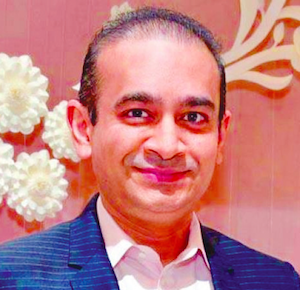
  • CBI approaches Interpol to locate jewelry designer Nirav Modi

    CBI approaches Interpol to locate jewelry designer Nirav Modi

    NEW DELHI (TIP): The CBI has approached the Interpol to locate billionaire jewellery designer Nirav Modi and his family who had left the country in the first week of January, weeks before the scam was reported to the agency, officials said.

    Officials said the CBI approached the Interpol with a request for issuing Diffusion Notice which was aimed at locating an individual.

    “This (diffusion) is less formal than a notice but is also used to request the arrest or location of an individual or additional information in relation to a police investigation. A diffusion is circulated directly by an NCB (CBI in this case) to the member countries of their choice, or to the entire Interpol membership and is simultaneously recorded in Interpol’s Information System,” the website of Interpol says.

    The CBI was confident about getting a location of Modi and his family by Friday, they said.

    Modi, who was alleged to have carried out fraudulent transactions worth over Rs 11,400 crore in Punjab National Bank, had left the country in the first week of January.

    The 46-year old, who holds an Indian passport, left India on January 1, while his brother Nishal, a Belgian citizen, departed from the country on the same day.

    However, whether they travelled together had to be probed, they said. Modi’s wife Ami, a US citizen, left on January 6 and his uncle and business partner Mehul Choksi, the promoter of Gitanjali jewellery chain, left on January 4, the officials said.

    The CBI and the Enforcement Directorate have approached the government seeking revocation of passports of Modi and Choksi.

    The billionaire diamond merchant, a regular on the lists of rich and famous Indians since 2013, was booked by the CBI, along with wife, brother and Choksi on January 31, for allegedly cheating the state-run Punjab National Bank to the tune of Rs 280 crore.

    The bank again approached the CBI within a fortnight of the first complaint giving details of more transactions which were over Rs 11,400 crore.

    The question as to why the PNB did not send a complaint to the CBI and decided to give it in tranches is also under the scanner of the agency, they said.

    The bank has claimed in three complaints to the CBI that so far it has detected 150 Letters of Undertaking (LoUs) which were fraudulently issued by its officials in connivance with Modi and the other accused in the case, the officials said.

    An LoU is a letter of comfort issued by one bank to branches of other banks, based on which foreign branches offer credit to buyers.

    Source: PTI

  • Justice for Sreejith: Indian ends protest after 782 days

    Justice for Sreejith: Indian ends protest after 782 days

    THIRUVANANTHPURAM (TIP): A man from the south Indian state of Kerala has ended a 782-day protest after a federal agency began investigating his brother’s death.

    SR Sreejith alleges his brother was murdered by police who arrested him on the charge of stealing a mobile phone.

    His demand for an independent inquiry into his brother’s death picked up in recent months through the social media movement #JusticeforSreejith.

    He ended the protest after federal investigators recorded his statement.

    In the face of mounting public pressure, state lawmakers ordered an internal police investigation into his brother’s death. But Mr Sreejith refused, insisting that the case be transferred to India’s federal investigation agency, the Central Bureau of Investigation (CBI).

    Police had said Sreejeev, 26, committed suicide in custody after he was arrested, but his family says he was killed because he was in love with a woman who happened to be related to one of the police officers.

    He was arrested one day before she was scheduled to get married to someone else. He died in hospital the following day where he was admitted as a result of the “suicide attempt”.

    Human Rights Watch (HRW) said in an August report on India that suicide and illness are common causes listed by authorities to cover up deaths likely caused by police torture.

    In a country only too familiar with police brutality and custodial deaths – India’s National Crime Records Bureau says 591 people died in police custody between 2010 and 2015 – his protest generated particular resonance.

    In the past few weeks and months, pictures of him and his protest have been shared widely on Facebook and Twitter along with messages of solidarity, including from some very high profile figures in the state.

    (Source: BBC)

  • INDIA HANDS OVER MALLYA EXTRADITION PAPERS

    INDIA HANDS OVER MALLYA EXTRADITION PAPERS

    NEW DELHI (TIP): India last week provided the United Kingdom the documents required to be submitted in a London court for the extradition of fugitive business tycoon Vijay Mallya.

    The Ministry of External Affairs (MEA) handed over the documents received from the probe agencies to the British High Commission in New Delhi last week. The documents will be submitted to the court of the Chief Magistrate at Westminster in London. The business tycoon is wanted in India for his now-defunct Kingfisher Airlines’ default on loans worth nearly Rs 9,000 crore.

    “These papers were required in connection with the hearing in the extradition matter which, as I said, is subjudice in the court in London and these papers were handed over to the British High Commission (in New Delhi) last week.

    This is a huge bunch of papers,” Gopal Baglay, spokesperson of the Ministry of External Affairs, said on Friday. The documents the MEA handed over to the British High Commission on June 9 included a supplementary charge sheet filed by the CBI against Mallya in a court in Mumbai on June 2, and a sworn affidavit by the superintendent of police in charge of the Special Investigation Team of the agency.

  • Vijay Mallya arrested in London by Scotland Yard

    Vijay Mallya arrested in London by Scotland Yard

    NEW DELHI: Business tycoon Vijay Mallya, the boss of the now defunct Kingfisher Airlines, owes Rs 9,081 crore to a consortium of 17 Indian banks, has been arrested in London and will be produced in a metropolitan court today.

    The liquor baron was arrested at about 9.30 am London local time and was taken to Westminster court.

    Mallya, whose extradition India has been seeking since he fled to the United Kingdom in March 2016, is wanted in various cases of foreign exchange violation and debt recovery.

    India had in February asked the UK to extradite Mr Mallya, who is facing charges of money laundering and several warrants in the country. CBI sources count the arrest, which took place around 9.30 in the morning, as a big win in attempts to bring the liquor baron to justice.

    Last month, the UK told India that its request had been certified by the Secretary of State.

    Mr Mallya has been charged with cheating and conspiracy by the CBI that filed a 1,000-page chargesheet against him for defaulting on a 900-crore loan taken from the IDBI bank in 2009. The CBI probe found that 250 crore of this – given to buy aircraft parts – was diverted abroad.


  • CBI gets 34 requests to probe Indians who are wanted abroad

    CBI gets 34 requests to probe Indians who are wanted abroad

    NEW DELHI (TIP): Armed with new powers, the Central Bureau of Investigation (CBI) has received at least 34 requests from various countries to probe Indians who have taken refuge in India after committing crime abroad and cannot be extradited because of limitations of bilateral treaties.

    Centre has recently made CBI the nodal agency to probe and prosecute Indians here who have come back from abroad after committing crime but cannot be extradited because of limitations in mutual treaties.

    They could also not be tried in India as the crime has been committed outside the jurisdiction of Indian agencies, CBI sources said.

    India has extradition treaties with 39 countries of which 21 bar extradition of their own nationals to the countries where the crime has been committed.

    “We do not extradite Indian nationals to countries like Bulgaria, France, Germany, Saudi Arabia, Poland, Portugal, Vietnam, etc for being tried there because of extradition conditions with these countries,” an official said, adding that arrangement is mutual.

    The sources said the only condition for such prosecution is that the offence for which they have been charged with should be cognisable offence in India too.

    “The Central government has empowered and extended the jurisdiction of members of Delhi Special Police Establishment (CBI) under Section 5 of the DSPE Act to investigate and prosecute the offences as described under Section four of IPC i.e the offences committed outside territorial jurisdiction of India referred by the Central government from time to time,” an official told PTI.

  • CBI gets permission to conduct polygraph test on Peter Mukerjea

    CBI gets permission to conduct polygraph test on Peter Mukerjea

    NEW DELHI (TIP): A Delhi court on Friday granted permission to the Central Bureau of Investigation (CBI) to conduct a polygraph test on former media baron Peter Mukerjea in its probe into the April 2012 murder of his step-daughter Sheena Bora.

    Probing the suspected ‘financial motive’, the agency has accessed seven Indian bank accounts allegedly held by Peter and his wife Indrani Mukerjea, apart from their accounts in East Asia.

    “A Delhi court has granted its permission to our request for conducting a polygraph test on Peter Mukerjea and it will be done by Monday. Peter has not been forthcoming about the details connected to the crime and the polygraph test may help establish the truth,” said a CBI source.

    “The agency is scrutinising the transactions of the couple’s seven bank accounts, which they control jointly or alone, for any suspected inflow or outflow of funds during the months just before and after April 2012,” said the source.

    It is also gathering information on ownership details of two alleged assets in Spain and UK.

    The source said the agency will pose questions to Peter on suspicions that he and Indrani had allegedly siphoned off nearly 900 crore to bank accounts in Singapore and probably Hong Kong.

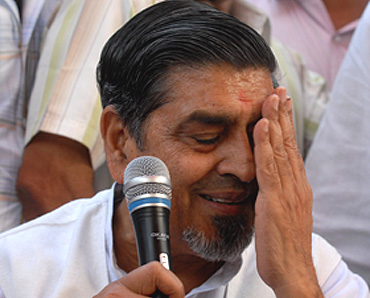
  • DELHI COURT TO HEAR ANTI-SIKH RIOTSCASE AGAINST TYTLER ON AUGUST 14

    DELHI COURT TO HEAR ANTI-SIKH RIOTSCASE AGAINST TYTLER ON AUGUST 14

    NEW DELHI (TIP): A Delhi court on July 30 fixed August 14 for hearing a case in which the Central Bureau of Investigation (CBI) has filed a closure report giving a clean chit to Congress leader Jagdish Tytler for his alleged role in a 1984 anti-Sikh riots case.

    Additional chief metropolitan magistrate SPS Laler put the matter for next month as the lawyers in all six district courts are on an indefinite strike to protest delay in the passage of a bill in Parliament aimed at enhancing pecuniary jurisdiction of trial courts.

    The court had earlier fixed Thursday’s hearing for filing of a protest petition by the victims against the CBI’s third closure report giving clean chit to Tytler in the case.

    Senior advocate HS Phoolka, representing the victims, had earlier sought four weeks time to file the protest petition.

    The CBI had earlier told the court that no fresh first information report (FIR) had been lodged against Tytler on allegations of influencing witness and money laundering.

    The CBI’s reply had come while responding to the court’s query whether the agency had registered any case against Tytler under Sections 193 (punishment for false evidence), 195-A (threatening a person to give false evidence) of the Indian Penal Code (IPC) and the Prevention of Money Laundering Act (PMLA).

    The court had earlier asked the CBI to respond to the allegations that Tytler had allegedly tried to influence a witness by giving him money and sending his son abroad and also alleged “hawala” transaction.

    Allegations of influencing witness and “hawala” transaction had surfaced from the statement of arms dealer and navy war room leak case accused Abhishek Verma, which was recorded by the CBI earlier.

    Verma, who is at present lodged in a jail and whose statement was recorded by the CBI on August 5, 2013, had said the conversation between him and Tytler took place after his release from the jail in the leak case when they were going to a farmhouse of Gopal Kanda, the then Congress MLA of Haryana, in August-September 2008.

    The case pertains to riots at Gurdwara Pulbangash in North Delhi where three people were killed on November 1, 1984, after the assassination of then prime minister Indira Gandhi.

    The CBI had claimed Tytler was not present at the gurdwara during the riots and was at Teen Murti House.

    Tytler’s alleged role in the case relating to the killing of three persons — Badal Singh, Thakur Singh and Gurcharan Singh — near Gurdwara Pulbangash was re-investigated by the CBI after a court had in December 2007 refused to accept its closure report.

    Tytler had earlier denied any role in the riots.

  • 1984 SIKH MASSACRE: AN ENDLESS WAIT FOR JUSTICE

    1984 SIKH MASSACRE: AN ENDLESS WAIT FOR JUSTICE

    Nearly 3,000 members of India’s Sikh community were massacred after the assassination of Prime Minister Indira Gandhi by her two Sikh bodyguards on 31 October 1984. The wave of ethnic cleansing which raged unhindered across the country, especially in Delhi, after Mrs Gandhi was shot dead ended only with her cremation on 2 November. During these three days, droves of Sikhs were determinedly hunted down by Hindu mobs from their homes, corralled and slaughtered like animals.

    The trigger for Mrs Gandhi’s killing was the storming of the Golden Temple in Sikhism’s holy city Amritsar four months earlier to flush out Sikh militants fighting for an independent homeland of Khalistan or Land of the Pure. The heavily-armed militants – many of them former soldiers – had barricaded themselves inside the temple and were dislodged only after three days of bitter fighting. Some 1,000 people, including women and children pilgrims and about 157 soldiers, died.


    17


    Tanks too were employed to end the siege, leaving Sikhs highly aggrieved. The eventual and possibly avoidable storming of the Golden Temple generated a wave of violence leading to Mrs Gandhi’s assassination, the anti-Sikh riots and a vicious insurgency across Punjab that was eventually stamped out by the military around 1993, although not without widespread human rights abuses.

    But, the 1984 Delhi riots rocked the world, more so for the state’s direct involvement and public justification of the blood-letting. Reacting to the continuing Sikh killings in Delhi and other places, newly appointed Prime Minister Rajiv Gandhi declared at a massive rally in the capital that “once a mighty tree falls, it is only natural that the earth around it shakes”. One of the worst massacres took place in two narrow alleys in the city’s poor Trilokpuri colony where some 350 Sikhs, including women and children, were casually butchered over 72 hours.

    18

    The charred and hacked remains of the hundreds that perished in Trilokpuri’s Block 32 on the smoky and dank evening of 2 November 1984 were stark testimony to the unimpeded and seemingly endless massacre. Soon after news of Mrs Gandhi’s killing by her Sikh bodyguards spread, Hindu mobs swung into action – like they did elsewhere in the city armed with voters’ lists – in Trilokpuri against the low caste Sikhs inhabiting oneroomed tenements on either side of two narrow alleyways barely 150 yards long.

    With local police connivance they blocked entry to the neighborhood with massive concrete water pipes and stationed guards armed with sticks atop them. For the next three days marauding groups armed with cleavers, scythes, kitchen knives and scissors took breaks to eat and regroup in between executing their bloodthirsty mission. No one spoke and nothing, except the bizarre, dancing shadows moved during this surrealistic interlude. The police arrived in Trilokpuri 24 hours later when a newspaper revealed the horrific massacre. Sadly, there were no Sikhs left to protect.

    Tragic stories

    BHAGWANI KAUR, RIOT VICTIM On November 1 morning, there was stone-pelting between both parties (Sikhs and non-Sikhs) in Trilokpuri area. When the police came, they first cordoned off the area and then indicated the non-Sikhs to go ahead. Rioters barged into our homes, pulled out utensils and other goods and looted our homes. The men were dragged out by their hair and killed. On the third day, trucks were brought in, the bodies were taken away and dumped in the Yamuna.

    ‘They threw my father from top floor’ Paramjeet Kaur, lost her father and three uncles in riots I was just 11 years old in 1984. My father, three of my uncles, a brother-in-law and a cousin were killed in the riots. One of my cousins tried to hide on the windowsill but he couldn’t escape. The rioters burnt him alive. I still remember the ghastly scene. My father was thrown from the top floor. His head was smashed. My younger brothers were made to wear girls’ dresses to escape. The women, my two sisters and 3-4 other women, had a horrific time.

    ‘When will we get justice?’

    HUKM SINGH, lost his two toddler sons, a brotherI lost my two sons — four and two-and-a-half years — and a brother at Jagatpuri during the three-day rioting in 1984. They were among the 11 people from three families in our building to be killed. My landlord and his family were killed. My plyboard factory in Radhapuri was set afire.

    Timeline of events

    November 1984: Sikhs were killed in the riots following the assassination of then prime minister Indira Gandhi Oct 31, 1984.

    Feb 8, 2005: Justice G.T. Nanavati Commission appointed to look into the 1984 anti-Sikh riots, submits its report.

    October 2005: A case is registered by the Central Bureau of Investigation (CBI) on the recommendation of the Nanawati Commission.

    Feb 1, 2010: Court issues summons against Sajjan Kumar and seven other accused — Balwan Khokkar, Mahender Yadav, Girdhari Lal, Kishan Khokkar, Captain Bhagmal, Maha Singh and Santosh Rani. Six accused are alive and facing trial.

    Feb 8, 2010: Delhi High court appoints special public prosecutor R.S. Cheema to conduct the trial on a daily basis so that the proceedings can be concluded in six months.

    Feb 15, 2010: Sajjan Kumar’s anticipatory bail rejected by additional sessions judge.

    Feb 17, 2010: Non-bailable warrants issued against Sajjan Kumar

    Feb 23, 2010: Sajjan Kumar untraceable.

    Feb 26, 2010: Anticipatory bail granted to Sajjan Kumar by the Delhi High Court.

    July 1, 2010: Prosecution produces 17 witnesses.Witnesses Jagdish Kaur, Jagsher Singh and Nirpreet Kaur identify Sajjan Kumar in court and depose against him.

    June 2011: Prosecution evidence ends.

    August 2011: Defence prosecution starts. They produce 17 witnesses, of whom six are officials from Delhi Police who depose in favour of Sajjan Kumar.

    April 2012: Prosecution concludes its arguments

    January 2013: Defence concludes its arguments and a judgment is pronounced.

    April 30: District and sessions court acquits Sajjan Kumar, convicts former councillor Balwan Khokkar, former legislator Mahender Yadav, Kishan Khokkar, Girdhari Lal and Captain Bhagmal.

    VICTIMS TO GET ADDITIONAL RS 5 LAKH NEW DELHI (TIP):

    As the nation prepares to mark the 30th anniversary of the 1984 anti-Sikh riots, the government has said it would offer Rs 5 lakh each to the next of kin of the 3,325 victims. This amount would be additional to whatever compensations they have received so far. The Union Home Ministry has also approved a proposal to substantially increase compensations to civilians falling victim to communal, Maoist or terrorist violence from Rs 3 lakh to Rs 5 lakh.

    Compensation to the anti-Sikh riot victims, which would cost the exchequer an additional Rs 166.25 crore, will be dispersed soon. The riots were triggered after the assassination of Prime Minister Indira Gandhi by her Sikh guards. The decision to disperse additional compensation follows petitions by several Sikh organisations to the NDA government. The previous UPA government announced an Rs 717 crore package for the Sikh victims, including financial compensation of Rs 3.5 lakh to the next of kin of those killed, but it could only spend Rs 517 crore due to dispute over claimants.

    Home Minister Rajnath Singh also decided to increase compensation for victims of communal, Maoist and terrorist violence at a high-level meeting where the issue came up. “Till now the next of kin of persons killed or civilians who suffered permanent incapacitation as a result of violence were paid Rs 3,00,000 as per provisions of the Central Scheme for Assistance to Civilian Victims of Terrorist/Communal/Naxal violence since 2008,” an official statement said.

    Families of victims are eligible for the assistance irrespective of previous compensations. Official figures reveal that the government had dispersed Rs 6.12 crore as compensation to civilian victims in 204 incidents of terrorist, communal and naxal violence in 2011-12 and Rs 3.99 crore in 133 incidents in 2012-13. However, no compensations could be given in 2013-14 and 2014-15 (till July) since state governments have not mooted the proposals.

  • SC asks CBI if it intends to examine Chidambaram

    SC asks CBI if it intends to examine Chidambaram

    NEW DELHI (TIP): The Supreme Court asked the Central Bureau of Investigation (CBI) on October 9 if it proposed to examine former finance minister P. Chidambaram on the clearance given to the Aircel-Maxis deal over which charges had been filed some time ago.

    BJP leader Subramaniam Swamy told the court that while charges on deal had already been been filed, there seemed to be no progress on CBI’s part to seek clarifications on the nod given by the Foreign Investment Promotion Board (FIPB) at Chidambaram’s behest.

    The apex court bench of Chief Justice H.L. Dattu and Justice S.A. Bobde asked senior counsel K.K. Venugopal, appearing for the CBI, to apprise the court on this count at the next hearing, fixed for Oct 16.

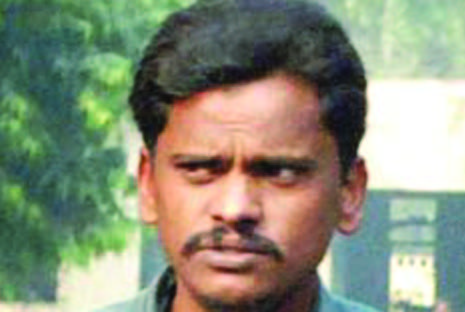
  • Nithari convict Surinder Koli to be hanged on September 12

    Nithari convict Surinder Koli to be hanged on September 12

    MEERUT (TIP): Surinder Koli, convicted in the Nithari killings, will be hanged in Meerut Jail on September 12, Jail Superintendent SHM Rizvi has said. Koli was sentenced to death for the brutal killing of a 14-year-old girl. He was transferred to the Meerut jail on September 4, after the CBI court issued a death warrant following the rejection of his mercy petition by the president. Koli was taken in a police van from the Dasna jail to the Meerut jail around 6.30 p.m., a jail official said.

    Earlier, the local Central Bureau of Investigation (CBI) court issued a death warrant to Koli after his mercy petition was rejected by President Pranab Mukherjee. Koli was shifted to Meerut because of the absence of hanging facilities in the Dasna jail. The trial court had sentenced both Koli and Maninder Singh Pandher to death, but the Allahabad High Court later acquitted Pandher. Koli’s sentence was upheld by the high court and then by the Supreme Court. Koli filed a mercy petition before the president which was turned down. Millions across India and abroad were horrified when Noida police in December 2006 found the remains of 19 young women and children from a drain next to Pandher’s bungalow in Noida. Koli and Pandher were arrested thereafter.

  • CBI Starts Probe in Jiah Khan Death Case

    CBI Starts Probe in Jiah Khan Death Case

    MUMBAI (TIP):
    The CBI on Wednesday registered a formal case to investigate the death of Bollywood actress Jiah Khan, five weeks after a Bombay High Court order, an official said. The development came after the high court transferred the case to the Central Bureau of Investigation (CBI) and asked it to consider whether it was a case of suicide or homicidal death.

    “If it comes to a conclusion that it is a homicidal death, then further investigation be made to find out who is the perpetrator of the crime and accordingly action will be taken,” a division bench of Justice V.M. Kanade and Justice P.D. Kode had said in its order July 3.

  • SARADHA SCAM: CBI CONDUCTS RAIDS AT 28 LOCATIONS

    SARADHA SCAM: CBI CONDUCTS RAIDS AT 28 LOCATIONS

    New Delhi (TIP):
    The CBI conducted searches at 28 locations, including the residence of a former minister, in connection with Rs.10,000-crore Saradha chit fund scam, an official said on August 14. “In the multi-crore-rupee chit fund scam, searches are on at 28 locations in Kolkata, Delhi, Guwahati and Odisha, including at the residence of former Congress minister Matang Singh, among others,” an official said.

    The official added that a search was conducted at Saradha group chief managing director Sudipto Sen’s residence as well. The agency has till now registered 48 cases, including four in West Bengal and 44 in Odisha, in the alleged chit fund scam on the directions of the Supreme Court.

    The Supreme Court had handed over the Saradha chit fund scam case to the Central Bureau Of Investigation (CBI) in May 2014 and asked the state governments to provide all logistical help to the agency.

  • CBI BOOKS 6 COMPANIES FOR LOAN DEFAULTS

    CBI BOOKS 6 COMPANIES FOR LOAN DEFAULTS

    NEW DELHI (TIP): The Central Bureau of Investigation (CBI) has registered 10 FIRs against six companies for allegedly defaulting on loans from state-run banks. The companies against whom the agency has filed FIRs include Deccan Chronicle Holdings (DCHL), Zoom Developers, Pixion Media, Century Communications, Rajat Pharma Chem and STCL.

    The CBI has also registered FIRs against some public servants to probe the conspiracy aspect. The agency is expected to include some more “big names” in the days ahead as several preliminary enquiries have also been registered, sources said. CBI is also probing the role of banks in restructuring of loans. Efforts to reach DCHL and some of the other companies for comments, which are named in CBI’s FIRs, did not yield results.

    The finance ministry and RBI have expressed concern over spiralling of bad loans in the banking sector. Finance minister P Chidambaram has said willful defaulters would be sternly dealt with. Indian banks, led by the public sector, have accumulated sticky loans of over Rs 6.5 lakh crore till the end of 2013. Construction, infrastructure, steel and textile companies are the top defaulters.

    The country’s largest lender, State Bank of India, also tops in bad loans, followed by Punjab National Bank and Central Bank of India. The CBI last year began verification of nonperforming assets of banks and thousands of documents were verified by the Bank Securities & Fraud Cell of the agency with the help of financial experts. Sources say that among the 10 FIRs registered, five have been filed against Rajat Pharma.

    The company has outstanding loans of Rs 361 crore with several banks, CBI sources said. The FIR against Zoom Developers says the company has an outstanding of Rs 2,002 crore. Several banks and financial institutions have threatened to auction properties of the group in Mumbai and Indore. DCHL has an outstanding of Rs 1,180 crore, repayable to the banks, CBI sources said. Another major defaulter is STCL, the company which is in the process of winding up. It has an outstanding loan of Rs 1,529 crore, according to the CBI’s FIR. “We will register more FIRs in coming weeks,” said a senior CBI officer, adding that the agency was looking into several other companies.

    The CBI has sought documents from the companies, banks which have given loans and the ministry of finance. The agency’s probe also focuses on the role of banks, as several banks did not file complaints with the authorities despite pending loans for years, CBI source said. CBI director Ranjit Sinha, during a recent conference of vigilance officers, had drawn their attention to the problem of bad loans in the banking sector. “A bulk of NPAs is from the top 30 accounts, which is learnt to be running into thousands of crores,” Sinha had said.

    “At times, there appears to be reluctance on the part of banks to declare bad accounts as frauds despite there being clear-cut manifestations. There is a need to realize that the delay in reporting of a fraud will adversely affect the tracking and recovery of proceeds of crime. Another issue is the fixing of accountability of staff and there are often differences of opinion between the CBI and banks regarding the role of public servants,” Sinha had said.

  • Rs 45,000 crore ponzi scam busted: CBI

    Rs 45,000 crore ponzi scam busted: CBI

    NEW DELHI (TIP): The Central Bureau of Investigation (CBI) on February 27 busted a massive ponzi scam of Rs 45,000 crore by two Delhi-based private companies of a group, raising money from over five crore gullible investors in the garb of sale and development of agricultural land and booked their managing directors and six directors.

    A series of raids were conducted over the last five days at the office premises and residences of the directors and other suspects at places in Delhi, Chandigarh, Punjab and Haryana, which led to recovery of huge records and data relating to deposits from public and their misutilisation and diversion of funds, besides other incriminating documents.

    A CBI spokesman said only after preliminary analysis of documents the agency came to know of the enormity of the scam. Initially, the investigators did not realise the gravity of the scam when they carried out the probe in the orders of the Supreme Court into the allegation of the companies taking deposits from public through their ponzi scheme promising land until they saw the mindboggling figures in some of the seized laptops.

    Then only they realised that their earlier estimates about the size of the scam were just a tip of the iceberg. The agency has converted the Preliminary Enquiry registered on the Apex Court’s orders to register the case against the managing directors and promoters of the two companies.

    The case has been registered against PACL managing director Sukhdev Singh, PGF managing director Nirmal Singh Bhangoo and six other directors of these companies. In Ponzi schemes, returns are given to investors from the money collected from other depositors in a pyramid-like structure.

    The CBI spokesperson said the inquiry found prima-facie evidence of said companies of the group of Delhi having raised investments by issuing bogus land allotment letters to induce the investors. She said it was revealed only when one of the companies, on being directed by the Punjab and Haryana High Court to wind up the scheme and refund the investors, that a similar fraudulent scheme was operated under the name of the second company of the group.

  • ISHRAT JAHAN CASE: CBI FILES CHARGESHEET AGAINST IB OFFICERS

    ISHRAT JAHAN CASE: CBI FILES CHARGESHEET AGAINST IB OFFICERS

    AHMEDABAD (TIP): The Central Bureau of Investigation (CBI) on Thursday filed a supplementary chargesheet in the alleged Ishrat Jahan fake encounter case.

    “CBI has filed a case against three IB officers, especially against Special Director Rajinder Kumar (now retired). Kumar has been charged with the arms act, section 120b and 302 as well as for abduction and kidnapping,” said a lawyer. Ishrat, Javed Shaikh alias Pranesh Pillai, Amjadali Akbarali Rana and Zeeshan Johar were killed in an encounter allegedly with Gujarat Police on the city outskirts on June 15, 2004.

    Police had then claimed the four were terrorists on a mission to kill Gujarat Chief Minister Narendra Modi. However, according to the CBI ‘s charge sheet filed in July, the encounter, a joint operation by Gujarat Police and Intelligence Bureau, was stage-managed. Seven Gujarat policemen, including Pandey, have been named as accused and charged with murder and criminal conspiracy, among others.

  • More autonomy for CBI A good start, but more needs to be done

    More autonomy for CBI A good start, but more needs to be done

    The premier investigating agency of India seems to be acquiring a certain measure of freedom, after all. The Director of the Central Bureau of Investigation (CBI) will now be free to appoint consultants and employ people on contract. He can now approve projects worth Rs 15 crore in a year. He And he gets the rank of Secretary to the Government of India, and will, in effect, now be allowed to handle India’s premier investigating agency autonomously. Why is everyone not cheering? For one, he will not be totally autonomous, and overall, the reforms fall short of the demands made by activists and opposition leaders.

    The CBI has demanded many times that it be allowed to function freely. Even as the demand fell on deaf ears for many years, recently the Opposition became shrill in demanding a fixed term for the Director. It has also suggested that the CBI be bifurcated into two wings, one which would look after prosecution while the other should handle investigations. The CBI is held in high esteem by the public, more so since it is seen as an independent agency which is not susceptible to the kinds of pulls and pressures that the police forces face from various state governments. However, the CBI, too, has come under criticism for being selective in its investigation and prosecution, and being susceptible to the Central Government’s pressure.

    The CBI has been given more powers, even some degree of autonomy. Now, it can handle some of the administrative matters like small purchases and even some transfers and postings without having a junior official looking over its shoulders. However, we must remember that this has been because of the political and judicial pressure. The organization now needs to demonstrate how this autonomy will help it do its job properly. Far too many cases have languished even after the CBI started investigating these. Wrapping up cases and taking these to their logical end will help it justify the faith that the common people repose in India’s most respected investigating agency.

  • CBI can’t act as a police force, Gauhati high court rules

    CBI can’t act as a police force, Gauhati high court rules

    NEW DELHI (TIP): In a startling decision which has ramifications for sensitive cases, the Gauhati high court has ruled that the Central Bureau of Investigation (CBI) was legally not a police force and stripped it of its powers to investigate crimes, arrest suspects and file charge-sheets. The ministry of home affairs (MHA) had, by a resolution dated April 1, 1963, constituted the CBI as a police force under the Delhi Special Police Establishment (DSPE) Act, 1946. The CBI had drawn its powers to investigate cases from the DSPE Act. A division bench of the high court comprising Justice IA Ansari and Justice Indira Shah on Wednesday upheld the constitutional validity of DSPE Act but held that “the CBI is neither an organ nor a part of the DSPE and the CBI cannot be treated as a ‘police force’ constituted under the DSPE Act”. Unless this ruling is reviewed and amended by a higher court, the CBI will not function as a police force and will be unable to proceed further — in fact, not even file FIRs — in highprofile cases like Coalgate, 2G spectrum scam and those related to the Gujarat riots.

    In these cases, the CBI was directed by the Supreme Court to investigate and report to it. Once the cover of the law under DSPE Act is taken away, the very existence of the CBI comes to naught. A worried Centre is preparing to rush to the SC on Friday to appeal against the HC judgment. “We hereby also set aside and quash the impugned (under challenge) resolution dated April 1, 1963, whereby the CBI has been constituted,” the HC said. Interestingly, the HC also limited the application of DSPE Act to Union Territories. This means, even if a new police force was set up validly as per the HC’s logic, its power to investigate crimes would remain confined to the UTs. The bench said, “A careful reading of the preamble to the DSPE Act, 1946, would make it evident that the DSPE Act, 1946, has been made for the Union Territories. This legislative power cannot be exercised by Parliament except under Article 246(4) of the Constitution, which enables Parliament to enact laws on subjects covered by List-II (State List), in respect of Union Territories.”

    Chargesheets invalid
    Allowing a writ petition filed by one Navendra Kumar, the bench quashed the chargesheet filed against him by the CBI but said the alleged offence could be investigated afresh by the regular state police. As a triggering effect, this judgment would render all chargesheets filed by the CBI till date invalid. The HC had on January 20 this year directed the CBI to produce records relating to the creation of the agency. After scrutinizing these, the HC said that the 1963 MHA Resolution creating the CBI under the DSPE Act did not even receive the President’s assent. “Hence, strictly speaking, the resolution in question cannot even be termed as the decision of the Government of India. That apart, it is apparent from the records that the CBI is a newly constituted body and not the same as DSPE,” said Justice Ansari, who authored the judgment on behalf of the bench. The HC went through the 1963 resolution minutely and relied on Constituent Assembly debates on the role of the force to be created through legislation under Entry 8 of Union List. It said, “The central government had set up altogether a new body known as CBI by the impugned Resolution… Admittedly, at that time, no legislation was made to set up the CBI and the source of power being traced to Entry 8 of Part-I (Union List), which reads ‘Central Bureau of Intelligence and Investigation’.

    ” The HC said: “The word ‘investigation’; was, therefore, according to the Constituent Assembly debates, intended to cover general ‘enquiry’ for the purpose of finding out what was going on and this ‘investigation’, which amounts to a mere ‘enquiry’, is not an ‘investigation’ preparatory to the filing of chargesheet against an offender, for, such an ‘investigation’ can be carried on only by a police officer, under the Criminal Procedure Code, and none else”. “This apart, it is the state legislature, which is entitled to constitute a ‘police force’ for the purpose of conducting ‘investigation’ into crime,” it said. “From the above discussion, which took place in the Constituent Assembly, it becomes crystal clear that Parliament cannot, by taking resort to Entry 8 of List-I (Union List), make any law empowering a police officer to make ‘investigation’ in the same manner as is done, under the Criminal Procedure Code, by a police officer while conducting an ‘investigation’ into an offence for the purpose of bringing to book an offender,” it said.

    ‘CBI probe under statutory rules’
    What the sc had said on CBI In Vineet Narain Judgment delivered on December 18, 1997: “In 1994 due to increased workload relating to bank frauds and economic offences a separate Economic Offences Wing was established in CBI with the result that since then the CBI has three investigation divisions, namely, anticorruption division, special crimes division and economic offences division.” “We are informed that almost all the state governments have given concurrence for extension of the jurisdiction of the Delhi Special Police Establishment in their States with the exception of only a few. The result is that for all practical purposes, the jurisdiction in respect of all such offences is exercised in the consenting states only by the CBI and not by the state police. This is the significance of the role of the CBI in such matters and, therefore, technically the additional jurisdiction under the general law of the state police in these matters is of no practical relevance.” “Once the CBI is empowered to investigate an offence generally by its specification under Section 3, the process of investigation, including its initiation, is to be governed by the statutory provision which provide for the initiation and manner of investigation the offence. This is not an area which can be included within the meaning of “superintendence” in section 4(1).” “It is, therefore, the notification made by the central government under Section 3 which confers and determines the jurisdiction of the CBI to investigate an offence; and once that jurisdiction is attracted by virtue of the notification under Section 3, the actual investigation to be governed by the statutory provisions under the general law applicable to such investigation. This appears to us the proper construction of section 4(1) in the context, and it is in harmony with the scheme of the act, and section 3 in particular.”

  • PM says CBI can question him on coal scam: PM

    PM says CBI can question him on coal scam: PM

    NEW DELHI (TIP): Prime Minister Manmohan Singh on October 24 on board his special aircraft offered to open his doors for questioning by the Central Bureau of Investigation (CBI) in the probe into the allocation of a coal block to Aditya Birla Group company Hindalco. “I am not above the law of the land. If there is anything that the CBI, or for that matter, anybody wants to ask, I have nothing to hide,” Singh said as he headed back from Beijing ahead of polls in five states including Delhi and Madhya Pradesh. Singh’s offer to put himself under the CBI scanner is his first. The opposition has been seeking to know why the CBI is not investigating Singh, who had cleared the allocation of the coal block in Odisha as the minister incharge in 2005. Hindalco has denied any wrongdoing in the allocation. The Prime Minister’s Office had hoped to cap the controversy before Singh left on a two-nation tour to cement ties with Russia and China with a detailed statement, explaining the circumstances and reasons for the decision. It had recalled that Odisha chief minister Naveen Patnaik had written to them to give Hindalco the coal block to help generate more employment in the state. The opposition Bharatiya Janata Party (BJP), however, did not relent and has kept up the pressure on the Congress-led UPA government and the CBI, which is investigating 14 cases in the coal scandal. Asked if a string of scandals, from the 2G spectrum allocation to the coal allocation scam, had cast a shadow on his legacy, Singh said, “That is for history to judge”. “I am doing my duty… What impact my 10 years of Prime Ministership will have is something which is for historians to judge.”

  • Coalgate: Former top bureaucrats back ex-coal secretary’s accusation against PM

    Coalgate: Former top bureaucrats back ex-coal secretary’s accusation against PM

    NEW DELHI (TIP): Former top bureaucrats have come out in support of ex-Coal Secretary P C Parakh, who has been named by CBI in the coal blocks allocation scam, warning that harassment of honest officers will erode Government’s credibility and stop senior officers from taking decisions. “Parakh, as I have known him, is an honest, competent officer. While I do not wish to comment on the CBI investigation as such, as I do not have all the facts, I am at a loss to understand how an FIR has been filed only against him and no one in the PMO and no Minister,” said E A S Sarma, former Coal Secretary. If it is a case of conspiracy, all the conspirators should be taken into account. I hope there is no conspiracy!, said Sarma, a former IAS officer. “I feel that investigations in such cases should be objective and uninfluenced by extraneous pressures. A clear distinction must be made between decisions taken in good faith and malafide decisions. It is unfortunate that dishonest Ministers, politicians and officers should be let off and honest officers harassed.

    It will only erode the credibility of the government which has already been on the decline in the recent times,” he said. Sarma said he has written to CVC on June 15 last year requesting it to initiate an investigation into the role of the PMO in the coalgate affair and three other scams. “I reminded CVC at least two times after that. There has been no visible response from CVC on my letters,” Sarma said. Former Cabinet Secretary T S R Subramanian said such kind of action by CBI against Parakh will stop others from taking decisions. “There are all kind of bureaucrats, good, bad, honest… There has to be a reasonable basis for any action by the agency,” he said. “According to the FIR, it was said Parakh met Kumar Mangalam Birla. As Cabinet Secretary, I used to meet ten bureaucrats, ten politicians and ten businessmen daily. Should that mean that I be also made an accused?” he asked. Parakh wanted the system to be changed for good, rued Subramanian. The former Cabinet Secretary also felt that there was an “ulterior motive” behind the move to name Parakh as an accused. “If he has been made an accused, he could be crippled as a witness. There could be an ulterior motive,” he said.

    Nothing to hide on coal blocks, need no certificate: Government
    The government has nothing to hide on the coal block allocations, which were done on basis of recommendations of state governments, and it does not need certificates from anybody, senior ministers said Thursday. Minister of State in the Prime Minister’s Office V. Narayanasamy told reporters here it has been the government’s stand that allocations have been made to public sector undertakings and some private companies “on the recommendations of state governments where coal blocks were available”. “We have nothing to hide,” he said. Commerce and Industry Minister Anand Sharma, meanwhile, hit out at the Bharatiya Janata Party over its demand of the prime minister’s resignation, and said the government does not need certificates. Narayanasamy did not comment on former coal secretary P.C. Parakh’s claim that it was Prime Minister Manmohan Singh who decided on the allocation of two Odisha coal blocks in 2005, over which the Central Bureau of Investigation (CBI) filed a first information report (FIR) Tuesday. “The matter is sub judice.

    It is being investigated by the CBI,” the minister said. The FIR named Parakh and industrialist Kumar Mangalam Birla for alleged irregularities and criminal conspiracy in the allocation of the two blocks. Parakh said he did not know why the CBI thought Birla and he were in a conspiracy, when the person who took the decision was not part of it. “If a conspiracy is there, everyone is part of the conspiracy. If we are accused, the PM is as much a part of the conspiracy,” he contended. Asked about Parakh’s remarks, Sharma said the fundamental question was whether “everything be questioned” once a decision was taken. “Now who is going to give certificate to prime minister of India, who is globally respected, or to his ministers? I don’t think we need certificates,” Sharma told Times Now TV channel. The prime minister did nothing wrong by signing the coal allocation file, he said. An atmosphere where ministers or bureaucracy do not sign papers out of fear was a “recipe for disaster”, Sharma said, contending the economic environment has been vitiated over the past three years. “You cannot hold decision making to ransom so that nobody takes a decision, everybody is fearful,” he said. The BJP Wednesday said that the prime minister should take “final responsibility” for irregularities in the allocation of coal blocks, and resign.

  • Niira Radia tapes: SC orders CBI inquiry

    Niira Radia tapes: SC orders CBI inquiry

    NEW DELHI (TIP): The Supreme Court on October 17 ordered a Central Bureau of Investigation (CBI) inquiry into eight issues arising from the tapped phone conversations corporate lobbyist, Niira Radia had with top politicians, bureaucrats and industrialists. The report on the criminal aspects of the talks will be given to the court within two months and the case will be heard again on December 16. Apart from the CBI, the vigilance wing will probe six cases. The judges observed during the proceedings that the CBI reports showed “deep-rooted malaise” in the polity. A section of the press has already published detailed reports of the finding of the CBI inquiry, for which it is facing contempt of court action. “Prima facie, there is a deep rooted malaise by private enterprises in connivance with the government officials and Niira Radia’s conversations suggest that influential persons indulged in corrupt practices for private gains for extraneous purpose,” a bench headed by G S Singhvi said.

    The order was passed in two petitions, one moved by industrialist Ratan Tata, and the other by the Centre for Public Interest Litigation (CPIL). Tata’s main complaint was infringement of his privacy, but CPIL counsel, Prashant Bhushan, widened the issues to encompass the whole gamut of political and economic sleaze. The CBI has already informed the court recently that the examination of hundreds of conversations Radia had had over the years showed criminality. Though the probe started as an income tax investigation, it has branched into several fields like the 2G spectrum scam and fixing of ministers and bureaucrats by industrialists for government largesse. The court has been monitoring the investigations and it culminated in Thursday’s order. However, the present order will lead only to a “preliminary inquiry” in legal parlance and it is still far away from a formal complaint or charge sheet. CBI is planning to register preliminary inquiries into the Radia tapes-related cases by next week, a senior official said. Presiding judge Singhvi, who passed several momentous judgments involving corruption, is retiring on December 11, before the CBI report is called for.

  • TIMELINE

    TIMELINE

    JANUARY 1996: Fodder scam surfaces after Deputy Commissioner Amit Khare raids offices of animal husbandry department, seizing documents showing syphoning of funds by non-existent companies in the name of supplying fodder.
    MARCH 11, 1996: Patna High Court directs CBI to probe the scam. Supreme Court upholds the order.
    MARCH 27, 1996: CBI registers FIR in Chaibasa treasury case.
    JUNE 23, 1997: CBI files charge sheet and makes Lalu Prasad accused.
    JULY 30, 1997: RJD chief Lalu Prasad surrenders before CBI court, sent to judicial custody.
    APRIL 5, 2000: Charges framed before special CBI court.
    OCTOBER 5, 2001: Supreme Court transfers fodderscam cases to Jharkhand after the creation of new state.
    FEBRUARY, 2002: Trial begins in Ranchi special CBI court.
    AUGUST 13, 2013: Supreme Court rejects Lalu Prasad’s plea seeking transfer of the trial court judge hearing the case.
    SEPTEMBER 17, 2013: Special CBI court reserves judgement.
    SEPTEMBER 30, 2013: Two former Bihar Chief Ministers Lalu Prasad and Jagannath Mishra along with 43 others convicted by special CBI judge Pravas Kumar Singh.
    OCTOBER 3, 2013: Lalu Prasad sentenced to five years in jail, fined Rs. 25 lakh. Jagannath Mishra gets four years in jail.

    BJP WELCOMES SENTENCING OF LALU
    The BJP welcomed the sentencing of Lalu Prasad and others in the fodder scam. “BJP feels this is a very important milestone in the fight against corruption. The whole country was up against corruption and wanted results,” BJP spokesperson Prakash Javadekar said.

    Lalu is a hero: Rabri Devi
    Lalu Prasad is a hero and will remain a hero in future too, says his wife Rabri Devi.

    When I have not done any crime, how have I been punished, asks Lalu Prasad Yadav
    Reacting to the jail term of five years in fodder scam, Lalu’s instant reaction was – “When I have not done any crime, how have I been punished?” The RJD chief asked the question at the Birsa Munda Central Jail in Ranchi over video conferencing facility. Judge Pravas Kumar Singh retorted: “You can appeal in the higher court.”

    Will appeal in High Court, says Rabri Devi
    Talking to a news channel, Lalu’s wife, Rabri Devi said that the RJD chief did not get justice. She also said that they will appeal in the High Court against the verdict and also go before the people.

    Ex-CBI chief demands life term for Lalu
    An agitated former Central Bureau of Investigation (CBI) director Joginder Singh says RJD chief Lalu Prasad Yadav should have been given a life term in jail. He adds that the VIP culture in jails should be curbed