Tag: CGTN

  • Ready to hold ‘high-level negotiations’ with Ukraine, Putin tells Xi

    Ready to hold ‘high-level negotiations’ with Ukraine, Putin tells Xi

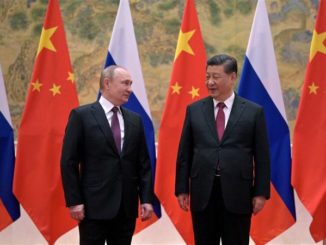
    BEIJING/NEW YORK (TIP): Russian President Vladimir Putin said on Friday, February 25,  that he was ready to hold “high-level negotiations” with Ukraine as he spoke with his Chinese counterpart Xi Jinping who stressed that both Moscow and Kyiv should resolve the raging crisis through talks.

    Xi and Putin, regarded as allies and friends as China and Russia enlarged their strategic ties amid the strident US and EU push against them on a host of issues, held their talks on the phone around the same time as the Russian troops closed in on Kyiv, home to over three million people, with heavy bombardment raising fears of bloodshed.

    The Russian side is ready to hold “high-level negotiations” with the Ukrainian side, the official Chinese media here quoted Putin as telling Xi. Around the same time, Ukrainian President Volodymyr Zelensky on Friday, February 25,  reiterated his call for Russian President Putin to hold talks and stop the conflict.

    “Fighting is going on all over Ukraine. Let’s sit down at the negotiating table,” Zelensky said, the Chinese state-run Xinhua news agency reported, citing a report from Interfax-Ukraine news agency.

    Xi, whose government stonewalled criticism in the last few days for not condemning the Russian “invasion” of Ukraine, sought to play the role of a peacemaker by saying that China supports Russia and Ukraine to solve the issue through negotiation, the state-run CGTN reported. Noting that the recent situation in eastern Ukraine has changed dramatically, causing great concern in the international community, Xi told Putin that China’s position on the Ukraine issue was based on the merits of the matter concerned.

    In an apparent criticism directed against the United States and the European Union, Xi urged all parties to completely abandon the Cold War mindset, respect and attach importance to each other’s legitimate security concerns and strive for a balanced, effective and sustainable European security mechanism through dialogue and negotiation.

    Xi reiterated that China’s position of safeguarding the sovereignty and territorial integrity of all states and abiding by the purposes and principles of the UN Charter has been consistent. China is ready to work with all parties in the international community to promote common, comprehensive, cooperative and sustainable security and firmly uphold the UN-cantered international system and the international order underpinned by international law, he said.

    Putin, for his part, introduced the historical context on the Ukraine issue as well as Russia’s position on launching the special military operation in eastern Ukraine.

    The Russian President stressed that the United States and NATO have long ignored Moscow’s legitimate security concerns, repeatedly reneged on their commitments and kept pushing military deployments eastward, which challenged Russia’s strategic bottom line.

    He also told Xi that the Russian side was ready to conduct “high-level negotiations” with the Ukrainian side.

    During their phone conversation, Xi once again expressed his gratitude to Putin for coming to China to attend the opening ceremony of the 2022 Beijing Winter Olympics, which was boycotted by the leaders and diplomats of the US, the EU and their allies to highlight the allegations of human rights violations against Uygur Muslims in Xinjiang.

    As Xi-Putin held talks, a Xinhua report said the Russian Defense Ministry announced that its airborne forces successfully conducted a landing operation at the Gostomel airfield outside Kiev, blocking the Ukrainian capital city from the west.

    Ever since Putin announced the military operations in Ukraine on Thursday, China has walked a fine line, declining to condemn the military action while remaining silent over Moscow’s move to accord two separatist regions in eastern Ukraine, Donetsk and Luhansk as independent entities.

    In his talks with Russian Foreign Minister Sergei Lavrov on Thursday, Chinese Foreign Minister Wang Yi said there was a complex and special historical context of the Ukraine issue and the Chinese side understands Russia’s legitimate security concerns.

    Earlier, Chinese Foreign Ministry spokesman Wang Wenbin told a media briefing here on Friday that Beijing will make its own effort to push for political settlement of the Ukrainian issue. He said there was a sharp contrast between China’s approach and some other countries’ moves of creating and shifting the crisis, and trying to benefit from it, while responding to questions on White House spokesperson Jan Psaki’s assertion that it’s time for China to pick a side.

    Wang Wenbin said China believed that the Ukraine issue has a complicated history and that the legitimate security concerns of all parties should be respected and the Cold War mentality should be completely abandoned.

    Psaki said at a news briefing on Thursday that “this is really a moment for China, for any country, about what side of history they want to stand on here.”

    The comprehensive settlement of the issue should be sought through dialogue and negotiations so as to form a balanced, effective and sustainable European security mechanism, Wang said, noting that China’s approach formed a sharp contrast with what some countries have been doing in trying to benefit from the crisis.

    Wang said that the door to a peaceful settlement of the Ukraine issue has not been completely closed.

    China hopes that relevant parties remain calm and rational and commit to peacefully resolving relevant issues through negotiations in accordance with the principles of the UN Charter, he said, noting that Beijing will continue to promote peace talks in its own way and welcomes and encourages all efforts for a diplomatic settlement.

    He also played down the impact of the US and EU sanctions against Russia. Europe has imposed financial sanctions against Russia for its military operation against Ukraine.On the question of whether China is worried that not condemning Russia might undermine its relations with the EU, Wang said that he believed everyone was familiar with the results of the sanctions. Unilateral sanctions are never the fundamental and effective approach in solving problems and that they only result in severe difficulties to local economies and livelihoods, he said.

    (Source: PTI)

  • China bans BBC from broadcasting

    China bans BBC from broadcasting

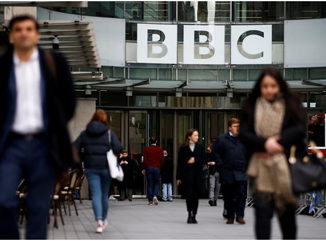
    Beijing (TIP): China has banned BBC World News from broadcasting in the country for seriously violating its guidelines for reporting, its television and radio regulator has announced. The move comes a week after the UK revoked the license of Chinese state-owned broadcaster China Global Television Network’s (CGTN). China has criticised the BBC for its reporting on the deadly coronavirus pandemic and the persecution of ethnic minority Uighurs and lodged a protest with the British broadcaster. The BBC said it was “disappointed” by China’s decision to ban it. The Chinese regulator, National Radio and Television Administration (NRTA), has made the announcement on Thursday night on pulling BBC World News off the air in the country for serious content violation. The NRTA said BBC World News was found to have seriously violated regulations on radio and television management and on overseas satellite television channel management in its China-related reports, state-run Xinhua news agency reported.

    The BBC coverage went against the requirements that news reporting must be true and impartial, and undermined China’s national interests and ethnic solidarity, it said. “As the channel fails to meet the requirements to broadcast in China as an overseas channel, BBC World News is not allowed to continue its service within Chinese territory. The NRTA will not accept the channel’s broadcast application for the new year,” NRTA said in a statement.

    China’s ban followed British media regulator Ofcom revoking state broadcaster CGTN licence to broadcast in the UK.

    Ofcom’s decision to revoke the license of CGTN came after it found that the Chinese state television licence was wrongfully held by Star China Media Limited.

    CGTN was also found in breach of British broadcasting regulations for airing the allegedly forced confession of UK citizen Peter Humphrey.

    Reacting to China’s ban, the BBC said in a statement: “We are disappointed that the Chinese authorities have decided to take this course of action. The BBC is the world’s most trusted international news broadcaster and reports on stories from around the world fairly, impartially and without fear or favour.”

    The commercially-funded BBC World News TV channel broadcasts globally in English. In China, it is largely restricted and appears only in international hotels and some diplomatic compounds, meaning most Chinese people cannot view it, the BBC report on China’s ban said.

    British Foreign Secretary Dominic Raab called the move an “unacceptable curtailing of media freedom”.

    The US State Department condemned the decision, calling it part of a wider campaign to suppress free media in China.

    Relations between China and the UK have seen a serious deterioration in recent months over Hong Kong, where Beijing introduced a controversial new security law after a large pro-democracy movement swept the ex-colony.

    In January the UK introduced a new visa that gives 5.4 million Hong Kong residents the right to live in the UK and eventually becomes citizens because it believes China is undermining the territory’s rights and freedoms, the BBC report said.

    China’s tiff with BBC followed Beijing’s spat last year with three US newspapers resulting in the expulsion of some journalists from those media outlets.

    China has sharply criticised this month’s BBC report featuring interviews with Uighur women who said they had been systematically raped, sexually abused and tortured in China’s “re-education” camps in Xinjiang. PTI