Tag: Chandigarh

  • Inderjit Singh Bindra, a multifaceted bureaucrat who built Punjab, cricket and sports

    Inderjit Singh Bindra, IAS Retd. and a former BCCI president has passed away aged 84 in New Delhi. Prabhjot Singh, a former Sports editor with The Tribune who has had a long association with Mr. Bindra pays him his tribute. 

    Inderjit Singh Bindra, the visionary administrator who transformed Indian Cricket and Punjab’s sports landscape passed away at 84 in New Delhi.

    He was not only a doyen of Indian cricket, an administrator par excellence who commanded respect across multiple institutional domains, but also a gentleman, a keen golfer, a wonderful human being, and a trustworthy friend whose prime love was sports.

    Inderjit Bindra and cricket were like two sides of a coin. No history of this modern-day sport would ever be considered complete without a substantial recognition of the immense contribution of this rarest of rare bureaucrats who served the Punjab Government after joining his parent cadre in 1966. (He had a brief stint as an IPS officer before getting into the elite service.)

    He was a bureaucrat with a difference. Known for his quick decisions, he belonged to the rare band of civil servants who left little or no pendency files at the end of the day. In his death, Punjab has lost one of its illustrious sons, an administrator par excellence and a custodian of institutional integrity.

    I had a very long association with him. When the Punjab Cricket Association Stadium (PCA stadium) was coming up, I used to accompany him on his evening “inspection-cum-evaluation” walk around the complex. He would follow the progress meticulously and hold regular meetings with both the architect and the construction company. No Deadlines were compromised.

    He always took his criticism well. As captain of the Chandigarh Golf Club, he ordered the chopping off of the green tops of most of the trees. I came out with a front-page story in The Tribune, “Killing trees for their sport.” The next morning, when he called me, I told him that my respect notwithstanding, his action of wreaking havoc with the ecology could not be ignored in the public interest. He, instead of getting agitated, agreed with me to admit that it was a “wrong decision” and “chopping off green tops could have been avoided.” He kept his promise throughout, even while the PCA Stadium was being constructed. He was a regular at the golf club, where his immediate playmates used to be flying Sikh Milkha Singh and bureaucrat RS Mann. He was one of the first few to use a cart on the course.

    Better known as a cricket administrator, he not only transformed a mediocre Punjab team into prestigious national Ranji Trophy champions but also brought the sleepy township of Sahibzada Ajit Singh Nagar—Mohali—on the world map with one of the best cricket stadiums, the PCA Stadium. In fact, if Punjab could renovate, upgrade, and modernize its sports infrastructure after the reorganization of the state in 1966, it was all because of his astute planning and farsightedness.

    Not many would know about his love for sports other than cricket.  Convinced that the public sector undertakings have a social role to play, he conceived, planned, and raised a hockey team in the public sector. Led by then Olympian—now an MLA from Jalandhar Cantonment—Pargat Singh and coached by international Sukhvir Singh Grewal, the team under the banner of Punjab Alkalis and Chemicals brought laurels to the state by winning several prestigious tournaments. His experiment of using public sector undertakings for checking sports drain from the state did not survive for long. The Alkalis team was disbanded after he was shifted from the Industries Department. This team had given Punjab and the country several outstanding players, most of whom later got absorbed into the Punjab police.

    Inderjit Singh Bindra belonged to a vanishing category: the senior administrator who commanded respect across multiple institutional domains and whose work transcended the narrow bounds of his formal portfolio. Few civil servants transition successfully into sports administration at such rarefied levels; fewer still leave an indelible institutional legacy in both spheres.

    KBS Sidhu, also a retired civil servant, while paying tribute to his senior colleague, wrote that Punjab has lost not merely a cricket administrator but a custodian of institutional integrity. India has lost a figure whose strategic vision helped position the nation as a cricketing superpower. And the broader world of cricket governance has lost one of its architects—a man whose tenure in positions of authority coincided with cricket’s globalization and the assertion of non-Anglo spheres of influence over the sport’s direction.

    “Bindra’s death marks the conclusion of an extraordinary institutional career spanning more than four decades, during which he moved seamlessly between the senior echelons of the civil service and cricket administration, bringing to both spheres a rare combination of decisive leadership, legal acumen, and entrepreneurial vision,” wrote KBS Sidhu.

    “My memories of Mr Bindra are still vivid and fresh in my mind. It was he who got the infamous Chaura Bazar of Ludhiana cleared of its encroachments. He refused to bow under any pressure,” recalls Dronacharya hockey coach Baldev Singh of Ludhiana, who incidentally figures in the list of recipients of Padam Shri this year.

    During his career as a civil servant, Inderjit Bindra held several prestigious positions, including as Deputy Commissioner of Ludhiana from 1972 to 1974 and Patiala from 1975 to 1975, during which he established a reputation for swift, legally sound decision-making and administrative efficacy.

    When the Rajiv-Longowal accord was reached in 1985, wherein a provision was made to transfer the administrative control of Chandigarh to Punjab, Inderjit Bindra’s reputation as administrator par excellence made him the automatic choice for the position of Administrator of Chandigarh. Not only the merger of Chandigarh, but the whole accord was subsequently cold-shouldered.

    He was a bureaucrat who remained glued to the happenings in the state. Between 1982 and 1987, when Punjab was going through its critically turbulent times, he was positioned as Special Secretary to the President of India, Giani Zail Singh.

    He probably had the first-hand account of events leading to both Operation Blue Star (June 1984) and the subsequent assassination of the then Prime Minister Indira Gandhi (October 1984), as he played a delicate balancing act between the president and the new prime minister, Rajiv Gandhi, while the country witnessed unprecedented violence, the worst after the 1947 partition. The violence was heaped on a minority to which he and the president belonged. At this crucial juncture, Inderjit Bindra played the role expected of a mature bureaucrat to maintain the institutional equilibrium so that constitutional propriety and political stability were not impacted by the rising tensions and sectarian violence.

    Coming to his passion, cricket, Inderjit Bindra set for himself the arduous task of reviving and rejuvenating the game in the state. He not only brought together some of the promising youngsters after some stalwarts like Bishan Singh Bedi, the Amarnath brothers, and Madan Lal had packed their bags and moved to Delhi and other cricketing centers, but he also tried to rectify the poor institutional management and the absence of competitive infrastructure. He initially built a team with MP Pandov and GS Walia as his working hands.

    In 1978, he formally took over as president of the Punjab Cricket Association. Punjab started quickly ascending on the national scene and climaxed in 1992-93 when the state won for the first time the prestigious Ranji Trophy title. A state that was still then known for its supremacy in hockey, football, athletics, and other sports had arrived on the cricket scene as well.

    Besides upgrading the existing infrastructure, including Gandhi Park in Amritsar and Burlton Park in Jalandhar, the PCA sent money for modernizing its infrastructure; it was his vision that saw the Punjab Cricket Association coming up with a world-class facility at Mohali. As a tribute to his yeoman service to the game, the PCA stadium was named after him after he formally retired from his active association with the administration of the game in that state in 2014.

    Inderjit Bindra is credited with marketing sport in a big way. It was he who roped in big companies for the live telecast of the game at various levels. Beyond tournament hosting, Bindra played a pivotal role in television rights monetization. He recognized, with prescient clarity, that satellite television represented an unprecedented revenue opportunity for Indian cricket. His tenure as president (1993-96) marked a period of administrative and financial rejuvenation of the BCCI that made it the cash-rich sports body of the country.  It was he who played a stellar role in pulling the World Cup Cricket out of England to bring it to India and South Asia through the 1987 Reliance Cup. In 1996, it was India, Pakistan, and Sri Lanka that played joint host to the World Cup, all because of his coordination and efforts.

    He never worked for honors and awards. Commitment and perfection were his passions, as he was a man who never compromised and always stood by people he liked and admired.

    (Prabhjot Singh is a Toronto-based senior journalist. For a better part of his journalistic career, he worked at The Tribune, Chandigarh, from where he retired as Sports Editor of the publication)

  • Get Rid of the feudal mindset

    Punjab is beset with many problems. Surely, Chandigarh is not one. The worst is the feudal mindset that governs relationship between people. There can be no equality if the society is divided among two groups- the masters and the slaves. This mindset has to change. The Sarkar, mai baap, huzoor, Sahib ji culture has nothing to do with humility. These words  reek of slavishness. The people in the government, the bureaucrats and the civil servants should cease to behave like masters.

    Another evil plaguing the State is corruption. The pay and play game which has been going on for decades must stop. There can be no fairness and justice in such a system.

    Too many people are unemployed and poor. One cannot expect hungry people to contribute to a State in any way. On the contrary, one can clearly find a connection between unemployment and crime. Drug addiction, drug smuggling, and many other crimes are directly related to the unemployment of the people. Then there is a fractured educational system, and another is a sick healthcare system.

    Any State aspiring to be worth living for people must provide means of sustenance and a dignified life. Hope the new government in Punjab  is aware of the problems and has solutions, too.

  • The Chandigarh Imbroglio

    The Chandigarh Imbroglio

    By Prabhjot Singh

    Several significant decisions taken in recent months by the NDA government at the Centre were a clear indication that transfer of Chandigarh to Punjab was nowhere under its consideration. Intriguingly, on eve of the Punjab Assembly elections in February, speculations were afloat that the Prime Minister Narendra Modi during his pre-election rallies in Punjab may announce transfer of Chandigarh to this border State. For many, writing on the wall was obvious. Changing the structure of the Management of the Bhakra Beas Management Board (BBMB) was an indication of the Centre Government’s thinking. And if that was not enough, the union home minister during his last visit to Chandigarh, announced a major policy decision of bringing Union Territory of Chandigarh employees under the central Civil Service rules thus putting to an end to the continuation of Punjab Civil Service rules.

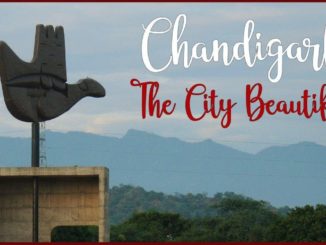
    On November 1, 1966, when Chandigarh was carved out of Punjab as a Union Territory, Dr MS Randhawa, ICS, was appointed its first Chief Commissioner. Since then, Chandigarh has grown from “a city of greying beards and green hedges” to a throbbing millennial mini-India, while remaining mired in various controversies.

    Unlike major Punjab cities, the Union Territory has a large population of migrants from far off places, including Tamil Nadu, Kerala, Uttar Pradesh, Bihar, Uttarakhand, Manipur, Nagaland, and Jharkhand that has assimilated into a multiethnic and multicultural community making it unique in more than one way.

    Built as a planned city and capital of Punjab, it has been gradually inching to clinch its own special identity. Supported by the Central Government with lavish funding since 1966 and the unfortunate diminishing interest of parent States of Punjab and Haryana, this adopted territory stands alienated from its motherland.

    Developed as a City of Excellence with top of the shelf facilities like open green spaces, wide roads, storm water drainage system, it soon grew to an educational and top-class health care hub with the coming up of institutions. Less than one third of the normal size of a district in Punjab or Haryana, Chandigarh now boasts of institutions that provide world class education in health, engineering, architecture, law, pharmacy, home care and art. It has exclusive sports stadia for cricket, hockey, tennis, football, skating, indoor sports, and water sports. It has one the highest ratio of tennis courts to population, an extremely popular Golf Club, and a golf range besides several swimming pools, including centrally heated pools.

    Besides Zakir Hussain Rose Garden, Chandigarh has the distinction of having plant specific gardens, like Bougainvillea Garden, in addition to an exclusive Japanese garden, a topiary park, a bird sanctuary and two Botanical gardens. Sukhna Lake and Rock Garden make it a major tourist attraction.

    It does not have much industry but still it is a top production Centre for steel furniture, sanitary fittings, pharmaceuticals, and needles. It had investment from world leaders in pharmacy (Pfizer) and needles (Goetz & Beckett). The Chandigarh Administration in its wisdom decided to put a full stop before further growth of industry and allowed change of land use making room for multiplexes, malls, and hotels to come up in place of existing industrial units like Pfizer.

    It is the misfortune of the Union Territory that continuity was a glaring missing link that followed the change of administrative head. Ambitious projects like captive power generation – Chandigarh does not have a source of power generation – building of Nehru Centre for Performing Arts, construction of elevated road from the PGI to the Transport Chowk, flyover over The Tribune inter section, Mass Rapid Transport System, and building of Chandigarh Trade Fair ground on the lines of Pragati Maidan never progressed beyond paperwork. Huge amounts were spent on consultancies and feasibility reports. Money was spent lavishly on holding foundation stone laying ceremonies of Nehru Centre for Performing Arts and the Chandigarh Trade Fair ground, but no one was ever held accountable for these languishing projects. These aspects apart, Chandigarh has always remained a bone of contention between Punjab and Haryana, both claiming their rights over its control. When the 1966 Reorganization Act was implemented, Chandigarh was declared a Union Territory as a stop gap arrangement so that Haryana could build its own new capital. It was to be transferred to Punjab. However, claims and counter claims continued with the Centre playing the role of a clever monkey in a fight between two cats. The Reorganization Act mandated that Union Territory of Chandigarh would be run by employees drawn from Punjab and Haryana in the 60:40 ratio. Since it was a small territory, it had a Chief Commissioner as its administrative head followed by Home Secretary, Finance Secretary, Chief Engineer, Chief Architect, an Inspector-General of Police (of the rank of a Deputy Inspector-General) and a Superintendent of Police. These posts were equitably divided between Punjab and Haryana.

    All employees, from top to bottom, used to be drawn from the “partner” states. The system continued to work well till about late 80s and early 90s when on the command of the Centre, the Union Territory of Chandigarh started recruiting people directly by gradually cutting down the share of both Punjab and Haryana. Since the protests from Punjab and Haryana were meek, the move picked pace. A stage was reached when the number of employees on deputation was reduced to almost nothing. Most of the positions, from bottom to top, are now filled with UT cadre employees except for a few top bureaucratic slots like Home Secretary, Finance Secretary and Deputy Commissioner.

    Even before the “centralization” of the Chandigarh Administration started, the rehabilitation of migrant workers scheme was given a boost by offering tenements to jhuggi dwellers. Thousands of migrant workers, given these tenements, started making capital out of it as they would sell their dwellings at a huge profit and move back to jhuggis to stake claims for new units in future colonies.

    Punjab was caught in a vicious fight against terrorism. It was during this period that the Governor of Punjab was appointed Administrator of Chandigarh and the post of the Chief Commissioner was changed to Adviser to the Administrator. Mr. Krishna Banarji, who was till then Chief Commissioner, became the first Adviser to the Administrator of Chandigarh.

    In 1985, when the Rajeev Gandhi- Sant Harchand Singh Longowal agreement was signed, hopes were raised that the decision to transfer Chandigarh to Punjab on January 26, 1986, would finally be implemented. Punjab Government led by then Chief Minister Surjit Singh Barnala drew all plans for the smooth transfer of Chandigarh.

    A senior bureaucrat Inderjit Singh Bindra was named Administrator of Chandigarh. Invitations were sent out for the formal ceremony that was to take place as a part of the Republic Day celebrations. However, on the night of January 25, the decision was put on hold. Once again, there was a little hue and cry in Punjab political circles. No sincere or concerted effort was made thereafter to get the Rajeev-Longowal agreement implemented. It was Darshan Singh Pheruman, who led a breakaway group of Shiromani Akali Dal, who started fast unto death to demand immediate merger of Chandigarh with Punjab. His fast continued till his death but nothing moved either the Centre or the then Punjab political leadership. His sacrifice remains unacknowledged by the Punjab government. Several significant decisions taken in recent months by the NDA government at the Centre were a clear indication that transfer of Chandigarh to Punjab was nowhere under its consideration. Intriguingly, on eve of the Punjab Assembly elections in February, speculations were afloat that the Prime Minister Narendra Modi during his pre-election rallies in Punjab may announce transfer of Chandigarh to this border State. For many, writing on the wall was obvious. Changing the structure of the Management of the Bhakra Beas Management Board (BBMB) was an indication of the Centre Government’s thinking. And if that was not enough, the union home minister during his last visit to Chandigarh, announced a major policy decision of bringing Union Territory of Chandigarh employees under the central Civil Service rules thus putting to an end to the continuation of Punjab Civil Service rules. While the decision was overwhelmingly welcomed by employees in general as the retirement age now goes up from 58 to 60 and they also get other benefits, including extended maternity leave for women employees, Punjab units of a couple of political parties, including the ruling Aam Aadmi Party (AAP), have not only assailed the move the NDA government at the Centre but also announced to fight it tooth and nail to save the rights of Punjab.

    (The author is  a veteran journalist with over three decades of experience covering a wide spectrum of subjects and stories. He has covered  Punjab and Sikh affairs for more than three decades besides covering seven Olympics and several major sporting events and hosting TV shows. For more in-depth analysis please visit probingeye.com  or follow him on Twitter.com/probingeye. He can be reached at prabhjot416@gmail.com)


  • Farmers gear up for show of strength on March 8

    Farmers gear up for show of strength on March 8

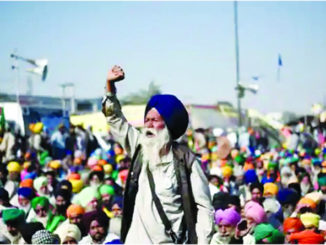
    Chandigarh (TIP): Despite the death of 300 farmers since they shifted their agitation to the Delhi border on November 26 last year, protests have not lost steam. Besides the permanent camps at the Delhi border, Punjab is also witnessing massive gatherings all over the state. The next major step will be the “dharnas” at various protest sites on the Delhi border, particularly Singhu and Tikri, on March 8.

    An elaborate plan is being made to observe International Women’s Day as an occasion to force the withdrawal of “draconian anti-farmer laws”.

    President of the Bharti Kisan Union (Rajewal) Balbir Singh Rajewal put the figure of the dead at over 300. BKU (Ugrahan) general secretary Sukhdev Singh Kokrikalan said about 250 persons had died due to different reasons, including cold, heart attacks and road accidents, during this period. “We got busy with other activities during our ongoing struggle, so we were not able to maintain a proper record of the deaths. We will surely do that,” he added.

    Following massive gatherings at Jagraon and Barnala “kisan mahapanchatays” recently, farmer unions have chalked out elaborate programmes to carry forward their protests at other places. Confirming the March 8 programme, Rajewal said, “All unions have decided to hold protests on International Women’s Day to show that even women stood with us against the anti-farmer laws. This will be preceded by blocking the KMP Highway on March 6 for five hours (11 am to 4 pm).”

    BKU district president Shingara Singh Mann said, “The government was trying its best to show that the farmers’ struggle was losing steam. It has, however, failed miserably in its propaganda. They are threatening our volunteers in various ways, including arrests. Even the celebrities supporting us have not been spared.”

    Kisan Mazdoor Sangarsh Committee general secretary Sarwan Singh Pandher said, “We may be seen as a separate group during the agitation. However, we are fighting for the same cause. Our eighth ‘jatha’ is leaving for the Delhi border. We will participate in the programme on March 8.”

    Pandher said, “We will hold a rally at Shahkot Mandi in Jalandhar, another one at Kapurthala on March 14 and at Ferozepur on March 15. The government has underestimated our dedication to the cause. We will fight till the end.”

    Source: The Tribune

  • Punjab reaches out to Centre and farmers, proposes longer pause

    Punjab reaches out to Centre and farmers, proposes longer pause

    Chandigarh (TIP): Wary of the protracted farmers’ agitation in the capital and the Republic Day incident at Red Fort, the Punjab government has stepped up efforts to reach out to the Centre to work towards an early resolution, sources told The Indian Express. Some top state officials have been camping in Delhi and are in constant touch with both the protesting farmers and the Centre. There were concerns in the state government that after the Nishan Sahib was hoisted at Red Fort,the agitation would fizzle out and farmers would return empty-handed.

    “Everybody here knows that if farmers come back without getting anything after these weeks and months of protests, anger will mount in the state. That would be a perfect breeding ground for resentment and we cannot afford that,” said a top state government functionary. That’s why, sources said, Chief Minister Amarinder Singh invoked Operation Blue Star at the all-party meeting this week and warned that Pakistan could “exploit” the situation to foment trouble. “Thanks to Rakesh Tikait, the agitation has got a new lease of life. If another Red Fort-like incident happens, it will be difficult for the leaders to sustain the agitation. Wisdom lies in taking it to a logical conclusion and save Punjab from any after-effects,” said a source who is aware of discussions between the state and the Centre.

    He said the state is trying to impress upon the Centre to repeal the laws but the Centre is “willing to do anything other than repeal.” So one option the state has proposed is to put the laws on hold for three years instead of the earlier offer of 18 months. “The farmers leaders had not agreed then. But now we are working on both the farmers as well as the Centre to make sure that the agitation is called off soon. If we can get the laws on hold until 2024 — which means the next elections — we can then work on the farmers to back down. After the Republic Day incident,we all have learnt our lessons. We will have to agree on something,” said the source.

                    (Source: The Indian Express)