Tag: Charanjit Singh Channi

  • Politics: How accountable are Advisors?

    Politics: How accountable are Advisors?

    After independence, Prime Minister Jawahar Lal Nehru, had set the concept of appointing Advisors in motion when he named JJ Anjaria as the country’s first Chief Economic Advisor in 1956. Among those who followed JJ Anjaria was Indira Gandhi’s pick Dr Manmohan Singh  who remained  country’s Chief Economic Adviser  from 1972 to 1976.

    By Prabhjot Singh

    Appointing Advisors by spending  huge sums of public money for  soliciting expert advice to facilitate the formulation and improve the quality of public policy is nothing new in liberal democracies. Ever since Independence, both the central and state governments  have been making use of experts from outside the gambit of the available political or administrative machinery  for  their advice on matters of public interest or welfare. The governments have been using consultancies, think tanks, academicians, and technocrats, to obtain expert opinion or advice while formulating plans.

    After independence, Prime Minister Jawahar Lal Nehru, had set the concept of appointing Advisors in motion when he named JJ Anjaria as the country’s first Chief Economic Advisor in 1956. Among those who followed JJ Anjaria was Indira Gandhi’s pick Dr Manmohan Singh  who remained  country’s Chief Economic Adviser  from 1972 to 1976.

    The central government has since come a long way and now it has several very “powerful” Advisors, including the National Security Advisor, a position, though outside the purview of the Constitution, that has been shared by superannuated diplomats and policemen. The Chief Economic Adviser continues to be drawn from amongst the economists.

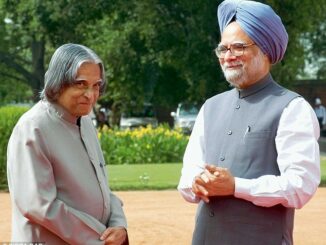
    In 1999-2000, the Union Government also appointed the country’s first Principal Scientific Advisor in Dr APJ Abdul Kalam. It is pertinent to mention that Dr Manmohan Singh (Chief Economic Advisor) and Dr APJ Abdul Kalam (Principal Scientific Advisor) rose to be the Prime Minister and President of the country, respectively. The appointments made on the basis of professional acumen and competence,  generally remain free of  any controversies. However, when the Advisors are appointed out of sheer political compulsions, they invariably  get  mired in controversies.

    There is a lot of ambiguity in the choice and classification of Advisors. There is a category of Advisors  who are  serving bureaucrats, technocrats, financial experts and are hand-picked  for  “plum” posts that generally fall in the category of ex-cadre posts.

    The second category is of political appointees  as Advisors. These appointments, if made for office for profit slots, need legislative approval.

    Chandigarh Administration is an example where serving bureaucrats hold the position of Adviser to the Administrator. The practice started in June, 1984, coinciding with the launch of Operation Bluestar in Punjab. K Banarji, who was the last Chief Commissioner of Chandigarh, became the first Adviser to the Administrator of Chandigarh. Since then, 18 Advisers have served the Administration.

    This category of “official” Advisers have their pay packets and service conditions protected by the civil service rules.

    There is another subgroup of these Advisors who  are superannuated bureaucrats, including diplomats, and financial wizards. Most of the Central Government Advisors belong to this group.

    There are no fixed norms like pay packets and service conditions for the political category of Advisers. Depending upon the status or clout of the appointee, his or her perks are fixed.

    It depends upon the State Governments or the Central Government to decide how  to make  best use  of expert advisors  in the policy process.

    The recent controversy about the appointment of Rajya Sabha member Raghav Chadha as Chairman of  an  Interim Advisory Committee has political implications. The Opposition parties are using it as a major tool to bash the Chief Minister Bhagwant Mann and the ruling Aam Aadmi Party for subjugating the interests of the State. The appointment has been challenged before the Punjab and Haryana High Court on the plea that an “outsider” has no locus standi to hold a position in a policy making body of the State.

    Punjab has a long history of being ruled by Advisors. Since the State had the longest spell of President’s Rule in 80s, it had a number of superannuated bureaucrats, defense personnel and policemen  as Advisors to the Governor or as members of the Governor-in-Council.Some of these Advisors, including JF Ribeiro, TS Baroca, Dr SS Sidhu, SL Kapur and others served  for terms from one to three years. The Governor-in-Council virtually performed the role of the State Cabinet and used to take all major policy decisions.

    Other than these Advisors, the discretion of appointing Advisors was frequently used in the post-militancy era by almost all Chief Ministers, including Parkash Singh Badal, Beant Singh, Capt Amarinder Singh and Charanjit Singh Channi. And most of these appointments were made either under political compulsions or to oblige people close to the affluent political families of the State.

    Instead of the State getting benefitted from the expert advice, these appointments  are generally  a big financial burden on deteriorating fiscal health of the State.

    Though no one disputes the rights and privileges of the elected government to appoint Advisors to seek  their expert opinion on various aspects of administration, including finances and governance, yet no provisions have been made  to hold the Advisors responsible  for advice that went against the interests of the State. Accountability clause is still not a part of terms of service conditions for the Advisors. There is no mechanism in place to judge the quality of the advice and the likelihood of it being accepted and implemented  for the welfare of the people.

    The mechanisms  to make external experts or Advisors  as active participants in the formulation of policies , and related factors or considerations influence the ability of governments to accept expert advice and incorporate it in their policy decisions are still to be worked out.

    Now when the AAP Government wants to use the expertise of Raghav Chadha to improve the fiscal health of the State, no one is talking about the role and work of the previous Financial Adviser, VK Garg, a retired bureaucrat appointed by the previous Congress Chief Minister, Capt Amarinder Singh. Intriguingly, in 2017, when Captain Amarinder Singh named six of his party legislators as  Political Advisors by according Cabinet Minister status to five of them and Minister of State status to the sixth, Bhagwant Mann was one of the frontline critics of the move saying it would put unnecessary burden on the State exchequer.There is no continuity in the expert advice or its continued implementation in the State.

    (The author  is a veteran journalist with over three decades of experience covering a wide spectrum of subjects and stories. He has covered  Punjab and Sikh affairs for more than three decades besides covering seven Olympics and several major sporting events and hosting TV shows. For more in-depth analysis please visit probingeye.com  or follow him on Twitter.com/probingeye. He can be reached at prabhjot416@gmail.com)

  • Sunil Jakhar joins BJP days after leaving Congress

    Sunil Jakhar joins BJP days after leaving Congress

    New Delhi (TIP)- Sunil Jakhar, a prominent face of Punjab politics who quit the Congress recently, joined the BJP on Thursday, May 19, a development being seen as a big gain for the saffron party that aspires to get a toehold in the border state. Jakhar, unlike many other Congress deserters, has expressed sorrow at breaking ties with the Grand Old Party, saying it was not easy to snap a 50-year-old relationship that spanned three generations of his family. He stressed on Thursday that the Congress for him was not a party but “family”.

    “I had a 50-year-old relationship with the Congress. Three generations of my family have been with the party since 1972. Considering the party my family, we stayed with it in good and bad times,” Jakhar said, claiming he quit not because of “fundamental disputes” with the party or any “personal dispute”.

    BJP president J.P. Nadda was personally present to welcome Jakhar, underlining the importance the party was according to the latest catch from the Congress. Nadda claimed that Jakhar left the Congress owing to a “dispute over nationalism” and “Punjab’s unity and brotherhood”.

    Claiming that the BJP was leading the “nationalist forces” in Punjab, Nadda said it was essential that people aligning with such an ideology joined the party. He said Jakhar would play a key role for the BJP in Punjab. After Jakhar, another key Congress deserter, Hardik Patel from Gujarat, is set to join the BJP soon, BJP leaders said. Hardik, who quit the Congress on Wednesday, has slammed the leadership in general and Rahul Gandhi in particular and dropped enough hints that he was headed towards the BJP. Jakhar quit the Congress after the party’s disciplinary committee recommended that he be suspended for two years and removed from all posts for criticising then chief minister Charanjit Singh Channi. The Congress lost the Punjab elections earlier this year. Jakhar holds a lot of importance for the BJP that has a marginal presence in Punjab. In the Sikh-dominated state sharing a border with Pakistan, the BJP had for years played second fiddle to then ally Akali Dal. The BJP was left virtually orphaned in the state after the Akali Dal snapped ties over the farm laws. Jakhar is a prominent non-Sikh politician from the state who commands a lot of goodwill. Led by Prime Minister Narendra Modi, the BJP has been running a determined campaign to woo the Sikhs after the Centre was forced to withdraw the three new farm laws, bowing to a prolonged struggle by farmers primarily led by the community. BJP insiders said Jakhar could soon be rewarded with a Rajya Sabha berth and a key responsibility in the effort to strengthen the BJP in Punjab.

              Source: The Telegraph

  • Kejriwal as contender

    Kejriwal as contender

    Punjab’s tidal wave of anti-incumbency is against the entire privileged political class

    By Rajesh Ramachandran

    “The most shocking aspect of these results is how the mighty bit the dust, a lesson taught by angry voters to the feudal, tainted and rent-seeking leadership of Punjab. Among the banyan trees of political privilege that fell are four-time former CM and Punjab’s political patriarch Parkash Singh Badal, the “Maharaja” of Patiala, former CM Capt Amarinder Singh, ex-CM Rajinder Kaur Bhattal, sitting CM Charanjit Singh Channi, celebrity Punjab Congress president Navjot Singh Sidhu, Shiromani Akali Dal president and former deputy CM Sukhbir Badal, his controversial brother-in-law fighting drug cases, Bikram Singh Majithia, and his cousin and Congress’ finance minister Manpreet Badal. Most importantly, these weighty “lords” have been knocked out of the ring with a huge thud by first-timers — mobile phone repairmen, volunteers and other nobodies.”

    It is always heartening to talk of hope. The angry, resilient, yet ebullient people of Punjab believe that things can and will change; this, in short, explains the political deluge that has drowned a sitting Chief Minister, three former Chief Ministers, the heads of two parties and the state’s most controversial politician. This tsunami of change has to be credited entirely to Delhi Chief Minister Arvind Kejriwal’s meticulous planning, patience and people-connect. Bhagwant Mann was declared the CM candidate only a few weeks ahead of the polls — till then, there was just Kejriwal representing the Delhi model of governance, seeking a vote for change. The first sign of this campaign’s effectiveness was Union Territory of Chandigarh’s local body polls in December, which resulted in the AAP emerging as the single largest party, dislodging the BJP. Kejriwal offers a national alternative as voters can break away from identity silos to get their lives improved.

    The most shocking aspect of these results is how the mighty bit the dust, a lesson taught by angry voters to the feudal, tainted and rent-seeking leadership of Punjab. Among the banyan trees of political privilege that fell are four-time former CM and Punjab’s political patriarch Parkash Singh Badal, the “Maharaja” of Patiala, former CM Capt Amarinder Singh, ex-CM Rajinder Kaur Bhattal, sitting CM Charanjit Singh Channi, celebrity Punjab Congress president Navjot Singh Sidhu, Shiromani Akali Dal president and former deputy CM Sukhbir Badal, his controversial brother-in-law fighting drug cases, Bikram Singh Majithia, and his cousin and Congress’ finance minister Manpreet Badal. Most importantly, these weighty “lords” have been knocked out of the ring with a huge thud by first-timers — mobile phone repairmen, volunteers and other nobodies.

    But mere free-floating anger would not have consolidated in favor of one party to cause this landslide of an election result. And this anger was not confined or focused against just the incumbent government. It was a sort of a tidal wave of anti-incumbency against the entire privileged political class. The rushing river of anger that was dammed in 2017 appears to have burst forth in 2022 to submerge the political landscape. Another factor that worked in favor of the AAP was that it became the sole beneficiary of the collective angst against the new farm laws. So, while Bharatiya Kisan Union leader Balbir Singh Rajewal lost his credibility and the polls, the anti-establishment vote that coalesced as a result of farm unions’ mobilization went into the AAP’s kitty.

    The results prove that rural Sikh farmers voted for the AAP in huge numbers, a fact further established by the decimation of the Akalis. From 15, the party’s strength has been reduced to three. Similar is the BJP’s drubbing. Despite all its dirty tricks — including Kumar Vishwas’ last-minute stab in the back — the Hindus of Punjab voted overwhelmingly for the AAP, helping the party sweep the urban seats. So, if in 2017 it was a backlash of the Hindus over unfounded fears of a Khalistani connection that defeated the AAP and made the Congress victorious on 77 seats, Kejriwal worked hard early in the campaign to allay those old apprehensions by launching the Tiranga Yatra to burnish his nationalist credentials. And it worked: the committed Hindu voter turned against the Congress and the BJP to emphatically support the AAP. Or rather, Hindus rose above sectarian interests and minority insecurities and voted along with other communities for hope and change.

    That leaves the famed Dalit voters of Punjab — 32 per cent of the population. The replacement of a lazy Maharaja with an enthusiastic Dalit as CM was thought to be a masterstroke by the Congress leadership. But angry Dalit voters treated the high command’s trump card as if it was the joker in the pack. And like Sikhs and Hindus, Dalits voted against the political establishment, proving yet again that anger overrides identity in Indian politics — for there was an attempt to split the Dalit votes in favor of the BJP and the Akalis through the discredited Dera Sacha Sauda. Neither Channi’s candidature nor Ram Rahim’s furlough seemed to have made any difference to the determined Dalit voter seeking revenge against corrupt tokens taken out of the cupboard at the last minute. The Enforcement Department raid seizing crores in cash from Channi’s nephew robbed him of all his “poor Dalit” sheen and Sidhu’s daily barbs against the government left Congress with nothing worth defending.

    If these elections have thrown up Kejriwal as a national contender for the top post, offering a credible alternative beyond Delhi, it is because voters are breaking away from their identity silos and coalescing to get their lives improved. The same logic applies to Yogi Adityanath’s victory, however unseemly his saffron robes may appear to the liberals. The Muslim-Yadav formula, with some non-Yadav OBCs thrown in, did read like a winning combination, but popular sentiment had forgiven Yogi and the BJP for the Delta deaths, floating graves on the Ganga, the farm laws and even the Lakhimpur Kheri killings. The law-and-order situation, free ration, direct benefit transfers and various targeted schemes improving the people’s lot seem to have caught the voter’s imagination. Yet, the Samajwadi Party’s performance only shows that there is simmering anger against the incumbent, which has not yet reached the boiling point. Its leader Akhilesh Yadav may also have to get out of the caste costume to look at the new realities of a changing India, in which the political capital of identity politics may just not be enough to win elections.

    The Congress’s failure as an alternative to the BJP is writ large over the results in Uttarakhand, Goa and Manipur. The party is steadily sliding into inconsequence, with its leadership refusing to re-engineer itself. In this context of a crisis of Opposition leadership steps in Kejriwal, with the amalgamation of two contemporaneously disparate political slogans of ‘Bharat Mata Ki Jai’ and ‘Inquilab Zindabad’. The 2024 contest just got hotter with Kejriwal’s promise of ‘inquilab’.

  • Election Commission of India’s Gesture

    Putting off Punjab polls welcome, but Covid concerns persist

    The Election Commission of India (ECI) deserves praise for accepting a genuine demand by the state government and various political parties to postpone the Punjab Assembly polls in view of Guru Ravidas Jayanti. Chief Minister Charanjit Singh Channi and other leaders had appealed to the poll panel to reschedule voting, which was initially slated for February 14, so that followers of Guru Ravidas — a revered poet-saint of the Bhakti movement — could travel from Punjab to Uttar Pradesh to celebrate his birth anniversary on February 16. Lakhs of devotees converge on Varanasi, the birthplace of Guru Ravidas, to pay obeisance on Magha Purnima every year.

    Unanimity among political parties is rare, especially during the election season. What has made all stakeholders speak in one voice in this case is the importance of the Ravidasia community as a vote bank. Doaba, which sends 23 MLAs to the 117-seat Punjab Assembly, accounts for lakhs of followers of Guru Ravidas. No party can afford to ignore the interests of this influential group, considering that this is apparently a ‘no wave’ election which might throw up a hung House. The bottom line is that every seat counts. However, amid the electoral compulsions, various parties have conveniently chosen to ignore the fact that the celebrations in Varanasi will witness a huge congregation under the shadow of the pandemic. The event could become a coronavirus superspreader if the third wave does not subside by mid-February. Varanasi is represented in the Lok Sabha by PM Narendra Modi, who has been repeatedly urging citizens of the country to follow Covid protocols. It will be a big challenge for the BJP government in poll-bound UP to make large crowds toe the line, particularly since cancellation of the festivities is not an option in view of the religious sentiments at stake. Last year, the Kumbh Mela in Uttarakhand was one of the contributory factors to the massive surge in infections during the devastating second wave. It remains to be seen whether adequate steps will be taken this time to ensure a Covid-safe pilgrimage.

    (Tribune, India)

  • North American Punjabi Association demands NRI affairs portfolio for Pargat Singh

    North American Punjabi Association demands NRI affairs portfolio for Pargat Singh

    WASHINGTON (TIP): US-based NRI body North American Punjabi Association (NAPA) has demanded NRI Affairs portfolio in the new Cabinet for hockey Olympian Pargat Singh, who had won from the Jalandhar Cantt constituency by a big margin of votes. In a letter sent to PPCC president Navjot Singh Sidhu and Punjab Chief Minister Charanjit Singh Channi, NAPA executive director Satnam Singh Chahal said a majority of the Punjabi diaspora was from the Doaba region. “So, the NRI Affairs Minister should be from this region and Pargat Singh was the best choice for the job,” he said. Chahal said there were many issues and concerns of the Punjabi diaspora that needed to be addressed by the government. He demanded that there should be more fast-track courts in the Doaba region to decide the disputes of the Punjabi diaspora at their homes.