Tag: Chess

  • Teenager Pranav Anand is India’s 76th Grandmaster

    Teenager Pranav Anand is India’s 76th Grandmaster

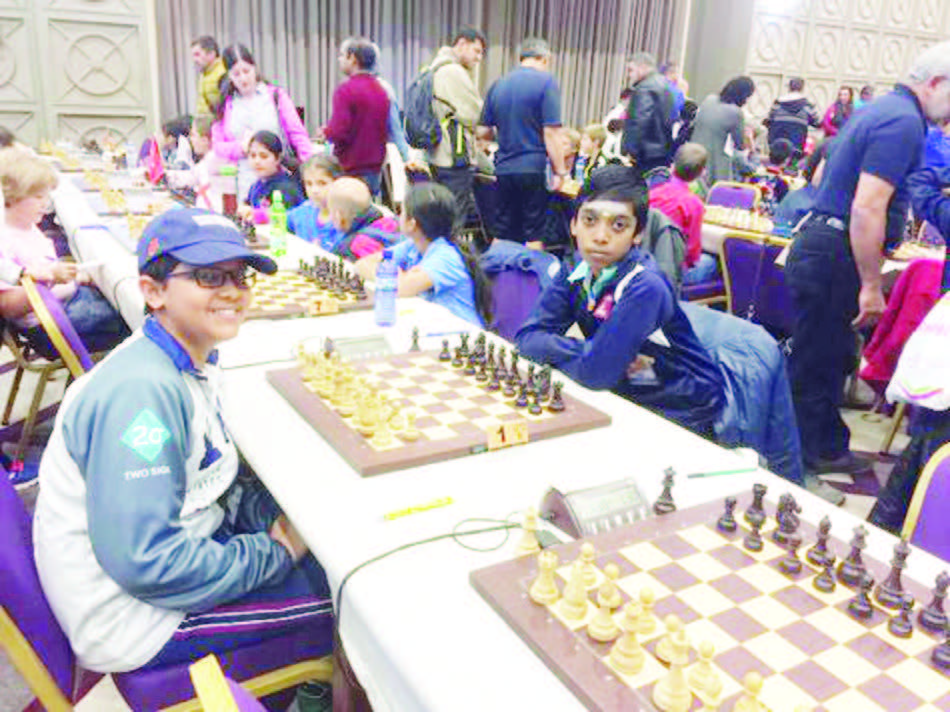
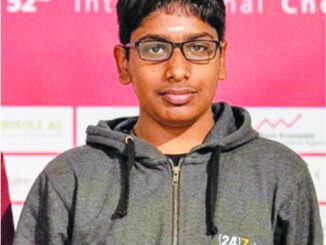
    Bengaluru teenager Pranav Anand became India’s 76th Grandmaster after he crossed the 2,500 Elo mark in the ongoing World Youth Chess Championship in Mamaia, Romania. The 15-year-old, having met the other requirements that are necessary for a GM title, achieved the honour late on Thursday, September 16. To become a GM, a player has to secure three GM norms and cross the live rating of 2,500 Elo points. Anand had scored the third and final GM norm at the 55th Biel Chess Festival in Switzerland in July.

    “He is passionate towards chess. Extremely interested and passionate towards the game. He can work for any number of hours,” Anand’s coach V Saravanan said. “He is especially good in calculation and end games…they are his two biggest strengths right now,” Saravanan said, while referring to his ward’s ninth-round win in the Under-16 section of the World Youth Chess Championship 2022. Anand had secured his third and final GM norm by drawing his game against GM Eduardo Iturrizaga Bonelli (2619) in the penultimate round.

                    Source: PTI

  • India in history this Week-December 10 to December 16, 2021

    India in history this Week-December 10 to December 16, 2021

    10 DECEMBER

    1878       The freedom fighter leader G. Rajagopalachari was born.

    1878       Birth of Muhammad Ali Johar, one of the founders of Jamia Millia Islamia in Rampur.

    2001       Dada Muni, one of the stalwarts of Indian cinema, said goodbye to the world.

    1992       The first hovercraft service of the country was started in Gujarat.

    1998       Amartya Sen was awarded the Nobel Prize for Economics in Stockholm.

    11 DECEMBER

    1911       Dilip Kumar, one of the greatest actors of Indian cinema, was born.

    1935       Former President of the country Pranab Mukherjee was born in Birbhum in West Bengal.

    1969       Vishwanath Anand, the emperor of chess, was born.

    2011       Pandit Ravi Shankar died.

    1845       First Anglo-Sikh War: The Sikh army crossed the Sutlej River in Punjab.

    1858       Bankim Chandra Chattopadhyay and Yadunath Bose became the first Bachelor of Arts subjects from the University of Calcutta.

    1946       Rajendra Prasad was appointed the President of the Constituent Assembly.

    1967       In western India, a magnitude 6.5 earthquake killed 170 people.

    1687       The East India Company formed a municipal corporation in Madras (India).

    12 DECEMBER

    1911       The capital of India was shifted from Calcutta to Delhi.

    1971       All the facilities provided to the former kings by the Indian Parliament were canceled.

    1992       Giant Buddha statue was installed in Hyderabad’s Hussain Sagar lake.

    1996       Signing of 30-year treaty on the sharing of Ganga water between India and Bangladesh.

    2001       India gave two cheetah helicopters and weapons to Nepal.

    1964       Famous Hindi poet and litterateur Maithilesharan Gupta died.

    13 DECEMBER

    1232       Iltutmish, the ruler of the Ghulam dynasty, captured Gwalior.

    2001       The Indian Parliament was attacked by terrorists.

    1921       The Banaras Hindu University was inaugurated by the ‘Prince of Wales’.

    1955       India and the Soviet Union accepted the Panchsheel agreement.

    1961       Mansoor Ali Khan Pataudi started his Test match career against England in Delhi.

    1998       Mahatma Ramchandra Veer was awarded the “Bhai Hanuman Prasad Poddar Rashtra Seva” award from the Bada Bazaar Library in Kolkata.

    2008       For the fifth phase of Jammu and Kashmir, 57% polling was held in 11 assembly constituencies.

    2012       In the final match of the blind Twenty20 World Cup, the Indian cricket team defeated Pakistan by 30 runs to take the title of world winner.

    1955       Former Chief Minister of Goa Manohar Parrikar was born.

    2000       Former captain of the Indian cricket team, Vijay Samuel Hazare became the first person to receive the ‘Castrol Lifetime Achievement Award’.

    14 DECEMBER

    1924       Director, producer, showman Raj Kapoor was born.

    1901       Mahatma Gandhi reached Rajkot via Porbandar.

    1960       The Organization for Economic Cooperation and Development (OECD) was established.

    2005       11 Hindus are condemned with life imprisonment for their involvement in the killing of Muslims in the 2002 Gujarat violence.

    2011       Poisonous liquor banned in India kills 166 people in West Bengal.

    15 DECEMBER

    1950       The iron man Sardar Vallabhbhai Patel died.

    1749       Chhatrapati Shivaji’s grandson Shahu died.

    1953       India’s S. Vijayalakshmi Pandit was elected the first woman president of the eighth session of the United Nations General Assembly.

    1991       Filmmaker Satyajit Ray was awarded a Special Oscar for his achievements in the cinema world.

    16 DECEMBER

    1985       The country’s first fast breeder nuclear react started functioning in Kalpakkam.

    1971       Bangladesh separated from Pakistan and became an independent nation after agreeing to a cease-fire between India and Pakistan.

    1993       ‘Education for all’ conference starts in New Delhi.

    2004       Doordarshan’s free to air DTH service ‘DD Direct +; Was launched by the Prime Minister.

    1903       The Taj Mahal Palace Hotel in Mumbai was opened for guests.

    2012       In New Delhi, a woman was gang-raped in a bus, leading to public protests against the Government of India and the Government of Delhi.

    1937       Hawa Singh, one of the best boxers in India, was born.

  • India in history this Week-November 5 to November 11, 2021

    India in history this Week-November 5 to November 11, 2021

    05 NOVEMBER

    1556       In the second battle of Panipat, the Mughal ruler Akbar defeated Hemu.

    1920       Indian Red Cross Society was established.

    1961       India’s first Prime Minister Jawaharlal Nehru visited New York.

    2001       India and Russia rejected the Taliban’s participation in the Afghan government.

    1870       The great freedom fighter Chittaranjan Das was born.

    06 NOVEMBER

    1763       The British army defeated Meerkasim and captured Patna.

    1913       Mahatma Gandhi led ‘The Great March’ against apartheid policies in South Africa.

    1998       India’s proposal for ceasefire in Siachen rejected by Pakistan

    1943       During the Second World War, Japan handed over Netaji Subhash Chandra Bose to the Andaman and Nicobar Islands.

    1962       National Defense Council was established.

    2000       Jyoti Basu stepped down after being Chief Minister of West Bengal for 23 consecutive years.

    07 NOVEMBER

    1858       Bipin Chandra Pal, the great revolutionary who fought against the British, was born on 7 November.

    1862       Bahadur Shah II, the last ruler of the Mughal Sultanate, died in Rangoon.

    1876       Bankim Chandra Chattopadhyay composed the song Vande Mataram in a village called Kantal Pada in Bengal.

    1888       Renowned scientist Chandrashekhar Venkata Raman was born.

    2006       India and ASEAN agreed to create a fund for the development of science and technology.

    2008       The famous poet Rahman Rahi of Kashmir was conferred with the Jnanpith Award.

    1711       The ship of the Dutch East India Company sank all of the 300 crew.

    1978       Indira Gandhi was re-elected to the Indian Parliament.

    08 NOVEMBER

    1661       Sikh religious teacher Har Rai died.

    2008       India’s first unmanned space mission Chandrayaan-1 reached the lunar orbit.

    2016       Prime Minister Narendra Modi announced demonetisation and 500,1000 notes were discontinued. After that, new 2000 notes were issued.

    1999       Rahul Dravid and Sachin Tendulkar set a world record by sharing 331 runs in a one-day cricket match.

    2005       Criticized the terrorist actions of Palestinian organizations in India and the repression of Israel.

    1627       The Mughal ruler Jahangir died.

    1920       India’s famous Kathak dancer Sitara Devi was born.

    09 NOVEMBER

    1236       The Mughal ruler Ruknuddin Firoz Shah was assassinated.

    1270       The great saint Namdev was born.

    1947       Junagadh state merged into India.

    1960       First Indian Air Force Chief Subroto Mukherjee died.

    2000       Uttarakhand was carved out of Uttar Pradesh and made a new state.

    10 NOVEMBER

    2001       Indian Prime Minister Atal Bihari Vajpayee addressed the United Nations General Assembly.

    2013       The famous Rajasthani language litterateur Vijaydan Detha passed away.

    1978       Rohini Khandilkar became the first woman to win the National Chess Championship.

    2008       India won the Border-Gavaskar Trophy by defeating Australia 2–0.

    2008       Giving strategic depth to India-Qatar relations, the two countries signed the Defense and Security Agreement.

    11 NOVEMBER

    1888       Freedom fighter Maulana Abul Kalam Azad was born in Saudi Arabia.

    1973       The first international postage exhibition started in New Delhi.

    1889       Freedom fighter Jamnalal Bajaj was born in 1889.

    1943       Indian nuclear scientist Anil Kakodkar was born in 1943.

  • Weekly Horoscope

    By Astrologer Bejan Daruwalla

    Shree Ganeshaya Namah

    Aries: Ganesha says you look at new horizons and new targets and set very high goals for yourself. You also get indulgent and, if not careful, this could lead to medical problems. You will have to exert strong discipline over yourself. Get to a gym or hire a personal trainer. Watch your intake of food and drink too. You can gain weight easily and this is the cause of most of their health issues.

    Taurus: You need to take special care of yourself. You could also visit spas, go for healing massages, and look at preventive alternative treatments. Hard work and no play can be disastrous. There are also several new expenses on both, the work and personal fronts. The family needs more attention and children, in particular, may need medical help. Elders in the family may need hospitalisation too.

    Gemini: There is rapid recovery from the troubling issues of the last period. But this is also an intense phase with more work and more demands on your time. You look closely at more opportunities to make money and also find them. You have a lucky streak, maybe even the Midas touch. There is love, or may I say, more accurately, a lot of lust in the air.

    Cancer: You lose yourself in the arms of a new partner. Passion overwhelms you. You neglect work and family duties in this moment of madness. To err is human, what more can I say? Ganesha asks you to be careful while playing with fire. Put a cap on your famed passion and temper as they are both very inflammable and could only get you into trouble.

    Leo: You will also have to pay off loans, possibly take new loans, and strengthen your monetary base. It is a mixed bag with many things happening all at once and Ganesha wants you to slow down and take stock of the situation. You are at the crossroads; please look at both sides and drive carefully. Ganesha urges you to make the most of it.

    Virgo: The period favours travels / meetings / conferences / interviews / trips / more brain power / contacts / communication / correspondence / contracts. The period has a special connection with the circuits of the brain. Chess, crossword and other such games belong to you. Your sustained hard work over the last period provides results. You haven’t buckled down to pressures and you get your due.

    Libra: There is tremendous appreciation for your work and loyalty and your image catapults into the stratosphere. You are basking in the spotlight. The 3 P’s – power, pelf and privileges – are yours. It is time for you to have your feet on the ground now as fame can be heady and life has a way of imparting valuable lessons. Is it any wonder that the University of Life is the greatest teacher of all!

    Scorpio: There is a good chance that you could indulge in philanthropy. You may visit homes for the destitute and institutions for the challenged and help out. This is a good sign, says Ganesha as it will keep you grounded and prepare you for more important tests in the days to come. You are reaching out to all corners now. You cast your net wide. You meet with friends and extended family and take a break from the mundane and the humdrum.

    Sagittarius: You look at new machinery for business expansion. Technology and its uses seem to excite you and you look at new ways of streamlining your work. This is also party time and you seem to be overdoing the bubbly. You will make inroads into many new areas of your life and there will be rapid business expansion. Ganesha blesses you in each and every way.

    Capricorn: The work area intensifies. You slog away and burn the midnight oil. There is a lot of paperwork and accounts to attend to, and you count the pennies despite making huge profits. It may be wise to loosen the purse strings a bit. You are in expansion mode and are making new contacts and connections. There could be a rich haul if all the new contacts are optimised. You see many opportunities and go all out to seize them.

    Aquarius: You are now in travel mode and renewing old contacts and making new ones. There are journeys of all kinds ahead. You go full steam to achieve your goals. You are a great hit with people. Though normally reticent and retiring by nature, you make waves in group activities. This surprises everyone and you are the toast of the party. This is a lucky phase and you seem to make one conquest after another.

    Pisces: This period makes you sensitive and emotional. You get moody and may brood. You think about the past and the mistakes you have committed. This maudlin note is not in your temperament which is normally sunny, and the sooner you snap out of it the better. You are not the party animal and prefer the comfort and sanctuary of the indoors of a romp in the outdoors. But now you spend more and more time alone and with your innermost thoughts.


  • ED files PMLA case against Chidambaram’s son Karti

    ED files PMLA case against Chidambaram’s son Karti

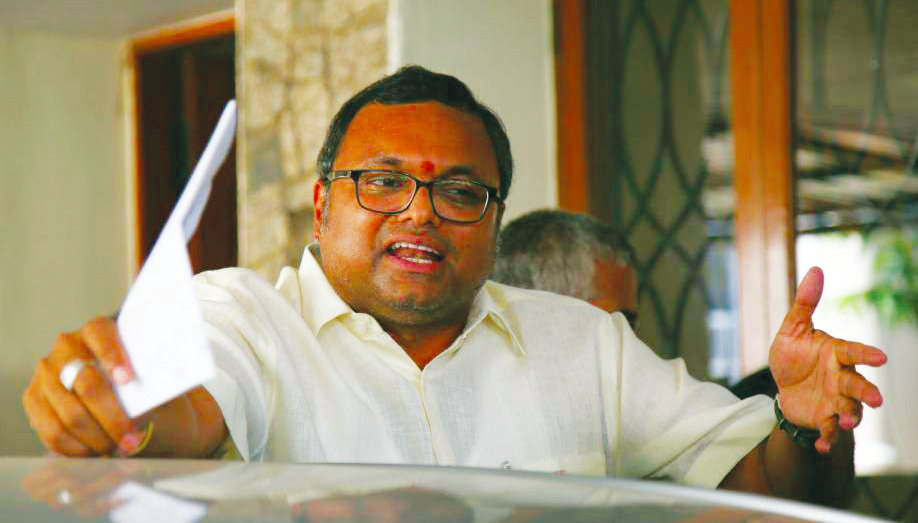
    NEW DELHI (TIP): The Enforcement Directorate (ED) has registered a money laundering case against Karti Chidambaram, son of former finance minister P Chidambaram, and others, taking cognisance of a recent CBI FIR against them.

    Officials said the central probe agency registered an Enforcement Case Information Report (ECIR), ED’s equivalent of a police FIR, against the accused named in the CBI complaint including Karti, INX media and its directors, Peter and Indrani Mukerjea, and others.

    The ECIR has been registered under the provisions of the Prevention of Money Laundering Act (PMLA), they said. They said the ED will probe the alleged “proceeds of crime” generated in this case and may also attach assets of the various accused.

    It is the ED which had provided information about the alleged illegal payments made by INX media, based on which the CBI had filed its FIR. The CBI, on Tuesday, had carried out searches at the homes and offices of Karti across four cities for allegedly receiving money from the media firm owned by the Mukerjeas to scuttle a tax probe.

    The Chidambarams had denied all the charges made against them. The CBI had filed an FIR against Karti and the Mukerjeas on charges of criminal conspiracy, cheating, receiving illegal gratification, influencing public servants and criminal misconduct.

    It is alleged that Karti received money from INX Media for using his influence to manipulate a tax probe against it in a case of violation of Foreign Investment Promotion Board (FIPB) conditions to receive investment from Mauritius.

    The CBI had also recovered vouchers of Rs 10 lakh which were allegedly paid for the services.These vouchers were issued in favour of Advantage Strategic Consulting (P) Limited, a firm “indirectly” owned by Karti, the CBI had alleged. The senior Chidambaram, after the CBI searches on May 16, had issued a strong statement in response to the raids saying that the government was using the CBI and other agencies to target his son.

    FIPB approval was granted in “hundreds of cases”, the senior Congress leader had said. The CBI FIR was made out against Karti, his company Chess Management Services, the Mukerjeas (currently in jail on charges of murder their daughter Sheena Bora), INX Media, Advantage Strategic Consulting Services and its director Padma Vishwanathan.

  • Indian-American student wins under-12 World Cadets Chess Championship

    Indian-American student wins under-12 World Cadets Chess Championship

    MIAMI, FLORIDA (TIP): Nikhil Kumar, anIndian-American student from Miami has won the World Cadets Chess Championship, under-12 division by defeating World No. 1 Rameshbabu Praggnanandhaa of India.

    The tournament held from October 18-31 in Batumi, Republic of Georgia saw the eight-grader at Ransom Everglades middle school finish first in a field of 137 students from 36 countries. After a victory over teammate Andrew Hong, Kumar had 9/10 and was 1.5 ahead of the field. Nikhil’scrucial win over tournament favorite Rameshbabu Praggnanandhaa set him up for the early victory.

    “I really wasn’t expecting that from myself, but like when I won it was a good feeling,” he said afterward. “I was proud of myself, and happy to be representing the country, like in such a good way,” he added. He draped an American flag over his shoulders as he accepted the first-place medal and trophy.

  • Two years after Olympics is when India should focus: Anand

    Two years after Olympics is when India should focus: Anand

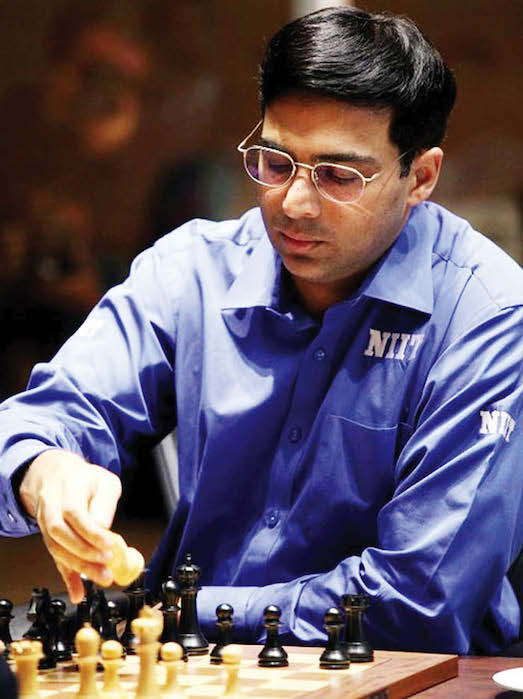
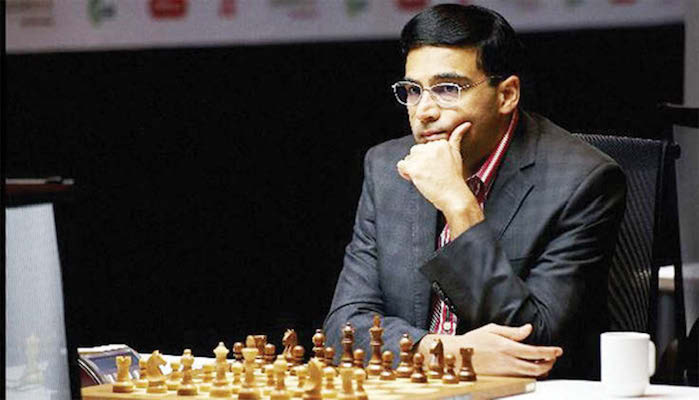
    NEW DELHI (TIP): When five-time world chess champion Viswanathan Anand speaks about the health of sport in India, you are naturally compelled to pay attention. During the course of his nearly 25-year professional career, the 46-year-old has seen up close the state of sport in the country and witnessed the differences overseas.

    Disappointed. But we seemed to have created a pool of new disciplines and sportspersons who could be medal winners in 2020.

    I think a sportsperson who prepared and lost narrowly would feel the most pain. You almost know by how much you lost, yet its not something tangible. I would say the most positive takeout is we missed narrowly in a few events and we found a lot of new talent. Gymnastics would never be considered a medal prospect for India but we could easily be one in 2020.

    I think we get very excited every four years. We get euphoric about a medal. But two years after an Olympics is where all the attention should be. That’s when sportspersons are competing in World Championships or qualifiers to make it to the Olympics. I think we need to feel the spirit then when the training begins.

    Winning is all about timing. At that moment you have to be your best. In this Olympics a lot of our medal prospects lost out narrowly. Some even put in their best performance. So we were very close but the medals don’t take into account near misses. I can tell you that for some of the matches I lost, I prepared the hardest but sometimes it just doesn’t click at that second when it matters most.

    I think almost every sportsperson will have dealt with officialdom at some level. You can’t just solve it by throwing it away. We need a framework. It’s a very complex mechanism. On one hand it’s needed so as to reach out to talent, but on the other hand it also stalls growth.

    Every four years we go through this rhetoric, but I agree with Abhinav that it has to go beyond the Olympics and start at the grassroots level. If you see talent, how do you ensure they move up very quickly? That is the key.

    We need parents to look at sports as something essential and natural. The government should definitely help in identifying talent and sustaining talent. But it shouldn’t compete with private organisations that may be better equipped at providing training or a support system.

    The Olympic Gold Quest, for instance, spends a lot of resource in identifying talent. But where they excel is in getting the right training for each athlete. This includes physical fitness and physiotherapy. General fitness is an area where we need to work on. To keep our fitness and endurance at top level requires a lot of specialised training. The government should be a partner. Federations should be more accountable to the players they represent. Again they should partner player rather than police them. Or use the sport as a PR prop.

    I remember a federation official calling embassy officials demanding a three-course Indian meals in Tehran along with a chauffeur car service. The ambassador assumed it was for me. Little did they know it was for the official to shop for souvenirs. The official even asked Aruna before my last game at the World Championships if she could organise the arrival in India. So a federation has to respect its players and at least emotionally connect with them.

    I think sports in those days was more difficult. We had FERA regulations on foreign currency, so getting trainers was difficult. Each event meant getting sanctions from three ministries, so you packed your suitcase and went to Delhi. If you got all the papers in time, you would board your flight or just returned back to school. My dad, being in the Railways, would try to speak to someone who knew someone and always someone would oblige. But they were never easy.

    When I became World Junior champion, I started making enough money to cover my travel expenses. Some tournament invitations started coming and I never had to depend on the federation to cover my expenses. I think if you have a talent, getting the right breaks is very important. When the break comes, you should be able to do well. Luckily, I did well in key events that helped me get noticed internationally.

    I seemed to just take to it naturally. We had limited or no training resources but we did the best under those circumstances. My blitz playing skill came from my Tal chess club days. So you have to take infrastructure as a given and think how best can we do it. I was attracted to chess in an almost obsessive manner. I would read every chess book. Play over every game. I had a talent for playing very fast but I broke out from being a national to international player quickly. That made a lot of difference.


    (PTI)

  • SARAH JESSICA PARKER SURPRISES BRIDES WITH FREE SHOES

    SARAH JESSICA PARKER SURPRISES BRIDES WITH FREE SHOES

    Actress Sarah Jessica Parker @SJP surprised three brides by gifting them shoes from her SJP Collection during their wedding dress fittings. Brides-to-be Taylor-Rey, Hilary and Kaitlin were all having their dress and accessories fittings when the actress entered the store with a cart full of her designs and shared: “I think I’m more excited than anybody.”

    The moment was captured on video for Brides magazine, reports femalefirst.co.uk. Meanwhile, Parker, who wore a black dress for her own wedding to Matthew Broderick in 1997, recently said that if she was getting married again, she would have gone for a more traditional gown.

    She said: “If I were getting married today, I’d likely wear cream, just to have that bridal experience. Now I would want my dress to have an Oscar de la Renta feel, pockets below the waist, a very fitted bodice, a huge skirt, in taffeta or duchesse satin. That silhouette appeals to me because it’s old-fashioned yet can look very modern.”

  • Britain’s Prince William and Kate try archery in Bhutan

    Britain’s Prince William and Kate try archery in Bhutan

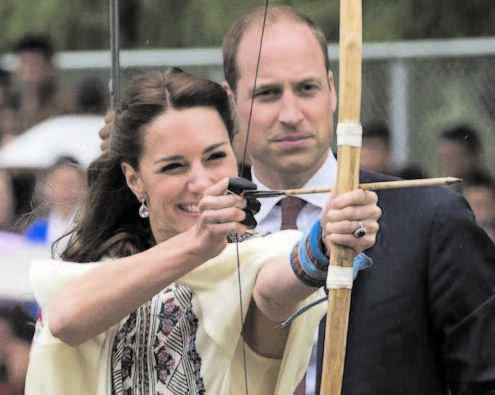
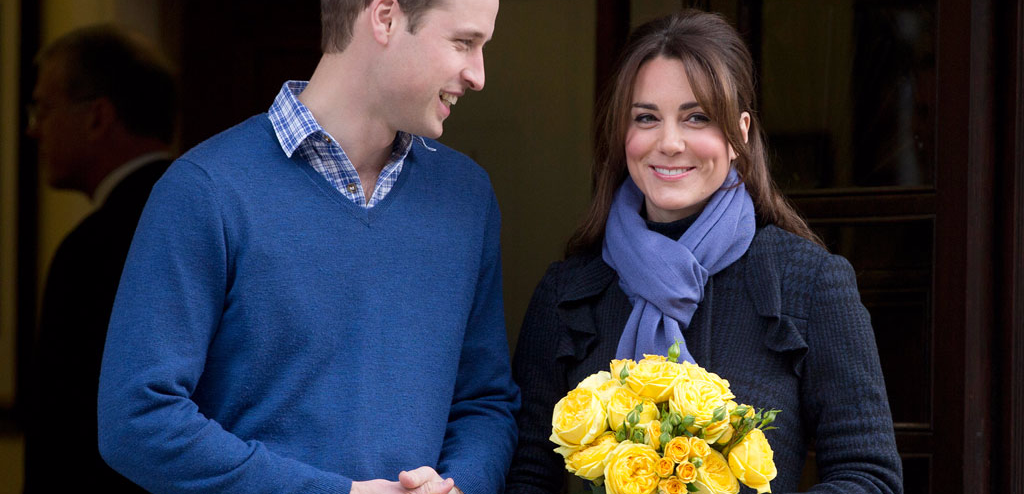
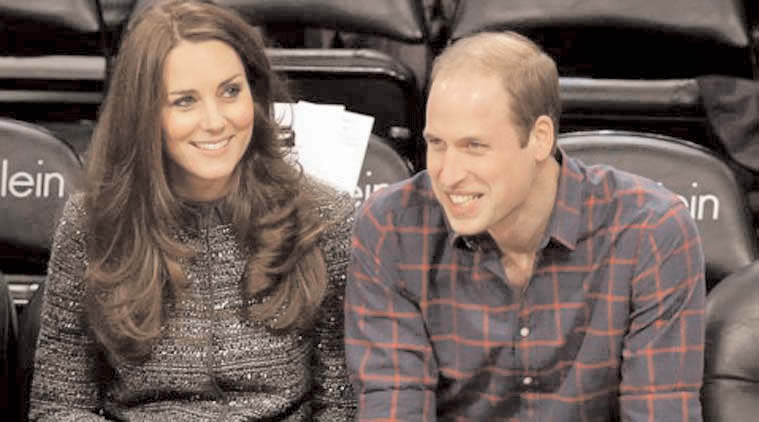
    THIMPHU (TIP): Britain’s Prince William and his wife Kate tried their hand at Bhutan’s national sport of archery on April 14 as they began their first visit to the tiny Himalayan kingdom in a whirl of colourful dancing and music.

    The couple laughed as they tested their shooting skills at an open-air archery venue in the Bhutanese capital Thimphu to loud cheers from the gathered crowds – even when they missed the target.

    Bhutanese archers must aim at very small, brightly decorated wooden targets positioned 145 metres away from where they are standing.

    The Duke and Duchess of Cambridge were allowed to move a little closer than that, but were not able to hit the target despite coaching from the experts.

    The couple had braved the rain to head to an archery competition in the open-air stadium, where they chatted to local people after earlier meeting Bhutan’s king and queen.

    They flew into the picturesque mountain kingdom today morning from India, where they played cricket, hung out with top Bollywood actors and laid a wreath at a memorial to India’s war dead.

    They will spend two days in the tiny kingdom, famously the last country to get television and home to just 750,000 people.

    A row of monks bowed to the couple as they arrived at the Tashichho Dzong fortress in Thimphu for their private audience with King Jigme Khesar Namgyel Wangchuck and Queen Jetsun Pema.

    Bhutan’s Oxford-educated monarch -known as the Dragon King – greeted the British couple in Bhutanese national dress, which is still required to be worn in schools and the workplace.

    His wife also wore traditional dress, while Catherine, Duchess of Cambridge, wore a black and cream cape top and a long blue printed skirt made from fabric hand-woven in Bhutan.

    King Jigme came to the throne in 2006 after his father abdicated and agreed to cede absolute power to a parliamentary democracy.

    The country held its first elections in 2008 and is known for pursuing a unique economic development model of “Gross National Happiness”, which aims to balance spiritual and material wealth.

    Later the couple will have a private dinner with Bhutan’s king and queen.

    On Friday, they will take a six-hour trek to [inlinetweet prefix=”” tweeter=”” suffix=””]Paro Taktsang[/inlinetweet], a spectacular Buddhist monastery perched on a cliff edge.

  • Indian American Boy in Fray for$100,000 ‘Child Genius’ Prize

    Indian American Boy in Fray for$100,000 ‘Child Genius’ Prize

    WASHINGTON (TIP): An Indian American boy, with his terrific memory skills and mathematical abilities, is all set to lock horns with two other finalists in the second season of Lifetime Television’s competition “Child Genius: Battle of the Brightest”, a media report said.

    Nine-year-old Arnav Krishna from New York stands a chance to win a whopping $100,000 college fund and the title of Child Genius 2016, the American bazaar reported on Wednesday.

    The winner of the competition will be declared today night.

    Arnav’s mother Seema Krishna is a marketing executive, and father Vijay Krishna works as a financial services executive.

    The Lifetime Television cited Arnav as someone “with an eye to becoming an architect and a mathematician when he is older” and as one who is always inquisitive and bears a researcher’s instinct.

    “Arnav is off to a good start with successive rankings in national math competitions,” Lifetime Television was quoted as saying.

    In addition to his academic prowess, Arnav is also good at playing tennis. He loves piano, swimming and chess.

    The second edition of the competition, which premiered on January 7 this year, featured some of the most extraordinary and talented children in the US as they braced for the ultimate battle of the brains.

    The competition, created in cooperation with the American Mensa — a standardized intelligence test, takes place over ten weeks and tests the nation’s brightest young minds on their knowledge in categories such as math, spelling, geography, and current events.


  • American Hegemony: How long will the balancing act last?

    American Hegemony: How long will the balancing act last?

    It would be worth watching how America would manage the contradictions between economic multipolarity and military unipolarity in the years to come. Its sustenance as a global hegemon will be largely determined by both domestic and geopolitical actors notwithstanding its near successful sojourn from colony to superpower in its long history

    How enduring is “American hegemony” or “empire” in a world with a “rising China”, globally “assertive Putin” and an endemic crisis in West Asia and Africa wherein the US is being constantly projected more as an imperialist power than as a champion of liberal democracy and global justice? This overarching question gives rise to a number of subsidiary questions through which America’s continued legacy of “unipolar world” could be seriously examined.

    Immanuel Wallerstein rightly notes, “Since the end of the Second World War, the geopolitics of the world-system has traversed three different phases. From 1945 till 1970, the US exercised unquestioned hegemony in the world-system. The period from 1970-2001 was a time in which American hegemony began to decline, but the extent of its decline was limited by the strategy that the US evolved to delay and minimize the effects of its loss of ascendancy. In the period since 2001, the US has sought to recuperate its standing by more unilateral policies, which have, however, boomeranged -indeed actually accelerating the speed and depth of its decline.”

    Even it is strongly argued that America has unwittingly morphed into a new and strange kind of a political system where both the economic and political powers are increasingly conjoined. It is gradually losing the power to respond to its own populace the way it did in the recent past and virtually leading to a kind of inverted totalitarianism, leaving no space for the ever-growing home for the world’s most promising liberal democracy. The Summer Issue of the Journal of the American Academy of Political Science in 2011 brought out that “it is a common theme that the US, which only a few years ago was hailed to stride the world as a colossus with unparalleled power and unmatched appeal, is in relative decline, ominously facing the prospect of its final decay”. The business of America, is business as Calvin Coolidge once proudly remarked, has now turned this statement into a mere tautology. Currently America is either engaged in direct or proxy wars around the world to secure its narrow interests and it is finally leading to its decline than many pundits believe it to be.

    However, the interesting part is that how long American hegemony will last will not be determined by China’s rise or an ever-growing threat of global terrorism. Noam Chomsky arguably notes, “the commonly drawn corollary that power will shift to China and India is highly dubious. They are poor countries with severe internal problems. The world is surely becoming more diverse, but despite America’s decline, in the foreseeable future, there is no competitor for global hegemonic power.” It is true that emerging global powers like India and China are pressed to be seriously involved at their homeland because of their chronic problems than America in the years to come. Their journey to claim global ranks has very recently begun unlike the US, as historian Geoffrey Warner recorded how President Roosevelt was aiming at United States hegemony in the postwar world. By then China and India were just planting their roots for homegrown nascent political systems to just begin their nationhood. It seems an uphill task for both these nations at least for some good decades though they may keep growing faster than a declining US economy at the moment.

    The American empire is not a traditional empire, but rather a sui generis one which it has acquired inadvertently in course of time with its sheer economic, military, political and finally, through its technological might. “No other country in the world possesses, has ever possessed, or is likely to possess, in this century such a world straddling vehicle for the enforcement of its will. More to the point, the US-dominated system shows no signs of falling apart. Even the revelations that America and its English-speaking allies have been spying on the leaders of their NATO peers have not led to calls for the dissolution of NATO. The American system may not last forever, but its remaining life may be measured in centuries rather than decades. Cycles of hegemony turn very slowly because systems of hegemony are very robust. The American power network is much bigger, much stronger and much more resilient than the formal American state as such” (Babones).

    Indeed, it would decline, but this duration of fall would be longer than expected. Even experts like Barry R Posen states that the US enjoys the “command of the commons” – command of the sea, space and air. But technically, air space belongs to respective countries and commons in the case of sea, but space are areas that don’t belong to one nation, though there are limits assigned as per international norms. But when it comes to command of these commons either forcefully or through mutually beneficial ways, it is only the US that can steer the wheel further and can make it operational. In “contested zones”, around the world like “South China Sea”, the US military might have a disadvantage and it is always advisable to engage its power selectively in such cases.

    Unlike the US, China is constantly facing tough resistance and competition from its immediate neighbors like Japan, South Korea and India on all fronts while trying to emerge as a global power and from the Asian baggage. It is likely and historically recorded that the Asian powers would more welcome a US leadership than a Chinese one. The recent escalations of conflict in the South China Sea underline how China’s adversaries are willing to engage or trying to resort directly to the US assistance. Thus the strategic challenge posed by China is exaggerated and the lasting impact combined with acceptability of its authoritarian growth model may not permeate across. China’s alarming human rights violation records and an authoritarian political system have its own perennial problems which might shake the Middle Kingdom in the years to come. But for now China is managing its global clout with a relatively peaceful and stable political system, though a sustained demand for change and transparency are rising every passing day. Moreover, despite China’s call for a multipolar reserve currency system, it seems the lack of stable alternatives might help dollar continuing to dominate the global financial system at the moment.

    Barack Obama, the 44th President of the US, has brought a new age into the history of the country by successfully closing the “tumultuous era” during which his Republican predecessor George W Bush had primarily set the nation on a confrontational course in its global relations both with its allies and enemies. But in true sense of the term, close on the heels of his two terms of presidency, Obama could hardly come out of the burden of the past.

    Tall claims that US hegemony is coming to an end seem absolutely premature. When many in global politics thought about the replacement of the Washington Consensus with an immediate rise of the Beijing Consensus, experience shows that the Chinese annual growth rate is not very encouraging. Also the emergence of the China model in contrast to the free market liberal democratic paradigm constantly promoted by the US leadership with a mega agenda is not deepening across the nations, though there has been a regular and potential disdain developed about the way the US is behaving. Experts feel that the US will surely demonstrate great resilience as the country is best endowed with economic flexibility, highly luring to the migration of the best of the skilled manpower; granary of the best universities of higher learning and finally it possesses “the most networked society and economy in the world” (Anne-Marie Slaughter). Though China might grow much faster than the American economy, yet it remains to be seen how long it would continue.

    The US has the option of more margins to choose from a big basket than any other nation in the world and that is where its leverage lies in global politics. Acclaimed American intellectual Joseph S Nye Jr advocates that “power in a global information age is distributed like a three dimensional chess game. The top military board is unipolar, with the United States far outstripping all other States, but the middle economic board is multipolar, with the United States, Europe and Japan accounting for two-thirds of world product, and the bottom board of transnational relations that cross borders outside the control of governments has a widely dispersed structure of power”.

    With this scenario in mind and an effort to intensify the prospect of a multipolar world under the rubrics of BRICS, ASEAN and a large array of international NGOs and civil society organizations which play a significant role in global governance, it is really impossible for the US to go alone or even with its allies in remaining as the hegemon for a longer period.

    It would be worth watching how America would manage the contradictions between economic multipolarity and military unipolarity in the years to come. Its sustenance as a global hegemon will be largely determined by both domestic and geopolitical actors notwithstanding its near successful sojourn from colony to superpower in its long history. It remains a contested and open question how long America will rule at the top or will there be an imminent fall in the days to come.

  • William and Kate to visit Taj

    William and Kate to visit Taj

    The Duke and Duchess of Cambridge, Prince William and Kate are expected to visit Taj Mahal in April this year. It will be the first time after Lady Diana who visited 24 years ago that someone from the British royal family will be visiting the monument of love. An advance from the British High Commission held a meeting with Agra officials.

    A senior official said the team was here to review the security system in place at the monument. “The advance team did not disclose much information about the itinerary of the royal couple. Even the date of visit was not shared with us owing to the sensitivity of the matter,” added the official.

    Sources added that British High Commission officials were taking extra caution. “Last time, the minute to minute itinerary of a senior official’s at Taj was published in local newspapers in very much advance, sending officials in a tizzy. They do not want to take any risk this time around,” added the source.

    William and Kate’s India visit had been announced on November 13, the day Prime Minister Narendra Modi had met Queen Elizabeth II over tea at Buckingham Palace. According to media reports, the royal couple will be in India between April 10 and 17.

    The royal couple, both aged 33, are likely to travel without their two children Prince George and Princess Charlotte on the trip. The visit is set to be their first official overseas tour together since their three-day tour of New York in December 2014, media reports added.

    It is also being anticipated that William and his wife would hopefully re-create his late mother, Princess Diana’s famous photo taken at the monument’s central tank’s bench.

    In February 1992, Diana was photographed sitting alone on the white marble bench with the Taj Mahal as her background. It garnered so much publicity that the seat has since been known Diana bench.

    Post-independence, Queen Elizabeth II and Prince Philip, Duke of Edinburgh, had visited the 17th century marble monument during their six week royal visit to India in 1961.

  • Viswanathan Anand bounces back with easy win

    Viswanathan Anand bounces back with easy win

    GIBRALTAR (TIP): Former world champion Viswanathan Anand shrugged off his first round draw to score a resounding victory over Matthias Bach of Germany in the second round of the Masters section of Tradewise Gibraltar Chess festival, here on January 29. Having drawn the first round against Hungarian Woman Grandmaster Szidonia Vajda Lazarne, Anand expectedly found the rhythm and had no troubles whatsoever in registering his first victory in the tournament.

    Interestingly, Anand and his second in three world championships – Grandmaster Surya Shekhar Ganguly -had both drawn the first round. While Anand had drawn with Lazarne, Ganguly was held to a draw by Bach. As luck would have had it, Ganguly played against Lazarne in the second round and scored an easy win while Anand outclassed Bach. It was mostly business as usual in the second round with most of the top stars sailing through over lesser opposition. International Master Anurag Mahamal however had a surprise in store for veteran Grandmaster Pia C Ramling of Sweden as the Indian went on to score his second victory on the trot. The biggest upset of the day was recorded by Swede Erik Blomqvist who defeated Li Chao B of China, rated above 2750.

    With eight rounds still to come in the 185000 Pounds Sterling prize money tournament, there are as many as 42 players with a perfect score. This group includes the defending champion and top seed Hikaru Nakamura of United States and second seed Maxime Vachier-Lagrave of France. On a day when P Harikrishna was held to a surprising draw by Natalija Zhukova of Ukraine, some higher ranked Indians scored fine victories and maintained a clean slate.

    SP Sethuraman, Abhijeet Gupta, MR Lalith Babu and Sandipan Chanda moved up to two points defeating Miguel Santos Ruiz of Spain, Neef Maximilian of Germany, Ben Artzi Ido of Israel and Sarasadat Khademalsharieh of Iran respectively. The second highest rated Indian woman player Grandmaster Dronavalli Harika also continued with her winning ways and downed Thomas Paehtz of Germany while V Vishnu Prasanna was the other Indian to move to two points at the expense of Norwegian Christiansen Johan-Sebastian. Anand picked his pace at will from the black side of a reverse Benoni, Anand got swift advantage with perfect manoeuvres in the early middle game and won a pawn by exerting pressure. The rest was easy as the Indian ace won in 32 moves. Ganguly was even quicker as he capitalised on a blunder by Lazarne to win in just-16 moves from the black side of a French defense game.

    Important and Indian results round 2 

    Fodor Tamas Jr. (Hun, 1) lost to Hikaru Nakamura (Usa, 1); Maxime Vachier-Lagrave (Fra, 2) beat Valentina Gunina (Rus, 1); P Harikrishna (1.5) drew with Natalija Zhukova (Ukr, 1.5); Erik Blomqvist (Swe, 2) beat Li Chao B (Chn, 1); Radoslaw Wojtaszek (Pol, 2) beat JamesTarjan (Usa, 1); Laurent Fressinet (Fra, 2) beat Prasanna Rao (1)

  • A government “of, by and for” the people exists in India

    A government “of, by and for” the people exists in India

    Sixty- six years ago, on January 26, 1950, India’s Constitution came into force – replacing far away England’s Government of India Act of 1935.

    That India chose Dr. Ambedkar to give birth to the legal architecture that would unleash every Indian’s best urges while minimizing their worst – a durable compact between India’s citizens and their government – is perhaps the best compliment any nation can bestow upon a single individual to do the job that took all of America’s best in Philadelphia in 1789 after a tumultuous 1776.

    Plato, the cherished author of the Republic, laid out a Greek merit-based caste system – albeit, it was never so labeled. While reasonable minds can differ if India borrowed from Plato, or Plato borrowed from India, the simple fact is that Plato and the Indian caste system are inseparable. What is also true is that rules without individual flexibility become rigid and unfair – which is why we have the noble judiciary toiling to fashion justice, one case at a time. India’s caste system over the thousands of years robbed India and all Indians of the right to be really proud – for within the Indian society was a system that denigrated the individual based upon status, not merit or ability as Plato envisioned and perhaps as India originally thought. Hat tip to Justice Scalia’s Originalist constitutional philosophy.

    Along came India’s Thomas Jefferson and Ben Franklin rolled into one – a man educated at Columbia University – a man who took the United States Constitution, clarified by Supreme Court precedents, both lofty and slavery-sinful, and unleashed upon India humanity’s then best humanistic covenant – by and between the people, and with their government. He even included “sunset clauses” for remedial benefits, as in affirmative action, believing 50 years before Justice Sandra Day O’Connor did in providing that affirmative actions must sunset in 25 years – as they offend the Equal Protection Clause.

    The wisdom that is embedded in Constitutions is worthy of hot debate, on a perpetual basis, if citizens wish their aggregate view to find voice in judicial decrees safeguarding societal compacts. In a republic, it is always the noble judiciary that safeguards a nation’s soul – even as the two political branches, executive and legislative, give utterance to the views of the citizenry.

    For those who marvel at India, a successful secular democracy with an economy that harnesses the American Dream as if it had been dreamt by every Indian in technicolor, it should not fail comprehension that India paid the heavy price in blood to Lord Cornwallis for his loss to General George Washington or that America’s Founding Fathers created the template for India’s constitution through the learned, wise, courageous and tempered Dr. Ambedkar.

    It is India’s pride that every religion has found her soil to be both welcoming and fertile – in fact, for several millennia, India was the freest market for ideas – merely mortal and superbly divine. That many a religion sprouted there or sought shelter there is pretty remarkable too.

    Dr. Ambedkar’s ultimate gift is that Indians and their elected representatives can have robust disagreements – without fear of suppression or punishment – thereby making every Indian an owner of his or her government. What Abraham Lincoln promised at Gettysburg – a government “of, by and for” the people exists in India.

    As an American lawyer, I take partial ownership of India’s Constitution with great pride; as an Indian-American, I take great pride in America’s exceptionalism – after all there is a natural alliance between United States and India, one that was decreed by patriots in both nations seeking to live free forever.

    So to everyone who loves Abraham Lincoln – behold over a billion people living peacefully under law and who dare to own their government.

    While Sureshbhai Patel’s case was lost, something I predicted a year ago given the anemic lawsuit filed and the municipality’s clever liability avoiding chess move of firing Parker, it’s not America’s fault – after all right here in America, we won Krittika Biswas, withdrawal of frivolous charges against Ambassador Prabhu Dayal, forcing Ambassador Nancy Powell into retirement given her core misconduct in the Devyani mess, and completely protected India’s sovereignty by winning dismissals of cases against Indian Congress party and Mrs. Sonia Gandhi. Unlike Sureshbhai, we held New York City liable for Krittika’s loss of her federal civil rights. The fault lies not in our stars, but in ourselves for not knowing the law in a nation of laws.

    Happy Republic Day!

  • Implications of the Iran-Saudi Confrontation

    Implications of the Iran-Saudi Confrontation

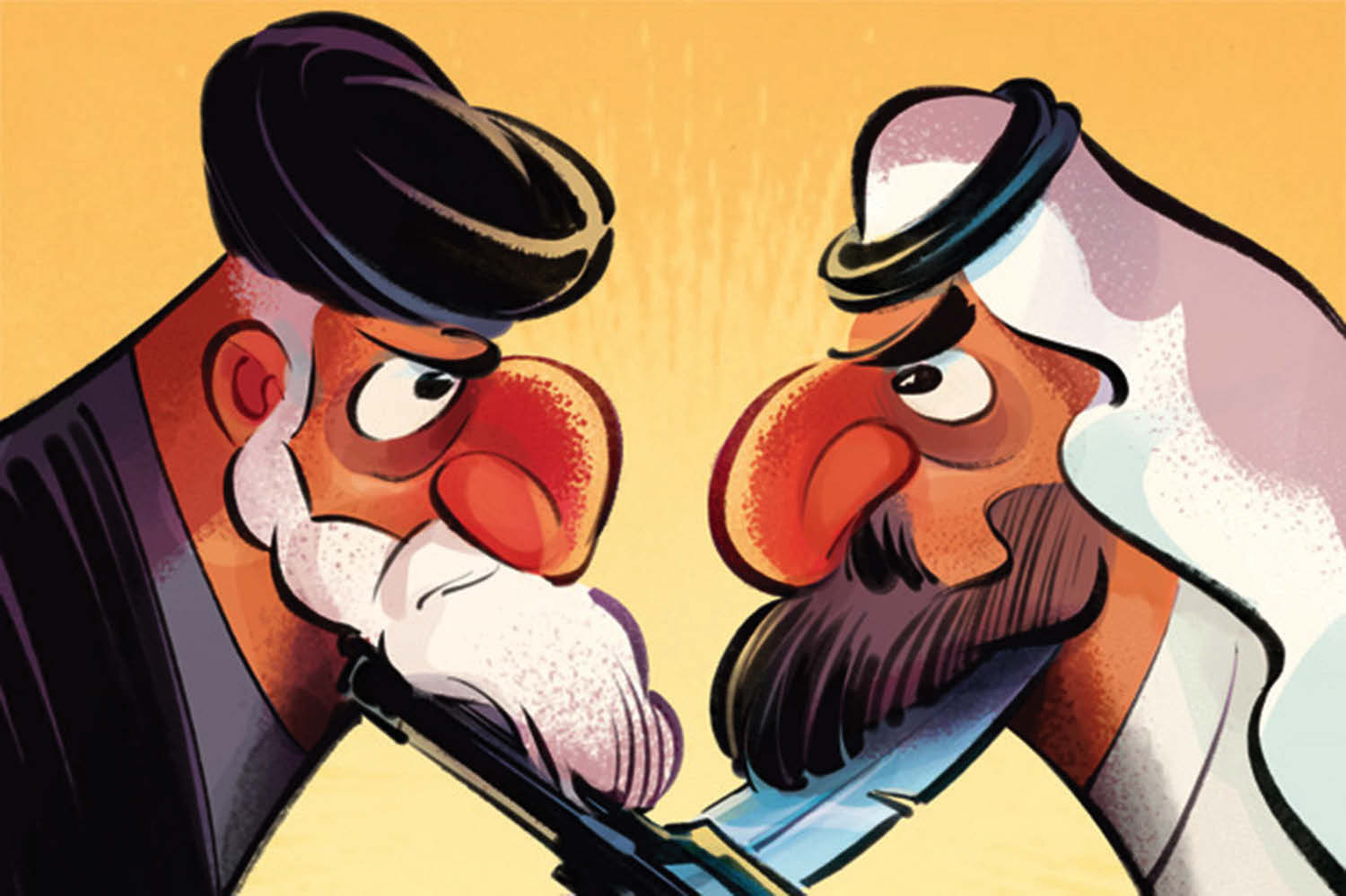
    2016 has begun with a sudden escalation of tension between Iran, the leading Shia power, and its regional rival, Saudi Arabia, the leading Sunni power. Such escalation, unless addressed, can have serious adverse consequences for regional stability and peace and also for the efforts under way to bring to an end the war in Yemen and the wars in Syria. It might also have an impact on oil prices, by either accelerating the fall in prices or inflating them.

    Let us look at the basic facts. On 2 January, Saudi Arabia announced that it had executed 47 persons, all Saudi citizens except for a Chadian and an Egyptian. The most prominent person executed was Nimr al-Nimr, 57, a Shia leader who had never advocated violence against the Saudi state. He had spoken out for the rights of the Shias who are concentrated in the eastern part of the kingdom. Incidentally, oil is also concentrated in the same region. It is difficult to take seriously the official Saudi assertion that Nimr-al-Nimr was a terrorist.

    Nimr, arrested in 2012, was sentenced to death in 2014. King Abdullah, the previous ruler, was apparently reluctant to permit Nimr’s execution. King Salman, 80, ascended the throne in January 2015. He has had a stroke and is believed to have delegated powers to his nephew Mohammed bin Nayef, 55, the Crown Prince, and Mohammed bin Salman, 30, the Deputy Crown Prince and Defense Minister. The Defense Minister is believed to be a hard-liner and is probably the main force behind the decision to intervene militarily in Yemen. The intervention begun in March 2015 faces an uncertain future and it might not prove as successful as anticipated in Riyadh.

    Saudi Arabia has accused Iran of being behind the Houthi rebels. But, so far, no evidence has been brought forward pointing to Iranian involvement. Most observers are of the view that the Houthis revolted because of grievances against the newly adopted constitution and that they succeeded in dislodging President Hadi only because of support from the previous President, Saleh. But even more than the troubles in Yemen, it was the US-Iran nuclear deal that infuriated Riyadh, which was under the wrong impression that Iran could be treated as a pariah forever. Despite Saudi opposition, the US went ahead with the Iran nuclear deal. And Saudi Arabia got slightly disenchanted with its American ally. Earlier, following the fall of Saddam Hussein, the Shias had taken over political power in Iraq, which increased Iran’s regional clout. Saudi Arabia fears that, with the nuclear deal, Iran’s clout will increase even more and that this is likely to pose a serious threat to it.

    It was Jordan’s King Abdullah who some time back spoke of a ‘Shia crescent’ led by Iran posing a danger to the Sunnis. Perhaps, it was an unnecessary coinage and in any case it was adopted by Iran’s neighbors and the West with much alacrity.

    The ‘Shia crescent’ is supposed to include the Alawite regime of Basher al Assad in Syria and the Lebanese Hezbollah. One of the main reasons for Saudi Arabia’s insistence on the exit of Assad from power is his closeness to Iran.

    Riyadh broke off diplomatic relations following the attack on its Embassy in Tehran and its Consulate General in Mashhad. The Saudi missions desperately requested for protection from the Iranian Foreign Office, but no protection was given. Attack on an embassy is always unpardonable whatever the provocation. But the key question is: Did Riyadh expect that it could execute Nimr without provoking adverse reaction in its own eastern region and elsewhere in the region?Anyone familiar with the region could have told Riyadh of the perilous consequences of executing Nimr and branding him as a terrorist. Washington pointed out the dangers, but Riyadh ignored the warnings and concluded that a tough message to Tehran was in the best interest of the kingdom. Is it the case that Riyadh had correctly anticipated the likely outrage in Tehran and elsewhere and still went ahead as it wanted to provoke Iran into doing things that might unravel the nuclear deal?If there was any such calculation it was a wrong assessment of the ground realities.

    How much support can Riyadh expect in its confrontation with Tehran? Within the Gulf Cooperation Council (GCC), there is no unanimous support. Bahrain has broken off diplomatic relations and broken air links with Iran, UAE has downgraded relations, and Kuwait has merely recalled its ambassador. Qatar and Oman have not followed the Saudi lead and are unlikely to do that going by their past behavior. Riyadh has cut off trade and air links, though it has added that pilgrims from Iran can come. We do not know whether Iranian pilgrims will go to Saudi Arabia in big numbers. But the Saudis might be worried that trouble-makers might be among the pilgrims. There is potential for trouble when and if Iranian pilgrims are subjected to extra security checks.

    Outside the GCC, Sudan broke off relations with Iran, and Egypt has lent support to Saudi Arabia. But, given the lack of strong support within the GCC, such outside support does not count much. Washington has embarked on damage control, but as of now its clout in Riyadh is not rising. Unless the military intervention in Yemen is proved to be a disaster, and it might take time and more deaths in Yemen for that to happen, the current toll being 6,000, Riyadh is unlikely to look at any course correction.

    What are Iran’s options? The Shias in Bahrain and in eastern Saudi Arabia can be encouraged to revolt. Tehran can send military assistance to the Houthis. At present, we do not know whether Iran will exercise any of these options. Incidentally, Nimr never sought support from Iran and wanted to fight for the Shias without involving foreign powers. Iran has the option to watch the disarray within the GCC and do what it can to deepen it as subtly as possible. Iran might as well watch the rather concealed succession battle in Riyadh. The GCC itself was established as Saudi Arabia and its neighbors felt threatened by the 1979 Iranian Revolution. Ayatollah Khomeini had condemned hereditary monarchies as incompatible with Islam.

    Coming to oil, usually any political tension in West Asia pushes prices up as speculators seek profit. This time, prices did go up marginally for a while before coming down. Iran had threatened to interfere with the movement of oil tankers in the past. But it is unlikely to threaten such a course of action this time around. Its primary focus is upon getting rid of the sanctions and to revive its economy. It may not even engage in an oil war with Saudi Arabia by flooding the market with oil. In the past, even during the Iran-Iraq war and Iraq’s occupation of Kuwait, OPEC has met and conducted business almost insulated from politics. In any case, the clout of the 13-member OPEC accounting for one-third of world oil production has decreased following the surge in US production.

    What will be the impact of the Tehran-Riyadh confrontation on Syria? The UN Security Council passed Resolution 2254 on 18 December 2015 authorizing the Secretary General to take the lead for a political, negotiated resolution of Syria’s plight. The process is supposed to start in early January. For long, Saudi Arabia had resisted Iran’s participation in the talks on Syria. It was only recently that the US, after great efforts, succeeded in making Saudi Arabia consent to Iran’s participation. However, Riyadh made uncomplimentary comments on Iran after the meetings. For sound diplomatic reasons, the Saudi Permanent Representative to UN Abdullah al-Mouallimi has announced that the confrontation will not affect the talks on Syria and that Riyadh is prepared to work with Tehran. Since Riyadh has branded Tehran as a sponsor of terrorism, it is difficult not to ignore the incoherence in Saudi public pronouncements. All told, there is a distinct probability that the Syrian political process will be adversely affected by the confrontation. The same can be said about the UN-sponsored efforts for a political solution in Yemen.

    How might the confrontation affect India? For India, both Saudi Arabia and Iran are valuable partners and there is no question of choosing one against the other. Indian diplomacy should not find it difficult to navigate in the troubled waters and take care of India’s interest.

    In the chess game between Iran and Saudi Arabia, the former is in a better position. Saudi Arabia might need to attend to course correction sooner or later. Iran is going to have Parliamentary election in weeks and the conservatives opposed to President Rouhani’s opening to the West might have been behind the attack on the Embassy. But the Government should not have permitted such an attack. It is doubtful whether the US or any other power can do much to de-escalate the mounting tension between Tehran and Riyadh. Probably, the confrontation might have to get worse before it gets better. But a war is unlikely.

  • WAZIR – MOVIE REVIEW

    WAZIR – MOVIE REVIEW

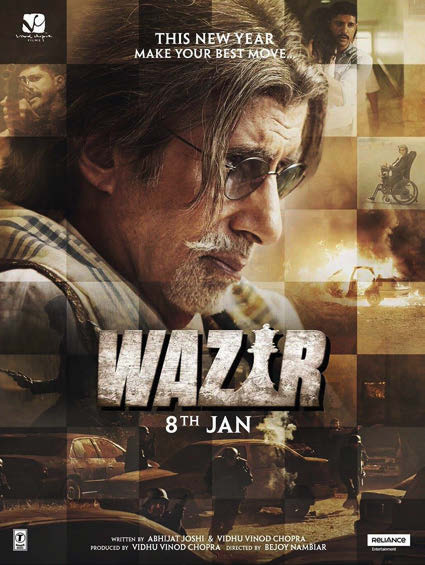
    STORY: Danish is chasing Wazir, an assassin linked to politician Qureshi who’s threatening elderly chess master Pandit Dhar – in this game of life and death, who’s playing whom as a pawn?

    WAZIRREVIEW: So, Wazir is a smart movie – which could have been way smarter. Anti-Terrorism Squad (ATS) officer Daanish Ali (Farhan) loses his daughter while chasing terrorists. His anguished wife Roohana (Aditi) blames Daanish, who’s about to kill himself in guilt-laden grief. Suddenly, he meets wheelchair-bound Pandit Omkar Nath Dhar (Amitabh), who teaches Daanish about chess, life, love – and revenge. Panditji’s own tragic tale leads Daanish to investigate Welfare Minister Qureishi (Manav) – and then chase him furiously when brutal assassin Wazir (Neil) attacks Pandit Dhar.

    Does Daanish find Wazir – and the truth?

    Wazir is held together by Amitabh Bachchan who shows why he is the Grandmaster of this game. With sly glances and shy smiles, wry jokes and escaped tears, Amitabh carves a character, mesmerising you as he does Daanish, very competently played by Farhan who delivers intensity and gentleness. As pashmina-smooth politician Qureishi, Manav Kaul performs very admirably, adding to the movie’s tension, its eerie quality, its things that go bang in the dark.

    But the tension just isn’t hard enough.

    With too many distractions – Aditi looks lovely but is constrained in a chiffon-clad role featuring more dancing than dialogues – the plot loses pace. There are too many kiddies, cupcakes and kathak cuts. When the movie picks up speed – action sequences in Delhi and Srinagar are terrific – you’re on a gritty edge. But when it over-indulges itself – its writers and editors are the same – the game slips into stalemate.

    It’s a pity because Wazir’s lead performances, its glassy cinematography, its haunting sound design, work well. What this game needed was more attack, less defence, less repetition, more relentlessness.

    As Panditji puts it, ‘Thora energy hona chahiya.’

    Consistent hard focus over sentimental soft-focus would have let these shatranj ke khiladi blow up that chess board. As it is, they complete their game – but don’t check-mate smartly enough.

  • Modi Declines Singapore Offer to Name Orchid variety After Him

    Modi Declines Singapore Offer to Name Orchid variety After Him

    The Singapore government wanted to name a variety of orchid, the island city-state’s national flower, after Prime Minister Narendra Modi, during his November visit but the Indian leader declined.

    In the past, Singapore has accorded this honor to the duke and duchess of Cambridge, Britain’s Prince William and his wife Kate, the king and queen of Belgium, Phillipe and Mathilde, former U.S. first lady Laura Bush, former South African president Nelson Mandela, former British prime minister Margaret Thatcher and most recently, Chinese President Xi Jinping. Modi did, however, launch a commemorative Singapore-India stamp set comprising two stamps that depict the presidential residences of both countries.

    Singapore is one of the few countries Modi visited as Gujarat chief minister between 2002 and 2014, when he was shunned by the West for allegedly turning a blind eye to the 2002 Gujarat riots.

    Modi’s predecessor Manmohan Singh declined the honour during a visit to Singapore in July 2011, according to an Indian official, who recalled that former prime minister Indira Gandhi had an orchid named after her. India’s former first lady Usha Narayanan who visited Singapore along with her husband, then president K.R. Narayanan, in the year 2000 also has an orchid in her name, according to the Singapore Botanical Garden website.

    Naming an orchid after a country’s leader is aimed at promoting goodwill and fostering closer ties between nations, according to the website.

    A separate section of the Singapore Botanical Garden is devoted to honouring artistes and celebrities. As the name goes, the garden acknowledges celebrities who have “contributed significantly to the society”.

    Bollywood stars Shah Rukh Khan and Amitabh Bachchan are among the many celebrities honoured by Singapore.


  • NY Sikh Man Fights Off Armed Robber With Slipper

    NY Sikh Man Fights Off Armed Robber With Slipper

    A 58-year-old Indian-American Sikh store owner bravely fought off a gun-wielding masked assailant by using his slipper, thwarting an attempted robbery in the US.

    Amrik Singh, who managed to save his hard-earned money, had a narrow escape in the fight as the assailant opened fire at him but the bullet missed him.

    “I tell you honestly, I’m not scared,” Mr Singh was quoted as saying by abc7ny.com.

    There is dramatic surveillance video from Monday night, when the masked gunman tried to rob Mr Singh’s gas station convenience store in Salt Point in Dutchess County.

    The suspect handed the store owner a bag and Mr Singh began filling it with cash from the register. There was a scuffle when the gunman demanded the larger bills he thinks are under the tray.

    “He said ‘Put the hundred dollar bill, the hundred dollar bill, and I said I don’t have a hundred dollar bill,” Mr Singh said.

    Mr Singh flung a slipper at the suspect, hitting him near the face. Then Singh rushed the gunman and forced him out of the store, it reported.

    An outside camera showed him chasing the gunman as the suspect fired the weapon. The video was uploaded on You Tube.

    “I fell down, he didn’t get me, but he did shoot it outside in the parking lot,” Singh said.

    The blast left a hole in the ground. Mr Singh suffered a scraped nose and experienced chest pain, but was not seriously injured.

    Mr Singh has owned Route 9 Mini Mart in Staatsburg for 17 years, and has been robbed once before. This time he fought back. He said he couldn’t get a good look at the suspect, but did manage to grab his mask.

    The New York State Police are hoping the video will generate leads.

  • Anand back in business after crushing Topalov in London

    Anand back in business after crushing Topalov in London

    LONDON (TIP): Five-time World Champion Viswanathan Anand bounced back from his fourth round loss and beat his former world championship challenger Veselin Topalov of Bulgaria in the fifth round of London Chess Classic, the concluding edition of the Grand Chess Tour.

    After suffering a defeat at the hands of Hikaru Nakamura of United States, Anand staged his customary comeback in style, giving an endgame lesson to Topalov who remains on the bottom of the tables.

    Yet again, there was just one decisive game and the remaining four ended in draws. Armenian Levon Aronian started out what Nigel Short termed as a ‘coffee-house’ attack against World champion Magnus Carlsen and the game ended in a draw.

    Nakamura pressed for an advantage but English Michael Adams remained solid as ever while Maxime Vachier-Lagrave of France signed peace with Anish Giri of Holland after an interesting battle.

    In the other game of the day, Fabiano Caruana of United States was on the verge of winning against Russian Alexander Grischuk but the latter survived when the former could not spot a winning continuation in the queen and minor pieces endgame.

    Past the half way stage and with just four rounds to go, Giri, Vachier-Lagrave and Nakamura continued to lead the tables with three points apiece while Anand, Carlsen, Caruana, Grischuk, Adams and Aronian have all got 2.5 points apiece. Topalov is on just one point and his chances of lifting the Grand Chess Tour trophy have almost ended.

  • 2016 WORLD HOROSCOPE

    2016 WORLD HOROSCOPE

    Ganesha says my devotee Bejan Daruwalla is cut to the bone. He is truly devastated. He is shattered. The blowing to smithereens of innocent lives, specially children, religious intolerance, violence, are the main causes for it.

    By Western Astrology, Saturn will be in Sagittarius from December 25, 2014 to December 19, 2017, and THAT WILL REALLY DECIDE WHETHER GENUINE SPIRITUALITY AND TOLERANCE OR BIGOTRY, VIOLENCE, FANATICISM, HATRED WILL WIN. WE ARE AT THE CROSS ROAD OF THE FUTURE.

    Blind, senseless hatred will start lessening and withering and reducing from October 2016 to October 2017, thanks to the relationship of Jupiter, the good guy with Saturn. Your Ganesha devotee takes his stand here. He owes it to himself and to humanity. These words are written on February 3, 2015. May all the Energies go with it? I repeat the fate of the world hinges on Saturn between December 25, 2014 to December 19, 2017.

    There is also a very positive side to Saturn in Sagittarius by Western Astrology. Saturn is karma and dharma. Saturn is, ‘Duty, the stern voice of the daughter of God’. By Modern Astrology Saturn is a key planet for universal consciousness. Universal consciousness helps us to evolve and be what we are capable of becoming. Saturn in Sagittarius can launch us to salvation itself is my prediction in the name of Ganesha.

    Success in law, foreign affairs, aviation and space research, meditation, yoga, neuroscience, brain, output of genes. Susy is the nickname of Supersymmetry, the Higgs Boson, which will crunch time for humanity’s understanding of the universe. Research into Susy will be made, thanks to Saturn.

    Tourism, Pilgrimages, mountaineering, rituals and rites connected with fire and light and explosives, great showmanship in truly practical as well as spiritual matters and a mountain load of money will all go together.

    Other salient features for all of us:

    1) Narrowness and excessive caution will actually stifle your relationships.

    2) Your greatest lesson is to deal with the other’s point of view. Masterkey.

    3) Like those with Saturn in Libra, you too will have to deal with the real world, though, in all fairness, you can be idealistic.

    4) Communication- gaps will be your undoing.

    5) Try not to fight over property matters, as it will make you writhe in agony. Settle it judiciously.

    6) Travel with your friend/ mate/ business associate is your best bet to happiness.

    7) By December 19, 2017, we should be rid of attack from terrorists and bigots and the self righteous who think that they alone are right and everybody else completely wrong. In short we can expect people to keep an open mind.

    Once again I am giving the landmarks of the important years for humanity and extending it a little more at considerable energy and cost. Actually it drains me out.

    The other important points start from number 7.

    1: 2021, watermark for technology.

    2: 2033, important for technology and genetics.

    3: 2035-2037, crucial for chemicals and experiments about life and living, Jupiter in Cancer, Saturn in Virgo.

    4: 2040, relationships taken to the next level, Jupiter and Saturn in Libra, year marks justice for the whole world .Yes, Ganesha says this is my devotee’s mighty prediction.

    5: 2045, another unimaginable breakthrough in technology, space travel, brain mapping, time warp galaxies, Jupiter in Aquarius, Saturn in Sagittarius.

    6: 2047, all of the above will be superbly analyzed, organized, methodized, mapped out in complete detail and most importantly put and harnessed to the greatest use for the greatest number of people. It is the high point or the tipping point for the service to the wide cosmos.

    7: 2049 is excellent for managing your life intelligently and calculatedly

    8: 2053 to 2055 thanks to chemicals and radiation and light. God will introduce himself in a totally unique way. Yes this is my vision. I may be right or wrong

    9: Surprisingly enough just as I was writing about this vision the badge with the holy number 786 popped out of my American ephemeris. This has given me conviction and confidence. I cannot explain it logically.

    10: From February 2080 to 2090 nature will reveal herself in a totally different way and manner. It is as if nature will be wearing clothes of a different fashion and color. More than this I cannot say.

    11: The year 2100 shows Jupiter and Saturn in the sign Libra by Western Astrology. This means poise, balance, equilibrium, joy and above all the beginning of an era of peace and plenty. It also marks a period of remarkable evolution in the next 100 years. This is certainly the limit of my vision as granted to me by my Lord and Master Ganesha. His is the last word.

    12: Ganesha says my devotee Bejan has worked his heart out for the prediction that between March 23, 2020 and March 8, 2023 consciousness will win over ignorance, freedom will win over captivity, law and order will win over anarchy, open mind will win over closed mind and narrowness, comfort and security and speed will win over air crashes and pilot errors.

    Many truly amazing events will happen. For example, the Ganges will be cleansed. Thought transfers and healing by and through the mind, germ and bacteria free world, devi worship, very surprisingly there could be a cleansing of our mind itself. Artificial implants of new memories, climate control. The secret of having a smooth, delightful, trouble free and joyous relationships will be discovered. That to me is more important than evolution itself. The many layers of consciousness will be explored and laid out before us so that we can choose according to our personal frequencies, layers of knowledge and intuition and finally it could lead to the very existence of God. These predictions will hold true between December 25, 2014 to March 8, 2023. I agree that this is a long shot. But events happen in a chain reaction over a period of time. I admit I am human. All the predictions will certainly not come true. But it is the wish and command of my Lord and Master Ganesha that I should lay my predictions before you.

    Special note: Brain hecking, putting on a “thinking cap” to increase brain power, is also another wondrous and awesome technological possibility of our Aquarian age.

    RUSSIA

    Your Ganesha devotee is writing this forecast on March 18, 2015. Putin had simply disappeared for the last 10 days and has surfaced today March 18, 2015. Putin is a Libra. But he is totally unpredictable because of Pluto, the planet of power in Leo, the sign of power. This makes Putin powerful but dogmatic, wilful and ready to play all sorts of games. The next 4 years will mark the end of Putin the politician. Russia however will be able to make some progress economically and socially. Russia has staying power which is perhaps the key to survival and success. Russia under Putin comes under Gemini, Aquarius and Scorpio. Not a very easy time for it. Conditions and strong disciplinary action will take a huge toll. I report it as I see it. Like my great Hanuman I too am humble and submissive. No pretentions to greatness. Russia might have a money squeeze.

    INDIA

    As you know dear readers I have met Narendra Modi twice and predicted his premiership. India will go from strength to strength. From September 2015 to December 20, 2017India will be zooming ahead despite terrorism, jealousies within the BJP, Hinduvata and all the fanaticism regarding all the religions. The enemies of Modi will be within his own party. Modi is a man with a vision. At the same time Modi must teach the minister in his party to be open, tolerant and fair minded. Yes our economic situation will improve vastly, the Ganges will be cleansed (I admit that to me also the Ganges is holy and mighty). The common man as well as the industrialists will thrive under the leadership of Modi. At the same time your Ganesha devotee  openly and humbly admits that from December 22, 2017 to March 23, 2020 there could be a complete overhauling of values and power and politics in India. IT IS THIS PERIOD WHICH WILL FINALLY DECIDE THE FUTURE OF INDIA. There may be a complete change in the attitude of the Indians and the way the world looks at India. But the final result will be a mighty powerful India which will take its rightful place in the world. It is during this time that India will definitely be the super power of the world. At the same time India will pay the price for it. I am 83 years old. Nothing comes without a price. It will be spirituality and the tolerance of Indian culture which will finally make India very powerful but very human. I openly admit that all my predictions do not come true. Tolerance is the key.

    Ganesha warns that for, both India and America, air crashes, natural calamities, undercover activities, espionage, secret enemies, riots and rebellion could take a heavy toll. This is a nasty and ugly picture. But, there is also, as said earlier a brighter side to it. Both of the predictions are very possible. That’s real life. Life and politics is complicated and convoluted (complex). There are no easy answers. March, June, September and December are the tough and critical months.

    PAKISTAN

    Nawaz Shariff is good for Pakistan. This Capricornian is practical and therefore open to reason and has commonsense. Pakistan is a Sagittarian country. The military leader of Pakistan is a Gemini. Around 2017 I see a good future for Pakistan. After 30 long years I had been to Pakistan in 2014, thanks to my patron Byram Avari. I found the people very friendly and hospitable.

    ISRAEL and IRAN

    Prime Minister Benjamin is a Taurus and Israel is a Taurean country. Therefore he got re – elected recently. Benjamin must learn to let go a little and be flexible. Iran has a new leader in Hussain Rohan. Rohan is a Scorpio the exact opposite of Benjamin who is a Taurean. But I believe given compromise and understanding peace is possible. If I could I would lock both these leaders in a room and tell them very sweetly, do not come out till you have signed a peace treaty. This might be my fantasy. I admit it.

    America, Russia, Brazil and Africa: Cancerian country America(Born July 4) will have sinew and muscle power. China will not be able to get better of America. Leo Obama will prove his mettle. For America I take three signs Cancer, Gemini and Sagittarius. The actual mix is my very own. America will lead the world. That says it all. Obama is a Leo. Ganesha says that this will be a great and glorious period for Obama and America. But America will be involved in many skirmishes and attacks by terrorists. Yes America has many enemies. America must never drop its guard. America must always be completely alert. For all its faults and foibles America is the best bet for a safe world.

    Brazil and Africa are the surprise packages, not China.Yes strange as it may seem, there is a possibility of a compromise among Afghanistan, USA, Pakistan and India. This may seem like pipe dream. But if the Israeli leader Ben could go to Chancellor Addenhaur of Germany after the holocaust, the Taliban too can sit across the table and come to some sort of understanding. With the given time and the right climate, the impossible can be made possible. This is very possible by 2018, latest. 2017 could well show the way.

    GERMANY

    I go with my gut feeling. The gut feeling is something like a powerful brain in the stomach. My gut feeling is that the Cancerian German chancellor Merkel has a very important role to play on the chess board of politics. I am convinced that she is a woman of destiny. This is what I have to say to her, “Listen sweetheart, you are more brilliant and powerful than you think and therefore shoot straight and fast. Victory is yours.”

  • Indian Prime Minister Modi on 3 day visit to  UK to strengthen bilateral ties

    Indian Prime Minister Modi on 3 day visit to UK to strengthen bilateral ties

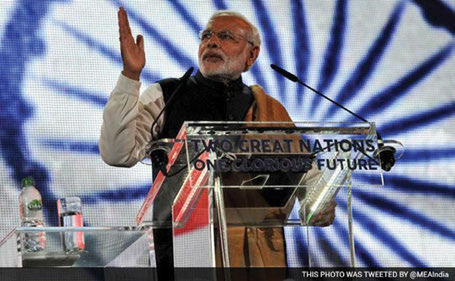
    LONDON (TIP): Indian Prime Minister Narendra Modi arrived in London, November 12 on his three-day maiden visit to the United Kingdom. “My visit to UK is the first Prime Ministerial visit in almost a decade. I have had the opportunity to meet Prime Minister David Cameron at various international forums and our meetings have been productive. Prime Minister Cameron is a good friend of India’s, and we in India have had the privilege of welcoming him thrice during his first term as Prime Minister,” Modi had written in a Facebook post ahead of the visit.

    At the start of Modi’s visit, Cameron promised to “set this relationship free” from its colonial past, referring to the complex ties between the two nations dating back to Britain’s time as colonial ruler until the mid- 20th century. Cameron said relations between the two countries, once “imprisoned by the past,” were now a “modern, dynamic partnership” between the world’s fifth-largest economy – Britain – and India, which could soon rank third. Cameron said he wanted to create “a stronger economic partnership, a stronger defense partnership and a stronger global partnership.”

    Cameron said the two countries were expected to sign 9 billion pounds ($14 billion, 12.7 billion euros) worth of deals during the visit, including a plan for London’s financial district to become a center of offshore rupee bonds. Other agreements expected to be signed during the visit covered financing for Indian infrastructure, cooperation in nuclear energy, and joint research in new technology.

    Hailing billions in new business deals and investments between the India and the UK, British Prime Minister David Cameron and Indian Prime Minister Narendra Modi vowed to modernize India, the world’s largest democracy. Modi remarked that the visit was “a huge moment for our two great nations.”

    Putting economic engagement at the centrestage of their relations, India and the United Kingdom said Thursday that they will sign commercial deals of 9.2 billion pounds over the next three days as Prime Minister Narendra Modi began the first bilateral visit to the country by an Indian prime minister since 2006. New Delhi promised a new “fast-track mechanism” as the two sides firmed up at least 27 deals, covering sectors ranging from banking to energy, skill development to environment. The UK said it plans to invest in three Indian smart cities and the two sides also announced the signing of a civilian nuclear agreement.

    Modi’s three-day trip is not an official state visit since Modi is not a head of state, but he was nevertheless welcomed with great honors, including a fly-past by the Royal Air Force Red Arrows and a lunch with Queen Elizabeth II at Buckingham Palace.

    Prime Minister Narendra Modi on November 13, 2015 arrived at the Buckingham Palace where he was received by Queen Elizabeth II for lunch on the second day of his three-day visit to Britain.

    “Her Majesty The Queen with PM
    @narendramodi at Buckingham Palace,” PMO India tweeted.

    “Building on the bonds of history. PM
    @narendra Modi calls on Her Majesty Queen Elizabeth II,” tweeted Vikas Swarup, spokesperson for the ministry of external affairs.

    After his lunch with the Queen, Mr Modi was shown a collection of items from the palace’s stores including a shawl given to the Queen by Mahatma Gandhi in 1947 as a wedding present.

    In an exchange of gifts, Mr Modi gave the Queen photographs of her visit to India in 1961 and a gift box including Darjeeling tea from West Bengal and silk Tanchoi scarves from his parliamentary constituency of Varanasi.

    In return, Mr Modi was presented with a silver dish and signed photos.

    Earlier, the Duke and Duchess of Cambridge announced they would go on tour of India next spring.

    Prior to this, Modi, along with British Prime Minister David Cameron, attended a meeting of the UK-India CEO Forum at Lancaster House. The two countries have sealed £9bn worth of commercial deals in the retail, logistics, energy, finance, IT, education and health sectors, which No 10 said had created or safeguarded 1,900 jobs.

    Speaking at an event marking the Indian diaspora’s contribution to the UK, he said it was “a historic day for a great partnership between two great nations”.

    He had been greeted by huge cheers from the 60,000-strong crowd as he arrived on stage with UK PM David Cameron.

    At the start of his speech in London, Mr Modi said: “I would like to ensure you that the dreams you have dreamt – and the dreams every Indian has dreamt – India is capable of fulfilling these dreams. There is no reason for India to remain a poor country.” He also mentioned the need for FDI in India and equated it as FDI = First Develop India.

    Mr Cameron introduced his Indian counterpart to the stage, he said the UK-India relationship was “about our potential”, and said both countries were “united by the scale of our ambition”.

    “Team India, team UK – together we are a winning combination,” he added.

    The crowds applauded when he said it would not be long before there was a British Indian prime minister in Downing Street.

    Asserting that Narendra Modi has proved his critics wrong, British Prime Minister David Cameron today said that his Indian counterpart has worked tremendously after forming the government in New Delhi and said ‘acche din zaroor aayega’.

    Cameron, who was addressing the Indian diaspora at the Wembley stadium here, said that Modi had rightly said ‘acche din aane wale hain’ prior to the elections in the country.

    “They said a ‘chai wala’ would never govern the largest democracy, but he proved them wrong. He rightly said ‘acche din aane wale hain’. But with his energy, with his vision, with his ambition. I will go on further and say ‘ acche din zaroor aayega’,” he said amid a thumping applause from the crowd.

    Mr Modi, who greeted the gathered crowd with a “Namaste”, gave his speech mainly in Hindi, aside from a short welcoming opening in English.

    It is worth noting that Modi  has spent one in every eight days overseas since his election last year.

  • UK’s Prince William and wife Kate to visit India next year

    UK’s Prince William and wife Kate to visit India next year

    LONDON (TIP): Prince William and his wife Kate will undertake their maiden visit to India next year, Kensington Palace announced on Nov 13.

    “The Duke and Duchess of Cambridge will visit #India in the spring of 2016, at the request of HM’s Government,” Kensington Palace said in a tweet.

    “It will be the first time The Duke and Duchess have visited the country. Further #RoyalVisitIndia details will be announced early next year!” it said.

    The royal couple, both aged 33, are likely to travel without their two children Prince George and Princess Charlotte on the trip, media reports said.

    The visit is set to be their first official overseas tour together since their three-day tour of New York in December 2014.

    It will be the first time William and Kate have visited the region, and as such they will undertake a broad range of engagements during their time in India, reports said.

    Although Prince William has never visited India before, his father Prince Charles has carried out eight official royal tours to the nation, the most recent being a nine-day tour of Dehradun, New Delhi, Mumbai, Pune and Kochi in November 2013.

    William’s mother Diana, Princess of Wales also visited India in 1992.

    Meanwhile other British royals to tour the region include Sophie Wessex, Prince Andrew and Queen Elizabeth II, who last travelled to India in 1997.

    The tour announcement came after the 89-year-old monarch met with Prime Minister Narendra Modi for lunch at Buckingham Palace. (Source: PTI)

  • Viswanathan Anand off-form in World Blitz too, finishes 22nd

    Viswanathan Anand off-form in World Blitz too, finishes 22nd

    BERLIN (GERMANY) (TIP): Former world champion Viswanathan Anand’s bad form continued as he could only finish 22nd in the World Blitz Chess championship, which concluded on Oct 22.

    Anand’s final day was marred by draws and the silver lining for the Indian was the fact that he did not lose a single game on the last day that had 10 games.

    After finishing day one on a disappointing note with just 6.5 points out of 11, Anand got the same points getting seven draws and three victories on the final day.

    The five times world champion will next take part in the Bilbao Final Masters as the defending champion later this month at Bilbao in Spain.

    Grandmaster P Harikrishna, who came here straight after winning the Poker Masters tournament in Isle of Man, ended as the second best scorer amongst Indians on 12 points, a half point ahead of Krishnan Sasikiran.

    Among other Indians in the fray, Surya Shekhar Ganguly and Vidit Santosh Gujrathi scored an identical 11 points, B Adhiban ended his campaign on 10.5 while S P Sethuraman scored 9.5 points in all.

    Grandmaster Alexander Grischuk of Russia emerged as the deserving winner finishing with a flourish that got him eight points out of last nine rounds. The Russian scored an impressive 15.5 points from his 21 rounds, losing three drawing five and winning the remaining 13 games.

    It was a two-way tie for the second spot and Frenchman Maxime Vachier-Lagrave finished second on his better tiebreak than Vladimir Kramnik of Russia who too came back strongly after a disappointing show in rapid chess.

    World champion in Classical and rapid, Magnus Carlsen of Norway could not keep the momentum ticking on the final day of the event and his 14 points were good for the 6th spot only.

  • Indian American teacher considered one of best in Texas

    Indian American teacher considered one of best in Texas

    DALLAS (TIP): The talented and gifted specialist at Sommer Elementary School learned in late August that she was named one of three finalists for 2016 Texas Teacher of the Year, an award given by the Texas School of Administrators.

    Earlier that same month, Balakrishnan learned she was the 2016 Region 13 Teacher of the Year. That bit of news came a few months after she was picked as 2016 Elementary Teacher of the Year in the Round Rock school district. And before that, Sommer Elementary picked her as its 2016 Teacher of the Year.

    Receiving the bevy of honors made Balakrishnan’s summer a little brighter.

    “It was a surprise,” she said. “I’m really honored and of course I will try to do my best at the state level and bring a name to Round Rock ISD.”

    As a finalist for 2016 Texas Teacher of the Year, Balakrishnan is seen alongside her peers throughout the state. A panel of judges composed of representatives of Texas teacher associations and teacher finalists from last year selected Balakrishnan and two others from the 40 Texas Regional Teachers of the Year.

    The panel will select two state-level winners as elementary and secondary teachers of the year and designate one to represent Texas in the national Teacher of the Year program. Winners will be announced Oct. 16 at the Bullock Texas State History Museum in Austin.

    Balakrishnan has been an educator for nine years, six of which have been at Sommer as a founding staff member. Education is her second career, and she said she’s doing what she loves.

    “I don’t think I’m going to have a third career, this is the final one,” she said. “I have kids and a great set of teachers to work with. I opened Sommer, so this is my school.”

    Balakrishnan has a passion for after school clubs that grow minds and challenge students to
    think, Sommer Principal Nancy Varljen said. She heads the chess, coding and robotics programs and most recently led the Region 6 Chess Tournament, which brought 650 competitors to the event hosted at Sommer. She also serves on multiple district-level committees.

    “Revathi always goes above and beyond to help students and fellow teachers,” Varljen said.
    “She is always professional and creative and challenges us all to think creatively and continue to grow as educators.”

    Balakrishnan said she was raised to take education seriously, but to also put effort into giving back to the community, ideals that she strives to instill in her students. Her classroom is defined by the “Four R’s: Rigor, Relevance, Resilience and Relationships,” which ensure her students are thinking critically about things that matter in an environment where mistakes are welcome and friendships are made.

    “I encourage my students to discuss everything from the stock market to Tiananmen Square and learn why a concept works in math rather than memorizing facts,” Balakrishnan said. “They work long and hard to develop the stamina needed to sustain rigorous learning. After all, education is a marathon and a lifelong endeavor, not a sprint.”

    Her students are encouraged to participate in humanitarian projects through Students Rebuild, a nonprofit organization that tasks students to create handmade items like bookmarks or beads to raise funds for world issues.

    “It is my responsibility to ensure that they receive a well-rounded education, which empowers them to become compassionate world class citizens,” Balakrishnan said.

    As an individual, Balakrishnan has partnered with the Rotary Club in India to empower girls in education and has started an all-girls robotics team at Sommer. Additionally, she has joined Soroptimist International, a volunteer organization that works to improve the lives of women.
    Balakrishnan has a passion for after school clubs that grow minds and challenges students to think, Sommer Principal Nancy Varljen said. She heads the chess, coding and robotics programs and most recently led the Region 6 Chess Tournament, which brought 650 elementary students to the school. She also serves on multiple district-level committees.

    “Revathi always goes above and beyond to help students and fellow teachers,” Varljen said.

    “She is always professional and creative and challenges us all to think creatively and continue to grow as educators.”

  • The SNIE of September 8, 1981: All Good News, says Ravi Batra

    The SNIE of September 8, 1981: All Good News, says Ravi Batra

    NEW YORK CITY (TIP): Ravi Batra, chair, National Advisory Council on South Asian Affairs has welcomed September 8 SNIE. In a statement released to The Indian panorama, Batra said, ” Unlike the Dick Chaney-solicited discredited WMD national intelligence estimate that supported the launch of the Iraq War and Ill-advised regime change (which threw the Sunni-Shia regional balance out of whack), this SNIE does our CIA and intelligence services proud – for it is proven to be accurate human intel-based analysis. Given the current disagreement over the historic Iran Nuclear Deal, there is wisdom in this SNIE that ought not be ignored -even as its P5+1 and Iran.

    “While PM Margaret Thatcher went to war, PM Indira Gandhi disfavored attacking a neighbor to destroy her sovereign nuclear weapons production capacity – and instead chose conservative counter-balancing legal development of nuclear weapons. Nuclear arms race is better than conventional war – is statecraft wisdom. Critical to this laudatory course of action, is India’s SNIE-documented state of mind: nuclear weapons power ends conventional weapons asymmetry among nations and “in time produce a climate conducive to improving (bilateral) relations (albeit, this was in context of China-India relations).

    “The then role of China and then-Soviet Union, each supporting Pakistan and India, respectively, along with the U.S.’ proposed sale of F-16s to Pakistan, our security partner, is nuanced P3-dimensional chessboard upon which India and Pakistan played and moved. As history happily proved, India & Pakistan proved their bilateral maturity, with the P3 pull & push, and no nuclear weapon war or conventional weapons war occurred. The relative difference in their economies and the disparate wellbeing of the everyday hardworking Indian and Pakistani may be the coefficient of difference in the robust or shrill nature of politics domestic to each such nation. The happier and better off a nation’s population is, less is the sovereign soil fertile for incubating terror, and exporting of same as a tool or unacknowledged asset of statecraft.

    “This SNIE should reassure the people of Pakistan and India that their governments know not only the sovereign right to war, but better yet have the judgment to read each other well and act in a calibrated manner to avoid a bruising and unhelpful war. Nice to know that India and Pakistan had leaders that were capable to dance to the highest tunes without military or civilian casualties, and indeed served to create a nuclear weapons capacity that in time was conducive to improving bilateral relations.

    “This SNIE shows that a nuclear arms race is a conservative course of action, rather than a war over another’s nuclear weapons capacity. After all, mutual assured nuclear destruction is a reality no nation can permit a madman to toy with, and such destructive mutuality, with reciprocal maturity, becomes the fertile soil of peace and prosperity for all.

    “The United States did us proud, and the India civil nuclear deal occurred decades later, obviously supported by this SNIE – as a predicate proof of India honoring its international commitments and the existence of an unappreciated wise and mature bilateral partnership that benefits from P3 on the chessboard with timely sovereign independence, rather than dependence. This SNIE ought encourage these neighbors, India and Pakistan, to embark upon a path of greater trust, with random verification, so that their people can sooner enjoy the fruit of greater peace and prosperity with full and free movement of people and goods – as befits the sons and daughters of a common soil.”