Tag: China

  • 6.5 quake hits China’s Xinjiang region, one dead

    6.5 quake hits China’s Xinjiang region, one dead

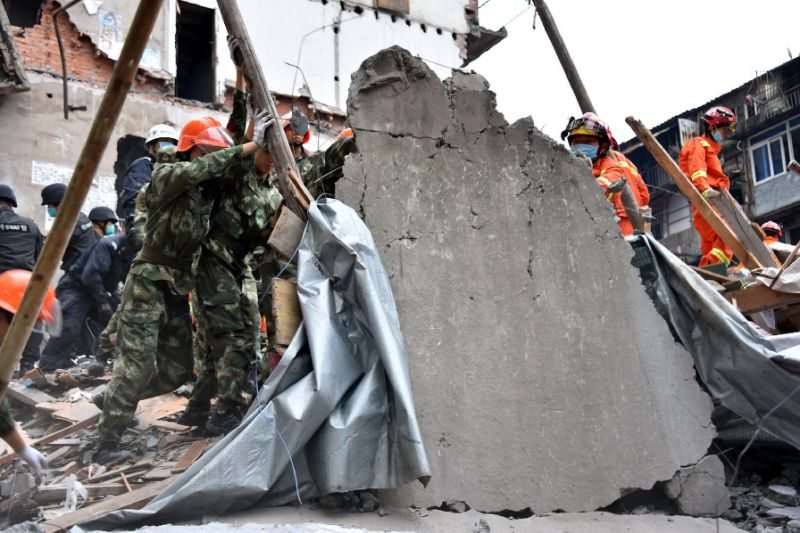
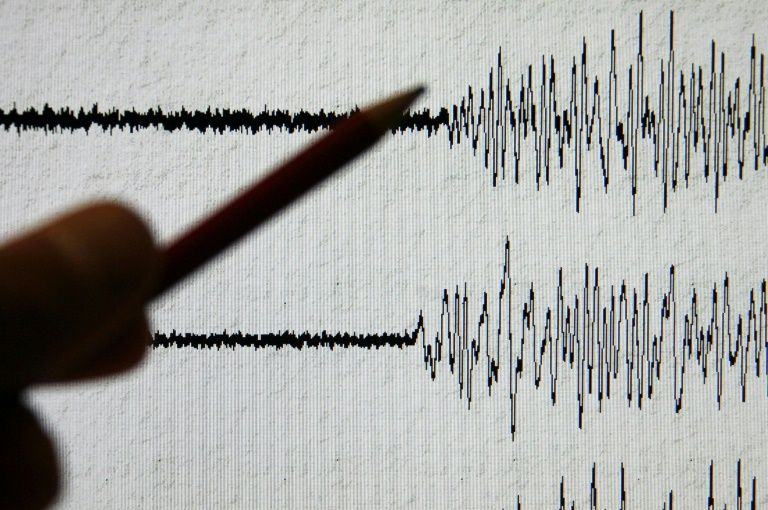
    BEIJING (TIP): A powerful 6.5-magnitude quake rocked a mountainous area of far western China Nov 25 night, with one person killed when a house collapsed in a region often plagued with seismic activity.

    The tremor struck southern Xinjiang, a vast region bordering central Asia, at a relatively shallow depth of 12 kilometres (seven miles), the US Geological Survey said.

    The quake hit near the Tajik border and some 170 kilometres west of the Chinese city of Kashgar.

    One villager died due to a house collapse while six buildings suffered damage in the sparsely-populated area, the state news agency Xinhua said, citing local authorities

    Pakistani authorities said the quake had been felt in the northwestern province of Khyber Pakhtunkhwa, the National Disaster Management Authority said. There were no reports of damage there.

    The USGS said only a relatively small area would have perceived the shaking to be strong. (AP)


  • Bangladesh buys two submarines from China

    Bangladesh buys two submarines from China

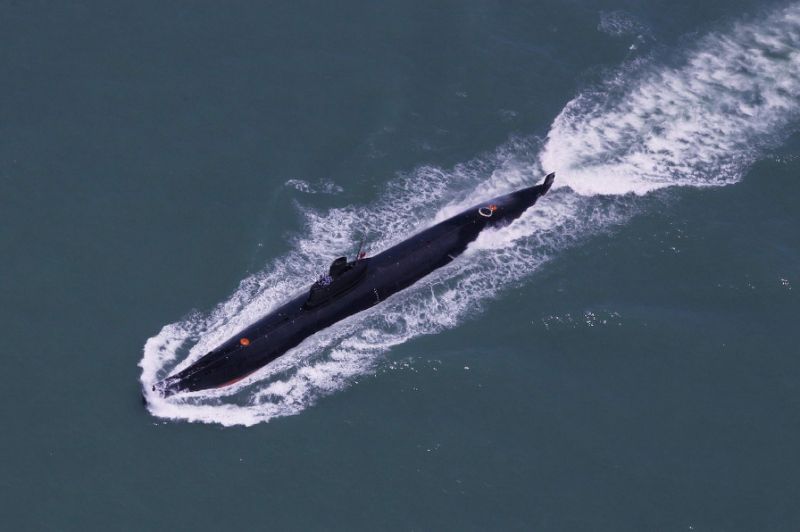
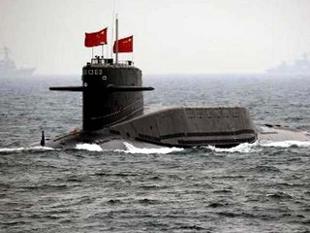
    DHAKA (TIP): Bangladesh took delivery on Nov 21 of its first submarines, bought from China, as it seeks to boost its naval power in the Bay of Bengal.

    Bangladesh paid a reported $203 million for the two submarines, a deal that reflects the country’s growing economic and defence ties with Beijing.

    Armed forces spokeswoman Taposhi Rabeya said they would become part of the country’s naval fleet at the beginning of next year.

    “This is the first ever addition of submarines in Bangladesh defence force,” she told AFP.

    Bangladesh has been expanding its defence capabilities in recent years, building a new airbase close to neighbouring Myanmar, opening several new military cantonments across the country and adding new frigates to its naval fleet.

    In 2013, the government of Prime Minister Sheikh Hasina signed a billion-dollar deal with Russia to buy fighter training jets, helicopters and anti-tank missiles.

    Hasina announced the plan to purchase two submarines the same year as part of her government’s move to build a modern navy to defend the resource-rich Bay of Bengal.

    A UN tribunal has settled Bangladesh’s long-standing maritime border disputes with neighbours Myanmar and India, paving the way for Dhaka to invite bids from multinational firms to explore for oil in the Bay.

    Bangladesh officials say that has ensured the country’s sovereignty over 111,631 square kilometres (43,100 square miles) of sea, an area nearly equal to its landmass.

    Xi Jinping last month became the first Chinese president in 30 years to visit Bangladesh, which has historically been more closely allied to rival regional power India. (PTI)

  • JPMorgan to pay over$250 million in China bribery case

    JPMorgan to pay over$250 million in China bribery case

    NEW YORK (TIP): JPMorgan Chase & Co will pay more than $250 million to settle allegations by the US government that it had hired children of Chinese decision makers to win business, a source familiar with the matter told Reuters.

    The bank will pay roughly $200 million combined to the Securities and Exchange Commission and the Justice Department and more than $50 million to the Federal Reserve, the source said.

    There will not be any individual prosecution at this time, the source said.

    The SEC opened an investigation into JPMorgan in 2013 over the hiring. The Justice Department opened a parallel investigation around the same time.

    Investment banks have a long history of employing the children of China’s politically connected. While close ties to top government officials are a boon to any banking franchise across the world, they are especially beneficial in China, where relationships and personal connections play a critical role in business decisions.

    The SEC, JPMorgan and the Justice Department all declined to comment.

    The settlement was first reported by Bloomberg. It will end a probe into whether the bank’s hires violated US anti-bribery laws, Bloomberg said.

  • Pakistani MPs fear China-Pakistan Economic Corridor could benefit India

    Pakistani MPs fear China-Pakistan Economic Corridor could benefit India

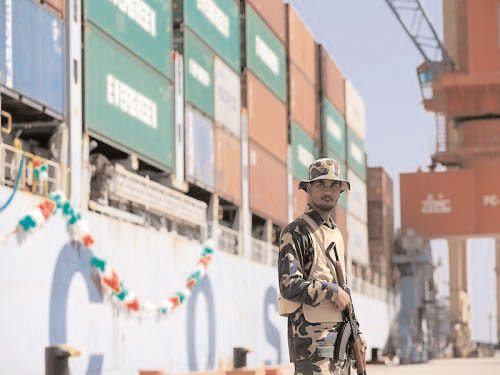
    ISLAMABAD (TIP): A group of Pakistani lawmakers has expressed concern that Beijing could eventually use the $46 billion China-Pakistan Economic Corridor+ (CPEC) to boost its trade with India. The 2442km corridor stretches from the Chinese border to Pakistan’s Gwadar port+ on the Arabian Sea.

    According to a report in Dawn, some members of Pakistan National Assembly , during a meeting of the senate standing committee on planning and development on Wednesday , said that China was investing in the CPEC project to explore new vistas of trade with different countries from India to Central Asian states as well as Europe.

    Committee chairman Syed Tahir Hussain Mashhadi said, “With improved rail and road links with India… China would expand its trade not only with Central Asian states and European countries but also with India to economically strengthen its eight underdeveloped provinces.”

    “Irrespective of sour India-Pakistan, China will definitely use CPEC to expand its trade with India because one who invests always watches one’s interests first.” Mashhadi also suggested that China’s trade relations with India were far bigger than Pakistan, as China had inked $100 billion trade agreements with India last year.

    Meanwhile, The Economist said that Balochistan was one of Pakistan’s troubled regions and, therefore, a “surprising location for (CPEC) what officials hope will become one of the world’s great trade routes”. (PTI)

  • Taiwan set to legalize same-sex marriages, a first in Asia

    Taiwan set to legalize same-sex marriages, a first in Asia

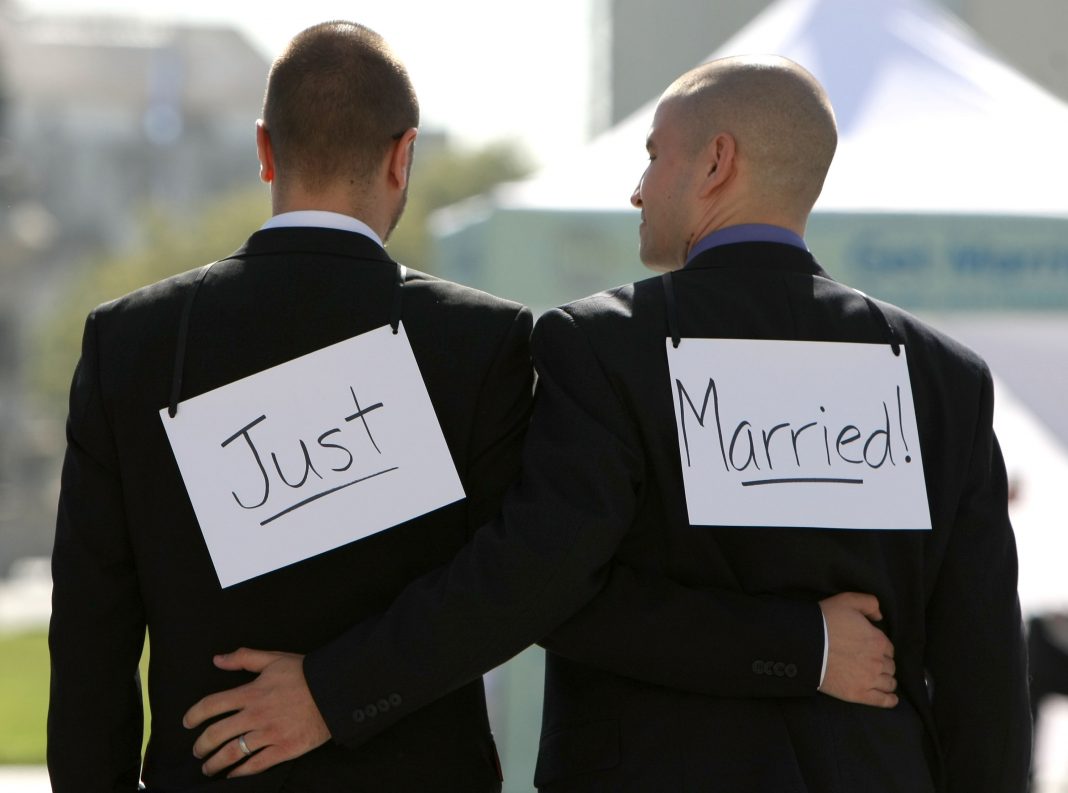
    TAIPEI (TIP): Su Shan and her partner are raising 5-month-old twins together, but only one of the women is their legal parent. That could soon change as Taiwan appears set to become the first place in Asia to legalize same-sex marriage.

    “Now, if something happens to the child, the other partner is nothing but a stranger,” said Su, a 35-year-old software engineer in Taipei. By contrast, either partner in a legally recognized marriage could make legal, medical and educational decisions, she says.

    Taiwanese lawmakers are currently working on three bills in support of marriage equality, one of which is already listed for review and could be passed within months. Same-sex marriage also has the prominent support of President Tsai Ing-wen, Taiwan’s first female head of state.

    About 80 percent of Taiwanese between ages 20 and 29 support same-sex marriage, said Tseng Yen-jung, spokeswoman for the group Taiwan LGBT Family Rights Advocacy , citing local university studies. Taiwan’s United Daily News found in a survey taken four years ago that 55 percent of the public supported same-sex marriage, with 37 percent opposed.

    That’s seen as a reflection of Taiwan’s ready acceptance of multi-party democracy and other inclusive attitudes, as well as the fact that Taiwan’s 23 million people largely follow Buddhism and traditional Chinese religions that take no strong positions on sexual orientation or gay marriage.

    Gay and lesbian relationships began to find wide acceptance in the 1990s, aided by the already well-established feminist movement, said Jens Damm, associate Professor in the Graduate Institute of Taiwan Studies at Chang Jung University in Taiwan.

    “The elite became in favor of a kind of gender equality,” Damm said.

    Still, same-sex marriage still had to overcome traditional perceptions of gender roles and the strong pressure on children to marry and have kids. The self-ruled island also lacks many openly gay and lesbian celebrities to lead the way; the writer and television talk show host Kevin Tsai is among the few exceptions.

    Taiwan would join Canada, Colombia, Ireland, the United States and 16 other countries that have legalized same-sex marriage over the past 15 years, according to the Washington, DC-based LGBT rights advocacy group Human Rights Campaign. But it would be a notable exception among Asian and Middle Eastern countries, at least 20 of which continue to ban same-sex intercourse.

    “It’s a big step forward for the history of human rights,” said Yu Mei-nu, a ruling Democratic Progressive Party lawmaker who is sponsoring the same-sex marriage bill now in line for parliamentary debate. “If Taiwan can get this passed … it will give other Asian countries a model.” Taiwan’s Justice Ministry has not backed a specific bill, but pledged on its website last month to maintain an “attitude of openness” toward same-sex marriage. (AP)

  • 4 killed in house collapse in China

    4 killed in house collapse in China

    BEIJING (TIP): Four persons were killed and two others injured when a house collapsed in central China’s Henan Province, local officials said on Nov 10.

    Six persons were trapped in the debris when a house under construction collapsed at 2:30 pm (local time) on Thursday in an economic and technological development zone in Zhangxingzhuang village, Xinxiang City, state-run Xinhua news agency reported.

    All the six were rescued and admitted to hospital but four of them died as of this morning, the report said, quoting the officials. An investigation into the incident is underway.(PTI)

  • China’s growing clout: India lacks resources to match Chinese aid to other nations

    China’s growing clout: India lacks resources to match Chinese aid to other nations

    “India has to recognize that whether in Sri Lanka, Bangladesh or Nepal, the essential political thrust of Chinese economic support is to prop up regimes that are given to being anti-Indian. It is noteworthy that when President Xi was in Dhaka, he met Begum Khaleda Zia (who avoided calling on President Pranab Mukherjee) and even proposed party-to-party links between the CPC and BNP (China recognized Bangladesh in 1976, a year after Sheikh Mujibur Rehman was assassinated). It is evident that India does not have the resources to quantitatively match Chinese assistance even to its South Asian neighbor”, says the author.

    The BRICS Summit in Goa had a salutary effect. For too long have people in India been carried away by the illusion thatChina will show better understanding of India’s strategic imperatives, if only we opened our doors to trade and investment and obliged Beijing, “accommodating” its wishes by diluting our relations with the US. Such illusions about China prevailed, despite the fact that we refrained from voicing concerns about its unprecedented assistance to Pakistan’s exclusively “India-centric” nuclear weapons and missile programs. President Xi Jinping made it clear in Goa that China would not countenance even any oblique reference to Pakistan’s sponsorship of cross-border terrorism, or its involvement in the Uri attack. To add insult to injury, China announced its intention to supply Pakistan eight submarines, barely a week after Xi left India!

    Pakistan has been and remains Beijing’s principal tool in its “strategic containment” of India. China’s Mandarins have also been more than forthcoming in providing military and economic assistance to India’s South Asian neighbors to undermine India’s regional influence. Beijing has also sought to back leaders in South Asia, who are less than friendly to India – most notably recently in Sri Lanka and Nepal. India has to, however, recognize the reality that it just does not have the resources to match Chinese economic assistance to governments in its South Asian neighborhood and beyond to the shores of Africa. We should also understand the realities that shape Chinese economic assistance worldwide. The Chinese Export Import Bank and the apex China Development Bank providefunding for Beijing’s aid projects, with interest rates generally varying between 2 per cent and 3 per cent.

    With its foreign exchange reserves now crossing $4 trillion, following double-digit economic growth over a decade, China’s Overseas Development Assistance has averaged around $174 billion annually in recent years. This poses a challenge to the US and Western/OECD aid organizations, including the World Bank and Asian Development Bank. But, unlike the terms of Western assistance, which are largely untied and concessional, Chinese assistance has conditions that give it an exploitative orientation. Chinese assistance is marked by very substantial use of Chinese labor, machinery and equipment, with very little transfer of technology or expertise. As much as 50 per cent of imports required for “aid” projects have to be sourced from China. Moreover, experiences in Africa have shown that while the large number of Chinese workers in infrastructure and mining projects are required to be provided comfortable living conditions, the Chinese are parsimonious in payments to local labor.

    China’s dependence on imports of oil and gas is steadily growing. Chinese investments and economic assistance in minerals and energy-related projects are simultaneously growing significantly in Africa, the Gulf Region, Central Asia, and Latin America. China is involved in exploration for gold in Eritrea and Zimbabwe, for platinum and diamonds in Zimbabwe and South Africa, for uranium in Niger and aluminum in Egypt. China has secured a $2 billion contract for the Kingfisher oilfield inUganda. It has built the largest hydropower project in Africa, along the Ethiopia-Sudan border. China’s ability to move swiftly and act decisively in the wake of the shale revolution has led to its securing large investment opportunities in Iraq and Iran in the oil and gas sector. This is reportedly evoking Saudi concern.

    Closer to India in South Asia, there is growing awareness of the mercantilist elements in so-called Chinese aid, where Sri Lanka realized that the Colombo Port City project was a Chinese rip-off. Likewise, in Myanmar, there is growing resistance to Chinese involvement in mining of precious stones and its callous disregard for environmental considerations in huge projects like the proposed Myitsone dam. Healthy skepticism about Chinese offers of aid is also evident in Bangladesh. During the recent visit of President Jinping to Bangladesh, China agreed to aid 22 projects, amidst calls for scrutiny of repayment liabilities.

    Pakistan received $135 billion of Chinese financing between 2001 and 2014. It is now scheduled to receive $46 billion in financial assistance for its OBOR project. This project has become controversial because it primarily benefits only the dominant Punjab province. It has evoked criticism in both Khyber Pakhtunkhwa and Balochistan provinces. The Balochis are already not too pleased by the way their province has received virtually no benefits/royalty from the exploration of gold, silver and copper from the Aynak mine at Chagai Hills, where Pakistan’s nuclear tests were carried out. Moreover, while the Chinese would evidently like the Pakistan army to take over providing facilities and security for theproject, the Nawaz Sharif government does not relish the idea. Finally, the IMF has made it clear that the project is, in coming years, going to create new problems on debt repayment and current account deficit, given the way the repayment liabilities are structured.

    Despite all these factors, India has to recognize that whether in Sri Lanka, Bangladesh or Nepal, the essential political thrust of Chinese economic support is to prop up regimes that are given to being anti-Indian. It is noteworthy that when President Xi was in Dhaka, he met Begum Khaleda Zia (who avoided calling on President Pranab Mukherjee) and even proposed party-to-party links between the CPC and BNP (China recognized Bangladesh in 1976, a year after Sheikh Mujibur Rehman was assassinated). It is evident that India does not have the resources to quantitatively match Chinese assistance even to its South Asian neighbor. But, we need to recognize our relative strengths and weaknesses and firm up our assistance programs accordingly. We also need to carefully study the strengths and weaknesses of Chinese aid programs. The agenda of the tripartite India-US-Japan dialogue should be expanded to discuss how best this grouping could pool its resources to meet the challenges posed by the growing economic clout of China. Japan and the US can, in turn, carry out a similar exercise with their OECD partners. Given Chinese hostility, it is imperative for New Delhi to devise a comprehensive strategy to protect and promote its interests across its Indian Ocean neighborhood and indeed across the entire Indo-Pacific Region.

    (The author is a career diplomat)

  • China becomes first country to display nuclear submarine to public

    China becomes first country to display nuclear submarine to public

    BEIJING (TIP): In an interesting move, China is displaying a nuclear powered attack submarine to the public to boosts the people’s confidence in the country’s growing naval power. This is part of efforts by the Chinese authorities to enhance the image of president Xi Jinping ahead of the upcoming Plenum of the Communist Party, which will take crucial decisions which including giving Xi a second term as president.

    China also announced on Thursday that the country’s first domestic-built aircraft carrier is at an advanced state of development. Its hull has already been assembled in a shipyard, a spokesperson for the Ministry of National Defense said on Thursday. Design work on the vessel has been completed,while workers are currently installing equipment to the ship’ s body.

    No navy in the world has ever put a nuclear-powered ballistic missile submarine on display in a museum, he added. Government experts said that displaying advanced ships, submarines and weapons at domestic maritime exhibitions would establish a closer connection with the public. The announcement will also add to the rising nationalism, which is an important plank in Xi’s efforts to reinforce his influence over different sections of the party, the government and the military. The state media is equating him to Mao Zedong, who is regarded as the founder of the party and the main architect of Communist China since its formation in 1949. No other Chinese leader has been held in such high status since Mao.

  • Asian Champions Trophy: India to take on South Korea in semi-final

    Asian Champions Trophy: India to take on South Korea in semi-final

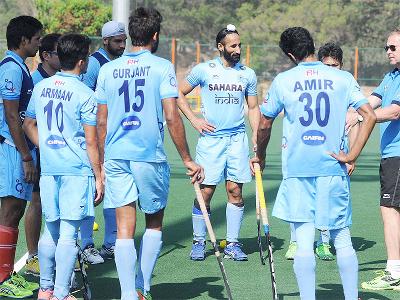
    KUANTAN (TIP): Top-ranked India will take on South Korea in the semi-final of the fourth Asian Champions Trophy after the Koreans conceded a late equaliser to Malaysia and finished fourth in the round-robin league standings on Oct 27.

    India had topped the league standings with 13 points after finishing their preliminary fixtures on Wednesday, but there was plenty of drama on the last day of the league fixtures.

    Pakistan defeated China 4-0 to take their points tally to nine, the same as Malaysia before the last outing against the Koreans, who had seven points ahead of the last match. Pakistan’s goal- difference was far inferior to that of hosts Malaysia, so a tie on points would put Malaysia ahead.

    Malaysia needed a victory or a draw to take the second spot in the group, but a victory in the last outing would have lifted the Koreans to the second place in the standings, pushing Malaysia down to the third spot and Pakistan to the fourth.

    In case of a Korean victory today, India’s semi-final would have been against Pakistan.

    This scenario was unfolding after Jeong Jun-Woo put the Koreans ahead in the 37th minute, while Malaysia’s strikers kept spraying their shots wide.

    With the Koreans leading by a goal until the 56th minute, an India-Pakistan semi-final was on the horizon, but seasoned shooter Razie Rahim converted a penalty corner four minutes from the end to earn Malaysia a draw.

    Behind India, Malaysia finished second in the league standings with 10 points, followed by Pakistan on nine and South Korea on eight. India now get a chance to make up for their erratic show against the young Korean team in the 1-1 draw, while defending champions Pakistan come face to face with Malaysia who had stunned them 4-2 in the opening match. Pakistan had to overcome some early Chinese resistance before sealing victory today

  • Sindhu, Prannoy advance at French Open Super Series

    Sindhu, Prannoy advance at French Open Super Series

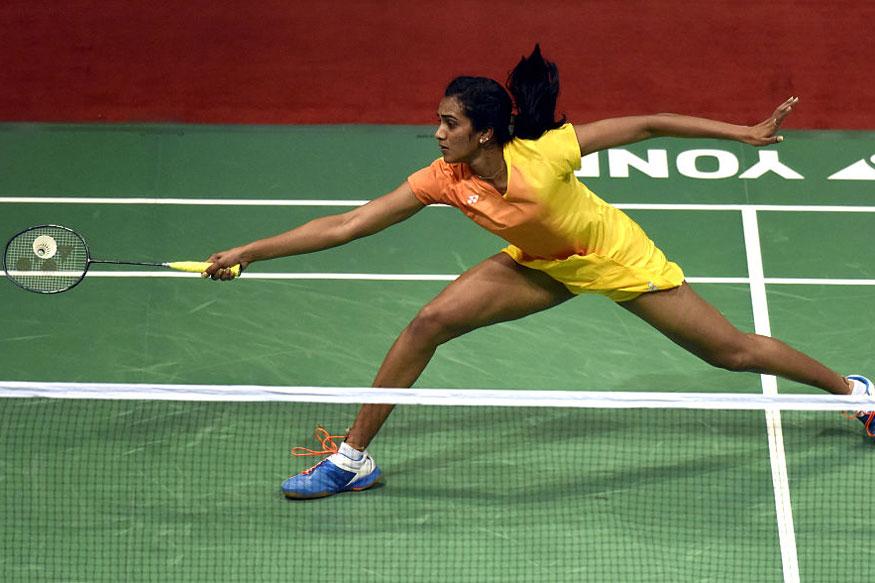
    PARIS (TIP): Olympic silver medallist PV Sindhu and HS Prannoy advanced to the second round with straight-game wins but it was curtains for Ajay Jayaram in the$300,000 French Open Super Series badminton tournament on Wednesday.

    In a 45-minute gruelling contest, Sindhu, who had suffered a loss in second round in Denmark Open last week, dished out a gritty performance to prevail 21-9 29-27 over Hong Kong’s Yip Pui Yin in a women’s singles match.

    The two-time World Championship bronze medallist Indian will next take on the winner of the match between China’s He Bingjiao and Denmark’s Mette Poulsen.

    Swiss Open champion Prannoy also disposed of Thailand’s Boonsak Ponsana 21-16, 21-18 in a 41-minute clash to set up against Chinese Taipei’s Chou Tien Chen, seeded fifth.

    However, it turned out to a disappointing day for Jayaram, who squandered a first game advantage to go down fighting 22-20, 10-21, 18-21 to Anthony Sinisuka Ginting of Indonesia in another men’s singles match.

  • BEIJING TO HAVE WORLD’S BIGGEST AIR PURIFIER TO FIGHT SMOG

    BEIJING TO HAVE WORLD’S BIGGEST AIR PURIFIER TO FIGHT SMOG

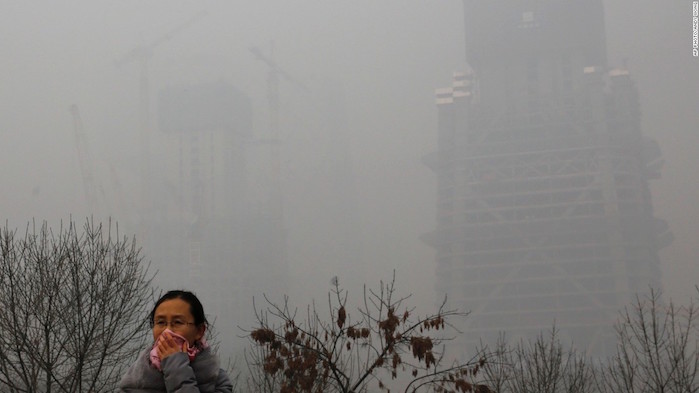
    BEIJING (TIP): China will deploy world’s largest outdoor air purifier designed by a Dutch engineer in its smog- hit capital Beijing, as the thick heavily-polluted haze returned to haunt the city, driving people indoors.

    The seven-meter-tall tower, brainchild of Dutch designer Daan Roosegaarde, is undergoing last-minute checks in Beijing’s 751 D Park art area.

    The ‘Smog Free Tower’ will soon be opened to the public, and will be toured across the country, state-run Global Times said, quoting China Forum of Environmental Journalists, an NGO under China’s Ministry of Environmental Protection.

    The tower can capture about 75 per cent of PM 2.5 and PM 10 tiny particles in its vicinity and then release purified air to create a “bubble” of fresh air around it. The tower can clean 30,000 cubic meters of air per hour through its patented ozone-free ion technology.

    Beijing has been plagued with heavy smog since the beginning of October. The city’s environmental authorities issued a “yellow alert” for air pollution on Tuesday.

    “Yellow alert” is the third-most serious level in a four tier colour-code warning system. Red is the most serious and orange the second-most serious while blue is the least serious pollution level.

    The average PM2.5 density of the small deadly polluted particles crossed over 300 today even though a cold front in the morning cleared the smog a bit.

    Liu Guozheng, CFEJ secretary-general said the tower is intended to warn authorities never to forget their duty and encourage the public to pull together to combat the smog.

    The public, meanwhile, are bemused by the tower’s function and have called on authorities to curb dangerous sources of polluting particles, the daily said.

    Netizens expressed their frustration over the tower.

    “The so-called divine smog cleaner is more like a piece of performance art, which makes almost zero difference to cleaner air in the city. It devours the polluted air and exhales fresh air, but so little it won’t make any difference. The air will stay polluted,” the daily quoted a comment by Sina Weibo user. (PTI)

  • Milan honors Dalai Lama as citizen over China’s objections

    Milan honors Dalai Lama as citizen over China’s objections

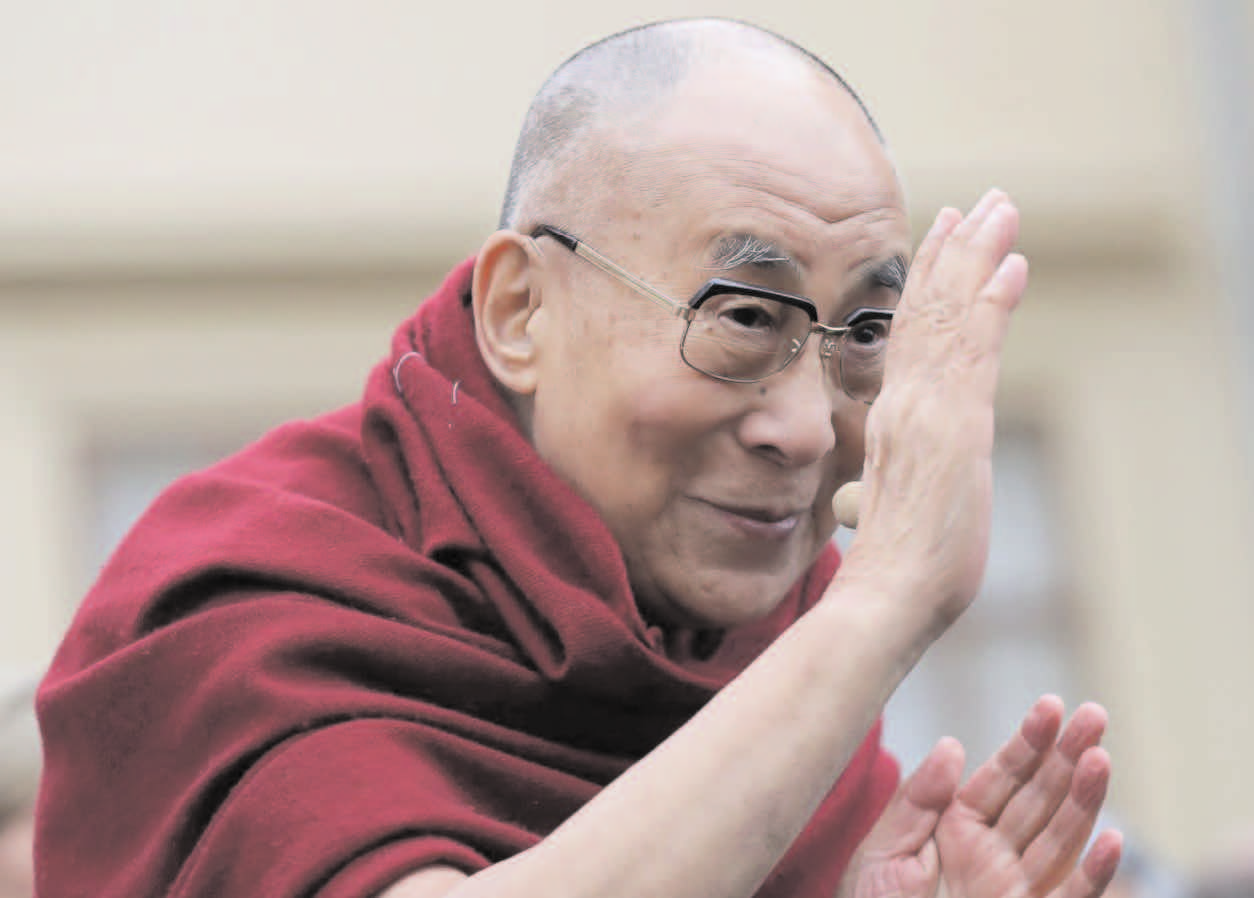
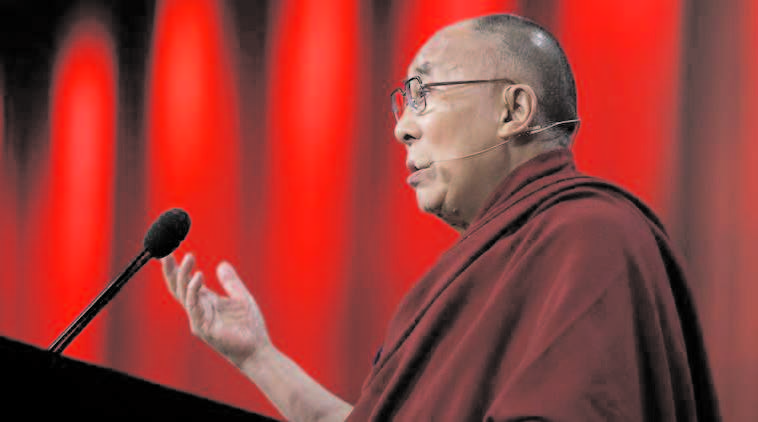
    MILAN (TIP): The Milan city council bestowed honorary citizenship on the Dalai Lama on Oct 20 over the objections of Chinese Embassy, which said the gesture would have a negative impact on bilateral relations and regional cooperation.

    The Nobel Peace Prize laureate accepted the honor inside a theater at the University of Milan-Bicocca campus before an audience of mostly students.

    “I want to know what my right is, and what is my duty,” the Dalai Lama said, getting a laugh when he quipped that he preferred rights to duties.

    On the eve of his arrival, the Chinese embassy in Rome issued a statement saying that honoring the Dalai Lama “has seriously wounded the feelings of the Chinese people” and expressing its “strong protest and firm opposition.”

    Outside the theater, several dozen Chinese residents voiced their displeasure with the award, saying it was a slap at their contributions to the Italian economy. They waved Italian and Chinese flags, and stood behind banners proclaiming Chinese sovereignty over Tibet.

    Tensions arose when a handful of Tibetan protesters approached the Chinese contingent, but police separated the two groups without incident, the news agency ANSA reported.

    China accuses the Dalai Lama of leading a campaign to split Tibet from the rest of China. The exiled spiritual leader says he simply wants Tibet to have a higher degree of autonomy under Chinese rule.

    Italy has been the favorite country in Europe for Chinese firms looking for acquisitions. Chinese firms bought 14 Italian companies last year for a combined total of $10.6 billion, according to KPMG, led by the $7.7 billion acquisition of tire maker Pirelli.

    China has also invested billions in Italian electrical grid operators, carmakers, telecom firms and luxury brands in recent years.

    In Milan alone, the number of Chinese residents has doubled over the past decade to nearly 29,000, doubling also the number of businesses, according to Francesco Wu, who leads an organization of Chinese entrepreneurs in Milan and joined Oct 20 protest.

    The Dalai Lama also met privately with the archbishop of Milan, Cardinal Angelo Scola, as well as with Milan Mayor Giuseppe Sala on the first day of a three-day visit that includes a series of spiritual talks.

    He also is to receive honorary citizenship of the Milan suburb of Rho, home to the fairgrounds where several of his talks will take place.

    In Beijing, a Chinese Foreign Ministry spokeswoman told reporters that China opposes any official meeting with the Dalai Lama and asked that countries respect “China’s grave concerns.”

    The Dalai Lama said in an interview with the Italian daily La Repubblica that the climate in Tibet “remains extremely grim and repressive, characterized by constant controls of Tibetans, who are denied many basic human rights.”

    “Whether they admit it or not, Tibet remains a thorn for China, which wants to play an important role in the world,” he was quoted as saying. (PTI)

  • TYPHOON HAIMA KILLS 12 IN PHILIPPINES, TAKES AIM AT HONG KONG

    TYPHOON HAIMA KILLS 12 IN PHILIPPINES, TAKES AIM AT HONG KONG

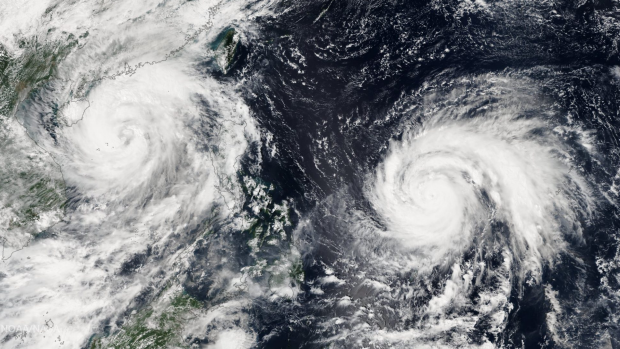
    BENGUET (PHILIPPINES) (TIP): Typhoon Haima, the strongest storm to hit the Philippines in three years, killed at least 12 people and inundated vast tracts of rice and corn fields, officials in Manila said on Oct 20, before it took aim at Hong Kong.

    Philippine authorities said they were assessing the extent of damage to infrastructure and crops, but confirmed that thousands of hectares of farmland were destroyed in northern provinces.

    Eight of the victims were from the Cordillera region, said Ricardo Jalad, chief of the National Disaster Risk Reduction and Management Council, citing reports the agency received from provincial officials.

    In Cagayan alone, where the super typhoon made landfall late on Wednesday with destructive 225 kmph winds and heavy rain, between 50,000-60,000 hectares of rice fields were flattened and flooded, said the provincial governor Manuel Mamba.

    “It was like we were hit by another Yolanda,” he told a radio station, referring to the 2013 super typhoon known internationally as Haiyan which killed at least 6,000 people and destroyed billions of pesos worth of property.

    Hong Kong shut all but essential services in the global financial hub as the storm approached. (PTI)

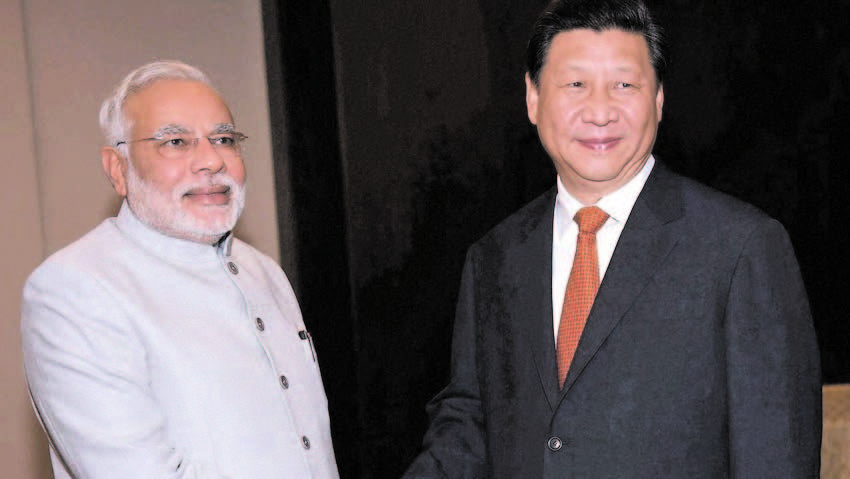
  • HONOURED TO WELCOME PRESIDENT PUTIN, LOOKING FORWARD TO TALKS WITH CHINA: PM MODI

    HONOURED TO WELCOME PRESIDENT PUTIN, LOOKING FORWARD TO TALKS WITH CHINA: PM MODI

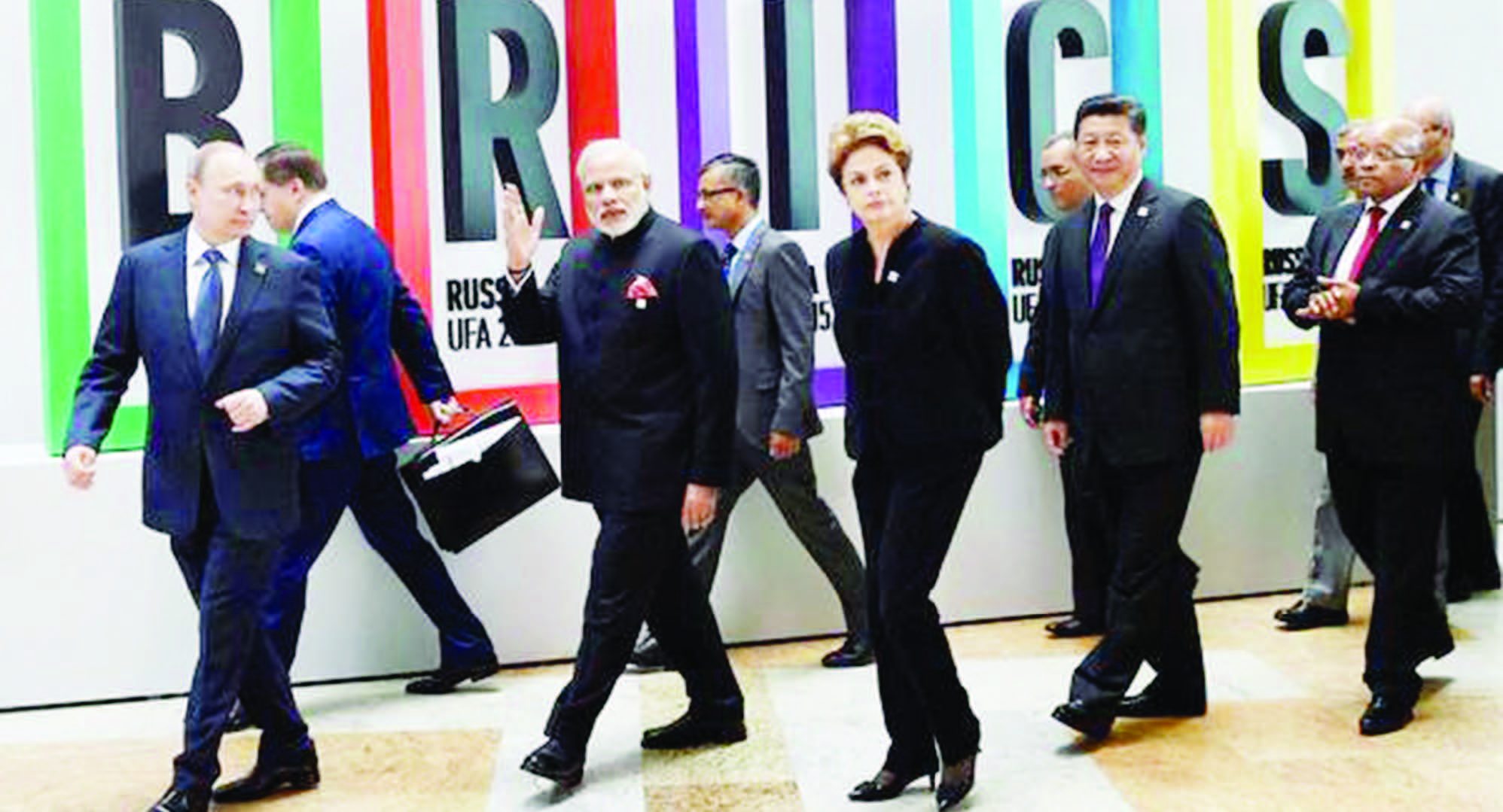
    NEW DELHI (TIP): Asserting that India is delighted to host the 8th BRICS Summit in Goa followed by a first-ever BRICS-BIMSTEC Outreach Summit, Prime Minister Narendra Modi on Friday extended a warm welcome to all nations participating in the event and said that India looks forward to finding common resolve and solutions.

    Taking to Facebook to post a welcome message for the arriving delegations, the Prime Minister said that he is honoured to receive Russian President Vladimir Putin and President Michel Temer of Brazil for a bilateral visit.

    “President Putin’s visit will give us an opportunity to consolidate and reaffirm a unique time-tested friendship and partnership with Russia. President Temer’s visit will open up new areas for cooperation with Brazil, an important strategic partner,” he said.

    He further stated that he looks forward to useful conversations with his fellow leaders from China, South Africa, Brazil and Russia on addressing pressing international and regional challenges that stand in the way of their goals.

    “As Chair of the BRICS this year, India has embraced a stronger emphasis on promoting people-to-people linkages in diverse fields including trade, sports, education, films, scholarship, and tourism. It is anchored in the belief that our people are pivotal partners in our effort to craft responsive, collective and inclusive solutions,” the Prime Minister said.

    Emphasising on the new initiatives that will be launched in Goa during the Summit, Prime Minister Modi expressed his optimism that the BRICS Summit will strengthen intra-BRICS cooperation and advance our common agenda for development, peace, stability and reform.He further said that he is happy that India is facilitating an outreach Summit with the BIMSTEC leaders of Bangladesh, Bhutan, Myanmar, Nepal, Sir Lanka and Thailand.”Representing nearly two thirds of humanity together, we hope to tap the potential for cooperation and the dividends this will bring. India looks forward to building bridges to new partnerships and finding common resolve and solutions to our entrenched problems,” the Prime Minister said.


  • China wants to Talk on NSG, but opposed to UN ban on Masood Azhar

    China wants to Talk on NSG, but opposed to UN ban on Masood Azhar

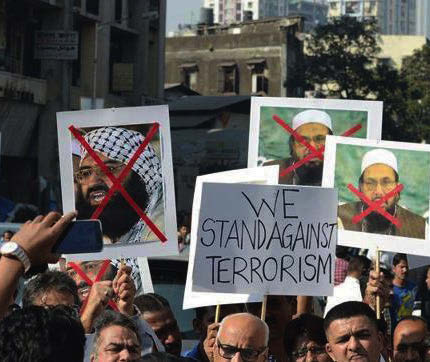
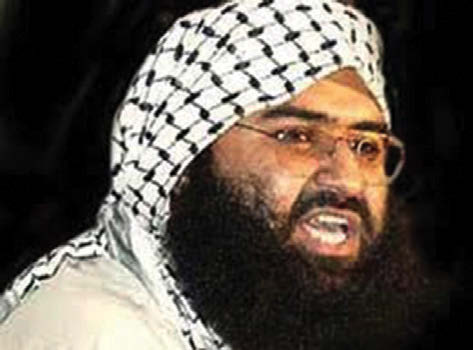
    Ahead of President Xi Jinping’s visit to India, China on Monday said it is “ready” for talks with India on its entry into the Nuclear Suppliers Group (NSG), but defended extending a hold on India’s bid for a UN ban on JeM chief Masood Azhar, saying Beijing is opposed to anyone making “political gains in the name of counter-terrorism”.

    Briefing media here on Xi’s visit to India this week to take part in the BRICS Summit in Goa, China’s Vice Foreign Minister Li Baodong again harped on the need to build consensus over the admission of new members in the 48-member NSG.

    Asked if any progress on the issue of India’s admission into NSG can be expected in the meeting between Xi and Prime Minister Narendra Modi on the sidelines of the BRICS Summit, Li said NSG rules stipulate consensus among the members to admit new ones.

    “These rules are not to be decided by China alone. On the issue, China and India have maintained good communication and we are ready to continue consultations with India to build consensus and we also hope India can go to other members of the NSG as well,” Li said replying to a question on China’s reservations on India’s admission to the elite nuclear trading club.

    “In this aspect, we are also ready for discussions with India to explore possibilities but things need to be in keeping up with procedures, norms and regulations of the NSG. On this issue, China position is consistent. That is why China has often said international law must be observed,” he said.

    Xi will travel to Goa to attend the BRICS Summit scheduled to be held on October 15-16. The BRICS grouping consists of Brazil, Russia, India, China and South Africa.

    While India has blamed one country, without naming China, for stalling its membership in the NSG, both the countries held talks recently to iron out differences.

    After talks with India, China also has held similar talks with Pakistan, which also applied for membership in the influential grouping.

    Replying to a question on criticism about China’s move to stall India’s bid for a UN ban on Azhar – head of Pakistan-based terrorist group Jaish-e-Muhammad, Li sought to justify Beijing’s recent technical hold in the matter, saying: “China is opposed to all forms of terrorism.”

    “There should be no double standards on counter- terrorism. Nor should one pursue own political gains in the name of counter-terrorism,” he said in a veiled reference to India, which is pressing for the UN ban against Azhar over his role in the Pathankot terror attack.

    China had announced the extension of its “technical hold” on India’s bid to get Azhar designated as a terrorist by the UN on October 1, days before it was to expire. The hold can continue for upto three months more.

    During today’s briefing, Li said counter-terrorism cooperation will figure in the BRICS Summit.

    “On counter-terrorism, it is an important area for cooperation among BRICS members for political security.

    Cooperation on this front will enhance BRICS communication and coordination and will contribute to world peace and security. That is quite obvious,” he said.

    He said BRICS Foreign Ministers reached agreement on counter-terrorism during their meeting on the margins of the UN General Assembly last month.

    “We hope and believe that this Goa summit will build on the past consensus and continue to strengthen cooperation in counter-terrorism and other issues of political security and contribute to world peace and security,” he said. —PTI

  • CHINA WANTS ACTION ON GLOBAL TERRORISTS BUT NO UN BAN ON MASOOD AZHAR

    CHINA WANTS ACTION ON GLOBAL TERRORISTS BUT NO UN BAN ON MASOOD AZHAR

    BEIJING: Days after extending its blockade on India’s move to impose a UN ban on Pakistan-based JeM chief+ Masood Azhar, China on Wednesday called for a stronger global response to curb cross-border movement of foreign terrorists.

    Speaking at a meeting on counter-terrorism in New York, Wu Haitao, China’s deputy permanent representative to the UN said frequent cross-border flow of foreign terrorist fighters has caused ever greater harm to international security and stability, state-run Xinhua news agency reported.

    The report defined foreign terrorist fighters as individuals who travel to a state other than their states of residence or nationality for the purpose of participating in terrorist acts.

    “The UN and the relevant international agencies should set up counter-terrorism data bases as soon as possible and share intelligence so as to create conditions for effectively curbing the cross-border movement of foreign terrorist fighters,” he said.

    Wu’s speech against the cross border movement for foreign fighters followed Beijing extending the “technical hold”+ on India’s pending petition to ban Azhar for his involvement in the Pathankot terrorist attack.

    Announcing the extension of the technical hold on October 1, Chinese Foreign Ministry spokesman, said,

    “China always maintains that on the listing matter, the 1267 Committee should stick to the principles of objectivity, impartiality and professionalism, base its judgments on solid evidence and decide upon consensus among the members of the Security Council”.

    China, a veto-wielding member+ had put a technical hold on the move to impose a ban on Azhar six months ago in the 1267 Committee of the UN Security Council (UNSC) comprising of 15 members of the council including the five permanent members.

    China was the lone country which put the technical hold at the last minute which drew strong criticism from India+.

    However China’s stand against movement for foreign terrorists could raise eyebrows in Pakistan as both Azhar and Lashkar-e-Taiba chief Hafiz Saeed are Pakistanis.

    India has been highlighting the cross-border terror threat emanating from Pakistan and tensions between New Delhi and Islamabad are on the rise since last month’s Uri attack in Jammu and Kashmir which killed 19 Indian soldiers.

    Last month, India and China held their first counter-terrorism dialogue.

  • CHINESE RANK US AS TOP THREAT: SURVEY

    CHINESE RANK US AS TOP THREAT: SURVEY

    BEIJING (TIP): Chinese people believe the United States is the “top threat” facing their country, a poll showed on Wednesday, with most suspecting the world’s number one economy of trying to “prevent China from becoming an equal power”.

    A survey by the Washington-based Pew Research Center revealed 45 percent of Chinese consider US power and influence to be a “major threat” — more than economic instability (35 percent), climate change (34 percent) and the Islamic State (15 percent).

    However, half of the 3,154 respondents in the survey had a “favourable opinion” of the US — including 60 percent of those aged between 18 and 34.

    The news comes as Beijing and Washington are at loggerheads over China’s territorial claims in the South China Sea, with the US urging China to adhere to the rule of law and Beijing accusing its ally of interference.

    The vast majority of Chinese (75 percent) believe their own country plays “a more important role in world affairs” than a decade ago, compared with only 21 percent of Americans, 23 percent of Europeans and 68 percent of Indians. However, this confidence in China’s international stature contrasts with a growing sense of unease among many, the survey showed, with about three-quarters of respondents saying their “way of life needs to be protected against foreign influence” — up from 64 percent in 2002.

    Despite China’s increasing diplomatic influence, 56 percent of Chinese said they wanted their leaders to focus on the country’s own challenges, such as official corruption, which most said was a problem.

    Growing inequality is also a concern, with 37 percent describing the gap between rich and poor as a “very big problem”. Other worries include: food safety (74 percent), the country’s choking air pollution (70 percent) and rising prices (74 percent), as many Chinese struggle to get a foothold in the real estate market.

    Source: AFP

  • China rescues JeM chief Masood Azhar at UN; Motive unknown!!!

    China rescues JeM chief Masood Azhar at UN; Motive unknown!!!

    China once again blocked India’s bid at United Nations to get Pakistan-based JeM chief Masood Azhar designated as a terrorist.

    However, the government sources say that India will continue with its effort to ban Masood Azhar.

    China’s technical hold was set to lapse on Monday, and had it not raised further objection, the resolution designating Azhar as a terrorist would have been passed automatically. The hold has now been extended and it can continue for upto three months more.

    “Terrorism is like a poisonous snake, which has always bitten the ones underplaying it. China should take a lesson from history,” said BJP National Secretary Shrikant Sharma.

    Stating that China has had taken pro-Pakistan stance in the past as well, former RAW officer Col RSN Singh urged Indians to not worry.

    On March 31 this year, China, a veto-wielding permanent member of the UN Security Council, had blocked India’s move to put a ban on the JeM leader and Pathankot terror attack mastermind under the Sanctions Committee of the Council. China was the only member in the 15-nation UN organ to put a hold on India’s application with all other 14 members of the Council supporting New Delhi’s bid to place Azhar on the 1267 sanctions list that would subject him to an assets freeze and travel ban.

  • Abu Dhabi Crown Prince to be chief guest on Republic Day

    Abu Dhabi Crown Prince to be chief guest on Republic Day

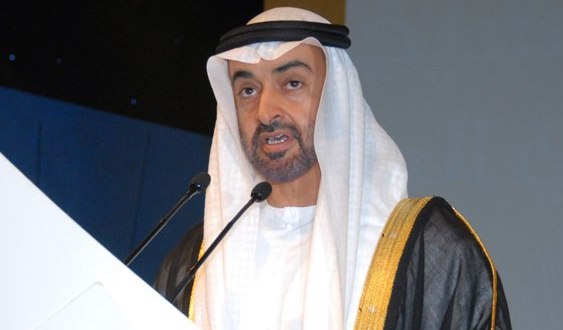
    New Delhi, Sep 2: In what can be seen as a bid to strengthen ties with the Gulf region that is home to a large population of expatriates, Crown Prince of Abu Dhabi Sheikh Mohamed bin Zayed Al Nahyan will be the Chief Guest at the Republic Day parade next year.

    This was announced by External Affairs Spokesman Vikas Swarup here today.

    “We hope to welcome a dear friend of India, HH Sheikh Mohamed bin Zayed Al Nahyan, Crown Prince of Abu Dhabi, as Republic Day 2017 Chief Guest,” he tweeted.

    In a letter to Prime Minister Narendra Modi, Mohamed bin Zayed expressed “thanks for the kind invitation to attend Indias Republic Day celebrations”.

    “Our strong relations are deeply rooted in history. Our strategic cooperation has increased, driven by our mutual aspirations to develop it,” the Crown Prince said.

    The visit of Al Nahyan, who is also the Deputy Supreme Commander of the UAE armed forces, is expected to give boost to bilateral ties in the key areas of trade and security.

    It is also significant given that UAE is a close ally of Pakistan, whom India is trying to diplomatically isolate over the issue of cross-border terrorism.

    During Modis visit in August last year, the two countries had condemned efforts, including by states, to use religion to justify, support and sponsor terrorism against other countries, or to use terrorism as instrument of state policy.

    They had also decided to strengthen their cooperation in the area of counter-terrorism.

    Trade is another important component of the bilateral ties as UAE is Indias third largest trading partner after China and the United States. Bilateral trade between UAE and India is around USD 60 billion.

    There are also more than 2.6 million Indians live in the UAE and their annual remittance is estimated to be around USD14 billion.

    The GCC comprises Bahrain, Kuwait, Oman, Qatar, Saudi Arabia and the UAE.

    This year, Modi visited Saudi Arabia where he was conferred with that Gulf nation’s highest civilian honour, the King Abdulaziz Sash, and then Iran soon thereafter.

    The last time a leader from the Gulf region graced the Republic Day as chief guest was when then King of Saudi Arabia Abdullah bin Abdulaziz al-Saud visited India in 2006.

  • China warns Japan not to ‘play with fire’ in South China Sea

    China warns Japan not to ‘play with fire’ in South China Sea

    BEIJING (TIP): China on Sept 29 warned Japan against “playing with fire” in the contested waters of the South China Sea, after Tokyo announced it may patrol alongside the US in the region.

    China also sent fighter planes for the first time over a strait near Japan on Monday as part of a group of more than 40 jets headed to train in the West Pacific.

    The move followed remarks by Japanese defence minister Tomomi Inada this month that Tokyo would increase its engagement in the South China Sea through joint training with the US Navy, exercises with regional navies and capacity-building assistance to coastal nations.

    The Chinese defence ministry said the aim of the announcement was “to mess up the South China Sea situation and try to gain interests from the troubled waters.”

    “If Japan wants to conduct any joint patrol or joint exercises in waters administered by China, it is just like playing with fire, and the Chinese military will not sit and watch,” ministry spokesman Yang Yujun told a regular press briefing.

    Beijing asserts sovereignty over almost all of the South China Sea, dismissing rival partial claims from its Southeast Asian neighbours. It rejects any intervention by Japan in the waterway.

    In recent months Japanese Prime Minister Shinzo Abe has criticised China for rejecting a July ruling by an international tribunal, which said Beijing’s extensive claims to the waters had no legal basis.

    Tokyo, a key US ally, is also strengthening defence ties with other countries in the disputed region. Japan and China are already at loggerheads over a longstanding territorial row in the East China Sea.

    That dispute relates to uninhabited islets controlled by Japan known as the Senkakus in Japanese and the Diaoyus in Chinese. (AFP)

  • China says countering Dalai Lama is top ethnic priority in Tibet

    China says countering Dalai Lama is top ethnic priority in Tibet

    BEIJING (TIP): China will make countering the Dalai Lama’s influence the “highest priority” in its work on ethnic affairs in Tibet, the region’s Communist Party boss has said, vowing to uproot the monk’s “separatist and subversive” activities.

    Beijing says its Communist troops peacefully liberated Tibet in 1950 and regards the 80-year-old, Nobel Peace Prize-winning Buddhist monk as a separatist.

    The self-exiled Dalai Lama says he merely seeks genuine autonomy for his Himalayan homeland.

    China’s foreign ministry expressed anger and threatened countermeasures this month after the Tibetan spiritual leader spoke at the European Parliament in France.

    “First, we must deepen the struggle against the Dalai Lama clique, make it the highest priority in carrying out our ethnic affairs, and the long-term mission of strengthening ethnic unity,” Tibet party secretary Wu Yingjie said in a speech published on Friday in the official Tibet Daily.

    “(We must) thoroughly expose the reactionary nature of the fourteenth Dalai Lama, crack down on separatist and subversive activities, and strive to eliminate at their roots harmful elements that damage ethnic unity,” Wu said.

    Public veneration of the Dalai Lama, who fled China in 1959 after an abortive uprising against Chinese rule, is prohibited in Tibet, though in private, many Tibetans revere the monk and display his picture.

    Identifying the effort to crack down on his influence the top task in the region’s ethnic affairs suggests Wu will ratchet up the government’s already hardline approach in the devoutly Buddhist region, which is prone to anti-Chinese unrest.

    Wu was appointed Tibet’s top official in late August, and has vowed stronger criticism of the Dalai Lama.

    The government rejects criticism from rights groups and exiles who accuse it of trampling on the religious and cultural rights of the Tibetan people, saying instead that its rule has brought prosperity to a once-backward region.

    Nonetheless, China faces no shortage of problems in the region, including those stemming from poverty, language barriers, and development that has at times clashed with a traditional herding lifestyle.

    Tibetans, one of China’s 56 officially recognised minority groups, are guaranteed legal protection for their languages and cultures. But they are often marginalised and treated with suspicion by Beijing, which views them as potential separatists.

    Officials see ethnic affairs work, such as improving Mandarin proficiency among minorities, as key to ensuring national cohesion and creating economic opportunity.

    There has been resistance to greater Mandarin education in schools in Tibet, with people fearing the government wants to culturally assimilate them. The government denies that. (Reuters)

  • Hitting where it hurts: India must keep up the momentum

    Hitting where it hurts: India must keep up the momentum

    As I write these lines, Pakistan has strongly denied that the Indian army carried out surgical strikes across the LoC. It has claimed, indeed asserted, through the official army spokesman that the Indian action was confined to the traditional exchange of fire across the LoC which the two armies have undertaken many times in the past, including heavy fire last year. In doing so, as of now, Pakistan has obviously sought to ensure that it does not come under pressure from its domestic public opinion to adequately respond to uphold the country’s honor. For if it acknowledges that Indian soldiers crossed the LoC, even by a short distance of a couple of kilometers, the Pakistani people, more so, Pakistani soldiers and officers will demand of its generals, especially army chief General Raheel Sharif, that the Indian Army be soonest taught a lesson so it does not undertake such an action again. This refrain would be heard the loudest from the jehadi tanzeems.

    Raheel Sharif has an image to live up to – his elder brother and maternal uncle were decorated with the Naishan-e-Haider, Pakistan’s highest gallantry award, and the Sharif family is greatly respected in army circles and by the public at large. Raheel Sharif is also credited with successful action in North Waziristan to clear Tehrik-e-Taliban-e-Pakistan cadres under the Zarb-e-Arz operation. Thus more than Prime Minister Nawaz Sharif, it is the General who is under greater scrutiny. It is obvious that his initial reaction has been not to immediately get into a tit-for-tat situation and to move cautiously. That is not unnatural, for the Pakistan General staff would need to carefully weigh all options, especially as the international community knows that Pakistan has provoked India continuously over two decades with its pursuit of cross-border terrorism and that no army would take the Uri terrorist attack lying down.

    The major powers, especially the US, have advised Pakistan that it has to take action against all terrorist groups, not only those that have turned against the state. This counsel has fallen on deaf ears, for there is no evidence that Pakistan army is willing to take a re-look at its security doctrines. These prescribe the pursuit of low-intensity conflict to contain India by keeping it off-balance. The fact is that despite the Pathankot attack and India’s acceptance of a Pakistani joint investigation team, including an ISI representative, to visit the Pathankot air base, it continued to essentially remain in denial, which is a clear evidence of its unwillingness to modify its security approaches. As India has crossed a threshold, Pakistan’s security planners will be under international pressure to modify their policies on the use of terror, even as they will not easily give it up. Why?

    The major powers, including Pakistan’s all-weather friend, China, do not want a conflagration between two countries with nuclear weapons. As India has always acted “responsibly”, it has ironically been under greater pressure to avoid taking any step that would enhance the chance of escalation. This has been so after every significant terrorist provocation, including the Parliament attack and the Mumbai outrage. Each time, India absorbed terrorist action, despite the loss of life. Indeed, influential sections of the Indian political and security classes advanced the view that terrorism did pose a real security challenge to the country. Thus Pakistan-sponsored terrorism was cynically relegated to a matter of political management. If this was the view of those who governed the country, the international community naturally went along. The Pakistan Generals too felt secure that India’s political masters would not really react with force. They were initially concerned that Prime Minister Narendra Modi may be different and they tested him even prior to his taking oath when the Indian consulate-general in Herat was attacked. When Modi flip-flopped, laying down red lines only to dissolve them, they felt that he was no different from his predecessors. They will now have to reassess.

    The only time the global powers brought pressure to bear on Pakistan was during the Kargil encroachment. Then India acted with determination to throw out Pakistan forces that had occupied the Kargil heights. It is because India refused to accept Pakistani action and the Indian Army started meeting with success despite great odds that the US put pressure on Pakistan to abandon its unacceptable misadventure. The US pressure was a contributory factor to Pakistan’s decision to withdraw. The Kargil lesson was that if India showed resolve and acted then Pakistan was asked to act responsibly. The key factor in all such situations is calm and sober resolve and deliberate action. Now after the surgical strikes, which have been undertaken with precision, it would be Pakistan that would be under pressure not to notch up the situation. That would be the quiet message that the Chinese would also give, notwithstanding the public postures that they may take.

    Modi government has also done well not to have undertaken the surgical strikes in isolation, but as part of a package of measures to show that India is re-examining the premises of its Pakistan policy. No previous government has focused on the Indus Waters Treaty and Pakistan’s MFN status. Nor has any government raised Pakistan’s human rights record in Balochistan internationally, that too at the UN. Most importantly, the withdrawal from the SAARC Summit -and, it is obvious that Afghanistan, Bangladesh, Bhutan and India have consulted on this matter – would not have gone unnoticed in important capital cities. While there will be routine counsels of restraint, there is no doubt that there will be an understanding that India has suffered much and Modi expended much political capital and the present action – with no intention, at present, to undertake any other surgical strike – was neither adventurous nor unnatural.

    There is little doubt that Pakistan will loudly proclaim the dangers of Indian action leading to the danger of acquiring a nuclear dimension. This is hogwash and self-serving. Pakistan will also renew efforts to draw attention to the Kashmir situation, but global indifference to developments in the Valley will continue as no country wants to intervene in it.

    So, how will Pakistan respond? Indian security managers should redouble their vigilance against a major terrorist strike.

    (The author is a former Secretary, Ministry of External Affairs)

  • Defense secretary: US will sharpen ‘military edge’ in Asia

    Defense secretary: US will sharpen ‘military edge’ in Asia

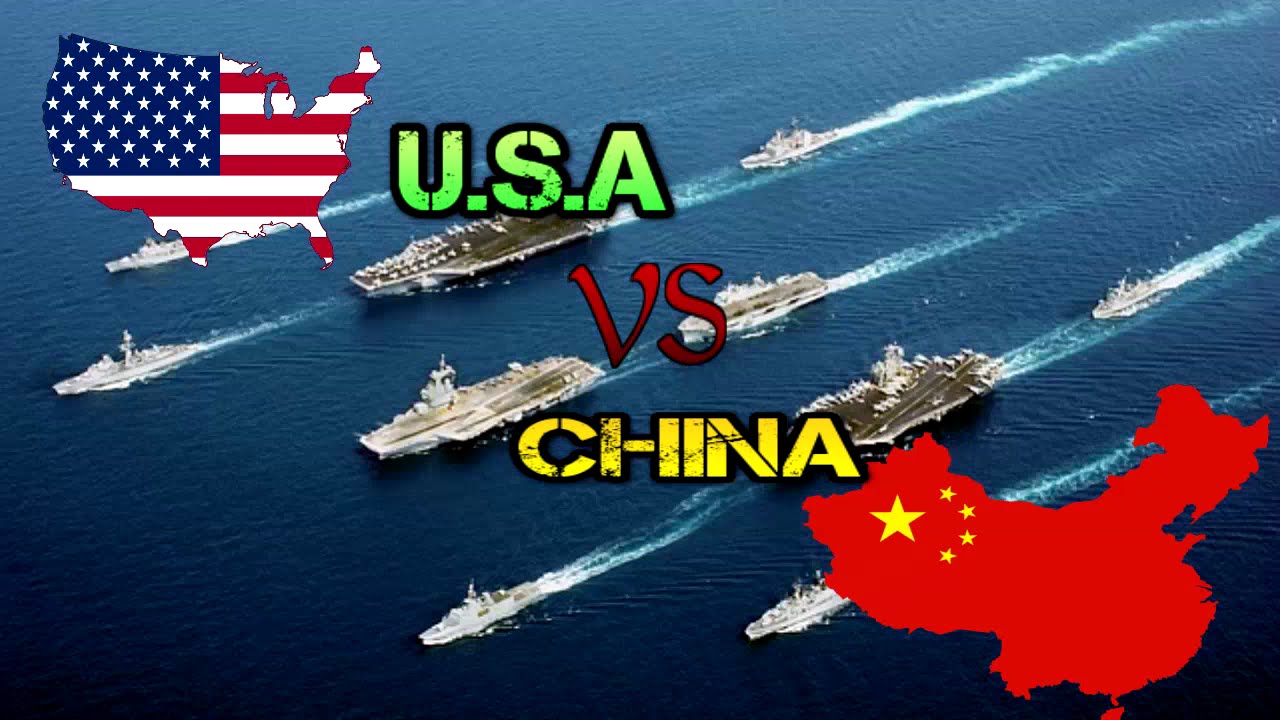
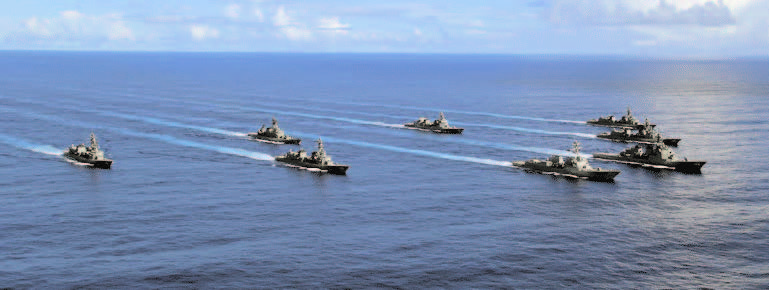
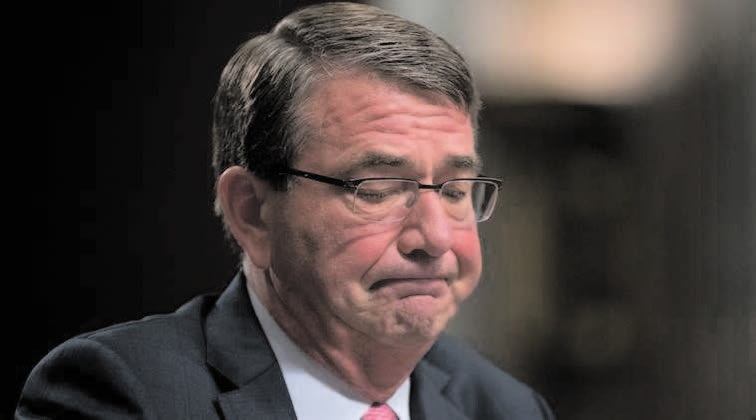
    SAN DIEGO (TIP): Defence secretary Ash Carter said on sept 29 the US will “sharpen our military edge” in Asia and the Pacific in order to remain a dominant power in a region feeling the effects of China’s rising military might.

    Carter made the pledge in a speech aboard the aircraft carrier USS Carl Vinson in port in San Diego.

    The Pentagon chief described what he called the next phase of a US pivot to Asia — a rebalancing of American security commitments after years of heavy focus on the Middle East.

    His speech, aimed at reassuring allies unsettled by China’s behavior in the South China Sea, came three days after he made remarks at a nuclear missile base in North Dakota about rebuilding the nuclear force. Those comments prompted a strong reaction from the Russian foreign ministry, which issued a statement saying it had interpreted Carter’s statement as a declared intention to lower the threshold for using nuclear weapons.

    Carter said the Pentagon will make its attack submarines more lethal and spend more to build undersea drones that can operate in shallower waters where submarines cannot.

    “The United States will continue to sharpen our military edge so we remain the most powerful military in the region and the security partner of choice,” he said. He added, “We’re going to have a few surprises as well,” describing them only as “leap-ahead investments.”

    With a broad complaint that China is “sometimes behaving aggressively,” Carter alluded to Beijing’s building of artificial islands in disputed areas of the South China Sea.

    “Beijing sometimes appears to want to pick and choose which principles it wants to benefit from and which it prefers to try to undercut,” he said. “For example, the universal right to freedom of navigation that allows China’s ships and aircraft to transit safely and peacefully is the same right that Beijing criticizes other countries for exercising in the region. But principles are not like that. They apply to everyone, and every nation, equally.”

    Carter’s speech was meant to set the scene for a meeting on Friday in Hawaii with his counterparts from the 10 member countries of the Association of Southeast Asian Nations, or ASEAN. The association focuses mainly on trade issues, but in recent years, with US encouragement, has sought to engage in a range of defence and military issues. The US is not a member of the organization but has sought to use it as a forum for further developing security partnerships amid regional concern about China’s military buildup.

    On Carter’s flight from San Diego to Hawaii later on Sept 29, a senior defence official aboard the plane told reporters that Carter expects to hear concerns from some Southeast Asian ministers, including those from Singapore, Indonesia and the Philippines, about the threat they perceive from an expected return of extremists who have been fighting for the Islamic State group in Syria and Iraq.

    The official, who spoke on condition of anonymity under ground rules set by the Pentagon, said “hundreds” of IS fighters already have returned to Southeast Asia from Syria and Iraq and said up to 1,000 more may return as the Islamic State group faces increased military pressure.

    Carter has described Pentagon efforts to execute a “pivot” to Asia by shifting, or rebalancing, US forces and attention toward the Asia-Pacific region after a decade and a half of Mideast-focused strategies and operations.

    In April, he said he was putting “the best people and platforms forward to the Asia-Pacific” by increasing the number of US military personnel in the region and by sending and stationing advanced weapons system there. He said that includes F-22 and F-35 stealth fighter jets, P-8 Poseidon maritime surveillance aircraft, continuous deployments of B-2 and B-52 strategic bombers and the newest surface warfare ships like the amphibious assault ship USS America.

    Among the Asia problems that have arisen for the Pentagon since Carter last met with the region’s defence ministers is a sudden and steep deterioration in relations with the Philippines.

    When Carter visited the Philippines in April, he praised the strength of the partnership. He said his visit had inaugurated “a major new era in a longstanding alliance.” He was referring to the US-Philippines Enhanced defence Cooperation Agreement. “I’m proud to say this alliance is as close as it’s been in years.”

  • First Presidential Debate turns #Trump into a Lying Machine

    First Presidential Debate turns #Trump into a Lying Machine

    Readers: This is a strange Election where one has to vote for the lesser of two evils; this being said who would you vote for – someone who makes a mistake and admits it or the one who lies and lies more to cover the previous lie.

    November 8 will go down in history as the day “The World Stood Still”.

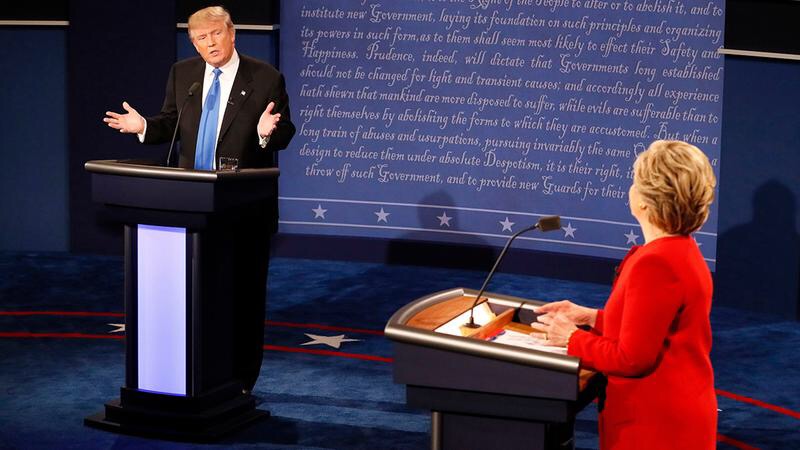
    By any equation, Hillary Clinton crushed Donald Trump in the first presidential debate.

    Trump was erratic, inconsistent and incoherent. He did not make a memorable case on any issue except perhaps his temperament (lol).

    Below are some of the things our good candidate Lied about in front of over 100 million viewers.

    • He lied about the loan his father once gave him.
    • He lied about his company’s bankruptcies.
    • He lied about his federal financial-disclosure forms.
    • He lied about his endorsements.
    • He lied about “stop and frisk.”
    • He lied about “birtherism.”
    • He lied about New York.
    • He lied about Michigan and Ohio.  
    • He lied about Palm Beach, Fla.
    • He lied about Janet Yellen and the Federal Reserve.
    • He lied about the trade deficit.
    • He lied about Hillary Clinton’s tax plan.
    • He lied about her child-care plan.
    • He lied about China devaluing its currency.
    • He lied about Mexico having the world’s largest factories.
    • He lied about the United States’s nuclear arsenal. 
    • He lied about NATO’s budget.
    • He lied about NATO’s terrorism policy.
    • He lied about ISIS.
    • He lied about his past position on the Iraq War.
    • He lied about his past position on the national debt.
    • He lied about his past position on climate change.
    • He lied about calling pregnancy an “inconvenience” for employers.
    • He lied about calling women “pigs.”
    • He lied about calling women “dogs.”
    • He lied about calling women “slobs.”

    So… who won the debate?

  • Just do it: Chinese city tells cadres to set example and have second child

    Just do it: Chinese city tells cadres to set example and have second child

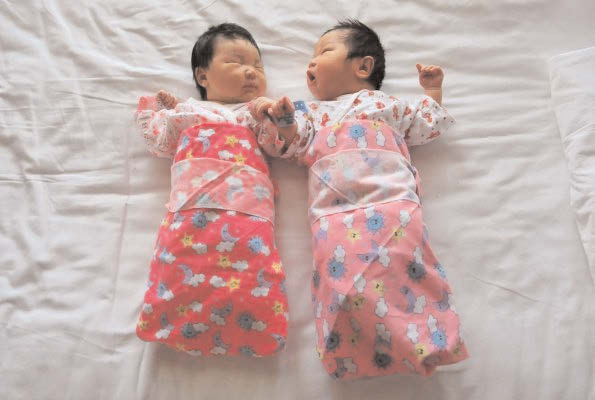
    SHANGHAI (TIP): With China facing a demographic crisis of stalling birth rates and a fast-ageing population, one city has taken a novel approach: a direct call to action aimed at young government officials to lead the way and have a second child.

    The government of Yichang city in central Hubei province posted an open letter calling for young cadres to have more children to stem a slide in birth rates in the city which has started to hit economic growth.

    China’s demographic time-bomb has become increasingly urgent of late as the country faces its slowest economic growth in a quarter of a century, with a sluggish manufacturing sector hit by a dearth of cheap labor due in part to a shrinking workforce.

    “Young cadres have to take the lead having a second child, while elder cadres should urge them on,” the letter said, citing the need to bolster the city’s working population and raise a fertility rate that has fallen below one child per woman. “If things continue as they are, it will bring huge risk and damage to our city’s economic and social development, as well as the livelihood of our families,” said the letter, stamped by official departments including the city’s health bureau. China last year said it would ease family planning restrictions to allow all couples to have two children after decades of a strict one-child policy, a move aimed at relieving demographic strains on the world’s second largest economy.

    Beijing has loosened the rules over the last few years in the face of concerns the strict policy was leading to a shrinking workforce unable to support a fast-growing elderly population. By around the middle of this century, one in every three Chinese is forecast to be over 60. “The low birth rate has aggravated the risk of the one-child policy, led to an ageing population, a shortfall in the labour force, and lagging urbanisation, which hits the city’s labour productivity and overall competitiveness,” the letter said. The open letter, picked up by domestic media late on Sept 21 but dated September 13, has received a mixed response.