Tag: China

  • Chinas outbound investment exceeds FDI in 2015: Report

    Chinas outbound investment exceeds FDI in 2015: Report

    Beijing, Sep 22 (PTI) For the first time, Chinas outbound investment has exceeded the Foreign Direct Investment (FDI) it received, official data for 2015 showed today, as the cash- rich Communist giant looks for new overseas avenues to invest capital amid slowing growth in the worlds second largest economy.

    Chinas outbound direct investment (ODI) hit an all-time high of USD 145.67 billion in 2015, exceeding the USD 135.6 billion in FDI it received, making it a net capital exporter for the first time, said Zhang Xiangchen, deputy international trade representative with Chinas Ministry of Commerce (MOC).

    It is the worlds second-largest source of outbound investment, exceeded only by the United States, he said.

    The investment in the countries implementing its Silk Road initiative soared 38.6 percent year on year, the data showed.

    Investment in One Belt and Road (Silk Road) countries stood at USD 18.93 billion and represented 13 per cent of the countrys ODI last year, said Zhang.

    Zhang told reporters at a news conference that One Belt and Road investment is essential to the fast development of Chinas ODI.

    The One Belt and Road initiative, proposed by President Xi Jinping in 2013, refers to the Silk Road Economic Belt and the 21st Century Maritime Silk Road — a trade and infrastructure network connecting Asia with Europe and Africa along ancient trade routes.

    As of July, Chinese enterprises had established 52 economic cooperation zones in the countries while paying USD 900 million in taxes and creating nearly 70,000 local jobs, the data said.

    The MOC said earlier the One Belt and Road Initiative had boosted business cooperation between Chinese and foreign firms.

    During the first eight months of 2016, nearly 4,000 engineering contracts were signed by Chinese companies in 61 countries along the routes, with combined contract value of 69.82 billion US dollars.

    China needs to fully take advantage of the international market and resources as its economy and companies transform, said Zhang, adding that Chinese firms are keen to become active players in global innovation, manufacturing and the market.

    Chinas economy grew at its slowest pace in a quarter of a century last year and the country is looking for new foreign avenues for investing its surplus capital in order to boost its falling growth.

  • No injury, but PV Sindhu pulls out of Japan Open

    No injury, but PV Sindhu pulls out of Japan Open

    HYDERABAD (TIP): The Olympic silver medallist has pulled out of next week’s Japan Open Super Series. Sindhu was expected to face Olympic gold medallist Carolina Marin in the quarterfinals in Tokyo. The lanky shuttler will also miss the Korea Open Super Series, scheduled to be held from September 27.

    The 21-year-old will be back in action at the Denmark Open Super Series Premier, which begins at Odense on October 18. Disclosing this here, her coach Pullela Gopichand confirmed that Sindhu will not be travelling to Tokyo.

    “She will be back for the Denmark Open. She will also compete in the French Open next month. We had to make some changes in her schedule,” Gopichand said.

    Incidentally, Sindhu had reached the final of the Denmark Open last year. She downed Wang Yihan and Marin before losing to Li Xuerui in the summit clash. That was the best performance by Sindhu in a Super Series event.

    Despite winning two bronze medals at the World Championships and Grand Prix Gold events, a Super Series title has eluded Sindhu so far. Soon after winning the silver at the Olympics, the star shuttler had said that her next goal is to win a Super Series title.After the October Super Series, the World No.10 Indian will also participate in the China Open Premier and Hong Kong Super Series in November. A good show here will help Sindhu to qualify for the Super Series Finals to be held in Dubai in December. Saina Nehwal and Kidambi Srikanth are the only Indians who have competed in the year-ending Finals.

    Sindhu started training immediately after arriving from Rio. However, she had to attend many felicitation functions and did not get enough practice in the last one month. Moreover, her coach Gopichand is wary of exposing Sindhu so soon after the Olympics. “I know that there will be a lot of focus on Sindhu now. Other teams will be working on strategies to dominate her. We also should be ready to beat them,” Gopi said.

    In Sindhu’s absence, Kidambi Srikanth will lead the Indian challenge.

    Ajay Jayaram, Sai Praneeth and HS Prannoy are the other Indians in men’s singles.

  • India woos new Nepal PM Prachanda to claw back ground from China

    India woos new Nepal PM Prachanda to claw back ground from China

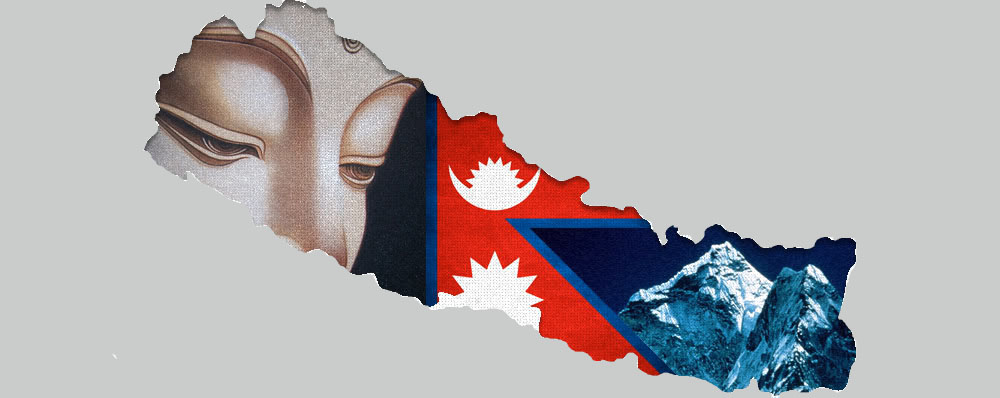
    NEW DELHI/KATHMANDU (TIP): India is likely to offer Nepal’s new prime minister help building an east-west railway line and better access to its ports on his first visit this week, as it tries to regain ground lost recently to China.

    Prachanda+ , a former Maoist rebel commander, has chosen New Delhi as his first foreign stop, seeking to rebalance ties that chilled under his pro-China predecessor. KP Oli had sealed trade deals that sought to reduce landlocked Nepal’s economic dependence on India.

    “Relations with India have become frosty for some time. I want to remove the bitterness,” Prachanda told reporters on Tuesday evening in Kathmandu, adding India now “wants to help Nepal, which is in difficulties.”

    Nepal has yet to complete a political transition after a decade-long insurgency and weeks of deadly street protests that brought down the monarchy nearly a decade ago.

  • China launches second space station, Tiangong 2

    China launches second space station, Tiangong 2

    BEIJING (TIP): China has launched its  second space station in a sign of the growing sophistication of its military-backed program that intends to send a mission to Mars in the coming years.

    The Tiangong 2 was carried into space on Thursday night atop a Long March 7 rocket from the Jiuquan Satellite Launch Center on the edge of the Gobi Desert in northern China.

    Plans call for the launch next month of the Shenzhou 11 spaceship with two astronauts to dock with the station and remain on board for a month. The station, whose name means “Heavenly Palace,” is considered a stepping stone to a mission to Mars by the end of the decade.

    The Tiangong 2 module will be used for “testing systems and processes for mid-term space stays and refueling,” and will house experiments in medicine and various space-related technologies.

    China’s first space station, Tiangong 1, was launched in September 2011 and officially went out of service earlier this year after having docked with three visiting spacecraft.

    China conducted its first crewed space mission in 2003, becoming only the third country after Russia and the US to do so, and has since staged a spacewalk and landed its Yutu rover on the moon. Administrators suggest a manned landing on the moon may also be in the program’s future.

    China was prevented from participating in the International Space Station, mainly due to US concerns over the security risks of involving the increasingly assertive Chinese military in the multinational effort.

    A source of enormous national pride, China’s space program plans a total of 20 missions this year at a time when the US and other countries’ programs are seeking new roles.

    China is also developing the Long March 5 heavier-lift rocket needed to launch other components of the Tiangong 2 and other massive payloads.

    China plans to land a rover on Mars by 2020, attempting to recreate the success of the US Viking 1 mission that landed a rover on the planet four decades ago.

  • Raymonds to downsize,cut close to 10,000 jobs in 3 years

    Raymonds to downsize,cut close to 10,000 jobs in 3 years

    CHENNAI (TIP): Apparel giant Raymonds to cut about 10,000 jobs in its manufacturing centres in the next three years, replacing them with robots and technology, said Sanjay Behl, CEO, Raymonds.

    Speaking at an event at Great Lakes Institute of Management, Behl said that the industry being manpower-intensive, Raymonds employs over 30,000 staff in their 16 manufacturing plants in the country. “Roughly 2,000 work in each plant. Through technological intervention we are looking to scale down the number of jobs to 20,000, through multiple initiatives in technology. One robot could replace around 100 workers. While it is happening in China at present, it will also happen in India,” he said. He added that a closely monitored team is working on this technology implementation models.

    Behl added that the company is looking to open a plant in Africa.

  • China and Pakistan are ‘Passive Enablers’ of the North Korean nuclear program: US Experts

    China and Pakistan are ‘Passive Enablers’ of the North Korean nuclear program: US Experts

    US-based experts said that China and Pakistan are ‘passive enablers’ of the North Korean nuclear program and may face some secondary sanctions for violating UN approved sanction.

    Scott Snyder, senior fellow at the Council for Foreign Relations said that Chinese support has led North Korean dictator Kim Jong-Un to believe that Beijing will vote for stability and not go so far as to threaten his regime security.

    “The right way to describe China’s role is that they actually have been a passive enabler by providing generalized support to the North Korean regime,” Scott said.

    Siegfried Hecker, former head of the Los Alamos National Laboratory concluded that North Korea may have a stockpile of sufficient fissile material for approximately 20 bombs by the end of this year and a capacity of adding approximately 7 per year.

    China has long been accused of not putting sufficient pressure on North Korea and not implementing UN sanctions by allowing movement of goods and money across its border, a claim it has denied.

    Experts believe that China wants North Korea as a buffer between its border and US and its allies.

    “Why use the word accused, the evidence is pretty clear. China has agreed to do a lot of things that it hasn’t. A US news channel was filming cargo going back and forth on the North Korea-China border without any inspection. It is pretty clear that North Korean related organizations are operating in China,” says William Newcomb, Visiting Scholar at the United States Korea Institute in Washington DC and former UNSC panel member who helped impose sanctions on North Korea.

    He believes that the Chinese are making a strategic blunder by confusing status quo with stability especially as North Korea is “90% a failed state” and the Chinese leadership is in effect implying that the “Chinese military will not be able to protect Chinese borders if North Korea collapses.”

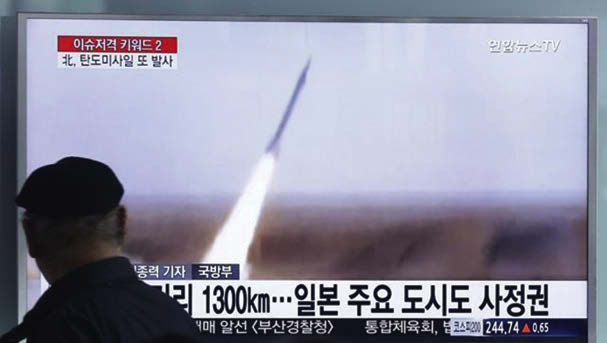
    North Korea carried out its fifth nuclear test last Friday, its second in less than a year. Experts have concluded that the underground explosion was stronger than the previous four triggering a magnitude 5.3 seismic event. The test was condemned by the international community and has led to increased tensions in the region with both China and US trading blame for not working to restrict North Korea’s nuclear program.

    North Korea’s nuclear program is also known to have ties with Pakistan, which supplied it with schematics for nuclear weapons while the former is thought to have provided help on the Pakistan’s missile program.

    Egypt and Iran have also coordinated with North Korea in the past.

    The blatant violation of UN sanctions by some countries has raised the question of consequences for their actions.

    Newcomb believes that violators should not be allowed to get away and that the UNSC should find ways to make violators to pay a price for their actions.

    United States law requires the imposition of secondary sanction on entities that trade with North Korea. Here again, analysts believe that China can be a bigger target than Pakistan and Iran.

    “The most interesting case really is China because of the extent of trade. There are more potential targets for secondary sanctions located in China. I think that you couldn’t necessarily rule that possibility out,” says Snyder.

    According to him, Pakistan and Iran could also meet the threshold if the US intelligence community can come to a conclusion that there is sufficient linkages to warrant secondary sanction on entities from those countries. But the imposition of secondary sanctions after the current nuclear test will depend on US domestic politics especially given that the Obama administration is on its way out.

  • Indian Paralympics Team at RIO win Gold and a Bronze

    Indian Paralympics Team at RIO win Gold and a Bronze

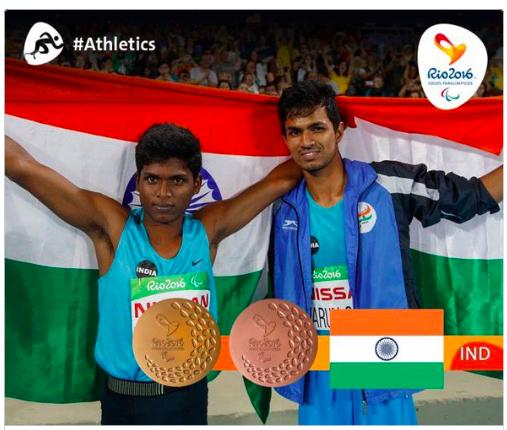
    In a historic moment for India, Mariyappan Thangavelu won the gold medal while compatriot Varun Singh Bhati clinched the bronze in the men’s high jump T-42 event on Saturday at the Rio Paralympics.

    The 20-year-old Thangavelu made a leap of 1.89m, while Bhati jumped his personal best of 1.86m to finish third. USA’s Sam Grewe bagged the silver medal.

    India’s Mariyappan Thangavelu and Bhati Varun Singh celebrate their gold and bronze medals. AFP India’s Mariyappan Thangavelu and Bhati Varun Singh celebrate their gold and bronze medals. AFP

    India’s other medal prospect Sharad Kumar finished at number six.

    T-42 is a disability classification in the sport for differently-abled track-and-field athletes with single ‘above the knee’ amputations or a comparable disability.

    The event witnessed a fierce contest with six of the 12 athletes clearing the 1.74m mark in their first eight attempts.

    But Thangavelu became a part of the leading group after his 10th attempt when he cleared the 1.77m mark along with Lukasz Mamczarz of Poland, China’s Zhiqiang Zhing and Kumar.

    He then went into the lead along with Bhati as both managed to clear the 1.83m mark. Kumar however, could not improve his performance and eventually crashed out of medal contention. Grewe pushed Thangavelu and Bhati to the joint second position by clearing 1.86m to grab the top spot.

    But both Indians made a strong comeback by equalling the height to share the pole position.

    Thangavelu eventually made sure of the gold with an effort of 1.89m in his final attempt while Grewe and Bhati’s finished with best efforts of 1.86m.

    Thangavelu was injured at the age of five, when a bus accident left him with a permanent disability, according to a report in The Hindu. Bronze medal winner Bhati was diagnosed with polio which lead to a deformity in his legs, according to a NDTV report.

    This is India’s first medal at the 2016 Paralympic Games, and with Bhati’s bronze, India now has two medals in this edition. Thangavelu also became the first Indian high jumper to win a Paralympics gold.  HN Girisha was the first Indian high-jumper to win a medal, at the 2012 Paralympic Games.

    He is also the third Indian to win a gold at Paralympics after Murlikant Petkar, who won in Swimming, at Heidelberg 1972 and Devendra Jhajharia who won at Athens 2004 in Javelin Throw. India’s overall medal tally in all Paralympic Games has now stands at 10 – three golds, three silvers and four bronze.

    Earlier this week, Sports Ministry also announced that medallists from the Paralympics in Rio de Janeiro will be given cash awards at par with the medal winners of last month’s Olympic Games.

  • Licence to split: China’s ‘mistress hunters’ on mission to save marriages

    Licence to split: China’s ‘mistress hunters’ on mission to save marriages

    BEIJING (TIP): Don’t get mad, get your opponent to surrender voluntarily: when Mrs Wang discovered her husband had been cheating on her for several years, she called in an elite team of Chinese “mistress hunters”.

    Rather than seek a divorce — which could have hit her social and financial standing — she hired a specialist to earn the other woman’s trust, and then persuaded her to end the extra-marital relationship.

    It was a longstanding affair, but once the mistress hunters were called in, it was over within two months.

    Wang said she paid between 400,000 and 500,000 yuan ($60,000-$75,000) for the service.

    “I think it was worth it, I’m satisfied,” she added. So much so, she is now thinking of becoming a hunter herself.

    “That way I can help women protect their families and their rights,” she explained. The company Wang used, Weiqing — or “protector of feelings” — has 59 offices across the country, and offers free legal advice and lectures.

    Its founder Shu Xin said he has 300 agents at his command.

    “My goal is to prevent divorces,” he told AFP at his upmarket Beijing headquarters. “Every year we save some 5,000 couples.”

    The mistress hunters are mostly women and are all psychology, sociology or law graduates.

    They spend three years learning the ropes before being sent out into the field, where they pose as neighbours, cleaners or even babysitters.

    Ming Li, 47, has been doing the job for three years. “I’m older than these mistresses, in general, so they listen to me,” she said.

    “If the mistress goes to a park, to the supermarket or to work, I’ll happen to meet her. And even if she is a stay-at-home sort of person, I can claim I’ve got a leak in my apartment and ask for her help,” she told AFP. “We always find a way to initiate contact. “One time, I pretended to be a fortune teller, and the mistress asked me to tell hers. Obviously, I already knew all about her from the wife, so it was easy to leave her dumbfounded and exhort her to leave the husband. It was one of our most quickly resolved cases.”

    Chinese divorce rates have surged from 1.59 per 1,000 people in 2007 to 2.67 in 2014, according to the most recently available civil affairs ministry figures — far higher than in Europe, with France at 1.9 and Italy at just 0.9.

    In Beijing, official statistics show 73,000 couples divorced in 2015 — almost three times the number nine years previously.

    “The reasons? The liberalisation of morals, tensions related to differences between the husband’s and the wife’s income, incompatible personalities,” said Zhu Ruilei, a divorce attorney at Beijing-based law firm Yingke. “But also the desire to pursue personal dreams is stronger than it used it be.”

    According to a study by dating site Baihe.com, at least one party has been unfaithful in half of Chinese first marriages. (AFP)

  • Chinese military equips all ground forces with new attack helicopters

    Chinese military equips all ground forces with new attack helicopters

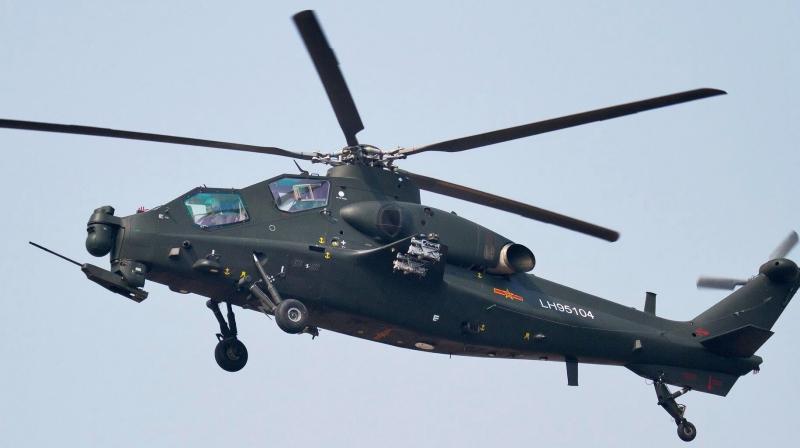
    BEIJING (TIP): China’s military has equipped all of its ground forces with advanced WZ-10 combat helicopters which will be used to target battle tanks and air-to-air combat missions, a strategic move which could have implications for India .

    Several WZ-10s have been delivered to an aviation brigade of the PLA’s 13th Group Army under the Western Theatre Command, the People’s Liberation Army’s TV news channel reported.

    This means that all of the Army’s aviation units now have this advanced attack helicopter, state-run China Daily reported.

    Senior Colonel Xu Guolin, deputy chief of the PLA Army’s Aviation Equipment Bureau, told the news channel that all of the group armies will have at least one aviation brigade or regiment.

    The helicopter was designed primarily for anti-tank missions, but now has a secondary air-to-air combat capability.

    Wu Peixin, an aviation analyst in Beijing, said the PLA Army now has a strong force of dedicated combat helicopters thanks to the service of the WZ-10 and WZ-19, another attack helicopter that is less powerful than the WZ-10. “The Army now needs more medium-lift, multipurpose helicopters such as the US Army’s Sikorsky UH-60 Black Hawk,” he said.

    “This helicopter is capable of performing both combat operations and transport tasks.”

    Gao Zhuo, a military observer in Shanghai, said the PLA Army needs at least 3,000 helicopters, especially heavy-lift transport types and multipurpose models.

    Meanwhile, the Chinese military has discounted media reports that China’s stealth fighter J-20, currently undergoing trials, will be deployed in Tibet along the India-China border.

    Reacting to reports that J-20 spotted at the Daocheng Yading Airport in Tibet, an article in the PLA website said that J-20 will be put into service soon but the ‘China-India border is apparently not the ideal place for its deployment’.

    “In addition, the world’s highest airport there does not have a complete set of supporting facilities and such shortage will impede the function of J-20,” it said.

    “J-20 will not be deployed in Daocheng Yading airport as the airport is too close to the border, and it is vulnerable to India’s first wave hit. If India is to deploy BrahMos missile on the China-India border, then the Daocheng Yading airport will likely to become its target,” it said.

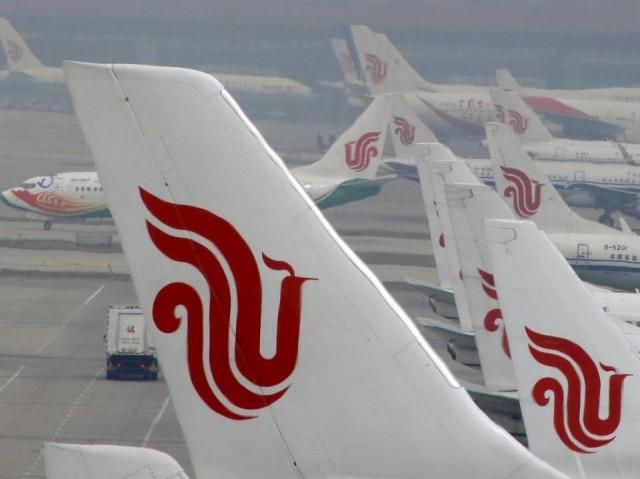
  • British MP hits out at ‘racist’ Air China London tips

    British MP hits out at ‘racist’ Air China London tips

    LONDON (TIP): A British MP on sept 7 slammed Air China for alleged “racist” travel advice offered to clients visiting London.

    The airline’s “Wings of China” magazine reportedly provides safety advice to travellers based on the race and nationality of local residents.

    “London is generally a safe place to travel, however precautions are needed when entering areas mainly populated by Indians, Pakistanis and black people,” the magazine says, according to a photograph published by CNBC.

    “We advise tourists not to go out alone at night, and females always to be accompanied by another person when travelling,” the magazine adds.

    The description prompted London MP Virendra Sharma, who emigrated from India to the UK in the 1960s, to complain to the Chinese government.

    “I am shocked and appalled that even today some people would see it as acceptable to write such blatantly untrue and racist statements,” he said in an online statement.

    “I have raised this issue with the Chinese ambassador, and requested that he ensures an apology is swiftly forthcoming from Air China, and the magazine is removed from circulation immediately,” Sharma said.

    Air China’s director of publicity Xu Yuanchun told AFP they were making inquiries, saying: “Air China has dozens of magazines; it’s difficult to know all of them.”

    But on Chinese social media, most commenters expressed bafflement at the backlash.

    In a common refrain, one user of China’s Twitter-like Weibo platform asked: “This is just stating the truth- what is there to apologise about?”


  • ‘Nobody should fear’ India’s relationship with US

    ‘Nobody should fear’ India’s relationship with US

    China need not fear from India and United States’ stronger ties as the two countries inked a key logistics defence pact, the Obama Administration has said.

    “Broadly speaking, a deepening, stronger, more cooperative bilateral relationship with India is not something that anybody should fear or worry about,” State Department Spokesman John Kirby told reporters at his daily news conference yesterday.

    Kirby was responding to a question on China’s reaction to the defence pact between India and the US that will enable their militaries to use each other’s assets and bases for repair and replenishment of supplies.

    “We both are democracies. We both have incredible opportunities and influence on the global stage, and a better relationship between the United States and India is not just good for our two countries, not just good for the region, but it’s good for the world,” he said.

    While responding to a question, Kirby said that the United States and India’s partnership is beyond the sectors of security and

    “There’s already a tremendous partnership between the United States and India which cuts across quite a few sectors and it’s not just security and defence related. It’s economic, trade, information and technology sharing,” he said while responding to a question.

    “It is a pretty full and complete, comprehensive relationship and it’s one that we are committed to deepening and strengthening. I think that is the reason why the secretary of defence’s counterpart is here. It’s why the secretary (of  State) and the secretary of commerce, (Penny) Pritzker, are there in New Delhi,” he said.

  • China says developing new type of long-range bomber

    China says developing new type of long-range bomber

    BEIJING (TIP): China is developing a new long-range bomber, the head of the Chinese air force was quoted as saying in state media on Friday, the latest move in its ambitious military modernisation programme.

    China has already improved its ability to strike at targets far from home and there will be further improvements in the future, the Global Times quoted air force chief Ma Xiaotian as saying at an air force open day.

    “We are now developing a new generation of long-range bomber, and you’ll see it in the future,” Ma said, according to the paper, without elaborating.

    China has been ramping up research into advanced new military equipment, including submarines, aircraft carriers and anti-satellite missiles. This has rattled nerves regionally and in Washington as China takes a more muscular approach to territorial disputes in places such as the South China Sea.

    The air force, which has for years relied on large numbers of Chinese copies of Russian aircraft, is now also developing its own stealth fighters. In July, it put into service a new, domestically developed large transport aircraft.

    Ma said the air force had entered into a “transformation” stage, changing its focus from quantity to quality, the report said. (Reuters)

  • China ‘worst abuser’, ‘currency manipulator’: Donald Trump

    China ‘worst abuser’, ‘currency manipulator’: Donald Trump

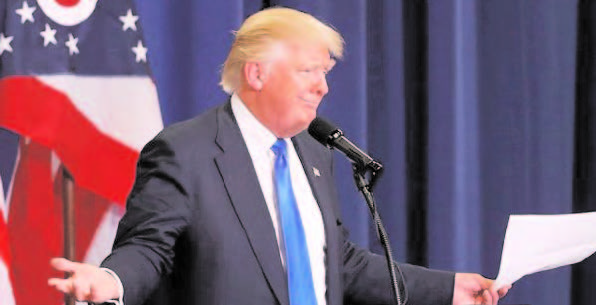
    WASHINGTON (TIP): Calling China the “worst abuser” and “currency manipulator”, Republican presidential candidate Donald Trump warned that if elected+ , he will identify all countries violating trade agreements and take serious actions against them.

    The 70-year-old real estate tycoon-turned-politician said he will instruct the US trade representative to bring trade cases against China, which is also building a “massive military fortress” in the strategic South China Sea.

    Trump said he would direct the secretary of commerce to identify every violation of trade agreements+ that a foreign country is currently using to harm American workers.

    ” China+ is the worst abuser,” Trump said. “They have no respect for our country+ . They have no respect for our leadership. And we don’t blame them, we don’t blame them. We want to put ourselves in that position very soon. You watch. And they’ll like us better than they do now,” he said.

    “They don’t like us. They’re building a massive military fortress in the middle of the South China Sea that they’re not allowed to do.

    “They’re doing that, and yet, they’re ripping us economically. We have tremendous power over China —economic power — tremendous. We don’t do anything. They build and build and build, and they didn’t get environmental impact statements when they decided to rip up the sea,” he told supporters at an election rally in Tampa, Florida.

    “They said — Sunday night, let’s build. Monday morning, they were digging. A little different than our country, wouldn’t you say? A little different. A little bit different,” he alleged.

    “I don’t think our politicians even know what’s going on. And they will stop or we’re going to take in one hell of a lot of money, I’ll tell you that. I’m going to instruct the United States trade representative to bring trade cases against China, both in this country and at the World Trade Organisation (WTO),” Trump said.

    Trump further said he would instruct his treasury secretary to label China a “currency manipulator,” the greatest in the world”.

    “Any country that devalues their currency in order to take unfair advantage of the US and all of its companies who can’t compete will face tariffs and taxes to stop the cheating. And when they see that, they will stop the cheating,” he said.

    “China’s unfair subsidy and its behaviour is prohibited by the terms of its entrance into the WTO, and I intend to enforce our rules. That’s all. Very simple,” he added.

  • China expresses concern over India’s plan to deploy BrahMos on border

    China expresses concern over India’s plan to deploy BrahMos on border

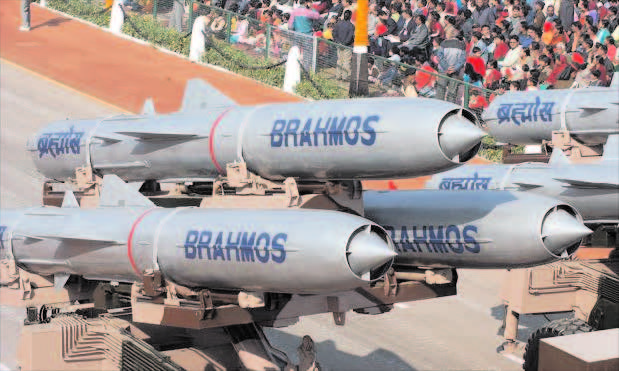
    BEIJING (TIP): China’s defence ministry said on Thursday that it hoped India could put more efforts into regional peace and stability rather than the opposite, in response to Indian plans to put advanced cruise missiles+ along the China border.

    Indian military officials say the plan is to equip regiments deployed at the China border+ with the BrahMos missile+ , made under an India-Russian joint venture, as part of ongoing efforts to build up military and civilian infrastructure capabilities there.

    The two nuclear-armed neighbours have been moving to gradually ease long-existing tensions between them.

    Leaders of Asia’s two giants pledged last year to cool a festering border dispute, which dates back to a brief border war in 1962, though the disagreement remains unresolved.

    Asked about the missile plans at a monthly news briefing, Chinese defence ministry spokesman Wu Qian said maintaining peace and stability in the border region was an “important consensus” reached by both countries.

    “We hope that the Indian side can do more to benefit peace and stability along the border and in the region, rather than the opposite,” Wu said, without elaborating.

    China lays claim to more than 90,000 sq km (35,000 sq miles) ruled by New Delhi in the eastern sector of the Himalayas. India says China occupies 38,000 sq km (14,600 sq miles) of its territory on the Aksai Chin plateau in the west.India is also suspicious of China’s support for its arch-rival, Pakistan.

    Prime Minister Narendra Modi will meet Chinese President Xi Jinping when he visits China next month to attend the G20 summit+ .

    Modi government has ordered BrahMos Aerospace, which produces the missiles, to accelerate sales to a list of five countries topped by Vietnam, according to a government note viewed by Reuters and previously unreported.Modi visits Vietnam, which is embroiled in a dispute over the South China Sea with Beijing, before arriving in China.

  • EB-5 Investor Program Better Alternative than F-1 Student Visa for Indian Nationals Pursuing Entry into U.S. for Higher Education

    EB-5 Investor Program Better Alternative than F-1 Student Visa for Indian Nationals Pursuing Entry into U.S. for Higher Education

    (New York, NY – August 25, 2016) Western Energy Regional Center, a U.S. Citizenship and Immigration Services (USCIS)-approved EB-5 Regional Center, will host informational seminars in Mumbai, Pune and New Delhi, India, in October to educate high-net-worth (HNW) Indian families about the benefits of the EB-5 investor program versus an F-1 student visa for children who wish to attend an American college or university.

    unnamedDesigned for high-net-worth families, the EB-5 Program has been in effect since 1990. Through EB-5, immigrants to the U.S. invest $500,000 (approximately Rupees 3.35 crores) into a U.S. Government-approved Regional Center, such as Western Energy. The program provides permanent residency to investors and their immediate family. The EB-5 Investor will receive all of the same benefits as anyone who is a U.S. citizen, and the family will retain these benefits and opportunities for all succeeding generations.

    Western Energy’s research into HNW Indian families has revealed the following:

    They do not want the uncertainty associated with visa lotteries; they want certainty of their immigration status in advance.

    They do not like paying the inflated fees charged to foreign students by U.S. universities.
    They do not want their children to have work restrictions after they graduate. The requirement to be “sponsored” by their employer after graduation causes a competitive disadvantage for top positions. The need for sponsorship also reduces the opportunity to pursue entrepreneurial opportunities.

    They are happy to participate in immigrant investor programs, but they want to invest low-risk products that aim to return their invested capital, plus interest, over the same time period as their children are studying in the U.S.

    Gregory Neher, CEO of Western Energy Regional Center, claims their EB-5 Investor Visa Program is a superior alternative to the traditional F-1 student visa for the following reasons:

    It provides a U.S. Green Card for participants and their immediate family (including all children under 21 years of age). This means parents and children will all become permanent U.S. residents at the same time.

    Children of families holding EB-5 visas pay lower, in-country college tuition.

    College graduates in the U.S. will be permanent residents, so they do not need to be sponsored by their employer, putting them on the same playing field as American citizens and providing them with a competitive advantage over other international students.
    The investment provides investors with first lien position, and they get paid back first at maturity.

    Neher also said: “As permanent residents, EB-5 families keep the option of permanently resettling in the U.S., splitting time between the U.S. and their current home or using their new Green Card for occasional visits. In all cases, the EB-5 visa is far more flexible and robust than other options. In addition, on August 1, 2016, the EB-1 visa, formerly a popular choice for Indians immigrating to America, has been paused for Indian Nationals.”

    Currently, 10,000 visas are allocated annually to EB-5 investors. Between 2009 and 2013, 162 EB-5 visas were issued to Indians. “Compared to the number of high-net-worth Indians (HNIs) in India, there is a huge opportunity here. China currently tops the list, and we now expect many more HNIs to go the EB-5 route,” Neher said.

    In addition to many direct relationships with HNW families, Western Regional also works closely with chartered accountants, lawyers and wealth managers who have close relationships with HNIs. “Awareness of the EB-5 program is really growing, since it is the cleanest path for Indian families to access new education, immigration and citizenship options,” Neher reiterated.

    For more information about the company’s upcoming information seminars in India, please visit www.wercregionalcenter.com or contact Reema Rasool via email at reema@wercregionalcenter.com.

  • China set to open world’s highest and longest glass bridge

    China set to open world’s highest and longest glass bridge

    DALLAS (TIP): Completed in December, the 430m-long bridge cost$3.4m (£2.6m) to build and stands 300m above ground, state news agency Xinhua reported. It has been paved with 99 panes of three-layered transparent glass. And according to officials, the 6m-wide bridge, designed by Israeli architect Haim Dotan – has already set world records for its architecture and construction.

    Glass bridges in China have been a popular craze for the daring photo opportunities they provide. Events like mass yoga displays and even weddings, have been staged on several such bridges.

    One couple celebrated their special day by dangling in mid-air from a bridge in Pingjiang, also located in Hunan province. A newly married couple is lowered from a glass bridge during a promotional event in Pingjiang, Hunan province.

    It’s not everyone’s idea of a special day – but this couple staged a daring shoot But how safe will it be?

    No doubt this will be the crucial question on everyone’s minds, as the city gears up for the bridge’s official opening.

    But officials have staged high-profile events to try and reassure the public of the bridge’s safety. Officials sent in sledgehammers and even drove a car, filled with passengers, across the bridge earlier this year.

    Park officials have said a maximum of 8,000 visitors will be allowed on the bridge each day.

    So those wanting to add another thrill to their bucket list are strongly encouraged to book their slots in advance.

  • Protesters to be charged under  anti-terrorism laws: Pakistan on China-Pakistan Economic Corridor row

    Protesters to be charged under anti-terrorism laws: Pakistan on China-Pakistan Economic Corridor row

    ISLAMABAD (TIP): Pakistan’s minister for planning, reforms and development Ahsan Iqbal has said that those protesting against the China-Pakistan Economic Corridor+ (CPEC) will be charged under anti-terrorism laws.

    Quoting minister Ahsan Iqbal, Gilgit-Baltistan National Congress director Senge Hasnan Sering tweeted, “Those protesting in #GilgitBaltistan against China led #CPEC will be charged under anti-terrorism laws: Minister Dr Iqbal.”

    In recent months, Gilgit-Baltistan in Pakistan-occupied Kashmir(Pok) has seen a series of protests+ against the China-Pakistan Economic Corridor+ (CPEC), leading a severe crackdown by the Pakistani security forces.

    The people of Gilgit-Baltistan believe that the CPEC will exploit its water resources which would only benefit Pakistan. The locals are also worried about the increasing Chinese footprint in the region.

    The leadership of Gilgit-Baltistan has been objecting to the controversial corridor for months.

    The Gilgit-Baltistan based Awami Action Committee (AAC) had earlier called for an indefinite shutdown across the region, saying they will not be holding down their protest unless and until Pakistan withdraws its security forces and also rollbacks the CPEC.

    AAC, an alliance of around 23 religious, nationalist and political groups, also demanded a complete withdrawal of the Pakistani forces from its soil. The alliance is also against the lack of share for Gilgit-Baltistan in the CPEC. The strike call came days after a powerful senate committee, headed by Senator Taj Haider, visited the region to review the CPEC projects.

    The committee members, who met several delegations during their three-day stay in Gilgit-Baltistan, confirmed that the region had no share in the CPEC.

    Last week, the Pakistani Army arrested more than 500 young men in Gilgit-Baltistan who had come on to the streets protesting against them and asking them to vacate the occupation of the region.

    So far, hundreds, including Gilgit’s top political activist Baba Jan, has been arrested.

    Delays in CPEC

    Due to delays in the development of CPEC, the authorities in Beijing had last month suggested Islamabad to formally rope in the Pakistan Army+ to ensure smooth execution of the project.

    Security official privy to the development said the Chinese were “unhappy with the overall management of the project, particularly the involvement of various ministries”, which were causing unnecessary delays.

    They envisioned the creation of a separate ministry or authority to deal exclusively with the CPEC. The project is currently being overseen by a special section set up at the Prime Minister’s Office – with Iqbal’s ministry of planning and development serving as the focal ministry.

    The army has already created a special division to provide security cover to the CPEC-related projects. Earlier in January this year, China had openly expressed its concern over the lack of consensus on the CPEC across the political spectrum and the Chinese embassy in Islamabad had urged political leaders to “address their differences in order to create favourable conditions” for the completion of the project. The CPEC actually refers to various major infrastructure works currently underway in Pakistan, intended to link China’s Xinjiang province to Gwadar deep sea port close to Islamabad’s border with Iran.

    Apart from infrastructure, it seeks to widen and deepen economic ties with its “all-weather friend” China. The Chinese firms will invest just under $46 billion in the project over six years.

    However, reports also suggest that several projects have plagued the country due to stalled development, poor infrastructure and lost investment. (ANI)

  • China blames Taiwan for suspended communications channel

    China blames Taiwan for suspended communications channel

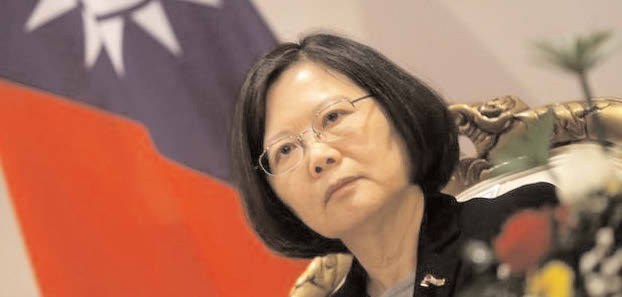
    BEIJING (TIP): China said on August 18 that the suspension of a communication channel with Taiwan would have a large impact on relations between the two sides, but blamed the self-ruled island for the breakdown.

    China said in June that it had stopped a communication mechanism with Taiwan because of the refusal of the island’s new government to recognise the “one China” principle.

    China, which regards Taiwan as wayward province, is deeply suspicious of Taiwan President Tsai Ing-wen, who took office in May, as it suspects she will push for formal independence.

    Tsai, who heads the independence-leaning Democratic Progressive Party, says she wants to maintain the status quo with China and is committed to ensuring peace.

    “The two sides currently cannot engage in talks on new issues, or come to new agreements. This is inconvenient for handling some sensitive cross-Strait issues,” Zhang Zhijun, the head of China’s Taiwan Affairs Office, said, according to the state-run China News Service, referring to the narrow stretch of water between the island and the mainland.

    “But the responsibility for this does not lie with mainland,” Zhang told reporters in the Chinese city of Hangzhou, according to the news agency.

    Zhang said that economic cooperation had not ceased and that he hoped cultural and youth exchanges would not be affected by politics.

    China has insisted Tsai recognise the “1992 consensus” reached between China’s Communists and Taiwan’s then-ruling Nationalists, under which both agreed there is only one China, with each having their own interpretation of what that means.

    The regular communication mechanism had been ushered in following a rapid improvement of ties under the rule of Taiwan’s then-president Ma Ying-jeou, who took office in 2008 and signed a series of landmark trade and tourism deals with China.

    Defeated Nationalist forces fled to Taiwan after a civil war with the Communists in 1949, which has never formally ended. China has also never renounced the use of force to bring Taiwan under its control. (PTI)

  • URINE THERAPY GAINING POPULARITY IN CHINA DESPITE BAN

    URINE THERAPY GAINING POPULARITY IN CHINA DESPITE BAN

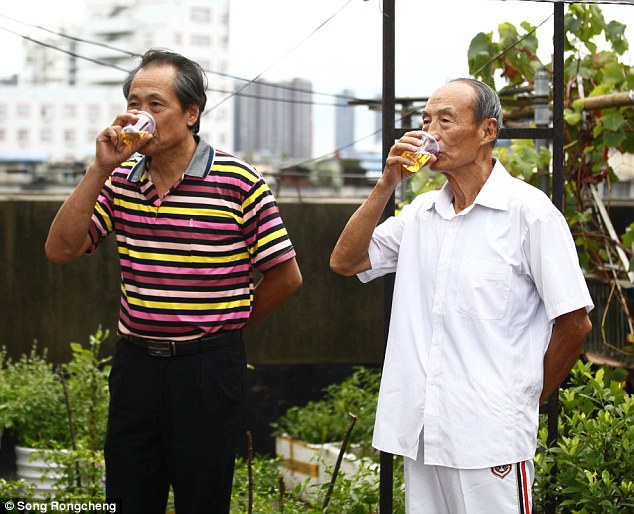
    BEIJING (TIP) : The Chinese government banned urine therapy last March, but there are signs that the number of its practitioners are growing, state media said.

    The concept of drinking one’s own urine as a medical treatment is being popularised through the Internet by Hong Kong registered China Urine Therapy Association (CUTA). It was declared illegal by the Chinese government in March of this year, but curiosity about the treatment seems to be growing. The government has also closed down CUTA’s website to curb the spread of its messages regarding the health benefits of urine therapy.

    “Legal or illegal is acknowledged by the country but it depends on whether people trust you or not. This is a non-governmental organization,” state media quoted the head of CUTA giving only his surname as Xue, as saying. CUTA is affiliated to the China Public Welfare Association, which has also been declared as illegal by China’s ministry of civil affairs.

    State run People’s Daily estimated that curiousity value about urine therapy has expanded CUTA’s membership to 4,000 despite the government ban. It is using social media including QQ group chats, blogs and Internet videos besides holding worships to expound on the efficacy of drinking urine.

    There are signs that the therapy is drawing widespread interest although it has become difficult for people to become its member after the official ban.

    One believer in urine therapy, Liu Zhaoxiang, claims that he lives only on one glass of mangosteen fruit juice at dusk besides drinking his own urine.

    Urine therapy is not thought to have any scientific value in either traditional Chinese medicine or Western medicine, State media said. (TNN)

  • MOODY’S RETAINS INDIA GDP FORECAST, UPS CHINA’S ESTIMATES

    MOODY’S RETAINS INDIA GDP FORECAST, UPS CHINA’S ESTIMATES

    NEW DELHI (TIP): Moody’s Investors Service has retained India’s growth forecast at 7.5 per cent for 2016 but revised upwards estimates for China to 6.6 per cent citing strong fiscal and monetary support.

    In its latest assessment of the global economy, Moody’s Investors Service said the outlook for emerging markets economies has stabilised but outlined the policy changes post the US presidential election in November as the most immediate downside risks to the global economic outlook.

    Moody’s now expects China to grow at the rate of 6.6 per cent and 6.3 per cent in 2016 and 2017, respectively as compared to the previous forecast of 6.3 per cent and 6.1 per cent, with the higher growth rate being driven by significant fiscal and monetary policy support,” it said in a statement.

    As regards India, it said: “Our growth expectations for India, Indonesia, Korea and Saudi Arabia are unchanged from our previous outlook publication in May.”

    In its May ‘Global Macro Outlook 2016-17’ Moody’s had said that India’s growth will pick up slightly, climbing to 7.5 per cent in 2016 and 2017, from 7.3 per cent in 2015.

    The US-based agency said emerging markets have stabilised on account of the modest recovery in commodity prices, better capital flows and a better near-term outlook for growth in China.

    Moody’s said the modest upwards revision in China growth would have minimal impact on its forecasts for the rest of the world as imports to China continue to fall. It, however, said that medium-term downside risks to China’s growth outlook persist, especially if the reduced efficacy of policy support over time becomes apparent.

    “Headwinds to emerging markets have moderated, driven by the economic stabilisation in China, the modest recovery in commodity prices, and the return of capital flows; however, we expect the US Federal Reserve to resume its interest rate tightening cycle at the end of this year,” Moody’s said.

    A change in US policy stance that contributes to a weakening of the current global trade and security architecture could have a detrimental impact on global confidence and growth, and would prompt us to revise our forecasts, Moody’s said.

    “The political and geopolitical risks, including a rise in nationalist and protectionist policies, are among the downside risks to global growth. In this context, the most immediate risk is a potential renegotiation of global trade pacts and security alliances, after this year’s US presidential election,” Moody’s added. Source: PTI

  • Jenifer Rajkumar hopes to find a place in N.Y. State Assembly

    Jenifer Rajkumar hopes to find a place in N.Y. State Assembly

    Jennifer Rajkumar, an attorney at Sanford Heisler Kimpel LLP and a district leader on the West Side, New York, is hoping to win a seat to the New York State Assembly.

    The young Indian American, who had in 2013 run unsuccessfully against City Council member Margaret Chin, had pulled in more than 40% of the vote share. Jennifer is running for New York state Assembly from Manhattan’s 65th District, fighting a tough battle to win in the Sept. 13 election to fill the seat vacated by convicted former state Assembly Speaker Sheldon Silver.

    Democratic District Leader Jenifer Rajkumar, 33, is running against 5 other candidates, one of them elected earlier this year to finish Silver’s remaining term. Rajkumar said she would be a candidate of change, someone dedicated to reclaiming the assembly seat for the people in the aftermath of the Sheldon Silver corruption scandal. “For too long.” she asserted, “Tammany Hall and corrupt machine politics has pushed our most vulnerable out of mainstream society, into the darkest corners of the city.”

    Too many people have been pushed out of their homes, out of higher education and out of decent jobs, she argued. “It is time to dismantle cronyism and the pay to play politics that benefits a small few at the expense of many.”

    Rajkumar said she would be a proponent of “community-minded leadership.” She said the activism of parents at P.S. 137 on the Lower East Side, who created their own after-school program, inspired her. Rajkumar also highlighted Chinatown housing protests, which she has joined, by a group called the Coalition to Protect Chinatown and the Lower East Side. She singled out the Grand Street Cooperatives, saying, “I see people gathered here today who have banded together to make sure the co-ops honor their history and the cooperative spirit and honor the principles of transparency.”

    Rajkumar rattled off a number of priorities, including: saving the Elizabeth Street Garden from development, making sure repairs are made in NYCHA buildings and pushing for meaningful ethics reform.

    Other contenders in September are: Yuh-Line Niou, who ran on the Working Families Party line in the recent special election; Paul Newell, a district leader who lives at Masaryk Towers; Community Board 3 Chairperson Gigi Li, local businessman Don Lee and Lower East Side resident Christopher Marte.

    On Aug. 8, Rajkumar’s campaign announced an unusual endorsement from former Florida Governor Charlie Crist, whose traction in a New York state Assembly district is doubtful. Crist, a Republican turned Democrat, running for the U.S. Congress and endorsed by President Obama, appealed to the many “snowbirds” in Florida who hail from New York’s 65th District, to support Rajkumar. “Snowbirds” refers to the mostly senior voters who escape to Florida’s warmer climes every winter.

    “This will, without a doubt, resonate,” Michael Tobman, Rajkumar’s campaign spokesperson, told Desi Talk about Crist’s endorsement, which he said, is “a clear recognition of Jenifer’s independence, sincerity, and accomplishments from a dedicated public servant who has proven himself to be extremely thoughtful.”

    According to a local news outlet, thelodownny.com, Rajkumar came out on top in terms of cash in hand for her campaign in the July 31 financial report, grossing more than $204,000 in contrast to the remaining candidates, all of whom had below $100,000.

    According to Statisticalatlas.com, 42.3 percent of the population of the 65th District is of Asian origin, mostly Chinese, 33.8 percent White, around 15.7 percent Latino, and 5.2 percent Black, belonging to upper and lower income groups. Of the total “foreign-born” population, only 2.1 percent are from India, and more than 50 percent from China.

  • Indians Across The World Mark Independence Day With Fervor

    Indians Across The World Mark Independence Day With Fervor

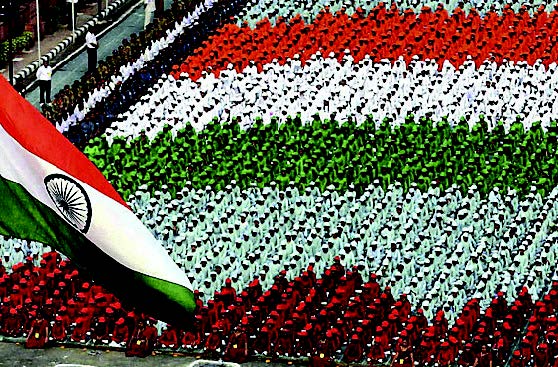
    BEIJING/WASHINGTON: Soaked in patriotism, hundreds of Indians today proudly marked the country’s 70th Independence Day, as the national flag fluttered and the national anthem reverberated at Indian missions across the world.

    Indians in countries like China, the US, Thailand and Singapore joined people in India to celebrate the day with recital of patriotic songs and dance performances representing the diverse ethnicity of India.

    In Beijing, Indian Ambassador Vijay Gokhale hoisted the tricolour in the embassy premises at a function that was attended by members of the Indian community.

    A large of number of Indian professionals besides embassy staff took part in the flag hoisting ceremony along with their families.

    Mr Gokhale also read out President Pranab Mukherjee’s address to the nation followed by recital of patriotic songs. In Shanghai, Consulate General of India Prakash Gupta hosted the celebrations. Gupta unfurled the tricolour besides reading out excerpts from the President’s address. A similar celebration was held at the Indian Consulate in Guangzhou led by Consulate General Y K Sailas Thangal.

    In the US, the Independence Day was celebrated on a large scale in Fremont in California and Edison in New Jersey where thousands of people attended the event amid a colorful cultural extravaganza.

    In cities like Dallas, Houston, Chicago, Orlando and Minneapolis, community organisations held cultural events over the weekend to celebrate the Independence Day. The patriotic fervour also gripped Indian missions across Southeast Asia, as hundreds of Indian nationals, ethnic Indians and India lovers gathered.

    In Bangkok, Indian Ambassador Bhawant Singh Bishnoi said, “2016 has been a most significant year for our bilateral relationships”.

    Mr Bishnoi, in his speech to over 500 people gathered at the embassy premises, said Thailand remains one of India’s “closest” friends.

    “People to people linkages are one of the most important aspects of our bilateral relationships. Central to this is the role played by the Indian community,” he said and commended the significant contribution by ethnic Indians and Indian nationals to the economic and social development of Thailand.

    Indian Embassies, High Commissions and Consulates echoed with melodious strains of the national anthem as children and the hundreds of Indians joined to sing patriotic songs in Thailand, Vietnam, Singapore, Malaysia, Yangon, Laos, Cambodia, the Philippines, Indonesia and Brunei.

    In Singapore, India’s High Commissioner Vijay Thakur Singh celebrated the day, reading out President Mukherjee’s Independence Day message to some 600 Indians.

    Students from local Indian schools also sang patriotic songs and staged dance performances in a cultural show. In a congratulatory message on the Independence Day of India, Singaporean President Tony Tan Keng Yam reaffirmed strong bilateral relations and underlined that “relations between Singapore and India remain strong and will grow despite challenges in the global economy”.

    “As our people-to-people relations flourish, I am delighted by the excellent progress in bilateral projects and initiatives on various fronts including trade, skills development, defence cooperation, and Smart Cities development,” said Mr Tan.

    In Kuala Lumpur, High Commissioner TS Tirumurti hoisted the flag at India House. About 350 people attended the ceremony that also witnessed a Carnatic singing performance. The High Commissioner also flagged off a Malaysia- Thailand-Myanmar-India car rally by Vinayak Mission that will cover 46,000 Kms and end in Salem Tamil Nadu.

    In Hanoi, around 250 members of the Indian community and friends of India attended the hoisting of the flag by Ambassador P Harish, who also read out the President’s address.

  • India’s Independence Day belongs to all Indians and all people who wish India well

    India’s Independence Day belongs to all Indians and all people who wish India well

    As an American proud of my Indian ancestry, and my name unchanged, I am more than merely delighted that these United States and India have found a durable rhythmic tune, geopolitical and strategic in nature, bound by common notes and dreams of our bilateral citizenry in their enlightened self-interest-based pursuit of happiness guaranteed by separated powers regimes.

    2015 is special for many reasons. We overcame the unexpected bilateral pain that became known as the Devyani incident with Hours of Immunity successfully negotiated by FM Salman Khurshid with Secretary John Kerry, to then witness PM Modi rock Madison Square Garden. Later, as I wished, President Barack Obama held a Chai Summit in India. But, then it got better. President Obama did for Indian-Americans and India what he did for Chinese-Americans and China – as he had appointed Gov. Gary Locke as our ambassador to China in 2011, in the past year he appointed Senate Leader Harry Reid’s right hand Richard Rahul Verma as our ambassador to India. For good measure, he also appointed talented diplomat Atul Keshap as our ambassador to Sri Lanka. Recently, Nisha Desai Biswal, Assistant Secretary of State for Central and South Asia, visited India’s Consulate General in New York to personally plant eternal-goodwill where Devyani used to be DCG. Such an act serves to repair even frayed feelings and is worthy geometrically – as there is an implied promise that all will be well between our two nations.

    That India produced a man such as Dr. Kalam – who rose to be India’s 11th President – an Indian Muslim – and who was so loved by Indians and who so loved India -seems to me to be a clarion call for all good people everywhere to stand up to religious oppression everywhere with humility-based good deeds that serve their nation above all else, and with respect for all faiths. Earlier, the world experienced the slaughter and splatter of precious ink at Charlie Hebdo – the home of cherished Voltaire who prodded many a monarch to better serve the public good – and Paris became Ground Zero for unity of all nations’ leaders walking arm-in-arm seeking tolerance of free speech as a “core” right and obligation of global citizenship. Dr. Kalam, methinks, singlehandedly well honored Mahatma Gandhi’s love for Muslim Indians, Christian Indians, Buddhist Indians, Jewish Indians and inter alia, Hindu Indians. 68 years ago Pandit Jawaharlal Nehru rose to say these immortal words: “Long years ago we made a tryst with destiny, and now the time comes when we shall redeem our pledge, not wholly or in full measure, but very substantially. At the stroke of the midnight hour, when the world sleeps, India will awake to life and freedom. A moment comes, which comes but rarely in history, when we step out from the old to the new, when an age ends, and when the soul of a nation, long suppressed, finds utterance.”

    Dr. Kalam answered India’s Tryst With Destiny – excellence with humility, nation above religion, peace above war. India belongs to everyday Indians who recall the sacrifices made by so many to be a free nation, and live their lives as homage to those who sacrificed so much.

    That Indian Tea played a starring role in the Boston Tea party of 1773, and today India and United States find themselves in a vortex that cannot be denied – of unity of interest – one may be forgiven to say it was so decreed even by natural law without the need of being a Calvinist. May we continue to be worthy of God’s grace at the stroke of the midnight hour and every hour thereafter.”

  • Euro 2016 boots Adidas sales higher

    Euro 2016 boots Adidas sales higher

    BERLIN (TIP): A year of high-profile sports sponsorship has so far paid off for Adidas, with sales at its core brand up 25 percent thanks to events including the Euro 2016 football tournament.

    Higher sales of items branded with the Bavarian firm’s famous three stripes were “mostly due to two-digit increases in the important categories of running, football and training, as well as Adidas Originals and Adidas neo,” two fashion branches, the firm said in a statement.

    “We’re inspiring our consumers with one-of-a-kind experiences,” chief executive Herbert Hainer said, “and that will continue onwards.”

    While the final in Paris pitted two Nike-sponsored teams, France and Portugal, against one another, Adidas markings were visible on other strong performers including the German Mannschaft and the Spanish national team.

    Following the boost from Euro 2016, Adidas-sponsored athletes and teams will be in the spotlight again at the Rio Olympics from August 6.

    Adidas saw double-digit sales increases in several global markets in the second quarter, with a 32 percent gain in north America and 30 percent each in western Europe and China.

    Sales grew more slowly in Russia and the Commonwealth of Independent States at just five percent — slightly allaying fears of a blow to the brand from Russia’s economic slowdown.

    Across the whole group, revenues increased between April and June by 13 percent to 4.4 billion euros ($4.9 billion), Adidas reported in preliminary results released at the end of July.

    Adidas doubled its net profits over the same period in 2015 to 291 million euros.

    The strong result in the second quarter was partly down to Adidas breaking off its sponsorship of London football club Chelsea, bringing in estimated savings of between 50 and 100 million euros.

    Two of the Adidas group’s other brands, Reebok and golf supplier TaylorMade, each reported seven percent growth in the second quarter.

    Adidas announced in May that it would “actively seek a buyer” for TaylorMade as it suffered poor performance —preferring instead to focus on its own Adidas Golf marque.

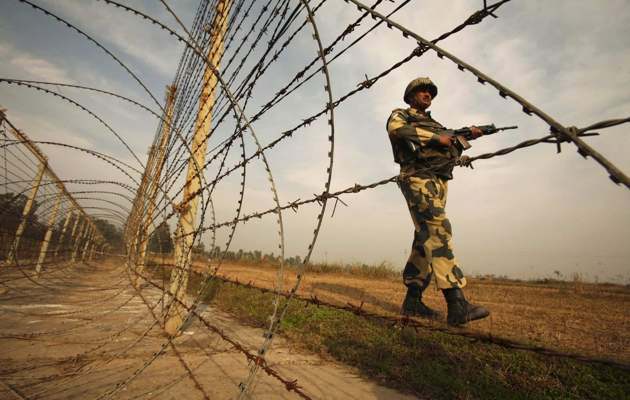
  • China says its troops did not cross Ladakh border

    China says its troops did not cross Ladakh border

    BEIJING (TIP): China’s defence ministry on July 28 said that the country’s soldiers have not transgressed India’s borders. This was in response to reports in India about incursions by Chinese troops at the Ladakh border.

    The Chinese troops “always conducted activities on the Chinese side of Line of Actual Control. We are committed to maintain peace and stability along the China-India border,” ministry spokesman Yang Yujun said.

    Yang said China’s defence forces “always abide by relevant agreements signed between the two countries”. He said that the two countries are “neighbours, partners not competitors or enemies”.

    People of both countries have a “common aspiration” to maintain peace stability along the border”. “We hope that Indian side can work in the same direction as the Chinese side and implement the census reached between the leaders of the two countries and maintain peace and tranquillity along the China-India border”, Yang said.

    (AP)