Tag: China

  • INDIA’S FOREIGN DEBT-GDP RATIO LOWEST AMONG 83 EMS

    INDIA’S FOREIGN DEBT-GDP RATIO LOWEST AMONG 83 EMS

    MUMBAI (TIP): At 23% in 2015, India had one of the lowest foreign debt-to-GDP ratios among 83 emerging market (EM) countries, although it had risen from 17% in 2005. Even among the Asian countries covered in an analysis by global ratings major Moody’s Investors Service, compared to an average debt-to-GDP ratio of 47%, India’s was less than half that number.

    China’s external debt-to-GDP ratio is still the second-lowest globally at 13% of GDP in 2015. The lowest is Nigeria with 3.3%.

    According to the report, India experienced the second largest increase in external debt between 2010 and 2015. “India had $474 billion in external debt as of 2015, representing 16% of the Asia-Pacific region’s total debt. India’s external debt has grown two to three times slower than China’s, at a five-year annual average rate of 8.4% and a 10-year annual average rate of 13.4%.

    As a result, the external debt-to-GDP ratio in India has risen from 17% in 2005 to 23%in 2015, but is still one of the lowest globally,” it noted. The analysis also found that the BRIC nations block owns 37% of all emerging market external debt. In dollar terms, as of end-2015, China represented 17% of total emerging market external debt, Brazil 8%, Russia 6%, and India another 6%.

  • China’s Panchen Lama carries out religious rite in Tibet, first in 50 years

    China’s Panchen Lama carries out religious rite in Tibet, first in 50 years

    BEIJING (TIP): A youth named by China as the second-highest figure in Tibetan Buddhism, but reviled as a fake by many Tibetans, began an important Buddhist rite on July 21, the first time in 50 years it has happened in Tibet, state media said.

    Although officially atheist, China selected Gyaltsen Norbu as the 11th Panchen Lama in 1995 in a drive to win the hearts and minds of Tibetans.

    Tibet’s current spiritual leader, the Dalai Lama, whom Beijing brands a dangerous separatist, had announced his own choice of a six-year-old boy, but he was taken away by authorities and has since vanished from public view.

    The Kalachakra ritual is an esoteric but for Buddhists very important rite for activating dormant enlightenment, and has not been carried out in what China calls the Tibet Autonomous Region for half a century.

    The Dalai Lama, who fled his homeland after an abortive uprising against Chinese rule in 1959 and lives in exile in India, has carried out the rite overseas.

    Activists say China has violently tried to stamp out religious freedom and culture in Tibet, which remains under heavy security. China rejects the criticism, saying its rule has ended serfdom and brought development to a backward region.

    The official Xinhua news agency said China’s Panchen Lama had begun the ritual at the Tashi Lhunpo Monastery in Shigatse, the Panchen Lama’s traditional seat.

    Monks from the monastery would join those from Labrang, another important seat of Tibetan Buddhist in Gansu province, for the four-day event, the report said.

    About 50,000 Buddhists were expected to attend, it said.

    China has gradually exposed its Panchen Lama in public roles in the hope he will achieve the respect commanded by the Dalai Lama among Tibetans and globally, and in 2012 he made his first trip outside mainland China when he visited Hong Kong.

  • China’s Clear Message to India

    China’s Clear Message to India

    On July 19, the Chinese Foreign Ministry spokesman dropped his usual reticence to unilaterally comment on the escalating crisis within the Kashmir Valley, in which nearly 50 people have been killed in the violence so far following the death of Hizbul Mujahideen commander Burhan Wani.

    “China has taken note of relevant reports. We are equally concerned about the casualties in the clash, and hope that the relevant incident will be handled properly,” Chinese Foreign Ministry spokesman Lu Kang said in remarks posted on the Foreign Ministry website.

    So as Chinese State Councillor and Special Representative on the Sino-Indian boundary dispute Yang Jiechi comes to Delhi next month to take forward the 20th round of talks with National Security Advisor Ajit Doval, both sides are hoping they will separate the ongoing bitterness from the business on the ground.

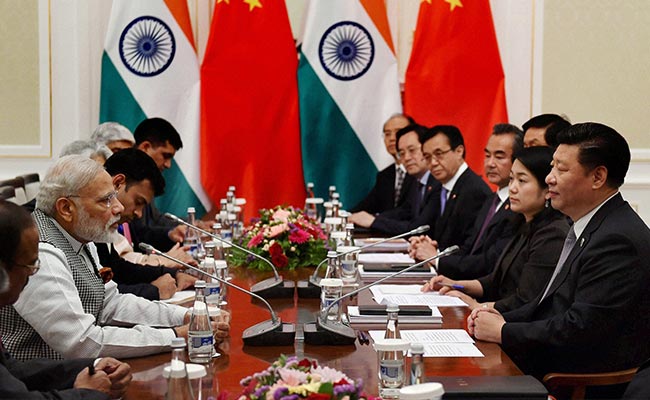
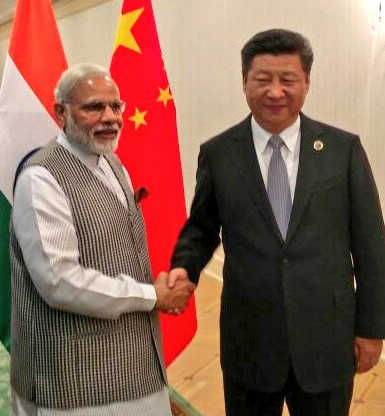
    Prime Minister of India Narendra Modi and Chinese President Xi Jinping met in Tashkent in June this year Photo courtesy PTI
    Prime Minister of India Narendra Modi and Chinese President Xi Jinping met in Tashkent in June this year
    Photo courtesy PTI

    Certainly, Delhi would like the Chinese to drop its objections to its application to become a member of the Nuclear Suppliers Group. The US has promised to hold a plenary meeting of the NSG to reconsider India’s application before the year is out, and Delhi doesn’t want the Chinese to play spoilsport again.

    But the truth is that the Indian establishment still doesn’t fully understand the length to which the Chinese are prepared to go to deny India membership of the NSG. Not only does Beijing not want to see Delhi on the same page as itself, because it believes it is a much more powerful nation compared to India – certainly, its economy is five times larger – it also wants to be seen as a big power which is ready to shape the world in its own image.

    In this image, Pakistan is not only a special friend and all-weather ally, it is also chief lackey.

    Make no mistake, China’s refusal of India’s application at the NSG and its commentary on the Kashmir dispute are being made for two reasons. First, Beijing wants an acknowledgement that it is a ranking Asian power, and second, it wants India back on the same plane as Pakistan.

    If the world has to hyphenate two Asian countries, believe the Chinese, the hyphenation has to be between India and Pakistan, not between Delhi and Beijing. The Americans are trying to sell India the latter dream, say Chinese analysts. They hope to debunk this as soon as possible.

    That is why China is laying such store by “procedure” at the NSG – even when it is ready to trash the recent judgement of The Hague-based Permanent Court of Arbitration which debunked Chinese claims to the South China Sea.

    The need to be seen as a big maritime and land power is driving President Xi Jinping’s policy. Senior Chinese Communist party leaders such as the aforesaid Yang Jiechi and former state councilor in charge of foreign affairs in the Central Committee (and also a former Special Representative on the border talks) Dai Bingguo have been fielded in recent weeks to explain to worldwide audiences why Beijing will not abide by the Arbitration verdict in favor of the Philippines.

    In fact, Beijing’s assertiveness has already frightened the Philippines and further divided ASEAN. Robert Duterte, recently elected President of the Philippines has said that he will walk back from the bitterness with China. Other ASEAN nations such as Laos and Cambodia are also willing to bend before China.

    Even South Korea, a major non-NATO ally of the US, capitulated to China’s arms control negotiator Wang Qun at the NSG plenary in Seoul last month, when Wang insisted that procedure must be followed for new applications to the NSG, such as India’s.

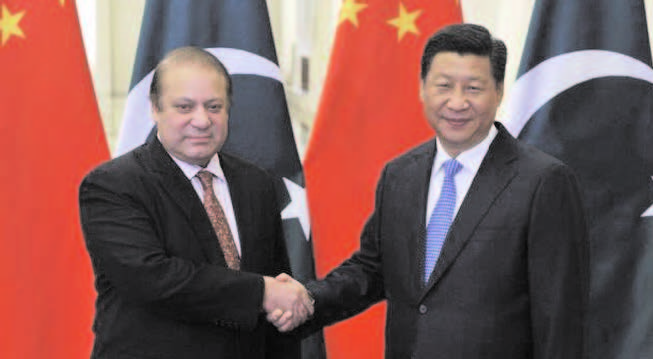
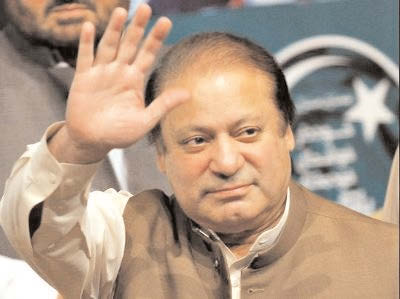
    Chinese President Xi Jinping with his Pakistan counterpart Mamoon Hussain and Prime Minister Nawaz Sharif
    Chinese President Xi Jinping with his Pakistan counterpart Mamoon Hussain and Prime Minister Nawaz Sharif

    Wang’s insistence that such “procedure” cannot be “discriminatory” means that either India must sign the Nuclear Non-Proliferation Treaty – a demand that External Affairs Minister Sushma Swaraj rejected in parliament – or that Pakistan’s application to the NSG must also be accepted as the same time as India.

    Certainly, the Chinese have recently begun to manifest a much tighter embrace with Pakistan. Islamabad has been an all-weather friend and ally for decades, but India was becoming a much larger economy, and China saw great advantages in pursuing greater opportunities for trade with India.

    But over the last few years, China’s involvement in Pakistan’s economy has grown by leaps and bounds. The China-Pakistan Economic Corridor (CPEC) is an integral part of President Xi’s beloved One Belt, One Road project, and he has promised to invest as much as $46 billion in it.

    At the same time, as Prime Minister Modi moved much closer to America – at last count becoming a major defense ally of the US – it seemed as if Delhi was joining hands with other democracies in the region to “contain” China.

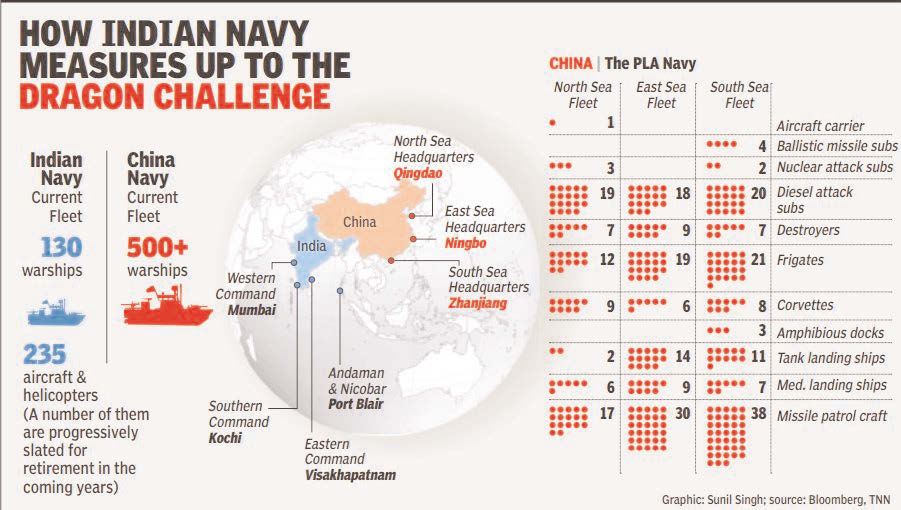
    On May 18, four ships of the Navy’s eastern fleet – including two guided-missile stealth frigates armed with supersonic anti-ship and land attack cruise missiles, a fleet tanker and a guided missile corvette – sailed towards the South China Sea and the North-Western Pacific for two and a half months. The deployment ended in June with the joint naval “Malabar” exercises off the coast of Okinawa in Japan (a US base is located there), in which the US Navy and Japanese self-defense forces also took part.

    Certainly, China’s unusual commentary on Kashmir marks a new inflection point in its relations with India. One school of thought in Beijing believes that Delhi must learn to live with China’s rising power, including with the decision to build the CPEC through Pakistan-Occupied Kashmir (PoK). After all, this school says, India has learnt to live with the Karakoram Highway that was built in the 1970s, which also passes through PoK.

    As China becomes more powerful, an ambitious faction in Communist Party circles has started believing that Beijing must get ready to play a bigger role in the resolution of the Kashmir dispute. Pakistan is already a good friend, says this school, and Aksai China is already controlled by China. Why not help resolve the Kashmir dispute too?

    Of course, Beijing knows that any mention of Kashmir will be enough to rile the Indian government – especially when Pakistan marked yesterday as “Black Day,” in an effort to commemorate the crisis in the Valley.

    As for Prime Minister Modi, he must be taught a lesson if he dares to believe that India can be equal to Asia’s foremost power. “This is China’s not-so-subtle way of putting India in its place,” said an observer of China, who spoke on the condition of anonymity.

    As Yang Jiechi wends his way to Delhi next month for boundary talks with Ajit Doval, the Indian side will certainly hope to have a heart-to-heart chat with him. It’s another matter whether or how much the Chinese leader will listen – or whether he will just smile softly as Xi Jinping did with Modi, when the latter asked him for support for India’s application to the NSG.

    (The author, Jyoti Malhotra, is a freelance journalist with special passion for dialogue and debate across South Asia)

  • US launches quiet diplomacy to ease South China Sea tensions

    US launches quiet diplomacy to ease South China Sea tensions

    WASHINGTON (TIP): The United States is using quiet diplomacy to persuade the Philippines, Indonesia, Vietnam and other Asian nations not to move aggressively to capitalize on an international court ruling that denied China’s claims to the South China Sea, several US administration officials said on July 11.

    “What we want is to quiet things down so these issues can be addressed rationally instead of emotionally,” said one official, who spoke on the condition of anonymity to describe private diplomatic messages.

    Some were sent through US embassies abroad and foreign missions in Washington, while others were conveyed directly to top officials by Defense Secretary Ash Carter, Secretary of State John Kerry and other senior officials, the sources said.

    “This is a blanket call for quiet, not some attempt to rally the region against China, which would play into a false narrative that the US is leading a coalition to contain China,” the official added.

    The effort to calm the waters following the court ruling in The Hague on Tuesday suffered a setback when Taiwan dispatched a warship to the area, with President Tsai Ing-wen telling sailors that their mission was to defend Taiwan’s maritime territory. The court ruled that while China has no historic rights to the area within its self-declared nine-dash line, Taiwan has no right to Itu Aba, also called Taiping, the largest island in the Spratlys. Taipei administers Itu Aba but the tribunal called it a “rock”, according to the legal definition. The US officials said they hoped the US diplomatic initiative would be more successful in Indonesia, which wants to send hundreds of fishermen to the Natuna Islands to assert its sovereignty over nearby areas of the South China Sea to which China says it also has claims, and in the Philippines, whose fishermen have been harassed by Chinese coast guard and naval vessels.

    Contingency plan

    However, if that effort fails, and competition escalates into confrontation, US air and naval forces are prepared to uphold freedom of maritime and air navigation in the disputed area, a defense official said on Wednesday.

    Democrat Ben Cardin of Maryland, a senior member of the Senate Foreign Relations Committee, said confrontation is less likely if the Philippines, Indonesia, Vietnam and other countries work with the United States rather than on their own.

    “I don’t think China wants a confrontation with the United States,” he told reporters. “They don’t mind a confrontation with a Vietnamese fishing boat, but they don’t want a confrontation with the United States.”

    The court ruling is expected to dominate a meeting at the end of July in Laos of the 10-member Association of Southeast Asian Nations (ASEAN), which includes the Philippines, Malaysia, Indonesia, Myanmar, Vietnam and Thailand. US secretary of state John Kerry, and his Chinese counterpart, foreign minister Wang, will attend the ministerial. Sino-American relations suffered two fresh blows on Wednesday as a congressional committee found China’s government likely hacked computers at the US Federal Deposit Insurance Corporation and the United States challenged China’s export duties on nine metals and minerals that are important to the aerospace, auto, electronics and chemical industries.

  • Chinese man to serve US prison term for military hacking

    Chinese man to serve US prison term for military hacking

    LOS ANGELES (TIP): A Chinese businessman who pleaded guilty in March to conspiring to hack into the computer networks of Boeing and other major US defence contractors was sentenced on July 12 to nearly four years in prison, prosecutors said.

    Su Bin, 51, was charged with taking part in a years-long scheme by Chinese military officers to obtain sensitive military information. In addition to the 46-month prison term, a judge in US district court in Los Angeles ordered Su to pay a $10,000 fine.

    “Su Bin’s sentence is a just punishment for his admitted role in a conspiracy with hackers from the People’s Liberation Army Air Force to illegally access and steal sensitive US military information,” John Carlin, assistant attorney general for national security, said in a statement.

    “Su assisted the Chinese military hackers in their efforts to illegally access and steal designs for cutting-edge military aircraft that are indispensable to our national defense,” the statement said.

    In an August 2014 indictment, prosecutors said Su traveled to the United States at least 10 times between 2008 and 2014 and worked with two unidentified co-conspirators based in China to steal the data. The trio were accused of stealing plans relating to the C-17 military transport plane and F-22 and F-35 fighter jets, and attempting to sell them to Chinese companies.

    According to prosecutors, in pleading guilty Su admitted sending emails to his co-conspirators telling them which persons, companies and technologies to target with their hacking and translating the stolen material from English to Chinese.

    Su admitted taking part in the crime for financial gain, prosecutors said.

    The Chinese government has repeatedly denied any involvement in hacking.

    Speaking in Beijing, Chinese foreign ministry spokesman Lu Kang repeated that the Chinese government opposes and punishes any form of hacking

    “The so-called case of Chinese soldiers being involved in stealing secrets from the United States is acting on hearsay and has ulterior motives,” Lu told reporters, without elaborating.

  • How China won the NSG membership power play

    How China won the NSG membership power play

    A disquieting feature of the Seoul setback was the diplomatic victory China scored over the US, in a forum established by the US and dominated by it for decades.

    If China could block the US here, it does raise questions about US willingness and capacity to checkmate China elsewhere – not only in the South China Sea, but also in our region.

    Washington is seeking expanded commitment from India against the rising Chinese threat in the Asia-Pacific region.

    It should normally have reasoned that if its resolve to counter China on an issue such as India’s NSG membership – which China was opposing for purely political reasons and its unflinching support for Pakistan – was seen as weak, India would have less confidence in the tenacity of America’s rebalance towards Asia.

    Business

    Washington’s public support for India’s application and China’s equally public opposition to it made the issue of India’s NSG membership an open diplomatic tussle between the US and China.

    Countries such as Austria, New Zealand, Ireland, Mexico, and Switzerland are amenable to firm US diplomacy, but were allowed to play into China’s hands and buttress its opposition by raising procedural issues.

    China was allowed to inflict a diplomatic defeat on India and on the US itself.

    China was a late entrant not only to the NPT, which it rejected as discriminatory for years, but also to the NSG, which it joined in 2004.

    For such a country to swear by the NPT and project itself as a conscientious upholder of the NSG guidelines compared to the unprincipled approach of the US is quite ironic.

    China’s nuclear relationship with Pakistan in the past – and even now -cannot withstand strict NSG scrutiny.

    The US has chosen not to confront China on this issue as other differences have higher priority in its eyes.

    Other factors have given China room for its NSG power play.

    China is expanding its nuclear sector massively. US, French, and Russian companies are constructing several nuclear power plants in the country, which makes business considerations very relevant.

    Kingpin

    PM Modi with Chinese President Xi Jinping. A handshake which did not work for India. (file photo)
    PM Modi with Chinese President Xi Jinping. A handshake which did not work for India. (file photo)

    China has been offered a stake in the UK’s Hinkley nuclear power project, which requires huge investment.

    France’s Areva has signed a number of strategic agreements with China in the nuclear sector and is now offering equity in the company to China.

    This would explain the reluctance to corner China on its nuclear cooperation with Pakistan and on India’s NSG membership.

    China has behaved as a kingpin in the NSG, and has got away with it for the moment.

    Ever since the India-US nuclear deal China has been challenging Washington’s global supremacy on non-proliferation matters.

    To balance the India-US deal, China decided to enhance its nuclear cooperation with Pakistan by contracting to build two additional reactors without going through the process of seeking an NSG exemption for its protege.

    It has deliberately tagged Pakistan’s NSG membership to that of India to show the US that it can exercise patronage on nuclear matters too – and without doing any preparatory legal work as the US did in India’s case.

    Fragile

    China deliberately fast-tracked Pakistan’s NSG membership application to derail a decision on India’s case, because it ensured that the procedural and criteria argument regarding membership of non-NPT countries became more germane.

    Through such maneuvering China wanted to expose the fragility of the US commitment on our membership, and demonstrate that the latter could not steam-roll India’s membership against China’s wishes.

    (The author is a former Foreign Secretary of India. He can be reached at sibalk@gmail.com) 

  • South China Sea Verdict – China loses its case in Permanent Court of Arbitration @Hague

    South China Sea Verdict – China loses its case in Permanent Court of Arbitration @Hague

    Judges at an arbitration tribunal in The Hague on Tuesday, July 12, rejected China’s claims to economic rights across large swathes of the South China Sea in a ruling that will be claimed as a victory by the Philippines.

    The Dispute – Approximately 3.5 million square km area of the South China Sea has been under dispute as China, the Philippines, Vietnam, Malaysia, Taiwan and Brunei have all claimed sovereignty over this territory. This area of the sea is rich in oil and gas fields.

    In a major diplomatic blow to China, the Permanent Court of Arbitration struck down the Communist giant’s claims in the strategic South China Sea yesterday.

    The Hague-based court has said that China violated the Philippines’ sovereign rights. It said China has caused “severe harm to the coral reef environment” by building artificial islands.

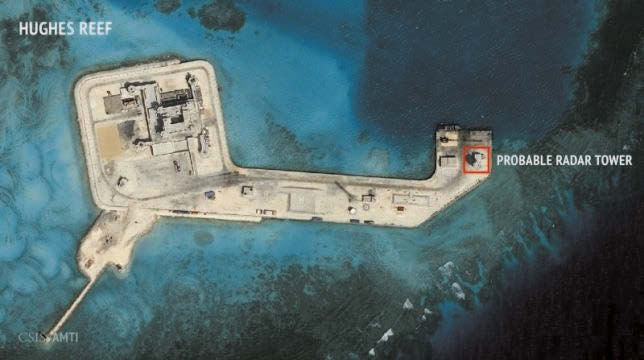
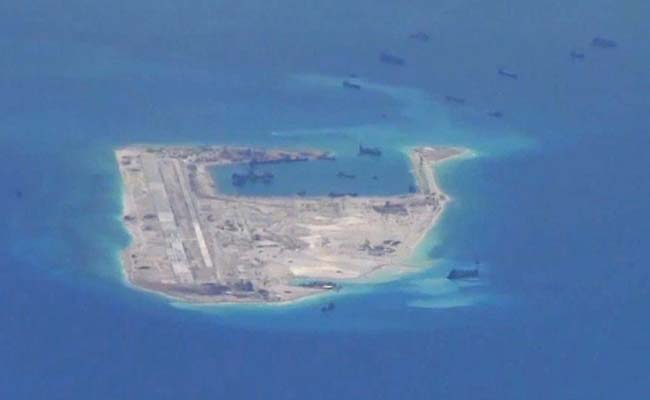
    China has backed its territorial claim by building on these islands and running naval patrols near them. While the US says it is not taking any side in the argument, it has sent military ships and planes to the area, which has irked China.

    Both China and the US have accused each other of “militarising” the South China Sea.

    China claims the waters saying the area is within its “nine-dash line”, which extends hundreds of miles to the south and east of its island province of Hainan. Nine-dash lines are the dashes that demarcate virtually all of the South China Sea as Chinese territory, under the United Nation Convention on the Law of the Seas, or UNCLOS.

    China has been taking what analysts say are “passive-aggressive” steps, which is to use fishing vessels and oil rigs to change the status quo on the ground and assert sovereignty over the area.

    China has reiterated time and again that it has had rights to the territories for centuries, a claim that is contested by Vietnam and Taiwan.

    China wants to negotiate directly with the Philippines and each of the four other claimants in an arrangement that would give it leverage for its sheer size and influence. Beijing has steadfastly opposed bringing the disputes to an international arena, which could provide the US a chance to intervene.

    The Philippines asked a tribunal of five arbitrators to declare as invalid China’s vast claims using the “nine-dash line”. However, China and the Philippines are among more than 160 signatories of the 1982 convention, regarded as the constitution that governs and stipulates the rights of countries in using the world’s oceans.

    Still, the Philippines asked the tribunal to classify whether a number of disputed areas could be called islands, low-tide coral outcrops or submerged banks. That’s so it can be determined whether China is indeed entitled to the stretch of territorial waters under the convention. It also wants China to be declared in violation of the convention for carrying out fishing and construction activities that breached the Philippines’ maritime rights. The convention does not deal with sovereignty questions, which the Philippine government says it did not raise.With China’s claims, the Philippines stands to lose a huge chunk of off-shore territory, said Antonio Carpio, an associate Supreme Court justice who has made extensive studies on the conflicts, to Reuters. “This Chinese aggression is the gravest external threat to the Philippines since World War II,” he said.

    United States’s View – The US has urged countries in the Asia-Pacific region not to engage in “escalatory or provocative” actions in the South China Sea following a decisive ruling by an international tribunal over the disputed region.

    “We certainly would encourage all parties to acknowledge the final and binding nature of this tribunal. We certainly would urge all parties not to use this as an opportunity to engage in escalatory or provocative actions,” White House Press Secretary Josh Earnest told reporters yesterday while travelling with US President Barack Obama to Dallas.

    Earnest said the US was not a claimant to any land features in the South China Sea. “Our interest lies in a desire for a peaceful resolution to disputes and competing claims in that region,” he said.

    Earnest said the US wanted to preserve the freedom of navigation and free flow of commerce in that region of the world.

    Noting that the South China Sea is a strategically important region of the world, he said, it is also is a route for billions of dollars in commerce.

    “It is important to the US economy that that flow of commerce not be significantly disrupted. That’s why we have gone to great lengths to make clear that we’re not a claimant, Earnest said.

    State Department Spokesman John Kirby said if China failed to abide by the ruling, it would be in breach of international law.

    “The world is watching now to see what these claimants will do. The world is watching to see if China is really the global power it professes itself to be and the responsible power that it professes itself to be. The world’s watching this,” Kirby said.

    India’s stand

    India’s discomfort has increased sharply because New Delhi finds that what China is doing in the South China Sea is being replicated in spirit and tactics on the China-Pakistan Economic Corridor (CPEC), which goes through territory claimed by India. While India does not want to escalate tensions by challenging China on the South China Sea, it worries whether anybody will support India’s stand on CPEC.

    China has declared via its state media outlets that India is sympathetic to China’s view, and its joint statement with India and Russia affirms it. Meanwhile, US Pacific Command chief, Admiral Harris indicated India and US may soon be sailing together for joint patrols, as part of a roadmap of the Strategic Vision document signed when Barack Obama visited India in 2015.

    In recent days, reports said India and US were discussing working together to track submarines and on anti-submarine warfare, a move clearly aimed at China.

    World’s View – Most countries have generally taken a position on the arbitration case depending on whether they’re aligned with the US or China.

    The diplomatic tug-of-war has put smaller countries and regional blocs in a dilemma, including the Association of Southeast Asian Nations, whose four member states are claimants.

    A Philippine push for the 10-nation bloc to issue a joint statement calling for China to respect Tuesday’s ruling has stalled with Cambodia and Laos backing the Chinese position. Besides the Philippines and Vietnam, Malaysia, Indonesia and Singapore have also been wary of China.

    The regional group has a bedrock principle of deciding by consensus, meaning just one member state can stall any group effort.

    The US, Britain and the rest of the EU support the arbitration.

    China claims support of some 40-60 nations, including many landlocked African nations and Pacific islands where Beijing has economic clout.

  • NAINITAL: THE LAKE DISTRICT

    NAINITAL: THE LAKE DISTRICT

    A beautiful emerald lake surrounded by green hills, quaint old cottages and markets , and a web of walking tracks—there are plenty of picturesque places to visit in Nainital. One of the most popular hill destinations in India , Nainital is also a part of the ‘lake district’ of the Kumaon region of Uttarakhand , with lakes such as Bhimtal , Sattal and Naukuchiatal in the vicinity. Nainital’s charms include everything from boating and sailing to old temples and heritage buildings, and of course, scenic views at every other step. Here’s your guide to the hill town’s most captivating spots.

    NAINITAL-

    NAINI LAKE

    This beautiful lake lies at the heart of Nainital, with its waters reflecting the colour of the surrounding green hills. The hill station itself is divided into parts: Mallital, the northern side of the lake, and Tallital, the southern end of the lake. Boating in the lake is a favourite tourist pastime. There are rowboats and pedal boats available at various spots. For a more thrilling alternative, try sailing on the lake with a small yacht. The Nainital Boat House Club has facilities for renting yachts, guided by a boatman. A promenade circles the entire lake and is a good stretch for walking, taking in the views and the cool breeze from the lake.

    NAINA DEVI TEMPLE

    Perched on the banks of Naini Lake, this temple plays a central role in the origin myths surrounding Nainital. It is believed that after the death of his wife Sati, the Hindu god Shiva was so distraught that he began a tandava dance of cosmic destruction. In order to stop him, Sati’s body was scattered all over the earth. This was the exact spot where her eye fell, creating the lake. The temple’s open courtyard also offers scenic views and cool breeze from the lake.

    RAJ BHAWAN

    Also known as Governor’s House, this was the official residence of the Governor of North-West Province in colonial India. It is now the residence of the Uttarakhand Governor, and is one of the few Raj Bhawans open to the public. Built towards the end of the 19th century, the imposing building is spread over an area of 220 acres. Its Gothic-style architecture was inspired by the Buckingham Palace.

    The two-storey mansion contains around 113 rooms, but visitors are only allowed in its vast lawns and in the 18-hole golf course within its premises. Constructed by the British in 1924, the golf course is set around a scenic forest , and is home to several rare species of flora and fauna. Visitors can play a game of golf for a small fee or lounge in its clubhouse and restaurants.NAINITAL-2

    GURNEY HOUSE

    Located on Ayarpatta Hill, this beautiful cottage was the former residence of British hunter, conservationist, and beloved writer Jim Corbett. This British-style building was built in the 19th century by the Corbett family. Jim Corbett lived here with his sister Margaret between 1920 and 1947, following which, they left for Kenya. During his time here, Corbett famously hunted man-eating tigers in the Kumaon region, and penned several books based on his experiences. The house has been carefully preserved, and still has Corbett’s possessions, including his trophies, furniture, books, and boat. It is now a private property, but informal tours can be arranged by contacting the owners via phone or email.

    GOVIND BALLABH PANT ZOO

    Home to a variety of endangered animals and a wide variety of flora, the Pt. GB Pant High Altitude Zoo is the perfect way to explore the mountain wildlife. Lay your eyes on rare species of animals such as the Khaleej Pheasant, Siberian Tiger, Snow Leopard, Goat Antelope-Ghooral and Serao, among several others. If you are an avid bird lover, you will be more than happy to hear that this zoo is home to several high altitude birds like the Golden Pheasant, Rose Ringed Parakeet, Red Jungle fowl and Lady Amherst Pheasant. Most of these are kept according to their natural habitat, ensuring that they feel right at home. The zoo was founded in the year 1984 but it was opened to visitors in 1995.

    TIFFIN TOP

    The panoramic beauty of soft white clouds, rocky peaks, emerald jungles, and green verdant valleys from Tiffin Top can not be put into words. The place is only about 4 km from the heart of Nainital and makes for a wonderful trek. Alternately, you may go there on horseback. Tiffin Top is also known as Dorothy’s seat as it was built in the memory of an English artist name Dorothy Kellet by her family. With so much to offer, no wonder, the place is a delight for dozens of artists, photographers, and nature enthusiasts.

    SNOW VIEW

    With a towering height of 2,270 metres, this hilltop is an old tourist favourite for its beautiful views of the surrounding hills. Situated at a distance of 2.5 kilometres from the town, it is easily accessible by an aerial ropeway, which connects Snow View point with Mallital in Nainital. There’s an amusement park with bumper car ride for kids, and stalls offering tea and snacks. You can also trek from here to Naina Peak or China Peak, which is the highest peak in Nainital and also offers stunning views of snow-clad Himalayas.

    NAINITAL-3ARYABHATTA RESEARCH INSTITUTE

    This astronomical observatory is located on the Manora peak, and is the perfect place to indulge in star-gazing. The observatory has facilities for viewing celestial bodies on clear nights between 7 pm and 9 pm, through its high-powered telescopes. The institute was established in 1955, and is a major centre for astrophysical research. To book a visit, call the observatory or make a reservation through their website.

  • India continues to get more H-1B visas despite fee hike: Verma

    India continues to get more H-1B visas despite fee hike: Verma

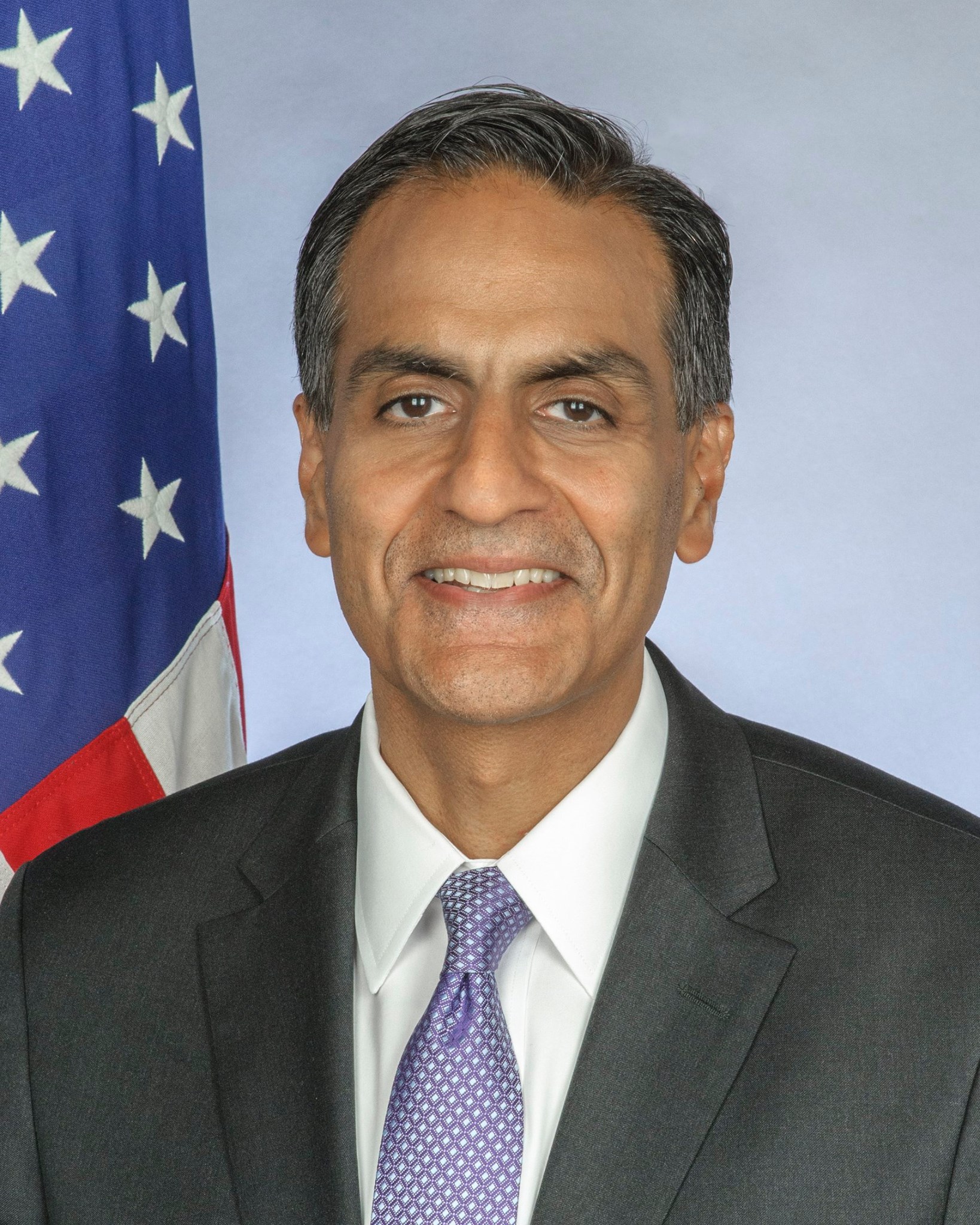
    NEW YORK (TIP): India continues to get the “lion’s share” of the H-1B visas from the US government despite the fee hike, US Ambassador to India Richard Verma.

    “India continues to receive the lion’s share of H-1B and L1 and even after the fee increase, they continue to get 70 per cent of those H-1B visas,” Verma said on the sidelines of ‘The Future is Now: From COP21 to Reality’ conference in New Delhi.

    “We understand the concern about the fee hike. I think there is an ongoing conversation. We also know this is an important part of travel and commercial enterprise in the US. And again, there is an increase in the number of visas issued, in fact, there is a slight increase,” he added.

    The US, under the 9/11 Health and Compensation Act, has imposed a special fee of USD 4,000 on certain categories of H-1B visas and USD 4,500 on L1 visas.

    Almost all Indian IT companies would be paying between USD 8,000 and USD 10,000 per H-1B visa as per the hike. According to Nasscom, this is expected to have an impact of about USD 400 million annually on India’s technology sector.

    Earlier in his speech, Verma said the ongoing deforestation and poor land management is responsible for nearly a quarter of the world’s greenhouse gas emissions as each day, greenhouse gases emitted by human activities trap the same amount of heat energy as would be released by 400,000 atomic bombs.

    “Climate change is not just an environmental challenge; it is a national security issue. Changes in climate could potentially damage critical infrastructure, create shortages of food and water, and lead to mass migrations and disease outbreaks.

    “Receding ice sheets in the Arctic and the opening of new sea passages raise concerns about maritime security and freedom of navigation,” he said. According to Verma, Prime Minister Narendra Modi’s 175 GW target for renewable energy deployments is among the most ambitious in the world and the US has done a great deal to support this effort.

    Through the US-India Partnership to Advance Clean Energy, or PACE, nearly USD 2.5 billion have been mobilized for clean energy projects in India and another USD 1.4 billion in climate finance for solar projects was announced during the Prime Minister’s visit to the US.

    “India’s success is critical to global success and I firmly believe, clean energy will be one of the biggest growth opportunities in the years ahead. Between now and 2035, investment in the global energy sector is expected to reach nearly USD 17 trillion. That’s more than the entire GDP of China and India combined,” Verma said.

    The US is actively supporting India’s solar targets through the Government of India-led International Solar Alliance and bilateral initiatives, such as rooftop solar cooperation and solar resource mapping, he said.

  • WHY WOMEN LIVE LONGER THAN MEN

    WHY WOMEN LIVE LONGER THAN MEN

    It’s queer but true – women have a longer lifespan compared to men.

    Researchers Steven Austad and Kathleen Fischer of the University of Alabama explored this riddle in their latest perspective piece.

    “Humans are the only species in which one sex is known to have a ubiquitous survival advantage,” the researchers write in their review covering a multitude of species.

    “Indeed, the sex difference in longevity may be one of the most robust features of human biology,” they added.

    Though other species, from roundworms and fruit flies to a spectrum of mammals, show lifespan differences that may favour one sex in certain studies, contradictory studies with different diets, mating patterns or environmental conditions often flip that advantage to the other sex.

    With humans, however, it appears to be all females all the time.

    “We don’t know why women live longer. It’s amazing that it hasn’t become a stronger focus of research in human biology,” said Austad.

    One of the evidences of the longer lifespan for women includes ‘The Human Mortality Database,’ which has complete lifespan tables for men and women from 38 countries that go back as far as 1751 for Sweden and 1816 for France.

    Again, longer female survival expectancy is seen across the lifespan, at early life (birth to 5 years old) and at age 50. It is also seen at the end of life, where Gerontology Research Group data for the oldest of the old show that women make up 90 percent of the super centenarians, those who live to 110 years of age or longer.

    Longevity may relate to immune system differences, responses to oxidative stress, mitochondrial fitness or even the fact that men have one X chromosome (and one Y), while women have two X chromosomes.

    But the female advantage has a thorn.

    “One of the most puzzling aspects of human sex difference biology,” write Austad and Fischer, “something that has no known equivalent in other species, is that for all their robustness relative to men in terms of survival, women on average appear to be in poorer health than men through adult life.”

    This higher prevalence of physical limitations in later life is seen not only in Western societies, they say, but also for women in Bangladesh, China, Egypt, Guatemala, India, Indonesia, Jamaica, Malaysia, Mexico, the Philippines, Thailand and Tunisia. But this is just one of several plausible hypotheses for the mystery of why women live longer, on aver age, than men.

  • China’s president talks tough ahead of tribunal ruling

    China’s president talks tough ahead of tribunal ruling

    BEIJING (TIP): China will never compromise on sovereignty, President Xi Jinping said on July 1 ahead of an international tribunal ruling over Beijing’s maritime claims, as he marked the Communist Party’s 95th anniversary.

    “No foreign country… should expect us to swallow the bitter pill of harm to our national sovereignty, security or development interests,” Xi told an audience of top officials, to rapturous applause.

    “We are not afraid of trouble,” he said in Beijing’s cavernous Great Hall of the People, stressing a strong army and a wider role for China on the world stage.

    His remarks come as regional tensions rise over Beijing’s claims to nearly all of the South China Sea, with the US sending naval patrols close to artificial islands Beijing has built in the disputed waters.

    Xi took an apparent stab at the US, saying: “We will not show up at other people’s front doors to flex our muscles. That does not show strength or scare anyone.”

    An international tribunal in The Hague will rule on July 12 in a case brought by the Philippines challenging China’s claims in the strategic waterway.

    Beijing insists that the Permanent Court of Arbitration has no jurisdiction over the issue and has boycotted the proceedings.

    In his speech, Xi heaped praise on the ruling party and vowed to maintain the country’s centralised political system.

    “All party comrades must remember what we are constructing is socialism with Chinese characteristics, and not any other ideology,” he said.

    Since assuming the party’s top post in 2012, Xi has rapidly consolidated power while overseeing a more assertive foreign policy and a tighter authoritarian stance at home.

    He has won popularity with a much-publicised anti-corruption campaign that has claimed the scalps of several former top-ranked officials.

  • Pfizer to invest $350 million in China biotech hub, first in Asia

    Pfizer to invest $350 million in China biotech hub, first in Asia

    Pfizer Inc will invest $350 million to build a biotech center in China, the latest in a series of moves by pharma industry giants to set up shop in the world’s no. 2 drugs market with the aim of securing faster approvals for their products.

    The facility in eastern Hangzhou region – Pfizer’s first biotech center in Asia – is expected to be completed by 2018, the firm said in a statement on Tuesday.

    Global “Big Pharma” is increasingly looking for smart ways to tap China’s healthcare market, estimated by consultancy IMS Health to be worth around $185 billion by 2018. From investing in China facilities to acquisitions, licensing deals and joint ventures, the aim is to seek an edge in dealings with domestic regulators and government.

    John Young, group president for Pfizer’s essential health division, said in the statement that the Hangzhou facility should “help support China’s aim to increase the complexity and value of its manufacturing sector by 2025”.

    Pfizer said it would “work closely” with local regulators to bring the drugs “to market as soon as possible”. The center will mostly on biologic drugs – made from living micro-organisms rather than chemically synthesized – and lower-cost ‘biosimilars’, of generic versions of biologics.

    Pharmaceutical executives have long complained about the slow process of getting drugs to market in China, while others have run up against regulatory roadblocks. Pfizer had to close its vaccine business in the country last year after a license for its top-selling vaccine Prevenar was not renewed.

    China’s overall healthcare spending is set to hit $1.3 trillion by 2020, but drug market growth has slowed to a low single-digit percentage pace from over 20 percent just four years ago as branded generics have lost their shine and Beijing has looked to drive down prices to keep a lid on costs.

  • China Airlines strike leaves 20,000 people stranded in Taipei

    China Airlines strike leaves 20,000 people stranded in Taipei

    TAIPEI (TIP): A strike by staff from Taiwan’s largest carrier China Airlines left 20,000 passengers without flights on June 23 in the first industrial action by cabin crew in the island’s aviation history.

    The airline was forced to cancel all flights out of the two main airports in the capital TAIPEI, with the only exception a chartered service for President Tsai Ing-wen who left for a state visit to Panama and Paraguay on Friday morning.

    Crowds of passengers queued up at CAL counters in Taipei’s Songshan and Taoyuan airports on Friday morning as the airline tried to get them onto different flights.

    Hundreds of flight attendants staged a sit-in outside the firm’s headquarters in Taipei overnight, protesting a new requirement that they report for work in Taoyuan — on the outskirts of Taipei — rather than downtown Songshan.

    They say the measure was brought in “unilaterally”.

    “(It) pressures us to work even more overtime and will seriously affect flight safety,” the Taoyuan Flight Attendants Union said in a statement on its Facebook page. Flight attendants of Taiwan’s China Airlines hold placards reading, ‘Fight for labour rights’ during a demonstration outside the company’s headquarters in Taipei.

    The union is also calling for other improvements to conditions, including double pay for working on national holidays.

    The official strike started at midnight. Protesters continued to sit-in outside the CAL office on Friday.

    Both the president and the chairman of CAL were replaced on Thursday after tendering their resignations before the strike.

    Incoming chairman Ho Nuan-hsuan is due to take office on Friday when his appointment is officially approved by the board of directors.

    Ho, appointed by the transport ministry, which is CAL’s largest shareholder, is reportedly in favour of granting the union’s request to drop the new requirement for crew to report in to Taoyuan.

    In a statement on Friday, CAL urged the government to intervene to bring the strike to a “smooth end”, saying the union was unwilling to negotiate.

    It described the strike as an “unauthorised surprise attack” on the airline.

    Tsai gave her thanks to the flight attendants during a short speech before her departure and vowed the government would defend their labour rights.

    CAL’s vice president said on Friday it was trying to get passengers onto other flights but that it was difficult in peak summer season.

    (AFP)

  • Thanks for supporting our NSG bid, Pakistan tells China

    Thanks for supporting our NSG bid, Pakistan tells China

    ISLAMABAD (TIP): Pakistan President Mamnoon Hussain on June 23 thanked Chinese President Xi Jinping for his government’s support for Islamabad’s bid at membership to the Nuclear Suppliers Group (NSG). However, Hussain’s comment flies straight in the face of the Chinese position on the issue.

    The Chinese government-run Global Times newspaper had carried an article on Tuesday, opposing the entry of both India and Pakistan to the NSG, a line at odds with the Pakistan President’s talk of support from Beijing.

    Hussain and Xi met on the sidelines of the Shanghai Cooperation Organization (SCO) summit in Tashkent, on a day the Chinese President is also set to meet Prime Minister Narendra Modi.

    “Only granting India the membership of the Nuclear Suppliers Group will shift the balance of power,” Hussain said, reported Pakistani news outlet Geo TV.

    China has maintained its opposition to India’s NSG membership bid on the grounds that it is not a signatory to the Non-Proliferation Treaty (NPT) or the Comprehensive Test Ban Treaty (CTBT). Neither is Pakistan.China has been walking a very fine line against India’s membership to the NSG, and has found itself increasingly isolated. Not only has India lobbied the NSG nations, but the US too has thrown its heft behind New Delhi.

    While the basis of India’s membership bid has been its clean non-proliferation record, US officials revealed on Wednesday that Pakistan continues to proliferate nuclear materials and technology to North Korea.

    China’s stand against India has also focused on its questions over the future of the world’s nuclear order, if ‘illegitimate’ nuclear states like India or Pakistan are allowed to join the global nuclear trading regime.

    Even as it has said all this, Beijing has repeatedly stated its official line, that China does not oppose India’s bid for membership to the NSG.

  • Supporting India’s Entry to the Nuclear Suppliers Group

    Supporting India’s Entry to the Nuclear Suppliers Group

    The Nuclear Suppliers Group (NSG) is a 48-nation exclusive export control regime dedicated to curbing nuclear arms proliferation while promoting safe international nuclear commerce for civil nuclear energy. After receiving a country-specific waiver for the India-United States Civil Nuclear Agreement from the NSG in 2008, most western nations advocated for India’s inclusion into the NSG, even Russia has expressed unconditional support for India. The sole outlier for the major powers remains China, though China could benefit from supporting India’s membership.

    Instead, China has spearheaded a diplomatic campaign to thwart India’s entry into the NSG. Doubling down on efforts to link India with China’s all-weather friend Pakistan, China has grasped at rationales to prevent India’s NSG membership.

    China has articulated three main pseudo-arguments against India’s entry into the NSG. The first is that India is not a signatory to the Treaty on the Non-Proliferation of Nuclear Weapons (Non-Proliferation Treaty, or NPT) of 1968 and allowing India to join does not comport with the greater non-proliferation agenda. Also, India’s entry might disturb the strategic balance in the Indian sub-continent, further encouraging Pakistan to take more desperate measures to seek strategic parity with India. Lastly, China argues that the NSG should be based on specific criteria, rather than selectively choosing suitable nations for entry.

    On all three counts, China is using clever sophistry to block India’s long overdue entry into the NSG. Whereas the roots of China’s obstructionist view stems from China’s strategic insecurity and fears of another rising Asian nation in the international geo-political theatre.

    Let us discuss China’s pseudo-arguments point by point. France’s NSG membership, in 1975, despite not being a signatory of the NPT until 1992, thus creating precedence for a non-signatory of NPT becoming a member of the NSG. China’s second argument, again fallacious, attempting to adjoin Pakistan’s nuclear program with that of India. Pakistan’s aggressive assertions regarding the potential use of tactical nuclear weapons against India, is a vast departure from India’s peaceful and defensive nuclear posture. Particularly considering India’s need for nuclear energy to support a burgeoning economy and population, and to minimize the use of fossil fuels to support current climate change initiatives.

    In addition to France, there are only four countries that are non-signatories to the NPT: India, Israel, Pakistan and South Sudan. North Korea, having withdrawn from NPT is obviously not a candidate for NSG. Israel and South Sudan are not seeking NSG membership, leaving just India and Pakistan. India and Pakistan have starkly contrasting non-proliferation records. Pakistan and China’s nuclear cooperation lacks a great deal of transparency, and is obviously a mix of civilian AND military applications, which should be cause for alarm.

    China worried about growing India-U.S. strategic cooperation, sees Pakistan as a mechanism to contain India in a perpetual regional conflict. China provided Pakistan with 50 kg of free weapons grade HEU and allowed Pakistan to test its first nuclear weapon of Chinese design in 1990 at China’s own Lop Nor nuclear test range.

    Essentially, China is a rising hegemon that can not countenance a rising India, systematically placing roadblocks to India’s entry into the diplomatic world, commensurate with India’s size and economic maturity. The time has come for the 5th generation leadership of communist to do the prudent thing by diplomatically supporting India’s entry into the NSG. China should remember that India had supported communist China’s entry into the UNSC as a permanent member in 1971 despite having bilateral border issues. Diplomatic hegemony by China cannot arrest a rising India’s entry to NSG, UNSC, APEC or any other international body. Continued attempts to limit India’s participation in the international community will actually cause China harm rather than goodwill

    China was a brotherly country to India until the occupation, and eventual annexation, of Tibet. The following attack on India in 1962 is still ingrained in the minds of the international community. India’s industrial base and growing economy is on pace to rival that of both the United States and China. If China wants the 21st century to be remembered as an Asian century, China must learn to recognize and accept India’s vital role.

    China as a nation must do some self-introspection regarding its hegemonic behavior and expansionist policies since 1949. China has no allies worth naming on the twin issues of its imperialistic behavior in the East and South China Seas. Peoples’ Republic of China can gain immense goodwill from a peaceful and rising India if it stops obstructing India’s entry into the NSG on June 24th 2016 in Seoul, South Korea.

    (The author is the President of the Council for Strategic Affairs, New Delhi, India)

  • Nuclear Suppliers Group Meeting Ends:  No Decision on India’s Entry

    Nuclear Suppliers Group Meeting Ends: No Decision on India’s Entry

    NEW DELHI (TIP): In what may be interpreted as a diplomatic setback for India, the NSG meeting in Seoul ended Friday, June 24, without taking a decision on India’s entry into the group. It was not unexpected, given the earlier Chinese statement that the issue of India’s entry into the exclusive club was not on the agenda. Ahead of the discussions, China’s top negotiator told reporters that the country “won’t back India or Pakistan” until Non-Proliferation Treaty (NPT) rules are followed.

    Ambassador Wang Qun, Director General, arms control division at the Chinese Foreign ministry said: “The NSG won’t discuss Indian membership yet. Many differences are there on admitting non-NPT members.” He called it a matter of principle.

    China’s statement followed Prime Minister Narendra Modi’s meeting with Chinese President Xi Jinping on the sidelines of a multilateral summit in Tashkent on Thursday, June 23.

    Requesting a “fair and objective assessment” of India’s bid, PM Modi had said New Delhi’s case should be judged on its own merits and that China should contribute to an emerging consensus in Seoul.

    Sources say Switzerland has also raised objections to the process of including non-NPT states like India. It was one of the countries that had supported India after PM Modi’s visit.

    Brazil, Austria and Ireland have also raised concerns on the “processes” and questioned how a non-NPT signatory can be admitted to the NSG, which controls access to nuclear technology. Brazil’s objections are a worry for India since it is a key ally.

    A marathon three-hour post-dinner NSG meeting in Seoul on Thursday had ended in a deadlock over India’s membership.

    China has been unrelenting in its opposition, harping on the need to have a criteria for non-NPT countries like India and clubbing India’s case with that of Pakistan for which it is batting.

    About 300 participants from 48 member countries attended the meeting in Seoul.

  • CHINA’S EXASCALE  SUPERCOMPUTER TO BE OPERATIONAL BY 2020

    CHINA’S EXASCALE SUPERCOMPUTER TO BE OPERATIONAL BY 2020

    BEIJING: China is developing a supercomputer capable of at least a billion billion calculations per second that will be operationalised by 2020, a top official has said.

    According to the national plan for the next generation of high performance computers, China will develop an ‘exascale computer’ during the 13th Five-Year-Plan period (2016-2020).

    “The government of Tianjin Binhai New Area, NUDT and the National Supercomputing Center in Tianjin are working on the project, and we plan to name it Tianhe-3,” said Liao Xiangke, head of National University of Defence Technology (NUDT).

    In 2010, China’s first petaflop supercomputer Tianhe-1 capable of at least a million billion calculations per second came into service in the supercomputing centre.

    At present, Tianhe-1 performs various tasks including oil exploration, high-end equipment manufacturing, biological medicine and animation design, and serves nearly 1,000 customers, state-run Xinhua news agency reported.

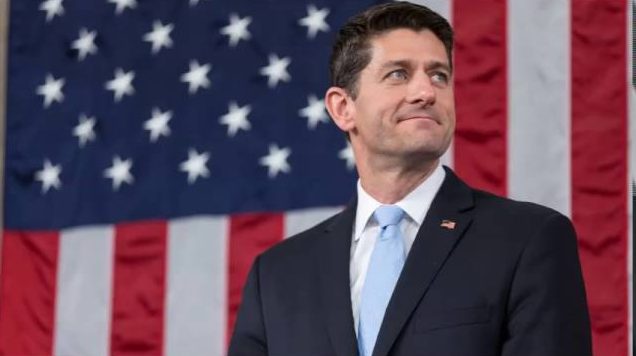
  • Indian Government Is Going To Be America’s ‘Great Ally’, admits US House Speaker Paul Ryan

    Indian Government Is Going To Be America’s ‘Great Ally’, admits US House Speaker Paul Ryan

    The Indian government is going to be America’s “great ally” and there is a need to nurture
    this relationship, Speaker of the US House of Representatives Paul Ryan told the Council on Foreign Relations, where Republicans unveiled a plan to chart America’s foreign policy and national security.

    While there, Speaker Ryan and members of the Task Force on National Security talked about this new agenda. Here’s some of what Speaker Ryan covered in his conversation with Hewitt:.

    In a major foreign policy speech here in which he was highly critical of President Barack Obama’s policies, the US-India relationship was the only aspect of it which was appreciated by Ryan.

    “I think you need, and in particular, specifically under Modi’s leadership, and he and I have discussed this at great length yesterday, (US-India) have a great potential for the future particularly with the seas, in the Pacific and in the Indian Ocean, making sure that we help police the global commons and international order, namely China building, you know, runways on islands in contested areas,” Ryan said.

    He said this in the speech at the Council on Foreign Relations on Thursday, a day after Prime Minister Narendra Modi addressed a joint meeting of the US Congress at his invitation.

    Modi was the first foreign leader to be invited to address a joint sitting of the Congress under Ryan’s speakership.

    On Wednesday, Modi and Ryan had a one-on-one interaction before the Prime Minister’s address. Ryan also hosted a lunch for the visiting leader.

    A day later, Ryan was all in praise for Modi.

    “I think the Indian (government), the new Indian government, is going to be a great ally of ours and we have better security cooperation with them. That’s one thing that we need to nurture and grow,” Ryan told the audience at the Council on Foreign Relations, a top American think tank.

    “And those of us who are fans of Modi, you know, he’s a conservative who wants, who embraces free enterprise. He’s bringing needed reform to the country,” Ryan said, according to the remarks released by his office.

    “That’s the kind of an alliance that we need to forge and build upon. That stands in stark contrast, I would argue, to the Obama foreign policy of the last eight years where we have
    neglected our allies and we have basically rewarded our enemies, our adversaries,” said the Speaker of the US House of Representatives.

    Except for his comments on India, Ryan slammed Obama’s foreign policy.

    “We know that this new Obama foreign policy concept, leading from behind, can now be declared an unambiguous failure. It is making us unprepared. It is reducing our military capability and strength,” he alleged.

  • ISIS has a ‘kill list’ with 8,318 assassination targets, report says

    ISIS has a ‘kill list’ with 8,318 assassination targets, report says

    LONDON (TIP): A pro-ISIS “hacking” group calling itself the United Cyber Caliphate distributed its latest “kill” list this week. The group claims the list includes names, addresses, and email addresses belonging to 8,318 people, making it one of the longest target lists ISIS-affiliated groups have distributed.

    The “kill list” includes names of Canadians, Australians and Europeans, a British media report said on June 9.

    It urged its supporters to “follow” those listed — and “kill them strongly to take revenge for Muslims”, Daily Mirror reported.

    It is one of the longest kill lists any ISIS-affiliated group has distributed to date and reportedly includes the names of 7,848 Americans, 312 Canadians, 39 Britons and 69 Australians.

    The rest of the targets listed are reported to be from a variety of nations including Belgium, Brazil, China, Estonia, France, Germany, Greece, Guatemala, Indonesia, Ireland, Israel, Italy, Jamaica, New Zealand, Trinidad and Tobago, South Korea and Sweden.

    They are mostly military or government workers or people in the public eye, like royalty or celebrities.

    The list, written in both English and Arabic, was uncovered by the media group Vocativ , which specializes in investigating the hidden side of the web.

    It discovered it on a messaging app service called Telegram earlier this week.

    (PTI)

  • CHINA PLANS TO LAUNCH HUBBLE-LIKE SPACE TELESCOPE

    CHINA PLANS TO LAUNCH HUBBLE-LIKE SPACE TELESCOPE

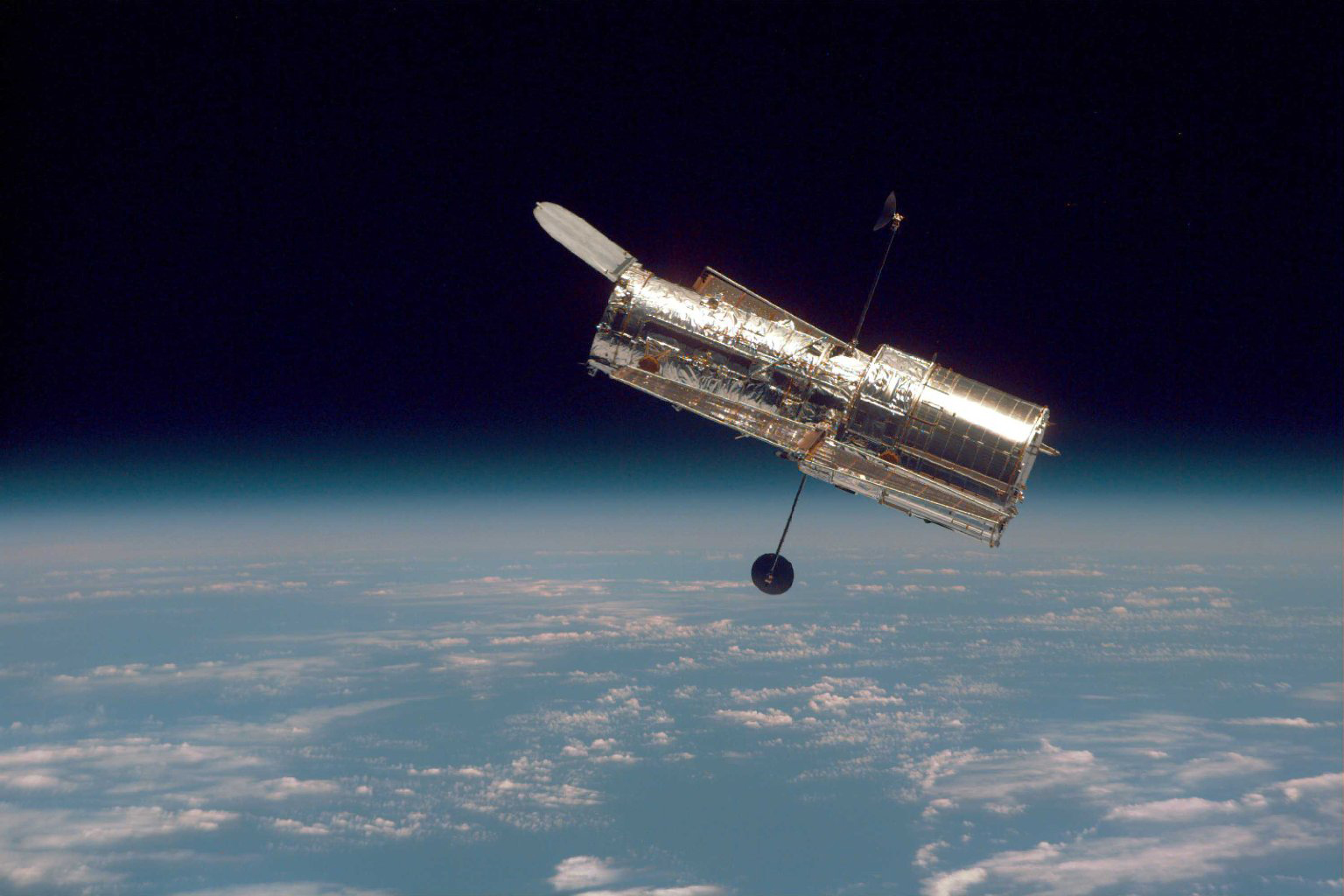
    BEIJING (TIP): China plans to launch an independent optical facility, which will function like the Hubble Space Telescope , along with the construction of a space station in the coming years, scientists said.

    The field of view of the optical cabin will be 300 times as large as that of the Hubble, and the cabin will be connected with the space station, said Gu Yidong , technology consultant of China’s manned space flight project and academician with the Chinese Academy of Sciences (CAS).

    The Hubble Space Telescope (HST), built by the Nasa and the European Space Agency, orbits just outside the Earth’s atmosphere, taking extremely high-resolution images of deep space. It was launched in 1990.

    “Currently, China has planned a series of scientific research platforms and facilities for the space station. The optical cabin is the biggest confirmed project so far,” Yidong said.

    The calibre of the telescope is about two metres, and its resolution is near that of the Hubble. The optical cabin will conduct heterochromatic photometry and slitless spectroscopy sky surveys, the ‘People’s Daily’ reported.

    According to Yidong, the cabin will stay in orbit with the space station, and will connect to the station when it needs maintenance or upgrades.

    China’s space station is expected to be completed in 2020.

  • Aggressive China triggers Asia arms race

    Aggressive China triggers Asia arms race

    BEIJING (TIP): Global defence contractors are circling for business in Asia, with countries from Australia to Vietnam upgrading and adding everything from submarines to fighter jets as China expands its military reach.

    According to consultancy IHS Jane’s report, the combined defence budgets in the Asia-Pacific region will grow from $435 billion last year to $533 billion in 2020, furthering a shift in global military spending away from Western Europe and North America toward emerging markets, especially in Asia. The figure will put Asia-Pacific on par with North America, which is expected to account for a third of global defence spending by then, from almost half now.

    The report attributes the rise to growing tensions in the South China Sea. “A number of the South China Sea’s littoral states appear to be responding to China’s more assertive stance in the region and there is no sign of this trend coming to an end,” Janes’ principal analyst, Craig Caffrey, said in the report. China had the region’s biggest defence budget at $146 billion last year, according to the government. Jane’s said it expects China’s budget to rise by about 5% to $233 billion by 2020.

    While military spending in Asia is coming off a low base – especially in Southeast Asia -and remains a small proportion of gross domestic product, nations that for years relied on old and at-times outdated ships and planes are starting to renovate their fleets. “There is a wide-ranging need for modernization across most of the armed forces in the region,” said Dan Enstedt, chief executive officer of Saab Asia Pacific, whose products include submarines, missiles, radars and fighter jets. “There are many examples of old and obsolete equipment fleets that are unable to keep pace with changing national security needs.”

    Military outlays in Asia and Oceania -which includes Australia and New Zealand -grew 5.4% in 2015, outpacing a 1% rise in global spending, according to the Stockholm International Peace Research Institute. Indonesia boosted spending last year by 16%, the Philippines by 25% and Vietnam by 7.6%.

    Much of the spending is on air and naval capacity amid China’s assertiveness in the East China Sea, where it claims islets contested by Japan, and the South China Sea, where its land reclamation programme has spooked other claimants. “The growth of China’s national power, including its military modernization, means China’s policies and actions will have a major impact on the stability of the Indo-Pacific,” according to Australia’s Defence White Paper published in February.

    A quarter of Australia’s defence investment over the next decade will be devoted to maritime capabilities.

    China triggers Asia arms race 2US President Barack Obama’s recent trip to Vietnam may lead to business opportunities, as he lifted a four-decade ban on the sale of lethal weapons. The US embassy has hosted two defence contractor symposiums in Hanoi, attended by companies including Boeing Co. and Lockheed Martin Corp. Doug Greenlaw, a vice president at Lockheed, said in an interview in February that Asia is at the core of the company’s strategy. “The economies in Asia are growing faster than in the rest of the world – that tends to really drive security spending, so we see Asia as a growth market,” Greenlaw said. “We have great partnerships with the countries across Asia.”

    Still, much of the spending comes off a low base. The Philippines spent 1.3% of GDP last year, up from 1.1% in 2014, according to Sipri, while Vietnam was largely flat at 2.3% of GDP.

    China’s outlays were 1.9% of its economy, well below US expenditure last year of 3.3% of its economy.

    Thailand may be one growth center this year. Defence spending will increase 7.3% and account for 7.6% of the overall budget, the Bangkok Post reported last month. On Thailand’s shopping list: 12 MI-17 transport helicopters from Russia, and four South Korean-made T-50 TH training aircraft.

    Australia in April awarded an A$50 billion ($36 billion) contract for 12 submarines to France’s DCNS Group, in one of the world’s biggest defence deals. The government is considering tenders for nine warships worth A$35 billion and a A$3 billion deal for 12 offshore patrol vessels.

    Indonesia, Japan, China, Vietnam, Singapore, Pakistan and Vietnam are building or buying submarines. Pakistan last year agreed to buy eight diesel electric submarines from China for an undisclosed price.

    The greater reach of China’s air force is helping driving sales of planes. China has deployed combat aircraft on Woody Island in the disputed Paracel chain.

    India needs dozens of warplanes after it scaled back a big order for Dassault Aviation SA’s Rafale jets to 36. Though no quantity has been announced, Boeing, Lockheed Martin and Saab have made pitches to build combat planes in India. About a third of India’s 650 fighter jets are more than 40 years old.

  • Prez lists 8 steps to resolve issues between India, China

    Prez lists 8 steps to resolve issues between India, China

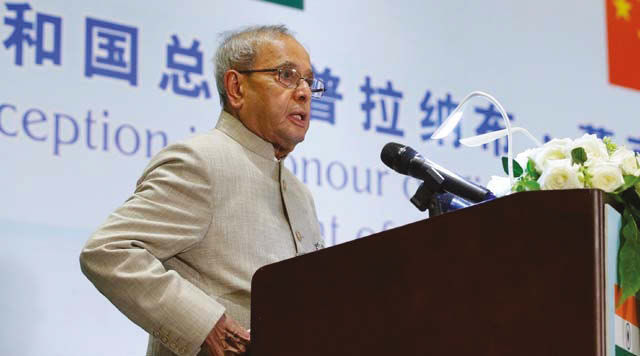
    BEIJING (TIP): Outlining eight “pillars” for the future of India-China relations, President Pranab Mukherjee today underlined the need for comprehensively resolving challenges including the boundary question through “political acumen” and “civilisational wisdom”.

    Delivering a lecture at the elite Peking University, Mukherjee noted that there is bipartisan commitment to strengthening partnership with China, and said political understanding between the two countries is vital for “closer developmental partnership”.

    He said he was “confident that by placing these eight pillars at the foundation of a people-centric approach, we can sufficiently enhance and strengthen our cooperation to the mutual benefit of both our peoples”.

    “One of the ways it could be done is through enhanced political communication. In India, we have a bipartisan commitment to strengthening our partnership with China. The frequent contacts between our respective leaders bear testimony to this.

    “We have broadened the ‘common ground’ and learnt to manage our differences. There are challenges -including the boundary question – that still need to be addressed comprehensively,” he said while addressing the gathering on the topic
    “India-China Relations: 8 steps to a people-centric partnership”.

    India and China have differences over the 3,488 km-long border. While Beijing says that the boundary dispute is confined to 2,000 kms, mainly in Arunachal Pradesh in eastern sector which it claims as part of southern Tibet, India asserts that the dispute covered the whole of the Line of Actual Control including the Aksai Chin occupied by China during the 1962 war.

    Making his first state visit to China as head of the state, Mukherjee said while it was natural for neighbours to have differences of views on certain issues from time to time, “I consider it a test of our political acumen when we are called upon to draw upon our civilisational wisdom and resolve these differences to the mutual satisfaction of both sides”.

    “Both sides should work with the aim of ensuring that we do not burden our coming generations by leaving our unresolved problems to them. I am confident that by ensuring that these matters are not aggravated and by remaining sensitive to mutual concerns, we can minimise our differences and maximise our convergences,” he said.

    As part of his eight principles, he stressed on the need to enhance contacts among the youth of the two countries through festivals and sports contacts, digital technology, intellectual and cultural exchanges and travels, especially the Kailash Mansarovar and Buddhist pilgrimage centres. Collaboration of civil societies on both sides and a common approach to global and developmental issues that facilitate strong cooperation in multilateral fora including the G20, BRICS, East Asian Summit, Asian Infrastructure and Investment Bank (AIIB) and Shanghai Cooperation Forum (SCO) will enthuse people of the two countries to support and contribute to the achievement of the shared goals, Mukherjee said.

  • Pak PM breaks ground for Pak-China Optical Fibre Cable project in PoK

    Pak PM breaks ground for Pak-China Optical Fibre Cable project in PoK

    ISLAMABAD (TIP): Prime Minister Nawaz Sharif May 20 broke ground for the USD 44 million Pakistan-China Optical Fibre Cable project in PoK’s Gilgit-Baltistan region which will provide an alternate telecommunication route between the two countries.

    The project is part of the ambitious USD 46 billion China-Pakistan Economic Corridor (CPEC), which passes through the Pakistan-occupied Kashmir (PoK), linking western China to the strategic Gawadar port in southern Pakistan via a network of roads, railways and communication systems.

    The Optical Fibre Cable project will be completed in two years and Special Communication Organisation will lay 820-kilometre-long cable from Rawalpindi to Khunjrab, Radio Pakistan reported.

    On completion, the project will provide an alternate telecommunication route between Pakistan and China.

    Sharif also inaugurated the CPEC patrolling police headquarters in the Gilgit-Baltistan region.

    The force comprising 300 personnel and 25 vehicles, gifted by China, will ensure safe and smooth flow of traffic on the 439-kilometre chunk of the 3,000-kilometre CPEC project. The CPEC passes through the restive Balochistan province. Pakistan is readying a special force of 4,000 security personnel to protect Chinese nationals working at various projects in Punjab province, including the CPEC project.

    Already more than 17,000 security personnel from the army and other security forces have been engaged to ensure fool-proof security to Chinese nationals. (PTI)

  • Chinese jets fly close to US spy planes, says Pentagon

    Chinese jets fly close to US spy planes, says Pentagon

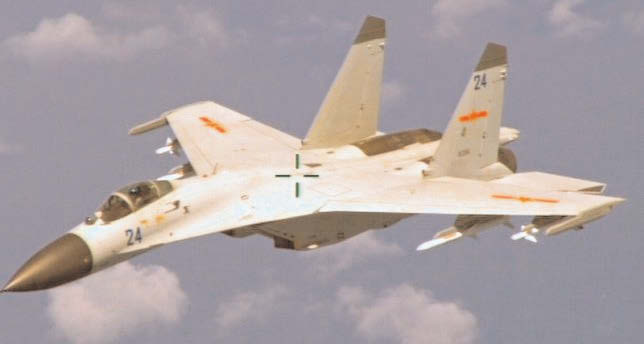
    WASHINGTON (TIP): Two Chinese tactical aircraft carried out an “unsafe” intercept of a US military aircraft on May 17, the Pentagon said in a statement on Wednesday.

    The incident took place in “international airspace” as the US maritime patrol reconnaissance aircraft carried out “a routine US patrol” in the South China Sea, the statement said. Washington has accused Beijing of militarizing the South China Sea after creating artificial islands while Beijing, in turn, has criticized increased US naval patrols and exercises in Asia. The statement added that the Department of Defense was addressing the issue through military and diplomatic channels. “Over the past year, DoD has seen improvements in PRC actions, flying in a safe and professional manner,” the statement said. PRC is an acronym for the People’s Republic of China. (PTI)

  • Prez to nudge China to stop shielding Pak ultras

    Prez to nudge China to stop shielding Pak ultras

    New Delhi (TIP): President Pranab Mukherjee, who will visit Beijing and Guangzhou next week, is likely to do his bit to nudge China to stop shielding terrorists based in Pakistan from United Nations sanctions.

    “India and China both are huge countries-multicultural, multiracial-if they come together in fighting this menace, I am sure it will have its own impact,” Mukherjee said in an interview to CCTV of China ahead of his forthcoming visit to the communist country.

    “India always believes that every country should have a zero tolerance policy towards terrorism and the fight should be all out,” said Mukherjee, who will commence his four-day visit to China next Tuesday.

    Mukherjee stressed on India-China cooperation against terrorism just a few weeks after New Delhi conveyed its disappointment over Beijing’s tacit move at a United Nations Security Council panel to block a plea to impose sanctions on Pakistan-based Jaish-e-Mohammed chief Moulana Masood Azhar.

    India had moved a fresh plea to a UN panel established under the Security Council’s resolutions 1267, 1989 and 2253 seeking sanctions on Azhar, citing evidences it had to prove his links with the attack on the Indian Air Force base at Pathankot in Punjab. But the objection from China made it sure that the plea was put on a “technical hold”.

    Beijing, an “all-weather friend” of Islamabad, earlier blocked several attempts by New Delhi to get UN sanctions imposed on Azhar and other terrorist leaders based in Pakistan.

    “I would say that we have very comprehensive relationship with the People’s Republic of China. And we consider it is a very important relationship for us,” said the President.