TAIPEI (TIP): Tsai Ing-wen was sworn in as Taiwan’s first woman president on Friday, with the export-driven economy on the ropes and wary Communist Party rulers in China watching for any move towards independence by an island it considers its own. Tsai’s Democratic Progressive Party (DPP) won parliamentary and presidential elections by a landslide in January on voter backlash against creeping dependence on China. The DPP, which has traditionally favoured independence from China, takes over after eight years under China-friendly Nationalist Ma Ying-jeou. (Reuters)
Tag: China
-

China demands end to US surveillance after aircraft intercept
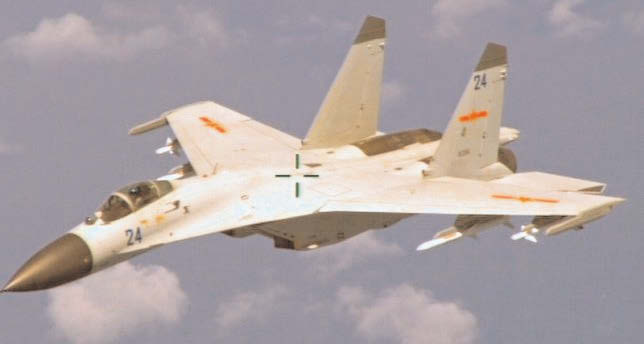
WASHINGTON/BEIJING (TIP): Beijing demanded an end to US surveillance near China on Thursday after two of its fighter jets carried out what the Pentagon said was an “unsafe” intercept of a US military reconnaissance aircraft over the South China Sea .
The incident, likely to increase tension in and around the contested waterway, took place in international airspace on Tuesday as the plane carried out “a routine US patrol,” a Pentagon statement said.
A US defense official said two Chinese J-11 fighter jets flew within 50 feet (15 meters) of the US EP-3 aircraft. The official said the incident took place east of Hainan island.
“Initial reports characterized the incident as unsafe,” the Pentagon statement said.
“It must be pointed out that US military planes frequently carry out reconnaissance in Chinese coastal waters, seriously endangering Chinese maritime security,” China’s foreign ministry spokesman Hong Lei Hong told reporters.
“We demand that the United States immediately cease this type of close reconnaissance activity to avoid having this sort of incident happening again,” Hong said.
Speaking at a regular press briefing, he described the Pentagon statement as “not true” and said the actions of the Chinese aircraft were “completely in keeping with safety and professional standards.”
“They maintained safe behavior and did not engage in any dangerous action,” Hong said.
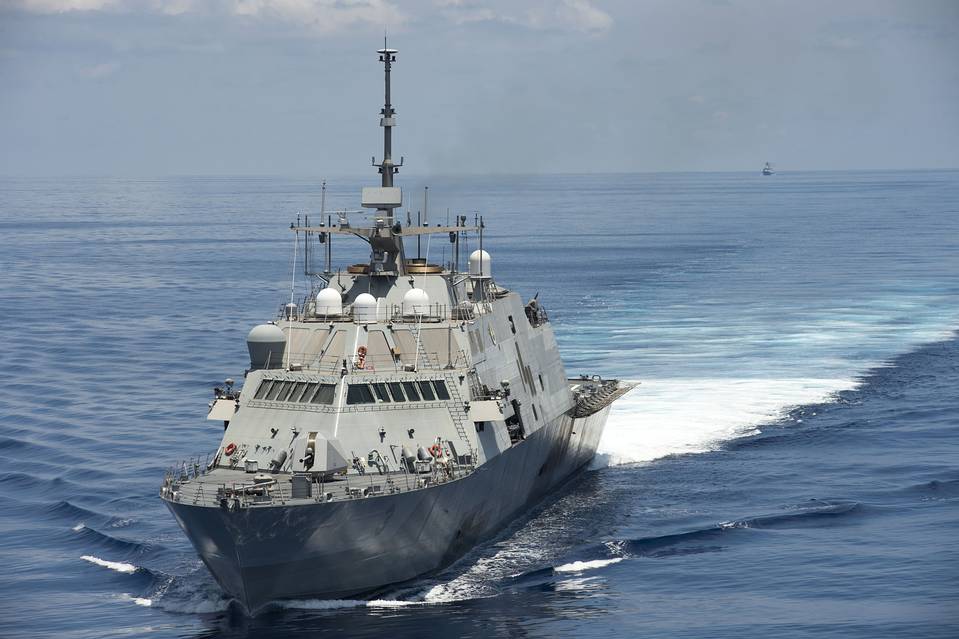
The encounter comes a week after China scrambled fighter jets as a US Navy ship sailed close to a disputed reef in the South China Sea.
Another Chinese intercept took place in 2014 when a Chinese fighter pilot flew acrobatic maneuvers around a US spy plane.
The intercept occurred days before President Barack Obama travels to parts of Asia from May 21-28, including a Group of Seven summit in Japan and his first trip to Vietnam.
China claims most of the South China Sea, through which $5 trillion in ship-borne trade passes every year. The Philippines, Vietnam, Malaysia, Taiwan and Brunei have overlapping claims.
Washington has accused Beijing of militarizing the South China Sea after creating artificial islands, while Beijing, in turn, has criticized increased US naval patrols and exercises in Asia.
The Pentagon statement said the Department of Defense was addressing the issue through military and diplomatic channels.
China’s defense ministry said in a fax that it was looking into reports on the incident.
“Dangerous intercepts”
In 2015, the United States and China announced agreements on a military hotline and rules of behavior to govern air-to-air encounters called the Code for Unplanned Encounters at Sea (CUES).“This is exactly the type of irresponsible and dangerous intercepts that the air-to-air annex to CUES is supposed to prevent,” said Greg Poling, director of the Asia Maritime Transparency Initiative at Washington’s Center for Strategic and International Studies think-tank.
Poling said either some part of China’s air force “hadn’t gotten the message,” or it was meant as a signal of displeasure with recent US freedom of navigation actions in the South China Sea.
“If the latter, it would be very disappointing to find China sacrificing the CUES annex for political gamesmanship.”
Zhang Baohui, a security expert at Hong Kong’s Lingnan University, said he believed the encounter highlighted the limitation of CUES, and shows that Chinese pilots would still fly close to US surveillance planes if needed.
“Frankly, we’re always going to see these kinds of incidents as China will always put the priority on national security over something like CUES whenever it feels its interests are directly threatened,” he said.
The encounter took place in international airspace about 100 nautical miles south of mainland China and about 50 nautical miles east of Hainan island, a Pentagon spokesman said in a statement issued later on Thursday.
Regional military attaches and experts say the southern Chinese coast is a military area of increasing sensitivity for Beijing.
Its submarine bases on Hainan are home to an expanding fleet of nuclear-armed submarines and a big target for on-going Western surveillance operations.
The Guangdong coast is also believed to be home to some of China’s most advanced missiles, including the DF-21D anti-ship weapon.
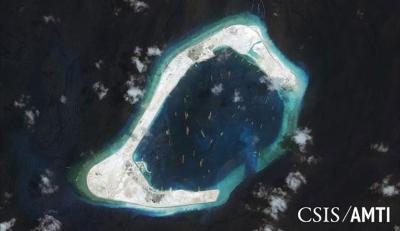
The Pentagon last month called on China to reaffirm it has no plans to deploy military aircraft in the Spratly Islands after China used a military plane to evacuate sick workers from Fiery Cross Reef, where it has built a 9,800-foot (3,000 meter) runway.
In April 2001, an intercept of a US spy plane by a Chinese fighter jet resulted in a collision that killed the Chinese pilot and forced the American plane to make an emergency landing at a base on Hainan.
The 24 US air crew members were held for 11 days until Washington apologized for the incident. That encounter soured US-Chinese relations in the early days of President George W Bush’s first administration.
Last month, the Pentagon said that Russia had intercepted a US Air Force aircraft over the Baltic Sea in an “unsafe and unprofessional” way.
-

CHINA SURPASSES US AS BIGGEST OVERSEAS INVESTOR
BEIJING (TIP): The world’s second-biggest economy trounced the United States in another aspect as Chinese companies inked the highest number of overseas deals so far this year. The number of deals, mostly purchase of foreign companies, since January amounted to $110.8 billion.
In fact, Chinese firms surpassed their own full-year record in 2015 when they spent $106.8 billion on foreign acquisitions, according to UK-based data provider, Dealogic. They were engaged in 17 deals, each worth more than $1 billion, while the rest were of lesser value. Taking the cake was a $43 billion cash offer by China National Chemical Corp for purchase of Swiss pesticide and seed company Syngenta.
The US has dominated the rankings in overseas acquisitions since 2007. Dealogic predicted that China will come ahead of the US at the end of 2016.
The acquisition spree, which covers the United States, is partly driven by economic slowdown in China. the ongoing economic slowdown in China may be forcing Chinese companies to explore new avenues in overseas markets to sustain their growth, Abdul Erumban, senior economist with the Conference Board, told TOI.
Chinese companies, many of whom are flush with funds, are finding it difficult to identify suitable investment destinations in their home country. Significantly, the anti-China tirade by US politicians has done little to hamper Chinese investments in that country. Financial compilers said that Chinese companies acquired 25 firms based in the United States and Canada last year, compared to just four in 2014 and nine in 2013.
Analysts also said that Chinese investments overseas would more than double of the 2015 record because Chinese companies are targeting more than 1,000 foreign firms for acquisition in 2016. Last year, Chinese business groups took control of 598 companies, according to the financial compiler. Drawing the most attention is the wrangling involving Chinese conglomerate Anbang Insurance Group and Marriott International, which are battling to acquire the iconic Starwood Hotels and Resorts for nearly $14 billion. Anbang upped its offer on Monday, leaving the market waiting anxiously for Marriott’s next move.
(AP)
-

British ‘barbarians’ need manners lessons, says Chinese paper on rudeness row
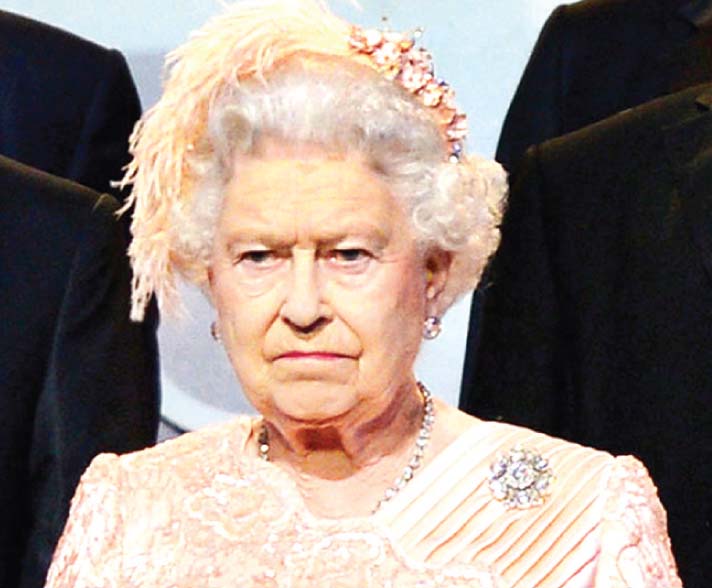
BEIJING (TIP): The British media is riddled with “barbarians” who would benefit from a lesson in manners from China’s ancient civilisation, a state-run newspaper said May 12 after Queen Elizabeth II called some Chinese officials “very rude”.
In a rare diplomatic gaffe, the British monarch was caught on camera at a Buckingham Palace garden party making unguarded comments about a state visit last year by President Xi Jinping that drummed up billions in Chinese investment.
The remarks made headlines worldwide on Wednesday but initially they were largely censored in China, blacked out of BBC World transmissions, according to the British broadcaster.
The Global Times newspaper, which is close to China’s ruling Communist Party, blamed the British media for blowing the incident out of proportion and fawning over the footage as if it was “the most precious treasure”.
“The West in modern times has risen to the top and created a brilliant civilisation, but their media is full of reckless ‘gossip fiends’ who bare their fangs and brandish their claws and are very narcissistic, retaining the bad manners of ‘barbarians’,” it said in an editorial.
“As they experience constant exposure to the 5,000 years of continuous Eastern civilisation, we believe they will make progress” when it comes to manners, it added in the Chinese-language piece, which was not published in English. London and Beijing have both proclaimed a new “golden era” of relations between the former imperial power — whose forces repeatedly invaded China in the 19th century — and the rising Asian giant, now the world’s second-largest economy.
Xi’s trip in October saw a clutch of contracts announced, which Cameron said were worth almost $58 billion.
-

China and Pakistan join hands to block India’s entry into Nuclear Suppliers Group
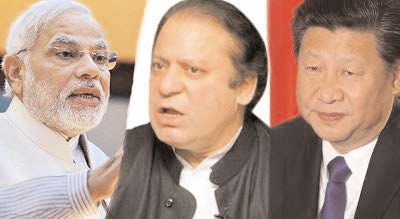
WASHINGTON (TIP): China and Pakistan are closely coordinating moves to block India’s entry into the Nuclear Suppliers Group (NSG).
Beijing is using Pakistan’s non-starter position with the NSG to block India’s application in the name of parity, stating that it would either support NSG entry for both India and Pakistan, or none of them.
Talking about the China – Pakistan grand strategy to stall India’s admission into the NSG , well placed US sources who work with the NSG said that from all counts it does appear that China and Pakistan are coordinating closely to stop the Indian entry.
The sources pointed to the fact that when India sought an information session with the NSG Participating Governments (PGs) at the recent NSG Consultative Group meeting on April 25 and 26, where it would have made a formal presentation to the NSG Group in support of its membership, Pakistan requested for a similar discussion slot with the NSG PGs.
Sources said that even though Pakistan was fully aware that its request would be rejected, it made its application at the cue of China, in order for Beijing to look even-handed when it sought the rejection of both requests on grounds of parity.
Providing an insight into the China-Pakistan plan to stall India, sources say that Pakistan is now going to write to all the NSG PGs about its wish to join the NSG. This is being done in anticipation of an application by India for NSG membership at the forthcoming plenary session of the NSG in June.
The Pakistani application, added sources, is “just a decoy” for China to reject both applications on grounds of parity. China knows that Pakistan does not stand a chance at the NSG, and most of the NSG states will reject Islamabad’s application. By taking the lead in rejecting the Pakistani application along with that of India, China would like to project its position as “neutral” when in reality it is “working in tandem with Pakistan to stall India’s application “.
US sources are disappointed with the Chinese tactics of “using Pakistan’s non credentials with the NSG to settle scores with India”. Informed sources say that this strategy is not a secret and during Pakistan President Mamnoon Hussain’s visit to China in November 2015, China revealed its hand when it told President Hussain that if India is allowed to get NSG membership, China would ensure that Pakistan also joins the group.
The Chinese government told President Hussain that “if India is allowed to join the NSG and Pakistan is deprived of NSG membership, Beijing will veto the move and block the Indian entry”.
Sources maintain that true to its word, China is following a plan that will enable it to use Pakistan’s non-acceptance at the NSG to block India’s acceptance. “It is both or none” is the Chinese plan to derail the Indian application, say sources.
Chinese officials at the NSG level have been using the Pakistan card to stop India’s entry into the NSG while appearing to be even handed in China’s relations with India. Well informed sources also point to comments made by Pakistan’s former permanent representative to the United Nations Zamir Akram who virtually admitted the grand China – Pakistan plan to stall India’s entry into the NSG when, he said, that India will not make it to the NSG despite US. support since China was committed to both India and Pakistan joining the NSG at the same time, and would block any move for a unilateral admission of India.
He added that chances of India gaining entry into the NSG are virtually nil. The former senior Pakistani official also made it known that Islamabad has “friends at the NSG” who won’t let India enter the group.
US sources have seen through China’s game of “either both or none” in the NSG. They say that India’s non-proliferation credentials can never be compared with Pakistan’s, as Pakistan has a history of “selling Nuclear technology to rogue states like Libya”. They point to the father of Pakistan’s nuclear bomb, Dr A.Q. Khan, and his global nuclear trade.
Added to this history, is the fear in the West that Pakistan’s nuclear weapons, especially the tactical version that it is now in the process of developing, can easily find their way into the hands of terrorists, as Pakistan’s nuclear command is extremely vulnerable to penetration by Islamic hardliners. Well-placed sources say that China is aware of this situation, and is mindful of the fact that Pakistan can never be considered for membership in any global nuclear club, but that won’t stop China from using Pakistan as a “parity token to stop India which is fast emerging as China’s competitor at a global level”. (ANI)
-

India’s Finance Minister Arun Jaitley meets with Business leaders in New York City
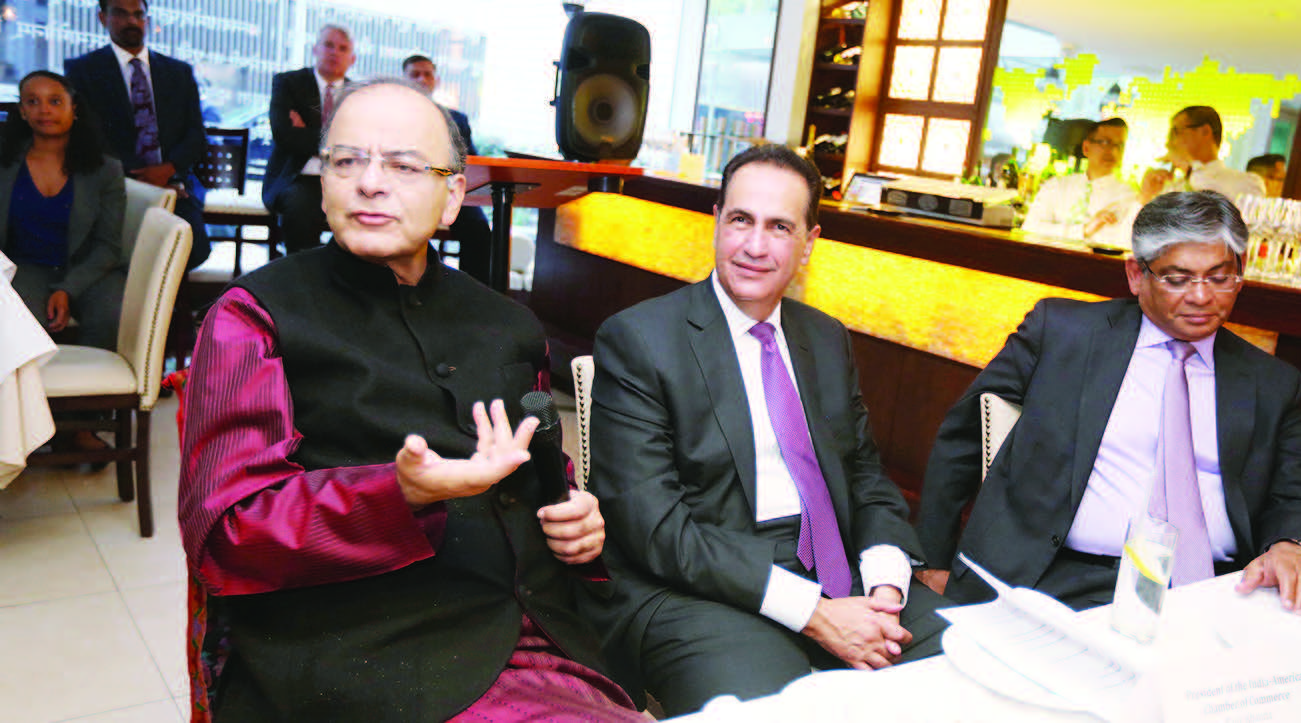
NEW YORK CITY (TIP): India-America Chamber of Commerce (IACC) hosted, April 19, an evening reception for, Arun Jaitley, Finance Minister of India, during his visit to United States for thebilateral annual yearly financial and partnership meeting with the secretary of treasury in WashingtonDC. The meeting was held at the finest Indian restaurant, Tulsi, for the members of the chamber,prominent business leaders, press and government officials.
“India has emerged as a major growth engine of the world, “said Rajiv Khanna, President of IACC andPartner of BakerHostetler in his opening remarks. Rajiv highlighted the finance minister’s achievementsand records over the last two years:
- Reduction in fiscal deficit;
- Controlling Inflation;
- Foreign direct investment has gone up by over 40%;
- GDP growth rate has gone up by more than 2%; and
- Progressive opening of the Indian economy to foreign direct investment and liberalization of thecontrols that were choking its growth.
“According to the CFA Institute, the global economy is expected to grow at growth rate of 2.6% in 2016.
The United States is expected to contribute 42% of this global growth, China is expected to contribute28% of this growth, India is expected to contribute 25% of this growth, Germany is expected tocontribute 3% of this growth and the rest of the world is expected to contribute 2% of this growth. Inother words, while most of the world is struggling with negative growth rates, India has emerged as amajor growth engine of the world, “said Rajiv. “We are very fortunate to have with us today the FinanceMinister of this major global growth engine, the Honorable Arun Jaitley.”
Rajiv further highlighted the successes of Finance Minister:
- “Two years ago, when Arun was sworn in as the Finance Minister of India, the fiscal deficit of India was about 4.5%. Today, it is 3.99%. This reduction in the fiscal deficit has taken place in spite of significant and continuous reduction in tax rates in India.
- When Arun became the Finance Minister, India was plagued with high inflation as a result of which India’s inflation hawk federal reserve would not even think of cutting down interest rates, thereby plaguing the industry with high interest rates at a time when it needed a financial breather. Today, the inflation in India is under control. In the last 16 months, the wholesale index has been mostly negative and the consumer index has been in the range of 4-5%, which has persuaded India’s tough federal reserve to bring down the interest rates, which in turn will spur further growth in India.
- In the last two years, the foreign direct investment in India has grown by over 40%.
- In the last two years, India’s GDP rate has grown by at least 2% and is expected to keep moving upwards.
- In each of the budgets presented by Arun, he has progressively opened the Indian economy to foreign direct investment and liberalized the controls that stifled the growth of the economy.
We are honored today to welcome Honorable Arun Jaitley, Finance Minister of India.”
“I have had the privilege of knowing Rajiv for a very long time, in fact more than three and one-halfdecades. Even after moving to US he has kept in touch,” said Honorable Arun Jaitley to the audience. “Iam extremely grateful that Rajiv has put together this gathering.
The whole world is facing serious challenges and so is India. Today, no one can ignore the fact that wehave a large population and significant part of that population still suffers from poverty. However, thegrowth does not necessarily mean affluence for some, growth in India is necessary because the benefitsof that growth have to first move towards poverty eradication, growth generates wealth and that in turngets used for all segments of the society. Particularly, the Indian model has been not only aboutpercolating down to weaker sections but states with enriched revenues that have to formulate povertyeradication programs to further help the weaker sections of the society.So, without growth, we will only have empty slogans, the kind we had in 1970s where we had veryprogressive slogans but were growing only by about 2.5%. And the world use to ridicule our growth by calling it the Hindu rate of growth. Though in the last two decades the situation has substantially changed, India has huge potential for pushing up growth on the strength of economic activity.”
He stated further, “we should bear in mind when Rajiv was giving figures of what various countries inthe world contribute to global growth – China for almost three decades grew at an average of 9.5% andfor 30 years to grow at that pace, it did shoulder about 50% of the global growth and that is somethingthat cannot be indefinitely expected. The Chinese model, which has been a state driven growth model,rather than an entrepreneur driven model of growth, is of course facing its own challenges of excesscapacity. It was export based and with the slowdown of global economy obviously the export world hasshrunk, trade has shrunk and China therefore is going through a transformation and in thattransformation they now believe that they may switch over to a domestic consumption economy ratherthan only export. But this transformation will obviously take time and therefore the Chinese did believelast year that the new Chinese normal was 7.5% growth. It has come down to 7% but now the current data indications are that it will be below 7%. In the first quarter, they claim to be grown by 6.7%. India ismuch smaller economy compared to China and certainly the US and will therefore grow much faster.”
The Minister further stated, “If we drew a line through the geography of India passing through thecenter of the country the bulk of the economic activity is to the west of that line, if you go to east of thatline, whether it’s Utter Pradesh, Bihar, Bengal, north-east parts of Orissa, significant growth is yet totouch these areas. Therefore, geographically we have a region which has a huge potential. It can growin agriculture, it can grow in services, it is also a mineral rich area, and when you exploit these potential,these areas have tremendous opportunities.
Women in India have been mostly home makers and therefore their potential contribution to the GDP interms of an evolving work force is very significant and you can see social, gender and geographicalinstruments available to us to grow. Expect services, we haven’t realized our full potential and that iswhy I think one of the key areas of emphasis we have now is one that you must concentrate on,agriculture – 15% of country’s income come from agriculture, about 55% people are involved in it. Overthe next 20- 30 years, we have to take large chunks of people out of this sector, we have to add to ruralinfrastructure, we have to add to irrigation, electrification and otherwise empower this sector.”
He further discussed with the audience the Mudra scheme which was another driver of growth – “Banksmust start giving micro finance at modest interest rates without security, and about 70% of these loanshave been taken by women.
As far is the world is concerned – I have said the situation is still very grim. At all the internationalforums and at the global economic forums that we have been attending, everyone seems to be aware ofthese challenges. And there is a lack of clarity as to how quickly the world will get out of this, whengrowth will return to the world. The whole economic picture of the world is changing. Countries are stillstruggling with new regime of low commodity prices, low oil prices, which in fact becomes a transfer ofresources, transfer of wealth from the producing nations to consuming nations.”
Mr. Jaitley concluded his speech by saying “for a society like India where domestic consumption isvery large, we have to use economic instruments available within the country. For example:
- Emphasis on increased public spending;
- Large government expenditure in infrastructure and irrigation;
- This year 233 highways are under construction;
- 400 railways have been reconverted and rebuilt by private sectors;
- 700,000 roads being linked to highways and stronger roads;
- New ports and airport activations; and
- Affordable housing in slum and rural areas.
- Thank you Rajiv for your initiative and hospitality.” The Hon Minister then took questions from thepress and chamber members.
About India-America Chamber of Commerce
The India-America Chamber of Commerce works to promotes business-to-business dialog between thebusiness and policy leaders of India and the U.S. – the two largest democracies in the free world. TheChamber serves as a platform for open and spirited interaction among U.S. and Indian business leadersfrom the private and public sectors. The Chambers’ monthly meetings include keynote presentations byvisiting cabinet ministers, ambassadors and other prominent business leaders from the U.S. as well asIndia.
India-America Chamber of Commerce was formed in 1932 and has since then, tirelessly worked topromote trade and investment between India and the United States. The Chamber is now accepting newmembers and forming a new board of influential members.
For additional information check: www.indiaamericaChamber.com
For additional Information and membership forms please contact: Rajiv Khanna – rkhanna@bakerlaw.com Poonam Jain – nypoonam@gmail.com
-

China: US-Philippine military ties invoke ‘Cold War mentality’
BEIJING (TIP): Responding to what it says are provocative plans for stepped-up US-Philippine military cooperation, China says it will “resolutely defend” its interests and accuses the two longstanding allies of militarizing the region and harboring a “Cold War mentality.”
The ministry’s comments came shortly after Thursday’s announcement that the US would send troops and planes to the Philippines for more frequent rotations and will increase joint sea and air patrols with Philippine forces in the South China Sea.
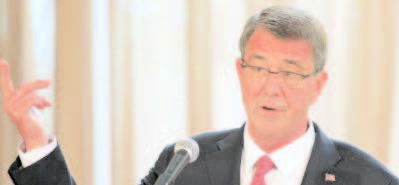
In a move likely to further anger Beijing, US Defense Secretary Ash Carter says he will be visiting an aircraft carrier — a potent symbol of US military might — in the South China Sea during his current visit to the region, which does not include a stop in China.
“The joint patrols between the United States and the Philippines in the South China Sea are militarizing the region and are non-beneficial to regional peace and stability,” said a statement posted to the ministry’s website late Thursday.
“The Chinese military will pay close attention to the situation, and resolutely defend China’s territorial sovereignty and maritime interests,” the statement said.
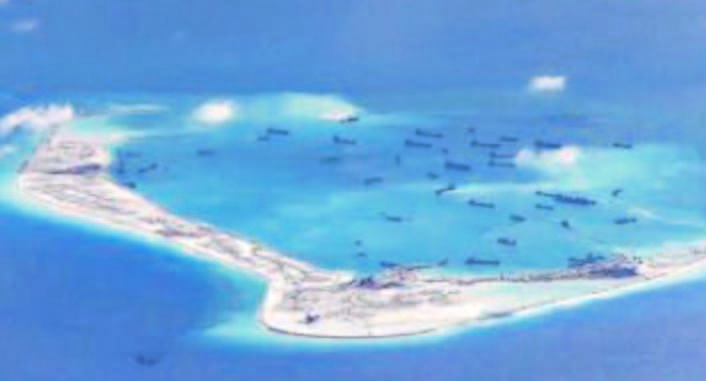
China claims virtually the entire South China Sea as its territory and is building manmade islands there topped with airstrips and other infrastructure. The Philippines, Vietnam and others also claim territory controlled or claimed by China and increased military and coast guard deployments by all sides could increase the potential for conflict.
The ministry’s statement also referenced China’s long-standing opposition to US military alliances in the region. It regards those as a form of unwelcome interference that stymies its desired status as the pre-eminent military power in the Asia-Pacific.
-

US defence secretary Ash Carter to visit warship in South China Sea, bound to anger Beijing
MANILA (TIP): US defence secretary Ash Carter will visit a US aircraft carrier transiting the disputed South China Sea on April 15, a move bound to anger China, which has been increasingly asserting its territorial claims.
Carter made a similar visit to another aircraft carrier in November as it was crossing the South China Sea.
Carter spoke at the closing ceremony of joint US-Philippines military exercises in Manila. Sailors and Marines from the USS John C Stennis carrier, the vessel Carter will visit, participated in the exercises.
China claims almost the entire South China Sea, believed to have huge deposits of oil and gas. Brunei, Malaysia, the Philippines, Taiwan and Vietnam also have claims to parts of the waters, through which about $5 trillion in trade is shipped every year.
-

China eateries fire robot chefs, waiters
BEIJING (TIP) : About 10 robots employed as chefs and waiters in restaurants in China have been fired after their owners found them not smart enough. Employing artificial intelligent robots in restaurants has not proved such a smart idea after all, media reports said. Restaurant owners claimed they were just not clever or sophisticated enough to do their jobs properly. The move comes only a few years after a catering business in Xiamen, in southern Fujian province, employed robots instead of people.
Another restaurant, which opened last October, made headlines for using four automated waiters that were able to take orders and deliver food to customers’ tables. Now only two of them remain, to greet customers, with the other two apparently canned. While the robot waiters were an excellent gimmick to woo customers, they were not quite so good at their programmed task of serving. “They were merely standing there to look fancy,” a worker said.
Another robot-themed restaurant closed down less than six months after its opening, with diners complaining that dishes prepared by the robot chefs were “unpalatable”. “The food was not tasty at all and the whole restaurant was very smoky because of the poor cooking skills of the robot chefs,” one diner said.
For a restaurant to employ a robot worker it has to pay about $7,700 for each and then several hundred dollars each month for its upkeep, including repairs, plus electricity. “Human beings can react to their environment effectively, but these robots are not able to do so,” Sun Qimin, chairman of Siert, another robotmaker, said.
-

US plans third patrol near South China Sea islands
WASHINGTON (TIP): The US Navy plans to conduct another passage near disputed islands in the South China Sea in early April, a source familiar with the plan said, the third in series of challenges that have drawn sharps rebukes from China. The exact timing of the exercise and which ship would travel inside a 12-nautical mile limit around a disputed island was not immediately clear.
The United States has conducted what it calls “freedom of navigation” exercises in recent months, sailing near disputed islands to underscore its right to navigate the seas. U.S. Navy officials have said they plan to conduct more and increasingly complex exercises in the future.
The USS Stennis carrier strike group is currently operating in the South China Sea. The next freedom of navigation exercise is unlikely to be conducted by a carrier like the Stennis, but rather by a smaller ship, the source said. Experts predict the next US challenge to the various claims in the South China Sea could occur near Mischief Reef, a feature claimed by the Philippines and which was submerged at high tide before China began a dredging project to turn it into an island in 2014.
-

McDonald’s to open 1,300 outlets in China
WASHINGTON (TIP): Fast food giant McDonald’s has planned to open approximately 1,300 fast food restaurants in China over the next five years, CEO Steve Easterbrook announced. Easterbrook said that the firm wants to make China its second largest market worldwide, behind only the US, EFE news reported. Easterbrook said that the aim is to open some 250 restaurants this year, and to do that the firm will seek an investing partner to participate in broadening its franchise business in China, where McDonald’s currently operates some 2,200 stores.
The firm’s expansion plans in China comes along with those of other multinationals such as coffee chain Starbucks, which plans to open some 500 coffee shops per year over the next five years in the Asian country, or sports retailer Adidas, which wants to open some 3,000 stores.
Easterbrook also announced that given the rising interest among Chinese consumers in healthier food options, the company will include more items on its menus in China such as apple slices and whole wheat cupcakes.
-

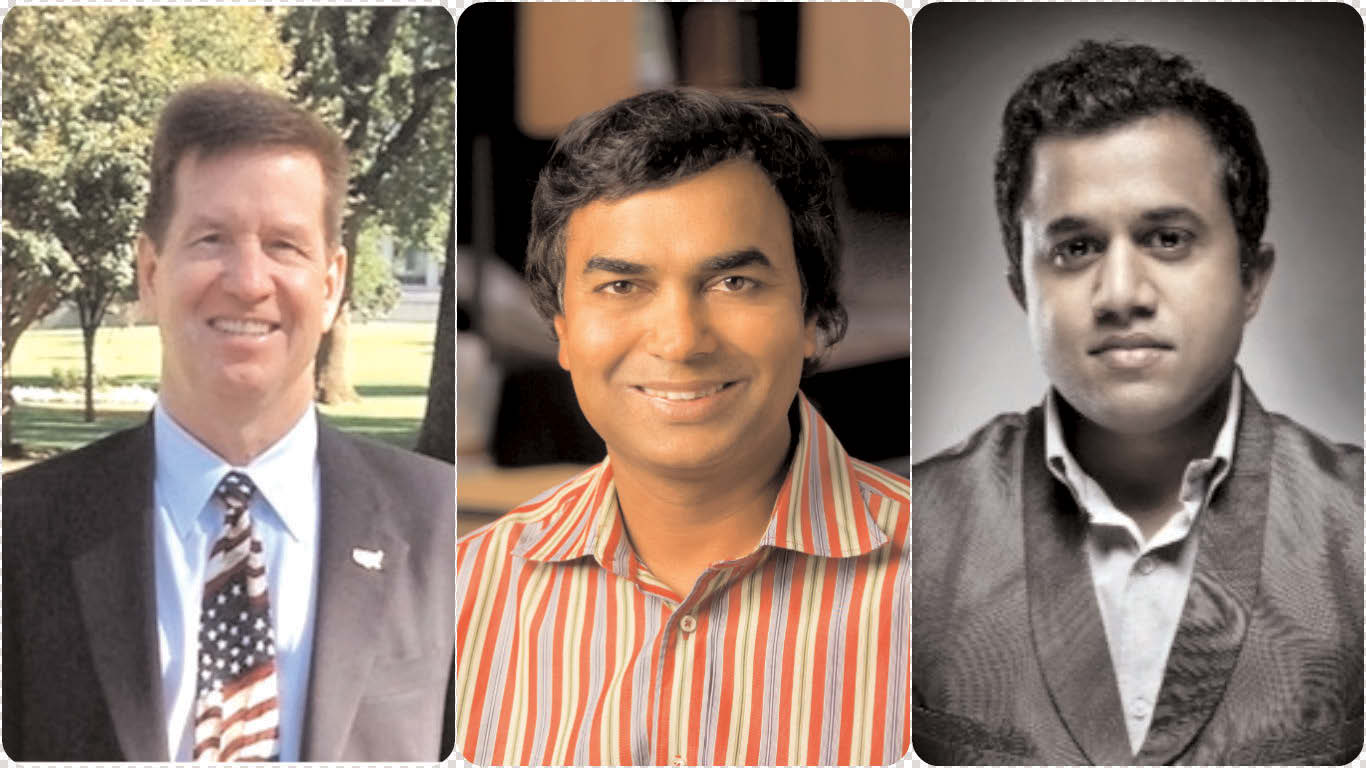
Mayor of Burr Ridge Mickey Straub to host Akshaya Patra Chicago Gala
CHICAGO, IL (TIP): The Akshaya Patra Foundation will be holding its 2016 Chicago Benefit Event on Saturday, May 7th. The Mayor of the Village of Burr Ridge, Mickey Straub, will be the honorary host of the event. The event’s Host Committee will also be led by Mafat Patel of Patel Brothers.
Gopi Kallayil, Google’s Chief Evangelist for Brand Marketing will serve as the event’s keynote speaker. Comedian and actor Omi Vaidya will serve as the event’s Master of Ceremonies. The event will be held at the Meadows Club in Rolling Meadows, Illinois, and will begin with a welcome reception at 6:30 PM.
Mickey Straub was elected Mayor of Burr Ridge, a suburb of Chicago, in 2013. Nicknamed “Mayor Mickey,” he is a husband, parent, speaker, and is active in his township and church. He is the author of a newly released BIG GOALS…Short Deadlines, an inspirational book with a patriotic and spiritual message. Mickey Straub is also the founder and president of Sales Activity Management, Inc., a faith-based company providing custom business management tools and services nationwide. In 2012, Mickey became the only person in history to take a patriotic pilgrimage in honor of Lincoln and our veterans to 50 capitols in 50 days.
The event’s Host Committee is composed of prominent leaders of the Chicago community: Mayor Mickey Straub, Mafat Patel of Patel Brothers, Himanshu Patel, Ila Vyas, Saroj Patel, Sunil Kumar, Mohanbir Sawhney, Dipak Kapadia, Dr. Bharat Barai, Dr. Umang Patel, Harish Bhatt, Alok Gaur, Midwest Molding Inc., Cheena Chandra, Prashant Sheth, Vandana Walia, Dr. Romi Chopra, Ketki Parikh, Bhailal Patel, Ram Prashantha, Chhotalal Patel, Kanti S. Patel of the Gujarat Culture Samaj, Moti Agarwal of the Millennium Bank, Suketu Amin, Nilesh Naren Patel of MedStar, Kantilal Patel of New York Life, Kishan Patel of New York Life, Ram Barat, Babu Amin, Natubhai Bajee Patel, Madan Meadows Club, and Share with Love. Over 400 other business, non-profit, government, and philanthropic leaders from around the region are expected to attend and support the organization’s dual mission of addressing childhood hunger and malnutrition, and to promote education for underserved children in India.
As Google’s Chief Evangelist for Brand Marketing, Gopi Kallayil connects corporate clients to their customer base using Google and Google social applications. In his time with Google, Mr. Kallayil has also been responsible for Google +, AdWords, and AdSense. Prior to joining Google, Gopi Kallayil was on the management team of two Silicon Valley venture startups. He also worked on information technology and business performance projects for global corporations in India, China, and the United States as a consultant with McKinsey & Co.
Omi Vaidya is one of the few actors and filmmakers working in Hollywood and Bollywood. A graduate of NYU’s Film School, Omi started as a video editor on independent films and went on to direct short films that have won awards at film festivals worldwide. Omi’s work in front of the camera includes memorable characters on American TV shows like The Office, Arrested Development, Bones, Growing up Fischer, and The Comeback. In Bollywood, Omi made his major debut in Aamir Khan’s film, Three Idiots, which became the biggest Indian box office success of all time.
Established in 2000, Akshaya Patra began by serving 1,500 in 5 schools in Bangalore. Today Akshaya Patra is the largest NGO-run school meal programs in the world and serves over 1.5 million children daily in over 11,501 schools through 24 kitchens in ten states in India. This March, Akshaya Patra will celebrate its 15th Anniversary and the serving of its 2 billionth meal to children in India.
Akshaya Patra has received international recognition for its life-changing mission. In 2016, Akshaya Patra’s Founder Madhu Pandit Dasa received the Padma Shri Award, India’s fourth highest civilian award, for his work with Akshaya Patra. Shridhar Venkat, CEO of Akshaya Patra India, was recognized as being among the 50 Most Impactful Social Innovators in the world. Akshaya Patra was recently awarded the Nikkei Asia Prize, an award established to recognize an organization’s outstanding achievements that contribute to the region’s sustainable development.
year’s Chicago Gala event will feature an evening of networking, entertainment, and dinner. Individuals interested in purchasing tickets and sponsoring the event, can contact Manisha C Gandhi, Director of Development, at 832-876-2142.
To Register:
www.foodforeducation.org/chicagoFor more Information: www.foodforeducation.org
To register: Manisha C Gandhi,
832-876-2142 | Piyali Dutta, 781-462-8454(Photographs and Press release courtesy Asian Media USA)
-

China helped Pak to block India’s NSG membership bid: Aziz
ISLAMABAD (TIP): Pakistan along with its “all-weather” ally China has successfully blocked India’s bid to become a member of the elite Nuclear Suppliers Group, Pakistan Prime Minister’s Advisor on Foreign Affairs Sartaj Aziz has said.
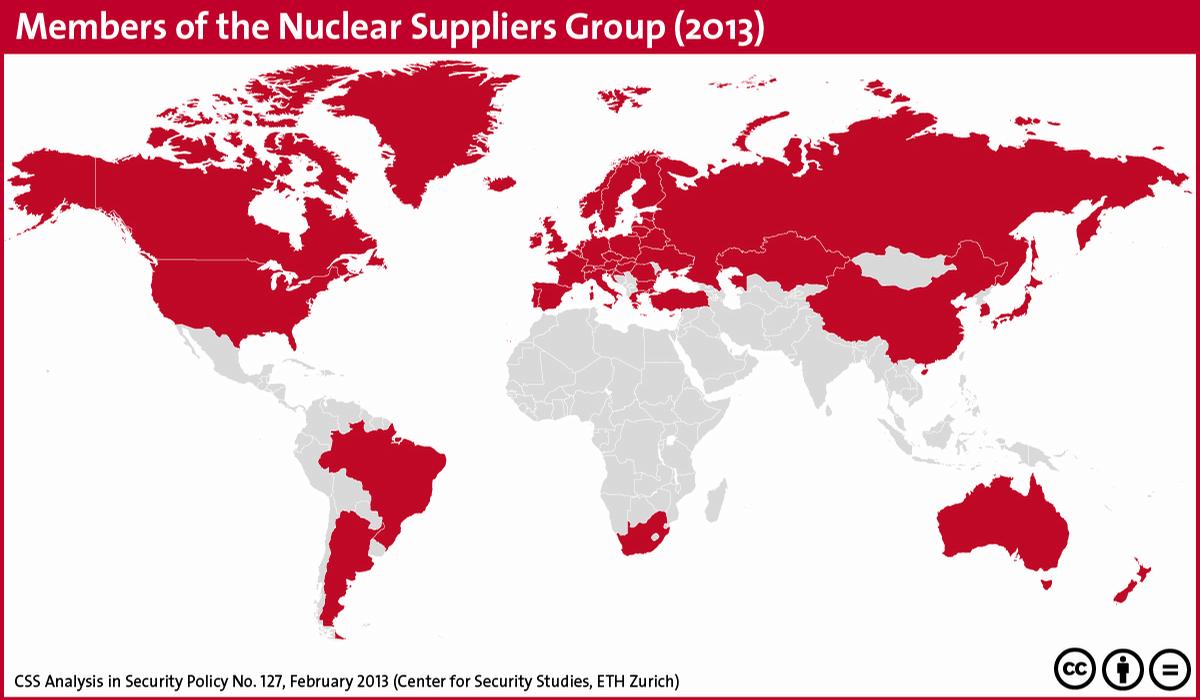
India has been seeking membership to the 48-member nuclear club, whose members can trade in and export nuclear technology. NSG is a powerful multinational body concerned with reducing nuclear proliferation.
Pakistan with the cooperation of China had successfully blocked India’s bid to seek membership of the NSG, Aziz told the Senate yesterday. While countries like the US have backed India’s membership in the NSG, China has only offered conditional support to New Delhi.
China’s Foreign Ministry had called for “prudence and caution” over expanding the NSG. Asked whether China wants to back any other country’s entry into NSG, Chinese Foreign Ministry Spokesperson Hua Chunying had said, “as for the expansion of the group, the members should make the decision on consensus after thorough discussions. India’s inclusion into this group is an internal matter of the group. It needs prudence and caution and thorough discussions among all members.”
“We support such discussion and we also support India’s inclusion into this group if it meets all the requirements,” she had said in January last year. In November, media reports said China had assured Islamabad that if India is granted membership of the NSG, China would ensure that Pakistan also joined the group.
Pakistan has been saying that if it is deprived of NSG membership while India is accommodated, it would be taken as discrimination and lead to an imbalance in the region. Chinese and Pakistani leaders have views their relationship as “all-weather”.
-

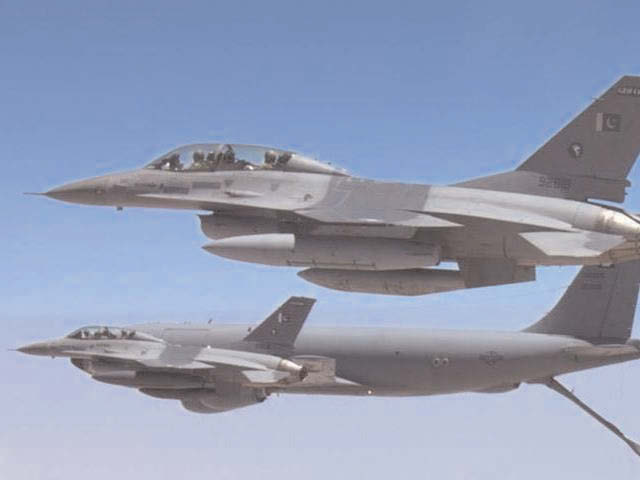
US Senate kills bid to block F16 sale to Pakistan
WASHINGTON (TIP): Eight US-made F16s have not exactly flown out to Islamabad yet, but well may the engines be fired up and the planes ready to taxi.
The US Senate on Thursday rejected by a 71-24 margin efforts by some lawmakers to block the sale of eight F- 16 fighter jets to Pakistan, although the debate that accompanied the vote showed how ragged Washington-Islamabad ties have become.
Full court press from an Obama administration guided by tactical considerations and an arms lobby driven by jobs and money was always going to win the day. But the fact that 24 Senators (12 Democrats; 12 Republicans) went against the Democratic executive and the Republican legislative leadership showed the extent of bipartisan distrust in a country one lawmaker described during the debate as a “Frenemy…part friend and a lot of enemy.”
Indian and American diplomats keenly watched the legislative dogfight engineered by Kentucky Senator Rand Paul (Republican), who employed a rarely-used provision in the Arms Export Control Act to force a vote – after an hour of debate — in the full Senate to block the sale of the F-16s.
“We’ve got a lot of things going on in our country that need to be taken care of, and we don’t have enough money to be sending it to Pakistan,” Paul argued on the Senate floor, citing everything from Pakistan’s nurturing of terrorists to its persecution of Christians to stop the sale. “I can’t in good conscience look away as American crumbles at home and politicians tax us to send the money to corrupt and duplicitous regimes abroad,” he added, pointing to some $ 15 billion Washington has given Pakistan post 9/11.
But the Senate’s foreign relations committee leadership maintained that it was better to dangle the planes before Pakistan so that Washington could have leverage over Islamabad, lest it gravitate towards China and Russia for such purchases. The debate essentially answered the question: why eight jets, and why now.
“They are just throwing out some bones to Pakistan to keep them in line for the next few months,” one legislative observer explained.
Republican Senator Bob Corker, who has said he supports the sale but will not allow US taxpayer to subsidize it, explained it more tactfully.
“It’s about whether we as a country would prefer for Pakistan to buy American made fighter jets or whether we would prefer them to buy Russian jets or French jets,” he observed, adding that he and Senator Cardin, his Democratic counterpart, have called for a hold on financing “to assure there are behavior changes that take place in Pakistan before any US dollars go towards this sale.
-

Former first lady Nancy Reagan dies at 94 in California
LOS ANGELES (TIP): Nancy Reagan, the helpmate, backstage adviser and fierce protector of Ronald Reagan in his journey from actor to president – and finally during his 10-year battle with Alzheimer’s disease – has died. She was 94.
The former first lady died on Sunday at her home in Bel-Air, California, of congestive heart failure, said assistant Allison Borio.
Her best-known project as first lady was the “Just Say No” campaign to help kids and teens stay off drugs.
When she swept into the White House in 1981, the former Hollywood actress partial to designer gowns and pricey china was widely dismissed as a pre-feminist throwback, concerned only with fashion, decorating and entertaining.
By the time she moved out eight years later, Mrs. Reagan was fending off accusations that she was a behind-the-scenes “dragon lady” wielding unchecked power over the Reagan administration – and doing it based on astrology to boot.
All along she maintained that her only mission was to back her “Ronnie” and strengthen his presidency.
Mrs. Reagan carried that charge through the rest of her days. She served as a full-time caretaker as Alzheimer’s melted away her husband’s memory.
After his death in June 2004 she dedicated herself to tending his legacy, especially at his presidential library in California, where he had served as governor.
She also championed Alzheimer’s patients, raising millions of dollars for research and breaking with fellow conservative Republicans to advocate for stem cell studies.
Her dignity and perseverance in these post-White House roles helped smooth over the public’s fickle perceptions of the former first lady.
The Reagans’ mutual devotion over 52 years of marriage was legendary. They were forever holding hands. She watched his political speeches with a look of such steady adoration it was dubbed “the gaze.”
He called her “Mommy,” and penned a lifetime of gushing love notes. She saved these letters, published them as a book, and found them a comfort when he could no longer remember her.
In announcing his Alzheimer’s diagnosis in 1994, Reagan wrote, “I only wish there was some way I could spare Nancy from this painful experience.” Ten years later, as his body lay in state in the US Capitol, Mrs. Reagan caressed and gently kissed the flag-draped casket.
As the newly arrived first lady, Mrs. Reagan raised more than $800,000 from private donors to redo the White House family quarters and to buy a $200,000 set of china bordered in red, her signature color.
She was criticized for financing these pet projects with donations from millionaires who might seek influence with the government, and for accepting gifts and loans of dresses worth thousands of dollars from top designers. Her lavish lifestyle – in the midst of a recession and with her husband’s administration cutting spending on the needy – inspired the mocking moniker “Queen Nancy.”
-

New China law to put curbs on charity groups
BEIJING (TIP): China is making a new law that will restrict charity organisations from supporting programmes that threaten public interest or national security.
“Charities shall not carry out or sponsor any activity that endangers national security or public interests,” Li Jianguo, vice-chairman of the standing committee of the National People’s Congress, China’s parliament, said in an explanation of the law. Li did not explain what might constitute endangering national security. The NPC is in the process of passing the new law.
The new law has evoked mixed feelings in different sections of voluntary organisations. Some fear that the new law can help local officials to check supply of funds to programmes that they do not approve of. Xinhua news agency said that charities found to be undermining national security would be punished or have their registrations revoked in serious cases. The government wants charities to focus on the task of alleviating poverty.
-

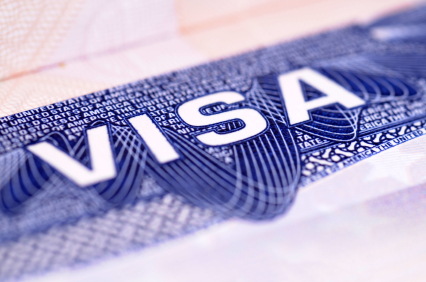
US group studying religious freedom denied visa to India
A US commission scheduled to visit India to discuss and report on the conditions of religious freedom in the country has been denied visa by the Indian government.
A three-member delegation of US Commission on International Religious Freedom (USCIRF) wanted to make a one-week visit starting Friday to meet with government officials, religious leaders and activists in India.
“We are deeply disappointed by the Indian government’s denial, in effect, of these visas,” said Robert P George, chairman of USCIRF in a statement.
“As a pluralistic, non-sectarian, and democratic state, and a close partner of the United States, India should have the confidence to allow our visit,” he said.
This is not the first time the USCIRF members have not been issued visas. The members, who prepare an annual report on religious freedom in countries across the globe, were denied the visas for the first time in previous UPA regime.
USCIRF has been able to travel to many countries, including those that are among the worst offenders of religious freedom, including Pakistan, Saudi Arabia, Vietnam, China and Burma, George said.
“One would expect that the Indian government would allow for more transparency than have these nations, and would welcome the opportunity to convey its views directly to USCIRF,” George said.
The USCIRF delegation was scheduled to leave on Friday and had the support of the state department and the US embassy in New Delhi, it said.
USCIRF’s principal responsibilities include reviewing, through the lens of international human rights law, the facts and circumstances of violations of religious freedom internationally and making policy recommendations to the President, Secretary of State, and Congress.
“USCIRF will continue to pursue a visit to India, given the ongoing reports from religious communities, civil society groups, and NGOs that the conditions for religious freedom in India have been deteriorating since 2014,” George said.USCIRF is an independent, bipartisan US federal government commission with commissioners appointed by the President and the leaders in both Houses of Congress.
-

Philippine officials say China blocking access to disputed South China Sea atoll
MANILA (TIP): China has stationed several ships near a disputed atoll in the South China Sea, preventing Filipino fishermen from accessing traditional fishing grounds and raising tensions in the volatile region, Philippine officials said on Wednesday.
China had deployed up to seven ships to Quirino Atoll, also known as Jackson Atoll, said Eugenio Bito-onon Jr, the mayor of nearby Pagasa Island in the Spratly Islands.
The Spratlys are the most contested archipelago in the South China Sea, a resource-rich region and critical shipping lane linking North Asia to Europe, South Asia and the Middle East.
“This is very alarming, Quirino is on our path when we travel from Palawan to Pagasa. It is halfway and we normally stop there to rest,” Bito-onon Jr told Reuters.
“I feel something different. The Chinese are trying to choke us by putting an imaginary checkpoint there. It is a clear violation of our right to travel, impeding freedom of navigation,” he said.
Fishermen told the mayor one Filipino boat had run aground in the area and was still there but was not being harassed by the Chinese vessels.
Chinese authorities did not immediately respond to faxed requests for comment.
The Philippine military said it was trying to verify the presence of Chinese ships near Jackson Atoll, where a Chinese warship allegedly fired warning shots at Filipino fishermen in 2011.
“We know there are Chinese ships moving around the Spratly area,” spokesman Brigadier-General Restituto Padilla told Reuters. “There are also ships around Second Thomas Shoal so we want to make sure if the presence is permanent.”
Second Thomas Shoal is where the Philippine navy has been occupying and reinforcing a rusting ship that it ran aground in 1999 to bolster its claims to the disputed reef.
TENSIONS ON THE RISE
A military source from Palawan said a surveillance plane had seen four to five ships in the vicinity of Jackson Atoll last week. The source could not say if the ships were passing through or permanently stationed there because the area is close to Mischief Reef, where China is busy building an artificial island. “There are no indications China will build structures or develop it into an island,” said the source, who was not authorised to speak to the media about the South China Sea.
The Philippines Star newspaper, which earlier reported the story, quoted an unidentified fisherman as saying Chinese boats chased them away when they tried to enter the area last week.
“These gray and white Chinese ships, around four of them inside the lagoon, prevented us from entering our traditional fishing ground,” he said.
Along with China and the Philippines, Brunei, Malaysia, Taiwan and Vietnam also have claims on the waters, through which about $5 trillion in trade is shipped every year.
Tensions in the region have been building recently, with the United States and others protesting against Beijing’s land reclamations, along with the recent deployment of surface-to-air missiles and fighter jets in the Paracel Islands.
U.S. Defense Secretary Ash Carter warned China on Tuesday against what he called “aggressive” actions in the region, saying there would be “specific consequences” to militarisation of the South China Sea.
Beijing, for its part, has been angered by “freedom of navigation” air and sea patrols the United States has conducted near the islands it claims in the South China Sea and says it needs military facilities for its self defence.
(Reuters)
-

24 jailed in China for biggest ponzi scam
BEIJING (TIP): A Chinese court has jailed 24 swindlers involved in the country’s biggest financial scandal worth $1.5 billion.
It awarded life sentence to the ringleader, Jiang Hongwei, 32, who owned the finance company that cheated 2,30,000 people. Jiang’s 23 accomplices were sentenced to 14-years imprisonment.
The swindlers persuaded thousands of people, mostly elderly, to invest their lifelong savings in financial schemes that offered as high as 47% returns or take high-cost loans. The investors were conned into investing in return of the absurd offer in a country where banks offer 2-3% interest on deposits.
“Many elderly victims burst into tears at the trial,” the official Xinhua news reported. Some said they were attracted by the company’s ‘novel modes of financial services’. A large number of victims attended the hearing at a court in China’s Guangdong Province.
One of the victims described the massive presentation made by the company. “Their grand exhibition occupied six halls. After attending it, I felt assured and decided to invest $116,000,” she said. The woman said she and her husband lost all their savings. The court has seized assets of the swindlers, but it was unclear if the victims would get their money back.
Lack of sufficient investment options in China has been blamed for people getting attracted to such fraud. Investors get low returns on bank deposits, face extremely volatile stock markets and falling prices in the real estate market. The government has imposed restrictions on the number of houses a family can own. Many Chinese have invested in gold, but it is not a widely popular option. Many welloff Chinese try to sneak wealth out of the country through illegal means.
(PTI)