Tag: China

  • World’s richest 10 percent responsible for half of CO2, report says

    World’s richest 10 percent responsible for half of CO2, report says

    WASHINGTON (TIP): The world’s richest 10 percent of people are responsible for producing about half of all carbon emissions, and the average carbon footprint of the richest 1 percent is about 175 times that of the poorest 10 percent, according to a latest report.

    The paper, “Extreme Carbon Inequality,” released by the global charity Oxfam, comes as world leaders are gathered in Paris for COP21 – a United Nations conference aimed at agreeing a new global climate treaty to mitigate the worst effects of climate change.

    “While the COP21 in Paris will see a deal negotiated between governments on the basis of the total emissions produced in their territories, the real winners and losers will be their citizens,” the report reads. “The litmus test of the deal will be whether it delivers something for the poorest people who are both the least responsible for and the most vulnerable to climate change, wherever they live.”

    The 3.5 billion people that make up the poorest half of the globe produced just 10 percent of emissions – yet they live in places that are particularly vulnerable to the effects of global warming, including from catastrophic storms, severe droughts, and rising seas and flooding, the report said. Their governments are also less likely to have the resources to adapt to and mitigate those effects, the report added.

    The reported cited a recent study by the World Bank that found the poorest people in any country are most exposed to disasters including heat waves, flooding, and droughts -especially in countries in Africa and South East Asia.

    For example, when Typhoon Haiyan devastated the Philippines in 2013, killing over 7,000 people, it left the country with a humanitarian crisis so extensive it had to borrow money from other countries to rebuild – leaving the country with at least $1 billion to pay back.

    The same inequalities can also be seen in wealthy countries, including the United States, where its poorest residents in Louisiana, Mississippi and Alabama are disproportionately threatened by rising seas and coastal flooding, the report said. When Superstorm Sandy hit New York City in 2012, over a third of the people in the storm surge area lived in government-assisted housing, and half of the city’s public housing residents were displaced, it added.

    “Climate change and economic inequality are inextricably linked and together pose one of the greatest challenges of the 21st century,” Tim Gore, Oxfam’s head of food and climate policy and author of the report, said.

    The report shows that the richest 10 percent of the U.S., about 30 million people, produces three times as many emissions as the 600 million people that constitute China’s poorest half; while the poorest half of the U.S. produces five times the amount of emissions as the poorest half of India.

    By the end of COP21, each country is expected to submit final plans for cutting emissions and transitioning to green economies. Those actions will aim to help keep the global temperature increase since preindustrial times below 2 degrees Celsius (3.6 Fahrenheit). At the current pace of carbon emissions, the world is on track for a nearly 3 C rise by 2100, the U.N. has said. The earth has already passed the 1 C hotter mark, according to U.K. researchers who released new data last month.

    “Paris must be the start of building a more human economy for all – not just for the ‘haves,’ the richest and highest emitters, but also the ‘have-nots,’ the poorest people who are the least responsible for and most vulnerable to climate change,” Gore said in the release.

  • Why China’s millennials are happy to own nothing

    Why China’s millennials are happy to own nothing

    BLOOMBERG (TIP): Two decades ago, Tyler Xiong and his parents had to live in a commune guided by the strict socialist teachings of Mao Zedong.

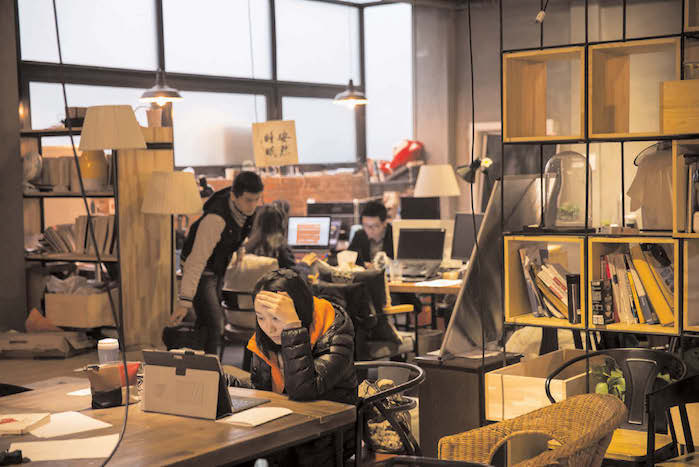
    Today Xiong, a 28-year-old tech entrepreneur, voluntarily lives among 500 people in a co-sharing community near Beijing’s Silicon Valley .Xiong has two pairs of shoes and fewer than 10 outfits. He does not use a car and travels by taxi. His philosophy: if you can rent it, why own it.

    Faced with a widening wealth gap and the slowest economic growth in more than two decades, millions like Xiong find themselves priced out of the big cities and are rejecting the consumer trappings of a modern lifestyle.Instead, they’re embracing the sharing economy to a far greater degree than their Western counterparts. In a recent survey , Nielsen found that 94%of Chinese are willing to share, compared with just 43% of North Americans.

    Xiong is one of nearly 5,000 people across China who have moved into co-living spaces called You+, a name meant to inspire young people to infinitely expand their horizons. His community , located in a shuttered school, holds business workshops, helps register companies and s now trying to create a database to match skills and rela ionships. About 60 startups call the location home.

    You+ echoes a similar movement in the West, where startups like Common (US), Nest Copenhagen (Denmark) and Sende (Spain) are selling mostly young urbanites on he co-living lifestyle.

    For as little as about $500 a month, You+ residents gain access to a private room with a bathroom, co-working space that functions as an office, and entertainment facilities ncluding a bar, disco and game room. “Instead of working for years at a company to gain some capital, such a pla ce allows young people to experiment with their startup ideas at very low costs,” says Su Di, the 36-year-old You+ cofounder.

    As Xiong sees it, China’s communal history combined with his generation’s embrace of social and economic change, is driving the rapid growth of the sharing economy . In China’s most recent fi ve-year plan for economic de velopment, officials highlighted the sharing economy as a way to help the county naviga te a tricky path from exportled growth to consumption.The sharing economy will generate $335 billion by 2025, up from $15 billion today , accor ding to PWC. (PTI)

  • INDIA HAS BETTER GROWTH PROSPECTS THAN CHINA, SAYS MARK MOBIUS

    INDIA HAS BETTER GROWTH PROSPECTS THAN CHINA, SAYS MARK MOBIUS

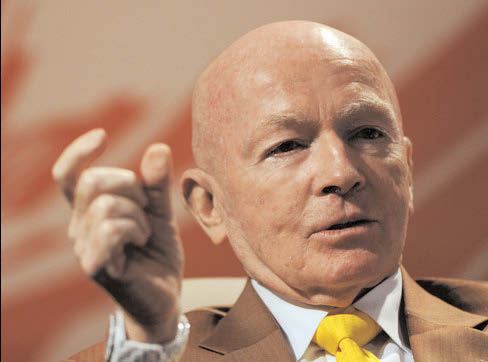
    MUMBAI (TIP): Emerging markets guru Mark Mobius said India could overtake China in the Templeton Emerging Markets group’s equity investments over the next five years, given the strong growth prospects of Asia’s third-largest economy and provided much-awaited reforms see the light of the day.

    Mobius, who is executive chairman of the Templeton Emerging Markets Group at Franklin Templeton Investments, said China accounts for 8% of the group’s equity investment, followed by India with a 3% share. But, he added, the gap could close in time to come.

    “If you look at where we are invested China is at the top of the list, followed by India and Thailand, will be the next two,” Mobius said in an interview on the sidelines of an event. “Going forward India is going to become more important, simply because it’s got better growth prospects,” said Mobius, adding that it was important that reforms went through as well.

    India’s economic growth accelerated to 7.4% in the second quarter of the current financial year, riding on a spike in manufacturing and a pickup in investment demand, government data showed on Monday.

    The ongoing reforms process was also key to Mobius’ rationale for investments in India. “The demographics are in favour. It’s a young population, and a growing population. Secondly, the reforms process is moving ahead. Modi has set an agenda for reforms,” he said. Although some people were concerned about the speed, he said, it was not as important as the direction of reforms.

    “These things (reforms) take time, but the direction is very clear,” added Mobius. The reforms process initiated by the government led by Prime Minister Narendra Modi was off to a slow start—compared with expectations—with a political logjam in previous Parliament sessions stalling the passage of crucial legislation. Hopes have risen now that things may move ahead better than expected from here on.

    Mobius does not expect the opposition Congress party to put barriers in the path of the ruling Bharatiya Janata Party (BJP) to get the reforms through. Last week, leaders of the BJP and Congress met at Modi’s residence, spurring hopes that the constitutional amendment bill to enable the goods and services tax (GST) will finally get Parliament’s nod. Modi invited Congress president Sonia Gandhi and former Prime Minister Manmohan Singh to discuss issues related to the winter session of Parliament, including the GST bill.

    Mobius said Modi’s performance as Prime Minister has been more or less in line with what he had expected, but added that he is capable of doing more.

    “I didn’t expect much more, (than what has happened), but I would say that in terms of what he could do, maybe we are talking about 75-80%,” said Mobius.

    According to him, investors could wait for another year for the government to deliver on reforms, and GST was the key reform. “If that’s delivered, that would be a watershed. That would be something.”

    The key risk to Indian markets was also deliveries on the reforms front, at this point.

    “Its really these reforms at the end of the day,” he said adding that rural electrification and reforms of the tax system were the big issues facing the Indian markets.

    There has been a debate on whether there is rising intolerance in the country, and the rising intolerance has dampened the sentiment for Modi, added Mobius.

    “It already is a hurdle. It is a problem for him, and it very difficult for him,” said Mobius. “I think his policy of not talking about it is probably a good one, because when it comes to religion, faith, class, these are emotional subjects.”

    “All these conflicts have their base in economics. When people don’t have jobs, if their standard of living is not good, and see what other people have and they don’t have it, they get angry,” he said.
    “So, I think it is definitely a problem for him but he is probably wisely trying to keep away from that and focus on his job at hand.”

    Mobius likes the consumer and infrastructure sectors in the Indian market, while he would avoid natural resources at this time. He expressed concern over state-owned banks, and emphasized that privatization was key.

    “They’ve got to get these state-owned banks out from under government control and put them on a stable basis with market-oriented policies, and that would be a giant step forward for not only for the banks, but also the government,” Mobius said.

    He said the recent outflows from emerging markets could reverse after the US Federal Reserve’s policy decision.

    “It is true that emerging markets have underperformed for the last three years and therefore a lot of investors have pulled money out of the emerging market funds,” said Mobius.

    “I believe that once the uncertainty caused by the Federal Reserve’s interest rate policy is out, then money will begin to flow again back in to emerging market.”

  • Blockade has left quake-hit Nepal in dire straits

    Blockade has left quake-hit Nepal in dire straits

    KATHMANDU (TIP): Large white tents and tin shacks scatter the hills near Kathmandu. They house some of the thousands who lost their homes in the devastating earthquake in April -and are the most visible sign of lagging recovery efforts.

    Those efforts have slowed even further recently . For the past two months, Nepal’s southern ethnic minority , the Madhesi, has been barring the entry of trucks of fuel and essential goods from India as part of protests demanding greater rights under Nepal’s new constitution. The blockade has left this Himalayan-locked country with shortages of fuel and cooking gas, medicines, and increasingly , basic relief supplies like tents and blankets -even as winter approaches.

    “It’s been one thing after another (holding up relief). First the monsoon, then the holiday season, and now the fuel blockade,” said Bhushan Tuladhar, a regional technical advisor to UN-Habitat, whose sanitation programme in quakehit areas has been affected by shortages in construction material. If the crisis continues, warned Oxfam, Unicef and other relief groups recently, relief could grind to a complete halt. Quake relief aside, fuel shortages have affected every aspect of daily life.

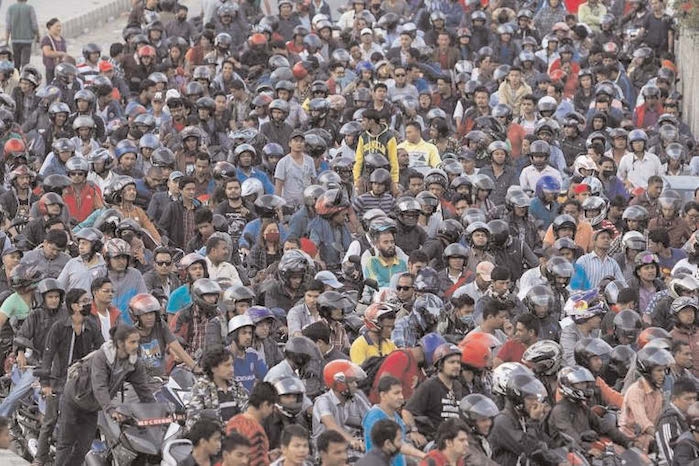
    Kathmandu has become a city of queues -mile-long lines for petrol and diesel, winding snakes for LPG cylinders.Commuting is a challenge: Public buses are overcrowded, taxi prices have shot up and many schools have shut. A black market in petrol is flourishing, and is the main reason you still see private vehicles on the road. One journalist told me that her family lives near the border and drives over into India to get fuel. A young pharmacist at Sumeru Hospital in Lalitpur said he pays `250 for a litre of petrol, three times the gas station price.

    Like other hospitals, Sumeru is running low on injectable antibiotics and lifesaving drugs. “If this continues, we’re going to be in real trouble,” the pharmacist said. Tourism, an economic mainstay, has also been hit. At Club Himalaya, a resort in Nagarkot, a hill station one hour from Kathmandu, many rooms are empty .

    The resort manager blamed higher transport prices and fewer vehicles plying. In Kathmandu, the government is selling discounted firewood for cooking but that doesn’t help apartment-dwellers or small cafes.At a tiny eatery in the Patan area, dishes disappear from the menu every day . Noodles are difficult to procure so no more noodle dishes. A cup of tea costs five rupees more now -sugar prices are up, said owner Mahesh Panday .

    A few other eateries display “no gas” menus and one institutional canteen even labels theirs the “The Modi Menu”-a reflection of how much Nepalis blame India for the crisis.

    The Indian government supports the demands of the Madhesis, who are culturally tied to India, for greater rights and representation. But Indian officials have denied helping the blockade. No body here believes that; Nepal PM K P Sharma Oli even described India’s role as “more inhumane than a war”.

    Remarkably , Indians still encounter little hostility or anger on the ground. One local journalist asks what regular Indians think of the situation: I don’t tell him that most are oblivious to the crisis in relations with one of their closest neighbours -a crisis that comes just a few months after India earned enormous goodwill for its help in post-quake rescue and relief.

    “Relations between India and Nepal were at such a high (after the quake)… all that is lost,” Swarnim Wagle, a recent member of the National Planning Commission, told me.”Nepali people just cannot reconcile such generosity then with the level of interference today .” Still, he blamed both governments for botching up, and downplayed Nepal’s turn to China for fuel and emergency supplies. “There is feeling that we need to wean away from excessive dependence on India,” Wagle said. Yet “there’s no option but to salvage the India-Nepal relationship,” he added. “We have a shared future.”

  • India-US defense officials discuss common security interests

    India-US defense officials discuss common security interests

    WASHINGTON (TIP): Top Indian and American defense officials have discussed a range of common regional security interests and new opportunities for engagement, laying the foundation for defense minister Manohar Parrikar’s maiden visit to the US next month, a senior Pentagon official said.

    The 14th US-India Defense Policy Group (DPG) meeting was co-chaired by US Under-Secretary of Defense for Policy Christine Wormuth and Indian Defense Secretary G Mohan Kumar.

    Held at the Pentagon here on November 18, the meeting serves as an annual, senior-level defense dialogue and was the primary mechanism to guide bilateral strategic defense ties.

    “The two sides discussed a wealth of common regional security interests, new opportunities for defense engagement, and ways to further strengthen the military-to-military ties,” a senior US defense official told PTI.

    The meeting took place in the backdrop of escalating tensions over territorial claims in the South China Sea, over which Washington and Beijing are locked in a war of words after China began developing artificial islands in areas also claimed by several other South East Asian nations. “This dialogue was particularly important as it marks the first time the DPG has convened since (US Defense) Secretary (Ashton) Carter’s successful trip to India in June and has laid the foundation for Indian minister of defense Manohar Parrikar’s upcoming visit to the US in December,” the official said. Parrikar is scheduled to visit the US on December 10. Wormuth and Kumar identified several key areas such as defense strategy, humanitarian assistance and disaster relief (HADR), and maritime security cooperation which may present new opportunities for collaboration in the coming year.

    “Both emphasized their commitment to onward progress in defense cooperation in order to build on the positive momentum brought about through recent senior-level engagements,” the official said. The meeting was also the first after the Defense Framework Pact was signed during Carter’s India visit.

    The pact provides avenues for high-level strategic discussions, continued exchanges between armed forces of both countries, and strengthening of defense capabilities. (Source: PTI)

  • MILITANT ATTACKS ABROAD A DIPLOMATIC QUANDARY FOR CHINA’S XI

    MILITANT ATTACKS ABROAD A DIPLOMATIC QUANDARY FOR CHINA’S XI

    BEJING (TIP): The killings of Chinese citizens by Islamic militants in Syria and Mali place President Xi Jinping in a quandary: How can Beijing respond effectively without betraying its strict stance against intervention?

    The dilemma underscores the tension between China’s desire to be seen as a leading global power and its desire to maintain its own independent foreign policy while shunning the US-led Western liberal democratic political agenda.

    How Xi will square that ideological circle and what concrete actions he’ll take in response could mark an inflection point in Chinese diplomacy. More likely, analysts say, he’ll stick to China’s long-established neutrality while possibly taking limited behind-the-scenes measures to help in the global campaign against Islamic extremists.

    “For China, intervention would be a real game-changer,” said Australian National Security College expert Michael Clarke.

    “Frankly, I think Xi is in a very difficult position here.”

    Regardless of what it chooses to do, China has increasingly found itself confronted by Islamic militant groups.

    Three Chinese – all high-ranking executives with the state-owned China Railway Construction Corp.’s international group -were among the 19 victims of last week’s attack on the Radisson Blu hotel in Mali’s capital, Bamako. The al-Qaida-linked group known as Al-Mourabitoun – or The Sentinels -has claimed responsibility for the attack.

    That followed the killing of 50-year-old Beijing native Fan Jinghui by Islamic State group extremists. Xi vowed to bring Fan’s killers to justice, but China has offered no details on how it plans to do so.

    Foreign Ministry spokesman Hong Lei told reporters Monday that China was working to “increase our emergency reaction and early warning capabilities” to confront threats against overseas personnel and assets.

    Calls online from the Chinese public dismissing Beijing’s response and calling for action against militants have been suppressed by China’s Internet censors. With more Chinese than ever traveling abroad for work, study and travel, the government has been under growing pressure to identify threats and ensure their safety through its consulates and embassies.

    al-Qaida, and more recently IS leader Abu Bakr al-Baghdadi, have also threatened China over what they call the oppression of the Muslim Turkic Uighur people native to the northwestern region of Xinjiang. China says it is fighting a separatist insurgency in Xinjiang, and has been eager to equate that fight with the international struggle against extremist groups including IS and al-Qaida. Some critics see little evidence of substantial links between China’s Muslim Uighur groups and groups such as IS.

    Chinese forces, some equipped with flamethrowers, recently concluded a 56-day operation to kill or capture 30 suspects in a deadly attack on a Xinjiang coal mine. China blamed the attack on insurgents it says were directly led by an unidentified overseas group.

    A top Xinjiang official, Xi Hairong, this week warned that the continuing influence of “pan-Islamism and pan-Turkism thoughts” placed Xinjiang in “an active period for violent and terrorist activities and an acute period in the battle against separatists.”

    China says Uighur extremists have links to al-Qaida and that some have traveled to Syria to fight alongside IS, although Clarke and other outside observers question those claims.

    And while China’s campaign against Uighur extremism has been relentless, it has shown no appetite to apply such tactics when threatened abroad.

  • China reduces sentence of journalist to 5 years from 7

    China reduces sentence of journalist to 5 years from 7

    BEIJING (TIP): An imprisoned 71-year-old Chinese journalist has had her sentence reduced to five years from seven following an appeal, her lawyer said today.

    Gao Yu appealed her April conviction for leaking state secrets at a closed hearing on Tuesday at Beijing’s high court. Her lawyer Shang Baojun said the court announced today that her sentence would be reduced.

    Gao was convicted of sharing with an overseas news magazine a document detailing the Communist Party leadership’s resolve to aggressively target constitutionality, press freedoms and groups that seek to change society but operate outside the party.

    The magazine, Mingjing News, has said Gao did not provide the document, and her lawyers said they presented evidence that Gao was not the source of the report at the appeal.

  • INDIA STILL A PREFERRED DESTINATION FOR FOREIGN INVESTORS

    INDIA STILL A PREFERRED DESTINATION FOR FOREIGN INVESTORS

    MUMBAI (TIP): In spite of a lacklustre year for emerging markets so far in 2015, India continues to be a preferred investment destination for foreign investors, buoyed by its growth prospects. The MSCI emerging markets index, which was down 0.3% on Wednesday, has fallen 14% so far in 2015.

    Over the past week, foreign firms CLSA India and UBS India held their annual India forums to spell out their investment stances on Indian equities, which has seen some negatives in the form of an election loss in Bihar for the ruling NDA and a rebound in oil prices. India imports 70% of its crude requirements.

    In its November survey of fund managers, Bank of America Merrill Lynch found that India had fallen out of favour from being the most overweight to neutral for the first time since October 2014. The survey revealed that China had moved up to the most overweight position as fund managers believed the Chinese economy would see improvements in the next 12 months, and were also less bearish on China’s growth prospects.

    According to Anand Kumar, research analyst with Bank of America Merrill Lynch, the second-quarter corporate earnings have been weak with several one-off gains such as pension-related ones in Tata Steel and a telecoms tower sale by Bharti Airtel, masking poor results.

    However, UBS head of global emerging markets Geoff Dennis thinks otherwise. “UBS is overweight on India within GEM (global emerging market) equities…we expect the market to outperform compared to GEMs based on strong GDP growth, reforms, relatively strong corporate sector performance and the scope for lower interest rates,” he said.

    Even CLSA MD and equity strategist Christopher Woods maintained that he is bullish on India, though there are concerns that a lack of urgency in addressing bad-loan issues in state-run banks could delay the investment cycle. “It (India) remains a good story because its macro position is much better than most other emerging markets,” Woods said at a conference in Delhi on Monday.

    While foreign portfolio investors have started selling Indian equities — they sold$517 million so far in November — the trend is more due to expectations of an US interest rate hike in December, which would give them attractive returns compared to India.

  • 28 ‘terrorist group members’ shot dead in China’s Xinjiang

    BEIJING (TIP): Chinese security forces in the far western region of Xinjiang killed 28 “terrorists” from a group that carried out a deadly attack at a coal mine in September under the direction of “foreign extremists”, the regional government said on Nov 20.

    The news carried by the government-run Xinjiang Daily was the first official mention of the September 18 attack at the Sogan colliery in Aksu, in which it said 16 people, including 5 police officers were killed, and another 18 people injured.

    Radio Free Asia, which first reported the incident about two months ago, said at least 50 people had died.

    Attackers fled into the mountains and authorities launched a manhunt with more than 10,000 people participating every day, forming an “inescapable dragnet”, the Xinjiang Daily said.

    “After 56 days of continuous fighting, Xinjiang destroyed a violent terrorist gang directly under the command of a foreign extremist group. Aside from one person who surrendered, 28 thugs were completely annihilated,” the newspaper said.

    China’s government says it faces a serious threat from Islamist militants and separatists in energy-rich Xinjiang, on the border of central Asia, where hundreds have died in violence in recent years.

    Rights groups say China has never presented convincing evidence of the existence of a cohesive militant group fighting the government. Much of the unrest, they argue, is due to frustration at controls over the culture and religion of the Uighur people who live in Xinjiang, a charge Beijing denies.

    The Xinjiang Daily said two people who appeared to have Uighur names were leaders of the unnamed foreign group.

    Beginning in 2008, the Xinjiang group’s members began watching extremist videos and communicated six times with an extremist group outside of China’s borders, requesting tactical guidance, the paper said.

  • 29 Per Cent Rise in Number of Indian Students in United States: Report

    29 Per Cent Rise in Number of Indian Students in United States: Report

    MUMBAI:  The number of Indian students heading to the US for higher education recorded a robust jump of 29.4 per cent to 1,32,888 in the 2014/15 academic year, according to a report, beating China in terms of growth.

    The United States also remained the most preferred destination in higher education for students from not only India but other countries as well.

    The 2015 ‘Open Doors Report’ on international educational exchange, released today, found that China remained the top country of origin of international students in the US with enrolment rising by 11 per cent to 3,04,040.

    However, India’s growth outpaced China’s, rising by 29.4 per cent to a record high of 1,32,888 students in 2014-15. This is the highest rate of growth for Indian students in the history of the ‘Open Doors’ project, which spans back to 1954/55.

    The last time India grew at a comparable rate (29.1) was in 2000/01 when the number of students from the country exceeded 50,000 for the first time.

    The increase of more than 30,000 in the total number of students from India represents the largest growth from a single country, the report said.

    Approximately 80 per cent of all Indian students in the US are in the fields of engineering, math / computer science and business.

    The report is published annually by the Institute of International Education in partnership with the US Department of State’s Bureau of Educational and Cultural Affairs.

    After three years of drop in numbers of Indian students at US campuses, the trend reversed previous academic year and is now gaining momentum.

    In 2014/15, China and India together accounted for 67 per cent of the total increase in international students. They now constitute nearly 45 per cent of the total number of international students in US higher education, with 31 per cent coming from China and 14 per cent from India, it said.

    India sent more students to the US for studies than the next two countries combined – South Korea and Saudi Arabia – which, however, do surpass India in the number of undergraduate students.

    The report said the number of international students at US colleges and universities had the highest rate of growth in 35 years, increasing by 10 per cent to a record high of 9,74,926 students in 2014/15. This strong growth confirms that the US remains the destination of choice in higher education.

    The report also found the number of US students studying abroad rose by 5 per cent in 2013/14, the highest rate of growth since the 2008 economic downturn. India was the 12th destination for US students.

  • GLOBAL GOLD DEMAND HITS MORE THAN  TWO-YEAR HIGH IN Q3: WGC

    GLOBAL GOLD DEMAND HITS MORE THAN TWO-YEAR HIGH IN Q3: WGC

    LONDON (TIP): Global gold demand hit its highest in more than two years in the third quarter as July’s price drop boosted buying of jewellery, coins and bars, the World Gold Council said.

    Overall demand reached 1,121 tonnes in the last quarter, up 8 percent year on year to its highest since the second quarter of 2013. The rise was tempered by increased outflows from bullion-backed exchange-traded funds, however.

    Bar and coin buying more than tripled in the United States to a five-year high of 32.7 tonnes, and also rose 70 percent in China and 35 percent in Europe. That followed a more than 6 percent slide in spot gold prices in July, their biggest monthly drop in two years.

    “The price dip represented a buying opportunity for people to dive into the market and increase their gold exposure,” Alistair Hewitt, the World Gold Council’s (WGC) market intelligence manager, said.

    “The additional degree of uncertainty that has been imbued within people as a result of the financial crisis underpins people’s desire for gold bars and coins. When you have that as an underlying factor, and you see a price dip, that represents an opportunity for you to increase your gold holdings.”

    European demand was also lifted by concerns over Greece’s financial position and geopolitical tensions in eastern Europe, the WGC said. Chinese demand, meanwhile, was boosted by the devaluation of the yuan.

    Jewellery buying, the largest segment of demand, was buoyant in number one consumer India, which vies for that position with China. Consumption rose 15 percent in the last quarter to 211 tonnes, while Chinese jewellery demand climbed 4 percent to 203 tonnes.

    Buying fell in some smaller key markets such as Russia and Turkey, however. Turkish jewellery demand fell 29 percent to 12.1 tonnes, while Russian buying dropped 19 percent to 13.5 tonnes.

    However, outflows from gold ETFs –popular investment vehicles which issue securities backed by physical metal –increased by 24 tonnes year on year to 65.9 tonnes, helping to offset the rise in demand elsewhere.

    Central bank buying, while remaining firm, also retreated 4.5 tonnes to 175 tonnes in the third quarter.

    Supply edged up 1 percent, driven by fresh producer hedging, though both mine and recycling supply retreated.

    For the full year, the WGC is maintaining its forecast for global gold demand of 4,200-4,300 tonnes, close to last year’s four-year low of 4,217 tonnes, Hewitt said.

    Chinese demand is still expected to total 900-1,000 tonnes, though the WGC has downgraded its expectations for Indian demand from that level to 850-950 tonnes.

    “We have ongoing issues within the rural community with the monsoon. In the first half of the year it was quite clear that unseasonal rains had affected agricultural incomes, and (rural) demand was softer than expected,” Hewitt said. “We also have the factor of prices … increasing later on in the quarter.”

  • SUBIR GOKARN IS EXECUTIVE DIRECTOR AT IMF

    SUBIR GOKARN IS EXECUTIVE DIRECTOR AT IMF

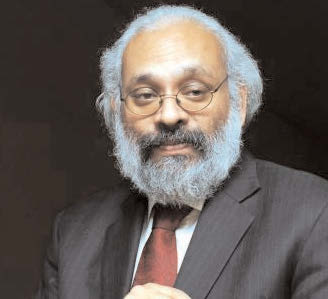
    NEW DELHI: Former RBI Deputy Governor Subir Gokarn was on November 12 appointed as an Executive Director on the board of the International Monetary Fund (IMF).

    Gokarn will represent India, Bangladesh, Sri Lanka and Bhutan on the Washington-based IMF’s Executive Board, which is responsible for conducting the day-to-day business of the multilateral institution.

    The name of 56-year-old economist was cleared by Appointments Committee of Cabinet headed by Prime Minister Narendra Modi, as per an order issued by the Department of Personnel and Training.

    On the IMF Executive Board, Gokarn will replace Rakesh Mohan, whose three year tenure ends this month. The order did not mention the tenure for Gokarn.

    Mohan has also been a Deputy Governor at RBI. The current RBI Governor Raghuram Rajan has incidentally been Chief Economist at IMF.

    The Board is composed of 24 Directors, who are appointed or elected by member countries or by groups of countries, and the Managing Director, who serves as its Chairman. The Board meets several times each week and carries out its work largely on the basis of papers prepared by IMF management and staff.

    The grouping of India, Bangladesh, Sri Lanka and Bhutan would be represented by Gokarn with a total casting vote of 2.8 per cent. This includes more than 2.3 per cent for India.

    The US, Japan, Germany, France and UK are among the major countries with individual representatives, while the highest vote is for the US at 16.74 per cent. Other countries with individual representatives on the Board include China, Russia and Saudi Arabia.

    Rated as one of the finest economists, Gokarn has in past served as Deputy Governor of the Reserve Bank of India, Chief Economist of global rating agency Standard and Poor’s (S&P) and head of CRISIL’s Research and Information business and also a nominee Board Member of the State Bank Of India.

    He was appointed Deputy Governor of RBI in 2009 for a term of three years and had a distinction of being the youngest Deputy Governors of the central bank at that time.

  • World’s biggest online shopping day nets over $14 billion

    World’s biggest online shopping day nets over $14 billion

    SHANGHAI (TIP): E-commerce giant Alibaba said that Chinese and international consumers spent more than $14 billion in the world’s biggest online shopping day, as it sought to soothe worries over China’s slowing economy.

    The November 11 “Singles Day”, which fell on Wednesday, has evolved into the globe’s biggest online shopping festival since Alibaba began using the date in 2009 to promote sales through its platforms.

    The $14.3 billion worth of merchandise volume this year smashed through last year’s tally of $9.3 billion, according to figures from Alibaba.

    “This day demonstrates the power of domestic China consumption and the Chinese consumer’s strong demand for international products,” Alibaba chief executive officer Daniel Zhang said in a statement.

    The total was more than double the$6.6 billion recorded last year in online buying during the peak US retail period, the five days from the Thanksgiving holiday to the following Monday, according to Internet analytics firm comScore.

    Alibaba’s New York-listed stock has been hammered by worries over the Chinese economy, serving as a proxy for slowing growth. It closed down 1.94 % at$79.85 on Wednesday despite the shopping festival.

    Chinese growth hit a 24-year low in 2014 and has slowed further this year, as it tries to shift from investment and exports to domestic consumption.

    Under what leaders call the “new normal”, the country logged its worst economic performance since the global financial crisis in the third quarter, with the economy growing just 6.9 %.

  • India, APEC and the US

    India, APEC and the US

    The major focus during the Asia Pacific Economic Cooperation (APEC) meeting in Manila, Philippines on November 18th and 19th would be on the Paris terror attacks though it is a trade promotion group that does not delve into security issues. The regional tensions in the South China Sea would be coming to some sort of attention indirectly despite Chinese efforts to block any discussion.  The issue of enlarging the membership and India’s pending membership application will most probably again be relegated to the background. Both China and the US will raise their pitch to sell their version of free trade blocks. China will try to sell its proposal for the Free Trade Area for Asia-Pacific (FTAAP) which excludes India and the US will do the same for the Trans-Pacific Partnership (TPP) which currently excludes China. Prime Minister Narendra Modi had raised the issue of Indian membership in the APEC with President Barack Obama in January 2015, when Obama visited India as the guest of honor for India’s Republic Day parade. President Obama expressed verbal support for India’s membership in the APEC at that time.


    The APEC was initially floated in 1989 by an Australian initiative and had 12 founding member economies: Australia, Brunei Darussalam, Canada, Indonesia, Japan, Korea, Malaysia, New Zealand, the Philippines, Singapore, Thailand and the United States. In 1991, China, Hong Kong, China and the Chinese Taipei (Taiwan) joined the APEC as a regional package. Mexico and Papua New Guinea followed in 1993. Chile was allowed to join the APEC in 1994.  Peru, Russia and Viet Nam joined the APEC in 1998, taking its full membership to 21 economies. The group acts with consensus in making decisions. APEC is more a trade promotion group and its recommendations are not binding on the member economies.


    The APEC’s mission statement reads: “Our primary goal is to support sustainable economic growth and prosperity in the Asia-Pacific region. We are united in our drive to build a dynamic and harmonious Asia-Pacific community by championing free and open trade and investment, promoting and accelerating regional economic integration, encouraging economic and technical cooperation, enhancing human security, and facilitating a favorable and sustainable business environment. Our initiatives turn policy goals into concrete results and agreements into tangible benefits.”


    The APEC put a moratorium on new memberships in 1997 for a period of 10 years though India’s membership application was pending. The moratorium was extended for another three years in 2007. However, for inexplicable reasons the APEC economies have not bothered to deal with the issue of further enlargement.  Especially India’s application for the membership has been pending with the APEC for last 20 years without approval. Every year since 2010, India has been looking expectantly for the APEC to consider India’s application for membership but nothing concrete has materialized owing to passive obstruction and stonewalling.


    Mainly, two arguments are used against India’s membership that India is not part of Asia-Pacific region and that India has proved to be an obstacle during negotiations in various international trade reforms/regimes. India had bargained tough during the Doha round and the Bali round of the WTO negotiations. Both these arguments are fallacious and self-serving. One fails to understand where countries like Thailand and Brunei have either land or sea borders with the Pacific Ocean? Or being a member of the ASEAN qualifies these two countries for the APEC membership! One also needs to ask a rhetoric question if India is an Asian country or not?  India is not located on the moon! Since the concept of Asia-Pacific has already been substituted by a larger strategic concept of the Indo-Pacific, there is no reason to continue to withhold India’s membership of the APEC on geographical grounds alone. Without India’s participation, there is no Indo-Pacific economy and hence no Asia-Pacific economy!


    India introduced market reforms initially in 1991 when China was allowed to join as a member. India has gradually introduced more market reforms & liberalization and that is the reason India applied for the membership of the APEC. It is true that Indian economy was largely socialistic prior to 1991 but so were China’s, Russia’s and Vietnam’s. Indian membership of the APEC would provide an incentive to continue further deeper economic liberalization. India has been a founding member of the WTO as well as of its previous incarnation of the GATT (General Agreement on Trade and Tariffs) since its inception. Interestingly, Russia is a part of the APEC since 1998 though it still does not qualify for the WTO membership as a market economy. China was allowed to join the WTO only in year 2000 despite being a member of the APEC since 1991. There seems to be some sort of unstated cooperation between both the US and China to continue to go slow on India’s membership of the APEC.

    A number of US based analysts have exhorted the US to champion India’s cause in the APEC for membership as a step toward eventual inclusion in the TPP.  Kevin Rudd, the former Australian PM and head of the CII-Asia Society Task Force  opined that the APEC misses much by not having India on board. Clarifying that APEC is not a free-trade body, Rudd said, “APEC is not a platform for market access negotiations, or a trade negotiating forum, but voluntary association of economies”. We, in India, can understand China’s reflexive and habitual pattern of opposition to India’s membership for any international arrangement with strategic implications because China is an adversary and a strategic threat. India does not perceive the US as an adversary in the post-cold war scenario. In fact, Pew Research on public opinion has consistently shown Indian public considering the US as one of the most  friendly nations.


    The US Deputy Assistant Secretary of State and Senior Official for the APEC Matt Matthews on November 2nd 2015 dampened cold water on India’s membership by categorically stating that it is not on the agenda of the APEC meeting in Manila in Philippines, on November 18 and 19. He further stated: “I do not believe there is any active consideration within APEC for expanded membership in the current time”. When reminded that President Obama had “supported” India’s desire for membership of the APEC during his 2015 visit to India on Republic Day, Matthews said the US had so far only welcomed “India’s interest” in joining the APEC. “It is important to be careful and accurate about describing President’s comment. President welcomed India’s interest in the APEC. That speaks for itself. We welcome India’s examination of APEC. We have not entered [into any] discussion about it. I do not believe India is formally pressing for actual membership now in APEC,” he said.


    India needs to hold the US to its words. The US must stop playing word games like China. The US expects too many unilateral concessions from India without delivering anything in return. The US, after signing the civil nuclear deal in 2005 and after ratifying the same in 2008, has not been able to shepherd India’s membership of the NSG, the MTCR, The Australia Group and the Wassenaar arrangement. The US has also made verbal promises to support India’s permanent membership of the UNSC. However, there is no concrete effort or will to make it implemented into reality despite a lot of rhetoric from the US. The proof of the US goodwill should reflect in active and actual support for India’s membership for the most benign of these international arrangements. Being an active member of the APEC will help India transform its domestic economy into full-fledged market economy. It will also prepare India for additional economic reforms so to obtain eventual membership of the RCEP or the TPP or the FTAAP.


    India and the US have had a legacy of trade disputes within the WTO. US trade representatives have invoked the Special 301 Priority Foreign Country designation for India. If the US continues to show a pattern of passive indifference and obstruction to India’s membership of the APEC while using the flowery rhetoric akin to China, India may have to utilize more aggressive marketing and trading strategies. Let it be known to everyone including the US that trade wars and denial of market access is as a detrimental as a hot war in the modern context. If you don’t support us, you are against us in our pursuit of market access. Since India and the US have now formalized an annual Strategic and Commercial dialogue, perhaps, the US performance in its active support to India’s membership of the APEC needs to be carefully monitored annually. Preferential trade access to Indian market for the US must be made contingent upon US behaviors towards India’s membership in the APEC and other free trade groups.

    To paraphrase and plagiarize Carla Anderson Hills, the former US trade representative: We (India) will be ready to open the APEC and other trade-blocks with a crowbar if necessary, but with a Namaste if possible!


    (The author is President, The Council for Strategic Affairs, New Delhi, India, an independent and privately funded Indian think-tank. He can be contacted at adityancsa@gmail.com)

  • World Bank approves $500 mn loan to Pakistan

    World Bank approves $500 mn loan to Pakistan

    ISLAMABAD (TIP): The World Bank has approved a USD 500 million loan to cash-strapped Pakistan for energy sector reform in the country reeling under frequent power cuts.

    The loan, scheduled to be issued in April, was delayed due to government’s failure to implement key conditions imposed by the bank.

    After the government fulfilled over half a dozen conditions, including setting up an independent entity to purchase electricity from producers, the loan was finally approved by the World Bank (WB).

    Finance ministry confirmed in a statement on Thursday that ” USD 500 million loan was approved”.

    The loan will be utilised for budget financing, unlike project loans that are used for creating assets, it said.

    Among the conditions met included giving an application to the power sector regulator for determining multi-year electricity tariffs to make power distribution companies attractive for privatisation.

    The government also agreed to submit the Energy Efficiency and Conservation Bill to the parliament.

    It also agreed to set up the Central Power Purchasing Agency (CPPA) Guarantee Limited.

    The WB and the Asian Development Bank (ADB) had decided to give USD 2 billion to Pakistan for energy sector reforms under a medium-term programme. The programme was part of USD 10 billion that the international lenders had agreed to provide over a period of three years.

    The amount included USD 6.6 billion bailout package of the International Monetary Fund.

    In May last year, Pakistan received USD 1 billion as first tranche from both the international financial institutions.

    The second tranche of roughly the same amount was scheduled to be approved in June this year, which the WB and the ADB delayed due to the federal government’s inability to implement the promised reforms.

    Long hours of power outages has been haunting Pakistan for about a decade.

    The Pakistan government is working on several projects and has announced to include more than 10,500 MW in the national grid by the end of 2018, when the first phase of the ambitious USD 46 billion China-Pakistan Economic Corridor is expected to be completed.

    Pakistan will also produce 40,000 MW of electricity through nuclear power plants by 2050 to overcome frequent outages.

  • China, India taking advantage of US: Donald Trump

    China, India taking advantage of US: Donald Trump

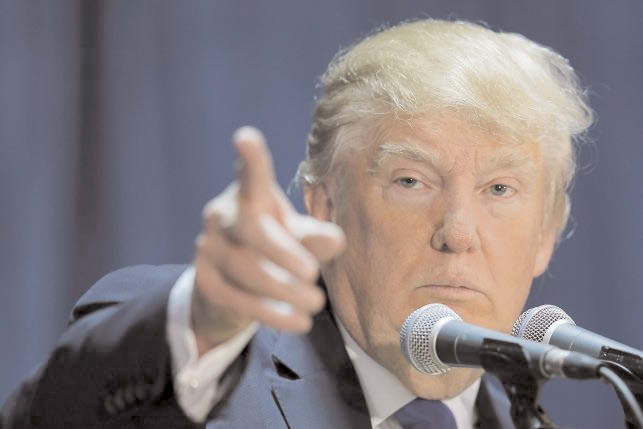
    WASHINGTON (TIP): Terming China as “number-one abuser”, leading Republican presidential candidate Donald Trump has alleged that the Communist nation, along with India, is taking advantage of the US through its economic policies.

    Trump said China was becoming a “major force” and is now creating problems both economically and through its behaviour in the South China Sea.

    “If you look at the way China and India and almost everybody takes advantage of the US – China in particular, because they’re so good. It’s the number-one abuser of this country,” Trump said during the fourth debate of the party.

    “China is a problem, both economically in what they’re doing in the South China Sea, I mean, they are becoming a very, very major force,” Trump said.

    He said that it was through “currency manipulation” that does not even find a mention in almost 6,000-page (TPP) agreement that the countries were taking advantage of the US.

    While several other Republican candidates joined Trump on the China issue, there were no takers for his allegations against India, which was mentioned only once in the debate.

    “We lose a fortune on trade. The US loses with everybody. We’re losing now over USD 500 billion in terms of imbalance with China, USD 75 billion a year imbalance with Japan,” Trump said.

    John Kasich, governor of Ohio, said China did not own the South China Sea.

    “I give the (US) President some credit for being able to move a naval force in there to let the Chinese know that we’re not going to put up with it any more,” he said.

    Russia and president Vladimir Putin too figured prominently during the debate.

    “What we have to recognise is that Putin is trying to really spread his influence throughout the Middle East. This is going to be his base. And we have to oppose him there in an effective way,” said presidential candidate Ben Carson.

    “We also must recognise that it’s a very complex place. You know, the Chinese are there, as well as the Russians, and you have all kinds of factions there,” he said.

    Jeb Bush said President Barack Obama and Hillary Clinton both do not believe the US has a leadership role to play.

    “And we are now paying a price, and it will have a huge impact on the economy of this country if we don’t deal with this,” he said.

    He favoured a no-fly zone in Syria.

    “We should have a support for the remnants of the Syrian Free Army, and create safe zones. If you want to deal with the four million refugees that are leaving Syria because of the devastation there, then we ought to create safe zones for them to stay in the region rather than go to Europe. And, that requires American leadership,” Bush said.

    (Source: PTI)

  • RAJNATH TO VISIT CHINA, BORDER INCURSIONS ON AGENDA

    RAJNATH TO VISIT CHINA, BORDER INCURSIONS ON AGENDA

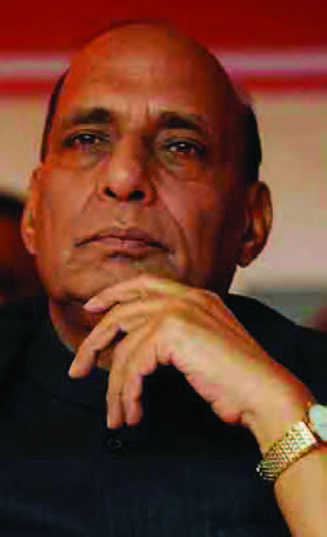
    NEW DELHI (TIP): Home minister Rajnath Singh will undertake a five-day visit to China starting November 19 to discuss border irritants, terror concerns and security liaisoning. Singh, who will be touring Beijing and Shanghai, is likely to enlist the Chinese government’s cooperation to choke illegal supply of arms to insurgent groups operating in India’s north-east.

    As per the schedule drawn up for Singh’s maiden visit to China as home minister, he will reach Beijing on November 18 and hold bilateral discussions over the next two days with his Chinese counterpart and others. The deliberations may seek to resolve the recurring issue of incursions by PLA troops into what India perceives as its side of the Line of Actual Control (LAC). Singh is expected to emphasize on the Chinese side to follow the laid-down mechanism for addressing border disagreements, including holding timely flag meetings between commanders on the ground.

    Singh, incidentally, has been taking a firm line on border incursions, apart from insisting on going ahead with the plan to build border roads in Ladakh as well as in the north-east. He had recently spent a night at an ITBP forward post in Ladakh.

    The home minister will spend two days in Shanghai, attending meetings on November 22 and 23. He will head back to Delhi on November 24.

    Singh will look to strengthen security liaisoning, seeking timely sharing of intelligence and follow-up action on leads between the two countries. He is expected to take up the issue of funding and sale of illegal arms to north-east insurgent groups.

    The issue of terror concerns is likely to come up during Singh’s deliberations with the Chinese government. China faces heightened threat from the Uighurs of its Xingjiang province, with some hardliners among them reportedly having joined the Islamic State (IS). India too is dealing with select instances of its youth being drawn towards violent extremism perpetrated by IS. The two sides are expected to exchanges notes on measures to deal with such threats.

  • Use of torture for forced confessions still ‘rampant’ in China, claims Amnesty International

    Use of torture for forced confessions still ‘rampant’ in China, claims Amnesty International

    GUNEVA(TIP): Using torture techniques to extract confessions from suspects is still
    “entrenched” in pre-trial detention in China, a report has warned.

    Additionally, when lawyers have attempted to protest, defend or raise the issue of the torture of their clients, they have endured torture themselves.

    The report No End in Sight by Amnesty International revealed the widespread use of torture in the country.

    The human rights organisation interviewed 37 lawyers and analysed a sample of 590 court decisions to reach their conclusion.

    The report details various methods of pre-trial torture used, including beatings by police or other detainees on officer’s orders.

    According to Amnesty, ‘confessions’ form the basis of most convictions in China so there is “an almost irresistible incentive for law enforcement agencies to obtain them by any means necessary”.

    Legal experts are quoted saying how getting confessions through these methods are “entrenched” in pre-trial detention, most often in cases involving dissidents, ethnic minorities or those involved with religious activities.

    Torture techniques used, dubbed ‘medieval’ by The Guardian, are said to include iron restraint chairs, sleep deprivation, denial of food and water as well as ‘tiger benches’ —where an individual’s legs are bound to a bench and bricks are gradually added under their feet, forcing their legs backwards.

    Allegedly, when lawyers have tried to raise these issues it has resulted in them being threatened, harassed, detained or even tortured themselves.

    One former lawyer, Tang Jitian from Beijing told Amnesty when he attempted to investigate alleged torture at a detention facility in north-east China he was tortured.

    He said: “I was strapped to an iron chair, slapped in the face, kicked on my left and hit so hard over the head with a plastic bottle filled with water that I passed out.”

    These revelations have come despite supposedly promising steps from China in cleaning up their torture record.

    In 1988, China ratified the UN convention against Torture and Other Cruel, Inhuman or Degrading Treatment of Punishment.

    However Amnesty claims they have “failed to bring domestic legislation in line with the obligations of the treaty.”

    Additionally, measures were introduced in 2010 to reform the country’s criminal justice system.

    According to Associated Press, despite the various reports and accounts, Chinese authorities maintain the practice of torture is declining.

    Following a previous report by Human Rights Watch in May, which found similar findings, Foreign Ministry spokeswoman Hua Chunying told the media Chinese law prohibits torture during interrogations and that anyone who had done so would be punished.

    Patrick Poon, China Researcher at Amnesty said: “In a system where even lawyers can end up being tortured by the police, what hope can ordinary defendants have?” “The government seem more concerned about the potential embarrassment wrongful convictions can cause than about curbing torture in detention.” He added: “If the government is serious about improving human rights it must start by holding law enforcement agencies to account when they commit abuses.” The report was released to coincide with a UN Committee Against Torture meeting which will review and scrutinise China’s practice of torture in Geneva next week.

  • US-China Confrontation in South China Seas

    US-China Confrontation in South China Seas

    China Reacts to US Ships in South China Seas

    The USS Fort Worth conducts patrols in international waters of the South China Sea
    The USS Fort Worth conducts patrols in international waters of the South China Sea

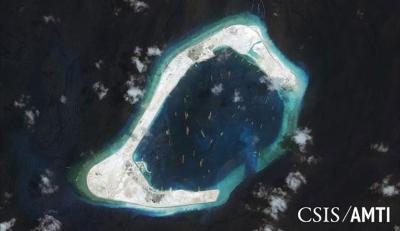
    Tuesday Oct 27: China reacted more harshly than expected to the passage last week of the warship USS Lassen that skirted within 12 miles of one of Beijing’s newly-created and increasingly militarized South China Sea islands.

    Chinese foreign ministry summoned US ambassador over the incident and lodged a strong protest.

    Addressing journalists in Beijing on Tuesday, Oct 27, afternoon, Lu Kang, a foreign ministry spokesman, said China was strongly dissatisfied with America’s actions, which he described as a threat to China’s sovereignty.

    But he refused to be drawn on whether China would consider a military response. “I will not answer hypothetical questions,” Lu said. “We hope that the US side will not take actions that will backfire.”

    Lu warned that further “provocative actions” might lead to accelerated Chinese construction in the South China Sea: “It would be a pity for us to realise that we have to strengthen and speed up relevant construction activities.”

    The Chinese embassy in Washington said the concept of “freedom of navigation” should not be used as an excuse for muscle-flexing and the US should “refrain from saying or doing anything provocative and act responsibly in maintaining regional peace and stability”.

    China claims most of the South China Sea on the basis of a segmented line that first appeared on Chinese maps in the 1940s. More than $5 trillion of world trade transits every year through the South China Seas. Vietnam, Malaysia, Brunei, the Philippines and Taiwan all have rival claims.

    US Counters by planning more patrols

    The US military will continue to operate "wherever" international law allows, US admiral Harry Harris said, a week after America infuriated China by sailing close to artificial islands it is building in the South China Sea
    The US military will continue to operate “wherever” international law allows, US admiral Harry Harris said, a week after America infuriated China by sailing close to artificial islands it is building in the South China Sea

    BEIJING Nov 03: “International seas and airspace belong to everyone and are not the dominion of any single nation,” admiral Harry Harris said, according to prepared remarks for a speech at the Stanford Center at Peking University while dismissing China’s claim as “ambiguous” and based on “the so-called 9-dash line”.

    “Our military will continue to fly, sail, and operate whenever and wherever international law allows. The South China Sea is not — and will not — be an exception,” he added.

    Harris is the commander of the US Pacific Command and his public declaration in the Chinese capital is a mark of US resolve over the strategically vital waterway, where Beijing has built up rocks and reefs into artificial islands with facilities for military use.

    The US Navy plans to conduct patrols within 12 nautical miles of artificial islands in the South China Sea about twice a quarter to remind China and other countries about US rights under international law, a US defence official said on Monday.

    The US military will continue to operate “wherever” international law allows, a top US admiral said in Beijing on Tuesday, a week after America infuriated China by sailing close to artificial islands it is building in the South China Sea.

    US Vice Admiral John Aquilino, deputy chief of naval operations for operations, plans and strategies, declined to comment about when the next patrols would take place.

    “We do operations like that all the time around the world. That will continue for us,” he told Reuters after his remarks at the same conference. “We’ll just keep going.”

    US Defense Secretary Ash Carter takes a swipe at China

    Defense Secretary Ash Carter listens to a question during a news conference after the Association of Southeast Asian Nations (ASEAN) Defense Ministers' Meeting Plus in Kuala Lumpur, Malaysia, Wednesday, Nov. 4, 2015.
    Defense Secretary Ash Carter listens to a question during a news conference after the Association of Southeast Asian Nations (ASEAN) Defense Ministers’ Meeting Plus in Kuala Lumpur, Malaysia, Wednesday, Nov. 4, 2015.

    ABOARD THE USS THEODORE ROOSEVELT (AP) — In a symbolic swipe at China’s muscular moves in the South China Sea, U.S. Defense Secretary Ash Carter visited an American aircraft carrier in the disputed waterway.

    Carter, who was in Malaysia for two days of talks with Asian defense ministers, used the visit to the USS Theodore Roosevelt to amplify the U.S. view that China is making excessive claims that nearly all of the South China Sea as its territory.

    Carter also signaled that the U.S. will keep a strong naval presence in the region in support of nations seeking to preserve stability. He flew aboard the carrier in a V-22 Osprey from a base in the east Malaysian state of Sabah, which is situated on the northern portion of Borneo.

    In announcing his visit Wednesday, Carter called it a “symbol of our commitment” to focusing more on U.S. interests in the Asia-Pacific following more than a decade of wars in the Middle East.

    Malaysian Defense Minister Hishammuddin Hussein accompanied Carter to the carrier, highlighting U.S. efforts to strengthen defense partnerships in the Asia-Pacific. Malaysia is among several countries that claim a portion of the South China Sea and disagree with China’s building of artificial islands.

    The Pentagon also is interested in making arrangements with Malaysia for more regular access to the naval base at Sabah for U.S. aircraft carriers.

  • Sania on top, pairs with Hingis to win WTA finals

    Sania on top, pairs with Hingis to win WTA finals

    ‘When you start off as a child playing tennis, you dream of being No. 1 in the world. I feel honored to be No. 1… she (Hingis) really helped me get there.” — Sania Mirza

    NEW YORK: Swiss veteran Martina Hingis and India’s Sania Mirza crowned a stunning year for their partnership on Sunday by winning their ninth title at the WTA Finals in Singapore.

    The top seeds beat Spain’s eighth seeds Garbine Muguruza and Carla Suarez Navarro 6-0, 6-3 in 66 minutes a spectacular season finale and completely outclassed their Spanish counterparts. The Indo-Swiss pair have not lost as a single match since joining forces in March.

    Before this, Sania and Martina had won eight titles, with two Grand Slam titles (Wimbledon, US Open), five WTA Premier titles (BNP Paribas Open – Indian Wells, Miami Open, Family Circle Cup – Charleston, Dongfeng Motor Wuhan Open, China Open – Beijing), and one WTA International title (Guangzhou International Women’s Open). They have now stretched their unbeaten streak to 22 matches.

    “I feel like it was a perfect day,” Hingis said. “Sania just played out of her mind – she was everywhere today, getting everything back and playing incredible tennis.”


  • China ends one-child policy, allows couples 2 kids

    China ends one-child policy, allows couples 2 kids

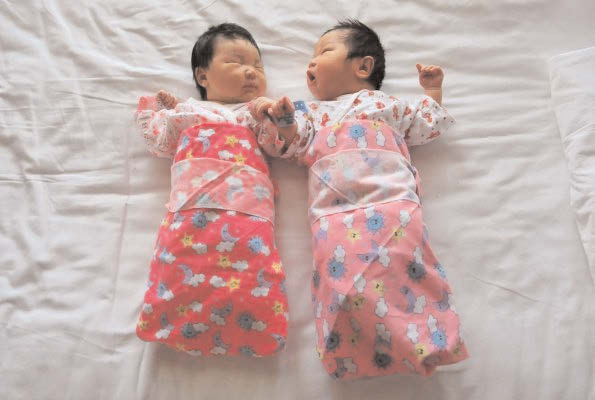
    BEIJING (TIP): China announced the end of its hugely controversial one-child policy on Oct 29, with the official Xinhua news agency saying that all couples would be allowed two children.

    It cited a communique issued by the ruling Communist Party after a four-day meeting in Beijing to chart the course of the world’s second-largest economy over the next five years.

    China is “abandoning its decades-long one-child policy”, Xinhua reported.

    The policy restricted most couples to only a single offspring, and for years authorities argued that it was a key contributor to China’s economic boom.

    But after years of strict, sometimes brutal enforcement by a dedicated government commission, China’s population – the world’s largest – is now ageing rapidly, gender imbalances are severe, and its workforce is shrinking.

    The concerns led to limited reforms in 2013, including allowing a second child for some couples in urban areas, but relatively few have taken up the opportunity.

    The Communist leadership met in Beijing to discuss ways to put the country’s stuttering economy back on a smooth growth path as it struggles with structural inefficiencies and social policies left over from an era before it embraced market reforms.

    Known as the fifth plenum, the conclave discussed the next Five-Year Plan for China – the 13th since the People’s Republic was founded in 1949.

    Over four days of meetings the 205 members of the Central Committee, plus around 170 alternates, examined the specifics of the plan, which was largely worked out through a process of national consultations before the leaders even set foot in the capital.

    The country’s rubber-stamp legislature will officially approve the resulting document next year.

    The world’s most populous country has enjoyed a decades-long boom since the ruling party embraced market economics and opened up to the rest of the world from the late 1970s.

    The process has transformed the livelihoods of hundreds of millions of people and propelled the country to global prominence.

    But growth has been slowing for several years, and analysts say the party needs to embrace further liberalisation to avoid falling into the stagnation of the “middle income trap”, when developing countries fail to fulfil their full potential.

    The meeting reiterated the Communist Party’s goal to double 2010 GDP by 2020, as part of its aim to achieve a “moderately prosperous society” by the 100th anniversary of the Communist Party’s founding.

  • WORLD BANK SEES INDIA GROWING AT 7.5% IN FY16

    WORLD BANK SEES INDIA GROWING AT 7.5% IN FY16

    NEW DELHI (TIP): The World Bank has maintained its growth forecast for the Indian economy for the current fiscal year and expects it to expand by 7.5% in 2015-16. It has backed implementation of three key reforms, including the Goods & Services Tax (GST), to sustain the momentum.

    In its development update, a twice a year report on the Indian economy and its prospects, the bank expects growth to accelerate to 7.8% in 2016-2017 and 7.9%in 2017-2018. But it said acceleration in growth is conditional on the growth rate of investment picking up to 8.8% during 2016-2018. The Reserve Bank of India expects the economy to grow by 7.4% in the current fiscal year, while the government pegs it at over 7.5%. The International Monetary Fund expects growth to be 7.5%.

    The update noted that while public investments have helped kick-start the investment cycle, increased participation of the private sector will be required going forward. In the near term, India is relatively well positioned to weather the global volatility. Its low trade exposure to China and considerable foreign exchange reserves provide ample buffer. In the medium term, however, the Indian economy is not immune to a slowdown in global demand and heightened volatility.

    “There are good reasons for confidence in India’s near-term prospects. To lay the foundation for sustainable growth and accelerate job creation, implementing the government’s reform programme is key,” said Onno Ruhl, World Bank country director in India. “…While progress is visible in several areas, including improvements in the ease of doing business, some key reforms, most notably the implementation of the Goods and Services Tax (GST ) can be a potential game changer for India,” he said. For the economy to achieve its potential, the update calls for three key domestic reforms. These include boosting the balance sheets of the banking sector by addressing the underlying challenges in the infrastructure sector, especially power and roads, improving the ease of doing business and enacting the GST, and enhancing the capacity of states and local governments to deliver public service as more resources are devolved from the centre. It suggests eventually bringing in alcohol, electricity, and real estate under the purview of the proposed GST, which are currently excluded from it.

    According to the update, even though alcohol and petroleum account for over 40 to 45% of VAT/sales tax revenues for the states, there are few technical reasons for excluding them from the GST. “Exclusion of electricity would mean that manufacturing firms are unable to claim credits for the duty they pay and are, therefore, taxed twice. In the case of alcohol, including it in GST would help address concerns about state excise rate arbitrage. Bringing real estate under the GST umbrella may complement the government’s efforts to curb undeclared ‘black money’ in the sector,” according to the report. SOURCE: TOI

  • Gangster Chhota Rajan says never surrendered, wants to return to India

    Gangster Chhota Rajan says never surrendered, wants to return to India

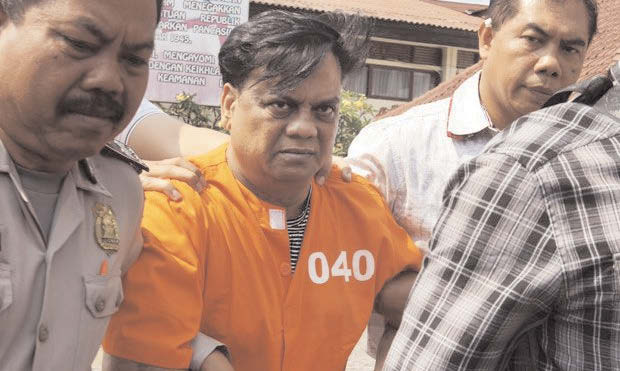
    BALI/MUMBAI (TIP): Underworld don Chhota Rajan, who has been arrested after being on the run for over two decades, claimed on October that he did not surrender and wants to return to India.

    There is intense speculation that the arrest of the gangster, who is wanted in over 75 heinous crimes ranging from murder, extortion to smuggling and drug trafficking, was part of a “deal” with Indian security agencies.

    “I never surrendered. I want to go back to India. Don’t want to go to Zimbabwe,” the one-time trusted aide of terrorist and crime boss Dawood Ibrahim told reporters.

    Rajan, one of India’s most wanted gangsters, was arrested in  Indonesia’s tourist destination Bali on a Red Corner Notice issued by Interpol after eluding law enforcement agencies for over two decades.

    Of these 75 cases, Rajan is facing four cases under Terrorist and Disruptive Activities (Prevention) Act (TADA), one under Prevention of Terrorism Act (POTA) and over 20 cases under the stringent Maharashtra Control of Organised Crime Act
    (MCOCA).

    Indian security agencies are likely to send a team of officials to Bali to bring back the gangster who has been in custody since Sunday.

    The sources are tight-lipped about the arrangements to bring him back because of security concerns arising out of his fierce rivalry with underworld don Dawood Ibrahim and his gang.

    They said agencies are working on more than one plan to bring back 55-year-old Rajan, once known as Dawood’s right hand man, factoring various permutations and combinations.

    Rajan was traveling with the identity of Mohan Kumar with passport number G9273860 when he was apprehended at the airport in Bali, after arriving there on a Garuda Indonesia flight GA715, by the Indonesian Police on a tip-off from Australian authorities, they said.

    The sources said Rajan was in touch with various police officials for the past six months seeking a passage to return to India as he feared for his life in Australia from Chhota Shakeel, a henchman of Dawood.

    In 2000, there was an attempt on his life when Dawood’s men tracked him down to a hotel in Bangkok but he managed a dramatic escape through the hotel’s roof.

    According to serving and former police officers, who have dealt with the Mumbai underworld, arrest of Rajan is a major success and his questioning is expected to shed light on hitherto unknown facts related to cases linked to his syndicate.

    Chhota Rajan assets worth over Rs 4,000 crore, claims Mumbai police

    Mumbai Police officials estimate Chhota Rajan’s current net worth to be in the range of Rs 4,000-5,000 crore. Fifty per cent of the investments are in India, especially in Mumbai and its satellite towns, they say. “According to our reports, Rajan owns a hotel in China, a few jewellery shops in Singapore, Thailand and a hotel in Jakarta. He has also invested in diamond trade in African countries, especially Zimbabwe,” said a senior Mumbai Police official.

    Sources claimed that Rajan tried to strike a deal with some officials from Zimbabwe to seek refuge in that country.

    But Zimbabwe did not want to be seen giving refuge to anyone who was wanted in India. “We found that he asked for Z-plus protection which was denied by them,” claimed the official.

    “The officials with whom Rajan negotiated promised to provide the best of health facilities but refused to extend security cover. Rajan suspected that he would eventually be tracked by the Dawood gang, and did not want to be attacked when he was at his weakest — while undergoing  dialysis for kidney failure,” said a source.

  • The Pakistani Shadow on Indo-US Relations

    The Pakistani Shadow on Indo-US Relations

    We should be treating the visits of Pakistani leaders abroad as part of normal diplomacy that all countries engage in. By paying too much attention to them we boost Pakistan’s political importance and diminish our own stature. Unfortunately, we cannot easily ignore the visits of top Pakistani leaders to the US, not because of concerns about what Pakistan may seek but what the US may dispense.

    US policies towards Pakistan have always been a source of serious strategic concern to us. Even with the visible improvement of India-US ties, now elevated to a strategic partnership, we have to be watchful of US dealings with Pakistan and their impact on our security interests. Pakistan has always been, and remains, a US blindspot in its relationship with India.

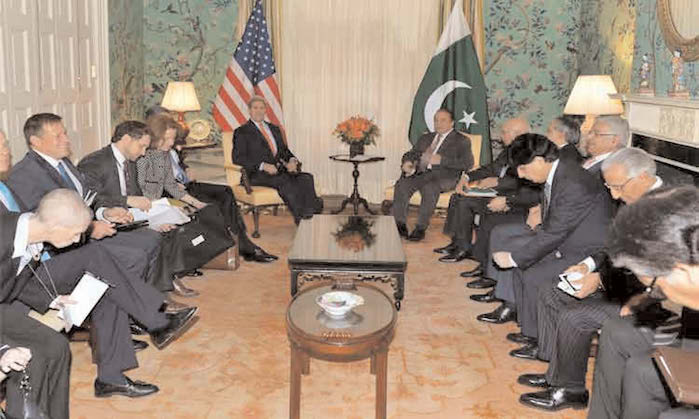
    This has been proved again with Nawaz Sharif’s just concluded visit to the US. Prior to the visit, US sources leaked to the media that Washington was contemplating some sort of a nuclear deal with Pakistan that would legitimise its nuclear status despite its known proliferation activities, the rapid expansion of its nuclear arsenal, its development of tactical nuclear weapons and open threats to use them against India. While Sharif’s visit did not produce such a deal, the US ignored all these Pakistani nuclear provocations and transgressions and preferred to focus self-servingly on the success of the Nuclear Security Summit to be hosted by Obama next year and “welcomed Pakistan’s constructive engagement with the Nuclear Security Summit process and its cooperation with the International Atomic Energy Agency and other international forums”. Obama also noted “Pakistan’s efforts to improve its strategic trade controls and enhance its engagement with multilateral export control regimes”. All these were approving chits of Pakistan’s nuclear policies, unfortunately at the cost of India’s security, given that a day prior to Nawaz Sharif’s Washington visit, the Pakistani Foreign Secretary publicly brandished the tactical nuclear threat to India, spoke of full spectrum deterrence and dismissed any talk of Pakistan accepting any restraint on its nuclear arsenal. The un-named US official’s categorical declaration that the US was not contemplating any 123 type agreement with Pakistan or an NSG exemption has come after Sharif’s visit and in the wake of Pakistani defiance.

    The recognition by Obama and Sharif in their joint statement of their “shared interest in strategic stability in South Asia” is seriously objectionable from our point of view, even if similar language figured in the Obama-Sharif joint statement in 2013. Such a stance is inconsistent with the import of the India-US nuclear deal which was intended to free India from some strategic constraints while also bringing large parts of its nuclear program, present and future, under IAEA safeguards in a bid to restrict its scope. There are no such constraints on China’s nuclear program, or on China’s nuclear cooperation with Pakistan in both civilian and military areas. There can therefore be no strategic stability in South Asia unless China and its cooperation with Pakistan is brought into the equation and India’s strategic needs vis a vis China are recognised. Until the India-US nuclear deal, the US has viewed the nuclear equation in the sub-continent as a purely India-Pakistan affair. Even before India and Pakistan became overtly nuclear the US pressed for “strategic stability” with a view to curbing India’s nuclear program, in the belief that this would deprive Pakistan of the argument that it must match India’s nuclear capabilities to ensure its security.

    The tenacity of such US thinking surfaced during discussions on the “Next Steps in the Strategic Partnership” when the US tried to introduce the concept of strategic stability to offset Pakistani concerns about US tilting in favor of India on strategic matters. Why after the nuclear compromise inherent in the India-US nuclear deal the US continues to stress strategic stability in South Asia and wants all sides to “continuously act with maximum restraint and work jointly toward strengthening strategic stability in South Asia”, is difficult to understand. So is the reference to “the importance of regional balance and stability in South Asia” which unreasonably equates India with Pakistan, including in the sphere of their security interests.

    Even if we ignored the reference to strategic stability in 2013, we have less reason to ignore it today. India and the US have in 2015 greatly widened the scope of their geopolitical engagement by releasing a US-India Joint Strategic Vision for the Asia-Pacific and Indian Ocean Region and upgrading the trilateral India-US-Japan relationship relationship in a certain strategic perspective. In this context it makes little sense for the US to still talk of strategic balancing India and Pakistan. This merely sends confusing signals about the depth of India’s strategic commitment to India.

    Likewise, in January 2015, on the occasion of Obama’s January 2015 visit, the US-India Delhi Declaration of Friendship was issued, which proclaimed a higher level of trust and coordination between the two countries. Furthermore, in the joint statement issued then, Obama and Modi “committed to undertake efforts to make the U.S.-India partnership a defining counterterrorism relationship for the 21st Century by deepening collaboration to combat the full spectrum of terrorist threats”. It “called for eliminating terrorist safe havens and infrastructure, disrupting terrorist networks and their financing, and stopping cross-border movement of terrorists”, besides asking “Pakistan to bring the perpetrators of the November 2008 terrorist attack in Mumbai to justice”. In September 2015, as part of the inaugural India-US Strategic and Economic Dialogue, a U.S.-India Joint Declaration on Combating Terrorism was issued with expansive provisions.

    read-more

  • China lists sins for partymen: Gluttony, sex, golf

    China lists sins for partymen: Gluttony, sex, golf

    BEIJING (TIP): China’s Communist Party has banned its members from “extravagant eating and drinking”, engaging in “improper sexual relationships with others” and playing golf, state media reported on Thursday. The ruling party’s political bureau adopted new rules on clean governance and discipline earlier this month, the official Xinhua news agency said, describing the measures as “a moral ethical code that members must abide by”.

    Party members were already barred from “keeping paramours and conducting adultery” but the new rule on sexual activity was stricter, Xinhua said. Playing golf and excessive eating and drinking were explicitly listed as violations of discipline for the first time, it added. The regulations which apply to everyone in the 88 million-strong Communist Party -also forbid forming cliques within the party and nepotism. Since ascending to the party leadership in 2012, President Xi Jinping has launched an austerity drive and a crackdown on corruption, with thousands of officials falling from power. But critics of the campaign liken it to a political purge targeting Xi’s opponents.

    The document did not detail punishments for violating the new rules, but the party maintains its own feared internal disciplinary system, which operates without judicial over sight. Party discipline superseded criminal law, Xinhua said.

    The Communist Party has long had an ambivalent relationship with golf, which is a lucrative opportunity for local authorities and a favoured pastime of some officials, but is also closely associated with wealth and Western elites.

    Central authorities ordered a nationwide moratorium on new golf courses in 2004, but development continued as revenue-minded local officials went their own way , even offering tax breaks for operators of new courses in places such as Hainan province.