Tag: China

  • Pakistan PM fails to win US support against India

    Pakistan PM fails to win US support against India

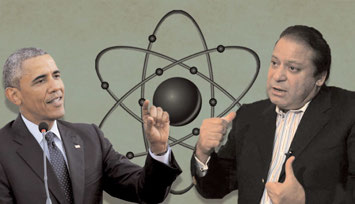
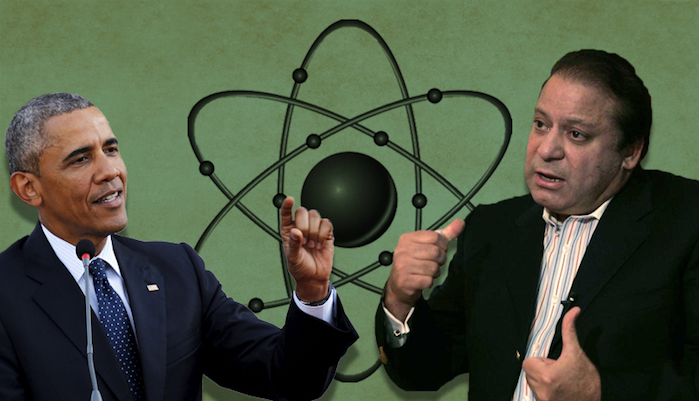
    WASHINGTON (TIP): Pakistan Prime Minister must be a disappointed man. His bilateral with US President Barack Obama is being viewed as a diplomatic failure. India has watched the Sharif-Obama summit in Washington keenly, and while it is clear that Prime Minister Nawaz Sharif returns to Islamabad without any big announcement to show for the bilateral, and no progress on US-Pakistan civil nuclear negotiations, there are many parts to the 2015 joint statement issued by the two that could  be worrisome for India.

    Here are the key statements in the US-Pakistan joint statement which may cause concern to India.

    1.  Hydroelectric projects in PoK/Gilgit-Baltistan 

    President Obama expressed support for Pakistan’s efforts to secure funding for the Diamer Bhasha and Dasu dams to help meet Pakistan’s energy and water needs.

    India has opposed the construction of hydro-electric projects in the disputed region of Kashmir that includes PoK and Gilgit-Baltistan. Most recently, External Affairs Minister Sushma Swaraj had called the China-Pakistan Economic Corridor (CPEC) unacceptable because it includes these projects, while India had told the UNGA that “India’s reservations about the proposed China-Pakistan Economic Corridor stem from the fact that it passes through Indian territory illegally occupied by Pakistan for many years.”

    In recent years, the 4,500 m W Diamer Bhasha dam (DBD) project, that the Pakistan government says will halve its electricity shortfall when constructed, had come to a standstill over funding. In 2013, prospective investors – the ADB, China and Russia – had asked Pakistan to obtain an NOC (No objection certificate) from India before they could proceed on loans. Even after the announcement of the China-Pakistan Economic Corridor by President Xi Jinping for projects including dams in PoK in April 2015, China has shown a preference for the $1.6 billion Karot project, rather than DBD, which would now cost an estimated $14 billion. It is significant that the US wants to play ‘White Knight’ on these two dams, and for India, the construction of major projects like these endorsed by the US would be a blow to its claim on PoK. Earlier this month, reports suggested India had protested over a USAID event aimed raising funding for DBD, where US firm Mott McDonald has been contracted to perform a technical engineering review.

    2.  Talks with the Taliban
    President Obama commended Pakistan for hosting and facilitating the first public talks between the Afghan government and the Taliban in July 2015 and highlighted the opportunity presented by Pakistan’s willingness to facilitate a reconciliation process that would help end insurgent violence in Afghanistan.

    India has felt cut out of the Taliban peace process, and relations with President Ghani’s government underwent a strain when New Delhi learned that Pakistan would be allowed to host the talks in Murree. “This is an open acknowledgement that Pakistan controls the Taliban,” a senior official had told The Hindu at the time, “And rather than castigate Pakistan for not curbing the Taliban’s violence, these talks will legitimize its actions.”

    When the talks collapsed over the announcement of Mullah Omar’s death, it was felt Pakistan’s claim of being a ‘peacemaker’ rather than a sponsor of Taliban-terror would end. However, despite a surge in violence by the Taliban, including the brutal siege of Kunduz that was overthrown by Afghan and US special forces last month, the Joint statement seems to indicate the US is prepared to let Pakistan host the talks again.

    3.  Resume India-Pakistan talks
    President Obama and Prime Minister Sharif stressed that improvement in Pakistan-India bilateral relations would greatly enhance prospects for lasting peace, stability, and prosperity in the region. The two leaders expressed concern over violence along the Line of Control, and noted their support for confidence-building measures and effective mechanisms that are acceptable to both parties. The leaders emphasized the importance of a sustained and resilient dialogue process between the two neighbors aimed at resolving all outstanding territorial and other disputes, including Kashmir, through peaceful means and working together to address mutual concerns of India and Pakistan regarding terrorism.

    For over a decade, the US has stayed away from openly pushing India towards talks with Pakistan. In the period between 2003-2008, this was because India and Pakistan were engaging each other, and both the composite dialogue and back-channel diplomacy yielded many important confidence building measures between them. After the Mumbai 26/11 attacks, the US recognized India’s legitimate anger over the attacks being planned and funded in Pakistan, and abstained from making any comments on the resumption of India-Pakistan dialogue, restricting itself only to “welcoming” talks between their leaders in Thimphu, Delhi, New York and Ufa. The US-Pakistan joint statement doesn’t just put the importance of “sustained and resilient dialogue process” (codeword for comprehensive dialogue) back in focus, it makes a new mention of “violence along the LoC” which India squarely blames Pakistan for initiating. India believes ceasefire violations are aimed at “infiltrating terrorists”, a charge the government repeated when the NSA talks were cancelled. Of particular worry for India will be the US-Pakistan joint statement’s reference to “mutual concerns of terrorism”, as it comes in the wake of Pakistan’s latest claims of Indian support to terrorism inside Pakistan. Pakistan NSA Sartaj Aziz had told the press that Indian agency “involvement” in Balochistan and FATA would be taken up during the summit.

    4.  Action on LeT?
    In this context, the Prime Minister apprised the President about Pakistan’s resolve to take effective action against United Nations-designated terrorist individuals and entities, including Lashkar-e-Tayyiba and its affiliates, as per its international commitments and obligations under UN Security Council resolutions and the Financial Action Task Force.

    Action against the LeT has been India’s most sustained demand from Pakistan, especially after the 26/11 attacks, when the LeT’s top leadership was charged with planning and executing the carnage in Mumbai. Yet years later, chief Hafiz Saeed is free, LeT operations chief Zaki Ur Rahman Lakhvi is out on bail, and there seems little evidence that Pakistani forces have conducted any sort of crackdown on the Lashkar e Toiba, especially when compared to action against other groups after the Peshawar school attack of December 2014. While the US-Pakistan joint statement doesn’t note President Obama’s acceptance of Pakistan’s claims of keeping its “international commitments and obligations”, it is significant that the US has not raised the obvious violation of the UNSC and FATF requirements earlier this year during the bail process of Lakhvi. Despite Indian representations to the US and UN, there has been little pressure on Pakistan how Lakhvi raised the funds when according to the UNSC 1267 Committee rules, a designated terrorist cannot be allowed recourse to finances.

    5.  Nuclear talks
    The leaders noted Pakistan’s efforts to improve its strategic trade controls and enhance its engagement with multilateral export control regimes. Recognizing the importance of bilateral engagement in the Security, Strategic Stability and Non-Proliferation Working Group, the two leaders noted that both sides will continue to stay engaged to further build on the ongoing discussions in the working group.

    Both, the US and Pakistan, have denied a report in the Washington Post that they had planned what it called a “diplomatic blockbuster”: negotiations over a civil nuclear deal on the lines the US and India signed in 2005. Pakistan’s foreign secretary reacted to the report with a detailed account of Pakistan’s “low-yield tactical nuclear weapons” aimed at India, to calm fears in Pakistan that the government was giving up its weapons program. Even so the details in the Post have left lingering doubts over what the US intends, including pushing for a possible NSG waiver for Pakistan in exchange for limiting Pakistan’s missile capability. The report goaded the MEA into counseling the US on taking a closer look at Pakistan’s past on supplying nuclear weapons to North Korea and Iran, “Whosoever is examining that particular dossier should be well aware of Pakistan’s track record in proliferation. And when India got this particular deal, it was on the basis of our own impeccable non-proliferation track record,” the MEA spokesperson said on October 9, given that India will watch this space closely, particularly the phrase on “engagement with multilateral export regimes” mentioned in the US-Pakistan joint statement.

  • Iran to begin full implementation of nuclear deal

    TEHRAN, IRAN (TIP): The Iranian government will begin fully implementing the landmark nuclear deal reached with world powers “with good will,” and the work will be done while keeping in mind concerns voiced by Iran’s supreme leader, President Hassan Rouhani said on Oct 22. A letter posted on Rouhani’s website, president.ir, addressed to supreme leader Ayatollah Ali Khamenei said Iran will be keeping close watch to make sure other parties to the deal fulfill their obligations.

    “The government of the Islamic Republic of Iran will start `full implementation’ of the Joint Comprehensive Plan of Action with good will and based on Your Excellency’s considerations and requirements and the decisions of the Supreme National Security Council and the Parliament,” Rouhani said in the letter.

    “The other side’s fulfillment of its obligations will be vigilantly monitored and the Supreme National Security Council will adopt the needed decision to take the proper course of action,” he said.

    Khamenei on Wednesday endorsed the deal but warned the government to be vigilant, saying the United States cannot be trusted. He also said the agreement “suffers from multiple structural weaknesses and ambiguous points that can lead to present and future great harms to the country in the absence of precise and constant vigilance.” He added that “any remarks saying the structure of sanctions will remain in place are considered a breach” of the agreement.

    The agreement reached in July with the U.S., Britain, France, China, Russia and Germany curbs Iran’s nuclear activities in exchange for lifting crippling international sanctions. Western nations have long suspected Iran of pursuing nuclear weapons alongside its civilian program, charges rejected by Tehran, which insists its program is entirely peaceful. The agreement has been the subject of fierce debate within Iran, with hard-liners arguing that the negotiators gave up too much ground. They also fear the agreement could lead to a broader rapprochement with the United States, which they deride as the “Great Satan.”

  • Man who killed 5 relatives with meat cleaver gets 125 years in jail

    WASHINGTON (TIP): : A Chinese immigrant who pleaded guilty earlier this month to the meat-cleaver killings of five relatives, including four children under 9 years old, was sentenced on Tuesday to 125 years to life in prison. State Supreme Court justice Vincent Del Giudice accepted a plea deal on Oct 7 under the condition that Mingdong Chen “be incarcerated until the day he dies.” Chen was sentenced to three terms of 25 years to life for murder and two terms of 25 years to life for manslaughter.

    “This defendant’s vicious and sadistic attack makes him completely unfit to remain in society, and he will now spend the rest of his life behind bars,” said Brooklyn District Attorney Ken Thompson.

    A lawyer for Chen, 27, declined comment. Authorities say the man confessed in Mandarin to killing his cousin’s wife, 37-year-old Qiao Zhen Li, and her children, 9-year-old Linda, 7-year-old Amy, 5-year-old Kevin and 1-year-old William Zhou in October 2013.

    He was envious of his relatives’ success and had been fired from restaurant jobs, according to authorities and his relatives. Li called her mother-in-law in China on the night of Oct. 27, 2013, to say Chen was threatening her family with a knife, prosecutors have said. The mother-in-law then called other relatives in New York after hearing children crying in the background, they said.

    AP

  • China’s Ocean Hegemony and Implications for India

    China’s Ocean Hegemony and Implications for India

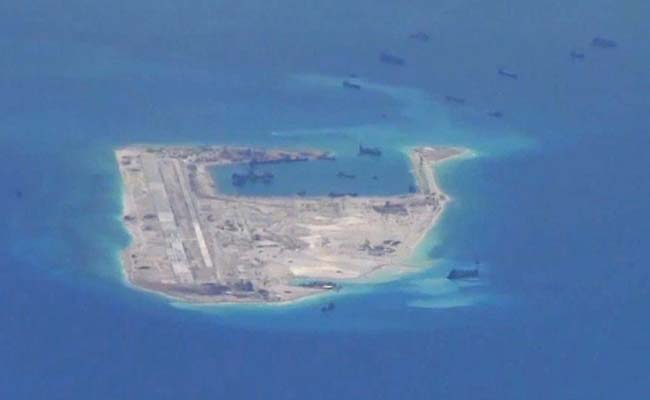
    The fifth generation of CCP leadership under Xi Jinping has de facto abandoned the Deng doctrine of keeping low profile internationally. China has become more ambitious of becoming a superpower and has been extending its sovereignty claims on the land and the sea. As a rising hegemon, China has started to challenge the existing international strategic order. China has been in the news recently for building artificial islands with air-landing strips in the South China Sea. It has demanded 12 nautical miles exclusive economic zone around these artificial, man-made reefs. China is a signatory to the law of the Seas (UNCLOS). Chinese attempts to claim the bulk of the South China Sea goes against both the letter and the spirit of the law of the sea. Beijing will invoke its EEZ for its own economic benefits while denying the same rights to other claimants. Brushing aside the ASEAN Code of Conduct in the SCS, China claims sovereignty over all of the SCS which is disputed by Vietnam, the Philippines, Malaysia, Brunei and Taiwan.

    For the last several years, Chinese official media has been harping on safeguarding China’s “Ocean Sovereignty”. The PLA navy’s goal is to have a “Thousand Ships Navy”. This stated “TSN” Goal is to further Chinese supremacy in the Indo-Pacific region and exploit the mineral & hydrocarbon wealth in the international sea-beds. PLAN has been entrusted to fight future wars for China’s security as per the former President Hu Jintao. On December 6th 2011, while addressing the PLA Navy, Hu Jintao pronounced that PLAN should make “extended preparations for warfare in order to make greater contributions to safeguard national security”. China unilaterally declared an air-defense identification zone in the East China Sea in November 2013. Recently, a Chinese admiral declared similar intentions of setting up an air defense identification zone in the future above the disputed areas of the South China Sea if Beijing thought it was facing a strategic threat.

    China has created not only facts on the ground but also facts on the Ocean in a very predictable manner of claiming sovereignty with the “Chinese Characteristics”. China always makes maximalist claims against other countries, disputes sovereignty, and alters the facts on the grounds of medieval history or economic reasons, bullies the smaller adversaries into submission, demands mutual concessions while later on sending its armed forces. China has constructed a couple of lighthouses in the South China Sea to provide a fig-leaf for its naked hegemony and sea-resources grabbing activities. China has successfully converted the South China Sea into a virtual private lake affecting the freedom of navigation for the entire world. India has vital maritime interests in the South China Sea. 55% of Indian maritime trade passes through the South China Sea. China has objected vehemently to ONGC’s oil drilling in collaboration with Vietnam in the South China Sea and PLAN ships have started to harass the Indian drilling rigs.

    Once the heat of the South China Sea is gone and Beijing has de facto acquired the marine resources of the South China Sea, the dragon will spread its strategic tentacles into the Indian Ocean. Warning bells are already ringing in the Indian Ocean. PLAN started its naval forays in Indian Ocean up to the Gulf of Aden in 2010 under the garb of anti-piracy operations to control Somali pirates. China’s string of pearl initiative got absorbed in the 21st Century Maritime Silk Road. China did acquire significant naval facilities in Hambantota, Chittagong, Maldives, and listening & communication facilities in the Coco Islands in Myanmar besides building the naval port in Gwadar. Incidentally, India has gifted the Coco islands to Myanmar in Nehru’s realm. Gwadar port was offered to India by Oman but Nehru declined and Pakistan became the owner and the beneficiary. China also acquired naval facilities for recuperation and re-fueling in Seychelles in December 2011. China has already signed an agreement with the UN backed International Seabed Authority to gain exclusive rights to explore poly-metallic sulfide ore deposits in 10,000 square-kilometers of international seabed in Indian Ocean for 15 years. China has been sending nuclear powered submarines to Sri Lanka and Pakistan. Pakistan will receive eight Chinese nuclear powered submarines effectively neutralizing the Indian second strike capabilities in case of a nuclear attack on India. China plans to buy an island from the Maldives for $ 1 billion under the current Maldivian Government of President Abdulla Yameen.

    China’s response to Malabar naval exercises in 2007 when trilateral format included Japan was very negative leading to non-invitation to Japan later on after 2007. India plans to invite Japan in the upcoming Malabar exercises and Chinese reaction would be worth watching. China remains very paranoid about the US “Pivot to Asia” doctrine. Chinese paranoia about the Asian Quadrilateral led to Australia pulling out of that mechanism for maritime cooperation in the Indo-Pacific.

    China had sent trial balloons to US for a G2 condominium by which US will take over the Atlantic Ocean whereas China will have rights over the Pacific Ocean. Unlike Tibet, Indo-Pacific is too important to be given to China on a platter. As a trading nation with vital economic and maritime interests, India will have to safeguard the sea-lanes of communication, ensure freedom of navigation and take the strategic ownership of her maritime interests.

    China’s foreign exchange reserves were at the peak of almost $4 trillion in June 2014. Despite a recent decline in Chinese economy, China’s foreign exchange reserves totaled $3.514 trillion at the end of September 2015. China still has the largest foreign exchange reserves in the world. China will continue to extend its strategic footprints under the much enlarged One Belt, One Road (OBOR) project because it has plenty of spare cash. China also proposes to use the Beijing sponsored AIIB as the financing arm for the OBOR which will ultimately require $ 1.4 trillion in investments. China has already sanctioned$46 billion on China-Pakistan Economic corridor as part of the OBOR connectivity without taking India’s sensitivities about CPEC passing through the POK. While India has cooperated with China in the BCIM (Bangladesh, China, India, and Myanmar) Corridor project, the GOI has been deliberately silent about any synergistic cooperation with the 21st Century Maritime Silk Road project.

    read-more

  • INDO AMERICAN celebrates its success on the 10th Anniversary, Nov 7th

    INDO AMERICAN celebrates its success on the 10th Anniversary, Nov 7th

    RUTHERFORD, NJ (TIP): One of the largest distributors of Natural Stones, INDO AMERICAN is celebrating their 10th anniversary on Nov 7th 2015 at the Renaissance in Rutherford, NJ. Felicitating their key associates and partners in the growth of the Company

    INDO AMERICAN has acquired their new warehouse located in Kearny, just outside of Manhattan, comprising of 88000 sq ft warehouse of natural and artificial stones.

    They began their journey in 2005 from just one row of basic granite procured locally; the company has grown to one of the largest distributors of natural stones in the country with over 250 shades of colors from around the world.

    We directly import Material from all over the world, such as Italy, Brazil, China, India, Spain, Turkey, etc., and it is stored in our own warehouse and distributed to places around the country

    Devraj N Aiyar with his nieceOne long-term goal is to establish remote locations in North America and set up factories in (at least three) the exporting countries to facilitate material acquisition, processing and self-export onward to North America.

    To stay ahead of the curve, INDO AMERICAN is investing heavily in capital expenditure on its indoor and outdoor products. We are also continually expanding our fleet of trucks and manpower to extend the beat services to our clients.

    In addition to our current 2,400-square-foot office space and an equally spacious ‘state of art’ new showroom is being created for high-end designers and architects, which would be one of a kind in the Tri State.

    “The growth of the company could be largely attributed to the excellent teamwork, focus and 100% commitment of our key members and hence our team needs to be fighting fit, both physically and mentally” believes Mr. Devraj N Aiyar, CEO of the organization. Hence their new location is also being outfitted with a gymnasium and an indoor games room.

    “Work is Play” is the motto at Indo American.

    INDO AMERICAN delivers materials to destinations over 250 miles away, which is a testament to its commitment towards customer service and competitiveness. The company prides itself on maintaining a steady stream of loyal customers by offering quality products and service.

    According to Usha “The key ingredients to our growth are maintaining a client base with strong credit and keeping close tabs on receivables.”

    INDO AMERICAN is celebrating their 10th anniversary on Nov 7th, 2015 at the Renaissance in Rutherford, NJ felicitating their key associates and partners in the growth of the Company.

  • Chinese media laud Xi’s Britain visit

    Chinese media laud Xi’s Britain visit

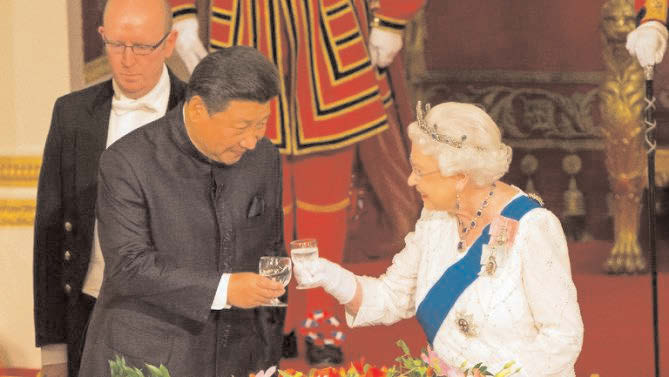
    BEIJING (TIP): Chinese media on Oct 22 trumpeted President Xi Jinping’s visit to Britain, running triumphant coverage of the trip at odds with Western accusations that London has sold out to the Asian giant. Editorial pages in the United States and Britain have lambasted Downing Street for abandoning human rights concerns in favour of improved trade relations with the world’s second largest economy, but Chinese state media praised British “pragmatism”.

    Front pages across the country featured glamorous pictures of President Xi Jinping and first lady Peng Liyuan with British politicians and royalty, opulently illustrating what the governments have described as a “new golden era” between the nations. The “ultra-state visit” put on for Xi featured the best of everything, according to a breathless commentary in the overseas edition of the People’s Daily, the Communist Party’s official mouthpiece, which portrayed the trip as the start of a beautiful friendship. Britain is seeking increased trade, investment and international influence from its relationship with China, it said, and “the two countries should eliminate all disturbances, and seize the moment to deepen the development of their bilateral relations”.

    It suggested that London may in the future even support Beijing on the UN Security Council.

    British business deals with China, including in such sensitive sectors as nuclear power, should set an example for other countries, according to an editorial in the Global Times, which is close to the ruling party.

    Meanwhile reports speculated on the benefits of merging the two “cultural great powers”, showing Chinese-made electric black cabs and arguing that improved relations might raise the level of Chinese footballers a pet project of Xi, who has called for the country to win a World Cup.

    The tone is dramatically different to Chinese media declarations when relations soured after Prime Minister David Cameron met the exiled Tibetan spiritual leader the Dalai Lama during a 2012 visit to London.

    That tete-a-tete “hurt the feelings of the Chinese people”, Beijing said, and the chairman of China’s legislature, Wu Bangguo, abruptly cancelled a trip to Britain. The high-level freeze lasted for over a year. When Prime Minister David Cameron travelled to China in 2013 hoping to patch up relations, an editorial in the Global Times mocked Britain for being “an old European country”, useful only for “travel and study”.

  • China now has more billionaires than US

    China now has more billionaires than US

    BEIJING (TIP): Communist China has overtaken capitalist United States in the richie rich list with 596 billionaires to America’s 537. The stunning jump has taken place in the last one year — spurred by the rise of China’s riches in technology and manufacturing — despite a slowing economy, according to a survey released on Oct 18.

    If Hong Kong and Macau’s 119 billionaires were to be included, the number would swell to 717, according to wealth research firm Hurun Report. Though the World Bank recently reduced the forecast for China’s growth from 7.1% to 6.9% this year, its billionaires have risen by 32% or 242 in 2014-15.

    “Despite the slowdown in the economy, China’s richest have defied gravity, recording their best year ever, and creating more wealth than any coun try has ever done before in a year,” Hurun Report chairman Rupert Hoogewerf said.

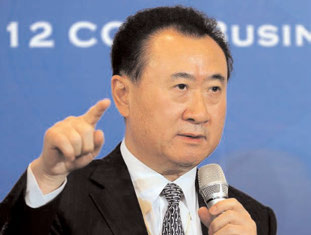
    The firm’s research has found total wealth of 1,877 super rich individuals hit $2.1 trillion, which is more than the GDP of several countries. It shows Jack Ma of e-commerce giant Alibaba has lost his position as the richest Chinese to real estate magnet, Wang Jianglin, who had held the position earlier. Wang’s fortune rose 52% to $34.4 billion after the value of his newly-listed cinema chain rose 10-fold in the stock market.

    The report reflected the success of online retailing, entertainment and other service businesses, while traditional industries such as steel and natural resources have declined.

    Following Wang and jack are Zeng Qinghou of the Wahaha soft drinks and mineral water empire with $21.2 billion. Ma Huateng of Tencent Ltd, operator of the popular WeChat social media service, is fourth; and, Jun Lei of smartphone maker Xiaomi is No 5.

    New entrants to the rich list include Frank Wang, founder of DJI, the world’s biggest maker of civilian drones, with a net worth of $3.7 billion, and Cheng Wei of taxi-hailing app Didi-Kuaidi, with $1 billion.

    Agencies said communist leaders are trying to steer the world’s second-largest economy to more self-sustaining growth driven by domestic consumption and service businesses to reduce reliance on trade, investment and heavy industry.

  • China female cabin crew ‘ritual’ sparks online outrage

    China female cabin crew ‘ritual’ sparks online outrage

    BEIJING )TIP): Photos showing Chinese female flight attendants stuffed into an airplane’s luggage compartment by security officers has sparked widespread condemnation, the media reported on Oct 8.

    The photos were posted online from a personal Weibo account, China’s Twitter-like social networking platform, People’s Daily reported.

    The flight attendants were from Yunnan province-based domestic carrier, Kunming Airlines.

    The post said the airline attendants were forced to be carried into the luggage rack by the security officer of the airplane. The practice, which was called a tradition by the officers, has been repeatedly conducted for four or five years.

    These stewardesses were reluctant to do it but still lifted to the rack due to the concerns of being not cooperative with their colleagues.

    Some photos were also posted showing the stewardesses curling up in the luggage rack with hands covering their faces. A male staff member, who was believed as one of the security officers, was also seen in a photo and even posed with a huddled stewardess.

    Kunming Airline has investigated the incident and said that these inappropriate traditions happened after the crew members finished their flight missions.

    “this was like a ceremony for the new attendants to join the crew team. It is prevalent among other foreign airline companies. But the company paid high attention to the incident and pledged to prevent this from happening again due to its negative effect to the image of the company,” airline sources said.

  • A US-Pak nuclear deal would be a threat to India’s security

    A US-Pak nuclear deal would be a threat to India’s security

    If a report in a US newspaper is to be believed, a US-Pakistan nuclear deal might be on the cards. The report says that such a deal is being considered around Prime Minister Nawaz Sharif’s visit to Washington this month.

    The report would not have appeared credible but for the evasive comment of the State Department on the subject and the official reaction of the spokesperson of our Ministry of External Affairs cautioning the US authorities against any such decision.

    Ever since the India-US nuclear deal was signed, the Pakistanis, obsessed with the idea of parity with India, have been seeking a similar deal.

    Besides calling the India-US nuclear deal discriminatory, Pakistan has condemned it as threat to its security and warned that it would take all necessary steps to safeguard its interests. Pakistan’s Foreign Affairs Adviser Sartaj Aziz aggressively reiterated this on the occasion of President Barack Obama’s visit to India in January this year.

    By remaining silent, the US has only encouraged this absurd posturing by Pakistan.

    US soft on Pakistan

    Some western nonproliferation specialists have been advocating for some time a nuclear deal with Pakistan in order to remove its sense of grievance. They feel it would give Pakistan an incentive to limit the expansion of its nuclear arsenal and stabilize the nuclear situation in the sub-continent.

    Such advocacy is largely prompted by negative attitudes towards India which, with its historical opposition to the NPT, is seen as the one responsible for nuclearizing South Asia. In their eyes, this is one way of denying India any one-sided advantage in nuclear status.

    Until now, the US Administration has been differentiating India’s case from that of Pakistan and disclaiming any move to offer the latter a similar deal, thought the tenor of its statements has not been sufficiently convincing.

    In fact, both the US and China, to different degrees, have aided Pakistan in achieving its nuclear and missile ambitions.

    A US-Pak nuclear deal will erode the strategic importance of the Indo-US nuclear deal

    In the past, knowing the China-Pakistan nuclear and missile nexus, the US has waived the application of its laws for larger geopolitical reasons linked to the combat against the Soviets in Afghanistan. The Afghanistan factor has, unfortunately, continued to condition US thinking on Pakistan’s nuclear and other errant behavior.

    The US was remarkably soft with Pakistan on the AQ Khan case. It has tolerated Pakistan’s tactics to obstruct discussions on the FMCT at Geneva at a time when fissile material control was still on the US agenda.

    It has overlooked supplies of additional Chinese nuclear reactors to Pakistan in violation of China’s NSG commitments.

    One could speculate that having settled the nuclear question with India, this was one way for the US to allow Pakistan to be a beneficiary of external cooperation in its nuclear sector, as part of the traditional policy of “hyphenation”.

    US agencies and think tanks have been propagating information about the frenetic pace at which Pakistan has been expanding its nuclear arsenal, without any visible reaction from the US government.

    At one time, worried about the rise of radicalism in the country, the US was expressing concern about the security of Pakistan’s nuclear arsenal. But such fears are no longer being expressed.

    US conduct over the years suggests that it has favored the idea of a Pakistani nuclear capability to balance India’s. Remarkably, its complaisance towards the Pakistani nuclear program has continued long after the end of the Cold War.

    Adding to all this, US treatment of Iran’s nuclear ambitions contrasts strikingly with its handling of Pakistan’s nuclear transgressions. While draconian sanctions have been applied on Iran, in Pakistan’s case the US has argued that sanctions might hasten its slide towards failure as a state and increase the risk of its nuclear assets falling into the hands of religious extremists.

    This is specious logic as the US has not taken any precautionary step to curb the development of Pakistan’s nuclear assets, including its decision to introduce tactical nuclear weapons in the subcontinent. An expanded Pakistani nuclear arsenal is even more likely to fall into the wrong hands.

    US reaction to Pakistan’s loose talk about using nuclear weapons against India has been, moreover, notably mild. It could and should have been much stronger.

    The hesitation to impose sanctions on Pakistan contrasts also with the willingness to impose sanctions even on a powerful country like Russia, including its most senior leaders and functionaries.

    What inhibits the US to strong arm Pakistan despite its provocations remains unclear.

    The argument that for dealing with the situation in Afghanistan the US needs Pakistan’s assistance is not convincing. The US needs Russia even more for dealing with yet more complex and fraught problems as Iran and West Asia in general, including the rise of the Islamic State, not to mention the fall-out of mounting tensions in Russia-West relations.

    China-Pakistan axis

    It is mystifying why the US should want to politically legitimize Pakistan’s nuclear conduct through an India-like nuclear deal.

    In India’s case, the US wanted to make a geopolitical shift with the rise of China in mind. It saw India as a counterweight to China in Asia, but for this the nonproliferation issue which inhibited India’s international role had to be resolved.

    Pakistan is in fact China’s closest ally. The geopolitical purpose of a nuclear deal with Pakistan will only legitimize the China-Pakistan nuclear and security relationships and undermine India’s strategic interests vis-a-vis both these adversaries.

    The US has wanted to build a strategic relationship with India largely around shared interests in the Indian Ocean and Asia-Pacific regions in view of mounting signs of Chinese political and military assertiveness and its ambitious naval expansion program.

    Through the China-Pakistan Economic Corridor and the development of Gwadar, Pakistan is facilitating an increased Chinese strategic presence in the Indian Ocean, which contradicts this US strategy.

    Shocking rationale

    According to reports, the underlying reasoning offered by the US, if correctly reported, is almost shocking. In return for an NSG waiver, Pakistan will be asked to restrict its nuclear program to weapons and delivery systems that are appropriate to its actual defense needs against India’s nuclear threat, and not to deploy missiles beyond a certain range.

    This implies that the US accepts that India’s nuclear program is Pakistan-centric and that it poses a threat to Pakistan.

    The Chinese threat to India is being overlooked and the fact that India faces a double Pakistan-China nuclear threat – in view of the close nuclear collaboration between the two countries- is being ignored.

    The US, it appears, would be comfortable if only India would be exposed to the Pakistani nuclear threat, not others.

    US has been consistently soft on Pakistan’s errant behavior in matters like nuclear weapons

    But then, Pakistan’s nuclear arsenal, according to its own leaders, is India-centric. Pakistan is not threatening China, Iran or Saudi Arabia with its nuclear weapons. Which are the countries that the US wants to protect against the use of nuclear weapons by Pakistan?

    Pakistan is developing delivery systems to reach any point in India. The US would apparently be comfortable with that, but not if it developed missiles of longer range. But whose security is US worried about if Pakistan did that? US itself, Japan, Australia, Singapore, China, Iran, Saudi Arabia, Israel?

    China, we know, opposes India’s NSG entry without Pakistan. It would seem the US would be willing to accommodate both China and Pakistan if the latter limited its nuclear threat to India.

    By implication then, the US has no stakes in India’s security from an unstable and adventurous Pakistan, despite our so-called strategic partnership.

    A reward for Pakistan’s military

    The timing of a nuclear deal would be odd too. It is now universally recognized that it is General Raheel Sharif and not Nawaz Sharif who really hold the reins of power in the country. A nuclear deal will be a reward for the Pakistan military and not the civilian power, as Pakistan’s nuclear program is under military control.

    Does the US want to reward the Pakistan military for its operations in North Waziristan against the Pakistani Taliban and is this considered meritorious contribution to the fight against Al Qaeda and terrorism?

    One would have thought far more important for the US and the West is the rise of the Islamic State and its ideology. Compared to which North Waziristan is a side-show. In any case, the Pakistani military is not fighting the Haqqani group.

    Worse, while Pakistani is being accepted as an honest mediator in the Afghan reconciliation process, the Taliban showed its mounting force by occupying Kunduz.

    One hopes that the US report does not accurately reflect President Obama’s thinking.

    If it does, it will show how hollow is the strategic relationship between India and the US, and why it would not be wise to trust the US.

    The India-US nuclear deal will be eroded of much of its strategic importance bilaterally, as result. The US would have, in addition, administered a big political blow to Prime Minister Narendra Modi who has gone out of his way to improve strategic understanding with the US.

    But then, news reports are news reports, and they could merely be political kite-flying. In which case, the India-US relationship will not receive a big jolt for all the reasons mentioned in this article.

    (The author is a former foreign secretary of India. He has also served as India’s ambassador to Turkey, Egypt, France and Russia. He can be reached at sibalk@gmail.com)

  • Does India’s nuclear doctrine need a revision?

    Does India’s nuclear doctrine need a revision?

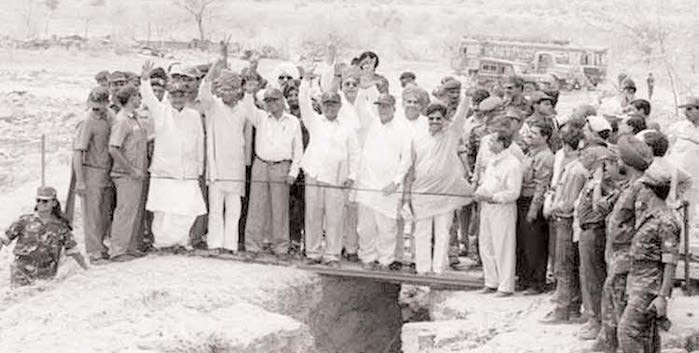
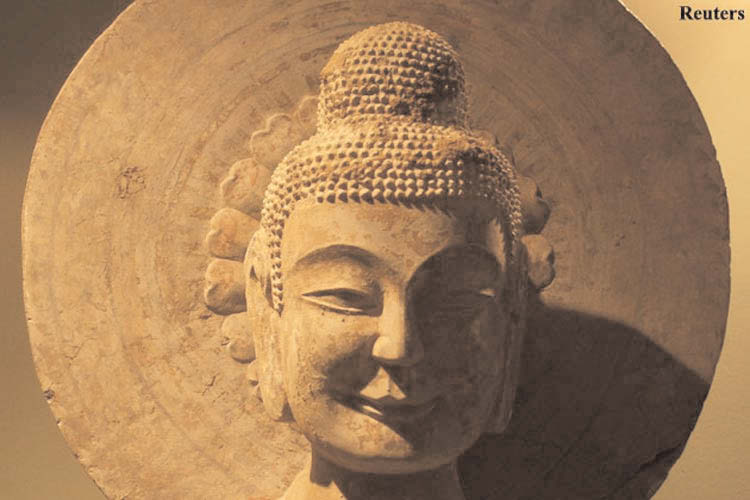
    India’s first nuclear test in 1974 called smiling Buddha in Pokhran desert was, for tactical reasons, characterized as “Peaceful Nuclear Explosion”. The second series of five nuclear tests in 1998 (Pokhran II) was again accompanied by a statement from the then PM Vajpayee attesting to lack of aggressive intent. The 2003 Indian nuclear doctrine went a step forward and made a written unilateral concession about India’s adherence to “No First Use” Doctrine. Since then a lot of debate has gone into the rationale, the need and the necessity for India to revise her Nuclear Doctrine and posture. Some foreign policy mandarins have tried to argue that India does not need to make any changes in the 2003 version of the doctrine. Though the election manifesto of the BJP prior to May 2014 Lok Sabha election noted the need to take a relook at India’s nuclear doctrine, subsequent statements by the PM nipped it in the bud.

    Site of India's first nuclear test in 1974 called smiling Buddha in Pokhran desert
    Site of India’s first nuclear test in 1974 called smiling Buddha in Pokhran desert

    While looking at the nuclear scenario, India has to take the contemporary threat perception and other geo-political factors into account while revising her strategic nuclear policy. It will be a good idea for India to periodically revise her nuclear doctrine every 10-15 years based on the geo-political situation. A lot has already changed since 2003. There is nothing sacrosanct about revising a document that was essentially tactical in nature. Newer nuclear threats have emerged from both the nuclear neighbors, China and Pakistan that mandate that India revise her nuclear doctrine and posture in order to avoid future nuclear blackmail.

    China has significantly diluted its “No first use” nuclear doctrine over the years. China has no intention of exercising restraint in the growth of its nuclear weapons program till the other two nuclear weapons superpowers (US and Russia) have brought down their number of nuclear weapons to China’s level. China has started deploying its nuclear powered submarines in the Indian Ocean region.

    Pakistani Nuclear program was initiated in 1970s by ZA Bhutto after Pakistan’s defeat in Bangladesh war of independence in 1971. His famous statement in 1965 in UNSC was about waging a thousand years war against India. Later on he talked about eating grass and obtaining Nuclear weapons. Pakistan’s nuclear weapons program has been, is and will remain an India-centric nuclear toy in the hands of ISI/GHQ/Pakistani military as the civilians do not control the program. From the beginning Pakistani nuclear program has had Chinese footprints all over.

    While Pakistan’s economy goes south, it remains a rentier state having extorted $31 billion from the US since 9/11. Pakistan keeps on getting tranches of money from the Kingdom of Saudi Arabia under an all-weather Sunni Alliance. Pakistan and ZA Bhutto had proudly proclaimed Pakistan’s nuclear weapons as “Islamic bomb” having been financed by Islamic money from KSA. Last year, Pakistani PM was able to obtain $ one billion from Saudi Arabia at a time when Pakistan’s economy took a hit. Money will never be a problem for Pakistani nuclear establishment as it grows at a disproportionate rate.

    Pakistani ballistic missile program has also heavily borrowed from China and North Korea since the 1990s. Hate IX (Vengeance-IV) Nasr was purpose built to carry tactical nuclear weapons (sub kiloton yield) over short range of 60-90 kilometers. On March 9 2015, Pakistan successfully tested the Shaheen-III surface-to-surface ballistic missile, capable of carrying nuclear warheads to a range of 2,750 km. Shaheen III nuclear capable missiles increase the range of Pakistani nuclear missiles to include the entire Indian land mass and the Indian Eastern naval command based in Andaman & Nicobar Islands. Pakistani has recently become the beneficiary of Chinese nuclear powered submarines that definitely pose a threat to India for her second strike capabilities.

    General Khalid Kidwai who was the director of Pakistani Army’s Strategic Planning Division (SPD) for a period of 15 years, in an open meeting in March 2015 at the Carnegie Endowment for International Peace, in Washington DC aggressively articulated Pakistan’s new offensive nuclear doctrine and posture. He brazenly threatened India with the first use nuclear attack threats painting a new picture. From the initial posture of credible minimum deterrence, Pakistan has moved to the concept of “Full Spectrum Deterrence” which envisages aggressive and offensive use of nuclear weapons by Pakistan against India in a number of scenarios. Not only Pakistan has linked its full spectrum nuclear deterrence doctrine with resolution of J&K dispute in its favor, Pakistan has threatened to use nuclear weapons against India if its tentacles in Afghanistan are cut off. Extra-territorial linkage with loss of its assets in Afghanistan widens the role for nuclear weapons under the new Pakistani doctrine.

    Pakistan has already developed tactical nuclear weapons to be used in the war theater on the mechanized divisions of Indian armed forces. Ostensibly, Pakistan has justified use of tactical nuclear weapons as a policy against Indian Army’s imaginary “Cold start doctrine” which was never officially promulgated.

    Pakistan is the only country that has single-handedly blocked an international agreement on FMCT while feverishly increasing its fissile material production. While traditionally cited figure is Pakistan has 90-110 nuclear weapons, reality has changed during last few years. The Pakistani nuclear armada is the fasted growing in the entire world with production of 10-20 new nuclear weapons every year.

    Pakistani state has brazenly and repeatedly indulged in nuclear blackmail and rent collection over the last several decades. This Pakistani behavior will NOT change only the sponsors and the rent-payers will change over time.

    There is NO reason for India to remain complacent while the nuclear threat perception changes. The PM will do a yeoman’s service to long-term strategic security of Indian nation if he revisits the Indian nuclear doctrine and allows it to grow some teeth. A number of remedial steps can be taken including discarding the meaningless no-first use doctrine to safe-guard nation’s security. Victors always write the history and India has lost repeatedly in history making.

  • Chinese man cremated with life savings of $33,000

    BEIJING (TIP): A Chinese man was cremated along with his entire life savings of $33,000 as per his last wish that the money should be burnt along with him instead of giving it to his two sons who neglected him.

    Angry and frustrated over his sons unwillingness to take care of him, the farmer surnamed Tao from east China’s Jiangsu province had stated in his will that his entire life savings be burned with his body upon his death.

    The story came to light on Thursday after Yang Lin, an employee at a local crematory, informed the local media that he saw a bizarre spectacle of cremating a body months ago with “thousands in cash burning inside the furnace along with the body”, state-run CCTV reported.

    Ten years ago, Tao gave his farm to his two sons and moved away from the countryside to rent a small house and make a living by picking up waste in the city.

    Due to his age, Tao felt that he could not handle the heavy workload anymore and sought his sons’ help, hoping that he could spend the rest of his life with either one of them. But both of his sons turned down his request with different excuses, the report said.

    Knowing that his days were numbered, Tao had even dressed in traditional mourning clothes in his final days, his neighbours said.

    Tao died in his rented home. After his death, his sons transferred the body to the crematory.

    As they were waiting outside, a mysterious man fulfilled Tao’s last wish by burning his entire savings of 210,000 yuan ($33,052), along with his body.

  • US mulls sailing near disputed South China Sea islands: Pentagon official

    US mulls sailing near disputed South China Sea islands: Pentagon official

    WASHINGTON (TIP): The United States is considering sailing warships close to China’s artificial islands in the South China Sea to signal it does not recognize Chinese territorial claims over the area, a US defense official said on October 8.

    The Financial Times newspaper cited a senior US official as saying US ships would sail within 12-nautical-mile zones, that China claims as territory around islands it has built in the Spratly chain, within the next two weeks.

    The Navy Times quoted US officials as saying the action could take place “within days,” but awaited final approval from the Obama administration.

    A US defense official declined to confirm that any decision had been made, but referred to remarks in congressional testimony last month by US Assistant Defense Secretary David Shear, that “all options are on the table.”

    “We are looking at this,” the official said, on condition of anonymity.

    US Defense Secretary Ash Carter said last month, in reference to China’s South China Sea claims, that the United States would “fly, sail, and operate wherever international law allows, as US forces do all over the world.”

    The White House declined to comment on potential classified naval operations.

    In May, the Chinese navy issued eight warnings to the crew of a US P8-A Poseidon surveillance aircraft when it conducted flights near China’s artificial islands, according to CNN, which was aboard the US aircraft.

    China watching closely

    Chinese foreign ministry spokeswoman Hua Chunying told a regular news briefing on Thursday that China was paying attention to the reports of impending US naval action, and that it and the United States have maintained “extremely thorough communication” on the South China Sea issue.

    “I believe the US side is extremely clear about China’s relevant principled stance,” she said. “We hope the US side can objectively and fairly view the current situation in the South China Sea, and with China, genuinely play a constructive role in safeguarding peace and stability in the South China Sea.”

    US President Barack Obama said he told Chinese President Xi Jinping he had
    “significant concerns” about the islands when Xi made his first state visit to Washington late in September.

  • China’s military to recruit more civilian personnel

    BEIJING (TIP): China will recruit more civilian personnel for jobs in the PLA, the world’s largest standing army, and the Chinese People’s Armed Police. The spouses and offspring of military personnel who have fallen in the line of duty, and the spouses of those still in service will be eligible to apply to certain posts.

    More positions will be made available for candidates with relevant work experience. It is hoped that the drive will improve recruitment in remote areas and unpopular positions, state-run Xinhua news agency reported.

    The announcement follows a recent decision by the government to lay off 300,000 troops by 2017 to further slim down the 2.3 million-strong People’s Liberation Army (PLA). The recruitment information will be publicised on Friday. People can sign up for examinations on the military talent net website and the tests will be held on November 22. The general political department of the PLA has called for a transparent recruitment process.

  • China as a Peer of the United States: Implications of the Joint Statement

    China as a Peer of the United States: Implications of the Joint Statement

    China is emerging as a peer and partner of the United States in international affairs. India’s response should be to work with China in the Asia Infrastructure Investment Bank and in China’s ‘Road and belt’ initiative to make the ‘Asian Century’ a reality as well as in the G20, which China will chair in 2016 (and India in 2018), to begin shaping the future global agenda, ‘global goods’ and institutions, including reform of the United Nations, while maintaining strategic autonomy to safeguard its maritime trade routes.

    New partners in climate change

    In the US-China Joint Statement on Climate Change, President Obama has met the criticism of the US Senate that unilateral emissions reductions should not give China a competitive advantage while President Xi has achieved for developing countries what the G77 collectively was finding difficult to attain.

    On 25 September, Xi and Obama outlined their “Vision for the Paris Climate Conference”,(re) defining the principle of common but differentiated responsibilities as a system that provides flexibility to developing countries “in light of their capacities” and “that differentiation should be reflected in relevant elements of the agreement in an appropriate manner”.

    They also agreed on joint support for a “global transition to a low carbon economy, renewed focus on adaptation “as a key component of the long-term response” to build resilience and reduce vulnerability and the “crucial role of major technological advancement in the transition”.

    The Statement recognizes that transparency provisions have to include both ‘action’ as well as ‘support’ provided to developing countries – a long standing demand of developing countries. Also, transparency provisions are expected to “provide flexibility to those developing countries that need it in light of their capacities”, emphasizing differentiation.

    The Joint Statement moves beyond the post-colonial North-South dichotomy and welcomes the provision of resources from countries “willing to do so;” it is no longer seen as a commitment based on notions of historical responsibility. Both countries will provide USD 3 billion each to help poor countries, with China announcing the establishment of a China South-South Climate Cooperation Fund. This puts pressure on all developed countries to enhance contributions towards the USD 100 billion to be provided by 2020. The need for bilateral investments to encourage low-carbon technologies and climate resilience, equating mitigation and adaptation (even though these terms are not mentioned) provides an opening to discuss the role of public finance in the transition.

    By endorsing a global goal of “low-carbon transformation” within the 21st century -convergence on an overarching meta-global goal is a significant development which the Sustainable Development Goals (SDGs) were not able to achieve – the statement also serves to define the ‘Objective’ of the Convention; something which has eluded the multilateral process since 1992.

    New forms of international co-operation

    Xi used his address to the United Nations General Assembly to reiterate China’s call for a “new type of international relations based on win-win cooperation.” He added: “We should resolve disputes and difficulties through dialogue and consultation,” as “the law of the jungle leaves the weak at the mercy of the strong.”

    Xi emphasized that China represents less powerful nations through its seat on the Security Council (“China’s vote at the U.N. will always belong to developing countries”) and projected China as a champion of the developing countries.

    The trip was planned so there would be major funding announcements on each of the three days Xi was at the UN General Assembly in New York, as that is what concerns the G77 the most. He pledged establishment of an assistance fund for South-South cooperation to implement the SDGs with USD 2 billion dollars; increasing investment in LDCs to USD 12 billion by 2030; and the exemption of debt owed by LDCs, LLDCs, and SIDS on interest-free loans; a USD 10 million contribution to the UN women’s agency, a USD 1 billion ‘peace and development’ fund and USD 100 million in military aid for the African Union. He also co-hosted a women’s summit at the UN.

    China already contributes more peacekeepers than other permanent members of the Security Council. Xi promised to send the first Chinese helicopter squad to join peacekeeping in Africa, train 2,000 peacekeepers from other countries in China over the next five years, and build a peacekeeping standby force of 8,000 troops. Xi’s largesse portrays China as a contributor to global growth and security amid international concerns about China’s economic stability and military ambitions.

    Global rules for the new services and knowledge economy  

    Over time, Xi’s success in implementing sweeping market reforms aimed at changing China’s economic model from an investment and export-driven one to an innovative consumer-driven and service-oriented one may be the critical factor in shaping Beijing’s economic and foreign policies in the future, as the economic relationship with the US will remain key.

    Cyber issues are now among larger concerns in the economic relationship, with bilateral trade totaling USD 590 billion in 2014 and China holding USD 1.2 trillion in US Treasury bonds. On cyber-security it was agreed that “neither country’s government will conduct or knowingly support cyber-enabled theft of intellectual property, including trade secrets or other confidential business information, with the intent of providing competitive advantages to companies or commercial sectors.” In addition, Xi and Obama agreed to create a cabinet-level mechanism and a hotline to address concerns. Both pledged to cooperate in creating a global code of conduct for cyber security. The Bilateral investment treaty Talks stalled as each side offered “negative lists” of items to be excluded and these lists can wall off industries considered strategic such as energy, aviation, telecommunications or access to state-owned industry procurement.

    New co-operative multilateralism

    The United States and China will remain the key global actors in developing a multilateral consensus on global issues as long as they successfully represent the concerns of the others. In an inter-connected world, the outcome will be a new model of co-operative multilateralism supplemented by bilateral understandings between national stakeholders that do not require the mediation of the United Nations Secretariat and prolonged negotiations over obscure texts.

    The post-world war multilateralism involved agenda setting by the G7 balanced by the G77 laying out their interests, or positions, at the start of a multilateral negotiation. Subsequent rounds of negotiations were designed to narrow the differences with secretariat documents suggesting consensus language and calls to capitals. Last minute compromises and trade-offs are very much part of the process, leaving most developing countries unhappy. The result has been continuing tension and the need for a United Nations secretariat to help mediate between the groups, siding more with the funders in achieving their goals. This arrangement has, at least for climate change, now lost its relevance.

    The 21st century, characterized by the majority of the middle class living in cities, a post-industrial knowledge economy and global trade dominated by services rather than goods, needs to respond effectively to global concerns through means for agenda-setting and securing a global consensus very different to those adopted for a fractured world emerging from colonialism and world war. With the two largest economies and most powerful countries that cut across the political divide emerging as peers and partners, agenda setting will require wider consultation in the G20, which China will chair next year. India, too, must shape the contours of the new multilateralism by working with China.

    New military and strategic balance in Asia

    The Dongfeng (East wind) 21D “carrier-killer” missile, which made a public appearance in a military parade on 3 September 2015, with a range of 1,550 km and a projected 10 times the speed of sound (faster than anything that could intercept it) after re-entering the atmosphere can manoeuvre on to a target, making it theoretically capable of landing a large warhead on or near a moving ship. Some analysts say such missiles reduce the threat from aircraft carriers – which form the basis of current US naval strategy – just what aircraft carriers themselves did to battleships with Japan’s 1941 attack on Pearl Harbor. While the potency of the DF-21D is debated in the defense community, these capabilities are changing the balance of power in Asia against the United States requiring it to strengthen its alliance system.

    The geopolitical world order established by the United States after World War II is unraveling because of the geo-economic shift to Asia. China’s Asian Infrastructure Investment Bank has served to focus minds in Europe and East Asia. The new Bank will be a rival to the IMF and World Bank and the US risks losing its ability to shape international economic rules, and global influence that goes with it. The UK described the decision as an “irresistible opportunity” and brought accusations from Washington about London’s “constant accommodation” of China, reflecting the two world-views on the emerging global order.

    For India, the lesson from the failed US attempt to obstruct the new bank is that, as Asia’s urbanization will require more than USD 8 trillion to be spent on infrastructure in this decade, countries in the region will welcome all the support they can get. Rather than be suspicious of China’s motives and seek to prevent the ‘Belt and road’ initiative, it should deal with the strategic concerns by joining in the development projects, for example, by providing the software packages required in the management of the ports. A mutual recognition of special interests of each other in the South China Sea and the Indian Ocean should be a strategic objective, and will be a strategic win-win for both.

    The ‘Asian Century’ provides an integrating theme to focus minds on shaping the economic integration of Asia, where two-thirds of future global growth is going to come from, and the alignment of the rail, road, sea routes and gas pipelines from Iran, for example, can position India as a node for South and Western Asia. Including a services component in the projects will add to their productivity and support cooperation between the Asian giants; trade is a win-win proposition.

    Conclusion

    The global trend is that countries are gaining in influence more because of the strength of their economy than the might of their military. India can either drift into the future remaining in its periphery or it can shape the future jointly with China to become one of the two engines of the Asian economy. China is likely to remain the world’s largest producer of goods and India has the potential to be the largest producer of services in the largest consumer market. According to McKinsey and Company, the services sector will be the real driver of growth in Asia as affluence will be concentrated in cities. The ability to design, finance, build and implement the big data-technology systems will be the defining comparative advantage in the future, and India and China can work together to make this happen sharing their respective expertise. The complex interdependencies will be a strong stabilizing force.

    According to Prime Minister Modi, China and India are “two bodies, one spirit” and President Xi has emphasized the “need to become global partners having strategic coordination”. The G20 meeting in 2016 provides the opportunity for the Asian giants to work together to define a global agenda, ‘global public goods’ and institutions to respond to the global middle class and the Asian Century with two centers of gravity, with India seeking to achieve this joint agenda when it chairs the G20 in 2018.

    (The author is an Ex civil servant and diplomat) – IDSA


  • India, US and a New moment

    India, US and a New moment

    Prime Minister Narendra Modi’s visit to the United States has taken place at a moment of significant opportunity for India. The Chinese economy, which had seemed invincible, has faltered and is facing deep structural problems. India is poised to become the world’s best performing economy, though there are still signs of sluggishness and it is imperative that both domestic and foreign investment be accelerated for its full potential to be reached. Against this backdrop, Modi’s program, replete with high-profile meetings with CEOs of US financial, media and technology companies and a well-attended public function with the Indian community, addressed the business and diaspora constituencies that have been central to the prime minister’s foreign outreach since he assumed office.

    American technology companies see India as the next big growth opportunity, given the difficulties in operating in China and the fast growth of the smartphone market and e-commerce in India.

    This was evident from the enthusiasm with which Modi was received in Silicon Valley by the chief executives of America’s best known technology companies, several of whom, like Satya Nadella and Sundar Pichai, hail from India. India’s goal to harness the digital revolution to skill its people, improve infrastructure and delivery of goods and services opens up exciting possibilities. For India, the challenge is to leverage these opportunities to create employment for the millions who enter the job market each year, and develop domestic technical and manufacturing capabilities.

    In the last years of the previous government, American investors had become wary of doing business in India on account of slow decision-making and the unpredictability of the regulatory environment. But the high expectations that the new government, with a solid majority in the Lok Sabha, would be able to smoothen out these tangles quickly and expedite reform have been moderated as several key initiatives like the land amendments and GST have been abandoned or failed to make progress. The unpredictability of the tax regime has been a major concern of foreign investors and this is still a work in progress. India needs to step up its game to create a conducive business environment. Equally, high US visa fees for Indian software engineers deployed there for short periods, numerical quotas and the absence of a tantalization agreement constrain the business of Indian IT companies in America. These issues need to be addressed if businesses are to build on their synergies.

    The three million-strong Indian American community has come of age and is a vital bridge connecting the people of the two countries. Modi has paid special attention to the overseas Indian community as an asset for India’s development and a force-multiplier in India’s diplomacy. This was again visible at the public function in San Francisco with the Indian American community.

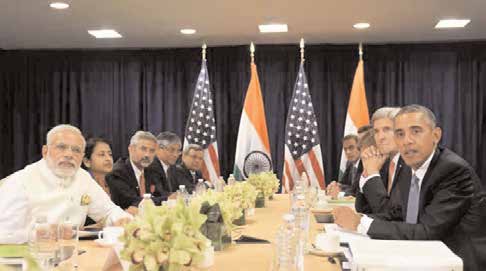
    This was not a bilateral visit, though Modi and President Barack Obama did meet – for the fifth time – on the sidelines of the UN. Climate change was uppermost on Obama’s agenda in the run-up to the Paris conference. With China having announced its intention to cap its emissions in 2030, there is pressure on India to announce its emission-reduction goals. Modi underlined that India will be a constructive player in Paris while keeping open avenues for meeting its developmental needs. In setting our national goals, Delhi needs to ensure that it does not disproportionately add to the costs of doing business in India. Affordable clean and renewable energy and energy efficiency hold the key to a less carbon-intensive future for India and it is here that an India-US partnership can bring real value to the table.

    Afghanistan faces an uncertain future post the withdrawal of US combat forces. The US, along with China, co-chaired a meeting on Afghanistan to which India was not invited. The US and Chinese efforts to stabilize Afghanistan with Pakistan’s cooperation should not lead to a situation that exacerbates terrorism challenges for India and the region. Continued support for strengthening the capacities of the Afghan government, particularly the army and the police, would be critical. There is need for candid discussions on Afghanistan between India and the US, and they have agreed to strengthen their consultations.

    Modi and Obama welcomed the progress made in giving shape to the joint strategic vision on the Asia Pacific and Indian Ocean regions and the joint engagement with regional powers like Japan. The upgraded trilateral ministerial consultations between India, the US and Japan were initiated on the sidelines of the UN. Japan is expected to participate in the Malabar naval exercise. Modi sought US support for India’s membership of the Asia-Pacific Economic Cooperation. Both India and the US have convergent interests in shaping an Asian balance grounded in international norms and conducive to peace and prosperity.

    The PM participated in the important UN Summit that adopted the Sustainable Development Goals. These set out an ambitious new agenda to end poverty by 2030 and promote shared economic prosperity, social development and environmental protection. India’s record on the Millennium Development Goals has been mixed, with considerable success in poverty reduction but more work to be done in health and education. The 17 new goals are in line with India’s national agenda for development, but achieving these would require renewed and sustained efforts by the government, civil society and the private sector over the next 15 years.

    The meeting of G-4 leaders shone a spotlight on UN Security Council reform, which has been languishing despite the growing recognition that the council, as it exists today, reflects the world as it emerged after World War II and needs to change to represent current realities and better fulfill its objectives. Four of the five permanent members of the Security Council, including the US, have expressed support for India’s candidature for permanent membership, while China has been ambivalent. Reform is likely to be a difficult process. The P-5 have been resisting change. A bottom-up approach -garnering support from members of the General Assembly combined with pressure from outside – would be required to generate momentum for Security Council reform.

  • INDIA TO BE PART OF ELITE ANTI-MISSILE GROUPING NEXT WEEK

    NEW DELHI (TIP): Barring an unpleasant last-minute surprise, India could be accepted as a member in the Missile Technology Control Regime (MTCR) next week. One of the world’s top four non-proliferation regimes, the MTCR plenary will be held in Oslo where the Indian application for membership will be considered. The 34-nation grouping takes decisions by consensus.

    Since India made a formal application for membership in summer this year, India has worked closely with key countries who have promised to support its membership. If India is accepted in the grouping it would be a huge fillip to its missile and space programmes, even allowing it to export its own technology to member countries. In recent years, MTCR has even assumed oversight regarding non-proliferation of UAVs -ironically, Pakistan, not a member of MTCR, has just developed its own armed drones which it has recently used on its own people.

    Accession to MTCR is one of the leftover tasks of the India-US nuclear deal. The US had promised to support India’s membership to all four – Wassenaar Arrangement, Nuclear Suppliers Group and Australia Group, along with MTCR. Initially, Indian diplomatic push was to bundle its membership to all four. The Indian thinking then was India could leverage its candidature all at once rather than lobby separately for all four. However, that thinking underwent a change and the MEA decided to approach all four regimes separately.

    It was originally believed that Australia Group would be the easiest to get into. But India still has to harmonize some of its controls on chemicals etc to make the cut. Instead the government has worked hard to harmonize its export control lists, called SCOMET with MTCR regulations. In March 2015, Indian government put in a host of new items on the SCOMET list which would need prior permission before exports and invite strict oversight by government agencies. A second list on military items also served to harmonize export licensing of military stores, a key compliance demand for MTCR. Acceptance to MTCR might make it easier for India to access the other regimes, though no one is in any doubt about how difficult it would be for India to get into the NSG, where China remains opposed. Between the PM, foreign minister Sushma Swaraj and even President Pranab Mukherjee, the government has lobbied with all the members of the MTCR in the past year. Officials said Indians have been ready with answers to any question put to them by MTCR members. The US has worked closely as well, lobbying for India, the first time after the nuclear deal waiver at the NSG. In the recently concluded Strategic Dialogue between Swaraj and John Kerry, the joint statement noted, “The US side affirms its support for India’s membership in the Missile Technology Control Regime at its upcoming plenary, the Nuclear Suppliers Group, and in the other global non-proliferation export control regimes.”

    China is not a member of the MTCR but has promised to abide by the original 1987 Guidelines and Annexure, but not the subsequent revisions. China has also asked for membership, but China, like Pakistan, is believed to have lax export control systems.

    Established in 1987, the MTCR aims to curb the spread of delivery systems like missiles which carry a minimum payload of 500 kg to a distance of a minimum of 300km.

  • 50 KNIFED TO DEATH IN CHINA COAL MINE, UIGHURS SUSPECTED

    BEIJING (TIP): At least 50 people were knifed to death last month inside a coal mine in the restive Xinjiang province, reported US-based Radio Free Asia on Thursday – an attack suspected to have been carried out by Uighur separatists who are known to use knife for terror attacks.

    Radio Free Asia said the number of people killed in the September 18 attack at the Sogan colliery in Aksu had reached 50, with most casualties being members of the Han Chinese majority. The news came as the country marked 60 years since the establishment of what it calls the Xinjiang Autonomous Region.

    Radio Free Asia, citing its own sources, said that the attackers first “rammed their vehicles using trucks loaded down with coal”, while trying to block the entry of police personnel, who rushed to the scene. “Nearly all workers who were on the shift at the time were killed or injured,” police officer Ekber Hashim told RFA. “Some workers were sleeping while others were preparing to work when the attackers raided the building after killing the security guards.”

    Beijing’s concerns about Pakistan’s Taliban backing Xinjiang separatists features regularly in discussions between the two countries. A Communist Party official in charge of religious groups and ethnic minorities, Yu Zhengsheng, warned local authorities not to rest on their laurels because the threat from terrorists was severe.

    “We must fully recognize that Xinjiang faces a very serious situation in maintaining long-term social stability, and we must make a serious crackdown on violent terror activities the focal point of our struggle,” Yu said. Meanwhile, three more explosions rocked China’s Guangxi province, killing one more person on Oct 1.

  • INDIA BRIGHT SPOT IN SLOWING GLOBAL ECONOMY: IMF CHIEF

    NEW DELHI (TIP): Global growth will be likely weaker this year than last with only a modest acceleration expected in 2016, International Monetary Fund chief Christine Lagarde said on Wednesday, and reiterated that India remains a bright spot.

    “The good news is that we are seeing a modest pickup in advanced economies. The moderate recovery is strengthening in the euro area, Japan is returning to positive growth, and activity remains robust in the US and the UK as well. The not-so-good news is that emerging economies are likely to see their fifth consecutive year of declining rates of growth,” Lagarde said in a speech ahead of October 9-11 IMF-World Bank annual meetings.

    “India remains a bright spot. China is slowing down as it rebalances away from export-led growth. Countries such as Russia and Brazil are facing serious economic difficulties. Growth in Latin American countries, in general, continues to slow sharply. We are also seeing weaker activity in low-income countries – which will be increasingly affected by the worsening external environment,” she said.

    The IMF will release its World Economic Outlook next week. She said policy makers will need to strengthen policies to address current challenges and help lead the world economy to recovery.

    “I am calling on policy makers to make a policy upgrade to address the current challenges,” Lagarde said, adding that the world is at a “difficult and complex juncture”.

    The prospect of rising US interest rates, China’s slowdown, a sharp deceleration in the growth of global trade, and the rapid drop in commodity prices are contributing to global uncertainty, she noted.

    With conflict and forced migration, Lagarde said there is the “human toll” from economic dislocation and low activity. More than 200 million people remain unemployed worldwide, income inequality is rising, and women continue to be disadvantaged both in pay and labour market opportunities.

    “My key message today, however, is this: With the right policies, strong leadership, and global cooperation, it can be managed,” Lagarde stressed. “The bottom line is that proactive policy management by everyone…is now more important than ever.”

  • A fervor to glimpse ‘China’s Mona Lisa’

    BEIJING (TIP): An hour before the Forbidden City opened to visitors one recent morning, the stone courtyard just south of the ancient imperial palace was abuzz. Within the vermilion walls, the usual mix of uniformed palace workers, tour guides and tourists milled about beneath a pale blue sky. Loudspeakers blared a recording about ticketing policies.

    But at the center of it all was an atypical sight: a phalanx of more than 1,000 people, flanked by palace workers whose job was to keep the ranks in line. Unlike most visitors, this small army had come with only one goal: to see “Along the River During the Qingming Festival,” an early 12th-century painted scroll considered so iconic that it is often called “China’s Mona Lisa.”

    Since an exhibition celebrating the 90th anniversary of the Palace Museum opened in early September, people have been waiting for up to 10 hours to see this 17-foot-long masterpiece attributed to the painter Zhang Zeduan, an intricate ink-on-silk tableau of life in the Northern Song dynasty capital, Kaifeng. The best-known painting in the museum’s vast collection, it has been shown in public only a few times, in Beijing most recently in 2005 for the museum’s 80th anniversary.

    The fanatical interest in the work coincides with a concerted push by the Chinese government to encourage interest in traditional culture and values, as a way of emphasizing its links to a history that goes back thousands of years.

  • ‘US MUST TREAT CHINA AS AN EQUALLY STRONG NATION’

    BEIJING (TIP): Visiting Chinese president Xi Jinping on Tuesday asked the US to treat China as an equally strong nation in what he called “a new model of major country relationship”.

    He demonstrated China’s economic strength by placing an order for 300 Boeing aircraft, something closely related with employment in the US.

    Xi contradicted some experts, who have talked about a Thucydides trap where an emerging power like China causes fears for an established power like the US leading to a war like situation.

    “There is no such things as the so-called Thucydides trap in the world. But should major countries time and again make the mistakes of strategic miscalculation, they might create such traps for themselves,” he warned while speaking at a banquet hosted by the local government of Washington State and local groups.

    Xi’s visit comes soon after China organized a massive military parade exhibiting sophisticated weapons in Beijing.

    Many American senators have complained about China’s recent devaluation of Yuan, which might hit US exports.

    “We want to see more understanding and trust, less estrangement and suspicion, in order to forestall misunderstanding and miscalculation,” the president said.

    “The two countries should unswervingly boost win-win cooperation and foster friendship between the two peoples in an extensive manner.”

    China has been developing its idea of “major country relationship” as it has emerged as an economic power while Russia has gradually lost its superpower status resulting in a vacuum

    Xi will visit Boeing’s main plane factory in Washington State on Wednesday. Besides placing the new order, the State-owned Commercial Aircraft Corporation of China signed an agreement with Boeing to establish a completion centre for 737 airliners in China.

    A Chinese company recently placed another order for 50 aircraft with Boeing.

    Xi has scheduled his meeting with US President Barack Obama at the White House in the later part of the trip.

    “We want to deepen mutual understanding with the US on each other’s strategic orientation and development path,” Xi said.

    He suggested the two countries should respect each other, seek common ground while reserving their differences and spare no effort to turn differences into areas of cooperation.

    China will stay committed to steady economic growth, reform, opening-up, rule of law, anti-corruption endeavors and the path of peaceful development, Xi said.

    “China’s economy will stay on a steady course with fairly fast growth … The key to China’s development lies in reform … China will never close its open door to the outside world,” the president pledged.

  • Oil edges up after tumble on build-up in US gasoline stocks

    Oil edges up after tumble on build-up in US gasoline stocks

    SEOUL (TIP): Oil prices pared some losses on Thursday after sharp falls overnight on an unexpectedly large buildup in US gasoline stocks and seasonally tepid demand.

    The global benchmark November Brent contract had climbed 44 cents to$48.19 a barrel as of 0151 GMT, after ending the previous session down $1.33 at $47.75 a barrel.

    US crude rose 47 cents to $44.95 a barrel, having slumped $1.88 on Wednesday to settle at $44.48.

    A combination of a slightly better supply-side scenario in terms of prices and a bit of an improvement in industrial sentiment globally has brought in some support,” said Michael McCarthy, chief market strategist at CMC Markets in Australia.

    Data from the Energy Information Administration on Wednesday showed that US crude oil stocks fell 1.9 million barrels in the week to Sept. 18, the second straight weekly drawdown, compared with analyst expectations for a decrease of 533,000 barrels.

    But gasoline stocks rose 1.4 million barrels, compared with analyst expectations in a Reuters poll for a 819,000-barrel gain.

    A planned shutdown of Britain’s North Sea Buzzard oilfield, the biggest contributor to the Forties oil stream which is the largest of the four North Sea crudes used in Brent benchmark, has been reset to November from October, its operator Nexen said.

    Longer-term, a supply surplus continues to weigh on markets.

    “Despite early signs of a cutback in US shale production, the underlying supply and demand fundamentals remain weak for both Brent and WTI. This, alongside uncertainties surrounding China and the broader health of global economy, is capping any recovery in prices,” said BMI Research, part of the Fitch ratings agency.

    “We maintain our below-consensus forecast for both grades in 2016 and 2017, as major supply additions in West Africa, North America, the North Sea and the Middle East will continue to outpace the growth in demand, contributing to a rising overhang of crude in the market.”

  • After jokes, applause at dinner, China’s Xi Jinping gets down to US business

    SEATTLE (TIP): A day after wooing Seattle’s elite with pop-culture jokes and promises of reform, Chinese President Xi Jinping gets down to business on Wednesday, meeting Apple Inc’s Tim Cook and other top tech executives.

    The first leg of a trip to the United States, the Seattle stop offers a chance to highlight China’s cooperation with US companies firms before he heads to Washington, where he will have to contend with the full spectrum of irritants in relations, from tension in the South China Sea to human rights.

    In a speech on Tuesday night Xi joked that there was no power struggle in China over an anti-corruption drive.

    “There is no House of Cards,” Xi said, drawing laughter with a reference to the US television drama about merciless political machinations that is also popular in China.

    Xi also gave a nod to author Ernest Hemingway and past US presidents, and got a standing ovation from his audience of officials and business leaders. He is due to speak on Wednesday to 30 US and Chinese chief executives, including Apple’s Cook, Amazon.com’s Jeff Bezos, Satya Nadella from Microsoft Corp and Berkshire Hathaway’s Warren Buffett.

    Top executives from Honeywell, Boeing , Cisco Systems, IBM, Starbucks, as well as Chinese firms Alibaba, Lenovo and Baidu, among others, will also attend.

    Xi will also tour the Everett, Washington, factory where Boeing makes aircraft such as the 777 and 787 Dreamliner, and where the plane maker is expected to announce a new Chinese finishing plant for its 737 airliner.

    In Beijing on Wednesday, China’s ICBC Financial Leasing Co said it had signed an agreement with Boeing to buy 30 737-800 aircraft.

    Later on Thursday, Xi will head to the Microsoft campus, where tech executives are set to hold a US-China Internet forum.

  • The Context of the Cease-Fire Decision in the 1965 India-Pakistan War

    The Context of the Cease-Fire Decision in the 1965 India-Pakistan War

    By declaring a ceasefire with effect from 3.30 a.m. on 23 September 1965, did India miss an opportunity to attain decisive victory over Pakistan? Yes, according to the existing narrative, which attributes the ceasefire decision solely to the advice tendered in this regard by General J. N. Chaudhuri, the then Chief of the Army Staff and Chairman of the Chiefs of Staff Committee. In this account, Prime Minister Lal Bahadur Shastri was willing to consider extending the war “for some days” if the Indian Army could attain “a spectacular victory” in that timeframe.1 But Chaudhuri advised Shastri to agree to an immediate ceasefire because he was under the ‘false’ impression that the war effort could no longer be sustained given that “most of India’s frontline ammunition had been used up and there had been considerable tank losses also.”2 The reality was, however, quite different. By 22 September, the Indian Army had used up only 14 per cent of its frontline ammunition and it possessed “twice the number” of tanks than the Pakistan Army.3 In contrast, the Pakistan Army is believed to have been “short of supplies” and “running out of ammunition” by then.4 And a high attrition rate was “daily reducing the number of operational aircraft available” to the Pakistan Air Force.5 As argued by K. Subrahmanyam, under these circumstances, if India had continued the war “for another week, Pakistan would have been forced to surrender.”6

    There are, however, four problems with this narrative. First, it is based on the erroneous claim that the Indian Army possessed twice the number of tanks than the Pakistan Army at the end of the war. Second, it rests on the unverified assumption that the Pakistan Army’s ammunition and spare parts would not have lasted for more than a few days after 22 September. Third, the narrative fails to comprehend the context of the conversation between Shastri and Chaudhuri about extending the war for some more days. And finally, it fails to take into account military and diplomatic factors that actually determined the Cabinet’s ceasefire decision, some of which Chaudhuri himself highlighted in a written assessment he shared with Defence Minister Y. B. Chavan.

    Tank Strengths of India and Pakistan at the end of the War

    The official history of the war produced by the History Division of the Ministry of Defence claims that the Indian Army possessed twice the number of tanks than the Pakistan Army at the end of the war.7 It cites two sources in support of this claim: first, an interview given to its authors on 13 April 1988 by L. P. Singh, Home Secretary during the war; and, second, a letter sent to them on 12 April 1990 by K. Subrahmanyam, Deputy Secretary (Budget and Planning) in the Ministry of Defence during the war. It is not known what data source L. P. Singh and Subrahmanyam used to arrive at their conclusion. But their data source definitely could not have been the one used by the authors of the official history. If Singh and Subrahmanyam had used the same data source as the authors of the official history, they would not have been able to conclude that the Indian Army possessed twice the number of tanks the Pakistan Army did at the end of the war.

    The official history provides two sets of specific numbers that help to derive the actual number of tanks possessed by the Indian and Pakistan Armies at the end of the war. One, it provides the actual number of tanks the two armies possessed on September 1, the day the war began. And two, it provides the number of tanks that each army lost during the course of the war. Subtracting the number of tanks each army lost during the war from the total number of tanks each possessed on September 1 would give the net number of tanks each possessed at the end of the war.

    According to the official history, as on 1 September 1965, the Indian Army possessed 720 tanks and the Pakistan Army 765 tanks. That is, the Pakistan Army possessed 45 tanks more than the Indian Army on the day the war began. The official history’s source for these figures is Lt. Col. Bhupinder Singh’s book Role of Tanks in India-Pakistan War. Bhupinder Singh, in turn, had taken these figures from the 1965-66 edition of the Military Balance published by the London-based International Institute for Strategic Studies.8 During the course of the war, the Indian Army lost 128 tanks according to the official history, which cites a statement made to this effect by Defence Minister Chavan on 25 September 1965.9 Subtracting these 128 tanks lost from the pre-war strength of 720 gives a net figure of 592 tanks for the Indian Army at the end of the war.

    As for the Pakistan Army’s tank losses during the course of the war, the official history provides two figures, one the Indian estimate and the other the Pakistani estimate. The Indian estimate is that the Pakistan Army lost 200 tanks during the war. And the Pakistani estimate is that the Pakistan Army lost 165 tanks during the war. Subtracting the Indian estimate of 200 Pakistani tanks lost from the pre-war tank strength of 765 tanks gives a net figure of 565 tanks for the Pakistan Army at the end of the war. And subtracting the Pakistani estimate of 165 tanks lost from the pre-war strength of 765 tanks gives a net figure of 600 tanks for the Pakistan Army at the end of the war.

    In sum, at the end of the war, the Indian Army possessed 592 tanks; and the Pakistan Army possessed either 565 tanks or 600 tanks. In other words, the Indian Army possessed either 27 tanks more than the Pakistan Army or it possessed eight tanks less than the Pakistan Army. These numbers derived from the data cited in the official history itself discredit the claim that the Indian Army possessed twice the number of tanks than the Pakistan Army at the end of the war.

    That, in turn, calls into question the contention that the Indian Army would have been able to attain a spectacular victory if the war had been extended by a few more days. For, on 20 September, 1 Armoured Division, which had been “staked to turn the tide of the war” in India’s favour, had assumed the defensive and began to engage in refit and recoupment. And it did so after twice failing to capture the crucial town of Chawinda.10 By this time, moreover, it was being opposed not only by Pakistan Army’s 6 Armoured Division but also by a substantial portion of Pakistan’s 1 Armoured Division which had been moved from Khem Karan to the Sialkot front. Further, the two opposing Corps on this front, both named I Corps, were by then evenly matched in their non-armoured component, with seven brigades each.11 Under these circumstances of marked numerical inferiority in armoured strength and evenly matched infantry numbers, it would have been extremely difficult for the Indian Army’s I Corps and 1 Armoured Division to effect a break through the entrenched Pakistani defences or even batter them down through sheer attrition especially in a timeframe of a few days. In effect, a swift and spectacular victory would have been impossible if the war had been extended only by a few days or a week.

    Pakistan Army’s Materiel Situation

    The second problem with the existing narrative is its unverified assumption that the Pakistan Army was on the verge of running out of ammunition and spare parts. According to K. Subrahmanyam, it was US policy to provide six weeks’ worth of ammunition at war wastage reserves (WWR) to countries receiving American military aid. Further, such WWR of ammunition was provided at US rates, “which were lower than our rates”; Subrahmanyam does not, however, specify by how much or by what factor US WWR of ammunition were lower than “our rates”. This US policy applied to Pakistan as well, whose armed forces were equipped principally with American weapons and equipment during the 1950s and early 1960s.12

    The 1965 War began on 1 September with the Pakistani offensive in Chhamb, and ended on the early morning of 23 September. That is, it lasted 22 days or three weeks and one day. That means that the Pakistan Army would have used up three weeks’ worth of ammunition and spares. In effect, it would have possessed another three weeks’ worth of war wastage reserves. Such a conclusion is not difficult to arrive at. India, according to Subrahmanyam, had war wastage reserves worth 90 days at that time. And, as the official history of the war notes, the Indian Army had used up only 14 per cent of frontline ammunition at the end of 22 days of war. There is no reason to assume that the other party to this war, the Pakistan Army, consumed far greater quantities of ammunition; although the WWR, consisting of equipment and ammunition, is only a figure for planning and the actual expenditure of ammunition or loss of equipment varies depending upon intensity of engagement in battle(s). During war time the stocks from WWR are utilised to replenish the expenditure of ammunition or equipment getting destroyed or damaged beyond immediate repairs, during the battle. Of course, provision of Pakistan’s WWR would have been at US rates – not Indian rates – but in the absence of any indication about the exact differential between these two rates and actual expenditure, it is impossible to come to a definite conclusion that the Pakistan Army would have run out of ammunition if the war had continued for some more days or a week.

    Context of the Shastri-Chaudhuri Conversation

    The third inadequacy of the narrative that India could have attained a decisive victory is the inability of its advocates to comprehend the context of the Shastri-Chaudhuri conversation. In his interview to the authors of the official history, L. P. Singh stated that “towards the end of the war” Shastri asked Chaudhuri “whether India could win a spectacular victory if the war was prolonged for some days”, to which Chaudhuri responded that the army has already used up most of its frontline ammunition and had suffered considerable tank losses as well.13 In effect, by highlighting what turned out to be a non-existent ammunition shortage, Chaudhuri provided Shastri an indirect answer, namely, that “a spectacular victory” was no longer possible in “some days” given this deficiency. In the light of the subsequent revelation that the army had used up only 14 per cent of its frontline ammunition, analysts have exclusively focused upon Chaudhuri’s error, his fearfully cautious nature, and his tendency to act in an arbitrary and imperious manner.14 But what has been missed in these analyses is the context of the Shastri-Chaudhuri conversation.

    That context lies in the discussions that took place on 13 and 14 September 1965 in the Emergency Committee of the Cabinet (ECC). On these two days, the ECC was debating the pros and cons of agreeing to a ceasefire with effect from 6.30 p.m. on 14 September, which was being urged by the United Nations Secretary General, U Thant, who was actually present in Delhi between 12 and 15 September. The ECC stood divided on the question of whether to accept or reject U Thant’s plea, and the Security Council’s demand, for an early ceasefire. Acutely concerned about the impact of the war on the economy, Prime Minister Shastri, Finance Minister T. T. Krishnamachari and Food Minister C. Subramaniam were all in favour of agreeing to a ceasefire on the basis of the UN Security Council Resolution of 6 September. But they were strongly opposed by Defence Minister Chavan, who was not only reflecting his own views but also that of the leadership of the armed forces. Further, Selig Harrison, the then South Asia Bureau chief of The Washington Post, had reported at that time that Chaudhuri actually “urged” the ECC “to avoid a cessation of hostilities” at that point in time because the army was “on the verge of a decisive victory in the Punjab and should be allowed to inflict the maximum damage on Pakistani power.”15

    Shastri and other members of the ECC had to convince Chaudhuri to relent from his opposition to the government accepting an immediate ceasefire. The argument that they employed for this purpose went as follows: even if India accepted a ceasefire, Pakistan was probably not likely to do so; consequently, the war could well continue; and that would afford an opportunity for the army to attain its decisive, spectacular, victory, even as the government earned diplomatic points among world opinion by contrasting its own earnestness for peace with Pakistan’s attachment to war. It is on the basis of this understanding – that the war would probably continue and India would gain both diplomatically and militarily – that Chaudhuri accepted Shastri’s and the ECC’s decision to convey to the UN Secretary General India’s consent to the ceasefire.16

    Thereupon, Shastri wrote to U Thant on 14 September accepting the latter’s ceasefire proposal with effect from 6.30 a.m. on 16 September, provided Pakistan also agreed to do so. In this letter, Shastri also noted that military operations will continue against existing or future armed infiltrators from Pakistan and that the Security Council needs to make a distinction between Pakistan the aggressor and India the victim of aggression.17 When U Thant pointed out that these latter statements amounted to conditions for the ceasefire to come into effect, Shastri, with the concurrence of the ECC, sent “a more agreeable” follow-up letter to the UN Secretary General on 15 September.18 In this follow-up letter, after noting that he did not ask U Thant to give any undertaking on the issues of Pakistan’s aggression and armed Pakistani infiltrators, Shastri reaffirmed his “willingness, as communicated yesterday, to order a simple cease-fire and cessation of hostilities as proposed by you, as soon as you are able to confirm to me that the Government of Pakistan has agreed to do so as well.”19 But a ceasefire did not come into effect on 16 September and the war continued for another week because Pakistan insisted upon a precondition: that the ceasefire be accompanied by concrete steps that would “lead to a final settlement of the Kashmir dispute.”20

    What these events demonstrate is that the political leadership had taken a considered decision to accept an unconditional ceasefire with effect from 16 September. In the process, Shastri and his colleagues in the ECC had to convince Chaudhuri to relent from his strong opposition to that decision. Given this reality, it is inconceivable that only a week later Shastri seriously contemplated an extension of the war beyond 22 September, especially when neither the military nor diplomatic situation had improved in any significant way and when it was also clear that Pakistan will “ultimately agree to the ceasefire” without insisting upon any precondition this time around.21

    These developments help explain the manner in which Shastri phrased his question to Chaudhuri a week later: “whether India could win a spectacular victory if the war was prolonged for some days”? It is quite conceivable that Chaudhuri’s vehement opposition to the ceasefire decision and his assertion that the army was on the verge of a decisive victory at the ECC meetings on 13 and 14 September made a strong impression upon Shastri. After all, as Chief of the Army Staff and Chairman, Chiefs of Staff Committee, Chaudhuri represented the views of the entire military establishment. The very fact that the appropriateness of the ceasefire decision is still being discussed 50 years later in military circles attests to the enduring views that the armed forces have held in this regard. Consequently, before conveying to the United Nations his willingness to order a ceasefire that will bring the war to an end, Shastri may have felt compelled to ask Chaudhuri whether the decisive, spectacular, victory, which the army chief had earlier asserted was within reach, could still be attained if the war were to be extended for some days beyond 22 September.

    While it is not known when exactly Shastri posed this question to Chaudhuri, Chavan’s diary throws light on how and when the ceasefire decision was actually arrived at. The decision was made on the evening of 20 September at a meeting that Shastri held with Chavan, Chaudhuri and P.V.R. Rao, in which the Prime Minister’s Secretary L.K. Jha also participated. Chavan’s diary entry for that date states: “After some preliminary discussion about the military point of view, it was agreed that Prime Minister should send to U Thant … (a message) confirming our willingness to order simple ceasefire if Pakistan is agreeable.”22 In effect, the decision was taken by the Prime Minister on 20 September in consultation with the top leaders of the defence establishment – Defence Minister, Army Chief who was also Chairman, Chiefs of Staff Committee, and Defence Secretary. It was only subsequently, on 21 September, that the ECC endorsed the Prime Minister’s prior decision to accept the ceasefire “without much discussion”.23

    But what explains the difference between Chaudhuri’s initial opposition to a ceasefire and the erroneous excuse he offered for accepting the ceasefire a week later? Chaudhuri had expressed his strong opposition to a ceasefire on 13 and 14 September and asserted that the army was on the verge of a decisive victory because he believed that the armoured offensive in the Sialkot Sector, which was then underway, would turn the tide of war in India’s favour. I Corps’ objective was to secure Pakistani territory up to the Marala-Ravi Link Canal, thus driving a wedge between Sialkot and Lahore fronts, and in the process considerably attrite Pakistani forces. 1 Armoured Division had already captured Phillora on 11 September and in the process had inflicted heavy attrition on Pakistani armour. And on the morning of 14 September it began its advance against Chawinda. The capture of Chawinda would have severed a crucial rail link between Sialkot and Lahore and maintained the momentum of the forward advance towards the Marala-Ravi Link Canal. But fierce Pakistani resistance and misunderstandings between Indian commanders prevented Chawinda’s capture despite two successive attempts, the first on 14 September by 1 Armoured Division and the second on 19 September by 6 Mountain Division. Thereupon, 1 Armoured Division, which had by then lost 70 tanks through damage or destruction, assumed the defensive and began the process of refitting and recouping. In effect, as Harbakhsh Singh notes, the war on the Sialkot front had reached “a virtual stalemate”.24 By this time, moreover, the war on the Lahore front had settled down to a series of relatively minor actions that could not fundamentally change the frontline.

    4 Mountain Division failed to retake Khem Karan. While 7 Infantry Division managed to improve its position slightly, it could not fully mop up Pakistani pockets or destroy the bridges on the Ichhogil. The only major success was the capture of Dograi by 15 Infantry Division, but that came on 22 September, two days after the ceasefire decision had already been taken.25

    In the light of this turn of events, Chaudhuri could no longer assert to the Prime Minister that the army would be able to attain a spectacular victory if the war were to be extended by some more days beyond 22 September. Perhaps, in the light of his previous assertion about attaining a decisive victory within a few days, he felt compelled to offer the excuse that the army had used up most of its frontline ammunition and suffered considerable tank losses. As D. K. Palit notes, this was an “off-the-cuff answer” that Chaudhuri delivered without, as was his habit, verifying it first with his staff.26 But whatever Chaudhuri’s motive or fault or actual belief for providing the answer that he did, the fact of the matter is that the Indian Army was simply not in a position at that point in time to attain a spectacular victory in a matter of a few days or a week.

    Military and Diplomatic Factors that Influenced the Ceasefire Decision

    Finally, what has been missed through this exclusive focus upon Chaudhuri’s ‘erroneous’ belief about the army’s materiél position are other military and diplomatic factors that compelled the government to accept an early ceasefire. That the ceasefire decision did not solely hinge on Chaudhuri’s advice and incorrect statement about ammunition stocks, but was instead a function of other diplomatic and military factors, is evident from a written assessment that Chaudhuri himself had prepared and shared with Defence Minister Chavan on the morning of 20 September. As noted earlier, the Prime Minister took the ceasefire decision in consultation with the leaders of the defence establishment that very evening.

    During the morning meeting on 20 September, Chavan asked the three Chiefs of Staff about “their view” on the government agreeing to a ceasefire given that the UN Security Council was “expected” to pass another resolution that day demanding an immediate termination of hostilities. Chaudhuri responded that he had “prepared an assessment from (the) military point of view”, and after the morning meeting he “came back alone” to share this assessment with Chavan.  The “thesis” of Chaudhuri’s assessment, as briefly recorded by Chavan in his diary, was that India had achieved both its war objectives: defeating Pakistan’s attempt to conquer Jammu & Kashmir, and inflicting damage on Pakistan’s “war potential and military machine”. Since India was “on top of the situation” militarily, the army would support the government’s decision to agree to a ceasefire. Further, the resulting “respite … will be good to put things right as far as supplies were concerned.” In addition, the assessment highlighted two other factors that necessitated a ceasefire. First, India stood “completely isolated” in the diplomatic arena. Second, rejecting a ceasefire would also be “unwise” from the long-term military point of view because of the China factor. China, the assessment noted, is keen to ensure that the India-Pakistan war continued so that it can “fish in the troubled waters”. After recording this gist of Chaudhuri’s assessment on the ceasefire in his diary, Chavan noted: “I think it is good that the military and political thinking was moving in the same direction.”27

    In this assessment, Chaudhuri refers to the opportunity that the ceasefire would provide to replenish war supplies, although he does not expressly state whether most supplies had been used up. More importantly, he highlights two other factors that had a considerable bearing on the government’s calculations: the prospect of China initiating hostilities against India, and India’s diplomatic isolation and the international diplomatic pressure that was being exerted upon it to agree to an early ceasefire.

    The prospect of China initiating hostilities became evident as early as 7 September, when it issued a statement contending that India’s expansion of the “local conflict … in Kashmir into a general conflict” constituted “a grave threat to peace in this part of Asia.” Further, in an apparent attempt to lay the ground for a Chinese military intervention, the statement asserted that “India’s aggression against any one of its neighbours concerns all of its neighbours”.28 The very next day, on 8 September, China sent an ultimatum demanding that India either “dismantle” certain “military structures”, “withdraw” its armed forces from the border and “stop all its acts of aggression and provocation against China” or else “bear responsibility for all the consequences arising therefrom.”29 After a week-long lull, another ultimatum followed on 16 September demanding that India either “dismantle” 56 military works along the Sikkim border, “immediately stop all its intrusions” into Chinese territory, and “pledge to refrain from any more harassing raids across the boundary” or “bear full responsibility for all the grave consequences arising therefrom.”30 On the very next day, 17 September, Chinese troops began to move closer to the border in the Sikkim and Ladakh Sectors.31 And, three days later, on 20 September, Chinese troops fired upon Indian positions at several places along the border including Nathu La.32

    Although Indian leaders discounted a large-scale Chinese attack, they did think that China might initiate limited military action in order to divert India’s attention from the war against Pakistan. They believed that a Chinese attack could occur either through Chumbi Valley or more worryingly through the Karakoram Pass “in vicinity of Kargil” with a view to cutting off the Srinagar-Leh road”.33 Seriously concerned about such a possibility, the prime minister’s secretary, L. K. Jha, made a request to the US Ambassador in Delhi, Chester Bowles, that secret consultations be commenced between Indian and American military personnel with a view to “speed up” US military assistance in the event of a Chinese attack. But the United States expressed its unwillingness to initiate any such “contingency planning” given President Lyndon Johnson’s decision “to avoid commitment of any sort”.34

    China’s entry into the war, however limited its military intervention might have been, would have made it impossible for India to fully focus on the war with Pakistan. Continuing the war with Pakistan under these circumstances may not have yielded any appreciable advantages. In addition, China would have had an opportunity to once again “bruise India’s morale” or even pose a challenge to the Indian military presence in Ladakh.35 Under these circumstances, the ceasefire decision became impossible to postpone.

    Another factor that made the ceasefire decision impossible to postpone was lack of diplomatic support for India’s position in the international arena as well as the enormous diplomatic pressure that was being exerted, particularly by all the major powers in unison, to terminate the hostilities.

    The Soviet Union adopted a position of studied neutrality. Premier Alexie Kosygin repeatedly urged Shastri and Ayub Khan to cease hostilities and even offered to mediate between them. Further, for the first time since the United Nations was formed, the Soviet Union voted along with the United States in favour of three successive Security Council resolutions calling for an immediate ceasefire. What drove Soviet policy was concern about its communist rival, China, exploiting the India-Pakistan war to acquire a prominent role in South Asia.

    Preventing China from entering the war and denying it an opportunity to do so was also an important factor in US policy. For this purpose, even as it privately warned China against intervening in the India-Pakistan war, the United States worked with the Soviet Union to pass successive UN Security Council resolutions that contained explicit language about the undesirability of third-party military intervention. At the same time, to deny China an opportunity to intervene, the United States, along with the United Kingdom, suspended all economic and military assistance to India and Pakistan in order to compel them to end the war. In addition, the United States also began to exert subtle pressure on both countries by
    “dribbling” out food aid “slowly”.36 That this subtle pressure did register is evident from Indian Ambassador B. K. Nehru’s question to US Undersecretary of State George Ball as to “why you are trying to starve us out?37

    India could not even obtain diplomatic support from its non-aligned friends such as Egypt and Yugoslavia. These and several other countries in Asia and Africa also urged an early ceasefire.38 In effect, India stood isolated diplomatically and faced enormous international diplomatic pressure, a circumstance that had a major impact on the ceasefire decision.

    Conclusion

    For 25 years since the compilation of the official history and the series of books published in the 1990s, a simplistic narrative has dominated the debate on the decision to agree to a ceasefire. But this narrative is not only based on one erroneous claim and another unverified assumption, but it also fails to take into account the stalemate on the war front as well as other military and diplomatic factors that ultimately influenced the ceasefire decision. As a result, myth had usurped the place of history and the context in which that history unfolded. The history is that the ceasefire decision was influenced not by Chaudhuri’s ‘erroneous’ belief that the army had run out of ammunition but by the combination of the absence of the prospect of a swift victory, concerns about Chinese military intervention and its consequences, and concerted diplomatic pressure from the major powers.

    Views expressed are of the author and do not necessarily reflect the views of the IDSA or of the Government of India.


    1 Shastri’s poser to Chaudhuri sometime “towards the end of the war”. This was recalled on 13 April 1988 by L. P. Singh (Home Secretary during the war) in an interview with the official historians of the 1965 War. Cited in B. C. Chakravorty, History of the Indo-Pak War, 1965, Chapter 12, pp. 333-34, 339. This account has subsequently been published as S. N. Prasad and U. P. Thapliyal, The India-Pakistan War of 1965: A History (New Delhi & Dehra Dun: Ministry of Defence, Government of India & Natraj Publishers, 2011), p. 314.

    2 Chaudhuri’s response to Shastri’s poser, recalled on 13 April 1988 by L. P. Singh. Cited in Chakravorty, History of the Indo-Pak War, 1965, Chapter 12, pp. 333-34; Prasad and Thapliyal, India-Pakistan War of 1965, p. 314.

    3 Chakravorty, History of the Indo-Pak War, 1965, Chapter 12, p. 334; Prasad and Thapliyal, India-Pakistan War of 1965, p. 315.

    4 Russell Brines, The Indo-Pakistani Conflict (London: Pall Mall Press, 1968), p. 346; Altaf Gohar, Ayub Khan: Pakistan’s First Military Ruler (Karachi: Oxford University Press, 1996), p. 237.

    5 Asghar Khan, The First Round: Indo-Pakistan War 1965 (Ghaziabad: Vikas Publishing House, 1979 Indian edn.), p. 98.

    6 K. Subrahmanyam, “Guilt Gen of ’65,” Indian Express, 12 June 2005.

    7 Chakravorty, History of the Indo-Pak War, 1965, Chapter 12, pp. 334, 339. See Endnote 15 on page 339.

    8 Chakravorty, History of the Indo-Pak War, 1965, Chapter 1, p. 10; Prasad and Thapliyal, India-Pakistan War of 1965, p. 10; Bhupinder Singh, 1965 War: Role of Tanks in India-Pakistan War(Patiala: B. C. Publishers, 1982), pp. 20-21.

    9 Chakravorty, History of the Indo-Pak War, 1965, Chapter 12, pp. 333, 339. Prasad and Thapliyal, India-Pakistan War of 1965, pp. 312, 316.

    10 Prasad and Thapliyal, India-Pakistan War of 1965, pp. 187-221; Harbakhsh Singh, War Despatches: Indo-Pak Conflict 1965 (New Delhi: Lancer International, 1991), p. 158.

    11 Prasad and Thapliyal, India-Pakistan War of 1965, pp. 188-90.

    12 Subrahmanyam, “Guilt Gen of ’65”.

    13 Chakravorty, History of the Indo-Pak War, 1965, Chapter 12, pp. 333, 339; Prasad and U. P. Thapliyal, India-Pakistan War of 1965, p. 314.

    14 K. Subrahmanyam, “Guilty Gen of ’65”; Chakravorty, History of the Indo-Pak War, 1965, Chapter 12, p. 334; D. K. Palit, War in High Himalaya: The Indian Army in Crisis, 1962 (New Delhi: Lancer International, 1991), pp. 401-28.

    15 Selig S. Harrison reported on this episode in The Washington Post on 14 and 15 September 1965. Cited in Brines, Indo-Pakistani Conflict, pp. 367, 464.

    16 Brines, Indo-Pakistani Conflict, p. 367.

    17 Text of Shastri’s letter to U Thant dated 14 September 1965, reprinted as “Offer to Ceasefire,” in Selected Speeches of Lal Bahadur Shastri: June 11, 1964 to January 10, 1966 (New Delhi: Publications Division, Ministry of Information and Broadcasting, Government of India, 2007 reprint), pp. 334-35.

    18 In his diary entry for 15 September, Chavan noted that the ECC “decided after some discussion to reply in a more agreeable way” to U Thant. R. D. Pradhan, Debacle to Resurgence: Y. B. Chavan – Defence Minister 1962-66 (New Delhi: Atlantic Publishers & Distributors, 2013), p. 273.

    19 Cited in Brines, Indo-Pakistani Conflict, p. 368.

    20 Brines, Indo-Pakistani Conflict, pp. 368-69.

    21 Quoted phrase from Chavan’s entry in his diary on 21 September. Pradhan, Debacle to Resurgence, p. 307.

    22 Chavan’s diary entry on 20 September. Pradhan, Debacle to Resurgence, p. 306.

    23 Chavan’s diary entry on 21 September. Pradhan, Debacle to Resurgence, p. 307.

    24 Harbakhsh Singh, War Despatches, pp. 158, 122; Prasad and Thapliyal, India-Pakistan War of 1965, pp. 187-221.

    25 Harbakhsh Singh, War Despatches, pp. 112-21.

    26 Palit, War in High Himalaya, p. 427.

    27 Pradhan, Debacle to Resurgence, pp. 285-86. All quotations in this paragraph are from this source.

    28 “Statement of the Government of the People’s Republic of China, 7 September 1965,” reprinted as Appendix I in White Paper No. XII: Notes, Memoranda and Letters Exchanged Between The Government of India and China, January 1965-February 1966 (New Delhi: Ministry of External Affairs, Government of India, 1966), pp. 134-35.

    29 “Note given by the Ministry of Foreign Affairs, Peking, to the Embassy of India in China, 8 September, 1965,” reprinted in White Paper No. XII, pp. 38-39.

    30 “Note given by the Ministry of Foreign Affairs, Peking, to the Embassy of India in China, 16 September, 1965,” reprinted in White Paper No. XII, pp. 42-44.

    31 Srivastava, Lal Bahadur Shastri, p. 279.

    32 Pradhan, Debacle to Resurgence, p. 290; Defence Minister’s diary entry of 21 September 1965.

    33 B. K. Nehru, Indian Ambassador in Washington, to George Ball, US Undersecretary of State. See “Telegram From the Department of State to the Embassy in India,” 19 September 1965, Document 216, Foreign Relations of the United States, 1964-1968: Volume XXV, South Asia; Srivastava, Lal Bahadur Shastri, pp. 275-76.

    34 “Telegram From the Embassy in India to the Department of State,” 18 September 1965, Document 211, Foreign Relations of the United States, 1964-1968: Volume XXV.

    35 Srivastava, Lal Bahadur Shastri, p. 276.

    36 “Memorandum From Robert Komer of the National Security Council Staff to the President’s Special Assistant for National Security Affairs (Bundy),” Document 203, Foreign Relations of the United States, 1964–1968, Volume XXV.

    37 “Telegram From the Department of State to the Embassy in India,” 19 September 1965, Document 216, Foreign Relations of the United States, 1964-1968: Volume XXV.

    38 For an overview of the international diplomatic efforts to bring about a ceasefire and the positions adopted by the major powers, see Brines, Indo-Pakistani Conflict, pp. 353-81.

  • At last, a Negotiating Text to move forward  on Security Council Reforms

    At last, a Negotiating Text to move forward on Security Council Reforms

    UNITED NATIONS (TIP): Having dithered for a couple of years now, the UN General Assembly , at last, on September 14, 2015, endorsed a document that will form the basis for negotiations on reforming the Security Council and allowing the stalled process to make progress. The step could facilitate realization of India’s ambition for a permanent seat on the Security Council. But it may take quite some time, with all the ifs and buts which are inalienable part of international political chemistry.

    The Assembly adopted a decision by Assembly President Sam Kahamba Kutesa that sets out a negotiating text for the Council reform and calls for continuing the negotiations in the next session in a process known as Intergovernmental Negotiations (IGN).

    This marks a breakthrough in the long-stalled reform process because of a lack of negotiating text that can be the basis of discussions.

    India’s Permanent Representative Asoke Kumar Mukerji, welcoming the Assembly’s endorsement by consensus of Kutesa’s decision, said this was the first time the body has adopted a substantive document on reforming the Council. He said that the reform process is now “irreversible” and the adoption of Kutesa’s decision has changed the dynamics of the Council reform process.

    Mukerji said that Council reforms were essential if the Agenda 2030 development goals that are to be adopted at a global summit this month are to be reached because peace and stability were its pre-requisites and that can only be possible with an effective and representative Council.

    Without a negotiating text so far, discussions on reforms had not been able to proceed realistically.

    Kutesa circulated in July a negotiating text based on a survey of member states laying out the different proposals from over 120 member nations that responded to it. His decision adopted by the Assembly makes the negotiating text an integral part of continuing the negotiations on council reforms.

    Some countries including Pakistan, China and Italy that had opposed the negotiating text joined in adopting Kutesa’ decision, but expressed reservations about the document and questioned whether it can be the negotiating document.

  • 2000-year-old Ashoka stupa restored in China

    2000-year-old Ashoka stupa restored in China

    NANGCHEN (TIP): A 2000-year-old lost stupa, one of the 19 built with Lord Buddha’s relics sent by Emperor Ashoka to China, has been renovated and restored with religious rites by an Indian monk in this remote Tibetan town, making it a symbol of the advent of Buddhism from India to China.

    The renovated stupa and Ashoka pillar along with a huge golden statue of Buddha was consecrated by Gyalwang Drukpa, the spiritual head of Drukpa lineage of Buddhism based in Ladakh, on Tuesday in China’s Qinghai province, located adjacent to Tibet Autonomous Region.

    Legend has it that over 2,500 years ago, Buddha’s disciples retrieved one skull bone, two scapulas, four teeth and 84,000 pearl-like sariras (relics) after Lord Buddha’s body was cremated.

    According to Buddhist records, Emperor Ashoka collected all of Sakyamuni’s sarira, stored them in pagoda-shaped shrines before sending them to different parts of the world.

    China is believed to have received 19 of them including the one in Nangchen but most of them have collapsed due to natural wear and tear as well as negligence.

    Three more such stupas were discovered in Chinese cities of Xian, Nanjing and near Ayuwang in Zhejiang Province.

    The Nangchen stupa is the first to be discovered in the Tibetan region. The fate of the other 15 sent by Ashoka to China is unknown.

    While the advent of Buddhism to China were well chronicled since 68 AD when first Buddhist temple White Horse was built in Luoyang by Chinese monk Xuanzan after a 17-year-long voyage to India, the Stupa signify efforts by Ashoka to spread the religion around the world.

    In the new temple here, the pillar with a stone containing an original inscription was prominently placed between a renovated structure and the Stupa, remnants of which according to monks was preserved by the locals from the ravages of invasions of Mongols and the Cultural Revolution of Mao Zedong.

    The parts of the original Stupa was preserved by locals by making them into hundreds of small stupas which were preserved in the new temple, one monk said. Over 300 tiny stupas were displayed around the main stupa of the temple.

    It was restored amid a big throng of Tibetan Buddhist monks and local population, signifying the revival of the Buddhist religious links between India and China in the Himalayan region strained after the Dalai Lama fled to India in 1959.

    “The inauguration of the Ashoka stupa in Nangchen is a historic moment for followers of Buddha everywhere. It is a testament to the greatness of Emperor Ashoka who is considered to be the architect of Buddhism in the world,” Gyalwang Drukpa said.

    “For India and China, this is represents a new area of informal engagement after the initiatives indicated by Prime Minister Modi and the positive response he has received from the Chinese leadership,” he said.