Tag: China

  • China appears to be working on third airstrip on disputed South China Sea islets: Expert

    WASHINGTON (TIP): China appears to be carrying out preparatory work for a third airstrip in contested territory in the South China Sea, a US expert said on September 12, citing satellite photographs taken last week.

    The photographs taken for Washington’s Center for Strategic and International Studies (CSIS) think tank on Sept. 8 show construction on Mischief Reef, one of seven artificial islands China has created in the Spratly archipelago.

    The images show a retaining wall around an area 3,000 meters (3,280 yards) long, matching similar work by China on two other reefs in the Spratlys, Subi and Fiery Cross, said Greg Poling, director of CSIS’s Asia Maritime Transparency Initiative (AMTI).

    Poling said the work “more likely than not indicates preparations for a runway” on the reef.

    Satellite photographs from late June showed China had almost finished a 3,000-meter airstrip on Fiery Cross.

    Poling said other satellite photos from last week showed work was advancing at Subi Reef, where “clearly, what we have seen is going to be a 3,000-meter airstrip and we have seen some more work on what is clearly going to be some port facilities for ships.”

    Asked about Mischief Reef on Monday, China’s Foreign Ministry spokesman Hong Lei repeated China’s claim to “indisputable sovereignty” over the Spratly islands and its right to establish military facilities there.

    Security experts say 3,000-meter airstrips would be long enough to accommodate most Chinese military aircraft, giving Beijing greater reach into the heart of maritime Southeast Asia, where it has competing claims with several countries.

    News of the advancing work comes ahead of a visit to Washington next week by Chinese President Xi Jinping. US worries about China’s increasingly assertive territorial claims are expected to be high on the agenda.

    A spokesman for the US Defense Department, Commander Bill Urban, declined to comment specifically on Poling’s assessment, but repeated US calls for a halt to land reclamation, construction and militarization of South China Sea outposts to “ease tensions and create space for diplomatic solutions.”

    “China’s stated intentions with its program, and continued construction, will not reduce tensions or lead to a meaningful diplomatic solution,” he added.

    A new airstrip at Mischief Reef would be particularly worrying for the Philippines, a rival claimant in the South China Sea. It would allow China to mount “more or less constant” patrols over Reed Bank, where the Philippines has long explored for oil and gas, Poling said.

    Three airstrips, once completed, would allow China to threaten all air traffic over the features it has reclaimed in the South China Sea, he said, adding that it would be especially worrying if China were to install advanced air defenses. The Philippine government had no immediate comment.

    China stepped up creation of artificial islands in the South China Sea last year, drawing strong criticism from Washington

  • World’s largest diamond mining company Alrosa to cut prices

    World’s largest diamond mining company Alrosa to cut prices

    SURAT (TIP: Like De Beers, Rio Tinto and other mining companies, the world’s largest diamond mining company Alrosa too has decided to lower its rough diamond prices by 8-10 per cent for its September sale.

    As per the reports, the Russian company did not lower prices in August sale. However, the weakening demand of diamonds around the world followed by crisis in China and recession in Indian diamond industry has forced the Russian giant to lower its prices in September.

    According to Rapaport, leading jewellery industry standard for the pricing of diamonds, Alrosa is likely to drop prices by 10 per cent, in the framework of the market situation.

    Alrosa has over 15 clients from India. Last year, the company signed a long-term contract with 12 diamond companies for supplying rough diamonds worth $1.2 billion at the Special Notified Zone (SNZ) in presence of Prime Minister Narendra Modi and Russian President Vladimir Putin at the World Diamond Conference (WDC) in Delhi.

  • Indian, Chinese firms sign 15 MoUs worth $590 million | China-India Economic and Trade Cooperation Conference

    Indian, Chinese firms sign 15 MoUs worth $590 million | China-India Economic and Trade Cooperation Conference

    Ahmedabad: Mr Chen Yuehua, Guangdong’s Deputy Director General of Department of Commerce, has announced that Indian and Chinese firms have signed 15 Memorandum of Understanding (MoUs) worth US$ 590 million at the China-India (Gujarat) Economic and Trade Cooperation Conference.

    The deals were made in various crucial sectors such as infrastructure, energy, agriculture, information technology, electronics, and pharmaceuticals. An MoU to develop the Ahmedabad Industrial Park has been signed by the Gunagdong-based Wangtat Construction and Investment Holding Group of China and the Apollo Group of Companies. Wangtat Group has also inked a deal with the Gujarat-based Payal Properties to develop an industrial park in Bharuch.

    An investment cooperation agreement has been signed between the Silkroad Development Holdings Ltd of China and India-based Vasundhara Infra-Developers to develop the ambitious Silk Road project.

    A three-party cooperation agreement to boost cross-border e-commerce has been signed between SFC Service Ltd, Global Private, and Gati. An MoU has been signed by Guangdong Silique International Group and Shah Silk and Fabrics for cotton yarn trade.

    Few other MoUs were also signed between Indian and Chinese firms in the field of biotechnology, LED illuminators, furniture trade, engineering, ICT equipment, pharmaceuticals, and infrastructure projects

  • Man bites off wife’s nose, eats it for not picking his calls

    Man bites off wife’s nose, eats it for not picking his calls

    BEIJING (TIP): In a gruesome incident in China, an estranged husband reportedly bit off his wife’s nose and ate it after she did not pick up his calls.The pair, from the city of Dezhou in China, allegedly got into a fight after the woman did not answer her estranged husband’s calls after a late work shift earlier this week.

    Enraged, her husband apparently stormed into her work place the following day and attacked her, biting off her nose and then swallowing it, according to the People’s Daily Online. The woman, identified only as Yang, told Shangdong Television station, “And the next thing I knew, he pushed my head towards the way and ate my nose in one go.”

    Doctors have claimed the damage to Yang’s nose is so severe she will require extensive surgery. Almost her entire nose, including the nasal septum, soft triangle and nose tip, were eaten. Surgeons believe it will be at least three months before her nose can be cosmetically reconstructed, British daily The Independent reported.

    The couple, who were both divorcees when they married, appeared to have a tumultuous relationship.

    According to local news reports, Yang claims her husband — who had two grown-up children from his previous marriage — attempted to sell the couple’s child so she could care for his grandchildren. When Yang refused, the couple separated, although she claims he continued to ring her regularly.

    Police are reportedly attempting to locate her husband, who remains at large.

  • Audi outsold by BMW, Mercedes in August amid China woes

    Audi outsold by BMW, Mercedes in August amid China woes

    BERLIN (TIP): Audi sold fewer cars in August than luxury rivals BMW and Mercedes-Benz as Volkswagen’s flagship brand has been harder hit by falling demand in China than its German peers.

    Audi said on Sept 10 that its total sales rose 2.7 percent last month from a year earlier to a record 128,650 cars and sport-utility vehicles, helped by double-digit growth in Germany and the United States.

    Its sales year-to-date were up 3.4 percent at a record 1.18 million.

    Growth in August compared with gains of 7.6 percent for BMW -the world’s biggest maker of luxury cars by annual sales – to 135,735 vehicles, and Mercedes saw 17.6 percent growth to 139,802 cars, outselling its two rivals for a second straight month.

    Chinese deliveries at Audi, which leads the premium segment in the world’s largest auto market, fell for a fourth month but the decline eased to 4.1 percent from 12.5 percent in July.

    China’s car market could post the first drop in volume this year since taking off in the late 1990s, the country’s auto industry association said on Thursday, after posting a 3 percent decline in August to 1.7 million vehicles.

    Audi is counting on momentum from the launch of more than 10 new models in China through mid- 2016, but – unlike BMW and Mercedes – has shied away from forecasting full-year deliveries in its key market which last year accounted for a third of its global sales.

  • OIL PRICES RETREAT AS DEALERS EYE US DATA

    OIL PRICES RETREAT AS DEALERS EYE US DATA

    SINGAPORE (TIP): Oil prices edged lower in cautious Asian trade on September 4  as investors await the release of a US jobs report for August that could determine the Federal Reserve’s timetable for hiking interest rates.

    US benchmark West Texas Intermediate for October delivery fell 17 cents to USD 46.58 while Brent crude for October eased 16 cents to USD 50.52 in late-morning trade.

    “With the Federal Reserve closely eyeing employment figures in order to gauge the strength of the economy, US non-farm payrolls should be crucial,” said Daniel Ang, investment analyst at Phillip Futures in Singapore.

    “If non-farm payrolls turn out lower than expected, this could suggest a December 2015 rate hike instead,” Ang said.

    A rate hike would likely strengthen the greenback, making dollar-priced oil more expensive to holders of weaker currencies, hurting demand and prices.

    However, Ang said crude retained some support after the European Central Bank (ECB) on Thursday indicated more stimulus could be on its way for the eurozone.

    ECB president Mario Draghi said the bank was ready to ramp up its vast bond-buying scheme — known as quantitative easing (QE) — if needed to kick-start the stuttering eurozone economy.

    The bank also cut its growth and inflation forecasts for 2015-2017, noting the downside risks from low oil prices and the economic slowdown in China.

    Ang said Draghi’s comments “caught the attention of the markets more, allowing markets to remain bullish”.

    Prices have fluctuated wildly in recent weeks on uncertainty about Fed monetary policy as well as worries about the economy of number-one energy consumer China.

    Tuesday saw them turn sharply lower after weak manufacturing data from China and the United States clouded the outlook. They had surged more than 25 percent over the three days before that.

  • Iran’s Khamenei backs parliamentary vote on nuclear deal with powers – state TV

    Iran’s Khamenei backs parliamentary vote on nuclear deal with powers – state TV

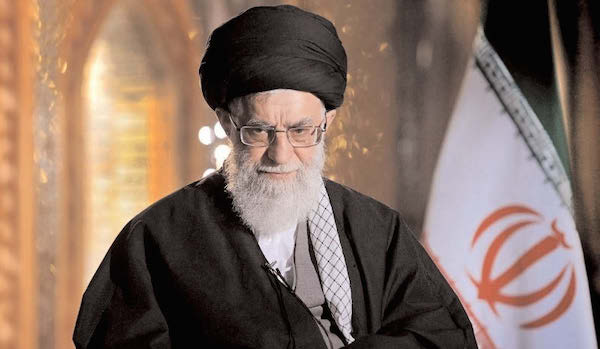
    ANKARA (TIP): Iran’s supreme leader said on September 3 he favoured a parliamentary vote on its nuclear deal reached with world powers and called for sanctions against Tehran to be lifted completely rather than suspended, state television reported.

    President Hassan Rouhani, a pragmatist whose 2013 election paved the way to a diplomatic thaw with the West, and his allies have opposed such a parliamentary vote, arguing this would create legal obligations hampering the deal’s implementation.

    “Parliament should not be sidelined on the nuclear deal issue … I am not saying lawmakers should approve the deal or reject it. It is up to them to decide,” said Ayatollah Ali Khamenei, who has the final say on all state policy in Iran.

    “I have told the president that it is not in our interest to not let our lawmakers review the deal,” he said in remarks broadcast live on state television.

    Khamenei himself has not publicly endorsed or voiced opposition to the Vienna accord, having only praised the work of the Islamic Republic’s negotiating team.

    A special committee of parliament, where conservative hardliners close to Khamenei are predominant, have begun reviewing the deal before putting it to a vote. But Rouhani’s government has not prepared a bill for parliament to vote on.

    The landmark deal, clinched on July 14 between Iran and the United States, Germany, France, Russia, China and Britain in July, curbs Iran’s nuclear activities to help ensure they remain peaceful in exchange for a removal of economic sanctions.

    US president Barack Obama appeared to secure enough Senate votes on Wednesday to see the nuclear deal through Congress, but hardline Republicans pledged to pursue their fight to scuttle it by passing new sanctions on Tehran.

    Khamenei said that without a lifting of sanctions that have hobbled Iran’s economy, the deal would be jeopardised.

    “Sanctions …. should be lifted and not only suspended … If not, then we will only suspend our nuclear activities … and there would be no deal if the sanctions are only suspended.”

    Khamenei also criticised the United States’ Middle East policy, ruling out normalisation of ties with Iran’s arch-foe. “Our officials held only nuclear (negotiations) with America. We will never support America’s policies on Syria and Iraq.”

  • Cyanide in Tianjin waters 277 times over the limit

    Cyanide in Tianjin waters 277 times over the limit

    SHANGHAI (TIP): Chinese authorities warned that cyanide levels in the waters around the Tianjin Port explosion site had risen to as much as 277 times acceptable levels although they declared the city’s potable water was safe.

    The local government, under pressure from China’s leaders in Beijing to improve industrial safety, also said it would relocate chemical plants away from the area, where thousands of residents were forced to evacuate last week after the release of toxic chemicals by explosions that killed 114 people.

    China’s ruling Politburo Standing Committee called on all levels of governments during a special meeting on Thursday to do more to implement and monitor industrial safety rules, the official Xinhua agency reported.

    A report from the Tianjin Environmental Protection Bureau issued on Wednesday said that tests conducted the day before showed that cyanide levels in the river, sea and waste water in the evacuated area around the explosion site had risen sharply since the deadly blasts. One testing site at the mouth of a rain water pipe recorded cyanide levels 277 times above acceptable standards. Drinking water in Tianjin, however, met national standards, according to a separate statement from health authorities on Tuesday.

    The government has confirmed there were about 700 tonnes of the deadly chemical sodium cyanide in the warehouse that blew up late last Wednesday. Tianjin, the world’s 10th-busiest port, will relocate chemical plants from the Tianjin Binhai New Area where the blasts occurred to the Nangang Industrial Zone, 25 kms away, according to the official China Daily, citing Tianjin mayor Huang Xingguo.

  • Chinese lovers, love seekers celebrate local Valentine’s day

    BEIJING (TIP): Millions of Chinese couples and love seekers celebrated Qixi, the Chinese valentine day on Thursday, in a variety of ways. The occasion also saw some headline grabbing events including famous pop singer, Jon Bon Jovi serenading a famous love song, “The moon represents my heart,” in Mandarin.

    The festival revolves round a legend about a Krishna-like cowherd lover, Niulang, who fell for a fairy girl, Zhinu. The gods prohibited the love between the mortal and the fairy and kept them separated across a mythical Silver River. They were allowed to meet for one day and night each year on Qixi, according to the legend, which dates back from the Han Dynasty (206 BC-AD 220).

    Marriage bureaus across many cities reported long queues of young couples registering their marriages. Dating websites and matchmaking services offered by phone companies and private agencies were inundated with requests from people seeking partners.

    Previously divorced couples also use this occasion to return to each other’s arms. Many others looking for partners including millions of “left over women” who have crossed the age of 35, vow to intensify their efforts to find a partner.

    A woman in Xiangyang city of Hubei province went a step further to beckon her estranged boy friend. She spent a huge sum putting up a billboard at a bus stand, which carried her picture with the words, “Chen Qiaorong, Marry me!”. Local media reported that she was paying a tidy sum for a week because the going price for renting billboards at this time was 100,000 yuan (Rs 1 million) per day.

    A group of 10 men from western countries took to the street in Wuhan with over a dozen buffalos to attract the attention of Chinese girls. They tried to play the cowherd in the Chinese legend while passing on roses to passersby.

    Meanwhile, a girl student in Guangdong is waging a legal battle against China’s Ministry of Education over textbooks which describe homosexuality as a “disorder” that can be treated. She has filed the lawsuit using an alias, Qiu Bai, seeking deletion of the text degrading homosexuality.

  • The Strategic Rationale for Deeper U.S.-Indian Economic Ties

    The Strategic Rationale for Deeper U.S.-Indian Economic Ties

    The U.S.-India relationship was often distant during the Cold War, but the partnership is now critical for both countries’ strategic aims. India is important to the U.S. effort to maintain its international primacy, while the United States is essential to India’s attainment of its great power ambitions. Deepened economic intercourse, including one day through a comprehensive U.S.-Indian free-trade agreement, is vital to realizing both countries’ aspirations.

    The Case for Deeper Economic Cooperation

    • The United States has consistently pursued a policy of securing hegemony, yet China now threatens the economic and geopolitical underpinnings of U.S. power.
    • India, since the British Raj, has harbored aspirations for great power status and regional hegemony alongside ideals of liberal internationalism.
    • Through stronger bilateral economic ties, American resources could enhance India’s productivity, expand its technological frontier, and spur further economic liberalization. Meanwhile, the United States would gain access to India’s lower-cost exports, relatively cheap labor, and vast domestic market, increasing America’s international competitiveness.
    • Increased U.S. competitiveness internationally would reinforce Washington’s global primacy, permitting it to effectively balance China’s rising power. The economic benefits accruing to India from deeper economic links with the United States would advance Indian national development, regional hegemony, and international prominence.

    How the United States and India Can Promote Economic Cooperation

    • The United States must be willing to walk difficult roads to enhance economic cooperation with India, given that such integration is essential to its regional and international interests. While domestic U.S. constituencies have become wary of Indian economic practices and free-trade agreements more generally, they must be outweighed by larger considerations of revitalizing economic growth bilaterally and preserving U.S. global hegemony.
    • India must understand that sustained economic growth hinges on expanding its global trading links, and that its prior policies of trade expansion through shallow free-trade agreements are no longer viable. Partnership with the West, particularly the United States, is critical to achieving India’s twin aspirations for national development and regional primacy. India’s existing tactic of buying time and space for domestic development without making commitments to genuine trade liberalization is counterproductive for these aims.
    • A step-by-step approach to deepening bilateral trade and investment to make a free-trade agreement possible at some point in the future may be the most effective way to advance each country’s specific geopolitical interests. Such an approach would incrementally tackle challenges to a comprehensive agreement, and it would best serve India’s development aspirations and buttress the United States’ international preeminence.


  • China Tests New Missile capable of Hitting entire United States

    China Tests New Missile capable of Hitting entire United States

    WASHINGTON (TIP): On August 6, China tested its newest intercontinental ballistic missile (ICBM) with two guided simulated nuclear warheads, according to information obtained by The Washington Free Beacon.

    The August 6 flight test was the fourth time a DF-41 (CSS-X-20) long-range missile has been tested in the last three years and allegedly confirmed that the ICBM is capable of carrying multiple warheads.

    China’s first test of the DF-41’s multiple warhead (aka multiple, independently-targetable reentry vehicles, or MIRVs) capability allegedly took place in December 2014, according to The Washington Free Beacon. Previous tests occurred in July 2012 and December 2013 at the Wuzhai Missile and Space Testing facility located some 250 miles southwest of Beijing. The location of the August 2015 test site, however, remains unknown.

    “China’s MIRV technology is based on illegally exported U.S. satellite technology transferred during the administration of President Bill Clinton. Lockheed Martin was fined $13 million in 2000 as part of the illicit exports that China diverted to its MIRV warhead program,” the Free Beacon reported back in December 2014.

    Development of the missile reportedly started in 1986 but was abandoned in the early 2000s. According to unconfirmed media reports, the program (Project 41H) was only relaunched in 2009. Nevertheless, most details about the DF-41 program and the missile’s true capabilities remain cloaked in mystery. “Few details on deployment plans technical characteristics are currently available. Once fully operational, the DF-41 is expected to be the PLA’s most sophisticated ICBM to date,” Mark Stokes, a former Pentagon analyst, told the Free Beacon.

    U.S. intelligence agencies estimate that the DF-41 can carry up to ten 150-300 kiloton yield thermonuclear warheads per missile and that it is capable of targeting the entire continental United States. It is solid fueled, road mobile and has an estimated range of between 12,000 and 15,000 km (6,835 miles and 7,456 miles). The most recent U.S.-China Economic and Security Review Commission report notes that the missile could be already deployed this year, however, a 2018-2020 time frame appears much more likely, according to independent experts.Rick Fisher, an analyst at the International Assessment and Strategy Center, concurs with the above report stating that the DF-41 is
    “nearing operational status.”

    “The mobile and solid-fueled DF-41 will be the second MIRV-equipped ICBM to enter PLA Second Artillery Corps service after the currently deployed, liquid-fueled and silo-launched DF-5B. The bottom line is that China potentially is beginning a new phase in which its nuclear warhead numbers will be increasing rapidly,” Fisher said in an interview with the Free Beacon.

    According to the Missile Threat website, the DF-41 “represents the peak of PRC technology” and “will likely become the core of the PRC’s nuclear strike force.” In addition the website notes that the “DF- 41 appears similar to the Russian R-12 (SS-27) and it is possible R-12 technology was purchased or stolen.”

    As I reported in June (See: “Will This Chinese Weapon Be Able to Sink an Aircraft Carrier?”), a Popular Science article discusses the possibility of WU-14 hypersonic glider vehicles (HGVs)  being installed on the DF-41. This, the authors note, would provide Beijing for the first time with a precision strike capability to hit any target in the world within an hour.

    (Source: The Washington Free Beacon)

  • Pranab Mukherjee’s wife passes away

    Pranab Mukherjee’s wife passes away

    President Pranab Mukherjee’s wife and First Lady of India, Mrs. Suvra Mukherjee passed away on Tuesday morning at 10.51 am. She had been ill for some time and was admitted to the hospital on Friday evening. She was brought to the hospital after she complained of respiratory issues. A heart patient, she was kept in the intensive care unit.

    Ms Mukherjee was born on September 17, 1940 in Jessore (now in Bangladesh) and married Mr. Mukherjee on July 13, 1957. A graduate, Ms Mukherjee was an ardent fan of India’s national poet, Gurudev Rabindranath Tagore.

    She was a vocalist of Rabindra Sangeet and performed in the poet’s dance-dramas for long years not only in different parts of India, but also in Europe, Asia and Africa. Ms Mukherjee founded the Geetanjali Troupe, whose mission is to propagate Rabindranath Tagore’s philosophy as expressed through his songs and dance-dramas. She was the guiding force behind all productions of the Troupe.

    The late first lady was also a highly talented painter who had many group and solo exhibitions to her credit. She considered her mother who was herself a painter as the source of her creative inspiration and her works won critical acclaim.

    Ms Mukherjee has written two books: Chokher Aloey which is a personal account of her close interaction with Smt. Indira Gandhi and Chena Achenai Chin – a travelogue recounting her visit to China.

    She is survived by her husband, the President of India and three children – Abhijit Mukherjee, Indrajit Mukherjee and Sharmistha Mukherjee.

    “Saddened to hear the news of Smt. Suvra Mukherjee’s demise. My heartfelt condolences to Shri Pranab Mukherjee and his bereaved family,” Union Home Minister Rajnath Singh tweeted.

    Congress Vice-President Rahul Gandhi too extended his sympathy to President Pranab Mukherjee and his family.

    Expressing grief over the death of President’s wife, West Bengal Chief Minister Mamata Banerjee said she knew her for more than three decades as a simple and loveable person.

    “Saddened to hear that Rashtrapati ji’s wife Suvra boudi is no more. Cannot believe she has passed. Such is life. We have to accept the truth. “I have known Suvra boudi for more than three decades. She was simple, lovable and a caring housewife. May God give Rashtrapati ji and his family the strength to bear the loss,” she said in a series of tweets.

    Bihar Chief Minister Nitish Kumar too extended his condolences. “Sad to hear about the demise of Shri Pranab Mukherjee ji’s wife. My deepest condolences to Pranab da and family. @RashtrapatiBhvn Nitish Kumar.”

  • INDIAN FREEDOM STRUGGLE

    INDIAN FREEDOM STRUGGLE

    The largest democracy of the world, in 68 years, could well  be on its way to becoming the World’s second largest economy, replacing the US, by 2050.

    “India has the potential to become the second largest economy in  the world by 2050 in PPP terms (third in MER  terms), although this requires a sustained programme of structural reforms”, says a PwC report.

    The Indian Panorama seeks to  look in to the growth journey of India since independence, focusing on key areas, as succinctly as possible, with a view to laying bare facts before our readers, leaving them to form their own conclusions. Preceding the story of Independent India, is a brief story of the freedom struggle which freedom loving people all over the world need to be familiar with, and  people of Indian origin reminded of. It was a struggle which inspired writers and poets to give words to the feelings of billions prompted patriots to sacrifice their lives for freedom, and  created heroes out of the common people.

    In ancient times, people from all over the world were keen to come to India. The Aryans came from Central Europe and settled down in India.The Persians followed by the Iranians and Parsis immigrated to India. Then came the Moghuls and they too settled down permanently in India. Chengis Khan, the Mongolian, invaded and looted India many times. Alexander the Great too, came to conquer India but went back after a battle with Porus. He-en Tsang from China came in pursuit of knowledge and to visit the ancient Indian universities of Nalanda and Takshila. Columbus wanted to come to India, but instead landed on the shores of America. Vasco da Gama from Portugal came to trade his country’s goods in return for Indian species. The French came and established their colonies in India.

    Lastly, the Britishers came and ruled over India for nearly 200 years. After the battle of Plassey in 1757, the British achieved political power in India. And their paramountcy was established during the tenure of Lord Dalhousie, who became the Governor-General in 1848. He annexed Punjab, Peshawar and the Pathan tribes in the north-west of India. And by 1856, the British conquest and its authority were firmly established. And while the British power gained its heights during the middle of the 19th century, the discontent of the local rulers, the peasantry, the intellectuals, common masses as also of the soldiers who became unemployed due to the disbanding of the armies of various states that were annexed by the British, became widespread. This soon broke out into a revolt which assumed the dimensions of the 1857 Mutiny.

    The First Struggle for Freedom- Indian Mutiny of 1857

    indianfreedomThe conquest of India, which could be said to have begun with the Battle of Plassey (1757), was practically completed by the end of Dalhousie’s tenure in 1856. It had been by no means a smooth affair as the simmering discontent of the people manifested itself in many localized revolt during this period. However, the Mutiny of 1857, which began with a revolt of the military soldiers at Meerut, soon became widespread and posed a grave challenge to the British rule. Even though the British succeeded in crushing it within a year, it was certainly a popular revolt in which the Indian rulers, the masses and the militia participated so enthusiastically that it came to be regarded as the First War of Indian Independence.

    Introduction of zamindari system by the British, where the peasants were ruined through exorbitant charges made from them by the new class of landlords. The craftsmen were destroyed by the influx of the British manufactured goods. The religion and the caste system which formed the firm foundation of the traditional Indian society was endangered by the British administration. The Indian soldiers as well as people in administration could not rise in hierarchy as the senior jobs were reserved for the Europeans. Thus, there was all-round discontent and disgust against the British rule, which burst out in a revolt by the
    ‘sepoys’ at Meerut whose religious sentiments were offended when they were given new cartridges greased with cow and pig fat, whose covering had to be stripped out by biting with the mouth before using them in rifles. The Hindu as well as the Muslim soldiers, who refused to use such cartridges, were arrested which resulted in a revolt by their fellow soldiers on May 9, 1857.

    The rebel forces soon captured Delhi and the revolt spread to a wider area and there was uprising in almost all parts of the country. The most ferocious battles were fought in Delhi, Awadh, Rohilkhand, Bundelkhand, Allahabad, Agra, Meerut and western Bihar. The rebellious forces under the commands of Kanwar Singh in Bihar and Bakht Khan in Delhi gave a stunning blow to the British. In Kanpur, Nana Sahib was proclaimed as the Peshwa and the brave leader Tantya Tope led his troops. Rani Lakshmibai was proclaimed the ruler of Jhansi who led her troops in the heroic battles with the British. The Hindus, the Muslims, the Sikhs and all the other brave sons of India fought shoulder to shoulder to throw out the British. The revolt was controlled by the British within one year, it began from Meerut on 10 May 1857 and ended in Gwalior on 20 June 1858.

    End of the East India Company

    Consequent to the failure of the Revolt of 1857 rebellion, one also saw the end of the East India Company’s rule in India and many important changes took place in the British Government’s policy towards India which sought to strengthen the British rule through winning over the Indian princes, the chiefs and the landlords. Queen Victoria’s Proclamation of November 1, 1858 declared that thereafter India would be governed by and in the name of the British Monarch through a Secretary of State.

    The Governor General was given title of Viceroy, which meant the representative of the Monarch. Queen Victoria assumed the title of the Empress of India and thus gave the British Government unlimited powers to intervene in the internal affair of the Indian states. In brief, the British paramountcy over India, including the Indian States, was firmly established. The British gave their support to the loyal princes, zamindar and local chiefs but neglected the educated people and the common masses. They also promoted the other interests like those of the British merchants, industrialists, planters and civil servants. The people of India, as such, did not have any say in running the government or formulation of its policies. Consequently, people’s disgust with the British rule kept mounting, which gave rise to the birth of Indian National Movement.

  • CHINA DEVALUES YUAN THIRD TIME IN A ROW, MARKETS ON THE EDGE

    CHINA DEVALUES YUAN THIRD TIME IN A ROW, MARKETS ON THE EDGE

    BEIJING/NEW DELHI (TIP): China set the reference rate for its currency more than one percent lower against the US dollar on August 13, the operator of the national foreign exchange market said, its third consecutive reduction.

    The central bank put the yuan’s central parity rate at 6.4010 yuan for$1.0, the China Foreign Exchange Trade System said, a drop of 1.11%from the previous day’s 6.3306.

    It was also lower than Wednesday’s close, and comes after China adopted a more market-oriented method of calculating the currency rate in a move widely seen as a devaluation.

    The cuts have put financial markets on edge, sparking worries of a “currency war” as other countries feel pressure to devalue and raising questions about the health of the world’s second-largest economy, where growth is already slowing.

    HOW DID THIS START?

    In a surprise move, China devalued the yuan on Tuesday. Beijing doesn’t let buying and selling in financial markets set its exchange rate the way the United States and other developed countries do. Instead, it links the yuan’s value to a basket of currencies. The composition of the basket is a secret, but it’s believed to be dominated by the U.S. dollar. Each day, the People’s Bank of China sets a target for the yuan, then lets the currency trade 2 percent above or below that level. On Tuesday, the central bank set the target 1.9 percent below Monday’s — the biggest one-day change in a decade.

    WHAT’S CHINA’S MOTIVATION?

    China says the devaluation was part of an effort to give market forces a bigger say in the exchange rate —something the United States and the International Monetary Fund have long called for. Chinese people, worried about the economy and seeking investment opportunities abroad, have been pulling money out of the country. That exodus has held down the yuan’s value. But because the yuan was tied to a rising U.S. dollar, it remained at high levels. By devaluing the yuan, the Chinese government was catching up to the market, not trying to counteract it. Or so Beijing says. Many economists also suspect a contributing factor: Beijing may be desperately trying to boost its economy. A cheaper yuan gives Chinese exporters a price advantage in foreign markets. And they need help: Exports dropped a steep 8.3 percent in July year over year.

    INVESTORS  FREAKED OUT

    Plenty of reasons. The surprise devaluation suggests that something is spooking the Chinese government. Perhaps the Chinese economy is decelerating even faster than anyone realizes. Already, the IMF is forecasting 6.8 percent economic growth in China this year, the slowest rate since 1990. Signs of trouble are accumulating. On Wednesday, for instance, China reported that auto sales sank 6.6 percent in July. Investors are also worried about how a weaker yuan will affect exporters in other countries. Shares in exporters such as Caterpillar and General Electric fell in the market rout this week, though many economists say the yuan’s drop so far isn’t significant enough to do much damage. Then there’s the chance that other countries will adopt copycat devaluations to help their exporters compete with China, thereby igniting a currency war that disrupts international trade. On Wednesday, Vietnam allowed its currency to weaken in response to China’s move.

    Finally, the Chinese devaluation complicates the Fed’s decision-making. The U.S. central bank, increasingly confident in the strength of the U.S. economy, is expected to raise the short-term rate it controls later this year. The Fed has kept the rate at zero since December 2008. But a cheaper yuan poses a threat to U.S. exports and economic growth. It also lowers inflation, already running below the Fed’s 2 percent annual target. Still, most economists suspect the yuan’s drop won’t have much of a lasting impact. They continue to expect the Fed to raise rates at its September meeting.

  • India’s economic data brings cheer amid worries over stalled reforms

    India’s economic data brings cheer amid worries over stalled reforms

    NEW DELHI (TIP): India’s retail inflation cooled to a record low in July and annual growth in industrial production hit a four-month high in June, bringing cheer to investors fretting that gridlock in parliament is stalling reforms.

    Consumer prices rose 3.78 percent year-on-year in July, their slowest pace on record, compared with a 4.42 percent rise predicted by analysts. The sharp cooling, however, was in large measure due to a favourable base effect. Output at factories, utilities and mines expanded an annual 3.8 percent in June, helped by a sharp rebound in demand for consumer goods. Wednesday’s economic data comes as a political logjam in parliament has stalled Prime Minister Narendra Modi’s reform agenda, putting in doubt the fate of a major tax overhaul that will create one of the world’s largest single markets.

    A crash in global commodity prices has helped inflation slip below the Reserve Bank of India’s (RBI) medium-term target of 6 percent, giving it room to cut interest rates by 75 basis points this year. The central bank left the policy repo rate on hold last week, leaving the door open to ease further depending on the inflation outlook.

    The latest inflation data, coupled with China’s move to devalue its currency, has bolstered hopes of further monetary easing.

    “The number is a big downside surprise,” said A. Prasanna, an economist at ICICI Securities Primary Dealership. “This increases chances of RBI cutting interest rate one more time in this fiscal year ending March.”

    Currency Concerns

    China’s yuan has fallen almost 4 percent in two days since the central bank announced the devaluation on Tuesday to help resuscitate a slowing economy. This is bad news for Indian exports, which have fallen for seven straight months. Exporters are already complaining about a relatively stronger rupee that has appreciated by 10 percent on a real trade-weighted basis since the middle of last year.

    Indian companies are worried the yuan’s devaluation will flood the local market with cheaper Chinese imports, worsening the bilateral trade deficit.

    “Along with the yuan devaluation move, I think there is a case for more (and) not less accommodation,” said Jyotinder Kaur, principal economist at HDFC Bank.

  • INDIA INCREASES IMPORT DUTY ON STEEL

    INDIA INCREASES IMPORT DUTY ON STEEL

    NEW DELHI/MUMBAI (TIP): A day after devaluation of the Chinese yuan, the government on August 12 announced a 2.5%increase in customs duty on flat and long steel products, amid a growing clamour for protectionism from the metal industry, which is passing through a rough phase due to a crash in global prices and over capacity in countries such as China. Several companies such as JSPL and JSW have reported loss in the last quarter and the government is worried that bank loans may be hit due to the adverse financial health of top-notch companies. Along with power and road, steel is a sector that lenders are watching closely as they fear a rise in non-performing assets.

    Although the import duty has been raised on several steel products, the industry is demanding more protection, citing surge in import from China and South Korea, with which India has entered into a free trade agreement.

    “It is not sufficient to check the surge,” said a senior executive in a Delhi-based company. Steel industry executives believe that the yuan devaluation will result in further imports from the world’s biggest producer of steel and aluminum.

    “The devaluation of the Chinese yuan appears to be a step taken to counter the slowdown in their domestic market and stimulate exports. We have to ensure that India is not the dumping ground as we have seen recently in the steel market. Indian industry suffers from relatively high interest rates and logistics costs compared to international players. The government must ensure fair play domestically and provide global competitiveness support,” said Firdose Vandrevala, executive vice chairman, Essar Steel India.

    Chinese steel shipments surged 27% to 62.1 million metric tonnes, while aluminum shipments rose 28% to 2.9 million tonnes in the first seven months of the year, the highest ever for the period, and two-thirds of the record 93.8 million tonnes in 2014. India witnessed a sharp 57% jump in import of steel during the April-June quarter, of which more than a fourth came from China alone. Japan and Korea also saw their shipments to India increase by 100% and 50%, respectively, during the period.

    China’s export of steel products was 9.7 million tonnes in July, near the record 10.3 million tonnes seen in January. Steel futures in Shanghai have slumped 32% in the past year and aluminium prices declined 24% on the London Metal Exchange (LME).Seshagiri Rao, joint managing director at JSW Steel, India’s third-biggest steelmaker, believes that devaluation of yuan will further sharpen the ability of Chinese steel companies to export to India as they are desperate to export steel at any price. China is by far the world’s largest steel consumer and producer, accounting for about half of the world’s output.

    JSW Steel shares fell 2% to close at Rs 878, while JSPL shares fell 6% to close at Rs 77 in a weak Mumbai market on Wednesday. Similarly, Vedanta Ltd shares fell 8% to Rs 114, while Hindalco Industries shares fell 7% to close at Rs 96.

  • The 68th Anniversary of India’s Independence

    The 68th Anniversary of India’s Independence

    India’s Independence Day belongs to all Indians and all people who wish India well. As an American proud of my Indian ancestry, and my name unchanged, I am more than merely delighted that these United States and India have found a durable rhythmic tune, geopolitical and strategic in nature, bound by common notes and dreams of our bilateral citizenry in their enlightened self-interest-based pursuit of happiness guaranteed by separated powers regimes.

    2015 is special for many reasons. We overcame the unexpected bilateral pain that became known as the Devyani incident with Hours of Immunity successfully negotiated by FM Salman Khurshid with Secretary John Kerry, to then witness PM Modi rock Madison Square Garden. Later, as I wished, President Barack Obama held a Chai Summit in India. But, then it got better. President Obama did for Indian-Americans and India what he did for Chinese-Americans and China – as he had appointed Gov. Gary Locke as our ambassador to China in 2011, in the past year he appointed Senate Leader Harry Reid’s right hand Richard Rahul Verma as our ambassador to India. For good measure, he also appointed talented diplomat Atul Keshap as our ambassador to Sri Lanka. Recently, Nisha Desai Biswal, Assistant Secretary of State for Central and South Asia, visited India’s Consulate General in New York to personally plant eternal-goodwill where Devyani used to be DCG. Such an act serves to repair even frayed feelings and is worthy geometrically – as there is an implied promise that all will be well between our two nations.

    That India produced a man such as Dr. Kalam – who rose to be India’s 11th President – an Indian Muslim – and who was so loved by Indians and who so loved India – seems to me to be a clarion call for all good people everywhere to stand up to religious oppression everywhere with humility-based good deeds that serve their nation above all else, and with respect for all faiths. Earlier, the world experienced the slaughter and splatter of precious ink at Charlie Hebdo – the home of cherished Voltaire who prodded many a monarch to better serve the public good – and Paris became Ground Zero for unity of all nations’ leaders walking arm-in-arm seeking tolerance of free speech as a “core” right and obligation of global citizenship. Dr. Kalam, methinks, singlehandedly well honored Mahatma Gandhi’s love for Muslim Indians, Christian Indians, Buddhist Indians, Jewish Indians and inter alia, Hindu Indians.

    68 years ago Pandit Jawaharlal Nehru rose to say these immortal words:

    “Long years ago we made a tryst with destiny, and now the time comes when we shall redeem our pledge, not wholly or in full measure, but very substantially. At the stroke of the midnight hour, when the world sleeps, India will awake to life and freedom. A moment comes, which comes but rarely in history, when we step out from the old to the new, when an age ends, and when the soul of a nation, long suppressed, finds utterance.”

    Dr. Kalam answered India’s Tryst With Destiny – excellence with humility, nation above religion, peace above war. India belongs to everyday Indians who recall the sacrifices made by so many to be a free nation, and live their lives as homage to those who sacrificed so much.

    That Indian Tea played a starring role in the Boston Tea party of 1773, and today India and United States find themselves in a vortex that cannot be denied – of unity of interest – one may be forgiven to say it was so decreed even by natural law without the need of being a Calvinist. May we continue to be worthy of God’s grace at the stroke of the midnight hour and every hour thereafter.”

    Ravi Batra

    Also Read: theindianpanorama.news/guest-comments-blog-news-tip/independence-day-greetings-from-the-law-firm-of-ravi-batra-15-august-2015-45203/#.Vc3UHnjOHBJ

  • FALL IN LOVE WITH BEST WATERFALLS IN INDIA

    FALL IN LOVE WITH BEST WATERFALLS IN INDIA

    The revival of the – monsoon will see people head to hill stations in the hope of making the most of the rains. These travel escapades are especially -popular at this time of the year for multiple waterfalls that sprout at every other corner.

    Nuranang Falls : Where: Near Jang, Arunachal Pradesh

    Should you plan a trip to Tawang, a town close to the India-China border, then there is no escaping a tryst with this waterfall. You may ask about the significance of the place or the name, but the guides here will only be interested in -showing you the exact spot where some scenes of the Shah Rukh, Madhuri Dixit-starrer Koyla (1997) were shot.

    Nohkalikai Falls : Where: Near Cherrapunji, Meghalaya

    Legend has it that this was the spot where a young mother (named Likai) threw herself over the precipice after finding out that her husband killed her daughter. Her act gave the falls its name. It literally means ‘Leap of Ka Likai’, which the locals will tell you with a sad shake of the head.

    Jog Falls : Where: Near Shimoga, Karnataka

    The onset of the monsoon sees the four distinct streams of the Sharavathi river -locally known as Raja, Roarer, Rani and Rocket – go from being trickles to the world-famous Jog Falls. Joga, incidentally, ranks among the highest waterfalls in the country.

    Dudhsagar Falls : Where: Goa-Karnataka border

    The name literally means ‘Sea of Milk’, and the tiered waterfall makes for such a picturesque frame, with a railway line – running in front of it. The film Chennai Express (2013) was shot here. Incidentally, the makers of the 23rd Bond film, Skyfall (2012), too, were interested in filming an action sequence here, but that plan did not work out.

    Nohsngithiang Falls : Where: Near Mawsmai, Meghalaya 

    Also referred to as the Mawsmai Falls or the Seven Sisters, these waterfalls are a sight to behold in the rainy season. Considered one of the most photogenic spots in the country, it is best captured during sunset.

    Ethipothala Falls : Where: Near Hyderabad 

    A two-hour drive from Hyderabad, this waterfall is -powered by the waters of the Krishna River and flows with maximum force in the monsoon. There is a crocodile breeding -centre in the area, since the waters are infested with the -reptiles. Once daylight fades, the falls are illuminated with lights placed at strategic areas which makes for a breathtaking sight.

    Chitrakoot Falls : Where: Near Jagdalpur, Chattisgarh

    One of the broader falls in the country, local touts are happy to sell the place as the ‘Niagara Falls of India’. Tourists frequent it during the rains when the Indravati River shows off its raw power.

    Dhuandhar Falls : Where: Near Jabalpur, Madhya Pradesh

    Although just 10m high, these falls pack a mighty punch and can be heard from miles away. A little ahead lies the famous Marble Rocks. Incidentally, the word ‘dhuandhar’ comes from two Hindi words, ‘dhuan’ -meaning smoke and ‘dhar’ -meaning to own. The fall gets its name from the smoky cascade seen around it.

  • Geography Bee champion Karan Menon to attend India Day Parade

    Geography Bee champion Karan Menon to attend India Day Parade

    NEW YORK (TIP): Fourteen year old Karan Menon, who won the National Geographic Bee, will join the India Day Parade in New York City, on August 16. Menon, a resident of Edison, New Jersey, will be on the float of the Indus American Bank, the Indian American Community bank which supports all right causes of the community. A large display on one side of the float will have his photograph with clear markings of his award.

    He  and his family will also attend the India Day Banquet at the Royal Albert’s Palace, Fords, New Jersey on the 17th, as the bank’s guest, where he will be honored by the bank and the Federation of India Associations-Tri State (FIA), the organizer of the parade.

    “We are pleased to honor the young man, who has made our community proud. It is a tradition of the IAB to support the youngsters to come up in their career. Menon hails  from the same area where the bank has its headquarters and it is natural that we honor him,” Anil Bansal, Executive Chairman  & Founder of the bank, said.

    “We are very much honored to be invited to the parade. We thank the Indus American Bank for the initiative,” Rakesh Menon, father of Karan Menon said. It will be the first time the family attends the parade. He said they will miss the parade on Oak Tree Road in Edison, as they are going for a vacation to China and return only a day before the New York Parade.

    Karan is an eighth grader at the John Adams Middle School in Edison, New Jersey  answered all seven championship-round questions correctly to win the title. The final question, which clinched the win for Karan, was: “If completed, the proposed Grand Inga Dam would become the world’s largest hydropower plant. This dam would be built near Inga Falls on which African river?” Answer: “Congo River.”

    Karan is the second New Jersey student to win the National Geographic Bee. In 1996, seventh-grader Seyi Fayanju was the national champion.

    Fifty-four state and territory winners took part in the preliminary rounds of the 2015 National Geographic Bee on Monday, May 11.

    A new addition to this year’s National Geographic Bee was an off-site challenge. The top 10 contestants traveled to the United States Botanic Garden in Washington, DC, where they answered questions covering the geography of plants – including a plant that explodes and another that smells like rotting flesh.

    Karan studied for eight hours a day after winning the New Jersey state bee. He also sought out a coach, Kumar Nandur, who worked with winners last year and in 2010.

    Typical of all the Indians, the parents sent him to a spelling bee contest as a young boy, but he accidentally got in to the geography bee, reports said. Karan’s parents were taking him to Cherry Hill, New Jersey, for a spelling bee organized by the North South Foundation, when their car broke down. Rakesh got his friend to take Karan and his mother Manisha to the contest. They reached the venue too late, so Manisha asked the organizers if they could allow her son, then about 5, to participate in one of the other contests they had. The organizers agreed, but pointed out that, since Karan was not registered, he could not win a prize.

    Karan had not prepared for a geography bee, but came second. After that, despite winning a school spelling bee, and being part of a team that made it to the state level in Math counts, Karan moved to geography.

    The family knew about his love for geography, thanks to an interactive globe given to him by a family friend. “It intrigued him and he spent hours on it,” says Rakesh. And when the family put up a map in the basement of their then home, Karan spent still more hours contentedly studying it.

    As he grew older, Karan found his way into Wikipedia, whereon he searched up the detailed histories of countries, cities, capitals and presidents.

    In the semifinals, Karan  faced problems as the right answer he had given was deemed wrong initially. (The question: What metal-bearing mineral is found in the Mesabi Range of Minnesota? The answer: iron ore. Karan answered taconite, the primary kind of iron ore found there, and things were settled in Karan’s favor after he sought a review).

    Karan loves math, science and technology but has not decided between a career in science and working for National Geographic, whose offices he found endlessly fascinating.

    As the winner, he got a $50,000 college scholarship, a lifetime membership to National Geographic and a trip to the Galapagos.

  • 10 foreign portfolio investors (FPIs) in India hold US$ 28 billion investments

    10 foreign portfolio investors (FPIs) in India hold US$ 28 billion investments

    TIP (Secondary Research): Europacific Growth Fund, the largest foreign portfolio investor (FPI) in India was born seven years before liberalisation ushered foreign investment into Indian equity markets. Today, it holds $131 billion in assets under management; 6.4 per cent of that is invested in Indian equities.

    Prime Database recently carried out an exercise to identify the 10 largest FPIs in India — through an examination of 1,447 listed Indian companies’ disclosure of the names of their foreign investors to stock exchange — and it turned out these FPIs together held Rs 1.79 lakh crore in Indian equities.

    FPIs hold a major chunk of the non-promoter stake in Indian companies but can be notoriously difficult to pin down. Unlike domestic mutual funds, there is no freely available ranking in terms of the size for foreign funds investing in India. Listed entities disclose the names of shareholders owning more than one per cent in them.

    The biggest FPI in terms of disclosed shareholding (above one per cent) is the Europacific Growth Fund. Among others on the list of the 10 biggest are sovereign and pension funds from Singapore and Norway, some familiar names like Franklin Templeton Investment Funds, and Morgan Stanley Asia (Singapore), besides Dodge & Cox International Stock Fund, First State Asia-Pacific Leaders Fund, Aberdeen Global Indian Equity, the Oppenheimer Developing Markets Fund and Copthall Mauritius Investment. These FPIs together hold shares equivalent to half the equity assets of the entire Indian mutual fund sector.

    While the actual number might be significantly higher, Prime’s analysis estimates Europacific’s holding in Indian equities at Rs 42,530 crore. An analysis of the fund’s own documents shows this could be around Rs 54,000 crore.

    So, the top 10 FPIs’ actual holding could be significantly higher than the Rs 1.79 lakh crore disclosed to bourses. This also means the ranking should be considered indicative, since FPIs holding company shares through participatory notes (P-notes) and the cases where holdings are less than one per cent are not required to disclose their names to stock exchanges.

    Europacific Growth Fund belongs to the US-based Capital Research and Management Company. For Europacific, India is the biggest emerging market destination and fourth-largest overall — after Japan, the UK and France — according to its disclosures at the end of June. As much as 87.5 per cent of its investments are outside the US.

    The fund managers’ commentary in Europacific’s annual report released in March this year might explain why they allocated more money to India than China.

    It noted India and China shared similar growth trends, including the rise of the middle-class. However, India’s demographics were better than China’s. The median age in India was 27, noted the report, while United Nations data showed the median age in China was around a decade higher.

    Jonathan Knowles, the Singapore-based fund manager of the Europacific Growth Fund, believes the rising middle class in India would drive consumption, leading to a rise in credit penetration, explaining the fund’s preference for financial stocks, especially private-sector banking names. “These banks have been taking share from public banks in India year after year,” said Knowles.

    Financial stocks are also high on the list of India’s second-largest FPI, the $38-billion Oppenheimer Developing Markets Fund. Led by Justin Leverenz, who has been overseeing the asset management since 2007, the fund invests 14.8 per cent of its total assets in India, second only to China, which received 19.4 per cent of its total investments as of June 2015.

    HDFC Bank, ICICI Bank, and HDFC are among the popular investment names in these funds.
    Pranav Haldea, Managing Director at Prime Database pointed out that the trend towards financials can be seen amongst all foreign investors.

    “Amongst sectors, the maximum exposure as on 30th June, 2015 was in Banks (Rs. 3.44 lakh crore) followed by IT Software (Rs.2.59 lakh crore). The sector which has seen the maximum increase in FII holdings in the last one year was also the Banking sector (from Rs.2.83 lakh crore to Rs.3.44 lakh crore),” he said as part of an emailed statement.

    The third largest fund is the Government of Singapore which invests about Rs 24,192 crore as of June 2015.
    FPIs were net buyers by Rs.1.11 lakh crore in FY15. They have been net buyers by Rs.7927 crore so far this year, shows data from depositories. FPIs held a total of Rs.20.51 lakh crore in Indian equities at the end of June. FPIs with exposure of over one% in Indian equities constitute nearly one-fourth of all FPIs with investments worth Rs 4.69 lakh crore.

  • India to beat China in population after 7 years

    New Delhi (TIP): India would retain its “demographic dividend” for the next 85 years and a steady rise in the population will make India surpass China by 2022 to become the world’s most populated nation, says a United Nations report.

    Currently, China’s population is approximately 1.38 billion compared to India’s 1.31 billion. By 2022, both are likely to have approximately 1.4 billion people, after which India’s headcount will grow while China is likely to experience a drop.

    The bulk of India’s population would be young and productive, providing the nation with what is known as demographic dividend.

    At the moment, more than 60 per cent Indians are in the economically productive age group of 15-59. It would continue till around 2050 and reduce to just above 50 per cent by 2100, says the report titled World Population Prospects: The 2015 Revision.

  • Elephant in the room: Deciphering China’s rise as a military power

    Elephant in the room: Deciphering China’s rise as a military power

    Is China’s rise as a military power a threat to international, or even regional security? To answer this question one has to carefully consider not just geopolitical realities but also China’s strategic outlook in an increasingly complex world. True, the US and its allies have decided to respond to China’s rise by effecting their own rebalancing to the Asia-Pacific region. In fact, only days ago the 2015 US National Military Strategy listed China as a possible threat. But how do we know this isn’t a tactic on the part of the US to hem China in and promote its own interests?

    We have to recognize that the geopolitical scenario is changing rapidly. The Cold War period between the end of the Second World War and 1990 was defined by two major powers, the Soviet Union and the US. After the break-up of the USSR, the US emerged as the sole global superpower leading to the creation of a unipolar world oriented towards the West. However, the two-and-a-half decades since the 90s have also witnessed the rise of the global South. This has been led by countries such as China and India which unleashed their domestic growth potential by undertaking significant economic reforms.

    As a result, the geopolitical lay of the land today is vastly different. Several developing countries are challenging the western hegemony on global institutions and demanding a greater say. In such a scenario, it’s natural for the US and its allies to push back in order to retain their pre-eminent position. And this is where the geopolitical friction with China comes in.

    It’s my hypothesis that China is acting in its own self-interest, just as the US and their allies are acting in their own self-interests. And it’s NOT in China’s interest to engage in military conflict of any kind. However, this doesn’t mean that China will refrain from taking maximalist positions on international issues. It’s a tactic that will ensure that China gets the best deal for itself. Given that China has only lately started asserting itself at the international high table, this is a beneficial strategic ploy for Beijing.

    And why shouldn’t it adopt such an assertive approach to diplomacy. China’s growing economic clout – as exemplified by the establishment of the Asian Infrastructure Investment Bank and the Brics New Development Bank – affords it such leverage.

    In fact, China’s growing military prowess is also just another tool for Beijing to realize its strategic goals. This is highlighted by the latest white paper on China’s military strategy. Under the chapter ‘Strategic Guideline of Active Defense’ one of the key guiding principles of the Chinese armed forces is highlighted as, “We will not attack unless we are attacked, but we will surely counterattack if attacked”. This isn’t too far apart from India’s position on national security.In an interaction with the Chinese ministry of defense information office, spokesperson senior colonel Yang Yujun reiterated that the principle of active defense isn’t pre-emptive and that China will never have conflict but will protect its national interests. Similarly, during a visit to the Shanghai PLA naval garrison, the chief of staff of the garrison reaffirmed that ‘avoid conflict’ and ‘maintain interest’ were the watch-words for his troops.In light of this, it’s imperative to read Chinese strategic maneuvers in the correct perspective. Yes, China will keep building its military strength and adopt an assertive approach to its territorial disputes. But the people’s armed forces will always be subservient to the Chinese state’s strategic goals.

    So how should India respond to this? First and foremost, India must stay engaged with China and seek more points of contact. This will not only help build greater understanding between the two sides but also afford New Delhi the opportunity to highlight its own concerns in the bilateral relationship. In this regard, China is open to greater military-to-military exchanges and cooperation. India must not hesitate to seize such opportunities.

    Second, India needs to build up its own economic, military and diplomatic depth to play the same game that China is playing. This is imperative in the current geopolitical atmosphere if India is to become a serious player at the international high table. India’s expected full membership of the Shanghai Cooperation Organisation will afford New Delhi a good platform to not only work closely with China but also develop its own strategic depth in Central Asia.

    In the final analysis, India must engage China confidently, seek cooperation wherever possible and negotiate hard on outstanding issues. That’s precisely what the Chinese would do.

  • Given the Time, India can be a Regional Security Provider

    Given the Time, India can be a Regional Security Provider

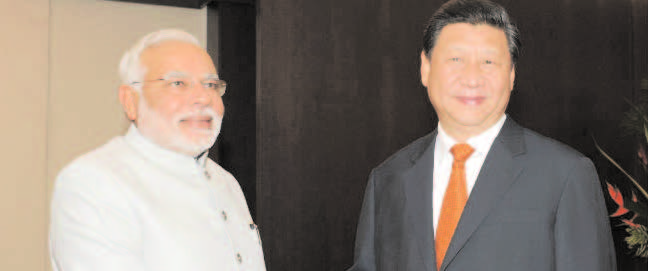
    Despite the cordial meetings between PM Modi and President Xi’s and their  photo ops on the sidelines of the BRICS and SCO summits, India has been drawing the red line with China on its concerns. Official briefings have disclosed clear communiques from India on the issue of China blocking India’s move in the United Nations to question Pakistan on the release of 26/11 attack mastermind Zaki-ur Rehman Lakhvi as well as China’s economic corridor in PoK.

    Only last month the news of Chinese submarines docking in Karachi, had rattled New Delhi. Almost a deja-vu reaction to the Chinese subs making an appearance in Sri Lanka last year. China’s statements that the Indian Ocean is not India’s backyard have only added to Indian anxiety. Not surprisingly, visits in June with US Defense Secretary Ashton Carter, who arrived at an Indian naval base, followed by a trilateral with Australia and Japan on regional security issues have focused on adventurism in the Indian Ocean Region and aggression in the South China Sea.

    There is a growing clamor for India to take up the role of a regional security provider in Asia in the wake of what is being termed as Chinese expansionism. Its was not surprising that both -the renewed India – US Defense Framework Agreement and trilateral discussions, put a strong emphasis on maritime security, and strengthening of India’s defense capabilities to fulfill this ambition. It is a  role that India is eager to take up but, in reality, has a long way to go to achieve in terms of resources and capacity.

    PM Modi’s administration has succeeded in renewing expectations from India, with his first year in office dedicated to revamping the look east policy to act east. The fundamental shift is India’s willingness to work with the U.S. and Asia-Pacific countries on regional security coalitions and shedding of timidity to call China out.

    However, while New Delhi has walked the tightrope to ensure that its strategic choices are not perceived as binary (between the US and China), it is imperative to underline that India’s resource build up is still a work in progress and jumping the gun in terms of expectations will not bode well for India’s long term vision.

    So , beyond the hype it is important to assess how India conceptualizes its own role in Asian security. What roles does it envisage for itself ? The answer perhaps lies in understanding the larger blueprint within which India is calibrating its strategy.

    Conceptually, India’s strategic approach has been rooted in three broad trends : One, revitalizing India’s strategic partnerships with major powers and being recognized as an able contributor to Asian security. Two, reclaiming the south Asian neighborhood to boost India’s role as a regional power. And three, a renewed thrust on economic diplomacy independent of strategic compulsions.

    No longer wanting to sit on the fence, India is looking to play a role in shaping the regional architecture, by increasing economic integration,
    (ASEAN, EAS, RCEP etc), building strategic partnerships and deepening defense cooperation (US, Japan, Vietnam, ASEAN, Australia) with a special emphasis on maritime security. But is all of this easier said than done?

    Realistically, the grand posturing aside, this is a tall order considering the challenges India faces. For one, many a skeptic will tell you that if India can’t even manage its own neighborhood how can it claim to extend its influence in the Asia Pacific?

    An uneasy neighborhood with constant complaints of neglect and lack of leadership from India have been an open secret. Despite PM Modi’s recent efforts, Chinese entrenchment in South Asia – from the ‘One Belt One Road’ initiative to the deepening military ties, is a glaring reality. While this is no zero game of influence, reclaiming the neighborhood would be a pre-requisite to India’s ambitions of a larger role in the great game for Asia. This is no easy task.

    A re-energized look east policy, can only take off if the gaping lacuna in the development of North East India and almost absent physical connectivity with East Asia are fixed. A reputation of slow delivery on projects and the mismatch of political aspirations and resource capacity to deliver are hard truths India has to face up to. The ‘Make in India’ campaign is looking to reverse this but the plans will need time to fructify.

    Even the much celebrated relationship with the US has fallen victim in the past to a lack of momentum and strategic mistrust. Maintaining robust Indo-US ties is imperative to give India a foot in the door of Asian geopolitics. Joint collaborations in defense and technology have to really come through for India to live up to the hype. Till then expectations will only burden India.

    As India gradually rises to its role as a regional balancer in Asia, it is important for India to tell the world to give it time to set its own house in order. New Delhi still has a long way to go in assuring these states of its reliability, not only as an economic and political partner but also as a provider of regional security. The political will is clear, it is time for the commitments to come through. Till then managing China, while building up India’s capacity is the way forward. The hype can wait.

    Shruti PandalaiAuthor | Shruti Pandalai (The author is a Research Analyst & OSD Outreach with Institute for Defence Studies and Analyses. She can be reached at shrutipandalai@gmail.com)
  • E-visas for Chinese launched

    E-visas for Chinese launched

    BEIJING (TIP): The system of electronic visas for Chinese citizens, which was promised by Prime Minister Narendra Modi in Beijing last May has come into effect on Thursday.

    This will help Chinese, who are not based in Beijing, Shanghai and Guangzhou, to avoid travel for visas. They can apply and obtain travel visas for 30 days online.

    But it may not save much time because e-visa rules say that visa seekers must apply at least four days before the planned journey.

    “I am delighted to share that the e-Tourist Visa is now available to passport holders of China,” the Prime Minister said in a post on Weibo, the Chinese version of Twitter on which he has a popular account. “I had talked about this during my China visit & the Government of India has fulfilled this promise. This will deepen connectivity between our nations. Come, experience the beauty of Incredible India!,” he said.

    In a statement, the Indian embassy said, ?”The implementation of e-tourist visa will enable Chinese nationals to visit India with ease for recreation, sight-seeing, casual visit to meet friends or relatives, short-duration medical treatment or casual business visit”.

    “This facility will encourage more people to travel to India during ‘Visit India Year 2015’ and beyond”.

    On the time duration, the e-visa rules state, “Applicants need to apply a minimum of 4 days in advance of the date of arrival with a window of 30 days. Example: If you are applying on 1st Sept then applicant can select arrival date from 5th Sept to 4th Oct”.

  • Why India should apply for NSG membership?

    Why India should apply for NSG membership?

    On November 10, 2010, President Obama announced US support for admitting India into the Nuclear Suppliers Group (NSG). And in May 2011, prior to the June 2011 NSG Consultative Group (CG) and Plenary meetings at Noordwijk, the US circulated a “Food for Thought” paper on the question of India’s NSG membership for consideration and feedback by the participating governments. Although five Plenaries have been held since then and the group’s Public Statements after these plenaries routinely state that the plenary “discussed the NSG relationship with India”, there does not seem to have been any substantive movement during these five years on the question of the NSG accommodating India as a Participating Government (PG).

    The 2001 Aspen Plenary formally adopted the Procedure for NSG membership after an Implementation Working Group (IMP) set up by the 2000 Paris Plenary presented a draft paper on how a restructured NSG might operate. One of the decisions adopted by the Aspen plenary was with respect to participation in the NSG. It defined a set of factors that should be considered by the current Participating Governments when dealing with the possible acceptance of a new Participating Government. It also decided that a new Government may either be invited to join the NSG as a PG through a consensus decision or approving its application for PG status again through a consensus decision.

    The factors to be considered by the current PGs when dealing with the possible acceptance of a government as a new Participating Government were, among other things, whether the applicant would be

    1.  be able to supply items 3 covered by the Annexes to Parts 1 and 2 of the NSG Guidelines;
    2. adhere to, and act in accordance with, the Guidelines;
    3. have in force a legally-based domestic export control system which gives effect to the commitment to act in accordance with the Guidelines;
    4. be a party to the NPT, the Treaties of Pelindaba, Rarotonga, Tlatelolco or Bangkok or an equivalent international nuclear non-proliferation agreement, and be in full compliance with the obligations of such agreement(s), and, as appropriate, have in force a full-scope safeguards agreement with the IAEA;
    5. be supportive of international efforts towards non-proliferation of weapons of mass destruction and of their delivery vehicles.

    The participation procedure adopted by the Aspen Plenary required that the government concerned

    1. should have adhered to the Guidelines,
    2. is interested in becoming a Participating Government of the NSG, and
    3. has indicated its desire to do so to the current NSG Chair directly or through the Point of Contact.

    The Aspen Plenary also defined what it meant by adherence thus:

    “To be eligible to become a new NSG Participating Government, a government must have adhered to the Guidelines for the Export of Nuclear Material, Equipment and Technology, and the Guidelines for Transfers of Nuclear Related Dual-Use Equipment, Materials, Software and Related Technology. Such adherence is accomplished by sending an official communication to the Director-General of the IAEA stating that the government will act in accordance with the Guidelines. This communication is to be intended for publication in the INFCIRC series.”

    India does not fulfil two of the factors “to be considered” by current participating governments. It is neither a NSG adherent nor a NPT signatory. It was for this reason that the US, in its “Food for Thought” note to the NSG PGs, interpreted the Procedural Arrangement as not requiring that “a candidate meet all of the stated criteria” and, for that reason, NSG PGs could simply take a decision by consensus to admit India based on India’s support for the nuclear non-proliferation regime and its non-proliferation behaviour.

    In the above context, this commentary examines (a) whether the US interpretation of the “Factors to be Considered” is valid, and (b) if yes, what other options are available to India to apply for membership.

    Factors to be considered

    Two factors support the US view about the nature of the factors to be considered:

    1. The IMP had considered whether a reference to ratification of an Additional Protocol with the IAEA should be added as a factor to be taken into account when considering future requests for participation in the NSG which had the support of a significant number of NSG PGs who saw no difficulty in it, given that it would be just one factor among many for consideration and that non-ratification would not necessarily preclude a government from achieving participation status.
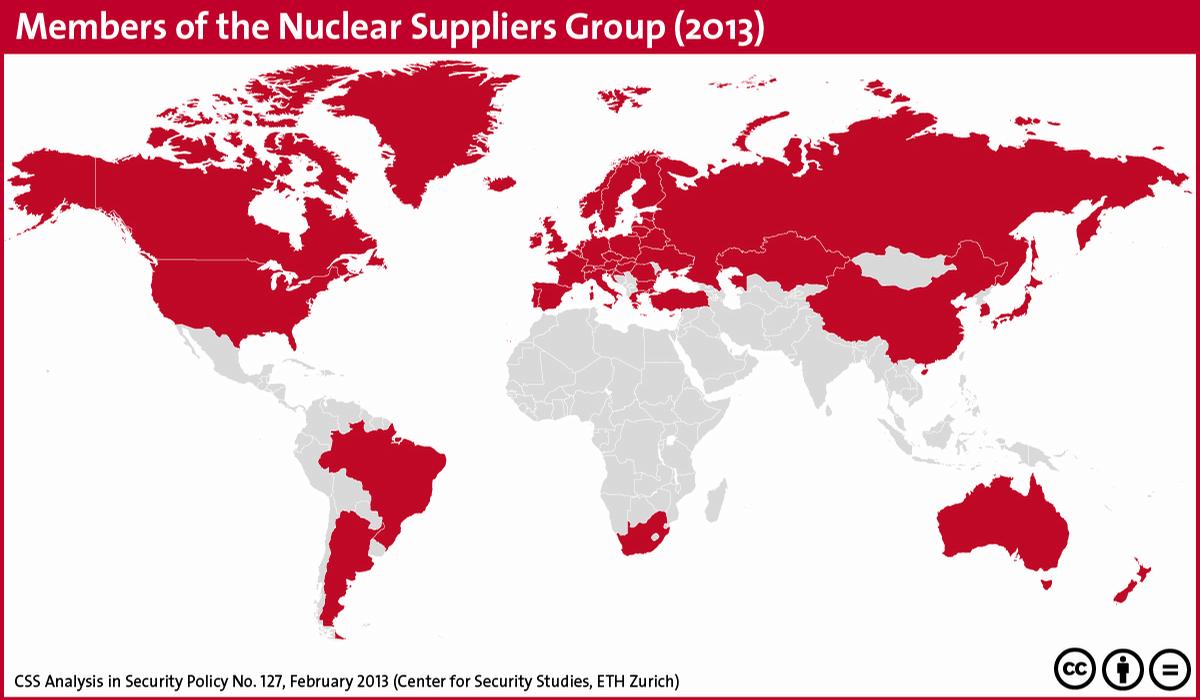
    2. The second factor is even more compelling. After the Participation procedure and the “Factors to be considered” were endorsed, the NSG had not only considered an application from a Government that did not fulfil all the factors but approved its participation in NSG as a PG even though it was not a NSG Adherent. In 2004, NSG admitted China as a NSG PG. At the time of its application for membership, China was not only not a NSG adherent, it had made clear that its adherence to NSG Guidelines was conditional on its acceptance as a NSG by the NSG PGs. In its letter to the IAEA Director General (DG), China had stated

    “The Chinese Government has submitted its application for the membership of the Nuclear Suppliers Group (NSG). China will, once admitted into NSG, act in accordance with the NSG Guidelines (as contained in INFCIRC/254/Part I and Part 2, including Annexes, as amended) and duly exercise export control over nuclear and nuclear dual-use items.”

    India’s options

    It is clear that the IMP in their report to the Plenary had in mind only that the requirements enumerated were only to be taken into consideration for membership in NSG and were not mandatory requirements. This factor seemed to have been taken note of by the NSG PGs when they admitted China as a PG, even though not only had China not fulfilled the requirements but also affirmed that its NSG adherence will be conditional on NSG membership. Does this precedence offer a fresh avenue for India to approach the issue of its admission to NSG membership?

    India is, of course, not a NPT signatory. But it is also not a NSG recognized NSG adherent even though it had made a unilateral declaration to the IAEA DG that it follows NSG Guidelines, and the US Administration had certified to the US Congress in pursuance of its obligations under the Hyde Act that India does follow NSG Guidelines. The non-recognition by NSG of this adherence declaration arises from the fact that the Indian letter to the DG was not published as an IAEA INFCIRC. Why India chose not to have its adherence to NSG Guidelines published as an INFCIRC, even though it was meant to be circulated to all IAEA members, is not clear. The only upshot of this inexplicable action on the part of the Indian Government was that even though India adheres to NSG Guidelines, and has explicitly informed the NSG PGs and IAEA of this policy, it is yet not officially recognized as a NSG adherent by the NSG! Notwithstanding this, India can still retrieve its position by requesting the IAEA to publish its September 2008 letter to the IAEA DG containing its policy of adherence to NSG Guidelines. If it does so, then India will not be fulfilling only one of the factors to be considered, namely, non-membership of NPT. And the omission of NSG adherence in China’s application for NSG admission is a far more serious deficiency than non-membership of NPT in India’s case. The NSG guidelines in respect of transfer, and use of such transferred item, of nuclear and nuclear related dual use items and technology are a far more restrictive and supportive move in “international efforts towards non-proliferation of weapons of mass destruction” than NPT. Hence, the absence of one of the factors to be considered for membership was far more serious in the case of China than would be in the case of India.

    Hence, an Indian application for NSG membership should, objectively speaking, face much less resistance than what china had faced. Such an option is certainly worth an attempt instead of waiting indefinitely for the NSG PGs to arrive at a consensus on inviting India while attempting at the same time to find a via media by which India and Pakistan can both be accommodated in the NSG.

    Author : G. Balachandran | Dr. G. Balachandran is Consulting Fellow at the Institute for Defence Studies and Analyses, New Delhi.

    Views expressed are of the author and do not necessarily reflect the views of the IDSA or of the Government of India

    Published on IDSA Website : 20th July 2015