Tag: China

  • Nepal to hold donor conference on post-quake reconstruction

    KATHMANDU (TIP): External Affairs Minister Sushma Swaraj will be among a host of leaders who will attend an international donor conference here for reconstruction efforts following the devastating earthquake that hit Nepal in April.

    The International Conference on Nepal’s Reconstruction (ICNR) 2015 is scheduled to take place here on June 25 to raise international assistance for rebuilding the country ravaged by the April 25 earthquake and its aftershocks.

    Besides Swaraj, foreign ministers from China and Norway, finance ministers from Bhutan and Bangladesh and disaster management minister from Sri Lanka have confirmed their participation in the international conference, Nepalese finance minister Ram Shara Mahat said today.

    Nepal had initially invited PM Narendra Modi to attend the conference. President of the Manila-based Asian Development Bank, vice-president of the World Bank, president of Japan International Technical Cooperation (JAICA), commissioner of the European Union and the UN deputy general secretary of the United Nations have also confirmed their participation.

  • Visa-Free Facility for Indians to continue in Hong Kong

    Visa-Free Facility for Indians to continue in Hong Kong

    The Hong Kong government has reportedly dropped plans to scrap visa-free entry for Indians after representations from Indian officials and businessmen said such a move could seriously jeopardise businesses and tourism.

    Recent media reports quoting public security officials in Hong Kong said that the former British colony was considering to scrap the programme for Indians in an effort to curb the number of asylum seekers.

    However, Indian diplomats and prominent businessmen based in Hong Kong told PTI that the local government has dropped the proposal after representations at the highest level stating that such a move could seriously jeopardise the trade, business and tourism flows from India.

    A report in the Hong Kong-based South China Morning Post recently said the proposal to scrap the visa-free facility for Indians was mooted by members of the Liberal Party to curb the asylum seekers from India which registered sharp increase in recent months.

  • Putting India Emphatically on Global Map – Part 1

    Putting India Emphatically on Global Map – Part 1

    Prime Minister Modi has surprised his own people and, no doubt, external observers, by his foreign policy activism since he took office. In his year in power he has travelled abroad 16 times- and 19 if the forthcoming visits to China, Mongolia and South Korea are included- inviting some criticism that these peregrinations have meant less attention devoted to domestic affairs. This is misplaced criticism because today, with the change in the nature of diplomacy, the heads of governments play a critical role in external affairs. Frequent personal contacts at the highest political level have now become the norm, leaders often are on first name terms and difficult knots are untied by exertions at their level, sometimes in an unorthodox manner. Modi, even if seemingly inexperienced in the foreign policy domain, has had to, therefore, wade into the deep waters of diplomacy as soon as he took over because his position has demanded this. But no one was prepared for a Modi with a natural flair for diplomacy, to which he has brought a surprising degree of imagination and self-assurance. From the start, he seemed to have a clear idea of where the interests of his country lay and the initiatives needed to advance them.

    All Indian Prime Ministers on taking over give priority to ties with neighbouring countries. The belief is that either India has neglected its neighbours or has been insensitive and overbearing, leading to their alienation and consequent opportunities for external powers to intervene at the cost of India’s interests. Modi too began by reaching out to the neighbours, but in a manner not anticipated. He invited all the SAARC leaders to his swearing-in, with the intention no doubt to signal that his elevation to power would usher in a new era of South Asian relations, that the clear victory in elections of a supposedly nationalist party did not denote a more muscular policy towards neighbours and that, on the contrary, India intended to work together with them to move the whole region forward towards peace and prosperity. This gesture had most meaning for India-Pakistan relations, and Nawaz Sharif’s decision to attend the swearing-in was “rewarded” with the announcement of FS level talks between the two countries.

    Continuing the emphasis on the neighbourhood, he chose Bhutan as the first country to visit in June 2014. This made sense as Bhutan is the only neighbour that has not played an external card against us or politically resisted building ties of mutual benefit. His August 2014 visit to Nepal made a notable impact in local political and popular thinking about India as a well-wisher. His extempore address to the Nepalese parliament was a tour de force. He handled sensitive issues during his visit with finesse and played the cultural and religious card dextrously. External Affairs Minister Sushma Swaraj visited Bangladesh in June 2014. A very notable development is the approval of the Land Boundary Agreement with Bangladesh approved by the Indian parliament in May 2015. Modi visited Myanmar in November 2014 to take part in the East Asia summit and for bilateral discussions with this strategically placed neighbour whose honeymoon with China is waning.

    SAARC figures prominently in Modi’s foreign policy vision. He invited all SAARC leaders to his swearing-in ceremony, which was unprecedented. It is true that SAARC is one of the least integrated regions economically speaking, which means that the potential of the region remains unexploited. This also means that external actors find it easier to intrude into the loose equations in the subcontinent. While in terms of aspirations for the region, Modi is right in imagining a more tightly textured SAARC, India’s capacity to do this is limited in the face of Pakistani recalcitrance. A strengthened SAARC means a stronger Indian role in it, which is anathema to a Pakistan that is obsessed with countering Indian “hegemony” in South Asia. Pakistan will be reduced to its true importance if it ceases to confront India, which is why it will continue its confrontational policies. it also means that Afghanistan will not be adequately integrated into SAARC structures as that is contingent on Pakistan’s willingness to facilitate access to this landlocked country. At the Kathmandu SAARC summit in November 2014, Modi encouraged neighbours to benefit from opportunities provided by India’s growth, promised a special funding vehicle overseen by India to finance infrastructure projects in the region and announced India’s readiness to develop a satellite specifically for the region by 2016. He warned at the Kathmandu summit that regional integration will proceed with all or without some, which suggested that if Pakistan did not cooperate, others could go ahead without it, though under the SAARC charter this is not possible and other countries may not support a strategy of isolating Pakistan.

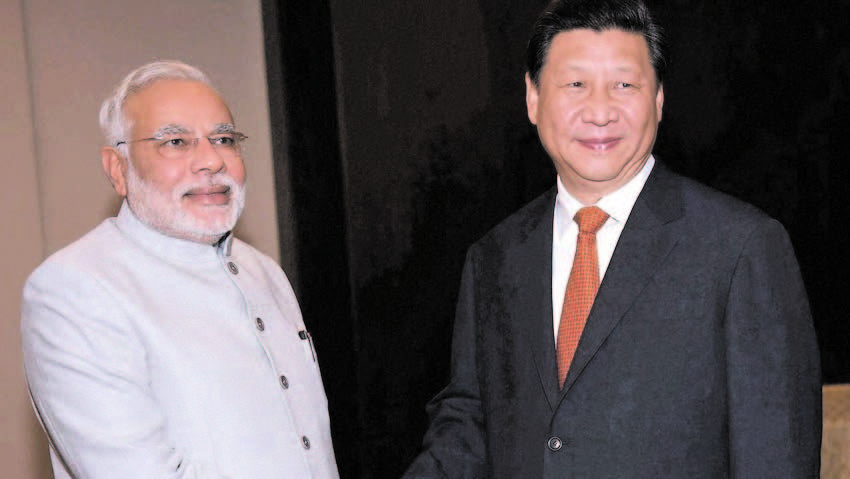
    Modi seems to admire China’s economic achievements, which would not be surprising given China’s spectacular rise. His several visits to China as Gujarat Chief Minister no doubt gave him familiarity with the country and take its pulse. His view that economic cooperation is the key driver in relations between countries and that all countries give more importance to economic growth and prosperity for their peoples than creating conditions of conflict evidently guides his thinking towards China. He was quick to court China after assuming power, with reinforcement of economic ties as the primary objective. The huge financial resources at China’s disposal, its expertise in infrastructure building, its need for external markets for off-loading the excess capacity it has built in certain sectors has made cooperation with China a theoretically win-win situation. The Chinese Foreign Minister was the first foreign dignitary to be received by Modi. He invited the Chinese President to make a state visit to India in September 2014, during which unprecedented personal gestures were made to him in an informal setting in Ahmedabad on Modi’s birthday. This imaginative courting was marred by the serious border incident in Ladakh coinciding with Xi’s visit- one more case of China reaching out to India and simultaneously staging a provocation so that India remains unsure about China’s intentions and finds it difficult to make a clear choice about what policy to pursue, and in the process has to accept faits accomplish that are to China’s advantage.

    Unlike the timidity of the previous government to treat such incidents as acne on the beautiful face of India-China relations, Modi raised the border issue frontally with XI at their joint press conference, expressing
    “our serious concern over repeated incidents along the border”. His call for resuming the stalled process of clarifying the Line of Actual Control (LAC) and mention of “India’s concerns relating to China’s visa policy and Trans Border Rivers” while standing alongside Xi Jinping at the joint press conference indicated a refreshing change from the past in terms of a more open expression of India’s concerns. With regard to Bangladesh-China-India-Myanmar Economic Corridor that China has been pushing hard, Modi was cautious. Why we accepted to discuss such a proposal in a working group in the first place is a puzzle. Engagement with China ought not to mean that we let it set the agenda when the downsides to us of what it seeks are clear. Equally importantly, he did not back another pet proposal of Xi: the Maritime Silk Road, which is a repackaged version of the notorious “string of pearls” strategy, as the joint statement omitted any mention of it. Since then China is pushing its One Belt One Road (OBOR) proposal which seeks to tie Asian and Eurasian economies to China, create opportunities for Chinese companies to bag major projects in this region financed by the Asian Infrastructure Investment Bank (AIIB) that China has floated. This ambitious concept is intended to establish China’s hegemony in Asia and outflank India strategically.

    On a more positive side, during Xi’s visit, the two sides agreed to further consolidate their Strategic and Cooperative Partnership, recognised that their developments goals are interlinked and agreed to make this developmental partnership a core component of this partnership.

    Read More : Putting India Emphatically on Global Map – Part 2

  • $9BN-MAN DONALD TRUMP JOINS WHITE HOUSE RUN

    $9BN-MAN DONALD TRUMP JOINS WHITE HOUSE RUN

    WASHINGTON (TIP): “In America, anybody can be president. That’s one of the risks you take,” joked American politician Adlai Stevenson, sometimes described as the greatest president US never had.

    An already packed field of White House aspirants got even more crowded on Tuesday with real estate mogul Donald Trump, a perennial presidential hopeful, announcing that he too would run for President in 2016.

    Trump will run as a Republican, becoming the 12th aspirant shooting for the party nomination, although his political affiliation is incidental. He represents wealth, extravaganza, and outsized hairdo and promises of turning America into manna. He has toyed with and threatened to run for president so often in the past, going back to 1987, that no one would take him seriously. But on Tuesday, he took the plunge from his lavish Trump Tower in New York’s Fifth Avenue.

    “So, ladies and gentlemen, I am officially running for president of the US, and we are going to make our country great again,” he told a gathering in a rambling speech that meandered from the threat from China to job creation in the US to the Iraq War.

    He said his Republican opponents, including Jeb Bush, don’t have a clue about running the country (although most of his opponents have been governors and senators), while suggesting his wealth, and the way he had gotten rich (by beating China all the time), made him fit to lead the country. “Our country is in serious trouble. We don’t have victories anymore,” said the man who is called The Donald and is lately better known as Reality Show host.

    Trump is polling about last in the GOP presidential hopefuls list but that was before he formally declared his candidature. His $9 billion fortune could help bump him up to within the top 10, which will allow him to come on stage for a debate among Republicans. From then on, all bets are off in a country that after all elected a freshman African-American Senator as President.

  • Beijing orders behavioural training for spoilt brats

    BEIJING (TIP): More than 70 children of Chinese billionaires attended behavioural training classes after President Xi Jinping called for a ‘positive image’ of the young rich, as many of them came under flack for vulgar display of their wealth and luxurious lifestyles.

    With an average age of 27, the so-called fuerdai or second generation of the nouveau riche, were taught traditional Chinese culture, social responsibility and business knowledge at a training school in east China’s Fujian province, state-run Beijing Youth Daily reported on June 16. The children of emerging rich class riding on the crest of the economic reforms of the Communist country have landed in numerous scandals in the social media in recent times displaying their wealth and fame.

    While two rich youth riding costly sports cars survived a “fast and furious” crash in Beijing, another displayed the new expensive Apple watches strapped to the legs of his dog on the social media with a provocative question “do you have them”.

    The rich kids routinely display their sports cars, private jets, luxury goods and lavish homes all with captions revealing the kids’ nonchalant attitude to money in their social media pages. According to a latest survey, China’s milliners club has crossed a million with about a dozen billionaires.

  • India reaches for the Sun, raises solar capacity target five times to 100,00 mw

    NEW DELHI (TIP): It’s official now. The government is reaching for the Sun by raising the target for adding solar power capacity five times to 100,000 mw by 2022. The Cabinet’s panel on economic affairs on June 16 put its stamp on the grand plan that is estimated to cost Rs 600,000 lakh crore.

    The Cabinet’s economic committee also approved a plan to set up 2,000 mw grid-connected solar capacity this year with viability gap funding under Phase-II of the Jawaharlal Nehru National Solar Mission.

    So is India poised to emerge as a solar powerhouse?Telecom minister Ravi Shankar Prasad would believe so. “This is a giant step and India will become the biggest producer of solar power in the world,” he told reporters after the Cabinet’s meeting.

    But one would have to watch out for China and Japan, apart from the US, before India can rightfully stake its claim to the numero uno position in this regard.

    The Centre would provide Rs.15,050 crore as capital subsidy. “The ministry of new and renewable energy intends to achieve the target of 100,000 mw with three schemes of 19,200 mw… Apart from this, projects with investment of about Rs 90,000 crore would be developed using bundling mechanism with thermal power,” a government statement said.

  • Pentagon chief urges China to stop island building

    Pentagon chief urges China to stop island building

    WASHINGTON (TIP): US secretary of defense Ashton Carter has called on Beijing to stop building artificial islands in the disputed waters of the South China Sea, as he hosted a top Chinese general.

    The visit to the Pentagon of General Fan Changlong, vice chairman of China’s central military commission, was relatively low key amid simmering tensions over the maritime dispute and a massive hack of US federal employees.

    China insists it has sovereignty over nearly all of the South China Sea, a major global shipping route believed to be home to oil and gas reserves, but rival claimants accuse it of expansionism.

    “Carter reiterated US concerns on the South China Sea and called on China and all claimants to implement a lasting halt on land reclamation, cease further militarization and pursue a peaceful resolution of territorial disputes in accordance with international law,” the Pentagon said in a statement.

    Carter had previously accused China of being out of step with international rules in its conduct in the South China Sea.

    Unlike previous trips, including one last year, there was no joint press conference.

    “The Chinese did request that there not be a lot of media attention around this trip,” Pentagon spokesman Colonel Steven Warren said.

    Also raising tensions is this month’s revelation by the US government that hackers accessed the personal data of at least four million current and former federal employees.

    The vast cyberattack is suspected to have originated in China, though Beijing has said the charge was
    “irresponsible” and stressed that Chinese laws prohibit cybercrimes.

    Prior to visiting Washington, Fan went to California and Texas.

    His trip is part of a years-long effort to build a regular dialogue between the American and Chinese armed forces to defuse potential tensions and avoid miscalculations.

    Carter’s predecessor, Chuck Hagel, visited China in 2014 in a trip that was marked by friction, with each side trading sharply worded criticism.

  • US FOOD AND DRUG ADMINISTRATION BLOCKED MAGGI IMPORT IN JANUARY

    NEW DELHI (TIP): Nestle may have secured a clean chit for Maggi from the Singapore food regulator, but the US Food and Drug Administration (FDA), considered the world’s strictest regulator, had refused import of the noodles earlier this year.

    The US FDA’s website shows that in January this year, six import refusal reports were issued to Nestle India by it. The regulator rejected Nestle India’s instant noodles and chowmein, manufactured at the company’s factories in Goa (Bicholim), Uttarakhand (Pantnagar) and Punjab (Moga).

    In the report, the US FDA said,”The article appears to be misbranded in that the label or labeling fails to bear the required nutrition information.”

    This is significant because even in India regulators have raised questions about Nestle’s labeling and packaging of Maggi, while ordering a countrywide withdrawal and recall of all nine variants of the popular snack. Regulatory tests in India have found Maggi containing added monosodium glutamate (MSG). However, the company does not declare so on the pack. Similarly, Maggi samples were allegedly found containing lead in excess of the prescribed limit.

    Interestingly, after the latest recall of Maggi instant noodles in India, the US FDA has also sent samples of the product for testing.

    Apart from Nestle’s products, imports of several other India-made packaged food products including bakery items, snacks, noodles and macaroni from leading players like Haldiram, Britannia and Indo Nissin Foods, were also blocked by the US FDA in the first five months of 2015.

    In fact, data from the American regulator shows, India leads the list of rejected food products in various categories, with more than half of such items coming out of Indian facilities. Countries like Mexico and China are much bigger exporters to the US.

    However, in terms of number of snacks and bakery products rejected, India, the eighth largest supplier of food to the US, is much ahead. For instance, the US FDA rejected a total of 217 bakery products between January and May, of which 116 were from India and 17 from China.

    Most of the Indian snacks and bakery products rejected by the American regulator so far this year are from Haldiram. Some of the reasons cited include contamination, pesticide adulteration, decomposed substances, inadequate processing and insanitary conditions etc.

    In some of the orders, the regulator said the products can be “rendered injurious to health”. Several phone calls made to Haldiram to seek their response remained unanswered.

    Experts say like medicines, food safety regulation is also going to be strengthened in upcoming years. “The Indian food market is evolving and companies need to behave in a more responsible manner,” a former FSSAI official said.

  • China detains nine for spreading rumors about the military

    China detains nine for spreading rumors about the military

    BEIJING (TIP): Chinese authorities have detained nine people for spreading rumors on the Internet that several military officers were involved in protests and for damaging the military’s image, the military’s official newspaper said on June 12.

    The nine “fabricated and spread the rumors” on the Internet, the People’s Liberation Army Daily said.

    They used Chinese microblogs and mobile messaging apps to “spread military-related rumors, slander military cadres and falsely accuse troops of being involved in ‘mass incidents’,” the newspaper added.

    “Mass incidents” are a euphemism for protests.

    Some of them also “demonized the military’s image”, it said.

    The newspaper did identify the nine but gave the family names of three of them as Huang, Yuan and Song.

    The people confessed to spreading rumors and had been sentenced to “administrative detention”, it said, a term which is normally up to 15 days behind bars. They also had to undergo “education”. It provided no further details.

    Last month, the defense ministry said authorities had detained 10 people for spreading rumors online damaging to the military’s image, including the presence of gangs and infighting.

    The military has been one of the focuses of President Xi Jinping’s sweeping crackdown on deep-seated corruption, with several senior officers caught up.

    The punishment for the rumor-spreading shows the Communist Party’s growing determination to control information about alleged official misbehavior, to avert triggering public dissatisfaction.

  • OIL PRICES FALL AS WORLD BANK CUTS ECONOMIC GROWTH OUTLOOK

    SINGAPORE (TIP): Crude oil futures fell on Thursday as the World Bank cut its global economic growth forecast, ending a two-day rally triggered by a sharp US inventory drawdown.

    In its twice-yearly Global Economic Prospects report, the World Bank predicted the global economy would expand 2.8 per cent this year, below its 3 per cent outlook in January, with India recording the biggest growth of major economies for the first time, ahead of slowing China.

    Front-month Brent crude oil prices were down 13 cents at $65.57 a barrel by 0512 GMT, while US crude shed 23 cents to trade at $61.20 a barrel.

    “Considering China’s economic slowdown, we lean towards lower prices today,” said Daniel Ang, an analyst at Singapore-based Phillip Futures. In South Korea, the world’s No. 5 importer of crude oil, the central bank cut its policy rate by 25 basis points to a record-low 1.50 per cent in a bid to shield a tottering economy from an outbreak of a deadly respiratory disease.

    Despite Asia’s slowing economies, Iraq on Thursday increased its July official selling price for Basra Light crude following strong demand for the grade last month.

    Crude prices, however, drew support from a big US stocks drawdown that has boosted the outlook for summer fuel demand.

    The US energy information administration (EIA) reported that crude oil stocks shrank by 6.8 million barrels last week, their largest drop in almost a year and four times more than forecast by analysts in a Reuters poll. Prices in North America have been buoyed recently by high gasoline demand for road vehicles as well as low production in Canada as a result of wildfires.

    “In Western Canada, crude oil inventories are at their lowest level since October as maintenance shutdowns and wildfires in northern Alberta take their toll on supply,” ANZ bank said.

  • Chinese Hack Database-Security Compromised

    Chinese Hack Database-Security Compromised

    WASHINGTON (TIP): The Chinese breach of the Office of Personnel Management network was wider than first acknowledged, and officials said Friday, June 12, that a database holding sensitive security clearance information on millions of federal employees and contractors also was compromised.

    The announcement of the hack of the security-clearance database comes a week after OPM disclosed that another personnel system had been compromised. The discovery of the first breach led investigators to find the second — all part of one campaign by the Chinese, U.S. officials say, evidently to obtain information valuable to counter­espionage.

    In an announcement, OPM said that investigators concluded this week with “a high degree of confidence” that the agency’s systems containing information related to the background investigations of “current, former and prospective” federal employees, and others for whom a background check was conducted, were breached.

    OPM is assessing how many people were affected, spokesman Samuel Schumach said. “Once we have conclusive information about the breach, we will announce a notification plan for individuals whose information is determined to have been compromised,” he said.


    China has dismissed the hacking allegations, with a Foreign Ministry spokesman last week calling them “irresponsible and unscientific.”

    What complicates this case is that unlike many other Chinese breaches­ of U.S. networks, the OPM hacks do not involve theft of commercial secrets. Last year, the United States indicted five Chinese military officials on charges of commercial cyber­espionage. With traditional espionage, the options are fewer.

    “You’re not going to start a shooting war over this,” a former intelligence official said. “We need to improve our ­defenses. We also want to go on the offense.”

    Offensive actions might include directing a U.S. agency to locate the servers holding the stolen data and deleting or altering the data, the former official said.

    The administration timed its announcement last week of the initial OPM breach to comply with its own policy, as reflected in proposed legislation, to notify individuals of a breach within 30 days of concluding that there is a “reasonable basis to believe” that personal information has been compromised, the first U.S. official said.

    Although the breach was discovered in April, it was not until early May that investigators determined that employees’ personal data probably was taken. That led to the announcement last week even though, the official said, the investigation was not complete.

    During a briefing for congressional staff last week, Ann Barron-DiCamillo, a senior DHS official, tried to explain the delay in alerting employees to the breach. “It takes time to do the forensics and to understand what’s happened, and even to understand what data, if any, has been exposed,” she said, according to notes taken by a congressional aide.

    The breach, she said, took place in December. “It took awhile to pinpoint what actually went out the door because it happened six months ago,” she said.

  • ‘The Challenge of Journalism is to Survive in the Pressure Cooker of Plutocracy’

    ‘The Challenge of Journalism is to Survive in the Pressure Cooker of Plutocracy’

    Thank you for allowing me to share this evening with you. I’m delighted to meet these exceptional journalists whose achievements you honor with the Helen Bernstein Book Award.

    What happens to a society fed a diet of rushed, re-purposed, thinly reported “content?” Or “branded content” that is really merchandising — propaganda — posing as journalism? But I gulped when [New York Public Library President] Tony Marx asked me to talk about the challenges facing journalism today and gave me 10 to 15 minutes to do so. I seriously thought of taking a powder. Those challenges to journalism are so well identified, so mournfully lamented, and so passionately debated that I wonder if the subject isn’t exhausted. Or if we aren’t exhausted from hearing about it. I wouldn’t presume to speak for journalism or for other journalists or for any journalist except myself. Ted Gup, who teaches journalism at Emerson and Boston College, once bemoaned the tendency to lump all of us under the term “media.” As if everyone with a pen, a microphone, a camera (today, a laptop or smartphone) – or just a loud voice – were all one and the same. I consider myself a journalist. But so does James O’Keefe. Matt Drudge is not E.J. Dionne. The National Review is not The Guardian, or Reuters The Huffington Post. Ann Coulter doesn’t speak for Katrina Vanden Heuvel, or Rush Limbaugh for Ira Glass. Yet we are all “media” and as Ted Gup says, “the media” speaks for us all.

    So I was just about to email Tony to say, “Sorry, you don’t want someone from the Jurassic era to talk about what’s happening to journalism in the digital era,” when I remembered one of my favorite stories about the late humorist Robert Benchley. He arrived for his final exam in international law at Harvard to find that the test consisted of one instruction: “Discuss the international fisheries problem in respect to hatcheries protocol and dragnet and procedure as it affects (a) the point of view of the United States and (b) the point of view of Great Britain.” Benchley was desperate but he was also honest, and he wrote: “I know nothing about the point of view of Great Britain in the arbitration of the international fisheries problem, and nothing about the point of view of the United States. I shall therefore discuss the question from the point of view of the fish.”

    So shall I, briefly. One small fish in the vast ocean of media.

    I look at your honorees this evening and realize they have already won one of the biggest prizes in journalism — support from venerable institutions: The New Yorker, The New York Times, NPR, The Wall Street Journal and The Christian Science Monitor. These esteemed news organizations paid — yes, you heard me, paid — them to report and to report painstakingly, intrepidly, often at great risk. Your honorees then took time — money buys time, perhaps its most valuable purchase — to craft the exquisite writing that transports us, their readers, to distant places – China, Afghanistan, the Great Barrier Reef, even that murky hotbed of conspiracy and secession known as Texas.

    And after we read these stories, when we put down our Kindles and iPads, or — what’s that other device called? Oh yes – when we put down our books – we emerge with a different take on a slice of reality, a more precise insight into some of the forces changing our world.

    Although they were indeed paid for their work, I’m sure that’s not what drove them to spend months based in Beijing, Kabul and Dallas. Their passion was to go find the story, dig up the facts and follow the trail around every bend in the road until they had the evidence. But to do this — to find what’s been overlooked, or forgotten, or hidden; to put their skill and talent and curiosity to work on behalf of their readers — us — they needed funding. It’s an old story: When our oldest son turned 16 he asked for a raise in his allowance, I said: “Don’t you know there are some things more important than money?” And he answered: “Sure, Dad, but it takes money to date them.” Democracy needs journalists, but it takes money to support them. Yet if present trends continue, Elizabeth Kolbert may well have to update her book with a new chapter on how the dinosaurs of journalism went extinct in the Great Age of Disruption.

    You may have read that two Pulitzer Prize winners this year had already left the profession by the time the prize was announced. One had investigated corruption in a tiny, cash-strapped school district for The Daily Breeze of Torrance, California. His story led to changes in California state law. He left journalism for a public relations job that would make it easier to pay his rent. The other helped document domestic violence in South Carolina, which forced the issue onto the state legislative agenda. She left the Charleston Post and Courier for PR, too.

    These are but two of thousands. And we are left to wonder what will happen when the old business models no longer support reporters at local news outlets? There’s an ecosystem out there and if the smaller fish die out, eventually the bigger fish will be malnourished, too.

    A few examples: The New York Times reporter who rattled the city this month with her report on the awful conditions for nail salon workers was given a month just to see whether it was a story, and a year to conduct her investigation. Money bought time. She began, with the help of six translators, by reading several years of back issues of the foreign language press in this country… and began to understand the scope of the problem. She took up her reporting from there. Big fish, like The New York Times, can amplify the work of the foreign language press and wake the rest of us up.

    A free press, you see, doesn’t operate for free at all. Fearless journalism requires a steady stream of independent income. It was the publisher of the Bergen Record, a family-owned paper in New Jersey who got a call from an acquaintance about an unusual traffic jam on the George Washington Bridge. The editor assigned their traffic reporter to investigate. (Can you believe? They had a traffic reporter!) The reporter who covered the Port Authority for the Record joined in and discovered a staggering abuse of power by Governor Chris Christie’s minions. WNYC Radio picked up the story and doggedly stuck to it, helped give it a larger audience and broadened its scope to a pattern of political malfeasance that resulted in high-profile resignations and criminal investigations into the Port Authority. Quite a one-two punch: WNYC won a Peabody Award, the Record won a Polk.

    A Boston Phoenix reporter broke the story about sexual abuse within the city’s Catholic Church nine months before the Boston Globe picked up the thread. The Globe intensified the reporting and gave the story national and international reach. The Boston Phoenix, alas, died from financial malnutrition in 2013 after 47 years in business.

  • Massive cyber attack hits 4 million US federal workers; probe focuses on China

    WASHINGTON (TIP): Hackers broke into US government computers, possibly compromising the personal data of 4 million current and former federal employees, and investigators were probing whether the culprits were based in China, US officials said on June 4.

    In the latest in a string of intrusions into US agencies’ high-tech systems, the Office of Personnel Management suffered what appeared to be one of the largest breaches of information ever on government workers. The office handles employee records and security clearances.

    A US law enforcement source told Reuters a “foreign entity or government” was believed to be behind the cyber attack. Authorities were looking into a possible Chinese connection, a source close to the matter said.

    The Federal Bureau of Investigation said it had launched a probe and aimed to bring to account those responsible.

    OPM detected new malicious activity affecting its information systems in April and the Department of Homeland Security said it concluded at the beginning of May that the agency’s data had been compromised and about 4 million workers may have been affected.

    The agencies involved did not specify exactly what kind of information was accessed.

    The breach hit OPM’s IT systems and its data stored at the Department of the Interior’s data center, a shared service center for federal agencies, a DHS official said on condition of anonymity. The official would not comment on whether other agencies’ data had been affected.

  • A way with the world

    A way with the world

    The Prime Minister, Narendra Modi, scored most in foreign policy in his first year in power. No one anticipated Modi’s natural flair for diplomacy, to which he has brought imagination and self-assurance. Modi has been more emphatic than his predecessors in giving improvement of relations with neighbors greater priority. He invited all the SAARC leaders to his swearing-in, to signal that the decisive election victory of a supposedly nationalist party did not denote a more muscular policy towards neighbors. On the contrary, India would take the lead in working for shared regional peace and prosperity.

    Bhutan, the only neighbor that has not politically resisted building ties of mutual benefit, was the first country he visited in June, 2014. He handled his August 2014 visit to Nepal with sensitivity and finesse, and followed it up with exceptional leadership in providing immediate earthquake relief to Nepal in May, 2015. In obtaining Parliament’s approval of the land boundary agreement with Bangladesh in May, 2015, Modi showed his determined leadership again.

    He did falter with Pakistan, seemingly unsure about whether he should wait for it to change its conduct before engaging it, or engage it nevertheless in the hope that its conduct will change for the better in future. He announced foreign-secretary-level talks during Nawaz Sharif’s visit to Delhi, but cancelled them precipitately. He ordered a robust response to Pakistan’s cease-fire violations, yet sent the foreign secretary to Islamabad in March, 2015, on an unproductive SAARC Yatra. Relations with Pakistan remain in flux. In Afghanistan, President Ashraf Ghani’s tilt towards Pakistan and China has challenged the viability of India’s Afghanistan policy. Ghani’s delayed visit to India in April 2015 did not materially alter the scenario for us, but India has kept its cool.

    Modi’s foreign policy premise, that countries give priority today to economics over politics, has been tested in his China policy, which received a course correction. After courting China economically, Modi had to establish a new balance between politics and economics. President Xi’s visit to India in September, 2014, was marred by the serious border incident in Ladakh. Modi showed a sterner side of his diplomacy by expressing serious concern over repeated border incidents and calling for resuming the stalled process of clarifying the Line of Actual Control. During his China visit in May, Modi was even more forthright by asking China to reconsider its policies, take a strategic and long-term view of our relations and address “the issues that lead to hesitation and doubts, even distrust, in our relationship”. He showed firmness in excluding from the joint statement any reference to China’s One Road One Belt initiative or to security in the Asia-Pacific region. The last minute decision to grant e-visas was puzzling, especially as the stapled visa issue remains unresolved. The economic results of his visit were less than expected, with no concrete progress on reducing the huge trade deficit and providing Indian products more market access in China. The 26 “agreements” signed in Shanghai were mostly non-binding MoUs involving the private sector and included the financing of private Indian companies by Chinese banks to facilitate orders for Chinese equipment.

    Modi’s visit to Seychelles, Mauritius and Sri Lanka in March, 2015, signified heightened attention to our critical interests in the Indian Ocean area. Modi was the first Indian prime minister to visit Seychelles in 33 years. His visit to countries in China’s periphery in May, 2015, was important for bilateral and geopolitical reasons. During his visit to South Korea the bilateral relationship was upgraded to a “special strategic partnership’, but Korea nevertheless did not support India’s permanent membership of the United Nations Security Council. Modi’s visit to Mongolia was the first by an Indian prime minister to a country whose position is geopolitically strategic from our point of view.

    Belying expectations, Modi moved decisively towards the United States of America on assuming office. He set an ambitious all-round agenda of boosting the relationship during his September, 2014, visit to Washington. In an imaginative move, he invited Obama to be the chief guest at our Republic Day on January 26, 2015. To boost the strategic partnership with the US, he forged a “breakthrough understanding” on the nuclear liability issue and for tracking arrangements for US-supplied nuclear material. Progress on the defense front was less than expected with four low-technology “pathfinder” projects agreed under the defense technology and trade initiative. The important US-India joint strategic vision for the Asia-Pacific and Indian Ocean region, issued as a stand-alone document, high-lighted the growing strategic convergences between the two countries, with China in view. A special feature of Modi’s September, 2014, US visit was his dramatic outreach to the Indian community, which has since then become a pattern in his visits abroad, whether in Australia, Canada or Beijing. No other prime minister has wooed the Indian communities abroad as Modi has done.

    President Putin’s visit to India in December, 2014, was used to underline politically that Russia remains India’s key strategic partner. Modi was effusive in stating that with Russia we have a “friendship of unmatched mutual confidence, trust and goodwill” and a “Strategic Partnership that is incomparable in content”. He was careful to convey the important message that even as India’s options for defense cooperation had widened today, “Russia will remain our most important defense partner”. Civilian nuclear cooperation with Russia got a boost with the agreement that Russia will build “at least” ten more reactors in India beyond the existing two at Kudankulam. All this was necessary to balance the strengthened strategic understanding with the US and its allies.

    Modi bolstered further our vital relations with Japan, which remains a partner of choice for India. Shinzo Abe announced $35 billion of public and private investment in India during Modi’s visit to Japan in September 2014, besides an agreement to upgrade defense relations.

    Modi’s visit to France and Germany in April, 2015, recognized Europe’s all-round importance to India and was timely. He rightly boosted the strategic partnership with France by ensuring concrete progress in the key areas of defense and nuclear cooperation by announcing the outright purchase of 36 Rafale jets and the MoU between AREVA and L&T for manufacturing high-technology reactor equipment in India. Modi’s bilateral visit to Canada in April, 2015, was the first by an Indian prime minister in 45 years. Bilateral relations were elevated to a strategic partnership and an important agreement signed for long-term supply of uranium to India.

    Relations with the Islamic world received less than required attention during the year, although the Qatar Emir visited India in March, 2015, and the political investment we made earlier in Saudi Arabia aided in obtaining its cooperation to extract our people from Yemen. Gadkari went to Iran in May, 2015, to sign the important agreement on Chabahar. Modi did well to avoid any entanglement in the Saudi-Iran and Shia-Sunni rivalry in West Asia. He met the prime minister of Israel, Benjamin Netanyahu, on the sidelines of the UN general assembly meeting in September, last year, to mark the strength of India-Israel ties. So, Modi’s handling of India’s foreign policy in his first year is impressive. He has put India on the map of the world with his self-confidence and his faith in the nation’s future.

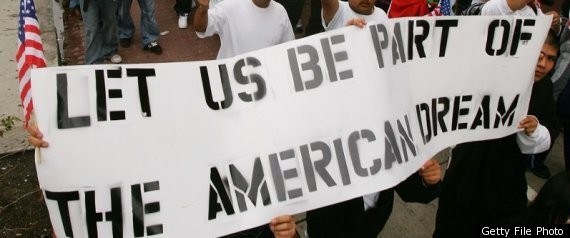
  • China and India Immigrants Becoming US Citizens at High Rate

    China and India Immigrants Becoming US Citizens at High Rate

    For the first time in decades, the number of immigrants coming to the United States from China and India outnumbers those coming from Mexico. It’s a historic shift that has caught the attention of service providers across the country working to help immigrants become U.S. citizens.

    “We’ve seen a huge change in recent immigration,” Jeanne Batalova, senior policy researcher at Migration Policy Institute, told reporters on a national press call Wednesday. The call was hosted by the New Americans Campaign, in collaboration with New America Media and the National Immigration Forum.

    Of 1.2 million recent immigrants who came to the United States in 2013, 147,000 immigrants came from China, the leading country of origin, followed by 129,000 immigrants from India, and then 125,000 immigrants from Mexico.

    Asian Americans also have among the highest naturalization rates in the United States: Less than half of all immigrants in the United States (47 percent) are naturalized U.S. citizens, while the percentage for Asian immigrants is significantly higher, at 59 percent. The proportion of naturalized U.S. citizens is highest for Vietnamese (76 percent) and Taiwanese (74 percent), followed by Filipinos (68 percent), Koreans (59 percent), Chinese (51 percent) and Indians (47 percent).

    These numbers are high despite the fact that some countries, like China, still do not offer dual citizenship. Others, like the Philippines (in 2003) and South Korea (in 2010), have made changes to their dual citizenship requirements.

    Yet even for those who do not have access to dual citizenship, the benefits of U.S. citizenship can be very attractive — including security and protection from deportation, the ability to travel freely, the right to vote and run for political office, and the ability to sponsor a wider range of family members for immigration to the United States.

    Citizenship also brings economic benefits, said Batalova. Studies show that naturalized citizens earn more than non-citizen counterparts, are less likely to be unemployed and are better represented in high-skilled jobs.

    Still, many immigrants face barriers that can prevent them from becoming citizens, such as limited English proficiency or limited income, said Jannette Diep, executive director of Boat People SOS-Houston. Boat People SOS is part of the New Americans Campaign, a national coalition of over 100 organizations that helps immigrants overcome these barriers to make citizenship more accessible. For example, the campaign offers free workshops to help people apply for citizenship, provides English language and civics classes, and helps people apply for fee waivers if they can’t afford the $680 application fee.

    Citizenship is “a very important step for the Asian American community because it allows them to become more integrated in America,” said Diep. “This integration allows the AAPI community to become more visible in U.S. cities, increasingly getting elected to public office.”

    According to a report released last year by the UCLA Asian American Studies Center, the number of Asian American public officials has reached historic levels, with more than 4,000 Asian Americans holding public office in 39 states and the federal government.

    For Zen Santos, who came to Los Angeles from the Philippines in 2008, becoming an American citizen allowed her to have a say in the future of her new country.

    “I felt that I lacked something – to be involved, and that is to vote,” Santos told reporters on Wednesday.

    But when Santos lost her job, she found that she couldn’t afford the application fee. That’s when Santos sought help from the Filipino American Service Group, Inc., (FASGI) in Los Angeles, which is part of the New Americans Campaign. The group helped Santos get a fee waiver, and she became a citizen in 2013.

    “I am American now, and I can vote now,” Santos said. “I have to get involved in deciding for this country where I live now.”

    For more information about the New Americans Campaign, go to: newamericanscampaign.org

  • India & US clear two ground-breaking defence projects

    India & US clear two ground-breaking defence projects

    NEW DELHI: India and the United States have sealed an agreement to jointly develop protective gear for soldiers against biological and chemical warfare, and another on building generators, defence officials said on Wednesday.

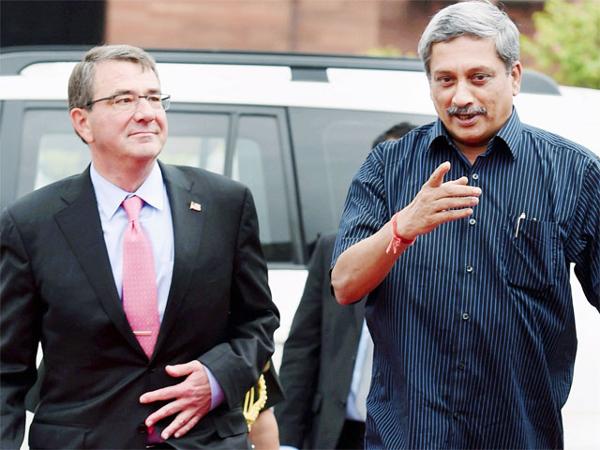
    The projects were cleared as US defence secretary Ashton Carter held talks with Indian leaders to expand security ties between the countries that were on opposite sides of the Cold War but have since drawn closer against the rising weight of China.

    The United States has become one of the top sources of weapons for the Indian military, upstaging Russia in recent years, and now under Prime Minister Narendra Modi’s “Make-in-India” programme offered joint development and production of military technologies.

    While the two projects approved are modest in scale, India and the United States are also exploring collaboration at the higher end of technology, Carter told reporters.

    “We have big ambitions, and jet engines, aircraft carrier technology are big projects that we’re working very hard on,” he said.

    Carter is due to sign a new 10-year defence cooperation pact with defence minister Manohar Parikkar later on Wednesday that will include cooperation in maritime security, another official said.

    The two countries conduct annual naval exercises in the Indian Ocean where China has made forays in recent years in a sign of its expanding reach.

    Both the project on protective clothing for soldiers as well developing the next generation power source for the battlefield will each have $1 million in funding shared equally by the two sides, a US defence official said.

    “We’ve negotiated texts, we’ve agreed to texts and they’ll be signed into effect at the end of this month. We went from flash to bang, meaning from the joint statement in January to agreed to and signed texts in just under five months,” the official said.

    The other two projects under the Defense Technology and Trade Initiative that Carter himself launched before his elevation as defense secretary relate to Raven mini-UAVs and surveillance modules for the C-130J military transport plane.

    India is also eyeing US aircraft launch technology for a carrier it plans to build to replace an ageing British warship. The two sides have set up a working group to explore cooperation and the defence official said military officials will meet later this month in the United States.

    “We have the pre-eminent aircraft carriers in the world. They are excited about possible collaboration. There are multiple areas of possible collaboration. It’s a huge platform,” the US official said.

  • ‘China now home to 1m super rich’

    BEIJING (TIP): The number of high net worth individuals (HNWIs) in China passed the one million mark for the first time last year following a surge in the “innovative industries” sector, a study has shown. Defined as having more than 10 million yuan ($1.6 million) of investable assets, the country’s super rich totalled 1.04 million at the end of last year, or twice the number recorded in 2010, the China Private Wealth Report said.

    The annual study is compiled by consulting firm Bain & Co and China Merchants Bank, state-run Shanghai Daily reported. China’s investable assets rose by 16% annually between 2012 and 2014 to 112 trillion yuan last year, the report said, adding that the figure is set to grow to 129 trillion yuan this year. Many of the “new rich” came from innovative industries such as IT, biotechnology and alternative energy, the report said. About 80% of them are aged under 50. “China’s HNWIs are driving the growth of the country’s real economy, particularly in key innovative sectors, which is helping to fuel the economy and advance innovation,” said Alfred Shang, a partner at Bain.

    Guangdong province has the most wealthy individuals, with more than 100,000, though Shanghai and Beijing, and the provinces of Jiangsu, Zhejiang, Shandong and Sichuan each have more than 50,000, the report said.

  • China detains artist who posted humorous photo of president

    BEIJING (TIP): Authorities have detained an obscure Chinese artist after he posted online a humorous portrait of President Xi Jinping, his wife said on Thursday.

    Judy Zhu said police accused her husband, Dai Jianyong, of “creating a disturbance” after detaining him on Tuesday near their Shanghai home.

    Dai is known for posting eclectic photos on social media, including some showing himself and others scrunching up their lips and eyes. Dai posted images of Xi with the same expression while wearing a moustache.

    Some online commentators have compared the Xi portrait to Adolf Hitler, although Dai’s Instagram image has much broader moustache than the small, square-shaped, “toothbrush moustache” associated with Hitler and Charlie Chaplin. Dai faces up to five years in prison if convicted. Shanghai police didn’t answer phone calls on May 28. Chinese artists have long walked a fine line between what they can express without getting into trouble with authorities.

  • India is home to the highest number of hungry people in the world

    India is home to the highest number of hungry people in the world

    India is home to the highest number of hungry people in the world, at 194 million, surpassing China, according to United Nations annual hunger report.

    At the global level, the corresponding figure dropped to 795 million in 2014-15, from 1 billion in 1990-92, with East Asia led by China accounting for most of the reductions, UN body Food and Agriculture Organisation (FAO) said in its report titled ‘The State of Food Insecurity in the World 2015’.

    India too saw a reduction between 1990 and 2015, it added.
    In 1990-92, those who were starved of food in India numbered 210.1 million, which came down to 194.6 million in 2014-15.

    “India has made great strides in reducing the proportion of food insecure persons in the overall population, but according to FAO, it still has over 194 million hungry persons. India’s numerous social programmes are expected to continue to fight hunger and poverty,” the report stated.

    However, China stood out as the reduction in the number of hungry people was much higher than in India, which came down to 133.8 million in 2014-15 from 289 million in 1990-92.

    “A majority – 72 out of 129 – of the countries monitored by FAO have achieved the Millennium Development Goal target of halving the prevalence of undernourishment by 2015, with developing regions as a whole missing the target by a small margin,” the report said.

    In addition, 29 countries have managed to meet the more ambitious goal of the World Food Summit in 1996 where governments had committed to halve the absolute number of undernourished by 2015.

    Talking of noticeable progress, the report made a specific mention of Latin America and the Caribbean, southeast and central Asia as well as some parts of Africa.

    The overall analysis suggested that inclusive economic growth, agricultural investments and social protection, along with political stability, can eradicate hunger, the UN report added.

  • JAPAN UNVEILS $110 BILLION PLAN FOR INFRASTRUCTURE TO COUNTER CHINA

    JAPAN UNVEILS $110 BILLION PLAN FOR INFRASTRUCTURE TO COUNTER CHINA

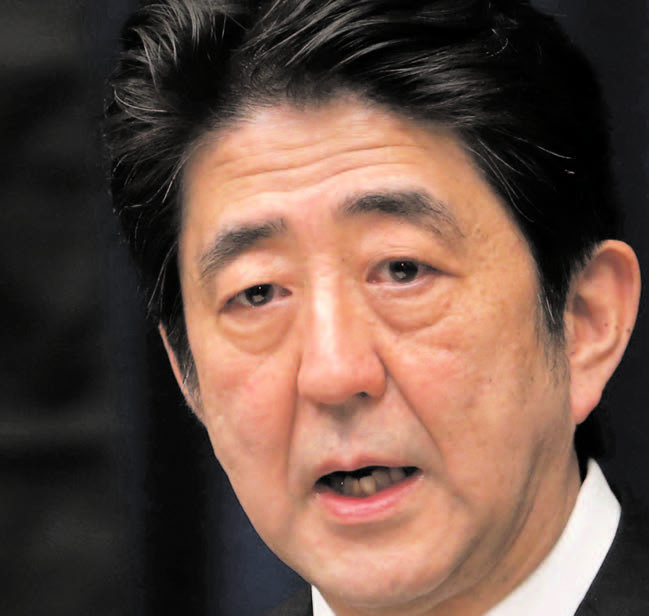
    TOKYO (TIP): Japan’s Prime Minister Shinzo Abe announced on Thursday a $110 billion investment plan for infrastructure projects in Asia in an apparent counter to China’s move to launch a new development bank.

    Abe said in a speech in Tokyo that Japan and the Asian Development Bank (ADB) will boost their assistance by 30 per cent to offer the massive investment aid under a five-year public-private partnership vision.

    “By attracting diverse funds, we hope to bring changes to Asia,” Abe said in prepared remarks, in the latest twist in the tussle for influence in the fast-growing region.

    “In the long run, we’d like to spread quality infrastructure and innovative infrastructure in Asia,” Abe said, according to Kyodo News.

    The sum is just slightly higher than the expected $100 billion capital of the Asian Infrastructure Investment Bank (AIIB) that Beijing and more than 50 founding member states are establishing.

    Japan and the United States were the biggest standouts earlier this year when Beijing began courting members for the AIIB.

    Washington led a high-profile, and ultimately unsuccessful, attempt to dissuade allies from taking part in the project, which critics say will not demand the same good-governance and environmental standards imposed by other international bodies, such as the ADB, a long-established body in which Tokyo plays a key role.

    However, supporters say fears over undue Chinese influence are overblown, and that the participation by more than 50 countries, including ones as diverse as Britain and Iran, will dilute Beijing’s power.

    Few observers doubt there is a need for billions of dollars of investment in infrastructure in Asia.

    The region also offers rich opportunities for countries with strong infrastructure industries, like Japan.

    But political and other risks in doing business in Asia have discouraged some businesses from making long-term investments.

  • CHINA, INDIA LIKELY TO BE LARGEST SHAREHOLDERS OF AIIB

    NEW DELHI (TIP): China will likely take a 25-30 per cent stake in the Asian Infrastructure Investment Bank (AIIB) and India is likely to be the second-largest shareholder, delegates attending a meeting of the bank’s founding members said.

    China’s share in the USD 100 billion lender will be less than 30 per cent, an Asian delegate attending the meeting in Singapore said.

    A second delegate said India’s share will be between 10 to 15 per cent. Both spoke on condition of anonymity.

    In all, Asian countries will own between 72-75 per cent of the bank, while European and other nations will own the rest.

    The three-day meeting of the China-backed AIIB is aimed at finalising the draft of articles of agreement that would decide the share of member countries and the bank’s initial capital.

    A third delegate said the talks have ended and now each country representative would take the proposals back to their governments for a final decision.

    There was no immediate comment from the AIIB or Chinese officials on the discussions in Singapore.

    A total of 57 countries have joined AIIB as its prospective founding members, throwing together countries as diverse as Iran, Israel, Britain and Laos.

    The United States and Japan have stayed out of the China-led institution, seen as a rival to the US-dominated World Bank and Japan-led Asian Development Bank, citing concerns about transparency and governance -although Tokyo for one is keeping its options open.

    AIIB’s expected launch next year is coming at a time when the space for infrastructure lending is already crowded due to the presence of major multilateral lenders and Japan’s latest move to provide $110 billion for Asian infrastructure projects.

    The amount of Japanese funds, to be invested over 5 years, tops the expected USD 100 billion capitalisation of the AIIB.

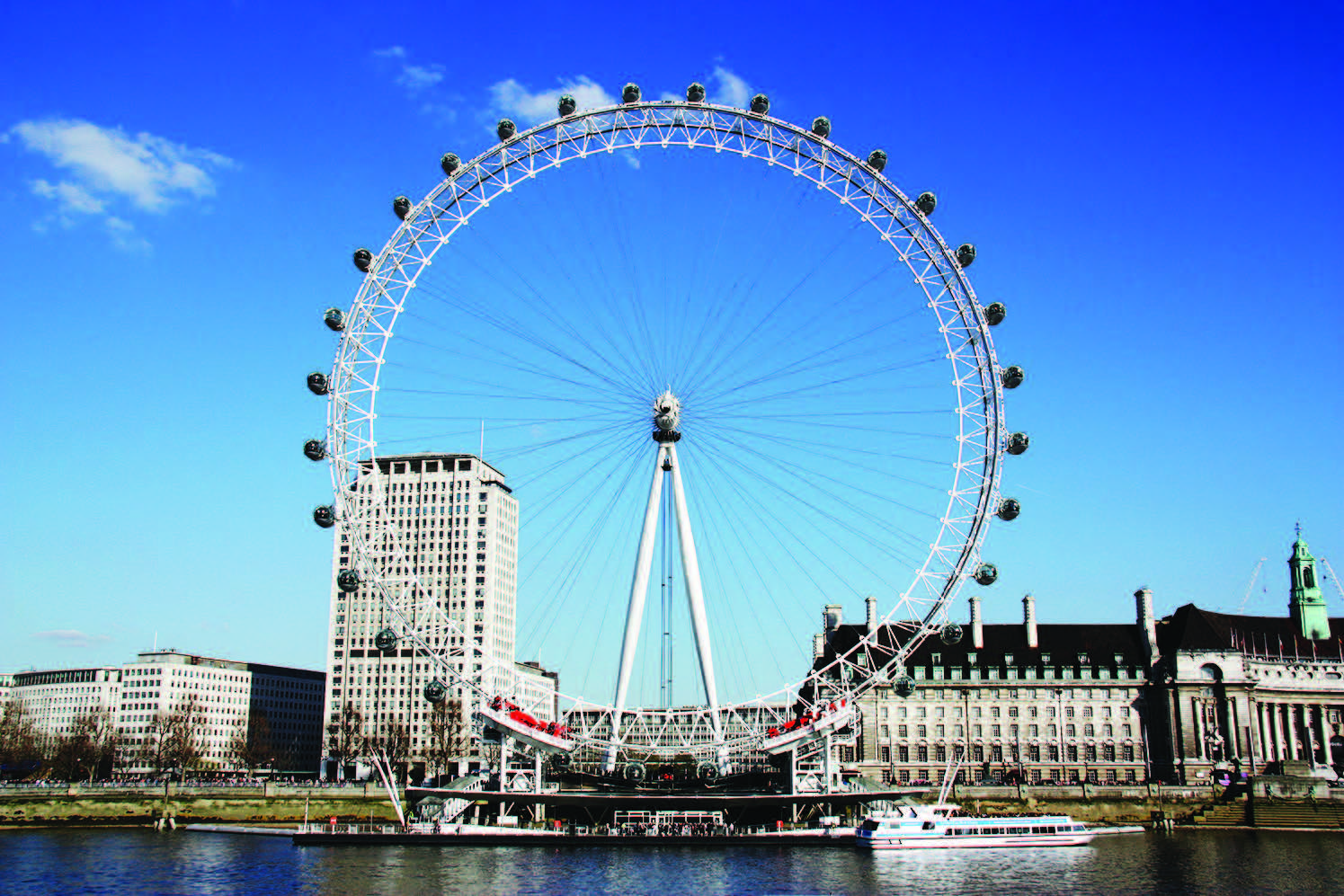
  • London welcomes record 17.4 million international visitors in 2014

    London welcomes record 17.4 million international visitors in 2014

    LONDON (TIP): London welcomed more international visitors than ever before in 2014, with the city’s cultural attractions and world class sporting events proving irresistible draws for millions, according to new figures released on May 20 by the Office for National Statistics International Passenger Survey (IPS).

    The new figures show there were 17.4 million visits to the city in 2014 up 3.5% from the previous record of 16.8million visits in 2013.

    The surge in visitors since the 2012 Olympic Games has been welcomed by businesses as international visitors are spending more in the city’s restaurants, hotels and attractions than ever before. In 2014 visitors boosted London’s economy by£11.8 billion compared to £11.5 billion in 2013, an increase of 3%.

    The city proved to be one of the world’s biggest tourist magnets with a diverse and eclectic mix of blockbuster exhibitions and events, including Henri Matisse: The Cut Outs at the Tate Modern, Ming: 50 years that Changed China at the British Museum, Anselm Kiefer at the Royal Academy, Sherlock Holmes at the Museum of London, the Frieze Art Fair, the Tour de France Grand Départ, Wimbledon Tennis Championships and the Chelsea Flower Show, encouraging people to visit from all over the world.

    The Mayor of London, Boris Johnson, said: “These terrific new figures confirm that record numbers of tourists are spending record amounts in our amazing city. Our status as the number one destination in the world is surely beyond any doubt, and with incredible attractions like the Rugby World Cup heading our way we look forward to welcoming many thousands more visitors to London.”

    The uplift in visitor numbers is reflected across Britain which welcomed nearly 34.4 million visitors, a 5.2% increase compared to 2013. International tourists spent £21.8 billion, up 2.8% compared to the previous year.

    A record 58 million people from the UK and overseas visited the city’s 40 most popular tourist attractions last year, up four per cent compared to 2013, according to the Attractions Monitor*, a detailed visitor survey compiled by London & Partners, the Mayor’s international promotional company for the city.

    Driven by the 100th Anniversary of World War I, one of the most significant trends was an increase in people visiting military exhibitions, which rose by 22% to 3.6million.

    The Tower of London’s Blood Swept Lands and Seas of Red, captured the world’s attention, with more than 5 million people visiting the display. Maritime attractions, such as the HMS Belfast, also increased 13%to 3m visits.

    “It has been incredible to welcome so many visitors to our three London branches, IWM London, HMS Belfast and Churchill War Rooms, since 2014”, says Diane Lees, Director-General of Imperial War Museums. “We hope to see a continuing rise in visitors during the next 12 months, with our new autumn exhibition Lee Miller: A Woman’s War, and our on-going contemporary art program at IWM London.”

    This year London has secured some of the world’s best exhibitions including Goya: the Portraits at the National Gallery, No Color Bar at the Guildhall Art Gallery, The World Goes Pop at the Tate Modern, and the phenomenally popular Alexander McQueen: Savage Beauty at the V&A. The city will also host Formula E, the NFL International Series, and some of the biggest matches in the 2015 Rugby World Cup.

    Gordon Innes, Chief Executive of London & Partners, which runs www.VisitLondon.com, added: “London continues to attract record numbers of international visitors, injecting billions into the capital’s economy each year. Royal occasions, like the arrival of Princess Charlotte, combined with London’s heritage, attractions and world-leading cultural offer, is expected to attract many more millions from the UK and abroad, continuing the growth of international visitor numbers in 2015.”

    Linton Wadsworth, from Radisson Blu Edwardian, London part of Edwardian Group London, says: “London is a booming world city with a tourism offer that is diversifying and improving year-on-year. We are committed to helping drive forward the city’s tourism economy, through ongoing investment and continuous innovation across our properties.”

    International visitors are the leading driver for growth across London’s cultural attractions, accounting for the majority of visits. In an effort to continue that growth, later this year some of the leading British tourist companies and organizations  will launch its 2nd annual international campaign to promote the impressive breadth of cultural activities happening across the capital. It will include blockbuster exhibitions, performances, and festivals, during the upcoming Autumn Season.

  • Japan’s $110bn boost for Asian infrastructure

    TOKYO (TIP): Japan unveiled a plan on Thursday to provide $110 billion in aid for Asian infrastructure projects, as China prepares to launch a new institutional lender that is seen as encroaching on the regional financial clout of Tokyo and its ally Washington.

    The amount of Japanese funds, to be invested over 5 years, tops the expected $100 billion capitalization of the Asian Infrastructure Investment Bank (AIIB), the Beijing-sponsored lender scheduled to begin operations next year. Japanese officials said the plan, announced by Prime Minister Shinzo Abe at a symposium of Asian officials and experts, represents a 30% increase over Tokyo’s past infrastructure funding.

    Japan said it wants to focus on “high quality” aid, for example, by helping recipients tap its expertise in reducing pollution while building roads and railways. That’s an implicit contrast with the AIIB, whose projects Washington has said may not adequately safeguard the environment. “We intend to actively make use of such funds in order to spread high-quality and innovative infrastructure throughout Asia, taking a long-term view,” Abe said announcing the plan. About half the funds will be extended by state affiliated agencies in charge of aid and loans and the rest in collaboration with the Asian Development Bank (ADB). Japan hopes the aid will help draw private funds to help meet the vast demand for infrastructure in Asia. The US and Japan were caught off guard when a total of 57 countries, including Group of Seven members Britain, Germany and France jumped on board the AIIB bandwagon by March.

  • China, US assert rights after exchange over South China Sea

    BEIJING (TIP) : China said on May 21 it is entitled to keep watch over airspace and seas surrounding artificial islands it created in the disputed waters of the South China Sea, following an exchange in which its navy warned off a US surveillance plane. The United States said its aerial patrolling was in accordance with international law and “no one in their right mind” would try to stop it.

    Neither side says it wants confrontation with the other, but as China seeks to assert its expansive claims to the South China Sea, the US is pushing back and trying to demonstrate that China’s massive land reclamation does not give it territorial rights.

    A news crew from CNN reported it witnessed an incident Wednesday in which a Chinese navy dispatcher demanded eight times that a US Navy P8-A Poseidon surveillance aircraft leave the area as it flew over Fiery Cross Reef, where China has conducted extensive reclamation work. It said the US crew responded that they were flying through international airspace, to which the Chinese dispatcher answered: “This is the Chinese navy … You go!”

    The Center for Strategic and International Studies think tank posted more video Thursday of the aerial patrol above the Spratly island chain which it said had been released by the US Navy.

    Speaking at a regular daily briefing, Chinese Foreign Ministry spokesman Hong Lei reiterated Beijing’s insistence on its indisputable sovereignty over the islands it has created by piling sand on top of atolls and reefs.

    While saying he had no information about the reported exchange, Hong said China was “entitled to the surveillance over related airspace and sea areas so as to maintain national security and avoid any maritime accidents. “We hope relevant countries respect China’s sovereignty over the South China Sea, abandon actions that may intensify controversies and play a constructive role for regional peace and stability,” Hong told reporters.

    In Washington, Daniel Russel, the top U.S. diplomat for East Asia, said the flight of a US reconnaissance plane in international airspace over the South China Sea was a regular and appropriate occurrence.

  • A FORTHRIGHT MODI IN CHINA

    A FORTHRIGHT MODI IN CHINA

    During his China visit, Prime Minister Modi has been unusually forthright in speaking about the problems that hold back the India-China relationship. He probably feels that his desire to strengthen ties with China being so clear, he has earned the confidence of the Chinese leaders enough to be able to pinpoint India’s concerns about some aspects of China’s policies that we find difficult to digest. This is a new approach Modi has fashioned. Our earlier approach has been to soft pedal differences, avoid airing them in public and pretend they are more manageable than they actually are. There has been a tendency also to explain China’s behaviour to ourselves by becoming their spokespersons to our own people, and in the process accept some of the blame for the problems that endure.

    Modi is following a different tack, that of creating consciousness in the Chinese public that China has a responsibility of addressing outstanding issues if it wants the bilateral relationship to move forward and bring about the Asian century that its leadership visualises. This is a more self-confident approach. Whether this more robust attitude will produce the results we want is not certain. China is used to such exhortations by the US, which, unlike our case, are also backed by US power. Yet, China both bends and defies to the degree necessary to manage the relationship with the US, but without changing its fundamental course of building its national power and commensurately raising the level of its strategic challenge to the US. In other words, China does not get cowed down, nor is willing to yield on essentials even when its policies do not make sense always in the light of its own self-interest as seen by external observers.

    Prime Minister Modi interacts with people at the India China business forum  (Photo courtesy: Twitter/PIB)
    Prime Minister Modi interacts with people at the India China business forum (Photo courtesy: Twitter/PIB)

    Whatever the caveats, Modi is moving the Chinese out of their present comfort zone and dealing with China with greater self-assurance which cannot but have some impact on how it treats India in the future. This is a new balance that Modi is establishing between leveraging economically the China connection for India’s development and not losing politically by diffidence in mentioning differences that endure. There are some indications that China believes that of all the partners that India is wooing for investments, it is the one best placed to meet India’s needs, especially in modernising its poor infrastructure. In other words, India’s choices are limited and this gives China a strong hand to play even in the economic field. Modi is implicitly making China reexamine its assumptions

    By choice or consequence, Modi is linking the economic to the political by his double messaging in Beijing. On the one hand, the joint statement issued during the visit explicitly says that outstanding differences, including on the boundary question, should not be allowed to come in the way of continued development of bilateral relations. On the other, Modi stressed in his joint press conference with Chinese premier Li Keqiang that China needed to “reconsider its approach on some of the issues that hold us back from realising the full potential of our partnership” and “take a strategic and long term view of our relations”. This suggested that the long term relationship could be either jeopardised or impeded if China continued with its present approach. It is interesting that in asking China to think long term he summarily debunked the widely accepted myth that China thinks not years but decades ahead in policy making. Standing alongside Li Keqiang, Modi reiterated the “importance of clarification of the Line of Actual Control”, a point he had made in Xi’s presence during the latter’s September visit to India, and “tangible progress on issues relating to visa policy (stapled visa issue, no doubt) and trans-border rivers”. He also alluded to “some our regional concerns” (undoubtedly China’s policies in our neighbourhood, especially in Pakistan). It is clear that Modi raised all these issues in his private conversations with Xi and Li Keqiang, as otherwise publicly mentioning them in the latter’s presence would have seen as a form of political ambush by the Chinese premier. Modi’s intention was obviously to make public his political expectations from China in the years ahead.

    Modi expatiated further on these points in his address at the Tsinghua University. He put more pressure on the Chinese government by stating publicly that if the two countries “have to realise the extraordinary potential of our relationship, we must also address the issues that lead to hesitation and doubts, even distrust, in our relationship”. This is extraordinary plain speaking. He spoke of trying “to settle the boundary question quickly” in a way that does “not cause new disruptions”- an allusion no doubt to China’s unreasonable demands in the eastern sector. This amounts to, again, asking the Chinese publicly to rethink its posture on the package deal on the border. To remove “a shadow of uncertainty” that “hangs over the sensitive areas of the border region” because “neither side knows where the Line of Actual Control is in these areas”, he recalled his proposal to resume the process of clarifying the LAC
    “without prejudice to our position on the boundary question”. This is a via media he is seeking between, on the one hand, stabilising the border and eliminating periodic stand-offs that damage the political relationship and make headway in other areas that much more difficult and, on the other, a permanent solution to the boundary question. It is doubtful whether China would accept this option that was always open. indeed, China was committed to this process but abandoned it favour of the Special Representatives (SR) mechanism. It is unclear, moreover, how the LAC clarification process and the SR mechanism can proceed simultaneously.

    Voicing concerns about China’s increased engagement “in our shared neighbourhood”, Modi, in his Tsinghua address, called for “deeper strategic communication to build mutual trust and confidence” so as to “ensure that our relationships with other countries do not become a source of concern to each other”. In talking of “shared neighbourhood” Modi is talking about South Asia and not the western Pacific, and this is significant. To strengthen our international cooperation, he frontally sought China’s support for India’s permanent membership of the UN Security Council and India’s membership of export control regimes like the Nuclear Suppliers Group. This was unusual as such a public appeal does not normally come from his elevated position. A prime Minister should not seen as a supplicant. Anyhow, by stating all this, Modi has, in a sense, laid out the political agenda of the relationship in the years ahead from his side, which if not achieved in some measure in a reasonable time frame can become a source of criticism and could even make the economic agenda with China even more controversial as a one-sided strategic compromise.

    The joint statement and the Tsinghua speech contain some notable formulations, omissions and iterations, some curious, many positive and a few negative. If the India relationship was for president Obama a defining one for the 21st century, the joint statement notes, as a rhetorical balance, that the “India-China relations are poised to play a defining role in the 21st century in Asia and, indeed, globally”. A China that supposedly rejects an equal status for India accepts in the joint statement that the two countries are “major poles in the global architecture”. On the boundary question, the old, cliched language is repeated and the emphasis remains on improved border management. No mention is made to China’s self-serving One Road One Belt
    (OBOR) initiative to which Xi attaches much importance, and which figured prominently in his recent Pakistan visit. Our neighbours like Sri Lanka and Nepal would have particularly noted this omission. Significantly, the joint statement contains no reference to security in the Asia-Pacific region, unlike in September 2014, which suggests a failure to agree on language on this sensitive issue. Maritime cooperation too does not figure in it, which suggests difficulties in drafting the joint statement.

    We have again thanked China’s Foreign Ministry and the government of “the Tibetan Autonomous Region of the People’s Republic of China” for facilitating the Kailash Manasarovar Yatra. It would have been sufficient to have simply thanked “China” in September 2014 and now, but the Chinese obviously press us to include formulations that recognise TAR as part of the PRC in our joint statements- a practice that was discontinued by the UPA government in the face of China’s increasingly strident claims on Arunachal Pradesh. These offensive claims unfortunately continue and therefore do not justify such politically one-sided gestures by us. Maybe we think this is too sensitive a subject for us to reticent about and to keep the relationship on even keel we feel we can keep giving China comfort over Tibet even when China cynically uses Tibet to make outlandish territorial claims on us. This gesture could also have been a quid pro quo for the stronger formulation on terrorism in the joint statement that could not have pleased Pakistan (though it should be noted that the statement refers not to “cross-border terrorism” which is a formulation India uses to accuse Pakistan, but to “cross border movement of terrorists” which has a different connotation), as well as the separate joint statement on Climate Change that fully reflects India’s position and assumes importance in the context of the Climate Change summit in Paris where the effort would be to isolate India and use the US-China agreement to that end. The question though remains how India will reconcile its commitment to work closely with the US to make the Paris Conference a success with the enunciation of a common position with China which conflicts with the basic US approach.

    The reference in the joint statement to the “commonalities” in the approach of the two countries to global arms control and nonproliferation is puzzling as it conflicts with reality and whitewashes China’s historical and current proliferation activities in Pakistan. To have China in return “note” our aspirations to join the NSG, is an altogether insufficient reason to make this concession and lose a political card against China and Pakistan. Opening ISRO to China through a Space Cooperation Outline (2015-2020) Cooperation may also seem premature to some, given the actual state of India-China relations.

    In his Tsinghua speech, Modi noted pointedly that while both countries seek to connect a fragmented Asia, “there are projects we will pursue individually”, which implies cold shouldering China’s idea of linking our Mausam and Spice Route projects with OBOR. Progress in the BCIM (Bangladesh, China, India, Myanmar) Economic Corridor is mentioned in the joint statement, despite the danger of opening up our inadequately nationally integrated northeast to more economic integration with China. Why Modi mentioned this corridor again in his university speech is unclear, but then, having participated in the joint working group discussions on the project for some time now, it might have been tactically difficult to close the door on it abruptly.

    That Modi himself announced at the last minute at Tsinghua the grant of e-visas to the Chinese after the Foreign Secretary had told the media earlier that no decision had been taken, raises questions about policy making, especially as the stapled visa issue remains unresolved. Of course, enhanced economic engagement requires easier visas and to that extent such a decision can be seen as pragmatic, but we have given up a valuable card touching upon sovereignty issues without sufficient return. No wonder the Chinese Foreign Minister was delighted by this gift from the Prime Minister.

    The driving force behind Modi’s wooing of China being trade and investment, the progress achieved on that front was of principal interest in terms of outcomes. Here, the results have been less than expected. In a sense this was to be expected as too little time had elapsed between Xi’s visit to India and Modi’s visit to China to produce dramatic results. The $20 billion of investment five years promised by Xi would take time to materialise under any circumstances, but more so in the case of China as it has so far invested little in the country, its investors have limited experience of working in India, its leaders are looking for preferential treatment and want a better understanding of the legal conditions. The joint statement largely repeats what was said in September 2014 during Xi’s visit on taking joint measures to alleviate the problem of deficit and cooperate in providing Indian products more market access in China. The language is very noncommittal and it is left to the India-China Joint Economic Group to work on these issues. It was agreed that the next meeting of the Strategic Economic Dialogue, co-chaired by Vice Chairman of NITI Aayog of India and Chairman of NDRC of China, will be held in India during the second half of 2015. On the other hand, China’s economic interests in India are treated more concretely, with satisfaction expressed with the progress achieved in the Railway sector cooperation including the projects on raising the speed on the existing Chennai-Bengaluru-Mysore line, the proposed feasibility studies for the Delhi-Nagpur section of high speed rail link, the station redevelopment planning for Bhubaneswar & Baiyappanahalli, heavy haul transportation training and setting up of a railway university.

    Although 24 agreements were signed during the visit and the number is impressive, in reality the most significant one relates to the opening of our respective consulates in Chengdu and Chennai and space cooperation. There is no economic agreement of note that figures in the list. Surprisingly, the joint statement contains no reference to the two industrial parks that China will be setting up in India, even if it were to merely record some progress in implementing this initiative. Even the figure of $20 billion of Chinese investments in India in the next 5 years- if nothing but for its positive optical effect- is not mentioned this time. No doubt 26 “agreements” were signed during the visit to Shanghai- mostly MOUs involving the private sector that have no binding value- in the areas of renewable energy, power, steel etc. These are sectors in which China is either already strongly present in India or is a global player as in the case of solar power. Its aim would be to capture the Indian market in what would be a highly fecund area for Chinese business given India’s massive plans in developing the solar power sector. A point to consider is whether the unfettered entry of Chinese firms would suffocate Indian enterprise in the renewable industry sector as has happened in the power and telecom sectors. Even financing of private Indian companies by Chinese banks has been put on the positive ledger in projecting the results of Modi’s visit, even though all that is meant is that China will lend money to Indian companies to buy more Chinese products and only add to the burgeoning trade deficit between the two countries. That these MOUs, if and when implemented ( many are in the form of intentions only) are potentially worth $ 22 billion is a PR exercise, which all countries resort to in order to embellish the economic “success” of visits by their leaders abroad, and can therefore be excused as standard diplomatic practice.

    All in all, the China challenge for India has not been reduced by Modi’s visit. On the contrary, Modi has highlighted the political challenges ahead, as China has remained reticent on the points raised by him. Modi is to be commended for largely making the right points during the visit. There were some slippages, but this was perhaps inevitable because China holds the stronger hand. The attempt always is to enlarge the areas of real or potential convergences rather than get bogged down over contentious issues and create a situation where it becomes difficult to issue any meaningful joint statement. The problem in the India-China case is that we are not strategic partners in reality and yet claim that we are. At the end of the day, making the right points and winning them the are two different things.

    As for personal chemistry between Xi and Modi, it would have been better if Xi too had avowed publicly that the two had a “plus one” friendship, otherwise the psychological advantage is with the side that remains silent. Let us also note personal chemistry can have a short shelf life in the face of hard political and strategic realities. Obama and Xi have had a shirtsleeves meeting in Palm Springs in California in 2013, Bush read Putin’s soul in Slovenia in 2001 and Obama had hamburgers with Medvedev in Washington in 2010, but these get-to-know informal meetings intended to create a personal rapport do not help resolve issues beyond a point. It remains though that both Xi and Li Keqiang made unprecedented personal gestures to Modi.

    (The author is a former Foreign Affairs Secretary and Dean, Centre for International Relations and Diplomacy, Vivekananda International Foundation. He can be reached at sibalk@gmail.com)

    (British English)