Tag: China

  • Neighbors, now not distant

    Neighbors, now not distant

    Prime Minister Narendra Modi has done well by focusing on Seychelles, Mauritius and Sri Lanka for diplomatic engagement, something that was long awaited. It has been 28 years since an Indian PM made a stand-alone visit to Sri Lanka, and 34 since Seychelles received the head of Indian Government. There is no doubt that India has long-standing historical and cultural relations with these nations, but in the world of real-politic, it seemed that China managed to get a toe-hold in the region that India regards as its sphere of influence.

    The UPA did start the process of building bridges, but Modi’s focus on neighboring countries has certainly taken the engagement to a new level. Diplomacy, however, is more than visits, and thus the slew of agreements signed during the Prime Minister’s visits will help to further strengthen ties. An aggressive Indian role, including providing military and economic assistance, is needed to counter Beijing’s deep pockets and a long-standing desire to further strengthen its bases in the Indian Ocean. The 21st-century maritime Silk Road project is another iteration of the “string of pearls” strategy that China has long pursued, with varying degree of success. It found a temporary toe-hold in Sri Lanka, where a Chinese submarine docked in a Chinese-owned terminal in Colombo, and it has a major interest in Pakistan’s Gwadar port, both of which caused concern among Indian strategic analysts.

    Modi has received a rousing welcome in Seychelles, where he held talks with President James Alexis Michel and in Mauritius, where he was chief guest at Mauritius’s 42nd National Day celebrations and interacted with Prime Minister Sir Anerood Jugnauth. His visit to Sri Lanka, where he will hold talks with the top leadership in Colombo and also visit Jafana, is also expected to improve ties with a strategic neighbor. The diplomatic initiative has started well. India’s strengthening its involvement with neighbors who are not separated, but bound by an ocean, should yield rich dividends in the future.

  • Defense Alert – Pakistan has more nukes than India

    Defense Alert – Pakistan has more nukes than India

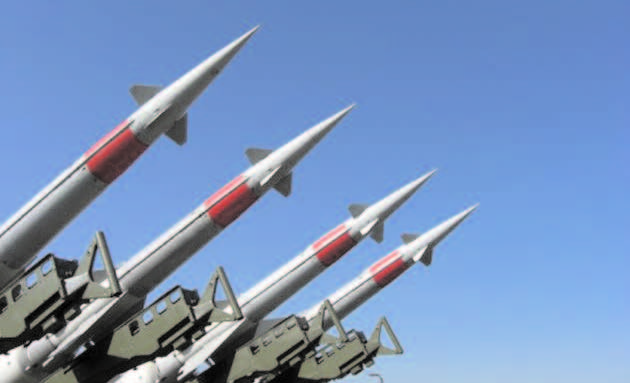
    WASHINGTON: Pakistan had about 120 atomic weapons, 10 more than India, in its nuclear arsenal last year, according to a new interactive infographic unveiled by the Bulletin of the Atomic Scientists.

    Designed by the Bulletin, founded in 1945 by University of Chicago scientists who had helped develop the first atomic weapons in the Manhattan Project, the infographic tracks the number and history of nuclear weapons in the nine nuclear weapon states.

    The Nuclear Notebook Interactive Infographic provides a visual representation of the Bulletin’s famed Nuclear Notebook, which since 1987 has tracked the number and type of the world’s nuclear arsenals.


    According to the infographic, the United States and Russia both have about 5,000 weapons each.

    France has 300, China 250, the United Kingdom 225 and Israel 80. North Korea has only conducted nuclear tests in 2006, 2009 and 2013.

    “I don’t think people truly understand just how many of these weapons there are in the world,” said Rachel Bronson, executive director of the Bulletin.

    “The Interactive is a way to see, immediately, who has nuclear weapons and when they got them, and how those numbers relate to each other. It is a startling experience, looking at those comparisons.”

    The authors of the Nuclear Notebook are Hans M. Kristensen and Robert S. Norris, both with the Federation of American Scientists.

    In the most recent edition of the Nuclear Notebook, the authors discuss the Notebook’s 28 year history and describe how sometimes host countries learned of foreign nuclear weapons on their soil from the Nuclear Notebook.

    Over 28 years of weapons analysis, the Nuclear Notebook column has revealed surprise nuclear activity and spot-on arsenal estimates while becoming a daily resource for scholars, activists and journalists.

    “We wanted a way to communicate those numbers visually, because the world we live may be data-driven, it’s also visual,” said John Mecklin, editor of the Bulletin.

    “The new infographic makes this vital information even more accessible.”


  • JAPAN’S NISHIKORI SOARS TO WORLD NUMBER FOUR

    TOKYO (TIP): Record-breaking Japan superstar Kei Nishikori rose to fourth in Monday’s new world rankings, equalling Kimiko Date-Krumm as his country’s highest-ranked tennis player. 

    The 24-year-old, who is the top-ranked Asian-born man ever, tweeted: “Just saw the new rankings. Very proud of another step…#4 this week.”

    Nishikori, last year’s US Open runner-up, now trails only Novak Djokovic, Roger Federer and Rafa Nadal after leapfrogging Britain’s Andy Murray, meaning he will avoid the top three until the semi-finals at the major tournaments.

    “He has the touch of a genius,” former Japan number one Shuzo Matsuoka told AFP. “He has the imagination and shots you just can’t teach.”

    Nishikori recently won his third successive Memphis Open, his eighth ATP Tour title. He is fast closing in on Nadal and trails the 14-times grand slam champion by just 260 ranking points.

    “It’s an achievement that’s almost impossible to explain,” Matsuoka told Japan’s Sankei Sports, comparing the skinny Nishikori to a sumo grand champion. “He’s really playing ‘yokozuna’-grade tennis.”

    Nishikori burst onto the scene as an 18-year-old by winning in Delray Beach as a 244th-ranked qualifier in 2008, and is a huge celebrity in Japan.

    Millions woke up at the crack of dawn to watch his bid to become the first Asian man to win a grand slam at last year’s US Open, where he lost in the final to Croatian Marin Cilic.

    China’s Li Na blazed a trail for Asian tennis players by reaching number two in the women’s WTA rankings last year after winning the Australian Open, capping a remarkable career in which she also captured the 2011 French Open.

    She retired seven months later with knee trouble. Nishikori’s coach Michael Chang, whose parents came from Taiwan and who was raised in the United States, is a former world number two who won the French Open in 1989.

  • China Responds to US Concern Over Counterterrorism Law

    China Responds to US Concern Over Counterterrorism Law

    China’s drafting of its first counterterrorism law is a domestic issue, China’s foreign ministry said on Tuesday in response to comments made by the US.

    US President Barack Obama on Monday said he was concerned that the law would require technology firms to hand over encryption keys, the passwords that protect data.

    The formulation of a counterterrorism law is an important step of rule of law and combating terrorism. The content of the draft law is based on real experiences in the fight against terrorism and has taken into account lessons learned by other countries, state-run Xinhua news agency cited foreign ministry spokesperson Hua Chunying as saying at a daily news briefing.

    “The formulation of the counterterrorism law is China’s internal affair. We hope the United States can calmly and objectively handle it,” she said.

    “Every country is taking measures to ensure their information is secure,” Hua said.

    She said China had always opposed network monitoring and supported the drawing up of cyberspace rules within the UN’s framework.

    In September 2011, China, together with Russia, Tajikistan and Uzbekistan, submitted an “International Code of Conduct for Information Security” to the 66th session of the UN General Assembly, which promoted such norms and rules.

    An updated draft was proposed to the UN in January 2015, to promote peace and stability in cyberspace and governance without interference in the domestic affairs of other countries.

  • Oil up in Asia trade despite US inventories rise

    Oil up in Asia trade despite US inventories rise

    SINGAPORE (TIP): Oil prices climbed in Asian trade as signs that a refineries strike in the United States is weakening overshadowed a rise in US crude stocks, analysts said.

    US benchmark West Texas Intermediate added 21 cents to $51.74 a barrel and Brent gained four cents to$60.59 in afternoon trade.

    Daniel Ang, an investment analyst with Phillip Futures in Singapore, said despite the rise in US inventories, traders focussed on signs that a refineries strike the the US could be settled, allowing more crude oil to be processed.

    “Although they have not come to a conclusion (on ending the strike) it seems that workers are coming back to work, which shows weakness in the strike and suggests that the strike is coming to an end soon,” he said.

    Workers and management are trying to end the strike at three major US refineries operated by Royal Dutch Shell following a stalemate on February 20.

    More than 5,000 workers spread across around a dozen installations have been on strike since February 1 demanding improved wages and safety conditions.

    The US Department of Energy (DoE) on Wednesday said commercial crude inventories jumped by 10.3 million barrels in the week February 27, higher than analyst forecasts.

    Inventories have set new records for five straight weeks, and US oil production is already high at 9.3 million barrels per day.

    Sanjeev Gupta, who heads the Asia-Pacific Oil and Gas practice at professional services firm EY, said the oil market is also closely watching developments in the talks between Iran and the US on Tehran’s nuclear ambitions.

    “Any positive news about likelihood of lifting of sanctions will lead to downward pressure on the price of Brent,” Gupta said.

    US Secretary of State John Kerry and his Iranian counterpart Mohammad Javad Zarif wrapped up three days of “intense” nuclear negotiations in the Swiss lakeside town of Montreux on Wednesday with still no deal, as a March 31 deadline for a framework agreement looms.

    Iran and the so-called P5+1 – Britain, China, France, Russia, the United States and Germany – are trying to strike a deal that would prevent Tehran from developing a nuclear bomb, a goal it denies having.

    In return, Iran is seeking an easing of punishing economic sanctions.

  • China police shoot man dead after 9 hurt in knife attack

    China police shoot man dead after 9 hurt in knife attack

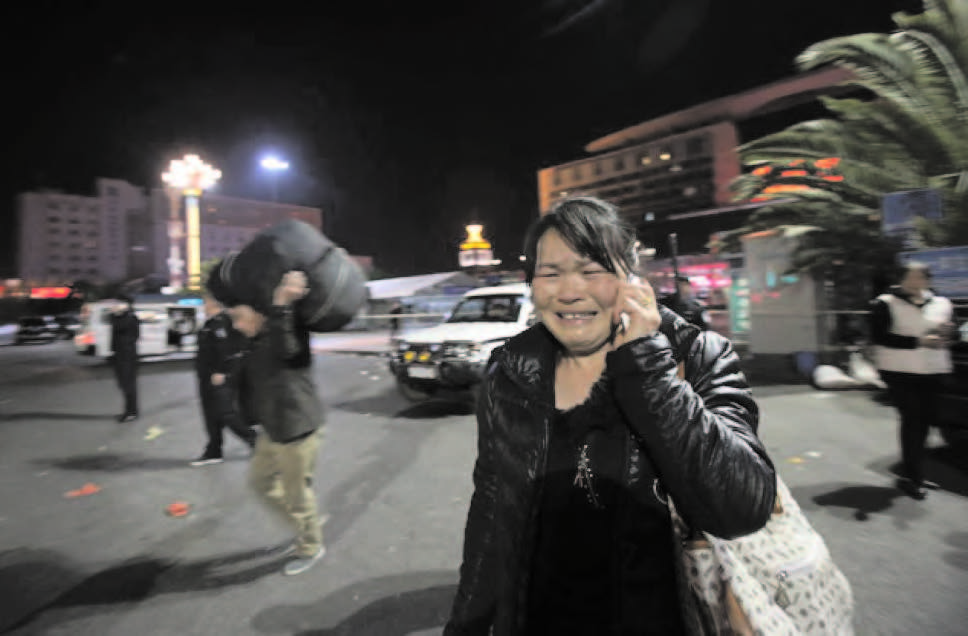
    BEIJING (TIP): A man was shot dead by police and another detained after a knife attack at a Chinese train station which left nine people wounded March 06, police said.

    The incident at the main station in Guangzhou happened as China’s communist-controlled parliament meets in Beijing and just over a year after a mass stabbing at a railway station in Kunming, when 31 people were killed and four attackers died.

    “Someone with a knife slashed a crowd at Guangzhou train station,” the southern city’s municipal public security bureau said on its verified account on Sina Weibo, China’s version of Twitter.

    Police shot dead one suspect and captured another, the statement said. No further details were provided, and Guangzhou police did not respond to calls from AFP.

    Domestic reports said one of the suspects cut a policeman’s right hand. A lone attacker was shot and detained after a slashing attack that wounded six people at the same station last May.

    Authorities blamed separatists from the restive mainly Muslim region of Xinjiang for the attack last March in Kunming, the capital of the southwestern province of Yunnan.

    Hundreds of people died in Xinjiang last year, most of them members of the Uighur minority according to rights groups.

    On March 05 in Beijing China opened the annual session of the National People’s Congress, the legislature which is subordinate to the Communist Party.

  • China hiked military spending by 10% as Japan moves towards militarization

    BEIJING (TIP): China has announced it will enhance defense spending by around 10 percent this year. The announcement signals competitive defense spending as it comes at a time when hitherto pacifist Japan has declared a record 2.8 per cent in military expenditure.

    From China’s point of view, the increase in defense expenditure is lower than the 12.2 per cent growth seen in 2014, and the lowest in the past five years.

    Though the Chinese move is lower than last year’s increase of 12.2 percent in defense expenditure, it will hugely increase Beijing’s spending on top of $131 billion that was sanctioned in 2014. The new increase of 10 per cent will be on top of $131 billion that was sanctioned for spending in 2014 although actual expenditure may have been higher.

  • China says ‘Mausam’ can be linked to ‘One Belt One Road’

    NEW DELHI (TIP): As Prime Minister Narendra Modi braces to firm up New Delhi’s bid to countervail Chinese President Xi Jinping’s “One Belt One Road” initiative, Beijing has now suggested that India’s own efforts to deepen engagements in the Indian Ocean and Central Asia could rather be linked to that of China.

    “The One Belt One Road initiatives can also be linked with India’s ‘Spice Route’ and ‘Mausam’ projects, thus forming a new starting point and a new bright spot in China-India cooperation,” Le Yucheng, China’s Ambassador to India, said.

    He was addressing journalists and foreign and strategic affairs analysts on the occasion of the Lunar New Year of China recently. His remark came just a few days ahead of Modi’s proposed visit to four Indian Ocean nations –Mauritius, Seychelles, Sri Lanka and Maldives – later this month.

    The prime minister’s tour to the four nations is likely to give a give a fillip to “Project Mausam”, which is intended to boost New Delhi’s engagements with countries in the Indian Ocean, invoking India’s ancient maritime links with them. The initiative is ostensibly a bid to countervail China’s “21st Century Maritime Silk Road” project. New Delhi has also called for revival of the ancient “Spice Route”, which once linked southern India with Europe. Xi has been articulating the idea of a “21st century Maritime Silk Road” reviving economic connectivity between the Pacific and Indian Oceans and linking China’s coastline with south-east Asia, the Gulf and the eastern coast of Africa. He has also been proposing a “Silk Road Economic Belt” reviving the ancient link between China and the Mediterranean through Central Asia. Beijing’s new plan to spread its tentacles further in the Indian Ocean region and Central Asia caused unease in New Delhi, which is already wary of China’s strategic assets encircling India. Though Xi had elicited endorsements from Sri Lanka and Maldives to his “21st century Maritime Silk Road” plan just ahead of his last visit to India, Modi had remained non-committal on supporting the proposal.

  • China’s 7% growth target lowest in 20 yrs

    BEIJING (TIP): China has set a growth target of 7% for 2015, lowest in two decades. This lowered target reflects declining exports and foreign investments, besides the government’s fear of slipping into a “middle income trap” along with problems like industrial pollution.

    “Downward pressure on China’s economy has continued to mount, and we have faced an array of difficulties and challenges,” Chinese premier Li Keqiang said, while explaining why he chose a GDP target that was even lower than the achievement of 7.4% in 2014. China would end 2015 with the highest ever budget deficit of 2.3 % of GDP against last year’s 2.1 %, the premier said. The country has entered an era of low growth rates, which is the “new normal,” he added.

  • Musharraf kept Kayani in dark about Kargil plan, book claims

    Musharraf kept Kayani in dark about Kargil plan, book claims

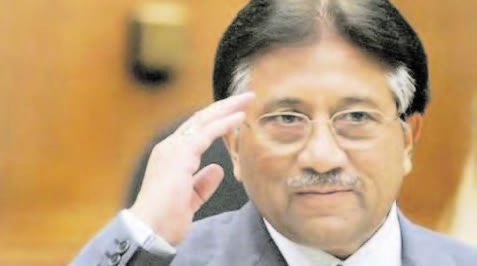
    ISLAMABAD (TIP): Pakistan’s former army chief Gen Pervez Musharraf kept Gen Ashfaq Parvez Kayani in the dark about the Kargil operation in 1999 despite the latter heading forces responsible for guarding Pakistan-occupied Kashmir, according to a new book by a former general.

    In his book ‘Ham Bhi Wahan Mojod Thay’, former minister Lt Gen (retd) Abdul Majeed Malik asserts that Kayani headed the 12 Division that was responsible for guarding Kashmir (PoK) but he was not taken into confidence over the operation which brought Pakistan and India on the brink of a nuclear war.

    Kayani was later handpicked by Musharraf as his successor in 2007 as the army chief and he served for six years as head of army.

    In his book, Malik said that Gen Musharraf did not keep Kayani in the loop, who later opposed the operation.

    Kayani or Musharraf have not commented on the book yet.

    Malik said only Musharraf was entirely responsible for the operation and even Pakistan Prime Minister Nawaz Sharif was not told about the complete Kargil plan.

    Sharif maintains that he was cheated by his army chief over Kargil. But Musharraf has repeatedly denied it and said that the prime minister was properly briefed before operation.

    In the book, Malik claimed that Musharraf called on the phone his chief of general staff from China to discuss the Kargil operation which was tapped by Indian intelligence agencies.

    It was a grave breach of security to discuss such a sensitive issue on a telephone call, Malik said.

    He also criticized Sharif for appointing General Ziauddin Butt after dismissing General Musharraf in 1999 who refused to step down and removed Sharif instead and grabbed power.

    The book also shares how Pakistan conducted atomic tests.

    Malik has given full credit to Nawaz Sharif, who, according to him, was mentally ready to go for atomic tests despite opposition from certain close cabinet members.

    Malik was once very close to Sharif but later switched sides to join Musharraf after the 1999 coup.

  • HP buys wireless networking company Aruba Networks – Indian American Keerti Malkote Co-founded Company

    HP buys wireless networking company Aruba Networks – Indian American Keerti Malkote Co-founded Company

    SAN FRANCISCO: Hewlett-Packard is buying wireless networking company Aruba Networks for about $2.7 billion, the 1,800-employee company was co-founded by Indian American Keerti Malkote, the company’s chief technology officer.

    Aruba, based in Sunnyvale, California, makes Wi-Fi networking systems for shopping malls, corporate campuses, hotels and universities. Its business has grown as more people are using mobile devices at work, school and elsewhere. Aruba may help HP capitalize on that trend, which has cut into sales of traditional HP products such as desktop computers.

    The deal also could help HP compete with tech rivals such as Cisco Systems and gain new access to Asian markets, particularly in China. Cisco currently sells about half of all commercial wireless networking gear worldwide, according to UBS analyst Amitabh Passi. He estimates HP and Aruba combined will account for 20 percent of global sales for such systems.

    HP is seeking to expand its tech portfolio for business customers at a time when it is preparing to split into two companies – one focused on selling computer systems and software to businesses, and the other selling personal computers and printers. That’s part of HP CEO Meg Whitman’s plan for confronting a recent decline in sales.

    Buying Aruba gives HP “a faster growing, higher margin business that fills a portfolio need without `betting the ranch’,” Bernstein analyst Toni Sacconaghi wrote in a note Monday.

    Palo Alto, California-based HP is one of the industry’s giants, with $111 billion in sales last year, but it has struggled to adapt to recent tech trends and shifting customer preferences. Whitman has focused on cutting costs and reorganizing since she took the CEO job in 2011. She recently signaled she was ready to resume making strategic acquisitions, after buying a pair of small software companies last year.

    HP made a number of multi-billion-dollar acquisitions under two CEOs who preceded Whitman, and some of those deals proved costly. HP paid about $11 billion for British software maker Autonomy in 2011. A year later, it was forced to write off $8.8 billion of that purchase as a loss, while blaming accounting irregularities that it said had inflated the value of Autonomy’s business.

    With the Aruba deal, HP is paying $24.67 in cash for each Aruba share. That is slightly below Aruba’s closing price of $24.81 on Friday, but marks a 37 percent premium to the roughly $18 that Aruba shares were trading for before talks with HP were reported last week.

    Boards of both companies have approved the deal, which they said would be worth about $3 billion after factoring in cash and debt on Aruba’s balance sheet. Aruba had $729 million in sales last year.

  • HONDA CEO TO STEP DOWN AMID AIR BAG CRISIS

    HONDA CEO TO STEP DOWN AMID AIR BAG CRISIS

    TOKYO (TIP): Honda Motor Co hurt by falling sales and embroiled in a crisis over defective air bags is replacing its CEO.

    The Japanese automaker said on Tuesday that Takanobu Ito, its president and chief executive officer since 2009, will step aside in June and be succeeded by longtime executive Takahiro Hachigo.

    The unexpected decision follows the recalls of more 6.2 million Honda vehicles in the US and millions of others elsewhere equipped with air bags made by Japan’s Takata Corp.

    The air bags have inflators that can explode, expelling shards of metal and plastic. At least six deaths and 64 injuries have been linked to the problem worldwide.

    At a press conference the 61-year-old Ito said it was his own decision to step down. He has been at Honda since 1978, when he joined the company as a chassis engineer.

    “I believe Honda needs to become one strong team in order to overcome challenges and the team requires a new, youthful leadership,” Ito said, according to a transcript provided by Honda. Hachigo is 55.

    Other automakers use the Takata air bags, but Honda has the most exposure and is spending heavily on the recalls. The company has lowered its full-year profit forecast to $4.6 billion from $4.8 billion.

    Honda is also facing civil penalties and lawsuits over the issue. In January, the US fined the company $70 million, which was the largest civil penalty levied against an automaker, for not reporting to regulators some 1,729 complaints that its vehicles caused deaths and injuries and for not reporting warranty claims.

    Amid the crisis, Honda lowered its global vehicle sales forecast for the full year to 4.45 million vehicles from 4.6 million. Its US sales grew just one per cent last year as plummeting gas prices hurt demand for its lineup of small cars such as the Civic.

    Earlier this month, Ito scrapped Honda’s goal of selling 6 million vehicles per year by 2017, saying the company needed to focus on quality instead of on sales targets.

    Stephanie Brinley, a senior analyst with IHS Automotive, said Ito’s six-year tenure as Honda’s chief is in line with Honda’s past three CEOs.

    Ito’s tenure was largely a successful one, Brinley said. Between 2009 and 2014, Honda’s global sales grew 28.5 per cent. He encouraged a focus on sportier cars, like the upcoming Acura NSX, and returned Honda to Formula 1 racing. He also expanded Honda’s global manufacturing footprint with new plants in Mexico, Brazil, Thailand, Indonesia, India and China.

  • BIG YANG THEORY: Chinese year of the sheep or the goat?

    BIG YANG THEORY: Chinese year of the sheep or the goat?

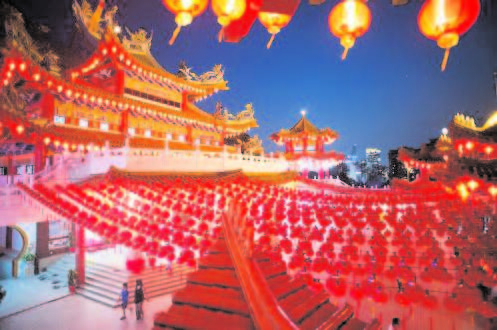
    BEIJING (TIP): Sheep or goat? China’s coming lunar new year has stirred a debate over which zodiac creature is the correct one— but Chinese folklorists dismiss the fixation on animals as missing the point.

    Traditional astrology in China attaches different animal signs to each lunar year in a cycle of 12 years.

    The symbol for the new year starting on February 19 is the “yang”, which can refer to any member of the caprinae subfamily — or even beyond — depending on what additional Chinese character it is paired up with.

    For example, a goat is a “mountain yang”, a sheep is a “soft yang” and a Mongolian gazelle is a “yellow yang”.

    Both goats and sheep appear in Chinese new year paintings, paper-cuts and other festival decorations.

    Folklorists say it does not matter which one is used since the zodiac sign was chosen for the Chinese character’s auspicious connotation rather than the specific animal— at least in the beginning.

    “This ‘yang’ is fictional. It does not refer to any specific kind (of sheep or goat),” Zhao Shu, a researcher with the Beijing Research Institute of Culture and History, told AFP.

    “Yang” is a component of the written Chinese character “xiang”, which means auspiciousness, and the two were interchangeable in ancient Chinese, experts say.

    It is also a part of the character “shan”, which counts kindness and benevolence as among its meanings.

    “Therefore ‘yang’ is a symbol of… blessing and fortune and represents good things,” said Yin Hubin, an ethnology researcher with the China Academy of Social Sciences, a government think-tank.

    “It is connected to the original implication of the Chinese character as an ideogram and reflects the world view of the Chinese people in primitive times,” he said.

    That said, the zodiac sign is being shunned by some Chinese parents-to-be, with expectant mothers scheduling Caesarean sections to give birth before the current year of the horse ends, according to media reports.

    The rush apparently stems from a Chinese superstition held by some that nine out of 10 sheep will be unhappy in life — a belief Yin dismissed as “ridiculous”.

    More often, the animal plays a positive role in Chinese folklore, experts say.

    A fable that can be traced back to more than 1,500 years ago depicts five goats carrying crops in their mouth to save people suffering from years of drought in Guangzhou.

    The southern boom town, today the capital of Guangdong province and dubbed the City of Goats, has enjoyed timely wind and rain ever since, according to the story.

    While the loose concept of “yang” comes naturally to Chinese people, in the West the term can often be a source of frustration for those seeking an equivalent in their own language.

    A Google search suggests that in English, “year of the sheep” is the most common phrasing.

    In French, however, the reverse is true, with convention and an overwhelming Google ratio in favour of “chevre”, or goat.

    Zhao thinks the translation is “open to interpretation”. “Sheep, goat, Mongolian gazelle — whatever is fine. This is the fun of Chinese characters,” he said.

    But some scholars argue goat is a better option for the traditional Han Chinese holiday, as it is a more commonly kept farm animal for the dominant ethnic group in China, according to the official Xinhua news agency.

    Many Chinese people appear to be unfazed by the debate. “The year of the yang, 2015, is neither a sheep nor a goat. It is a beautiful and elegant milk yang! Abundant milk, clothes and food. It will be a halcyon year,” wrote one user on Sina Weibo, a Chinese equivalent of Twitter.

    Eschewing the lexical debate, some users have simply opted for the animal that they see as possessing their own favoured qualities. “In the year of the yang, I want to be a strong-willed and energetic goat, not a weak sheep,” another Sina Weibo user wrote.

  • WHO WILL BELL THE NUCLEAR CAT? – Perspective on Nuclear India

    WHO WILL BELL THE NUCLEAR CAT? – Perspective on Nuclear India

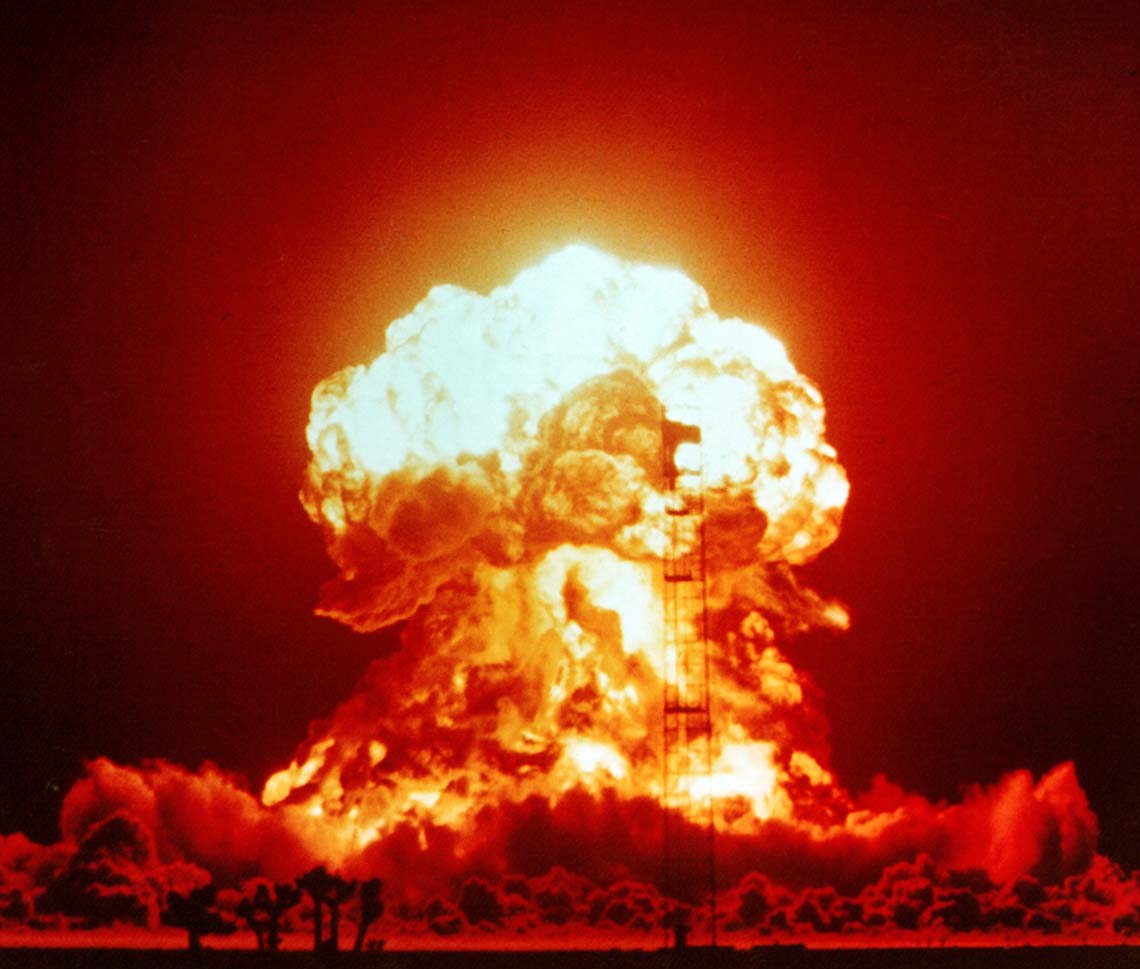
    The world faces two existential threats: Climate change and nuclear Armageddon – and the bomb can kill us all a lot sooner and faster. The nuclear peace has held thus far as much because of good luck as sound stewardship, with an alarmingly large number of near accidents and false alarms by the nuclear rivals. Having learnt to live with nuclear weapons for 70 years, we have become desensitised to the gravity and immediacy of the threat. The tyranny of complacency could yet exact a fearful price with nuclear Armageddon. It really is long past time to lift the shroud of the mushroom cloud from the international body politic.

    Keeping nuclear nightmare at bay

    India’s propensity to let the best become the enemy of the good notwithstanding (the nuclear liability law is a good recent example), the Nuclear Nonproliferation Treaty (NPT) has kept the nuclear nightmare at bay for over four decades. The number of countries to sign it embraces virtually the entire family of nations. The number of countries with nuclear weapons is still -if only just – in single figures. Yet at the same time, the nuclear arsenals of the five NPT-defined nuclear weapons states expanded enormously under the NPT umbrella. The global total number of nuclear warheads climbed steadily after 1945, peaked in the mid-1980s at more than 70,000, and has fallen since then to a current total of almost 16,400 stockpiled by the world’s nine nuclear-armed states.

    Paradox of deterrence

    The central paradox of nuclear deterrence may be bluntly stated: Nuclear weapons are useful only if the threat to use them is credible but, if deterrence fails, they must never be used for fear of destroying the planet. Second, they are useful for some, but must be stopped from spreading to anyone else. Third, the most substantial progress so far on dismantlement and destruction of nuclear weapons has occurred as a result of bilateral US and Soviet/Russian treaties, agreements and measures, most recently a new Strategic Arms Reduction Treaty (New START). But a nuclear-weapon-free world will have to rest on a legally binding multilateral international instrument such as a nuclear weapons convention.

    Reluctant possessor

    India is the most firmly committed of the nuclear nine to such a goal that would be fully consistent with its policy as the most reluctant nuclear weapons possessor of them all. No other country paused for 24 years between the first test and eventual weaponisation. Successive governments, even since the 1998 tests, have declared with conviction that a nuclear-weapon-free world would enhance India’s national and global security, and also contribute to the attainment of India’s development goals.

    Optimism in 2009 to pessimism in 2015

    Five years ago hopes were high that the world was at last seriously headed towards nuclear disarmament. In April 2009 the (then) exciting new US President Barack Obama gave a stirring and inspiring speech in Prague outlining his dream of a world free of the existence and threat of nuclear weapons. The US and Russia negotiated New START that will cut their deployed strategic nuclear warheads by one-third to 1,550 each. The inaugural Nuclear Security Summit in Washington attracted broad international buy-in to an ambitious new agenda. In contrast to the total and scandalous failure of its 2005 predecessor, the Eighth NPT Review Conference of 2010 was a modest success.

    By the end of 2012, however, as reported in my Centre’s inaugural “Nuclear Weapons: The State of Play” report, much of this sense of optimism had evaporated. By the end of 2014, as our follow-up report “Nuclear Weapons: The State of Play 2015” documents, the fading optimism has given way to pessimism.

    A few silver linings

    To be sure, as always, there are a few silver linings. One has been the modest success of the Washington (2010), Seoul (2012) and The Hague (2014) Nuclear Security Summits in generating some consensus about the need to ensure that nuclear weapons and fissile material do not get into terrorist hands. Even here, however, much remains to be done to implement a fully effective international nuclear security system, setting global standards, including military materials within the nuclear security efforts, and with an accountability mechanism – and Russia has declined to participate further in the summit process.

    Another positive development has been the emergence of the humanitarian consequences movement. Successive conferences in Norway, Mexico and Austria have mobilised governments as well as civil society to focus on the reality that any use of nuclear weapons, the most indiscriminately inhumane ever devised, would have a catastrophic human and environmental impact, beyond the capacity of any one state’s, or all acting together through international organisations, emergency systems to address.

    Even so, levels of public engagement on nuclear weapons issues remain low and the nuclear-armed states are under little pressure to justify the claimed security benefits of nuclear deterrence, or to rigorously defend their vast expenditure on nuclear weapons and modernisation as an effective use of public money.

    The gathering nuclear storm

    Nuclear-armed states pay lip-service to the ultimate elimination of nuclear weapons, but none has committed to any “minimisation objective,” nor to any specific timetable for their major reduction – let alone abolition. On the evidence of the size of their weapons arsenals, fissile material stocks, force modernisation plans, stated doctrine and known deployment practices, all nine foresee indefinite retention of nuclear weapons and a continuing role for them in their security policies.

    North Korea conducted its third nuclear test in 2013 and the Comprehensive Nuclear-Test-Ban Treaty (CTBT) is yet to enter into force. We are no closer to resolving the challenge posed by North Korea and a comprehensive agreement on Iran eluded negotiators by the extended deadline of November 24. The push for NPT-mandated talks on a nuclear-weapon-free zone in the Middle East has stalled and the region remains highly volatile.

    New START was signed and ratified, but the treaty left stockpiles intact and disagreements about missile defence and conventional-arms imbalances unresolved. Nuclear weapons numbers have decreased overall but are increasing in Asia
    (India, Pakistan, China and North Korea); and fissile material production to make still more warheads is not yet banned. Cyber-threats to nuclear weapons systems have intensified, outer space remains at risk of nuclearisation, and the upsurge of geopolitical tensions over the crisis in Ukraine produced flawed conclusions about the folly of giving up nuclear weapons on the one hand, and open reminders about Russia’s substantial nuclear arsenal, on the other.

    The peoples of the world recognise the risks and dangers of nuclear arsenals. Curiously, however, their concerns and fears find little reflection in the media coverage or in governments’ policy priorities. In a recent survey conducted by the US Pew Research Center, nuclear weapons was chosen as the top threat in 10 of the 44 countries polled (including nuclear-armed states Russia and Pakistan), and as the second gravest threat in another 16 (including China). They were rated the top threat by 20 per cent of the people in the Middle East, 19 per cent in Europe, 21per in Asia, 26 per cent in Latin America, 22 per cent in Africa, and 23 per cent in the US.

    Latin America’s anti-nuclear commitment was reinforced by the negotiation of the regional nuclear-weapon-free zone in 1967 under the Treaty of Tlatelolco which consolidates and deepens the NPT prohibitions on getting the bomb. Since then virtually the entire southern hemisphere has embraced additional comparable zones in the South Pacific, Southeast Asia and Africa (plus Central Asia and Mongolia).

    Mitigating & eliminating nuclear risks

    Consequently, looking out at the world from our vantage point, we see no security upsides by way of benefits from nuclear weapons; only risks. Indeed it helps to conceptualise the nuclear weapons challenge in the language of risks. Originally, many countries acquired the bomb in order to help manage national security risks. As the four famous strategic heavyweights of Henry Kissinger, Sam Nunn, William Perry and George Shultz – all card-carrying realists – have argued in a series of five influential articles in The Wall Street Journal between 2007 and 2013, today the risks of nuclear proliferation and terrorism posed by nuclear weapons far outweigh their modest contributions to security.

    Viewed through this lens, the nuclear risks agenda has four components.

    First, risk management. We must ensure that existing weapons stockpiles are not used; that all nuclear weapons and materials are secured against theft and leakage to rogue actors like terrorist groups; and that all nuclear reactors and plants have fail-safe safety measures in place with respect to designs, controls, disposal and accident response systems.

    Second, risk reduction, for example by strengthening the stability-enhancing features of deterrence, such as robust command and control systems and deployment on submarines. Russia and the US could help by taking their 1,800 nuclear warheads off high-alert, ready to launch within minutes of threats being supposedly detected.

    Other countries, including Pakistan, could abandon interest in things like tactical nuclear weapons that have to be deployed on the forward edges of potential battlefields and require some pre-delegation of authority to use to battlefield commanders. Because any use of nuclear weapons could be catastrophic for planet Earth, the decision to do so must be restricted to the highest political and military authorities.

    Third, risk minimisation. There is no national security objectives that Russia and the US could not meet with a total arsenal of under 500 nuclear warheads each deployed across air, land and sea-borne platforms. If all others froze their arsenals at current levels, this would give us a global stockpile of 2,000 bombs or one-eighth the current total.

    Bringing the CTBT into force either by completing the required ratifications or changing the entry formula, concluding a new fissile material cut-off treaty, banning the nuclear weaponisation of outer space, respecting one another’s sensitivities on missile defence programs and conventional military imbalances etc. would all contribute to minimising risks of reversals and setbacks.

    None of these steps would jeopardise the national security of any nuclear-armed state; each would enhance regional and international security modestly; all in combination would greatly strengthen global security.

    Finally, risk elimination. Successive international commissions – the Canberra Commission, Tokyo Forum, Blix Commission, Evans -Kawaguchi Commission – have emphatically reaffirmed three core propositions. As long as any state has nuclear weapons, others will want them. As long as they exist, they will be used again some day, if not by design and intent, then through miscalculation, accident, rogue launch or system malfunction. Any such use anywhere could spell catastrophe for the planet.

    The only guarantee of zero nuclear weapons risk, therefore, is to move to zero nuclear weapons possession by a carefully managed process.

  • India and Pak’s perennial problem – AS I SEE IT – Editorial

    India and Pak’s perennial problem – AS I SEE IT – Editorial

    The most important country for Pakistan is India. How? It is an adversary with which we have very poor relations. We see each other as major threats. We cannot even sustain a dialogue. We have a far warmer, more trustworthy and strategic relationship with China. We have a less warm but equally important relationship with the United States.

    So how is India so important? We have 80 per cent of our population in proximity with it. Indian forces are deployed against us. A dangerous neighbour is more important than a friendly one. If Pakistan is to develop it will need a peaceful neighbourhood. Our relations with India determine our input in Afghanistan.

    To improve relations with India shall we have to accept its hegemony?Abandon our support for the people of Kashmir? Or downgrade our relations with China? Certainly not! But we shall need to implement rational and realistic India and Kashmir policies, while deepening our relations with China and improving mutual understanding with the US.

    We need to transform Pakistan from a state of chaos and dysfunction to a modern and participatory development state governed by law and accountable and effective institutions. Policies and priorities that are inconsistent with this transformation will be self-defeating.

    Those inclined towards confrontation with India, no matter what the social and diplomatic costs, are no friends of the people. A security state will ultimately minimise security and maximise risk. Only a functioning and inclusive state can maximise Pakistan’s options, raise its international standing and ensure its views are taken seriously in the main capitals of the world.

    The Prime Minister talks about prioritising relations with India. But he is yet to develop credibility for his stance. Of course, we can blame India. It is not interested in any serious dialogue on Kashmir except on the basis of the territorial status quo. The US has no interest in pressing India for a compromise settlement with Pakistan. According to an American analyst, “The US sees Pakistan through an Af-Pak prism while it sees India through an Asia-Pacific prism. It does not see anything through an Indo-Pak prism”.

    We were within touching distance of an interim agreement with India on Kashmir during the 2004-7 back-channel talks. The Mumbai bombings of 2008 intervened. Can and should these talks be revived? There are a variety of views. Some regard them as a national betrayal. Others consider them as the only way forward towards a just and mutually acceptable settlement.

    We need to develop a realistic public consensus on what our strategies on Kashmir and policies towards India should be. They should be part of a national vision that includes space for initiatives towards India even when they seem premature and unlikely to be immediately reciprocated. Indian obduracy and Pakistani impatience will, however, need to be moderated for mutual trust to develop and longer-term and broad-spectrum progress to become feasible.

    For this we shall need a Prime Minister prepared to take on powerful lobbies and vested interests, and to systematically and effectively communicate his vision and strategies to the people. Given that the current incumbent has surrendered much of his authority in order to stay in office, it is not clear whether he can be persuaded to implement his own preferred India policies.

    If he shies away from making the effort he will inevitably lose credibility at home and abroad. His personal policy inclinations will be irrelevant. In that event, Narendra Modi may consider Ashraf Ghani’s example of preferring to deal with the real rather than the formal chief executive in Pakistan.

    There are other issues on the India-Pakistan agenda that have their own history and dynamic. But they all unfold within the general state of the bilateral relationship. Accordingly, so-called “low hanging fruit” (relatively easier to resolve issues) have in recent years become more difficult. The bilateral agenda, moreover, needs to be expanded to include more regional and environmental issues such as an Afghanistan settlement, water and energy as well as security and development. Longer term perspectives have become indispensable.

    Given the requisite commitment and leadership on both sides there is no India-Pakistan issue on which progress cannot be made. Under no circumstances can conflict, confrontation or tension with India benefit Pakistan, except in response to Indian threats and aggression. Nor can such policies ever politically benefit the Kashmiris. Moreover, it is our duty to ensure that our policies do not worsen their already terrible human rights situation.

    Conversely, India cannot benefit from unilaterally provoking a nuclear-armed Pakistan beyond its tolerance. India is territorially the satisfied or status quo power. It may seek to undermine Pakistan’s ability to obstruct its regional and big power ambitions. It does not need war. Ironically, Indian aspirations have been facilitated by our own irrational and irresponsible policies.

    China has a number of long-standing issues with its neighbours and with the US. It will not allow “red lines” to be crossed. Neither will it permit any issue to derail its comprehensive internal development and national transformation policies. These require a peaceful neighbourhood and a facilitating external environment. We need to take a page out of our great neighbour’s policy playbook.

    But without a fundamental vision of human development and a national transformation strategy, the mere presentation of possible initiatives will not address our perennial problem. We will continue to fail the challenge of India-Pakistan relations in the 21st century and pay the higher price. Accordingly, India represents not just a policy challenge for us; it also represents a test of our sincerity towards our own people. We have, instead, preferred to posture and deny our people their right to a better life. Ta ba kay?

  • Railways Budget presented in Indian Parliament – Full Coverage

    Railways Budget presented in Indian Parliament – Full Coverage

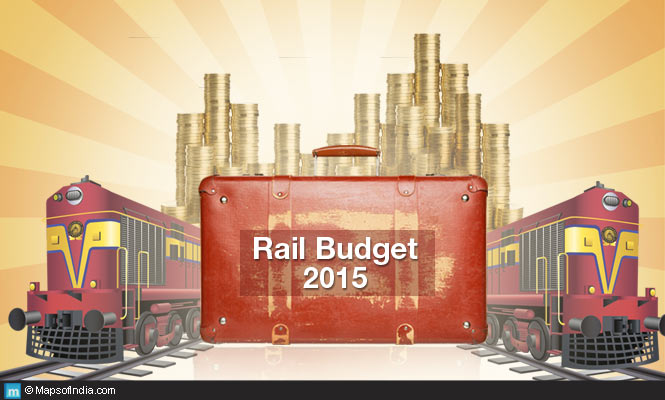
    NEW DELHI (TIP): Railways Minister Suresh Prabhu shunned the populism of the past to deliver a reform-oriented railway budget on Thursday, February 26, that focused on modernizing an ageing network and improving amenities for the 23 million 

    Indians who ride its trains daily. There were no new services to politically important regions and no plans to set up new factories, a staple of past budgets. And while there were no passenger fare increases, freight rates for some commodities rose by an average of 3%, and aggressive projections for revenues suggested that further hikes were an option if the economy continued to pick up.

    The 61-year-old Prabhu, a chartered accountant by training, said he was determined to transform the Indian Railways, a monolith that employs over a million people and which made a massive Rs 26,000-crore loss in its passenger operations last year.

    “It will take time to neutralize the legacy of the past. It cannot be business as usual”, he said, outlining an outsize 52% increase in spending this year compared to the normal 10-12% yearly rise. A tenth of the spending will go towards building dedicated freight corridors.

    The railways, with their vast reach, are a key lever in Prime Minister Narendra Modi’s plans to boost the Indian economy, which is projected by the World Bank to grow faster than China’s next year.

    So Prabhu, seen as a modern-minded technocrat, was parachuted into the ministry in November; he did not disappoint in an hour-long speech by outlining plans for Wi-Fi at 400 stations, CCTVs in trains for women’s safety and easier norms for unreserved tickets.

    India will import a couple of trains which will run at up to 160 kilometers per hour on existing tracks, a full 30 kmph faster than the country’s speediest train. Under the PM’s pet Make in India scheme, production of such trains was likely to be indigenized, Prabhu said.

    Modi tweeted soon after Prabhu’s hour-long speech: “The rail budget is futuristic and passenger-centric and lays out a clear roadmap to make the national transporter the key driver of the country’s economic growth – combining a clear vision and a definite plan to achieve it”.

    But Congress president Sonia Gandhi was unimpressed. “Rail Budget 2015 is very disappointing, they are only presenting old UPA’s initiatives revamped,” the party’s Twitter handle quoted her as saying.

    Prabhu also listed novel plans to raise money from foreign pension funds and multilateral development banks to finance an ambitious five-year plan.

    Over this period, Prabhu plans to increase the daily passenger carrying capacity to 30 million; increase the track length by a fifth to 138,000 kilometers and increase the annual freight carrying capacity by 50% to 1.5 billion ton.

    Highlights of Railway Budget

    1. The most-expected part about this year’s Railway Budget – there is no increase in passenger rail fares.
    2. Rs.8.5 lakh crore will be invested in Railways in next 5 years.
    3. ‘Operation 5 mins’, wherein passengers gravelling unreserved can purchase a ticket in 5 minutes.
    4. Bio toilets and airplane-type vacuum toilets in trains.
    5. Surveillance cameras in select coaches and ladies compartments for women’s safety without compromising on privacy.
    6. Rail tickets can now be booked 120 days in advance. 
    7. Speed on nine railway corridors to go up to 200 km per hour 
    8. Wi-Fi in more stations, mobile phone charging facilities in all train compartments. 
    9. Facility of online booking of wheelchair for senior citizens.
    10. Satellite railway terminals in major cities
    11. Centrally managed Rail Display Network is expected to be introduced in over 2K stations over the next 2 years.
    12. All India 24/7 helpline – 138 from March 2015 ; Toll free No.182 for security.
    13. 917 road under-bridges and over-bridges to be constructed to replace 3,438 railway crossings; at a cost of Rs. 6,581 crore.
    14. Four Railway Research Centers to start in four universities.
    15. Details about new trains and increased frequency will be announced later in this session of Parliament after review.

    What is the investment plan?

    The Railway Budget envisages an investment of Rs. 8.5 lakh crore in next five years.

    How is it going to be mobilized?

    The Minister suggested that the money could be raised from multiple sources – from multilateral development banks to pension funds.

    What is the action plan in the sphere of fund raising?

    Go in for partnership with key stakeholders – States, PSUs, partner with multilateral and bi-lateral organizations other governments to gain access to long-term financing. Also, get technology from overseas. The private sector could be roped in to improve last-mile connectivity, expand fleet of rolling stock and modernize station infrastructure.

    What is the thrust?

    The thrust will be on revamping management practices, systems, processes, and re-tooling of human resources.

    What is the proposal on capacity augmentation?

    1. De-congesting networks with basket of traffic-generating projects will be the priority
    2. Priority to last-mile connectivity projects
    3. Fast-track sanctioned works on 7,000 kms of double/third/fourth lines
    4. Commissioning 1200 km in 2015-16 at an investment of Rs. 8,686 crore, 84% higher Y-O-Y.
    5. Commissioning 800 km of gauge conversion targeted in current fiscal.
    6. 77 projects covering 9,400 km of doubling/tripling/quadrupling works along with electrification, covering almost all States, at a cost of Rs. 96,182 crore, which is over 2700% higher in terms of amount sanctioned.
    7. Traffic facility work is a top priority with an outlay of Rs. 2374 crore.
    8. Award of 750 km of civil contracts and 1300 km of system contracts in 2015-16 on Dedicated
    9. Freight Corridor (DFC); 55 km section of Eastern DFC to be completed in the current year.
    10. Preliminary engineering-cum-traffic survey (PETS) for four other DFCs in progress.
    11. Acceleration of pace of Railway electrification: 6,608 route kilometers sanctioned for 2015-16, an increase of 1330%over the previous year.
  • Mummified monk inside Buddha statue found in China

    Mummified monk inside Buddha statue found in China

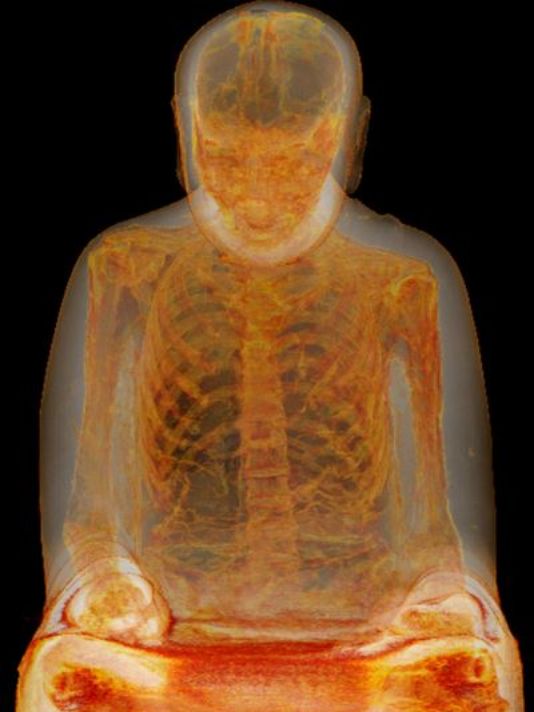
    The mummified remains of a monk have been revealed inside a nearly 1,000-year old Chinese statue of a Buddha.

    The mummy inside the gold-painted papier-mâché statue is believed to be that of Liuquan, a Buddhist master of the Chinese Meditation School who died around the year 1100, researchers said. It’s the only Chinese Buddhist mummy to undergo scientific research in the West.

    The statue was on display last year at the Drents Museum as part of an exhibit on mummies. It was an cited as an example of self-mummification, an excruciating, years-long process of meditation, starvation, dehydration and poisoning that some Buddhist monks undertook to achieve enlightenment and veneration.

    When the exhibit ended in August, a CT scan at the Meander Medical Center in the Netherlands revealed the seated skeleton. Samples taken from organ cavities provided one big surprise: paper scraps printed with ancient Chinese characters indicating the high-status monk may have been worshiped as a Buddha.

    A CT scan has revealed a mummified Chinese monk inside a Buddha statue. The remains date back about 1,000 years. Video provided by Newsy Newslook


  • Senate confirms Ashton B. Carter as secretary of defense

    Senate confirms Ashton B. Carter as secretary of defense

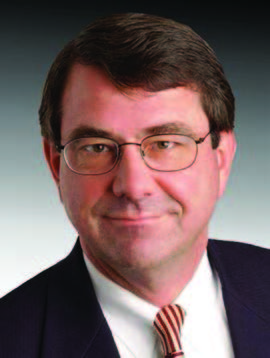
    WASHINGTON (TIP): Ashton B. Carter, a physicist with long experience in national security circles, handily won Senate confirmation Thursday, February 12, as secretary of defense, becoming President Obama’s fourth pick in six years to lead the Pentagon.

    The Senate voted 93 to 5 to approve Carter’s nomination, paving the way for him to be sworn into office sometime in the next few days.

    Voting against him were five Republicans senators: Roy Blunt (Mo.), Mike Crapo (Idaho), Mark Kirk (Ill.), James E. Risch (Idaho) and John Boozman (Ark.).

    Carter, 60, will replace Chuck Hagel, the former Republican senator from Nebraska who agreed in November to step down after Obama lost confidence in his leadership. The White House has said it wanted a new Pentagon chief to oversee the fight against the Islamic State in Syria and Iraq, as well as the continued drawdown of U.S. troops from Afghanistan.

    “With his decades of experience, Ash will help keep our military strong as we continue the fight against terrorist networks, modernize our alliances, and invest in new capabilities to keep our armed forces prepared for long-term threats,” said Obama in a statement.

    A Rhodes scholar with eclectic interests – he wrote an undergraduate thesis at Yale on the Latin writings of 12th-century Flemish monks – Carter will return to the Pentagon just 14 months after he resigned as deputy secretary of defense. He previously served as the Pentagon’s chief weapons buyer and also as a senior defense official during the Clinton administration.

    During testimony before the Senate Armed Services Committee last week, Carter pledged to keep an independent voice and demonstrated a willingness to differ with the White House. For example, he said he was “inclined” to support arms deliveries to Ukraine and that he would be open to reviewing the timetable for withdrawing troops from Afghanistan.

    Sen. Jack Reed (D-R.I.), said Carter would have to focus on existing problems such as the fighting in Ukraine, Syria, Iraq and Afghanistan but also longer-term challenges such as China’s military buildup.

    Even more daunting crises, he added, could emerge in the near future. For example, if negotiations with Iran over its nuclear program fail this year, he noted, “the consequences could alter the face of the region for generations and generations to come.”

    Sen. John McCain (R-Ariz.), the committee chairman, praised Carter on Thursday as a “committed public servant” who has drawn bipartisan support. But he questioned how much sway he would have with the White House.

    “When it comes to much of our national security policy, I must candidly express concern about the task that awaits Dr. Carter and the limited influence he may have,” McCain said. He said he had “sincere hope, but sadly little confidence, that the president who nominated Dr. Carter will empower him to lead and contribute to the fullest extent of his abilities.”

  • Reset of a policy of equidistance

    Reset of a policy of equidistance

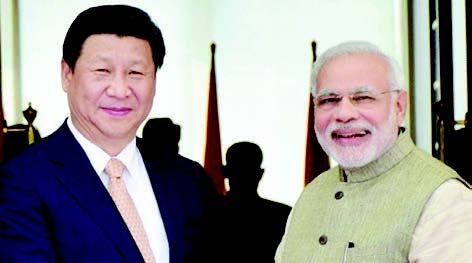
    Soon after Prime Minister Narendra Modi took office, an Indian TV channel held a discussion on likely foreign policy reorientation. When the doyen of South Asian Studies, Stephen Cohen, was asked in which direction Mr. Modi would tilt -the U.S. or China – without hesitation he replied, “China,” adding, “because it is the Asian century.” Mr. Modi hosted Chinese President Xi Jinping last year but despite the fanfare preceding the visit, there was little to suggest any strategic overlap. Alas, Mr. Cohen was proved wrong after the Modi-Obama Joint Vision Statement reflected a sharp, strategic congruence. Mr. Modi has reset the United Progressive Alliance (UPA) government’s policy of equidistance between the U.S. and China and dropped the political refrain that India will not contain China.


    Choosing friends and allies

    In New Delhi last year, at a seminar, the former U.S. Ambassador to India, Robert D. Blackwill, posed the question: “How can New Delhi claim strategic autonomy when it has strategic partnerships with 29 countries?” After the latest Modi-Obama vision statement, even less so. Strategic autonomy and no military alliances are two tenets of India’s foreign policy. Quietly, India has converted strategic autonomy to strategic interconnectedness or multi-vectored engagement. When the Indo-Soviet Treaty of Peace, Friendship and Cooperation 1971 was signed, Mrs Indira Gandhi had requested the Soviet Union to endorse India’s Non-Aligned status, so dear was the policy at the time. That multifaceted treaty made India a virtual ally of the Soviet Union. Russia inherited that strategic trust and has leased a nuclear submarine, provided high-tech weapons to all three Services including technology for nuclear submarines and aircraft carriers. At the BRICS meeting in Brazil last year, when asked a question, Mr. Modi said as much: “If you ask anyone among the more than one billion people living in India who is our country’s greatest friend, every person, every child knows that it is Russia.” 

    On the other hand, differences over foreign policy with the U.S. are many including over Syria, Iran, Russia, BRICS and the Shanghai Cooperation Organisation (SCO). These policy irritants will not go away. The vision statement highlights (at the U.S.’s insistence) that both countries were on the same page in ensuring that Iran did not acquire nuclear weapons. The tongue-lashing by Mr. Obama to Mr. Putin over his bullying small countries has certainly embarrassed Mr. Modi who was himself disingenuous by inviting the leader of Crimea as a part of the Putin delegation in 2014, which deeply offended the Americans.

    What Mr. Obama and Mr. Modi easily agreed on was China’s “not-peaceful rise” which could undermine the rule-based foundations of the existing international order. So, Mr. Modi became a willing ally to stand up to China. The synergisation of India’s Act East Policy and U.S. rebalancing to Asia is intended to ensure that China does not cross red lines including the code of conduct at sea. The two theatres of action where freedom of navigation and overflight have to be ensured were identified as Asia-Pacific especially the South China Sea and, for the first time, the Indian Ocean Region.

    This is a veiled riposte to Chinese assertiveness in the South China Sea. Mr. Modi had earlier mooted the revival of the Quad, an enlarged format for naval exercises between India, the U.S., Japan and Australia. When it was mooted earlier in 2006, it was shot down by China. Underlying the strategic centrality of the Indian Ocean Region is the realisation that the existing India-China military imbalance across the high Himalayas can be offset only in the maritime domain where India has the initiative. Beijing realises that teaching India a lesson in 1962 was only a tactical success because territorial claims on Arunachal Pradesh got delegitimised after the unilateral withdrawal and worse, pushed India into the U.S.’s arms.


    Defence ties

    The rise of India which will punch to its weight under a new self-confident leadership pursuing a policy of multi-engagement is a manifest U.S. strategic goal. Defence has been the pivot around which India-U.S. relations were rebuilt, starting in 1991 with the Kicklighter Plan (Lt.Gen. Kicklighter of the U.S. Pacific Command) who initiated the multilayered defence relations which fructified in 1995 into the first Defence Framework Agreement. It was renewed in 2005 and now for the second time this year, the difference though is that for the first time, the vision statement has provided political and strategic underpinnings to the agreement. What had also been lacking until now was trust and the extent to which India was prepared to be seen in the American camp. Just a decade ago, while contracting for the Hawk trainer aircraft with the U.K., India inserted a clause that “there will be no US parts in it.” This followed the Navy’s sad experience of the U.S. withholding spare parts for its Westland helicopters. Such misgivings have held up for a decade the signing of the three “alphabet- surfeit” foundational defence agreements of force-multiplication. But we have moved on and purchased $10 billion of U.S. high-tech military equipment and another $10 billion worth will soon be contracted. The most elaborate defence cooperation programme after Russia is with the U.S.


    Dealing with China

    What made Mr. Modi, who visited China four times as Chief Minister, change his mind on the choice of the country for primary orientation was the jolt he received while welcoming President Xi Jinping to Gujarat last year. Mr. Xi’s delegation was mysteriously accompanied by a People’s Liberation Army (PLA) intrusion in Ladakh which did not yield ground till well after he had left. A similar affront preceded the 2013 visit of Premier Li Keqiang, making routine the PLA’s bad habits. While the UPA government had made peace and tranquillity on the Line of Actual Control (LAC) a prerequisite for consolidation of bilateral relations, border management rather than border settlement had become the norm. Seventeen rounds of Special Representative talks on the border yielded little on the agreed three-stage border settlement mechanism. It was therefore path-breaking when Mr. Modi during the Joint Statement asked Mr. Xi for a clarification on the LAC -the process of exchanging maps that had failed in the past and led to the ongoing attempt at a political solution skipping marking the LAC. Clearly, we have moved full circle in calling for a return to that process. Foreign Minister Sushma Swaraj, who was in Beijing this month, sought an out-of-the-box solution for the border, in which category LAC clarification will not figure. Mr. Modi is determined not to leave resolution of the border question to future generations as Chinese leaders have persistently counselled. 

    Mr. Modi, in Japan last year, expressed concerns over “expansionist tendencies.” 

    Chinese scholars I met in Beijing last year said that conditions for settling the territorial dispute were not favourable because the border is a very complicated issue, entailed compromise and had to take public opinion along. And most importantly, strong governments and strong leaders were needed for its resolution.

    While Mr. Xi did promise last year investments worth $20 billion, the fact is that, so far, Chinese investments in India do not exceed $1.1 billion. Mr. Xi’s dream of constructing continental and maritime Silk Roads are intended to complement the String of Pearls in the Indian Ocean Region, bypassing choke points like the Malacca Straits as well as neutralising the U.S. rebalancing to Asia.


    Risks and opportunities

    How will India walk the tightrope between the U.S. and China, given that the U.S. is about 13,000 kilometres away and Beijing exists cheek by jowl, peering over a disputed border and with a whopping $40 billion in trade surplus? China’s reaction to the vision statement has been to warn India against U.S. entrapment. Operationalising the strategic-security portions of the vision statement will not be easy, especially as India has no independent role in the South China Sea. Once the euphoria over the Obama-Modi statement dissipates, ground reality will emerge. Instigating Beijing, especially in the South China Sea will have costs like having to deal with the full frenzy of the PLA on the LAC with most likely ally, Pakistan lighting up the Line of Control (LoC) – the worst case two-front scenario.

    Given Mr. Modi’s growth and development agenda, for which he requires the U.S., China, Japan and others, he cannot afford to antagonise Beijing. The U.S. is vital for India’s rise and a hedge to China. So, New Delhi will necessarily be on a razor edge. In any realisation of the Asian century, while China and India are likely key players, Washington will be large and looming, making a geostrategic ménage à trois.

  • China backs bigger role for India, Brazil at UNSC

    China backs bigger role for India, Brazil at UNSC

    BEIJING (TIP): China said it respects the aspirations of India and Brazil to play bigger roles at the UN Security Council, while keeping mum on Japan’s candidature.

    About the Indian and Brazilian applications to become permanent members, China respects the willingness of the two countries to play a bigger role in the UN body, Foreign Ministry spokesperson Hua Chunying said.

    Hua, however, told reporters that Beijing would like to reach a “broadest consensus through diplomatic means” on UNSC reform.

    She was replying to a question whether Beijing backs Brazil to become a permanent member of the UNSC in the backdrop of China and Russia supporting India’s candidature at a recent Russia, India, China (RIC) foreign ministers meeting here.

    The joint statement after the meeting attended by External Affairs Minister Sushma Swaraj said: “Foreign Ministers of China and Russia reiterated the importance they attached to the status of India in international affairs and supported its aspiration to play a greater role in the United Nations.”

    Hua said China pays high attention to the desire of Brazil to play bigger role in the UNSC.

    India along with Brazil, Germany and Japan together staked their claims for permanent membership of the UNSC as part of a larger reform of the United Nations.

    While China has backed India for a bigger role at the UN, it has expressed reservations in the past over Japan becoming a permanent member in view of the political and historical issues between the two countries.

    China-Japan ties have deteriorated following a row over the Senkaku Islands in the East China Sea, and also over some history-related issues.

    In December 2013, Japanese Prime Minister Shinzo Abe visited the Yasukuni Shrine — which honours not only the nation’s 2.5 million war dead but also 14 Class-A war criminals from World War II.

  • Friends of MP Conclave draws thousands

    Friends of MP Conclave draws thousands

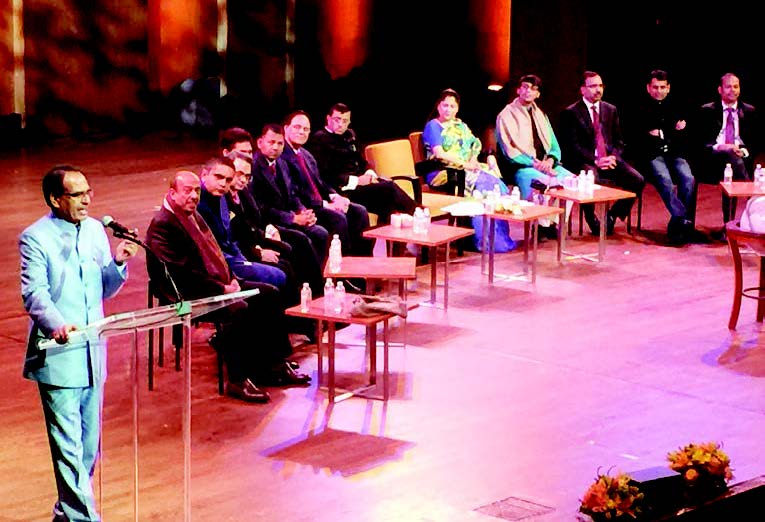
    NEW YORK CITY (TIP): “I am here to make friends”, said Madhya Pradesh Chief Minister Shivraj Singh Chauhan, amid applause from the audience, at the Friends of MP conclave at the iconic Avery Fisher Hall at Lincoln Center in New York City, February 1.


    Despite inclement weather more than 3000 people traveled to the centre of New York  to cheer Shivraj Singh Chouhan, when he arrived here to launch the initiative to connect the global  citizens with Madhya Pradesh and India. On the second day of his six-day visit to the tri-state area on  the US East Coast, Chauhan formally launched the Friends of Madhya Pradesh initiative (www.friendsofmp.com).


    The website is the  first of its kind of initiative by any state in the country following suggestion by  Prime Minister of India Narendra Modi that sought the creation of a global talent pool as a network of its friends anywhere in the world.


    Amid claps of a full house filled with NRIs, state senators, US congressmen and congresswomen, and other important business and community leaders from across New York, New Jersey, Long Island, Connecticut and other neighborhoods, beats of drums and dholaks, the fluttering of national flag, Chief Minister  and guests on the dais formally inaugurated the website friendsofmp.com by putting hands on the globe that symbolized the connected world and with that the site went live on a giant screen right above the stage.


    In his half-hour Hindi speech interrupted by loud applauses at several intervals and slogans in praise of Bharat Mata (Mother India) on various occasions, the chief minister stated that his government for the last decade has not only been undertaking welfare measures, but also useful employment-generating programs that have changed the face of the state.


    With GDP at  11.08 percent and more than 20%   rise in agricultural production in the last several years, the state has become one of the fastest growing states in the country.


    Citing estimates and positive outlook, he said India would soon overtake China in economic growth and Madhya Pradesh will take a significant part in that process.


    He mentioned that after Narendra Modi became the prime minister in May 2014, the self-confidence level of Indians-inside and outside the country-has risen in a significant way. Now  no longer the “policy paralysis”, the hallmark of the previous government, exists at the Center and in states.He added that Modi is not just the leader of India, but he is on the path to becoming a world leader. He spoke of the assets of his state-  a 24-hour power supply, availability of enough water, and calm and peaceful industrial climate. Around 26,000 hectares of land bank has been created to cater for potential investment and industrial opportunities. Steps are being taken to ensuring up to 30 percent police force is female in order to tackle more efficiently the crimes being perpetrated against women.


    He spoke about several issues that included religious harmony, America-India relations, and BJP’s determination in providing good governance and clean administration.


    Chief Minister  honored the recipients  of recent Padma awards on the occasion and praised their contributions and sought their services to India in general and the central state in particular.


    “I bring the best wishes of 7.5 crore (75 million) residents of Madhya Pradesh to you all,” he said. “You contributed to this society immensely and now you must do the same to India, your motherland.”


    A view of the gathering singing the American National Anthem Photos/ TIP- Prashant Desai-pradev98@yahoo.com 732-318-0130
    A view of the gathering singing the American National Anthem Photos/ TIP- Prashant Desai-pradev98@yahoo.com 732-318-0130
    Singing the national anthem
    Singing the national anthem

  • DEFLATION ALARMS RING LOUDER AS EU, CHINESE FACTORIES STRUGGLE

    DEFLATION ALARMS RING LOUDER AS EU, CHINESE FACTORIES STRUGGLE

    LONDON/SYDNEY (tip): European and Chinese factories slashed prices in January as production flatlined, heightening global deflation risks that point to another wave of central bank stimulus in the coming year.


    While the pulse of activity was livelier in other parts of Asia — Japan, India and South Korea — they too shared a common condition of slowing inflation.


    Central banks from Switzerland to Turkey via Canada and Singapore have already loosened monetary policy in the past few weeks.


    The European Central Bank also announced a near-trillion-euro quantitative easing programme in a bid to revive inflation and drive up growth, though much of the bloc’s Purchasing Managers’ Index survey was collated before that announcement.


    “There are a lot of places where central banks are focusing on easing rather than anything else. In the euro zone the ECB is going all-out now,” said Jacqui Douglas, senior global strategist at TD Securities.


    “Looking at the rest of Europe we are expecting more easing from Sweden and Norway, that is where most central banks are leaning right now. There is no real rush to move ahead with rate hikes.” 


    Markit’s final PMI reading for the euro zone, published on Monday, was 51.0, in line with the flash estimate. Although at a six-month high, it was only just above the 50 mark that separates growth from contraction. In December the index came in at 50.6.


    Worryingly for policymakers, firms cut prices in January at the steepest rate since mid-2013. Data on Friday showed annual inflation was a record-equalling low of -0.6 per cent in January across the 19 nations using the euro.


    In Britain, manufacturing grew slightly faster but factories cut prices at the fastest pace since 2009. The Bank of England will keep interest rates at a record low until at least October, later than previously thought, a Reuters poll found last week.


    “With oil prices having stabilised at around $45 per barrel now, it seems likely that lower oil prices should continue to enable manufacturers to lower prices and so support demand,” said Paul Hollingsworth at Capital Economics.


    Still to come later on Monday is a sister manufacturing survey from Markit covering the United States, as well as the Institute for Supply Management’s US factory index, which is forecast to have slipped to 54.5 in January from 55.1.


    Easing China? 


    Earlier, a pair of surveys from China showed manufacturing struggling at the start of 2015 in the world’s second biggest economy.


    The Chinese HSBC/Markit PMI inched up a fraction to 49.7. But of more concern the official PMI, which is biased towards large factories, unexpectedly showed activity shrank for the first time in nearly 2-1/2 years.


    The reading of 49.8 in January was down from December’s 50.1 and missed a median forecast of 50.2. The report showed input costs sliding at their fastest rate since March 2009, with lower prices for oil and steel playing major roles.


    Ordinarily, cheaper energy prices would be good for China, one of the world’s most intensive energy consumers, but many economists believe the phenomenon is a net negative for Chinese firms because of its impact on demand.


    The PMIs only fuelled bets on a weaker yuan and that more monetary easing was in store in Beijing too.


    “China still needs decent growth to add 100 million new jobs this year, plus China is entering a rapid disinflation process,” ANZ economists said in a note to clients.


    “We (think) the People’s Bank of China will cut the reserve requirement ratio by 50 basis points and cut the deposit rate by 25 basis points in the first quarter.” 


    The downdraft has also spread into China’s hitherto buoyant services sector, the lone bright spot in the economy last year. Service activity expanded at its lowest level in a year.


    Slightly better news came from Japan, where the central bank has been pursuing an aggressive bond-buying campaign for over a year in a bid to revive growth and shake the country out of decades of deflation.


    The final Markit/JMMA PMI edged up in January as the sustained weakness of the yen drove up exports. Improving exports were also a feature of South Korea’s PMI which returned to growth for the first time in five months.


    India’s manufacturing activity continued to grow, though the headline index eased a touch but importantly for the prospect of more policy stimulus, cost pressures were the mildest in 70 months as commodity prices fell.

  • Visit successful beyond expectations

    Visit successful beyond expectations

    China concerned at breakthroughs achieved and Obama-Modi chemistry


    China, by being in such a haste to downplay the visit of President Obama to India, without even waiting for the visitor to leave India’s airspace, has provided the convincing proof that the visit was a success. The Chinese are obviously concerned at the breakthroughs achieved and at the personal chemistry developed and displayed with such obvious glee by both leaders, especially Prime Minister Modi. It is politically correct, and imperative, for any two countries at the conclusion of a successful summit-level meeting to pronounce that their relationship is not aimed at third countries and is not at the expense of friendship with a third country. This is routine, but it does not always convince or satisfy the third country concerned. In this particular case, the Chinese are not completely off the mark. There is no question but that China has been an important factor in the US tilt towards India over the past decade. It was with China in mind that President G.W. Bush went so much out of the way to even amend the US laws to bring India with the fold of nuclear commerce. Commercial considerations are always present when foreign leaders visit India; this is true of the Russian President’s visits also. Mr. Obama’s enthusiasm for India has likewise something to do with the US-China rivalry. India is big enough and smart enough not to engage with America in an anti-China containment concept, but it has concerns about an assertive China which has not hesitated to flex its military muscles even during the visit of its President to India. It makes    good sense for India to welcome American embrace without being suffocated by it.

    The big picture that emerges from the visit has two aspects. There has long been a conviction in India over many decades since our independence, among officials as well as analysts, that America never wanted India to become a strong or even prosperous power, mainly due to what it perceived as India’s hostile attitude during the cold war era, and actively acted to keep India ‘down’. America had mortgaged its India policy to the British on Kashmir and other issues and was decidedly anti-India during the Bangladesh crisis. It is not incorrect to   conclude after this visit that America has finally and definitively given up this approach and is more than willing to work with India so that India progresses, firmly and reasonably fast to become economically and hence militarily strong. Here too, the China factor is an important consideration.


    On India’s    side, the big picture is that the Indian establishment has given up its reservations regarding America’s attitude and has decided to put the past anti-India actions of America behind it and to look to the future without hesitation. India became pragmatic in its foreign policy soon after the end of the cold war. Mr. Modi has taken this pragmatism to an unprecedented level, perhaps causing discomfort to some among his own constituency, but as far as the official hierarchy is concerned, there is no reservation toward the Prime Minister’s policy.


    These changes in the mindsets of the two countries towards each other have evolved gradually over a number of years and it is because of this slow and measured evolution that the enhanced relationship between India and the US promises to be reasonably long lasting.


    It is good that Foreign Minister Swaraj has visited China. China too has offered to take the bilateral relationship to a higher level. This is all to the good. If there is competition between the world’s two largest economies to help India reach a faster trajectory in developing its economy, it certainly will not hurt India. (Is there a hint in all this of what happened, or what we believe happened, during the cold war when we received assistance from both sides?). If Japan joins in this competition, India would surely welcome it; let others like Australia also join in.


    However, in this new ‘economic development’ game, we ought not to lose sight of our   ‘time-tested’ friends. The Foreign Minister ought to visit Moscow soon. The Russians have for some time been feeling that India has been taking them for granted. This may or may not be the case, but as everyone knows, perceptions often drive relationships, both personal and inter-state. It is also true that explanations and assurances do not always lead to the removal of perceptions, but the effort must be made.


    The Obama visit has achieved more than what this writer expected. While the American focus was on securing commercial deals, especially in the big ticket defense sector, it has to be acknowledged that the range of fields in which America has offered to assist us is so diverse and some of the commitments are so specific that it would be fair to conclude that the US is now willing to establish a genuinely bilaterally beneficial relationship. No relationship can be only in one direction or based on good feelings; only mutuality of interests can sustain an equal relationship. The Prime Minister has conducted himself with dignity, while at the same time displaying bonhomie.


    Indians seem obsessed about playing a global role. Visiting dignitaries are aware of this weakness of ours. We should not get flattered when they say things pleasing to our ears. If we become strong domestically, both in economic and societal terms, a bigger role will come to us without our having to plead for it.


    Personal chemistry between leaders can help a great deal in ironing out  differences. But beyond that, there are two factors: national interest and the courage to take tough decisions. A leader well tuned in to public opinion instinctively knows what will sell domestically, but he also must have the confidence to take decisions that might be controversial within the country. Dr. Manmohan Singh was able to push through the nuclear deal about a decade ago and even put his political survival on the line because he was convinced that that was in India’s interests. However, he did not feel strong enough to take the required decisions to help propel the deal towards operational sing it. Mr. Modi could do this because he is clear about his agenda, knows the people’s mood and has a huge popular mandate which gives him the necessary confidence.


    Indians swing between contrasting moods. We easily become euphoric when we believe someone is being nice to us, but become extremely critical if the same person does something we consider unfriendly. “Is he friendly to us?” is a wrong question to ask in international relations.


    By C.R. Gharekhan (The author, a former Indian Ambassador to UN, was, until recently, Prime Minister Manmohan Singh’s Special Envoy for West Asia)
  • GUEST COMMENT – BUILDING BRIDGES

    GUEST COMMENT – BUILDING BRIDGES

    External Affairs Minister Sushma Swaraj’s visit to China has created a positive atmosphere. President Xi Jinping met her in an unusual departure from protocol. China joined Russia in recommending India’s membership to the Asia-Pacific Economic Cooperation. On its part, India endorsed the launch of the China-led Free Trade Area of the Asia-Pacific initiative. Swaraj’s high-level delegation included the new Foreign Secretary, S Jaishankar, an old China hand, who was also intimately involved with US President Barack Obama’s successful visit to New Delhi. He evidently tackled some of the misgivings that Beijing had. Swaraj and her Chinese counterpart Wang Yi have sorted out certain issues, including the modalities for opening a second route for the Kailash-Manasarovar Yatra in Tibet and India’s conditional support to China’s Maritime Silk Route initiative. Beijing, however, must be sensitive to Indian sensibilities about its increasing military presence in the Indian Ocean. Swaraj also raised the issue of resolving the long-standing border dispute, instead of “bequeathing” it to future generations. The National Security Adviser Ajit Doval, who is India’s Special Representative on the issue, is expected to go to China later and take the matter further.


    Prime Minister Narendra Modi is expected to visit China in a few months, and the Foreign Minister’s visit is a preparatory one, to settle issues and manage agendas. The setting up of the “contact group” that will discuss pending issues and find solutions is a positive move, which may yield results, just as it did before President Obama’s trip. President Xi Jinping’s visit to India soon after the Modi government was sworn in was seen as underwhelming, but now there is fresh impetus for China to build better relations with India. President Obama’s visit and the joint statement issued thereafter caused some concern in Beijing. Indian diplomats are well positioned to ask for an expeditious resolution of the various issues. The mood is right, and the Prime Minister’s forthcoming visit to Beijing may well become an occasion for both the countries to pragmatically build alliances. The engagement between high-level delegations bodes well for the future.

  • China plans to build three more aircraft carriers: Report

    China plans to build three more aircraft carriers: Report

    BEIJING (TIP): China is planning to build three more aircraft carriers for deployment in the disputed South China Sea amid the escalating maritime stand-offs with its neighbours and the US’ big push into Asia-Pacific.


    While there is no official confirmation to the plans of additional aircraft carriers, Chinese defence expert Cao Weidong said that China pursues a defensive national defence policy and four aircraft carriers are appropriate for its present need especially for the deployment in South China Sea where China is entangled in maritime disputes with Vietnam, the Philippines, Malaysia and Brunei.


    “If China has four aircraft carriers, with two in the South China Sea and two in northern China, they can better accomplish their missions,” he was quoted as saying in the official People’s Daily online.


    Aircraft carriers are typically required for training, maintenance and duty.


    So far, China only has Liaoning, as its sole aircraft carrier. Launched in September 2012, the Liaoning, which was refurbished after its hull was bought from Ukraine is in operation since 2013.


    On the size of the aircraft carrier, he said 60,000-80,000 tonnes carriers are appropriate for China’s needs at present and there is no need to build 100,000 tonners or larger carriers like the United States.


    A 60,000 tonne ship can carry from 30 to 40 fighters, while a 100,000 ton vessel can carry between 70 and 80 fighters.


    The displacement of an aircraft carrier will greatly affect its combat capability, the daily said.


    In addition to refurbishing the ship, China also had to build an aircraft suitable to operate from its deck. In May 2013, China’s first carrier-based air force was established and completed its first joint training.


    Last year, Liaoning returned to Dalian for a four-month overhaul.


    Liaoning was mostly regarded as trial aircraft carrier. Some reports said China is currently building two more.


    China claims most of the South China Sea, a vital sea lane and fishing ground that is believed to hold vast mineral resources. But the Philippines, Vietnam, Brunei and Taiwan also have overlapping claims over the waters.


    Beijing is also having a raging dispute with Japan over uninhabited islands in the East China Sea which has caused major upheaval in the relations between the two countries.


    China is also seriously concerned over the US’ Asia Pivot push siding with Japan and Asean countries to press for resolution of the maritime disputes.