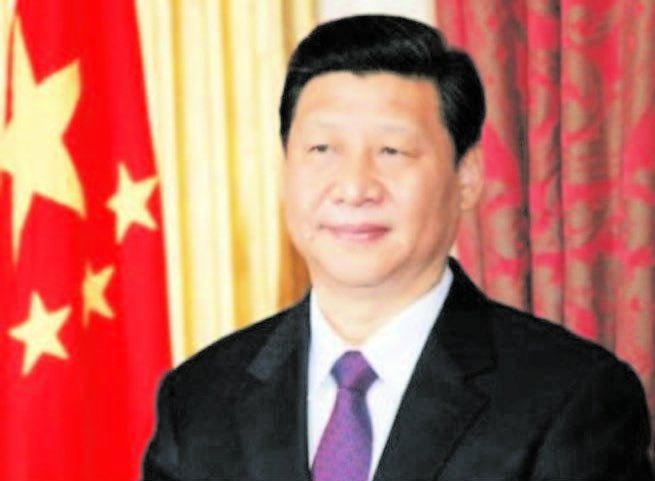
BEIJING (TIP): China’s anticorruption officials are being widely criticized for publicly shaming two high-ranking female officials for committing adultery besides accumulating illicit money. Critics are saying that adultery is not illegal, and anti-graft officials have no business to use it as a tool against suspects. The criticism, mostly voiced over different Internet forum, came after the Communist Party’s anti-graft body, Central Commission for Discipline Inspection, specifically named two female officials saying they “committed adultery with others”. They referred to Zhang Xiuping, former deputy Party chief from Jinzhong, and Yang Xiaobo, former mayor of Gaoping. The watchdog has punished a total of 80,000 party officials, both male and female, for corruption since Xi Jinping took charge as president in March last year.
Faced with criticism, the watchdog said adultery was not against the law, but was regarded as unacceptable behavior for Party members. In 2014, at least 20 senior female officials have been investigated by central government and provincial anti-graft watchdogs for crimes involving the abuse of power. The move raised questions on whether female officials used sex to rise in power and position, and later use their station to garner bribes. The official media cited names of officials with whom these female officials allegedly had sexual liaison.
There is a sharp rise in the number of female officials involved in corruption cases, the official media quoted officials at the Supreme Procuratorate, the office of the chief prosecutor, as saying. Most of the women were found to have offered or accepted bribes. “Corruption has nothing to do with age and gender,” Li Chengyan, a researcher with Peking University, told the Beijing News. “It has to do with loopholes of legal supervision on power, and how power should be restrained accordingly.” Other female officials punished include Jiang Runli, former director of Fushun Land Resources Bureau in Liaoning province, who was sentenced to life imprisonment in 2012 for accepting over $810,000 in bribes.
Searches of her house produced 48 top brand watches and 253 designer handbags. In another case, Liu Guangming, a senior female official in Anshan, Liaoning province, allegedly spent $650,000 worth of bribes on plastic surgery. In Beijing, a dozen female officials were caught for corruption linked to high-end beauty salons in 2012. One official, Bai Hong, former chairwoman of the labor union of Beijing Health Bureau, who spent $75,000 on beauty-salon, was given imprisonment for five years.
Tag: China
-

China’s anti-graft watchdog face criticism after naming female officials for practicing adultery
-

A mixed Blessing for India
Lower petroleum prices hold obvious advantages for Indian consumers, but a bearish global oil market could also hurt several segments of the country’s economy
The Oil Ministers of 12 member states of Organization of the Petroleum Exporting Countries (OPEC) concluded their meeting in Vienna on November 27 by deciding to continue with their three-year-old production quota of 30 million barrels per day (mbpd). Thus, they calculatingly ignored nearly one mbpd oversupply in the global oil market which has pushed the crude prices down by over 30 per cent since June 2014.
The global oil glut, in turn, has been caused by a number of factors which include OPEC’s own overproduction, rising non-OPEC production (particularly by the U.S.- based “Shale Revolutionaries”) and lower demand from China and Europe. By declining to cut their output to shore up the prices, OPEC in general, and Saudi Arabia in particular, have refused to play the role of global “swing producer.” As most factors responsible for the current global demand-supply disequilibrium are systemic in nature, the world faces prospects for relatively bearish oil prices over the foreseeable future.
Indeed, the prices have continued to fall with the Indian basket touching $72.51/barrel on November 27 – a decline of nearly $9 from the average during the first fortnight of the month. As the world’s fourth largest importer of crude, India can afford to exult at this precipitous crude price decline. Still, given the strategic importance of this development, a more comprehensive analysis is desirable.
A virtuous cycle in the economy From the limited perspective of India’s consumer economy, lower global oil prices undoubtedly augur well. Lower pump prices reduce pressure on the consumer who can spend the savings elsewhere, spurring the demand side of the economy. As petroleum products form a large part of the consumer price indices, lower crude prices result in reduced inflation, which in turn paves the way for lower interest rates and greater buoyancy in investments.
Thus, lower oil prices can trigger a virtuous cycle in the Indian economy. After all, with India’s imports running at an estimated 3.7 mbpd in 2013, a $30/barrel decline in oil prices amounts to a $40 billion savings bonanza on annual imports. The impact would be best felt on the petroleum sector where marketers have been groaning under subsidy burden. The transport sector would also be a direct beneficiary. If we widen the impact analysis to consider the totality of the Indian economy, some challenges also appear.
First, as oil producers are India’s major markets and investment destinations, their economic decline may affect the country. Recent decline in the share prices of Bharti Airtel and Bajaj Auto due to the devaluation of the Nigerian Naira illustrates this more complex trend. Second, apart from being the fourth largest oil importer, India is also the world’s sixth largest petroleum product exporter earning over $60 billion annually – nearly a fifth of global exports.A bearish oil market would hurt this segment with reduced demand, lower unit prices and lower margins. Third, the oil price decline coincides with resumed foreign interest in investing in India. It is difficult to assess their mutual correlation, but lower oil revenues may attenuate arrival of petrodollars into India. Fourth, whenever oil revenues decline, countries that export Gulf oil try to tighten their belts by emphasizing local production and downsizing their foreign labor force in which Indians dominate. Thanks largely to over five million Indian expatiates there, India was the world’s largest recipient of remittances which topped $70 billion in 2013. The possibility of these remittances being reduced cannot be ruled out. This would have a serious impact on remittance-dependent States such as Kerala and Goa.
Fifth, lower crude prices may cast a shadow over the sputtering controversy over natural gas pricing norms in India as the latter generally follow the oil prices. Future investment decisions in oil-related sectors may get delayed. Sixth, lower pump prices may cause higher fuel consumption as sales of automotive products soar. This would worsen commuter woes as well as cause increased urban pollution. Finally, a decline in oil prices generally accompanies a global decline in commodity prices, particularly those of minerals and agricultural products. India remains a major exporter of these and would see lower realization, particularly of Guar Gum, a critical input for the shale industry.
The long-term impact of lower oil prices is likely to be felt beyond the economic domain. Geopolitically, persistent lower oil revenue could propel a number of emerging exporters towards domestic political instability as the ruling elites lose their capacity to provide “stomach infrastructure” to the common man. Countries with lower per capita oil revenue such as Nigeria, Iran, Algeria and Venezuela may be more at risk. In general, however, lower oil revenues may have a dampening effect on regional or domestic disputes. Measures to leverage oil prices India can leverage the current low oil prices for long-term gains. To this end, the following measures can be considered.
One, it can foster long-term crude supply relationships with exporters in return for stable prices, upstream engagements, inbound investments, etc.
Two, it can enter into oil-for-infrastructure barter deals to boost project exports.
Three, it can restructure public sector oil companies to make them more productive and globally proactive for leaner times ahead.
Four, it can channel some of the oil bonanza to mitigate the increased cost disadvantage of renewable and alternative energy sources.
Five, it can build its own strategic oil reserves. The current downturn in oil prices underlines the cyclic nature of commodity trade and illustrates OPEC’s reduced regulatory capacity consequent to it supplying only a third of global demand.
While Shale Revolution may be a new and price-sensitive factor, it is unlikely to vanish with time or with lower prices. During past oil bear-hugs in 1986, 1993-99 and 2008, the lower prices invariably spurred consumption and the oil bounced back.
There is no reason to believe that the oil prices shall not rise again. India would do well to recall an old oil adage, “The cure for high oil price is high oil price itself” – and use this rare, cyclic opportunity for long-term gains.
(The author has served as Indian ambassador to Algeria, Norway and Nigeria – all major oil exporting countries.) -

Citing trade, Beijing seeks bigger role
KATHMANDU (TIP): The shadow of China seeking a greater role in the South Asian Association for Regional Cooperation (SAARC) and its presence in the eight-member grouping could not be missed here as the 18th Summit got underway. Over the past few days, reports emerged about Beijing pushing the envelope on the issue and today leaders from Bangladesh, Maldives, Pakistan and Sri Lanka advocating a greater role for observers in the regional grouping. SAARC has Australia, China, European Union, Japan, South Korea, Mauritius, Mynamar and the USA as observers and since 2007 have been invited to attend the summit meeting.
Today as the summit opened, Pakistan Prime Minister Nawaz Sharif emphasised the importance of SAARC observers and the benefit the grouping can draw from its interactions with them. “We should build on convergences and minimise divergences and most of all seek to augment complimentaries for the greater good of the people of the region”, he said. Similar sentiments were expressed by leaders of Bangladesh, Maldives and Sri Lanka. While none of them mentioned China, on his part Deputy Foreign Minister of China Liu Zhenmin, who participated, underscored the role Beijing was playing in the region and prepared for a larger role.
He mentioned that while China’s trade in the countries of the region stood at $150 billion, the country has $ 30 billion investments in the pipeline, clearly underscoring the economic muscle of Beijing. While New Delhi has not made any move to counter it, India maintained that the priority among member-countries of SAARC should be to ensure cooperation among the eight countries instead of seeking to expand the grouping in a horizontal direction. -

Six nurses killed in latest attack on Chinese medical workers
BEIJING (TIP): Seven people, including six nurses, were stabbed to death at a hospital dormitory in northern China on Thursday, the official Xinhua news agency reported, the latest in a string of attacks on medical workers. A hospital administrator was among those killed and another nurse was seriously injured in the attack, Xinhua said. The hospital is in Beidaihe, a seaside resort close to Beijing favored by senior members of the ruling Communist Party. A suspect has been detained, the Xinhua report said without providing further details.
A spate of attacks on doctors and nurses in the past two years has prompted the health ministry to provide better security at hospitals. While the government has ramped up health spending, hospitals are frequently overwhelmed with patients. Doctors are also badly paid, leading to corruption and a suspicion that staff are more interested in making money by prescribing unnecessary drugs and treatment than tending the sick. Many other Chinese are unable to afford health care despite government efforts to provide a basic safety net, which has also prompted attacks in the past. Ministry data shows that violent attacks directed at doctors and other health care workers in the form of beatings, threats, kidnappings, verbal abuse and murder reached 17,243 cases in 2010, the latest year for which such figures are available -

IRAN STILL STALLING AS NUCLEAR DEADLINE LOOMS: UN AGENCY
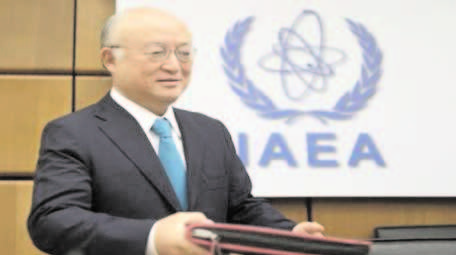
VIENNA (TIP): Tehran has yet to explain away allegations it conducted atomic bomb research, the head of the UN nuclear agency said on Thursday, four days before a deadline for Iran and six world powers to reach a deal on the Iranian nuclear programme. As US secretary of state John Kerry flies to Vienna for what are meant to be final talks to clinch a deal with Iran, International Atomic Energy Agency (IAEA) chief Yukiya Amano said he was still unable to provide “credible assurance” Iran had no undeclared nuclear material and activities.
The talks — which have dragged on for more a year — are aimed at setting limits on Iran’s nuclear programme in return for an end to sanctions that have seriously hurt its economy. As one of the conditions, Western officials say Iran must stop stonewalling the IAEA investigation into concerns Iran may have worked on designing a nuclear-armed missile, although some experts feel this should not be a dealbreaker. “Iran has not provided any explanations that enable the agency to clarify the outstanding practical measures,” Amano told the UN agency’s 35-nation board of governors, also meeting in the Austrian capital.
He was referring to information Iran was supposed to have given the IAEA by late August concerning allegations of explosives tests and other activity that could indicate preparations for developing nuclear bombs. Those allegations were set out in an IAEA report in 2011 based on intelligence from some 10 IAEA member states as well as the agency’s own investigation. It did not identify the countries but they are widely believed to include the United States, Israel and some of Washington’s Western allies.
Iran denies any intention of seeking atomic weapons, saying its nuclear programme is aimed at generating electricity. “I call upon Iran to increase its cooperation with the agency and to provide timely access to all relevant information, documentation, sites, material and personnel,” Amano said. ‘Tactics of delay’ Iran’s IAEA envoy, Reza Najafi, said the allegations were based on “wrong and fabricated” information. To prove this, he told the IAEA board, Iran would be ready to give the UN agency “one managed access” to a western region, where, according to the allegations, explosives experiments took place.
The IAEA’s priority for its inquiry has been to visit another site, the Parchin military facility, refused by Iran. While the countries in talks with Iran — the United States, France, Germany, Britain, Russia and China — want Tehran to scale back its uranium enrichment programme to lengthen the timeline for any covert bid to assemble nuclear arms, the IAEA is investigating possible research on designing an actual bomb. Even though it has long been clear that the inquiry would not be completed before the target date for a deal with the powers, Western diplomats had hoped for more progress by now.
Israel and hawkish US lawmakers are likely to condemn any accord that they feel does not fully resolve the issue. Israel’s envoy, Merav Zafary-Odiz, said the IAEA investigation was “simply stuck because Iran has never abandoned its longstanding tactics of delay, concealment and reluctance to cooperate” with the UN agency. Iran says it is Israel’s assumed atomic arsenal that threatens peace and stability in the Middle East. -

New Balance of Power in Asia? India is challenging China’s assertiveness
“India must increase investments in education and infrastructure, achieve more equitable economic development if it is to emerge as a major driver of the global economy. Only then will it be able to make a significant contribution to Asian and international security and contribute to a new peace-promoting balance of power in Asia”, says the author.
By Anita Inder Singh
India’s decision to help Vietnam boost its defense modernization – against China’s wishes – raises yet again the question whether a new balance of power is emerging in Asia. India, Vietnam and Japan will try to coordinate security and economic policies. That suggests India is challenging China’s assertiveness in the Asia-Pacific region and staking a claim to explore the energy-rich resources of the South China Sea. Economic and strategic diplomacy were intertwined when Prime Minister Modi visited Japan and the US – and when Chinese President Xi Jinping visited India in mid-September.
India needs investment to improve its rickety infrastructure and Japan, China and the US have come forward with offers to help India renew it. Companies in all three countries seek new investment destinations and potentially India is one of the biggest. Mutual economic interests are not enough for India to increase its contribution to Asian and global security. The simultaneous interest of Japan and the US in India’s development and its greater role in Asian security only highlight India’s economic weakness and the blunt fact that its ability to enhance its regional role will hinge on its economic performance improving quickly and steadily.
India has much to gain – and learn – from closer ties with Japan, which is Asia’s oldest democracy. Neither history, nor political/territorial disputes divide India and Japan. As Asia’s post-1945 economic wunderkind Japan had surpassed India, China and many west European countries by the early 1960s. India and Japan are already collaborating on maritime security, counter-terrorism, and energy security. At their summit talks, Modi and Prime Minister Shinzo Abe decided to strengthen defense ties and forge a special strategic global partnership, emphasizing that a developed India and a prosperous Japan were important for Asia and for global peace and security.
Economics and strategy mixed again when Modi met Japanese business leaders. The 21st century, Modi asserted, would belong to Asia – exactly how would depend on “how deep and progressive” the Indo-Japanese relationship is. This is the immediate context in which he deplored the “expansionist” tendencies among countries, caught in an 18th-century time-warp, to “engage in encroachment” and “intrude” into the seas of others. Evidently Modi was not letting trading interests blur the real political differences with such countries. These comments, made before President Xi Li Ping visited India, were widely interpreted as anti-China. The state-steered Chinese Global Times has downplayed any idea that China counted less than Japan with India.
“China’s GDP is five times that of India’s. Mutual trust between Beijing and New Delhi, facing strategic pressure from the north, is difficult to build as there is also an unresolved border conflict between the two,” its editorial said. That appeared more of a threat than an olive branch to India. Modi carefully avoided running China down. Before leaving for the US he stated that the world should trust China to observe international law. But Xi’s visit did not enhance trust between New Delhi and Beijing. Even as Xi assured Modi of $20 billion in investment in Gujarat Chinese troops made one of their frequent forays into north-eastern Indian territory, which Beijing claims belongs to China.
Those forays followed a pattern. China unilaterally invokes “history” (its version) when referring to territorial conflicts with India – and other neighbors. China’s attitude to India echoes that with its Asian neighbors, including Japan, Vietnam and the Philippines. By claiming a territory in the name of history it creates a dispute, dispatches its ships or aircraft – (or in India’s case, troops) – to back up that claim. That is how it unilaterally outlined last November an “air-defense identification zone” over an area of the East China Sea covering Senkaku islands that are also claimed by Japan (and Taiwan). Strong trading ties have not stopped China from using history to make claims on neighboring territories.
In fact Japan is the largest foreign investor in China. And China is ASEAN’s largest trading partner. In New Delhi Xi’s reference to historical ties between ancient civilizations was marred by the assertion that the Sino-Indian border dispute had historical roots. Such statements imply that the border disputes will remain unsettled; more importantly, that Beijing will continue to lay claim to the Arunachal Pradesh and Ladakh regions. In that case India – like Japan and Vietnam – may find itself simultaneously taking up the politicalstrategic gauntlet and engaging in much-needed trade with China.
China does nothing to dispel the fears of its neighbors and insists on bilateral solutions. Its claims to un-demarcated maritime waters, including the East and South China Seas (Beijing defines the latter as a ‘core’ interest) are contested by its neighbors, who want the disputes those claims give rise to be settled through international arbitration. That explains why, without naming China, the Obama-Modi communiqué, called on all parties to avoid the use, or threat of use, of force in advancing their claims. It also urged a resolution of their territorial and maritime disputes through all peaceful means, in accordance with the international law, including the UN Convention on the Law of the Sea. At another level, China has taken advantage of America’s planned withdrawal from Afghanistan and is increasing investments there. It is also securing its energy supplies in the oil and gas fields of Central Asia. Moreover, it is India’s main competitor for influence in the Indian Ocean area, which is bounded by Asia on the north, on the west by Africa, on the east by Australia, and on the south by the Southern (Antartic) Ocean.
There is nothing improper about these activities. But they alarm China’s neighbors and the US, none of whom wants China to gain primacy in Asia. Unsurprisingly, Obama and Modi stressed the need to accelerate infrastructure connectivity and economic development corridors for regional economic integration linking South, Southeast, and Central Asia. The US and India want to promote the India- Pacific Economic Corridor, which will link India to its neighbors and the wider Asia-Pacific region, with a view to facilitating the flow of commerce and energy. That will not be lost on China. Meanwhile uncertainty hovers over the nature of America’s rebalance or pivot to Asia since it has been announced at a time when Washington is cutting defense expenditure. India must increase investments in education and infrastructure, achieve more equitable economic development if it is to emerge as a major driver of the global economy. Only then will it be able to make a significant contribution to Asian and international security and contribute to a new peace-promoting balance of power in Asia.
(The author is a visiting professor at the Centre for Peace and Conflict Resolution, New Delhi) -

HONG KONG PROTESTERS PLAN TO OCCUPY BRITISH CONSULATE
HONG KONG (TIP): Hong Kong students plan to occupy roads surrounding the city’s British consulate in anger at a lack of support from London for their pro-democracy movement, as authorities ramp up pressure on protesters to go home. The new plan emerged as President Barack Obama said the United States had played no role in Hong Kong’s mass demonstrations, despite Chinese accusations that foreign forces are involved.
The city’s government has urged protesters to leave the main rally sites that have brought parts of Hong Kong to a standstill for more than six weeks, with police authorised Monday to back up bailiffs charged with clearing barricades. Activists say they want to show their anger at Britain for not standing up to China over “breaches” of the agreement the two countries made before Hong Kong was handed back to China by Britain in 1997, designed to protect Hong Kong’s social systems and way of life. “We are angry at the way that the British government has for many years denied that China has actually breached the declaration by interfering with Hong Kong politics,” Anna-Kate Choi, the coordinator for the Occupy British Consulate group told AFP.
“They have the responsibility to make sure that the joint declaration has been implemented properly and that democracy and the high degree of autonomy of Hong Kong has been protected,” Choi said. She said she hopes for a turnout of hundreds and “maybe even thousands”. The group is a new offshoot of the protest movement, Choi added, with around 10 organizers from all walks of life including a secondary school student. Protesters in Hong Kong are demanding fully free leadership elections for the semi-autonomous city in 2017. But Beijing has refused to back down on its insistence that candidates must be vetted by a loyalist committee.
Bailiffs are expected to start a clearout operation in the next few days, with thousands of officers put on standby over the weekend, according to local media. But seemingly undaunted, activists have put up large posters around the protest areas announcing the consulate occupation on November 21 and a Facebook page for the event has more than 700 likes. The British consulate said they had no comment. President Obama met Chinese President Xi Jinping for talks in Beijing on Wednesday. “I was unequivocal in saying that the US had no involvement in fostering the protests that took place in Hong Kong,” Obama told reporters at a joint press conference. Xi said that the Occupy Central movement is illegal and that Beijing “firmly supports” the Hong Kong authorities in their efforts to control the situation. “Law and order must be maintained in any case, not only in Hong Kong but everywhere in the world,” he said.
Hong Kong residents enjoy rights not seen on the mainland, including freedom of expression and assembly. However there are signs some of those rights are being curtailed, including physical and cyber-attacks on Hong Kong-based journalists critical of Beijing. Activists say a policy “white paper”, published by China in June, backtracked on the joint declaration by warning the city not to overstep the boundaries of its autonomy. Britain and China are signatories of the 1984 Sino-British Joint Declaration, an agreement that enshrines the “one country, two systems” principle and states that until 2047 “the current social and economic systems in Hong Kong will remain unchanged.” British Prime Minister David Cameron said he was “deeply concerned” about escalating protests in the former British colony after police used tear gas on protesters at the end of September. But activists feel that Britain is turning a blind eye and that China is eroding Hong Kong’s freedoms. Posters for the British consulate occupation bear the slogan: “China breaches the joint declaration, UK government respond now” with the prodemocracy movement’s umbrella symbol emblazoned with the British flag. -

GOVT PUSHING TO COMPLETE ROAD PROJECTS ALONG CHINA BORDER
NEW DELHI (TIP): Defence Minister Arun Jaitley on November 7 said the government is working towards an early completion of 22 border roads prioritised by the Army. The government is intensely monitoring the road projects entrusted for speedy completion with the Border Roads Organisation, Jaitley informed the Parliamentary Consultative Committee on Friday. The 22 road projects were among the 73 Sino-Indian border roads running a total length of 3,812 kilometres which the government had identified almost a decade ago. However, a mere 17 of them covering 590 kilometres were completed, as a series of bottlenecks crippled the progress of other projects. Director General of BRO Lt Gen AT Parnaik told the panel that the projects were hit by delays in getting forest and wildlife clearances, trying terrain conditions, hard road structures, extreme weather conditions limiting the working periods, paucity of construction materials and natural disasters.
-

EYE ON CHINA, INDIA AND US SET TO RAMP UP JOINT NAVAL DRILLS
NEW DELHI: India and the US are set to deepen and broaden their bilateral military exercises to include more warfare components involving nuclear submarines and aircraft carriers. They would also invite more countries to join the Malabar exercises as the two nations share concerns about the growing Chinese naval presence in the Indian Ocean. Both the Indian and US navies have been warily watching the growing Chinese naval presence in the Indian Ocean, especially its submarine manoeuvres.
In the recent weeks, India conveyed its displeasure to the Sri Lankan government at least twice over its decision to permit Chinese submarines to dock in its ports. According to dependable sources, India and US officials have had detailed discussions, including at the Defence Policy Group meeting in Washington DC, on stepping up the bilateral naval exercises. The decision involves a series of steps, starting with increasing the nuclear submarine and aircraft carrier warfare components. The two sides are also looking at adding both army and air force components to the traditionally naval exercise. Sources said the two sides are looking at inviting more countries, thus expanding them mostly into trilateral exercises.
In July 2014, India and the US invited Japan to the exercises held in north-western Pacific. Malabar has featured Australia and Singapore, besides Japan, in 2007. Through most of the UPA tenure, especially under defence minister AK Antony, Malabar exercises off Indian coast have mostly been bilateral affairs, in an effort not to raises Chinese hackles. However, under the new regime in New Delhi there is a noticeable shift in the strategic posturing, especially vis-a-vis China. In Washington DC in October, the joint statement issued by Narendra Modi and Barack Obama had referred to the situation in South China Sea. It was the first time that the two sides had so explicitly referred to the issue in an Indo-US joint statement.
The move to deepen and broaden the Malabar exercises flow from Modi’s declared strategic vision, especially reflected in the joint statement. The move comes even as the government is warily looking at the growing Chinese submarine activities in the region. It has for sometimes been uncomfortable about Chinese sending its submarines as part of their anti-piracy patrols.When INS Vikramaditya was sailing from Russia starting November 2013, a Chinese submarine was in Indian Ocean observing the carrier.
-

China, Japan take steps to bury hatchet after 3 years of dispute
BEIJING (TIP): China and Japan have reached an agreement on maintaining peace in the disputed chain of islands in the East China Sea after three years of war mongering. The agreement was reached in Beijing between China’s State Councilor Yang Jiechi and the visiting National Security Advisor of Japan, Shotaro Yachi. The new move may also pave the way for the first ever meeting between Chinese president Xi Jinping and Japanese prime minister Shinzo Abe on the sidelines of the Asia Pacific Cooperation summit next week.
India and other Asian countries are watching the new move closely because it might have an impact on their territorial disputes with China, sources said. They include Philippines, Indonesia and Malaysia, which are sending their heads of state to the APEC summit. In Tokyo, Japan’s Abe said, “Both Japan and China are coming to the view that it would benefit not just the two countries but regional stability if a summit is held”.
But China has not yet confirmed that president Xi would meet him. Under the agreement, the two sides said they would prevent the situation around the disputed Diaoyu Islands, which is called Senkaku in Japan, from aggravating with the use of dialogue and consultation. They will establish crisis management mechanisms to avoid contingencies. Japan controls the strategically located islands but China claims ownership of it. They “agreed to gradually resume political, diplomatic and security dialogue through various multilateral and bilateral channels and to make efforts to build political mutual trust”.
Beijing has managed Tokyo to accept that it would abide by the spirit of “facing history squarely and looking forward to the future”. This is a catch phrase of Chinese officials when they demand that Japan should admit the torture of Chinese people by Japanese soldiers during World War II, and tender an apology. The two countries have acknowledged that each has a different positions on the disputed islands and some parts of the East China Sea. Commerce ministers of the two countries agreed to meet during the APEC summit next week indicating a slight improvement in the relationship.
-

MEXICO CANCELS BULLET TRAIN DEAL WITH CHINA
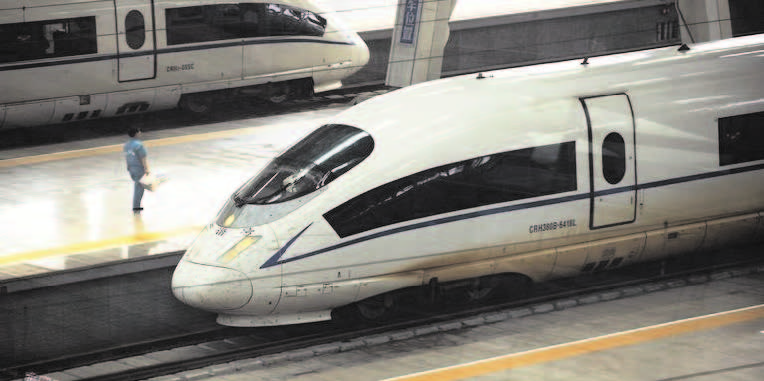
BEIJING (TIP): Mexico has suddenly canceled a $3.75 billion contract to buy bullet trains from China. This is a major blow to the Chinese railway manufacturing industry, which is trying to sell high-speed trains to India and other countries. Justifying the decision, Mexican president Enrique Pena Nieto said he wanted to avoid “any doubts about the legitimacy and transparency” of the bidding process. The cancellation came within days of the contract being signed on November 3. Earlier, two other Latin American countries, Brazil and Argentina, postponed their own high-speed rail projects.
The Nieto government came under pressure from local politicians and lawmakers, who said China Railway Construction Corp. has been favored in the deal. The country’s transport ministry said a new auction for the contract would be held soon. The decision, which came soon after the deal was signed, would mean new opportunity for rivals like Germany’s Siemens, Canada’s Bombardier and France’s Alsthom. Japan’s Mitsubishi also expressed an interest in the contract. Reports said their requests for more time to make submissions were refused. Only CRCC and its Mexican partners had submitted a joint proposal by the 15 October deadline.
The issue may come up during discussion when the Mexican president visits Beijing next month. Work on the new line was due to begin in December but it might be delayed now. The project involves building a 210- kilometer high-speed line to connect the capital, Mexico City, with the growing industrial hub of Queretaro to the north by 2017. The goal is to cut travel time from about two and a half hours to less than an hour, with trains traveling at a maximum of 300 km/h.
-

Hong Kong tycoon removed from key post for backing protest
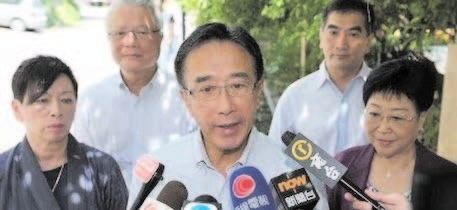
BEIJING (TIP): The Communist Party of China has kicked out a tycoon from its top political advisory body who criticized the chief executive of Hong Kong C Y Leung during the pro-democracy protest. Hong Kong-based James Tien (67) had demanded Leung’s resignation last week and seemed to support the protestors. Sources said Tien’s criticism exposed chinks in the government’s armor because he is the leader of the pro-Beijing Liberal Party which is publicly opposing the protesters.
Tien said he accepted the Chinese People’s Political Consultative Conference decision to expel him for telling a local radio station less than a week ago that Leung should consider resigning because he’s done a poor job of running the city. Tien told reporters he would also resign from his position as leader of Hong Kong’s pro-Beijing Liberal Party. The advisory body doesn’t have any formal power in China’s political system. embership is a sign of Beijing’s favor and an opportunity for high-level networking, sources said. The government has been backed by Hong Kong star Jackie Chan and Asia’s biggest magnet Li Kai Shing who advised the protesting students to return to their homes.
It earlier indicated it was blacklisting popular movie actor Chow Yunfat for criticizing the police decision to tear gas demonstrators. Celebrities who have backed the month-long protests include singer Denise Ho, actor Tony Leung and actor-singer Andy Lau. Hong Kong singer Anthony Wong personally joined the demonstrations. The street sit-ins in Hong Kong completed a full month on Wednesday with the students vowing they will battle it out for a year if their demand for full democracy was not met.
The government has offered to introduce adult franchise with voting rights for all citizens but said it will vet the candidates who stood for election to the post of the city’s chief executive. Protesting students have said it was a “fake democracy” as the government intended to put its own supporter in office. -

THE BIRTH AND GROWTH OF AN IDEA
Every big idea has a small beginning. Gift of Life has been no exception.
In 1974, Rotary District 7250 brought a little 5-year old named Grace Agwaru on an intercontinental voyage from Uganda to New York. Grace suffered from a hole between the two lower chambers of her young but strong heart. On November 15, 1974 surgeons at Saint Francis Hospital in Roslyn, New York successfully operated on little Grace. A big idea was born that day. The Gift of Life now includes Rotarians from all over the world, with independent chapters in countries as far away as Korea and India.
Today, the Gift of Life is a worldwide Rotary International Service Program responsible for approximately 5000 heart surgeries for children from over 30 countries. The Gift of Life has gone global. Every good idea grows exponentially. In 2001, PDG of District 7250 Eileen Gentlecore had a simple conversation with a friend of hers and related the altruistic vision of the Gift of Life. Her friend, Past District Governor Ravishankar Bhooplapur, with the assistance of Past RI Director Sushil Gupta – Trustee of Rotary Foundation , Dr. Rajan Deshpande and many other devoted Rotarians, AC Peter, PDG Rajendra Rai, Rtn OP Khanna, DGE Kamlesh Raheja, took up the challenge to provide critical heart surgeries for the children of India.
PDG Ravishankar Bhooplapur still serves as Honorary Chairman of Gift of Life, India today. Is it not amazing what can come of a conversation? The sole purpose of the Gift of Life, India is to secure life saving heart surgery for children in desperate need regardless of race, creed, color or country of origin. The Gift of Life, India is a not-for-profit, tax-exempt corporation with no administrative costs. All of our team members work voluntarily; all of the monies are generously donated by caring donors and through the numerous matching grants disbursed by the Rotary Foundation.
Gift of Life program in New York has the unique distinction of bringing children from all over the world to the New York Metro Area and providing free heart Surgeries to them. These children are housed in Ronald McDonald house which is specifically given to us for this purpose. Rotarians have significantly contributed to build the Ronald McDonald house and continue to give financial support on the local level in exchange our children are accommodated pre & post-operative their surgeries. The Gift of Life still grows. We reach more children in more countries than ever before. We would like to reach more. There is no limit to this idea as long as we remain committed to saving children’s lives.
Mission:
To further the cause of world peace and understanding by facilitating free medical services to children suffering from heart disease regardless of race, creed, sex or national origin and who otherwise lack access to such services.
“A Crusade of the Heart”
The Gift of Life is a crusade of the heart, touching children in peril. An idea born in 1975 to a group of Rotarians from Manhasset, Long Island, NY, is today a global effort. We reach out to many children, who would otherwise die, and heal their failing hearts with the miracle of cardiac surgery. Our outreach spans the world, nurtured by compassion for young victims we alone can cure. Each child whose future we restore is a tribute to humanity and love, helping build bridges of friendship and peace among people everywhere.
History
The lives of more than 10,000 children from countries throughout the world have been saved through the miracle of open-heart surgery, in medical centers throughout the U.S. and in participating Gift of Life hospitals in Russia, Israel, Malaysia, China, Ukraine, India, Dominican Republic and the Philippines. Dedicated surgeons and nurses donate their skill to the cause. American families assist Rotarians as hosts and interpreters, bringing warmth and comfort to children and their escorts.
Board of Directors and Officers
Gift of Life is a dynamic program of Rotarians of Brooklyn, Queens and Nassau in partnership with the Rotary members and physicians worldwide who evaluate children for treatment in our country. Foreign doctors may also receive technical training on these shores and return to help children in their own lands. We have since opened pathways to Korea, Poland, the Russian Republics, China, Caribbean Nations and to places as distant as Mongolia, medically screening many thousands of children for lifesaving surgery.
The spirit of the Gift of Life ignores borders. Medically advanced countries are being encouraged to do as we do – to open their own hospital doors to imperiled youngsters from developing nations. With the Gift of Life as an international model, cardiac medicine will extend its power to save many who were unreachable before. The Gift of Life has also become more of a public presence through our fund raising program Save-A-Child. In addition we hold four annual fundraisers: the Crusade of the Heart Kick-Off Dinner and black tie Gala, the Agnes T. Funk Kids for Kids Memorial 5K Walk, and our new skydiving event Jump for Life.
Partnering Hospitals
The following hospitals support the Gift of Life program:
● Loma Linda University Medical Center, Loma Linda, California
● Maria Fareri Children’s Hospital at Westchester Medical Center Valhalla, New York
● St. Francis Hospital, The Heart Center Roslyn, New York
● The Children’s Hospital at Montefiiore Medical Center Bronx, New York
● The Hospital for Sick Children Toronto, Canada
● The Steven and Alexandra Cohen Children’s Medical Center of New York New Hyde Park, New York -

Pakistan’s Military Adventurism
Right environment to turn the heat on Islamabad
Pakistan’s military adventurism on three fronts across its borders with India, Afghanistan and Iran has created just the right environment to turn the heat on Islamabad and Rawalpindi. Apart from mounting a media offensive, it is time for India to get world attention focused on Pakistan-sponsored terrorism and the plight of Baluchis, Shias and other minorities in that country”, says the author who was a career diplomat.
Just over a year ago Mr. Nawaz Sharif was swept back to power, prompting expectations that he would tackle the country’s security and economic crises, and improve relations with India. But one year is an eternity in the politics of Pakistan. The US is refusing to pledge additional aid beyond what was promised earlier under the Kerry-Lugar legislation. Even “allweather friend” China has expressed disappointment that Sharif’s government has not done the requisite preparatory work for utilizing aid that Beijing had promised for the development of Pakistan’s ailing power sector.
The only silver lining is the increased remittances from Pakistan’s workers in the Gulf despite calls by Imran Khan to workers to halt such inward remittances. Instead of acting circumspectly in such a situation, Pakistan has chosen to escalate tensions on its borders with Iran, Afghanistan and India. The tensions with these three neighbors with whom Pakistan shares land boundaries have arisen because of support to cross-border terrorism. This support is rendered by state agencies to extremist Sunni groups, ranging from Lashkar e taiba to the Afghan Taliban and Jaish e Adl.
The tensions with Iran have risen because of the support that the extremist Sunni group Jaish ul Adl receives in Pakistan’s Baluchistan Province, where the Pakistan army is simultaneously engaged in a bloody conflict against Baluchi separatists. Tensions with Iran escalated last year when Jaish e Adl mounted cross-border ground and missile attacks in Iran, resulting in Iranian casualties.
An Iranian spokesman warned that the Iranian forces would enter Pakistani territory if Pakistan “failed to act against terrorist groups operating on its soil”. Virtually coinciding with this was an incident when Jaish e Adl kidnapped five Iranian border guards and moved them into Pakistan. Iran not only warned Pakistan of cross-border retaliation, but also brought repeated incursions from Pakistan soil to the notice of the UN Security Council in writing. Ever since the pro-Saudi Nawaz Sharif, whose links with radical Sunni extremist groups are well documented, assumed power, Pakistan has moved towards rendering unstinted support to Saudi Arabia, even in the Syrian civil war.
It has also unilaterally annulled the Pakistan-Iran oil pipeline project, prompting action by Iran, seeking compensation. While Nawaz Sharif was commencing negotiations for a peace deal with Tehriq e Taliban in the tribal areas of North Waziristan, bordering Afghanistan, the Army Chief, Gen Raheel Sharif, disregarded the views of the Prime Minister. He launched a massive military operation, involving over 50,000 military and paramilitary personnel, backed by artillery, tanks, helicopter gunships and fighter jets. An estimated one million Pashtun tribesmen have fled their homes.
They are now homeless and facing barriers, preventing their entry into the neighboring provinces of Punjab and Sind. Not surprisingly, ISI “assets” like the Mullah Omar-led Afghan Taliban and the Haqqani network have been quietly moved out from the battle zone, quite obviously into ISI safe houses. Unrest is brewing amidst the displaced Pashtun tribals as the army is unwilling to coordinate its operations with civilian relief agencies. The displaced and homeless Pashtun tribals, will inevitably, in due course, resort to terrorist violence across Pakistan.
The special treatment meted out to ISI assets like Mullah Omar and the Haqqani network would have been carefully noted by the new Ashraf Ghani dispensation in Afghanistan, as a prelude to more serious attacks by the Afghan Taliban acting out of the ISI and army protected safe havens in Pakistan. Pakistan’s western borders will be neither peaceful nor stable in the coming years. The escalating tensions with Iran, the partisan stance on Saudi Arabia-Iran rivalries and the military action in North Waziristan have invited criticism within Pakistan. The escalation of tension with India across the Line of Control and the international border has to be seen in this
context.
What better way for the army to divert attention from its misadventures in the west than to revive the “India bogey” in Pakistan? Such an action would also test the resolve of the Narendra Modi dispensation in India to deal with crossborder terrorism. Moreover, with state assembly elections due in J&K in December, the Pakistan army would strive to ensure that the credibility of these elections is questioned by ensuring a low turnout. Hurriyat leaders like Shabir Shah and Yasin Malik have already been commissioned to stir up discontent and discredit the Indian Army during the floods.
What Pakistan had not bargained for, as it attempted to test India’s resolve from August onwards, was the robust response that it received not only from the Indian Army, but also from the Border Security Force. This was accompanied by an ill-advised diplomatic effort to seek UN intervention in Jammu and Kashmir. Both Nawaz Sharif and his otherwise realistic NSA Sartaj Aziz seem to forget that the world changed dramatically after 9/11. The Western world led by the United States has come to realize that Pakistan-backed terrorist groups are as much a threat to their security as to that of India.
Pakistan also seemed to ignore Mr. Modi’s unambiguous stance that dialogue and terrorism cannot go hand in hand. They also evidently misread the significance of the Obama- Modi Joint Declaration averring action for “dismantling of safe havens for terrorist and criminal networks, to disrupt all financial and tactical support for terrorist and criminal networks such as Al Qaida, Lashkar e Taiba, Jaish e Mohammed, the DCompany, and the Haqqanis.”
Pakistan’s military adventurism on three fronts across its borders with India, Afghanistan and Iran has created just the right environment to turn the heat on Islamabad and Rawalpindi. Apart from mounting a media offensive, it is time for India to get world attention focused on Pakistan-sponsored terrorism and the plight of Baluchis, Shias and other minorities in that country. In any case, there should be no question of a sustained dialogue process till Pakistan fulfils its January 2004 assurance that territory under its control will not be used for terrorism against India.
(The author is a former diplomat.) -

China slams US missile defence radar in Japan
BEIJING (TIP): The United States is damaging stability in the Asia-Pacific region by positioning a missile defence radar in Japan, China said on Thursday. Japan, an ally of the United States, has voiced growing anxiety over China’s more assertive posture in the East China Sea, where the neighbours are locked in a dispute over control of a group of uninhabited islets. North Korea has carried out a series of missile tests this year, including two medium-range missiles capable of hitting Japan.
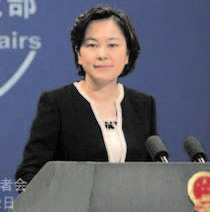
Pyongyang has also threatened another nuclear test. Japan’s defence ministry has said an X-Band radar system was delivered on Tuesday to the US military’s communication facility in Kyoto in the western part of the country. It is scheduled to be fully operational by the end of the year. “Neighbouring countries pushing forward the deployment of antimissile systems in the Asia-Pacific and seeking unilateral security is not beneficial to strategic stability and mutual trust in the region,” Chinese foreign ministry spokeswoman Hua Chunying told a regular briefing.
“It is not beneficial to peace and stability in Northeast Asia.” Countries should not use “excuses to harm the security interests of other countries,” Hua added, describing the situation as “deeply concerning”. China has ratcheted up military spending in recent years, putting in place new submarines, surface ships and anti-ship ballistic missiles, which the US sees as a counter to its military presence in the region. US defence secretary Chuck Hagel has said two navy destroyers equipped with missile defence systems would be deployed to Japan by 2017 in response to provocations from North Korea. -

New Afghan president’s first foreign visit is to China
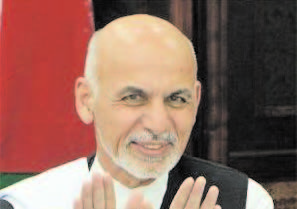
BEIJING (TIP): Afghanistan’s newly-elected President Ashraf Ghani has chosen China as his first destination abroad after taking over office, signifying Beijing’s influence in the war-torn country where the US troops are battling to control Taliban resurgence. “The visit by President Ghani to China is the first official visit since he took office. “It is also the first high-level visit between the two countries since the establishment of the new government of Afghanistan. The Chinese side attaches great importance to that,” Chinese foreign ministry spokesperson Hua Chuying said on October 19.
Former world bank economist Ghani, who succeeded Hamid Karzai, will come to Beijing on a four-day visit starting October 28. Observers said that it is significant that Ghani chose the communist giant to be his first choice even as the US has significant military presence in the warravaged country, which shared a border with China’s restive Xinjiang province where the Islamic militants , stated to be trained in Afghanistan and Pakistan’s tribal areas, have been staging violent attacks for the past a few years. Ghani, 65, became president after clinching a power sharing deal with his poll rival Abdullah Abdullah who took over as Afghanistan’s chief executive. China, which is holding talks with neighboring countries India, Pakistan and Russia over the future course of action in the event of US troops leaving Afghanistan, is looking to expand its diplomatic engagement with Kabul by appointing a special envoy for Afghanistan. -

A commendable effort
India’s Polar Satellite Launch Vehicle (PSLV), with the consummate ease that has become the rocket’s hallmark, placed the third Indian Regional Navigation Satellite System (IRNSS) spacecraft into orbit in the early hours of Thursday. Over the years, the Indian Space Research Organisation (ISRO) has steadily enhanced the capabilities of this rocket, which was originally developed to put remote sensing satellites into orbits so that it could carry heavier satellites than before, inject them into orbit with greater accuracy and take on a range of missions including launching the lunar probe, Chandrayaan-1, as well as the Mars Orbiter Mission.
Its record of 27 consecutive successful flights is a tribute to the meticulous preparations and attention to every tiny detail that goes on behind the scenes before each launch. Indeed, the latest launch was postponed by almost a week in order to attend to a technical glitch that had cropped up. The IRNSS constellation will give India guaranteed access to what has become a critical service in the present day – navigation satellite signals.
America’s Global Positioning System (GPS), with worldwide coverage, is the leader in the field. Russia, for its part, established a similar capability with the Global Navigation Satellite System (GLONASS). But others worry about becoming wholly dependent on them for a service that is vital for military operations as well as in many civilian sectors. Europe is therefore in the process of putting its own constellation of Galileo navigation satellites in place.
China is likewise creating the BeiDou Navigation Satellite System; a regional service has already been launched and it intends to achieve global coverage by around 2020. Using its seven satellites, the IRNSS system will beam accurate navigation signals over India and up to 1,500 km from its borders. Three of those satellites have already been launched and ISRO plans to have the remaining satellites in place by the middle of next year. By adding four more satellites, India has the option to extend the area covered by its navigation system.
Meanwhile, ISRO’s Space Applications Centre in Ahmedabad has undertaken the development of receivers that can utilize the IRNSS signals and is also helping industry do the same. Early trials using these receivers are going to get under way. Efforts are also going into chipsets for portable devices that will utilize those signals. A market assessment carried out by a well-known consultancy company indicates that there is potentially a huge market available in the subcontinent. Turning this potential into reality is going to be a challenge, and ISRO will necessarily have to play a leadership role here -

Shinzo Abe becomes first Japanese PM to visit Sri Lanka in 24 years
COLOMBO (TIP): Shinzo Abe on October 12 became the first Japanese prime minister to visit Sri Lanka in 24 years, on the second leg of a South Asian tour that sought to assert Tokyo’s interest in a region where it has ceded influence to China. Abe was greeted by Sri Lankan President Mahinda Rajapaksa at Colombo’s international airport, where a new passenger terminal will be built with the help of a $330 million Japanese development loan.
The two leaders struck “a new partnership between maritime countries” that reflects Japan’s interest in keeping open shipping lanes that supply oil and liquefied natural gas from the Middle East to feed its energydependent economy. “The president and I shared the view on building friendly ties and partnership between the two maritime countries,” Abe said after the meeting. Asian great-power diplomacy has stirred into life since the rise to power of Indian nationalist Narendra Modi, who announced his intent to play an active role on the world stage by inviting regional leaders to his inauguration in May.
Abe comes to India’s backyard after hosting Modi for summit talks that yielded a Japanese pledge to invest $34 billion in India and launched a “special, strategic global partnership” to deepen security cooperation. The Japanese premier pre-empts Chinese President Xi Jinping, who travels to India and Sri Lanka later this month. “They (the Japanese) are aware that we are beholden to China’s influence in many ways, so they would like to counter that,” Nanda Godaga, a retired Sri Lankan diplomat who follows Japanese foreign policy, said before Abe’s visit.
China has financed the construction of a $500 million port terminal for Colombo as part of efforts to build a ’21st-century maritime silk road’, but Tokyo plays down any notion that Asia’s two largest economies are entering a geopolitical contest. “We are not going to become a big superpower … we have a lot of investment in China,” Abe’s spokesman, Kenko Sone, told a briefing in the Bangladeshi capital Dhaka on Sunday morning. “We have some difficulties with them but we prefer to solve those issues through discussions.” In Bangladesh on Saturday, Abe followed up on commitments for Japanese business to invest 600 billion yen ($5.7 billion) in infrastructure projects, and won Dhaka’s support for Tokyo’s bid for a temporary seat on the United Nations Security Council.