UNITED NATIONS (TIP): Secretary general Ban Kimoon said that a trust fund he launched to provide fast and flexible funding for the fight against Ebola has only $100,000 in the bank. UN spokesman Stephane Dujarric said the trust fund is part of a nearly $1 billion U.N. appeal for humanitarian needs in Liberia, Sierra Leone and Guinea, the three countries hardest-hit by the deadly virus.
Secretary-General Ban urged the international community to respond to the appeal immediately, which he said will enable the United Nations “to get ahead of the curve and meet our target of reducing the rate of transmission by Dec. 1.” The World Health Organization said Thursday that the Ebola death toll will reach more than 4,500 this week, from among 9,000 people infected by the deadly disease. It has projected that there could be between 5,000 and 10,000 new cases a week in early December without urgent action.
Dujarric said donors may choose to give directly to a UN agency or a specific country, or they may channel their contribution through the trust fund which will allow the UN to allocate the funds where they are most urgently required at the time. The secretary-general said the trust fund had received about $20 million, but the United Nations later clarified that the $20 million has been pledged, and only $100,000 has actually been received. As of Thursday, Dujarric said the wider $1 billion UN appeal had received $376 million in pledges, about 38% of the amount sought. “Ebola is a huge and urgent global problem that demands a huge and urgent global response,” Ban told reporters.
He said dozens of countries “are showing their solidarity,” singling out the US, Britain, France, Canada, Germany, Poland, Japan, South Korea, Cuba and China. But he said it’s time that countries that have “the capacity” — which he didn’t identify — provide support. The secretary general said he liked the idea of greater public support for the fight against Ebola, including the possibility of a fundraising concert promoted by someone like U2 singer Bono.
Tag: China
-

Fund to fight Ebola has $100,000 in bank: UN chief
-

Do not warn or threaten India: Rajnath Singh to China
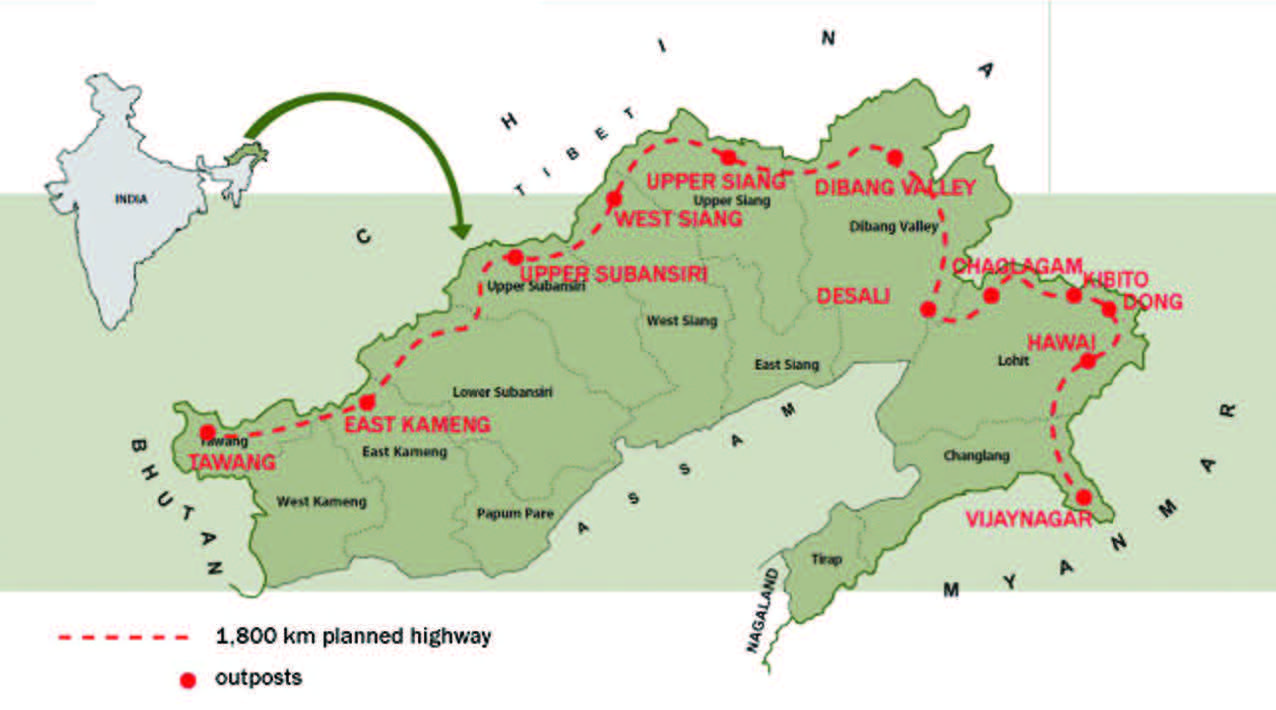
NEW DELHI (TIP): After China’s objection to India’s plan of building a 2,000-km long road along the border in Arunachal Pradesh, Home Minister Rajnath Singh stated on October 16 that no one should threaten India. “No one can warn India,” said Rajnath Singh, adding, “Both countries should sit together to resolve the border dispute.” Earlier, China expressed concern over an alleged plan by India to build a road along the border in Arunachal Pradesh. “China has already spread their network of roads and rail network near the border.
Whatever we make on our territory should not be a concern of China,” said an unnamed official in the Home Ministry’s border management department to news agency Reuters. He was quoted as saying that the ministry was seeking Cabinet approval for the 2000-km road in Arunachal Pradesh and had preliminary support from the Prime Minister’s Office. In September, the government eased environmental and other curbs on building roads and military facilities within 100 km of the border in Arunachal Pradesh to hasten the construction of some 6,000 km of roads.
Reacting to news about the new road, Chinese Foreign Ministry spokesman Hong Lei said the government needed to “further verify the situation”. “Before the border problem is solved, we hope the Indian side will not take any action that could further complicate the relevant issue, so as to preserve the current situation of peace and stability in the border area,” he added.
China expresses concern over India’s border road plan
China on October 15 expressed concern over India’s plans to build a road along the remote eastern part of its border, saying it hoped India would not “further complicate” the festering disagreement. In September, India eased curbs on building roads and military facilities within 100 km of the contested border in remote Arunachal Pradesh, so as to hasten construction of some 6,000 km of roads. The move came as Chinese President Xi Jinping visited India, in a bid to defuse the distrust between both countries. -

China blocks BBC website as Hong Kong tensions rise
SHANGHAI (TIP): Chinese Communist Party censors have blocked the website of Britain’s national broadcaster, the BBC said in a statement, as tensions rise in Hong Kong between pro-democracy protesters and police. broadcaster said that the move seemed to be “deliberate censorship”. It did not say what may have prompted the move by Beijing, which also blocks the websites of the New York Times, newswire Bloomberg and the BBC’s Chinese-language website. “The BBC strongly condemns any attempts to restrict free access to news and information and we are protesting to the Chinese authorities.
This appears to be deliberate censorship,” said Peter Horrocks, director of the BBC World Service Group. The BBC’s English-language website was still inaccessible in China on Thursday. Asked whether the site had been blocked, Hong Lei, a spokesman for China’s foreign ministry, said that China enjoyed “full internet freedom”. “At the same time, the Chinese government manages the internet in accordance with the law,” he added.
In Hong Kong, police used pepper spray early on Thursday to stop prodemocracy protesters from blocking a major road near the office of the city’s embattled leader amid public anger over the police beating a protester a day earlier. China rules Hong Kong under a “one country, two systems” formula that gives the former British colony wideranging autonomy and freedoms not enjoyed in Communist Party-ruled mainland China, with universal suffrage an eventual goal. But Beijing, which has branded the protests illegal, says only candidates screened by a nominating committee will be able to contest a full city-wide vote to choose the next chief executive in 2017.
It is fearful that calls for democracy could spread to the mainland. A Chinese official told foreign media in Hong Kong on Wednesday that China had seen interference in the city’s prodemocracy protests from outside forces and called on international journalists to report “objectively”. Earlier this month a Chinese court issued new rulings clamping down on what “netizens” can say and do online, a reflection of Beijing’s desire to influence popular opinion, both online and offline. -

Venezuela, New Zealand win UN security council seats but Turkey rebuffed
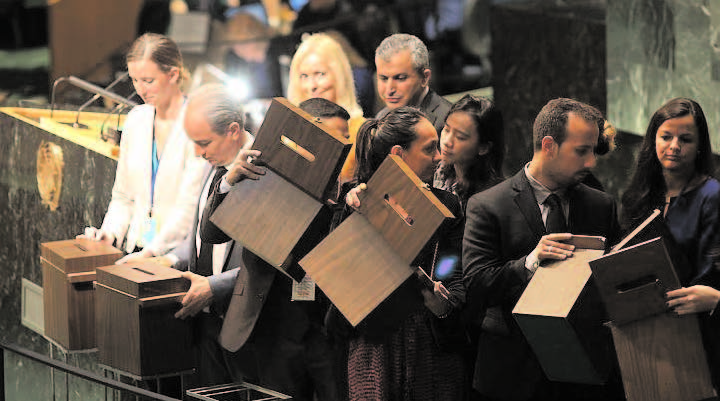
UNITED NATIONS (TIP): Angola, Malaysia, New Zealand, Spain and Venezuela won coveted seats at the UN security council on October 16, but Turkey suffered a humbling defeat in its bid to join the world’s “top table.” The five countries garnered the required two-thirds support from the 193 countries of the UN General Assembly during three rounds of voting that ended with Turkey picking up only 60 votes.
Turkey had been competing against New Zealand and Spain for two seats and had dispatched Foreign Minister Mevlut Cavusoglu on a high-profile mission to New York this week to lobby for votes. Angola, Malaysia and Venezuela were virtually assured to win election as their candidacies had been put forward by their region and they ran unopposed on their slates. After New Zealand’s resounding victory in the first ballot, Foreign Minister Murray McCully called the outcome a “strong vote of confidence” in his country, capping a 10-year campaign for the ultimate diplomatic prize.
“To receive the success that we have had this morning means a lot to us and we will work very hard to make sure we give good service on the council,” McCully told reporters at UN headquarters. Venezuela won 181 votes despite criticism from rights groups and the United States over its support for Iran, Syria and other hardline regimes that are at loggerheads with the West. Venezuela’s President Nicolas Maduro called the vote “a victory, a world record of support, love and confidence. One hundred eight-one countries have said here we are, we support you.””We should feel happiness and joy in our hearts that Venezuela is beloved country in the world,” he added, speaking in Caracas. “To those birds of ill omen who say Venezuela is isolated in the world — who is isolated? The country that received 181 votes?” US Ambassador Samantha Power urged Venezuela to work cooperatively on the council.
“Unfortunately, Venezuela’s conduct at the UN has run counter to the spirit of the UN Charter and its violations of human rights at home are at odds with the Charter’s letter,” she said. Rights groups have pointed to Venezuela’s record on the UN Human Rights Council as a cause for worry and diplomats have also expressed concern about its stance on the war in Syria. Over the three rounds of voting, Turkey saw its support dwindle from 109 votes to 73 and finally 60, surprising many who saw the regional player as a strong contender.
Angola won 190 votes, Malaysia picked up 187, New Zealand 145 and Spain 132. The elections came at a busy time for the council, which is grappling with crises on many fronts, from the jihadist offensive in Iraq and Syria, to the Ebola outbreak in West Africa. Russia’s actions in eastern Ukraine, conflicts in Syria, South Sudan and Central African Republic and the faltering Israeli-Palestinian peace process are also at the top of the council’s agenda. A seat at the Security Council raises a country’s profile several notches, boosts influence and provides knockoff benefits in bilateral ties.
The five elected countries to the 15- member council will join the five permanent powers — Britain, China, France, Russia and the United States — for a two-year term. Five other countries elected last year are mid-way into their term. These are Chad, Chile, Jordan, Lithuania and Nigeria. As the most powerful body of the United Nations, the security council can impose sanctions on countries and individuals, refer suspects for war crimes prosecution, endorse peace accords and authorize the use of force. It also oversees 16 peacekeeping missions in the world, with a budget of close to $8 billion. The five elected countries will replace Argentina, Australia, Luxembourg, Rwanda and South Korea, and begin their stint on January 1. -

DEALING WITH THE US ALWAYS TESTS OUR DIPLOMACY
At the end of the day, India and the US have to find common ground that protects their respective interests. The US as a global power should not force India to support it in its geopolitical mistakes. India should not act irresponsibly about its own interests to prove to the US that it is a responsible power”, says the author.
By Kanwal Sibal
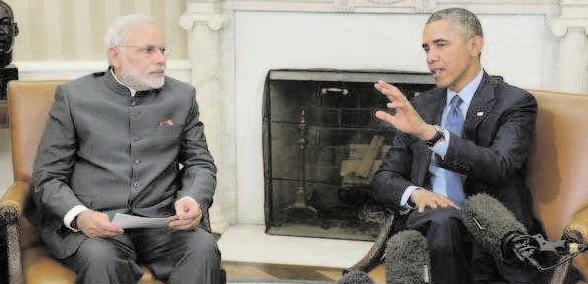
Prime Minister Narendra Modi’s US visit presented him with a difficult challenge. At the rhetorical level, projecting the India-US relationship as between two democracies is easy. The US calls its relationship with India a defining one in the 21st century, though actual US policies belie such rhetoric. Our hype about the US being our ‘natural partner’ is not justified by the record of our relations with it since Independence. And so, the general perception continues to be that the rhetoric is disconnected from reality.
Will the US develop industrial corridors like Japan or competitively build highways, ports and airports? India has “offered” US industry lead partnership in developing three Smart Cities…
America’s grouse is that India has not adequately requited Washington’s decision to lift nuclear sanctions on it. American nuclear firms expect to get business in India and want the Indian nuclear liability law amended. They eye a big share of the Indian Defence procurement pie as another reward. On the economic side, US corporations have launched a campaign against India’s intellectual property, trade and investment policies, especially in the pharmaceutical sector. On WTO issues, the US government turns differences at a multilateral forum into bilateral pressure points against India. Modi and US President Barack Obama have not announced any closing of differences on these issues. In the joint press briefing, Modi simply said that he “believes” that with the change in Indian policies and processes, the India-US economic partnership will grow rapidly. On IT-related issues, Modi said he sought Obama’s support “for continued openness and ease of access for Indian services companies in the US market”, without in dicating the latter’s response. On the “candid discussion” on the WTO stand-off, he maintained that while India supports trade facilitation, he expected a solution “that takes care of our concern on food security”.
The joint statement was not more elucidative. Both sides, it says, “will facilitate” actions to increase trade five-fold, unachievable in any realistic time-frame. They “pledged” to establish an Indo-US Investment Initiative and an Infrastructure Collaboration Platform to develop and finance infrastructure. Will the US develop industrial corridors like Japan or competitively build highways, ports and airports? India has “offered” US industry lead partnership in developing three Smart Cities, while offering similar cooperation to Japan, China in this area.
On the WTO stand-off, the officials were “directed to consult urgently” on the next steps. The two leaders “committed to work” through the Trade Policy Forum to promote an “attractive” business environment (how and what are the metrics?) and to establish an annual high-level Intellectual Property (IP) Working Group with appropriate decision-making and technical-level meetings (will this bridge real differences, when the US is too demanding and India insists that our policies are TRIPS-compliant?). They “reaffirmed their commitment to “implement fully the US-India civil nuclear cooperation agreement” and establish a Contact Group to advance this (will we revise the liability law?). They “stated their intention” to expand Defence cooperation to bolster national, regional, and global security. It’s unrealistic when, even in the case of “regional security”, the US-Pakistan military ties and its talks with the Taliban stick in our craw. While deciding to renew for 10 more years the 2005 Framework for US-India Defence Relations, they directed their Defence teams “to develop plans” for more ambitious programmes.
The mere mention of IS in the joint statement is being applauded by some as a decisive step by India to shed its non-aligned inhibitions and assume international responsibility. They forget that Modi did not mention IS in his speech at the UN – where, in fact, he expressed reservations about the combat against terror not being inclusive – or in his speech at the Council on Foreign Relations. The stress on the need for joint efforts to dismantle safe havens for terrorist and criminal networks, to disrupt all financial and tactical support for networks such as al-Qaeda, Lashkar-e-Toiba, Jaish-e-Mohammed, the D-Company and the Haqqanis is welcome, but one sees little US pressure on Pakistan to curb Hafiz Saeed or flush out al-Qaeda’s Ayman al Zawahiri. The omission of the Taliban from the list is striking.
Obama notably affirmed that India meets Missile Technology Control Regime requirements and is ready for membership in the Nuclear Suppliers’ Group and supported India’s early application and eventual membership in all four regimes, without setting any time-table. He merely repeated the formulation he used in 2010 on India’s permanent membership of the UN Security Council.
On Asia-Pacific, the joint statement shows a more substantial convergence of interests. The joint commitment to work more closely with other Asia-Pacific countries, including through joint exercises, points towards Japan and potentially Australia. The concern expressed about rising tensions over maritime territorial disputes, and affirmation of the importance of safeguarding maritime security and ensuring freedom of navigation and overflight throughout the region, especially in the South China Sea, are significant in the context of China’s disruptive policies in this area. The trilateral dialogue with Japan and the decision to consider raising it to Foreign Ministers’ level assumes significance. Also significant is the stated intent to consider enhanced technology cooperation for the Indian Navy.
Overall, though, Modi’s visit to the US has been a huge publicity success, both for him and for India. Modi conducted himself with confidence, projecting in the process a new and confident India. He spoke to Obama as an equal and did not feel compelled to earn the latter’s goodwill by yielding on essentials. At the end of the day, India and the US have to find common ground that protects their respective interests. The US as a global power should not force India to support it in its geopolitical mistakes. India should not act irresponsibly about its own interests to prove to the US that it is a responsible power. Dealing with the US will always test our diplomacy.
(The author is a former Foreign Secretary of India)
-

HONG KONG PROTESTERS VOW TO FIGHT ON AS TALKS COLLAPSE
HONG KONG (TIP): Crunch talks between Hong Kong’s democracy protesters and the government have been called off, just hours after demonstrators vowed to ratchet up their occupation of key parts of the city if their demands were not met.
The collapse of the talks, which were due to take place Friday, plunges the Asian financial hub into fresh crisis with protesters refusing to retreat from their barricades and an equally intransigent government rejecting further negotiations.
Parts of Hong Kong have been paralysed for almost two weeks by demonstrations calling for Beijing to grant full democracy to the former British colony and for city leader Leung Chun-ying to resign.
Although the crowds have shrunk dramatically from their peak of tens of thousands last week, the government’s decision to cancel the talks triggered a swell in numbers once more as pro-democracy campaigners gathered to hear the response from their leaders.
Around 1,000 gathered at the main protest site outside government headquarters in the central Admiralty district late Thursday, a AFP reporter at the scene said.
China announced in August that while Hong Kongers will be able to vote for Leung’s successor in 2017, only two or three vetted candidates will be allowed to stand — an arrangement the protesters dismiss as “fake democracy”.
Hopes of a breakthrough were dashed Thursday evening as Leung’s deputy Carrie Lam announced the government was pulling out of talks with the Hong Kong Federation of Students (HKFS), which has been at the vanguard of the protests.
“The basis for constructive dialogue has been undermined. It’s impossible to have a constructive meeting tomorrow,” Lam said.Her announcement came merely hours after a coalition of pro-democracy leaders gathered at the main protest site and vowed to ramp up their civil disobedience campaign if the talks broke down.
“Hong Kong people will not retreat,” HKFS president Alex Chow had told reporters. “The Occupy movement must be ongoing.”
Student leaders have urged officials to return to the negotiating table, labelling the government response an
“international joke”.There was frustration among demonstrators after the government announced it had pulled out of the talks.
“I’m very disappointed,” said Jason Coe, a 30-year-old tutor at Hong Kong University who was offering students at the protest help with their homework.
“Last week the government were basically saying ‘Talk to us or we’ll use violence’. These protesters are willing to talk, they want to negotiate and the government has taken that away from them. I’m very worried about what will happen now.”
Pro-democracy lawmakers threw their weight behind the protests, saying they would disrupt the workings of the Hong Kong government by gridlocking the parliamentary committees they control.
“Hong Kong has entered an era of disobedience and non-cooperation,” pro-democracy lawmaker Alan Leong told the crowds.
The threat was issued as embattled city leader Leung came under pressure to explain why he kept large payments from an Australian company secret, with pro-democracy lawmakers saying they would try to impeach him.
Fairfax Media reported October 8 that Leung received two payments totalling HK$50 million ($6.5 million) from Australian engineering firm UGL during a deal struck in December 2011 —months before he took office, but a week after he announced his candidacy.At the time UGL was purchasing the insolvent property services firm DTZ, where Leung was a director and chairman of its regional operations.
-

Indians join the wave of investors in condos and homes in US
WASHINGTON (TIP): Arun Kumar owns three apartments in New Delhi, where he has carved out a comfortable life as part of India’s rapidly expanding middle class. Not long ago, he also became a global landlord, picking up an inexpensive three-bedroom house and a duplex nearly 8,000 miles away, in St. Louis.
For Kumar and other affluent Indians, US real estate is a security blanket. Faced with what some have considered a bubble in real estate prices in major Indian cities and a sometimes jittery Bombay Stock Exchange, they are joining a wave of buyers from other countries who see the recovering US housing market as one of the best places to put their money these days.
The wealthy elite from China, Latin America and elsewhere have bought pieds-a-terre in glassy towers in Manhattan, luxury condos in Miami and homes along the West Coast. Law enforcement investigations have found that some foreign investors are using US real estate holdings, at least in part, to hide cash and other assets from authorities in their home country.
But many less-than-superrich foreign investors just want a safe place to put extra savings, and their investments tend to be much less grandiose than the trophy properties that have drawn most of the attention. And for Indians in particular, who long trusted in gold to protect their wealth, US real estate offers a “very, very attractive destination,” said Subir Gokarn, director of research at Brookings India in New Delhi.
Jed Kolko, chief economist at Trulia, an online marketplace for residential real estate, said the most popular property searches for people from India were in and around Silicon Valley, where technology firms heavily recruit from India; in the Boston and Philadelphia areas near universities that have numerous students from India; and in suburban areas of New Jersey and in Queens, where there are established Indian-American communities.In an echo of the late 1980s, foreign investment in US real estate has taken off again. A survey from the National Association of Realtors estimates that from April 2013 to March of this year, total sales to international clients were about $92.2 billion, a 35 percent increase over the previous 12 months. The figure includes purchases by recent immigrants. Foreign buyers now make up 7 per cent of total existing-home sales of $1.2 trillion, according to the survey. Of those, Indians represent 6 per cent of the purchases, spending $5.8 billion, up from $3.9 billion over the same period a year ago and on par with buyers from Britain. Canadians have long bought US property and still do so in big numbers, with purchases centered for the most part in Arizona, Florida and more recently in Las Vegas. Canada still accounts for the largest share of buyers, but China is the fastest-growing source of clients, according to the Realtors’ group.
And Chinese buyers are bigger spenders. Their real estate purchases in the United States nearly doubled from last April to last March, increasing to $22 billion from the previous period. They accounted for nearly a quarter of all international sales in the current period.
“Most people who can come here, they are pretty wealthy,” said Grace Tian, a broker with Realty Mark Associates in Philadelphia who often works with Chinese clients. In contrast, buyers from India are a more eclectic group. These include parents living in India who buy apartments for students attending college, making sure the units have concierge service and an extra bedroom so they can visit for extended periods, several real estate agents said. After the students leave college, the parents often keep the apartment and rent it out.
-

Hong Kong protesters call off talks with govt
BEIJING (TIP): Hong Kong pro-democracy protesters cancelled planned talks with the government on electoral reforms on October 3 after violent scuffles broke out in the city’s Mong Kok district after a large group of people challenged the demonstrators who were into the fifth day of their agitation.
The violence prompted agitation leaders to declare they do not want to hold discussions with Hong Kong’s chief secretary Carrie Lam, who had earlier expressed a desire to meet representatives of the Hong Kong Federation of Students to discuss “constitutional development matters”.
The Hong Kong Federation of Students, one of the groups leading the protests that swelled to the tens of thousands earlier this week, said they saw no choice but to cancel the talks. “The government is demanding the streets be cleared. We call upon all Hong Kong people to immediately come to protect our positions and fight to the end,” the group said in a statement.
Some protesters complained the thousand-odd people in the anti-protest group were stooges of the local government who were trying to create trouble to give the police an opportunity to make large-scale arrests. But the move apparently did not work as the protest leaders moved in, asking the protesters not to get provoked.
The anti-protest group also comprised some shopkeepers who are unhappy the demonstrations have affected their business during the national day holidays, which end on October 7. The Hong Kong police continued to threaten agitators with “serious consequences” if they do not end the sit-in demonstrations and make it difficult for government offices to function.
Reports suggest the government in Beijing is not able to push the Hong Kong police to go hammer and tongs against the agitators because they have a different training and tradition compared with the Chinese police. The extreme option for the central government in China is to send troops across the border.
An independent observer told TOI that political resentment had come to stay in Hong Kong. “People in the city have seen small strikes but they have now got a taste of a city-wide popular movement for the first time,” the observer said. “The demand for full democracy will continue to rattle the government in Beijing.”
-

Hong Kong police arrest ‘triads’ over protest clashes
HONG KONG (TIP): Hong Kong police have arrested eight suspected members of triad criminal gangs over clashes at ongoing pro-democracy protests, after attacks by groups including Beijing supporters left demonstrators injured and bloodied.
The announcement, early on Saturday by police that they had arrested 19 men, including several thought to have ties to the city’s notorious organised crime gangs, came after student protesters called off talks with the government, citing police failure to stop the attacks.
Hong Kong’s main student union said it was walking away from negotiations after police appeared to ignore what it claimed was orchestrated violence carried out by paid thugs sent by authorities to stir up trouble, with the aim of discrediting the protesters.
“There is no other option but to call off talks,” said the Hong Kong Federation of Students
(HKFS), one of several groups driving a campaign for free elections that has brought tens of thousands of people onto the streets of the semi-autonomous Chinese city for a week.“The government and police turned a blind eye to violent acts by the triads targeting peaceful Occupy protesters,” the union added, referring to Occupy Central, another prominent group. At the press briefing on Saturday, police denied acting in concert with triads, adding that 12 people had been injured in the clashes, including six officers.
Hong Kong’s embattled leader Leung Chun-ying, facing calls to resign but firmly backed by Beijing, had promised students talks with a top civil servant in an attempt to end the stand-off that has posed the most serious challenge to China’s ruling Communist Party in years.
Amnesty International blasted police, saying officers had “stood by and did nothing” to protect protesters. It had first-hand witness accounts of women being attacked in the densely packed shopping districts of Causeway Bay and Mong Kok, the rights group said.
Demonstrators compared the police “inaction” to Sunday, when officers fired pepper spray and teargas at the peaceful crowds.
“The police are so unfair, these people attack us and they do nothing,” Jenny Cheung, a demonstrator, told AFP.
“We protest peacefully and the police use tear smoke and pepper spray; when we are attacked the police do nothing.”
Police have defended their response to the chaotic scenes; with senior superintendent Kong Man-keung telling reporters the force had “deployed a lot of manpower to control the situation”.
But furious protesters said pro-Beijing thugs had been freely allowed to attack their camps. Crowds in Mong Kok chanted “Bring out the handcuffs!” late into the night.
Police officers were seen escorting a man from the scene with his face covered in blood.
There were widespread allegations of sexual assault in the packed crowds, with three girls seen being bundled into a police van in tears after apparently being assaulted at the Causeway Bay protest.”I urgently want to express to all citizens, no matter what attitude you have towards Occupy (Central), you still have to remain calm, and not use violence or disrupt order under any situation,” the city’s leader Leung, viewed by demonstrators as a Beijing stooge, said in a televised message.
-

India Joins the Space Elite with Successful Mars Mission
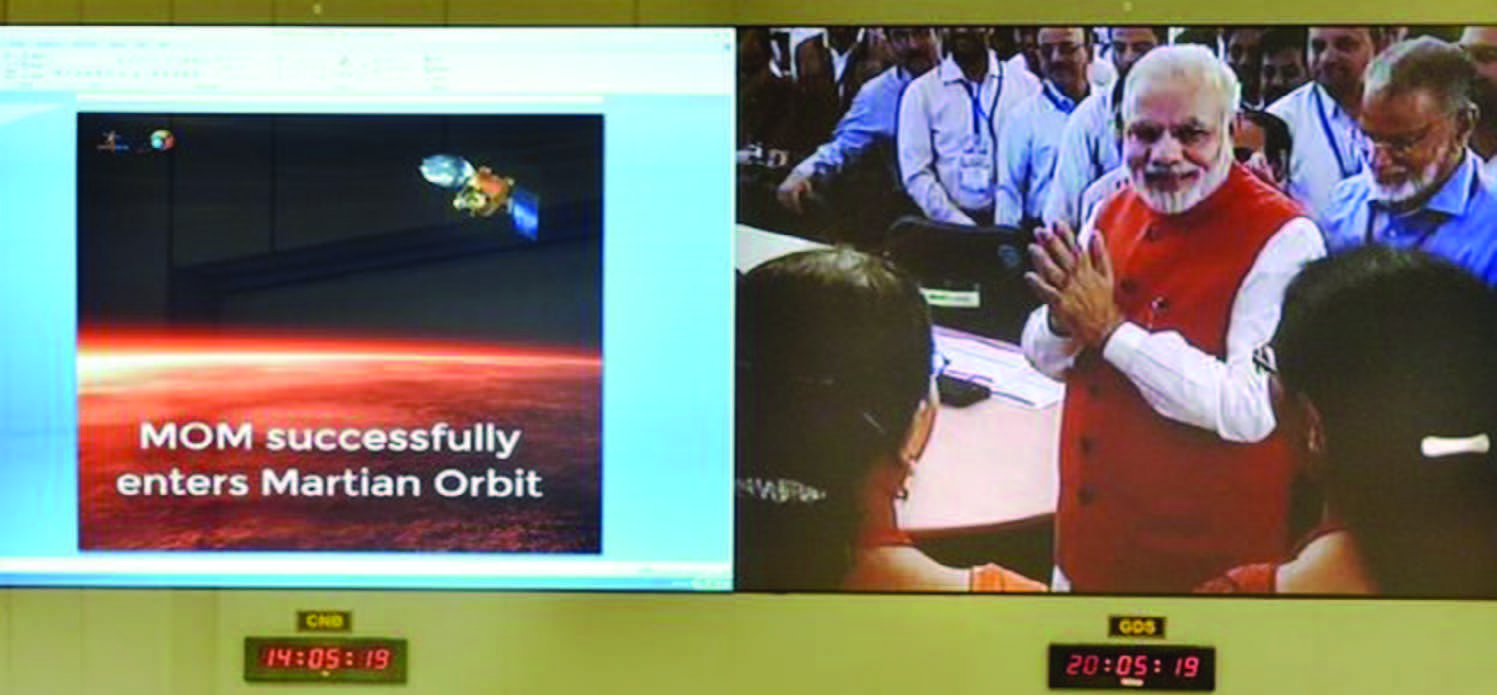
BENGALURU (TIP): “We have gone beyond the boundaries of human enterprise and innovation,” an exultant Prime Minister Narendra Modi said, standing alongside Indian Space Research Organization (ISRO) scientists at the command center in the southern tech hub of Bangalore. “We have navigated our craft through a route known to very few.” India is the first country to reach Mars’ orbit on a maiden venture and the first Asian country to launch a successful Mars mission, all with a much cheaper price tag than any Mars mission before it.
India now joins an elite club of nations who have successfully carried out interplanetary space missions, and has scored a significant point in its rivalry with China. The Mangalyaan satellite was confirmed to be in orbit shortly after 0800, Indian time., September 24 . It is, without doubt, a considerable achievement. This is a mission that has been budgeted at 4.5bn rupees ($74m), which, by Western standards, is staggeringly cheap. The American Maven orbiter that arrived at the Red Planet on Monday is costing almost 10 times as much. Back in June, Indian Prime Minister Narendra Modi even quipped that India’s real-life Martian adventure was costing less than the make-believe Hollywood film Gravity. Even Bollywood sci-fi movies like Ra.One cost a good chunk of what it has taken to get Mangalyaan to Mars. So how has India done it? For sure, people costs are less in this populous nation, and the scientists and engineers working on any space mission are always the largest part of the ticket price. Home-grown components and technologies have also been prioritized over expensive foreign imports. But, in addition, India has been careful to do things simply.
“They’ve kept it small. The payload weighs only about 15kg. Compare that with the complexity in the payload in Maven and that will explain a lot about the cost,” says Britain’s Prof Andrew Coates, who will be a principal investigator on Europe’s Mars rover in 2018. “Of course, that reduced complexity suggests it won’t be as scientifically capable, but India has been smart in targeting some really important areas that will complement what others are doing.” Mangalyaan has gone equipped with an instrument that will try to measure methane in the atmosphere. This is one of the hottest topics in Mars research right now, following previous, tantalizing observations of the gas. Earth’s atmosphere contains billions of tons of methane, the vast majority of it coming from microbes, such as the organisms found in the digestive tracts of animals. The speculation has been that some methane-producing bugs, or methanogens, could perhaps exist on Mars if they lived underground, away from the planet’s harsh surface conditions.It is a fascinating prospect. So, even though Mangalyaan has a small payload, it will actually address some of the biggest questions at the Red Planet. Western scientists are excited also to have the Indian probe on station. Its measurements of other atmospheric components will dovetail very nicely with Maven and the observations being made by Europe’s Mars Express. “It means we’ll be getting three-point measurements, which is tremendous,” says Prof Coates. This will enable researchers to better understand how the planet lost the bulk of its atmosphere billions of years ago, and determine what sort of climate it could once have had, and whether or not it was conducive to life.
I have read a lot about the criticism of Mangalyaan and India’s space program.There’s an assumption among many, I guess, that space activity is somehow a plaything best left to wealthy industrial countries; that it can have no value to developing nations. The money would be better spent on healthcare and improved sanitation, so the argument goes.But what this position often overlooks is that investment in science and technology builds capability and capacity, and develops the sort of people who benefit the economy and society more widely. Space activity is also a wealth generator. Some of the stuff we do up there pays for stuff down here. The industrialized nations know it; that’s one of the reasons they invest so heavily in space activity. Consider just the UK. It has dramatically increased its spending on space in recent years.
The government has even identified satellites as being one of the “eight great technologies” that can help rebalance the UK economy and drive it forward. India wants a part of this action, too, and in Mangalyaan and its other satellite and rocket programs, the nation is putting itself into a strong position in international markets for space products and services. Commenting on the spectacular success of the Mars Mission, New York based attorney Ravi Batra said in a statement to The Indian Panorama: “India’s MOM’s success as the 1st nation to do so, and that too on a $74 million budget, speaks to India’s riches being in its people. PM Modi’s arrival in the United States for the GA and Pres. Obama now has a new credential – India’s people are smart and driven to touch the stars. Want to play together and build a better economy with Indian smarts?”
-

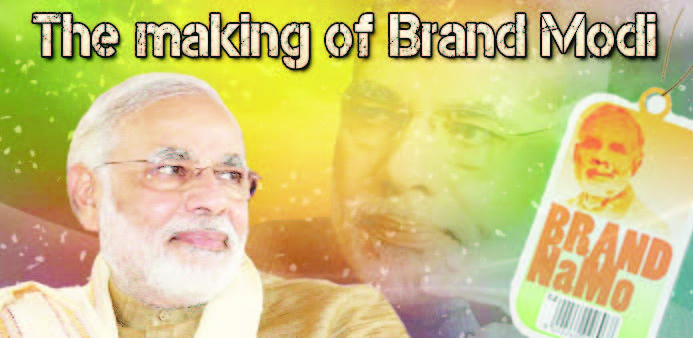
The Making of NAMO
A Hindu pracharak becomes Prime Minister of India. Here are milestones in his journey of ascension to the pinnacle of power through landslide election victory in the 16th General Election of the world’s largest democracy.
arendra Modi was born on 17th Sept 1950 in a middle class family of grocers in the small town of Vadnagar- the Temple Town of ancient India which is Varanasi of Gujarat. The town has a long and varied history. Sharmistha Lake, Hatkeshvar Mahdev and artistic Toran Gate are hallmarks of the past glory of the capital of Anart Province. Chinese traveler Yuan Swang visited this town in the sixth century. Akbar’s music maestro Tansen came to normalcy after listening to perfect Meghmalhar singing of Naggar girls Tana and Riri. Poet Narsinh Mehta ‘s son got married to Vadnagar Naggar Community’s bride here. Small town boy Narendra Modi imbibed the past glory of his birth place in Mehsana district of Gayakwad princely state in Gujarat. Modi became a member of RSS in childhood and acquired deep understanding of Hinduism, reading Hindu Scriptures and literature of Swami Vivekananda. He left home with the consent of his parents at a young age of 17 in search of his life’s mission. He traveled extensively and spent some time in the Himalaya , meditating in the tradition of Buddha who has influenced his life and thought considerably. Returning home after some time, he became a PRACHARAK with Rashtriya Swayamsevak Sangh in 1972. He stayed with his maternal uncle in Ahmedabad and helped him selling common people’s popular drink, tea, a job which he had done before in his father’s tea stall at the Vadanagar Railway station. One astrologer who was dinner guest at their family house in Vadnagar predicted to his mother that some day her son Narendra will either be a great sage of Shankaracharya’s caliber or supreme commander of the nation if he enters politics. Jawaharlal Nehru was supreme commander in Prime Minister’s position in those days in India. Savarkar’s message to Hinduise politics and militarise Hinduism appealed to young Narendra. He worked underground during the emergency period 1975-1977 and went jail briefly.
Then, Jan Sangh adopted a new name BJP after losing partnership in the government with the collapse of Prime Minister Morarji Desai’s government . Narendra Modi actively participated in all activities of BJP especially Advani’s Rath Yatra and Unity pilgrimage of Murli Manohar in 1989-90. He was assigned the responsibilities of General Secretary in Gujarat and subsequently at the national level. Modi acquired mastery in public relations and party organization. His contribution in the capacity of General Secretary was well noticed by party stalwarts Advani and Vajpayee. He did not contest any legislative election and had no experience in any capacity in government when one day in the first week of October, 2001, Prime Minister Vajpayee asked him to be the Chief Minister of Gujarat in replacement of Keshubhai Patel who had received more complaints than complements in his handling of problems in the aftermath of earthquake in Kutch -Bhuj area on the Republic Day in January, 2001.
A Timeline :
October 7,2001 Modi takes oath of office of Chief Minister. He is not a member of the legislative body.
● Feb.24,2002 : He is elected from Rajkot constituency . Next day he is officially admitted into membership of Gujarat Assembly.
● Feb 27,2002 . At Godhara Station in South Gujarat 59 passengers including women and children are burned down by the terrorist group which praised Bin Laden and his methods of terrorism. Those killed were active members and volunteers of Hindu organizations .In retaliation riots spread in Ahmedabad and elsewhere in Gujarat. Both Hindus and Muslims became targets of each others’ wrath for weeks .Media all over the world gave coverage of these events in their own ways.
● April 12,2002 BJP High Command meeting in Goa where discussion on the riots remained major issue, some demanded removal of Modi . Narendra Modi offered his resignation . Prime Minister Vajpayee was not soft towards Modi but Advani was firm on not accepting Modi’s resignation.
● July 19, 2002 C.M. Modi dissolved assembly and opted to seek new mandate
● December 15, 2002 . Favorable election results: BJP won 127 seats out of 182 assembly seats. Modi took oath for the second time in the presence of the Prime Minister. First time in India, a Prime Minister attended oath ceremony of a state chief minister. The Modi Government received national and international praise for restoration programs of earthquake disaster. Seminars for continuing education for elected assembly members and EGovernance were Modi’s new initiatives. Prime Minister Vajpaiyee invited the dynamic C.M. Modi to be in his entourage of Russia visit. Modi observed keenly Russian growth model . He vowed to make Gujarat a shining super state in India . The first vibrant Gujarat festivity program in 2003 attracted attention of investors . Progress
Person Modi visited China, Japan and other countries to promote investment in Gujarat.
● May 21,2005. Rajiv Gandhi Foundation awarded Modi Government for the most well managed State.
● December 25,2007: Modi takes oath for the 3rd time after election victory.2012:
Modi became Chief Minister of Gujarat for the fourth time. In a lighter vein, he stated: ‘ I will remain CM for ever’.
But Modi was destined for a higher position, as the stranger had once predicted.
In September, 2013, Bharatiya Janata Party named him the party’s candidate for prime
Minister’s position. Modi had already nominated to lead the election campaign. With every passing day, it became clearer that Modi had succeeded in convincing voters of India that BJP could bring about a change to their advantage. Some doubted BJP could have the numbers to forma government with its allies, not to speak of forming a government on their own.
Some simply could not bear to see BJP in power. Eminent Economist Nobel Laureate A.K. Sen wrote: “I do not want Modi to be my Prime Minister “.
However, voters of the largest democracy in the world countered him : “WE WANT MODI TO BE
OUR PRIME MINISTER.”
And there he is. Let us wait and watch his work. -

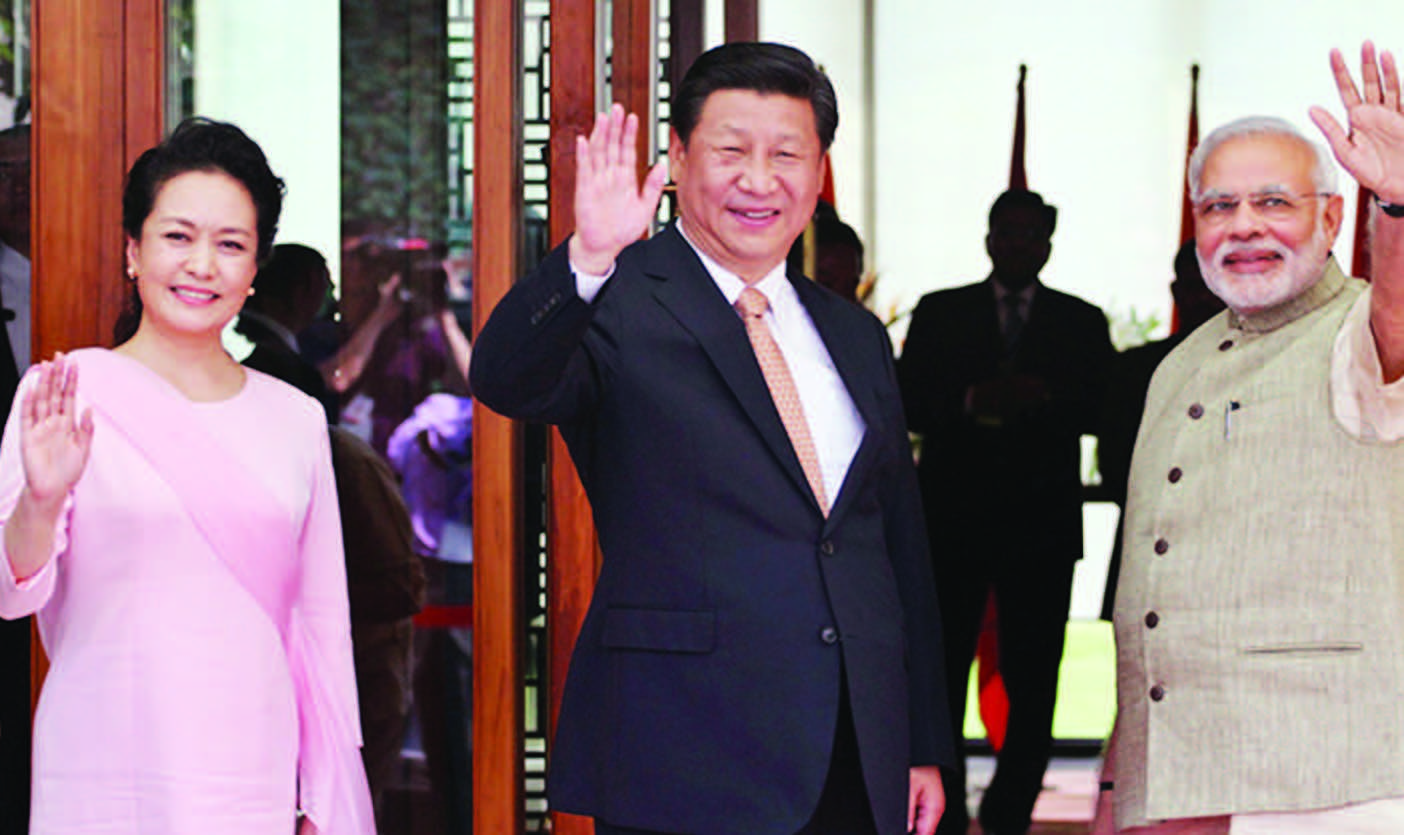
India, China Vow Cooperation: Sign 12 Agreements in Delhi
NEW DELHI (TIP): India and China have signed 12 agreements in Delhi, one of which will see China investing $20bn in India’s infrastructure over five years. At a news conference with Chinese President Xi Jinping, India’s PM Narendra Modi said “peace on the border” was important for progress. Talks came as India accused China of fresh territorial incursions in Ladakh.
China is one of India’s top trading partners but they vie for regional influence and dispute their border. Mr Modi and Mr Xi made separate statements at the end of their talks in Delhi on Thursday, September 18.
Under the investment plans, China pledged to:
● Help bring India’s ageing railway system railway system up-to-date with high-speed links and upgraded railway stations.
● Set up industrial parks in Gujarat and Maharashtra.
● Give more market access to India to products, including pharmaceuticals and farm products. Both sides also focused on increasing cooperation in trade, space exploration and civil nuclear energy. Mr Modi called for an early settlement on the disputed common border between the two countries and said the “true potential of our relations” would be realized when there was “peace in our relations and in the borders”.
There have been reports in the Indian media of Chinese troops trying to construct a temporary road into Indian territory across the Line of Actual Control (the de facto boundary) in the disputed Ladakh region over the past week. Mr Xi said he was committed to working with India to maintain “peace and tranquility” on the border. “China-India border issue is a problem which has troubled both sides for long… As the area is yet to be demarcated, there may be some incidents,” he said.
The border dispute is an old one, dating back to 1914 when Britain, India’s former colonial power, signed an agreement with Tibet making the McMahon Line the de-facto border between the two countries. China has always rejected this. Both sides also claim each other’s territory – India, the Aksai Chin region of Kashmir and China refuses to recognize Ladakh and Arunachal Pradesh as part of India. There have been several incursions of Chinese troops across the border in these areas which have been highlighted by the Indian media. Diplomats from both sides, however, play down these transgressions.
The simple fact is that there are differing perceptions on where the border lies – what India believes is Chinese troops crossing into their territory is seen by Beijing as the exact reverse: Indian troops occupying Chinese land. It is extremely unlikely that these confrontations will lead to an outright conflict or even sour ties between the two countries. But they do reflect the suspicion and distrust that exist on both sides of the border. Mr Xi began his visit in Gujarat, the homestate of Mr Modi, on Wednesday, before heading to Delhi.
China has pledged to upgrade India’s ageing railway tracks On Wednesday, the two sides signed several agreements, including one to set up a Chinesebacked industrial park in Gujarat. Indian and Chinese companies have also signed preliminary deals worth more than $3bn (£1.8bn) in aircraft leasing and telecoms, among other sectors. Despite the continuing tensions, trade between India and China has risen to almost $70bn (£43bn) a year, although India’s trade deficit with China has climbed to more than $40bn from $1bn in 2001-2002. -

1,000 Chinese soldiers enter India, Army rushes 3 battalions to LAC
NEW DELHI: Nearly 1,000 Chinese soldiers intruded into India in Ladakh’s Chumur sector on September 18 a day when Chinese President Xi Jinping is on a visit here. According to Army sources, nearly 1,000 Chinese soldiers moved inside the Line of Actual Control (LAC) in Jammu and Kashmir’s Ladakh region, and refused to go back. The Indian Army has rushed three battalions to the LAC in the sector.
This Chinese incursion is being touted as the worst in recent years. PM Narendra Modi raised the issue of incursions with Chinese President Xi Jinping last night during their meeting. The issue will be raised again today, MEA spokesman Syed Akbaruddin said today. National security adviser Ajit Doval is said to be monitoring the situation himself. A flag meeting that was held on Wednesday to diffuse the gnawing tension was of brigadier-level. It was held at a border personnel meeting point in Chushul, where the issue of intrusion of Chinese civilians in the Demchok area was also discussed, Army sources said. The meeting discussed the situation in Chumar where the Chinese troops have entered into Indian area and have been asked to leave, they said.
This was the second flag meeting that has taken place in the last one week between the two sides to defuse the situation. Chumar is one of the very few places along the Line of Actual Control where access to the border areas is easier from the Indian side and this place has witnessed several face-off situations in the last two-three years. It is being reported that senior members of the external affairs ministry and defence ministry are in constant touch with their counterparts in China to bring a swift end to the growing troubles at the border. -

Lanka backs China’s sea ‘Silk Route’
COLOMBO: Chinese President Xi Jinping won Sri Lanka’s support on Tuesday for a proposed maritime “Silk Road” linking China with Europe, and helped launch billion-dollar power plant and port city projects funded by his government. Xi, the first Chinese leader to visit Sri Lanka in 28 years, and President Mahinda Rajapaksa oversaw the signing of 27 agreements in areas including highways and the construction of a joint coastal and marine research centre. They also agreed to start negotiations on a free trade agreement. Before departing for India on sept 17, Xi planned to help launch Colombo Port City, being constructed on an artificial island off Colombo with $1.4 billion in Chinese loans.
-

China court: Virginity worth $5,000
SHANGAHAI (TIP): A Chinese woman who sued a man for “violating her right to virginity” after he wooed her with false promises has been awarded nearly $5,000 by a court, reports said on Sept 17. The two were dating but after the woman, surnamed Chen, found out her boyfriend was already married she sued him for swindling her out of her virginity, accusing him of pretending to be single and pledging to make her his wife, Shanghai media said. A spokesman for the Pudong New Area People’s Court confirmed the case and the judgement.
After the man, surnamed Li, suddenly broke off contact, Chen burst into his home and found him with his wife. Chen sued, accusing him of violating her rights to virginity and health and demanding more than $81,000 in psychological damages, plus medical costs of $250. The court found the original demand “excessive” but said in its ruling that the “right to virginity” should be protected by law as it was a “moral right” related to “sexual freedom, sexual safety and sexual purity”. “Violating the right to virginity might lead to harm to a person’s body, health, freedom and reputation… it ought to be compensated,” the court said, though it did not explain how it reached the precise figure. -

Boy discovers 3000-year-old bronze sword in China
BEIJING (TIP): A 3000-year-old bronze sword has been discovered in a local river by an 11-year-old child in east China’s Jiangsu Province. Yang Junxi discovered the rusty sword on July 2 when he was playing near the Laozhoulin River in Gaoyou County. While washing hands in the river, Yang touched the tip of something hard and fished out the metal sword. He took it home and gave it to his father Yang Jinhai. Upon hearing the news, people began flocking to Yang’s home, Jinhai said. “Some people even offered high prices to buy the the sword, but I felt it would be illegal to sell the cultural relic,” Jinhai told sate-run Xinhua news agency.
After considering his options, the father sent the sword to the Gaoyou Cultural Relics Bureau on September 3. The bureau arranged a joint team of local cultural relics experts to identify the sword. They identified sword’s material, length, shape and other major factors. Initial identifications found the 26-cm-long yellow-brown sword could be dated back to more than 3,000 years ago, around the time of the Shang and Zhou dynasties, said Lyu Zhiwei, head of the cultural relics office of the bureau. “There was no characteristic or decorative pattern on the exquisite bronze sword. Made in a time of relatively low productivity, its owner would have been an able man with the qualification to have such artifact,” he said. -

Burger King releases black burger with ‘bamboo charcoal cheese and squid ink sauce’ in Japan
TOKYA (TIP): Burger King in Japan is taking bizarre fast food to new heights with black cheeseburgers complete with black buns, black cheese and black sauce. The chain started the Premium Kuro Burger (kuro means “black”) in 2012, colouring the bread with bamboo charcoal and adding squid ink to the ketchup. Last year it evolved to the Kuro Ninja, which had all the above with a slice of bacon for a tongue, and now Burger King is on the third generation. Apparently Japanese customers quite liked the bamboo charcoal, so it is now in the cheese slices as well, along with beef burgers made with black pepper, an onion and garlic sauce with squid ink and the black bread.While the smaller Kuro Pearl contains the burger, cheese and sauce, the upgraded Kuro Diamond also comes with more edible-looking lettuce, tomato, onion and the usual trimmings. A press release from Burger King Japan said there had been a “favourable reception” to previous Kuro burgers, which have all be limited editions. The current inventions will be available from 19 September, with the Kuro Pearl priced at 480 yen (£2.80) and the Kuro Diamond at (£4.00).Black buns been seen before, when rivals McDonald’s released “ying and yang” style burgers in China. Chinese bloggers reasoned that the concept came from a proverb about black and white representing good and evil in society.
-

CHINA PUTS 4 ON TRIAL FOR TRAIN STATION ATTACK IN KUNMING
BEIJING (TIP): Trials started on Friday for four people accused of killing 31 people in a knife attack outside a railway station in the southern Chinese city of Kunming. Kunming Intermediate People’s Court said in a statement released Friday that Iskandar Ehet, Turgun Tohtunyaz and Hasayn Muhammad were standing trial on charges of organizing and leading a terror group and murder.
The fourth person, Patigul Tohti, was being tried on charges of joining a terror group and murder. The court said they were part of a terror group that plotted the March 1 attack, when five knife-wielding assailants hacked 31 people to death and injured another 141 people. The attack shook the country amid escalating ethnic tensions between China’s Muslim minority group of Uighurs and the majority Han people, which were once contained in the ethnic region of Xinjiang but began to spill to the rest of China late last year. The court did not identify the suspects’ ethnicity, but all have Uighur-sounding names.
Beijing has blamed religioninfluenced terrorists with foreign ties for the Kunming attack and other violent incidents, which have left hundreds of people dead this year in and outside Xinjiang. Critics say China’s suppressive ethnic policies and practices as well as economic disenfranchisement have increasingly alienated the Uighurs, who may have been driven into religious extremism. The Kunming court said the suspects, influenced by religious fundamentalism, had been plotting the attack since December.
Local authorities arrested Ehet, Tohtunyaz and Muhammad two days before the attack as they were attempting to illegally cross the border, the court said. Having lost the contact with the three men, five other members of the group mounted the attack as planned, the court said. Police shot dead four attackers and captured Tohti on the scene, the court said. More than 300 people, including some victims and relatives of the suspects, were in attendance of the trials, the court said. -

INDIA: THE ODD BRIC OUT
India must strike a balance between its new emerging partners and beneficial Western ties
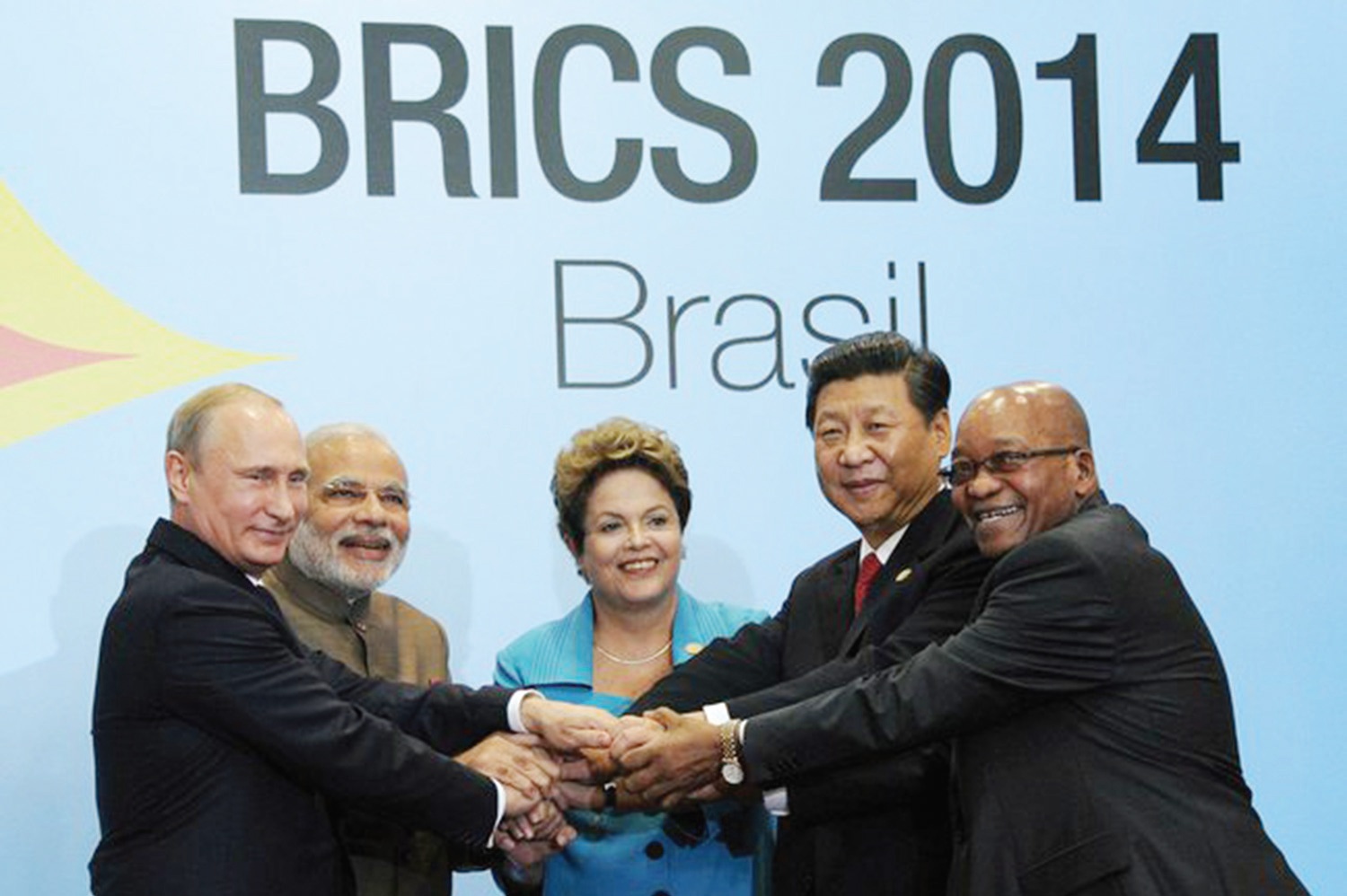
India would be foolish to join an anti-Western bloc as India’s rise is inherently tied to the West. Given the popular view that the BRICS are opposed to the West, India finds itself in the unique position of being a part of the BRICS collective as well as having overtly friendly relations with the U.S., a relationship that is likely to further improve in the future as Modi visits the U.S. and ties strengthen.
By Stephen Junor The BRICS nations have rapidly evolved from a group of emerging economies into political contenders in a new world, driven by the search for an alternative to Western hegemony. Recent Western failures have also helped to launch the BRICS concept as an alternative, and have possibly pushed the countries closer together than they may have initially intended.
There are also differences (the China-India border disputes for example) that would have seriously tested the relationship between other countries, but for now they are responsible for the multi-polar world that appears to be emerging. The Western approach toward BRICS has generally been one of skepticism, but when it comes to India there is a conspicuously different portrayal in the media compared to the rest of the countries. Although the recent U.S.-Africa summit suggests friendly relations, South Africa has always seen itself as a member of the global South and champions countries that don’t acquiesce to U.S. dominance. The conflict between the U.S. (somewhat supported by much of Europe) and Russia is well-known, and the media consistently highlights the conflict and difference between the U.S. and China.
American interference in Latin America has made relations between Brazil and the U.S. touchy, and the rhetoric from Brazil in the wake of NSA spying last year was scathing. Despite relations taking a hit last year when Indian diplomat Devyani Khobragade was arrested in New York, U.S. and Western media have generally been friendly toward India, exemplified by President Barack Obama’s invitation to newly elected Prime Minister Narendra Modi to visit the U.S., despite Modi previously being blocked from the U.S. over his failure to stop sectarian violence as Gujarat’s chief minister in 2002, when more than 1,000 people were killed. It is likely that the U.S. views India as a potential foothold in Asia.
India is often heralded in the Western media as the world’s largest democracy, in an attempt to provide common ground and a nod of disapproval to the likes of China and Russia. In contrast to the other BRICS members, Indian elites aspire to the wealth and influence of the U.S., and it is only natural that this aspiration would manifest itself in the politics of the country. Modi is a proponent of free market capitalism and this bodes well for relations with the U.S., which will see him as an accessible figure.
There are further important differences between India and the rest of the BRICS nations.World Bank data shows that India’s GDP per capita severely lags behind the rest at around $1,500, four times less than China and South Africa, seven times less than Brazil and almost 10 times less than Russia. India hasn’t replicated the rapid growth of the other BRICS countries since the turn of the millennium, and this is also reflected in a slower reduction in the poverty gap. Just under 25 percent of the population still live on less than $2 a day, compared to 10 percent or less for the other countries. Such a severe development problem will hinder Indian growth in the near future and will see it fall further behind.
Modi will be expected to implement reforms that improve growth and lift hundreds of millions out of crippling poverty. Growth alone will not solve the poverty problem in India however. When it comes to literacy rates in adults, the 2011 Indian census recorded a figure of 74 percent while the rest of the BRICS nations record over 90 percent. Literacy among women is even lower at 64 percent. Infrastructure in India is also sub-standard. An overburdened transport systems and insufficient electricity grids that are overly reliant on coal contribute to the poverty problem while hindering growth. Rapid urbanization is also putting pressure on these systems, making the problem more acute.
India also has a digital problem as only 15 percent of the population uses the internet, compared to upwards of 40 percent for the other BRICS. Connectivity is important, particularly for those often marginalized in society, as evidence points towards benefits for education and health. India has a distinctive set of problems that the other BRICS countries have largely moved beyond. Given the political and economic clout of the BRICS collective, India could soon find itself left behind within the group. Indeed the statistics above and the obvious clout of China and Russia suggest that India may lack influence within the group already, despite efforts to spread power within the recently announced New Development Bank.
This is where the U.S. could become more influential with India. In a recent interview with The Diplomat, Sadanand Dhume, a resident fellow at the American Enterprise Institute (AEI) and Wall Street Journal columnist, said that India would be foolish to join an anti-Western bloc as India’s rise is inherently tied to the West. Given the popular view that the BRICS are opposed to the West, India finds itself in the unique position of being a part of the BRICS collective as well as having overtly friendly relations with the U.S., a relationship that is likely to further improve in the future as Modi visits the U.S. and ties strengthen.
India will need to manage its relationships carefully, as it will not want to find itself isolated from either the U.S. or the BRICS. It is also important that India doesn’t become geopolitically caught between the two sides: Any point of tension between the West and an individual BRICS country could reflect on the rest of the group. Indeed if India wants to achieve strong growth and solve its development crisis, then it will need to harness relationships with both sides. The next few years will be crucial for Indian development, and as the international political situation slowly evolves, it will be interesting to see how India locates itself in relation to the West and the other BRICS countries.
(Stephen Junor writes on the rise of BRICS and geopolitics) (Source: The Diplomat) -

Jan Dhan Yojana opens a new door for RuPay gateway
MUMBAI (TIP): As Pradhan Mantri Jan-Dhan Yojana (PMJDY), the financial inclusion scheme launched by Prime Minister Narendra Modi late last month notches up impressive numbers and expects to meet its 7.5 crore accounts target well within 100 days, payment gateway RuPay is experiencing a boost in fortunes.
Payment gateways are platforms that help banks facilitate electronic money transfers. India is only the fourth country in the world after the US, Japan and China to have its own national payment gateway, in RuPay. With the PMJDY getting nearly 2.5 crore new bank accounts within seven days of launch, each account holder gets a RuPay debit card along with his/her account.
As a result, RuPay is notching up numbers. According to the National Payments Corporation of India (NPCI), which developed the platform, the RuPay card has a current base of 2.5 crore users and is seeing about seven lakh inter-bank transactions a day. With the financial inclusion scheme coming into play, the total number of RuPay card holders is likely to surge.
NPCI will declare official numbers at the end of this quarter. AP Hota, Managing Director and CEO of National Payments Corporation of India Ltd (NPCI), said that the target for the year-end was six crore cards. By March 2015, RuPay may be able to add an additional 10 crore accounts. If the Center’s financial inclusion scheme lives up to its hype, the sheer number of RuPay cards in the country will create a critical mass that will help create a huge network of retailers who accept RuPay cards.
According to Reserve Bank of India statistics, the total number of credit cards in India is currently at around 1.9 crore while the number of debit cards issued is at 40 crore. Currently, global organizations such as Visa and MasterCard dominate this space. But Hota says competing with MasterCard and Visa is not a priority. “The perceived competition with MasterCard and Visa is not relevant at this stage. They are global companies with trillion-dollar revenues and deep pockets.
We are a small company with INR 100- crore capital,” he said. The main challenges for RuPay are to get acceptance among the high-income bracket and to increase the number of transactions among those in the lower income bracket. Partner banks have an incentive to push RuPay to customers as transaction costs through this gateway are expected to be at least 40 per cent lower than through Visa and MasterCard.