Tag: China

  • JAPANESE NEWSPAPER APOLOGIZES FOR FALSE FUKUSHIMA REPORT

    JAPANESE NEWSPAPER APOLOGIZES FOR FALSE FUKUSHIMA REPORT

    TOKYO (TIP): The publisher of Japan’s leading newspaper apologized to readers on Sep 11 for several serious errors in its reporting, retracting an article that claimed workers abandoned their posts during the Fukushima nuclear disaster.

    Asahi’s publisher Tadakazu Kimura, speaking at a hastily arranged news conference, made the apology after a confidential government document cited in the daily’s report was finally released to the public with no mention of a mutiny by plant workers. “I offer profound apologies to our readers and people at Tokyo Electric Power Co. (TEPCO),” the 60-year-old publisher said. He said he would decide whether or not to resign after enacting “revival through sweeping reform.” The article published on May 20 said 90 per cent of workers at the Fukushima Dai-ichi nuclear power plant had left the complex, disobeying the plant chief’s order to stay put in the worst nuclear accident since Chernobyl in 1986.

    TEPCO operates the plant, located 220 kilometres (138 miles) northeast of Tokyo. A massive earthquake and tsunami crippled its cooling systems and sent reactors into meltdown in March 2011. The daily said about 650 employees, or 90 per cent of the plant’s workforce, retreated to another seaside TEPCO nuclear plant 12 kilometres away when the nuclear crisis worsened a few days after the accident.

    The official document released on Thursday recounted the testimony of plant chief Masao Yoshida to a government investigative panel, with no trace of staff “disobeying Yoshida’s order” as Asahi had claimed. Yoshida died of cancer in July last year. Other dailies which also had access to the then confidential statement had already cast doubt on the article.

    In the same news conference, Kimura also admitted a highly contentious report published 32 years ago on the topic of Japan’s wartime sexual enslavement of Korean women was also false. That report cited a Japanese writer who claimed to have witnessed the kidnapping of women on the South Korean island of Jeju for the purposes of sex slavery, which has since been discredited by independent research by rival newspapers and academics. Asahi admitted in early August that its 1982 article on the comfort women and follow-up reports were based on a “false” statement by the witness, but Kimura’s apology was the publication’s first in relation to it.

    “I apologize to readers for publishing the erroneous articles and being too late in making the correction,” he said. The admission of the mistake has boosted the country’s conservative forces, which have insisted there was no “sex slavery” at the frontline brothels and that many of the comfort women were highly paid prostitutes. Prime Minister Shinzo Abe told a radio talk show on Thursday the report had “agonized many people and impaired Japan’s reputation in the international community”. With few official records available, researchers have estimated up to 200,000 women, many from Korea but also from China, Indonesia, the Philippines and Taiwan, served Japanese soldiers in “comfort stations”.

  • China snubs Dalai Lama, says it can appoint his successor

    China snubs Dalai Lama, says it can appoint his successor

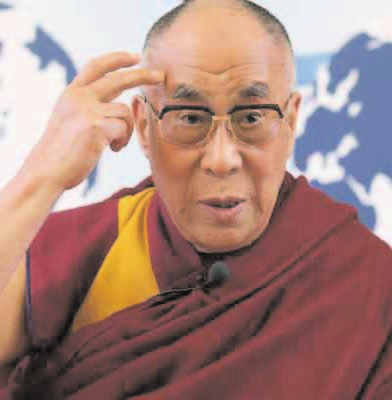
    BEIJING (TIP): Rejecting the Dalai Lama’s views on ending the system of reincarnated Tibetan spiritual head, the Chinese government on September 11 said it will preserve the centuries old tradition among Tibetan Buddhists, saying it has the powers to appoint the next Dalai Lama. “The title of the Dalai Lama is conferred by the Chinese government,” said Chinese foreign ministry spokesperson Hua Chunying.

    China had a “set religious procedure and historic custom”, she said. “The 14th Dalai Lama has ulterior motives and is seeking to distort and negate history, which is damaging the normal order of Tibetan Buddhism,” Hua told reporters at a briefing. The Dalai Lama, 79, recently told German newspaper Welt Am Sonntag that the tradition of the spiritual and temporal head of the Tibetans could end with him. He said Tibetan Buddhism wasn’t dependent on a single person.

    He had earlier said he won’t be reborn in China if Tibet wasn’t free and that no country, including China, had the right to choose his successor “for political ends”. The Dalai Lama’s latest statement about an end to the tradition appears to have hurt the officially atheist Communist Party’s plans to maintain peace and order in Tibetan-speaking areas, which is spread across five Chinese provinces. “China follows a policy of freedom of religion and belief, and this includes respect to and protection of Tibetan Buddhism,” Hua said.

    In Tibetan Buddhism, senior-most Lamas can take years to identify a child deemed a reincarnation of the previous Dalai Lama. The search is usually limited to Tibet. But there is fear in China that the next Dalai Lama may be identified from some born in a country other than Tibet or China, and possibly the US, which might further complicate the situation.

    The reincarnation debate first surfaced in 1995 after the Dalai Lama named a boy in Tibet as the reincarnation of the previous Panchen Lama, the second highest figure in Tibetan Buddhism, The boy has not been seen since although government officials say he is growing up like a normal Chinese kid. China chose another boy and appointed him the Panchen Lama. The Panchen Lama occasionally makes statements supportive of Beijing’s policy on religious affairs.

  • Shinzo Abe becomes first Japanese PM to visit Sri Lanka in 24 years

    Shinzo Abe becomes first Japanese PM to visit Sri Lanka in 24 years

    COLOMBO (TIP): Shinzo Abe on Sept 10 became the first Japanese prime minister to visit Sri Lanka in 24 years, on the second leg of a South Asian tour that sought to assert Tokyo’s interest in a region where it has ceded influence to China. Abe was greeted by Sri Lankan President Mahinda Rajapaksa at Colombo’s international airport, where a new passenger terminal will be built with the help of a $330 million Japanese development loan.

    The two leaders struck “a new partnership between maritime countries” that reflects Japan’s interest in keeping open shipping lanes that supply oil and liquefied natural gas from the Middle East to feed its energydependent economy. “The president and I shared the view on building friendly ties and partnership between the two maritime countries,” Abe said after the meeting. Asian great-power diplomacy has stirred into life since the rise to power of Indian nationalist Narendra Modi, who announced his intent to play an active role on the world stage by inviting regional leaders to his inauguration in May.

    Abe comes to India’s backyard after hosting Modi for summit talks that yielded a Japanese pledge to invest $34 billion in India and launched a “special, strategic global partnership” to deepen security cooperation.

  • Chinese billionaires list touches 300: Report

    Chinese billionaires list touches 300: Report

    BEIJING (TIP): The number of billionaires in China has touched 300 by the end of 2013 mainly due to real estate boom, according to a new annual ranking of the wealthiest individuals in the communist nation, world’s second largest economy. The personal fortunes of 300 Chinese topped 10 billion yuan (USD 1.6 billion) in 2013, a new annual ranking of the wealthiest individuals by the Hurun Report of “China Rich List,” said.

    The wealth of 160 of the multibillionaires is in the form of invisible assets, the report said. It also counted 8,300 Chinese with wealth reaching one billion yuan, 200 more than a year earlier. The number whose wealth tops 10 million yuan also surged by 40,000 to 1.09 million, state-run Xinhua news agency reported. The Hurun Report, a monthly magazine best known for its annual rich list, attributed the increase to the country’s overall GDP growth and appreciation in the value of real estate. It forecast the number of people in China with personal wealth topping 10 million yuan would reach 1.2 million in the next three years, it said.

  • TIGER, MICKELSON JUST GETTING OLDER: MCILROY

    TIGER, MICKELSON JUST GETTING OLDER: MCILROY

    ATLANTA (TIP): World number one Rory McIlroy isn’t convinced the absence of both Tiger Woods and Phil Mickelson from the US PGA Tour Championship signals a changing of the guard in golf. But the 25-year-old reigning PGA Championship and British Open champion noted Wednesday, the eve of the seasonending event, the passing years for Mickelson, 44, and Woods, who turns 39 in December.

    “They are just getting older,” McIlroy said. Phil is 43 or whatever and Tiger is nearly 40. So they are just getting into sort of the last few holes of their careers and that’s what happens. It obviously just gets harder as you get older. “I’ll be able to tell you in 20 years how it feels.” It is the first time since 1992 that the Tour Championship will be played without either Woods or Mickelson in the field, but McIlroy believes they are far from finished, citing Mickelson’s runner-up place at last month’s PGA Championship and an injurymarred season for Woods.

    “When he gets back to full fitness you will see him here,” McIlroy predicted. Northern Ireland’s McIlroy is among five playoff points leaders in the field of 29 who can win the $10 million playoff crown by capturing the tournament, the others being Americans Bubba Watson, Hunter Mahan, Chris Kirk and Billy Horschel. “Anything other than a win here would be a disappointment,” McIlroy said. “After I finished the PGA, all my focus was on trying to win this. “Obviously, if I finish second or third and end up winning the whole thing, then that’s cool as well.”

    The field is one player less than usual because American Dustin Johnson, who in July took a season-ending leave of absence, qualified despite not playing for nearly two months. McIlroy, who has played for seven of the past nine weeks, went home to Florida between last week’s event in Denver and this week’s showdown in Atlanta at East Lake. “It’s amazing what a night in your own bed can do,” McIlroy said.

    “I was standing in the shower on Monday morning in Denver and I was thinking to myself: ‘Why am I going to Atlanta today?’ So I didn’t. “It was refreshing just to spend a little bit of time at home, dump a little bit of luggage I’ve been carrying with me the past four, five weeks. It was nice.” McIlroy still has the Ryder Cup in two weeks in Scotland and stops in Bermuda, Dubai, China and Australia before ending his 2014 campaign — a global workout that already has him pondering a cutback from 26 events to between 20 and 23 in 2015.

    “Sometimes you feel like you need to play,” McIlroy said. “Sometimes you feel like you need to play the week before a major. There’s a couple of events during the year that you feel obliged just because of where you’re from or to support a different tour.

  • Editor, scribes, PR executives held in China for extortion

    Editor, scribes, PR executives held in China for extortion

    BEIJING (TIP): Chinese police have detained eight journalists and public relations (PR) executives for alleged extortion in Shanghai. They include the editor-in-chief of a popular business news website and heads of two PR agencies. The Shanghai Municipal Public Security Office said the journalists of the news website 21cbh.com and PR firms worked together to extort money from dozens of companies since November 2013. They offered favorable coverage in return.

    China has covered journalists under its anti-corruption drive along with government officials. The move comes amid several investigations and detentions of journalists, including senior editors and presenters of the state broadcaster, China Central Television, on charges of bribery in recent weeks. The detained journalists usually targeted companies vulnerable to adverse media coverage. These included those seeking stock listing or undergoing management restructuring. The website ran positive stories with exaggerated content after receiving “huge payments”.

    Guangdong-based 21st Century Media Co, which runs the website, claims to be “the largest professional media operator in the Chinese financial and business media industry”. It owns major print publications like the 21st Century Business Herald, Money Week and 21st Century Business Review. Victims of this journalist-PR agency nexus included several major companies from Beijing, Shanghai and Guangdong. The two PR firms investigated are based in Shanghai and Shenzhen. The official Xinhua news agency gave surnames of the website’s editor in chief as Liu and his deputy as Zhou.

  • China president ‘cancels’ Pak trip over crisis

    China president ‘cancels’ Pak trip over crisis

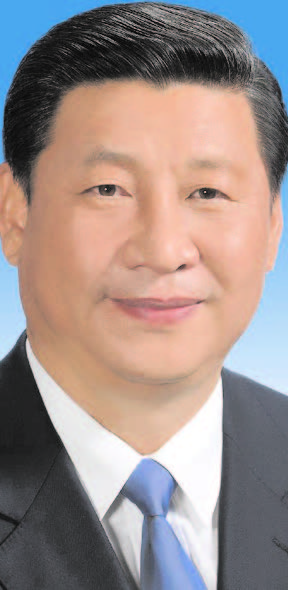
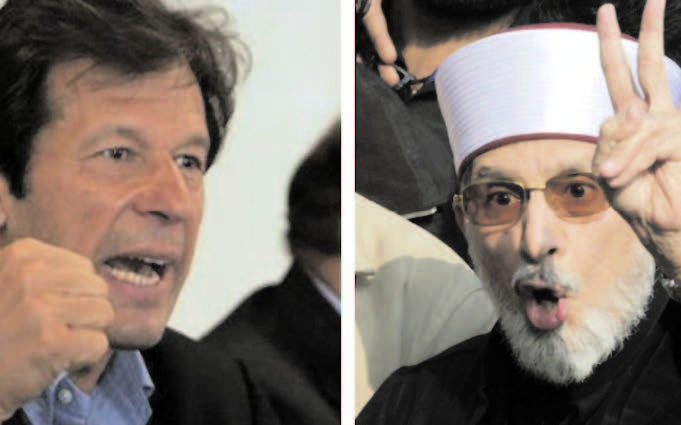
    ISLAMABAD (TIP): Chinese President Xi Jinping has cancelled his Pakistan visit later this month due to ongoing antigovernment protests in Islamabad. Federal minister Ahsan Iqbal tweeted this on Thursday while lashing out at opposition leader Imran Khan and Canadian- Pakistani preacher Tahir ul-Qadri, who are leading the protests in the heart of the Pakistani capital. “Congrats! IK and TUQ visit of China President is cancelled. Biggest diplomatic blow to Pakistan thanks to them.

    They have caused shame to us,” Iqbal tweeted. But foreign office spokesperson Tasneem Aslam said the Pakistan government has not been informed about any such development through diplomatic channels. National security advisor Sartaj Aziz said the leader’s visit will not be cancelled but may be delayed. The Chinese embassy officials too denied having any knowledge of the cancellation of Xi’s visit. “We are closely monitoring the situation in Islamabad,” said an official.

    A Chinese team had arrived in Islamabad on Wednesday to finalize the dates for the visit and to review the security situation in the backdrop of the protests. Reports said it did not give him clearance to visit Pakistan. Instead, it was suggested he should visit Lahore. But his security team did not give clearance for that either.

  • SOUTH AFRICA DENIES VISA TO DALAI LAMA FOR THIRD TIME

    SOUTH AFRICA DENIES VISA TO DALAI LAMA FOR THIRD TIME

    CAPE TOWN (TIP): For the third time in a row, South Africa has refused to grant a visa to the Dalai Lama for attending World Summit of Nobel Peace Laureates here next month, fearing that the Tibetan spiritual leader’s trip would jeopardize relations with China.

    The Dalai Lama’s representative in South Africa, Nangsa Choedon, said that Department of International Relations and Co-operation officials had informed her over phone that the Tibetan spiritual leader would not be granted a visa, the Independent Online reported. “For now the Dalai Lama has decided to cancel his trip to South Africa,” Choedon said. Choedon, however, said that her office was yet to receive a written confirmation from the South African government.

    She said the Dalai Lama, who lives in India, had applied for visa in New Delhi on August 27. The summit, an annual gathering, is being held in Cape Town for the first time, with the arrangements being made by a local committee formed by foundations representing four South African peace laureates – Anglican Archbishop Desmond Tutu, Nelson Mandela, FW de Klerk and Albert Luthuli. The refusal could provoke a boycott of the 14th annual peace summit to be held from October 13 to 15 as some Nobel Peace Laureates have told Tutu they will not come if the Dalai Lama is not permitted to enter the country.

    “I have heard that if the Dalai Lama is not allowed into the country, other invited guests have said they will not come,” Tutu’s spokesman Roger Friedman was quoted as saying by Independent Online. Cape Town mayor Patricia de Lille, who is to host the event, said she had instructed city officials to write to the government to establish whether the Dalai Lama had been denied a visa. “We have not heard from them yet, but I will not give up hope that our government will not humiliate the Dalai Lama again,” De Lille said.

    China accuses the Dalai Lama of campaigning for Tibet’s independence and regularly uses its economic and political might to put pressure on governments around the world to prevent contacts with him. It is the third time in five years that 79- year-old Dalai Lama had to cancel his visit to South Africa because of a failure to secure a visa. In 2009, a peace conference in Johannesburg, arranged to highlight the World Cup in South Africa, was cancelled because the Dalai Lama was refused a visa.

  • GIRL, 5, TRAPPED IN SPINNING WASHING MACHINE, SURVIVES

    GIRL, 5, TRAPPED IN SPINNING WASHING MACHINE, SURVIVES

    AUSTIN (TIP): A five-year-old girl is recovering in hospital after she became trapped in a washing machine in an American launderette. The child, who has not been named, was churned inside the drum for several minutes as it started its cycle on Tuesday.

    An employee at Le’s Washeteria cut the electricity supply when the alarm was raised and managed to get her out, ABC reported. Police said the girl climbed into the machine in Pasadena, Texas, while the woman she was with was not looking. The customer had been unable to get the machine to work and had gone to find a different washer. It was unclear how the door managed to close and lock the girl inside but the spin cycle was activated for several minutes before the woman noticed what had happened.

    Vance Mitchell, from Pasadena Police, told Fox News: “Unfortunately she spun around in that washing machine for several minutes and apparently it was on high speed. “She was tumbling pretty fast in there.”One person walked by and said they saw something flopping around in there they thought it was just a dress or something because it was moving pretty fast.

    “The child was airlifted to hospital as a precaution but here injuries were not said to be lifethreatening. Police are treating it as an accident.In 2010 a baby died in the US after being put into a washing machine with a pile of laundry for 40 minutes. Two girls aged two and four also died in China last year after their parents claimed they climbed inside and accidentally switched their machine on before shutting the door.

  • A New Sunrise

    A New Sunrise

    India and Japan have enjoyed the best of relations over the decades. Yet, their trade and economic partnership has, strangely, been underperforming, belying the promise and potential. Bilateral trade at $16.29 billion in 2013-14 accounted for just 2.13 per cent of India’s total trade and barely 1 per cent of Japan’s.

    The low-profile trade relationship is especially disappointing considering how much Japan has to offer in terms of investment and technology, and how much India needs both. India may be one of the largest recipients of Japanese ODA (Official Development Assistance), but when it comes to foreign direct investment (FDI), it ranks low, well behind China.

    Between April 2000 and February 2014, Japanese companies cumulatively invested $15.97 billion in India, accounting for just 7.46 per cent of total FDI inflows into India, which in a way epitomises the state of the economic relationship between the second and third largest economies of Asia. All this could change for the better, post-Prime Minister Narendra Modi’s visit to Japan, which seems to have breathed new life into economic relations.

    Japan has said it would invest 3.5 trillion yen ($33.5 billion) in India in the next five years in the sectors of infrastructure, manufacturing, transport and clean energy, and on smart cities, all thrust areas for development for the Modi government. To be sure, this is not the first time we have seen positive intent in the leadership of the two Asian giants to improve trade and investment. Ever since India liberalised in the early 1990s, there has been steady interest among Japanese companies and investors – but they have often been frustrated by complicated procedures and cumbersome processes.

    Actually, Japanese companies willingly ceded market space in India to competitors from South Korea and China rather than deal with the red tape. It is in this context that Mr. Modi’s promises of “red carpet, not red tape”, and a special track in the Prime Minister’s Office to facilitate Japanese investments, have to be seen. Mr. Modi harped on all the right themes including the three Ds that India can boast of, namely democracy, demography and demand, while making his pitch to Japanese business.

    With manufacturing costs increasing in China and given the political issues between the two countries, Japanese businesses are looking to diversify, and India presents a good choice with its huge market. New projects such as those for superfast trains and smart cities are ideal destinations for Japanese investments. The Modi government has to now move quickly to fulfil its promises of easing procedures and facilitating investment to capitalise on the optimism and goodwill generated from what has clearly been a successful visit in economic terms.

    British English (The Hindu)

  • CHINA OFFERS REWARD FOR MIXED MARRIAGES IN RESTIVE XINJIANG

    CHINA OFFERS REWARD FOR MIXED MARRIAGES IN RESTIVE XINJIANG

    BEIJING (TIP): A city in China’s Muslim-majority Xinjiang is offering cash rewards and welfare benefits for marriages between minority ethnic groups and majority Hans to promote unity in the province hit by Islamic militancy. Xinjiang’s Qiemo county government announced an annual cash reward of 10,000 yuan (US$ 1,627) for five years for mixed marriage couples besides welfare benefits but skeptics argued that it may not work.

    “We are no longer publicising the policy, but we will still go ahead with it,” an official from the county’s government office told state-run Global Times. The policy offers family members of mixed marriage couples privileged access to housing, education, employment and welfare benefits. Ninety per cent of these couples’ medical expenses after insurance fees will be covered by the local government.

    Their children will also be exempted from school fees within the county until high school, while an annual 5,000 yuan scholarship will be given to those who reach university. Their parents will also be eligible for housing and medical benefits if their marriage lasts longer than three years. The scheme was announced as Xinjiang witnessed a spate of attacks, which China blames on the East Turkestan Islamic Movement, an al- Qaida backed outfit fighting for independence of the province.

    “The intention of the policy is good, but it has to be carefully implemented,” said Li Xiaoxia, a professor with the Xinjiang Academy of Social Sciences. “It might end up strengthening ethnic identity and create social pressure on (mixed-race) families,” he said. Li said such mixed marriages are rare in Xinjiang and are not likely to spread.

    The new move, mirroring similar cash incentives offered in Tibet, is believed by some to be a measure to ease social conflicts amid increasing incidence of terrorist attacks in the region. However, analysts believe the policy will remain limited to the single county and is unlikely to spread across Xinjiang. “I put a call into a Xinjiang official immediately after I heard the news, and he said he disapproves of the policy,” said Pan Zhiping, a research fellow with the Xinjiang Academy of Social Sciences.

    “Marriage is a personal freedom and cannot be encouraged using money. We should not stop mixed marriages, but neither should we encourage them (through policy),” Pan said.

  • INDIA SLIPS TO 71ST RANK IN GLOBAL COMPETITIVENESS LIST

    INDIA SLIPS TO 71ST RANK IN GLOBAL COMPETITIVENESS LIST

    GENEVA/NEW DELHI (TIP): Weighed down by challenging economic conditions for most part of the past year, India has slipped to 71st position — the lowest among BRICS countries — in an annual global competitiveness list, with Switzerland claiming the top spot.

    The annual list, released on September 3 by Geneva-based World Economic Forum (WEF), comes at a time when the new Indian government has completed 100 days in power and has promised further steps to revive its economy and the ease of doing business in the country. “Continuing its downward trend and losing 11 places, India ranks 71st.

    The country’s new government faces the challenge of improving competitiveness and reviving the economy, which is growing at half the rate of 2010,” WEF said. As per the Global Competitiveness Report 2014-15, Switzerland is the most competitive economy, followed by Singapore. Other countries in the top ten are Finland (4), Germany (5), Japan (6), Hong Kong SAR (7), Netherlands (8), United Kingdom (9) and Sweden (10). China, which has improved its position by one place to 28th spot, leads the BRICS grouping, among which India has the least ranking.

    Russia is ranked at 53rd position, followed by South Africa (56) and Brazil (57). “India’s decline of 11 places to 71st, set against the gains of the ASEAN 5 countries, suggests that the competitiveness divide South and Southeast Asia is becoming more pronounced,” WEF said. Besides India, WEF said that some of the world’s largest emerging market economies continue to face difficulties in improving competitiveness.

    These include Saudi Arabia (24th rank), Turkey (45), Mexico (61), Nigeria (127th), South Africa and Brazil — all of them have slipped in their rankings. According to the report, India’s slide in the competitiveness rankings began in 2009, when its economy was still growing at 8.5 per cent (it even grew by 10.3 per cent in 2010). “Back then, however, India’s showing in the Global Competitiveness Index (GCI) was already casting doubt about the sustainability of this growth. “Since then, the country has been struggling to achieve growth of 5 per cent.

    The country has declined in most areas assessed by the GCI since 2007, most strikingly in institutions, business sophistication, financial market development, and goods market efficiency,” it added. Noting that improving competitiveness would yield huge benefits for India, WEF said it would help re-balance the economy and move the country up the value chain ensuring more solid and stable growth. “This in turn could result in more employment opportunities for the country’s rapidly growing population,” it added. WEF further said that India needs to create a sound and stable institutional framework for local and foreign investors as well as improve connectivity.

    The rankings are based on WEF’s GCI which is based on scores covering 12 categories. They are institutions, infrastructure, macroeconomic environment, health and primary education, higher education and training, goods market efficiency, labour market efficiency, financial market development, technological readiness, market size, business sophistication and innovation.

    “The strained global geopolitical situation, the rise of income inequality, and the potential tightening of the financial conditions could put the still tentative recovery at risk and call for structural reforms to ensure more sustainable and inclusive growth,” WEF founder and executive chairman Klaus Schwab said. As per the report, there is uneven implementation of structural reforms across different regions and levels of development as the biggest challenge to sustaining global growth. Talent and innovation are the two areas where leaders in the public and private sectors need to collaborate more effectively in order to achieve sustainable and inclusive economic development, it added.

  • Global Citizen Forum Launches New York Chapter

    Global Citizen Forum Launches New York Chapter

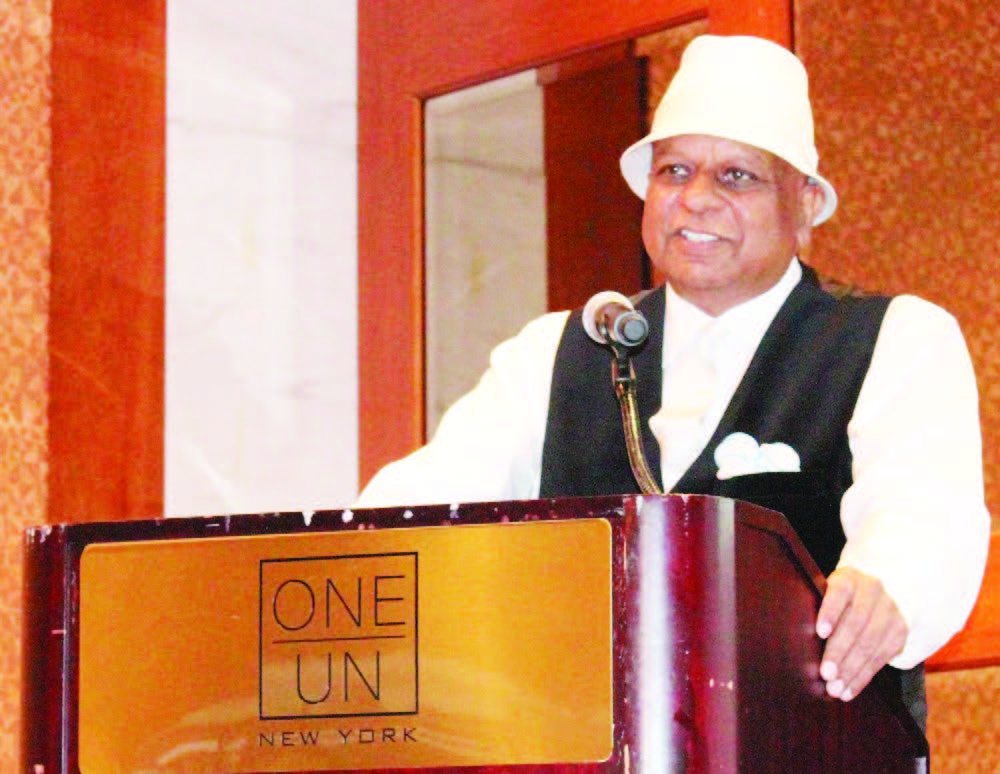
    NEW YORK (TIP): The Global Citizen Forum, New York branch was launched here on August 23. Addressing prominent members of the Indian-American community and representatives of some American think-tanks at the launch, at the UN New York Millennium Hotel, the founder and chairman of the GCF, Indian industrialist Bhupendra Kumar Modi said that the world today is not defined by countries, but by cities and metropolises, thereby heralding a big change in the world order.

    Modi talked about laying the foundation of a new world order under India’s leadership, and promoting understanding between India, China and the U.S., under the leadership of India’s Prime Minister Narendra Modi. The world has changed rapidly in the past decade, and so have the people of India, Modi, said. “There is not a single city in the world where there is no ‘Little India,” he said, noting how the Diaspora has made its presence in every part of the world.


    15
    Bhishma Agnihotri, former Ambassador at Large, Government of India, in his keynote address congratulated B.K. Modi for taking the age old Indian message of “Vasudhaiva Kutumbakam”- the whole world is a family – to every nook and corner of the world. He also said India had now an opportunity to be the world leader under Prime Minister Narendra Modi.


    It was with this growing change in mind that Modi founded the GCF in January 2013 to create a world without boundaries. Modi, lived in New York City from 1999 to 2004, before moving to California and then to Singapore and is currently based in New Delhi. Modi is also the chairman of Spice Global, an Indian conglomerate headquartered in Singapore as well as the council and chairman of Asia Crime Prevention Foundation’s India chapter. He was appointed by the United Nations as the coordinator for the Indian subcontinent for the Millennium World Peace Summit. Modi became a citizen of Singapore in 2012 and ranks 23rd in the Forbes list of Singapore’s richest people.


    16
    A view of the gathering at the launch of Global Citizen Forum in New York on August 23, 2014.


    On Feb. 17, 2004, the U.S. House of Representatives issued a proclamation in appreciation of Modi’s efforts to promote deeper understanding between the two countries and congratulated him on his innovations and humanitarian efforts worldwide. Author of many books, including “One God, Hinduism – The Universal Truth” and “Performance – A Manager’s Challenge and Whispers of Peace”, Modi is essentially a man of ideas and vision. On the idea of establishing the forum, Modi said, one of the main reasons was to make sure that humanity remains the number one priority of people around the world.

    “Over the years one has seen a change in the business and spiritual leadership”, Modi said, adding that what is lacking is political change. “One first needs to be a global citizen and then a citizen of his or her respective country he said. “How many take the world as a family,” he questioned. Elaborating on the concept of ‘one world,” Modi told the gathering that India, under the leadership of Narendra Modi, could be the answer to bring the world closer. Narendra Modi has taken Indian psyche, and is bringing changes according to that and is seen as a man of wisdom and has thus raised hopes for a global change, Modi said.

    The philosophy of a global India, Modi said, is based on Gautama Buddha’s teachings, which expounded the virtues of compassion and giving. “When you give [something] to somebody, you receive more happiness than the man who receives it,” Modi said. While striving for being a global citizen, one should not forget the “poorest people” in the world, and should find ways in connecting with them, he warned. “Wisdom to see world as one, courage to go to any part of the world and live there, and compassion”are the three main qualities of a global citizen, he said. A film on Gautam Buddha was screened.

    It depicted Buddha’s disillusionment with princely life and his search for enlightenment. The Creative Producer of the film which is telecast in episodes on a TV channel in India, Ms. Ridwana was also present on the occasion and spoke with the media about the making of the film. Some more notable guests at the event included Bhishma Agnihotri, former Ambassador at Large, Government of India, who was the keynote speaker, and Swami Chidananda Saraswati, president and spiritual head of the Parmarth Niketan Ashram in Rishikesh, India, and co-founder of the Global Interfaith WASH Alliance (GIWA) at the UNICEF Headquarters at the United Nations.

  • Framework to boost exports

    Framework to boost exports

    The new NDA government’s first annual Foreign Trade Policy (FTP) statement will be unveiled soon. Normally presented after the Union Budget, the FTP has usually concentrated on measures to boost exports and reduce transaction costs.

    It cannot explicitly reduce import or export duties – which are in the domain of the budget. However, the incentives for exporters have indirect implications for the exchequer. Employment generation in India through exports of manufactured goods has been a key objective of the FTP, which remains despite the change in nomenclature from the previous Exim Policy that was focussed on exports.

    A proactive policy on imports is equally necessary in a scenario where India is integrating with the rest of the world. Within the country there are minimal import restraints. A consistent policy framework is necessary to deal with items such as imports of gold and petroleum. Recently, the FTP has outlined ambitious plans for the diversification of exports, both in terms of the range of products and the destination countries.

    These commendable efforts have, however, not improved India’s export performance which, like world trade itself, remains below par. The new government’s orientation to trade cannot be really different from that of its predecessor. The Prime Minister, while inaugurating a port-based special economic zone, urged manufacturers to join in export promotion.

    In his Independence Day speech he called for a “make in India” movement, which has the potential to turn India into a global manufacturing hub. The emphasis in the FTP will naturally vary depending on current circumstances. Multilateral trade as embodied by the WTO received a setback with India holding out against a previously agreed Trade Facilitation Agreement.

    While India has its own reasons – preserving the norms for domestic food security – the fact is that the failure in Geneva has spurred moves towards free trade agreements (FTAs), regional pacts, bilateral agreements and so on. These are inferior to rule-based multilateral trade, irrespective of any short-term gains they might confer. The Commerce Minister’s call for a comprehensive review of the performance of all FTAs is noteworthy. India already has 14 agreements in force, including one with the ASEAN grouping of 10 countries, and is negotiating several others.

    Both India and China have free trade agreements with ASEAN, and unless cumbersome procedures relating to country of origin are scrupulously followed, India might face a flood of duty-free Chinese goods. Besides, FTAs have not exactly delivered on their promise of larger trade between signatories. These factors will surely weigh, even as India prepares to renegotiate stalled issues of the Doha round.

    (The Hindu)

  • How to view the Tamasha in Islamabad

    How to view the Tamasha in Islamabad

    Imran Khan and Tahirul Qadri, according to their supporters, represent an aspiration for “commonsense” democracy which empowers and liberates the common man. Nawaz Sharif and his ilk represent the “traditional power structure” democracy or crony and phony democracy.


    37

    How should we view the goings-on in Islamabad? Low comedy and high farce? A national disgrace? A serious breakdown of governance? A critical opportunity? The start of a real transition towards better governance and more genuine democracy? Or preparing the ground for another decade of open or de facto military rule? Some analysts suggest all these views are valid to one degree or another, except that it is not clear what the outcome will be. Nawaz Sharif is seen by many as a three-time elected prime minister who must be allowed to complete his tenure if democracy in Pakistan is not to be derailed yet again.

    His record of governance may be patchy. But he has only completed 15 months of a five-year mandate. Moreover, governance is always a learning process and democracy is always a work in progress. As Bill Clinton said in his address to Pakistanis during his brief stopover in Islamabad in 2000, imperfect democracy needs to be addressed through better democracy, not the suspension of democracy. Gen Musharraf argued he was a better democrat than the politicians.

    The Constitution of Pakistan, however, explicitly excludes unconstitutional and undemocratic interventions to resolve political challenges facing the country. Those of this view might approvingly refer to Bertolt Brecht’s play The Life of Galileo in which Andrea says, “Unhappy the land that has no heroes,” to which Galileo replies, “Unhappy the land that needs heroes”. Nawaz Sharif supporters might also quote Aneurin Bevan’s description of a political opponent as “suffering from petrified adolescence”.

    According to this view, both Imran Khan and Allama Tahirul Qadri are endangering constitutional democracy and the economic development of Pakistan through their “antics”. They are also making a spectacle of themselves and of the country through their politics of anger and frustration. Their escalating and shifting demands, accompanied by a range of threats, only confirm their hunger for power at any cost to the nation. This is the essence of fascism rather than democracy.

    It represents an entire negation of the Quaid’s philosophy of political agitation which rested on an uncompromising respect for constitutional procedures and an emphatic rejection of Gandhi’s calls for civil disobedience. According to Noam Chomsky, there is a “commonsense” or dictionary meaning of democracy and a contrasting “doctrinal or real world” meaning of democracy. According to the commonsense or dictionary meaning, roughly speaking, a society is democratic to the extent that people in it have meaningful opportunities to take part in the formation of public policy. There are a lot of different ways in which that can be true.

    But insofar as it is true, the society is democratic.” The “real world,” (indeed we may say traditional Pakistani) meaning has been “a top-down democracy that leaves traditional structures of power in effective control”. Chomsky adds “if segments of the public depart from their apathy and begin to organise and enter the public arena that, according to those in control, is not democracy.

    Rather it is a ‘crisis’ of democracy”. Imran Khan and Tahirul Qadri, according to their supporters and sympathisers represent an aspiration for “commonsense” democracy which empowers and liberates the common man. Nawaz Sharif and his ilk, in this view, represent “traditional power structure” democracy; in other words, crony and phony democracy that has been manifest in the worst-ever governance in Pakistan’s history. This is rule by money and power, including the criminal abuse of constitutional authority. This excludes the prospect of real movement towards any kind of inclusive or “commonsense” democracy.

    According to this view, both protagonists of “commonsense democracy” (some would argue Imran more than Qadri) represent the only hope for Pakistan to avoid descending into the realm of state failure. Many who are deeply aware of Imran’s shortcomings as a political leader, including his exaggerated and empty posturing in recent days, see him as a vitally important transition figure. His contribution has been to make the people aware of their rights and their potential to organise and sustain a multi-layered struggle on behalf of “commonsense” democracy and inclusive and consultative governance.

    This is the only way to prioritise the agendas of the people rather than those of their exploiters who rule them in the name of “doctrinal” or “constitutional” democracy. Moreover, Imran’s supporters argue he has a “vision” for Pakistan for which he has stood up whereas Nawaz Sharif stands for no vision at all except power, pelf and privilege for himself and his family. They might approve of two Biblical sayings: “Where there is no vision, the people perish” and possibly also, “Great men are not always wise.” So where are we headed and what can we hope for? We need first to be clear.

    Nawaz Sharif would not accept that he represents “traditional power structure” democracy and that his governance is beyond redemption. Nor is it clear that Imran Khan has the leadership qualities embodied in the Arab proverb, “It is the tribe that tells the chief how to do his job”. He has to broaden his focus beyond Nawaz Sharif without compromising his core demands. He should avoid off-the-cuff public statements that embarrass his supporters.

    He should accept that a Supreme Courtappointed judicial commission will be able to act very independently of a battered and weakened Nawaz Sharif, especially if the FIRs concerning the Model Town massacre are registered against the accused. At a critical time before the elections of 2013, Imran Khan switched from leading a national movement for radical reform of the political system to leading a party for electoral success. He did very well in the elections. But not as well as he expected.

    Significant if not game-changing fraud may have been involved. We should soon find out. Even significant fraud, if established, will compel Nawaz Sharif’s resignation and a fresh poll. Whether Imran wins or loses a fresh poll, he can decide how to restore his national movement for commonsense democracy which he unwisely put on the backburner.

    (The author is a former Pak ambassador to the US, India and China. He can be reached at ashrafjqazi@yahoo.com)

  • China’s Islamic militant group founder admits Pak terror links

    China’s Islamic militant group founder admits Pak terror links

    BEIJING (TIP): In a rare public admission of Pakistani links to militancy in China’s Muslimmajority Xinjiang province, the official media on August 27 said that the co-founder of al- Qaida linked East Turkestan Islamic Movement (ETIM) was indoctrinated in a madarasa in that country.

    State-run China Daily today published confessions of Memetuhut Memetrozi, 41, cofounder of ETIM which is fighting for secession of Xinjiang from China. He is serving a life sentence for his involvement in terrorist attacks. According to confession statement released by Xinjiang No. 1 Prison, Memetuhut was repatriated by Pakistan’s intelligence service to China. Memetuhut said he travelled around Central Asia pursuing his interest in Islam. In 1992, he enrolled in an Arab-run school in Pakistan where he came into contact with young extremists.

  • China arrests ‘nearly 1,000’ members of banned cult

    China arrests ‘nearly 1,000’ members of banned cult

    BEIJING (TIP):
    Chinese authorities have arrested “nearly a thousand” members of a banned religious group. The crackdown comes after members of Quannengshen, or the Church of Almighty God, thrashed a woman to death inside a McDonald’s outlet in Shandong province in May.

    The suspects are allegedly involved in more than 500 criminal cases, Chinese ministry of public security said on August 19 without explaining the nature of the cases. Over one hundred of the suspects are “high-level organizers and backbone members,” it said. The cult, which originated in central Henan province, believes Jesus was resurrected as Yang Xiangbin, wife of the sect’s founder, Zhao Weishan, Xinhua said.

    Zhao, who is also known as Xu Wenshan, fled to the US in September 2000. Authorities earlier arrested five members of the cult, and charged them with intentional homicide for the killing of a woman at a McDonald’s outlet in Shandong. The woman was beaten to death merely because she refused to give her telephone number, which cult leaders needed for their drive to recruit new members, investigators said.

  • Indo-Pak Talks: The problem is with the Pakistani mindset

    Indo-Pak Talks: The problem is with the Pakistani mindset

    Pakistan has made little effort to create the right atmosphere for the foreign secretary-level talks. Frequent cease-fire violations on the line of control have created a background of tension that erodes the seriousness of efforts to resume political level negotiations”, says the author

    By Kanwal Sibal

    Prime Minister Modi extended his hand of friendship to Pakistan immediately after his electoral triumph by inviting Nawaz Sharif to his swearing-in ceremony and agreeing to hold foreign secretary level talks. This despite the experience of a sterile dialogue with Pakistan all these years and the mixed messages from Nawaz Sharif himself who, while expressing his desire to normalise relations with India, has been emphasising his intention to escalate the Kashmir issue politically .

    Frequent cease-fire violations on the line of control have created a background of tension that erodes the seriousness of efforts to resume political level negotiations. How Nawaz Sharif reconciles these two contradictory strategies is unclear. Pakistan cannot say that it wants to turn a page with India while determined to read from the same wellworn text on Kashmir dating back several decades. If Nawaz Sharif as a Muslim Leaguer cannot disregard his family and party links with jihadi groups and this compels him to agitate the Kashmir issue, then Sharif the businessman, with Pakistan’s economic interests in mind, cannot move very far with India.

    In dealing with Pakistan we are always caught half-cock between rude reality and wishful thinking and hence the inconsistencies of our policies towards that country. Pakistan has made little effort to create the right atmosphere for the foreign secretary-level talks. Frequent cease-fire violations on the line of control have created a background of tension that erodes the seriousness of efforts to resume political level negotiations.

    Pakistan has refused to move forward on relatively doable trade issues by perversely linking MFN status for India to prior settlement of its complaints relating to non-tariff barriers (NTBs), customs procedures, business visas and trade imbalance. India itself has issues of NTBs, market access and business visas with many developed countries, and has a severe trade imbalance with China, although we have given each other MFN status decades ago.

    The problem is with the Pakistani mindset, not the merits of the issues involved. The Pakistan High Commissioner (HC), under instructions from his government, decided to poke us in the eye on the Hurriyat issue before the FSlevel talks. Nawaz Sharif had not met the separatists when he came to Delhi in May as the occasion did not lend itself to such a provocation. The HC was seeking to redress this omission. Pakistan is aware of our sensitivities on the issue as we have remonstrated with them publicly when its leaders have met the Kashmiri antinational elements in the past.

    It has disregarded our protests and the previous governments, wedded to a dialogue with Pakistan, have swallowed this affront. Pakistan has not taken into consideration that there is a new government in Delhi and the liberties it took with the previous one cannot be taken with the new one… Through this gesture of hobnobbing with the separatists Pakistan sends many signals: That Kashmir is not India’s internal matter, that these elements represent the true Kashmiri sentiments, that those who do not accept Indian sovereignty over Kashmir are the true representatives of the Kashmiri people and that Pakistan is willing to openly meet secessionists even in the Indian capital while, on its part, condemning imaginary Indian support for Baluchi separatists.

    Pakistan has not taken into consideration that there is a new government in Delhi and the liberties it took with the previous one cannot be taken with the new one, however much Shri Modi is keen to work with Pakistan on a different and more positive agenda. In any case, with the Nawaz Sharif government embattled in Islamabad by the dual-street challenge from Imran Khan and Tahirul-Qadri and fighting for its existence, it was pointless to hold these talks at this juncture. Pakistan could hardly give a positive direction to these talks when the government’s survival would be better served by a hard line with India. It is good that the talks have been called off.

  • Manmohan Singh Immune as PM, not as Finance Minister, from claims of Sikh killings: US Court

    Manmohan Singh Immune as PM, not as Finance Minister, from claims of Sikh killings: US Court

    NEW YORK (TIP):
    US District Judge Honorable James Boasberg in the District of Columbia, August 19 ruled that former Prime Minister Manmohan Singh is immune from claims that he supported the genocide of Sikhs during his tenure as head of the country but does not have “head of state immunity” for claims arising from his tenure as Finance Minister of India (1991- 1996).

    August 19 ruling of Judge Boseberge states that “Defendant Manmohan Singh was, until very recently, the Prime Minister of India. Plaintiffs Sikhs for Justice, a nonprofit organization, and Inderjit Singh have brought this suit alleging that the former Prime Minister tortured and killed Indian Sikhs during his time at the helm of that country’s government and, before then, as Finance Minister.

    The United States, a nonparty in this litigation, has filed a Suggestion of Immunity claiming that Singh, as the sitting Prime Minister, is entitled to head-of-state immunity. Although at the time of that filing, Singh was indeed Prime Minister, he left office three weeks later. Plaintiffs, consequently, counter that Singh is no longer entitled to such immunity. They are only partly correct.

    Although he is no longer a head of state, Singh is entitled to residual immunity for acts taken in his official capacity as Prime Minister. Because such residual immunity does not cover actions Singh pursued before taking office, however, the allegations stemming from his time as Finance Minister survive.” US based rights group, “Sikhs for Justice” (SFJ) and Inderjit Singh, claimed in the 2013 suit that as finance minister Manmohan Singh “funded several counter insurgency operations in state of Punjab during the 1990s resulting in more than hundred thousand Sikhs being killed extra- judicially by the security forces”.

    During his tenure as Prime Minister, Manmohan Singh was accused of being complicit in the torture and killing of hundreds of thousands of members of Sikhs and for shielding the perpetrators of Sikhs Genocide. Judge Boasberg ruled that that U.S. law bars former heads of state from being sued for actions they took while in office, but not for private acts or those taken in prior government posts. However, “while Singh’s alleged acts as Finance Minister are not ‘private’ per se, they did not occur in the course of his official duties as head of state,” Boasberg wrote.

    Terming the sustaining of charges against Manmohan Singh in US Court as a ray of hope for the plaintiffs Gurpatwant Singh Pannun, legal advisor to SFJ stated that this is a start of long and uphill battle of making former prime minister accountable for funding “counterinsurgency operations” across India in which hundreds of thousands of Sikhs were kidnapped, murdered and buried in mass graves during 1990s.

    Citing the case of Jiang Zemin, the former president of China, in May, the U.S. Department of Justice urged Boasberg to dismiss the entire suit because it was filed when Singh was still a sitting head of state. However, the Judge Boasberg ruled that the cases were distinct because all of the claims against Zemin stemmed from his time as a head of state while the case against Manmohan Singh also includes claims from the time when he was not head of the state (1991-96). The case against Manmohan Singh was filed by the victims during September 2013 Obama-Singh Summit visit under the Alien Tort Claims Act (ATCA) and Torture Victim Protection Act (TVPA).

  • INDIA DEPLOYS AKASH MISSILES IN NORTHEAST

    INDIA DEPLOYS AKASH MISSILES IN NORTHEAST

    NEW DELHI (TIP):
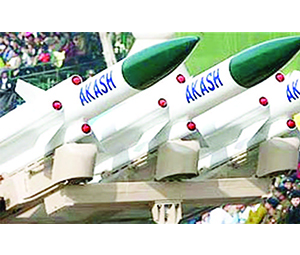
    India has begun deploying six Akash surface-to-air missile (SAM) squadrons in the northeast to deter Chinese jets, helicopters and drones against any misadventure in the region. Earlier, India based its most potent Sukhoi-30MKI fighters at Tezpur and Chabua. Indian Defence ministry sources on Thursday, August 21 said IAF has started getting deliveries of the six Akash missile squadrons, which can “neutralize” multiple targets at 25-km interception range in all-weather conditions, earmarked for the eastern theatre.

    “IAF has deployed the first two Akash squadrons at the Mirage-2000 base in Gwalior and Sukhoi base in Pune. The next six squadrons, as approved by the Cabinet Committee on Security, are to guard against any threat from the northern borders,” said a source. This long-delayed but finally successful induction of the Akash systems, developed by DRDO and manufactured by defence PSU Bharat Dynamics, has also led to scrapping of the protracted discussions to develop the ‘Maitri’ short-range SAMs with France at a cost of around Rs 30,000 crore.

    The Akash deployment in the northeast is in tune with the overall plan to progressively achieve “meaningful and credible deterrence” against China along the 4,057-km Line of Actual Control (LAC). While the Indian Navy is currently better placed to take on Chinese warships in the Indian Ocean, the stark military asymmetry with the People’s Liberation Army along the LAC, both in firepower as well as infrastructure, has long worried the Indian security establishment.

    The steps being taken now to “deter” China range from development of the over 5,000-km Agni-V inter-continental ballistic missile to raising of the new Army XVII Mountain Strike Corps with over 90,000 soldiers at a cost of Rs 64,678 crore. Then, there is also the border military infrastructure development plan for another Rs 26,155 crore, as reported by TOI earlier. IAF, on its part, has deployed Sukhoi squadrons at Tezpur and Chabua in the eastern sector as well as Bareilly in the middle sector of the LAC.

    Both Tezpur and Chabua are also getting their second Sukhoi squadrons, with IAF having inducted over 200 of these 272 fighters contracted from Russia for over $12 billion. The force has also re-activated advanced landing grounds (ALGs) at Nyoma and Daulat Beg Oldie in eastern Ladakh as well as Vijayanagar situated at the tri-junction of India, China and Myanmar in the Changlang district of Arunachal. Similar work is underway at other eastern sector ALGs like Pasighat, Mechuka, Walong, Tuting and Ziro.

    The new XVII Corps, which will fully be in place by 2018-2019, will give India muchrequired “quick-reaction ground offensive punch” for the first time against China. All this is considered crucial since China can rapidly deploy 21 fighter squadrons against India with its eight operational airbases in Tibet Autonomous Region (TAR) and some others just north of it.

    Moreover, the extensive road and rail links created in TAR ensure Chinese soldiers enjoy numerical superiority against Indian forces in a 3:1 ratio. China, incidentally, has been conducting major exercises with its J-10, Sukhoi-27UBK and Sukhoi-30MKK fighters in the high-altitude Qinghai-Tibet plateau in recent times.

  • KERRY EYES US-CHINA partnership despite tensions

    KERRY EYES US-CHINA partnership despite tensions

    HONOLULU(TIP):
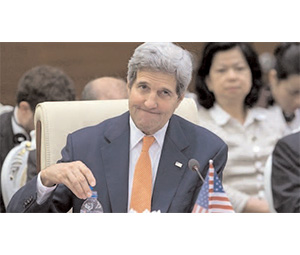
    Improving US cooperation with China is critical to maintaining stability and security in the Asia-Pacific as well as combating the effects climate change, US secretary of state John Kerry said. Wrapping up an eight-day, around-theworld diplomatic trip and his sixth visit to Asia as America’s top diplomat, Kerry on Wednesday outlined renewed priorities for much of the Obama administration’s much-touted “pivot to Asia” during its final 2 years, including a focus on strengthening US-Chinese partnership in areas of agreement and bridging gaps in areas of contention.

    “One thing I know will contribute to maintaining regional peace and stability is a constructive relationship between the United States and China,” Kerry said in an address to the East-West Center think tank in Honolulu. “The United States welcomes the rise of a peaceful, prosperous and stable China: one that plays a responsible role in Asia and the world and supports rules and norms on economic and security issues.”

    “We are committed to avoiding the trap of strategic rivalry and intent on forging a relationship in which we broaden our cooperation on common interests and constructively manage our differences and disagreements,” he said. Kerry arrived in Hawaii after stops in Afghanistan, Myanmar, Australia and the Solomon Islands during which tensions between China and its smaller neighbors over competing territorial claims in the South China Sea were a major subject of discussion.

    At a Southeast Asia regional security forum in Myanmar over the weekend, Kerry formally unveiled a US proposal for a voluntary freeze on provocative actions by all claimants, including the Chinese. The US says that it has no position on the competing claims but does regard stability in the South China Sea as a national security issue, given the region’s role as one of the world’s busiest maritime shipping zones. “We do care about how those questions are resolved, we care about behavior,” Kerry said.

    “We firmly oppose the use of intimidation, coercion or force to assert a territorial or maritime claim by anyone. And we firmly oppose any suggestion that freedom of navigation and overflight and other lawful uses of the sea and airspace are privileges granted by big states to small ones. All claimants must work together to solve the claims through peaceful means. These principles bind all nations equally, and all nations have a responsibility to uphold them.” While welcomed in general by the 10 members of the Association of Southeast Asian Nations, China took a dim view of Kerry’s proposal and suggested it would not agree.

    In an apparent nod to such disagreements, Kerry said that building better ties with Beijing will not be easy or inevitable. “Make no mistake: This constructive relationship, this `new model,’ is not going to happen simply by talking about it,” he said. “It’s not going to happen by engaging in slogans or pursuing spheres of influence. It will be defined by more and better cooperation on shared challenges. It will be defined by a mutual embrace of the rules, norms and institutions that have served both our nations and the region so well.”

    Kerry said he was pleased at some areas of current US-China cooperation, including multination talks on Iran’s nuclear program, a shared interest in denuclearizing North Korea and promoting calm in South Sudan. In addition, on climate change, which he regularly describes as the biggest threat facing Earth, Kerry hailed US-Chinese initiatives to reduce greenhouse gas emissions and deforestation as well as working on sustainable, clean energy options.

    At the same time, he noted that the US and China, along with other Asian nations, routinely disagree on human rights. Kerry pointed out backsliding in rights protection and democratic principles in Myanmar and Thailand and repression in North Korea but said the United States would not relent in its drive to improve conditions. “We will continue to promote human rights and democracy in Asia, without arrogance but also without apology,” he said.

  • Basics very much in Indian economy’s favor

    Basics very much in Indian economy’s favor

    INDIA’S JOURNEY TO DEVELOPMENT AND CHALLENGES

    The economy of India is the tenthlargest in the world by nominal GDP and the third-largest by purchasing power parity (PPP).The country is one of the G-20 major economies, a member of BRICS and a developing economy that is among the top 20 global traders according to the WTO.

    India was the 19th-largest merchandise and the 6th largest services exporter in the world in 2013. India’s economic growth slowed to 4.7% for the 2013-14 fiscal year, in contrast to higher economic growth rates in 2000s. However, India’s decisive election outcome has created the potential for further structural reform that could result in a near 7 per cent GDP growth rate over the coming decade, and bank capital injections could enable banks to facilitate funding for that growth.


    32


    This would have meaningful implications for India’s fixed income markets. It is believed that the next decade for India’s foreign exchange (FX) and fixed income markets will be marked by policy-driven reforms driving accelerated growth with increasing market liberalization. Recent figures already appear more encouraging than the dynamics that have been supporting stagflationary recession conditions: The country’s balance of payments has improved, spurred by FX depreciation and the Reserve Bank of India’s (RBI’s) non-conventional measures. The growth outlook has turned moderately positive, helped by a global recovery; and bad loan formation, even at state-owned banks, may now be moderating.


    33


    The narrative for Indian markets began to brighten even before the elections. Following the second stage of India’s economic liberalization and the foreign direct investment (FDI) reforms initiated in September 2012, foreign investment will likely be a major contributor to a jump in private investment. However, despite liberal FDI limits, it has remained moderate, constrained, in part, by administrative hurdles. As the obstacles are reduced, we expect FDI to lead an investment boom over the next decade, similar to China’s mid-1990s experience. We project FDI will rise to an average of 2.5 per cent of GDP (FY2014-24) from an average of 1.5 per cent of GDP (FY2008-14). We believe such foreign capital flow will lend significant support to India’s balance of payments trajectory.

    Improving public health

    Health care services in India have undergone a vast change over the past few decades and encompass the entire nation. The industry is expected to supersede China by 2030 in terms of population expansion. Hence, it becomes one of the essential duties of the state to raise the nutrition level, the standard of living of the people together with improving public health.

    Health care Industry of India The rapidly increasing health care industry of India is one of country’s largest sectors, both in terms of revenue and employment. It has been estimated that the healthcare industry of India is will grow by & 40 billion. The continuous increase in the population of India is considered one of the principal reasons for the growth in the healthcare industry of India. The rise in the infectious as well as chronic degenerative diseases has contributed to the rise in the healthcare sector of India. Additionally, because of diseases like AIDS and several lifestyle diseases of India, the healthcare sector of India will have a constant growth.

    In spite of the fact that the Indian healthcare industry is rapidly expanding, healthcare infrastructure in India is very poor. A noticeable percentage of India suffers from poor standard of healthcare services. Most of the healthcare facilities of India provided by the various healthcare services are limited and of low standard. In order to understand the current status of the healthcare services in India, it is important to know about the different healthcare services found in the country.

    Public health services, essential public health services, preventive health services, mental healthcare services, home health services, magellen health service and school health services are some of the healthcare services found in India. Companies providing Health Insurance in India The various companies providing health insurance policies in India can also be put under the healthcare services of India. Some of the companies that provide health insurance coverage in India are Appollo DKV Insurance Company Ltd., Bajaj Alliance General Insurance Co. Ltd., Birla Sun Life Insurance, Aviva Life Insurance and the like.

    Points to note

    1).It has been found out that while the private health services have been rising for meet the needs of the rich citizens and foreigners, public health services in India are lagging behind and suffering in a major way.

    2).It has also been found out that less than 1% of the GDP is spent on the public health care services in India.

    3).Surveys made throughout India points out that 65% of the Indian population cannot access to modern medicines.

    4).In addition, a number of drugs and even many diagnostic tests are still unavailable in the public health care sector of India.

    5).Most of the hospitals, one of the prime healthcare services in India, are located in the urban areas, thereby making it almost impossible for the rural people to access.

    Indian industry sees green shoots of manufacturing growth
    A green shoots of revival have started to appear in the manufacturing sector, which is critical for job creation, with a majority of segments likely to post higher output, according to industry bodies. The survey conducted by CII-Ascon for the April-June quarter indicates positive growth in important sectors like consumer durables including the vehicle industry and white goods industry, which recorded a growth of 5- 10 per cent, leading to improvement in the overall industry growth.

    The FICCI survey found that eleven out of fourteen sectors are likely to show improvement in production during the second quarter (Jul-Sept) of the current fiscal. Over 64 per cent respondents are not likely to hire additional workforce in the next three months, though this proportion is less than that of the previous quarter (75 per cent), indicating improvement in hiring outlook in coming months.

    The survey gauges the expectations of manufacturers for Q2 for fourteen major sectors namely textiles, capital goods, metals, chemicals, cement, electronics, automotive, leather and footwear, machine tools, FMCG, tyre, textile machinery and more. Responses have been drawn from 392 manufacturing units from both large and small and medium (SME) segments with a combined annual turnover of over Rs 4 lakh crore.

    An upturn in demand condition is also reflected in the improved order books of the manufacturers, said Ficci survey. While only 36 per cent respondents reported higher order books for the April-June quarter in the last survey, 43 per cent respondents reported higher order books for July-September quarter.

    Foreign relations
    Soon after the 2014 Lok Sabha election results declared a thumping victory for the BJP-led NDA government, Prime Minister Narendra Modi invited the heads of all the SAARC countries including Pakistan, Bangladesh, Sri Lanka, Nepal, Maldives, Bhutan and Afghanistan, for his oath-taking ceremony, sending a major diplomatic signal to the global community.

    Credited with being a focused administrator, Modi signalled that his decisive win would reshape India’s foreign relations and leverage the diaspora to increase investments, business opportunities and better relations. Modi went on to choose neighbouring country Bhutan over others for his first foreign visit.

    “I will follow the (foreign) policies of the Vajpayee-led NDA government, and that also applies to the relationship with the United States. I don’t think a decision taken by any individual or one event should impact the overall policy,” Modi said in an interview. The winds of change were clearly being felt at home and abroad.


    29


    SAARC: A refocus on the neighbourhood
    For the first time, leaders of all South Asian Association Regional Corporation (SAARC) countries were invited for the swearing-in ceremony of an Indian Prime Minister. The presence of all seven countries, Pakistan Prime Minister Nawaz Sharif, Afghanistan President Hamid Karzai, Sri Lanka President Mahinda Rajapaksa, Bhutan Prime Minister Tshering Tobgay, Maldives President Abdulla Yameen Abdul Gayoom, Nepal Prime Minister Sushil Koirala, Speaker of Jatiyo Sangshad in Bangladesh Shirin Sharmin Chaudhury, was a welcome step towards strengthening India’s relations with the SAARC countries. However, political parties in Tamil Nadu voiced their displeasure at Sri Lanka’s president Mahinda Rajapaksa attending the ceremony and held demonstrations against him.


    30


    Bhutan visit: Asserting influence in South Asia
    PM Narendra Modi’s maiden foreign trip to Bhutan was intended to show that in the new scheme of things, the neighbourhood enjoys high priority. Inaugurating Bhutan’s Supreme Court building that was built with India’s assistance, Modi also laid the foundation stone of the 600MW Kholongchu Hydro-electric project, a joint venture between the two countries.

    He also proposed to hold a joint sports festival between Bhutan and north-eastern states of India, doubling scholarships for Bhutanese students in India and establishing e-libraries in 20 districts in Bhutan Though his faux pas of referring to Bhutan as Nepal while addressing the Bhutan Parliament caused some embarrassment, Modi went ahead to say that “when Bhutan calculates its happiness quotient, having a friend in India is also a major factor.”

    Meet with Pakistan Prime Minister Nawaz Sharif: Picking up the threads
    Relations between India and Pakistan have always been tense, but differences between the two countries had escalated after the 26/11 Mumbai terror attack. Modi’s invitation to Pakistan’s Prime minister Nawaz Sharif for his oath ceremony was seen as an attempt at cooperation rather than confrontation, which was reciprocated by his Pakistani counterpart.

    In their first meeting, Modi pressed for confidence-building measures, peace and security as well as enhancing bilateral trade, sending a positive message among the people of both the countries. Modi struck a pragmatic note with Sharif, underlining India’s concerns on terrorism and urging his Pakistani counterpart to crack down on militants and speed up trial of the 2008 Mumbai attack suspects.

    Sharif also responded to the meeting positively, accepting the fact that the two countries must strive for better cooperation. In the interaction which was widely seen as an “icebreaker”, the leaders also decided that their foreign secretaries would be in touch and discuss a way forward on talks that had been suspended since January 2013.

    BRICS Summit: New inroads
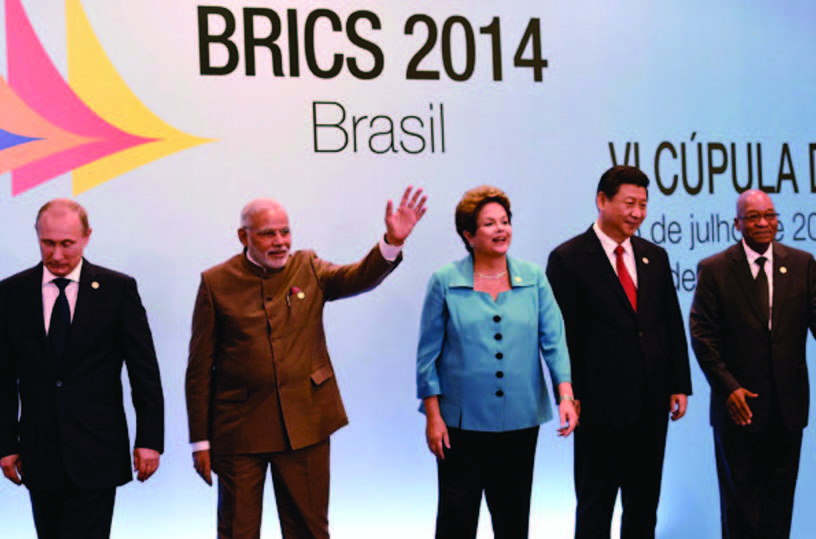
    Pushing for better international governance, Narendra Modi said he favoured an open, rule-based, international trading regime which is critical for global economic growth. Modi’s first BRICS summit saw significant inroads towards the establishment of the New Development Bank and though the headquarters of the bank is slated to be in China, its first President will be from India.

    Addressing the BRICS leaders, Modi also pressed for zero tolerance towards terrorism. He also met Chinese President Xi Jinping and both addressed the need for a solution to the boundary question. Further, Modi also favoured broadening the strategic partnership with Russia in nuclear, defence and energy sectors and invited President Vladimir Putin to visit the Kudankulam atomic power project during his trip in December.

    India poised to make further progress on UN’s development goals
    India has made progress on different indicators such as health and nutrition under the UN’s Millennium Development Goals and is expected to improve further upon them. “There has been progress in all the indicators and further progress is expected to be made in the remaining period up to 2015,” Planning Minister Rao Inderjit Singh had said recently.

    Challenges
    As far as India is concerned, 8 MDGs with 12 targets are relevant which are sought to be achieved during the period 1990 to 2015, the minister said. MDGs are international development goals that UN member states and numerous international organizations, including India, have agreed to achieve by the year 2015.

    Eradicating poverty
    These include eradicating extreme poverty and hunger; achieving universal primary education; promoting gender equality; reducing the child mortality rate and ensuring environmental sustainability. The minister’s said India had achieved the MDG target regarding poverty eradication. India had to halve the proportion of people whose income is less than one dollar a day between 1990 and 2015.

    In 1990, India had 47.8 per cent such poor people and thus the proportion of this population is to be reduced to 23.9 per cent. However, India’s poverty ratio was 21.92 per cent for 2011-12. Similarly, India has to half the proportion of people who suffer from hunger by 2015 to 26 per cent. However, the latest figure for 2004-05 reveal that the percentage of such population was 40 per cent.

    Education: Improving enrolment ratio
    In the education sector, India has to improve the net enrolment ratio in primary schools to 100 per cent by 2015. The country achieved 99.89 per cent enrolment in primary education in 2011-12. The proportion of pupils starting grade 1 who reach grade 5 was 86.05 per cent in 2011- 12 against the target of 100 per cent. The literacy rate in India was 61 per cent in 1990. It went up to 86 per cent in 2017-08.

    The ratio of girls to boys in primary education was 0.73 in 1990 which went up to 1.01 in 2011-12. Similarly the ratio of literate women to men (15-25 years) was 0.67 in 1990, which was 0.88 in 2007-08. MDGs target for both ratios is 1. The mortality ratio among children under the five-year age was 126 per 1,000 live births in 1990 which was brought down to 52 in 2012. The MDGs target is 42 for that.

    Infant mortality ratio
    The infant mortality ratio was 80 per 1,000 live births in 1990 which was brought down to 42 in 2012 against the MDGs target of 27. The proportion of one year old children immunized against measles was 42.2 per cent in 1990 which was improved to 74.1 per cent against targeted 100 per cent coverage.

    Similarly, the maternal mortality ration per 1,00,000 live births was 437 in 1990 which was brought down to 178 by 2011-12 against targeted 109 by 2015.

  • NEPAL HIKES INSURANCE FOR SHERPAS AFTER EVEREST AVALANCHE

    NEPAL HIKES INSURANCE FOR SHERPAS AFTER EVEREST AVALANCHE

    KATHMANDU (TIP):
    Foreign mountaineers will have to spend more for the insurance cover of their Sherpa guides to climb any Himalayan peak in Nepal including Mount Everest, the government said. Wedged between India and China, Nepal is home to more than 1,300 Himalayan peaks – 414 of them, including Mount Everest, are open to foreign climbers who turn up in hundreds every year.

    An ice avalanche on Mount Everest in April killed 16 Sherpa guides in the biggest disaster in the history of the world’s tallest mountain, highlighting concerns that the Sherpas were paid too little compared to the risks they take in guiding their clients on the dangerous slopes of Mount Everest. Dipendra Paudel, a tourism ministry official, said the insurance cover for the guides would be raised to $15,000 from $10,000.

    Medical insurance for each guide has also been increased to $4,000 from $3,000. The new rates, to apply for all mountains including the 8,850 metre (29,035 feet) Everest, will come into force from next month, Paudel told Reuters. “The hike will address to some extent the demand by Sherpas for better compensation,” said Dambar Parajuli, chief of the Expedition Organisers’ Association, said on Friday.

    Following the Everest avalanche Sherpas criticised the government for doing little for their welfare compared to the hefty amount of money it collected from climbers as permit fees. They also called for a climbing ban out of the respect for their fallen colleagues forcing 334 foreign climbers to call off their attempts to scale Everest this year. The government said their permits would remain valid for five years as authorities moved to encourage climbers to return. Sherpas earn up to $7,000 or more every year — 10 times Nepal’s per capita income.

  • McDONALD’S SALES DECLINE IN JULY, HURT BY US, ASIA

    McDONALD’S SALES DECLINE IN JULY, HURT BY US, ASIA

    NEW YORK (TIP): McDonald’s says a key sales figure fell 2.5 per cent in July, dragged down by persistent weakness in the US and the impact of a food safety scandal in China. The world’s biggest hamburger chain says the global decline included a 3.2 per cent drop in the US and a 7.3 per cent drop in the unit encompassing Asia, the Middle East and Africa.

    Its China division took a major hit in late July when a TV report showed workers at one of its suppliers repacking expired meat. Many McDonald’s restaurants in the country were left without beef and chicken supplies as a result. Even as McDonald’s restaurants get back to serving the full menu, sales are likely to continue suffering given the sensitivities around food safety in China. Yum Brands, which owns KFC and Pizza Hut, says it did not rely as heavily on the supplier in question. But it has nevertheless been ensnared in the scandal as well and has seen its sales drop significantly.

    McDonald’s Corp., which has more than 35,000 locations around the world, has warned that the scandal put its global sales forecast for the year “at risk.” The company had previously said it expects sales to be relatively flat. Back in the US, McDonald’s has been unable to boost sales amid heightening competition and shifting eating habits. Chains like Chipotle, for instance, are gaining favor by touting more wholesome ingredients and the ability to customize food.

    McDonald’s CEO Don Thompson has also noted that the lower-income customers that tend to go to McDonald’s are struggling more financially, making it more difficult to get them to spend money on eating out. Thompson has also said the company complicated its menu and slowed down service by introducing too many items too quickly. He said the company is working on getting the basics rights — such as improving service. The one bright spot in July was Europe, where sales at established locations edged up 0.5 per cent.

  • The Counter-insurgency in North Waziristan: A Discussion with Ikram Sehgal

    The Counter-insurgency in North Waziristan: A Discussion with Ikram Sehgal

    NEW YORK (TIP):
    East West Institute Board Member Ikram Sehgal led a discussion on the serious security situation in North Waziristan, Pakistan on August 7, 2014 here in New York. During an hour-long discussion, Ikram Sehgal spoke about security threats and opportunities within North Waziristan, Pakistan.

    He began by noting that Pakistani public opinion is united around the current military campaign in the region to combat the ever present Taliban forces in the area. He claimed that terrorism in Pakistan is no longer about ideology but rather economic gains and mentioned that groups within the country have gained financial support from the private sector, adding to their power.

    To fight terrorism, Sehgal pointed to four key steps:
    1. Destroying terrorist safe havens
    2. Eliminating terrorist groups
    3. Restoring the power of the Pakistani government
    4. Shaping a suitable environment for sustainable development.

    Additionally, because terrorism within Pakistan is not a country specific problem but rather a regional one, a regional counter-terrorism force should be implemented. There is not likely to be an end to terrorism in Pakistan anytime soon due to its long-standing establishment within the country and the weakness of Pakistan’s army. However, there are other options moving forward.

    China is now one of the largest players within Pakistan, investing in Pakistan’s compromised energy sector and helping with development. Sehgal ended the discussion optimistically, but stressed the need for continued cooperation both with China and the U.S Ikram Sehgal is the Chairman of PATHFINDER GROUP, comprising two of the largest private security Pakistani companies, with 15,000 employees in over 50 cities and towns in Pakistan, supported independently by electronics security and facility services companies.