Tag: China

  • Expansion not in Chinese DNA, says premier Li

    Expansion not in Chinese DNA, says premier Li

    BEIJING: Seeking to allay fears over China’s expansionist agenda, Premier Li Keqiang said territorial expansion is not part of the Chinese DNA and the country will never indulge in it. “Expansion is not in the Chinese DNA, nor can we accept the logic that a strong country is bound to become hegemonic,” Li said in London on Wednesday amid Vietnam’s move to obtain international arbitration over its South China Sea dispute with China. China will “have to take resolute measures to stop acts that provoke incidents and damage peace,” Li said.

    China is determined to prevent the regional situation from getting out of control, to uphold order and stability and bring the issue of South China Sea back on track. Beijing wants to make sure Vietnam, the Philippines and Japan do not receive Western support in their territorial quarrels with China. “China’s development over the past three decades has been achieved in a peaceful and stable environment,” he said.

    “We have benefited from this environment. Why should we give up this benefit and environment?” Li also dismissed the possibility of a “hard landing” for the Chinese economy. “I can promise everyone honestly and solemnly there won’t be a hard landing,” he said, adding the Chinese economy will move within a “reasonable range”. This means economic growth of around 7% and inflation of less than 3.5% — through “targeted regulation”, instead of large stimulus packages.

  • Primary school building collapses in China; 4 missing

    Primary school building collapses in China; 4 missing

    BEIJING (TIP): Four persons, including two children, are missing after a two-story building of a village primary school collapsed early today in China’s eastern Jiangxi Province. The building of the primary school in Dangkou Village, Yihuang County, collapsed due to rainstorm-triggered mud flow, local government said.

    Two children – aged five and seven – are among the missing. The rescue operation is under way, state-run Xinhua news agency reported. More than 2,700 people were evacuated after downpours battered Fuzhou City, Jiangxi yesterday and early today, the report said.

  • China oil giants prepare Iraq evacuation plans: REPORT

    China oil giants prepare Iraq evacuation plans: REPORT

    BEIJING (TIP): Major Chinese oil firms have prepared evacuation plans in case spreading violence in Iraq — a key energy provider to the Asian giant — threatens their operations, state media reported June 19. China has more than 10,000 workers on a wide range of projects in the Middle Eastern country, officials say, although most are in the south, far from the current fighting.

    Militants from the jihadist group the Islamic State of Iraq and the Levant (ISIL) have captured vast amounts of territory in a lightning offensive that is entering its second week. “As of today, most Chinese workers have gone to work as usual. But if insurgents begin to attack Baghdad, we will pull out of the country immediately,” an employee of Chinese state-owned energy giant China National Offshore Oil Corp. (CNOOC) told the Global Times newspaper. Resources are a key interest for China, the world’s second-largest economy, and Iraq is its fifth-largest source of crude oil imports, while China is the largest foreign investor in Iraq’s oil sector.

    Production at the four oil fields of PetroChina, the listed arm of China’s largest oil producer China National Petroleum Corp (CNPC), has not been affected, a company representative told the paper. All of them are in central or southern Iraq, but the representative added: “Some Chinese nationals in the north were evacuated. We have prepared some contingency plans.” The Global Times also reported that more than 1,000 Chinese employees of state-run firm China Machinery Engineering Corp were “stranded” in the northern Iraqi city of Samarra, although a company representative disputed the description.

    In recent days, some Western embassies have begun withdrawing staff from Baghdad, and on Tuesday Turkey said that it had evacuated its consulate in the southern Iraqi city of Basra. A CNPC employee was kidnapped last week from an oil field project in southern Iraq, but has since been released, Chinese foreign ministry spokeswoman Hua Chunying said Wednesday. The ministry has issued security warnings and guidance to firms operating in Iraq, and Hua said: “We don’t want to see that the situation will come to what it was like in Libya when we had to carry a large-scale evacuation” in 2011.

    “We have over 10,000 Chinese employees working in Iraq. It is to my knowledge that most of them are in relatively safe areas, instead of the conflict zones.” Beijing will “take all necessary measures to safeguard the security of Chinese citizens in Iraq”, she added, depending on how the situation evolves.

  • Poor sales force VW group to scale down India market share target

    Poor sales force VW group to scale down India market share target

    PUNE (TIP): Europe’ s top carmaker Volkswagen group has scaled down its India market share target to 7-8% by 2018 against the 20% projected earlier as it struggles to make headway in the highly-competitive market dominated by heavyweights like Maruti Suzuki and Hyundai. The company said that environment in India is “challenging” and it is a “struggle to find the right product and right cost structures” to make a deep cut. “It is a challenge … (and) not an easy market,” Mahesh Kodumudi, president and managing director of Volkswagen India, told TOI here. The group operates five car brands in India — mainline makers VW and Skoda and luxury brands Audi, Porsche and Lamborghini.

    Out of these, only Audi has been able to have a strong say in its target segment, though the volumes in the luxury market are limited as the overall market size is small. said that against the initial expectations, the VW brand failed to get a flying start in India due to heavy competition from costeffective players like Maruti Suzuki and Hyundai. ” Perhaps we made a big splash when we entered and the expectations were that we would come and conquer the market. That has definitely not happened.”

    Interestingly, the VW group is the biggest automaker in China with annual sales of 3.19 million in 2013, which is more than the size of the overall Indian market. At the time of the India entry of VW brand in 2010, the company had sounded an ambitious note with global CEO Martin Winterkorn announcing a target of 20% share for the group by 2018. The group’s sales fell nearly 19% in 2013 to 92,529 units against 1,14,045 units in 2012. The situation has been grave for VW and Skoda, the brands that were supposed to be the volume drivers.

    As per fiscal-year numbers reported to industry body Siam, VW’s volumes have been on a constant decline since 2011-12. For Skoda, the volumes have been on a downward spiral and the brand finished FY14 with volumes that were lower than numbers achieved in FY11. Kodumudi said the group has a lot of groundwork to do to find a firm footing in the market.. The group is now working at increasing localization in India, while it also looks at new product launches. It has lined up investments of Rs 1,500 crore for the localization efforts as well as working on variants for existing products.

    Vento sedan and Polo hatchback are the main cars for VW, while for Skoda, the crucial cars are Rapid and Superb sedans. Skoda has made an exit from the hatchback segment where it was selling Fabia compact as the model failed to make any notable headway in its category. The poor run, however, has not made the group pessimistic on the Indian market’s long-term potential. “India remains a key strategic market for the Volkswagen group,” Kodumudi said, adding that it will not shy away from making further investments in new products and capacity expansion.

  • Defence projects along LAC to get quick green nod

    Defence projects along LAC to get quick green nod

    NEW DELHI (TIP): The ponderous elephant will now try to catch up with the fleet-footed dragon. The Narendra Modi government has decided to fast-track clearances for roads and other military infrastructure projects along the 4,057-km Line of Actual Control (LAC) with China, signalling that environmental clearances will not needlessly hamper national security objectives. “Construction of roads within 100-km of LAC will be given fast-track approvals under the new policy being formulated,” environment minister Prakash Javadekar said after meeting defence secretary R K Mathur and other top officials on Junbe 12.

    “Delays in defence projects were happening due to the case-to-case decision-making process. We are evolving policy-based solutions. The new policy will ensure faster clearances without compromising environmental issues,” he added. This comes soon after the environment ministry gave the green nod to two other crucial long-pending defence projects, the expansion of the strategic Karwar naval base in coastal Karnataka and installation of a radar station at Narcondam in the A&N Islands.

    The defence establishment has for long identified delays in environmental clearances as one of the major stumbling blocks for India’s lumbering attempts to strategically counter China’s huge build-up of military infrastructure all along the LAC, from Ladakh to Arunachal Pradesh. Defence officials say the construction of around 80 roads, adding up to around 6,000-km, along the LAC as well as infrastructure build-up in about 5,000 acres of land in Arunachal and Assam for the new Army mountain strike corps and other formations being raised against China have been “on hold” due to lack of environmental nods.

  • It’s a new era in India’s foreign policy as countries compete to woo Modi

    It’s a new era in India’s foreign policy as countries compete to woo Modi

    “The new majority government in power in New Delhi, freed from debilitating coalition politics and attaching priority to economic development, has aroused external interest”, says the author.

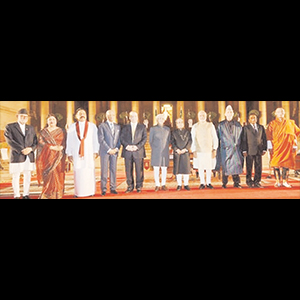
    In foreign policy, Prime Minister Modi has hit the ground running, taking unexpected initiatives. He reached out to our neighbors, taking the unprecedented step of inviting their leaders to his swearing-in ceremony. While invitations to Bangladesh, Nepal, Bhutan, Maldives and Afghanistan carried only positive connotations, those to Prime Minister Nawaz Sharif and President Rajapakse carried mixed political implications. It was felt that the plus points in extending invitations to Pakistan and Sri Lanka outweighed the negatives.

    Engagement

    In Pakistan’s case the dilemma is whether we should engage it at the highest level without any ground-clearing move by Nawaz Sharif on terrorism, the Mumbai trial and trade. The Pakistani premier has been, on the contrary, aggressive over Kashmir, invoking the UN resolutions and self-determination as a solution, seeking third party intervention, permitting tirades by Hafiz Saeed against India, maintaining the pitch on water issues and reneging on granting MFN status even under a modified nomenclature.

    In these circumstances, the move to invite him risked suggesting that, like the previous government, the new government too was willing to open the doors of a dialogue in the hope of creating a dynamics that would yield some satisfaction on the terrorism issue. In other words, practically delinking dialogue from terrorism, despite having taken a position to the contrary while in opposition.

    In Sri Lanka’s case, the whipped-up sentiments in Tamil Nadu against President Rajapakse for his triumphalist rather than reconciliatory policies on the Tamilian issue have upset the overall balance of India’s foreign policy towards Sri Lanka that requires that we adequately weigh the need to counter powerful adversarial external forces are at play there against our interests. Inviting President Rajapakse to New Delhi obviously risked provoking a strong reaction in Tamil Nadu, but the new government had to decide whether, like its predecessor, it would get cowed down by such regional opposition, or it would act in the greater interest of the country even when according importance to the sentiments of a section of our population.

    This dramatic outreach to the neighbors has elicited praise internally and externally, primarily focused on the invitation to the Pakistan president and its implication for the resumption of the Indo-Pak dialogue. Internally, those pro-dialogue lobbies that have espoused the previous government’s placative policies towards Pakistan have naturally welcomed the surprise move by Modi. Externally, India has always been counseled to have a dialogue with Pakistan irrespective of its conduct and its terrorist links, the argument being that these two South Asian nuclear armed neighbors with unresolved territorial conflicts risked sliding into a nuclear conflict unless they found a way to settle their differences for which a dialogue was an inescapable necessity. Such praise from within and without from predictable quarters should neither be surprising nor worth much attention.

    Outreach

    The new majority government in power in New Delhi, freed from debilitating coalition politics and attaching priority to economic development, has aroused external interest. The sentiment outside the country- as well as inside it – has been that the previous government lost its way, leading India into the quagmire of high fiscal deficits and tumbling growth, belying international expectations about its economic rise paralleling that of China.

    If India can be steered back into a high growth trajectory with stronger leadership and improved governance, more economic opportunities will open up for our foreign partners. This would also draw renewed attention to India’s geo-political importance which, though an accepted reality now, has receded from the foreground lately.

    Reassurance

    Modi is seen as the man of the moment. This would explain the telephone calls from world leaders to Modi and the invitations given and received. India is being courted, and Modi’s choice of the countries he first visits or foreign leaders he first receives, is drawing external attention as an indication of his diplomatic priorities.

    On this broader front too, Modi is following an unanticipated script of his own. He is being generous to the US despite its reprehensible conduct in denying him a visa, by prioritizing national interest over his individual feelings. He has not waited for the stigma of visa refusal to be erased by a US executive order removing his name from the State Department black-list. He is planning to meet President Obama in Washington in September – the first external visit to be announced – quickly relieving the Americans of fears that the visa issue could become a hurdle in engaging him.

    In another remarkable gesture that the State Department would have noted for its political import, he has agreed to a book launch by an American think-tank at Race Course Road. China wants to complicate moves by Japan to strengthen strategic ties with India. Its decision to send its Foreign Minister to India after the swearing-in seems to have been motivated by this rivalry, apart from seeking to build on the personal contacts established by China with Modi when he was Chief Minister. If the Chinese FM was allowed to be the first consequential foreign leader to meet Modi, it appears Japan may be the first foreign country – barring Bhutan – the latter may visit en route to the BRICS meeting in July in Brazil.

    The Bhutan visit underscores the importance Modi intends attaching to neighbors. Russia’s Deputy Prime Minister is visiting Delhi on June 18. It would seem that Modi’s immediate priority is to reassure all his important interlocutors, friends or adversaries, that they should have no misgivings about him and the direction of his policies, and that he seeks to engage with all power centers in a balanced manner.

  • Blast in apartment in China’s Yunnan province kills 3

    Blast in apartment in China’s Yunnan province kills 3

    BEIJING (TIP): Three people were killed and four others were injured in a blast in an apartment in southwest China’s Yunnan province on June 13. The blast, which occurred at around 2:30 am, ripped through the fourth floor apartment on Ziyun Street in Chuxiong City, state-run Xinhua news agency reported. The injured people have been hospitalised, and the cause of the explosion is under investigation.

  • Japan summons China envoy over ‘dangerous’ flights

    Japan summons China envoy over ‘dangerous’ flights

    TOKYO (TIP): Japan on June 13 summoned the Chinese ambassador to complain about fighter jets flying “dangerously” close to two of its military planes over the East China Sea, officials said. In the latest up-close confrontation between the two sides, Tokyo says two Chinese SU-27 jets flew just 30 metres away from its aircraft in a spot where the two countries’ air defence zones overlap.

    “It was an action that was extremely regrettable, and which cannot be tolerated,” said top government spokesman Yoshihide Suga, of the yesterday’s incident. It was the second time in less than three weeks that Tokyo has accused Beijing of playing chicken in the skies near the hotly-contested Japanese-controlled Senkaku islands, which China also claims and calls the Diaoyus.

    It comes after a similar event which occurred last month,” Suga said. “The government will continue urging China to prevent an accident and restrain itself. “Japan will seek cooperation from countries concerned.” Japan’s vice minister for foreign affairs, Akitaka Saiki, called the Chinese ambassador to Japan, Cheng Yonghua, to the ministry, where he was expected to have urged Beijing to create a maritime communication system with Tokyo.

    The incident occurred as Japan and Australia held the fifth round of so-called “2+2” talks between their defence and foreign affairs chiefs in Tokyo. The meeting was part of a trend in which military and political alliances are being forged and strengthened around the Asia-Pacific, as countries in the region look with alarm at China’s growing willingness to forcefully push its claims in territorial disputes. The two sides reached a broad agreement on a legal framework to allow them to conduct joint research and trade in defence equipment.

    That comes as Japanese Prime Minister Shinzo Abe has relaxed strictures on his country’s arms industry to allow it to sell its high-tech weaponry abroad, and as Canberra is known to be shopping for submarines. Abe has also made great play of offering Japan as a benign counterweight for countries looking askance at China’s recent heavy-handedness, which has seen it involved in destabilizing rows with Vietnam and with the Philippines.

  • NITIN GADKARI OPPOSES PLAN TO IMPOSE ANTI-DUMPING DUTY ON SOLAR GEAR

    NITIN GADKARI OPPOSES PLAN TO IMPOSE ANTI-DUMPING DUTY ON SOLAR GEAR

    NEW DELHI (TIP): Voices against the government plan to slap antidumping duty on solar panels are getting stronger with Transport Minister Nitin Gadkari asking his commerce counterpart to drop the proposal as it would ‘escalate’ the cost of solar power in the country. The Directorate General of Anti-Dumping and Allied Duties (DGAD) had recommended slapping the restrictive duty on imported solar panels from the U.S., Malaysia, China and Chinese Taipei to protect domestic manufacturers.

    The recommendations came against the backdrop of the U.S. dragging India to the WTO with respect to domestic sourcing norms for the national solar mission. India is of the view that its solar mission — which aims to have 20,000 MW solar capacity by 2022 — is compliant with WTO rules. In a letter to Commerce Minister Nirmala Sitharaman, Mr. Gadkari has asked her to scrap the proposal of imposition of anti-dumping duty imports on solar panels.

    “The duty if imposed, it would escalate the cost of solar power by about 100 per cent,” Gadkari’s letter said. He said indigenous manufacturers could be compensated with appropriate subsidy. “I have a firm view that the indigenous solar cell industry, which is in nascent state, needs protection and nurturing,” Gadkari added. Earlier in May, the Ministry of New and Renewable Energy (MNRE) had opposed the recommendation to slap proposal, saying ‘it is not the right time’.

    “We are opposing it. From our side, we have said that it is not the right time…,” Tarun Kapoor, Joint Secretary at the MNRE had said. Meanwhile, Sumant Sinha, Chairman of the National Renewable Energy Committee of CII, said in Beijing: “The imposition of this ADD will very adversely impact the growth of the solar energy plans in India, particularly given the fact that these plans are at a nascent stage and require nurturing and encouragement.”

  • 9 get death sentence for terrorism in Xinjiang

    9 get death sentence for terrorism in Xinjiang

    BEIJING (TIP): Chinese courts have sentenced nine people to death for terrorist activities in the northwestern Xinjiang region. Two others have been given death sentence with a two-year reprieve, which means the verdict will be reviewed after the reprieve period. The convictions follow a series of deadly attacks, including the recent killing of 31 people in a market in the provincial capital of Urumqi.

    The convicted are among the 81 defendants who have been sentenced to various punishments — including death penalty, life imprisonment and long-term sentences — by six different courts in the region, according to the regional higher people’s court. The alleged terrorists included 68 people who were accused of organizing, leading or participating in terrorist organizations, intentional homicide, arson or illegal manufacture, storage and transport of explosives. The courts convicted another 13 people for inciting ethnic hatred and discrimination, or teaching criminals methods. The crimes were the focus of the region’s special operation to crack down on terrorism, said the regional higher people’s court.

    A senior Xinjiang official said the crimes were the result of religious extremism and not China’s policies on ethnic affairs. Arkin Tuniyazi, vice chairman in the region’s government, rejected allegations the authorities interfered in local customs, prohibiting men from growing beards and women from wearing the veil. “Elder Uygur men, especially those living in southern Xinjiang, have the tradition of growing thick beards.

    We have never thought that it is a problem; it is completely their own choice,” said Tuniyazi. He admitted the government did try to dissuade women from wearing the veil, because it represents religious conservatism and was “never a Uygur tradition”.

    Some young Uygur women have begun to use the veil under the influence of religious extremism, which is preached to them unlawfully, he said. “Some scripture interpretations prohibit people from dancing to express their joy at weddings or mourning over the deceased at funerals,” the official media quoted him as saying. “I find those rules seemingly out of ‘restraint’ entirely against nature.”

  • China under-reported defence by 20%: Pentagon

    China under-reported defence by 20%: Pentagon

    WASHINGTON (TIP): China underestimated its growing defence budget by nearly 20% with its spending likely nearing $145 billion last year, the Pentagon has said. In an annual report required by Congress, the Pentagon said yesterday that China’s defence budget for 2013 was higher than the officially announced $119.5 billion. “We think that if you start factoring in other considerations, other funding streams that go into the military, other investments that are not included in the defence budget, that it could be up to $145 billion,” a Pentagon official said of the report.

    The United States and its allies, especially Japan, have repeatedly voiced concern about the Chinese military’s lack of transparency amid growing tensions between Beijing and neighbouring countries over maritime disputes. In its previous annual report on China, the Pentagon said that Beijing’s military spending was anywhere between $135- 215 billion. The $145 billion estimate “reflects an improvement in our understanding of how China develops its defence budget,” the official said. “But I would say there’s a lot that we still don’t know about China’s defence spending and that’s an area where we encourage China to be more transparent,” he said.

    In March, China announced a new hike of 12.2% in its defence budget to an official 808.23 billion yuan ($132 billion) for 2014. China dismissed foreign criticism, with the staterun China Daily saying, “World peace needs a militarily stronger China.” China’s military budget — either the official figure or Pentagon estimate — is significantly higher than the amount spent by its neighbours.

    In 2013, Russia’s defence budget was $69.5 billion, Japan’s was $56.9 billion, with India at $39.2 billion and South Korea at $31 billion. But China’s budget is much lower than that of the United States, by far the world’s largest military power, which has a $495.5 billion defence budget in 2013 along with another $82 billion allocated for the Afghanistan war.

  • Tibetan govt to re-launch global drive for autonomy

    Tibetan govt to re-launch global drive for autonomy

    NEW DELHI (TIP): The Tibetan government in exile will relaunch their Middle Way Approach campaign — a global drive to create an international environment for autonomy in the next few years. Dalai Lama is expected to start the drive at a launch event in Dharamsala this week. According to sources, the awareness drive is intended to ensure that “after 65 years of occupation, with 130 Tibetans having self-immolated in the past 5 years and increased loss of culture and traditional ways as well as large-scale and irrevocable environmental destruction in the Tibetan regions, the Tibetan people are serious about achieving autonomy in the next few years.”

    The campaign includes a web outreach initiative, documentaries and a social media strategy to target young supporters for Tibetan autonomy, with the Middle Way. In recent months, international rights group, Human Rights Watch has highlighted the conditions of Tibetan refugees in countries like Nepal. In April, an HRW report asked the Nepal government to “make it clear to China that it will accept Tibetans who flee persecution as refugees and will not restrict basic rights of peaceful expression, assembly, and association.” HRW says Tibetan refugee communities in Nepal were “facing a de facto ban on political protests, sharp restrictions on public activities promoting Tibetan culture and religion, and routine abuses by Nepali security forces.”

  • Foreign ties will blossom under the new Modi government

    Foreign ties will blossom under the new Modi government

    For adversaries, habituated to passive and defensive responses to deliberate provocations, the likelihood of a less tolerant Indian response under a Modi-led government might induce rethinking on their part about the price they may have to pay for aggressive or assertive policies”, says the author.

    The BJP’s massive electoral victory brings us foreign policy gains. The prospect of a strong and stable government in India makes our external image more positive. Other countries could conclude that the new government will have a more self-confident foreign policy, and will defend the country’s interests with greater vigor. Since the BJP is widely characterized at home and abroad as a Hindu nationalist party, it will be assumed that the Modi-led government will be more “nationalistic” in its thinking and actions, and will pursue national goals more sturdily.

    Decisive

    Notwithstanding their rhetoric about India’s global role, big powers have for long seen us as a country too preoccupied by internal problems to be able to act on the international stage sufficiently energetically. Issues of poverty and managing our complex diversities apart, coalition politics in India has been seen by our external interlocutors as contributing to governmental delays in decision making and failures in implementation even in the foreign policy domain. Modi’s personality gives us cards to play externally with advantage. He is seen as a strong and decisive leader, committed to making India vibrant economically, and more secure. For those eyeing more economic engagement with India, Modi’s development agenda offers greater investment opportunities.

    For those seeking more engagement on security issues, Modi’s India will appear as a more confident partner. For adversaries, habituated to passive and defensive responses to deliberate provocations, the likelihood of a less tolerant Indian response under a Modi-led government might induce rethinking on their part about the price they may have to pay for aggressive or assertive policies. These real and psychological advantages that India obtains under Modi’s leadership should not be frittered away needlessly.

    Prudence and “responsible” conduct are often used as a cloak to cover diffidence and timidity. There will be those who would advise that having won such a massive mandate, with all the political strength that comes with it, a Modiled government, burdened by a negative ideological image that worries sections at home and abroad, should send re-assuring signals to all. There should be no requirement for this, as it is India that has been long sinned against. Sections of our political class, intellectuals and media personalities have done great disservice to the country by their incessant vilification and deionization of Modi, making untenable historical parallels with the rise of fascism in Europe and making egregious references to Hitler and abusively using words like “genocide” to castigate him.

    Initiatives
    That otherwise sensible people should have for so long lost all sense of proportion remains a puzzle.Maybe they felt their self-esteem rise in proportion to their revilement of Modi. This calumny of Modi has naturally colored outsiders’ views of him, which explains the negative commentaries on him in the liberal western press. Modi’s exceptional mandate, however, is derived from the masses of India, and they have chosen him for what he is and stands for, unbothered by the obloquy of his detractors. Questions are being asked as to what “initiatives” Modi could take on the foreign policy front now that he has got a strong mandate.

    This suggests it has become somehow incumbent on the new government to prove its credentials in some way to the international community. It also carries the nuance that India could not meet the expectations of select countries because his party hobbled the choices of the previous Prime Minister. A feeling also exists that the previous government missed opportunities and was too passive in its foreign policy, a situation that the new government should redress. The sub-text of most such criticism is that India failed to live up to US expectations and allowed the relationship to slip into a lower gear, besides not being able to push the then prime minister’s vision of peace with Pakistan.

    Assertiveness
    Not having engaged in any provocative act against either China or Pakistan, India would be right to wait for China and Pakistan to signal a change of thinking towards it. In reality, repeated provocations have come from their side, which the previous government preferred, in China’s case, either to downplay or not counter, or, in Pakistan’s case, avoid retaliation in order not to have to admit the failure of the policy of engagement despite terrorism and Pakistan’s enduring hostility towards us. China’s assertiveness on the border will have to be watched, especially because its conduct in the South China and East China Seas flashes red signals to us that at a time of its choosing its posture towards us can suddenly harden.

    The recent signals from Pakistan have been uniformly negative, whether on Kashmir, curbing anti-Indian religious extremists, trade and water, and these have been capped by the expulsion of two Indian journalists despite the much touted media role in improving relations as signified, for example, by the “Aman ki Asha” initiative. Nawaz Sharif’s congratulatory message to Modi should be taken as a routine diplomatic exercise, with the invitation to visit Pakistan as a way of making himself look good and win an easy diplomatic point. Our relationship with the US remains very important, but to reinvigorate it the US should not let short-term transactional considerations take precedence over the logic of the strategic relationship.

    Modi being the sole victim of the US legislation on religious freedom, the White House should be issuing an Executive Order to annul the State Department’s decision to blacklist Modi in the first place. While Obama’s gesture of telephoning Modi and alluding to a Washington visit by him can be appreciated, the fact that as Prime Minister he can now obtain an “A” category US visa does not erase the original insult.

  • IMF, World Bank urge China to reduce finance risk

    IMF, World Bank urge China to reduce finance risk

    BEIJING (TIP): The World Bank and the International Monetary Fund are urging China to focus on controlling risks from rapidly rising debt due to its reliance on credit-fuelled growth. The comments add to warnings by private sector analysts that China’s run-up in debt, especially since the 2008 global crisis, could lead to financial problems and disrupt economic growth that already is slowing.

    In a report, the World Bank said Beijing should pay close attention to rising credit, especially in its largely unregulated informal lending market, and reduce debts owed by local governments. “These policy measures will improve the quality of China’s growth, making it more balanced, inclusive and sustainable,” said Karlis Smits, the report’s chief author, in a statement.

    That came after an IMF official said Thursday that financial vulnerabilities have risen to a point where “containing them should be a priority.” Rising debts owed by local governments and uncertainty about informal lending have fuelled concerns China’s economic slowdown might cause a rise in defaults and hurt its financial system. Chinese regulators have taken steps to cool credit growth but still are allowing a relatively fast expansion to support economic growth that slowed to 7.4 percent in the three months ending in March.

    By the country’s broadest measure, total outstanding debt rose from the equivalent of 124 percent of gross domestic product in 2007 to more than 200 percent in 2013, according to the World Bank. Corporate debt, at the equivalent of 125 percent of GDP, is “among the highest in Asia,” the World Bank said in a regular report on China’s economy. Growth could be hurt by an abrupt change in local government debt or the price or availability of credit for industry, the bank said.

    A portion of China’s total debt was taken on as part of its multibilliondollar stimulus in response to the 2008 crisis. The government boosted spending on building highways and other public works and state-owned banks were ordered to lend more. Reforms to reduce financial risks might slow growth but the impact could be dampened by changes to open Chinese industries to more competition, the World Bank said.

    China’s economic growth should decline gradually, falling from last year’s 7.7 percent to 7.6 percent this year and 7.5 percent in 2015, the bank said. The IMF’s first deputy managing director, David Lipton, said Beijing should avoid adding to debt by launching more stimulus unless growth drops well below this year’s official target of 7.5 percent.

    Lipton said Beijing still has room to prevent an abrupt slowdown and needs to focus on reducing financial risk. “We welcome the efforts that have been made,” he told reporters after meeting Chinese officials. “Nonetheless, continuing reliance on credit-fuelled growth means that risks are still rising.”

  • Remembering a Technology visionary who reshaped India

    Remembering a Technology visionary who reshaped India

    The author pays a tribute to a former Prime Minister of India, Rajiv Gandhi, on his 23rd death anniversary. Rajiv Gandhi was killed by LTTE on May 21, 1991 at Sriperumbudur, near Chennai, in Tamil Nadu where he had gone for electioneering.

    When we remember late Rajiv Gandhi, several scenarios could come to one’s mind. To some, he was a young and charismatic leader who had given great hope to a new generation with dynamic initiatives and for others, he had assured India’s continuing path onwards with its secular politics. However, I remember him more for his bold initiatives in the Telecom and Information Technology areas that have transformed India forever.


    2
    Little knowing the presence of a suicide bomber, Rajiv Gandhi mingled freely with people on the fateful day of May 21, 1991.

    If we look back in history, couple of events or initiatives has made some dramatic change to the status quo. India is primarily an agricultural nation. In 1990, nearly 70% of India’s work force was engaged in farming, although agriculture accounts for only 33 % of India’s gross national product (GNP). However, two separate event/initiative catapulted India into being an Information Technology super power of this modern time. One significant such set of events that took place in 1965 when Hindi became the official language of India.

    The architects of modern India felt that India needed an official language as a unifying force for such a diverse nation. However, they wanted to give several more years to this effort as they were very conscious of the sentiment of non-Hindi speaking folks particularly in South India. However, some of the ardent Hindi advocates in the north were pressing hard to make that a reality soon although many of their sons and daughters were sent to U.K. or USA for English Education and higher professional studies.

    Protests and Riots erupted across South India and most of the violent confrontations occurred in Tamil Nadu. Finally, the Central Government relented and made English the sub-official language of the Nation. If it were not for that particular decision, India would not have fared any better than China or Russia in developing software technology or providing high quality services to multi-national companies in the west.

    Since most of the advanced computing instructions and training materials were written in English and the project management was conducted using the same, Indians gained a natural advantage over others gaining that expertise and excelling in it. The United States, Japan, and most Western European nations in recent decades have become information societies, countries in which information workers are more numerous than such occupational categories as farmers, industrial workers, or service workers (Rogers, 1986).

    In an information society, information is the crucial ingredient, much like energy was in the industrial society of an earlier era. The computer is the most important tool in the information society, just as the steam engine was the basic technology in the industrial society. The second significant initiative that made India an IT super power has happened under Shri Rajiv Gandhi.

    As we know, telephones have arrived in India in 1881. Some 100 years later, India reputedly had world’s worst telephone service. The Rajiv Gandhi government, realizing the importance of advanced, widely-accessible telecommunications, announced a new telecommunications policy in 1985. This policy: These reforms by the visionary Rajiv Gandhi encouraged Non-Resident Indians to participate in the upcoming Telecommunication revolution in India.

    In 1984, Satyan “Sam” Pitroda, an overseasreturned Indian (formerly an executive of Rockwell, Inc. in Chicago), was invited by Rajiv Gandhi and subsequently he founded the Center for Development of Telematics (CDOT) in New Delhi. Pitroda’s R&D organization has developed state-of-the-art telephone switching equipment to serve India’s special telecommunications needs.

    Indian telecommunications are characterized by high traffic and low density (as compared to low traffic and high density in most Western countries), and extreme temperature and humidity conditions. C-DOT accomplished most of its R&D goals, saving $3.5 million of its $29 million budget allocations in the three-year period between 1984 and 1987. C-DOT successfully developed the technology for electronic PABX systems, developed a 128-line rural telephone exchange, and then tested 4,000- line and 16,000-line telephone exchanges. Several government and private companies were then licensed to manufacture C-DOT’s electronic telephone exchanges.

    A second three year C-DOT mission was announced in 1987 to develop technological prerequisites for a future Integrated Systems Digital Network (ISDN) in India. If it were not for these reforms by Rajiv Gandhi, there would not have been any IT revolution in India and we would never have become the world’s hub for Call Centers and high-end online software services.

    It was the learning of English language together with restructuring of the Telecommunication policies by our dynamic and visionary leader Rajiv Gandhi that has catapulted India to the pinnacle of technology supremacy and brought us fame and fortune and probably more respectability around the globe.

    1. Permitted foreign collaboration with the Indian private sector in manufacturing indigenous telecommunications equipment;

    2. Created a Department of Telecommunications by bifurcating the Indian Posts and Telegraph Department; and

    3. Created autonomous telephone corporations to serve Delhi and Bombay (Chowdary, 1986).

  • Somasundaran appointed by US/ EPA to its Board of Scientific Conselors

    Somasundaran appointed by US/ EPA to its Board of Scientific Conselors

    NEW YORK (TIP): Professor P. Somasundaran has been appointed by the U.S. Environmental Protection Agency. to serve as a member of its Board of Scientific Counselors and to chair the ‘combined BOSC Subcommittees for Chemical Safety for Sustainability and Human Health Risk Assessment research program” and as such to the Board’s Executive Committee effective April l 28, 2014.

    Board members of this committee must have shown extraordinary accomplishments in the field to be invited to serve The committee’s mission is to provide advice and recommendations on science and engineering research programs, plans, labs, and research management practices; the use of peer review to promote sound science; the development and progress of plans of the EPA’s R&D office; the quality of technical products; and human resources planning. Somasundaran is an expert in surface and colloid science, enhanced oil and coal recovery, nanoparticles, biosurfaces, and biosensors.

    He is the author of 15 books and more than 700 scientific publications and patents.. Somasundaran, La von Duddleson Krumb Professor at Columbia University, is the founding Director of Langmuir Center for Colloids & Interfaces, and director of the National Science Foundation Industry/University Cooperative Research Center for Particulate and Surfactant Systems.

    His work strives toward designing greener surfactant systems for an environmentally conscious market. Author and editor of 22 books and 700 scientific publications, Somasundaran is a 1985 inductee of the National Academy of Engineering, highest honor for an engineer at that time, and subsequently of the corresponding academies of China, India, Russia, and the Balkan Academy of Sciences/MT and the sole 2012 foreign member of the Royal Society of Canada,.

    Somasundaran has been honored with many awards, including the Ellis Island Medal of Honor (1990), Gaudin Award (1982), Mill Man of Distinction Award (1983), Publication Board Award (l980), Richards Award(l987), Taggart Award for best paper (1987), Henry Krumb Lecturer of the Year (1989), Distinguished Member of SME (1983), “Most Distinguished Achievement in Engineering” award from AINA (1980), Distinguished Alumnus (1989 sole award) and the first Brahm Prakash Chair from the Indian Institute of Science (1990), Engineering Foundation’s Aplan award (1992), AIME Mineral Industry Education Award (2006), Columbia Alumni Association and the ACAA Distinguished Achievement Award (2007), MEANA Engineer of the Year Award (2007), Fellowship of theAmerican Institute of Chemical Engineers (2009), the Leadership Citation from the New Jersey Senate in 1991, and the title of Pan American Advisor for Mines, Metallurgy and Materials.

    He was awarded Padma Shri(among the highest civil award by the Government of India) by the President of India 2010. He is the author/editor of 15 books and close to 700 scientific publications and patents the Honorary Editor-inchief of the international journal “Colloids and Surfaces,” the Editor-in- Chief of “The Encyclopedia of Surface and Colloid Science” and has served on many international, national and professional committees and National Research Council Panels, NSF research and advisory panels, DOI Advisory Panel and university research advisory panels.

    He served in the Congress’ 28th Environmental Advisory Committee. He was the Chairman of the Board of the Engineering Foundation (1993-95) and has served on the board of the SME/AIME (1982-85). In the community, he served as member of the Piermont Planning Board and Citizen Advisory Committee and currently as a member of the Zoning Board of Appeals and Board of the Volunteers in Service to Education in India.

  • The Simmering Siachen and Indo-Pak Ties

    The Simmering Siachen and Indo-Pak Ties

    “Given the magnitude of what the Army has achieved over the last thirty years in securing not just the Glacier but also the Saltoro, we need to bury the issue once and for all. If for nothing else, we owe it to the blood, shed by our valiant soldiers to accomplish this. Let them at least be secure in the faith that while they guard the ‘final’ frontier, the gates to the country shall not be opened from within!”, says the author.

    In May 2005, as Indian and Pakistani Track I negotiators were reaching a ‘settlement deal’ on the forbidden Siachen Glacier, the then Chief of the Army Staff Joginder Jaswant Singh made an unexpected public statement.

    A deal would only work, he said, when Pakistan agreed to authenticate the 110-km Actual Ground Position Line dividing the two armies. The deal was about the ‘demilitarisation’ of the glacier, a euphemism for India vacating this strategic battle-ground to appease Pakistan and some common alien masters.

    Obviously it fell through. In his Book ‘The Accidental Prime Minister’ Sanjaya Baru accuses General JJ Singh of playing double game: “In closed-door briefings, the General would say that a deal with Pakistan was doable, but in public he would back (AK) Antony when the Defence Minister chose not to back the PM.” JJ Singh, vehemently denies this, but considering the past manipulations of this General including the obnoxious doctrine of ‘Line of Succession’ a jury need to be put out! While so, on this simple revelation, Delhi is simmering even as temperature in Siachen glacier is hovering around -15 degree Celsius! Heat is such that BJP’s highly-visible prime ministerial candidate, Narendra Modi, has taken up this as a grave national security issue and has asked the non-visible Prime Minister to come clean, saying that this matter is going viral on social media. What is going around in the social media is a brief on the subsequent developments on Siachen under UPA II, when Baru was not there.

    In September 2012, the Ottawa based Atlantic Council, alleged to have links with Pakistan’s ISI, announced the signing of an agreement to demilitarize Siachen as part of Confidence Building Measure between India and Pakistan. This agreement was negotiated by a 22-member India-Pakistan Track II team, headed on the Indian side by former Air Chief Marshall SP Tyagi.

    The Pakistani side was led by General Jehangir Karamat, a former Pakistan Army Chief. Meetings were held at Bangkok, Dubai, USA and finally at Lahore. This was despite the clear stand adopted by the Army, Defence Ministry and Ministry of External Affairs against ‘demilitarization’ of the glacier that has huge strategic value for India. There was something sinister in the whole thing because Prime Minister Manmohan Singh has been under pressure from the US to pull back from Siachen as a sop to the Pakistan Army who has been threatening to lease out Baltistan/Gilgit to China.

    It was also known that despite having no actual presence on Siachen, Pakistan continues to claim the territory. As soon as details of the ‘Agreement’ were put up on the internet all hell broke loose. It went ballistic on the military (serving and veteran) email circuit in which I was also a part. Lt. General PC Katoch, a former commander of the Siachen Brigade fired the first salvo: “For decades, India has always distrusted the Atlantic Council, which is perceived to be in bed with the Pakistani military.

    In this arrangement Pakistan has grabbed the strategic opportunity to attain all its key goals. It is surmised that the PM is aiming for a Nobel Peace Prize to recover the legitimacy his Government has lost after a succession of scandals.” This was followed up by an article by me and Kunal Verma (Author, ‘The Long Road to Siachen: The Question Why) in Gfiles in August 2012.

    Otherwise there was no whimper. The just retired General VK Singh’s take on the issue was nuanced and candid: “Let us first be very clear as to who is asking for this socalled demilitarization. The Pakistanis are not on the Siachen Glacier, but are west of the Saltoro Range. Contrary to what they want their own people to believe, they have a zero presence in Siachen.

    I wonder if demilitarization will also result in Pakistan withdrawing from Baltistan, pulling back to the west towards the Karakoram Highway. It is ludicrous that in such circumstances we are talking of demilitarization and withdrawal.

    Our troops are well established and administratively well off so what is the rationale to pull them out of the area?”

    A set of twelve questions were posed by me to the Track II team:

    (i) Who appointed the Team and what are their credentials and service record in the Siachen area?

    (ii) Who all in the Government briefed the Team?

    (iii) Did the Team visit Siachen before inking the agreement?

    (iv) Was the decision of the Team unanimous?

    (v) Decision to demilitarize Siachen has grave military consequences.Were the three Service Chiefs consulted on this?

    (vi) This issue has serious strategic, deployment, logistics, demographic, displacement, cost and time implications for the Army.Was the matter discussed with the Northern Army Commander?

    (vii) After ‘demilitarization’ what additional measures will be required to check terrorist infiltration in Kashmir Valley?

    (viii) Is it merely a Track II initiative? If so why were the members briefed by Government officials before the Lahore meet? Were they not told that this team is “as good as Track I”? Does it not make it official?

    (ix) NSA is stated to have briefed the leader of the Team and one/two members separately? If so why? To firm up a secret deal?

    (x) The whole process, particularly signing of the Agreement was kept under wraps. Why this secrecy?

    (xi) On whose orders did some select members of the Team justify the agreement?

    (xii) Why was such a major decision not discussed in Parliament and President kept informed? None of the Track-II participants answered even a single question, perhaps secure in the knowledge that their actions will be protected by those on behest of whom they had been acting.

    But faced with intense heat from several quarters, including charges of treachery, the Indian co-chair of Track II, a former Air Chief Marshall confessed that they only acted on orders and there were bigger players including the PMO behind this.

    However three of the key players of Track II participated in the email exchanges. It included retired Brigadier Gurmeet Kanwal who authored the original demilitarization plan in 2005 along with a Pakistani Army officer under the aegis of a US think-tank.

    This is what he said: “We have different views on the issue of the demilitarisation of the Siachen Conflict zone…. My views are consistent since the summer of 2005 when I did some research into the subject in a US think tank along with a Pakistani colleague and realised how both the nations were wrong in continuing to occupy their positions…..”

    This was followed-up by the co-chair ACM Tyagi who clarified: “Brig Gurmeet Kanwal has already sent an email…The press release by the Atlantic Council was approved by me and General J Karamat…. Before its release we in India informed the Service Chiefs and many Very Senior Offrs in the establishment dealing with Indo Pak issues…

    There was “No Conspiracy”….We were not appointed by any Government Agency nor do we have anything do with the Govt of India. While it is true that we did meet several Government functionaries to keep us up to date, we take full responsibility for what we say and do…We hold no official post, have no authority and we voice our individual opinions.

    We did not suggest that we should give up Siachen now. All that we agreed upon was that should the two sides ever agree to demilitarise then this could possibly be a way.” Col. (Retd) Ajay Shukla who was PMO’s key facilitator in Track II was pontificating: “The crucial thing to understand about the Siachen Proposal is: it spells out the modalities for the demilitarization of Siachen, but does not say anything about when this demilitarization should be done.

    That vital question-i.e. whether to demilitarize Siachen at all-is a political issue that the two governments continue to discuss in the Track I Siachen dialogue. The modalities of demilitarization, naturally have relevance only after a full-fledged Siachen Accord between the two governments…. It is important to note that the much-vilified Track II dialogue is entirely in line with the Track I official dialogue with Pakistan.

    In that, India insists upon the authentication of ground positions as a prerequisite for demilitarization. The Track II Siachen Proposal explicitly specifies that “The present ground positions would be jointly recorded and the records exchanged.”

    The no-nonsence General VK Singh could not take this crap and retorted: “Shuklaji, what are you defending? A jaunt given by the government to work out an informal agreement that can then be sold to the Public? Your defence is in itself an indictment of the stupidity of the group which attempted this.”

    Forced to the corner Col Shukla turned abusive. He called us all ‘communal scums’ and pointing to me wrote: “Amongst those with the most dubious credentials in this group is you. An IAS officer turned moralizer! What a combination, Sir-ji.” This impotent outburst did not work and for the second time PMO beat a hasty retreat and Siachen lived for another day. But the questions still remain unanswered! Finding the answers is the task cut out for the new Government.

    The Siachen issue has multiple ramifications and in light of Sanjaya Baru’s revelations, it is perhaps vital that a detailed investigation is done.While it is possible that most of the Track II members were acting in good faith, the role of the three key members-Tyagi, Kanwal and Shukla-looks suspect.

    It is also imperative that General JJ Singh’s role is also looked at, because it involves the Institutional Integrity of the Armed Forces that has been sliding down hill. Senior commanders are in the habit of compromising national interest and tell the political bosses what they want to hear.

    This is not acceptable. Given the magnitude of what the Army has achieved over the last thirty years in securing not just the Glacier but also the Saltoro, we need to bury the issue once and for all. If for nothing else, we owe it to the blood, shed by our valiant soldiers to accomplish this. Let them at least be secure in the faith that while they guard the ‘final’ frontier, the gates to the country shall not be opened from within!

  • Ready for humanistic exchanges: Li Keqiang

    Ready for humanistic exchanges: Li Keqiang

    BEIJING (TIP): Chinese Premier Li Keqiang told PM Modi that China was willing to enhance exchanges in the “humanistic field” and other areas, and look for “more converging points of interest” to jointly contribute to peace, stability and prosperity, according to the official Xinhua news agency. Neither leader specially mentioned the border dispute. But Modi said “outstanding issues” must be dealt from “the strategic perspective of our developmental goals and long-term benefits to our peoples”. He welcomed greater economic engagement between the two countries. Li urged Modi to push ahead construction of the Bangladesh-China-India-Myanmar economic corridor.

  • China sets target of 2 million extra babies annually

    China sets target of 2 million extra babies annually

    BEIJING (TIP): China has set a target of producing two million extra babies annually, health officials said on May 29. This will mean an 11% jump in the country’s birthrate. The target is part of the policy to reverse the one-child norm and encouraging couples to go for a second child to fight the specter of a seriously aging society. China practiced severe population control policy for three decades resulting in fewer young people than the aged.

    Economists predict China would fail to compete with a young nation like India with its vast youth population and face severe shortages of skilled manpower in years to come. “One of the ways being adopted to boost child births is dealing with shortage of maternity beds,” said National Health and Family Planning Commission deputy minister Wang Guoqing. Birth limits were introduced in 1980 to curb population growth and to deal with growing demand for water and other resources. Urban couples faced severe fines if they had more than one child. Women were often forced to abort fetuses or to be sterilized even though such measures are illegal.

  • US warns China to avoid tensions in international airspace

    US warns China to avoid tensions in international airspace

    WASHINGTON (TIP): The United States warned China on Thursday against risking tensions in international airspace after Japan accused Beijing of “dangerous maneuvers” above disputed areas of the East China Sea. State department spokeswoman Jen Psaki said Washington does not recognize China’s air defense identification zone in the area, and said: “Any attempt to interfere with freedom of overflight in international airspace raises regional tensions.”

  • Police say Taliban kidnap 27 Afghan officers

    Police say Taliban kidnap 27 Afghan officers

    KABUL (TIP): Taliban fighters kidnapped 27 police officers during an assault on a northeastern province in Afghanistan, authorities said on Thursday, part of the extremist group’s spring offensive ahead of the withdrawal of foreign troops at the end of this year. Gen. Fazeluddin Ayar, the police chief in Badakhshan province, said that the 27 officers were hiding in a cave during the Taliban attack on Wednesday in Yamgan district. The Taliban took the officers hostage and police have launched an effort to try and find them, Ayar said.

    The Taliban claimed responsibility for the attack in a message to journalists. The militants routinely execute security forces they capture. Insurgents ambushed several police checkpoints in Badakhshan province, killing at least six police officers in Yamgan district, Ayar said Wednesday. The fighting started late Tuesday and lasted into Wednesday. Reinforcements were sent to the site, but the police were forced to pull back from the area and were fighting the Taliban forces from surrounding mountains as army helicopters flew overhead, Ayar said.

    Five insurgents also were killed, and three policemen were wounded, he added. The Taliban said its fighters had raised the movement’s white flag above the district headquarters. Badakhshan province, nestled in the Hindu Kush and Pamir mountain ranges and bordering China, is one of the most remote in the country. The area has seen few attacks from insurgents following the 2001 U.S.-led invasion of Afghanistan.

    A recent landslide in the province killed hundreds in a rural village. The violence comes as the Taliban has launched its annual spring offensive promising to step up attacks against Afghan security forces in a bid to undermine the Western-backed government as foreign combat troops prepare to withdraw by the end of the year. The Taliban also have pledged to disrupt voting as Afghans prepare for a second round of presidential elections on June 14. The first round was relatively peaceful, but no candidate won a majority forcing a runoff vote between the top two vote-getters – Abdullah Abdullah and Ashraf Ghani Ahmadzai.

  • Rafael Nadal squeezes past Andy Murray in epic Rome quarterfinal

    Rafael Nadal squeezes past Andy Murray in epic Rome quarterfinal

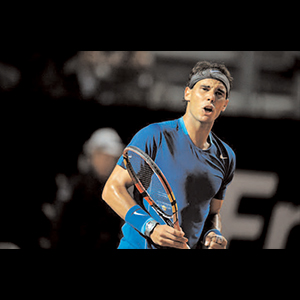
    ROME (TIP): World number one Rafael Nadal dug deep to maintain his chances of defending his Rome Masters title after a gutsy come-from-behind 1-6, 6-3, 7-5 win over Andy Murray in the quarterfinals on Friday. Murray had won only five of his last 18 matches against Nadal but held the bragging rights from their last two — a walkover win in the semis of the Miami Masters and victory in the final of the Tokyo Open in 2011, both hardcourt events.

    And despite doubts lingering over the Scot’s form following an absence from the tour due to back surgery at the start of the year, Murray produced a stunning performance at the Foro Italico to underline his form ahead of the French Open later this month. The Scot raced to a 6-1 win in the opening set, leaving clay-court king Nadal to tinker with tactics in the second set in a bid to pull level.

    In a much tighter third set, Nadal maintained his momentum by winning three breaks to two for Murray. The Spaniard broke in the first game, only for Murray to break back immediately in a second game which saw the Scot pull off a stunning pull-back shot which stunned Nadal and had the crowd in raptures. That gave Murray some momentum of his own and the British number one held serve to go 2-1 in front.

    Both players held serve in the next two games and with the score at 3-2 Murray raced to triple break point to break again and take a two-game lead after Nadal netted a return from a powerful serve. Sensing defeat, the Spaniard upped his game and broke back to level at 4-4. Both players held serve over the next two games, but Nadal made the difference when he raced to triple break point in the 11th game before breaking for a third time in the set for a 6-5 lead and then serving out for the win.

    Nadal will now meet Bulgarian Grigor Dimitrov in the semis on Saturday, when number two seed Novak Djokovic faces Canada’s Milos Raonic. Djokovic ousted David Ferrer 7-5, 4-6, 6-3 while Raonic claimed his last-four spot with a commanding 6-3, 5-7, 6-2 quarterfinal win over Frenchman Jeremy Chardy. Italy’s number 10 seed Sara Errani, meanwhile, stunned China’s number two seed Li Na 6-3, 4-6, 6-2 to make the semis for the second consecutive year.

    She is on course to become the first Italian woman since Raffaella Reggi 29 years ago to win the tournament and next meets Serbian sixth seed Jelena Jankovic after she accounted for Agnieszka Radwanska, the third seed from Poland, 6-4, 6-4. Errani and Jankovic were joined in the last four by Ana Ivanovic, although the Serbian 11th seed had to dig deep throughout a thrilling encounter with Carla Suarez Navarro before finally beating the Spaniard, seeded 13, 6-4, 3-6, 6-4. Ivanovic will next meet Serena Williams after she annihilated unseeded Chinese player Zhang Shuai 6-1, 6-3. Ivanovic knows she faces a tough task.

  • India votes for political stability, development and good governance

    India votes for political stability, development and good governance

    The days of political instability in India should be over, with the people of India clearly preferring the BJP to lead the country. India has chosen, after almost three decades, a government that can function without pulls and pressures, which in other words means, political blackmail, to which the nation has been a helpless witness during the last two decades.

    In a house of 543, where a party needed 272 to have a simple majority, BJP has got 282 seats, 10 more than required to form a government on its own. With its alliance partners in the NDA-Shiv Sena, TDP, SAD, LJP and others, it commands an imposing majority, with 336 seats. It could well lead to an Indian Renaissance. Indubitably, there has been a “tectonic shift in the Indian politics”.

    How one could, otherwise, explain the total decimation of the Congress and its allies in the UPA and the meteoric rise of the BJP. Indians have been waiting for the promised millennium but found, to their chagrin that it was an endless wait for Godot. Their patience was running out. Promises and pledges were made to be broken, not kept, seemed to be the belief of the ruling UPA.

    The result: 44 seats for the Congress Party and a total of 59 for the UPA. The impatience of the people with the government that was steeped in corruption led to protests against corruption and misgovernance. Indians cannot in their honesty deny that the movement against corruption and for a Lok Pal Bill launched by Anna Hazare dented the Congress image.

    Arvind Kejriwal, taking a more hostile opposition to the corruption in the UPA government, launched a frontal attack on the UPA government and the Congress leaders and exposed a number of corruption cases. These movements enjoyed people’s support. The image of the Congress party and its allies in the UPA got sullied, with people openly expressing their disapproval of the functioning of the government.

    Look at the Delhi assembly elections. The Congress party was nearly routed, with just 8 seats, after having ruled the state for 15 years, trailing behind BJP (32) and the fledgling AAP (28). Apart from the exposure of the Congress led UPA government corruption and misdeeds, what hurt it the most was its inability to control inflation. The common man suffered from ever increasing prices which made his life miserable.

    The regular backbreaking price rise of essential commodities made him think of a change. See how Delhites fell to the AAP promises of cheaper water and electricity supply and gave a few months old political party, the massive support to rule. It was another matter that AAP government could not last.

    Other factors that contributed to people’s disenchantment with the Congress party included growing unemployment, failure of law and order machinery to protect the honor of women, and the ruling party’s attitude of indifference towards people’s problems. People wanted a change. As when one medication does not work, one tries another hoping it will work; so, the people of India, oppressed by the ruling party’s indifference to their woes, decided to go in for a change.

    Their vote for the BJP is, in fact, a voteagainst nonperformanceand misperformance of the UPA government. BJP, today, is in a position to deliver. With its comfortable majority, it can shape its policies, without being pressurized, as in a coalition. Narendra Modi has been harping on development during election campaign which he so successfully led from the front. Mr. India would like to get a slice of it.

    If he does not, he knows what to do. History repeats itself. Not long ago, a Kejriwal in Delhi was a cynosure of the common man’s eye and a few months later, he was dumped because he could not deliver. It has happened with the Congress Party. It could as well happen with the BJP. Indians are looking for results from the BJP. They are not going to wait long. First of all, they would like the government to control the killing price rise. Next, they would like to see the law and order machinery protect their lives and property. They want a judicial system which does them justice.

    They would like to be rid of everyday harassment in government offices where everybody seems to be out to reach in to their pockets. They would like to be treated with respect due to a human being. For long, India has followed the colonial system in many ways.

    One, which is more disturbing and destabilizing, is the large presence of the privileged and the non-privileged sections of society. The feudal system which the laws ended a long time ago is still going strong. The mai baap, sarkar, huzoor, VIP culture is doing no good to the nation. And then, we do not want to give up status symbols. One fails to understand why a lawmaker or an official of the government requires security and a fleet of vehicles.

    Who pays for it? Why should the people of India pay for the idiotic notions of the privileged few? Modi’s charisma has worked with the people of India and we would hope it works with the governments of the world. The Modi government must ensure cordial relations with neighbors and friendly nations. In particular, relations with USA, China and Pakistan will need extra care and attention. Over the years, India has diligently built up certain alliances which will need to be strengthened.

    In international relations, change of government does not mean abrupt changes in alliances. It may be remembered that such alliances exist between nations, not between governments. Indians are glad to see a star politician in Modi. They would be happier to see a statesman in Modi. Only time will tell whether or not Modi can graduate from a politician in to a statesman. One hopes, BJP will live up to the expectations of people of India who have placed their trust in the party’s promise of giving good governance – “Sushashan”.

  • Scotland may re-introduce post study work visa for Indian students

    Scotland may re-introduce post study work visa for Indian students

    EDINBURGH (SCOTLAND) (TIP): In a major announcement, Scotland has said that it will re-introduce post study work visa for Indian students if it gains independence from United Kingdom in the referendum scheduled for September. The referendum on September 18 will see Scotland vote on whether it should be an independent country.

    In an exclusive interview with TOI, Scotland’s minister for external affairs and international development Humza Yousaf said Scotland will allow Indian students to work at least for two years after they finish their education degree in Scotland.

    Yousaf told TOI that ever since UK changed its immigration policy and ended its post-study work route for international students, Scotland has seen a 51% dip in Indian students enrolling to Scottish universities. At present, over 2000 Indian students study across Scotland. By 2024, it is expected that there will be 3.85 million outbound mobile higher education students globally and India along with China will contribute 35% of global growth during this period.

    Indian students will be the second highest chunk with 3.76 lakh of them travelling to enrol in foreign universities. Yousaf told TOI “India’s relationship with Scotland goes back to 1870s and it’s a friendship we greatly value. Infact if the referendum sees a majority voting for Scotland’s independence, Delhi will be one of the first places we will open our embassy.

    We have named India as our strategic priority country. The embassy will work to strengthen India’s ties in promoting trade and culture”. He added “Education will be the key area of India and an independent Scotland’s relationship. We want an immigration policy which makes sense and hence will have a different system to UK. UK’s immigration laws have damaged its relationship with India. We will re-introduce post study work visa in Scotland for Indian students.

    Earlier before UK laws changed, it was for two years. We are presently talking to universities in Scotland on whether we stick with that or increase it further”. “Scotland has seen a massive fall in Indian students coming here to study just because of the new UK regulations. What is the point of attracting the best and brightest students to Scotland to study and not reap its benefits by asking them to leave immediately? We will allow Indian students to stay and work after getting their degree,” Yousaf added. Director of Universities Scotland said earlier, “It is deeply worrying to see such steep declines in students from India.

    These are important markets for Scottish higher education and countries with which we have long-standing academic relationships. It’s very important that the message gets out to these countries that international students are welcome in Scotland.

    This is not the perception given out by hardline rhetoric from parts of the UK government.” While students from the EU are entitled to free tuition at Scottish universities, those coming from further afield typically pay fees of between £10,000 and £20,000 a year, depending on their course. Those studying for medical degrees can pay around £30,000 a year. A study by Strathclyde University published in 2009 estimated that international students contribute £188 million to universities in Scotland directly with a further £321m to the wider Scottish economy.

  • China sentences 24 in baby trafficking case

    China sentences 24 in baby trafficking case

    BEIJING (TIP): A Chinese news agency says the leader of a baby trafficking gang that brought at least 23 boys or pregnant women from Vietnam to China has been sentenced to death. The official Xinhua News Agency said 23 other members of the gang were given sentences May 16 by a court in the southern region of Guangxi ranging up to life in prison. A Vietnamese woman who was among those sentenced also was ordered expelled to her home country. The report said the trafficking ring operated in 2010 and 2011 and sold the babies for adoption in China. Police broke up the ring in 2011.