Tag: China

  • India Delivers Clear Mandate to Bhartiya Janta Party

    India Delivers Clear Mandate to Bhartiya Janta Party

    Narendra Modi to be sworn in as Prime Minister on May 21
    Manmohan resigns bringing to an end his 10-year tenure

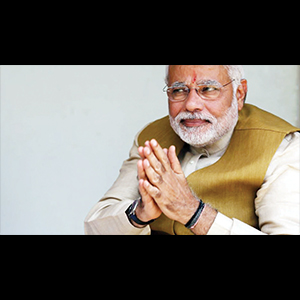
    NEW DELHI (TIP): Addressing a euphoric crowd Friday, May 16 afternoon, Narendra Modi rallied the public to join him in taking on challenges of a vast scale. He has floated the idea of building “a hundred new cities,” of extending a high-speed rail network across the subcontinent and undertaking the herculean task of cleaning the Ganges River. He has been inspired by China’s model of high-growth, topdown development.

    But the country he will govern is India: messy, diffuse, and democratic. Modi’s Hindu nationalist Bharatiya Janata Party won a historic mandate in the country’s general election Friday, emerging with 282 of 543 parliamentary seats, more than enough to form a government without having to broker a postelection coalition.

    For months, Modi’s advisers had focused on crossing such a threshold, which they regarded as a signal that the country was behind an agenda of radical change. The nature of that change has never been clear, though. Voters are seeking immediate economic opportunities.

    The party has proposed pro-business legislation like the easing of labor or landacquisition laws. Modi, 63, is drawn to largescale building and infrastructure projects, which he pursues with a single-minded – critics say dictatorial – style. “He has a fairly clear idea of what he wants to accomplish, and he does not look for ratification from the market,” said Eswar S. Prasad, a Cornell University economist who has consulted informally with Modi’s economic team.

    “One could argue that in a country where there are far more words than actions thrown around, that this is far more preferable: a man who acts.” Modi’s planned economic reforms are certain to encounter obstacles once he takes power, among them a federal system that puts essential functions like land acquisition in the hands of state leaders. Entrenched national-level functionaries will resist efforts to strip their authority by eliminating red tape, a goal that was central to Modi’s plan to attract investors to the state of Gujarat.

    Changing tax policy or labor and land laws would require the support of the upper house of Parliament, which the Bharatiya Janata Party does not control. Meanwhile, voters’ expectations of immediate economic improvement are perilously high, setting the stage for rapid disappointment if Modi is seen as not delivering. But Friday’s enormous victory will give Modi “a much freer hand than the typical leader of such a large democracy,” Prasad said.

    The reasons Modi’s party succeeded in defeating the Indian National Congress, which has controlled India’s government for nearly all of its postcolonial history, will be studied for years. But they clearly reflect a rapid change in Indian society as urbanization and economic growth break down old voting patterns. For decades, the Congress party’s trademark initiatives have been redistributive, and the party introduced a package of major subsidies for the poor before the election.

    Voters, however, proved to be more captivated by Modi’s promise to create manufacturing jobs, which he has done quite successfully in Gujarat, the state he has governed since 2001. Modi, the son of a provincial tea-seller, prides himself on being an outsider amid New Delhi’s elite, and he recently promised in an interview with Open magazine that he would “break the status quo.”

    He was profoundly imprinted by his years as a full-time activist for the Rashtriya Swayamsevak Sangh, a right-wing Hindu organization, and his earliest and most frequent trips as an elected official were to other countries in Asia, which shaped his vision of India as a manufacturing power. A cultural conservative, he is no admirer of the liberal intellectuals who traditionally support the Congress party.

    Swapan Dasgupta, a journalist who supports Modi, said Delhi elites were worried – justifiably – that the space for their work would shrink when the new government settles in. cannot say what the contours of the future political elite or political class will look like,” he said. “He has brought in lots of people who have risen from local politics, less of those people who are traditional dynasts. A new sort of people, perhaps a little technocratic. People not from the Anglophone elite, maybe.”

    The mood at the Congress party’s headquarters on Friday was funereal. Top officials had prepared for a loss, but not for the crushing defeat they faced; according to final results from the Election Commission, the party had secured only 44 seats, a surprisingly low number for the party that was integral to India’s founding narrative. The president of the Congress party, Sonia Gandhi, and her son, Rahul, made a brief appearance at the headquarters late in the afternoon, when celebratory firecrackers could be heard from BJP headquarters nearby.

    Rahul Gandhi, who has never appeared comfortable in his role as the party’s standard-bearer, kept an odd, fixed smile on his face, acknowledging that the party had “done pretty badly.” His mother, who reinvigorated the party after her husband, Rajiv, was killed by a suicide bomber in 1991, conceded defeat without mentioning Modi or the BJP. “We believe that in a democracy winning and losing is part of the game,” Sonia Gandhi said.

    “This time the mandate is clearly against us. I accept the mandate with humility. I hope that the incoming government will not compromise with the interests of society.” A Congress-led coalition won a solid majority of seats in 2009 parliamentary elections, but the term was tarnished by corruption scandals and a slowing economy. Party workers, dully flipping through television news channels in a room with portraits of four generations of Nehru- Gandhi politicians on Friday, complained that the party’s grass-roots workers no longer had contact with Rahul Gandhi and his advisers, and had failed to identify shifts among young voters.

    Rajendra Pal Singh, a clerk with the party for more than 30 years, sadly recalled a time when the party faithful streamed in and out of the party’s bungalow as if it were “a place of worship.” “Gone are the days of the Gandhis,” Singh said. “We have not seen people coming here to hug Rahul for the past decade on any of those festivals. That culture is dead and long gone, like the Congress party now.”

    Addressing a euphoric throng in the city of Vadodara after votes were counted Friday, Modi was forced to pause repeatedly as he waited for the audience to stop chanting his name. Modi, normally an intensely solitary man, draws visible pleasure from his interactions with crowds, and he seemed Friday to enlist their support for vast undertakings. “Brothers and sisters, you have faith in me, and I have faith in you,” Modi said. “This is the strength of our confidence – that we have the capacity to fulfill the common man’s aspirations.

    The citizens of this country have done three centuries of work today.” His supporters celebrated. Drummers, stilt-walkers and women in colorful saris converged at BJP headquarters in New Delhi, where party workers had laid out 100,000 laddoos, the ball-shaped sweets that are ubiquitous at Indian celebrations. Among the revelers was Surinder Singh Tiwana, 40, a lawyer. “I can equate my jubilation today, probably, to my mother’s on the day I was born,” Tiwana said. “This is a huge change for our country, a change of guard. A billion plus people have announced their mandate in no uncertain terms.”

  • China’s air force creates a battalion of monkeys

    China’s air force creates a battalion of monkeys

    BEIJING (TIP): The air force of the People’s Liberation Army (PLA) of China has trained a group of macaques to help protect an air base close to Beijing. These monkeys have been put here to take care of the huge flocks of birds that pose a threat to flights.

    According to China’s air force news website, the macaques have been taught to destroy nests in nearby trees and chase away the birds that have become a nuisance during the take-offs and landings of fighter planes in the base whose exact location was not revealed.

    The base has used practically every means of tackling the problems of the birds, from firecrackers to scarecrows or even firearms but nothing proved to be as effective as the monkeys which are jokingly referred in military circles as “the Chinese army’s new secret weapon”.

    The macaques respond with the obedience of a recruit to the whistles that their trainers use to give them orders and are capable of destroying more than 180 nests close to the base at a rate of around six nests per monkey. It is certainly not the first army to use domestic animals in the elite forces: The Washington Post daily recalled that the US uses dolphins to detect, locate and mark mines.

    However, dogs are the most used animals in armies around the world.One of the most delicate operations in history that led to the death of Osama bin Laden, the al-Qaida leader, also featured a dog, a Belgian shepherd called Cairo.

  • China detains, shames 70- year old ex-editor for leaking state secrets

    China detains, shames 70- year old ex-editor for leaking state secrets

    BEIJING (TIP): China has detained a 70-year old former editor who has won international awards for journalism on charges of leaking state secrets. The journalist, Gao Yu, was “criminally detained on suspicion of providing state secrets to sources outside China”, the Beijing public security department said.

    State run China Central Television ran a video on Thursday showing Gao in orange prison smocks with her face blurred admitting to “seriously harming the national interest”. It also showed her being escorted down a hallway and interrogated by two uniformed police officers.

    Gao is a former deputy editor-in-chief of the magazine Economics Weekly and is an outspoken journalist who was named as one of the 50 “world press freedom heroes” in 2000 by the International Press Institute. She was sentenced to six years in prison on a similar “state secrets” charge in 1993. In a delayed report, Xinhua news agency said Gao was detained on April 24 on suspicion of having sent a copy of a “highly confidential” document to an overseas website last June.

    It did not mention what the document was about. The detention comes ahead of the 25th anniversary of the Tiananmen Square crackdown. “I believe what I have done has touched on legal issues and has endangered the country’s interests,” said Gao in the television confession. “What I have done was a big mistake. I earnestly and sincerely have learned a lesson from this experience and admit my guilt,” she said in the video with her face obscured.

    Police seized “substantial evidence” from her home and Gao has “expressed deep remorse about what she did”, Xinhua said, adding that she was “willing to accept punishment from the law”. In another case, a court in the southern city of Shenzhen this week sentenced Hong Kong-based publisher Yu Man-tin to 10 years in jail on charges of smuggling.

  • Cargo ship sinks, 11 missing near Hong Kong: Officials

    Cargo ship sinks, 11 missing near Hong Kong: Officials

    HONG KONG (TIP): Authorities launched an air and sea rescue operation on May 5 to find 11 crew members from a Chinese cargo ship after it collided with another vessel and sank just outside Hong Kong’s teeming waters.

    Four helicopters and more than 20 ships from China and Hong Kong were deploying to the waters near Po Toi, an island lying at the edge of Hong Kong’s territory where the ship sank in the early hours of the morning, officials said.

    “Two cargo ships collided and one of them sank,” a police spokeswoman told AFP. Aerial footage of the scene shown on Hong Kong television showed an oil slick on the surface of the sea where the ship is believed to have gone down. A fire department spokesman said there were 12 people in total on board, with police confirming that one male was later rescued and sent to hospital.

    The survivor, who was plucked from the sea by a passing fishing boat, suffered minor injuries to his hands and feet, she said. China said it was sending three helicopters and more than a dozen ships to the scene, according to the official Xinhua news agency, while Hong Kong sent a helicopter and eight rescue vessels.

    A fire department spokesman said the collision took place three miles (nearly five kilometres) south of Po Toi, just outside Hong Kong maritime territory. The 97-metre long Chinese cargo ship, the Zhong Xing 2, was carrying cement from the Northern Chinese province of Hebei to the city of Haikou in the nation’s southern island of Hainan, the city’s Marine Department told AFP.

  • ‘Pak should be given a path to nuclear normalcy’

    ‘Pak should be given a path to nuclear normalcy’

    ISLAMABAD (TIP): Pakistan should be offered a path to nuclear normalcy in the same way India was accepted into the nuclear club when it negotiated a civil nuclear deal with the US and was brought into the Nuclear Suppliers Group, Mark Fitzpatrick, Director of the Non-proliferation and Disarmament Programme, International Institute of Strategic Studies, UK said on Thursday.

    Fitzpatrick addressing a public talk show and his book launch “Overcoming Pakistan’s Nuclear Dangers organized by The Institute of Strategic Studies in Islamabad. He said Pakistan’s nuclear arsenal was one of the world’s fastest growing. He said that the triangular relationship between Pakistan, India and China has led to a unidirectional security competition whereby India’s security concerns and arms competition were fueled by a much larger China and Pakistan’s by a much larger India.

    “As a consequence Pakistan’s nuclear arsenal presently estimated to be around 120 was projected to be over 200 by year 2020 which was a cause of great concern for major powers around the world,” Fitzpatrick said. He suggested that Pakistan should negotiate the Fissile Material Cut Off Treaty and sign the Comprehensive Cut Off Treaty to give it a diplomatic high ground and to lock in India’s nuclear weapon potential which was much greater than Pakistan’s should it choose to develop it.

    Fitzpatrick recommended the path to negotiation for India and Pakistan for dealing with issues that may spark a nuclear war as well as conflict. He asked the Pakistani government to suppress extremist groups to reduce the dangers of seizure of its nuclear weapons. He also presented a perspective on dangers associated with Pakistan’s nuclear weapons.

    Among the major concerns that he highlighted was potential for escalation of South Asia’s strategic arms race and the subsequent increased potential for theft, sabotage and especially nuclear terrorism; nuclear accidents as well as concerns that Pakistan’s nuclear-weapons technology might again be transferred to nuclear aspirants; and above all the potential for a nuclear war possibly triggered by terrorist activities such as in the case of 2008 Mumbai attack. He identified that while the danger of extremist groups getting hold of nuclear weapons was in theory possible, the threat was exaggerated out of proportion in Western media.

  • A MODI GOVERNMENT MUST PROJECT A MORE ROBUST FOREIGN POLICY

    A MODI GOVERNMENT MUST PROJECT A MORE ROBUST FOREIGN POLICY

    “Rather than debating a new conceptual framework for our foreign policy – more “nationalistic” or resting on an “India first” foundation – we could look at how some concrete issues should be addressed by a Modi-led government”, says the author.

    Now that it appears that the next government in New Delhi could well be Modi-led, questions about the possible changes in India’s foreign policy are being raised inside and outside the country. India’s external challenges are well known and policy responses have been examined over time by governments in power. Whether or not existing policies represent the best balance in coping with our external environment with the capacities we have can always be debated.

    Some say that our foreign policy is weak and accommodating, too risk-averse and lacking in self-confidence. Others argue that we are unsure of what we want and consequently we are reactive, allowing others to define the agenda on which then we position ourselves. ‘Modi is not above the law’: NaMo insists he has nothing to hide from snoopgate probe and denies corruption slur against Vadra Hurriyat supports Army Chief’s statement that Kashmir is the ‘jugular vein’ of Pakistan Pakistan Army chief calls Kashmir the country’s ‘jugular vein’ Such a foreign policy is not seen as compatible with India’s stature and role in international affairs.

    Refashion
    Some others advocate that the Modigovernment should make a break with the Nehruvian foreign policy that India has been practicing, even under the previous NDA government. The implications of this are unclear. It could mean that we should defend our interests more vigorously, worry less about international opinion and attenuate the moral overtones of our foreign policy. Inflammatory: Pakistan’s army Chief General Raheel Sharif recently termed Kashmir Pakistan’s ‘jugular vein’ More importantly, we should develop the necessary military sinews to pursue a more robust foreign policy, including accelerating our strategic programs and climbing down from the nuclear disarmament bandwagon.

    It could mean therefore a more muscular China and Pakistan policy. It could also mean discarding our allergy to alliances, getting rid of the malady of non-alignment that still afflicts us, shedding leftist, third world rhetoric and not allowing concepts of “strategic autonomy” to constrict more decisive foreign policy choices. Rather than debating a new conceptual framework for our foreign policy – more “nationalistic” or resting on an “India first” foundation – we could look at how some concrete issues should be addressed by a Modi-led government. Pakistan is a perennial problem, embodying the worst challenges India faces, whether of terrorism, religious extremism and nuclear threats, all linked to its territorial claims on us.

    The latest statements by Pakistan’s Interior Minister and its army chief reflect Pakistan’s abiding hostility towards us. Nawaz Sharif has been harping aggressively on the Kashmir issue, calling it Pakistan’s “jugular vein”, a phrase repeated by the current army chief. By speaking highly politically about Kashmir, the army chief has drawn a red line for Pakistan, besides signaling support to the separatists in Kashmir. An unreconstructed Nawaz Sharif is lobbying with the US and UK to intervene in the Kashmir issue.

    If by “jugular vein” Pakistan means that we can inflict death on Pakistan by thirst, it is dishonestly ignoring India’s strict adherence to the 1960 Indus Waters Treaty despite the 1965, 1971, 1999 armed aggressions by Pakistan, its terrorist onslaught against India since the mid-1980s, with the 2008 Mumbai terrorist attacks capping its emergence as the epicenter of international terrorism, and its policy of derailing our power projects on the western rivers allowed by the Treaty by dragging us into international arbitration.

    Mismanagement
    Meanwhile, by acquiring contiguity with China through its illegal occupation of parts of J&K and preventing our contiguity with Afghanistan, Pakistan’s “jugular vein” receives plentiful sustenance to counter us strategically. These Pakistani statements helpfully give room and reason to a Modi-led government to reject any hurried dialogue with Pakistan and exclude Kashmir and Siachen from any future structured agenda.

    Pakistan’s intransigence also argues against any back-channel contacts, because unless Pakistan can publicly speak of its willingness to compromise over its differences with India, the back-channel is simply a means to “soften” India and exploit its attachment to a come-what-may, dialogueoriented and “readiness to walk the extramile” approach to extract concessions. China presents a more complex case as it has outshone us in its diplomatic, economic and military performance and has decisively gained ground on us regionally and internationally. By mismanaging our democratic politics internally, neglecting our defense preparedness and failing to sustain high rates of economic growth, we have gravely weakened ourselves vis a vis China.

    Diminished
    China is thus setting the agenda for our bilateral engagement, advancing its interests, keeping us on the defensive with calculated provocations and evading any serious response to our concerns. We should continue our engagement of China but make it more balanced by calibrated countervailing steps by us like winding up the Special Representatives mechanism which is no longer serving the specific purpose for which it was set up, apart from allowing the Dalai Lama to call on India’s new leader after May 16, refusing visas to Tibetans in any Chinese delegation visiting India, avoiding any official meeting between the two sides on Tibetan territory and the new prime minister visiting Tawang and Japan before the expected visit of the Chinese president to India.

    The US seems to be giving diminished political attention to India while stepping up economic pressure on us. Its threats of isolating Russia and sanctioning powerful Russian political and business personalities for actions in Crimea in disregard of Russia’s nuclear armory, its huge resource base, European energy dependence on Russia, and the risk of losing Russian logistic support for Afghanistan and for dealing with Iran and Syria, contrasts with the US reluctance to punish Pakistan for its misdemeanors in the region that has cost American lives too. US’s domination of the global financial system and its readiness to use it as an instrument of coercion stresses the need for India to assess more carefully the future of the India-US strategic partnership. Much more than this will be on the new government’s plate, of course. But if the big morsels are chewed well, the smaller ones can be swallowed with ease.

  • NEW YORK COURT FAVORS FLORIDA TRAVEL AGENT: IIFA RESTRAINED FROM TAKING TICKET MONIES OUT OF US

    NEW YORK COURT FAVORS FLORIDA TRAVEL AGENT: IIFA RESTRAINED FROM TAKING TICKET MONIES OUT OF US

    NEW YORK (TIP): Judge Melvin L. Schweitzer of New York State Supreme Court last week ordered the organizers of IIFA, held recently in Tampa, not to transfer or cause to be transferred any monies in their possession from the sale of IIFA tickets out of the US and appoint a receiver.

    An Orlando Travel Company has sued the Mumbai-based organizers of the Bollywood film awards Wizcraft and US partners, complained it was frozen out of the gala’s business after helping bring the event to Tampa. Akarsh Kolaprath and his family’s company, 7M Tours, contend they worked for three years to bring the International Indian Film Academy’s awards to the United States, spending $265,000 along the way.

    The suit contends that Patel and Wizcraft International Entertainment shoved Kolaprath aside when it appeared that the April 26 awards show and related events wouldmake more money than organizers first expected The company seeks more than $7 million in damages. “They need to pay these bills,” Kolaprath, 37, said “They cannot just take us for a ride. It is not fair.”

    Kolaparth said he started thinking of trying to bring the IIFA awards to the United States after watching the televised awards ceremony held in Macau, China, in 2009. After making contact with a Wizcraft subsidiary at a travel industry event in London, he said talks eventually started with Wizcraft executives. The lawsuit asserts Timmins and other Wizcraft representatives promised Kolaprath, as compensation for his help, 3 percent of the first $17.5 million in IIFA revenue, and all revenues above $17.5 million.

    But Timmins wrote to Shah in 2013 that the 3 percent commission was to be split between him and Kolaprath. And in a Jan. 20 email included as an exhibit, Timmins wrote Kolaprath that “no deal materialized between Wizcraft and Chetan Shah or Go Bollywood Tampa Bay.Subsequently,” Timmins added, “this leaves no understanding between Wizcraft and 7M Tours on any kind of fees or payment due towards you.” Kolaprath’s suit also says that pursuant to a hotel, travel and tour booking contract that the Go Bollywood host committee signed with his company, 7M booked 1,800 rooms at 45 hotels in the Tampa Bay area and Orlando.

    A copy of the August 2013 contract is an exhibit to the suit, though Shah’s signature notes that it was “subject to final approval from Wizcraft.” But 7M’s reservations were for IIFA’s originally announced dates in mid-June. In December, after high demand for tickets prompted organizers to move the show from the Tampa Bay Times Forum to the larger Raymond James Stadium, the awards were rescheduled for April 23-26.

    After that happened, the suit says, Kolaprath and 7M were excluded from preparations, and Wizcraft refused to help it re-book the rooms it had reserved or reduce its $1 million liability for the rooms it booked in June. The suit includes letters to 7M from the Sheraton Tampa East Hotel, St. Petersburg Marriott and Westin Harbor Island – all demanding tens of thousands of dollars owed despite the cancellations.

  • ‘Legal highs’: UK minister warns against ‘dangerous’ Indian medicines

    ‘Legal highs’: UK minister warns against ‘dangerous’ Indian medicines

    LONDON (TIP): A British minister has sought action against scientists in India and China who are allegedly producing dangerous new medicines called “legal highs” to be sold on UK streets. Norman Baker, a UK Home Office minister, said that scientists in India and China are creating new drugs on a “weekly basis” and the UK government needs to find new ways to deal with them.

    “We’re in a race against the chemists of new substances being produced almost on a weekly basis in places like China and India,” Baker told the BBC. “They then come in here and are inaccurately and unhelpfully called ‘legal highs’, some of them are actually illegal. They are certainly not necessarily safe and the word legal implies that they are safe. And people are consuming them and last year I think it was 68 people who died, according to coroners reports, from the ingestion of these substances.

    “My objective is to minimise the harm from these substances to the public at large,” Baker said. The number of deaths from drugs known as “legal highs”, such as mephedrone, known as “Miaow Miaow”, reached the highest number ever recorded last year. Ministers are consulting on ways to toughen regulation of the drugs. “We’re dealing with a situation where there’s already a vast array of substances being sold on our streets, in our shops and that’s what we have to deal with. Many of these are actually quite dangerous,” Baker warned.

  • Suicide bombers may have been behind Xinjiang blast

    Suicide bombers may have been behind Xinjiang blast

    BEIJING (TIP): Two of the three people killed in a bomb explosion at a railway station in China’s Xinjiang province were terrorists who triggered the blast, officials said indicating they may have been suicide bombers.

    The Xinjiang regional government said the two slain attackers had “long been influenced by extremist religious thought and participated in extremist religious activities”. One of the two suspects was Sedirdin Sawut, a 39-year-old man from Xayar County in southern Xinjiang.

    The third person killed at the Urumqi railway station on Wednesday evening was a bystander. The government said the terrorists went on a knifing spree and triggered the explosions wounding 79 people as well. The bomb attack was the first in Urumqi, capital of Xinjiang region, in 17 years. It came soon after the arrival of a train from a mainly Han Chinese province, state media said.

  • Fear and loathing in Washington

    Fear and loathing in Washington

    The known unknowns about Modi are perfect catalysts for a reset of India-US relations

    Over the past three years, Washington has also come to believe it did India too big a favor with the nuclear deal and received little payback. This premise conveniently ignores the many tangibles (Indian purchases of US defense platforms to the tune of $10 billion in less than a decade) and intangibles (India’s decision not to criticize wholesale spying by NSA). A strong government in New Delhi is unlikely to be as patient or as yielding

    The American establishment is registering a measure of fear while the liberal academic-NGO community a sense of loathing at the prospect of Narendra Modi becoming India’s next PM. They are full of questions with no real answers. If elected, how would a state CM play the national and international game? How would he deal with a US administration whose policy lately has been to hit India on multiple fronts to extract concessions? More importantly, how would he look at a country that denied him a visa and had no contact with him for seven years?

    The anti-Modi coalition of Christian evangelists, left-leaning Indian Americans and Muslim activists is gearing up to mount pressure through the US Congress. They will keep the heat on even though the old fervor is gone, especially among Republicans. The uncertainties, the ambiguities and the “known unknowns” about Modi are actually perfect catalysts for a “reset” of India-US relations currently running at a low. They can create the new chemistry necessary for a more balanced equation better suited to the times.

    It cannot be the responsibility of one partner to create equilibrium, constantly ignore provocations and appease. A good relationship bears traffic in both directions. Actually the reset has already begun. Ironically, the button was pushed by the Khobragade affair. Needless provocation sparked a strong Indian response and washed the fuzziness off the relationship. Dialogue has gained in clarity since. The defensive tone has been replaced by a confident articulation of Indian expectations from the relationship. It is neither arrogant nor whiney. Terms of engagement will change further if Indian voters give a clear mandate.

    Unfortunately, the last phase of the UPA government left the impression that India will reverse its policies in the face of pressure and noise from Washington. It did so on preferential market access and transfer pricing. This has emboldened US lobbies out to draw more blood. After all who wouldn’t use a tactic that works? Over the past three years, Washington has also come to believe it did India too big a favor with the nuclear deal and received little payback. This premise conveniently ignores the many tangibles (Indian purchases of US defense platforms to the tune of $10 billion in less than a decade) and intangibles (India’s decision not to criticize wholesale spying by NSA). A strong government in New Delhi is unlikely to be as patient or as yielding. Piling on public pressure is bad strategy for the general health of the relationship.

    It reduces the Indo-US story to one of trade and investment disputes and blurs the original idea for coming together – a geostrategic convergence of interests. The new government will realize soon enough that an inward-looking Obama administration has had only fitful engagement with the world. That it has paid no special homage to strategic vision, and instead allowed a disaggregation of the India-US relationship. Then it has come after New Delhi issue by issue. It has attacked India at the behest of big pharma and other business interests whose maximalist agenda has been repeatedly exposed.

    Their game is to scotch any serious attempt to keep medicine affordable while discrediting India’s generic drugs industry through means both fair and foul. In their calculation, if India bends, it would scare smaller, weaker countries from ever contemplating a compulsory license US pharma’s brutal overreach has even put the much-touted Trans-Pacific Partnership under a cloud as negotiating countries discover the traps set for them under the guise of protecting intellectual property and copyrights. If the US Trade Representative reviewing India’s intellectual property regime downgrades it and puts it on the list of ‘Special 301’ countries, this will add another twist to an already twisting relationship. Such naming and shaming could lead to sanctions.

    Pushing the business agenda of demands drafted by the US Chamber of Commerce at a time when the US is losing international partners faster than it is acquiring them is unwise. Especially when Obama’s signature foreign policy effort – the pivot to Asia – keeps reincarnating in lesser and lesser avatars. Obama had also pledged to strengthen bonds with emerging economies but today all Brics are piled up against America for various reasons. India, Brazil, China and South Africa abstained on a UN resolution condemning the fifth partner Russia’s annexation of Crimea. India also abstained on a US-sponsored resolution against Sri Lanka’s human rights situation.

    This reflects a post-Khobragade realism, a push-back, even a new equilibrium. India will give but also take. For every US demand to open the Indian economy, there would be an equal and opposite demand on completing a “tantalization agreement”. India may find it useful to cross-link and leverage defense contracts for something tangible. Surely $10 billion worth of arms can buy relief on H-1B visas or a more honest policy towards a certain neighbor that remains the hub of terrorism. The truth is if Washington can be transactional, so can others. But this new phase should not obscure the larger logic behind India and the US coming together because the many reasons for convergence remain. Those with a wider window than a four-year election cycle understand that. Equally importantly, those who make national security policy in India know what balance of power is more beneficial.

  • INDIA PIPS JAPAN TO BE THIRD LARGEST ECONOMY IN PPP

    INDIA PIPS JAPAN TO BE THIRD LARGEST ECONOMY IN PPP

    NEW DELHI (TIP):
    The global economic balance seems to be tilting towards the developing countries. India has overtaken Japan to emerge as the third largest economy in purchasing power parity (PPP) terms, after the US and China, latest data released by the World Bank showed. Separately, an analysis showed members of the OECD, a rich-country club, accounted for 50% of the global economy estimated at $90 trillion in 2011, compared to 60% of the $70 trillion economy in 2005. While developing countries made up the remaining half, large emerging market economies such as India, China, Brazil, Indonesia, Russia and South Africa now make up around 30% of the world GDP.

    The previous version of the World Bank’s International Comparison Program (ICP) report had said that India was ranked 10th in 2005 in terms of PPP. PPP is used to compare economies and incomes of people by adjusting for differences in prices in various countries. “The economies of Japan and the UK became smaller relative to the US, while Germany increased slightly and France and Italy remained the same,” the World Bank report said. It said that six of the world’s 12 largest economies were in the middle-income category.

    The dozen largest economies accounted for twothird of the world economy and 59% of the population, the report added. The six largest middle-income economies – China, India, Russia, Brazil, Indonesia and Mexico – accounted for 32.3% of world GDP, while the six largest high-income economies – US, Japan, Germany, France, UK and Italy – accounted for 32.9%, showing the distance that the emerging economies had travelled through rapid growth in recent years. At 27%, China has the largest share of the world’s expenditure for investment, with the US at half the level with 13% share. India, Japan and Indonesia followed with 7%, 4%, and 3%, respectively.

  • SOLAR GEAR MAKERS TAKE RS 1,000 CR HIT ON US, CHINA DUMPING

    SOLAR GEAR MAKERS TAKE RS 1,000 CR HIT ON US, CHINA DUMPING

    NEW DELHI (TIP):
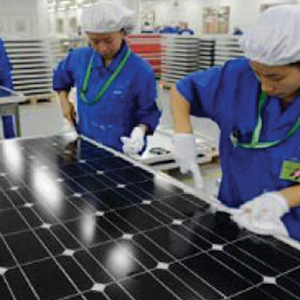
    Amid ongoing trade battle with the US over domestic content clause in solar projects, manufacturers of PV (photo-voltaic) panels have said they were losing Rs 1,000 crore worth of business annually and suffering job losses due to dumping by US, China, Taiwan and Malaysia. Indian Solar Manufacturers’ Association, the apex industry body representing 25 companies, on Wednesday demanded 30-35% anti-dumping duty on imports from these countries “at ridiculously low prices” in violation of international fair trade regulations.

    The government recently said solar projects must use at least 15% of locally manufactured equipment, stoking US trade ire. US and EU too insist on domestic equipment and recently imposed anti-dumping duty on Chinese panels. In January 2013, the commerce ministry issued a gazette notification for launch of anti-dumping investigations on imports from these countries. ISMA also debunked criticism from project developers over quality of Indianmade panels.

    The association said Indian solar cells and modules are compliant with German-certified IEC specs and calibrated in German laboratories. “India has been supplying cells and modules to all major countries in Europe and Japan who have by far the most stringent quality standards and has found a ready market in these discerning countries,” ISMA said in a statement.

    The industry body also argued that countries in the EU and the West Asia, the US, China and South Africa require locally manufactured equipment to be used in solar farms, ensuring energy security and employment to their countrymen.

  • China offers rewards for tip-offs in troubled Xinjiang region

    China offers rewards for tip-offs in troubled Xinjiang region

    BEIJING (TIP): Authorities in China are offering cash rewards for everything from “violent terrorism training” to growing long beards, the latest security regulations in the Xinjiang region that critics say target Muslims.

    The rewards are part of a social stability campaign in a region beset by violence that the government blames on Islamist militants and separatists who want to establish an independent state called East Turkestan in the far western region. Uighurs are Turkic-language speaking Muslims. Many of them chafe at Chinese controls on their culture and religion.

    Unrest in Xinjiang has killed more than 100 people in the past year. Uighur exiles and many rights groups trace the cause of unrest to government policies, including curbs on Islam and the Uighur people’s culture and language. The government denies those accusations. Members of the public can earn rewards by reporting on a range of more than 50 activities, according to a notice published on a government website for Shaya county in mid-April and carried in state media this week.

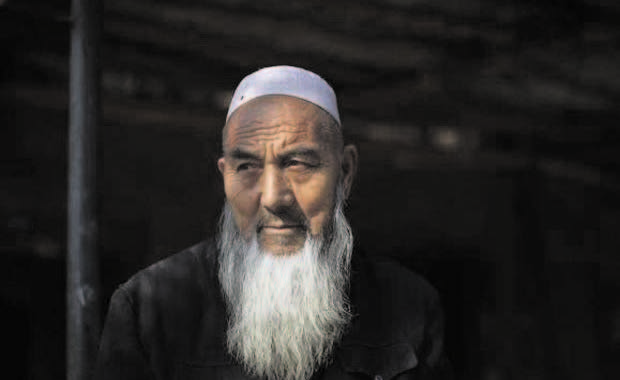
    Verified information regarding violations such as “violent terrorism training activities” and behaviour with “separatist aims” can earn an informant up to 50,000 yuan ($8,000). Information on individuals “growing long beards” and “wearing bizarre clothing” can yield rewards from 50 to 500 yuan, the county government said. “Timely reporting of social stability information can actively prevent and precisely strike at all kinds of illegal offences,” it said in the notice.

    Uighurs have traditionally followed a moderate form of Islam but many have begun adopting practices more commonly seen in Saudi Arabia or Pakistan, such as full-face veils for women, as China has intensified a security crackdown in recent years. Providing information about people who “say things that are not good for ethnic unity” and who “twist facts” about a deadly July 2009 riot in the regional capital Urumqi are also worth up to 500 yuan, the county government said.

    Nearly 200 people were killed in the Urumqi riot when Uighurs clashed with members of the majority ethnic Han Chinese community. It is not the first time authorities have targeted beards and clothing such as burqas and veils. “Restricting traditional culture, faith and lifestyles, proves the utter failure of China’s local governance,” Dilxat Raxit, spokesman for the main Uighur exile group, the World Uyghur Congress, said in a emailed statement this week.

  • World’s fastest lift climbs 95 floors in 3 seconds at speeds of up to 45mph

    World’s fastest lift climbs 95 floors in 3 seconds at speeds of up to 45mph

    LONDON (TIP): Climbing 95 floors in 43 seconds flat? Even Usain Bolt couldn’t do that. The world’s fastest elevators with a speed of 72 km/hour is coming up in China. Until today the record holder for speedy elevation was held by the lift in the Tapei 101 building in Taiwan which travels at 37.7 mph and reaches its top floor in just 30 seconds.

    However on Wednesday, Hitachi in Britain has announced that the ultra-high-speed elevator that will climb 95 floors in 43 seconds is being built at the Guangzhou CTF Finance Centre (530 meters tall) currently under construction in Guangzhou, China. The elevator will be unveiled in 2016. The 1,200 m/min ultra-high-speed elevator that Hitachi will deliver will feature both the drive power needed to attain the world’s fastest speed and also reliable control capabilities.

    The elevator will travel a shaft height of 440 from the 1st to 95th floor in approximately 43 seconds. Furthermore, Hitachi will achieve both high-speed elevator operation and a safe, comfortable ride by using braking equipment that safely bring the elevator to a stop. A new technology will also prevent lateral vibration to reduce the sensation of ear blockage caused by air pressure differences.

    In 1968, Hitachi developed Japan’s fastest elevator at the time, with a speed of 300 m/min. The first commercial passenger elevator was installed by the Otis Elevator Company in 1857 in New York City, climbing at a then-staggering rate of 40 feet per minute

  • TOYOTA SELLS 2.58 MILLION VEHICLES, OUTSELLING GENERAL MOTORS

    TOYOTA SELLS 2.58 MILLION VEHICLES, OUTSELLING GENERAL MOTORS

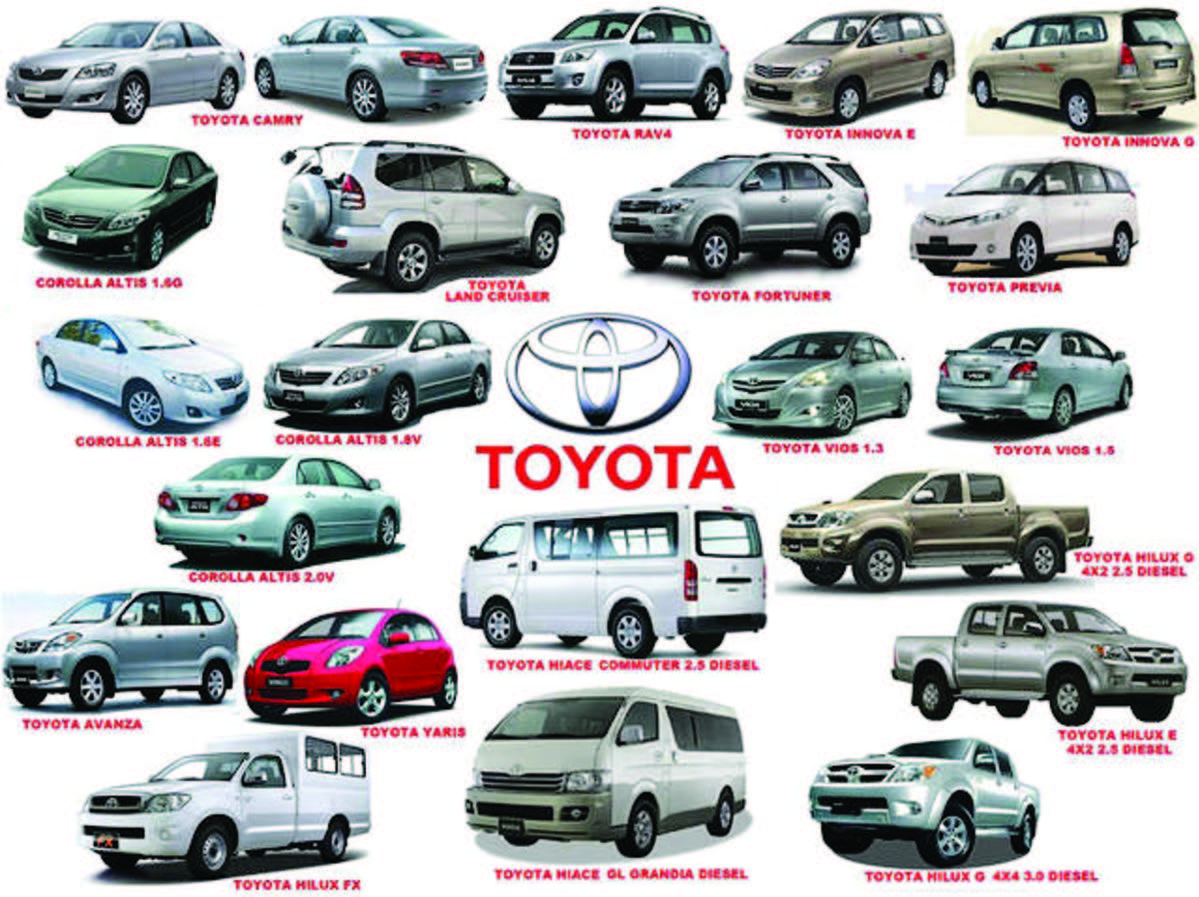
    TOKYO (TIP): Toyota kept its position at the top in global vehicle sales for the first quarter of this year, outpacing rivals General Motors and Volkswagen. Toyota Motor Corp said on Wednesday that it sold a record 2.583 million vehicles in the January-March period, putting the Japanese automaker ahead of Detroit-based GM at 2.42 million and Volkswagen of Germany at 2.4 million.

    Toyota’s first quarter sales rose by more than 6% from the same period the previous year. GM’s sales grew 2%, while Volkswagen’s added nearly 6%. Toyota finished first last year with a record 9.98 million vehicles in sales, remaining the top-selling automaker for a second year in a row. General Motors Co. finished second and VW third. Toyota is targeting sales of more than 10 million vehicles this year.

    No automaker has sold that many in a year. Toyota officials say being No. 1 is not that important, and they want to be No. 1 in customer satisfaction. But competition is intense among all the world’s automakers, and clinching the top-selling automaker crown is not taken lightly. By region, Toyota’s first quarter sales grew in Japan as consumers rushed to buy ahead of a rise in the sales tax, which kicked in April 1.

    Its sales also grew in the rest of Asia, the Middle East, South America and Africa, according to Toyota. General Motors had been the No. 1 selling automaker for more than seven decades before losing the title to Toyota in 2008. GM retook the sales crown in 2011, when Toyota’s production was hurt by the quake and tsunami in northeastern Japan. But the maker of the Prius hybrid, Camry sedan and Lexus luxury model made a comeback in 2012, and kept that lead in 2013.

    GM’s image has taken a hit after a February recall of 2.6 million vehicles for defective ignition switches, a defect the company tied to 13 deaths. GM and the U.S. government are investigating why it took the company more than a decade to recall the cars after engineers first learned of the switch problems. Toyota also underwent a massive recall debacle in the US, announcing recall after recall starting in 2009.

    It paid a $1.2 billion earlier this year to settle a US justice department investigation into charges of covering up problems that caused unintended acceleration in some cars. From 2010 through 2012, Toyota paid fines totaling more than $66 million for delays in reporting safety problems. Toyota agreed last year to pay more than $1 billion to owners of its cars who claimed to have suffered economic losses because of the recalls.

    The company still faces wrongful death and injury lawsuits. Volkswagen is growing so quickly in China and other relatively new markets it is close on the heels of its two longtime rivals.

  • Former US test site sues nuclear nations including India and US for disarmament failure

    Former US test site sues nuclear nations including India and US for disarmament failure

    WASHINGTON (TIP): The tiny Pacific republic of the Marshall Islands, scene of massive US nuclear tests in the 1950s, sued the United States and eight other nucleararmed countries on Thursday, April 25, accusing them of failing in their obligation to negotiate nuclear disarmament.

    The Pacific country accused all nine nuclear-armed states of “flagrant violation of international law” for failing to pursue the negotiations required by the 1968 Nuclear Non-Proliferation Treaty. It filed one suit specifically directed against the United States, in the Federal district Court in San Francisco, while others against all nine countries were lodged at the International Court of Justice in The Hague, capital of the Netherlands, a statement from an anti-nuclear group backing the suits said.

    The action was supported by South African Nobel Prize winner Archbishop Desmond Tutu, the Nuclear Age Peace Foundation said. “The failure of these nuclear-armed countries to uphold important commitments and respect the law makes the world a more dangerous place,” its statement quoted Tutu as saying. “We must ask why these leaders continue to break their promises and put their citizens and the world at risk of horrific devastation. This is one of the most fundamental moral and legal questions of our time.”

    The Nuclear Age Peace Foundation is a USbased non-partisan advocacy group working with the Marshall Islands and its international pro-bono legal team. The Marshall Islands, a grouping of 31 atolls, was occupied by Allied forces in 1944 and placed under US administration in 1947. Between 1946 and 1958, the United States conducted repeated tests of hydrogen and atomic bombs in the islands. One, on March 1, 1954, was the largest US nuclear test, code-named Bravo. It involved the detonation of a 15-megaton hydrogen bomb on Bikini Atoll, producing an intense fireball followed by a 20-mile-high mushroom cloud and widespread radioactive fallout. The Marshallese government says the blast was 1,000 times more powerful than that at Hiroshima. The lawsuits state that Article VI of the NPT requires states to negotiate “in good faith” on nuclear disarmament.

    The Nuclear Age Peace Foundation said the five original nuclear weapons states – The United States, Russia, Britain, France and China – were all parties to the NPT, while the others – Israel, India, Pakistan and North Korea – were “bound by these nuclear disarmament provisions under customary international law.” A copy of the suit against the United States made available to Reuters says that it is not aimed at seeking compensation from the United States for the testing in the Marshall Islands, which became an independent republic in 1986. Under agreements between the United States and the Marshall Islands, a Nuclear Claims Tribunal was established to assess and award damages to victims of the nuclear tests.

    But it has never had the cash to compensate fully for the damage done. The suit against the United States said it should take “all steps necessary to comply with its obligations … within one year of the date of this Judgment, including by calling for and convening negotiations for nuclear disarmament in all its aspects.” “Our people have suffered the catastrophic and irreparable damage of these weapons, and we vow to fight so that no one else on earth will ever again experience these atrocities,” the statement quoted Marshall Islands foreign minister Tony de Brum as saying. “The continued existence of nuclear weapons and the terrible risk they pose to the world threaten us all.”

  • The simmering Siachen and Indo-Pak ties

    The simmering Siachen and Indo-Pak ties

    In May 2005, as Indian and Pakistani Track I negotiators were reaching a ‘settlement deal’ on the forbidden Siachen Glacier, the then Chief of the Army Staff Joginder Jaswant Singh made an unexpected public statement. A deal would only work, he said, when Pakistan agreed to authenticate the 110-km Actual Ground Position Line dividing the two armies.

    The deal was about the ‘demilitarization’ of the glacier, a euphemism for India vacating this strategic battle-ground to appease Pakistan and some common alien masters. Obviously it fell through. In his Book ‘The Accidental Prime Minister’ Sanjaya Baru accuses General JJ Singh of playing double game: “In closeddoor briefings, the General would say that a deal with Pakistan was doable, but in public he would back (AK) Antony when the Defense Minister chose not to back the PM.”

    JJ Singh, vehemently denies this, but considering the past manipulations of this General including the obnoxious doctrine of ‘Line of Succession’ a jury need to be put out! While so, on this simple revelation, Delhi is simmering even as temperature in Siachen glacier is hovering around -15 degree Celsius! Heat is such that BJP’s highly-visible prime ministerial candidate, Narendra Modi, has taken up this as a grave national security issue and has asked the non-visible Prime Minister to come clean, saying that this matter is going viral on social media.

    What is going around in the social media is a brief on the subsequent developments on Siachen under UPA II, when Baru was not there. In September 2012, the Ottawa based Atlantic Council, alleged to have links with Pakistan’s ISI, announced the signing of an agreement to demilitarize Siachen as part of Confidence Building Measure between India and Pakistan. This agreement was negotiated by a 22-member India-Pakistan Track II team, headed on the Indian side by former Air Chief Marshall SP Tyagi. The Pakistani side was led by General Jehangir Karamat, a former Pakistan Army Chief. Meetings were held at Bangkok, Dubai, USA and finally at Lahore. This was despite the clear stand adopted by the Army, Defense Ministry and Ministry of External Affairs against ‘demilitarization’ of the glacier that has huge strategic value for India.

    There was something sinister in the whole thing because Prime Minister Manmohan Singh has been under pressure from the US to pull back from Siachen as a sop to the Pakistan Army who has been threatening to lease out Baltistan/Gilgit to China. It was also known that despite having no actual presence on Siachen, Pakistan continues to claim the territory. As soon as details of the ‘Agreement’ were put up on the internet all hell broke loose. It went ballistic on the military (serving and veteran) email circuit in which I was also a part. Lt. General PC Katoch, a former commander of the Siachen Brigade fired the first salvo: “For decades, India has always distrusted the Atlantic Council, which is perceived to be in bed with the Pakistani military. In this arrangement Pakistan has grabbed the strategic opportunity to attain all its key goals.

    It is surmised that the PM is aiming for a Nobel Peace Prize to recover the legitimacy his Government has lost after a succession of scandals.” This was followed up by an article by me and Kunal Verma (Author, ‘The Long Road to Siachen: The Question Why) in Gfiles in August 2012. Otherwise there was no whimper. The just retired General VK Singh’s take on the issue was nuanced and candid: “Let us first be very clear as to who is asking for this so-called demilitarization. The Pakistanis are not on the Siachen Glacier, but are west of the Saltoro Range. Contrary to what they want their own people to believe, they have a zero presence in Siachen. I wonder if demilitarization will also result in Pakistan withdrawing from Baltistan, pulling back to the west towards the Karakoram Highway.

    It is ludicrous that in such circumstances we are talking of demilitarization and withdrawal. Our troops are well established and administratively well off so what is the rationale to pull them out of the area?” A set of twelve questions were posed by me to the Track II team: (i) Who appointed the Team and what are their credentials and service record in the Siachen area? (ii) Who all in the Government briefed the Team? (iii) Did the Team visit Siachen before inking the agreement? (iv) Was the decision of the Team unanimous? (v) Decision to demilitarize Siachen has grave military consequences. Were the three Service Chiefs consulted on this? (vi)

    This issue has serious strategic, deployment, logistics, demographic, displacement, cost and time implications for the Army. Was the matter discussed with the Northern Army Commander? (vii) After ‘demilitarization’ what additional measures will be required to check terrorist infiltration in Kashmir Valley? (viii) Is it merely a Track II initiative? If so why were the members briefed by Government officials before the Lahore meet? Were they not told that this team is “as good as Track I”? Does it not make it official? (ix) NSA is stated to have briefed the leader of the Team and one/two members separately? If so why? To firm up a secret deal? (x) The whole process, particularly signing of the Agreement was kept under wraps.

    Why this secrecy? (xi) On whose orders did some select members of the Team justify the agreement? (xii) Why was such a major decision not discussed in Parliament and President kept informed? None of the Track-II participants answered even a single question, perhaps secure in the knowledge that their actions will be protected by those on behest of whom they had been acting. But faced with intense heat from several quarters, including charges of treachery, the Indian co-chair of Track II, a former Air Chief Marshall confessed that they only acted on orders and there were bigger players including the PMO behind this. However three of the key players of Track II participated in the email exchanges.

    It included retired Brigadier Gurmeet Kanwal who authored the original demilitarization plan in 2005 along with a Pakistani Army officer under the aegis of a US think-tank. This is what he said: “We have different views on the issue of the demilitarization of the Siachen Conflict zone…. My views are consistent since the summer of 2005 when I did some research into the subject in a US think tank along with a Pakistani colleague and realized how both the nations were wrong in continuing to occupy their positions…..” This was followed-up by the co-chair ACM Tyagi who clarified: “Brig Gurmeet Kanwal has already sent an email…The press release by the Atlantic Council was approved by me and General J Karamat…. Before its release we in India informed the Service Chiefs and many Very Senior Officers in the establishment dealing with Indo Pak issues… There was “No Conspiracy”….We were not appointed by any Government Agency nor do we have anything do with the Govt of India.

    While it is true that we did meet several Government functionaries to keep us up to date, we take full responsibility for what we say and do…We hold no official post, have no authority and we voice our individual opinions.We did not suggest that we should give up Siachen now. All that we agreed upon was that should the two sides ever agree to demilitarize then this could possibly be a way.” Col. (Retd) Ajay Shukla who was PMO’s key facilitator in Track II was pontificating: “The crucial thing to understand about the Siachen Proposal is: it spells out the modalities for the demilitarization of Siachen, but does not say anything about when this demilitarization should be done. That vital question-i.e. whether to demilitarize Siachen at all-is a political issue that the two governments continue to discuss in the Track I Siachen dialogue.

    The modalities of demilitarization, naturally have relevance only after a full-fledged Siachen Accord between the two governments…. It is important to note that the much-vilified Track II dialogue is entirely in line with the Track I official dialogue with Pakistan. In that, India insists upon the authentication of ground positions as a pre-requisite for demilitarization. The Track II Siachen Proposal explicitly specifies that “The present ground positions would be jointly recorded and the records exchanged.” The no-nonsense General VK Singh could not take this crap and retorted: “Shuklaji, what are you defending? A jaunt given by the government to work out an informal agreement that can then be sold to the Public? Your defense is in itself an indictment of the stupidity of the group which attempted this.” Forced to the corner Col Shukla turned abusive.

    He called us all ‘communal scums’ and pointing to me wrote: “Amongst those with the most dubious credentials in this group is you. An IAS officer turned moralizer! What a combination, Sir-ji.” This impotent outburst did not work and for the second time PMO beat a hasty retreat and Siachen lived for another day. But the questions still remain unanswered! Finding the answers is the task cut out for the new Government. The Siachen issue has multiple ramifications and in light of Sanjaya Baru’s revelations, it is perhaps vital that a detailed investigation is done. While it is possible that most of the Track II members were acting in good faith, the role of the three key members-Tyagi, Kanwal and Shukla-looks suspect.

    It is also imperative that General JJ Singh’s role is also looked at, because it involves the Institutional Integrity of the Armed Forces that has been sliding down hill. Senior commanders are in the habit of compromising national interest and tell the political bosses what they want to hear. This is not acceptable. Given the magnitude of what the Army has achieved over the last thirty years in securing not just the Glacier but also the Saltoro, we need to bury the issue once and for all. If for nothing else, we owe it to the blood, shed by our valiant soldiers to accomplish this. Let them at least be secure in the faith that while they guard the ‘final’ frontier, the gates to the country shall not be opened from within!

  • Mounting pressure on USA

    Mounting pressure on USA

    “With BJP declaring Modi as its prime ministerial candidate and the nation turning in his favor; US is trying to find an escape route”, says the author.

    There has been a buzz in the diplomatic circles, after sudden resignation of US Ambassador to India, Nancy Powell. It is not the first time that US Ambassador to India, has been removed. However, present incidence of the resignation of the US ambassador, cannot be considered a normal occurrence. In diplomatic circles, this resignation is being linked with the emerging situation in wake of general elections in India and the possibility of Narendra Modi taking over the charge as Prime Minister of India.

    BJP’s Prime Ministerial candidate Modi had been denied US Visa a number of times and India and the US have been at loggerheads over this issue in the past. Denial of US visa to Gujarat chief minister Narendra Modi, being in the constitutional position, was considered inappropriate in diplomatic terms. However, many people believe that, now in the event of Narendra Modi becoming the Prime Minister of India, it will not be good for US to continue with this stand.

    It is notable that despite denial of visa by US administration, nothing could bar Modi to address the American gatherings, he was supposed to attend; by way of video conferencing. In recent months, with the BJP announcing Modi as its candidate for prime minister, heat on this issue has multiplied. Reportedly some parliamentarians from India had written to the US President to continue with the policy of denial of US visa to Modi; however, after facing criticism for this act of taking up the matter internationally, against a person holding constitutional post of Chief Minister; they had to eat their words and some of them even denied to have signed this controversial letter to US President.

    Even Congress Party led UPA government also had to contest this policy of the United States. Nancy Powell, US ambassador in India for 5 years, was regarded to be close to the current government and the Congress party. She was obviously considered linked with this episode for denial of visa to Narendra Modi. However, relations between the United States of America and the Government of India have apparently been strained for several other reasons, including diplomatic row over Devyani Khobragade issue. Clearly India’s silent support to recent takeover of Crimea by Russia would not have been liked by USA. Thus Indo-US relations have been stressful in the recent past; and USA would not like to have an adversary in the PM position.

    Now, when mood of the Indian people is very much clear, USA would obviously like to buy peace with Modi. By not assigning any reason for Nancy Powell’s resignation, USA itself has given air to such speculation. It is well known that the US government has always strived to protect the business interests of companies. In this context, the recent visit of a delegation consisting of USA’s lawmakers to Gujarat was an attempt to improve relations with Modi. It is notable that America denied visa to Modi on the pretext that a section of the Immigration and Nationality Act makes any foreign government official who was responsible or “directly carried out, at any time, particularly severe violations of religious freedom” ineligible for the visa. USA did not do it alone; England had also supported her by refusing visa to Modi.

    England’s resolve
    However, England ended this controversy in October, 2012 and granted visa to Modi and instructed English High Commissioner to India to meet him. UK government issued a press statement and said that England has strong economic interests linked to Gujarat. Modi in return tweeted to welcome UK government’s decision. After England’s resolve to grant visa to Modi, pressure has been mounting on USA to end its Modi boycott policy; and now, BJP declaring him as its prime ministerial candidate and the mood of the nation in his favor; USA is trying to find an escape route to come out of this controversy. In February 2014, USA’s ambassador Nancy Powell visited Gujarat to meet Modi. People who used to consider Modi as a controversial personality are now praising him. With chances of new government under Modi’s leadership getting brighter, attitude of people around the world is changing fast. Those who were referring to Gujarat riots are now referring to Gujarat development model.

    They are also talking about Modi’s initiative to boost industry, be it land allotment for Tata’s Nano or facilitating Maruti Suzuki. American agencies are also contemplating that once Modi becomes Prime Minister, US policy of denying American visa to Modi would be unsustainable, as he would enjoy all diplomatic rights. Though, not much is known about Modi’s foreign policy; looking at the public utterances of Modi, there would not be any acceptance or lackluster approach against expansionary policy of China. China will have to keep its aggression at back burner, in order to protect its economic interests in India.

    If Pak TV channels or media is any guide, it is clear that Pakistan is extremely afraid of the emergence of a strong national leadership under Modi. Pak intelligence agencies are equally under stress. Modi has publicly expressed his unhappiness over the ill treatment of Hindus in Pakistan and Bangladesh. He has publicly said that if voted to power, his government would help Hindu migrants from Pakistan and Bangladesh settle in India. International and domestic agencies and defense experts have been critical of Prime Minister Manmohan Singh’s lame approach.

    After Modi taking over the reign of power, it is expected that terrorist activities from across the border or from within would be dealt with sternly. On the one hand USA, European Countries and Japan are trying to improve ties with Modi, enemy nations are keeping a close eye on the developments in India. Although change in attitude of USA, should not surprise us, looking at its commercial interests; however US dilemma in this regard, also cannot be overlooked.

  • China coal mine death toll rises to 20: Report

    China coal mine death toll rises to 20: Report

    SHANGHAI (TIP): The death toll from a flooded coal mine in southwest China has risen to 20 with the recovery of another 14 bodies nearly two weeks after the accident, state media reported. Mining accidents are common in China, the world’s largest consumer of coal, where mine operators often skirt safety regulations.

    The Xiahaizi mine in Yunnan province suddenly filled with water early on April 7 following an explosion, leaving 22 miners trapped. Two miners remain missing following the recovery of a total of 20 bodies so far, Xinhua news agency said late Friday. The complicated layout of the mine and its narrow tunnels have made the search difficult, it added. Police have detained seven people linked to the mine in Qujing city, including officials and shareholders of operator Li Ming Industrial Co, the report said.

    Last year, China recorded 589 mining-related accidents, leaving 1,049 people dead or missing, according to the government. But both the number of accidents and fatalities were down more than 24 percent from 2012. Authorities have sought to shut small mines, a major source of accidents, in an effort to consolidate the industry. In December last year, an explosion killed 21 workers at a coal mine in China’s western Xinjiang region, one of a series of such accidents in recent years.

  • AUDI SETS SINGLE MONTH SALES RECORD

    AUDI SETS SINGLE MONTH SALES RECORD

    CHENNAI (TIP): German luxury car maker Audi delivered more cars to customers than ever before in a single month in March — around 170,450 deliveries worldwide, a 15.4% year-on-year increase. This result also made March the 51st consecutive month with global sales growth for the brand.

    China (+36.6%), Germany (+10.2%) and the United Kingdom (+12.7%) achieved particularly high growth in the past month. Audi’s cumulative sales increased by 11.7 % in the first quarter to around 412,850 units. This was the first time that the company has exceeded the mark of 400,000 vehicles in the first three months. “In March, we achieved a double best figure, completing the most successful first quarter in our company history with the strongest sales month ever,” said Luca de Meo, member of the board of management for sales at AUDI AG.

    “With new models like the A3 Sedan the internationalization of our business is gaining momentum. In the first quarter we achieved substantial growth in all regions around the world and grew more strongly than the market in Europe.” In March, the convertibles with the four rings played an important role in the successful start to the spring season: the A5 Cabriolet (+8.3%) and the TT Roadster (+22.6%) achieved a significant global increase year-onyear.

    In addition, the new A3 Cabriolet arrived at dealers in the first markets. The A3 Sportback g-tron also celebrated its premiere at dealers in March, paving the way for CO2- neutral mobility with Audi e-gas. For the entire A3 family, sales figures climbed by 52.5% to around 28,750 cars last month. The Q7 (+39%) and the A8 (+49%) achieved the strongest growth among the brand’s full-size models. In Europe, Audi concluded March with an increase of 7.2% across all models to around 88,750 cars sold.

    In addition to renewed high growth in Germany (+10.2% to 27,226 cars), the two largest European export markets in particular provided a further boost: 28,068 units were delivered in the United Kingdom, a 12.7% year-onyear increase; the 5,425 cars sold in France represent a 5.1% increase. Audi sales in Europe thus totaled around 200,350 cars for the quarter, 6.8% more than one year ago. Among the large markets in Asia, South Korea spearheaded growth for Audi in March, where sales increased by 82% to 2,457 cars in March.

    Sales have increased by 54.5% to 6,815 units since the start of the year. In China, strong demand for Audi’s full-size models fueled sales in March: The A6, A7, Q7 and A8 achieved combined growth of 38.3%. Across all models, the delivery totals in the Middle Kingdom came to 47,636 cars, a 36.6% increase year-on-year. Cumulative total sales of 124,520 vehicles delivered since January represent an increase of 21.1%.

  • CHINA REPORTS UNEXPECTED FALL IN EXPORTS, IMPORTS

    CHINA REPORTS UNEXPECTED FALL IN EXPORTS, IMPORTS

    BEIJING (TIP): China reported an unexpected contraction in exports in March, raising the danger of job losses as Beijing tries to overhaul its slowing economy. Trade data on Thursday showed exports fell 6.6 percent from a year earlier, well below analysts’ expectations of growth in low single digits.

    Imports contracted by 11.3 percent, highlighting the weakness in Chinese growth. China’s leaders are counting on relatively strong export growth this year to help support employment while they try to build up domestic consumption and reduce reliance on investment in factories and infrastructure. Unexpectedly weak exports could undermine those efforts.

    In a sign of official concern about job losses, the Chinese leadership launched a mini-stimulus last month based on higher spending on construction of railways, low-cost housing and other projects. Some analysts have cautioned this year’s trade figures are distorted by comparison with unreliable data issued last year. They say exporters last year inflated the value of goods sold abroad as a way to evade Chinese currency controls and bring extra money into the country.

    “While the export data will add to worries among policymakers and in the market about growth slowing down precariously or China losing competitiveness, we would caution against such interpretations,” said RBS economist Louis Kuijs in a report. Kuijs said that with data distortions factored out, China’s exports in March might have grown by as much as 5.2 percent, on par with South Korea. March’s trade decline came after exports shrank by 18.1 percent in February.

    China’s global trade balance returned to a surplus of $7.7 billion after running a deficit in January and February. “Improving conditions in developed economies should continue to support Chinese exports,” said Julian Evans-Pritchard of Capital Economics in a report. “In contrast, we expect import growth to remain relatively weak as slowing investment spending is likely to weigh on imports of commodities and capital goods.”

  • Japan pushes plan to stockpile plutonium, despite proliferation risks

    Japan pushes plan to stockpile plutonium, despite proliferation risks

    TOKYO (TIP): Just weeks after Japan agreed to give up a cache of weapons-grade plutonium, the country is set to push ahead with a program that would produce new stockpiles of the material, creating a proliferation risk for decades to come. Though that additional plutonium would not be the grade that is most desirable for bombs, and is therefore less of a threat, it could — in knowledgeable hands and with some work and time — be used to make a weapon.

    The newly created stockpiles would add to tons of other plutonium already being stored in Japan. “The government made a big deal out of returning several hundred kilograms of plutonium, but it brushes over the fact that Japan has so much more,” said Sumio Mabuchi, an opposition lawmaker who served as adviser to the government in the early days of the 2011 Fukushima disaster. “It’s hypocritical.” Plutonium staying in Japan would be used for a nuclear recycling program that has become one of the most contentious parts of the nation’s first comprehensive energy plan since the Fukushima nuclear disaster.

    The plan is expected to be approved by the cabinet as early as Friday.The recycling program, which seeks to separate plutonium from used nuclear fuel so it can be reused to power reactors, is seen by supporters as a way of ensuring resource-poor Japan more energy independence. The program has helped delay the energy plan’s approval, with even some members of the governing party worried by its cost and by criticism from proliferation experts at home and abroad. Those experts fear the plutonium produced by recycling would create an inviting target for terrorists to steal or attack, and American officials have been quietly pressing Japan not to build up larger stocks of the material.

    The plutonium is far easier to use in weapons than the uranium that has been used to power most of Japan’s nuclear reactors. For the many Japanese frightened of atomic power after the Fukushima Daiichi disaster, the government’s continued push for recycling after years of missteps is a worrisome sign that the government plans a robust nuclear energy program in the future despite promises to eventually reduce the nation’s use of atomic power. (The country’s functioning nuclear reactors have been idled while they undergo more stringent safety checks introduced after the accident.) The plans also mean Japan is committed to using a mixed plutoniumuranium fuel for reactors that is considered somewhat more dangerous than uranium fuel if there is an accident.

    The mixture, called mixed oxide fuel, is necessary because plutonium produced by recycling cannot be used alone in the reactors. Japan’s intent to grow its plutonium inventory is also becoming a new irritant in Tokyo’s relations with its Asian neighbors, threatening to further destabilize a region already mired in disputes over territory and wartime history. This month, China accused Japan of stockpiling plutonium and uranium “far exceeding its normal needs.”

    The implication is that Japan wants to retain the plutonium in case it decided to pursue its own nuclear weapons program. For Prime Minister Shinzo Abe and other proponents of recycling, the risks are outweighed by the benefit of more energy independence — a goal of Japanese leaders for decades. While uranium remains widely available, and cheap, the Abe administration says Japan’s nuclear program should not be vulnerable to disruptions of supply or a possible rise in costs. “Japan must continue with the nuclear fuel cycle,” said Kazuo Ishikawa, a former Trade Ministry official who worked on energy policy.

    “Japan’s energy security depends on it.” Anxiety over Japan’s planned recycling program stretches back decades. As some countries, including Britain and Russia, have opted to reprocess plutonium for nuclear fuel, the United States under Presidents Gerald R. Ford and Jimmy Carter turned away from the idea in good part because it was considered a possible new path to a bomb. The fear was that other countries would be more inclined to start the programs if the United States did so, creating stocks of plutonium around the world.

  • China warns US against selling arms to Taiwan

    China warns US against selling arms to Taiwan

    BEIJING (TIP): A Chinese defense ministry spokesman on April 9 told the United Stated to stop selling arms to Taiwan and respect China’s “core interests”. The demand came a day after visiting US defence chief Chuck Hagel was questioned at a local university and Chinese officials warned him against taking sides with Japan.

    “We firmly oppose US sales of advanced weapons to Taiwan. The stance is clear, firm and consistent,” Chinese government spokesman Geng Yansheng said while discussing the passage of a Taiwan-related bill in the US house of representatives. The US bill called on the Obama administration to sell Perry-class frigates to Taiwan besides reaffirming the importance of the “Taiwan Relations Act”.

    Sources said China thinks the arms sales to Taiwan violate the three China-US joint communiques under which the US agreed to gradually reduce its arms sales to Taiwan. Arms sales to Taiwan will disturb the major power relations being forged by China and the US, Geng warned. Geng admitted that US arms sales to Taiwan would seriously disturb the development of bilateral military relations and cross-strait ties between mainland China and Taiwan.

    China considers Taiwan as part of its territory. During his speech at the National Defense University on Tuesday, a person in the audience told Hagel that the US was stirring up trouble in the East and South China Sea because it feared someday “China will be too big a challenge for the United States to cope with”.

  • Teen at Pennsylvania high school stabs 22

    Teen at Pennsylvania high school stabs 22

    MURRYSVILLE, PENNSYLVANIA (TIP): A 16-year-old boy with a “blank expression” flailed away with two kitchen knives, stabbing and slashing 21 students and a security guard in the crowded halls of his suburban Pittsburgh high school before an assistant principal tackled him.

    At least five students were critically wounded in the attack on Wednesday, including a boy whose liver was pierced by a knife thrust that narrowly missed his heart and aorta, doctors said. Others also suffered deep abdominal puncture wounds. The rampage, which came after decades in which US schools geared much of their emergency planning toward mass shootings, not stabbings, set off a screaming stampede, left blood on the floor and walls, and brought teachers rushing to help the victims. Police shed little light on the motive.

    The suspect, Alex Hribal, was taken into custody and treated for a minor hand wound, then was brought into court in shackles and a hospital gown and charged with four counts of attempted homicide and 21 counts of aggravated assault. He was jailed without bail, and authorities said he would be prosecuted as an adult. At the brief hearing, District Attorney John Peck said that after he was seized, Hribal made comments suggesting he wanted to die. Defense attorney Patrick Thomassey described him as a good student who got along with others, and asked for a psychiatric examination.

    The attack unfolded in the morning just minutes before the start of classes at 1,200- student Franklin Regional High School, in an upper-middle-class area 15 miles (24 kilometers) east of Pittsburgh. It was over in about five minutes, during which the boy ran wildly down about 200 feet (60 meters) of hallway, slashing away with knives about 10 inches (254 millimeters) long, police said. Nate Moore, 15, said he saw the boy tackle and knife a freshman. He said he was going to try to break it up when the boy got up and slashed Moore’s face, opening a wound that required 11 stitches. “It was really fast. It felt like he hit me with a wet rag because I felt the blood splash on my face. It spurted up on my forehead,” Moore said.

    The attacker “had the same expression on his face that he has every day, which was the freakiest part,” he said. “He wasn’t saying anything. He didn’t have any anger on his face. It was just a blank expression.” Assistant Principal Sam King finally tackled the boy and disarmed him, and a police officer who is regularly assigned to the school handcuffed him, police said. King’s son told Associated Press that his father was treated at a hospital, though authorities said he was not knifed.

    “He says he’s OK. He’s a tough cookie and sometimes hides things, but I believe he’s OK,” Zack King said. He added: “I’m proud of him.” In addition to the 22 stabbed or slashed, two people suffered other injuries, authorities said. The security guard, who was wounded after intervening early in the melee, was not seriouisly hurt. “There are a number of heroes in this day. Many of them are students,” Gov. Tom Corbett said during a visit to the stricken town.

    “Students who stayed with their friends and didn’t leave their friends.” As for what set off the attack, Murrysville Police Chief Thomas Seefeld said investigators were looking into reports of a threatening phone call between the suspect and another student the night before. Seefeld didn’t specify whether the suspect received or made the call. The FBI joined the investigation and went to the boy’s house, where authorities said they planned to confiscate and search his computer. “They are a very, very nice family. A great family. We never saw anything out of the ordinary,” said John Kukalis, a next-door neighbor for about 13 years. While several bloody stabbing rampages at schools in China have made headlines in the past few years, schools in the US have concentrated their emergency preparations on shooting rampages.

  • The future of Indo-US ties now lies squarely on America’s shoulders

    The future of Indo-US ties now lies squarely on America’s shoulders

    After entering a green light mode, India-US relations have slipped into an amber mode. How soon we can get back into smooth circulation will depend largely on the US, as the responsibility for the malaise affecting our ties rests mainly on its shoulders.

    Misjudgment
    It is irrelevant whether the current US ambassador to India has resigned or has chosen retirement. The ambassador would have done two years by the time she leaves, not an abnormal tenure by any means. With a new government in New Delhi in the offing, a change in ambassadors would not be inopportune even in the normal course of things. That the present ambassador has contributed to driving the relationship into a corner despite a pro-US government in New Delhi makes the change even more advisable.

    From our perspective, the present ambassador has outlived her utility.With regard to the State Department role in Khobragade’s arrest and the evacuation of the maid’s family, either the ambassador misjudged our reaction and therefore gave faulty advice, or she gave the right counsel but it was disregarded, which would suggest that her clout in Washington is limited. In either case her usefulness, in any serious attempt to put the relationship back on track, is questionable.

    A more serious political misjudgment by the US, for which the ambassador cannot escape blame, is the failure to mend political fences with Narendra Modi in a timely manner following the European example. Worse for her credibility, the day she met Modi, the State Department declared that the visa policy towards him remained unchanged. The ambassador would have undoubtedly been consulted beforehand about how her overture to Modi would be “balanced” at the Washington end, which further underscores the inept political handling of the US relationship with the BJP’s prime ministerial candidate.

    To lift the morose mood in India-US ties, the US has to decide whether its strategic interest in India has wider geopolitical objectives, or depends on the redressal of shortcomings in our current trade, investment and IPR polices that affect the interests of US corporations in select sectors. If US interest has flagged because the promised opening of the Indian market has not occurred and our growth rate has fallen, can one conclude that the US-India “strategic partnership” is largely a function of board room strategies of US corporations? If so, is the US hyping up its strategic partnership with India to essentially gain wider access to our expanding market?

    Security
    Even if this strategic partnership is taken at face value, the US “system” makes it very difficult to deal with this kind of a relationship with America. Separate constituents of the Administration, the Congress, the intelligence agencies, NGOs, think-tanks, foundations, a variety of lobbies, can all play a constructive or a destructive role in conducting relations between the US and other countries.

    Changing of the guards: The tensions over the arrest of diplomat Devyani Khobragade demonstrate the need for a change of staff. For the Pentagon, India seems to have geopolitical value, especially in the context of a rising China. Protecting the sea lanes of communication in the Indian Ocean, through which global trade and energy flows, makes India a valuable strategic partner of the US, given the expanding power of the Indian Navy. With the Indo-Pacific concept gaining acceptance, maritime security has become a top drawer issue.

    The State Department’s ambivalence towards India remains despite the forging of a strategic partnership. Secretary Kerry is supposedly less drawn towards India than his predecessor, which would make the political hand at the top of the State Department looser in directing Indiarelated policies. While the non-proliferation lobby in the State Department has been subdued by the India-US nuclear deal, the human rights, human trafficking, minority protection units seem to be propelled by their own logic vis-a-vis India independently of the logic of the overall relationship in which the stakeholders on the US side have interests that obviously transcend dedicated moral pursuits by human rights activists in the US foreign office.

    Turnabout
    The responsiveness of the US system to pressure by corporate lobbies can cause unexpected turbulence in pursuing an overall “strategic partnership” with the US, as demonstrated by the US Trade Representative’s threat to impose sanctions on India under US laws for alleged IPR violations, instead of getting the matter adjudicated through the WTO’s dispute settlement mechanism.

    Hesitant: The US state department under John Kerry appears ambivalent on strengthening ties with India Select US corporations in the pharmaceutical, telecom and solar energy are today leading the charge against India in the US Congress, even as the US corporate sector has been in the past, a potent ally of India in promoting bilateral economic ties. Now we hear that President Obama, focused primarily on domestic issues, is paying inadequate attention to India, even though in 2010 the US relationship with India was, in his eyes, a defining partnership of the 21st century.

    Such a quick turnabout calls into question the depth of the India-US strategic partnership. Presumably this partnership was based on a wider US geopolitical objective of consolidating the global system established by the West post-1945 by co-opting a huge and rising Asian country like India through intensified engagement, so that the inevitable re-ordering of the balance of power within the system is done under the aegis of the US rather than in opposition to it.

    This objective will be increasingly difficult to achieve if the US continues with its regime change policies, refuses to see the terrible societal costs of its democracy and human rights promotion policies, or curbs its tendency to unilaterally sanction countries whose policies it disagrees with, as we see even in the case of a nuclear-armed permanent UN Security Council member like Russia. What strategic lesson should weaker and more vulnerable countries draw from this?