Tag: China

  • Developing countries concerned about U.S.-EU economic treaty

    Developing countries concerned about U.S.-EU economic treaty

    WASHINGTON (TIP): Even as a fourth round of negotiations on the Transatlantic Trade and Investment Partnership between the U.S. and European Union was concluded recently, experts from developing countries as well as within the U.S. have underscored concerns emerging from the powerful trade bloc that this new treaty would represent, if successful.

    Speaking at a roundtable event here organized by the Friedrich Ebert Foundation and Just Jobs Network, Bruce Stokes, Director of Global Economic Attitudes at the Pew Research Center and Pradeep Mehta, Secretary-General, CUTS International, India, said the TTIP was “creating a model of ‘mega-trade agreements’ [and] would encompass approximately a third of all international trade flows and establish new benchmarks for global trade regulations.”

    Mr. Stokes argued that the US may use trade as a means of national security objectives, and in this context the TTIP “could be seen as a counter measure against increasing growth in Asia… a measure against China, [or, as] Secretary General of NATO, Anders Fogh Rasmussen, remarked recently [about] NATO, [it could be seen] as a strategic initiative, especially in light of the crisis in Ukraine. Mr. Stokes added that in terms of the U.S. public’s attitude toward the TTIP, the majority expressed support for it, even if they however have less understanding on the specifics of the agreement.

    “Americans are more in favor of common standards promoted in the TTIP than Europeans,” he said, noting that although EU standards were typically higher than in the U.S., it is uncertain how common standards will impact business and labor for the negotiating parties. Commenting on the viewpoint of developing countries Mr. Mehta said preliminary research showed that in aggregate, a third of India’s exports go to the TTIPTrans- Pacific Partnership region and a fourth of India’s imports come from there.

    “TTIP is likely to have a higher negative impact on India’s trade than TPP,” he cautioned. The forward momentum on the TTIP comes even as India and the U.S. find themselves enmeshed in an ever-deepening cycle of trade disputes, on everything from solar panel manufacturing to compulsory licensing in pharmaceuticals and telecommunications sectors.

  • US warns China not to attempt Crimea-style action in Asia

    US warns China not to attempt Crimea-style action in Asia

    WASHINGTON: China should not doubt the US commitment to defend its Asian allies and the prospect of economic retaliation should also discourage Beijing from using force to pursue territorial claims in Asia in the way Russia has in Crimea, a senior US official said on April 3.

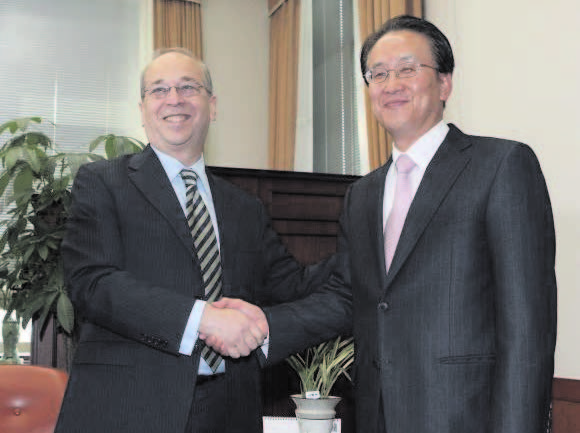
    Daniel Russel, President Barack Obama’s diplomatic point man for East Asia, said it was difficult to determine what China’s intentions might be, but Russia’s annexation of Crimea had heightened concerns among US allies in the region about the possibility of China using force to pursue its claims.

    “The net effect is to put more pressure on China to demonstrate that it remains committed to the peaceful resolution of the problems,” Russel, the US assistant secretary of state for East Asia, told the Senate Foreign Relations Committee. Russel said the retaliatory sanctions imposed on Russia by the United States, the European Union and others should have a “chilling effect on anyone in China who might contemplate the Crimea annexation as a model.”

    This was especially so given the extent of China’s economic interdependence with the United States and its Asia neighbors, Russel said. Russel said that while the United States did not take a position on rival territorial claims in East Asia, China should be in no doubt about Washington’s resolve to defend its allies if necessary. “The president of the United States and the Obama administration is firmly committed to honoring our defense commitments to our allies,” he said.

    While Washington stood by its commitments – which include defense treaties with Japan, the Philippines and South Korea – Russel said there was no reason why the rival territorial claims could not be resolved by peaceful means. He said he hoped the fact that the Philippines had filed a case against China on Sunday at an arbitration tribunal in The Hague would encourage China to clarify and remove the ambiguity surrounding its own claims.

    Russel termed the deployment of large numbers of Chinese vessels in its dispute with the Philippines in the South China Sea “problematic” and said that Beijing had taken “what to us appears to be intimidating steps.” “It is incumbent of all of the claimants to foreswear intimidation, coercion and other non-diplomatic or extra-legal means,” he said. In Asia, China also has competing territorial claims with Japan and South Korea, as well as with Vietnam, Malaysia, Brunei and Taiwan in potentially energy-rich waters. Obama is due to visit Japan, South Korea, Malaysia and the Philippines from April 22, when he is expected to stress his commitment to a rebalancing of US strategic and economic focus towards the Asia-Pacific region in the face of an increasingly assertive China.

  • Elections lack substantive agenda

    Elections lack substantive agenda

    The author notes that there is no focused debate on real issues. Only cacophony prevails. “Past experience tells us that the so-called “manifestos” of the political parties are hardly ever practically implemented. The consequences of the ‘business-as-usual’ scenario are summed up in this adage, “If you always do what you always did, you always get what you always got”, says he.

    Another season of elections is upon the Indian voters. There are the usual activities – promulgation of model code of conduct, distribution of tickets by political parties, switching parties and turning rebel for not getting the party ticket, tall promises and distribution of liquor/drugs to woo voters, etc.

    However, candidates never seem to engage in constructive debates on issues – only complaining and mud-slinging. Few candidates spell out their vision on education, healthcare, farmers’ plight, agriculture, environment, drug-abuse, traffic reforms, etc. Having lived in the United States for more than four decades, I can unequivocally say that at every level of the democratic election process, there are substantive debates between/among candidates.

    Many times, debates are what makes or breaks a candidate. Debates can expose the shallowness of candidates on issues. Sometimes, the statements that the candidates make or how they treat people can determine the outcome of elections. For example, in 2006, a senatorial candidate of the US Republican Party from the state of Virginia, George Allen, called a field operative (an American of Indian origin) of his Democratic opponent, who was ‘videotracking’ Allen, ‘macaca’ – meaning ‘monkey’. Allen, who was earlier touted as a strong future presidential contender, lost the senate race simply because of this racial slur. Global Language Monitor named ‘macaca’ as the most politically incorrect word of 2006.

    There are plenty of political candidates in India, who call each other worse names than ‘macaca’. In India, there is a need for a Commission on Debates. In the USA, presidential debates are sponsored by the Commission on Presidential Debates that was established in 1987 to provide the best possible information to voters and to conduct research and educational activities related to debates. The League of Women Voters (LWV), a civic organization, founded in 1920 to help women take a larger role in public affairs, also sponsored presidential debates before 1987. Such organizations are needed in India to organize debates among candidates at least during the parliamentary and legislative assembly elections. I am sure there are plenty of highly qualified (hopefully unbiased) TV anchors and newspaper editors who can moderate such debates.

    For example, public debates are a need in Punjab on major issues like drugs and corruption, acknowledged widely but rarely addressed by the political parties. Someone has aptly said if you were intent on bringing down a powerful country that you would not want to confront militarily, orchestrate that country’s destruction from within. Getting the youth – the future of the country – addicted to drugs can destroy that country without firing a shot or destroying infrastructure. In 2012, Jim Yardley, a reporter for New York Times, commented on the issue of drug abuse in Punjab, saying, “Throughout the border state of Punjab, whether in villages or cities, drugs have become a scourge.

    Opium is prevalent, refined as heroin or other illegal substances. Schoolboys sometimes eat small black balls of opium paste, with tea, before classes. Synthetic drugs are popular among those too poor to afford heroin.” An overwhelming majority of addicts were said to be between the ages of 15 and 35, with many of them unemployed and frustrated by unmet expectations. Yardley further wrote that even though around 60 per cent of all illicit drugs confiscated in India were seized in Punjab, during the Punjab state elections of 2012, candidates rarely spoke about drug abuse, and that India’s Election Commission indicated that some political workers were actually giving away drugs to buy votes; party workers in some districts distributed coupons that voters could redeem at pharmacies. This is really a sad commentary on the state of affairs in Punjab that once was the most progressive state of India.

    Those at the helm of affairs seem to be playing Russian roulette with the lives of youngsters who instead of becoming a ‘demographic dividend’ turn out to be a liability for the society. The Corruption Perception Index ranks countries based on the perceived level of corruption in the public sector on a scale of 0 (meaning highly corrupt) to 100 (very clean). India had a score of 36/100. According to researcher Finn Heinrich, corruption hurts the poor most. The poor in poor countries will not be able to get out of poverty until they tackle corruption. Corruption is rampant in India. When someone was asked ‘Where is the capital of India?’ a pejorative answer was “Swiss Banks,” referring to the black money hidden there by politicians. India, where most of the public-sector employees stand with their hand out to do the job that they are already paid to do, has become a laughing stock of the world. Governments must enforce the laws in right earnest to combat this menace of corruption.

    In 2011, India’s overall literacy rate was 74.04 per cent. The literacy rate for men was much higher (82.14 per cent) than that for women (65.46 per cent). Punjab’s comparative literacy rate figures were: 76.2 per cent (overall), 81.5 per cent (men) and 71.3 per cent (women). There is a big gulf between the urban and rural literacy rates. The literacy rate for rural women needs to be improved drastically by creating educational opportunities for them. The highest literacy rates were for Kerala: 93.9 per cent (overall), 96 per cent (men) and 92 per cent (women). Punjab has a long way to go to compete with states like Kerala. We read daily in newspapers about the pitiable condition of infrastructure of government schools, the lack of teachers, flawed educational policies, and scams associated with every educational scheme. Literacy is the core to democracy.

    How many candidates in the Lok-Sabha races are addressing the literacy issue and quality of education in Punjab? In Punjab, water pollution caused by chemical toxicity is a serious problem. According to Sant Balbir Singh Seechewal, laws to control pollution remain on paper only and in realty, very little or no efforts are made to control water and air pollution and poisonous chemicals, such as cyanide that continue to emanate from factories in Ludhiana, Jalandhar and Phagwara, freely flow in river waters. Such chemicals can lead to diseases like cancer. In Muktsar, between 2001 and 2009, 1074 deaths were attributed to cancer. During the same period, 211 cancerrelated deaths occurred in the Lambi constituency. In March 2009, Dr. Carin Smit of South Africa examined hair samples of mentally retarded children from the Malwa region and found that 80 per cent samples contained uranium in such large quantities as could make children sick.

    According to the World Health Organization, 15 microgram of uranium per liter of water is regarded as safe limit, but Bhabha Atomic Research Center found uranium levels ranging from 2.2 to 244.2 microgram in water samples from the Malwa region. Arsenic is also found in Malwa water, and chronic exposure to arsenic increases the chances of getting cancer of the lungs, bladder, and kidneys. High-quality cancer research centers and hospitals in the Malwa region should be a high priority of any government coming to power. Much has been written about the need for crop diversification away from wheat-rice system in Punjab toward high-value crops, such as fruits and vegetables. The problems created by the wheat-rice system are the result of lack of visionary, far-sighted policies. The people entrusted with providing solutions are mostly the same whose shortsighted policies created the problems to begin with. Infusion of fresh ideas is needed. Cultivation of pulses, oilseeds, and cereals such as maize must be added to the mix of crops grown.

    Political agenda must include promotion of an environment beneficial to life through the protection and wise management of natural resources to ensure sustainability of agriculture. I have lived in Ludhiana for a number of years and have traveled the length and breadth of the Punjab. In big cities, one invariably comes across snarling traffic. Generally, it becomes a headache for the travelers. This again is due to the lack of visionary planning. Why allow so many vehicles on the road without first insuring needed infrastructure? Highways should be built first to accommodate the anticipated traffic. Police can and should ensure that only those who have passed both written and road tests be issued a driving license. So many young school-going children are seen running around on scooters; most of them may not even be eligible to get a driving license.

    India is poised to overtake China in population by 2030. Politicians in India rarely talk about tackling this important issue. Greater and greater burden continues to be placed on land and agriculturists to produce more and more food grains to feed the burgeoning population while efforts to control population are non-existent. These are some of the issues that must be debated. All Lok-Sabha candidates must be cognizant of these issues and be able to tell the voters where they stand on each of the issues. Past experience tells us that the so-called “manifestos” of the political parties are hardly ever practically implemented. The consequences of the ‘business-as-usual’ scenario are summed up in this adage, “If you always do what you always did, you always get what you always got.”

  • REFORMS TO GIVE 110 MILLION JOBS BOOST TO ECONOMY IN 10 YEARS

    REFORMS TO GIVE 110 MILLION JOBS BOOST TO ECONOMY IN 10 YEARS

    NEW YORK (TIP): As general elections draw closer in India, global financial major Goldman Sachs has said 40 million new manufacturing jobs can be created in a decade if states follow flexible labor laws like in Gujarat.

    Besides labor laws, implementation of proper reforms in other areas such as subsidies can lead to overall job gains rising to 110 million over the next 10 years – the largest for any major economy, Goldman Sachs said. The observations assume significance as they come at a time when a political debate is underway on the comparison between growth model of Narendra Modi-led Gujarat and that of other states ruled by Congress and other parties.

    Modi is the prime ministerial candidate of BJP, which is trying to wrestle power from Congress at the Centre. The report said the Gujarat government amended the Industrial Disputes Act in 2004 to allow for greater flexibility in the labor market for Special Economic Zones (SEZ). It allowed for companies within SEZs to lay off workers, without seeking the permission of the government, by simply giving a 1-month notice to the worker.

    In contrast, the West Bengal government, made several pro-worker changes. It changed the laws to make it virtually impossible to shut down a loss-making factory.Accordingly, Gujarat has witnessed a 60 per cent growth in manufacturing employment between 2000 and 2012 while West Bengal has seen only a 22 per cent increase.Goldman Sachs said as a new government takes charge from mid- 2014, it sees labor market reforms as a critical ingredient to accelerate India’s economic growth rate.

    “If India were to undertake significant reforms in the labor market, the benefits could be quite large,” Goldman Sachs said. In a bull scenario, it projected that India could add some 110 million workers over the next decade. At this level, the number of jobs that India could create would be larger than that of the US, China, Russia, and Brazil combined, Goldman Sachs said.

    According to the financial services firm, India’s stringent labor laws are a key factor constraining employment growth and the reforms like simpler labor laws, more flexibility to hire and fire, self-certification by the employers, amendment in the Trade Union Act and faster dispute settlement, are likely to increase flexibility and boost employment.India’s employment growth in recent years has been anemic. The economy added only about 2 million jobs each year between FY05 to FY12, compared to 12 million a year in the 5 years before this period, it said.

    “As a labor abundant country, India should be generating jobs in laborintensive manufacturing,” the report said.India has some 44 labor laws which are enacted by the central government and enforced by both the central as well as state governments. In addition, there are also labor laws enacted and enforced by the various state governments. Some laws date back to the colonial era. The Trade Unions Act is from 1926, the Workmen’s Compensation Act is from 1923, and the Factories Act from 1948.

  • India ranks 102 out of 132 nations on social development index

    India ranks 102 out of 132 nations on social development index

    NEW DELHI (TIP): India ranks 102nd among the 132 countries on the Social Progress Index, a measure of human wellbeing that goes beyond traditional economic measures such as GDP or per capita income. Of the BRICS countries — Brazil, Russia, India, China and South Africa — only India ranked lower than the 100th position on the list of the Social Progress Index 2014 compiled by USbased non-profit group Social Progress Imperative. China was next lowest of the five, in the 90th position, and Brazil was the highest, at 46th.

    Using measures of access to basic human needs such as food and shelter and of equality of opportunity such as education and personal freedom, the index aims to measure quality of life throughout the globe. Last year the first Social Progress Index ranked 50 countries. This year, its ranking includes 132 countries around the world. New Zealand tops the list followed by Switzerland, Iceland and Netherlands. Chad ranks the lowest in the index.

    India ranks 102nd on social progress with challenges across all three dimensions with particularly low scores on shelter (39.77) in the basic human needs dimension, access to information (39.87) in the foundations of wellbeing dimension, and tolerance and inclusion (21.54) in the opportunity dimension. The basic human needs dimension comprises parametres of nutrition and basic medical care, water and sanitation, shelter and personal safety.

    The foundations of wellbeing includes parametres of access to basic knowledge, information and communications, health and wellness and ecosystem sustainability, while opportunity dimension includes personal rights, freedom and choice, tolerance and inclusion and access to education. The report said that while the BRICS are generally seen as areas of great economic growth potential, social progress performance is mixed at best.

    Only Brazil (46th) ranks better on social progress than it does on GDP per capita (57th). Russia has a higher GDP than Brazil (39th) yet ranks lower on the Social Progress Index (80th); South Africa is 58th on GDP and 69th on social progress; China is 69th on GDP and 90th on social progress; and India is 94th on GDP and 102nd on social progress. Central and South Asia trails all regions but Sub-Saharan Africa in terms of overall index performance.

    The top performers for the region are Sri Lanka (85th), Kazakhstan (86th) and Mongolia (89th). The worst performance belongs to Pakistan, which is ranked 124th. “Tracking social progress trends over time will be important for understanding the speed with which social progress responds to changes in economic performance.

    It remains to be seen how quickly fast-growing economies such as India and China, that currently underperform on social progress relative to their GDP per capita, can turn economic success into improving social conditions,” the report said. “The Social Progress Index provides evidence that extreme poverty and poor social performance often go hand-inhand,” it said.

  • Bouchard holds off Venus in Charleston

    Bouchard holds off Venus in Charleston

    CHARLESTON (TIP): Canadian starlet Eugenie Bouchard held off former world number one Venus Williams 7-6 (8/6), 2-6, 6-4 on April 3 to reach the Family Circle Cup quarterfinals. Bouchard, an Australian Open semi-finalist who is seeded sixth in the green claycourt WTA premier level event, saved two set points in the first-set tiebreaker, and rallied from a break down in the third to advance to a meeting with either second-seeded Serbian Jelena Jankovic or Croatian Ajla Tomljanovic.

    Williams followed her younger sister, world number one and top seed Serena Williams, out of the tournament. Serena was stunned in her opening match by Slovakian Jana Cepelova, who followed up that big win with a 7-6 (7/4), 3-6, 6-3 victory over 13th-seeded Russian Elena Vesnina. Cepelova will face fellow Slovakian Daniela Hantuchova in the quarter-finals. Hantuchova breezed past Teliana Pereira of Brazil 6-2, 6-3. Venus Williams, who won the Charleston title in 2004, held two set points at 6-4 in the first-set tiebreaker, but 20-year-old Bouchard won four successive points en route to taking the set.

    Williams, bounced back with a strong second set, and broke for a 2-1 lead in the third, but her unforced errors allowed Bouchard to get back in it and the Canadian broke her in the final game to seal the win. “In the second set she really started going for her shots,” Bouchard said. “I just tried to keep fighting. It was a little bit ugly at times, but I just kept trying to fight through it.” Third-seeded Sara Errani of Italy advanced with a narrow 7-6 (8/6), 7-6 (7/5) victory over China’s Peng Shuai. Peng had a set point in each set but couldn’t convert. “It was an unbelievable match,” Errani said. “All the games were very close.”

  • Modi’s Stance on Foreign Policy Remains a Mystery

    Modi’s Stance on Foreign Policy Remains a Mystery

    Modi has made some stray remarks on foreign affairs, but they should be seen more as obiter dicta rather than a considered judgment.

    Little interest has been shown domestically about possible new orientations in foreign policy under a Modi-led NDA government. Modi’s single-minded focus on the development agenda has dominated political and media discourse, barring, of course, the 2002 Gujarat riots. The slowdown of the economy, the negative investor sentiment, price rise, corruption, the perceived lack of leadership have been issues of public concern, not foreign policy. Modi has been a state leader, with no stint in Delhi, and hence a relatively unknown entity for foreign interlocutors except those who have traveled to Gujarat for business reasons.

    Economic focus
    For our foreign partners who see India’s economic rise as opening up enormous prospects for their own economies by way of trade and investment and who are disappointed by India’s lacklustre economic performance under UPA II because of slowdown of reforms, indecision and delays in implementation, Modi’s economic agenda is alluring. But they are equally interested in assessing the possible differences in foreign policy between a possible Modi-led government and the UPA governments.

    Modi has been a state leader, with no stint in Delhi, and hence a relatively unknown entity for foreign interlocutors except those who have traveled to Gujarat for business reasons. Moreover, because he has been politically boycotted by western countries until recently for human rights reasons, the opportunities to assess him through personal contact have been that much less available. China and Japan, who have received him in their countries, have been wiser in this regard. Modi has not been grilled on foreign policy issues either by the opposition or the media. He has made some stray remarks on foreign affairs, but they should be seen more as obiter dicta rather than a considered judgment.

    His view, for instance, that the Ministry of External Affairs should focus on “trade treaties” rather than strategic issues may fit in with his “development” focus, but would get revised when faced with the reality of India’s challenges once in power at the Centre. If his meaning was that our missions should give priority to commercial/economic work, that would be unexceptionable in the context of economic performance increasingly determining a country’s international role and influence. Towards Pakistan, one hopes, Modi will not be counseled to adopt a soft face in order to attenuate his anti-Muslim image, both at home and abroad.

    The economic argument should not be exaggerated though, as our most severe external challenges are driven not by economics but politics, relating to our territorial integrity, the threats to us from terrorism and religious extremism, the nuclear dangers emanating from nuclear collaboration between China and Pakistan which the West tolerates despite its readiness to take military action to stop proliferation in Pakistan’s neighborhood, and China’s attempts to politically and strategically box us in the subcontinent while simultaneously eroding our influence there by its deep incursions into our neighborhood. If China and Pakistan have been hostile to us for decades it is not on account of economic issues. India’s role in the Indian Ocean has a major strategic aspect that goes beyond ensuring the safety of the sea lanes of communication for trade flows.

    Status Quo
    How much the foreign policy of former Prime Minister Vajpayee, who enjoys an iconic status within and even without the BJP, will guide that of an hypothetical Modi-led government is a pertinent question. If Vajpayee’s decision to take a plunge on the nuclear question was an act of strategic defiance, he was also a man of dialogue who made major overtures to US, China and Pakistan. With a strong nuclear card in his hand, his strategy of building a relationship with the US “as a natural ally” made sense, as did his outreach to China to explore the possibility of resolving the border issue on a political basis. His conciliatory approach towards Pakistan, however, seemed based less on a cold power calculus and more on inchoate hopes and sentimentalism. Prime Minister Manmohan Singh built on Vajpayee’s policy on all these fronts, pointing to the essential continuity of our foreign policy under governments of different political complexions.

    The ‘Next Steps in the Strategic Partnership’ under Vajpayee led to the nuclear deal under Manmohan Singh; the Special Representatives mechanism with China set up under Vajpayee has been the principal platform for political engagement with China on the vexed border issue under his successor; the obsession to have a dialogue with Pakistan under Vajpayee continued its confusing course after him. In visiting the Arunachal border with Tibet and vowing not to yield an inch of Indian territory, Modi has sent an important signal to Beijing.Is there a major course correction in foreign policy that a Modi-led NDA government would need to make? Tough stance Not really, as our geo-political compulsions, our economic needs and our security calculus dictate our fundamental foreign policy choices, with limited wiggle room available.

    We need a stable relationship with all power centers. Despite the difficulties of dealing with the US, our economic and people-to-people links with it are of key importance. The US has treated Modi with gross political ineptitude, giving him, if he becomes Prime Minister, room to extract a price for engaging him, though it is clear that his relationship with Obama will be uncomfortable. China’s Xi Jinping has already indicated his desire to visit India later this year. In visiting the Arunachal border with Tibet and vowing not to yield an inch of Indian territory, Modi has sent an important signal to Beijing. A visit to Tawang before Xi’s visit would change our psychological equation with China by boosting national morale.

    Towards Pakistan, one hopes, Modi will not be counseled to adopt a soft face in order to attenuate his anti-Muslim image, both at home and abroad. Pakistan will construe this as the “taming” of Modi without cost. Because uncertainties in Afghanistan and religious radicalization sweeping Pakistan could aggravate India’s terrorism problem, the new government should be in no hurry to resume the dialogue with Pakistan even if the bait of MFN is offered as a tactical move. Whether or not a Modi-led government changes the course of our foreign policy, because of the perception that he is strong and decisive leader will be a foreign policy forcemultiplier in itself.

  • KID NAMO SWIMS PAST CROCODILES IN ‘REAL LIFE’ COMIC

    KID NAMO SWIMS PAST CROCODILES IN ‘REAL LIFE’ COMIC

    AHMEDABAD (TIP): If you didn’t know what Narendra means, a soon-to-belaunched comic book on the early life of possibly the country’s next prime minister explains that it stands for ‘lord of men’. ‘Childhood Stories — Bal Narendra’ illustrates the early signs which Narendra Modi gave in Vadnagar, his birthplace, of the greatness that lay ahead.

    These include his playing with baby crocodiles and swimming through a crocodile-infested lake to hoist a flag atop a temple. The 43-page book has been published by Rannade Prakashan and designed by Blue Snail Animation (BSA). BSA director Jignesh Gandhi said the book is based on “real incidents in the early life of Narendra Modi” and was done after eight months of research. Priced Rs 150, it will be available in English, Hindi and Gujarati versions by March end.

    The book shows little NaMo, with his unmistakable lips, reading books on Swami Vivekanand and Chhatrapati Shivaji in the village library while his peer group played outside. His giant-killing abilities are illustrated through a kabaddi match where, by studying the style of the star player in the school’s senior side, he inspired the juniors score an unbelievable victory. A popular boy at school, he once sprayed ink on the shirts of four habitual bullies to enable the principal to identify the culprits. Among his various exploits as a student was a fund-raiser theatrical play ‘Jogidas Khumaan’ which helped repair the school building. The cartoons show him serving food to jawans headed for the border during the Indo-China war.

    His father, as is widely known now, used to run a tea stall at Mehsana railway station. He is also depicted as an NCC cadet, climbing up a tree with a razor between his teeth, to free a bird entangled in kite-strings. And if you were wondering why he always seems so well groomed, the habit apparently set in quite early despite such humble beginnings. He used to whiten the canvas shoes, which his uncle had gifted him, with pieces of chalk that teachers used to discard.

    He used to fold up his school uniform and put it under his pillow before going to sleep and iron them the next morning using a metal tumbler full of hot water. “Wow! Narendra’s shirt is so crisp,” exclaims a schoolmate in one visual. The book ends on a poignant note with scenes from ‘Pilu Ful’, a play he himself wrote as a kid to create awareness about the evil of untouchability.

  • Nokia X not to be made in India

    Nokia X not to be made in India

    CHENNAI: (TIP) Finnish handset maker Nokia will not manufacture its recently launched Nokia X phone at its Chennai plant, which has become the focal point of a Rs.21,000-crore tax dispute, according to people with direct knowledge of the matter. The phone, which has been widely touted as a game-changer for the company, will be imported from China.

    Nokia is currently struggling to transfer its plant and other assets to software giant Microsoft before the acquisition is closed. According to sources, the decision to make the Nokia X in China could have come because rolling it out from India would require more investment at the Chennai plant. Also, with Nokia’s new plant having come up recently in Vietnam, a certain amount of redistribution and balancing in the company’s capacity is taking place.

  • CBI ARRESTS 5 WITH FAKE MEDICAL DEGREES

    CBI ARRESTS 5 WITH FAKE MEDICAL DEGREES

    NEW DELHI (TIP): In a countrywide crackdown, the Central Bureau of Investigation on Thursday arrested five people possessing medical degrees from Russia and China and obtaining recognition from Medical Council of India through allegedly fraudulent means. CBI said based on information gathered, FIR had been filed against eight people who claimed they had medical degrees from Russia and China.

    At least three of the doctors, who had allegedly got a forged registration from MCI, were working in government hospitals in Gujarat, West Bengal and Chhattisgarh. The CBI has also registered case against unnamed officials of MCI and some other individuals. CBI conducted raids at the premises of a Meerut medical practitioner who was allegedly a conduit between MCI officials and the potential candidates coming from these countries.

    According to CBI, those arrested told the agency that they paid upto Rs 20 lakh for getting registration from MCI. Government has made it mandatory for screening test of medical students from erstwhile USSR countries and China to be eligible for medical practice in India. CBI alleged these candidates had colluded with MCI officials who gave them permission to practice in return for illegal gratification even as the doctors did not fulfill the necessary parameters.

    CBI sources said they would interrogate the accused on the role of officials in MCI, who are giving these fake registrations. Sources said more arrests are likely. The registration documents recovered during searches on Thursday would be sent for CFSL examination and files would also be taken from MCI. CBI Director Ranjit Sinha, who is personally monitoring the case, said, “This is a very important case as such people were playing with the lives of patients.”

  • NEHRU RESPONSIBLE FOR 1962 WAR DEBACLE: REPORT

    NEHRU RESPONSIBLE FOR 1962 WAR DEBACLE: REPORT

    NEW DELHI (TIP): The conventional narrative in India about the 1962 war has largely revolved around portraying the Chinese as the unbridled “aggressors”, who ripped apart the nascent “Hindi- Chini bhai-bhai” construct forever. The reality is slightly different.

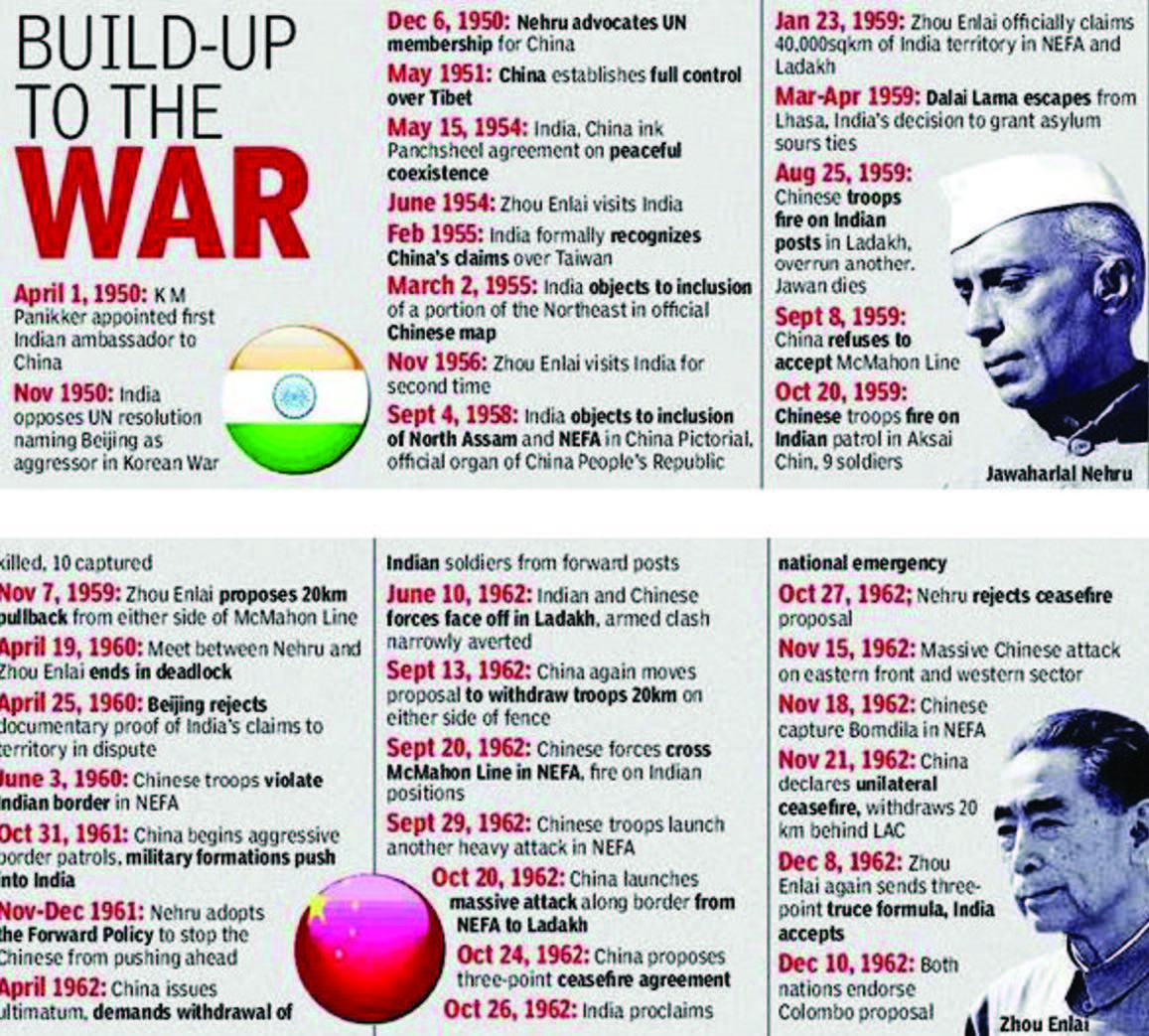
    True, China was nibbling away at what India perceived to be its territory both in Ladakh and North-East Frontier Agency (NEFA), as Arunachal Pradesh was then called, to consolidate its hold on Tibet. But what provoked Mao-led China to launch a full-blown military invasion into India on October 20, 1962 was the Nehru government’s ill-conceived and poorly executed Forward Policy, set in motion almost a year ago in November-December 1961.

    Already smarting from the Dalai Lama’s escape to India in early 1959 and the bitter exchanges over the Mc-Mahon Line, which it considered to be a “legacy of British imperialism”, China decided to teach India “a lesson” it would never forget through the one-month war. The Henderson Brooks-P S Bhagat report on the 1962 military debacle, kept firmly under lock and key by the Indian government for the last 50 years, makes it clear the “unsound” Forward Policy — directing Indian troops to patrol, “show the flag” and establish posts “as far forward as possible” from the then existing positions —”precipitated matters”, sources say.

    The sources, who have accessed the classified report, say the ill-timed Forward Policy “certainly increased the chances of conflict” at a time when India was militarily ill-prepared in Ladakh and NEFA, with China much better placed in terms of forces, equipment and logistics in both the sectors. The report apparently holds that the Forward Policy was based on the “flawed premise”, primarily driven by the then all-powerful Intelligence Bureau director B N Mullik, that “the Chinese would not react to our establishing new posts and that they were not likely to use force against any of our posts even if they are in a position to do so”.

    This gravely erroneous assumption, given credence by a complicit Army headquarters despite being in direct contrast to an earlier military intelligence “appreciation” that the Chinese “would resist by force any attempts to take back territory held by them”, percolated down to all levels of command to usher in “a sense of false complacency”. What compounded matters was the “appalling” and “disastrous” military leadership and its decision-making, ignoring the advice of commanders on the spot. First, the Army headquarters paid no heed to the quantum of forces required to implement the Forward Policy. Both Ladakh and NEFA had “a minimum requirement” of an additional infantry division (over 12,000 troops) each, with necessary airlift and logistical backing, to somewhat re-address the imbalance with China, as had been reinforced by war games conducted earlier in 1960.

    But no fresh induction of troops ever materialized. So, the report reportedly notes, while the Forward Policy may have been “politically desirable”, the Army simply did not have the wherewithal to implement it. The Western Command, for instance, had held that the Forward Policy should be kept “in abeyance” till there were enough Indian troops in Ladakh and that China should not be “provoked” into an armed clash. But the Army HQ disregarded all this. Neither did it strengthen Ladakh, nor reduce tensions with China. With the “probes forward” underway, the Army established 60 posts in sectors like Demchok, Chushul, Daulat Beg Oldi, Changla and Rezengla of Ladakh by July 1962, further stretching its already meagre resources there.

    Many of these “very weak, far-flung and uncoordinated” posts had barely 10 soldiers each. Similar was the story in NEFA. Instead of strengthening the “defence line”, forces were frittered away in “pennypackets” in forward areas. Tawang, for instance, had just a depleted brigade, while China had two divisions in the sector. Similarly, Bomdila had only one battalion. Thus, as in Ladakh, in NEFA too, the Army was hardly in a position to adopt the Forward Policy. That it was adopted proved that the “higher direction of war” was “faulty”, based as it was more on preconceived notions that China would not react rather than sound military judgment, say sources. React the Chinese certainly did. Drafted by then commander of the Jalandhar-based 11 Corps Lt-Gen T B Henderson Brooks, who was assisted by Brigadier P S Bhagat, this “operational review” details at great length how the outnumbered and out-gunned Indian Army was first complacent, then collapsed and finally panicked and fled under the Chinese onslaught.

    The report’s mandate was restricted to reviewing the Army operations but the covering note on it by Gen J N Chaudhari, who took over as Army chief after the war, did criticise then defence minister V K Krishna Menon’s continuous meddling in military matters. The report itself is sharply critical of the role played by Lt-General B M Kaul — a distant relative of Nehru and Menon’s favourite — first as chief of general staff at the Army headquarters and then as commander of the hastily raised IV Corps at Tezpur just before the Chinese invasion.

    The report holds that the “lapses” by Lt-Gen Kaul and his “handpicked officers” were “inexcusable” and “heinous”, say sources, adding they should not have allowed themselves to be “pushed” into a military adventure without requisite forces and proper planning. The 4th Infantry Division in NEFA, for instance, was neither militarily prepared nor mentally adjusted to fight the Chinese. When the Chinese troops reached its gate, there was total confusion that ultimately ended in panic and flight. “Senior commanders” — like the 4th Infantry Division commander Major-General A S Pathania in NEFA — “let down the units” under their command, held the report.

  • California major target for cyber-criminals: Kamala Harris

    California major target for cyber-criminals: Kamala Harris

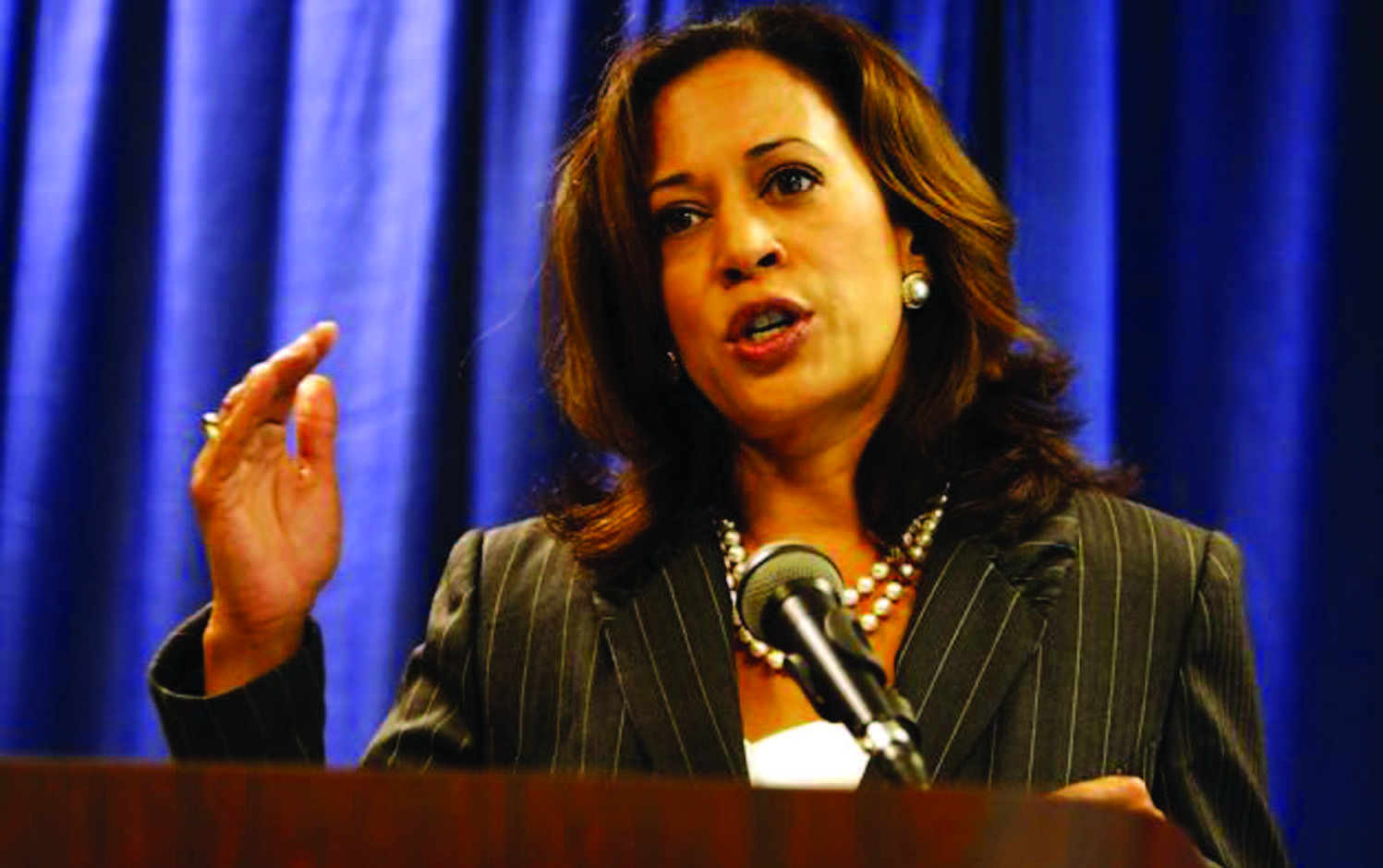
    SACRAMENTO (TIP): California has become a major U.S. target of cyber crimes committed by outlaw groups with ties to Eastern Europe, China and Africa, according to a report by state Attorney General Kamala Harris released on Thursday, March 20.

    As part of a broader report on international organized crime groups, Harris said about 17 percent of attempts to hack into major computer networks in the United States in 2012 were aimed at California, which is the most populous U.S. state.

    “Transnational criminal organizations are relying increasingly on cybercrime as a source of funds – which means they are frequently targeting, and illicitly using, the digital tools and content developed in our state,” Harris said in a statement attached to the 97-page report.

    In addition to computer crimes, Harris’s report detailed activities of international organized crime groups including human trafficking and drug smuggling, along with classic scams. Many groups are organized along ethnic lines, with ringleaders often outside the United States and foot soldiers and victims in immigrant communities in the country, it said. “The growth of transnational criminal organizations seriously threatens California’s safety and economic well-being,” said Harris, who plans to lead a series of meetings in Mexico next week to discuss the problem.

    Criminal groups with ties to the former Soviet Union and Central Europe run gangs throughout California, including the Armenian Power gang, which has links to cyber-crime, financial fraud, identity theft gambling, narcotics and human trafficking, the report said. More than two-thirds of methamphetamine imported into the United States comes through California from Mexico, trafficked by international gangs, Harris said. In addition, the state’s technology and entertainment-driven economy has made it particularly vulnerable to computer virus attacks and stolen intellectual property, the report said.

    The amount of online activity used for copyright infringement across the world has grown about 160 percent from 2010 to 2012 and threatens to affect California more than other U.S. states, the report said. “There is little doubt that over the years digital piracy has robbed creative industries based in California of hundreds of millions of dollars in revenue and jobs,” it said. Online fraud schemes in which goods or services are purchased online but never delivered have affected Californians more than people in other states, the report said. “As transnational criminal organizations evolve in the search for profits, California will continue to be an attractive target,” Harris said.

  • Sania Mirza and Cara Black storm into semifinals at Indian Wells

    Sania Mirza and Cara Black storm into semifinals at Indian Wells

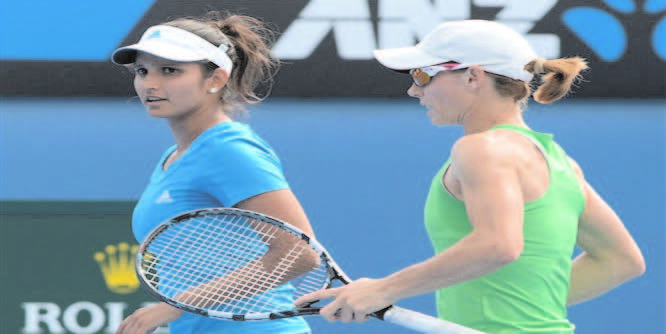
    INDIAN WELLS (TIP): India’s Sania Mirza and her Zimbabwean partner Cara Black knocked out second-seeded Russians Ekaterina Makarova and Elena Vesnina to enter the semifinals of the women’s doubles at the BNP Paribas Open.

    Fifth-seeded Mirza and Black won 6-4, 6-1, Wednesday and will now play fourth seeds Czech Lucie Hradecka and China’s Jie Zheng who defeated Kveta Peschke and Katerina Srebotnik in a hard-fought quarterfinal super tie-break 7-5, 5-7, 10-3.

  • JLR TO INVEST 100 MILLION POUNDS IN SAUDI ARABIA FOR NEW PLANT

    JLR TO INVEST 100 MILLION POUNDS IN SAUDI ARABIA FOR NEW PLANT

    LONDON (TIP):
    Tata Motors-owned Jaguar Land Rover (JLR) is planning to invest 100 million pounds into a new factory in Saudi Arabia to make 100,000 cars a year to meet the booming demand in the Middle East region. The UK-based luxury car maker is close to signing a deal with the Saudi government to build an assembly factory in the east of the country, according to ‘The Sunday Times’. The plant will initially make a new version of its popular Land Rover Discovery and is eventually expected to employ 4,000-5,000 people. It will be JLR’s third big foreign expansion after deals to open factories in China and Brazil were finalised. The Saudi government is also expected to invest in the plant as it seeks to develop its automotive industry.

    The company is likely to begin by assembling cars from components made in Britain, and progress to taking more parts from Saudi companies. The Middle East expansion will be another step in the car maker’s success story since being taken over by the Tata Group in 2008. A new 500 million pounds engine plant in the West Midlands is set to begin production next year. Jaguar confirmed a 240 million pounds agreement late last year to build a factory in Rio de Janeiro, and is also opening a plant in China in a 1 billion pounds joint-venture with the Chinese car maker Chery. The firm sold a record 425,006 vehicles in 2013, up 19 per cent on a year earlier, setting new sales records in 38 markets and recording strong growth across all the big regions.

  • US businessman convicted in China economic espionage case

    US businessman convicted in China economic espionage case

    SAN FRANCISCO (TIP): A California businessman was convicted on Wednesday of stealing DuPont trade secrets to help a stateowned Chinese company develop a white pigment used in a wide range of products. In a San Francisco federal court, a jury found Walter Liew guilty on over 20 criminal counts including conspiracy to commit economic espionage and trade secret theft.

    It also convicted another defendant, former DuPont engineer Robert Maegerle, on multiple counts as well. US prosecutors contended Liew paid former DuPont employees like Maegerle to reveal trade secrets that would help the Chinese company, Pangang Group, develop a white pigment called chloride-route titanium dioxide, also known as TiO2.

    The pigment is used to make a variety of white-tinted products, including paper, paint and plastics. Liew was ordered into custody after the verdict. In a statement, his attorney Stuart Gasner said they were “very disappointed” in the result. “Walter Liew is a good man in whom we believe and for whom we will continue to fight,” Gasner said. An attorney for Maegerle could not be reached for comment. Defence attorneys argued Liew never intended to benefit the Chinese government, and that the DuPont materials Liew and Maegerle handled were not trade secrets.

    The United States has identified industrial spying as a significant and growing threat. DuPont is the world’s largest producer of TiO2. Prosecutors also charged Pangang Group, a steel manufacturer in Sichuan province, in the case, but that indictment stalled after a US judge ruled that prosecutors’ attempts to notify Pangang of the charges were legally insufficient. US attorney Melinda Haag in San Francisco said fighting economic espionage is a top priority. “We will aggressively pursue anyone, anywhere who attempts to steal valuable information from the United States,” she said in a statement.

    DuPont had filed a civil lawsuit against Liew in 2011 and alerted the FBI, which launched the criminal case. During trial, Liew’s attorney called the relationship between DuPont and the government an “unholy alliance.” Federal prosecutors,meanwhile, countered Liew attended a banquet in 1991 with a number of Chinese officials. In court filings, prosecutors say the banquet was hosted by Luo Gan, who at the time was a high-ranking official of the Communist Party of China Central Committee. Luo Gan went on to become a member of the nine-member Standing Committee of the Politburo, prosecutors wrote in a court filing.

    ‘Puffery’
    Liew described the meeting in a draft letter that US federal officials say they seized from his safety deposit box and presented to the jury. “The purpose of the banquet is to thank me for being a patriotic overseas Chinese who has made contributions to China,” Liew wrote in a memo to a Chinese company, according to U.S. prosecutors, “and who has provided key technologies with national defense applications, in paint/coating and microwave communications.” Luo Gan gave Liew directives at the meeting, and two days later Liew received a list of “key task projects,” including TiO2, prosecutors said. Pangang ultimately paid Liew’s company $28 million. Liew’s attorney told jurors the letter was merely “puffery” on the part of his client. Sentencing for Liew and Maegerle is scheduled for June.

  • Chinese man is first to sue govt over smog

    Chinese man is first to sue govt over smog

    BEIJING (TIP): A man in a smog- ridden northern city has become the first person in China to sue the government for failing to curb air pollution, a state-run newspaper reported on February 26.

    China’s north is suffering a pollution crisis, with the capital Beijing itself shrouded in acrid smog. Authorities have introduced anti-pollution policies and often pledged to clean up the environment but the problem has not eased. Li Guixin, a resident of Shijiazhuang, capital of the northern province of Hebei, submitted his complaint to a district court asking the city’s Municipal Environmental Protection Bureau to “perform its duty to control air pollution according to the law” , the Yanzhao Metropolis Daily said.

    He is also seeking compensation from the agency for residents for the choking pollution that has engulfed Shijiazhuang , and much of northern China, this winter. “The reason that I’m proposing administrative compensation is to let every citizen see that amid this haze, we’re the real victims,” Li was quoted as saying by the daily. It was unclear whether the court would accept Li’s lawsuit. His lawyer, Wu Yufen, declined to comment, telling Reuters “this information is quite sensitive” . Officials of the court could not be reached for comment.

  • Challenges in India-US ties

    Challenges in India-US ties

    Inconsistencies mark Obama Administration’s approach

    “… the US is becoming increasingly strident in its economic relations with India on issues ranging from sanctions on sections of our pharmaceutical industry and our civil aviation facilities, while demanding changes in our policies on solar panels and equipment and placing restrictions on the movement of IT personnel. It is, however, not India alone that is the recipient of such measures from the US!”, says the author

    Traveling across the US as the winter Olympics in Sochi commenced, one was saddened to witness how India’s international credibility had been shaken when television audiences across the world saw three forlorn Indian athletes marching without the national flag. India faced this disgrace, thanks to the avariciousness and nepotism of an internationally disgraced Indian Olympic Association.

    Sadly, this was accompanied by charges of corruption, nepotism, match fixing and worse involving the President of the BCCI. Many Indian friends in the US asked in anguish: “Is there no section of national life left in India which is free from corruption and venality?” The mood in Washington, where one had an occasion to meet a cross section of senior officials, business executives, analysts and scholars, was quite different.

    In marked contrast to the earlier years, I found widespread criticism of the conduct of foreign and security policies by President Obama. The Administration had not just botched up its healthcare program, but was seen as indecisive and weak in dealing with challenges in West Asia, Afghanistan and the provocations of a jingoistic and militaristic China. President Obama, in turn, is acutely conscious of the mood in the country which wants an end to foreign military entanglements. More significantly, as the US moves towards becoming a net exporter of energy, thanks to the expanding production of shale gas and oil, the country’s geopolitics are set for profound change.

    Using its leadership in areas of productivity and innovation, the US now appears set to the stage for increasing domination of the world economic order. From across its eastern shores, the US is negotiating comprehensive trade and investment partnerships with its European allies. Across its western shores in the Pacific, the Americans are negotiating transpacific partnerships with Australia, Brunei, Chile, Canada, Japan, Malaysia, Mexico, New Zealand, Peru, Singapore, South Korea and Vietnam as negotiating partners. While China has informally indicated an interest in joining this partnership, the US will use its influence to ensure that China is not admitted till American political and economic pre-conditions are met.

    There is naturally interest in Washington in the forthcoming general election in India. The assessment appears to be that the ruling Congress is headed for a drubbing in the polls. Not many tears will be shed in Washington or elsewhere about this inevitability as the only questions which well-wishers of India ask are how India landed itself in its present morass of corruption and whether a new dispensation, which may be fractious, will be able to restore India to a high growth path. Speaking informally, a senior official recalled that President Obama had described the US-India partnership as “one of the defining partnerships of the world”.

    The official noted that “every meaningful partnership between powerful nations encounters setbacks”, adding that such setbacks should be minor compared to the benefits of the relationship and the magnitude of what the two could accomplish together. The Khobragade episode was a defining event in India-US relations. The Americans found Indians across the political spectrum united in the view that insults to India’s national dignity would not be acceptable.

    It is important that in future negotiations by the Task Force set up to address such issues, India should make it clear that it will not tolerate events like Mrs. Sonia Gandhi being threatened with prosecution while undergoing medical treatment in New York, or the supercilious attitude adopted towards Mr. Narendra Modi, who is a constitutionally elected Chief Minister. We should not accept a situation where Americans believe that they can behave high-handedly towards our elected politicians because of their domestic lobbies. The US should also be left in no doubt that on such issues, including consular and diplomatic privileges, India will firmly adhere to a policy of strict reciprocity.

    The Obama Administration has messed up its relations with President Karzai in Afghanistan, dealing with him in a manner that showed scant regard for his position as the elected Head of State of Afghanistan. Worse still, by its actions, the US has clearly given the impression that despite its protestations it was clandestinely dealing, behind Mr. Karzai’s back, with the Taliban. While the US-Afghanistan Strategic Partnership speaks of joint determination in eliminating the “al- Qaida and its affiliates,” the US now speaks only of eliminating al-Qaida and not is affiliates like the Taliban, the Islamic Movement of Afghanistan, Lashkar-e-Taiba and Jaish-e- Mohammed.

    There are naturally concerns in Afghanistan that the US, which needs Pakistan’s assistance for withdrawing its military equipment from Afghanistan, will seek to appease the Pakistanis by giving them a lessthan- healthy role in determining the future dispensation in Afghanistan and the role of the Taliban in such a dispensation. While there is an evident congruence of interests in working with the US, Japan and others in the face of growing Chinese military assertiveness, New Delhi and Tokyo cannot ignore the reality that there have been many flipflops and inconsistencies in the approach of the Obama Administration to China.

    Moreover, the US is becoming increasingly strident in its economic relations with India on issues ranging from sanctions on sections of our pharmaceutical industry and our civil aviation facilities, while demanding changes in our policies on solar panels and equipment and placing restrictions on the movement of IT personnel. It is, however, not India alone that is the recipient of such measures from the US! Despite these challenges, India cannot ignore the reality that the US is the pre-eminent power in the world.

    Moreover, it will remain so in the coming years, primarily because its innovative and technological strengths are going to be reinforced by its energy surpluses, together with the energy potential of its neighbors like Canada, Mexico and Argentina. It will, moreover, remain the foremost power in the manufacture of high-tech equipment, particularly in defense and aerospace. It is for India to fashion industrial policies to leverage its strengths and potential to secure high levels of investment and partnership in crucial high-tech industries.

    I was advised in Washington that contracts currently secured with US companies enable us to import 5.8 million metric tons per annum of shale gas from the US annually. According to oil industry sources, these contracts alone provide us more gas than we could obtain from the controversial Iran-Pakistan-India pipeline. But, for all this to fructify, the new dispensation in New Delhi will have to replace economic populism and accompanying fiscal irresponsibility with a quest for accelerated growth.

  • ‘INDIA BIGGEST MARKET FOR BIZ JETS IN ASIA PACIFIC’

    ‘INDIA BIGGEST MARKET FOR BIZ JETS IN ASIA PACIFIC’

    MUMBAI (TIP): India has emerged as the biggest fleet owner of business aircraft in the Asia Pacific surpassing China with business houses and high net worth individuals (HNIs) acquiring aircraft. Even during the economic slowdown period of 2008- 12, Indian businessmen purchased 38 per cent more aircraft than the previous five years as per estimates by Beechcraft Corporation.

    According to Beechcraft, a leading manufacturer of business aircraft, India has a fleet of 254 business aircraft as compared to 213 in China, 192 in Japan, 150 in Hong Kong, 66 in Malaysia, and 53 in Thailand, making it the biggest fleet owner in Asia Pacific with 15 per cent market share. As per latest data from Beechcraft, 65 business aircraft were delivered in India between 2008 and 2012, up from 47 in the previous five years. This was compared to 119 delivered in China, 19 in Japan, 47 in Hong Kong and 10 in South Korea.

    Quoting Knight Frank Wealth Report 2013, Beechcraft said the number of wealthy businessmen (HNIs) in India would double from 8,481 in 2012 to 17,032 in 2022. During the same period, the number of HNIs in China will grow 137 per cent from 10,849 to 25,660. “Our survey of senior executives from around the world, and fund managers based in London, revealed that 96 per cent of global professional investors and senior business executives forecast growth for the Indian economy over the next five years and 41 per cent of respondents stated that this growth would be ‘significant’. About 53 per cent believe that the business aviation sector in India will grow significantly over the coming decade,” Beechcraft said.

    Considering this, Beechcraft has identified India as one of the most attractive markets in the world for business aviation and has committed significant investments. “The country continues to be an exciting market for us. With significant growth in deliveries over the past decade, the country continues to show huge potential for future growth. This is why we have decided to make a significant investment in increasing our presence in India,” said Richard Emery, President, APAC and EMEA, Beechcraft, at a press conference in Mumbai.

  • Dragnet Nation’, by Pulitzer Prize Winner Julia Angwin – Be Warned About Dangers of PCs / Mobile Phones Being Hacked

    Dragnet Nation’, by Pulitzer Prize Winner Julia Angwin – Be Warned About Dangers of PCs / Mobile Phones Being Hacked

    While driving back from Long Island on Monday, February 24, I listened to an absolutely fascinating interview of Pulitzer Prize winning journalist Julia Angwin, author of Dragnet Nation, on the issue of privacy and cyber crime.

    I was amazed at how easy it is for your personal financial information to stolen if you use mobile phones for your banking transactions – in particular if you use the Android operating system. There was a program on TV recently which showed how your laptop or mobile phone could be hacked within 15 seconds of your activating it in Sochi for the Olympic Games.

    Certain hi-tech global firms (and I worked for one such) instruct their consultants / executives going to China / Hong Kong / Russia / Eastern Europe to only carry essential information on a separate PC. Once back in the US these are to be trashed or the drives completely reformatted – the danger of worms and viruses is so great that the danger of contamination is not worth it. BTW those in the US need not be ‘holier than thou either’.

    When the People’s Republic of China ordered a Boeing transport for their President, Boeing based in the good old US of A sent the order with so many bugs pre-installed that the Chinese trashed the plane after discovering hundreds of them. Now we in India buying defense hardware from either the US or the Soviet bloc should be fully aware that it is possible that in the era of cyber warfare the sellers can render them non-functional anytime, if they want to.

    I hope our Italian barmaid’s Congress Party government in India is doing something about it. When Narendra Modi becomes Prime Minister, let us hope that he brings in some top flight IT cyber crime expert ‘ethical hacker’ types to assist him. The BJP is largely known (ahem!) for good solid Hindutva bhaiyya types of limited education and not for techno nerds of Silicon Valley.

  • India warned against exploring oil in disputed South China Sea

    India warned against exploring oil in disputed South China Sea

    BEIJING (TIP): A Chinese government think-tank researcher has warned India against participation in oil projects with Vietnam government on the disputed islands of South China Sea. Indian oil companies cannot get cooperation from China in gas pipeline and oil exploration projects if they continues to work in the region, Liu Qian said in an article in the State-controlled Global Times.

    Liu is a researcher with the Academy of Chinese Energy Strategy with the China University of Petroleum in Beijing. “If India insists on exploiting the resources in the South China Sea with Vietnam regardless of warnings from China it is hard to see how China can be motivated to cooperate with India,” Liu sad.

    China and Vietnam are locked in a dispute over ownership of the oil bearing islands. Describing India and China as “natural rivals” in the global energy industry, Liu said the two countries should try to forge greater cooperation instead of getting involved in intense rivalry. In most cases Indian companies lose out to Chinese firms which is why they respond with “hot fighting words”, Liu said. But China finds that the cost of intense competition is unbearable and wants cooperation with India.

    Intense competition is forcing Chinese companies to pay higher premium for oil assets in third countries like Kazakhstan, Angola and Ecuador, the article said. “But this (high premium) is not sustainable for Chinese firms. And Indian companies also need to avoid too much competition to save money. This offers room for cooperation between China and India,” Liu said. India and China are wary about each other’s attempt to exploit gas reserves in Turkmenistan.

    China is expected to seek a portion of the gas from the proposed Turkmenistan-Afghanistan-Pakistan-India pipeline, Liu said. “The current problem lies in how to avoid unnecessary competition and excessive speculation between the two and how to establish a coordinating mechanism for bilateral cooperation,” the article said while calling on the governments of the two countries to bring about cooperation between cross-border oil companies. Chinese companies has won against Indian firms in competition for overseas oil projects because they offer more favorable returns which includes financial payments, technology support, infrastructure construction, management experience and staff training, it said.

  • Iran, six big powers seek to agree on basis for final nuclear deal

    Iran, six big powers seek to agree on basis for final nuclear deal

    VIENNA (TIP): Six world powers and Iran appeared to make some progress at a second day of talks in Vienna on Wednesday to hammer out an agenda for reaching an ambitious final settlement to the decade-old standoff over Tehran’s nuclear programme. The United States, Russia, China, Britain, France and Germany want a long-term agreement on the permissible scope of Iran’s nuclear activities to lay to rest concerns that they could be put to developing atomic bombs.

    Tehran’s priority is a complete removal of damaging economic sanctions against it. The negotiations will probably extend at least over several months, and could help defuse many years of hostility between energy-exporting Iran and the West, ease the danger of a new war in the Middle East, transform the regional power balance and open up major business opportunities for Western firms. Both sides were relatively upbeat about the first meeting. “The talks are going surprisingly well. There haven’t been any real problems so far,” a senior Western diplomat said.

    A European diplomat said Iran and the world powers were “committed to negotiating in good faith” and that they had discussed the schedule for future meetings and other issues. had detailed discussions on some of the key issues which would have to be part of a comprehensive settlement,” the diplomat added. A senior Iranian official, Hamid Baidinejad, told Reuters: “Talks were positive and generally (were about) the framework for the agenda for further talks.” The talks had originally been expected to run for as long as three full days but might be adjourned as early as Thursday morning due to the crisis in Ukraine, according to Western diplomats.

    European Union foreign policy chief Catherine Ashton, who coordinates official contacts with Iran on behalf of the six, was due to attend an extraordinary meeting of EU foreign ministers in Brussels on Ukraine on Thursday afternoon. Ashton’s deputy Helga Schmid chaired the Vienna talks during the day with Iranian Deputy Foreign Minister Abbas Araqchi, flanked by senior diplomats from the six powers. Separately, Ashton met Iranian Foreign Minister Mohammad Javad Zarif. The powers have yet to spell out their precise demands of Iran. But Western officials have signalled they want Tehran to cap enrichment of uranium at a low fissile concentration, limit research and development of new nuclear equipment, decommission a substantial portion of its centrifuges used to refine uranium, and allow more intrusive U.N. nuclear inspections.

    Such steps, they believe, would help extend the time Iran would need to make enough fissile material for a bomb and make such a move easier to detect before it became a fait accompli. Tehran says its programme is peaceful and has no military aims. Graham Allison, director of Harvard University’s Belfer Center, said the aim should be to deny Iran an “exercisable nuclear weapons option”. “Our essential requirement is that the timeline between an Iranian decision to seek a bomb and success in building it is long enough, and an Iranian move in that direction is clear enough, that the United States or Israel have sufficient time to intervene to prevent Iran’s succeeding,” he said.

    COMPLEX PROCESS AHEAD
    Highlighting wide differences over expectations in the talks, Araqchi was cited by Iran’s English-language Press TV state television on Tuesday as saying that any dismantling of Iranian nuclear installations would not be up for negotiation. The talks could also stumble over the future of Iran’s facilities in Arak, an unfinished heavy-water reactor that Western states worry could yield plutonium for bombs, and the Fordow uranium enrichment plant, which was built deep underground to ward off any threat of air strikes. “Iran’s nuclear sites will continue their activities like before,” the official IRNA news agency quoted Iranian Atomic Energy Organisation spokesman Behrouz Kamalvandi saying.

    During a decade of on-and-off dialogue with world powers, Iran has rejected Western allegations that it has been seeking the means to build nuclear weapons. It says it is enriching uranium only for electricity generation and medical purposes. As part of a final deal, Iran expects the United States, the European Union and the United Nations to lift painful economic sanctions on the oil-dependent economy. But Western governments will be wary of giving up their leverage too soon. Ahead of the talks, a senior US official said getting to a deal would be a “complicated, difficult and lengthy process”.

    On the eve of the Vienna round, both sides played down anticipation of early progress, with Iran’s clerical supreme leader, Ayatollah Ali Khamenei, saying he was not optimistic – but also not opposed to negotiations. The six powers hope to get a deal done by late July, when an interim accord struck in November expires. That agreement, made possible by the election of relative moderate President Hassan Rouhani on a platform of relieving Iran’s international isolation by engaging constructively with its adversaries, obliged Tehran to suspend higher-level enrichment in return for some relief from economic sanctions. Zarif, also quoted by Press TV on Tuesday, sounded an optimistic note. “It is really possible to make an agreement because of a simple overriding fact and that is that we have no other option.”

  • Spain’s National Court issues ill-advised warrants against China’s former President Jiang Zemin and Prime Minister Li Peng

    Spain’s National Court issues ill-advised warrants against China’s former President Jiang Zemin and Prime Minister Li Peng

    Having been involved in cases dealing with Alien Tort Statute and Torture Victims Protection Act, I have a thought or two for consideration. Nations should be wary of passing laws that have extra-territorial reach as Chief Justice Roberts forcefully explained in the Kiobel case in April 2013.

    I would argue that the presumption against extra-territoriality is a ferocious watchdog of every nation’s sovereignty, no less than an army watching the border. After all, where one nation’s border ends, another’s begins (leaving aside the high seas and the poles). To allow otherwise, invites retaliatory reciprocity. While humanitarian concerns are touching to the soul and who doesn’t love the Buddhists, every nation must decide what’s more important that its sovereignty.

    Under law, if one nation can reach conduct in another country, what’s to stop that other country from doing likewise – the Achilles Heel of law – leading to chaos, not order. The Tibet issue is a matter for diplomacy or war. Squatters need to be evicted – perhaps when there is a court with binding jurisdiction on all countries, then law will suffice (but with such a court will come loss of sovereignty).

  • Three explosions hit cinema in Peshawar, 11 killed

    Three explosions hit cinema in Peshawar, 11 killed

    ISLAMABAD (TIP): At least 11 people were killed and 25 wounded after three bombs went off in quick succession inside a cinema hall in Pakistan’s northwestern city of Peshawar on february 11 The attack took place during screening of a Pashto movie at Shama cinema, known for showing adult rated movies.

    “Three China-made hand grenades were used in the attack and up to 80 people were in the cinema at the time. The first blast happened in front, second at the rear and the third in the centre of the cinema hall,” said Ijaz Ahmed of the Peshawar police. He said cinema owners in Peshawar had been informed of the threats.

    “We had directed all cinema owners to install CCTV cameras.” The Pakistan Taliban, an umbrella organization of several militant and criminal groups, distanced itself from the attack. The blasts came almost two weeks after explosions at another cinema in the city killed five people. Several small but deadly bombs have hit Peshawar and surrounding areas since Monday. On Monday, four women were killed when a suicide bomber blew himself up at the house of a pro-government tribal elder.

  • Earthquake of 6.9 magnitude strikes western China

    Earthquake of 6.9 magnitude strikes western China

    BEIJING (TIP):
    A strong and shallow 6.8-magnitude earthquake struck China’s far western region of Xinjiang on February 12, but in a sparsely populated area, the US Geological Survey said. The tremor was only 12.5 kilometres (eight miles) deep but hit about 270 kilometres east-southeast of Hotan, the USGS said, in an extremely remote area. China’s Earthquake Networks Centre gave the magnitude of the afternoon quake as 7.3. Another tremor of magnitude 5.7 struck five minutes later, five kilometres deep, followed by a series of aftershocks of up to 4.2 magnitude, it said.

    “We were at the office at the time and felt strong shaking, the windows were rattling,” a reporter in Keriya county near the epicentre told state broadcaster CCTV, adding that few people lived in the mountainous area and there were no reports yet of casualties or damage. CCTV reported that Hotan was not seriously affected, while several people in the city told AFP they felt less than a minute of shaking. “The earthquake lasted less than one minute, it was not strong, there are no buildings collapsed,” said one resident by phone. An expert told CCTV that the affected area often experienced earthquakes but was thinly populated, so the impact was likely to be limited.

    A previous 7.3-magnitude earthquake struck the same county in March 2008, affecting 40,000 people, destroying 200 homes and causing an overall 10 million yuan ($1.7 million) in damage. China is regularly hit by earthquakes, especially its mountainous western and southwestern regions. A magnitude 6.6 earthquake in Sichuan province in the southwest killed about 200 people last April, five years after almost 90,000 people died when a huge tremor struck the same province. Twin 5.6 and 5.9 magnitude quakes killed at least 95 people in the northwest province of Gansu last July. But according to the USGS website, there was a 65 percent chance the latest quake had not caused any fatalities. “There is a low likelihood of casualties,” it said.

    Once a link on the Silk Road, Xinjiang covers 1.7 million square kilometres (660,000 square miles) — a sixth of China’s territory. It is home to the country’s mostly Muslim Uighur minority, and has seen sporadic attacks on police amid complaints by the ethnic group of religious and cultural repression. Beijing has justified tighter security in the area to stem a separatist movement it claims has links with foreign terrorist groups. Xinjiang is rich in natural resources, containing roughly 30 per cent of China’s onshore oil and gas deposits and 40 per cent of its coal, according to the official website china.org.mtp

  • Pieces from the Afghan puzzle are still missing

    Pieces from the Afghan puzzle are still missing

    One major problem is fitting Afghanistan into an effective regional framework. Neither the SAARC nor the SCO nor the Istanbul Process is willing to assume a leadership role

    At last count, there were some 1,365 policy papers on Afghanistan produced worldwide by recognized think-tanks and NGOs in the past five years. Here is one more, but substantially different paper, called Envisioning Afghanistan post- 2014: Joint Declaration on Regional Peace and Stability, produced by Friedrich-Ebert- Stiftung.

    Why is it different? It is truly regional, emanating from policy groups and 60 experts from the neighborhood who reconcile their national interests, through compromise, in seeking consensus to arrive at a common minimum interest paper, scripted, owned and driven by the Afghans. It took 18 months to produce. It was launched in Kabul, Istanbul, Islamabad, Brussels, Berlin, New York and Washington, DC – and will be launched in Central Asia and New Delhi later this year.

    The Regional Declaration seeks to make Afghanistan an asset for all, through actions at national, regional and international levels, encompassing the period of transition and transformation ending in 2025. The ultimate goal is to secure enduring neutrality for Afghanistan which it enjoyed for a 100 years, especially in the period between 1929 to 1978 which was the most prosperous. The paper on neutrality is a work-in-progress.

    If neutrality is accepted by the Pakistani Army, a grand bargain could follow. Pakistan agreeing to end its support for the Afghan Taliban in return for Afghanistan accepting the Durand Line as its international border. For Pakistan and the region there are a number of other benefits including reducing security concerns from two hostile fronts to one. The Regional Declaration recognizes a serious trust deficit between Afghanistan and Pakistan, and therefore, anoints Pakistan as the pivotal player – both as a spoiler and an enabler. The recommendations call for inclusive, transparent and democratic presidential and parliamentary polls, which are the conditions set by the international community for keeping their financial commitments.

    A National Transition Strategy coupled with a National Development Strategy constitutes Afghanistan’s national agenda. This agenda also includes capacity-building of Afghan National Security Forces to prevent civil war, the return of Al Qaeda and effectively combat the Afghan Taliban and other armed opposition. To put it mildly, the Declaration encourages all entities in Pakistan to genuinely cooperate in fighting cross-border threats and pursue its legitimate interests through peaceful means. It calls for the establishing of an Afghanistan-Pakistan Joint Experts’ Working Group to overcome historic bottlenecks and improve bilateral relations. Pakistan’s help is also sought for reconciliation with the Afghan Taliban in a dialogue with the High Peace Council. What emerges are two reconciliation processes: One with Pakistan, and the other with Afghan Taliban entities in Pakistan.

    The importance of Pakistan implementing the Afghanistan-Pakistan Trade and Transit Agreement is emphasized, as also its extension to India. Recognizing that India and Pakistan seem to be working at crosspurposes in Afghanistan, the Declaration encourages the two to end differences and tensions, and commence dialogue on Afghanistan. It also advocates a trilateral dialogue between Afghanistan, Pakistan and India. A bigger role is suggested for the UN Secretary General’s Special Representative in Afghanistan, and also the appointment of a dedicated UN Special Coordinator to assist in the peace dialogues. The Regional Declaration reminds the international community, the US and NATO in particular, of their commitment towards a responsible drawdown and to keep their pledges on funding the process of transformation.

    A key pillar of the Declaration is a noninterference mechanism which includes codification of ‘interference’ – what neighbors should and should not do. This has been pledged by regional players at Bonn I and II, the Istanbul Process and Geneva but never been implemented in letter and spirit. The UN Special Envoy, with endorsement of P5 countries, is recommended to observe, monitor and investigate any breach of the Code of Conduct (most recently the UN brokered a similar ‘Good Neighborliness’ code for neighbors of the Democratic Republic of Congo). However, noninterference is not about intent, but conduct. The Regional Declaration is thin on the vital aspect of transferring responsibility from international powers to a regional compact for the purpose of preserving the gains in Afghanistan.

    One of the key problems is fitting Afghanistan to an effective regional organization. Between the South Asian Association for Regional Cooperation, the Shanghai Cooperation Organization and the Istanbul Process (which is not an organization), none is willing or able to take charge since there is no one to assume leadership. Neither China, nor Russia, nor even India is willing to bell the cat. Instead, the region has sought collective leadership based on the Istanbul Process which has Track I institutions. At the very least, Afghanistan requires an active regional coordinator to channels the regional compact.

    With the US and West fast losing interest in Afghanistan, and India and Afghanistan both being in election mode, Pakistan appears to have assumed the role of a regional coordinator, at least to monitor inflow of funds and financial commitments made at Chicago, Tokyo, Brussels and by other international monetary institutions. The World Bank office in Islamabad is setting up a team, mainly of economists, to study the fallout of a shortfall in funds and drawdown of the economy in Afghanistan. Frequently, Afghans remind you of the fate suffered by President Mohammad Najibullah, after the Soviet Union switched off the money tap.

    Pakistan has rightly prioritized Afghanistan as its most important foreign policy issue, and also identified ‘a peaceful neighborhood for revival of its economic agenda’. The big concern is the likely increase in the burden of refugees (already three million) inside Pakistan, in the event of anarchy and civil war. In the last six months, Afghan President Hamid Karzai and Pakistani Prime Minister Nawaz Sharif have held three meetings. President Karzai has had meetings with former Pakistani Army chief General Ashfaq Parvez Kayani and his Director-General at the ISI on bringing the Afghan Taliban for talks to the table. Pakistan is seen as the most decisive player in the Afghan imbroglio.

    How is it that 30 million Afghans with the help of 2,00,000 US and ISAF troops, 3,50,000 ANSF personnel, supported by US air and drone power as well as Indian assistance, have not been able to disarm 20,000 Afghan Taliban? The reason is that instead of Pakistan acquiring strategic depth in Afghanistan, the Taliban have secured it inside Pakistan. Only Pakistan can rein in the Afghan Taliban but it says this is beyond its means. Pakistan has to make the right choice. Returning to the Regional Declaration, prospects of regionalization do not appear bright. Finding a regional political mechanism to address reconciliation among stakeholders in Afghanistan is also not bright, in the absence of any regional leadership. The Declaration has offered some ideas like neutrality and non-interference which are do-able. But let the Afghans decide.